Young but Delicious Single Cru Barbaresco at a Great Value

Today’s Story: Produttori del Barbaresco

I previously wrote about Produttori del Barbaresco, one of my favorite Barbaresco producers for wine that won’t break the bank, when I reviewed the 2016 Barbaresco. To recap:

Produttori del Barbaresco was established in 1958 when, during widespread poverty of the 1950s, a priest in the village of Barbaresco gathered 19 small Nebbiolo growers to pool their resources/fruit and produce wine together to survive. For the first three vintages, the group made their wine in the church basement until they built a winery across the town square where Produttori del Barbaresco is still located. Today, the Produttori consists of 51 members and controls over 100 hectares of vineyards planted entirely to Nebbiolo to craft only Barbaresco D.O.C.G. and a more approachable Nebbiolo Langhe. Though each family is in complete control of their land, when it is time to come together in the cellar the wines are made using traditional methods including 18-21 day primary fermentation and aging in botti for up to three years. In exceptional vintages, the Produttori produces 9 single-vineyard Barbaresco wines from the remarkable Asili, Rabajà, Pora, Montestefano, Ovello, Pajè, Montefico, Muncagota, and Rio Sordo crus. The cooperative’s total annual output is roughly 45,000 cases of which 50% are Barbaresco, 30% are single-cru, and 20% are Nebbiolo Langhe.

Produttori del Barbaresco vineyards range from 600-1,300 feet above sea level on steep hills and consist largely of clay and limestone marl with veins of sand. The land varies greatly due not only to its size and varying microclimates, but also in terms of various crus such as how Ovello, Montefico, and Montestefano having higher clay content. The distinct personalities of the fruit from each cru blend together into the final wine to beautifully marry some of Barbaresco’s greatest vineyards in an unusual and honest representation of the terroir. To learn more about the individual crus and browse a gallery of the vineyards, check out the Produttori website here.
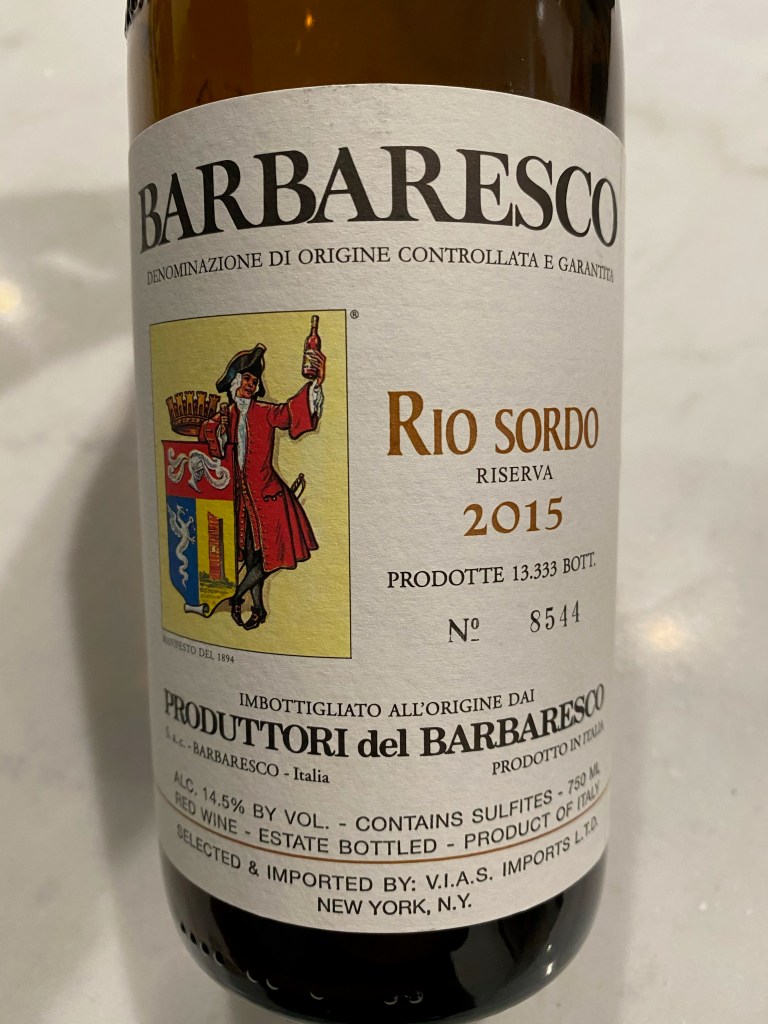
Today’s Wine: 2015 Barbaresco Rio Sordo Riserva

100% Nebbiolo; 14.5% ABV

The 2015 Rio Sordo Riserva is translucent medium garnet in appearance. I let this decant for 3 hours and drank it over the following 2, which it certainly needed. On the nose, I get aromas of ripe red cherry, cranberry, raspberry, rose, mildly sweet tobacco, dried rocky earth, and mint. On the palate, the wine showcases notes of dark cherry, spiced plum, licorice, tobacco, eucalyptus, crushed rock minerality, and spice. This is full-bodied with medium (+) acidity, high tightly-knit tannins, and a long finish. Give this another 5 years of cellaring.

Price: $65. For single cru Barbaresco, this is a great value. While enjoyable after a good deal of air, this wine is perfect for cellaring and will only improve. If you’d like a less expensive entry into Produttori del Barbaresco, try the Barbaresco D.O.C.G. for around $40 and still exceptional value.
Young but Immensely Promising Puligny-Montrachet

Today’s Story: Domaine Bernard Moreau et Fils

The history of Domaine Bernard Moreau began in 1809 when Auguste Moreau built a cellar near the Champs Gain vineyard for ease when farming his Chardonnay and Pinot Noir. It wasn’t until the 1930s, however, under Marcel Moreau that the family’s holdings started to grow exponentially. For instance, the domaine today operates on 14 hectares of vineyard land (9 hectares they own, 5 hectares they farm) and about 80% of that land was acquired by Marcel. Bernard Moreau took over the vineyards and cellar during the 1960s (at the age of 14!!) and the name “Domaine Bernard Moreau” came in 1977 under guide of Bernard and Françoise Moreau. With Bernard and Françoise at the helm, the domaine updated their winery, farming methods, and equipment in addition to buying more land to get to that 14 hectare total number. Their sons Alex and Benoît joined the team to help with winemaking and in the cellars, with their first vintage being 1995. From 1999 onward, Alex took over winemaking responsibilities and Benoît specializes in the vineyards.

The winemaking style at Domaine Bernard Moreau is best described as “hands off.” Like most estates producing exceptional wines in Burgundy, Alex and Benoît take a view that terroir should be the forefront of a wine and therefore they must care for the vineyards. While the farming practices at the domaine are characterized as sustainable (not organic or biodynamic), they use organic fertilizers with the soil and do not use pesticides. Also like many great estates, Moreau utilizes rigorous pruning, debudding, and green harvesting in an attempt to lower yields that are more expressive of the terroir. During aging of the wines, Alex uses 10-50% new French oak barrels (depending on wine and vintage) for 12-20 months (also depending on wine and vintage). For the Pinot Noir, Moreau does not rack, filter, or fine the wines at all.

Domaine Bernard Moreau produces a broad range of wines, and I highly suggest trying some of them. From the Bourgogne Blanc and Rouge to their Aligote and up through the multitude of 1er Cru Chassagne-Montrachet to the big-daddy Bâtard-Montrachet, I have not met a wine I didn’t like.

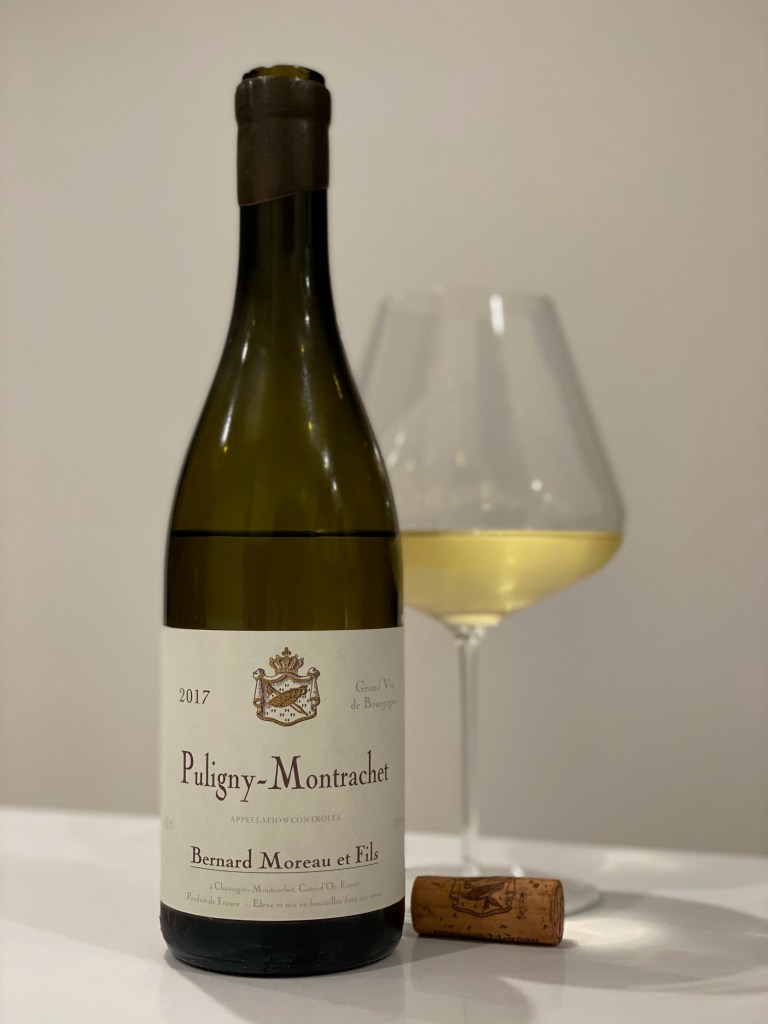
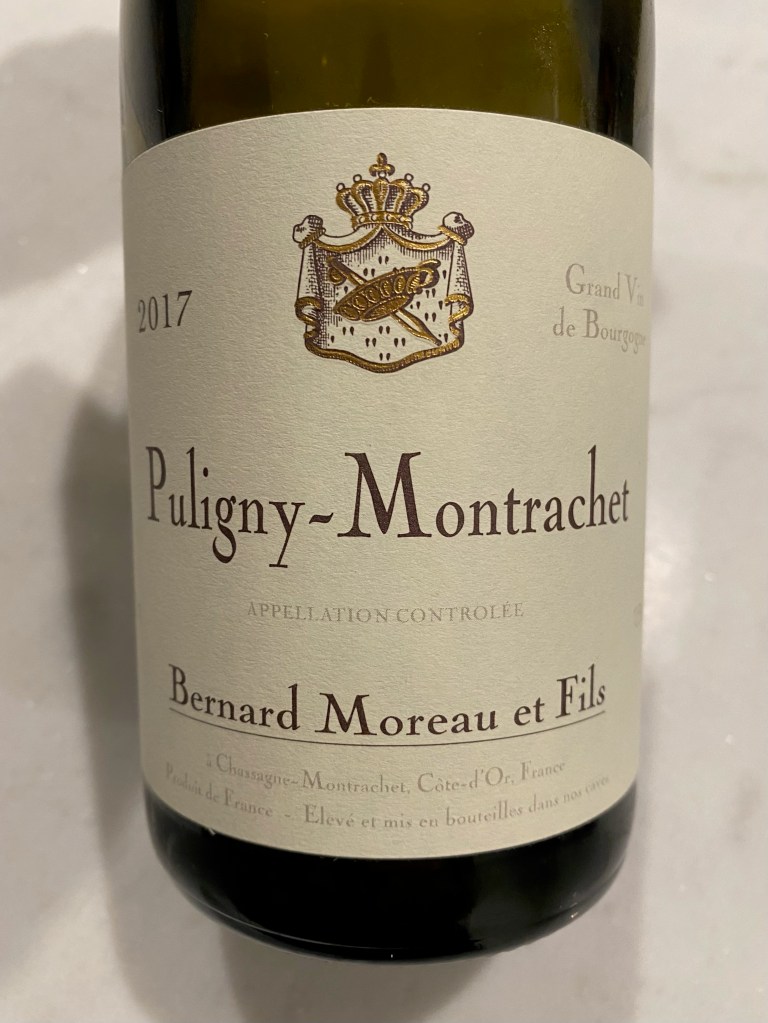
Today’s Wine: 2017 Puligny-Montrachet

100% Chardonnay; 13.5% ABV

The 2017 Puligny-Montrachet is medium golden yellow in color and fully transparent. Given about 45 minutes to an hour to blossom in the glass, the wine showcases a nose of golden pear, lemon zest, white peach, stone fruit, white lily, light smoke, brioche, and hazelnut. Moving to the palate, I get notes of green apple skins, honeydew, lemongrass, honeysuckle, mild green herbs, flint, and roasted nuts. This precise wine is medium-bodied with high acidity and a long finish.

Price: $105. This is a great bottling from the wonderful 2017 vintage and I certainly recommend picking up a bottle or two. The quality and promise of this wine will reward those who are patient, but this is already an incredible wine for the price.

Restrained Carignan From Mendocino County

Today’s Story: LIOCO Wine Company

LIOCO Wine Company was established in 2005 by Kevin O’Connor and Matt Licklider. Kevin is a former Wine Director of Spago Beverly Hills and Matt is a wine importer and salesman by trade, but the two desired to create wines that are not as heavy-handed as many modern offerings but instead wines that exhibit a sense of place through minimal intervention winemaking. With European wines and more restrained Californian wines from the 1980s as guides, Kevin and Matt sought vineyards throughout Santa Cruz, Sonoma, and Mendocino Counties with older vines and difficult climates to source their fruit. Though Pinot Noir and Chardonnay prove focal points for LIOCO, they also produce wines from Carignan, Valdiguie, Sauvignon Blanc, and occasionally other varieties that may pop up (like Syrah). LIOCO picks their fruit on the earlier side of ripeness and harvests by hand before the fruit travels to the winery in Santa Rosa under refrigerated conditions. Staying away from the big and bold California wines popular today, the winemaking process at LIOCO is as hands-off as possible, or non-interventionist. In 2017, Matt and Sara Licklider became sole owners of LIOCO and remain steadfast in continuing this philosophy.

To search through the range of wines offered by LIOCO, view the vineyards they source from and growers they work with, or see the source of the above information, check out the LIOCO website here.

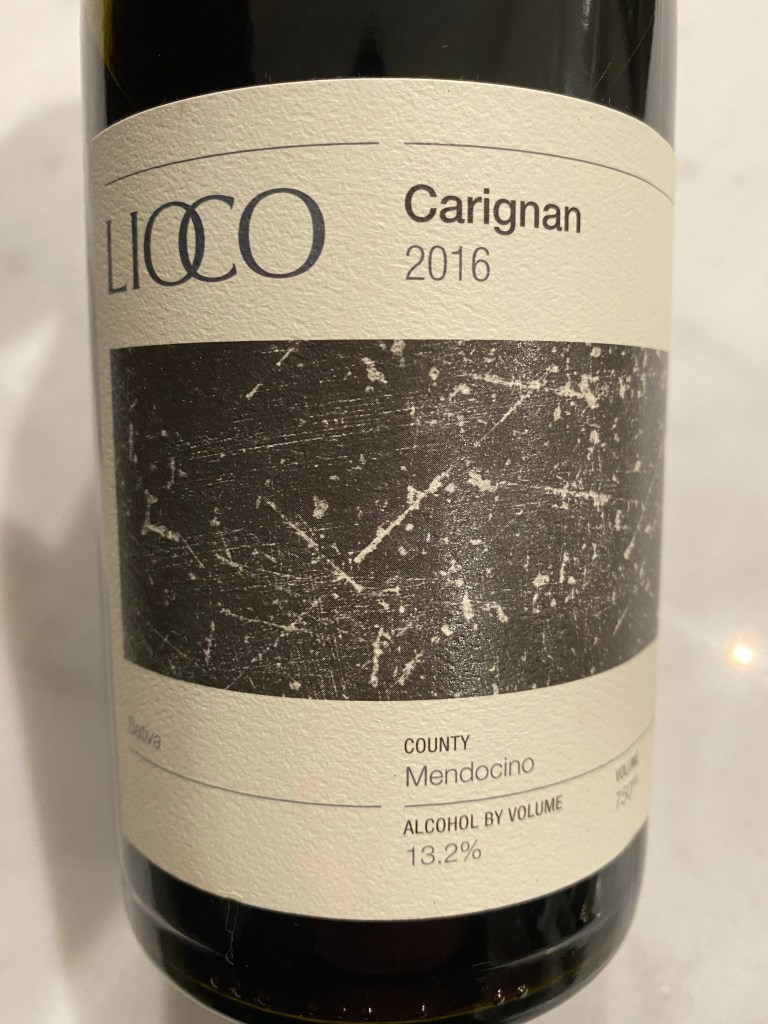
Today’s Wine: 2016 Sativa Carignan

100% Carignan; 13.2% ABV

The 2016 Sativa Carignan is almost fully opaque medium purple in color with ruby hues. Given 30-45 minutes to open up, the wine blossoms to showcase a nose of raspberry, cranberry sauce, black cherry, licorice, dried rocky earth, savory herbs, dried underbrush, and cracked pepper. On the palate, I get notes of plum, black raspberry, cherry cola, purple florals, finely crushed rock, dried green herbs, and mild baking spice with beautiful minerality. This is medium-bodied with medium acidity, medium tannins, and a medium (+) length finish.

Fruit for this wine is sourced from grower Jim McCutchen and his vineyards on Cloverdale’s Pine Mountain. The vines are 70+ years old and are head-pruned and dry-farmed at 2,200-2,400 feet elevation. Fermentation is 100% whole cluster and aging is 9 months in neutral oak plus 1 month in tank before bottling.

Price: $29 (might be able to find a few dollars cheaper). Though there are cheaper Carignan bottlings out there, I think this is a great value wine because the quality is excellent and its truth to variety and place is profound. I’ve had this wine before and I will buy it again.

Sky-High Quality From a Regional Pinot Noir

Today’s Story: Paul Hobbs Winery

Paul Hobbs Winery was founded in 1991 by Paul Hobbs with his initial release of Chardonnay, Pinot Noir, and Cabernet Sauvignon from purchased fruit. I previously wrote about Paul and his winery’s history in The Steve Jobs of Wine when I reviewed the 2015 Katherine Lindsay Estate Pinot Noir, but I will recycle it here for ease…

Paul grew up in upstate New York on a working family farm and orchard, so one could say agriculture was in his blood from an early age. Though Paul helped plant, harvest, and sell crops at nearby farmers’ markets before school each morning, his first foray into wine was helping his father achieve his dream of replanting some of the apples, peaches, and nuts in their orchards to wine grapes.

When it came time for Paul to go to college, his father encouraged him to study viticulture and enology but instead Paul followed in his great-grandfather’s footsteps by studying medicine and graduated with a BS in Chemistry from Notre Dame. His father’s persistence paid off, however, and Paul moved to California after graduation and studied viticulture and enology at UC Davis where he received his Master of Science three years later. Fresh off his new degree, Paul was hired by Robert Mondavi for his advanced knowledge of oak aging and he was quickly promoted to the inaugural Opus One winemaking team. Following his experiences at Robert Mondavi and Opus One, Paul joined Simi Winery as their winemaker before beginning consulting roles for Peter Michael, Lewis Cellars, Bodegas Catena, and soon other wineries around the world.

Throughout these experiences with wine, Paul Hobbs crafted a dream of his own to produce vineyard designated wines under his own name. In 1991, Paul spoke with Larry Hyde in Napa and Richard Dinner in Sonoma about purchasing some of their fruit, and the resulting 5 tons of fruit from each vineyard culminated in the first Chardonnay, Pinot Noir, and Cabernet Franc of Paul Hobbs Winery. Paul’s dreams entered their next phase in 1998, however, when he purchased his family’s first estate vineyard and established the Katherine Lindsay Estate (named after his great-grandmother) in Sebastopol, CA. The first vintage of this wine came with the 2003 harvest, and today Paul Hobbs consists of seven estate vineyards in some of the preeminent Californian regions for Chardonnay, Pinot Noir, and Cabernet Sauvignon.

Paul Hobbs practices sustainable farming in caring for his vineyards and a minimalist approach in producing his wines. To sustain the integrity of his fruit and each vineyard block, Paul demands a constant flow of communication and knowledge from the vineyards to the cellar. When it comes time for harvest, all Paul Hobbs fruit is hand-harvested using hand sheers to keep the fruit in pristine condition. During the winemaking process, all wine is fermented using only native yeasts that originate in the vineyards and the cellar and the wine is aged in finely grained French oak barrels. With his finished product, Paul bottles the wine unfined and unfiltered in an effort to display the purity of the fruit and the place of each wine with elegance and transparency.

Fun fact: Paul Hobbs is widely known as “the Steve Jobs of wine” thanks to his “ardent exactitude” and immensely high demands for quality.

Today’s Wine: 2016 Sonoma Coast Pinot Noir

100% Pinot Noir; 14.1% ABV

The 2016 Sonoma Coast Pinot Noir is opaque medium ruby in color with purple hues. Given about 45 minutes to open up, the nose showcases aromas of brooding wild blueberry, dark cherry, plum, red licorice, dry charred earth, saturated gravel, hickory smoke, cinnamon, and oak. On the palate, I get notes of tart red cherry, black raspberry, pomegranate, blackberry liquor, scorched earth, slate and clay, dried cooking herbs, and cola. This is medium-bodied with medium (+) acidity, medium (-) tannins, and a long finish. Overall pretty ripe and somewhat opulent, this will only improve with a few more years of cellaring.

Price: $60. I will say there are better “value” Pinot Noir bottlings out there, but I do think this is a great entry opportunity into the Paul Hobbs portfolio and is remarkable in terms of quality and ripeness of fruit for a regional wine.

Sonoma Hillsides Syrah Reminiscent of Northern Rhône

Today’s Story: Pax Mahle Wines

Pax Mahle Wines was established in 2000 by Pax and Pam Mahle with a focus on Syrah and more “esoteric” varieties that can thrive in the cooler climate vineyards of Sonoma County and Mendocino. Pax and Pam moved to California wine country in 1997, though after a few years with Dean & DeLuca sourcing wines Pax decided he wanted to move into the production side of the wine business. Though Pax quickly rose to stardom producing Rhône variety wines (namely his Syrah), he expanded into working with Trousseau Gris, Chenin Blanc, Gamay Noir, and Mission with similar success. Pax farms his vineyards eschewing the use of chemicals and crushes his fruit by hand and foot as part of his minimal intervention philosophy. Pax only uses natural yeasts during fermentation and sulfur is added as minimally as required for stabilization only. Thanks to the high quality vineyard sites and his winemaking philosophy, Pax’s wines are magnificent representations of the varieties and terroir from which they come.

Today’s Wine: 2017 Sonoma Hillsides Syrah

100% Syrah; 12.9% ABV

The 2017 Sonoma Hillsides Syrah is opaque medium to deep purple in color with moderately heavy staining on the glass. Once this opens up, the nose displays aromas of blackberry, spiced plum, blueberry, black pepper, green herbs, smoke, dusty crushed rock, and stony mineral. Moving to the palate, this Syrah showcases notes of tart blueberry, sweet juicy black plum, jammy boysenberry, black licorice, violet, sweet tobacco, scorched earth, mild baking spice, and mineral. This is medium-bodied with high acidity, grippy medium (+) tannins, and a long finish.

Price: $50 (though you might be able to find it a few dollars less). I think this is a great Syrah and a great price-point for it. While young, it is very approachable after a bit of air and the purity of fruit and mineral make this a striking wine well worth the purchase.

Refreshing Sauvignon Blanc for the Last Days of Summer

My Apologies…

Before I jump into today’s story, I would like to apologize for the lack of wine content lately. The work from home life has caused the demands of my “day job” to rise (thanks to my desk being about 6 feet from my bed) and has eaten into the time I can spend on my passions. Thanks to this long holiday weekend I am able to reset a little bit, and hope I can find a way to revive the more regular sharing of my love of wine.

Today’s Story: Quintessa

Quintessa was established in 1989 by Agustin and Valeria Huneeus in the Rutherford AVA of the Napa Valley. Though Quintessa was the Huneeus family’s first venture into Napa, both Agustin and Valeria were wine industry veterans in Chile. Agustin helped build Concha y Toro into the largest winery in Chile as their CEO, while Valeria is a microbiologist and viticulturist who discovered the land that ultimately became Quintessa’s home. The property consists of 280 acres, 170 of which are planted to vine with the balance home to the winery and 100 acres of natural woodland. The vineyards are farmed organically with the occasional use of biodynamic practices, while wines are made utilizing gravity flow to maximize the gentleness of the winemaking process. Quintessa produces one premium Cabernet Sauvignon wine each vintage, while also bottling limited quantities of Sauvignon Blanc under the Illumination label.

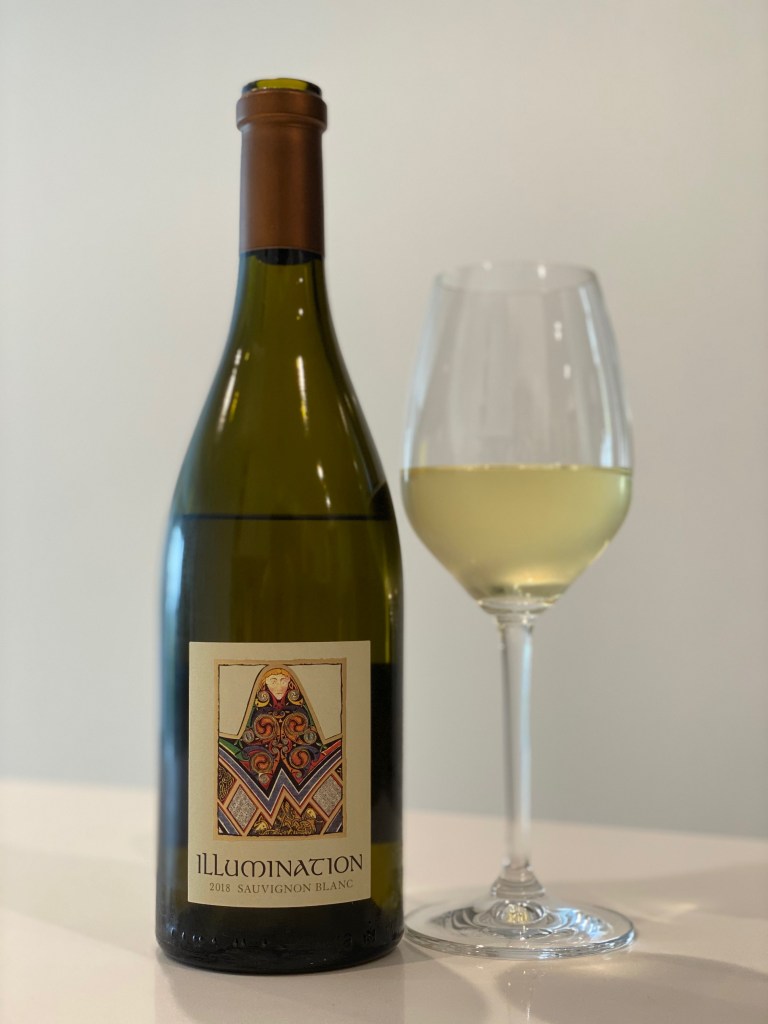
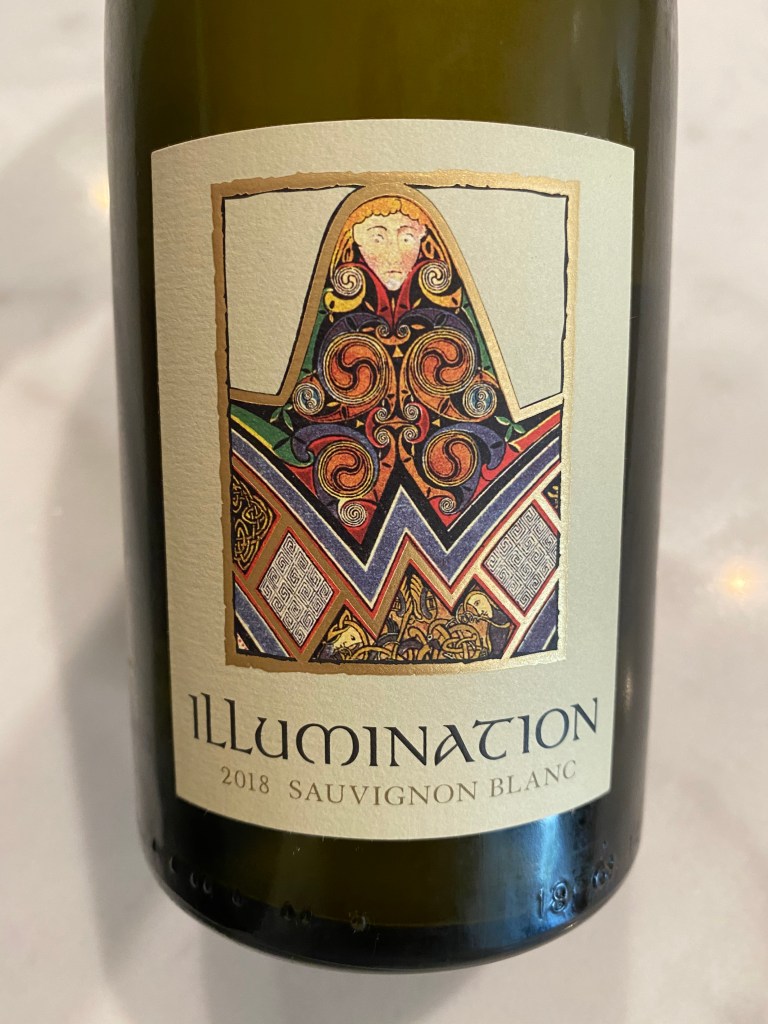
Today’s Wine: 2018 Illumination Sauvignon Blanc

56% Sauvignon Musqué, 34% Sauvignon Blanc, 10% Sémillon; 14% ABV

The 2018 Illumination is transparent pale to medium yellow in color with straw hues in the bowl. On the nose, this aromatic white emits aromas of apricot, white peach, honeydew melon, citrus rind, honeysuckle, and stony mineral. The palate showcases notes of pear, golden apple, grapefruit, lemon zest, grass, wet slate, and vibrant minerality. This is medium-bodied with high acidity and a crisp, refreshing finish that makes the wine perfect for a hot day.

Price: $39. This is certainly a higher quality Napa/Sonoma Sauvignon Blanc blend and I think the price is justified. Is it overpriced? No, but it’s also not underpriced.

Outstanding Effort in a Tough Vintage

Today’s Story: Château Montrose

I previously wrote about Château Montrose when I reviewed the 2016 La Dame de Montrose in Incredible Value in a Second Wine, but I wanted to revisit the estate for the “Grand Vin.”

Château Montrose is a historical Bordeaux wine estate located in Saint-Estèphe and established in 1815 by Etienne Théodore Dumoulin on a patch of land his family purchased from Nicolas Alexandre de Ségur but largely forgot. At the time of Etienne’s death in 1861, the estate spanned 95 hectares though his heirs sold it in 1866 to factory owner Mathieu Dollfus who quickly redeveloped and modernized the buildings and winery with the best technology of the time. One of Mathieu’s most interesting achievements, in my opinion, is the construction of a windmill to pump water aboveground and flood the estate which ultimately saved much of the vineyards from phylloxera. After Mathieu passed away in 1886, the estate fell to the Charmolüe family who, from 1896 to 2006, guided Château Montrose through wars and financial crises while crafting some of the best vintages and providing stability. Martin and Olivier Bouygues acquired the estate in 2006 and engaged in a massive renovation project, propelling Château Montrose to ever increasing heights for decades down the road. Montrose, one of fourteen Deuxièmes Crus (Second Growths) in the Bordeaux Wine Official Classification of 1855, produces world-class wines and even placed third with their 1970 vintage in the Judgment of Paris in 1976.

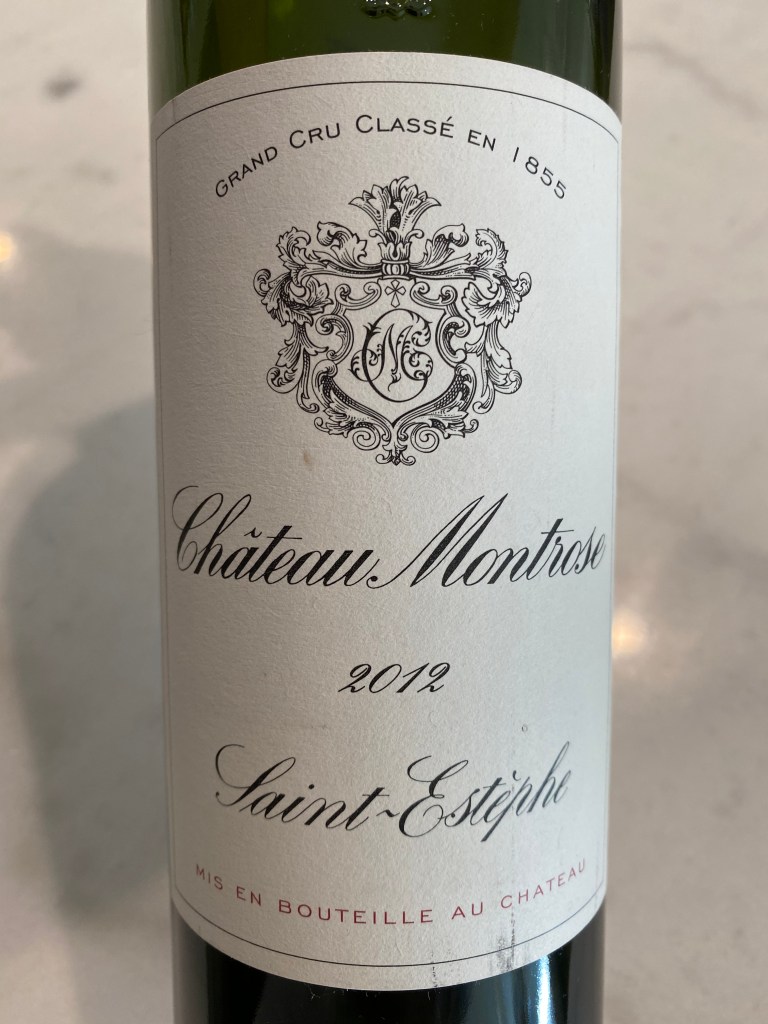
Today’s Wine: 2012 Château Montrose

57% Cabernet Sauvignon, 37% Merlot, 5% Cabernet Franc, 1% Petit Verdot; 13% ABV

The 2012 Château Montrose is opaque deep ruby in color with purple hues. This required a good 3 hours to open up in the decanter, blossoming to showcase a nose of blackcurrant, blackberry, pencil shavings, cigar box, freshly tilled earth, cracked pepper, dark chocolate, dried green herbs, and crushed rock mineral. Once on the palate, the wine displays notes of black cherry, dark plum, cassis, dried tobacco, loam, graphite, cocoa, underbrush, and light oaky spice. This is medium- to full-bodied with medium (+) acidity, high grippy tannins, and a long finish.

Price: $115. Given the vintage and how well this wine performs I think this is very appropriately priced. Particularly relative to other Montrose bottlings from stronger vintages that can be 2-3 times as expensive. There is also quite a bit of life and development left in this bottle, which could make $115 down the road look like a steal.

One of My Favorite Valpolicella’s

Today’s Story: Dal Forno Romano

Dal Forno Romano is a family-owned and operated estate winery established in 1983 in Val D’Illasi by Romano Dal Forno. Though the winery is relatively new (built in 1990), the Dal Forno family has owned the property where their vineyards sit for four generations and produced wines previously for the majority of that time. The wines since 1983, however, launched the Dal Forno family quickly to prominence with their big, beautiful, and true to variety style. The estate’s vineyards are all traditionally farmed and planted to indigenous varieties of Corvina, Corvinone, Rondinella, Oseleta, and Croatina, while Romano practices more modern techniques in the cellar. Though Dal Forno typically achieves incredibly high-quality fruit (barring any vintage challenges), they remain wildly rigorous in the selection process come harvest. The fermentation process is designed to extract as much character from the grapes as possible, while aging in oak barriques provides enough backbone to the wines without completely stealing the show.

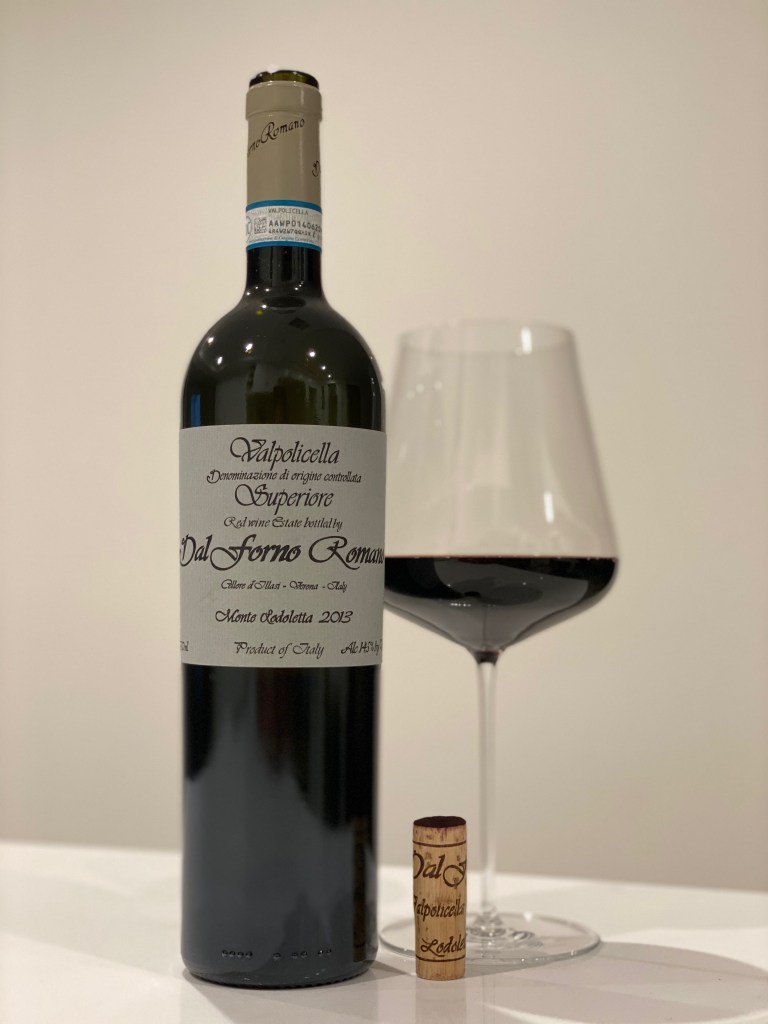
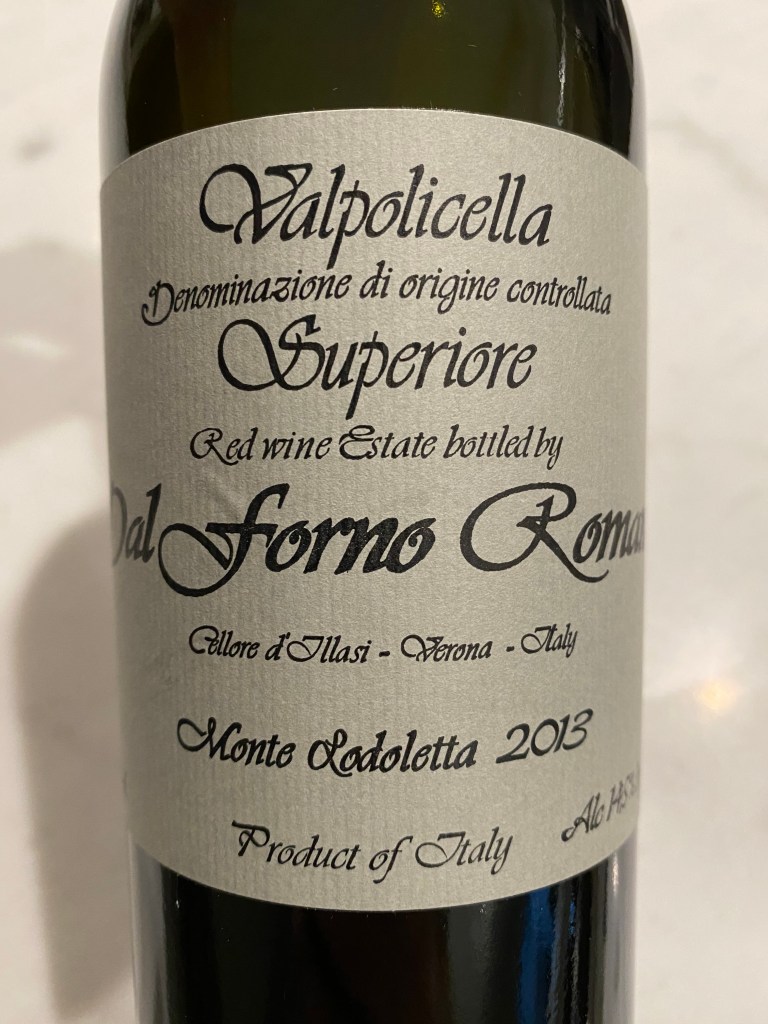
Today’s Wine: 2013 Valpolicella Superiore Monte Lodoletta

70% Corvina and Corvina grossa, 20% Rondinella, 5% Croatina, and 5% Oseleta; 14.5% ABV

The 2013 Valpolicella Superiore is opaque deep ruby in color and almost black at its core. Given about 90 minutes to open up, the nose showcases aromas of black cherry, plum, blackcurrant, cedar spill, violet, smoked meat, cracked pepper, chocolate, and slate. Once in the mouth, this opulent yet elegant wine displays notes of blueberry, blackberry, tart cherry, rich tobacco, scorched earth, tar, chocolate, baking spice, and vanilla. This is full-bodied with medium (+) acidity, medium (+) but velvety tannins, and a long finish.

Price: $100. I think this is well worth its price tag, and Dal Forno Romano provides consistently delicious and high-quality wines across vintages that I’ve tried. This is also my go-to by the glass wine at one of my favorite wine bars here in Los Angeles. Pair with ribeye steak, roasted chicken with fig, or charcuterie and aged cheese.

Opulent Pinot Noir From One of California’s Most Famous Vineyards

Today’s Story: Bien Nacido Vineyards

Bien Nacido Vineyards traces its history to 1969 when brothers Bob and Steve Miller (whose family had been farming in California since 1871) acquired what they thought was an ideal plot of land to plant vineyards. Bien Nacido, as the vineyard was named, was planted by 1973 (the first vintage) and consisted of about 300 acres of Pinot Noir and Chardonnay. Though the estate’s vineyards have grown dramatically over the years and now include varieties of Syrah, Merlot, Viognier, and others, it is the initial 300 acres that demonstrated the immense promise of winemaking in the Santa Maria Valley. Situated at high elevations and not far from the Pacific Ocean, Bien Nacido is one of the most famous and revered vineyards in California winemaking for Pinot Noir and Chardonnay. In addition to Bien Nacido Vineyards crafting estate wines, there are a number of producers each leasing their own rows or blocks and crafting wines from this historic land.

I would be remiss, however, if I did not discuss the history of the Bien Nacido land before it was planted to vineyards. In 1837, the land was actually part of one of the first Spanish land grants where two square leagues went to Tomas Olivera. Tomas named his land Rancho Tepusquet after a nearby creek, and later sold the property in 1855 to his son-in-law Don Juan Pacifico Ontiveros who built a home on it. Alongside his wife, Don Juan raised horses and some livestock, planted grains, and produced small amounts of wine from grapes they planted. Though the vineyards of Bien Nacido today surround Don Juan’s home, the initial estate planted by the Miller brothers in 1969 sprung from grazing lands.

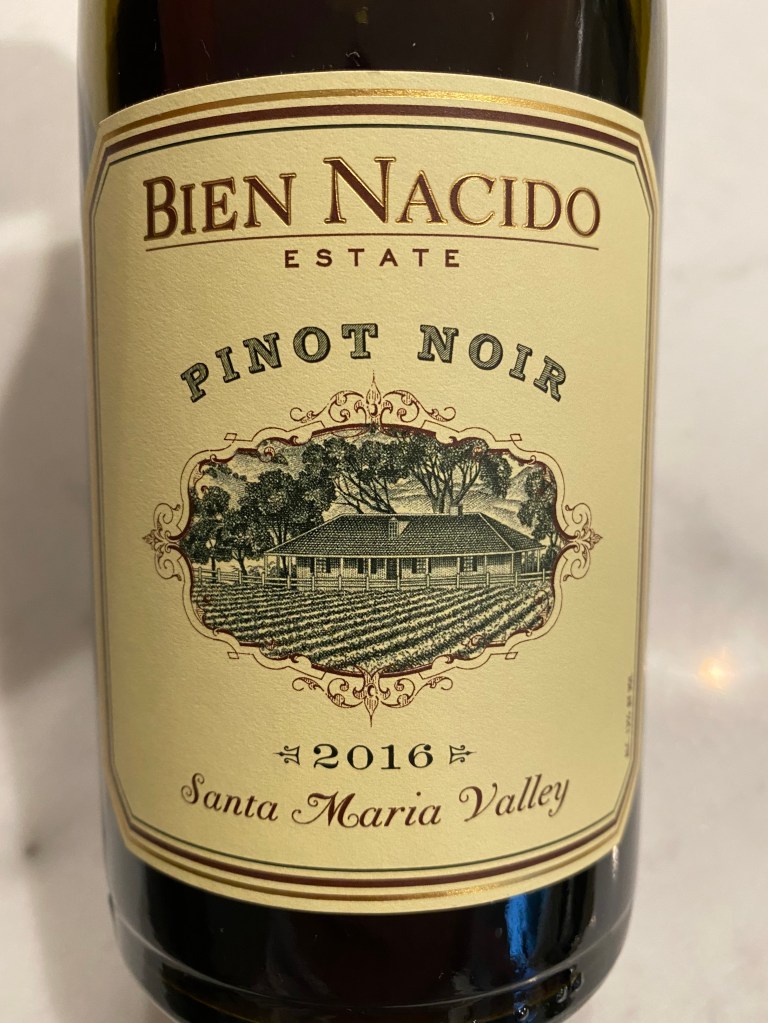
Today’s Wine: 2016 Estate Pinot Noir

100% Pinot Noir; 13% ABV

The 2016 Estate Pinot Noir is medium ruby in color and mostly opaque. Given 30 minutes or so to open up in the glass, the wine showcases a nose of black cherry, black raspberry, red and purple florals, dried tobacco, forest floor, underbrush, baking spice, and pepper. Moving onto the palate, I get notes of cranberry, pomegranate, wild strawberry, leather, loamy earth, game, crushed rock, green herbs, and iron. This is medium-bodied with medium (+) acidity, light tannins, and a medium (+) length finish. 415 cases produced.

Price: $50. I think this is right around fairly priced, but on a value perspective it doesn’t blow me away. The wine offers everything I love in California Pinot Noir (lower ABV, solid depth, and Burgundian feel), but there are some less expensive options that achieve the same. Pair with herb-roasted chicken, duck breast, or turkey sausage and mild blue cheese.

Fantastic Representation of Albariño

Today’s Story: La Marea

La Marea is a very small wine label focused on Spanish varieties in the I. Brand & Family Wines portfolio. Established by Ian Brand and his wife Heather, I. Brand & Family Wines consists of the labels I. Brand & Family (California inspired wines), Le P’tit Paysan (French inspired wines), and La Marea. La Marea yields highly limited quantities of Grenache and Albariño wines, with all fruit sourced from sustainably or organically farmed vineyards in the Monterey Bay area. These wines are meant to showcase the challenging terroir of the largely limestone, rocky, salty, and windswept Monterey Bay region and with La Marea Ian is dedicated to single vineyard bottlings that express each unique site. Ian delicately crafts transparent wines using a combination of native and cultured yeast for fermentation and typically neutral oak for aging.

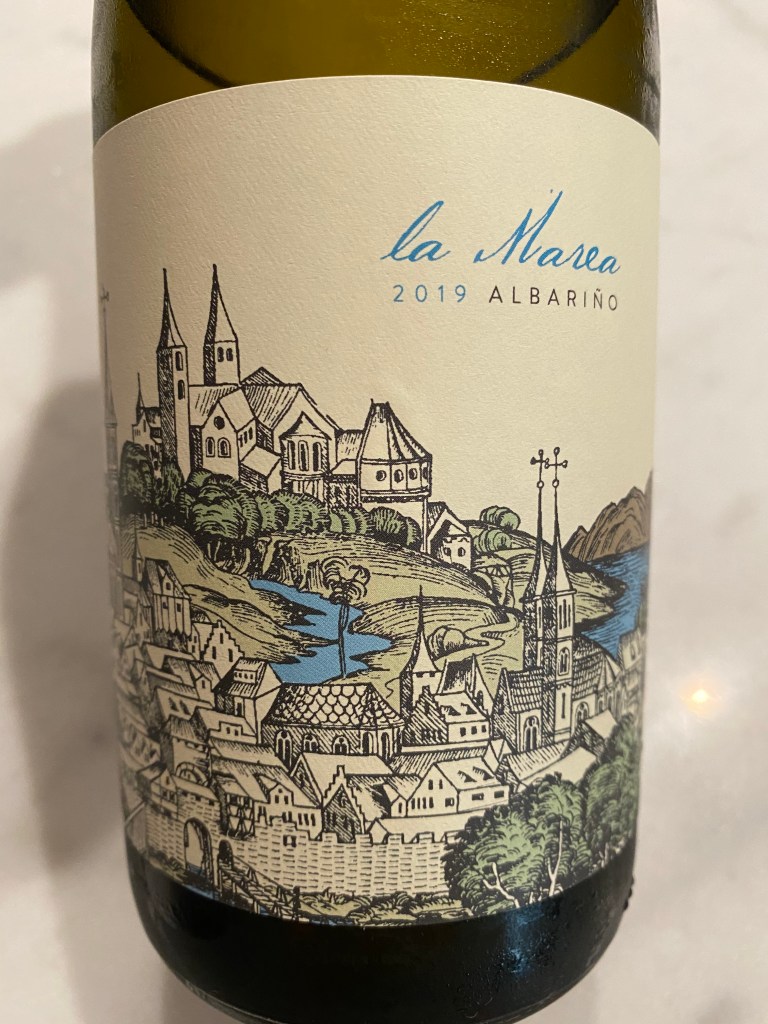
Today’s Wine: 2019 Kristy Vineyard Albariño

100% Albariño; 13.2% ABV

The 2019 Kristy Vineyard Albariño is deep straw/pale yellow in color and transparent. A somewhat delicate nose opens to showcase aromas of lemon zest, grapefruit, summer melon, white and yellow florals, sea shell, and saline. Moving onto the palate, the wine displays similar sea-filled notes with stone fruit, honeydew, white peach, lime, wax, brine, and marine mineral. This is light-bodied with vibrant high acidity and a plush mouthfeel that yields to a crisp and immensely refreshing finish. 850 cases produced.

Price: $24. I think this is absolutely worth the price and is a fantastic representation of the Albariño variety. When I saw this is coming from the Monterey Bay area of California I had to give it a shot and am incredibly glad I did. Pair this with oysters, lightly smoked whitefish, or ceviche.