Refreshing Small-Batch Languedoc Blanc

Today’s Story: Domaine Saint Sylvestre

Domaine Saint Sylvestre was established at the end of 2010 by husband and wife duo Vincent and Sophie Guizard. Located in the small commune of Puéchabon within the Terrasses du Larzac appellation of the Languedoc region in France, the domaine consists of roughly 8 hectares of vines planted to Roussanne, Marsanne, Chardonnay, Viognier, Syrah, Grenache, and Mourvèdre. They produce two white wines, denoted Blanc and Le Coup de Calcaire Blanc, as well as one red, denoted Rouge. At young ages, both Vincent and Sophie joined their respective grandfathers in family vineyards and learned how to grow wine grapes. Vincent ultimately went on to learn how to produce Languedoc wines from Olivier Jullien at Mas Jullien between 1998 and 2000 before venturing on his own to clear hillsides of rolled pebbles and oak trees to plant his own vineyards. Between 2003 and 2010, Vincent worked at Domaine de Montcalmès in an effort to raise their status to become one of the top producers in Puéchabon, with the domaine using fruit from his parcels Fon de la Coste, Red Défriche, and White Défriche. These three parcels laid the foundation of Domaine Saint Sylvestre and are the source of their fruit today.

Vincent and Sophie are both highly involved in their vineyards, said to consider each vine an individual person that demands the same attention in each parcel. All vineyard work (including pruning, trellising, and de-budding) is accomplished by hand and green harvesting limits yields to a low 20 hl/ha. The vineyards are completely tilled and the only treatments used are with copper and sulphur. When it comes time to harvest their fruit, Vincent and Sophie pick by hand controlling for varietal and parcel with some picking being more selective to include only the highest quality grapes on a vine when necessary. The fruit is destemmed at the winery and crushed by variety and parcel before being fermented using only natural yeasts. The two white wines are aged in Burgundian oak for 12 months, while the red is aged in Burgundian oak for 24 months.
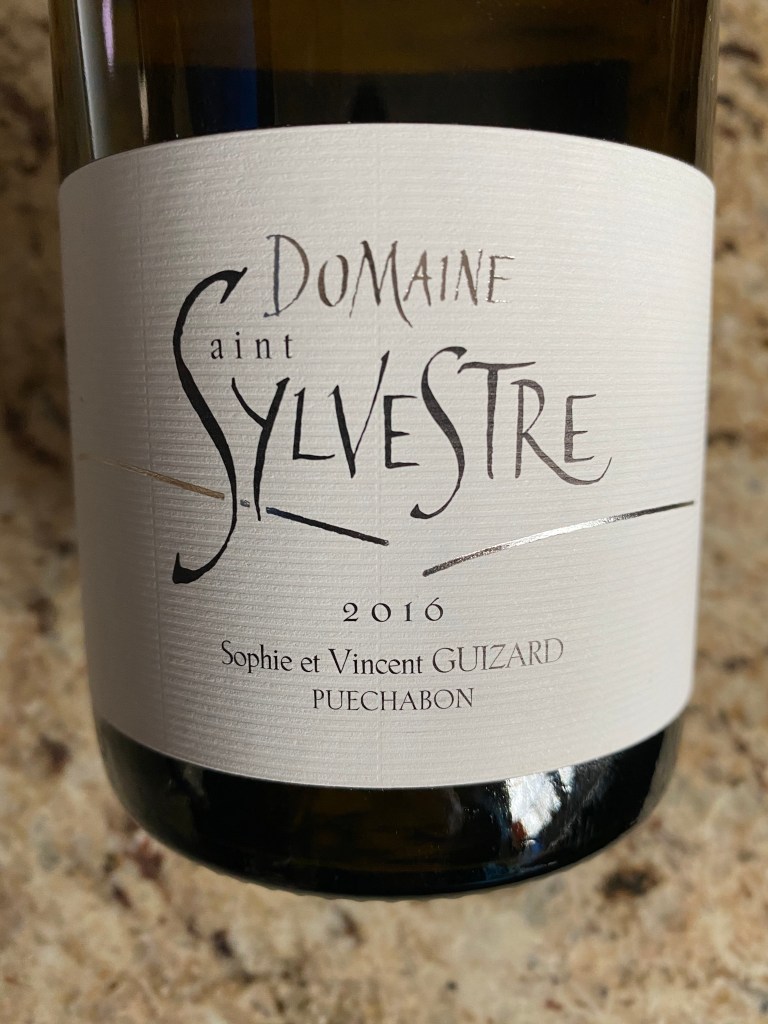
Today’s Wine: 2016 Domaine Saint Sylvestre Blanc

45% Roussanne, 45% Marsanne, 10% Viognier; 14% ABV

The 2016 Blanc is transparent medium gold in color with water-white variation near the rim. On the nose, this showcases aromas of lemon, apricot, stone fruit, beeswax, chamomile tea, limestone, tropical minerality, light vanilla, and brioche toast. Once on the palate, the wine displays notes of lemon and lime zest, dried orange peel, quince, mango, honeysuckle, white florals, wax, and bright spicy minerality. This wine is medium-bodied with medium (+) acidity and a long, dry finish. 150 cases produced.

Price: $45 (though closer to $26 if you can find this in France). This is a delicious and well-made Languedoc Blanc and will be, I presume, unfortunately hard to find. The domaine’s low yields were lowered further thanks to weather with this vintage, but the quality is all there. Pair this with herb-roasted chicken, vegetable stir fry with Asian spices, or prawns.
Budget-Friendly Pinot Noir

Today’s Story: Meiomi

Meiomi was established in 2006 by Joe Wagner while he was working for his father Chuck at Caymus Vineyards. Coincidentally, Meiomi sort of spawned, in a way, from Belle Glos which was a Joe Wagner single-vineyard Pinot Noir project whose 2017 Clark & Telephone Pinot Noir I reviewed in The Caymus of Pinot Noir. Anyway, Meiomi is named for the native Wappo word for “coastal” and their Pinot Noir is sourced from Monterey County, Santa Barbara County, and Sonoma County to this end. Meiomi was founded with the goal of producing reliable and financially accessible wines for the masses, at a time when Pinot Noir drinkers cherished bright berry sweetness in their wines which could pair with a broad range of foods. By 2010, Meiomi sold roughly 90,000 cases per year and that number stretched to 700,000 cases annually by 2015. In July, 2015, Wagner sold Meiomi to Constellation Brands for $315 million and under their ownership the brand continues to churn out easy-drinking, people-pleasing, fruit-forward wines that also include Chardonnay and Rosé.

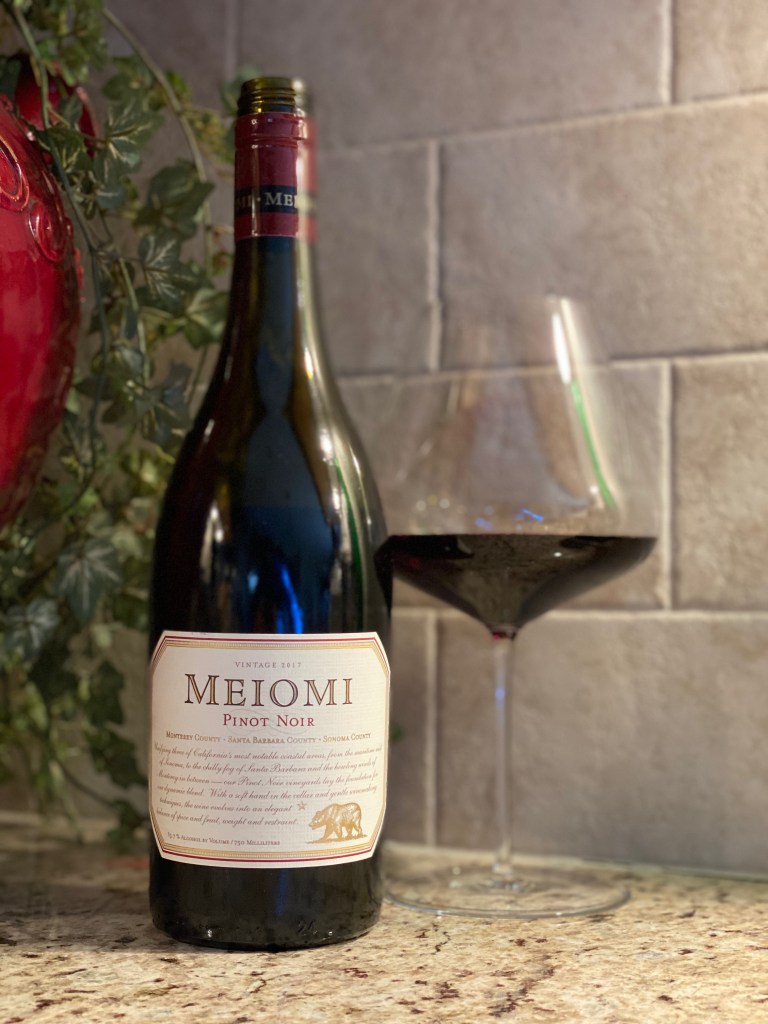
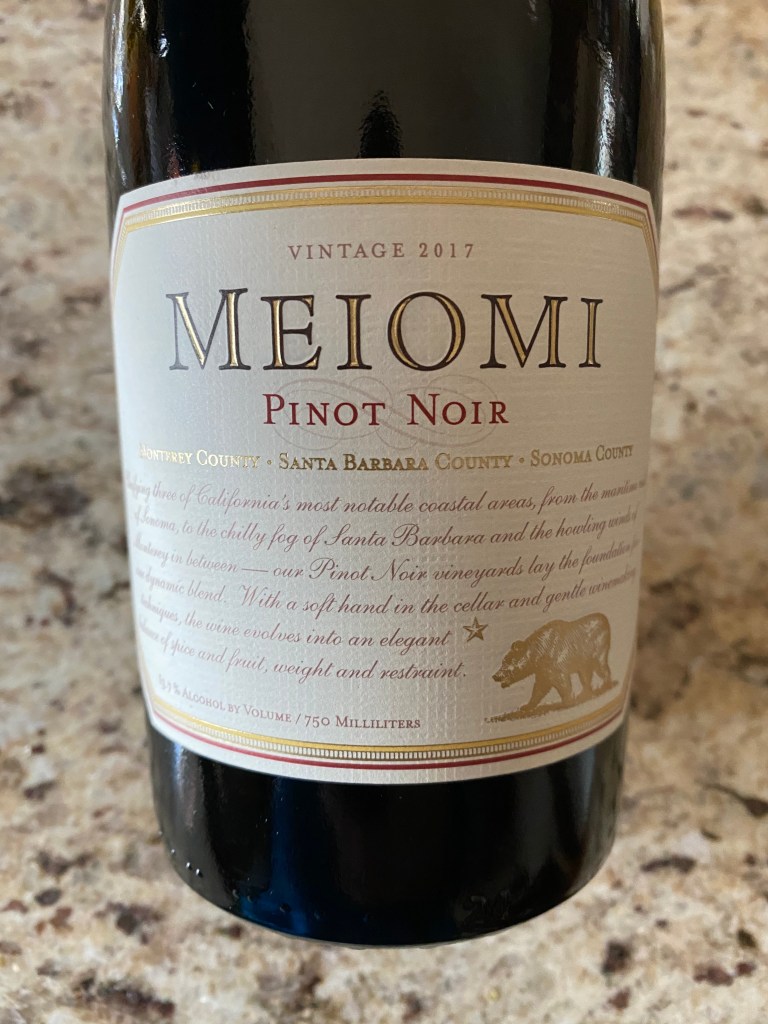
Today’s Wine: 2017 Pinot Noir

100% Pinot Noir; 13.7% ABV

The 2017 Pinot Noir is pale ruby in color and moderately transparent. A geographic blend, the fruit for this bottling is sourced from Monterey County (56%), Santa Barbara County (26%), and Sonoma County (18%). On the nose, I get aromas of jammy strawberry and raspberry, bing cherry, red licorice, loose rocky soil, slight peppery spice, iron, vanilla bean, mocha, and oak. Once on the palate, the wine showcases notes of candied cherry, strawberry, blackberry jam, boysenberry, clay, clove, green underbrush, and new oak. This wine is medium-bodied with medium (+) acidity, light tannins, and a medium length finish.

Price: $17. This is a budget-friendly, food-friendly, and people-pleasing wine meant for large summer barbecue yard parties, family gatherings, or perhaps people first exploring approachable Californian Pinot Noir. Keep in mind this drinks like a cocktail with its jammy and syrupy notes. Pair this with pizza, tomato-based pasta dishes, or barbecue chicken.

Youthful but Delicious Nuits-St-Georges

Today’s Story: Domaine Jean Grivot

Domaine Jean Grivot is a relatively small family owned and operated Burgundian estate now under guide of the fifth generation Étienne Grivot, his wife Marielle, and their daughter Mathilde who took over winemaking from her parents in 2017. Étienne took over the domaine from his father Jean Grivot in 1987, and Jean had taken over from his father following his death in 1955. The majority of the domaine’s vineyards are located in Vosne-Romanée, however over time their growth to 15.5 hectares stretches across 22 appellations in additional communes of Vougeot, Chambolle-Musigny, and Nuits-Saint-Georges. The domaine’s holdings include notable Grand Cru vineyards in Clos de Vougeot, Echézeaux, and Richebourg, as well as 8 Premier Crus including Les Beaux Monts and Suchots in Vosne-Romanée. Their vineyards are farmed organically founded in a desire for minimal impact on the environment and removal of chemicals in the vineyards. In Richebourg, Echézeaux, Beau Monts, and Suchots the domaine uses a horse to plough the vineyards in an effort to minimize impact on the soil. Harvest is accomplished by hand and the grapes are 95-100% destemmed before beginning fermentation using only natural yeasts. Unlike other winemakers in Burgundy, Grivot does not like punch downs before fermentation begins but rather pumps over the wines after fermentation is complete and before they spend 15 months in barrels.

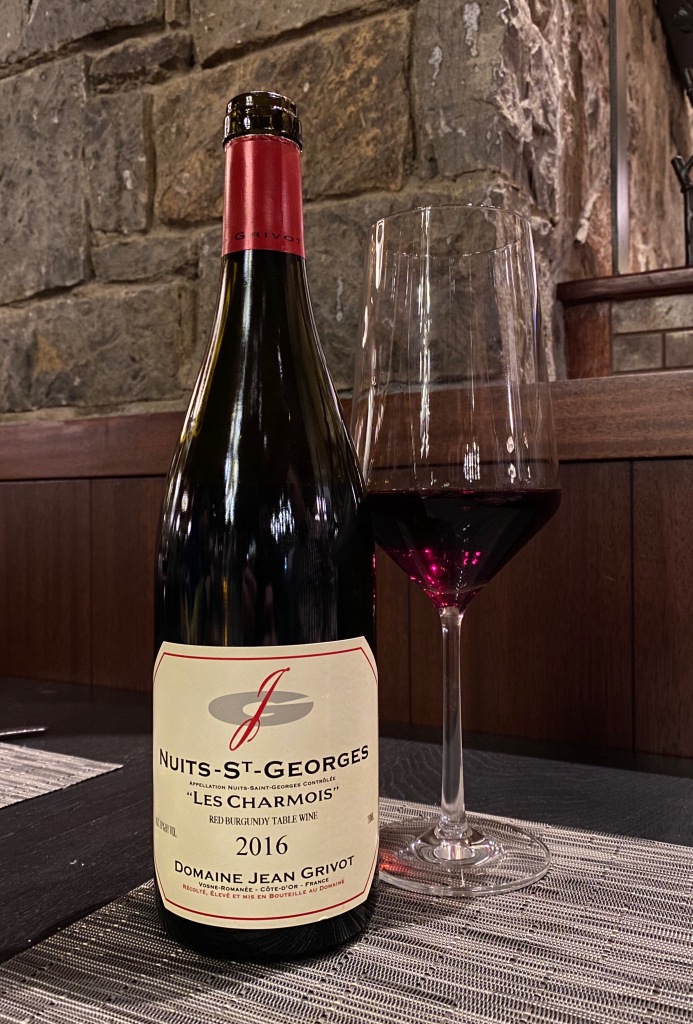
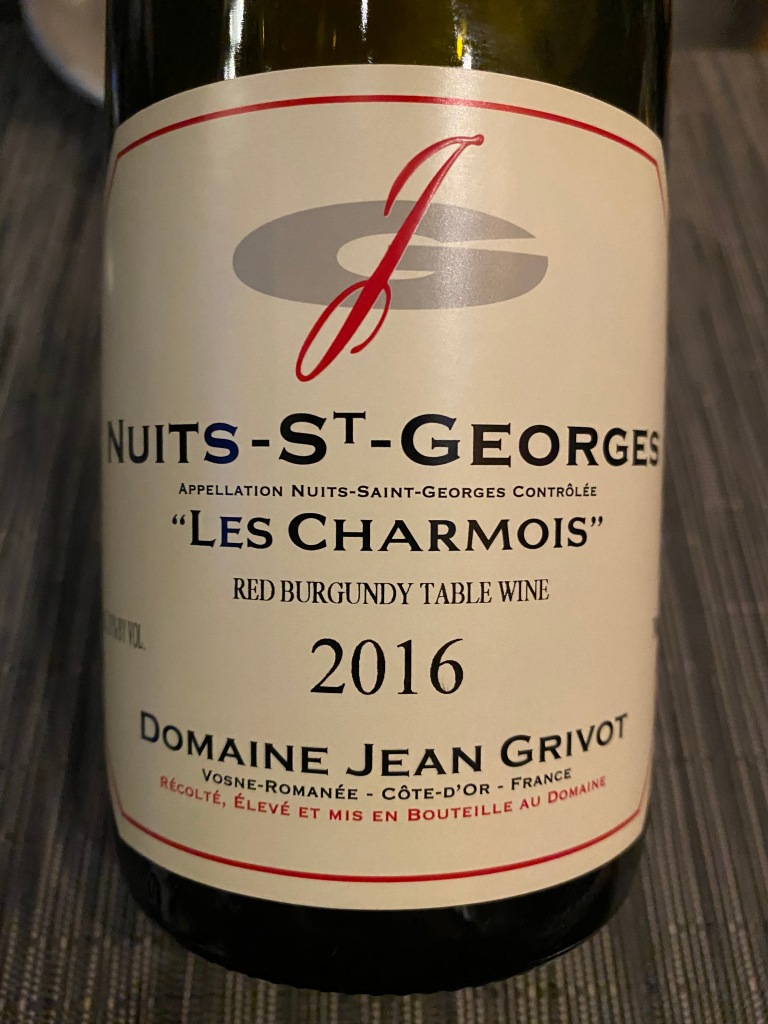
Today’s Wine: 2016 Nuits-St-Georges Les Charmois

100% Pinot Noir; 13% ABV

The 2016 Les Charmois is pale ruby in color and moderately transparent. Once this opens up, the nose showcases aromas of black cherry, blackberry, black raspberry, gravel, tobacco, forest floor, underbrush, ground green herbs, and slight oak. On the palate, I get notes of cherry, cranberry, ripe wild raspberry, blue and purple florals, sous bois, tar, black truffle, white pepper, smoke, and a hint of oak. This red Burgundy is medium-bodied with high acidity, medium tannins, and a long finish. 98 cases produced.

Price: $100. This is a great value Nuits-St-Georges which is drinking surprisingly well with some air at its young age. However, this has the structure to where I’d suggest waiting another 3-5 years and it’ll last for at least 10-15 years beyond that. Pair this with lean steaks, roasted game, or grilled pork.

Napa Valley Power and Elegance

Today’s Story: Corison Winery

Corison Winery is a small, family-operated farm and winery founded in 1987 when Cathy Corison started purchasing Cabernet Sauvignon grapes from vineyards between Rutherford and St. Helena. In 1995, Cathy and her husband William purchased Kronos Vineyard which afforded them the ability to construct a winery on this century-plus-old farm with and have their own estate vineyard. In 1999, Cathy and William broke ground on their winery (which William designed in a Victorian barn style) and today it can be seen off the St. Helena Highway in Napa Valley. Corison later expanded in 2015 with the purchase of the Sunbasket Vineyard, which is close to the existing winery and was a source of Corison fruit for more than 25 years prior. Throughout her winemaking, Cathy is largely non-interventionist which allows the wines to showcase their unique place while being both elegant and powerful at the same time.

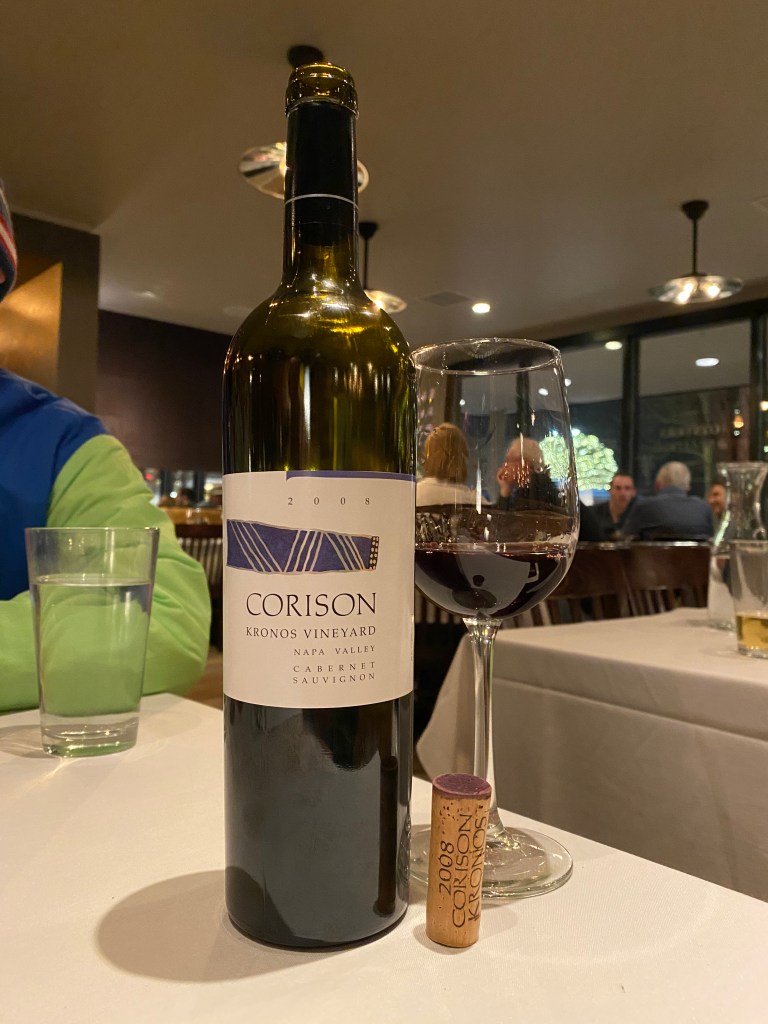
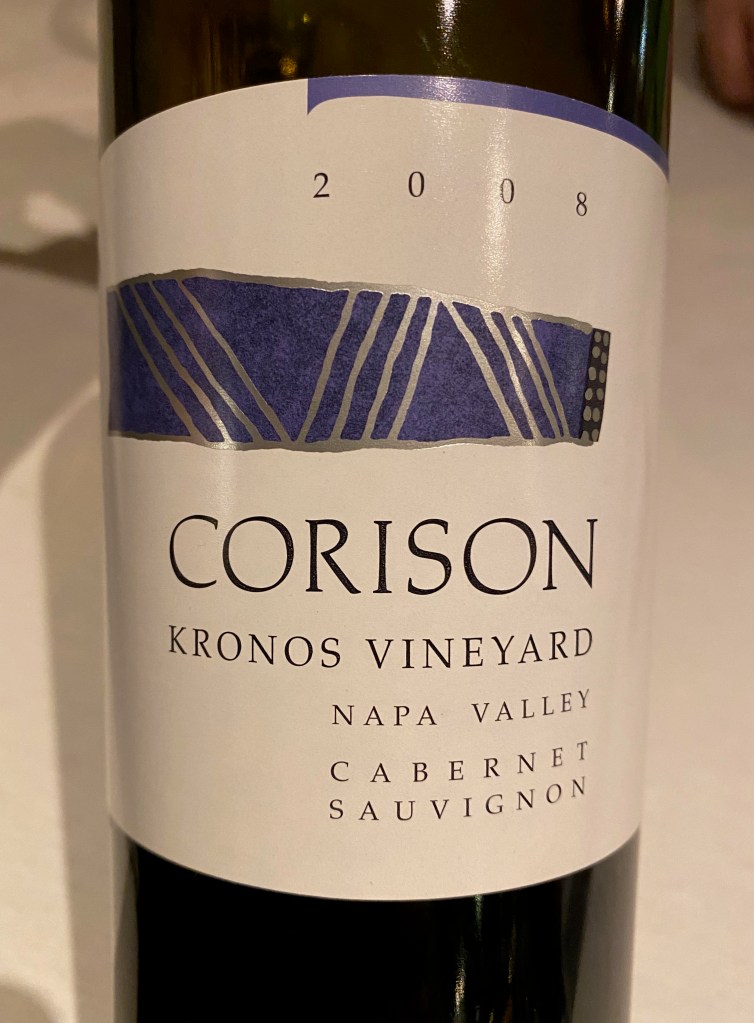
Today’s Wine: 2008 Kronos Vineyard Cabernet Sauvignon

100% Cabernet Sauvignon; 13.8% ABV

The 2008 Kronos Vineyard Cab is medium ruby in color and moderately opaque. This was singing out of the bottle and the nose showcases aromas of cherry, redcurrant, blackberry, underbrush, saddle leather, truffle, loamy earth, wet gravel, and black pepper. Once in the mouth, the wine displays notes of blackberry, plum, black cherry, black raspberry, tobacco, scorched earth, slate, green herbs, and a hint of oak. This is medium- to full-bodied with medium (+) acidity, medium integrated tannins, and a long finish.

Price: $280. I’ve known the legend of Cathy Corison’s wines but this is actually my first bottle. This was a true treat and was an exceptional wine drinking insanely well right now. Pair this with filet mignon, herb-roasted lamb, portobello mushrooms, or assorted cheeses.

A California Titan

Today’s Story: Diamond Creek Vineyards

Diamond Creek was established in 1968 by Al Brounstein, a former pharmaceuticals wholesaler based in Southern California. During the 1960s, Al desired a career change and discovered a 70 acre property on Diamond Mountain which he believed to be perfect for producing wine and offer him a new venture. In 1966 before Al owned the property, he smuggled vine cuttings from two Premier Cru properties in Bordeaux (they are a secret) by personally flying them up through Tijuana, Mexico to a nursery in St. Helena, California. When Al finally purchased the property in 1967 and began planting in 1968, he established three separate blocks differentiated by their soil composition: Red Rock Terrace (7 acres), Gravelly Meadow (5 acres), and Volcanic Hill (8 acres). In addition to these three mainstays, there exists a 0.75 acre vineyard on the property named Lake Vineyard, and wines from this vineyard are only bottled in particularly outstanding vintages. Though the wines today are typically a blend of Bordeaux varietals, Diamond Creek was established with the idea of producing exclusively Cabernet Sauvignon.

I had the opportunity to taste at Diamond Creek and tour the property in September, 2018 and I included some pictures at the end of this post.

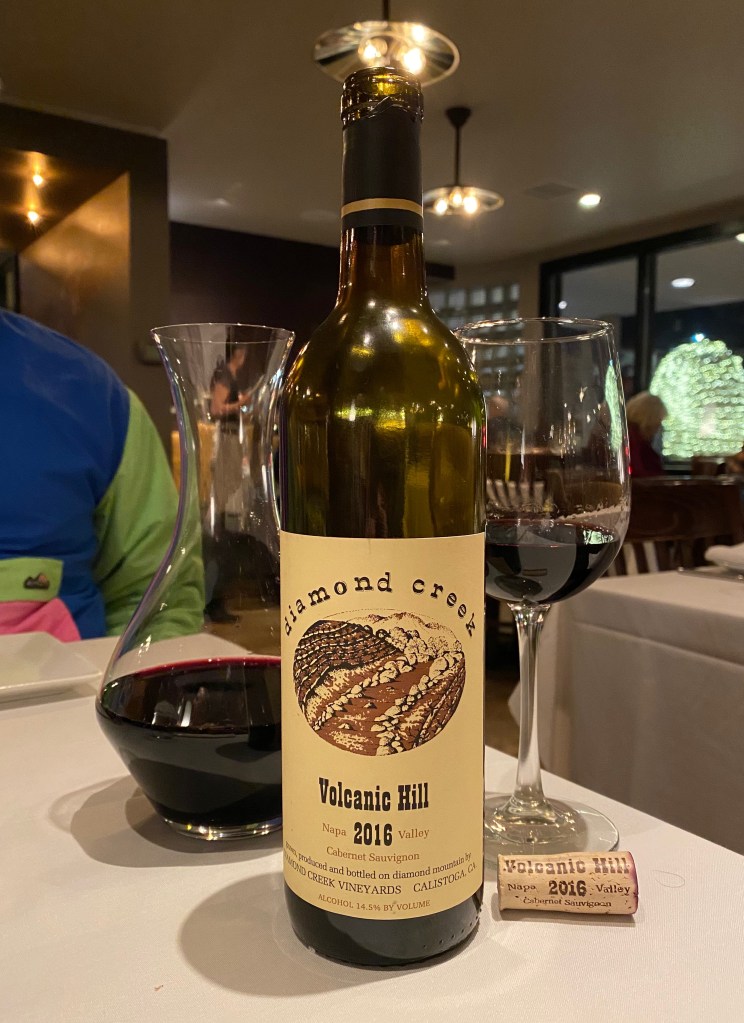
Today’s Wine: 2016 Volcanic Hill Cabernet Sauvignon

88% Cabernet Sauvignon, 8% Merlot, 2% Cabernet Franc, 2% Petit Verdot; 14.5% ABV

The 2016 Volcanic Hill is opaque deep ruby in color with purple hues. Once this opens up in the decanter, the nose showcases aromas of blackberry, plum, crème de cassis, redcurrant, licorice, graphite, tobacco, damp earth, gravel, and oak. In the mouth, the wine reveals notes of blackcurrant, ripe plum, blueberry, black cherry, violet, cigar box, dark chocolate, cinnamon, crushed rock, dried green herbs, and a touch of charred oak. This wine is full-bodied with high acidity, high tannins, and a long finish. Superb bottling from Diamond Creek.

Price: $250. Diamond Creek is always exceptional and even though we committed infanticide with this bottle of a restaurant wine list its potential is monstrous. Give this at least another 7-10 years of aging and pair it with filet mignon, grilled game meat (like bison and elk), or roasted lamb.

From My Visit:

A view of the vineyards from the tasting room.
Property tour by golf cart.
The property’s lake (above) and Lake Vineyard (below).

Outstanding Marriage of Howell Mountain and Valley Floor Cabernet Sauvignon

Today’s Story: Dunn Vineyards

Dunn Vineyards dates to 1979 when Randy and Lori Dunn purchased a 14 acre parcel in Angwin with about 5 acres planted to Cabernet Sauvignon. Though Randy worked as a winemaker in Rutherford for his day job, he spent the nights and weekends with Lori and their young son Mike farming their vines. The Dunn family also farmed Harry Frank’s adjacent vineyards and purchased the fruit resulting in a first harvest of 9 tons of fruit. With an additional purchase of 3 tons from Beatty Ranch, the Dunn’s were on their way to producing their first vintage. The family moved onto their property shortly thereafter with another young child, Jennifer, and Dunn Vineyards was officially bonded in 1981. After their second daughter, Kristina, was born, Randy was still working in Rutherford when the winery’s success picked up and encouraged him to leave his job in 1985 to move into a new family house and put all of their effort into Dunn Vineyards. By the late 1980s, Randy was consulting for other wineries, their wine was selling out, and the family needed to burrow into the mountain in 1989 to create more room for barrels. Mike returned in 1999 and three years later became a full-time employee at Dunn Vineyards and after Kristina graduated from Cal Poly with a degree in winemaking and viticulture she joined as well. Today, Kristina’s daughters play in the vineyards and Mike’s son helps bottle the wines, making it seem the family tradition at Dunn Vineyards is set to continue into three generations and beyond. Today, the family farms 42 acres of Cabernet Sauvignon high up on Howell Mountain and the resulting wines are elegant yet profound and built for cellaring.

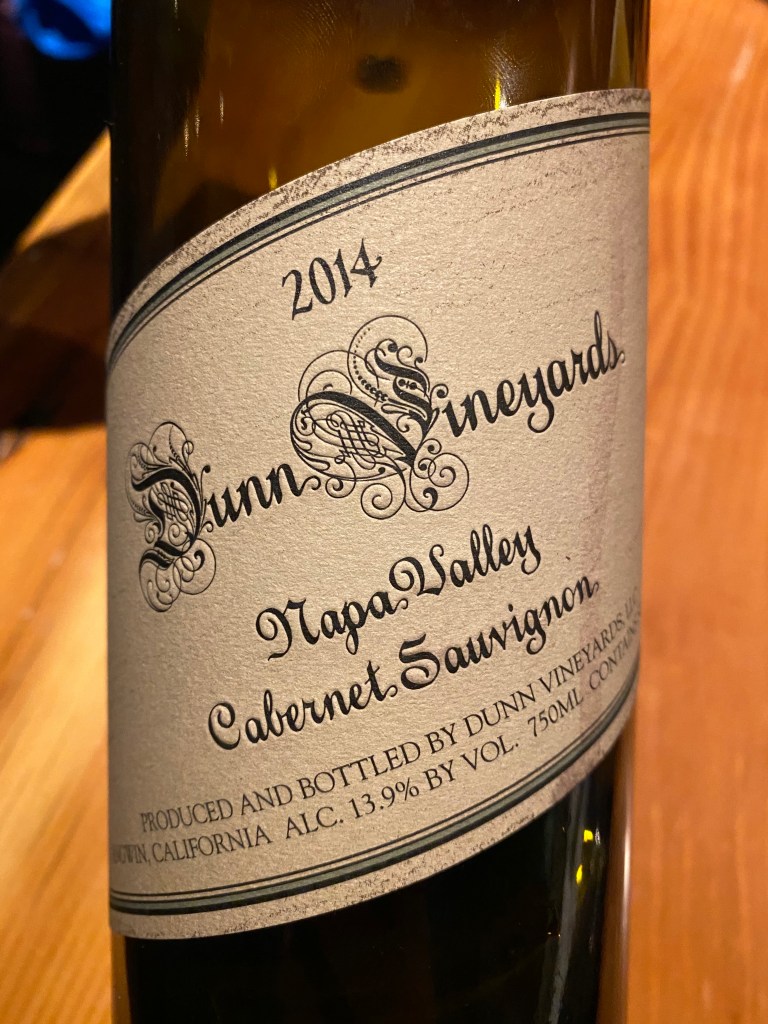
Today’s Wine: 2014 Napa Valley Cabernet Sauvignon

100% Cabernet Sauvignon; 13.9% ABV

The 2014 Napa Cab is opaque deep purple/ruby in color. Once this opens up, the nose showcases aromas of blackcurrant, blackberry, plum, black cherry, redcurrant, red licorice, cedar, tobacco, loamy earth, graphite, green herbs, and a touch of vanilla. On the palate, the wine displays notes of blackberry, crème de cassis, black cherry, black raspberry, charred earth, smoke, pencil shavings, chocolate, and oak. This wine is full-bodied with medium (+) acidity, grippy high tannins, and a medium (+) length finish.

Price: $90. Dunn always produces exceptional Cabernet Sauvignon and this is relatively a good value, however I would spend the extra money to buy their Howell Mountain bottling which is consistently one of my favorites. These wines are built for the long haul as well, as I’ve tasted them back to the 1980s and each was fantastic. Pair with filet mignon, roasted lamb, or pepper-crusted ahi tuna.

Quite Possibly My Best Value Bourgogne Rouge to Date

Today’s Story: Thibault Liger-Belair Successeurs

Thibault Liger-Belair Successeurs was established alongside Domaine Thibault Liger-Belair in 2001. Though the Liger-Belair family owned the domaine for 250 years, it certainly did not fall to Thibault in a linear path. In 1720, Claude Marey who was the mayor of Nuits-Saint-Georges and a vineyard owner established C. Marey wine house to sell his wines. Next, Claude’s son Claude Philibert Marey (also a mayor of Nuits-Saint-Georges) took over the family business until his death in 1804 when his youngest son Guillaume Felix Marey took over. In 1852, Guillaume Felix partnered with his nephew Comte Liger-Belair (who owned Grand Cru vineyards in Vosne-Romanée) to establish C. Marey et Comte Liger-Belair. The domaine passed through several generations, ultimately until 1892 when Vincent Liger-Belair took over and restructured it with work handled by three sharecroppers. After studying viticulture and oenology for six years, working for a Parisian communications firm, and starting an internet wine sales company, Vincent’s son Thibault transitioned to winemaking and took over the vines to establish his namesake domaine.

Thibault Liger-Belair harvested his first Nuits-Saint-Georges, Nuits-Saint-Georges Charmottes, and Vosne-Romanée Aux Reas in 2002 but quickly set his eyes upon expanding his portfolio. In 2003, Thibault ventured into Richebourg Grand Cru, Clos Vougeot Grand Cru, Vosne-Romanée Premier Cru Petits Monts, and Bourgogne Rouge, followed in 2009 by Beaujolais. While all of the domaine’s vineyards are certified organic by Ecocert, each appellation is cultivated and worked differently based on their unique soils and climates which Thibault takes great care to analyze. Through harvest and in the cellar, Thibault believes that his grapes need to be treated very delicately and with respect to produce the best wines. Regarding barrels, he selects between three coopers and requires a three year drying period before they are made and he almost never uses more than 50% new oak. Thibault’s wines are aged between 14 and 18 months depending on appellation without racking, and are bottled unfined and unfiltered.

Today’s Wine: 2015 Bourgogne Rouge Les Grands Chaillots

100% Pinot Noir; 13% ABV

The 2015 Bourgogne Rouge is moderately opaque pale ruby in color with rose variation near the rim of the glass. On the nose, I get aromas of cranberry, wild raspberry, cherry, rose petal, forest floor, faint barnyard, peppery spice, black tea leaf, rocky minerality, and a hint of oak. Once in the mouth, the wine showcases notes of dried strawberry, red cherry, blackberry, black raspberry, violet, tobacco, loamy soil, green underbrush, dry crushed rock, and pepper. This is medium-bodied with medium (+) acidity, medium dusty tannins, and a surprisingly long finish. 1/3 of the fruit comes from one of the domaine’s Nuits-Saint-Georges vineyards (0.8 ha planted in 1986) and 2/3 is purchased from growers in Marsannay, Côtes de Nuits, Beaune, and Ladoix Serrigny.

Price: $35. This is quite possibly the best value Bourgogne Rouge I’ve tried to date. From first smell you can tell this is a well-crafted wine and that first sip is profound. This is drinking well now with some air but certainly has the structure to where I’d hold off on my next bottle for at least 5 years. Pair this with seared duck breast, herb-roasted chicken, or mild goat cheese.

Great Value from the Douro Valley

Today’s Story: Churchill’s

Churchill’s is a relatively young Port wine company, founded in 1981 by John Graham which made it the first to be established in 50 years. Though John comes from a long lineage of Port winemakers of Graham’s, he wanted to start his own venture to explore his own individual style of Port. Named for his wife, Churchill’s produces Port wines using as much natural fermentation as possible and as little fortification brandy as possible. In 1999, Churchill’s expanded into the production of Douro wines by acquiring Quinta da Gricha. All of Churchill’s wines are produced with Grade A (IVDP’s highest quality rating) native grapes and for Port are hand-sorted at the winery before being crushed and vinified in open granite fermentation tanks called lagares. Foot treading is utilized to provide a gentle maceration of the grapes and skins, and the traditional winemaking practices as a whole alongside minimal intervention results in dry, well-structured wines.

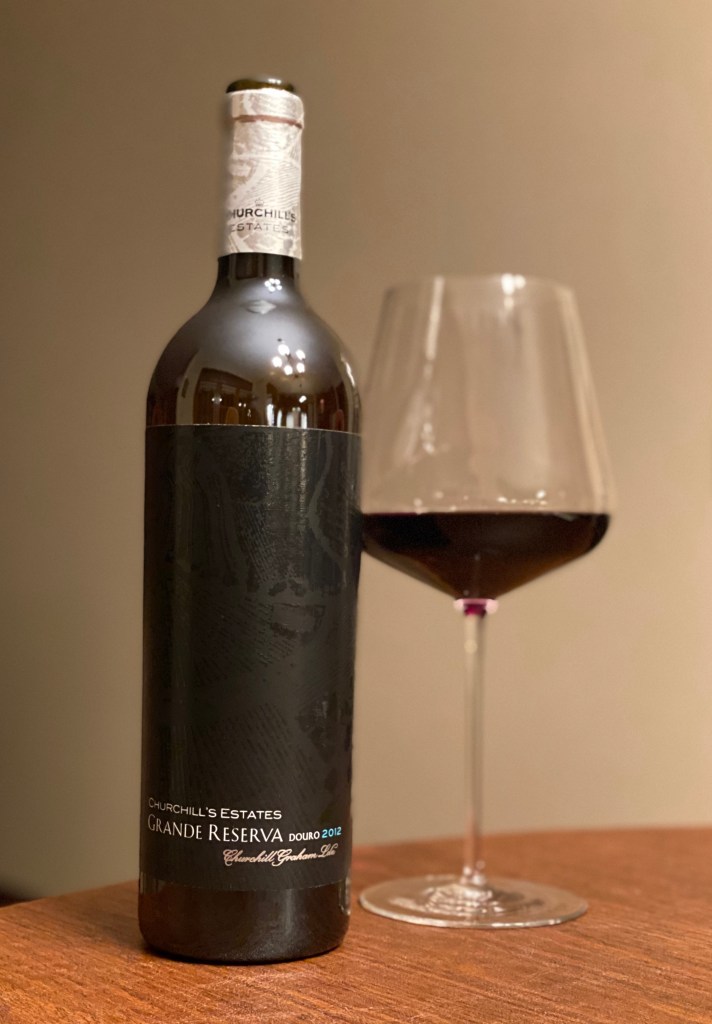
Today’s Wine: 2012 Grande Reserva Douro

Field blend of Touriga Nacional, Touriga Francesa, Tinta Roriz, Tinta Francisca, and Tinto Cão; 14% ABV

The 2012 Grande Reserva is slightly transparent and medium purple in color. Once this opens up, the nose showcases aromas of plum, stemmy blueberry, cherry cola, violet, sweet tobacco, rocky earth, wet slate, green vegetation, and black pepper. On the palate, I get notes of blackberry, blueberry, juicy black plum, black raspberry, cocoa, mint, damp loamy soil, iron, nutmeg, slate, and a hint of oak. The wine is full-bodied with medium (+) acidity, medium tannins, and a medium (+) length finish.

Price: $32. This is a really solid value from the Douro Valley that is drinking very nicely right now. Pair this with steak, a good burger, or game (particularly wild boar or venison).

Delicious Middle-Road Sweet Wine

Today’s Story: Coume del Mas

Coume del Mas was established in 2001 by Philippe and Nathalie Gard and today encompasses roughly 15 hectares of vines on the steep slopes of Banyuls sur Mer. Though the Gards work an incredibly challenging terroir, they work almost entirely by hand and in close contact with their vines to glean an understanding of the varying soil and nuances it can impart into wine. Coume del Mas cannot reach their vines by tractor and a majority cannot be reached by plough horse, while both the rocky soil and extreme climate keep yields low (around 20 hl/Ha). Coume del Mas produces wines in two categories: Banyuls which are sweet wines fortified during fermentation, and dry wines namely with Grenache, Mourvèdre, and Carignan. Banyuls is one of the older appellations dating to 1936, whereas the appellations that source Coume del Mas dry wines date to 1971 for the reds and 2002 for the whites.

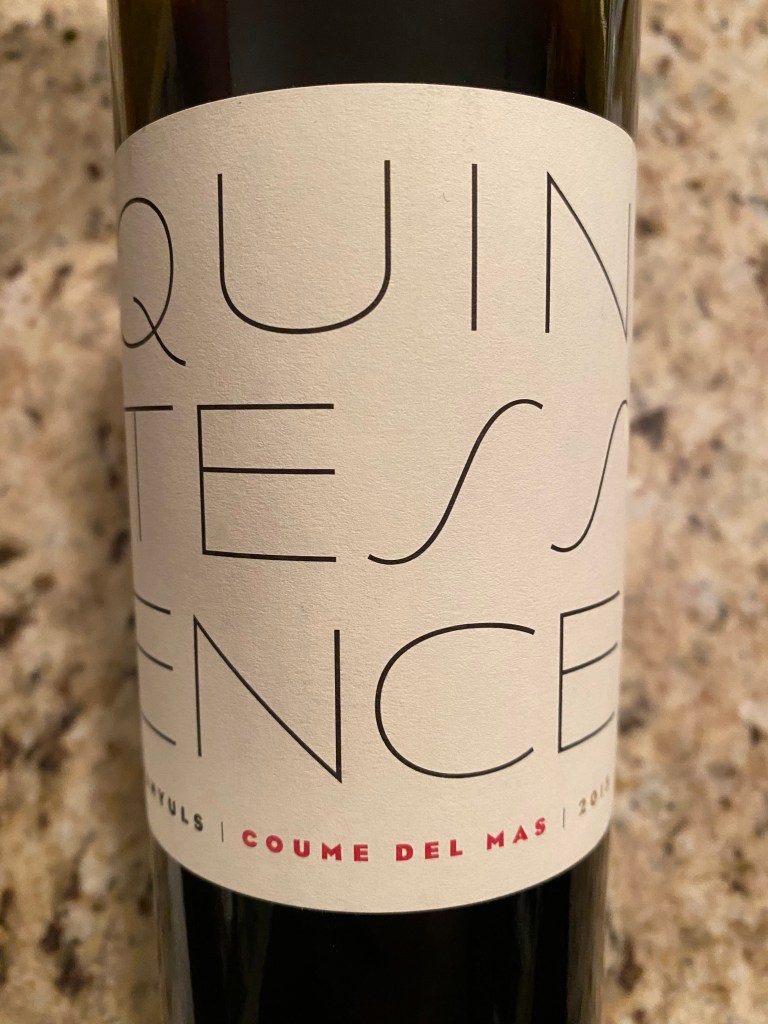
Today’s Wine: 2015 Quintessence Banyuls

100% Grenache Noir; 16.5% ABV

The 2015 Quintessence is moderately opaque and pale to medium purple in color. On the nose, this Banyuls showcases aromas of muddled strawberry, prunes, baked plum, black licorice, damp earth, cinnamon, eucalyptus, and a touch of oak. Once in the mouth, I get notes of stewed black raspberry, candied strawberry, cranberry sauce, jammy blackberry, dates, fig, saturated soil, chocolate, and purple florals. This wine is full-bodied with medium (+) acidity, medium (+) tannins, and a long finish dominated by inky black fruit. 250 cases produced.

Price: $50. This is what I paid for a 500ml bottle, though I am certain this is cheaper overseas if you can find it. This is a delicious sweet wine that is neither too sweet nor too syrupy to enjoy after a decadent meal, and an easy one to have multiple glasses of which can be difficult with something else like Port. Pair this with chocolate, raspberry tart, or mixed berries.

La La Land

Today’s Story: Guigal

Guigal was established in 1946 by Etienne Guigal in Ampuis, a small village in the Côte-Rôtie appellation of the northern Rhône region in France. Etienne arrived in Côte-Rôtie at the age of 14 in 1924, and early in his career he helped develop Vidal-Fleury for 15 years before starting his namesake venture. His son, Marcel Guigal, took over management of the Guigal domain in 1961 when Etienne was struck with temporary but total blindness, and Marcel was joined by his wife Bernadette in 1973. As Marcel and Bernadette worked tirelessly to expand the family business (namely by purchasing Vidal-Fleury in the early 1980s and Château d’Ampuis in 1995), their son Philippe (born 1975) grew amongst the vines with expectations of one day joining the domain. Today, Philippe serves as Guigal’s oenologist alongside his wife Eve and the two strive to produce the greatest wines of the Rhône Valley.

Guigal has experienced significant expansion since their first acquisitions in the 1980s and 1990s, particularly in 2001 when they purchased the domains Jean-Louis Grippat and de Vallouit to not only strengthen their stature in Côte-Rôtie but expand into the Hermitage, Saint-Joseph, and Crozes-Hermitage appellations. In 2003, Guigal started producing their own wine barrels to not only learn more about the entire wine production process but control another facet of their business. Guigal expanded yet again in 2006 by purchasing Domaine de Bonserine, and made strides in 2017 by purchasing Château de Nalys in Châteauneuf-du-Pape to establish a foothold in southern Rhône.

Today’s Wine: 2004 Côte-Rôtie ‘La Turque’

93% Syrah, 7% Viognier; 13% ABV

The 2004 La Turque is mostly opaque and medium ruby in color. This requires at least an hour decant, but then the nose blossoms to emit aromas of plum, blackcurrant, bing cherry, licorice, cola, smoked game, loamy soil, white truffle, flint, cracked pepper, and oak. Once in the mouth, the wine showcases notes of ripe red cherry, redcurrant, candied raspberry, dried blueberry, forest floor, graphite, earthy mushroom, leather, smokey tobacco, dried green herbs, and mineral. This supple and elegant wine is medium-bodied with medium acidity, medium (-) tannins, and a long finish. 350 cases produced.

Price: $300. Though not one of the “greatest” vintages of La Turque, this is an exceptional wine drinking beautifully right now. I would say this has another five years left in its prime drinking window and could be a great introduction to Guigal’s “La La’s.” Pair this with wagyu filet mignon, grilled lamb, hare, or pheasant.