The Steve Jobs of Wine

Today’s Story: Paul Hobbs Winery

Paul Hobbs Winery was founded in 1991 by Paul Hobbs with his initial release of Chardonnay, Pinot Noir, and Cabernet Sauvignon from purchased fruit. Paul grew up in upstate New York on a working family farm and orchard, so one could say agriculture was in his blood from an early age. Though Paul helped plant, harvest, and sell crops at nearby farmer’s markets before school each morning, his first foray into wine (if you will) was helping his father achieve his dream of replanting some of the apples, peaches, and nuts in their orchards to wine grapes.

When it came time for Paul to go to college, his father encouraged him to study viticulture and enology but instead Paul followed in his great-grandfather’s footsteps by studying medicine and graduated with a BS in Chemistry from Notre Dame. His father’s persistence paid off, however, and Paul moved to California after graduation and studied viticulture and enology at UC Davis where he received his Master of Science degrees three years later. Fresh off his new degree, Paul was hired by Robert Mondavi for his advanced knowledge of oak aging and he was quickly promoted to the inaugural Opus One winemaking team. Following his experiences at Robert Mondavi and Opus One, Paul joined Simi Winery as their winemaker before beginning consulting roles for Peter Michael, Lewis Cellars, Bodegas Catena, and soon other wineries around the world.

Throughout these experiences with wine, Paul Hobbs crafted a dream of his own to produce vineyard designated wines under his own name. In 1991, Paul spoke with Larry Hyde in Napa and Richard Dinner in Sonoma about purchasing some of their fruit, and the resulting 5 tons of fruit from each vineyard culminated in the first Chardonnay, Pinot Noir, and Cabernet Franc of Paul Hobbs Winery. Paul’s dreams entered their next phase in 1998, however, when he purchased his family’s first estate vineyard and established the Katherine Lindsay Estate (named after his great-grandmother) in Sebastopol, CA. The first vintage of this wine came with the 2003 harvest, and today Paul Hobbs consists of seven estate vineyards in some of the preeminent Californian regions for Chardonnay, Pinot Noir, and Cabernet Sauvignon.

Paul Hobbs practices sustainable farming in caring for his vineyards and a minimalist approach in producing his wines. To sustain the integrity of his fruit and each vineyard block, Paul demands a constant flow of communication and knowledge from the vineyards to the cellar. When it comes time for harvest, all Paul Hobbs fruit is hand-harvested using hand sheers to keep the fruit in pristine condition. During the winemaking process, all wine is fermented using only native yeasts that originate in the vineyards and the cellar and the wine is aged in finely grained French oak barrels. With his finished product, Paul bottles the wine unfined and unfiltered in an effort to display the purity of the fruit and the place of each wine with elegance and transparency.

Fun fact: Paul Hobbs is widely known as “the Steve Jobs of wine” thanks to his “ardent exactitude” and immensely high demands for quality.

Today’s Wine: 2015 Katherine Lindsay Estate Pinot Noir

100% Pinot Noir; 14.3% ABV

The 2015 Katherine Lindsay Estate Pinot is pale to medium ruby in color and is moderately transparent. This requires about 30-45 minutes to open up, but once it does the nose showcases aromas of cranberry, cherry, dried strawberry, cola, violet, clay, leather, baking spice, and a hint of oak. Once in the mouth, this Pinot offers notes of black cherry, pomegranate, juicy ripe strawberry, black truffle, forest floor, and black pepper. The wine is medium-bodied with medium (+) acidity, light tannins, and a medium (+) length finish.

Price: $100. This is certainly an upper-echelon RRV Pinot but it needs some extra time in the cellar to fully come together. If you buy some, open some more reasonable Pinot in the $35 sweet spot I’ve mentioned before while this sits a few more years. Pair this with duck, pork loin, roast chicken, or charcuterie.

The Beginning of Modern Winemaking in Napa Valley

Today’s Story: Heitz Wine Cellars

Heitz Cellars was founded in 1961 by Joe and Alice Heitz with the purchase of a small 8.5 acre vineyard planted to Grignolino in the Napa Valley. Joe was previously enlisted in the US Air Force during World War II, though afterwards he started taking classes at UC Davis in viticulture and enology and graduated in the inaugural class of 1951 with half a dozen others. Though Joe first worked for Gallo, he transitioned to Beaulieu Vineyard in 1951 and worked under legendary winemaker André Tchelistcheff as assistant winemaker for 10 years. When Joe and Alice went into business for themselves by starting Heitz, this was a time when Napa Valley wineries were reduced to their lowest decline since Prohibition and even preceded Robert Mondavi’s namesake winery founded in 1966.

In 1964, Joe and Alice Heitz purchased a 160 acre ranch property to expand their production and this land included a stone cellar built in 1898, a farmhouse, and vineyards first planted to vine in 1880. Though Heitz wines became well-known in the Valley, his breakthrough came in 1965 and 1966 with the Martha’s Vineyard Cabernet Sauvignon. In 1965, Joe purchased his first fruit from friends Tom and Martha May who owned a 34 acre vineyard in the Oakville AVA. Though he bottled this wine in 1965, it was in 1966 Joe decided the Martha’s Vineyard Cabernet deserved its own standalone bottling and this iconic wine became the first ever in Napa Valley to be labelled with a vineyard designation. With a handshake, Joe and the Mays entered an exclusive agreement where Heitz would be the sole purchaser of Martha’s Vineyard fruit and production of this historic wine continues today.

In 1974, Joe and Alice’s son David joined the family business having graduated from UC Davis with an enology degree. Little did David know, his first vintage working with his father would produce arguably the most legendary Cabernet Sauvignon produced in the Napa Valley: the 1974 Martha’s Vineyard. This wine is the first Martha’s Vineyard bottling with a commemorative label, a series that would see a new label for one vintage each decade, but is certainly not the reason for this bottle’s fame. The 1974 Martha’s Vineyard is one of the highest quality and spectacularly age-worthy wines in the world, to this day coveted by collectors and listed as one of the Top 100 Wines of the World. This is even included in Assouline’s The Impossible Collection of Wine: The 100 Most Exceptional Vintages of the Twentieth Century of which I have a copy. Though for all the fame the vintage of this wine holds in the California wine world, it holds a special place for me since I was able to drink a bottle and it is my single favorite wine I’ve ever had. There are a couple bonus pictures of the bottle I consumed at the end of this post.

In 1976, Heitz Cellars entered another exclusive agreement with Barney and Belle Rhodes who owned an 18 acre vineyard in the Rutherford AVA. Fruit from this plot of land goes into the Heitz Bella Oaks Vineyard Cabernet Sauvignon. As Heitz remained a family operation, they expanded yet again by purchasing the Trailside Vineyard in Rutherford in 1984 (though they had been purchasing fruit from the property since the early 1980s) and this marked their first exploration into organic farming. The Trailside Vineyard Cabernet was bottled separately in 1989. Though Joe Heitz suffered a stroke in 1996, he remained frail but lucid to his death in 2000 and Heitz Cellars came fully under second generation management. In April, 2018, Heitz Cellars was sold to the Lawrence family but thanks to their deep roots in agriculture and a dedication to the same core values of the Heitz family I am confident this legacy will live on with success.

Note: Heitz Cellars practices organic farming in 100% of their vineyards (CCOF certified) and they are transitioning to biodynamic farming in the near future.

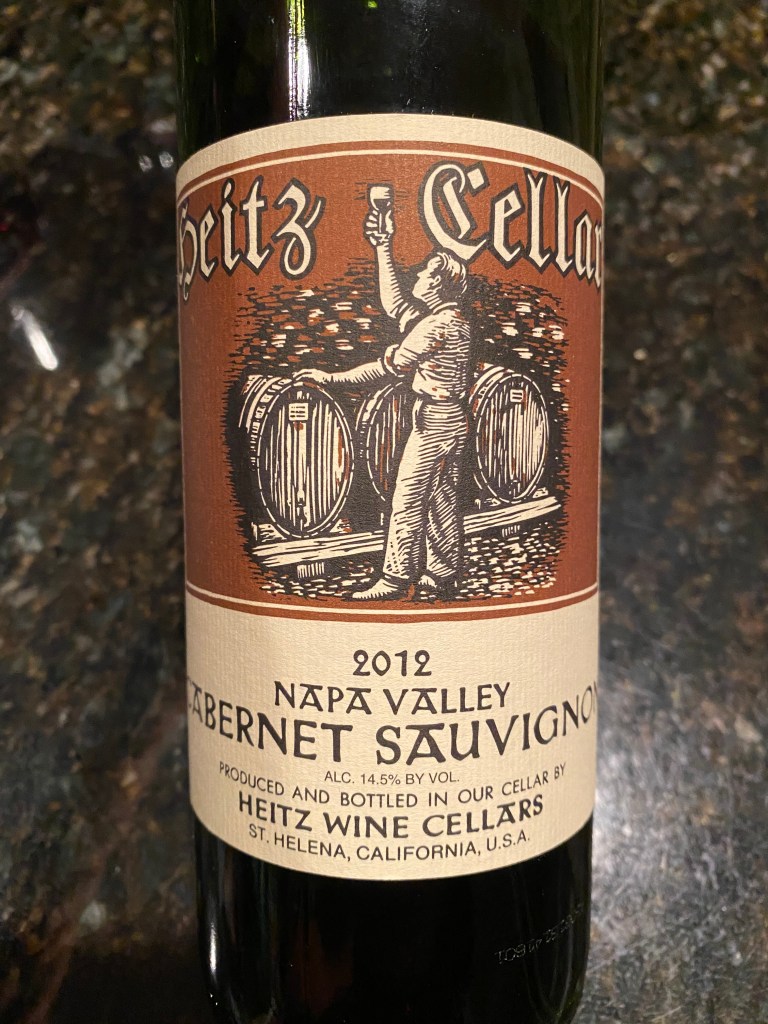
Today’s Wine: 2012 Cabernet Sauvignon

100% Cabernet Sauvignon; 14.5% ABV

The 2012 Napa Valley Cab is an almost cherry-like medium ruby color and is moderately transparent. Give this about an hour to open up and expect aromas of blackberry, plum, cassis, black cherry, violet, cedar, mint, lightly scorched earth, slight pepper, and vanilla. Once in the mouth, this Cab showcases notes of blackcurrant, redcurrant, blueberry, licorice, tobacco, loamy soil, green herbs, eucalyptus, leather, and a touch of oak. The wine is medium-bodied with medium acidity, medium (-) tannins, and a medium (+) length finish.

Price: $55. I’ve consumed countless bottles of Heitz over the years from their Grignolino to the Martha’s Vineyard Cab and am a proponent of the great value these wines offer. Alongside the Ridge Estate Cab and Jordan Cab, this is one of my favorites in the price range. Pair this with steak, a good burger, or lamb.

Bonus Pictures:

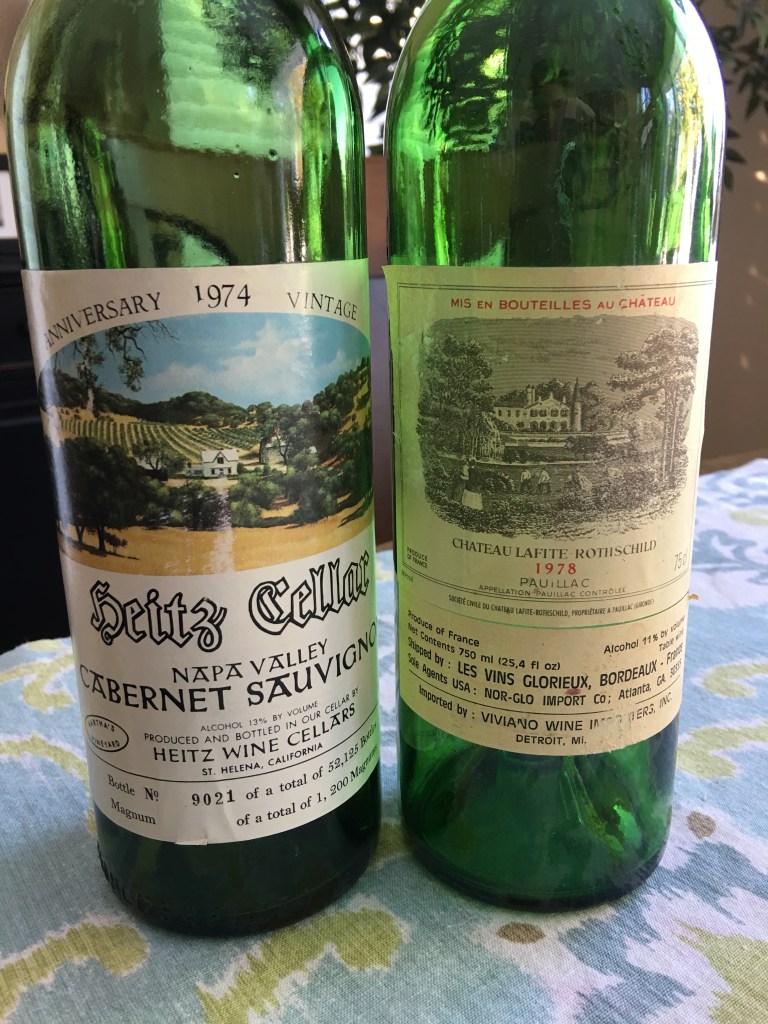
The 1974 Heitz Martha’s Vineyard, tasted alongside a 1978 Château Lafite Rothschild in January, 2017.
That same bottle of 1974 Martha’s Vineyard, laid inside my copy of The Impossible Collection of Wine: The 100 Most Exceptional Vintages of the Twentieth Century.

The World’s Most Famous Champagne

Today’s Story: Louis Roederer

Louis Roederer is based in Reims, France and was founded in 1776, though the estate did not achieve its namesake until 1833 when Louis Roederer inherited the Champagne house from his uncle. During the mid-1800s, Louis took a visionary approach by overseeing and mastering every stage of his wine’s creation while simultaneously acquiring some of Champagne’s grand cru vineyards while many other houses simply purchased their fruit. Thanks to this ownership of some of the best land in Champagne, Louis furthered his oversight on the entire winemaking process and this fit well with his guiding principle that all great wine depends on soil quality and passion for tradition. When Louis Roederer II took over from his father, he followed similar ideologies and helped further the history of what today is one of the world’s greatest Champagne houses and coincidentally one of the last few remaining houses that are fully independent and family-owned.

As audacious as his father, Louis II began exporting his wines to further reaches including the United States and Russia. A big fan of the house’s Champagne, Tsar Alexander II of Russia requested that Roederer bottle an exclusive offering for him from the greatest fruit and resulting wine of each vintage. In 1876, Cristal was born as the first-ever Cuvée de Prestige and received its name from the bottle being made of crystal so the Tsar could witness the beauty and effervescence of the wine before popping the cork. In addition to being made of crystal, the bottle commands its unique flat bottom supposedly thanks to the Tsar’s worry that would-be assassins could plant explosives in the punt of standard Champagne bottles. Though the Russian monarchy fell during the early 1900s, Roederer started marketing Cristal commercially and still sells it in their patented bottles today.

As this great Champagne house passed through the family, Léon Olry-Roederer took over the estate during the 1920s and worked to create a consistent wine through the blending of several vintages. Léon’s efforts culminated into what would later become the Brut Premier, a wine that immeasurably contributed to the renaissance of the family’s estate. When Léon passed away in 1933, the estate came under control of his widow Camille who demonstrated adept marketing skills to propel the estate forward. For instance, Camille embraced the more social aspects of Champagne by hosting numerous gatherings at the family’s Hôtel Particulier in Reims which helped introduce the estate’s wines to an ever-growing populace of Champagne lovers.

Following Camille’s management of Louis Roederer, her grandson Jean-Claude Rouzaud took over and began consolidating their vineyard holdings. An oenologist and agronomist by study, Jean-Claude demonstrated his passionate love of winegrowing before passing the estate to his son Frédéric Rouzaud who manages the estate today. Frédéric represents the seventh generation running the Louis Roederer Champagne house, a truly magnificent feat given all of the other great Champagne houses no longer in family control.

Today, Louis Roederer consists of 240 hectares and includes over 400 parcels of vineyard land. These vast holdings that originated from Louis Roederer’s visionary approach during the 1800s allow the estate to produce every vintage from their own vines rather than purchasing fruit. With great respect for their terroir, Louis Roederer increasingly utilizes biodynamic farming methods in caring for their fruit. When it comes time to harvest their fruit, Roederer meticulously picks by hand into buckets and the fruit is pressed delicately on the harvest site. By precisely picking their fruit plot-by-plot, Roederer vinifies each plot separately to create a perfect record of harvest before blending the wines into a final product. Each wine in the fermentation tanks is tasted every day by the winemaking team so they can organize them into families of aromas, flavors, and overall characteristics.

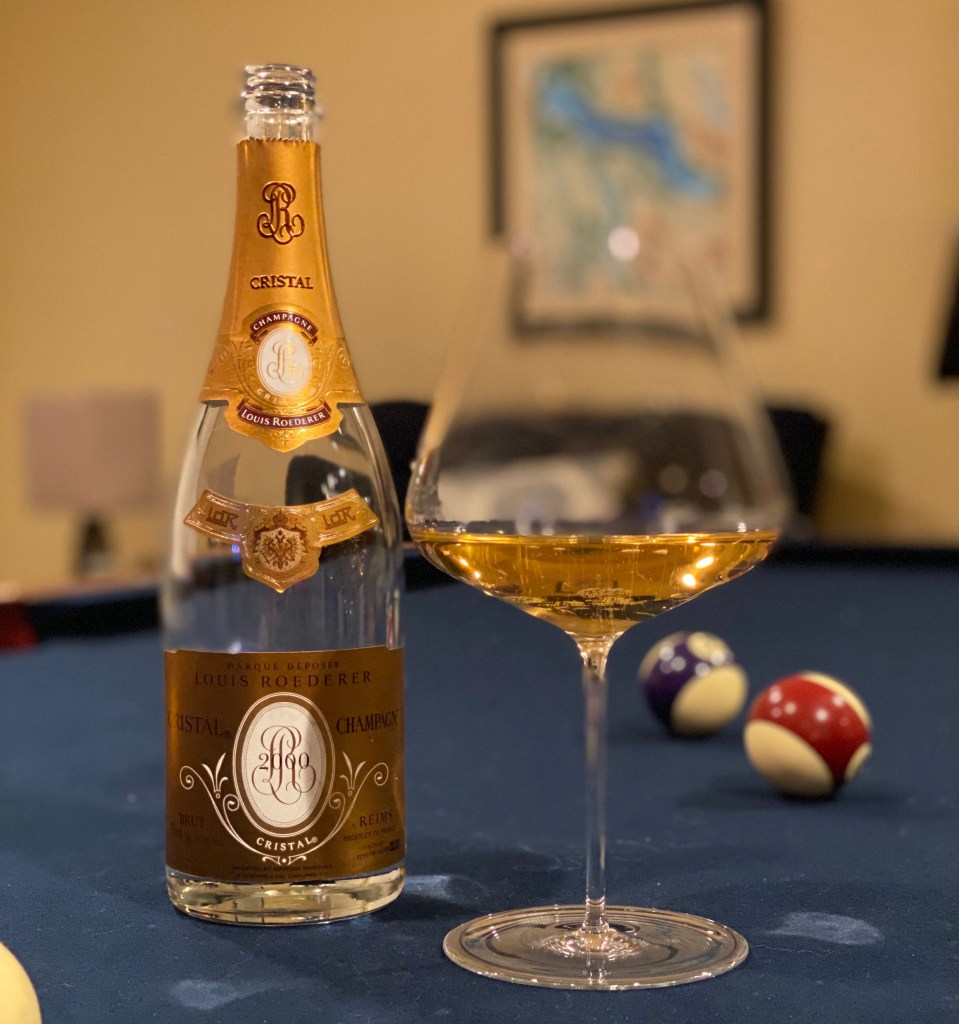
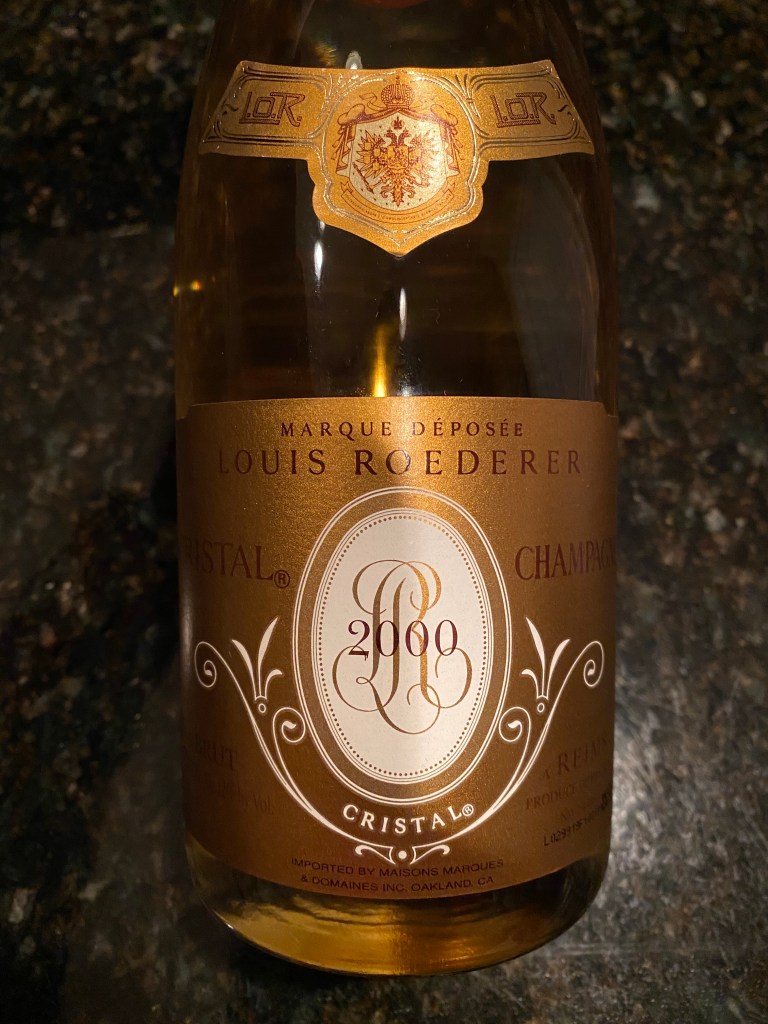
Today’s Wine: 2000 Cristal Champagne

60% Pinot Noir, 40% Chardonnay; 12% ABV

The 2000 Cristal is vibrant gold in color and quite transparent. On the nose, this exquisite Champagne offers aromas of ripe green apple, lemon citrus, honey, brioche toast, toasted almond, marmalade, white florals, white pepper, lees, and saline minerality. In the mouth, the wine showcases notes of apricot, white peach, golden apple, citrus zest, honey, white lily, toast, caramel, chalk, and white spice. Though 19 years old, this Champagne is still big and full-bodied with vibrantly high acidity into a long, rounded finish.

Price: $260. Cristal is always an incredible tasting experience and its price-point is justified. This is an excellent choice for special occasions and a bottle we chose for celebrating New Years. Pair this with shrimp, caviar, oysters, creamy cheeses, or fruit-based desserts.

Diamond Mountain Perfection

Today’s Story: Lokoya

Lokoya was founded in 1995 by wine industry visionary Jess Jackson. Though Jackson had a well-established portfolio of wineries beginning with Kendall-Jackson in 1974, he established Lokoya to produce four distinct bottlings of Cabernet Sauvignon from some of the Napa Valley’s most famous mountain appellations. 24 years later, Lokoya produces some of the highest quality limited-release wines from Mount Veeder, Howell Mountain, Spring Mountain, and Diamond Mountain that are all 100% Cabernet Sauvignon.

Though all four wines from Lokoya are produced in the same manner, each bottling eloquently displays the unique terroir of these diverse mountain appellations. The Mount Veeder bottling, for instance, comes from a vineyard on the western ridges of the Mayacamas Mountains at an elevation of 1,800 feet. The Mount Veeder vineyard is planted in volcanic soil that forces the vines to struggle in seeking nutrients which in turn creates intense, concentrated, and age-worthy wines. The Howell Mountain bottling comes from the W.S. Keyes Vineyard planted in 1888 at an elevation of 1,825 feet (high above the fog line) and with quick-draining soil forces the vines to struggle and produces wines that are incredibly concentrated and earthy. The Spring Mountain bottling came along during the 2005 vintage and fruit is sourced from three vineyards on the eastern slopes of the Mayacamas Mountains. Though Lokoya has an estate vineyard on Spring Mountain (Yverdon Vineyard at 2,100 feet), they also source fruit from Wurtele Vineyard at 1,000 feet and Spring Mountain Vineyard at 1,800 feet. Last but not least, the Diamond Mountain bottling comes from the northern end of Napa Valley overlooking Calistoga and is sourced from select blocks of three vineyards. Though this includes the estate vineyard of Rhyolite Ridge at 1,200 feet, the Diamond Mountain includes fruit from Wallis Vineyards at 1,500 feet and the Andrew Geoffrey Vineyard at 1,800 feet as well.

In producing the Lokoya wines, winemaker Christopher Carpenter intervenes as little as possible in both the vineyards and the cellar. Though the vines do demand constant monitoring and attention due to their high elevations and tough growing conditions, Christopher believes he must not lay a heavy hand so the fruit can express itself as naturally and transparently as possible. To this end, all wines are fermented with natural yeasts and are bottling without fining or filtration to showcase the diverse terroir of each vineyard.

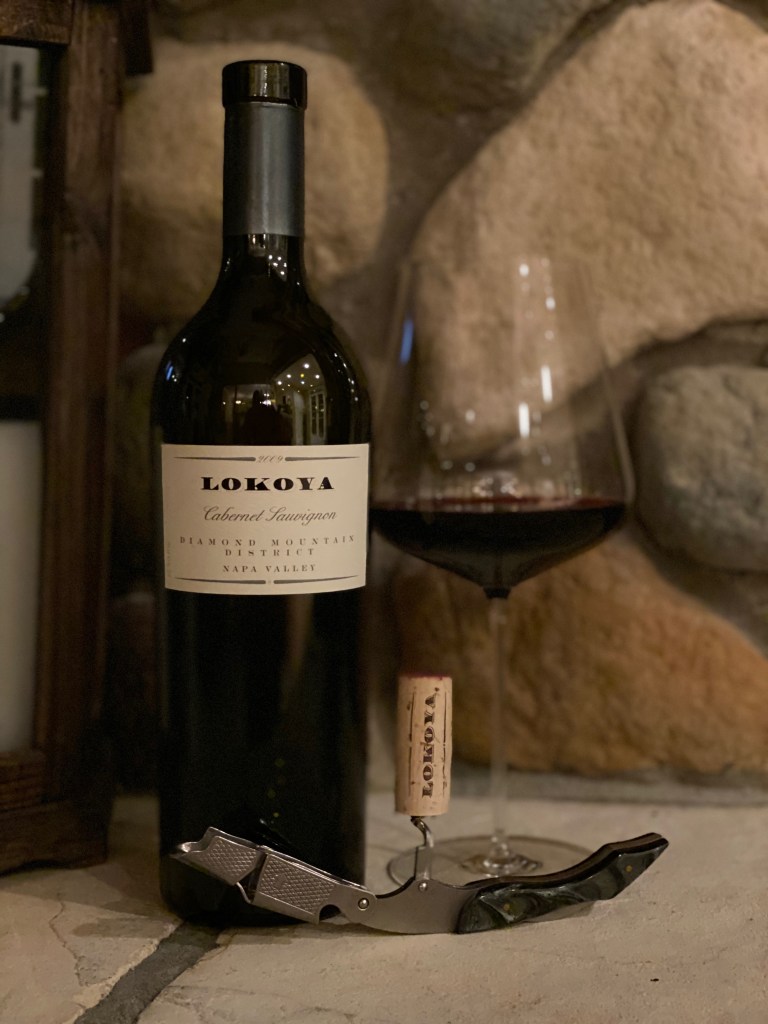
Today’s Wine: 2009 Diamond Mountain Cabernet Sauvignon

100% Cabernet Sauvignon; 14.4% ABV

The 2009 Diamond Mountain Cab is an opaque deep ruby color with purple/black variation at its core. Once this opens up in the decanter, the nose showcases aromas of blackberry, blueberry, cassis, black cherry, redcurrant, licorice, cedar, pine, wet rocky soil, chocolate, tobacco, and graphite. On the palate, I get notes of blackberry, blackcurrant, black plum, black cherry, anise, earth, volcanic ash, cigar box, ground herbs, cardamom, vanilla, and a hint of oak. This Cab is full-bodied with medium (+) acidity, elegant and refined medium (+) tannins, and a long finish.

Price: $400 direct from winery. It is always a treat drinking a bottle of Lokoya and this was magnificent for our New Years Eve dinner. Pair this with steak, lamb, or a cheese plate.

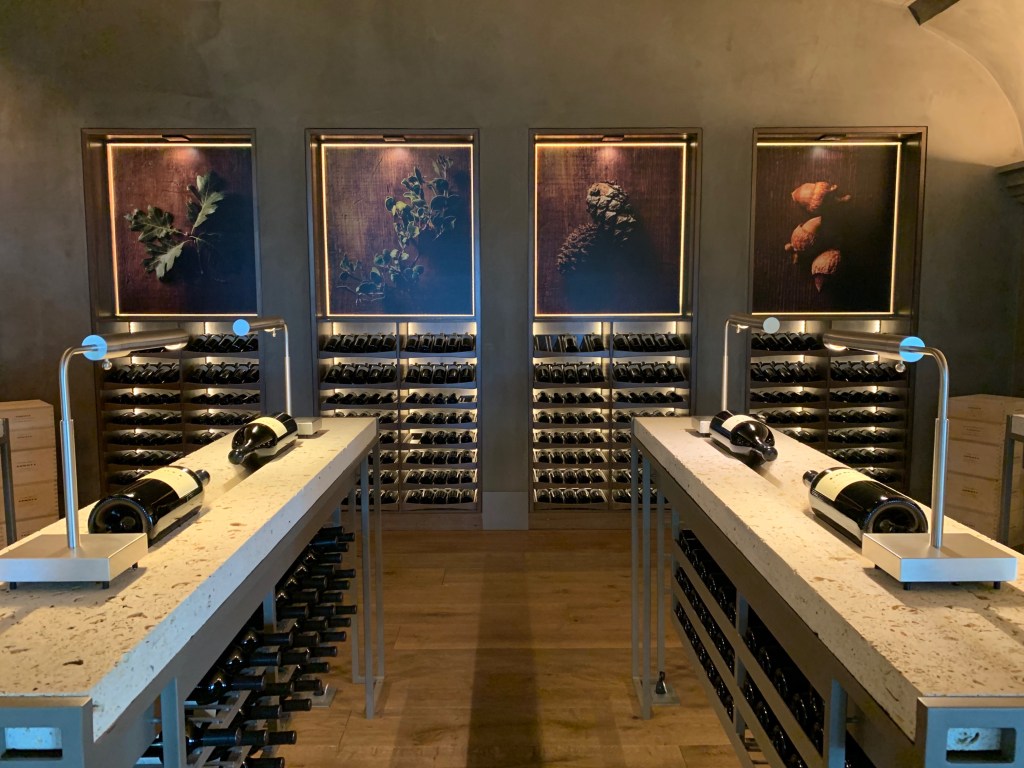
View from the tasting room’s terrace where we enjoyed a glass of Ruinart Champagne.
A tasting of each of the Lokoya Cabernet Sauvignon bottlings.
The center of the tasting room.
The library in the tasting room.

Striking [Red] Oil in the Russian River Valley

Today’s Story: Twomey Cellars

Twomey Cellars was founded in 1999 by Ray Duncan and his son David following Ray’s successful founding of Silver Oak Cellars in 1972. Though Ray’s background is in oil entrepreneurship (he founded Duncan Oil in Colorado), he started buying land in the Napa and Alexander Valleys during the 1970s with the goal of planting vineyards and selling fruit to wineries. With Justin Meyer as his co-founder of Silver Oak, however, Ray started producing his own wines and Silver Oak became famous for their Cabernet Sauvignon. After a few decades of running Silver Oak, Ray wanted to explore varieties besides Cabernet Sauvignon and founded Twomey with David in pursuit of producing Pinot Noir, Merlot, and Sauvignon Blanc.

With a goal of producing vineyard-focused wines, Twomey has wineries in Calistoga in the Napa Valley, Healdsburg in the Russian River Valley, Philo in the Anderson Valley, and a soon-to-open winery in Dundee, Oregon in the Willamette Valley. From this vast geography, Twomey produces six single-vineyard and three regional Pinot Noirs, one single-vineyard Merlot, and one single-vineyard and one estate Sauvignon Blanc. In producing these wines, Twomey practices sustainable farming in all of their vineyards with major emphasis on water and energy conservation. This not only helps protect the land for generations of winemakers to come, but improves fruit quality while allowing the wines to showcase their unique place.

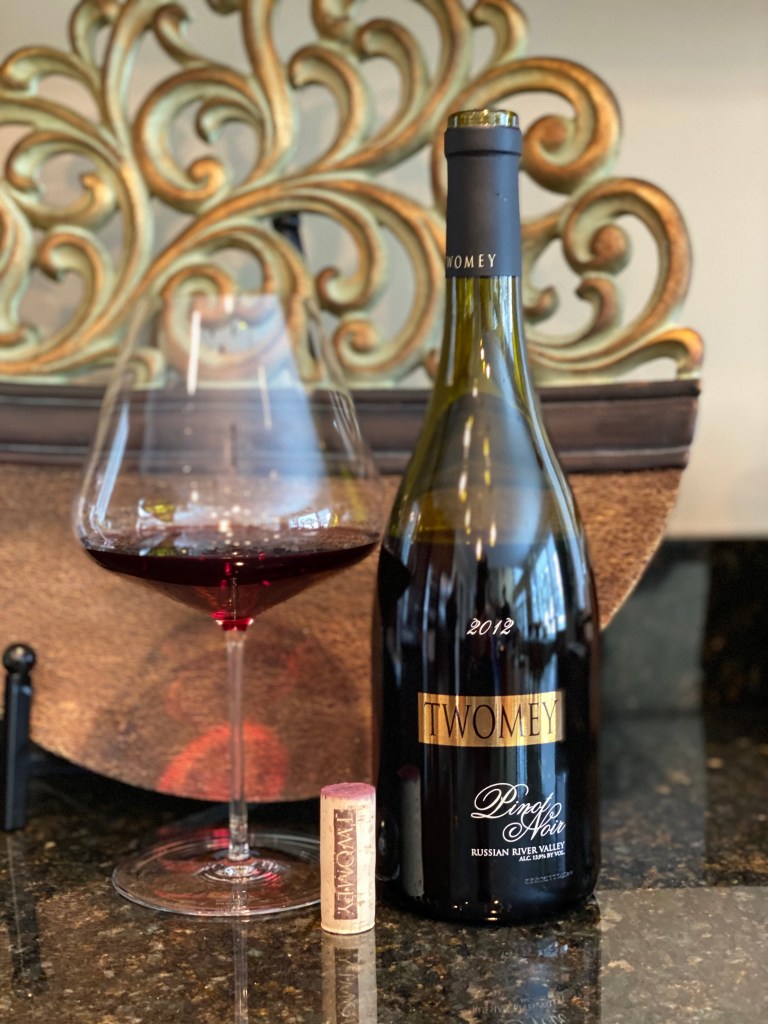
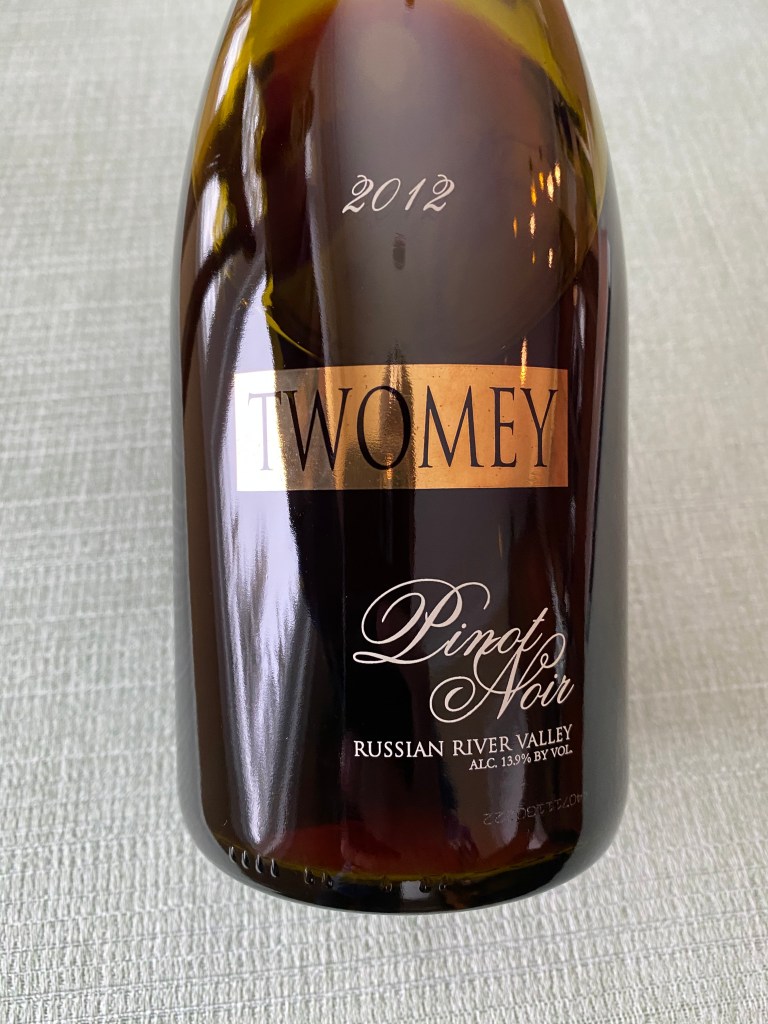
Today’s Wine: 2012 Russian River Valley Pinot Noir

100% Pinot Noir; 13.9% ABV

The 2012 Russian River Pinot is pale ruby/cherry in color and moderately transparent. This Pinot needs about 30-45 minutes to open up, but once it does the expressive nose emits aromas of cherry, raspberry, saddle leather, smoke, forest floor, a hint of barnyard, white pepper, dried green herbs, rose, and a pinch of cinnamon. On the palate, the wine showcases notes of dark cherry, dried cranberry, strawberry, tobacco, damp earth, peppery spice, rosemary, slight coffee bean, and a hint of vanilla. This gorgeous and easy-drinking Pinot is medium-bodied with medium acidity, light (almost nonexistent) tannins, and a medium (-) length finish. The finish could be a bit longer to truly impress me, but nonetheless this is a delicious bottle of wine.

Price: $50. This is a solid price-point especially when compared to some of the other RRV Pinots I’ve enjoyed that are twice as expensive but only marginally better. Nonetheless, $35 is always a sweet spot for me for quality Pinot Noir and you can find bottlings in that range up to par with this Twomey. Pair this with salmon, roasted chicken, duck, lamb, or charcuterie.
The Maestro

Today’s Story: Beaulieu Vineyard

Beaulieu Vineyard is one of the most historic wineries in Napa Valley, founded in 1900 by Georges de Latour and his wife Fernande. I previously wrote about their history in A Winery Synonymous with Napa Valley Itself back on December 8, and if you are unfamiliar with the winery or their history I highly suggest reading this prior post.

Though I won’t rewrite the entire backstory here today, I do want to give more color on the Maestro Collection which my wine today is part of. As I discussed in my prior post, world-renowned viticulturist and enologist André Tchelistcheff joined BV and brought European methods of cultivation and pruning with him. His contributions from the start seem endless, from his tasting of the 1936 vintage of the BV Private Reserve and encouraging Georges de Latour to bottle it separately to his experimentations with micro-plots of different grape varieties and small-lot fermentation. As one of the most influential and iconic winemakers in the Napa Valley, André worked with BV for 40 years as winemaker and gained the nickname the “Maestro.” Though André retired in 1973, he joined BV again in 1991 to help the winemaking team study the effects of vintage and bottle age on 50 vintages of Private Reserve Georges de Latour and he also helped experiment with small-lot wines. It is these small-lot wines produced using unique varietals, vineyard lots, and blends that make up the Maestro Collection, justifiably named in André’s honor.

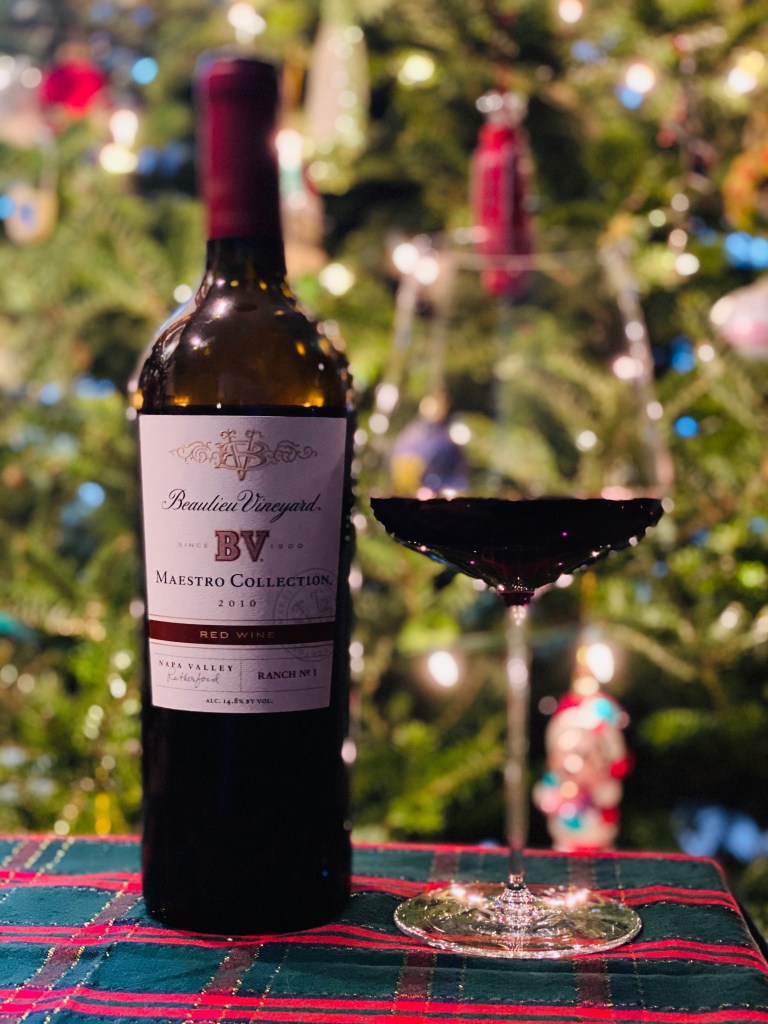
Today’s Wine: 2010 Maestro Collection Ranch No. 1 Red Blend

I unfortunately could not find a percentage breakdown of varieties in this wine, though I do know this to be Cabernet Sauvignon dominant (I assume ~70-75%) blended with Merlot and a splash of Petit Verdot. 14.8% ABV

The 2010 Maestro Collection Ranch No. 1 is medium ruby in color and almost entirely opaque. This needs about an hour to open up, but once it does the nose showcases aromas of blackberry, cassis, plum, dried earth, cigar box, chocolate, nutmeg, and oak. Once in the mouth, I get notes of blackberry, blueberry, black cherry, sweet tobacco, slate, leather, vanilla, and a hint of licorice. This wine is medium- to full-bodied with medium (+) acidity, dusty medium (+) tannins, and a long finish with herbaceous overtones.

Price: $95. While this is a delicious wine and the Maestro Collection is fairly limited, I find it hard to justify paying twice the price of a BV Tapestry Reserve which I consistently find to be good value. Pair this with steak, a good burger, or lamb.

Napa Fruit Bomb

Today’s Story: Nickel & Nickel Winery

Nickel & Nickel was established in Oakville, Napa Valley in 1997 by Gil and Beth Nickel. Though Gil was born in Oklahoma and has a background in the nursery business (his family owned Greenleaf Nursery which is one of the largest wholesale nurseries in the country), Gil and Beth moved to Napa Valley in 1976 where they founded Far Niente Winery in 1979. I reviewed a Far Niente Cabernet Sauvignon in Historic Napa Cab back on November 11. Not too far from the Far Niente property, the Nickel & Nickel winery is located on an 1880s-era farm established by John C. Sullenger following his purchase of the land in 1865. The grounds are beautiful, with a restored farmhouse and barns (built during the 1880s) set amongst flowers and horse stables. With the intent of producing only single-vineyard 100% Cabernet Sauvignon wines, Nickel & Nickel today offers roughly 20 different bottlings from vineyards in Oakville, Yountville, Calistoga, Rutherford, Oak Knoll District, Diamond Mountain District, Stags Leap District, St. Helena, and Howell Mountain. They augmented this portfolio with Chardonnay, Merlot, and Syrah with the Merlot and Syrah bottlings a bit tougher to come by.

Like many premium wineries in Napa, Nickel & Nickel institutes sustainable practices throughout their farming and winemaking processes. Before their considerations in the vineyards themselves, Nickel & Nickel is proud to be a net-zero user of electricity thanks to solar panels, they collect process water from winery operations to irrigate the vineyards, recycle extensively, and replaced company vehicles with hybrid alternatives. In the vineyards, Nickel & Nickel practices organic farming in an effort to preserve the natural tendencies of the soil while getting the best fruit possible from their vines.

Naturally, when a winery offers a wide portfolio of wines from different terroir but of the same variety it can be fun to taste several of these side-by-side. I had the opportunity to taste a couple this way in the past and found it incredibly cool to read about the different soils which you can get a glimpse of here. If you have the opportunity to taste several of these wines together, it is also fun looking at the map of the vast Nickel & Nickel vineyards here.

Today’s Wine: 2016 Branding Iron Cabernet Sauvignon

100% Cabernet Sauvignon; 14.5% ABV

The 2016 Branding Iron is an opaque deep purple/ruby in color. This certainly needs some time to open up, so I recommend decanting the wine. On the nose, I get aromas of blackberry, blueberry, plum, redcurrant, purple florals, wet stone, saturated earth, baking spice, sweet tobacco, chocolate, vanilla, and oak. Once in the mouth, this wine continues the fruit-dominated theme with notes of jammy blackberry, blackcurrant, cherry, pomegranate, green herbs, forest floor, baking spice, and oak. This wine is full-bodied with medium (+) acidity, velvety medium tannins, and a long inky finish dominated by dark fruit and baking spice.

Price: $100. Though you can tell the quality is there, I think this is priced too high given that the wine comes off as an inky people-pleaser. Though I would place a hefty bet that the majority of today’s Napa Cab lovers would enjoy this wine, I think the price-point is a deterrent for many. Pair this with steak or a good burger.

Corsican Beauty

Today’s Story: Domaine Comte Abbatucci

Domaine Comte Abbatucci was founded in 1950 (though wine history of the family estate dates back more than a century) by Antoine Abbatucci. The Abbatucci name, however, has even deeper roots in Corsica that stretch at least as far back as the French Revolution. Jean-Charles Abbatucci and Jacques-Pierre Abbatucci, for instance, were both Generals during the French Revolution with Jean-Charles considered a hero who fought with Napoléon Bonaparte. Unsurprisingly, there are streets, monuments, and entire plazas in Corsica named after various Abbatucci family members, particularly in the capital city of Ajaccio.

Circling back to the winery as it exists today, the domaine is located in the heart of the Taravo Valley in southern Corsica. During the 1960s, Antoine grew concerned with what seemed to be the impending extinction of native grape varieties thanks to life disappearing in mountain villages that were home to some of the island’s oldest vineyards. As President of the Chamber of Agriculture of Corsica, Antoine removed cuttings from each threatened vineyard he discovered and planted them in one single plot of granite soil on his estate. Through these efforts, this one plot of vineyard land is planted to 18 varieties and pays homage to the winemaking history of Corsica. The fruit from this plot goes into the wines of the highly limited Domaine Comte Abbatucci Cuvée Collection.

While Antoine created arguably one of the most important vineyard plots in Corsican winemaking, his son Jean-Charles made his own vital strides when taking over the domaine. A biodynamist at heart, Jean-Charles converted the estate to biodynamic farming in 2000 to further preserve the original terroir and grape varieties of Corsica. With care for the natural habitat of the vineyards, Jean-Charles conducts work periods based on lunar cycles and the time of day, plowing is accomplished on horseback, and a flock of sheep grazes on the natural and permanent grass cover between rows during the winter. During harvest, all fruit is harvested by hand in small boxes and carefully sorted both in the vineyards and at the winery. Winemaking is accomplished by gravity-flow, fermentation is completed only using indigenous yeasts, and maceration is gentle with alternating punch downs and pump overs. Though Jean-Charles did change the farming practices, he follows in his father’s footsteps by providing cuttings of the salvaged native varieties to other vignerons throughout Corsica.

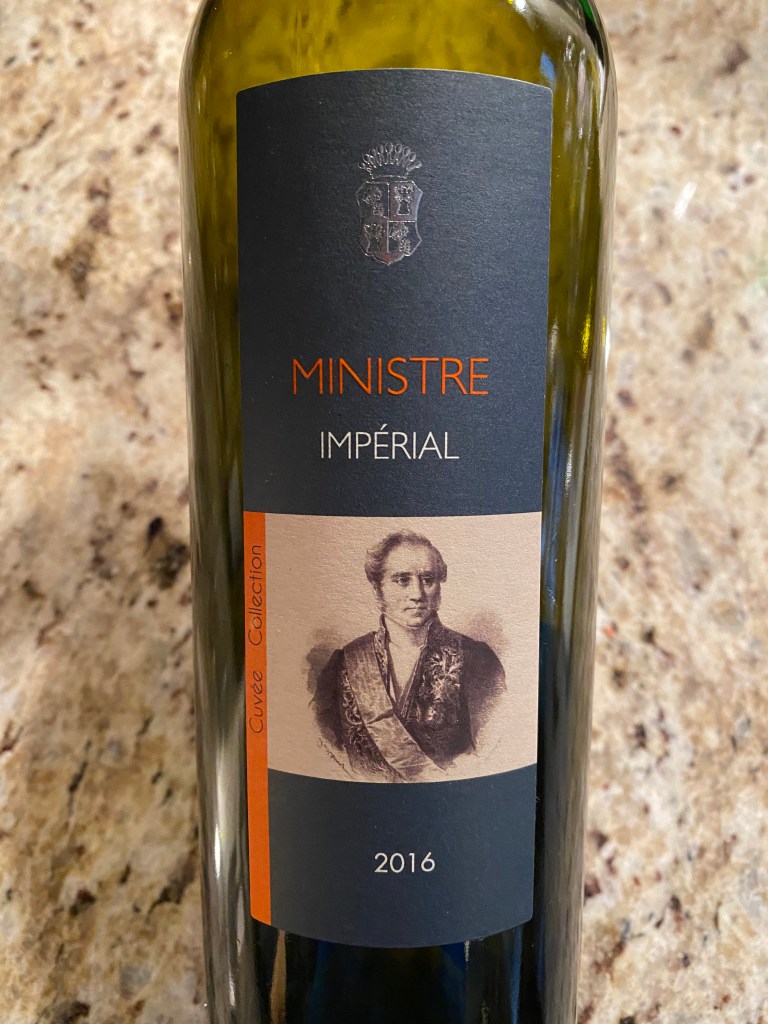
Today’s Wine: 2016 Cuvée Collection Ministre Impérial

22% Sciaccarello, 18% Nielluccio, 15% Montanaccia, 15% Carcajolo Nero, 12% Morescono, 10% Morescola, 8% Aléatico; 14% ABV

The 2016 Ministre Impérial is named for Jacques-Pierre-Charles Abbatucci, a leading military figure under Napoléon Bonaparte’s Premier Empire and later a senator and official councillor to Napoléon III. He was Jacques-Pierre Abbatucci’s grandson and Jean-Charles Abbatucci’s nephew. The wine itself is a moderately transparent pale ruby color with rose variation toward the rim. Once this opens up in the decanter, the nose emits aromas of cherry, redcurrant, boysenberry, red florals, ground herbs, leather, smoked gamey meats, earth, graphite, smokey minerality, and a hint of woodiness. On the palate, I get notes of cherry, redcurrant, wild blueberry, dried rocky soil, granite, herbs, smoke, slight peppery spice, and mineral. This is medium-bodied with medium (+) acidity, elegant and refined medium (-) tannins, and a long finish dominated by red fruit and rocky minerality. 500 cases produced.

Price: $95 (though if you can find this in Europe it seems to be closer to $60). This is a really cool wine to taste given the backstory on these varieties and the simultaneous elegance and complexity it presents for a Corsican wine. If you can find a bottle, I highly recommend giving it a try. Pair this with lamb, wild boar, veal, or charcuterie and cheese.

Rising Star in Barolo

Today’s Story: Giulia Negri

The story behind Giulia Negri and her wines is a unique one, with Giulia taking over her family’s well-established Barolo estate at the age of 24. Though she studied management and biology during college, Giulia returned to the Langhe commune of La Morra after a palate-shaping journey through Burgundy. Inspired by the wines and winemaking practices of Burgundy, Giulia started crafting small amounts of Barolo released as several “microcuvées” before fully taking control of vineyard management and production of her family’s 150-year-old estate in 2014.

Located in the Serradenari cru of La Morra, Giulia’s vineyards stretch from 400 to 536 meters (1,312 to 1,758 feet) above sea level. Not entirely shocking after reading those numbers, Serradenari is the highest point in the Barolo zone with breathtaking views of the Alps from Liguria to Mount Cervino. Though the vineyards for her Barolo bottlings command West and Southwest exposure, Giulia inherited small plots of Northern facing Chardonnay and Pinot Nero planted by her father that allow her to experiment with the varieties that helped shape her palate in Burgundy. In caring for her vineyards, Giulia practices organic farming (she started in 2014) though full conversion and certification is expected for the 2019 vintage. A traditionalist at heart, Giulia hand harvests all fruit for her wines, practices long and gentle maceration, ferments with only indigenous yeasts, and minimizes filtration. Her resulting wines are elegant in their youth thanks to fine-grained tannins, yet they have the structure to withstand the test of time in the cellar.

The Giulia Negri portfolio consists of seven wines. Her three Barolo bottlings consist of Marassio (0.8 hectare at 536 meters above sea level), Serradenari (1 hectare at 520 meters above sea level), and La Tartufaia (2 hectares at 460 meters above sea level). In addition to her Chardonnay and Pinot Nero I mentioned earlier, she also produces a Langhe Nebbiolo Pian delle Mole and a Barbera d’Alba. Though these wines can be difficult to find due to the small quantities and relative novelty of production (I had to special order mine), Giulia’s wines are worth seeking out. Though young, she seems to be making quite the name for herself and is certainly a rising star in Barolo.

For more on Giulia’s background, facts about each wine, and pictures of this beautiful estate check out the website here.

Today’s Wine: 2015 Barolo La Tartufaia

100% Nebbiolo; 14% ABV

The 2015 Barolo La Tartufaia is pale to medium ruby in color and almost entirely transparent. This wine is a blend of 80% Serradenari cru (vines planted in 2004) and 20% Brunate cru (40-year-old vines). I stole a sip right out of the bottle, but because of its youth let this decant for an hour before pouring a glass. Once the wine opens up, the nose showcases aromas of bright red cherry, redcurrant, rose petal, violet, saddle leather, forest floor, underbrush, clay, tar, and delicate oak. In the mouth, I get notes of cherry, raspberry, dried cranberry, rose, cured meat, tobacco, loamy earth, rocky minerality, slight spice, a hint of truffle, and faint presence of oak. This wine is medium- to full-bodied with moderately high acidity, ultra-fine medium (-) tannins, and a medium (+) length finish.

Price: $60. I think this is a great value for Barolo, and I love the story behind Giulia and her wines as well. Pair this with duck, quail, filet mignon, truffles, or goat/sheep cheese.

One of the Napa Greats

Today’s Story: Joseph Phelps Vineyards

Joseph Phelps Vineyards was founded in 1973 by Joseph Phelps and remains a family-owned and operated estate to this day. Though Phelps’ background is in construction and entrepreneurship, he grew an early interest in wine and established vineyards on a 670 acre former cattle ranch in Napa Valley. In 1998, Joseph’s son Bill joined the winery as Executive Chairman after a career in law and his sisters Leslie, Laurie, and Lynn later joined the Board of Directors. In 2016, family members Elizabeth Neuman and Will Phelps joined the winery team as third generation employees set on continuing the legacy Joseph started in 1973.

Today, the Phelps family owns and farms 425 acres of vineyards across St. Helena, Rutherford, Oakville, Stags Leap District, Oak Knoll District, South Napa, and Carneros as well as 100 acres over two vineyards on the western Sonoma Coast. As stewards of the land, the Phelps family practices sustainable farming in an effort to improve the long-term vitality of their vineyards and soil. Some of these efforts include olive and fruit trees planted on the Home Ranch in St. Helena (as well as fruit trees in the Backus and Las Rocas Vineyards); bees on the Home Ranch to sustain the plants, trees, and vines; chickens on the Home Ranch to provide natural fertilizer to the soil; owl and bluebird boxes constructed in every vineyard; sheep brought in to mow cover crops and naturally fertilize the soil; composting grape skins and stems for use in the vineyards; and solar panels at the winery to offset energy needs.

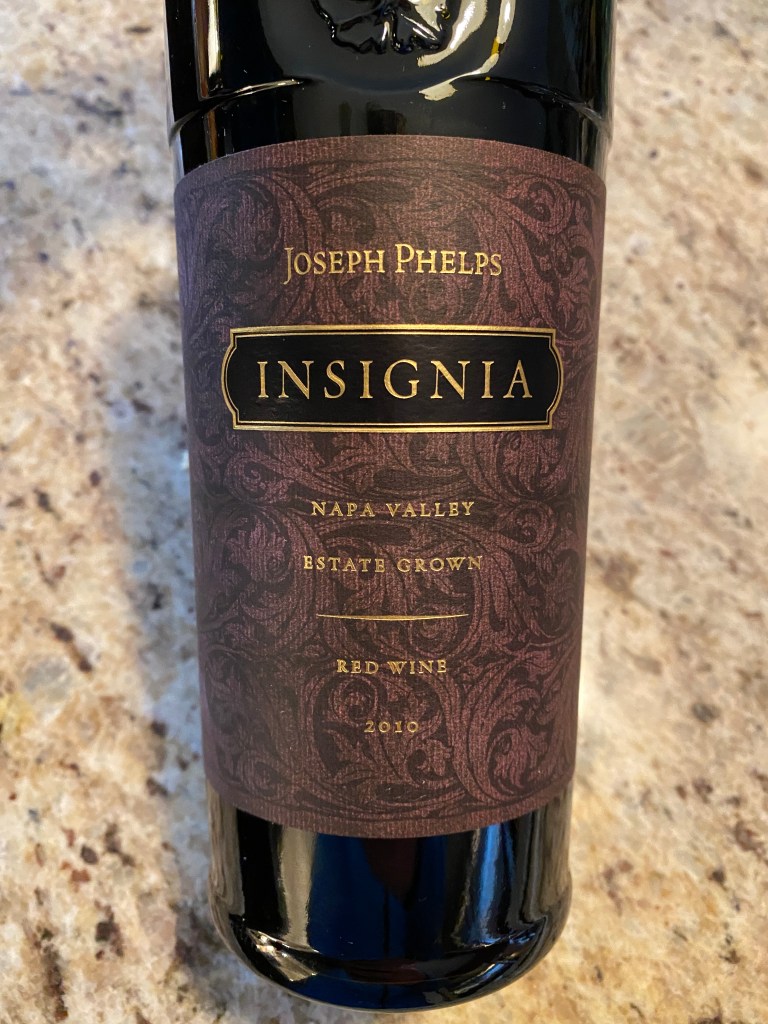
Today’s Wine: 2010 Insignia

84% Cabernet Sauvignon, 10% Petit Verdot, 4% Merlot, 2% Malbec; 14.5% ABV

The 2010 Insignia is opaque deep ruby in color with a bit of purple at its core. I let this open in the decanter for about an hour to hour and a half before drinking any. Once the wine opens up, the nose is incredibly complex and changes over time with aromas of blackcurrant, cassis, smoked meat, tobacco, cigar box, thyme, black truffle, forest floor, graphite, crushed rock, violet, and a hint of oak. The palate is similarly complex with notes of blackberry, blueberry, red fruit, cedar, tobacco, damp earth, mushroom, pepper, slight baking spice, chocolate, and a touch of vanilla. This wine is full-bodied with medium acidity, velvety medium (-) tannins, and a long finish. I could smell this wine all day and was blown away by how elegant and ever-changing this is with air.

Price: $215. Not a cheap bottle of wine, but for premium Napa that goes up against the great wines of France this is well worth the price. Pair this with steak, lean game, or grilled lamb.