A Unique and Rare Wine Indigenous to Greece

Today’s Story: Domaine Nerantzi

Domaine Nerantzi is a family-owned and operated wine estate established in 1988 by Nerantzis Mitropoulos. He and his family established the domaine out of passion for winemaking and to honor the indigenous varieties of Greece, and until 1998 the wine was meant mainly for family consumption. In 1998, however, Nerantzi built their winery in the prefecture of Serres in Macedonia, Greece. With 1.3 hectares (3 acres) of vineyards at that time, Nerantzi discovered unknown vines of Asprouda Serron and Koniaros, saving them and gaining official recognition of these rare and indigenous varieties. A few years later, Nerantzis’ daughter Evanthia decided to join the family business and, in 2005, the family started construction on a new and larger winery in Pentapolis. Nerantzi started exporting their wines in 2009, and with it came demand for these high quality bottlings drenched in passion and history. This required them to upgrade the winery once again in 2012 by adding cellars, tasting facilities, and a lab. This same year Evanthia returned from studying in Burgundy and committed full-time to Domaine Nerantzi.

Today, Domaine Nerantzi consists of 20 hectares (49 acres) with 10.8 hectares (26 acres) planted to vineyards. Dedicated to organic viticulture, they also planted olive, fig, and other fruit trees on the property. The vineyards are planted to the varieties of Asprouda, Malagouzia, Assyrtiko, Koniaros, Cabernet Sauvignon, and Syrah. Winemaking itself is rather hands-off, with the use of native yeast fermentation and an effort to showcase the terroir and variety’s characteristics.
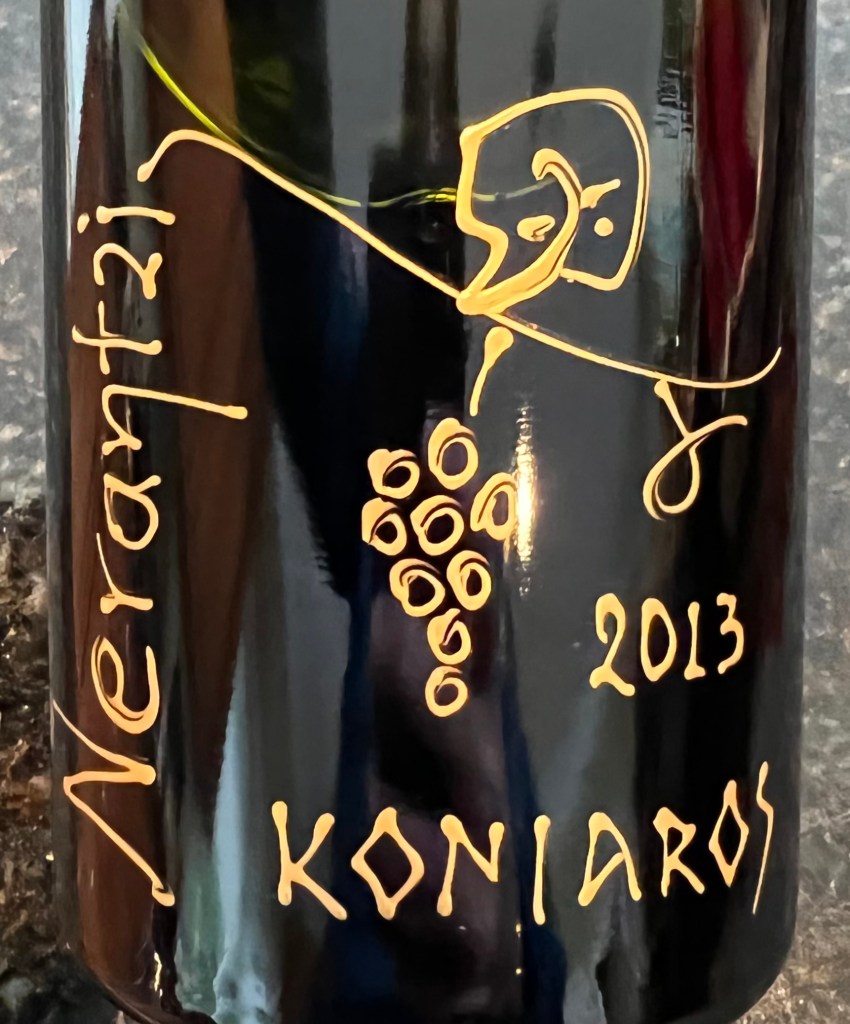
Today’s Wine: 2013 Koniaros

100% Koniaros; 13.5% ABV

The 2013 Koniaros is deep ruby in color turning deep garnet at the rim of the glass. I filtered this for sediment directly into the glass and let it develop. The aromas are of medium (+) intensity, with the nose showcasing notes of blackberry, black plum, black cherry, redcurrant, violet, smoked meat, a hint of barnyard, eucalyptus, black olive, crushed rock minerality, light smoke, and dark chocolate. The flavors are also of medium (+) intensity, while the palate offers up notes of blackberry, prune, black cherry, cola, violet, pine, dried tobacco, charred green herbs, dark chocolate, mild baking spice, and a touch of smoke. This dry red is medium-bodied with medium acidity, medium (+) but well-integrated tannin, medium alcohol, and a medium (+) length finish.

Price: $60. I think the price-point here is pretty fair given the balance, length, and complexity of the wine. It is also a very intriguing variety and, while it’s fun for that reason, this also offers very high quality.

Refreshing White From the Island of Santorini

Today’s Story: Domaine Sigalas

Domaine Sigalas was established in 1991 by Paris Sigalas, Christos Markozane, and Yiannis Toundas. Though the winery was initially based in the Sigalas family home, in 1998 the team constructed a new winery, bottling, and aging facility in the area of Oia in the northern part of the island of Santorini. Domaine Sigalas today consists of about 20 hectares (~49 acres) of vineyards, planted to the indigenous varieties of Assyrtiko, Athiri, Aidani, Mandilaria, and Mavrotragano. Sigalas farms all their vineyards adhering to organic viticulture, and they’ve been a pioneer in organic viticulture on the island with participation in government programs for it since 1994. The soil type is typical of the island of Santorini, made up of high amounts of sand (sometimes 93-97%) in volcanic pumice and ash. This is a hazardous environment for Phylloxera to survive, so the vines on Santorini are still on their original rootstocks and Sigalas is able to farm very old Phylloxera-resistant vines. Total production of Sigalas is about 25,000 cases per vintage, and while they are known for their mineral-driven and steely Assyrtiko the rest of their wines offer a good range of variety and style.

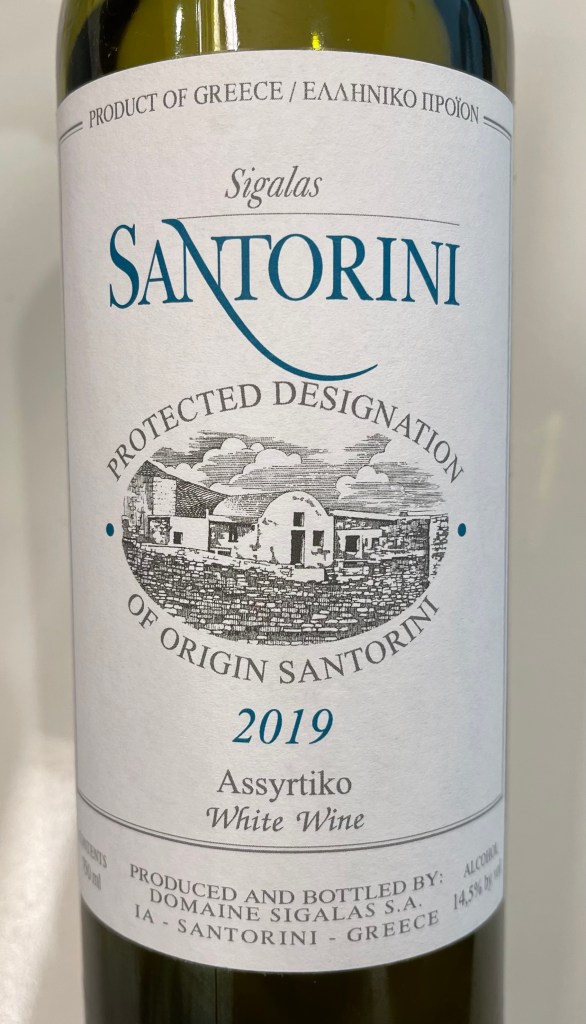
Today’s Wine: 2019 Santorini Assyrtiko

100% Assyrtiko; 14.5% ABV

The 2019 Santorini Assyrtiko is pale yellow in color. I enjoyed letting this blossom in the glass over 20-30 minutes, as it is pretty youthful and I think will show best with another 1-2 years of bottle age. The aromas are of medium intensity, with notes of lemon zest, yellow apple, honeysuckle, flint, and saline mineral. Meanwhile the flavors are also of medium intensity, with the palate displaying notes of pear, lime zest, passionfruit, beeswax, and sea salt. This dry white is medium-bodied with high acidity, high alcohol, and a medium length finish. Very refreshing and enjoyable, but not really too complex. I think this will only improve over the next year or two.

Price: $40 (might be able to find closer to $34). I’m just starting to explore Assyrtiko, so I struggle to call this a solid value wine but take that with a grain of salt. For instance, the last one I had was about 25% less expensive but it drank just as well. That being said, this is no doubt a high quality and enjoyable wine I would love to revisit down the road, and perhaps it ends up being a great value as I expand my Assyrtiko horizons.

Refreshing and Fun White From Santorini

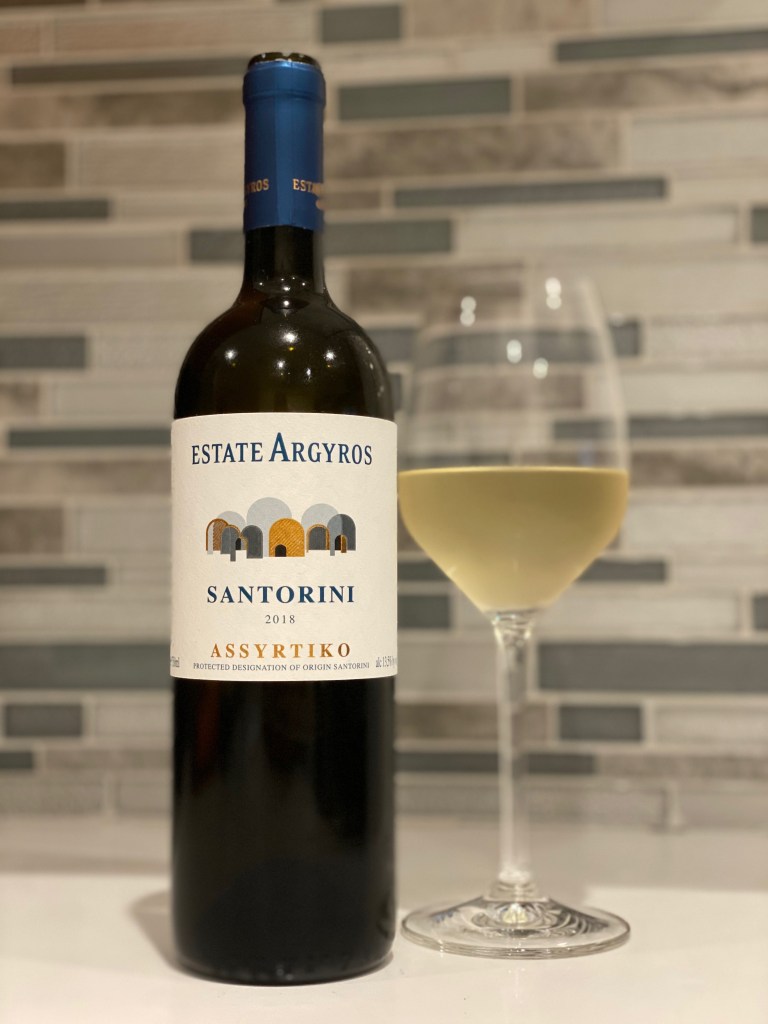
Today’s Story: Estate Argyros

Estate Argyros was established in 1903 on the island of Santorini and today is run by fourth generation winemaker Matthew Argyros. The estate consists of 120 hectares with vines averaging 70 years old, all of which are ungrafted (original rootstock) thanks to the island’s inorganic soil providing immunity to Phylloxera. All vineyards are planted to indigenous varieties of Santorini, including Assyrtiko, Aidani, and Mavrotragano. Argyros farms their vineyards organically under sustainable guidelines, using no pesticides and only grape skins and stems following harvest as compost. All harvesting is accomplished by hand and winemaking is very traditional, yielding wines that are transparent representations of their very unique and difficult terroir.

Today’s Wine: 2018 Assyrtiko

100% Assyrtiko; 13.5% ABV

The 2018 Assyrtiko is transparent pale gold/yellow in color with water white variation near the rim. Once this opens up, the nose showcases aromas of lemon and lime zest, green apple skins, white lily, damp grass, saline mineral, flint, and light smoke. On the palate, the wine displays notes of lime, grapefruit, lemongrass, peach, sea salt, volcanic minerality, and chalk. This is light- to medium-bodied and bone dry with high acidity into a crisp and refreshing finish. The fruit is sourced from 100-120 year old ungrafted vines and fermented in stainless steel vats.

Price: $30. This is a solid value for its quality, and it’s also a fun wine to try because I hadn’t had any Assyrtiko before. Pair this with oysters, sushi, or salad with grilled chicken.

Must-Try Red from Greece

Today’s Story: Thymiopoulos Vineyards

For several generations, the Thymiopoulos family has owned vineyards in Naoussa, though they typically sold the fruit to other wineries without making their own wine. This changed, however, when Apostolos Thymiopoulos completed his oenology program at the University of Athens and returned to the family vineyards to produce a wine under his own label. Thymiopoulos Vineyards was born and their first wine released in 2004, becoming a successful bottling throughout both Greece and Europe as a whole.

Like many producers in the Old World, Apostolos farms his vineyards in a very traditional manner. He limits or does away with chemical use and many of his practices fall under biodynamic farming norms. Apparently, Apostolos even borrows his neighbors’ cows to mow the grass after harvest in the vineyards (source). Apostolos owns several dozen vineyards, and in order to help care for them all he enlists people from his village with vineyard experience for help. This allows him to foster a unique bond within his community, as well as provides him the opportunity to know each vineyard like the back of his hand.

Today’s Wine: 2016 Rapsani Terra Petra

50% Xinomavro, 35% Krassato, 15% Stavroto; 13.5% ABV

This wine came recommended to me thanks to one of the owners of a local wine store. In appearance, the wine is a clear, pale ruby color. The nose on this wine is an absolute thing of beauty, one so aromatic and crisp I felt like I got slapped in the face (but in a good way). Right out of the gates I got aromas of cherry, strawberry jam, very clean florals reminiscent of red rose and white wildflower, cedar, leather, mild and slightly sweet tobacco, and a hint of cinnamon. In the mouth, the wine showcases notes of sour cherry, wild strawberry, home-garden-grown cherry tomatoes, rocky-soil-esque minerality, faint vanilla, and a touch of oak. The wine is overall very dry and is medium-bodied with mouthwatering high acidity, medium tannins, and a very long finish. This is drinking beautifully (and is one of my favorite wines in recent past) but I really want to try it again in three years.

Price: $35. I’ve only had a couple Greek wines so far, but this is a screaming value. The nuances and absolute shock I received from the profoundly beautiful bouquet of aromas says it all. Pair this with chicken, pork, or cheese-based pastas.