Chianti Classico for a Remarkable Value

Today’s Story: Marchesi Antinori

Marchesi Antinori traces its roots to 1385 when Giovanni di Piero Antinori joined the Arte Fiorentina dei Vinattieri (Florentine Winemakers’ Guild) and the family has been making wine since through 26 generations. While the historic epicenter of the Antinori “empire” rests in Tuscany and Umbria, over time the family purchased vineyards in various regions throughout Italy and the world to bolster their portfolio and live a consistent goal of exploration and experimentation. Not only is Marchesi Antinori one of the largest wine companies in Italy, they are also one of the oldest family operated companies in the world. Today, Albiera Antinori is President of Marchesi Antinori and is supported by her sisters Allegra and Alessia, while their father Marchese Piero Antinori acts as the Honorary President.

Though the Antinori family owns what I’d say are too many estates for me to justify listing here, their website has great maps and lists of their properties here and it is worth checking out. Further, there is a really cool timeline tracing the family back to 1179 here, which I could not do any justice to in trying to reproduce myself.
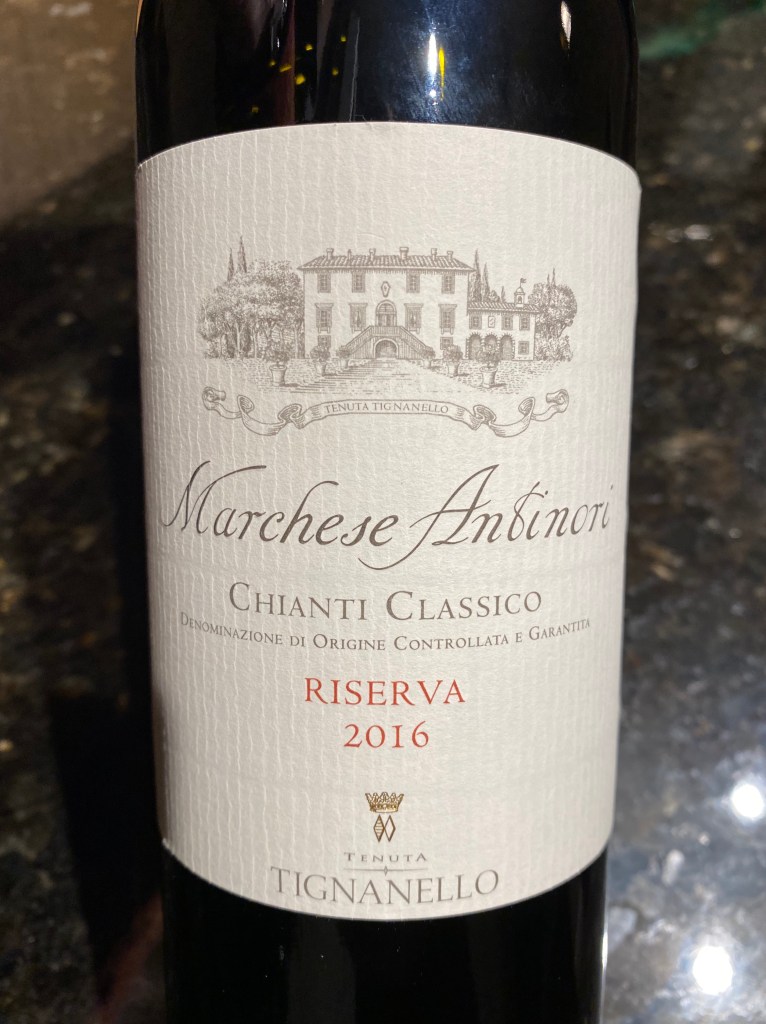
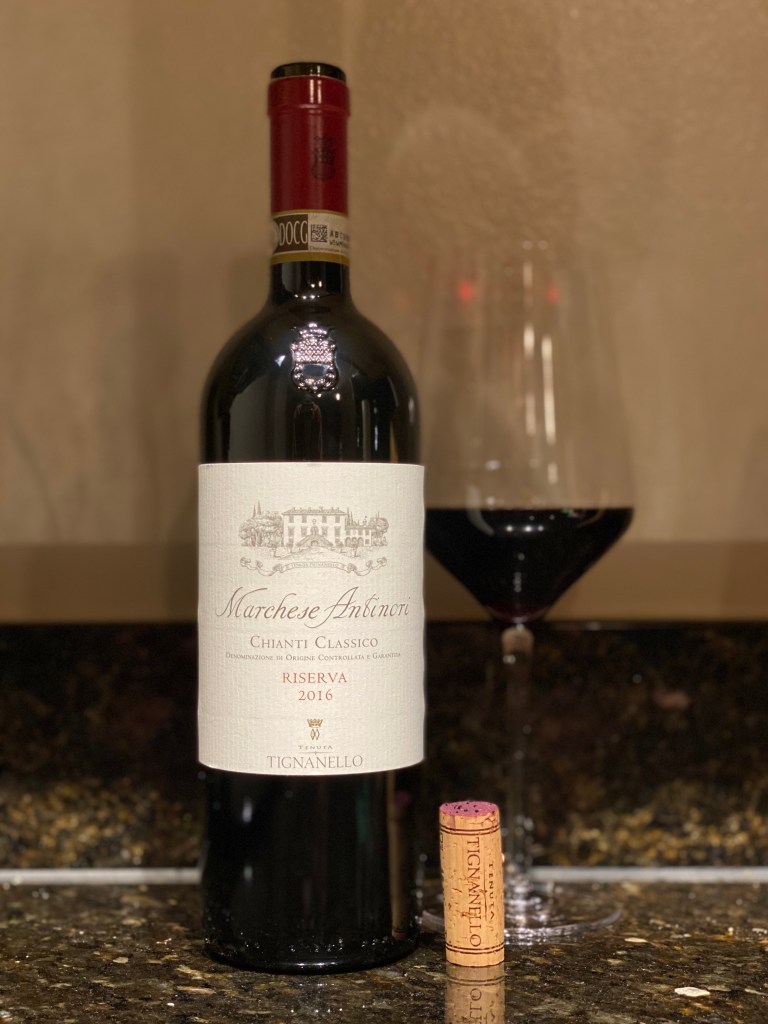
Today’s Wine: 2016 Chianti Classico Riserva Tenuta Tignanello

90% Sangiovese, 10% Cabernet Sauvignon; 14% ABV

The 2016 Chianti Classico Riserva is medium ruby in color and slightly transparent. Once this opens up, the nose showcases aromas of blackberry, cherry, cranberry, black licorice, chocolate, purple florals and rose, crushed rock, green herbs, and dried earth. On the palate, this wine displays notes of blackberry, blueberry, plum, forest floor, mocha, sweet tobacco, spice, savory herbs, and slight vanilla. This is full-bodied with medium (+) acidity, medium dusty tannins, and a long elegant finish.

Price: $35. One of the greatest Chianti Classicos I’ve enjoyed and consistently incredible value after Antinori switched exclusively to Tenuta Tignanello grapes in 2011. Pair this with red sauce meat pasta, pizza, veal marsala, or chicken parm.
Fun Orange Wine for the Adventurous

Today’s Story: Tre Monti

Tre Monti was established in 1974 by Sergio and Thea Navacchia. Thea was a major driving force behind the winery throughout their inaugural decade-plus, and together with her husband Sergio became pioneers in a sense by planting large densities per hectare and experimenting with non-traditional vines. During the 1980s, the couple collaborated with a young Francesco Spagnolli before working with Vittorio Fiore and later Donato Lanati, all quite instrumental in making Tre Monti what it is today. Thea unfortunately passed away in 1989, however, though this tragic event inspired her children Vittorio and David to join their father in managing the estate. While Sergio continues to run the show, Vittorio controls the enological side of the business while David, who has a background in Law, controls the financial and marketing aspects.

In the cellars, Vittorio follows a minimal intervention philosophy in order to showcase the integrity of his fruit as well as the terroir from which it comes. The winery became certified organic in 2014 and the team refrains from using unnatural products in the vineyards thanks to this practice. To learn more about the estate, their farms, or their wines, check out the website linked here. If anything, it gives you a nice representation of how down to earth, friendly, and passionate the Navacchia family seems to be.

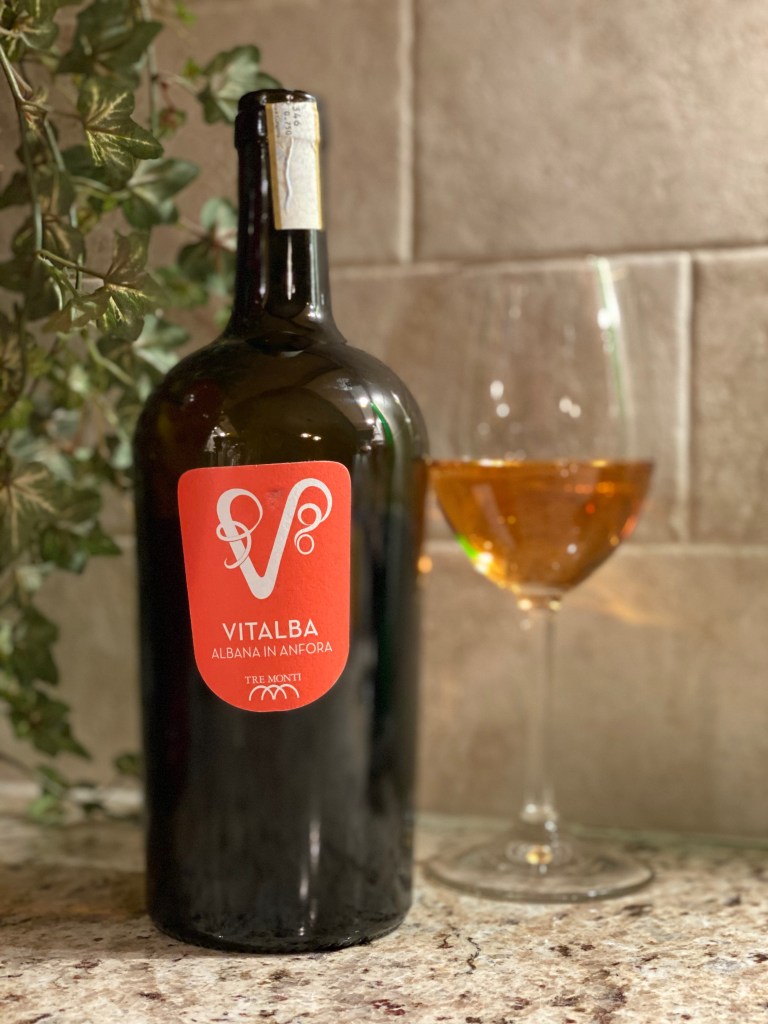
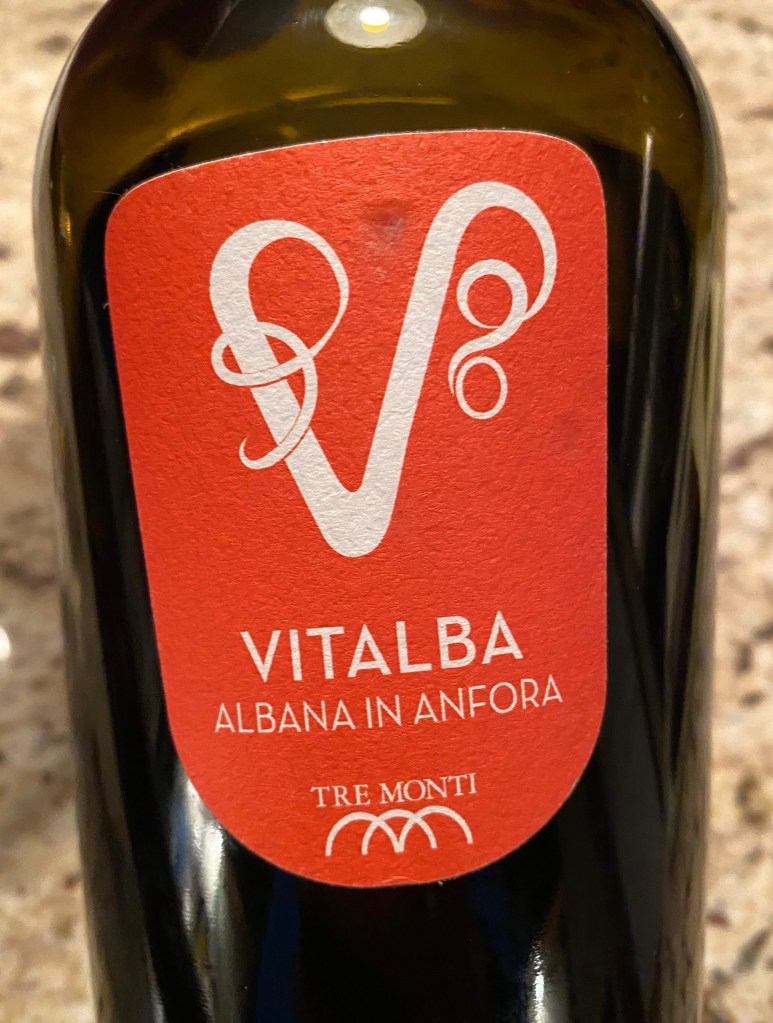
Today’s Wine: 2017 Vitalba Albana in Anfora

100% Albana; 14.5% ABV

The 2017 Vitalba is a fully transparent pale to medium amber color with peach variation. On the nose, this wine showcases aromas of apricot, cantaloupe, stone fruit, mango, orange marmalade, honey, white and yellow florals, and some bright herbaceous overtones. Once in the mouth, the wine offers notes of golden apple, peach, dried apricot, nectarine, lemon zest, pineapple juice, bright peppery mineral, and ginger. This is medium- to full-bodied with mouthwatering high acidity, light tannins (!), and a medium (+) length finish. Really refreshing and a fun wine to try, this is fermented in Georgian amphora (kvevri) using only natural yeasts and sees 95 day maceration. 125 cases produced.

Price: $24. For its price, this is a fun “orange wine” to try and offers a structure many wine drinkers probably do not experience from a white grape variety. If you come across this bottle and are in the mood for an adventure, check it out. Pair this with assorted white fish, goat cheese, fruit tarts, or apple pie.

Nobility in Piedmont

Today’s Story: Cordero di Montezemolo

The Cordero di Montezemolo winery traces its roots to 1340, however the Cordero di Montezemolo family is of Spanish origin and did not settle in Piedmont until the mid-1400s. Though the family has deep roots in Piedmont, they did not find foundation in wine but rather in printing/typesetting businesses as well as military and diplomatic roles for the Royal House of Savoy. As a well-established and aristocratic family in Piedmont, the Cordero di Montezemolo family tree intertwined with the Falletti family who were one of the most noteworthy noble families in the Alba area and also proprietors of the Monfalletto Estate. In 1918, Maria Lydia (the daughter of Marchese Luigia Falletti) married Paolo Cordero di Montezemolo and the Cordero di Montezemolo family cemented their future in wine.

Maria Lydia and Paolo unfortunately passed away at young ages, however their son Paolo who was orphaned at the age of 15 grew up under the care of his grandmother Marchioness Luigia Falletti. When she passed away in 1941, Paolo inherited her entire property holdings which included the Monfalletto Estate in La Morra. Though Paolo through his ownership of the estate marks the Cordero di Montezemolo family’s foray into wine production, the estate throughout its history has been family owned and operated. Today, the estate is under control of its 19th-generation with Giovanni Cordero di Montezemolo and his children Elena and Alberto at the helm.

Though the historical single-body vineyard of the estate consists of 28 hectares (69 acres), Paolo Cordero di Montezemolo expanded the property in 1965 by purchasing a two hectare plot of old vines in the Villero area in Catiglione Falletto. The estate expanded further over the years through purchases and leasing agreements, and today total vineyard land sits at 51 hectares (126 acres). For all of their land, Cordero di Montezemolo started the organic farming certification process in 2013 and achieved certification a couple years ago. They use natural mineral products and repellents from organic material to fight parasites, organic products and green manure for fertilization, and natural grass planted beneath the rows to foster biodynamic balance. Not only do these efforts protect the land, but they help culminate into wonderful wines full of complexity and demonstrations of place.

Today’s Wine: 2015 Barolo Monfalletto

100% Nebbiolo; 14.5% ABV

The 2015 Barolo Monfalletto is deep garnet in color though moderately transparent. I decanted this for an hour and drank it over the following three hours due to its youth. Once this opens up, the rather intense nose showcases aromas of cherry, dried strawberry, rose, sweet tobacco, black licorice, black tea leaf, mint, Asian spice, cocoa powder, and oak. On the palate, I get notes of dried cherry, raspberry, cranberry, licorice, tobacco, dried rocky soil, chocolate, iron, and toasted oak. This Barolo is full-bodied with high acidity, dusty medium (+) tannins, and a long finish with notes of green herbs. Though elegant and somewhat approachable in its youth, this wine has the structure for the long haul and I would give it another three years of bottle aging and drink it over the following decade.

Price: $48. This is a great value Barolo for me, especially given the intensity and complexity it shows at a young age. Pair this with duck, quail, or game meats. Add some white truffle to these dishes and now you’re talking.

Beautiful Expression of Teroldego

Today’s Story: Agricola Foradori

Agricola Foradori traces its roots back to 1901 when the winery was established, however it did not come into the Foradori family until 1939 when Vittorio Foradori purchased it. The winery became a family venture when Roberto Foradori joined in 1960, coincidentally the same year of the family’s first vintage. Years later, in 1976, Vittorio unfortunately passed away unexpectedly and his wife Gabriella Casna Foradori managed the winery until their daughter Elisabetta could graduate with her enology degree. In 1984, Elisabetta faced her first vintage as a 19 year old though she already had her heart set on propelling her family’s winery and the Teroldego variety to high standards. Over time Foradori remained a family endeavor, with Elisabetta’s son Emilio working his first vintage in 2012 and her son Theo joining in 2015. Elisabetta’s daughter Myrtha joined this year to garden vegetables on the estate as well as plan for farming and expansion over the years to come.

One of the most important changes at Foradori over time, in my opinion, is the change to biodynamic farming in 2002. Though Elisabetta’s primary goal when first taking over the winery was the survival of the winery itself, over time she realized the importance of caring for land in such delicate manner to allow natural cycles and processes proliferate. Her minimalistic intervention in the vineyards and winery allows the fruit to express itself transparently, producing wines that are ideal demonstrators of place. In the winery, Elisabetta lightly (if at all) guides the wines through fermentation where there is no temperature control and only indigenous yeasts are used. Fermentation also takes place in different containers than the aging process, varying from oak casks and open-top tanks to clay tinajas. No sulphites are added until after the first racking (typically 6-8 months after drawing from the skins) so no wine will have more than 30mg/L SO2. At bottling, all wines are unfiltered.

Winery Statistics (found on the Foradori website here):

“We harvest the grapes from vineyards covering 28 hectares – 70% of Teroldego, 20% of Manzoni Bianco, 5% of Nosiola and 5% of Pinot Grigio – to produce an average of 160,000 bottles per year: 50,000 of Foradori, 20,000 of Granato, 25,000 of Fontanasanta Manzoni Bianco, 10,000 of Fontanasanta Nosiola, 10,000 of Fuoripista Pinot Grigio and 12,000 for each of vineyards of Sgarzon and Morei and 25,000 bottles of Lezèr.”

I encourage you to discover more for yourself on the Foradori website, particularly the tabs regarding the region, portfolio of wines, and photo gallery.

Today’s Wine: 2016 Granato

100% Teroldego; 13% ABV

This wine is an opaque deep purple color almost black at its core. Due to its youth, this certainly required a long decant. Once it opens up, the nose showcases aromas of blackberry, blueberry, wild red berries, farm land, violet, tar, smokey minerality, and mint. In the mouth, the Granato shows notes of blueberry, pomegranate, cranberry, lavender, forest floor, black tea leaf, and slight baking spice (especially cinnamon). The wine is medium- to full-bodied with high acidity, medium tannins, and a long finish. I suggest giving this a few more years of bottle age before drinking and this will drink magnificently for at least a decade beyond that.

Price: $75 (though you can find this for $60 or less in Europe). I like the price point (particularly overseas this is a screaming value), particularly for its complexity, ageability, and palpable high quality. Pair this with beef, lamb, or meat/red sauce pasta.

Wonderful Etna Rosso

Today’s Story: Frank Cornelissen

Frank Cornelissen established his winery on Mount Etna in 2001 with vineyards located on the Northern Valley of the active volcano. While the winery is relatively new, Etna was still largely undiscovered as a wine region at that time. The estate currently encompasses 24 hectares, 13 being old vines in the alberello training system, 9 being old vines in modern rows, and 2 being olive orchards. To me, this is remarkable because Frank produced his first wine in 2001 with only 0.40 hectares of vines.

Viewing himself as a steward of the land, Frank adopted a farming philosophy that natural interactions in the vineyards are complex and we should allow the earth to steer farming of grapes rather than laying a heavy hand. To this end, Frank seeks to avoid all treatments on the land such as chemical or pesticide use. The farming is organic (certified in 2010), while some practices of homeopathic or biodynamic farming are also used. Buckwheat is added to soils low in organic material instead of industrial compost, soil-tilling is avoided as much as possible, and local fruits are interplanted in the vineyards to foster bee colonies. Nonetheless, Frank will use treatments such as copper sulphate and sulphur if he absolutely must to keep the vines from dying (this occurred in 2013 and 2015, both very tough vintages).

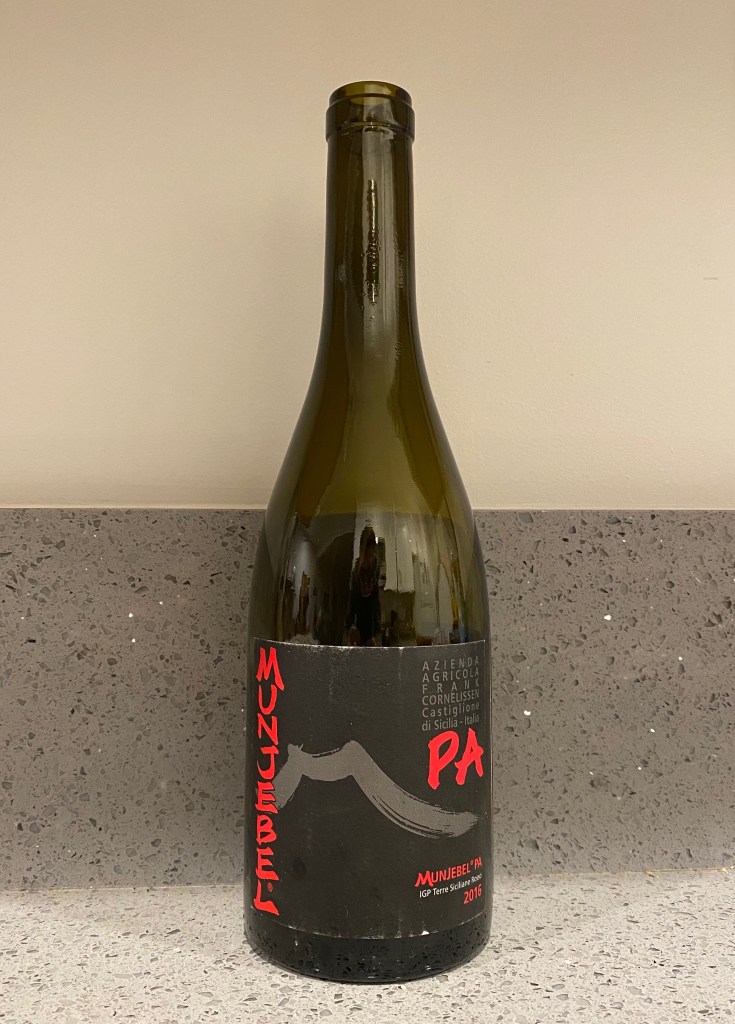
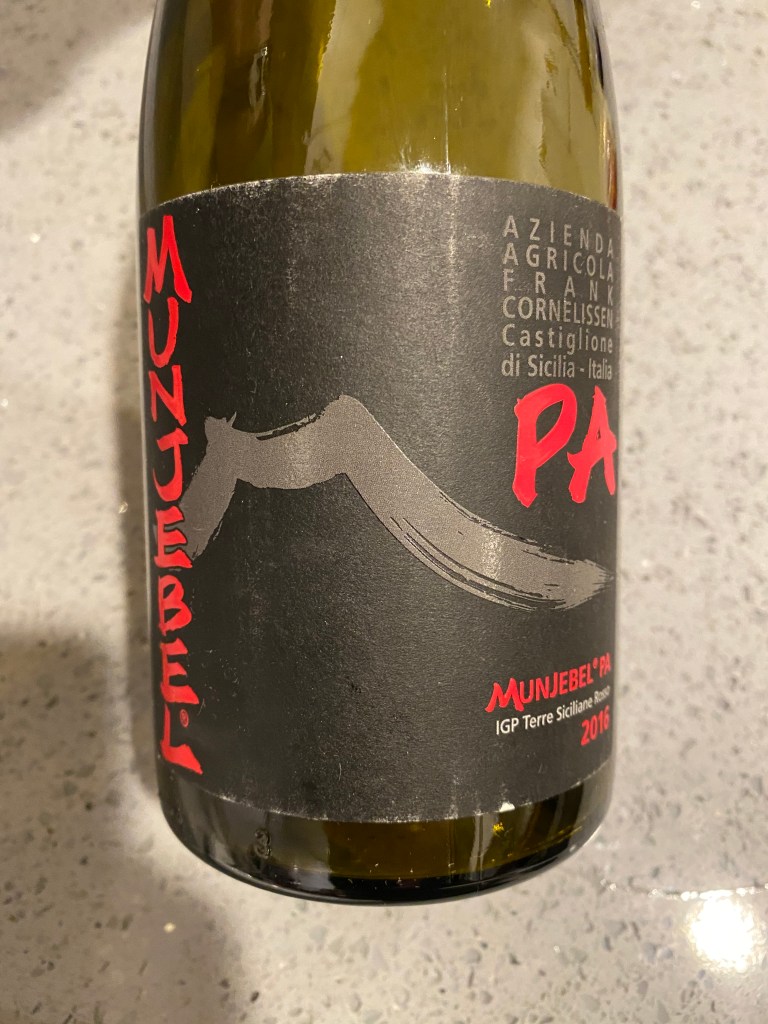
Today’s Wine: 2016 Munjebel PA

100% Nerello Mascalese; 15% ABV

The Munjebel PA is produced from the Porcaria cru in the contrada Feudo di Mezzo. Situated at 640m above sea level, the vineyard is challenging to farm and harvest though the average age of the vines is 60+ years. This wine is made with destemmed fruit that is lightly crushed, and fermentation is accomplished using only indigenous yeasts. The wine sees skin contact for 60 days during fermentation, is aged in neutral epoxy tanks, and is unfined but filtered before bottling with cartridges of 5 micron. They add as little sulfur as possible, typically ranging from 5-30 mg/l.

The 2016 is pale to medium ruby in color and fairly transparent. This benefits from a little decanting, and I’d suggest serving it in an aroma collector glass such as a Zalto Burgundy. Once this opens up, the nose offers aromas of ripe raspberry, strawberry, red rose, green herbs, tar, smoke, and volcanic soil. In the mouth, the wine showcases flavors of strawberry, raspberry, cranberry, green cooking herbs, scorched earth, and mineral. There is also a prominent rocky component to the wine as well. This is light-bodied with medium (+) acidity, medium tannins, and a medium length finish. Roughly 166 cases produced.

Price: $65. Etna wines are starting to jump in price (and justifiably so). While this bottle is on the pricier end, I’d suggest trying some of Frank Cornelissen’s other bottlings to gain exposure to the magnificent wines being produced there. You can typically find the standard Munjebel Rosso for $40 or less. Pair this with meatballs, steak, pork, or tuna.

A Modernist’s Nebbiolo

Today’s Story: Conterno Fantino

Founded in 1982 by Claudio Conterno and Guido Fantino, Conterno Fantino has grown into a somewhat large (~140,000 total bottles annually) producer of Nebbiolo, Barbera, Dolcetto, and Chardonnay. This being said, the winery employs only about 10 people at a given time including Alda, Fabio, and Elisa Fantino who joined over the years. During an expansion for the winery in 2008, Conterno Fantino implemented solar panels and a geothermal system to conserve energy in pursuit of their environmental impact goals, which I will delve into a bit more speaking about the winemaking process.

Throughout harvest and winemaking, Conterno Fantino employs methods such as manual picking of fruit, spontaneous fermentation from indigenous yeasts, and careful use of wood for aging the wine while minimizing sulfites. Taking a step back, the entire farming process is certified organic in an attempt to preserve the land’s biodiversity with a goal of environmental sustainability. All this being said, Conterno Fantino is a great example of modernist Italian winemaking, particularly for Barolo. Namely, Conterno Fantino ages their Barolo in French oak barriques after relatively short maceration and fermentation. While I am not reviewing one of their Barolos today, hopefully I will in the near future.

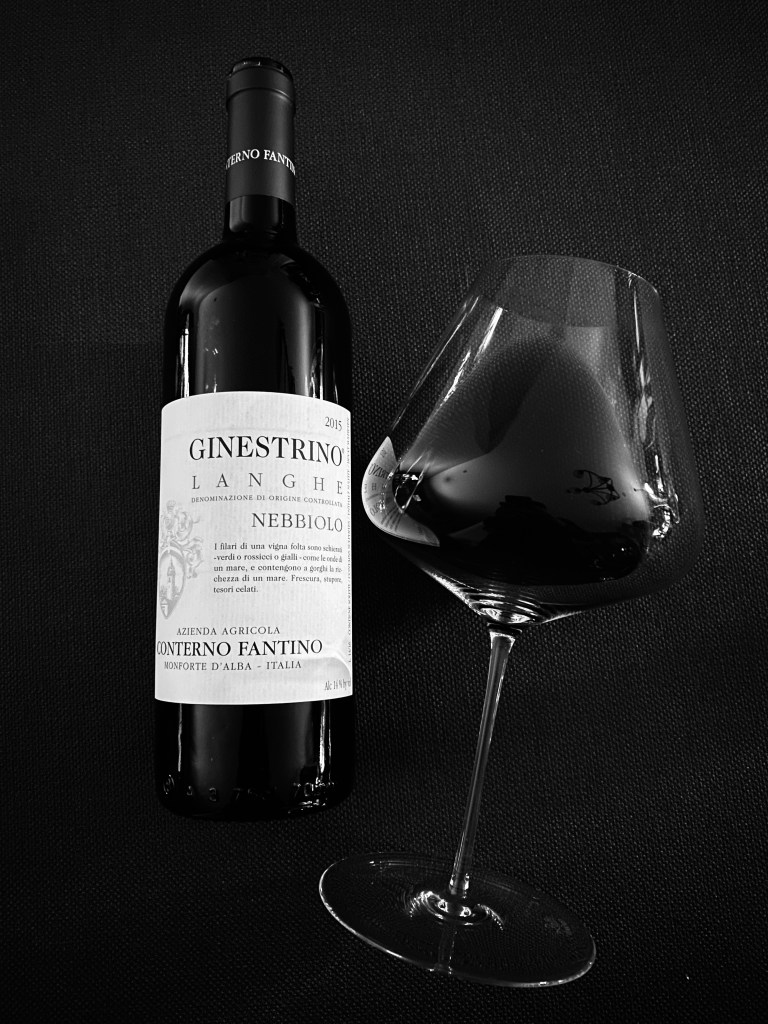
Today’s Wine: 2015 Langhe Nebbiolo Ginestrino

100% Nebbiolo; 14% ABV

I normally don’t pair Nebbiolo with spaghetti (I prefer a Sangiovese such as Chianti), however, when duty calls and this is what I can find, we drink it. The wine is clear, pale to medium ruby in color which is a bit lighter than most young Nebbiolo wines I’ve tried. Once this opens in a decanter, the nose showcases aromas of cherry, strawberry rhubarb, tomato sauce, tar, red licorice, and mixed green herbs. On the palate, we get notes of cherry, dried raspberry, gravel and slate, slightly smokey earth, and tobacco. Overall very easy drinking with not a whole lot to it, this wine is medium-bodied with medium (+) acidity and medium (surprisingly not medium (+) to high) tannins with a medium (+) length finish.

Price: $35. This is a good price-point for entry level, drinkable-while-young Nebbiolo. Though I am a staunch proponent of traditionalist winemaking, this wine could be a great entry for those not familiar with the Nebbiolo grape or Italian wine as a whole. The wine paired easily with red/meat sauce pasta, though would also go well with lightly peppered ribeye, prime rib, or smoked duck.

Pasta Night? Look No Further

Today’s Story: Santa Margherita

Santa Margherita was founded in 1935 by Count Gaetano Marzotto, a pioneering vintner who helped revitalize a portion of the Venetian countryside in both farming and winemaking. With a goal of producing authentic Italian wines full of regional character and tradition, Marzotto expanded the Santa Margherita brand to vineyards in Alto Adige and Tuscany. Famous for their Pinot Grigio, Santa Margherita also makes Chianti Classico Riserva, Prosecco Superiore, and Sparkling Rosé.

Since its beginning, Santa Margherita put a major emphasis on preserving the environment through sustainability efforts. For example, during the winemaking process they use natural products and compost to feed the soil, organic land management in terms of in-ground irrigation, use no chemical pesticides for their Chianti, and hand-harvest 90% of their grapes in Veneto. Further, Santa Margherita stopped using animal byproducts and uses yeast-derived and vegetable-derived products during filtration so their wines are vegan-friendly. Lastly, Santa Margherita is powered completely by renewable resources including 6,500 square feet of solar panels at their winery in Portogruaro.

Fun fact: Santa Margherita manufactures their own wine bottles in a factory adjacent to their fermentation cellars. They do this to reduce carbon emissions related to storage and transportation of bottles from outside producers.

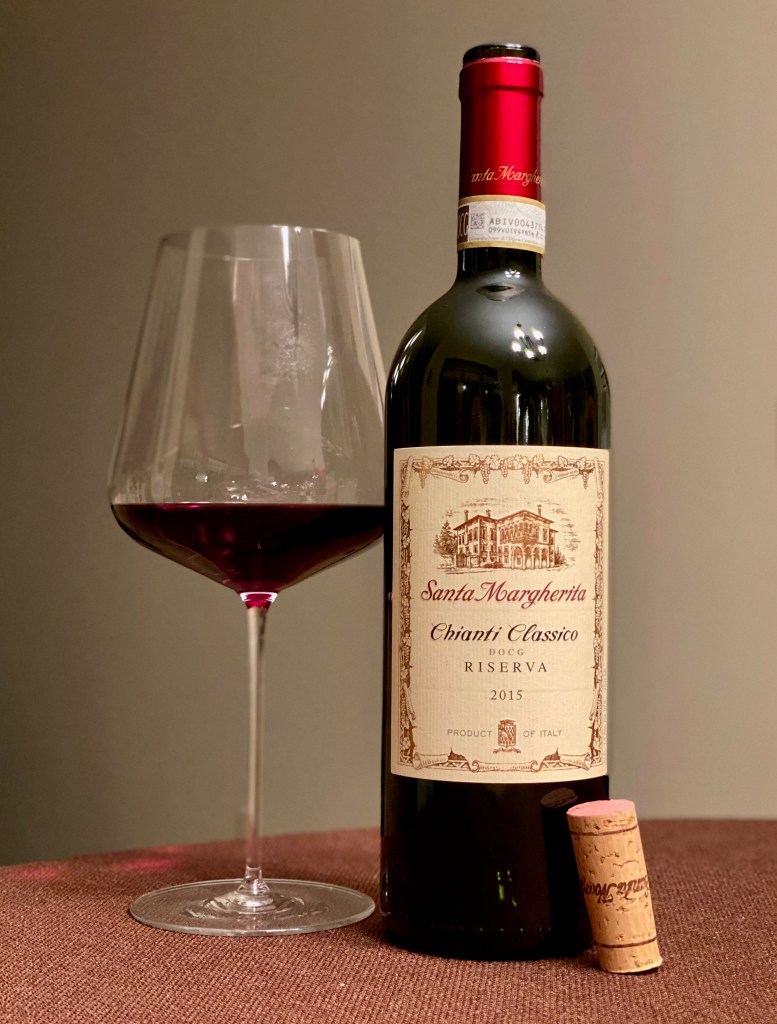
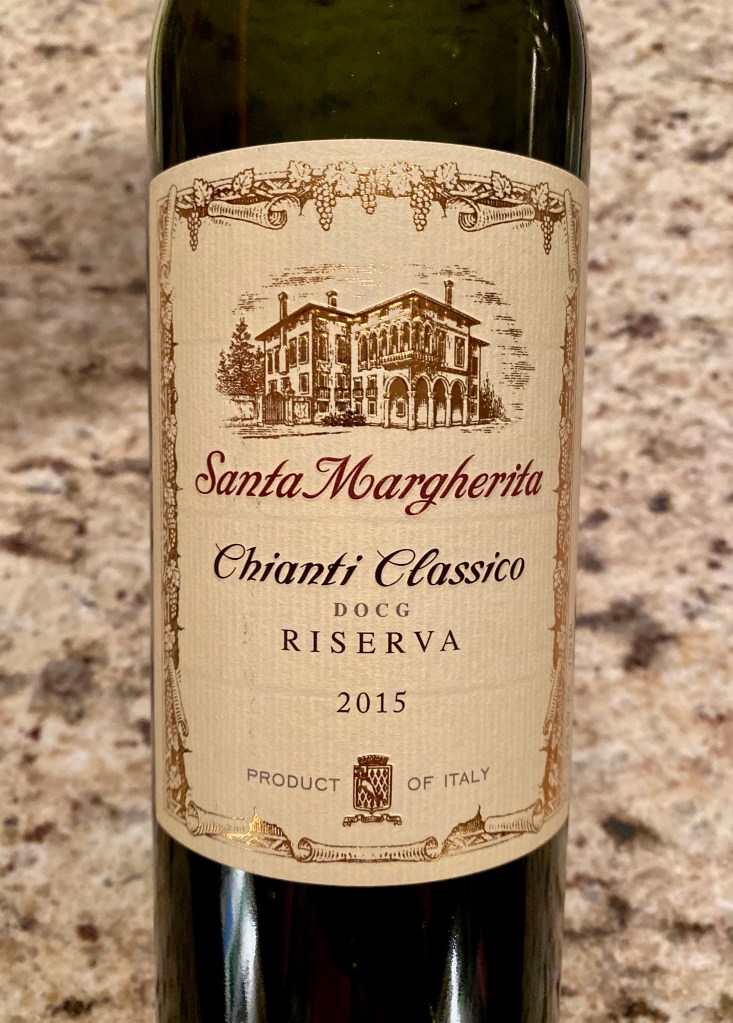
Today’s Wine: 2015 Chianti Classico Riserva

100% Sangiovese; 13.5% ABV

For spaghetti night, I knew I needed to run to the store to grab a bottle of Chianti Classico. As expected, this bottle filled its role for the pairing beautifully. Our wine today is a clear, medium ruby color with a variation of pink hues toward the edges of the glass. I briefly decanted this before drinking, as these are known to have high tannin, but letting this slow ox in the glass would do just fine. On the nose are aromas of cherry, cranberry, barnyard, forest floor, shoe leather, and a hint of bitter chocolate. Once in the mouth, we get flavors of sweet cherry, cranberry, strawberry, dried earth, mushroom, and mineral. True to form, this is medium- to full-bodied with high acidity, medium (+) tannins, and a long finish dominated by notes of red fruit and berries.

Price: $27, a nice price-point. I recommend trying this for its solid quality compared to many other options you will find on the shelf, even if they are slightly cheaper. Pair this with red/meat sauce pastas, lamb, or veal.

Traditionally Unconventional

Today’s Story: Paolo Bea

Paolo Bea is a beautiful, working farm winery located in the hilltop commune of Montefalco in the region of Umbria. Records indicate that the Bea family lived in Montefalco as early as the 16th century and to this day produce fruits, vegetables, olives, and livestock to both sustain themselves and sell in the marketplace. While Paolo Bea, the senior member of the family today, spearheads the practices of the winery, his two sons Giuseppe and Giampiero farm the vineyards and assist in the vinification process, respectively.

A traditionalist through and through, Paolo Bea creates his wines in an effort to showcase the rustic character of grapes native to Montefalco, especially with his red made of Sagrantino. All care for the vineyards is organic, harvesting is done by hand, only native yeasts are present during fermentation, and the wines are bottled without fining or filtration. Many wine producers around the world create wines for the international stage (higher alcohol, bigger fruit, more forward) yet vintners like Paolo Bea remain my favorites because they want to share what their land produces in an open and honest representation.

While the Sagrantino is one of the greatest value wines I’ve been able to find from Italy, the white wines produced by the winery are some of the most interesting you can find. For example, Bea leaves his whites in contact with the grape skins for a time which adds tannin and body to the wines. The Arboreus, made from Trebbiano grapes, for instance shows a gold/amber color and medium tannins thanks to this process. My wine today, the Santa Chiara, shares similar tannin and body characteristics but is a true orange wine.

Today’s Wine: 2015 Santa Chiara

20% Grechetto, 20% Malvasia, 20% Garganega, 20% Sauvignon, 20% Chardonnay; 13.5% ABV

“Interesting” is the word uttered profusely by my tasting companions when we drank this bottle. I speculate that is because this was the first orange wine for many of them and only my second. Our wine today is amber orange in appearance, captivating for many of us in the room. On the nose are aromas of sweet (almost candied) cherry, apricot, melon, caramel, white wildflower, crushed stone, and mineral. The nose evolved dramatically over the time we drank this bottle, which made for a very unique experience. On the palate are notes of peach, apricot, honey, assorted nuts, vanilla, and mineral. Very complex and fun to drink, this is medium-bodied with moderate acidity, medium (-) yet grippy tannins, and a long finish characterized by notes of citrus and herbs. Another excellent and intriguing wine from Paolo Bea.

Price: $50. Well worth a try if you stumble across this in a store. Paolo Bea wines are full of character and produced using traditional methods in relatively small quantities, justifying the price. This would pair well with Korean dishes like Bibimbap.

King of Wines

Barolo is a wine worth devoting yourself to.

Battista Rinaldi

Today’s Story: Oddero

Oddero is one of the great, historical producers of Barolo and Barbaresco, with the family owning property in Piedmont dating back to the 18th century. This being said, Giovanni Battista Oddero started producing wines in the commune of La Morra sometime between the 18th and 19th centuries, kicking off what today marks seven generations of winemaking for the Oddero family.

As Oddero’s wines found their way into the world, first by small barrels, bottling began in 1878 under Giacomo Oddero and the winery recently discovered that their Barolo was exported to the Americas via small barrels as early as the late 19th century. This is in stark contrast to today’s winery, which is impacted immeasurably by another Giacomo (grandson of the above).

The second Giacomo worked tirelessly during the 1950s to renovate the farm and winery, meanwhile fighting to demonstrate the quality of Piedmont wines to the world. In doing so, Giacomo helped lay the foundation for DOC and DOCG certifications for wines of the Langhe and guided agricultural regulation for products such as cheese, nuts, and vegetables.

Today, Oddero is led by his daughter Mariacristina and two grandchildren, Isabella and Pietro.

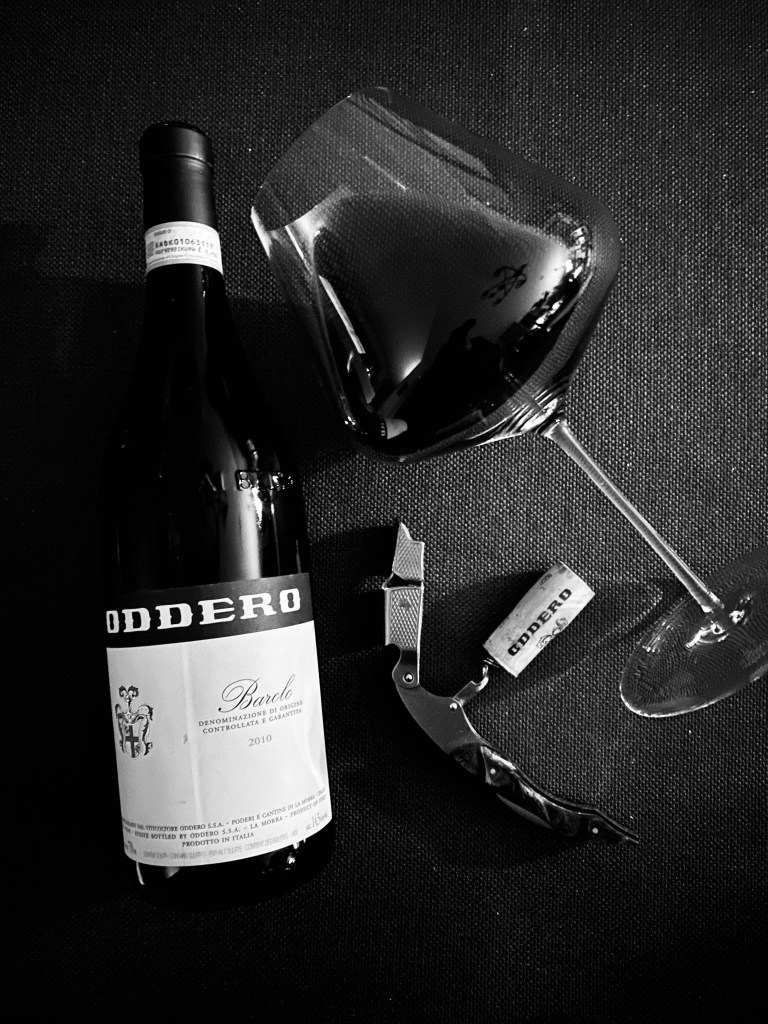
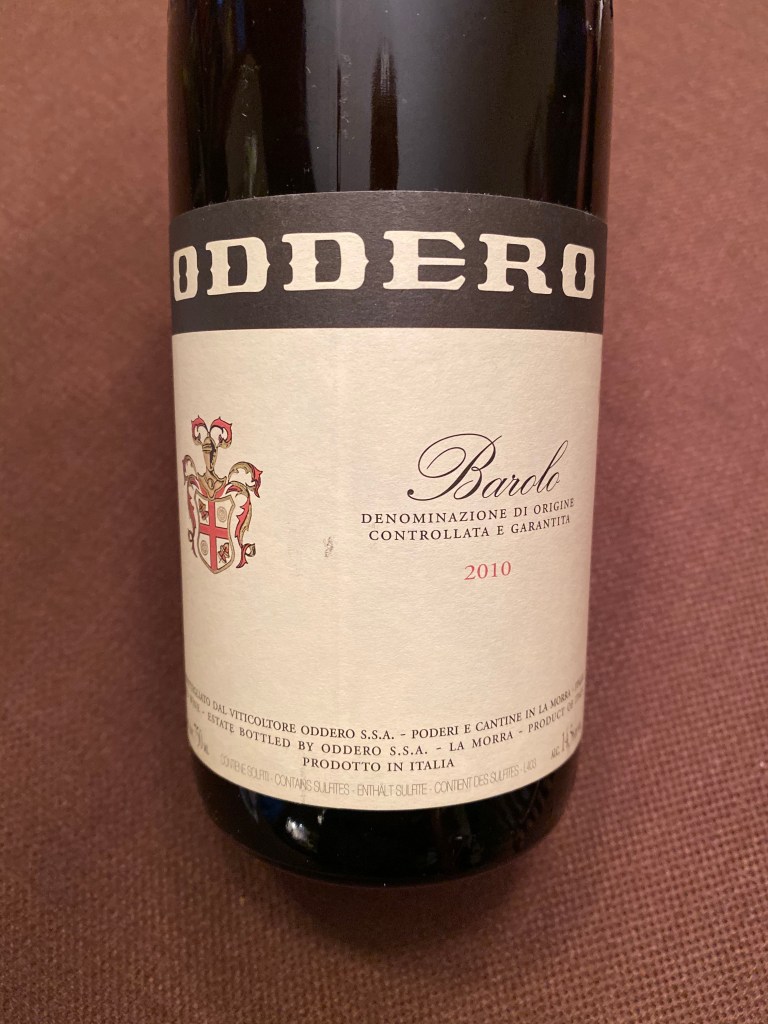
Today’s Wine: 2010 Oddero Barolo

100% Nebbiolo; 14.5% ABV

2010 was a fantastic vintage for Piedmont (just wait until I review a 2013 Barolo!) characterized by a long, cool growing season that allowed for late harvesting of the fruit. Many of these wines seem to be structured and bold, yet elegant at the same time. Age-worthy is almost an understatement…

Our wine today appears a beautiful clear ruby in the glass with, as expected, no signs of aging near the rim. Still somewhat tight on the nose, we get aromas of black cherry, plum, eucalyptus, and leather. After two hours of air, the wine softened a bit and some early alcohol on the nose wore off. On the palate this is a bold, food-worthy Barolo with notes of cherry, dried strawberry, tobacco, just-past-its-prime red licorice, and loamy earth. Medium- to full-bodied with mouthwatering high acidity, medium (+) tannins, and a medium (+) finish that seems to go on for over half a minute. I think this is just starting to enter its drinking window but has plenty of gas left in the tank.

Price: $50. This is an outstanding value to me, in one part due to the quality of Oddero as a producer and another the ability to pull this off the shelf with 9 years of age. Let this breathe while you cook gamey meats, steak, or red sauce meat pastas.