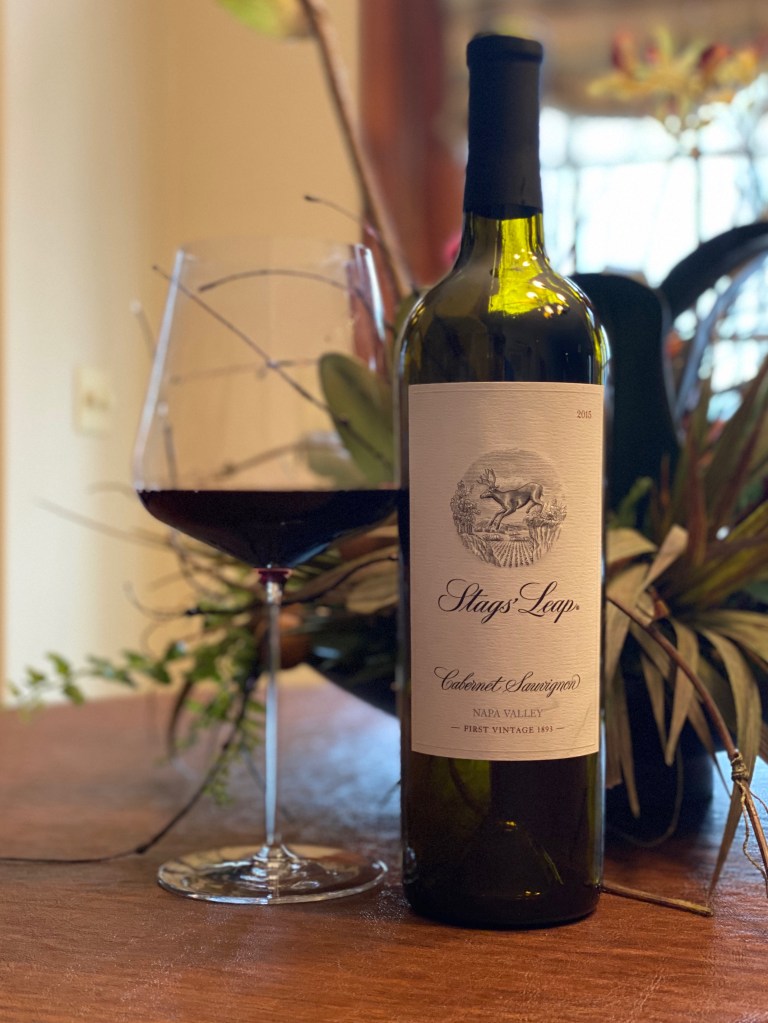
Today’s Story: Stags’ Leap Winery
Stags’ Leap Winery was established in 1893 by Horace Chase and his wife Mary (Minnie) following Horace’s partnership with his uncle W. W. Thompson on procuring the land. Grapes were first planted on this property in 1872 by T.L. Grigsby of Occidental Winery (today it is known as Regusci Winery), however the Chase family took ownership during the late 1880s and started building their manor house in 1888 after Horace and Mary were married. Around this time, the Stags’ Leap name came about and takes inspiration from native Wappo legends telling the tale of stags leaping to escape their hunters. When the manor house was completed in 1890/1891, the Chase family truly started living up to their reputation as lavish hosts to San Francisco high society and other features of the property soon thereafter included wine caves, a swimming pool, cabanas, gardens, a golf range, tennis courts, and 100 acres of vineyards. Though the first vintage and label bear 1893, there is evidence Horace produced wine from the estate shortly after taking ownership and utilized facilities at Occidental Winery to do so.
Though production of wine ramped up at the estate and Stags’ Leap was producing 40,000 gallons by 1895, several years later in 1908 winemaking ceased and, thanks to Prohibition shortly thereafter, did not resume for quite some time. Though Stags’ Leap was later established as a resort and refuge for San Franciscans escaping the cold Bay Area fogs, wine grapes continued to grow on the property and were sold to other wineries in the area. As decades passed, Stags’ Leap is drenched in rumors of bootleggers, mobsters, ghosts, and gypsies with the manor house and cottages even used as a reunion and rest destination for US naval officers under lease by the US Navy in 1944. In 1972, wine production resumed at the estate under Carl Doumani and winemaking has not stopped again. A new era dawned for the estate at this point, advancing with replanting of the vineyards in 1988, the establishment of Stags Leap District in 1989, and the restoration of the manor house in 2016. Today, Stags’ Leap produces elegant wines that display the fruit of this unique AVA and many of them do not break the bank.
The Stags’ Leap estate as it exists today consists of 85 acres broken into 23 unique blocks by soil type and exposure to the sun. Backing up to the rocky Stags Leap Palisades, the vineyards contain large amounts of volcanic rhyolite and tuff blended with subsoil of Bale loam formed by ancient riverbed sediment. An interesting note when thinking of all the rock in this soil is that when the Napa Valley chills at night, heat radiates from the rock and projects this stored warmth on the grapes until the cool evenings dissipate it. Essentially this feature prolongs the ripening process of the Cabernet Sauvignon and produces wines with good sugar and acidity balance. With all of the fruit from this estate hand-picked and hand-sorted, the winemaker Christophe Paubert believes in a meticulous and hands-on approach to winemaking. Christophe attempts to create balanced wines that are both intense yet characterized by soft tannins, allowing Stags’ Leap to appeal to a broad range of today’s Cabernet Sauvignon lovers but lacking on some of that terroir-driven character I look for.
Note: Stags’ Leap Winery is not to be confused with Stag’s Leap Wine Cellars (note the apostrophe placement). Though both wineries are incredibly historical when it comes to Californian winemaking, Stag’s Leap Wine Cellars produced the wine present in the 1976 Judgment of Paris and placed 1st for the red wines (Chateau Montelena, which I reviewed previously, placed 1st for the whites with their Chardonnay). Adding more apostrophe confusion for you, the Stags Leap District where both wineries are located does not contain an apostrophe. Check it out next time you’re in a store with wine from both estates!

Today’s Wine: 2015 Cabernet Sauvignon
90% Cabernet Sauvignon, 4% Malbec, 4% Merlot, 2% Petit Verdot; 14.5% ABV
The 2015 Cabernet Sauvignon is medium to deep ruby in color and almost entirely opaque. Once this opens up, the nose offers aromas of jammy blackberry, blackcurrant, plum, black cherry, violet, graphite, loamy earth, baking spice, chocolate, and cedar. The nose also displays some heat that I think needs a bit more time to burn off. Once in the mouth, the wine showcases notes of blackberry, blueberry, cassis, licorice, bold tobacco, leather, crushed rock, damp earth, smoke, red and purple florals, and oak. This Cab is full-bodied with medium (+) acidity, supple and rather velvety medium tannins, and a long finish to cap off an overall very bold and fruit-forward drinking experience.
Price: $45. This is always a great value Cab in my opinion and drinks incredibly well compared to other “people pleasing” wines in the same price range or higher. Though this is not my particular style of Cab, I am confident in saying the majority of today’s Cab drinkers would enjoy this bottle. Pair this with steak au poivre, herb roasted lamb, or a quality burger.


 JB's Wine Talk