Historic Pomerol Estate Showcasing the Promise of the Underrated 2014 Vintage

Today’s Story: Château L’Évangile

Château L’Évangile is a historic Bordeaux wine estate located in the appellation of Pomerol on the Right Bank of Bordeaux. L’Évangile traces its roots back to the year 1741 when it first popped up in the land registry under the name Fazilleau, and it was owned by the Léglise family from Libourne. By the turn of the 19th century, the estate was fairly close to its current configuration and consisted of 13 hectares (32 acres) of vineyards. In 1862, Paul Chaperon purchased L’Évangile (as it was known by this time) and he built the reputation of the estate to greater heights and constructed the château in 1874. By 1900, L’Évangile was widely considered the third-best wine of Pomerol behind Vieux Château Certan and Château Pétrus. Chaperon’s descendants, the powerful Ducasse family, continued to run the estate until 1990 when it was purchased by Domaines Barons de Rothschild who own Château Lafite Rothschild on the Left Bank amongst other highly-regarded properties.

Today Château L’Évangile consists of 22 hectares of vineyards planted in prime sandy clay and gravel soils on the plateau of Pomerol. The property borders Château Pétrus to the north and Château Cheval Blanc to the south, so one can say they are in good company. L’Évangile’s vineyards are planted to about 80% Merlot and 20% Cabernet Franc, though there is now a small plot of Cabernet Sauvignon that was blended into the wine for the first time in 2019. The vines at L’Évangile average about 30 years of age, and the estate started shifting to organic viticulture in 2018 before ultimately becoming certified organic in 2021.

In the cellar, all plots are vinified separately in vats with traditional pump overs and controlled maceration. The goal by the end of fermentation is to try to determine which plots/vats ultimately make it into the Grand Vin and which may end up in the second wine called Blason de L’Évangile. The Grand Vin ages for 18 months in 70% new French oak barrels, and total production of the Grand Vin and Blason de L’Évangile averages about 5,000 cases per vintage.
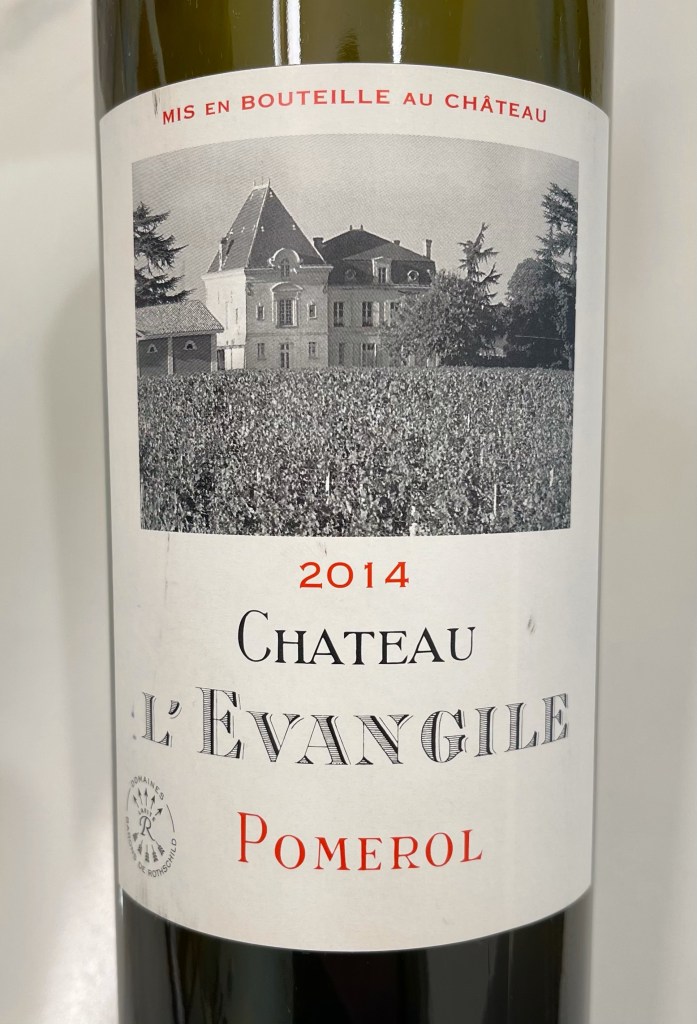
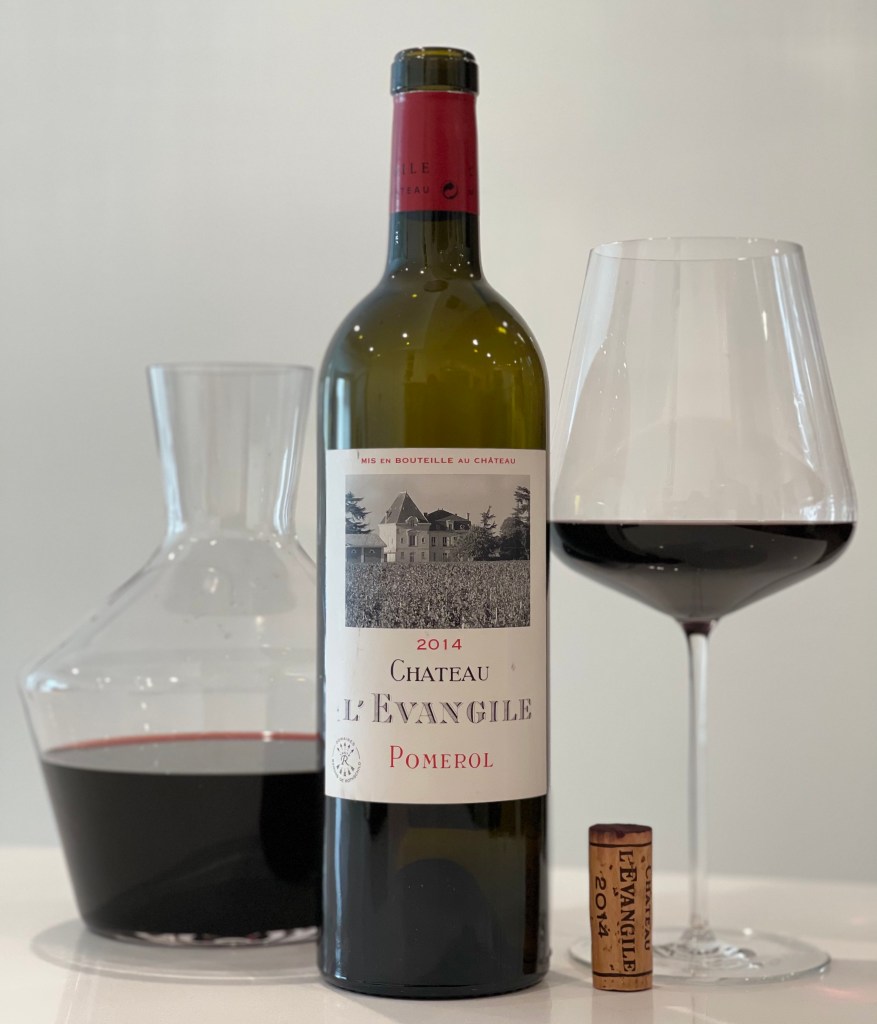
Today’s Wine: 2014 Château L’Évangile

82% Merlot, 18% Cabernet Franc; 14% ABV

The 2014 Château L’Évangile is deep ruby in color. Given my first taste and a check-in after 2 hours, I decided to decant this for a full 4-5 hours as it was rather shy. Once it opens up, the aromas are of medium intensity and the nose showcases notes of black cherry, spiced plum, cigar box, new leather, black truffle, clay, cinnamon, and toasted oak. The flavors are also of medium intensity, and the palate displays notes of blackberry, cassis, plum, black licorice, tobacco, scorched earth, sage, chocolate, and oaky spice. This dry red is medium- to full-bodied with medium (+) acidity, medium (+) but refined tannins, high alcohol, and a long finish.

Price: $160 (I paid $143). On a relative basis, this wine offers considerable value compared to stronger vintages like 2015 and 2016 which for this bottling are priced closer to the $260-300 range. This wine also shows incredible promise for the future, as I think it needs probably 3-5 more years of cellaring and should drink well for a couple decades beyond that.
Another Solid Value From the 2014 Vintage in Bordeaux

Today’s Story: Château La Conseillante

Château La Conseillante is a historical family-owned wine estate located in the Pomerol appellation on the Right Bank of Bordeaux. The estate traces its roots back to the mid-18th century under the management of Catherine Conseillan where it gets its name, and they produced wines at least as early as 1756 which makes Conseillante one of the oldest estates in Pomerol. Though ownership changed hands a couple times after the passing of Catherine Conseillan, the Nicolas family purchased the estate in 1871 and they run it to this day now in their fifth generation. The original label on the wines dates back to 1871 as well, and it showcases the iconic shield and silver border of the estate. The purple capsule even dates to 1871, when it was chosen to represent the color of the wine, aromas (namely violet) often found in the wine, and so the bottles would stand out in cellars.

Château La Conseillante consists of 12 hectares (30 acres), the same size as when the Nicolas family purchased it, and the vineyards are planted to about 80% Merlot and 20% Cabernet Franc. Though these vines are in a single vineyard block, they are broken up into 18 different parcels which are vinified separately in the modern winery. All fruit is harvested by hand from yield-controlled vines and then rigorously sorted to ensure only the highest quality fruit makes it into the winery. Once in vats, the fruit goes through cold pre-fermentation maceration for two to four days and then alcoholic fermentation for about a week and one to two weeks of maceration. Free-run wine is run off and any remaining fruit is gently pressed separately to produce “press wine” that is aged separately and only included in the final blend if of utmost quality standards. The Grand Vin ages in 50-80% new oak barrels depending on vintage and this typically lasts around 18 months. The wine is then bottled fined with egg whites but unfiltered.

In addition to the Grand Vin, Château La Conseillante released a second wine called Duo de Conseillante beginning with the 2007 vintage. Total production is about 4,500 cases of wine per vintage, with about 80% of that being the Grand Vin. To explore the estate further, you can visit their website here.

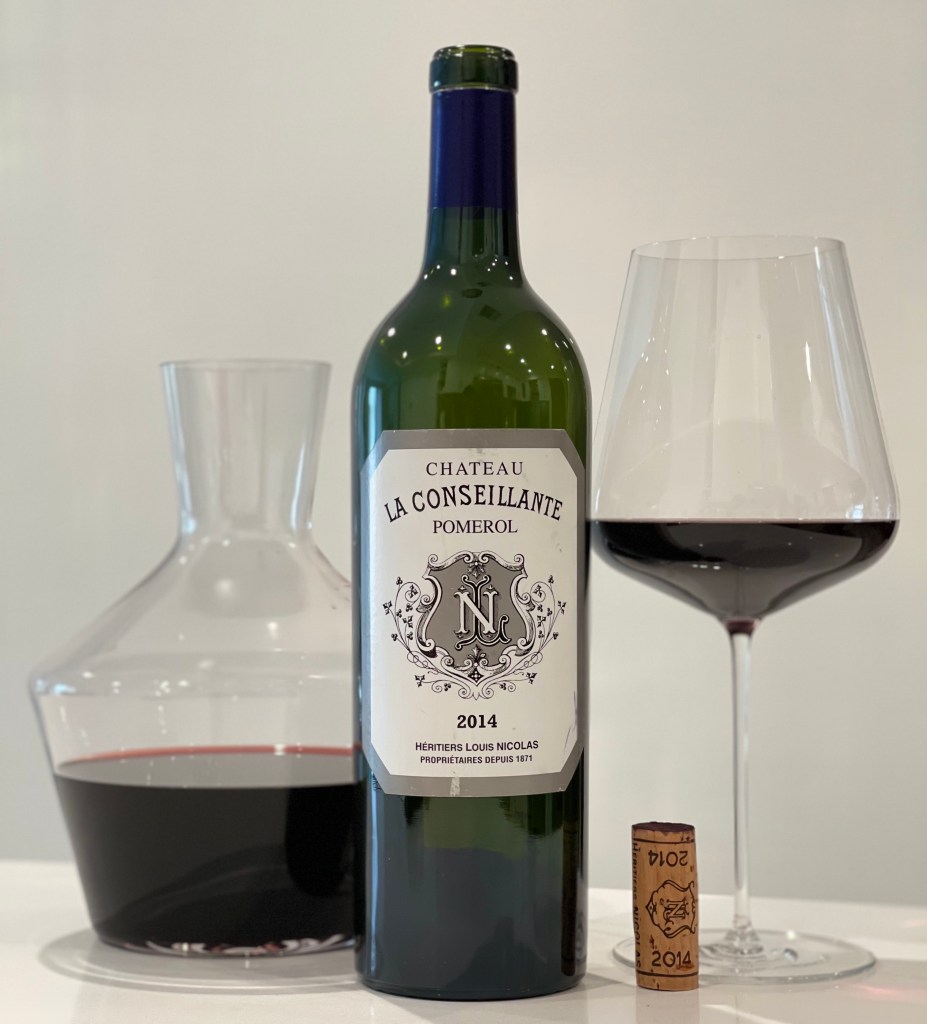
Today’s Wine: 2014 Château La Conseillante

78% Merlot, 22% Cabernet Franc; 13% ABV

The 2014 Château La Conseillante is deep ruby in color with hues of deep garnet. I decanted this for 3-4 hours which seemed to put it in a good spot at this point in its life. The aromas are of medium intensity but the nose is fairly complex, showcasing aromas of blackcurrant, black plum, black cherry, violet, cigar box, a hint of black truffle, grilled herbs, pepper, and a touch of oaky spice. Meanwhile the flavors are also of medium intensity and the palate displays notes of plum, crème de cassis, black cherry, anise, tobacco, dried green herbs, coffee grounds, and chocolate. This dry red is full-bodied with medium (+) acidity, medium (+) but silky tannins, medium alcohol, and a medium (+) length finish.

Price: $125 (I paid $107). While not the greatest 2014 Pomerol I’ve tried so far, this is certainly a solid value wine for Bordeaux. The “good not great” 2014 vintage proves once again that it deserves attention and considering the 2015 and 2016 vintages of this wine sell for closer to $200 and $250, respectively, this 2014 is certainly worth trying.

Unmatched Elegance in Gevrey-Chambertin

Today’s Story: Domaine Fourrier

Domaine Fourrier is a family wine estate located in Gevrey-Chambertin of Burgundy’s Côte de Nuits. Previously named Pernot-Fourrier, the domain was established by Fernand Pernot during the 1930s/1940s who, since he had no spouse or children, brought in his nephew Jean-Claude Fourrier for help. Jean-Claude took over the domain in 1969 and Fourrier was one of the first in the region to export their wines to the US. Coupled with very highly-regarded land holdings, Fourrier commanded a great reputation and the wines were very high-quality. During the late 1980s, however, Fourrier went through a “dumb phase” of sorts until being rejuvenated by Jean-Claude’s son, Jean-Marie Fourrier, who took over in 1994. Jean-Marie was a pupil of the great Henri Jayer, and brought Domaine Fourrier to preeminent status with wines of elegance and finesse not often found in Gevrey-Chambertin. Jean-Marie remains at the helm today alongside his wife Vicki and sister Isabelle.

Domaine Fourrier consists of about 9 hectares (22 acres) of vineyards planted predominantly in Gevrey-Chambertin, augmented by small plots in Chambolle-Musigny, Morey-Saint-Denis, and Vougeot. Fourrier’s vines typically fall in the 50 to 70 year-old average range, and only their own cuttings are used to replace failing or dying vines. With a strict belief that vines need lengthy periods to fully grow and mature, Jean-Marie never produces wines from his vines aged younger than 30 years and instead sells this fruit to négociants in the region. With his belief that terroir is of utmost importance, Jean-Marie farms his vineyards without the addition of chemical fertilizers and only uses herbicides or pesticides when absolutely necessary if the vines or harvest are in danger.

Come harvest, fruit is hand-picked and sorted in the vineyard before being transferred into small baskets to take to the winery. Jean-Marie’s winemaking philosophy is minimal intervention, and the wines ferment separately by vineyard using only native yeasts and no sulfur additions. Fourrier’s wines age with minimal amounts of new oak (typically no more than 20%) to preserve the delicacy of the aromas and flavors, and remain in contact with their lees for anywhere from 16-20 months depending on vintage and bottling. All the wines are bottled unfined and unfiltered, with minimal or no SO2 added. Taking from his training with Henri Jayer, Jean-Marie aims to make all of his wines the truest sense of terroir possible while offering an elegance and balance that are often unmatched.

Today’s Wine: 2016 Gevrey-Chambertin Aux Echezeaux Vieille Vigne

100% Pinot Noir; 13% ABV

The 2016 Gevrey-Chambertin Aux Echezeaux is pale to medium ruby in color. This requires a good 45 minutes to an hour to open up in the glass due to its youth, but once it does this is already a gorgeous wine. The aromas are of medium (+) intensity, with the nose showcasing notes of black cherry, strawberry, leather, forest floor, savory green herbs, and gravel. The flavors are also of medium (+) intensity, and the palate displays notes of tart cherry, strawberry, black raspberry, tobacco, leather, charred herbs, and peppery spice. This dry red Burgundy is medium-bodied with medium (+) acidity, medium (-) tannins, medium alcohol, and a medium (+) length finish. While already very elegant and enjoyable, this has decades of life ahead of it.

Price: $110. This is very reasonably priced in my opinion given a red Burgundy of this quality level. Burgundy prices have gone to sky-high levels over the years, and finding one around this price-point especially from a producer like Fourrier makes for an easy decision.

Powerful Dry Red From the Douro Valley

Today’s Story: Prats & Symington

Prats & Symington is a joint venture established by the Symington family of Portugal and the Prats family of Bordeaux in 1999. Located in Portugal’s Douro Valley, Prats & Symington was created to showcase the possibility of creating world-class non-fortified wines from the region by employing long maceration and winemaking techniques common in Bordeaux. The estate consists of two owned vineyards, Quinta de Roriz which is a historic 42 hectare (104 acre) vineyard dating to 1565 and Quinta da Perdiz which is 23 hectares (57 acres). Both vineyards are planted largely to Touriga Nacional and Touriga Franca, however they also include smaller plots of Tinta Roriz, Tinto Cão, Tinta Amarela, Tinta Barroca, and Tinta Francisca which can all occasionally be included in the blends. All fruit is hand-harvested and carefully sorted before fermentation begins in temperature-controlled stainless steel tanks. Chryseia then ages in 400-liter new French oak barrels for 8 to 12 months, which is relatively short to avoid adding significant oak influence to the wine.

Today’s Wine: 2016 Chryseia

60% Touriga Nacional, 40% Touriga Franca; 14% ABV

The 2016 Chryseia is deep purple in color and nearly black at its core. I decanted this for about an hour and drank it over the following hour or so. The aromas are of pronounced intensity, and the nose showcases notes of blackcurrant, blueberry, blackberry, violets, black licorice, thyme, mint, slate, and a hint of vanilla. Meanwhile the flavors are also of pronounced intensity, and the palate displays plum, blackberry, cassis, sweet tobacco, anise, dried herbs, pepper, and mocha. This dry red is full-bodied with medium (+) acidity, high tannins, high alcohol, and a long finish. Quite enjoyable now with the air, though this should develop nicely over the next five years or so.

Price: $70. While no doubt a high-quality, delicious, and fun wine produced in a region known for Port, I struggle to tag this as a great value wine given the price-point. This is somewhat big and jammy for my personal tastes as well, but I did enjoy it.

Young but High Quality New Zealand Pinot Noir

Today’s Story: Burn Cottage

Burn Cottage is a family-owned wine estate and farm established in 2003 by Marquis and Dianne Sauvage in the foothills of the Pisa range in Central Otago, New Zealand. The Sauvage family purchased the property in 2002, but it was previously unplanted and used by sheep for grazing with no surrounding vineyard neighbors. The property consists of 24 hectares (59 acres) with roughly 10 hectares (25 acres) planted to vineyards, and all farming and viticultural activity is biodynamic and has been since the beginning. Though the vineyards are planted mainly to Pinot Noir, there are also small plots of Riesling and Grüner Veltliner. The rest of the land is home to livestock, beehives, olive groves, forests, and native vegetation. Marquis and Dianne sought out Ted Lemon of Littorai in Sebastopol, CA to help make their wines and, with a shared vision and philosophy, Ted joined the team. Winemaking is described as minimally invasive, relying on native yeast fermentation by vineyard block and minimal sulfur additions throughout the process. Once all vineyard blocks fully mature, production will peak around 5,000 cases per vintage.

To explore the range of Burn Cottage wines, view pictures of the estate, or read more in-depth information, visit their website here.

Today’s Wine: 2017 Burn Cottage Vineyard Pinot Noir

100% Pinot Noir; 13.5% ABV

The 2017 Burn Cottage Vineyard Pinot Noir is medium ruby in color. Given about 30-45 minutes in the glass, the wine opens up nicely. Aromas are of medium intensity, with the nose showcasing notes of black cherry, spiced plum, violets, leather, dried green herbs, baking spice, and toasted oak. Flavors are also of medium intensity, and the palate displays notes of black cherry, plum, strawberry, thyme, smoke, and oaky spice. This dry red is medium-bodied with medium (+) acidity, medium (-) tannins, medium alcohol, and a medium (+) length finish. Very good and enjoyable now, but will improve greatly in another 3-5 years.

Price: $70. I think this is relatively fairly-priced, though I can’t go so far as to say it’s a great “value” at this price point. It reminds me of a number of the California “cult” Pinot Noir bottlings I’ve had, so this could be a good exploration bottle for those who like high quality California Pinot Noir but want to explore New Zealand.

Complex Loire Valley Cabernet Franc That Continues to Impress

Today’s Story: Domaine des Roches Neuves

Domaine des Roches Neuves was founded in 1992 by Thierry Germain following his move to the Loire Valley from his native Bordeaux. At 23 years old, Thierry soon met Charly Foucault from Clos Rougeard who would become an inspiration behind some of his winemaking practices. Thierry converted his domain to biodynamic viticulture, as well as being certified organic, in an effort to let his vines guide him rather than play a heavier hand that removes truth and transparency from terroir to bottle. This practice helps Thierry’s wines showcase vibrant ripe fruits (thanks in addition to relatively early harvesting) with incredible purity while avoiding rustic vegetal notes. Also, his red wines do not typically have high tannin but rather integrated, soft tannins conducive to drinkability.

When harvesting his fruit, Thierry practices very traditional methods such as hand harvesting and hand sorting at the winery. Further, all of his wines are fermented with natural yeasts in no new oak barrels or tanks. For the wine I am reviewing today, grapes are 100% de-stemmed and fermented in conical tanks. There is a great overview of Thierry’s history and practices here, as well as an overview of his wine portfolio. The domaine’s website also contains fact sheets and an overview of the history and people here.

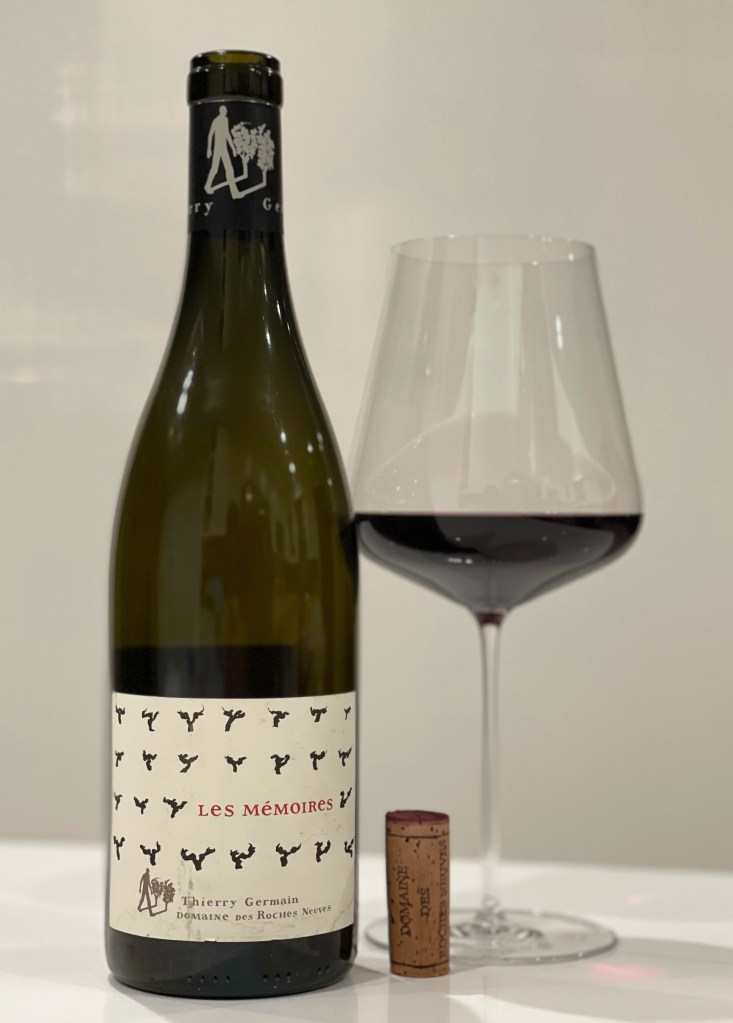
I reviewed the 2015 Les Mémoires way back in early November 2019, and given the positive experience I decided to check in on the 2016 vintage today.

Today’s Wine: 2016 Les Mémoires

100% Cabernet Franc; 12.5% ABV

The 2016 Les Mémoires is deep ruby in color. I used my Coravin to pour a glass on night one but pulled the cork the following night, allowing this to open up in the glass over time. The aromas are of medium intensity, with the nose showcasing notes of black raspberry, blackcurrant, green bell pepper, violets, cigar box, gravel, scorched earth, wild herbs, and stony mineral. Flavors are also of medium intensity, and the palate displays notes of strawberry, raspberry, brambleberry, tobacco, cracked pepper, grilled green herbs, a hint of chocolate, and crushed rock minerality. This dry red is medium-bodied with medium (+) acidity, medium (+) but refined tannins, medium alcohol, and a medium (+) length finish. Fruit for this wine comes from vines planted in 1904, which I think greatly adds to the complexity at such a young age. Given 3-5 more years in the cellar, this will only become more impressive and drink well for probably 5-10 years after that.

Price: $65 (less expensive in Europe). Though not inexpensive, I think this offers very solid value. The quality is incredibly high, while the balance, complexity, and power in this wine greatly impress me. Certainly my favorite Loire Valley red I’ve had up to this point, perhaps sharing the stage with the 2015 vintage of the same wine.

Value Grand Cru Chablis

Today’s Story: Domaine Vocoret et Fils

Domaine Vocoret et Fils is a family-owned and operated domain, established in Chablis in 1870 by Edouard Vocoret. Today Domaine Vocoret is under guide of the fourth generation of the family, and their holdings are quite impressive at around 40 hectares of sustainably-farmed vineyards. Of these holdings, roughly 16 hectares are Village level, 17 hectares are 1er Cru, and 4 hectares are the Grand Crus of Les Clos, Blanchot, Valmur, and Vaudésir with the balance Petit Chablis. Though Vocoret invested in modern and high quality winemaking equipment, the production of their wines remains very traditional for Chablis. Grapes are hand-sorted before heading to the pneumatic press, and after fermentation the wines head into stainless steel for aging to preserve their fresh fruit and vibrancy (though the 1er and Grand Crus do see some new oak which is becoming more popular in Chablis today).

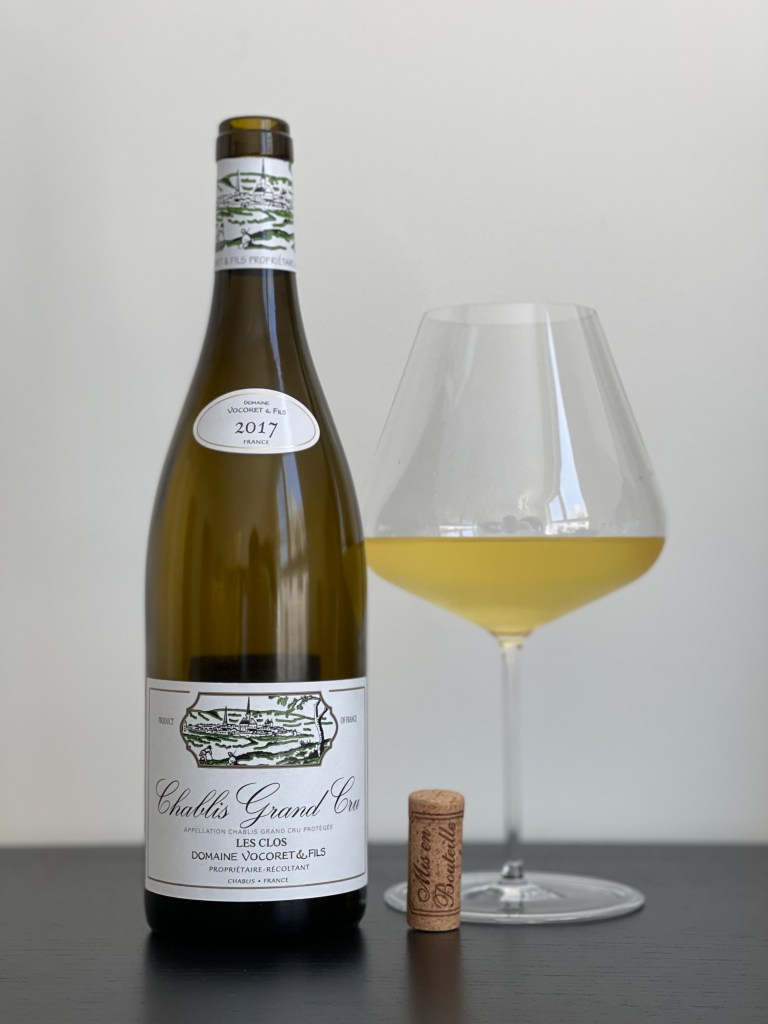
Today’s Wine: 2017 Chablis Grand Cru Les Clos

100% Chardonnay; 13% ABV

The 2017 Chablis Grand Cru Les Clos is medium yellow in color. The aromas are of medium intensity, with the nose showcasing notes of lemon zest, white peach, mango, white floral blossom, flint, chalk, and almond. Flavors on the palate are also of medium intensity, with the wine displaying notes of green apple, lemon, white peach, mild green herbs, wet stone, a hint of smoke, and mineral. This dry white is medium- to full-bodied with high acidity, medium alcohol, and a long finish. A very precise and youthful white Burgundy that should develop nicely over the years to come.

Price: $90. While I would like more intensity out of this wine, it offers very solid value for Chablis especially at the Grand Cru level. It’s precise and well-balanced already, but I’m looking forward to revisiting this as it adds complexity over the future.

Fun Hungarian Furmint for the Explorers

Today’s Story: Királyudvar

Királyudvar (which translates to The King’s Court) is a historic Hungarian wine estate with roots back to the 16th century. Királyudvar is located in the Tokaj wine region which sits about 220 kilometers northeast of Budapest, and the estate previously provided wines to the Habsburg dynasty. The estate as it is known today, however, was “established” in 1997 when American businessman Tony Hwang purchased it following a visit upon which the wines of the estate blew him away. Tony, alongside famed local winemaker István Szepsy, purchased 10 hectares of vineyards around the villages of Mád and Bodrogkeresztúr and reconstructed the château. Over time they expanded to about 75 hectares across the chief vineyards of Lapis, Henye, Percze, Becsek, Danczka, and Nyulászó, all of which are farmed organically with biodynamic practices in use as well. Királyudvar is known for their world-class wines across a range of styles, being highly regarded for dry, demi-sec, sweet, and sparkling wines produced with the native Furmint variety.

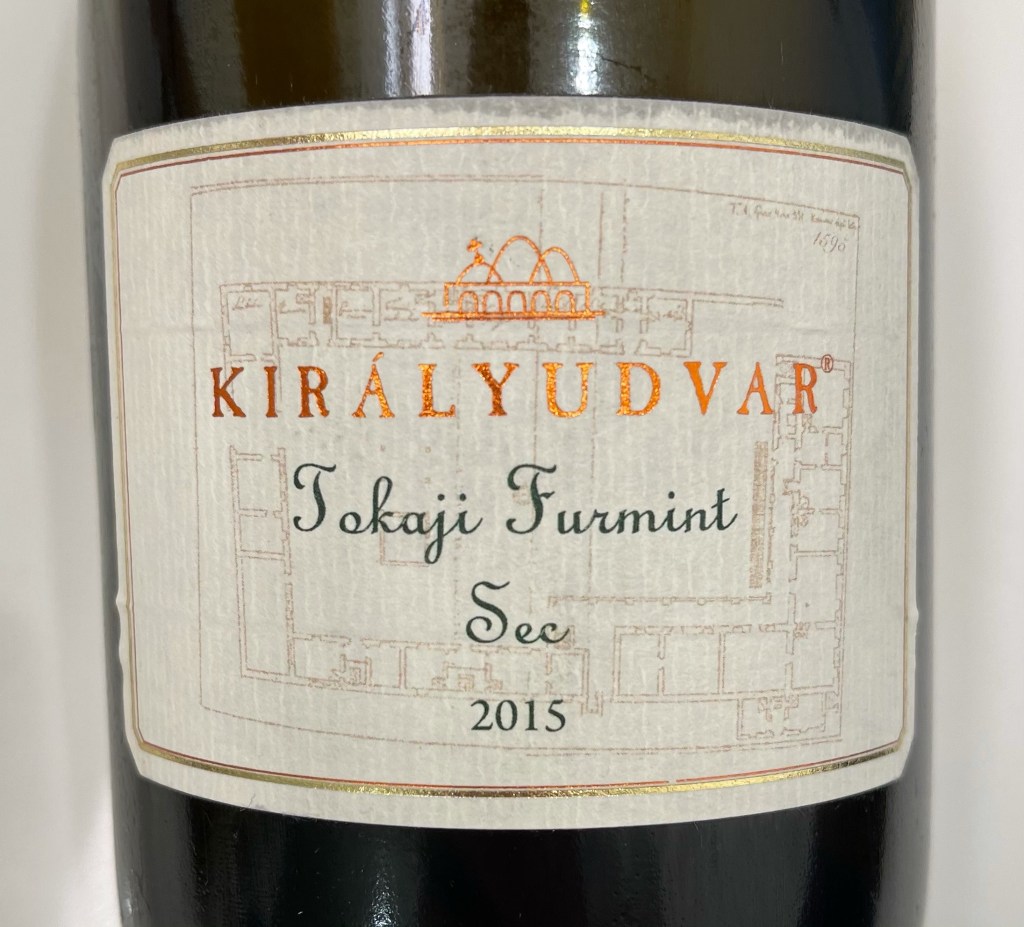
Today’s Wine: 2015 Tokaji Furmint Sec

Indicated blend of ~90% Furmint and ~10% Hárslevelű; 13.5% ABV

The 2015 Tokaji Furmint Sec is medium to deep yellow in color with golden hues. The aromas are of pronounced intensity, with the nose showcasing notes of yellow apple, pear, quince, tropical citrus, white florals, honeycomb, wet stone, almond, and mineral. Meanwhile the flavors are of medium (+) intensity and the palate displays notes of lemon, peach, pineapple, banana, elderflower, a hint of smoke, white pepper, dried green herbs, and saline. This dry white is medium-bodied with high acidity, medium alcohol, and a medium (+) length finish. This is a very refreshing and delicious wine that was fun to drink.

Price: $28 (I paid $21). This is a very nice value wine that’s fun for the explorers out there who may not be familiar with Hungarian wines or any of their native varieties. What’s more, since most of the Furmint wines I’ve had have been sweet this was interesting to try.

Blending Traditional and Modern Practices in Piedmont

Today’s Story: Luciano Sandrone

Luciano Sandrone is a highly regarded producer in Piedmont, Italy, established by Luciano in 1978. Luciano was passionate for winemaking at a young age, exploring viticulture as young as 14 or 15 years old and ultimately working as a cellar hand at Marchesi di Barolo. In 1977, Luciano depleted his savings and purchased his famed Cannubi Boschis vineyard. Starting with his first vintage in 1978, Luciano crafted all of his wines at home and started in his parents’ garage so he could learn and hone his style and talents over time. When his wines started receiving high critical acclaim for the 1989 and 1990 vintages, Luciano started to think of building a winery which was completed in 1998 and first used for the 1999 vintage. Luciano today produces wines from Nebbiolo, Barbera, and Dolcetto, with his most famous and prized bottling being the Cannubi Boschis Barolo.

Sandrone’s viticulture and winemaking styles are often characterized by straddling traditional and modern techniques. Sandrone farms about 27 hectares (67 acres) of vineyards, of which roughly 75% are owned and the balance is leased out under long-term contracts. They practice green harvesting with an incredible focus on training, pruning, and harvesting to limit yields and enhance quality of their fruit. Winemaking is where the blending of traditional and modern practices occurs most notably, as all wines ferment with native yeasts but typically see shorter maceration times than tradition dictates. During the maturation process, Sandrone also utilizes some new oak in 500 liter French barrels and ages his wines for slightly shorter periods which also blends the lines between traditional and modern. These wines are often much more approachable in their youth due to this blending of practices, though they retain the same structure and characteristics to provide for long aging potential as well.

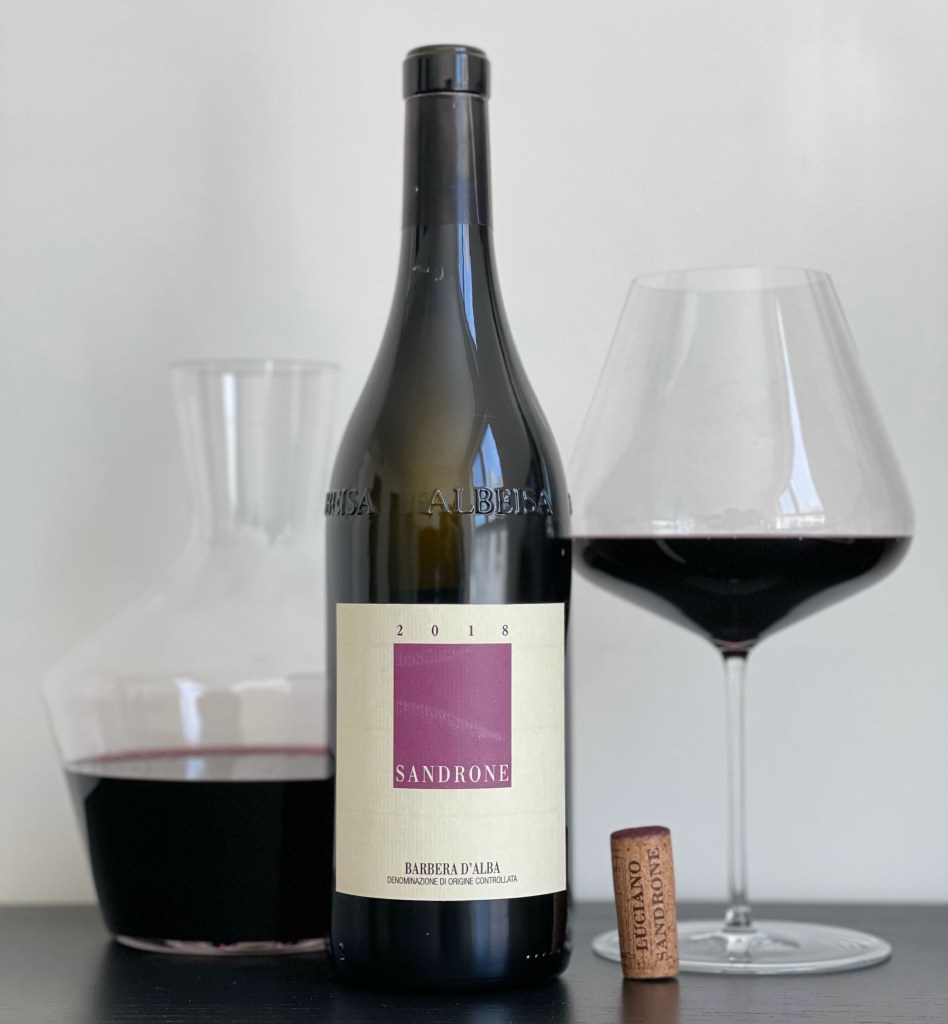
Today’s Wine: 2018 Barbera d’Alba

100% Barbera; 14% ABV

The 2018 Barbera d’Alba is deep ruby in color and opaque. I decanted this for about 45 minutes, which the wine needs at this stage. The aromas are of medium intensity, with a rather gorgeous nose showcasing black plum, crushed blackberry, black cherry, anise, violet, scorched earth, sandalwood, and cracked black pepper. Flavors are also of medium intensity, and the palate displays notes of juicy blackberry, blueberry, cherry sauce, plum, dried green herbs, truffle, and mild peppery spice. This dry red is full-bodied with high acidity, medium (-) tannins, high alcohol, and a medium (+) length finish. Overall a very enjoyable Barbera that should only improve with a couple more years in bottle.

Price: $37 (though there’s a wide range of pricing depending on location). This is a very solid value to step into Piedmont with, particularly if you haven’t explored the region or the Barbera variety yet. It’s showing very solid complexity at this stage and is a high-quality offering from a great producer.

Chuggable Austrian Amber Wine

Today’s Story: Weingut Werlitsch

Weingut Werlitsch is a relatively small family-owned and operated wine estate and farm located in southern Styria in Austria. Viticulture and winemaking are spearheaded by Ewald Tscheppe, who took over this family property at the age of 26. Though the Tscheppe family had been involved in winemaking and farming for generations, Ewald is part of a newer generation making exciting, complex, and long-lived wines while advocating for biodynamic viticulture and minimally invasive winemaking. The estate consists of about 18 hectares (44 acres) with roughly 12.5 hectares (31 acres) planted to vineyards and the balance dedicated to the winery, forests, pastures, and gardens. Weingut Werlitsch is certified biodynamic, and practically all of the vineyard work is done by hand thanks to the very steep slopes that make up the property. The vineyards are planted predominantly to Sauvignon Blanc and Morillon (a biotype of Chardonnay), though Ewald also grows Welschriesling. All fruit is hand-harvested, experiences slow pressing, and goes through fermentation only with native yeasts. Élevage is in large barrels and Austrian foudres, and the wines age typically for a minimum of 18 months but may see as long as 36 months. Bottling is accomplished with the wines unfiltered, and no SO2 is added unless absolutely necessary.

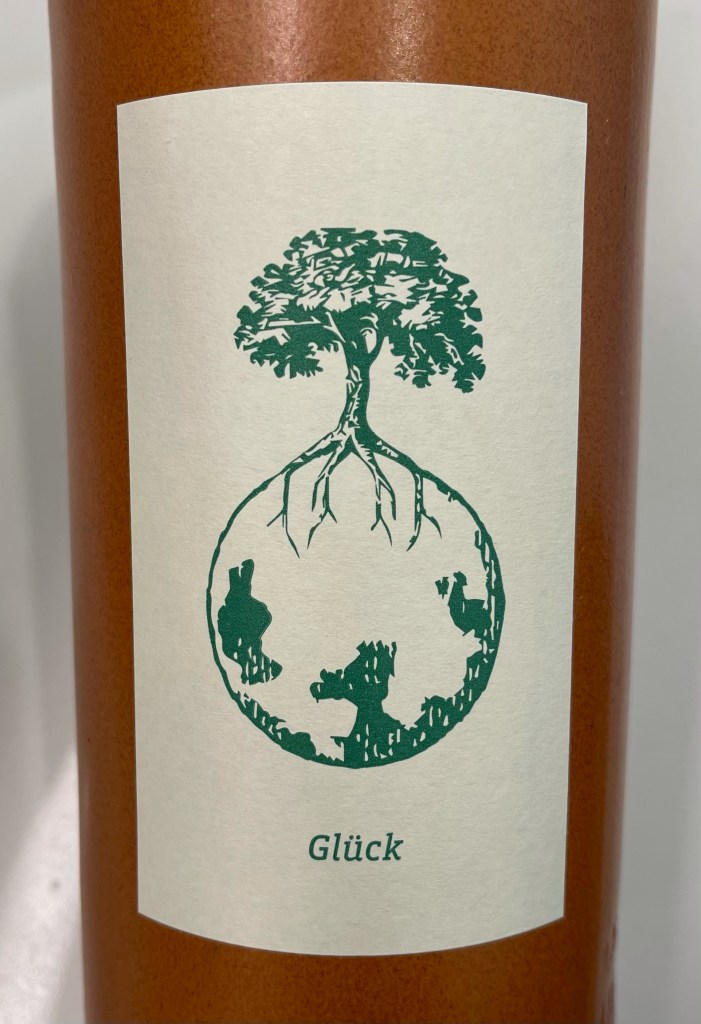
Today’s Wine: 2017 Glück

50% Sauvignon Blanc, 50% Chardonnay; 12.5% ABV

The 2017 Glück is medium amber in color and slightly hazy. I found this better after it warmed from cellar temperature, so I let it sit in the glass for a little while. The aromas are of medium intensity but the nose is rather complex, showcasing aromas of dried apricot, orange peel, bruised apple, yellow wildflower, honey, mild mushroom, grass, chalk, and saline mineral. Flavors are also of medium intensity, and the palate displays notes of mandarin orange peel, apricot, crisp red apple, orange marmalade, honey, dried green herbs, sea salt, and chalky mineral. This dry amber wine is medium-bodied with mouthwatering medium (+) acidity, medium (-) tannins, medium alcohol, and a medium (+) length finish.

Price: $47. I’m still relatively new into my exploration of amber wines, so I will refrain at this point from discussing an overall “value” perspective. However, this is one of if not the best I’ve had so far, and its quality, complexity, intrigue, and drinkability make it well worth the price for me.