Iron Fist in a Velvet Glove

Today’s Story: Domaine du Gros ‘Noré

Domaine du Gros ‘Noré was founded in 1997 by Alain Pascal, though he and his father Honoré grew and sold grapes on the property beforehand. Born in a small house surrounded by the vineyards in Bandol, Alain grew up to become an amateur boxer (thanks to his burly build and bear-claw-sized hands) and avid hunter but he always wanted to be a farmer. Though Alain and Honoré sold most of their fruit to Domaine Ott and Château de Pibarnon, the father and son duo also produced wines for their family’s enjoyment without estate bottling and commercializing it. After his father’s death, Alain shifted focus and founded Domaine du Gros ‘Noré (named after his father) which quickly helped catapult him to the forefront of winemaking in Bandol.

From the very beginning of his domaine, Alain sought to create wines through minimal intervention. Part of this vision includes fermenting his wines with only indigenous yeasts and not filtering them before bottling. Though he first became recognized for ripe and full-bodied wines thanks to his practice of allowing the grapes to mature fully on the vine before harvest, over the years he tried shifting toward wines of freshness and complexity by harvesting slightly earlier. The resulting wines offer both power and silkiness while depicting the sunny hillsides of Provence, its clay soil, and terroir in beautiful clarity.

Domaine du Gros ‘Noré consists of 16 hectares of vineyards, which Alain farms with help from his brother Guy. Alain’s vineyards are predominantly clay with some limestone, and the Mediterranean microclimate brings warm weather and full sun that culminates into expressive fruit.

Today’s Wine: 2010 Cuvée Antoinette

95% Mourvèdre, 5% Grenache; 15% ABV

The 2010 Cuvée Antoinette is deep ruby in color with bright ruby rim variation and slight particle presence in the glass. Once this opens up, the nose showcases aromas of ripe cranberry, cherry, red and purple florals, leather, cured meat, cigar box, loamy earth, graphite, and wet gravel. I also get a bit of heat on the nose, likely due to the relatively high 15% ABV. On the palate, this wine shows notes of cranberry, raspberry, dusty blueberry, smoke, tobacco, charred earth, mushroom, underbrush, and chocolate. The wine is medium-bodied with medium (+) acidity, medium dusty tannins, and a long finish dominated by dark fruit and earthy tones. While drinking beautifully right now, there is definitely another decade to enjoy this wine.

Price: $82. I paid a bit more than this here in the USA’s Midwest, but I think $82 is a great price-point for the wine. This is a beautiful representation of Mourvèdre and was a library release directly from the domaine. Pair this with gamey meats, especially venison or buffalo and bison.
Relatively New GSM from Paso

Today’s Story: Booker Vineyard

Booker Vineyard as it exists today stems from the purchase of 100 acres by Eric and Lisa Jensen in 2001. The history of this land, however, traces back to the late 1920s when Claude and Dick Booker, two orphaned brothers, purchased land on Paso’s Westside that amassed to more than 1,200 acres by the turn of the century. The Bookers were some of Paso’s best-known residents for their farming knowledge and philanthropy, with their largest gift being 100% of their estate left to charity when Dick died in 1990 and Claude died in 2000.

Now back to 2001 with Eric and Lisa, the couple intended to use their new land to grow grapes for some of the best wineries in the Paso Robles area. Though they achieved this goal selling grapes to Saxum for five years and L’Aventure for two years, Eric and Lisa wanted more out of their land and decided to bottle their own wine beginning with the 2005 vintage. A unique and more personalized expression of their land, Booker wines are made by Eric Jensen himself.

Though Booker is not certified organic or biodynamic, their farming practices pull inspiration from both methods. The Jensens have come to realize that biodynamic farming practices help maintain the interconnected lifestyle and cycles of all entities in the vineyards, providing a boost to soil and vine health that becomes apparent in their wines. Furthermore, the vines are planted in rather high density so each plant can focus its energy on few clusters that create concentrated wines rather than an abundance of fruit. This is also important because Booker’s vineyards do not get much water.

Much like the mentality in the vineyards, Booker makes their wines in minimalist fashion. Eric strives to interfere as little as possible, with his red wine fermentations started using pump-overs and moving to punch-downs in most cases once fermentation starts. The wines are not racked until bottling and these wines are typically aged for 18 months. For more, check out the Booker website here where much of the above information finds its source.

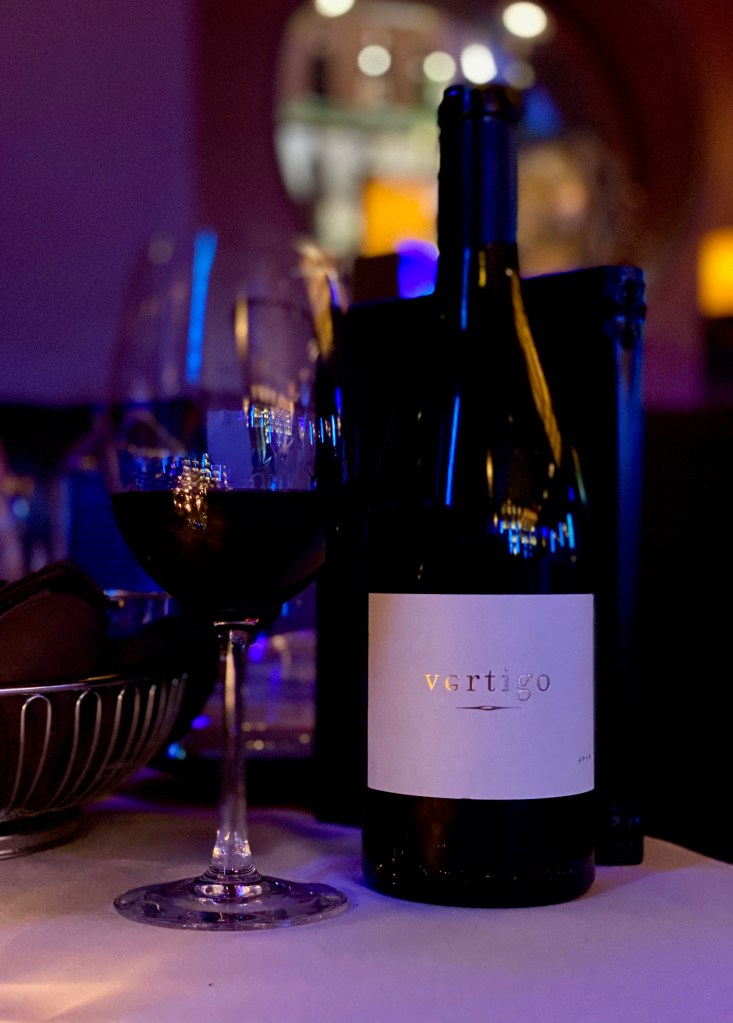
Today’s Wine: 2016 Vertigo GSM Red Blend

52% Syrah, 30% Grenache, 18% Mourvèdre; 14.9% ABV

The 2016 Vertigo is medium to deep ruby in color and moderately transparent. Once the wine opens up (you will need to decant this) the nose offers enticing aromas of blackberry, blueberry, red berry jam, baked cherry, licorice, lavender, a touch of smoke, leather, game, chocolate, and a hint of vanilla. On the palate this wine displays delicious notes of blackberry compote, blueberry, black plum, candied cherry, scorched earth, graphite, blood, bitter chocolate, green herbs, and stony minerality. The wine is medium-bodied with high acidity, high tannins, and a long grippy finish dominated by dark berries and plum. Overall this is a complex yet sweet GSM that, while beautiful now with some air, needs time to fully come together in the cellar.

Price: $80. This is not cheap but fairly priced, though I would steer you toward better value wines (such as Ridge GSM) if you intend to drink it now. You need to be patient for a few more years with this one but will be handsomely rewarded. Pair this with red meats and game accompanied by mushroom or pepper sauce.

One of the Last Remnants

Today’s Story: Château de la Guimonière

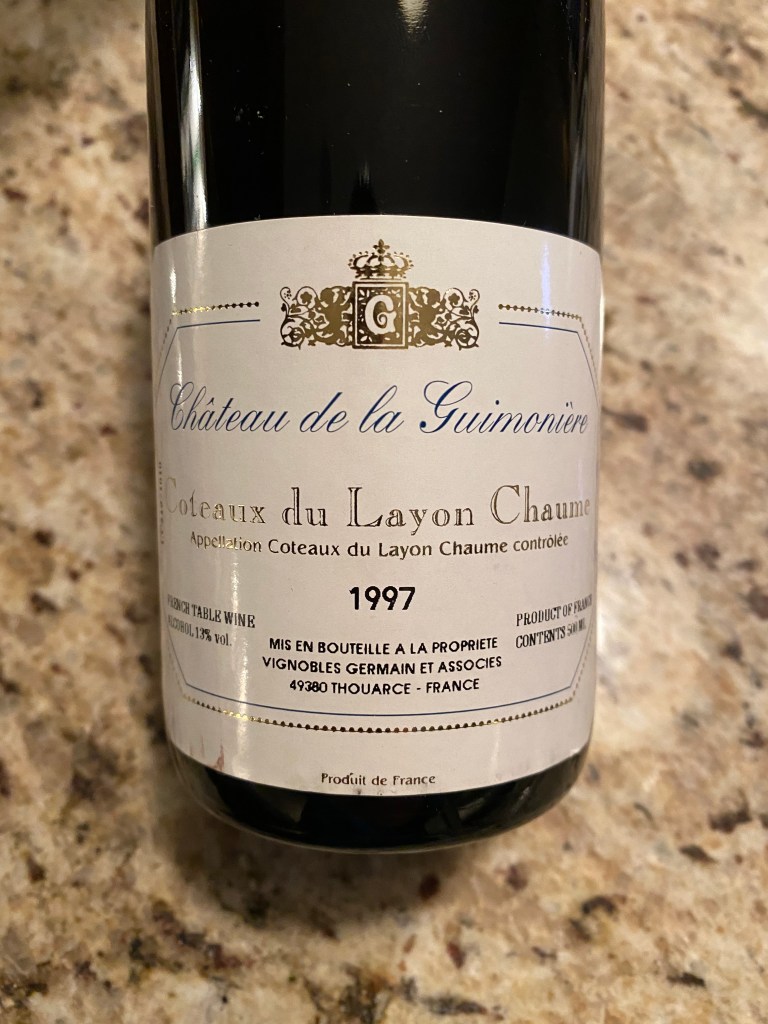
Château de la Guimonière was a very historic 15th Century estate with origins dating to the château built there in 1487. The estate’s vineyards were located on the hillsides of Layon à Chaume in the town of Rochefort sur ​​Loire and occupied 19 hectares under vine. 16 hectares of vineyard land was planted to Chenin Blanc, while the remaining 3 hectares consisted of Cabernet Franc and Cabernet Sauvignon. Unfortunately, based on my research, it appears the château is now simply a cottage designed for family or group travel accommodations. Perhaps you can stay there when visiting the area for some Loire Valley tastings.

As recently as the late 1990s, under ownership of the Germain family, the estate produced sweet wines after Bernard Germain purchased Château de la Guimonière, Château de Fesles, and Château de la Roulerie. Shortly thereafter, thanks to how difficult it can be to make sweet wines in the Loire Valley, the family sold off Château de la Fesles and Château de la Guimonière. They maintained ownership of Château de la Roulerie, however, which seemed to have the greatest promise thanks to its origins way back in the 11th Century. Perhaps I will try to find one of their wines to review someday.

Bonus fact: Bernard Germain, the former owner of Château de la Guimonière, is the father of Thierry Germain whose Domaine des Roches Neuves I reviewed a wine from in early November. Bernard’s other son Philippe runs Château de la Roulerie.

Today’s Wine: 1997 Coteaux du Layon Chaume

100% Chenin Blanc; 13% ABV

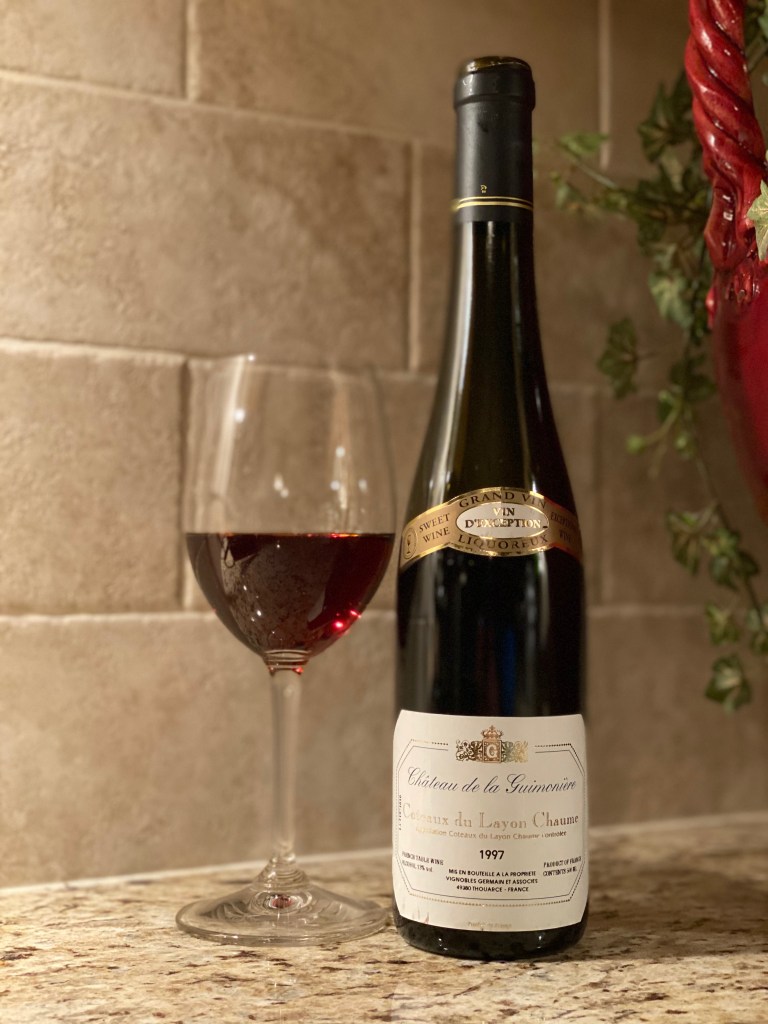
The 1997 Coteaux du Layon Chaume is a disconcerting pale to medium brown in color, almost more reminiscent of a sherry or white Tawny Port. There is zero sediment in the bottle and the wine is almost entirely transparent. Though many people would probably dump this out on first sight, I gave it the old college try and was handsomely rewarded. The nose offers still delicate aromas of dried apricot, baked peach, orange marmalade, honey, white florals, mixed nuts, and slight earthy game while remarkably not really showing signs of oxidation. Once in the mouth, this wine showcases notes of candied orange, quince, marmalade, marzipan, licorice, caramel, toffee, and white floral liqueur. Medium- to full-bodied, this peculiar wine shows medium (+) acidity and a well-rounded finish that ends medium (+) in length.

Price: $100. At this price, I would not buy this wine again. While it was certainly a fun wine to try (I don’t have many wines from producers no longer in existence, or wines that come out brown but taste pleasant) I wouldn’t call it worth trying again. Pair this with rich, pungent cheeses or drink it alone for the odd experience.

Bordeaux in California

Today’s Story: Jordan Vineyard & Winery

Jordan Vineyard & Winery was founded in 1972 by Tom and Sally Jordan, a husband and wife duo from Colorado. During the early years of their marriage, Tom and Sally shared a passion for French food and wine that they expanded upon by traveling throughout France, ultimately realizing they wanted a vineyard of their own. Not believing they could realistically purchase one in France, the couple had their epiphany over a glass of Beaulieu Vineyard Georges de Latour by realizing they could achieve their dream of crafting French-inspired wines in California. It was May of 1972 when this passion came to fruition and Tom and Sally signed the deed for their property in Alexander Valley.

At this time both Alexander Valley and the Napa Valley were quite rustic, full of prune orchards and cattle without much vineyard land. Tom and Sally removed the prune orchards on their property and set about planting 200 acres of Cabernet Sauvignon and Merlot on the valley floor. Two years later, in 1974, the couple realized it was time to construct a winery and plans began for their 58,000 square foot French-inspired chateau overlooking the vineyards. The chateau took 18 months to complete, though the production wing was completed first one week before the 1976 harvest – Jordan’s first vintage.

Funny enough, Jordan hired André Tchelistcheff in 1974 as an enology consultant. If that name sounds familiar, it should because I wrote about André in my post on Beaulieu Vineyard. André was essentially the architect behind the Georges de Latour bottling, coincidentally the same wine that proved impetus for Tom and Sally to start Jordan, and he helped the couple select fermenters, oak tanks, barrels, and picker-stemmer and presses. André also hired Jordan’s winegrower Rob Davis to oversee the first vintage in 1976, and Rob remains winegrower to this day.

In 2005, Tom and Sally’s son John took over as CEO of the winery and while he remains fully committed to carrying on his parents’ vision he is making important steps in bringing the estate into the modern world. One of his major initiatives, for example, is making the winery more eco-friendly through sustainable practices and more diverse uses of the land. This endeavor so far includes “reducing the winery’s energy consumption, composting all of the winery’s organic waste, and installing hillside solar arrays to offset 75% of the winery’s electricity usage” – source. One of the most important traditions John carries, on the other hand, is hospitality. Jordan was one of the first (if not the first) wineries in Alexander Valley or Napa Valley with an executive chef in house and a hospitality wing that married wine tasting with food and entertainment with such ease. A visit to this winery is a must if you are in the area.

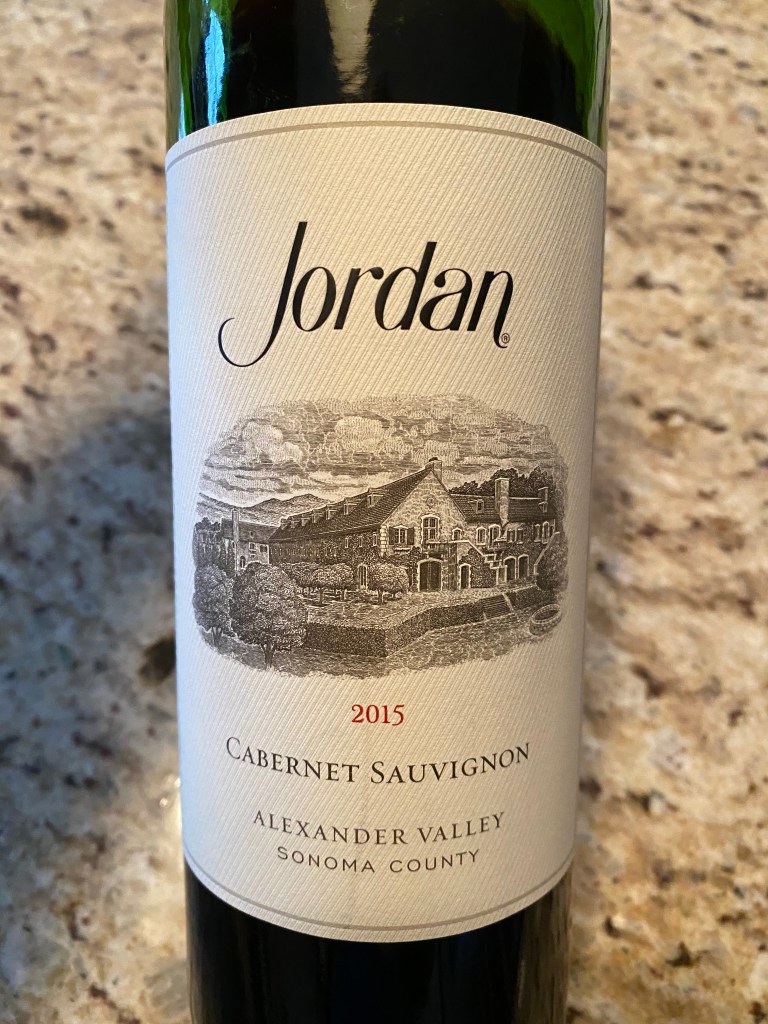
Today’s Wine: 2015 Cabernet Sauvignon

77% Cabernet Sauvignon, 15% Merlot, 6% Petit Verdot, 2% Malbec; 13.8% ABV

The 2015 Cab is an opaque, deep ruby in color with purple at its core. This wine requires some time to open up due to its youth, but once it does the nose emits aromas of black cherry, blueberry, pomegranate, purple florals, cedar, tobacco, graphite, smoked red meat, and a hint of vanilla. Once in the mouth, this gorgeous wine showcases notes of ripe cherry, boysenberry, black raspberry, earthy green herbs, cigar box, iron, and clove. The 2015 Cab is medium-to full-bodied with medium (+) acidity, medium (+) yet dusty tannins, and a long finish dominated by notes of cherry, earth, and black peppery spice. I think Jordan achieved their goal in producing Bordeaux-like wines in California, particularly with this 2015.

Price: $55. Jordan is a great value for this price range, as this drinks like a wine 25-50% more expensive. These wines have great aging potential as well, with many Jordans drinking beautifully after 10+ years of cellaring. Pair this with filet mignon, lamb, roasted chicken, or grilled pork loin.

Liquid Gold

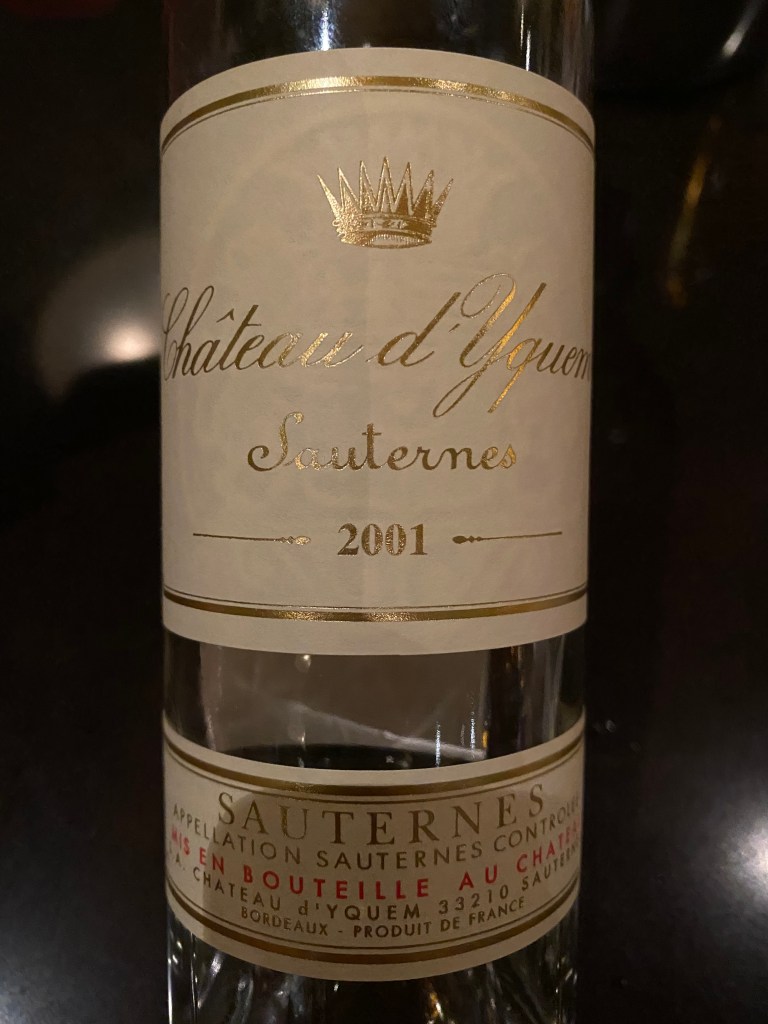
Today’s Story: Château d’Yquem

Château d’Yquem has a very long, mysterious history that traces its roots back to the 15th Century. One of the most interesting snippets of this history, for instance, is that the estate belonged to the King of England during the Middle Ages! In 1593, however, southwest France again came under control of the French crown by Charles VII and has remained as such since. It was also this year that the d’Yquem estate came under control of Jacques de Sauvage, a descendant of a local noble family. Though some winegrowing practices and late harvesting existed at this time, the Sauvage family did not start building the château for several more years and then began the long process of assembling land for the current estate plot by plot.

Jumping forward in time, it wasn’t until 1711 that the Sauvage family fully owned the estate under Léon de Sauvage d’Yquem. Furthermore, under the rule of Louis XIV, Château d’Yquem received noble status. The magnificent estate switched hands yet again, however, in 1785 when Françoise Joséphine de Sauvage d’Yquem married Count Louis Amédée de Lur-Saluces, a godson of Louis XV. Sadly, three years later in 1788, the Count died in a riding accident but his widow took over management of the estate and quickly displayed her acumen by sustaining and improving d’Yquem. One of the most notable practices at d’Yquem was established under Françoise Joséphine de Sauvage d’Yquem, for instance, which is picking over several passes (sometimes picking one grape at a time). Another notable feat under this young widow is the admiration noble figures around the globe felt toward d’Yquem, including Thomas Jefferson who reportedly purchased 250 bottles of the 1784 vintage for himself and additional bottles for George Washington.

Romain-Bertrand de Lur-Saluces, a grandson of Françoise Joséphine, took over the estate and helped guide it through seemingly endless successes in the second half of the 19th Century. For example, d’Yquem’s wines became a necessity for the rich and powerful throughout Europe, Russia, and Asia. In 1855, Château d’Yquem was awarded Premier Cru Supérieur in the Bordeaux Wine Official Classification of 1855, the only Sauternes awarded this level. Times changed, however, as they always do with estates of this age when World War I came and the château transitioned into a military hospital under Eugène de Lur-Saluces (a son of Romain-Bertrand). Eugène’s son Marquis Bertrand de Lur-Saluces took over the estate following the war (he had served in the trenches) and he is responsible for much of d’Yquem’s strength to this day. For instance, Marquis Bertrand fought relentlessly to save the estate during the Great Depression, helped determine many legal aspects of the Sauternes appellation as President of the Union des Crus Classés de la Gironde for forty years, and was a leading proponent of château bottling to guarantee authenticity. His death in 1968 changed the tides once again.

Though Bertrand was childless at the time of his death, he took precautions and named his nephew Alexandre de Lur-Saluces manager of Château d’Yquem. Alexandre struggled at first through difficult vintages, a crisis in the Bordeaux wine trade, and an inheritance tax that almost forced the estate to fail, though his efforts were saved with the exceptional 1975 vintage followed by several more during the 1980s. Alexandre managed the estate exceptionally well until 1996 when a family feud exploded over his brother’s decision to sell part of his 47% ownership stake, thus in turn requiring LVMH Moët Hennessy-Louis Vuitton to step in and purchase 55% of the estate. Though under new ownership, Alexandre remained manager of the estate until his retirement in 2004.

Though I could go on and on about d’Yquem’s terroir, vineyards, and winemaking practices I will leave it here with the history of Château d’Yquem. I encourage you to take a deeper dive on their website here to truly appreciate what goes into a bottle of this sacred juice.

Today’s Wine: 2001 Château d’Yquem

80% Semillion, 20% Sauvignon Blanc; 13.5% ABV

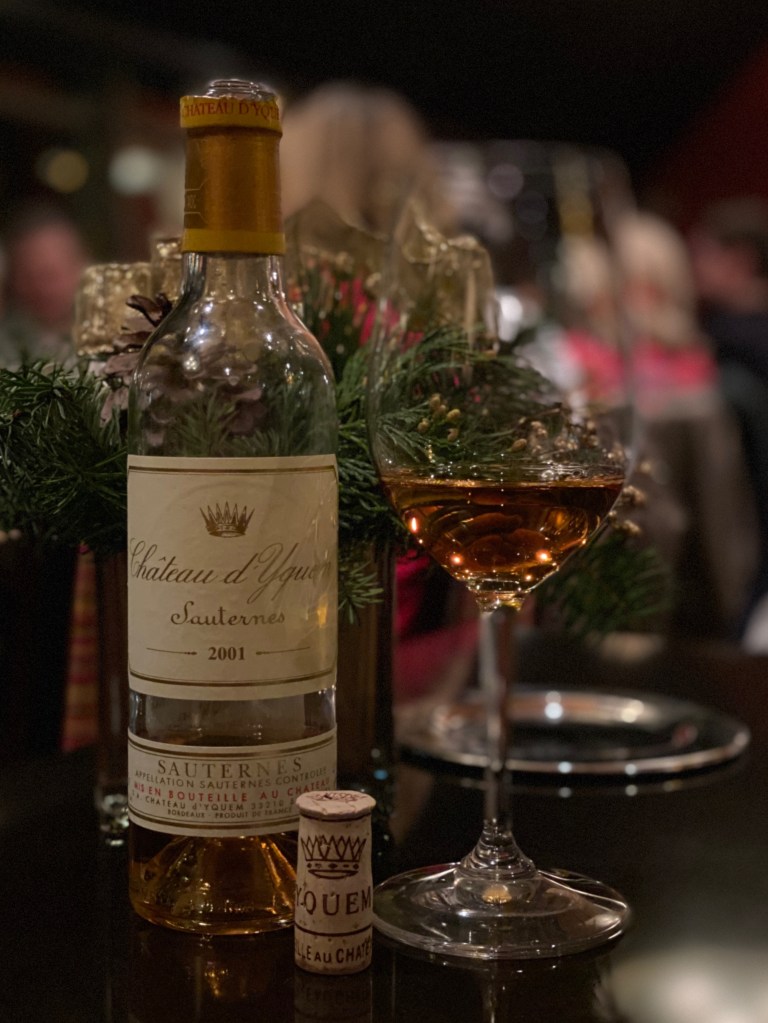
The 2001 d’Yquem is vibrant gold in color while being fully transparent. The nose cannot be mistaken for anything but d’Yquem with aromas of baked golden apple, grilled pineapple, dried apricot, peach, honey, caramel, almond and hazelnut, white pepper, and white florals sewn together in elegant harmony. Once in the mouth, this wine showcases notes of orange peel, Dutch apple pie, creme brûlée, orange marmalade, honey, hazelnut, butter, and white lily flowers. The palate and its lip-smacking profile make it difficult for anyone to not savagely gulp this down. The wine is full-bodied with high acidity and a very long finish that sticks with you all night long.

Price: $450-650 for 750ml, $300-350 for 375ml. Somewhat of a funky price range on these bottles (depending where you are in the world) but nonetheless d’Yquem is reserved for a special occasion. Pair this with cheesecake, lemon tarts, custard, or savory cheeses.

Left Bank Elegance

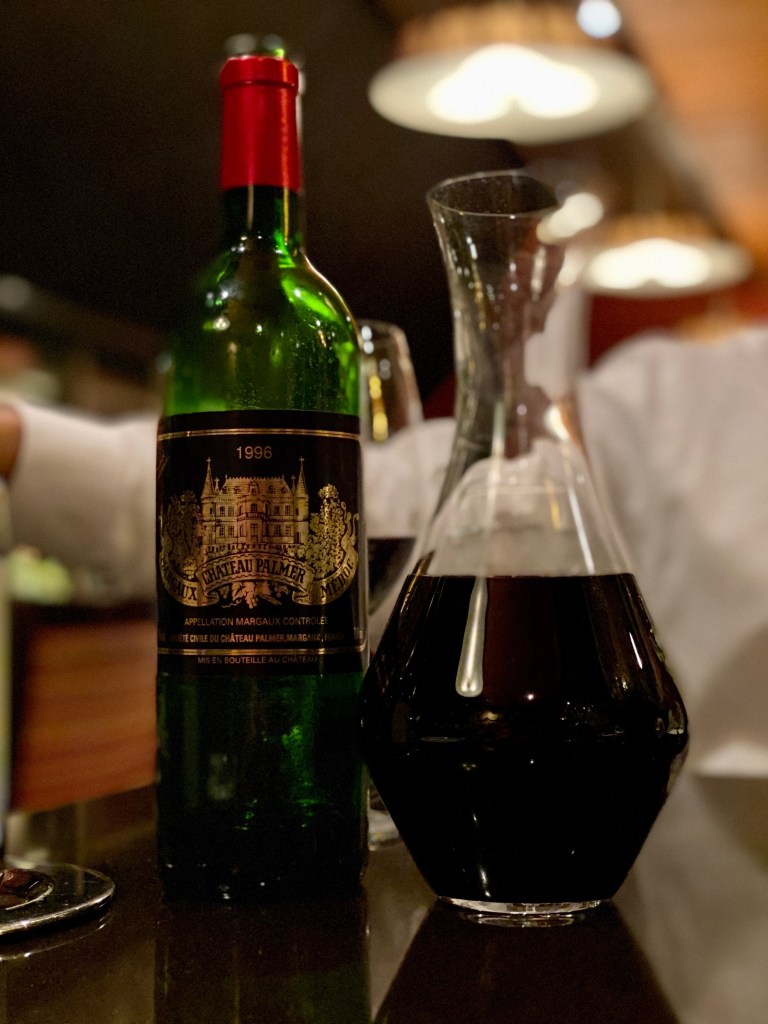
Today’s Story: Château Palmer

Château Palmer is a historic winery in the Margaux appellation of Bordeaux with roots back to 1748. Once part of Château d’Issan, 50 hectares of vines came to the Gascq family through division of d’Issan by the estate’s heirs in 1748. The Gascq family took this land and started producing wine under Château de Gascq, quickly becoming a well-known winery who served the court of Versailles under Louis XV.

In 1814, however, Madame Marie Bumet de Ferrière (the widow of the last remaining Gascq heir) sold the estate to English Lieutenant Colonel Charles Palmer (later a Major General in the British Army). Palmer spent decades enlarging the estate and modernizing its winery, with Château Palmer spanning 163 hectares with 82 hectares under vine by 1831. Unfortunately for this great estate, Charles Palmer faced some financial issues that forced a sale and the estate fell under control of an agricultural mortgage corporation.

Several years later, Château Palmer returned to private hands when Émile and Isaac Péreire purchased it in 1853. The Péreire brothers previously built an empire spanning railways, real estate, and banking (they were rivals of the Rothschild family) but wanted to add a winery having grown up in Bordeaux. Unfortunately for the estate given its recent turmoil, Château Palmer received the Troisième Cru (Third Growth) designation in the Bordeaux Wine Official Classification of 1855. I say this is unfortunate only because Palmer used to have a reputation similar to Château Margaux and Château Beychevelle.

Though Palmer eventually grew to 177 hectares with 102 hectares under vine, the estate as it exists today came about in 1938. Owners had to sell land parcels thanks to World War I and the Great Depression, though the Mähler-Besse family from the Netherlands and the Sichel family took over and descendants helped rebuild the estate following World War II. Though the two families are still involved, they have entrusted management of Château Palmer with Thomas Duroux, a former winemaker at Tenuta Dell’Ornellaia.

I would like to end this post with some comments on the values of Château Palmer. Like many great historic estates, Palmer believes they must respect their soils and vineyards to achieve the greatest expression in their wines. To this end, they explored biodynamic farming in 2008 and the practice soon became a necessity in the eyes of those running the estate. Sheep graze on the land and in the vineyards, grass and flowers grow naturally, and the estate stopped using agrochemicals. These efforts are so far greatly rewarded, with Palmer producing some of the greatest Third Growth wines.

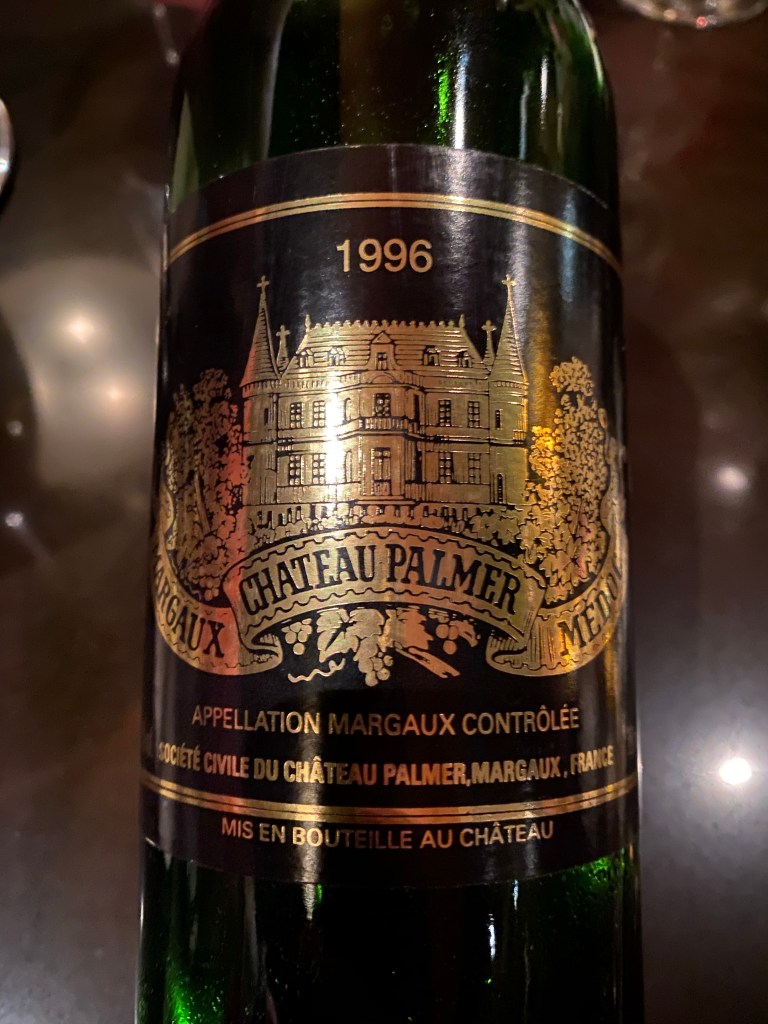
Today’s Wine: 1996 Château Palmer

55% Cabernet Sauvignon, 40% Merlot, 5% Petit Verdot; 12.5% ABV

The 1996 Palmer is medium to deep ruby in appearance and moderately transparent as you edge toward the rim of the glass. Once this wine opens up in a decanter, the complex nose showcases aromas of blackcurrant, blueberry, black plum, violet, pencil shavings, forest floor, tobacco, truffle, black pepper, green underbrush, and coffee grounds. In the mouth, the wine offers notes of blackberry, blackcurrant, anise, cigar box, sweet tobacco, graphite, crushed rock, chalky minerality, and a hint of oak. The wine is full-bodied with high acidity, medium but elegant tannins, and a long finish.

Price: $250. A nice bottle of wine for a celebration with family, though this is not one of Palmer’s greatest vintages. I had a 1995 not too long ago that showed very well and was a bit more powerful, a nice surprise given it’s also not one of the greatest vintages. Pair this with high quality steaks or lamb.

High Quality Napa Cab That Won’t Break the Bank

Today’s Story: Groth Vineyards & Winery

Groth was founded in Oakville in 1982 by Dennis, a former executive at Atari, and Judy Groth. Though Groth is now very well-established in the heart of the Napa Valley and Dennis is highly involved in the wine community there, the couple almost purchased vineyard property in Sonoma County to pursue their dreams. It was the sheer beauty of vineyards on the valley floor that captivated their attention and fostered their move to the Napa Valley several years after founding the winery.

Groth Vineyards is truly a family endeavor today, with a couple of Dennis and Judy’s children active in day-to-day operations. The winery is also a state of the art institution, undergoing major construction in 2007 that brought along an extended crush pad, a second tank room for smaller barrels, and a remodeled Reserve barrel room. Groth consists of two major vineyard areas, roughly 100 acres for the estate vineyard and Cabernet Sauvignon and another 44 acres in Yountville where they get their Chardonnay and Merlot fruit.

Fun fact: the 1985 Groth Reserve Cabernet Sauvignon is the first American wine ever to have received a perfect 100-point score by Robert Parker.

Today’s Wine: 2013 Cabernet Sauvignon

80% Cabernet Sauvignon, 20% Merlot; 14.9% ABV

The 2013 Cab is medium ruby in color with rose/garnet rim variation. To be honest, this is lighter in appearance than I expected. On the nose, I get aromas of cherry, blackcurrant, plum, black licorice, cigar box, baking spice, mint, and oak. Once in the mouth, this wine showcases notes of black cherry, jammy blueberry, inky blackberry, black pepper, tobacco, clove, vanilla, and rocky minerality. This is full-bodied with high acidity, medium (+) tannins, and a long finish.

Price: $50. I think this is a solid value for the quality of the wine. Groth also produces a Reserve Cabernet Sauvignon, which is typically in the $100-120 per bottle range. Pair this with steak, prime rib, or beef short ribs.

Youthful Burgundian Elegance

Today’s Story: Joseph Drouhin

Joseph Drouhin is one of the great historic producers in Burgundy, with origins dating back to 1880. Today, it is one of the largest estates consisting of 78 hectares (193 acres) throughout Chablis, Côte de Nuits, Côte de Beaune, and Côte Chalonnaise. I previously wrote about the estate on November 2 in Refined, Aged Burgundy and for more background I’d suggest reading it if you haven’t already.

Today’s Wine: 2012 Beaune Clos des Mouches 1er Cru

100% Pinot Noir; 13% ABV

The 2012 Clos des Mouches is pale ruby/garnet in color and quite transparent. Though I didn’t have proper glassware (as demonstrated in the picture) once the wine opens up the nose showcases aromas of cherry, strawberry, raspberry, forest floor, slight barnyard, red rose, smoke, leather, and oak. On the palate I get notes of black cherry, wild strawberry, earth, pepper, tobacco, coffee, green underbrush, mushroom, and mineral. This wine is light- to medium-bodied with high acidity, refined medium (-) tannins, and a medium length finish. A great bottling from Joseph Drouhin, though certainly not my favorite, and this needs at least another decade in the cellar.

Price: $120. This is a good price point, however I wouldn’t buy this unless you plan on cellaring it for another 5+ years. This seems like it needs time to come together and drop some of its baby fat, though I didn’t have a decanter and a long decant could perhaps do the trick. Pair this with duck, lamb, or a good burger.

Preeminent California Zin

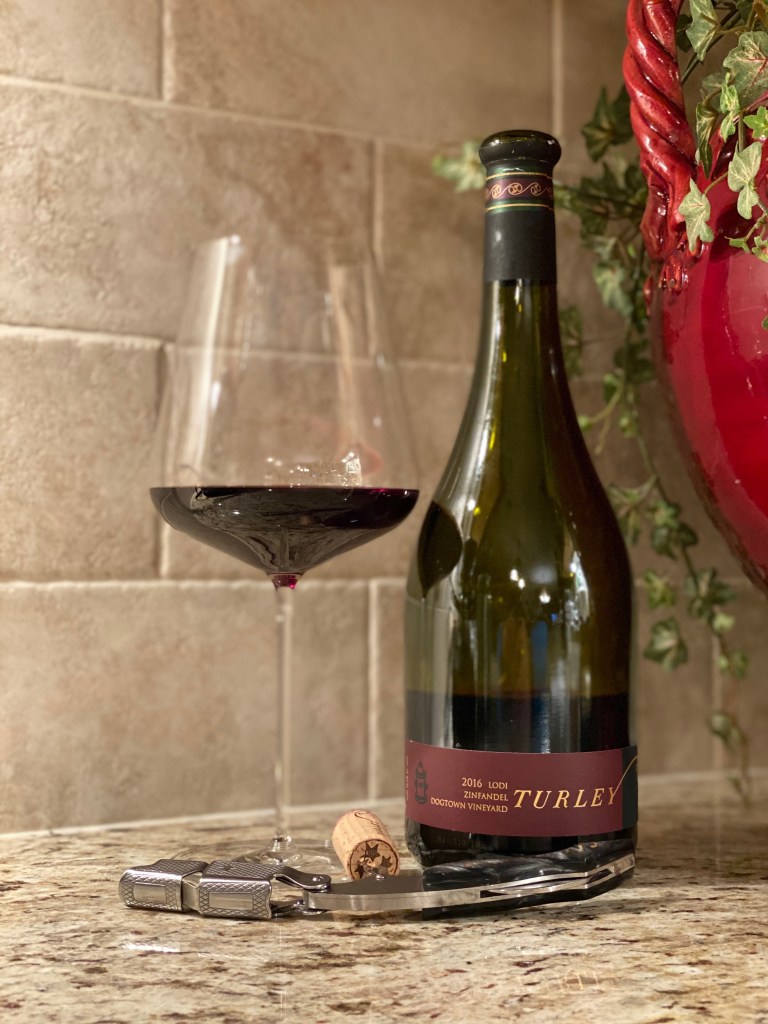
Today’s Story: Turley Wine Cellars

Turley was founded in 1993 by Larry Turley, the brother of famed winemaker Helen Turley. During the earlier years, Helen even consulted for her brother’s new winery. Though Larry entered the wine business more than a decade earlier in 1981 by co-founding Frog’s Leap Winery in Rutherford, he learned his love of Zinfandel and the vision for Turley was born. Turley Wine Cellars makes 47 different wines from over 50 different vineyards, all of which are of the Zinfandel or Petite Syrah varieties. With their specialty single-vineyard red Zinfandel bottlings, Turley sources from old vineyards with some dating back to the late 19th and early 20th centuries and they are considered by many to be the best Zinfandel wines made in California.

Turley Wine Cellars started with one location in St. Helena in the Napa Valley, though during expansion opened a second winery in Templeton in San Luis Obispo county. Today, they have a third location in Amador County. As of 2011, Turley was producing 16,000 cases of wine and becoming a member of their private wine club can still take up to two years. All of the vineyards sourced for Turley are either certified organic or in the process of bering certified, and during the winemaking process all wines are fermented with natural yeasts.

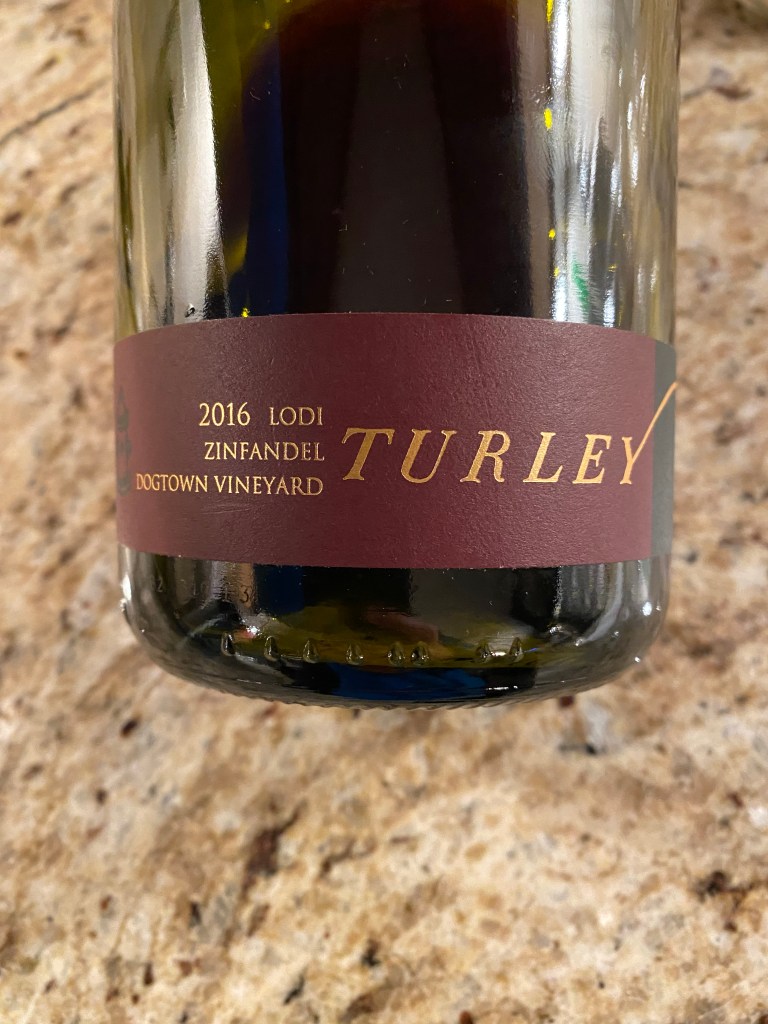
Today’s Wine: 2016 Dogtown Vineyard Zinfandel

100% Zinfandel; 15.3% ABV

The 2016 Dogtown Vineyard Zinfandel is medium ruby in color with rose variation toward the rim of the glass. Once this wine opens up, the nose showcases aromas of black cherry, raspberry, pine, earth, black shoe polish, leather, smoke, and dried green herbs. On the palate, I get notes of cherry, cranberry, raspberry, ripe black plum, tobacco, baking spice, green herbs, and oak. Like many Zinfandels, the sweet fruit dominates here. This is full-bodied with high acidity, medium tannins, and a medium (+) length finish.

Price: $65. Certainly not an inexpensive Zinfandel, though the Dogtown Vineyard is consistently the lowest-yielding vineyard of the over 50 vineyards Turley makes wine from. If this is a little steep, Turley’s portfolio consists of 47 different wines of varying price-point. Pair this with barbecue, especially chicken or pork.

Beauty from Howell Mountain

Today’s Story: O’Shaughnessy Estate Winery

O’Shaughnessy is a small, family-owned winery founded by Betty O’Shaughnessy Woolls and Paul Woolls in the late 1990s. Betty’s background is in real estate investment and development, though she grew a passion for food and wine that ultimately brought her to Napa Valley in 1990 when she purchased a home with vineyards in Oakville. Paul’s background on the other hand is law, though he also developed a passion for wine living in New Mexico during his college years. The two met at a wine tasting and have been partners in life and in winemaking ever since.

In 1997, the couple planted 35 acres on Howell Mountain (29 acres of Cabernet Sauvignon and the remaining 6 acres a mix of Cabernet Franc, Petit Verdot, Merlot, Malbec, Carmenere, St. Macaire and Gros Verdot) on a 120 acre property. Several years later, in 2000, they expanded to Mt. Veeder by acquiring a 55 acre property to which 17 acres are planted. O’Shaughnessy’s Mt. Veeder holdings grew again in 2006 with the addition of a 265 acre property, though only 32 acres are planted and most is Cabernet Sauvignon. Lastly, we cannot forget the Oakville property where 32 acres surrounding Betty and Paul’s home are planted to Sauvignon Blanc, Chardonnay, and Cabernet Sauvignon.

O’Shaughnessy, like many smaller high-quality wineries with more-or-less distinctive vineyard sites, employs a winemaking philosophy that puts terroir at the forefront. Though the winery and all equipment is quite modern, the winemaker Sean Capiaux seeks to produce classic wines that are naturally fermented and bottled unfined and unfiltered. The resulting wines are elegant, expressive, and age-worthy while demanding respect for a still reasonable price tag.

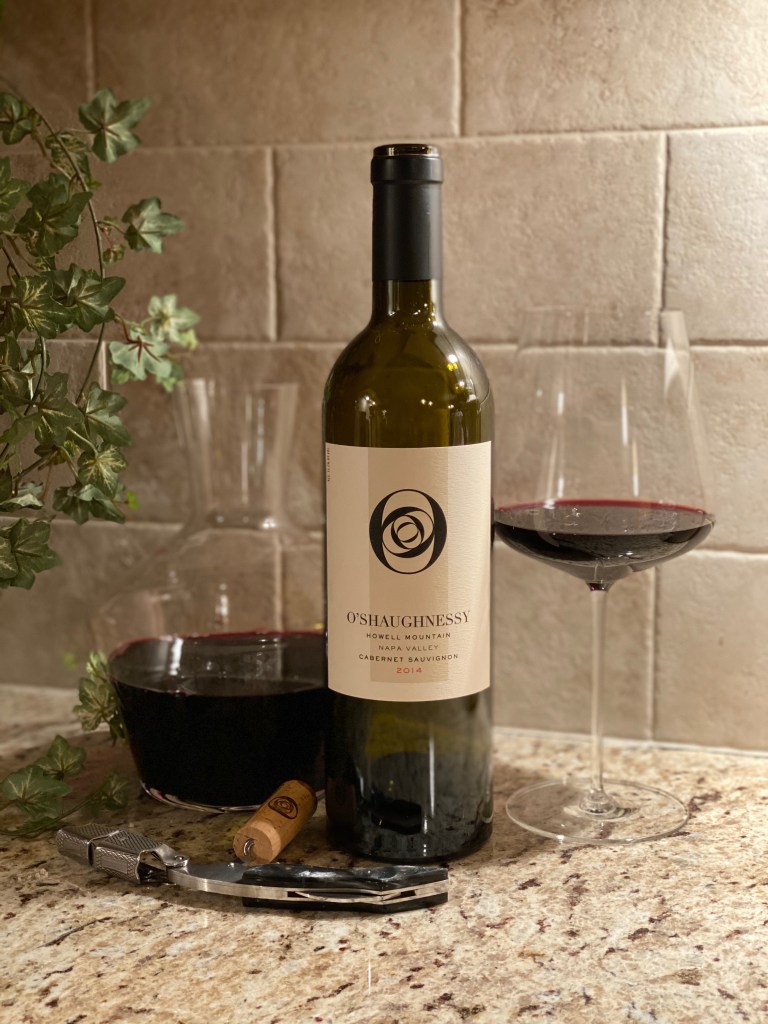
Today’s Wine: 2014 Howell Mountain Cabernet Sauvignon

79% Cabernet Sauvignon, remaining 21% a blend of Malbec, Merlot, Cabernet Franc, Carmenère, Petit Verdot, and St. Macaire; 15.2% ABV

The 2014 Howell Mountain Cab is an opaque, deep ruby/purple color with rim variation heavy on the purple side. Decanting is a must with this one, as its youth and powerful profile demand air time. The nose offers aromas of classic mountain fruit such as blueberry (very prominent) and blackberry alongside licorice, violet, aged leather, earth, dark chocolate, graphite, and oak. Once in the mouth, the wine showcases notes of blueberry, crushed blackberry, plum, wild black raspberry, red and purple florals, crushed stone, and dried silt. As expected this is full-bodied with high acidity, elegant medium tannins, and a long finish.

Price: $110. I think this is appropriately priced while being a wonderful representation of Howell Mountain. O’Shaughnessy produces some of my favorite Cabernets, I just wish I got to drink them more often. Pair this with steak, lamb, a good burger, or beef short ribs.