What Wine Is Meant to Be

Today’s Story: Red Cap Vineyards

Red Cap Vineyards’ story begins in 1998 with Tom and Desiree Altemus when they purchased a 10.5 acre property on Howell Mountain. Though Tom’s background is originally in finance working for IBM, he grew an appreciation for fine wine during business trips and ultimately quit to pursue a career as a chef in 1991. After graduating from the California Culinary Academy in San Francisco, Tom worked for famed chefs and restauranteurs including Michel Richard and Bradley Ogden before settling in at Brava Terrace in St. Helena. With the birth of the couple’s first child, Tom left the restaurant industry and the birth of their second child created the need to expand from Napa to Howell Mountain.

Having purchased their property, the Altemus family started planning their vineyards in 2000 with viability studies and archeological, biological, and botanical surveys. Due to seemingly endless regulations, the land was finally cleared and prepped in 2003 and the first vintage of Cabernet Sauvignon released in 2005 with 50 cases. Having personally visited the property, I can attest that the land is not only beautiful but the vineyard rows are stunning to look at. The vineyards are planted on iron-rich volcanic soil that in person is very red and rocky, while all fruit is grown organically and hand-farmed.

I’d now like to take an opportunity to discuss my visit to Red Cap Vineyards, because as one stop of many in Napa it was my favorite.

I visited Red Cap in September of this year, and my family and I were promptly greeted by Tom at his family’s home. Tom took us around the vineyards and described the soil, fruit, and his wines with such passion that I immediately became more excited to taste with him than I already was. Amongst chit chat, we got to taste grapes off the vine while Tom explained the seed color in relation to how soon he and his team would begin the harvest. After this tour of the property, we went inside to taste the 2016 Sauvignon Blanc and 2014 and 2015 Cabernet Sauvignon.

This tasting was the most intimate I have experienced, with my family and I sitting in the Altemus family home at their table. With wine in front of us, Tom brought out fresh homemade bread (made with yeast from the Red Cap fermentation process) alongside butter and sea-salt. The entire experience made my family and I feel as though we’ve been lifelong friends (or even family) with Tom as the conversation ranged across vast topics and we never felt we were there as visitors of a winery. Comically, we went dramatically over our “scheduled” time for the tasting but to me that is what made it so special. Add this all to the fact that Tom and his winemaker Rudy make mindbogglingly good wine and you can find me in heaven.
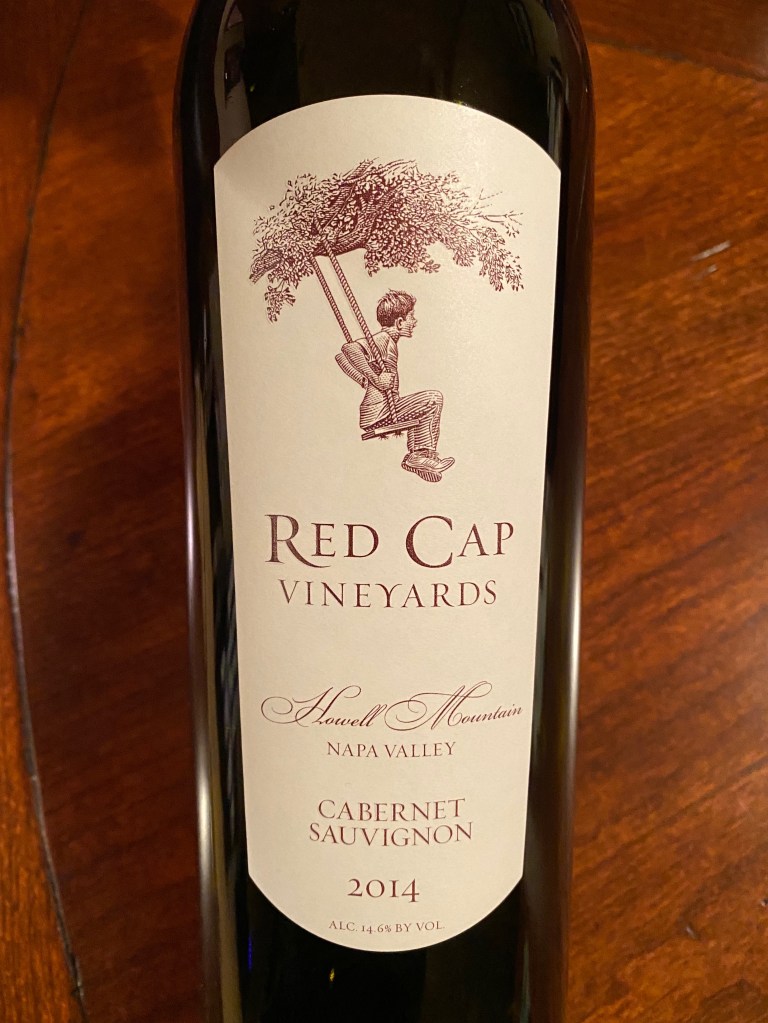
Today’s Wine: 2014 Cabernet Sauvignon

100% Cabernet Sauvignon; 14.6% ABV

Deep ruby (almost purple) in color with moderate staining on the glass. Due to its youth, I let this decant for three hours before drinking it over the following two hours. Once the nose opens up, I get incredibly concentrated aromas of blackberry, blueberry, and red berries alongside licorice, graphite, dried volcanic earth, white pepper, cedar, slight truffle, and green herbs. The palate showcases gorgeous mountain fruit of blueberry, blackberry, and raspberry accompanied by cigar box, baking spice, green underbrush, mint, and earth. This Cab is full-bodied with medium (+) acidity, high yet refined tannins, and a long finish dominated by notes of black cherry. Though this is already drinking beautifully with some air, I will wait at least 3-5 years before opening my next bottle and stagger them every couple years from there. 398 cases produced.

Price: $100 ($85 if you’re a club member). I have been very vocal with my friends and family for several years of the screaming value that Red Cap Cabernet is. Compared to some of their neighbors on Howell Mountain, Red Cap produces utterly incredible wines at a lower price-point. Pair this with steak, beef short ribs, lamb chops, or a high-quality burger.

From My Visit:

Note the red soil.
More rocky, red soil.
Tom giving us a tour of the vineyards.
Tom explaining how seed color can indicate harvest timelines.
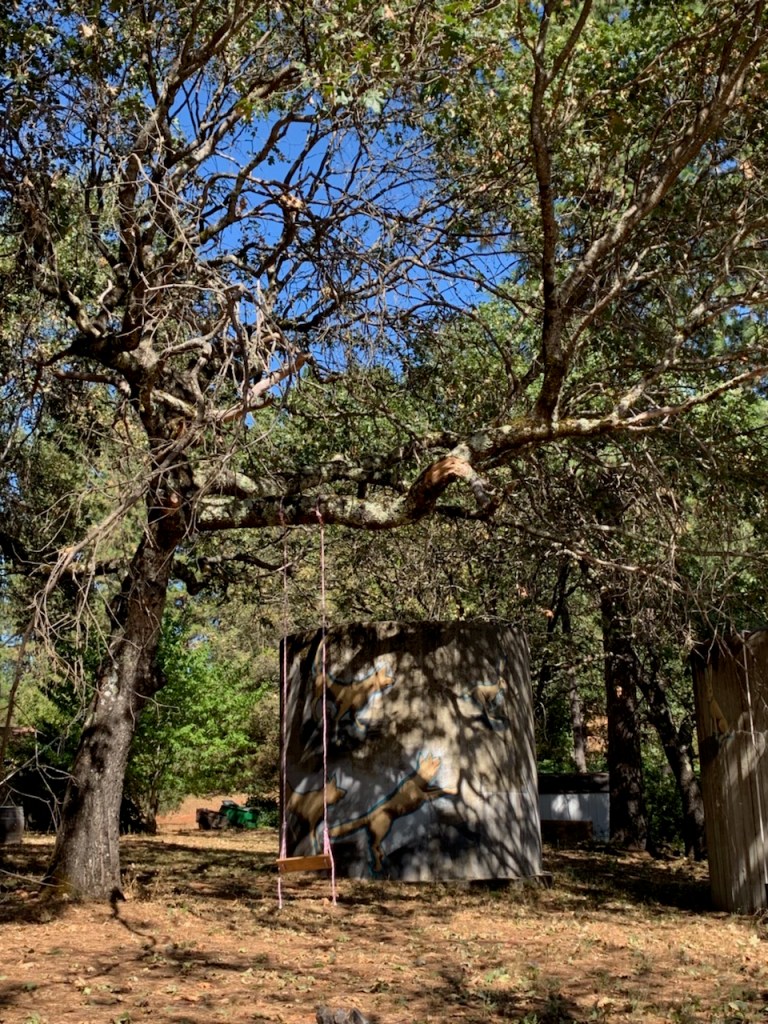
THE swing.

Santa Ynez Sangiovese

Today’s Story: Jonata

Short and sweet again today, as I wrote about Jonata and a different wine in my post Why Wait for Screaming Eagle? back on October 16.

Long story short, if you haven’t read my prior post, Jonata is owned by Stan Kroenke who also owns the LA Rams and Screaming Eagle. Kroenke bought 586 acres of property, though only 84 acres are planted under vine, and like many wineries in the area Jonata found success planting Rhône varietals such as Syrah but also grows Sangiovese and Bordeaux varietals. For more I’d steer you to my prior post.

Today’s Wine: 2010 Tierra

95% Sangiovese, 5% Syrah; 14.9% ABV

This Sangiovese is medium to deep ruby in color. Once this opened up in the decanter, I got aromas of blackberry, blueberry, redcurrant, mocha, smoked game, leather, and black tea leaf. In the mouth, the wine showcases notes of black cherry, blackcurrant, anise, charred earth, smoke, dark chocolate, and espresso. Overall this doesn’t have as much red fruit as I imagined it might, with the wine drinking very dark. This is medium-bodied with high acidity, medium (+) tannins, and a long, inky finish with notes of ground coffee.

Price: $90. I’d love to see this closer to the $75 mark, but I do believe it is fairly priced given its rarity, library release status from the winery, and quality. Pair this with roasted game, a rare steak, or pasta with a beef and tomato sauce.

Rustic, Terroir-Driven Burgundy

Today’s Story: Domaine de Courcel

Domaine de Courcel was founded roughly 400 years ago in the village of Pommard and is a family winery throughout its history. To this end, today the estate is managed by Anne Bommelaer and Marie de Courcel and its owners include three sisters and one brother who are descendants of the domaine’s founders. Production is somewhat limited at the domaine, with annual production numbers never rising above 30,000 bottles (2,500 cases).

The domaine owns vineyards on 10.5 hectares in Pommard, which is four kilometers from Beaune in the Côte de Beaune. From this land, the domaine produces seven different wines including four 1er Crus that account for roughly 75% of the vineyards. These 1er Crus include Le Grand Clos des Epenots (a monopole of the domaine), Les Rugiens, Les Frémiers (I am reviewing this today), and Les Croix Noires. Domaine de Courcel also produces a Pommard village wine Les Vaumuriens in additional to a Bourgogne Rouge and Bourgogne Blanc. Le Grand Clos des Epenots (about 50% of the domaine’s production) and Les Rugiens come from arguably some of the best vineyards in Pommard.

Throughout their history, the domaine endeavors to produce wines that showcase their individual terroir while being intense with great density. This effort begins in the vineyards where ploughing encourages biological activity and fosters an environment for vines to dig deep to express the terroir. They also prune their vines to optimize ripeness of the fruit and harvest relatively late in the season to maximize sugar intensity in the wines. Onto the winemaking process, grape selection is incredibly thorough and they go through cold maceration followed by low-temperature fermentation in an effort to extract intense aromas. After fermentation is complete, each cuvée goes through carbonic maceration to complete the process. All wine is aged in oak barrels replaced by third each year.

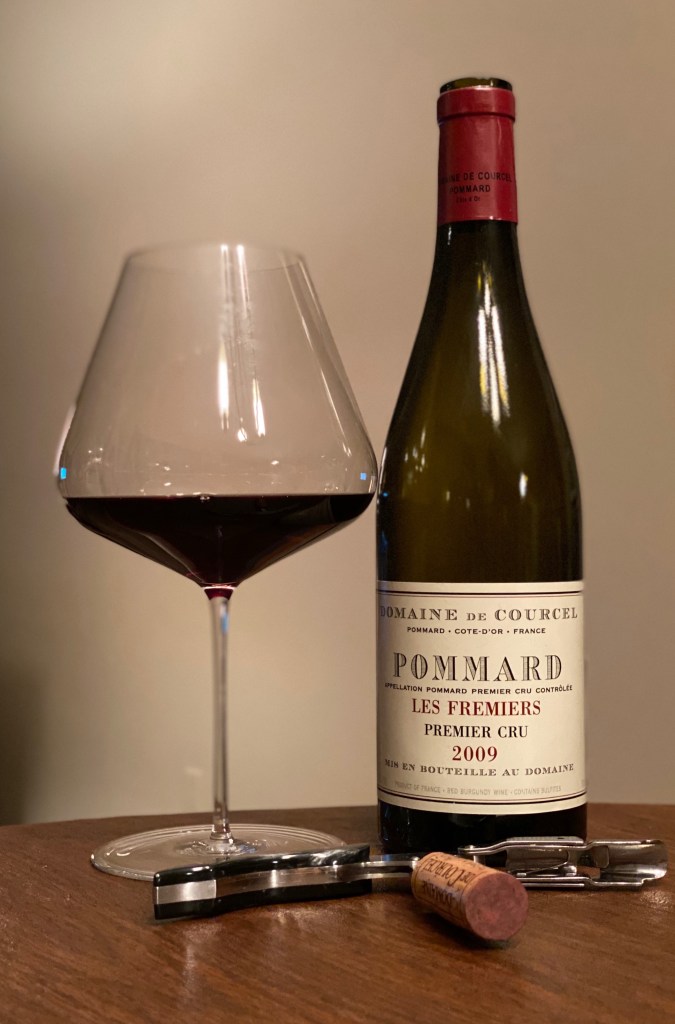
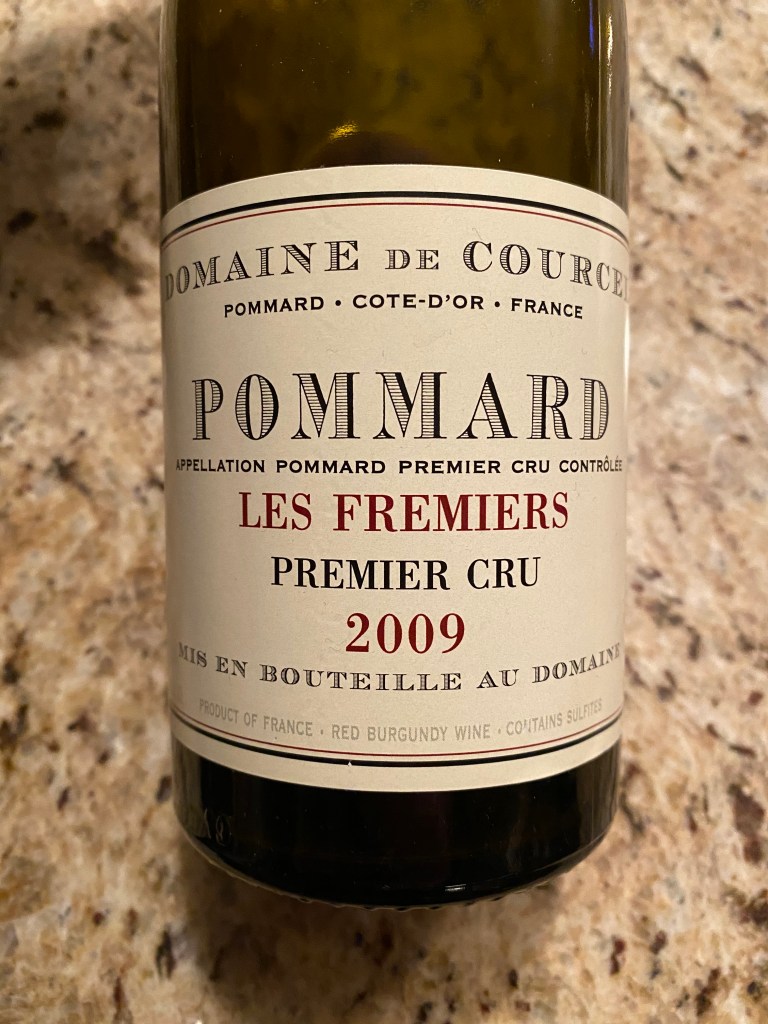
Today’s Wine: 2009 Pommard 1er Cru Les Fremiers

100% Pinot Noir; 13.5% ABV

This bottle came highly recommended by the owner of a local wine store, particularly due to my love of Burgundy and wines that are more terroir-driven. Having tasted this wine now, I would not call it a “people-pleasing” Pinot (though there aren’t many from Burgundy I do) though it hit its mark for my palate.

In appearance the wine is medium ruby while being moderately transparent. This took about 15 minutes to open up in the glass (though I could’ve decanted it to be honest) and the nose showcases aromas of black cherry, cranberry, licorice, cola, cinnamon, sous bois, slight barnyard, truffle, and wet stone. The nose does show some heat as well (alcohol). Once in the mouth, I get notes of ripe cherry, crunchy redcurrant, violet, tobacco, mocha, scorched earth, and spicy white pepper. Today’s Pinot is light- to medium-bodied with medium (+) acidity, medium yet integrated tannins, and a long finish.

Price: $180. Not a cheap bottle of Pinot Noir, but unfortunately almost all of Burgundy has seen massive price jumps over the last several years. This being said, I liked this earthy Pinot relative to some of the more expensive competitors and if you like very rustic wines this could suit you too. Pair this with roast game, grilled red meats, or a cheese and charcuterie plate.

Who Knew They Made a Chardonnay?

Today’s Story: Gargiulo Vineyards

Back-to-back easy posts this weekend, as I previously wrote about Gargiulo in my blog post Italy’s Favorite Grape…from California? back on October 20. If you’d like some background on this small, family-owned winery and haven’t read my previous post, check it out!

I will note, however, that Gargiulo does not grow their own grapes for the wine I am reviewing today. Known for their Cabs, Gargiulo produced this somewhat “under the radar” Chardonnay with grapes from Rich Frank’s (of Frank Family Vineyards) Wood Ranch Vineyard.

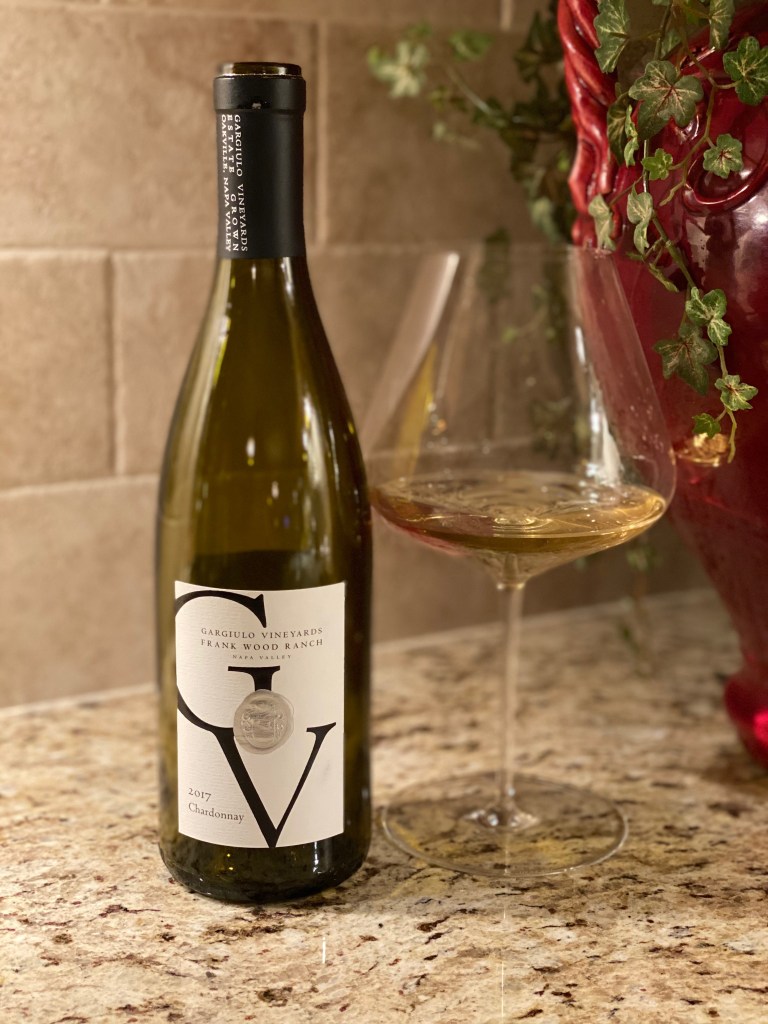
Today’s Wine: 2017 Frank Wood Ranch Chardonnay

100% Chardonnay; 13.6% ABV

I haven’t found a wine from Gargiulo that I didn’t like, with this Chardonnay being no exception. Interestingly enough, I was not entirely aware Gargiulo produced a Chardonnay and this is my first time tasting the wine.

This is pale gold in color and is completely transparent in the glass. The wine blossomed right out of the gates with a nose showcasing aromas of golden pear, stone fruit, lemon zest, almond, vanilla cream, and vibrant saline minerality. Once in the mouth, I get notes of apricot, yellow apple, lemon citrus, pineapple, toast, and a touch of butter. This Chard is medium-bodied with medium (+) acidity and a medium (+) length finish ending full and round. Superb effort again by Gargiulo.

Price: $70. This is up there with the Chateau Montelena Chardonnay (~$50) and Far Niente Chardonnay (~$60) which are two of my favorites. While this is delicious, that extra $10-20 could go toward something else but I won’t try to sway you either way. Pair this with baked chicken, shellfish, or a plate of cheese, pear, and apple.

Consistently Delicious Zin

Today’s Story: Ridge Vineyards

This is an easy one again today, as I previously wrote about Ridge Vineyards in my post History. Quality. Ridge. back on October 19. Long story short, this is another historic Californian winery and they produce some of my favorite Zinfandel-based wines and Cabernet Sauvignon. I highly suggest you read about their history if you haven’t already.

Without further ado…

Today’s Wine: 2012 Geyserville Vineyard

71% Zinfandel, 19% Carignane, 7% Petite Syrah, 2% Mataro, 1% Alicante Bouschet; 14.4% ABV

I’ve had this wine several times and across multiple different vintages, each time being a delightful experience. The wine is medium ruby in color while being moderately opaque. I simply let this breathe in the glass which helped bring out aromas of blackberry, plum, blueberry pie, black licorice, violet, and sweet tobacco. There is not a lick of tertiary aromas yet, which does not surprise me. Once in the mouth, I get notes of very dark plum, black raspberry, blueberry, dates, a hint of charred earth, and a touch of vanilla. This Zinfandel blend is medium-bodied showing medium (+) acidity, medium tannins, and a long finish with notes of black cherry.

Price: $45. As much as it pains me (as a consumer) to see Ridge prices rising from ~$30 a few years ago to where they are now, I still love these wines on a quality perspective. These are consistently well-made wines I suggest everyone try. Pair this with bbq pork or chicken, lamb, or duck breast.

Rare Riesling from Napa

Today’s Story: Palmaz Vineyards

Palmaz Vineyards, as it exists today, was founded in 1997 by Julio and Amalia Palmaz. Julio is a medical doctor by trade, credited with being a co-creator of the heart stent, though he and his wife Amalia always believed that close attention and care to their land can produce superior quality wines for generations to come.

Before I get too far, I’d like to take a step back to the origin of winemaking on their plot of land. In 1852, a man by the name of Henry Hagen moved to the West Coast in pursuit of Gold Rush treasures. Though he originally lived in San Francisco, in 1881 he purchased a plot of land at the southeastern edge of Napa Valley against Mount George and founded Cedar Knoll Vineyard and Winery. At that time a pioneer in Napa Valley, Hagen produced high-quality wines served throughout San Francisco high society and even won a silver medal for his brandy at the 1889 World’s Fair in Paris.

Fortunes changed, however, with Hagen’s death in 1895 and, as many wineries of the time experienced, the onset of Prohibition in 1919. With 450 acres of land in the hands of Hagen’s kin who didn’t share his passion for wine, winemaking ceased and the estate fell into disrepair.

Circling back to the Palmaz family, Julio and Amalia purchased, restored, and modernized the long-lost winery while building an estate totaling 600 acres with 64 acres under vine. One of the coolest features of the winery is their caves, which total 100,000 square feet and are listed as the largest in Napa Valley. The winery is built into an 18-story cavern behind Mount George, allowing for gravity-flow production of wine while also providing a naturally cool environment. The crowning achievement, in my opinion, of the Palmaz renovations is in their “fermentation dome” where the ceiling showcases high-tech data points and charts for easy monitoring of the wine during fermentation. This thing looks like it could control the Starship Enterprise so I highly suggest you take a look at pictures online and on their website here.

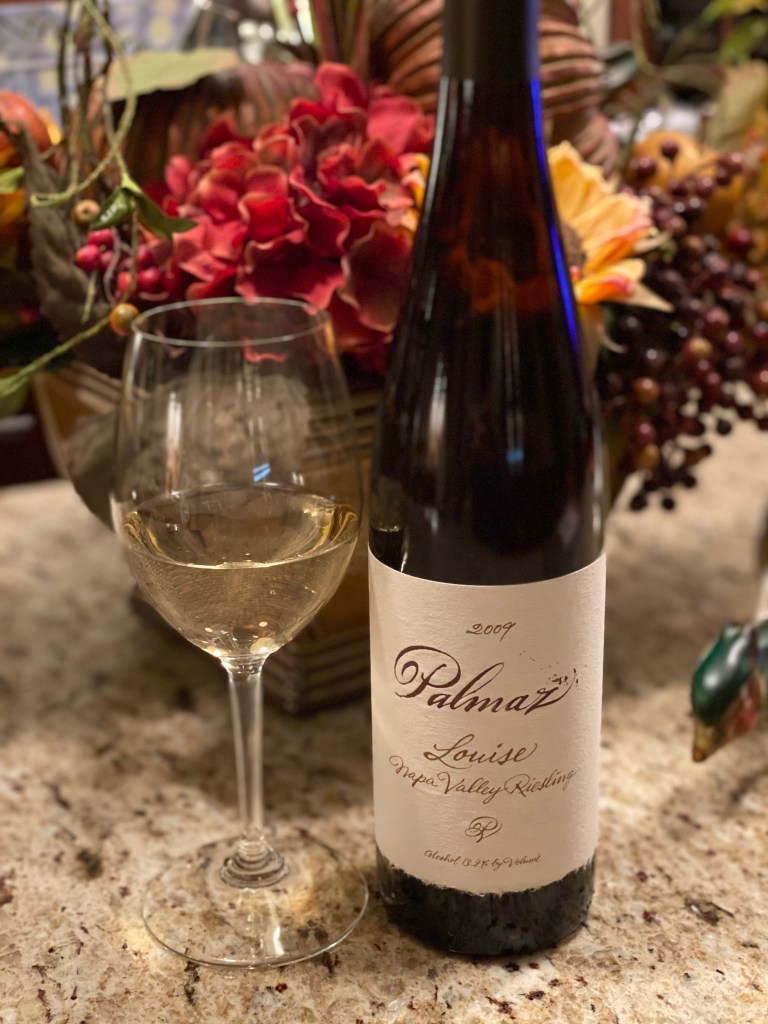
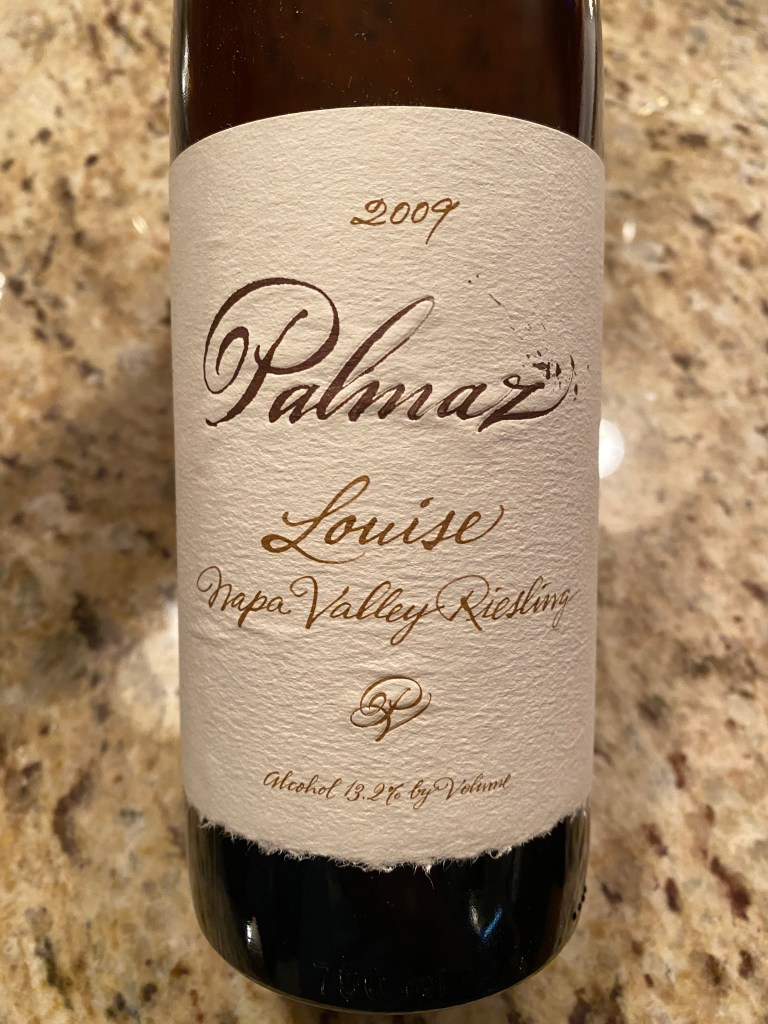
Today’s Wine: 2009 Louise Riesling

100% Riesling; 13.2% ABV

Palmaz is known for their Cabernet Sauvignon, particularly the Gaston which is produced from the best lots and only in certain vintages, several of which I’ve been able to enjoy. If you find a bottle of their Cabernet on a shelf, I suggest you give it a shot (though it is not cheap at about $130-150 per bottle). All this being said, I was unaware Palmaz produced a Riesling and I am excited to review it today.

Almost perfectly clear, this Riesling is pale straw/yellow in color with rim variation of water white. The nose is classic Riesling with aromas of petrol, green apple, and lime zest as well as pineapple, white florals, and slight nutty notes. Once in the mouth, this light- to medium-bodied white showcases notes of tangerine, peach, green apple, lemon peel, beeswax, and slight white spice. This is a creamy textured Riesling and not as dry as I prefer, showing medium acidity and a rounded medium length finish. 150 cases produced.

Price: $95. This is high in my opinion, though I think the rarity of this bottling plays into the price. I’d say skip this one and look toward Alsace or Mosel if you’re spending that kind of money. Pair this (like most Rieslings) with Chinese food, spicy Thai food, or even Tex-Mex.

Delightful Old Vine Garnacha

Today’s Story: Domaines Lupier

Domaines Lupier is a relatively new wine estate, founded in the 2000s by Enrique Basarte and Elisa Úcar. Enrique comes from a background in wine, having worked in vineyards throughout Spain following degrees in agronomical engineering and oenologist studies. Elisa studied economics and holds an MBA, though she also has more than a dozen years of experience in the wine business. Both equally passionate for winemaking in its entirety (the vines, terroir, and production of wine), Enrique and Elisa started rescuing small plots of Garnacha from very old vines to jumpstart their own project.

The efforts of tracking down and studying existing vines ultimately yielded the couple 27 parcels of Garnacha planted in different soils and microclimates ranging in elevation of 400-750 meters above sea level. Some of the vines they own even date back to 1903. This broad range of terroir and old age of the vines allows Domaines Lupier to showcase a true and brutally honest representation of the Garnacha variety and the land from which it comes.

Still a relatively small winery, Domaines Lupier produces two wines. Their El Terroir annual production sits around 30,000 bottles, while La Dama annual production sits around 4,000 bottles. In order to make and age their wine, Enrique and Elisa purchased and renovated an old manor house near their vineyards. They constructed a cellar to hold 50,000 bottles of wine, outfitted the winery with 3,500 and 5,500 liter vats, and updated the technology to modern standards. All of their wine is aged in French oak barrels under careful watch of both Enrique and Elisa.

Today’s Wine: 2011 La Dama

100% Garnacha; 14.5% ABV

This wine is moderately opaque and medium purple in color. This needed some time in the decanter to blossom, and once it did the nose emits aromas of plum, dried forest floor, mushroom, licorice, smoke, leather, and bitter chocolate. I also get a bit of heat out of the nose thanks to the alcohol content. Once in the mouth, the wine showcases notes of black and blue fruit, dried cranberry, black licorice, slight milk chocolate, loamy soil, crushed rock, and oak. Medium-bodied with medium acidity, medium tannins, and a medium (+) length finish. 353 cases produced.

Price: $60 (United States). I like the price-point on this bottle, it has a certain Old World charm to it that needs to be experienced. This is also one of the most unique Garnacha wines I’ve tried. Pair this with chicken or pork, though you could probably get away with smoked salmon as well.

Historic Estate on the Upswing?

Today’s Story: Domaine François Lamarche

While the Lamarche family origins place them in Vosne-Romanée as early as 1740, the domaine was founded in 1797. Over time, particularly through the end of the 19th century, the domaine grew in size under Henri Lamarche and his wife Marie Grivelet from Chambolle-Musigny. When their son Henri (born 1903) took over, he soon inherited La Grande Rue when he married Aline Demur in 1933. Then, in 1985, François took over the estate with the death of his father Henri and he and his wife Marie-Blanche currently lead winemaking and sales. Truly a family endeavor throughout its history, the domaine is also run by François’ sister Geneviève Lamarche (accounts), his daughter Nicole (viticulture), and Geneviève’s daughter Nathalie (sales).

Domaine François Lamarche owns some very enviable land within Vosne-Romanée. While the estate makes 14 different wines ranging from village to 1er Cru to Grand Cru, their most historic holding is the monopole La Grande Rue (one of 6 Grand Crus in Vosne-Romanée). La Grande Rue borders La Tâche and Romanée Conti (monopoles of Domaine de la Romanée-Conti) as well as La Romanée (a monopole of Comte Liger-Belair). While over time the wine from La Grande Rue has fallen under shadow of its neighbors (La Tâche sells for about $5,000 per bottle and Romanée Conti for $15,000+) Nicole Lamarche has been making viticultural changes in an effort to bring out elegance and terroir that have been missing from their wines.

More care seems to be going into the harvesting and winemaking processes with Nicole leading the charge, particularly with grapes being hand-harvested and sorted in the vineyards. Grapes are taken to the winery in small baskets to avoid premature crushing and oxidation where they are shaken and then hand sorted. Partially and sometimes totally destemmed, the grapes go into open vats made of stainless steel or wood and pressing is accomplished with a bladder press. Wine is bottled after being matured 14-20 months in French oak ranging from 30-50% new.

Fun Fact: The Grand Cru wines of Domaine François Lamarche are La Grande Rue, Clos-de-Vougeot, Grands-Échezeaux, and Échezeaux. Relative to their neighbors, these wines are still very, very reasonably priced and could be worth looking into if the changes being made to the winemaking process prove successful in achieving their goals.

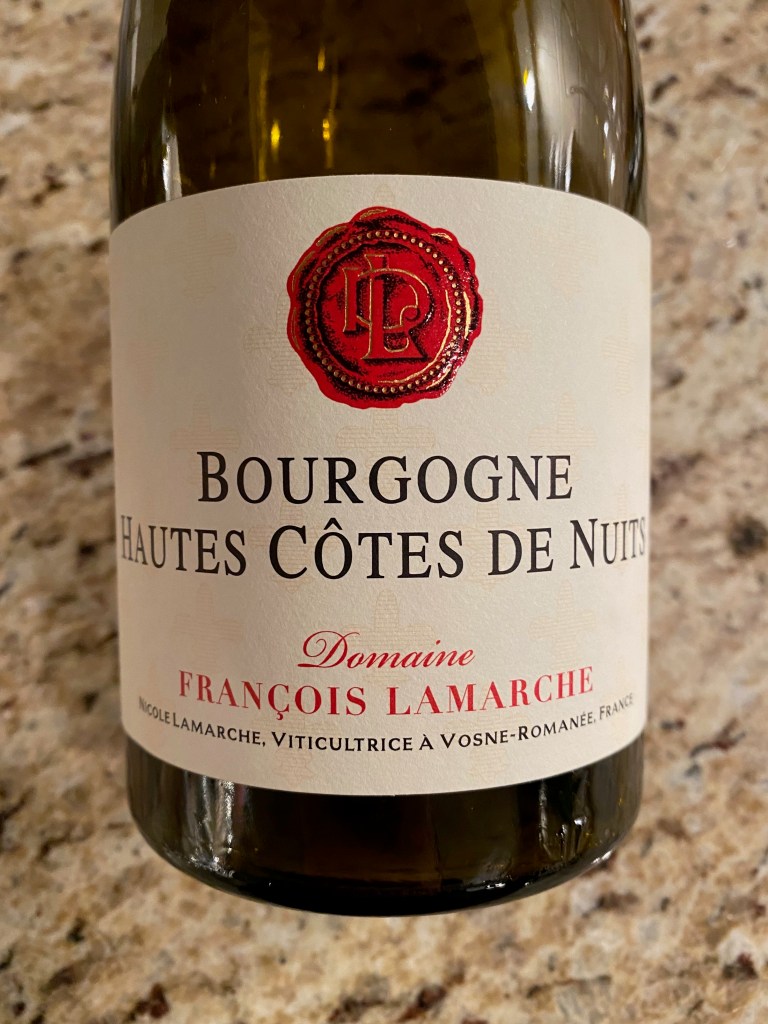
Today’s Wine: 2014 Bourgogne Hautes Côtes de Nuits

100% Pinot Noir; 12.5% ABV

I’ve wanted to try a wine from Domaine François Lamarche since they came onto my radar a month or so ago, and I figured it best to start with their entry level Bourgogne.

The wine is clear pale ruby in color. While the nose is very feminine, clean, and soft and took some time to open up, I get aromas of raspberry, strawberry, dried cranberry, rose petal, slight leather, and chalky earth. After this opened up a bit the nose added some characteristics of red meat as well. Once in the mouth, the palate showcases notes of ripe red cherry, strawberry, white pepper, slight baking spice, and chalk. This falls apart on the palate, especially by the mid-palate which is almost non-existent, and I found it quite disappointing after learning of the improvements the domaine is taking. Nonetheless, this is light- to medium-bodied with medium (+) acidity, light tannins, and a medium length finish. I remain curious to try the Lamarche higher-end offerings, particularly La Grande Rue.

Price: $35. For Burgundy, this is a good entry level price-point and I think controlling for its shortcomings it does deliver. This being said, I would suggest taking $35 and buying a bottle of Pinot from Oregon or a more established Bourgogne. Pair this with lamb, veal, or duck breast.

Historic Napa Cab

Today’s Story: Far Niente

Far Niente was founded in 1885 by a forty-niner of the California gold rush named John Benson. John constructed his winery just below the hillsides in western Oakville, and he had it designed by Hamden McIntyre who was behind the Christian Brothers winery (now the CIA at Greystone). Like several prominent wineries today, John built Far Niente to function as a gravity flow winery.

Though Far Niente was quite successful for its first few decades, during the onset of Prohibition in 1919 it was abandoned and fell into disrepair. It wasn’t until sixty years later in 1979 that a man by the name of Gil Nickel purchased the dilapidated winery and began a three year restoration project. Winemaking resumed once again in 1982 with the harvest of the estate’s first Cabernet Sauvignon as well as Chardonnay. To this day, Far Niente continues to only produce Cabernet Sauvignon and Chardonnay.

Switching gears a little bit, in addition to their Cabernet Sauvignon and Chardonnay bottlings you can find at many wine stores (and sometimes grocery stores), Far Niente releases a Cave Collection. Their Cave Collection wines make up an annual limited release of wines from the Far Niente library and are simply the Cabs and Chards put aside by the winery for further aging before release. You can tell the difference between a normal bottle and a Cave Collection by the black band added around the capsule. Their goal with the Cave Collection, which started in the late 1980s, is to provide collectors an opportunity to taste more mature wines without waiting years to age them themselves. This is a great way for wine enthusiasts and collectors to guarantee provenance of aged wine.

Today’s Wine: 2011 Cabernet Sauvignon Cave Collection

100% Cabernet Sauvignon; 13.7% ABV

I’ve had a lot of wine from Far Niente (including their family of wines Nickel & Nickel, EnRoute, Bella Union, and Dolce) but this bottle truly surprised me. Had I tasted this blind, I probably would’ve called it Left Bank Bordeaux. In appearance this is deep, opaque ruby. I opened this bottle for an hour, then decanted it for about another hour. The nose offers aromas of blackcurrant, crushed blackberry, forest floor, slight barnyard, purple florals, graphite, and mocha. Once in the mouth, I get flavors of blackberry, blueberry, cigar box, pencil shavings, damp earth, dark roast coffee grounds, and slight pepper. Full-bodied with medium (+) acidity, dusty and refined medium tannins, and a long finish with notes of blackberry and black cherry. With a very tough vintage for Napa in 2011, Far Niente killed it with this bottling.

Price: $240. A good bottle of wine for a special occasion (we opened this with family in town from out of state). Pair this with filet mignon or slow cooked short rib.

Howell Mountain Elegance

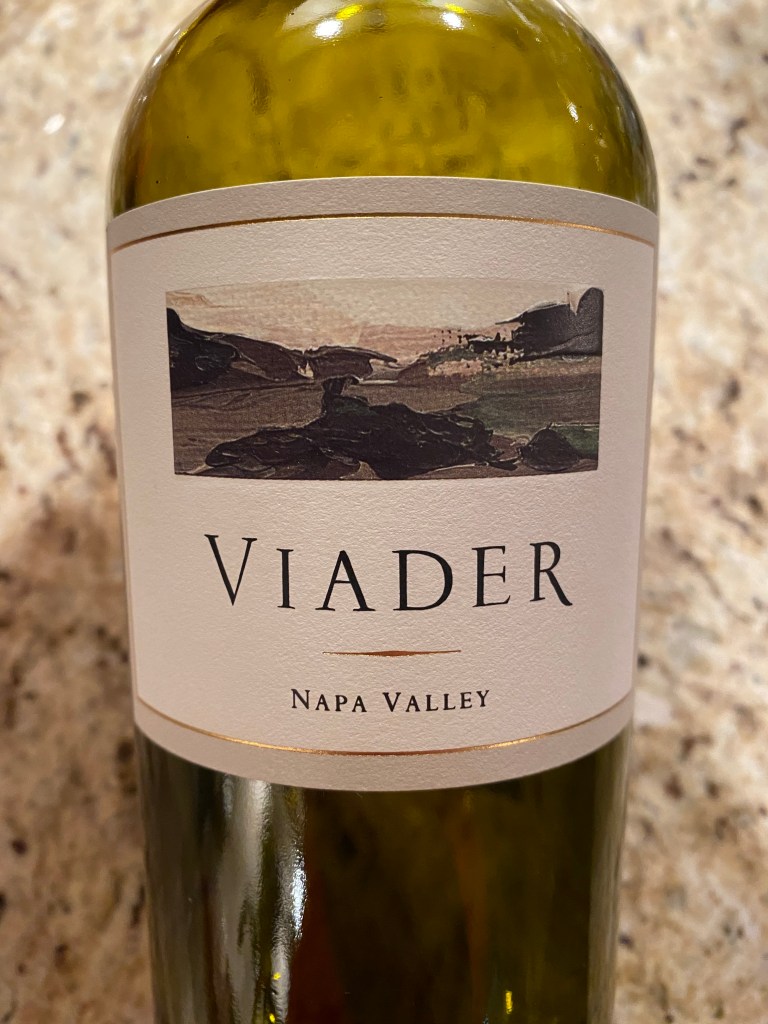
Today’s Story: Viader

Viader was founded in 1986 by Delia Viader (first commercial release in 1989) and is located on the slopes of Howell Mountain 1,300 feet above the Napa Valley floor. Delia was born in Argentina and came to the United States as a post-graduate student, and she holds a Doctorate in Philosophy from Sorbonne University in Paris and studied Business in the US at MIT. While Delia served as the founding winemaker of Viader, her son Alan later picked up the torch and acts as winemaker today. Alan started working in the vineyards at the age of 9 and pursued his passion for grape growing after high school by attending a program in Sonoma and attaining a Viticulture Management degree. In 2002 Alan became the vineyard manager at Viader and in 2006 the lead winemaker.

As winemaker, Alan is said to be more hands-on and an experimentalist. For instance, he tries a range of organic, biodynamic, and sustainable practices in farming the vineyards and producing wine, seeking to strike a balance to produce the highest quality wines possible. Additionally, Alan experiments in the cellars with different blends, yeasts, fermentations, and barrel options.

Viader produces relatively small quantities of wine across four bottlings. Their signature, the Viader Red Blend, is always a blend of Cabernet Sauvignon and Cabernet Franc and was 60% Cabernet Sauvignon and 40% Cabernet Franc in the 1989 inaugural release. They also have the Viader Black Label (a blend of Cabernet Sauvignon, Syrah, Cabernet Franc, and Merlot), Viader V (Cabernets Sauvignon and Petit Verdot), and DARE (Cabernet Franc).

Fun fact: For over a decade, Viader produced wines at Rombauer Vineyards prior to construction of their own winery. Back then, Rombauer functioned as a custom crush winery for many now-prominent Napa Valley vintners.

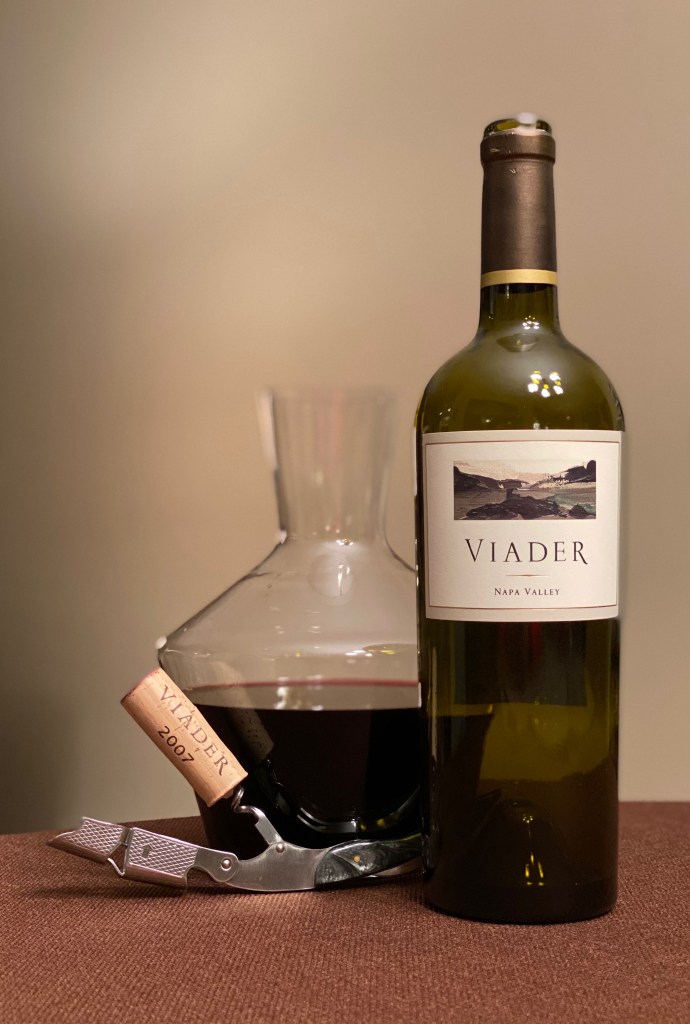
Today’s Wine: 2007 Viader Red Blend

71% Cabernet Sauvignon, 29% Cabernet Franc; 14.8% ABV

This wine is medium to deep ruby in color and almost completely opaque. I filtered and decanted this due to some fine sediment in the bottle, and the decanting helped a bit of the alcohol blow off the nose while bringing out some of the wine’s complexities. On the nose I get aromas of jammy blackberry, anise, cigar box, dark chocolate, vanilla, and oak. I can also notice the alcohol on the nose. Once in the mouth, the wine showcases flavors of chewy blackberry and blueberry, cola, cardamom, iron, dried earth, finely crushed rock, and green herbs. Overall a very silky wine, this is medium-bodied with medium (+) acidity and medium (+) tannins into a long finish with notes of sappy blackberry and plum. Still some time left for bottle aging, though I don’t see this getting any better from here.

Price: $100. I think there are better values out there at this price-point, whereas I could see this being more reasonably priced around the $70-75 mark. Pair this with beef in steak or burger form.