A Young and Exciting Project Out of Sonoma County

Today’s Story: Source & Sink

Source & Sink is a growing wine producer established in 2018 by Chicago natives Rande Feldman and Aaron Cherny. Rande has wine in his blood, having worked as a grower, winemaker, and cellar master over the years. Meanwhile Aaron comes from an Investment Banking background, though he left his Finance life behind to work harvest in Sonoma in 2017. Rande and Aaron met during this harvest experience, and the idea for Source & Sink spawned out of their desire to showcase the incredible wines of Sonoma through a new venture.

Rande and Aaron view starting in the vineyard as a necessity to making incredible wine, so they utilized their connections to source fruit from some of Sonoma’s great sites. Kimberly Vineyard is of special importance, not only for its gnarly old vines and plantings of Cabernet Sauvignon, Zinfandel, Syrah, Grenache, and Mourvèdre, but because Rande and Aaron have been able to spearhead farming in a transition to organic and biodynamic practices. The duo also sources from Liquid Amber, Hooley Vineyard, Bedrock Vineyards, and Benguerel Vineyard with an emphasis on organic farming and minimal intervention the name of the game. Rande and Aaron prize their old and often own-rooted vines, all while revitalizing varieties like Alicante Bouschet in a march forward for quality Sonoma wines. Meanwhile when it comes to harvest and winemaking, an emphasis is put on preserved natural acidity and the use of minimal intervention, amphora, and neutral oak to allow the wines to show their sense of variety and place.

Fun Fact: Source & Sink gets its name from the “positive flow of energy created by the vine’s sources that is later translocated to the vine’s points of interest known as sinks (i.e. roots, leaf tips, and fruit).”
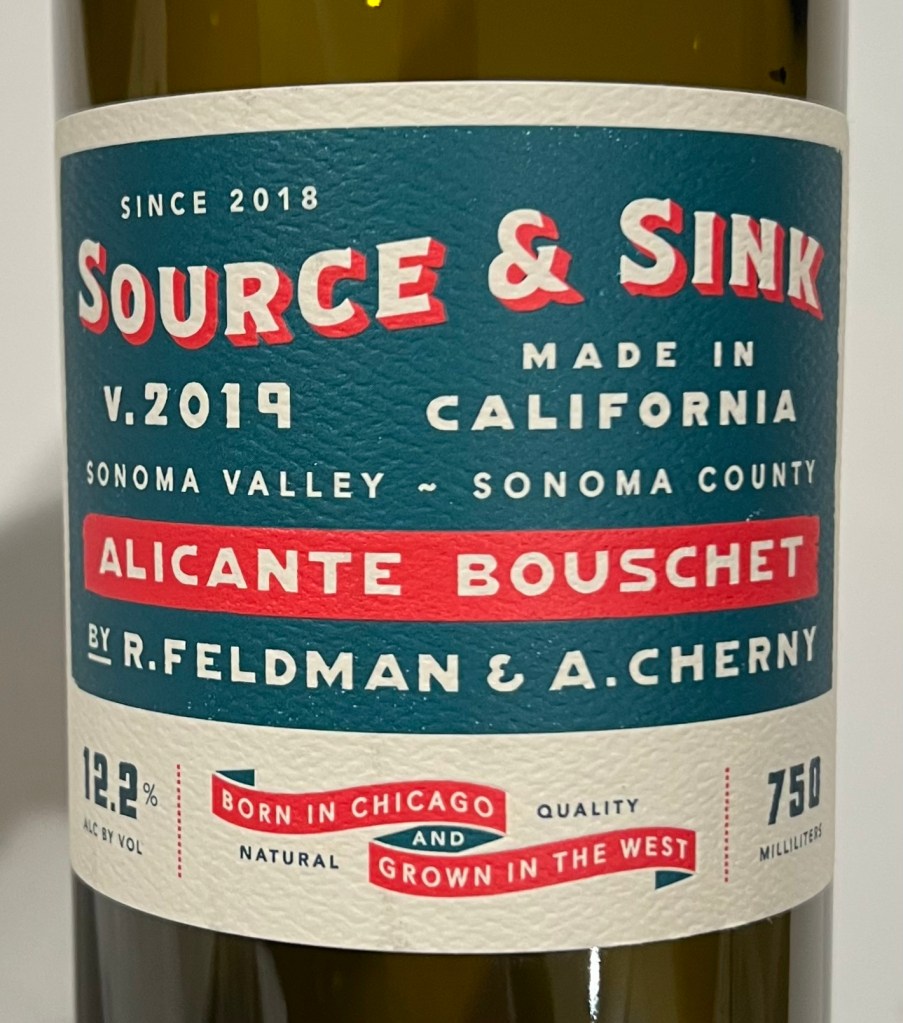
Today’s Wine: 2019 Alicante Bouschet

100% Alicante Bouschet; 12.2% ABV

The 2019 Alicante Bouschet is deep purple in color with deep ruby hues. I decanted this for 30-45 minutes and drank it over the following hour or so. The aromas are of medium intensity, with the nose offering up a bouquet of black cherry, brambleberry, black plum, blackcurrant, anise, charred green herbs, crushed rock, and black pepper. Meanwhile the flavors are also of medium intensity and the palate showcases notes of blackberry compote, black plum, black cherry, licorice, sweet tobacco, black pepper, and mineral. This dry red is medium-bodied with medium acidity, medium (+) tannin, medium alcohol, and a medium (+) length finish. A touch jammy but very well-balanced and a great representation of the variety. 74 cases produced.

Price: $35. This is a very fair price-point for this bottling, as it offers a restrained yet at the same time powerful representation of Alicante Bouschet. The 50% whole cluster fermentation shows a bit, offering added herbal and spicy complexities, while the aging in amphora and neutral oak allow the wine to show itself in transparent fashion. There is good balance, length, and depth here.

Perfect Holiday Bubbles From a Well-Known House

Today’s Story: Billecart-Salmon

Billecart-Salmon is a family-run Champagne house established in 1818 in Mareuil-sur-Aÿ through the marriage of Nicolas François Billecart and Elisabeth Salmon. Nicolas François, who handled the commercial aspects of the new Champagne house, brought his brother-in-law Louis Salmon on board to make the wines. 200 years later, the 7th generation of the Billecart family manages the house with the 6th generation still very much involved. Together they cultivate 100 hectares of vineyards across 40 crus of Champagne and an area of 300 hectares, the majority of which sits around Epernay. Billecart’s signature style comes largely from their fermentation process, which is accomplished in stainless steel tanks at lower temperatures to prolong fermentation and coax out delicate aromas and purity of fruit. All vinification occurs cru by cru and variety by variety, allowing each to maintain the unique expressions of the varying terroir. The house’s wines rest in chalk cellars dating to the 17th and 19th centuries, with the NV bottlings enjoying 3-4 years in the cellar and the vintage bottlings enjoying 10 years.

Last fall, I enjoyed reviewing their NV Champagne Brut Réserve.

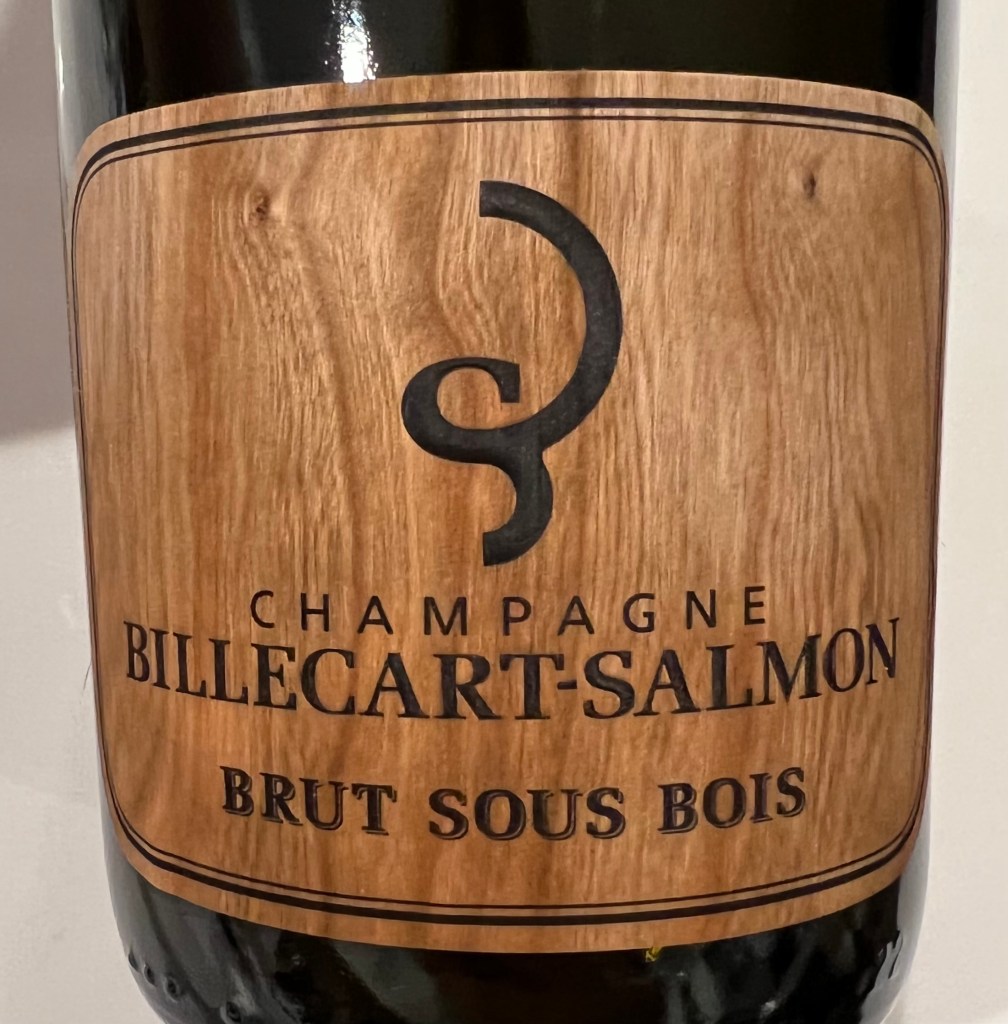
Today’s Wine: NV Brut Sous Bois

1/3 Chardonnay, 1/3 Pinot Noir, 1/3 Pinot Meunier; 12% ABV

The NV Brut Sous Bois is medium gold in color with delicate effervescence in the glass. Aromas are of medium intensity, with the nose showcasing notes of green apple, underripe pear, lemon curd, brioche, cheese rind, almond, and saline minerality. Flavors are also of medium intensity, with the palate displaying notes of pear, green apple, lemon and lime zest, chalk, almond, lightly salted butter, and vanilla cream. This dry Champagne is medium- to full-bodied with high acidity, medium alcohol, and a long finish.

Price: $80. I think this offers good value for its price-point, as it demonstrates solid depth, great acidity, and a lingering finish. This no doubt can strike up with some of the large houses priced higher, and it also drinks incredibly well compared to some of my favorite grower Champagnes in a similar price-point.

People-Pleasing Sonoma Coast Pinot Noir That May Need Time

Today’s Story: Auteur Wines

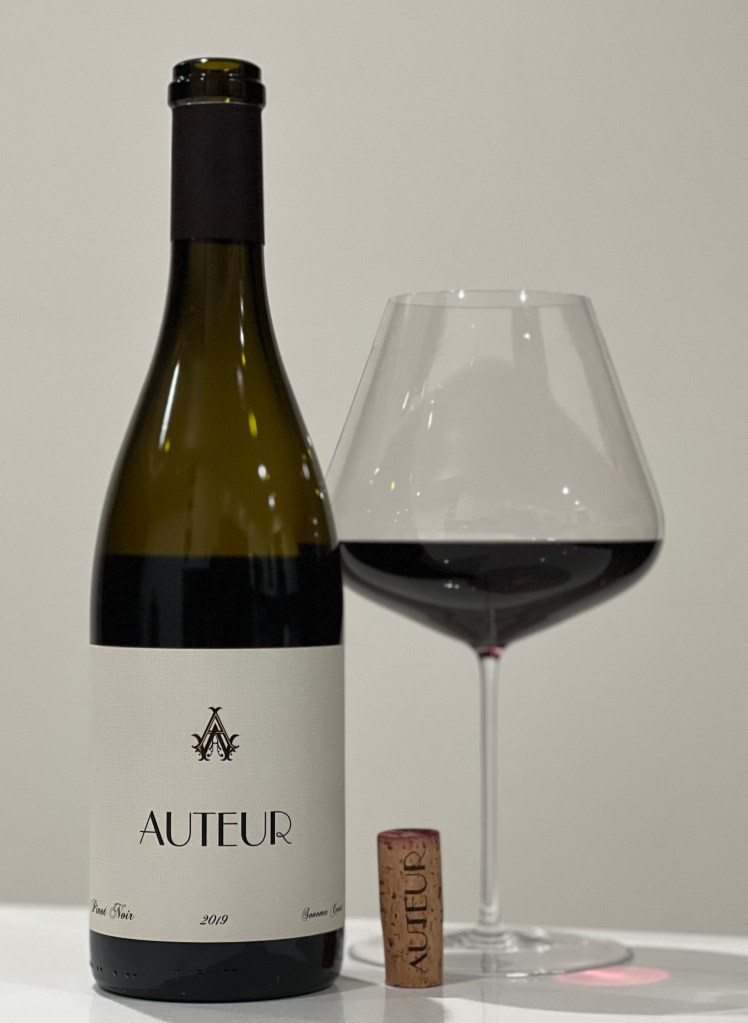
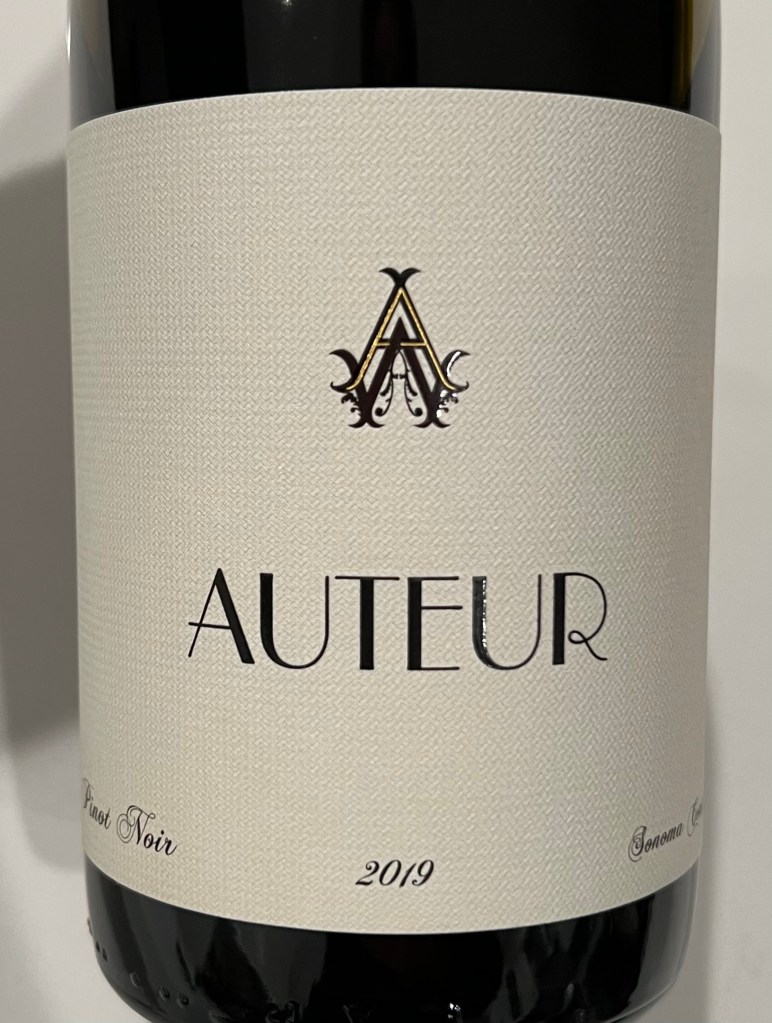
Auteur Wines, established in 2003, is a relatively small producer of Pinot Noir and Chardonnay in California’s Sonoma Coast. A family venture, Auteur is owned and operated by husband and wife Kenneth and Laura Juhasz. Kenneth found his passion for wine during college while working at restaurants and wine shops, ultimately falling in love with Pinot Noir and the endless possibilities of the variety. He worked harvests in the Willamette Valley, Napa, and New Zealand before starting Auteur with Laura. Laura, on the other hand, grew up in rural Wisconsin and worked in pharma when she met Kenneth in Oregon. Ultimately the two moved to Sonoma to start their passion project of making wine.

Auteur works closely with vineyard partners, sourcing from some of the greatest sites throughout the Sonoma Coast. While Gaps Crown, Ferrington, and Savoy may sound familiar for their Pinot Noir and Hyde for their Chardonnay, Auteur sources from other sites as well of equally incredible pedigree. I previously reviewed their 2012 Hyde Vineyard Chardonnay.

Today’s Wine: 2019 Sonoma Coast Pinot Noir

100% Pinot Noir; 14.5% ABV

The 2019 Sonoma Coast Pinot Noir is medium ruby in color. Given about 45 minutes to open up in the glass, this really starts to blossom. The aromas are of medium intensity, with the nose offering up notes of blackberry, black cherry, blueberry, smoked meat, lilac, cocoa powder, cola, and a hint of oak. Meanwhile the flavors are also of medium intensity and the palate displays notes of cherry cola, pomegranate, blueberry, purple florals, charred green herbs, chocolate, and baking spice. This dry red is medium- to full-bodied with medium acidity, medium (-) tannins, high alcohol, and a medium length finish. 482 cases produced.

Price: $50. Though this wine has many good qualities going for it and I believe consumers would enjoy it, I struggle to call it a good value at this price-point. At this stage it’s still out of balance a bit and, while fairly complex, the profile leans bigger and more fruit-driven than I tend to go for. I would also like to see a longer finish, though it is possible the wine as a whole just needs time.

Incredible Value From a Provence Red Blend

Today’s Story: Triennes

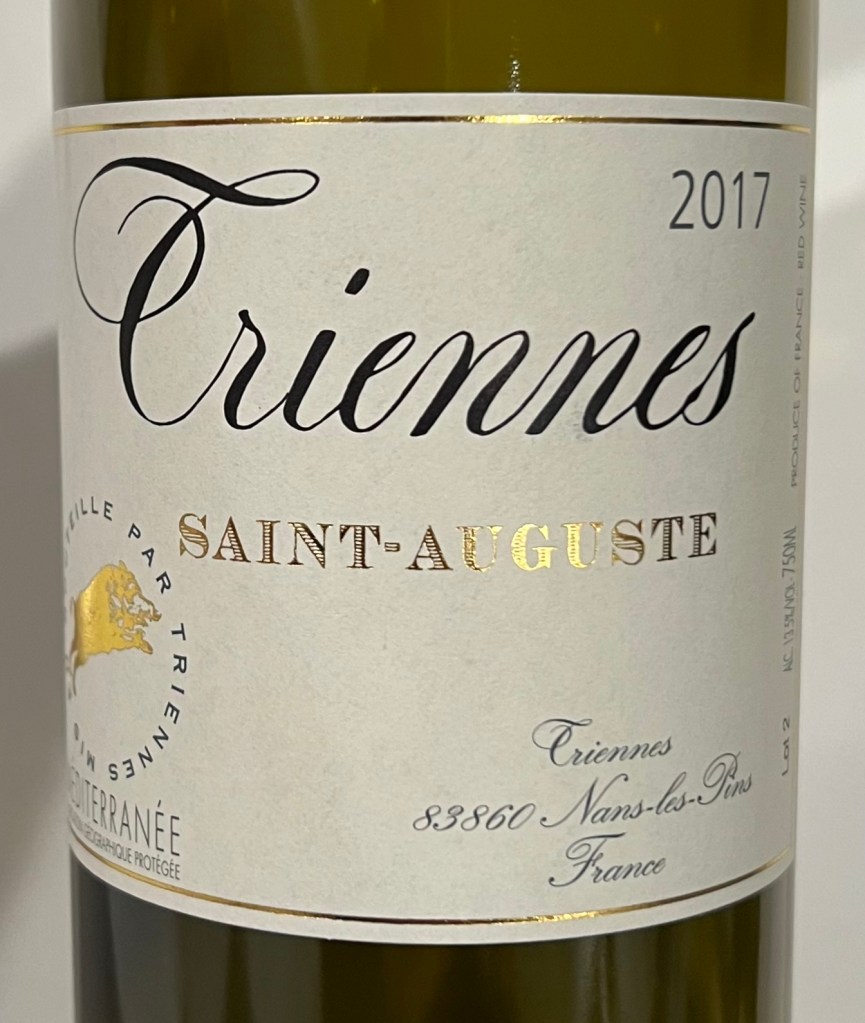
Triennes is a wine estate established in 1989 in Provence, France by Burgundy legends Jacques Seysses of Domaine Dujac and Aubert de Villaine of Domaine de la Romanée-Conti. Given their prowess in Burgundy, the duo became convinced that great wines of incredible quality could also be produced in the south of France when focus is put on the vineyards first and foremost. After they purchased their estate, Triennes underwent a massive replanting program to ensure the healthiest of vineyards, with vines and rootstocks specifically adapted to the local climate and microclimates. The vineyards are farmed as naturally as possible, with Ecocert organic certification following a transition that began in 2008.

As far as the Triennes wine portfolio goes, they produce three main wines of Saint Auguste Rouge (Syrah, Cabernet sauvignon, and Merlot), Viognier Sainte Fleur (Viognier), and a rosé (Cinsault blended with Grenache, Syrah, and Merlot). They also produce a Merlot, Les Auréliens Blanc (Chardonnay, Viognier, Vermentino, Ugni Blanc, and Grenache Blanc), and Les Auréliens Rouge (Syrah and Cabernet Sauvignon). I previously reviewed their 2020 Rosé.

Today’s Wine: 2017 Saint-Auguste Rouge

55% Syrah, 45% Cabernet Sauvignon; 13.5% ABV

The 2017 Saint-Auguste Rouge is deep ruby in color and completely opaque. I decanted this for about an hour which seemed about right at this stage. The aromas are of medium (+) intensity, with the nose showcasing surprisingly complex aromas of blackberry, black cherry, cassis, plum, violet, scorched earth, crushed rock, nutmeg, and clove. Meanwhile the flavors are also of medium (+) intensity and the palate displays notes of black cherry, blueberry, spiced plum, licorice, dried tobacco, cracked pepper, a hint of smoke, and clove. This dry red is medium-bodied with medium acidity, medium (+) but refined tannins, medium alcohol, and a medium (+) length finish.

Price: $18. I think this is an incredible value wine. For the price, it offers great depth, balance, and length while coming off rather elegant (at least partially due to aging in old Domaine Dujac barrels I imagine). Like their Rosé I reviewed previously, I suggest giving this a try.

Entry-Level Riesling From a Legendary Rheinhessen Producer

Today’s Story: Weingut Keller

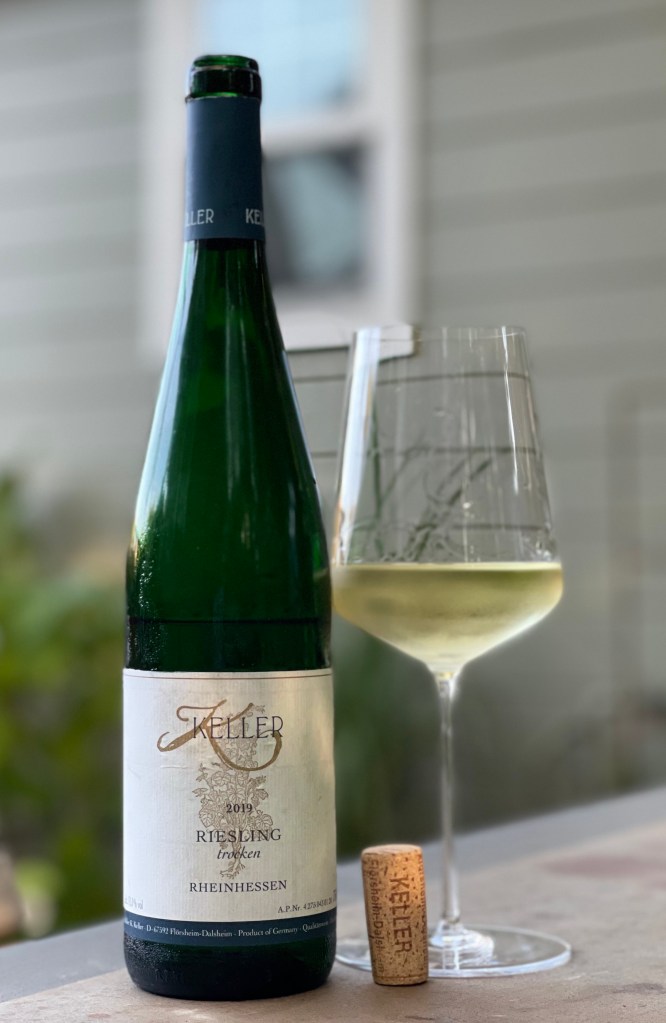
Weingut Keller is a highly-regarded German winery established in 1789 by Johann Leonhard Keller. Located in the Flörsheim-Dalsheim municipality of the Rheinhessen, Keller commenced with property in the remarkable Hubacker Vineyard that is now classified Erste Lage by the VDP. Though the Keller family business has quite a history, its current leader Klaus-Peter Keller catapulted the wines to new heights after taking over in 2001. Klaus-Peter studied oenology and viticulture in Geisenheim, though he cut his teeth working with wine in South Africa and at the incredible estates of Domaines Hubert Lignier and Armand Rousseau in Burgundy. Klaus-Peter, over the past couple decades, has helped revitalize the Rheinhessen as well by producing some of the most serious and highly sought-after Rieslings in the world. Working with the incredible sites of Hubacker, Bürgel, Kirchspiel, Morstein, and Abtserde coupled with his insatiable focus on vineyard work itself this is no surprise.

In terms of winemaking, Klaus-Peter made a few changes from his father but largely puts most of his focus in the vineyards themselves. One of the more pronounced changes in winemaking, though, is that now the Rieslings ferment more in old oak fuder versus stainless steel. Klaus-Peter also allows maceration of many of his white wines to last from 30-40 days before pressing the fruit and running the juice off into fuder. When possible, he also utilizes native yeast fermentation. For his higher level wines, like the Grosses Gewächs for example, he allows extended time on the lees before bottling. These wines are often held back longer before release as well, and generally command eye-popping prices.

Today’s Wine: 2019 Riesling Trocken

100% Riesling; 11% ABV

The 2019 Riesling Trocken is medium straw in color. The aromas are of medium (+) intensity, with the nose showcasing notes of lemon pith, lime zest, white peach, pear, white flower blossom, petrol, and slate. Meanwhile the flavors are also of medium (+) intensity and the palate displays notes of lemon, green apple, lime zest, stone fruit, honeysuckle, crushed rock, mild smoke, and mineral. This dry white is medium-bodied with high acidity, low alcohol, and a medium (+) length finish.

Price: $30. I think this is a very fair price-point for this bottling, though there is no denying there are better “values” out there closer to the $20 mark. That being said though, I’ve had the privilege of enjoying some of the Keller GG bottlings and this offers a nice glimpse into the prowess of Klaus-Peter for the price.

Fun and Refreshing White at a Great Value

Today’s Story: Au Bon Climat

Au Bon Climat is a Californian winery established by the late great Jim Clendenen in the Santa Maria Valley. Jim was born in 1953 in Akron, Ohio and he studied Pre-Law in undergrad at the University of California, Santa Barbara. During his junior year, Jim studied abroad in France and discovered his budding passion for wine. Once he graduated UCSB, Jim returned to France and spent time in Burgundy and Champagne before deciding to pursue a career in winemaking instead of going to law school. Jim became the assistant winemaker at Zaca Mesa Winery in 1978 before working three harvests across Australia and France in the 1981 vintage. In 1982, Jim established Au Bon Climat with business partner Adam Tolmach and his focus was on the Burgundy varieties of Pinot Noir and Chardonnay. Over the years Jim became an incredibly important beacon both for Santa Barbara County winemaking and the Central Coast of California as a whole. Au Bon Climat, under Jim, even became one of the leading wineries for Pinot Noir and Chardonnay throughout the US and beyond. Though Jim unfortunately passed away in his sleep earlier this year, his legacy shall last for decades to come.

Au Bon Climat sources fruit from some of the greatest vineyards in the Central Coast, most notably Bien Nacido Vineyard where they have some estate plantings. Bien Nacido Vineyard is the largest source for Au Bon Climat fruit, though Jim also purchased 100 acres in 1998 and named this other estate vineyard Le Bon Climat. Le Bon Climat sits directly across the Santa Maria Valley from Bien Nacido and is planted primarily to Pinot Noir, Chardonnay, and Viognier. The last of the estate vineyards is Rancho La Cuna, which consists of 20 acres in the Los Alamos Valley planted to Syrah, Viognier, Grenache, Grenache Gris, Chenin Blanc, and Pinot Noir. In addition to these sites, Au Bon Climat purchases fruit from the renowned vineyards of Runway Vineyard, Sanford & Benedict Vineyard, Los Alamos Vineyard, Sierra Madre Vineyard, and Talley Vineyards.

The winemaking at Au Bon Climat offers a nod to the Old World, with Jim wanting to bring what he learned in Burgundy to California’s Central Coast. These wines are meant to showcase their unique terroir in a most transparent fashion, following winemaking techniques that yield balance and restraint versus over-extraction, higher alcohol, and lacking acidity.

Today’s Wine: 2020 Pinot Gris – Pinot Blanc

60% Pinot Gris, 40% Pinot Blanc; 13% ABV

The 2020 Pinot Gris – Pinot Blanc is pale gold in color. The aromas are of medium intensity, with the nose showcasing notes of lemon peel, yellow apple, white peach, honeysuckle, flint, saline mineral, and oyster shell. Meanwhile the flavors are also of medium intensity, and the palate displays notes of white peach, lemon zest, pear, cantaloupe, sea salt, almond, and dried gravel. This dry white blend is medium-bodied with high acidity, medium alcohol, and a long finish.

Price: $15. I think this wine offers exceptional value at this price-point, for it is crisp, refreshing, and downright enjoyable while also displaying solid depth, great balance, and impressive length.

Strong Value Proposition From a Stalwart of German Riesling

Today’s Story: Weingut Dr. Loosen

Weingut Dr. Loosen is a storied wine producer located just outside Bernkastel in the Mosel region of Germany. The winery has been in the Loosen family for over 200 years, making them one of the most well-known producers of Riesling not only throughout Germany but throughout the world. The winery and vineyards came to Ernst “Erni” Loosen in 1988, and he immediately set about improving the quality of wines that ungrafted 60+ year-old vines in some of the Mosel’s best vineyards can produce. Erni believes that great wine should be both a sensual and intellectual pleasure, with each bottle showcasing the unique terroir, passion of the winemaker, and a snapshot of history. This philosophy feeds through to his winemaking style, where Erni strives to balance traditional and family-honed winemaking practices with experimental studies (such as time on lees) to make the best and most transparent wine possible. Nonetheless, all the Dr. Loosen wines ferment spontaneously in wooden barrels and see a minimum of 12 months on lees with no racking and no bâttonnage so as to not add excess weight or cover any nuances provided by the variety or site.

Dr. Loosen has been part of Germany’s VDP (Verband Deutscher Prädikatsweingüter) since 1993, showcasing the incredible pedigree of their vineyards. What’s more, seven of the Dr. Loosen vineyards are designated VDP Grosse Lage (Grand Cru) and these wines are bottled as single vineyard bottlings since 1988. Any other wines produced by Dr. Loosen are labeled Estate or Village Rieslings. The vineyard sites under the Dr. Loosen umbrella include Bernkasteler Lay, Bernkasteler Johannisbrünnchen, Graacher Himmelreich, Graacher Domprobst, Wehlener Sonnenuhr, Ürziger Würzgarten, Erdener Treppchen, and Erdener Prälat. As a whole, the variety breakdown is 98% Riesling and 2% Pinot Blanc.

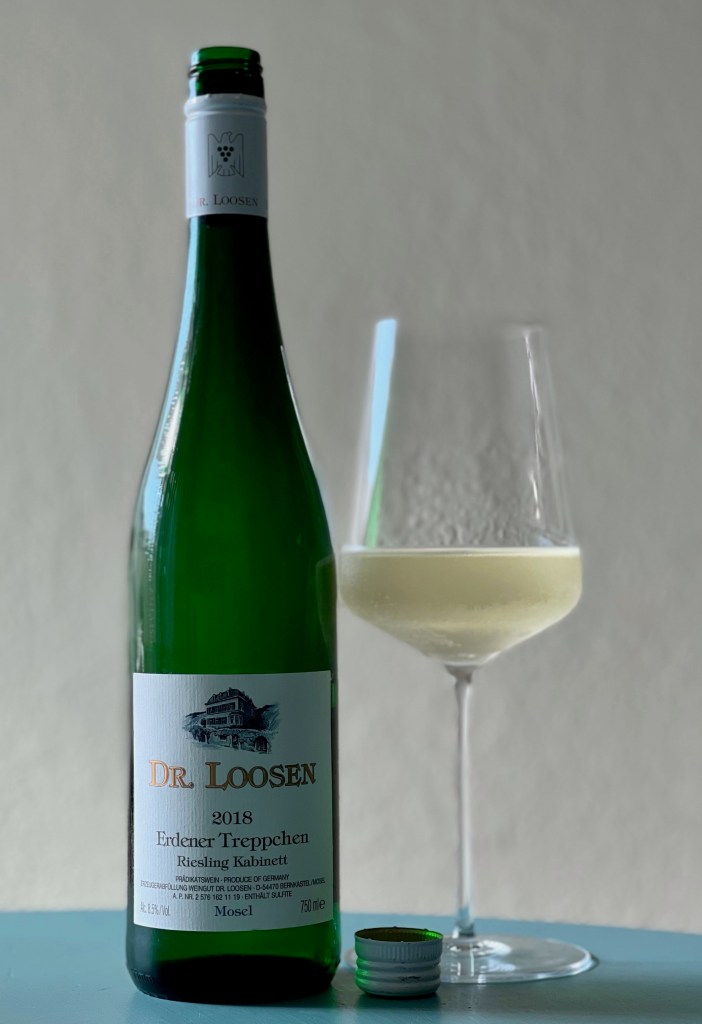
Today’s Wine: 2018 Erdener Treppchen Riesling Kabinett

100% Riesling; 8.5% ABV

The 2018 Erdener Treppchen Riesling Kabinett is medium straw in color. This takes some time in the glass to blossom, but once it does the aromas are of pronounced intensity and the nose showcases notes of green apple, pear, white peach, orange zest, chamomile, honey, and saline mineral. Meanwhile the flavors are of medium (+) intensity, with the palate displaying notes of green apple, lime, ripe pear, nectarine, white florals, and stony mineral. This medium sweet white is medium-bodied with high acidity, low alcohol, and a medium (+) length finish. Very good and a serious bottling for Kabinett.

Price: $25. I think this offers solid value. While there are cheaper Rieslings around the $15-18 range that I’ve enjoyed about as much as this one, the balance, intensity, and length certainly showcase the high quality here especially relative to all the Riesling I’ve tried.

Could This Be California’s Best Syrah?

Today’s Story: Colgin Cellars

Colgin Cellars is a relatively small “cult” winery established by Ann Colgin in the Napa Valley in 1992. After falling in love with the valley by attending the Napa Valley Wine Auction in 1988, Ann purchased fruit from the highly-regarded Herb Lamb Vineyard in 1992 and released her first vintage in 1995. Shortly thereafter, Ann purchased what became her Tychson Hill Vineyard which was originally planted to vine in 1861 before it was torn up during Prohibition. Ann replanted 3.5 acres of Tychson Hill in 1997 with the help of David Abreu, and the site gets its name from Josephine Tychson who farmed the property in its early days and was the first female vintner in the Napa Valley. Ann expanded in 1998 when she and her future husband, Joe Wender, purchased a 125 acre property that would ultimately become the site of the winery and Colgin’s IX Estate Vineyard.

Colgin produces four main wines and recently began bottling a “second label” meant to be more approachable in its youth. Though Colgin ceased production of the Herb Lamb bottlings in the late 1990s, the first of the main three current Cabernet wines came about in 1999 and is named Cariad. Cariad is a blend of Cabernet Sauvignon, Cabernet Franc, Merlot, and Petit Verdot with the fruit coming from vineyards owned by David Abreu. Next came the first vintage of Tychson Hill in 2000, which is a pure Cabernet Sauvignon bottling and often the most elegant of the Colgin portfolio. The IX Estate had its first vintage in 2002, and it is a blend of Cabernet Sauvignon, Merlot, Cabernet Franc, and Petit Verdot. Colgin’s IX Estate Syrah also had its first vintage in 2002, wrapping up the four “Crus” of Colgin Cellars and meant to showcase Ann and Joe’s love of Northern Rhône wines. Completing the Colgin portfolio is Jubilation, a “second wine” that really isn’t a second wine in the eyes of Colgin’s production team. With its first vintage in 2016, Jubilation is created with barrels that demonstrate earlier drinking characteristics and the bottling provides a nice viewpoint into the Crus at a lower price-point.

I’ve had the incredible pleasure of enjoying each of the Colgin wines through several vintages, and visited the property earlier this year. While I can say the wines are truly a class of their own, the incredible tannin quality of each bottling sticks in my memory the most vivid. To learn more about Colgin, I encourage you to visit their website here.

Today’s Wine: 2015 IX Estate Syrah

100% Syrah; 15.4% ABV

The 2015 IX Estate Syrah is deep purple in color, but opaque and nearly black. Given some time to open up, the aromas are of medium (+) intensity and the nose showcases notes of blackberry, blueberry, black cherry, plum, violet, clay, mild baking spice, cracked pepper, and a hint of smoke. The flavors are also of medium (+) intensity, while the palate displays gorgeous notes of blueberry, blackberry compote, spiced plum, black raspberry, violet, smoked meat, a touch of chocolate, and black pepper. This dry red is full-bodied with medium (+) acidity, medium (+) but ultra fine-grained and silky tannins, high alcohol, and a long finish. This is an outstanding wine.

Price: $350. At this price-point value is difficult to discuss, as there are endless options out there for less money and of nearly this high quality. This being said though, this is perhaps the greatest Syrah I’ve had to date from California and the balance is truly incredible given the alcohol level and youth. I hope I get to taste this again years down the road.

A Taste of Friuli in the Napa Valley

Today’s Story: Ryme Cellars

Ryme Cellars was established in 2007 by husband and wife team Ryan and Megan Glaab. Ryan and Megan met while both working harvest at Torbreck Winery in Australia, and since then between the two of them they’ve held positions at Pax Wine Cellars, Peay Vineyards, Sine Qua Non, and Marcassin. Ryan and Megan started Ryme with one ton of Aglianico, later expanding into Vermentino, Ribolla Gialla, Cabernet Sauvignon, and Cabernet Franc. Most recently they even added Chardonnay and Pinot Noir to the portfolio. The Ryme wines are those that Ryan and Megan like drinking, both by variety and style standards. Their fruit comes from sustainably- or organically-farmed vineyards, and winemaking is rather simple without cultured yeasts, temperature control, or added enzymes. Most of the reds ferment whole cluster while most of the whites ferment on the skins, and aging occurs in used French oak barriques before bottling unfined and unfiltered.

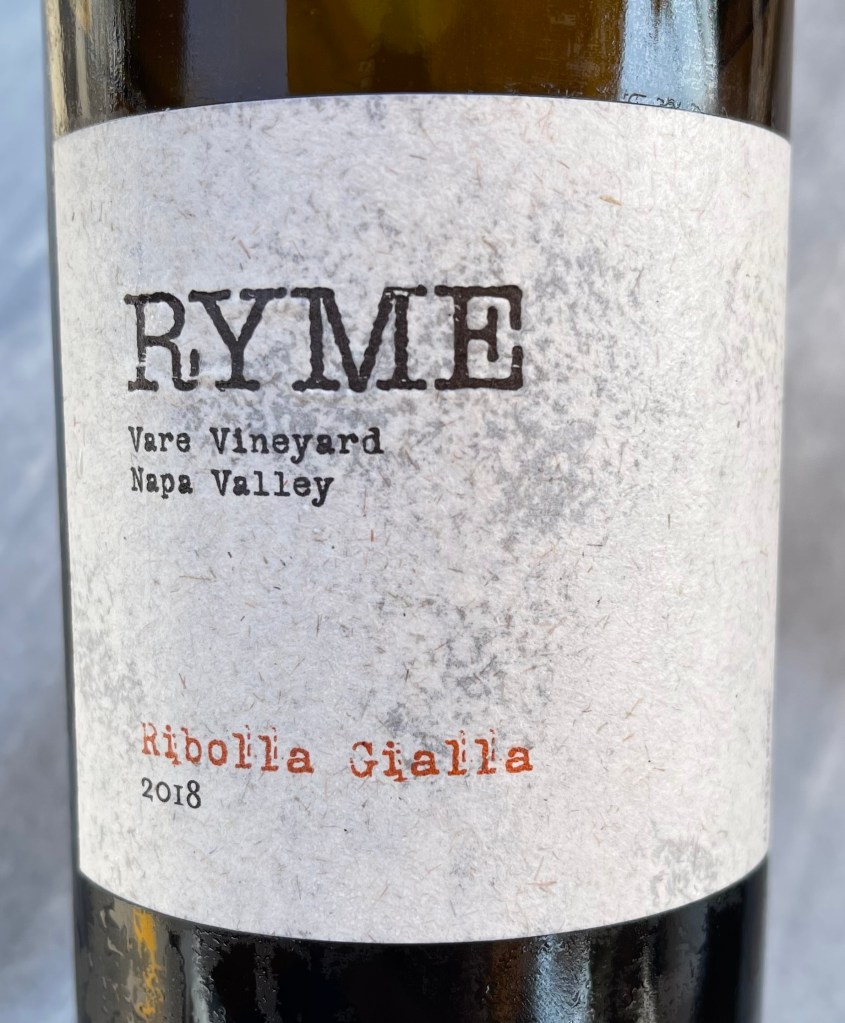
Today’s Wine: 2018 Ribolla Gialla

100% Ribolla Gialla; 13.6% ABV

The 2018 Ribolla Gialla is pale amber in color. The aromas are of medium intensity, though I don’t find the nose to be incredibly complex as it offers up notes of peach skins, mandarin orange, honeysuckle, thyme, and some stony minerality. Meanwhile the flavors are also of medium intensity, with the palate displaying notes of bruised golden apple, peach, apricot, tangerine, white pepper, and thyme. This dry amber wine is medium-bodied with medium acidity, low tannins, medium alcohol, and a medium length finish.

Price: $35. This is a very fun wine to try, though for the price tag there are better values out there. While it’s not incredibly complex and the finish is cut shorter than I would like, this was an enjoyable bottling and I would buy it again if at the very least to spice up my California wine selections.

Fun and Uncommon White From a Napa Valley Legend

Today’s Story: Corison Winery

Corison Winery is a relatively small, family-run winery established in 1987 by winemaker Cathy Corison and her husband William Martin. Cathy fell into winemaking somewhat by chance, thanks to a wine course she stumbled into while studying Biology at Pomona College. After graduation she moved to the Napa Valley and later received her Enology degree with UC Davis before working harvest at Freemark Abbey in 1978. Throughout the 1980s Cathy worked in winemaking at Chappellet Vineyard, ultimately starting Corison Winery through custom crush in 1987. William, on the other hand, worked as an architect before meeting Cathy in 1990 and moving to the Napa Valley. He spearheaded the purchase of the Kronos Vineyard in 1995, and designed the winery which broke ground there in 1999. Today William helps with IT and accounting while Cathy runs winemaking, however both are heavily involved in all aspects of the winery (especially during harvest).

Corison Winery at its core is a Cabernet Sauvignon house. However, Cathy’s wines are not entirely common relative to her neighbors in that she focuses on producing restained, elegant, and “old school” wines. Cathy’s fruit is generally harvested earlier to preserve some natural acidity and to avoid over-ripeness, resulting in Cabernet that is relatively lower in alcohol and built for the long haul. A step further, Cathy’s winemaking is largely non-interventionist which allows the wines to showcase its fruit with a sense of place. Corison produces three main wines, including the Kronos Vineyard Cabernet Sauvignon, Sunbasket Vineyard Cabernet Sauvignon, and an appellation wine labelled Corison Cabernet Sauvignon. She later started making a Helios Cabernet Franc from the Sunbasket Vineyard, and produces a rosé and Gewürztraminer under her second label called Corazón.

I previously reviewed the 2008 Kronos Vineyard Cabernet Sauvignon.

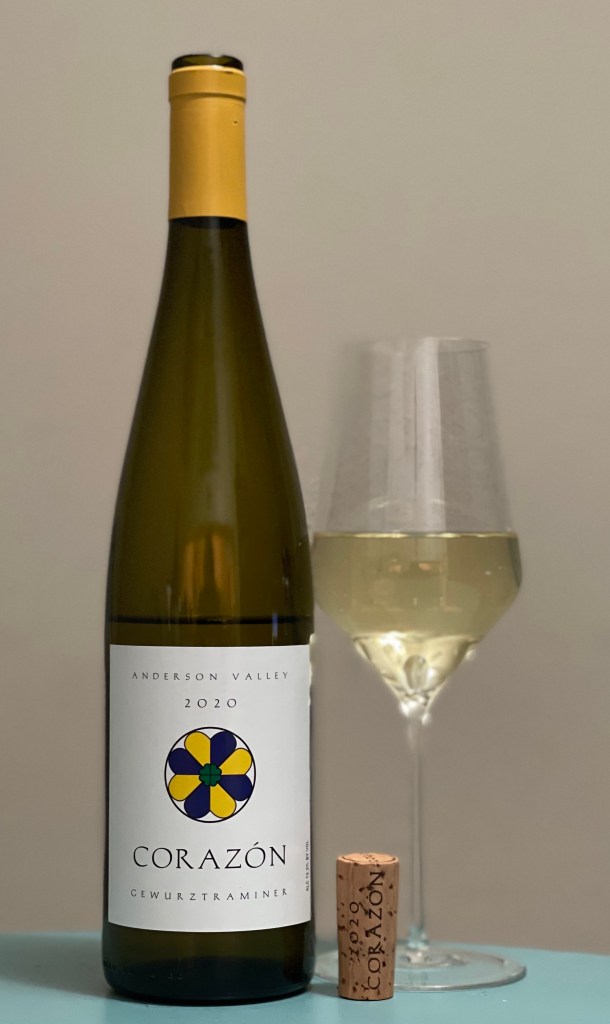
Today’s Wine: 2020 Corazón Gewürztraminer

100% Gewürztraminer; 13.3% ABV

The 2020 Corazón Gewürztraminer is pale straw yellow in color and completely transparent. Aromas are rather delicate and of medium intensity, with the nose showcasing notes of lychee, grapefruit, lime zest, pear, ginger, rose petal, and wax. Meanwhile the flavors are also of medium intensity, and the somewhat spicy palate displays notes of ginger, lychee, pear, grapefruit zest, lemon pith, white pepper, and white florals. This dry white is medium-bodied with medium acidity, medium alcohol, and a medium length finish.

Price: $40. While the quality level here is good and it’s fun to try a California Gewürztraminer, I struggle to call this a strong value given many of the options coming out of Germany and Alsace, France. This is fun to try at the estate during the tasting, but Corison’s magic truly comes with the Cabernet Sauvignon bottlings.