Beautiful but Youthful 2014 Bordeaux With Decades of Life Ahead

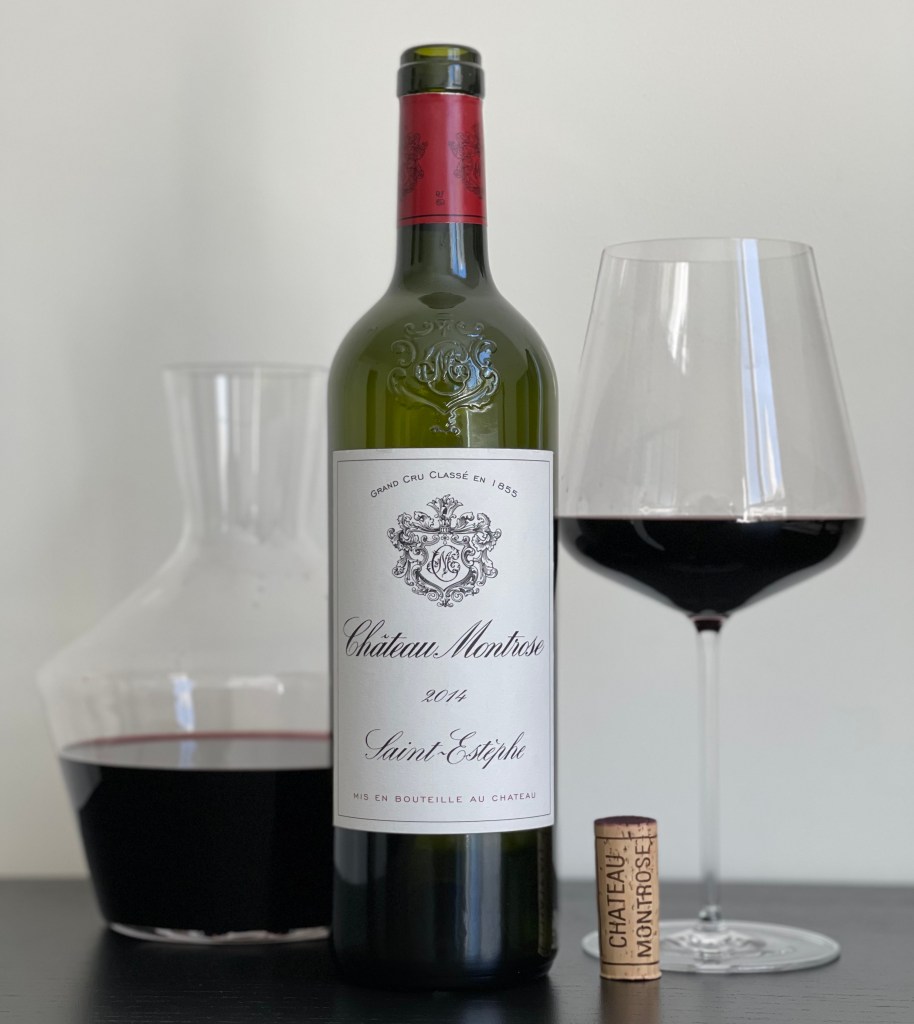
Today’s Story: Château Montrose

Château Montrose is a historical Bordeaux wine estate located in Saint-Estèphe on Bordeaux’s Left Bank. The estate was established in 1815 by Etienne Théodore Dumoulin on a patch of land his family purchased from Nicolas Alexandre de Ségur, but it was largely forgotten. At the time of Etienne’s death in 1861, the estate spanned 95 hectares though his heirs sold it in 1866 to factory owner Mathieu Dollfus who quickly redeveloped and modernized the buildings and winery with the best technology of the time. One of Mathieu’s most interesting achievements, in my opinion, was the construction of a windmill to pump water aboveground and flood the estate which ultimately saved much of the vineyards from phylloxera. After Mathieu passed away in 1886, the estate fell to the Charmolüe family who, from 1896 to 2006, guided Château Montrose through wars and financial crises while crafting some of the best vintages and providing stability. Martin and Olivier Bouygues acquired the estate in 2006 and engaged in a massive renovation project, propelling Château Montrose to ever increasing heights for decades down the road. Montrose, one of fourteen Deuxièmes Crus (Second Growths) in the Bordeaux Wine Official Classification of 1855, produces world-class wines and even placed third with their 1970 vintage in the Judgment of Paris in 1976.

I previously wrote about Château Montrose when I reviewed the 2016 La Dame de Montrose and the 2012 Château Montrose, so feel free to revisit those tasting notes if you would like to compare them to today’s wine.

Today’s Wine: 2014 Château Montrose

61% Cabernet Sauvignon, 30% Merlot, 8% Cabernet Franc, 1% Petit Verdot; 13.5% ABV

The 2014 Château Montrose is deep ruby in color and completely opaque. This is incredibly tight, so I decanted it for 10 hours and drank it over the following two hours. Even when I checked in at the five hour mark it was still pretty tight. Aromas are of pronounced intensity and patience is rewarded, however, as the nose showcases aromas of crème de cassis, wild blackberry, spiced black plum, cigar box, pencil shavings, crushed violet and lavender, scorched earth, graphite, eucalyptus, cedar, and a touch of oaky spice. Flavors are also of pronounced intensity, with the palate displaying notes of blackberry, black plum, blackcurrant, tobacco, anise, graphite, iron, charred green herbs, chocolate, and vanilla. This dry red is full-bodied with high acidity, high but tightly-knit tannins, medium alcohol, and a long finish. I suggest cellaring this for another 5 years or so, then drink over the following two decades. Very tense and precise.

Price: $150. Though not inexpensive, this bottle offers solid value in my opinion especially compared to stronger vintages like 2015 and 2016 that push closer to or above $200. This is another example of the underrated 2014 vintage showing incredibly well, though patience will be strongly rewarded with this one.

California’s Best Take on Burgundy

Today’s Story: Calera Wine Company

Calera Wine Company is a very highly regarded wine estate established in 1975 by Josh Jensen. Located in the Mt. Harlan AVA in San Benito County on California’s Central Coast, Calera consists of several single-vineyard holdings known for their Pinot Noir. Josh picked up a passion for winemaking and Pinot Noir working harvests in Burgundy, first with Domaine de la Romanée-Conti and then with Jacques Seyesses at Domaine Dujac. His mentors taught him that Pinot Noir and Chardonnay are best planted in limestone soils, so when he returned to the US Josh searched for land with excellent vineyard potential and, most importantly, limestone. Josh purchased his ideal property in 1974, later planting 24 acres of Pinot Noir in 1975 and producing his first vintage in 1978.

Today Calera produces six single-vineyard Pinot Noirs from Selleck Vineyard (4.8 acres), Reed Vineyard (6.04 acres), Jensen Vineyard (13.8 acres), Mills Vineyard (14.4 acres), Ryan Vineyard (13.1 acres), and de Villiers Vineyard (15.6 acres). They also produce Chardonnay (10.4 total acres), Viognier (2.2 total acres), and Aligoté (0.2 total acres). With an average elevation of 2,200 feet above sea level and coastal influences from the Monterey Bay, Calera’s vineyards are some of the coolest climate sites in the entire state of California. These vineyards are certified organic, and much of the work (including harvest) is done entirely by hand.

Minimal intervention winemaking is the name of the game at Calera, as both Josh and his winemaker Mike Waller share a philosophy of producing terroir-driven wines that are both elegant and incredibly age-worthy. This begins with the structure of the winery itself, which is designed to be entirely gravity-flow and is set across seven distinct levels built into the mountainside. There’s a great schematic of the winery here, as you can clearly tell minimal handling of the fruit and wines is of utmost importance. Calera also utilizes high percentages of whole-cluster fermentation with only native yeasts, and the wines experience little to no pumping to preserve purity and focus. The wines are not racked while they age, which is done using modest percentages of new oak (around 30%) to preserve the variety’s characteristics and wine’s sense of place. The wines are bottled unfiltered but lightly fined after 16 months of aging for the single-vineyard Pinot Noir.

Today’s Wine: 2010 Jensen Vineyard Pinot Noir

100% Pinot Noir; 14.1% ABV

The 2010 Jensen Vineyard Pinot Noir is deep garnet in color and opaque. I let this open up in the glass for 30-45 minutes, which helped to bring out the more nuanced aroma characteristics. The aromas are of medium intensity, but the nose is rather complex and showcases aromas of black cherry, plum, licorice, dried violets, cigar box, forest floor, truffle, garden herbs, and a hint of baking spice. The flavors are also of medium intensity, and the palate displays notes of black raspberry, muddled strawberry, fig, black cherry, tobacco, leather, mild mushroom, and green herbs. Dry and medium-bodied with medium (+) acidity, medium (-) tannins, high alcohol, and a long finish. This is in a great spot right now, but certainly has the legs to go another 3-5 years.

Price: $75. While this is on the pricier end for California Pinot Noir, I believe it’s worth every penny and I’d even argue it offers solid value. This is a wine that frequently stands up to the great wines of Burgundy, and its balance, complexity, length, and age-worthiness are profound.

Long-Lived Mosel Riesling Showing No Signs of Slowing Down

Today’s Story: Weingut Joh. Jos. Prüm

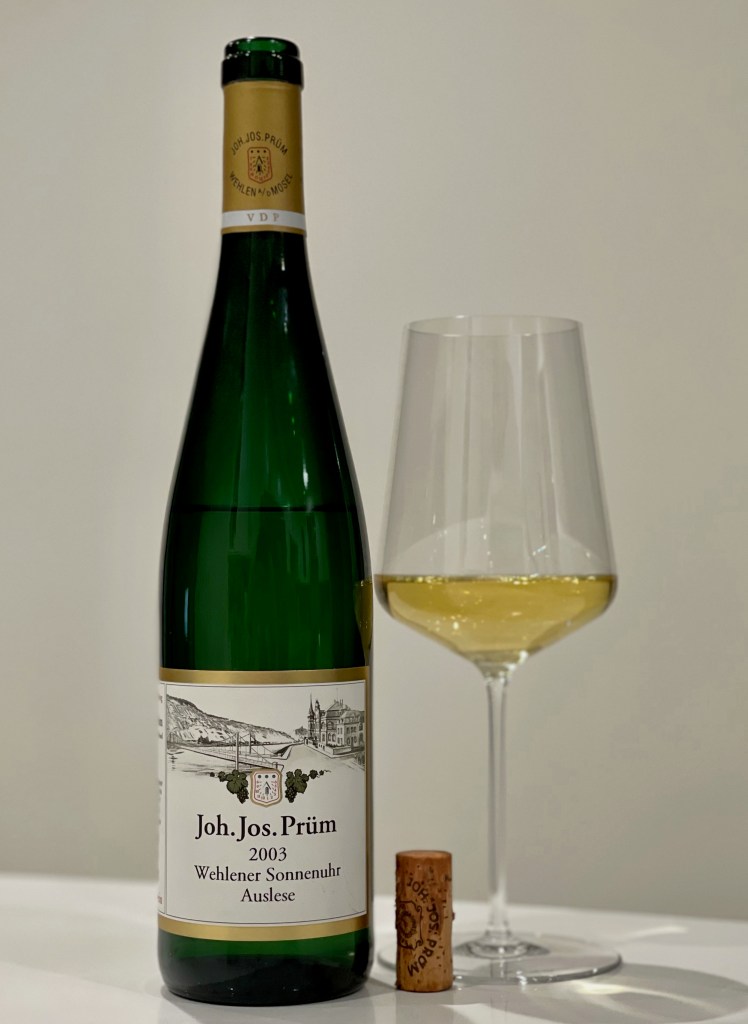
Joh. Jos. Prüm, situated in the village of Wehlen on the banks of the Mosel in Germany, is one of the most highly-regarded wine estates in the region and perhaps all of Germany. Though the Prüm family lived in Wehlen back to the year 1156, the estate as we know it today started to take shape during the 1800s under Sebastian Alois Prüm. Joh. Jos. Prüm itself, however, was established in 1911 when Johann Josef Prüm received part of the family estate which was split between him and his siblings. Joh. Jos. Prüm wasn’t in the greatest of health when his son Sebastian took over in 1920, and it again passed to Sebastian’s son Dr. Manfred Prüm in 1969. Joh. Jos. Prüm remains a family estate to this day, as Manfred’s oldest daughter Katharina now runs the show with minimal but ready input from her father.

The Joh. Jos. Prüm estate consists of about 14 hectares (35 acres) of vineyards, with important holdings in Wehlener Sonnenuhr, Graacher Himmelreich, Zeltinger Sonnenuhr, and Bernkasteler Badstube. The Prüms exclusively produce Riesling in a range of styles, and an amazing 70% of their vines are ungrafted. The winemaking style here is rather traditional and harvest occurs on the later-end, ultimately resulting in wines that are delicate and restrained yet incredibly long-lived. Annual production typically hovers around 13,000 cases, and these are highly prized and collectible wines once they hit substantial levels of bottle age.

Today’s Wine: 2003 Wehlener Sonnenuhr Riesling Auslese Goldkapsel

100% Riesling; 7% ABV

The 2003 Wehlener Sonnenuhr Riesling Auslese Goldkapsel is medium gold in color. The aromas are gorgeous and of pronounced intensity, with the nose showcasing apricot, peach, yellow apple, pear, honeysuckle, petrol, dried herbs, and slate. Flavors are also of pronounced intensity, and the palate displays notes of mango, peach, apricot, dried pineapple, chamomile, honey, vanilla cream, almond, and saline mineral. This sweet Riesling is medium- to full-bodied with high acidity, low alcohol, and a long finish. Outstanding bottle of wine that has at least 10 years left to improve and probably another decade after to drink.

Price: $120 (I got it for $75). This actually offers very, very solid value given the age, intensity, balance, and length of the wine. It’s an absolutely beautiful bottle, and I got it for a steal of a price.

Elegant Yet Powerful Aussie Bush Vine Grenache

Today’s Story: Yangarra Estate Vineyard

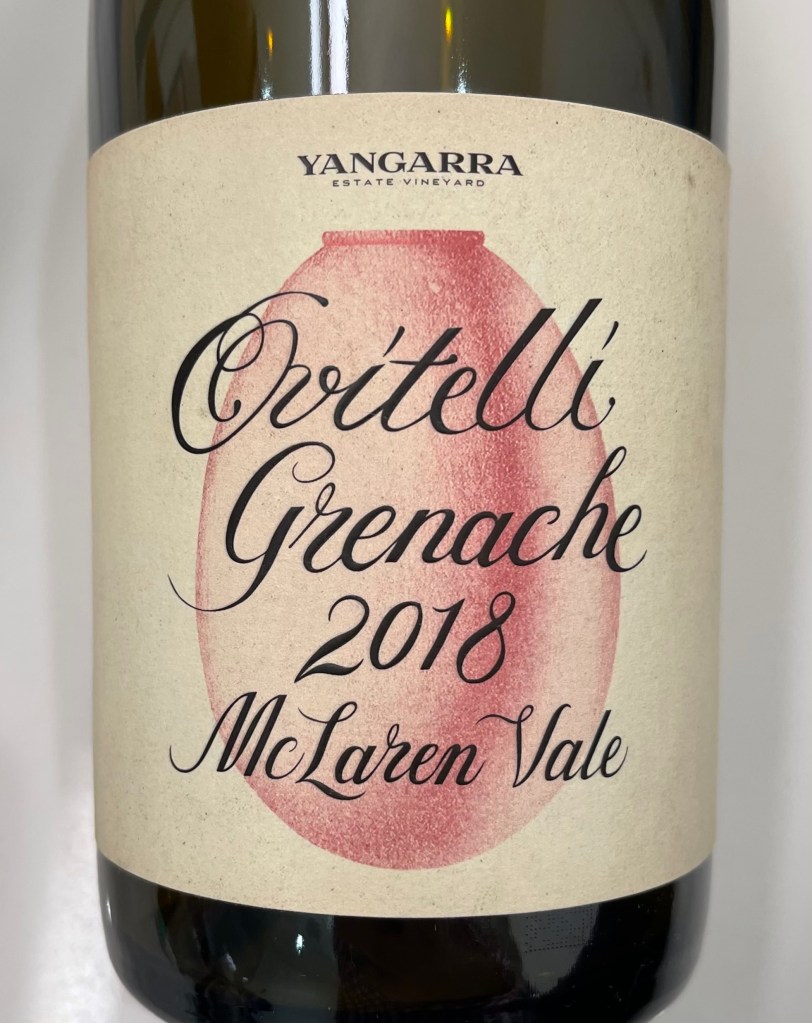
Yangarra Estate Vineyard is a single-vineyard Australian wine estate established in 1946 in the Blewitt Springs district of McLaren Vale, South Australia. The vineyard was planted by Bernard Smart and his father with unirrigated bush vine Grenache, and this fruit became highly coveted by local winemakers for years to come. The property totals 170 hectares (420 acres), though only 90 hectares (222 acres) of it are planted to vine and Grenache is the signature variety. There are also plantings of Shiraz, Roussanne, Grenache Blanc, Bourboulenc, Picpoul Noir, Clairette Blanc, and Counoise. Yangarra farms their vineyard adhering to organic and biodynamic principles, a practice they began in 2008 and received certification for in 2012. Yangarra’s viticultural philosophy helps improve the quality and sense of place in their fruit, which transfers to a winemaking philosophy that is both gentle but characterized by incredible attention to detail. Yangarra’s wines ferment spontaneously with natural yeasts, and they use a combination of amphoras, ceramic eggs, and large format oak foudres with the end result being wines that are true to variety and true to the terroir.

Today’s Wine: 2018 Ovitelli Grenache

100% Grenache; 14.5% ABV

The 2018 Ovitelli Grenache is pale ruby in color and nearly transparent. I decanted this for about an hour and drank it over the following 2 hours, though it didn’t really change a ton with air. The aromas are of medium intensity, with the nose showcasing strawberry, baked cherry, pomegranate, licorice, leather, and clay. The flavors are also of medium intensity, and the palate displays notes of baked plum, wild raspberry, blood orange, licorice, and dried green herbs. This dry red is medium- to full-bodied with medium (+) acidity, medium tannins, high alcohol, and a long finish. This is a very fresh Grenache but it has a restrained power to it, and while it’s not incredibly complex right now it should develop nicely and is already very well-balanced.

Price: $50. For the price, I don’t think I can argue this is a great value wine but I would contend this is definitely worth the $50. It’s young no doubt, but this is already showcasing an elegance and quiet power that will bring pleasure for years to come. Very enjoyable.

Lebanese White Blend Reminiscent of Bordeaux Blanc

Today’s Story: Chateau Musar

Chateau Musar was established in 1930 in the Bekaa Valley of Lebanon by Gaston Hochar when he was 20 years old. Inspired by his travels throughout Bordeaux and the 6,000-year-old winemaking history of Lebanon, Gaston set about producing wines with a non-interventionist philosophy and planted Cabernet Sauvignon, Carignan, and Cinsault for his reds in high-altitude gravel and limestone soils. During WWII, Major Ronald Barton of Château Langoa-Barton and Leoville-Barton was stationed in Lebanon and became friends with Gaston which strengthened the tie to Bordeaux that exists to this day. In 1959, Gaston’s eldest son Serge took over winemaking after studying at the University of Oenology in Bordeaux and started making wines “his own way.” Shortly thereafter, in 1961, Gaston’s second son Ronald joined the family business to handle the financial and marketing aspects. Serge was named Decanter Magazine’s first ‘Man of the Year’ in 1984 thanks to his steadfast production of quality wines during Lebanon’s Civil War (1975-1990) and the brand continued to build upon international fame for its elegance and quality. In 1994, Serge’s son Gaston joined the winery and was accompanied later in 2010 by his brother Marc. The two manage the estate together today with Gaston running the winery operations and Marc running the commercial aspects.

Chateau Musar became Lebanon’s first certified organic winery in 2006 and their wines spend a remarkable 7 years at the winery before release. The red wines are fermented in separate cement vats, racked 6 months after harvest, aged for 12 months in French Nevers oak barriques, and bottled without filtration at the end of the third year after harvest before the blended wine is aged an additional 3-4 years before release. The white wines also ferment in Nevers oak barrels for 6-9 months but are bottled after their first year and spend 6 years in the cellars before release.

I reviewed the 2011 Chateau Musar Rouge early last year, so feel free to read or re-read those tasting notes to further explore the Musar portfolio.

Today’s Wine: 2010 Chateau Musar Blanc

60% Obaideh, 40% Merwah; 12.5% ABV

The 2010 Chateau Musar Blanc is medium gold in color. I decanted this for 2 hours and drank it over the following hour or so, and this young Musar Blanc needs the air at this stage. Aromas are of medium intensity but the nose is absolutely stunning, showcasing notes of peach, candied pear, dried banana, white floral blossom, honey, white mushroom, toasted nuts, and wet stone. The flavors are also of medium intensity, but the palate is just as intriguing as the nose with notes of baked yellow apple, peach, tropical citrus, coconut, honey, mild green herbs, almond, chalk, and stony mineral. This dry white blend is medium-bodied with medium (+) acidity, medium alcohol, and a medium (+) length finish. This is still rather young but so hard to resist, and I will do my best to wait several years before revisiting it.

Price: $50. I’ve had plenty of Musar reds over the years, but this is the first white wine I’ve enjoyed and it is long overdue. This is such a fun and complex wine with the stuffing to go for another decade at least, and it is absolutely far and away worth trying. To put this into perspective, it reminds me of the 1979 Laville Haut-Brion Blanc I drank a couple years ago.

Killer Bourgogne From a Rising Star Micro-Négociant

Today’s Story: Chanterêves

Chanterêves is a very small domain and négociant located in Savigny-lès-Beaune of Burgundy’s Côte de Beaune, and it was established in 2010 by the husband and wife team of Tomoko Kuriyama and Guillaume Bott. Tomoko was born in Japan, but cut her teeth making wines in the Rheingau wine region of Germany after graduating with an engineering degree in oenology & viticulture from Geisenheim University. Guillaume, on the other hand, is a native of Burgundy and began his wine career with Domaine Etienne Sauzet in Puligny-Montrachet before moving to Domaine Simon Bize in Savigny-lès-Beaune.

Though Tomoko and Guillaume now own about 5 hectares (~12 acres) of their own vineyards, they continue to purchase small quantities of organic fruit from vineyards throughout Burgundy. All of their owned fruit is also farmed organically, though they utilize biodynamic principles as well but are not certified. Working with the classic Burgundian varieties of Pinot Noir, Chardonnay, and Aligoté, Tomoko and Guillaume practice minimal intervention winemaking with large percentages of whole cluster fermentation, only native yeasts, and very low SO2 additions. The wines age largely in used oak barrels with very little new oak, and SO2 is added only if necessary during aging and prior to bottling. The reds are bottled unfined and unfiltered, while the whites are bottled unfined but with occasional light filtration.

Today’s Wine: 2018 Bourgogne Hautes Côtes de Beaune Paris l’Hopital

100% Pinot Noir; 13% ABV

The 2018 Bourgogne Hautes Côtes de Beaune Paris l’Hopital is pale to medium ruby in color. This really opens up nicely in the glass over 45 minutes or so, showcasing aromas of medium intensity. The nose displays notes of dried cherry, black raspberry, red rose, leather, crushed rock, and underbrush. There’s a gorgeous stream of minerality on the nose as well, and overall it’s downright pretty and pure. Meanwhile the flavors are also of medium intensity, with the palate showing notes of black cherry, stemmy strawberry, cranberry, dried green herbs, and crushed rock minerality. This dry red is medium-bodied with high acidity, medium tannins, medium alcohol, and a medium (+) length finish. Certainly young and therefore not too complex yet, but this is so unbelievably pure it’s nearly crazy.

Price: $46 (less in Europe). This offers incredible value for red Burgundy, and is well worth seeking out. The purity, freshness, and mineral backbone paired with this wine’s elegance and honest representation of its terroir is truly impressive, especially for the price.

A Wine of Personality

Today’s Story: Thackrey & Co.

Thackrey & Co. (which is somewhat of a misnomer because it consists of practically only its founder, Sean Thackrey) is a small and esoteric winery located in Bolinas of Marin County, California. An art gallery director by trade, Sean transitioned into winemaking during the late 1970s and early 1980s and by modern standards is rather unconventional in his craft. Though he started with Cabernet Sauvignon and Merlot from the esteemed Fay Vineyard in Napa (now owned by Stag’s Leap), he found the varieties and resulting wine too “proper” and set out to purchase varieties like Mourvèdre, Petite Sirah, and Syrah to broaden his horizons.

Thackrey’s philosophy can be described quite easily as esoteric, as he eschews classroom and lab learning but rather views winemaking as a natural process that has no clear order and is filled with necessary and unavoidable challenges. He also takes many of his practices from long-forgotten ancient methods, one of which is allowing his wines to ferment at least 24 hours under the stars which can be found in ancient texts of Greek poet Hesiod. In fact a large number of Thackrey’s winery operations occur outdoors amongst leaves and pine needles in his eucalyptus grove, as there is a significant lack of order on his homestead where these wines are crafted. Don’t expect this perceived mayhem to stop with the wines either, as Thackrey often never knows the final blend of his wines but they are brooding, powerful, and eccentric.

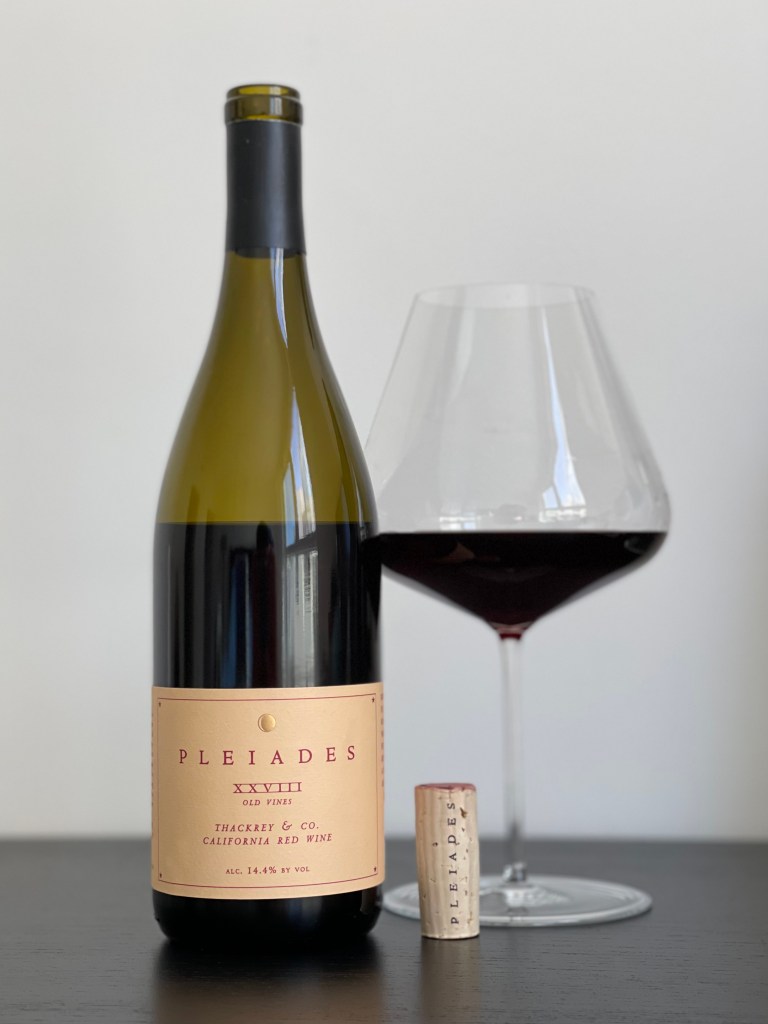
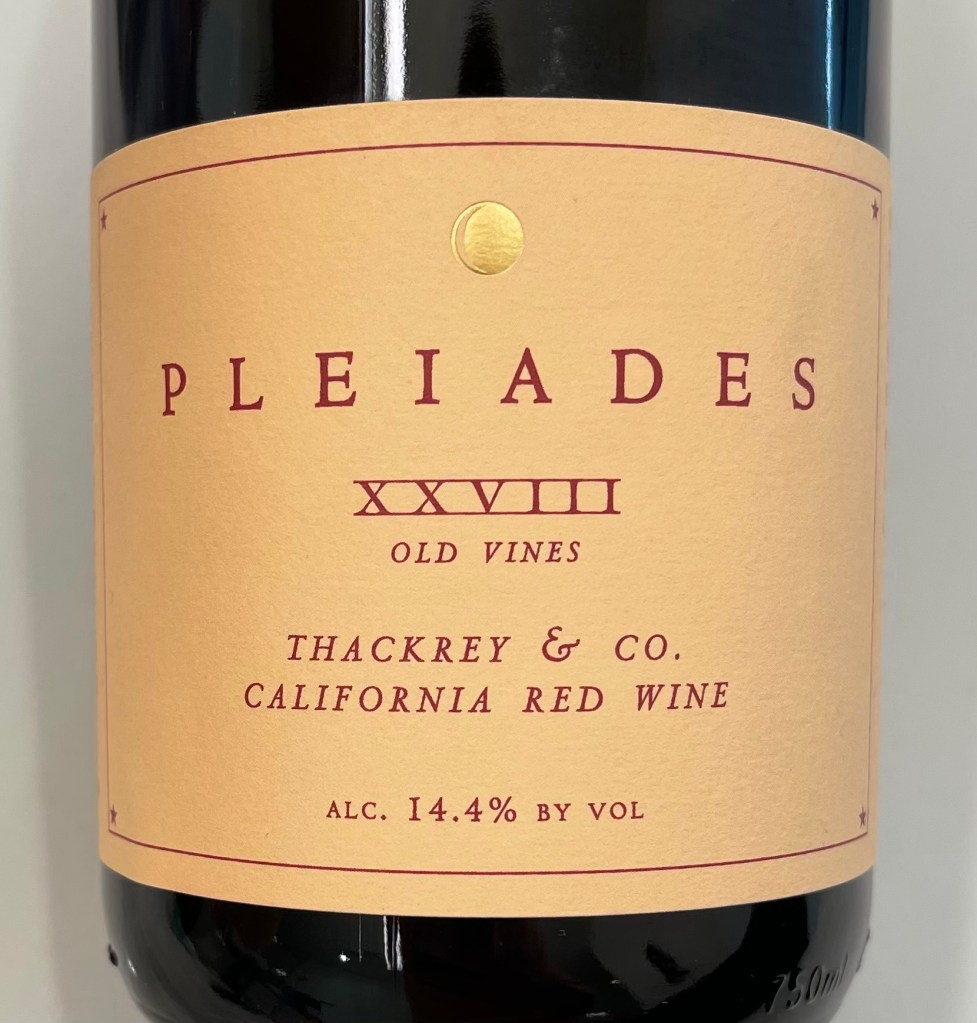
Thackrey is known largely for two of his wines, one being the non-vintage Pleiades which is a blend of roughly six different varieties and is rumored to be at times Syrah-dominant and at others Sangiovese-dominant. The blend changes each release, which is signified by Roman numerals on the label. The second wine is his flagship, named Orion, and its fruit is sourced from the Rossi Vineyard in St. Helena. For much of its history, Thackrey thought the Orion bottling was old vine Syrah but, following a study of the vineyard, five types of vines could not be identified and the bottling is now labeled as an “old vine California red.” Total production sits around 4,000 cases per vintage, and while this background probably seems rather chaotic the wines are in high demand and often receive high praise from critics. I can tell you that of the four Sean Thackrey wines I’ve had over the years, I am always blown away and welcome the rustic power they bring.

Today’s Wine: NV Pleiades XXVIII

Unknown Blend (rumored to include Syrah, Grenache, Mourvèdre, Sangiovese, Barbera, Carignane, Viognier, and potentially other varieties); 14.4% ABV

The NV Pleiades XXVIII is medium garnet in color. This is one of those wines that constantly evolves over time in the glass, so I did not decant it but drank it over several hours. The aromas are of pronounced intensity, with a complex nose of black cherry, blood orange rind, licorice, rose, violet, smoked meat, leather, tobacco, tar, cracked pepper, and pine. There’s slight heat from the ABV, but this should integrate with time. The flavors are of medium (+) intensity, but the palate is also complex and displays notes of cherry, redcurrant, red plum, anise, tobacco, cola, smoke, grilled herbs, and baking spice. This dry red blend is full-bodied with high acidity, medium tannins, high alcohol, and a medium length finish. Overall a very fun and thought-provoking wine. Bottled November 2020.

Price: $22. This is a very fun and unique wine that I think is absolutely worth trying. I haven’t had anything quite like it, but the quality and complexity are quite profound. Quite an interesting wine to shake up some palate fatigue.

An Elegant Take on Sauvignon Blanc

Today’s Story: Domaine Vincent Pinard

Domaine Vincent Pinard is a family-owned wine estate located in Bué in the heart of the Sancerre region in France’s Loire Valley. Though the estate has been in the Pinard family for generations, the current iteration was established in 1996 and is currently in the hands of brothers Florent and Clémente who took over from their father Vincent. The Pinard family owns 17 hectares (42 acres) of vineyards planted to Sauvignon Blanc and Pinot Noir, with their portfolio consisting of six Sauvignon Blanc bottlings, three Pinot Noir bottlings, and a rosé made from Pinot Noir. Florent and Clémente practice organic viticulture and are transitioning to biodynamic practices, remaining as natural as possible in the vineyards without the use of herbicides, pesticides, or anti-rot treatments. The vines see rigorous pruning to limit yields, and most of the work in the vineyards is done completely by hand (including harvest). Minimal intervention is also the name of the game in the cellar, where the wines ferment with indigenous yeasts and with no winemaking additions. Depending on vintage and cuvée, Florent and Clémente use a combination of stainless steel and old oak barrels to preserve the variety characteristics and showcase the terroir.

Today’s Wine: 2017 Harmonie Sancerre

100% Sauvignon Blanc; 13% ABV

The 2017 Harmonie is pale yellow in color. With aromas of pronounced intensity, the nose showcases notes of lemon peel, grapefruit, passionfruit, honeysuckle, raw asparagus, freshly cut grass, and wet river stone. Meanwhile flavors are of medium (+) intensity, with the palate displaying notes of honeydew, white peach, fresh pineapple, white floral blossom, limestone, and mild green herbs. This dry white is medium-bodied with high acidity, medium alcohol, and a medium (+) length finish.

Price: $52. I think this is pretty fairly priced given its quality, intensity, and complexity at this stage, however there are better values in the $30-35 range for sure. I’d be curious to see how this develops with another couple years of bottle age, but right now this is a very elegant and precise take on Sauvignon Blanc.

Clean and Pure Amber Wine From the Carso Region of Italy

Today’s Wine: Azienda Agricola Škerk

Azienda Agricola Škerk is a small family-owned winery situated very close to the Slovenian border in the Carso region of Friuli-Venezia-Giulia in northeastern Italy. The winery is run by father and son Boris and Sandi Škerk, and they focus on the varieties of Malvasia, Vitovska, Sauvignon, and Terrano. The Škerk family cultivates seven hectares of vineyards, with densely-planted but low-yielding vines that see rigorous pruning but minimal treatments and no chemical fertilizer additions. Come harvest, everything is done by hand and the minimal intervention practices continue into the cellar. The wines ferment in contact with the skins using only indigenous yeasts, and there are no added enzymes or other winemaking additions. Sandi adds little to no SO2 throughout the winemaking process, and the wines are bottled unfined and unfiltered in an effort to showcase the varieties and a true sense of place. Škerk produces about 1,700 cases per vintage across four wines, including the Vitovska, Malvasia, Ograde (blend of Vitovska, Malvasia, Sauvignon, and Pinot Grigio), and Terrano.

Today’s Wine: 2018 Vitovska

100% Vitovska; 12% ABV

The 2018 Vitovska is pale amber in color. Given some time to blossom in the glass, this opens up with aromas of medium intensity. The nose showcases notes of peach, dried apricot, orange marmalade, perfumed florals, white mushroom, herbs de Provence, and wet slate. Meanwhile the flavors are also of medium intensity, with the palate displaying notes of apricot, mandarin orange, tangerine, honey, eucalyptus, saline, and a hint of smoke. This dry amber wine is light- to medium-bodied with medium (+) acidity, no noticeable tannins, medium alcohol, and a medium length finish.

Price: $40. This is only my second Vitovska from the Carso region in Northeastern Italy, so while I am still exploring how this stacks up on a value perspective it is a very fun, delicious, pure, and well-made wine that I do recommend trying. Great balance to this wine.

Refreshing White From the Island of Santorini

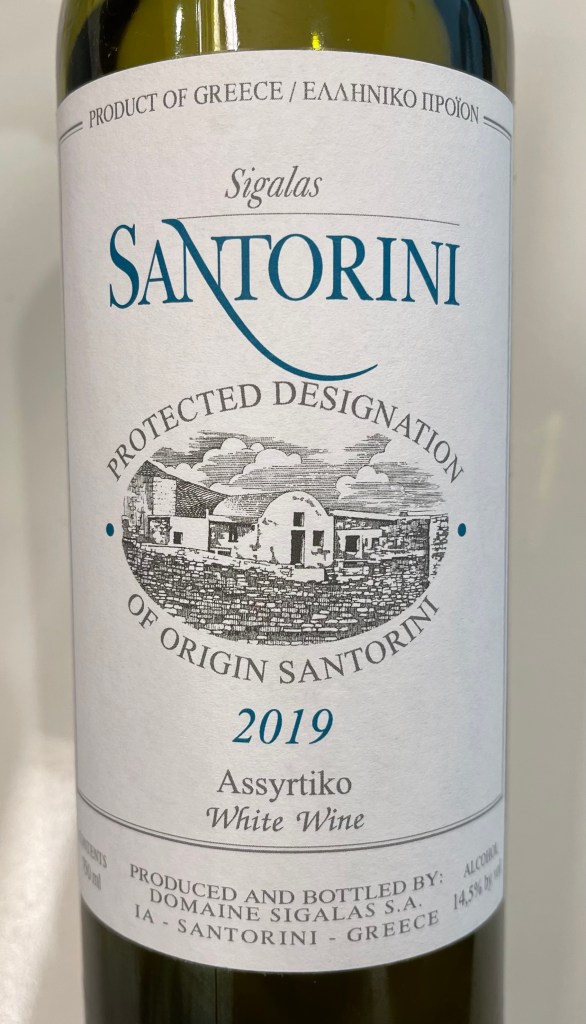
Today’s Story: Domaine Sigalas

Domaine Sigalas was established in 1991 by Paris Sigalas, Christos Markozane, and Yiannis Toundas. Though the winery was initially based in the Sigalas family home, in 1998 the team constructed a new winery, bottling, and aging facility in the area of Oia in the northern part of the island of Santorini. Domaine Sigalas today consists of about 20 hectares (~49 acres) of vineyards, planted to the indigenous varieties of Assyrtiko, Athiri, Aidani, Mandilaria, and Mavrotragano. Sigalas farms all their vineyards adhering to organic viticulture, and they’ve been a pioneer in organic viticulture on the island with participation in government programs for it since 1994. The soil type is typical of the island of Santorini, made up of high amounts of sand (sometimes 93-97%) in volcanic pumice and ash. This is a hazardous environment for Phylloxera to survive, so the vines on Santorini are still on their original rootstocks and Sigalas is able to farm very old Phylloxera-resistant vines. Total production of Sigalas is about 25,000 cases per vintage, and while they are known for their mineral-driven and steely Assyrtiko the rest of their wines offer a good range of variety and style.

Today’s Wine: 2019 Santorini Assyrtiko

100% Assyrtiko; 14.5% ABV

The 2019 Santorini Assyrtiko is pale yellow in color. I enjoyed letting this blossom in the glass over 20-30 minutes, as it is pretty youthful and I think will show best with another 1-2 years of bottle age. The aromas are of medium intensity, with notes of lemon zest, yellow apple, honeysuckle, flint, and saline mineral. Meanwhile the flavors are also of medium intensity, with the palate displaying notes of pear, lime zest, passionfruit, beeswax, and sea salt. This dry white is medium-bodied with high acidity, high alcohol, and a medium length finish. Very refreshing and enjoyable, but not really too complex. I think this will only improve over the next year or two.

Price: $40 (might be able to find closer to $34). I’m just starting to explore Assyrtiko, so I struggle to call this a solid value wine but take that with a grain of salt. For instance, the last one I had was about 25% less expensive but it drank just as well. That being said, this is no doubt a high quality and enjoyable wine I would love to revisit down the road, and perhaps it ends up being a great value as I expand my Assyrtiko horizons.