Unique and Powerful Shiraz

Today’s Story: d’Arenberg

d’Arenberg (known as Bundarra at the time) was established in 1912 by Joseph Osborn in McLaren Vale after he sold his stable of prize winning race horses to purchase the property. They planted their first vineyards to 8 acres of Shiraz, though only 4 acres survived, and Joseph and his son Frank harvested their first vintage in 1913 and sold the fruit for £20 per ton. In 1927, Frank’s brother-in-law encouraged him to produce his own wine and, after studying winemaking at Ryecroft, he produced his first red table wine and port labeled Bundarra Vineyards by F. E. Osborn & Sons in 1928.

During WWII, Frank’s health deteriorated and he halted wine production in 1942 until his son d’Arry left school at the age of 16 to work at the family winery. d’Arry oversaw several great technological advances, including the use of McLaren Vale’s first rubber-tired tractor in 1946 and electricity in 1951. Several years later, d’Arry established his own wine label named for his late mother and adorned it with the family crest and signature red stripe. In 1965, the Bailey family who owned a well-established winery in Glenrowen, Victoria named Bundarra challenged d’Arry’s use of Bundarra so d’Arry decided to drop the name from his vineyard and wines.

Over the next couple years, d’Arenberg expanded with a second tasting room to accommodate increasing numbers of visitors and installed their own bottling line. During the 1970s, d’Arenberg rose to new heights by winning several awards for their 1967 Burgundy which proceeded accolades by their Rhine Riesling and Port. In 1984, d’Arry’s son Chester Osborn took over as chief winemaker and set about restoring traditional winemaking methods such as foot treading and basket pressing while eliminating fertilizer and minimizing irrigation in the vineyards to reduce yields. In 1988, d’Arenberg exported their Shiraz and Shiraz Grenache blend wines to Europe for the first time which marked another milestone in the brand’s global acceptance.

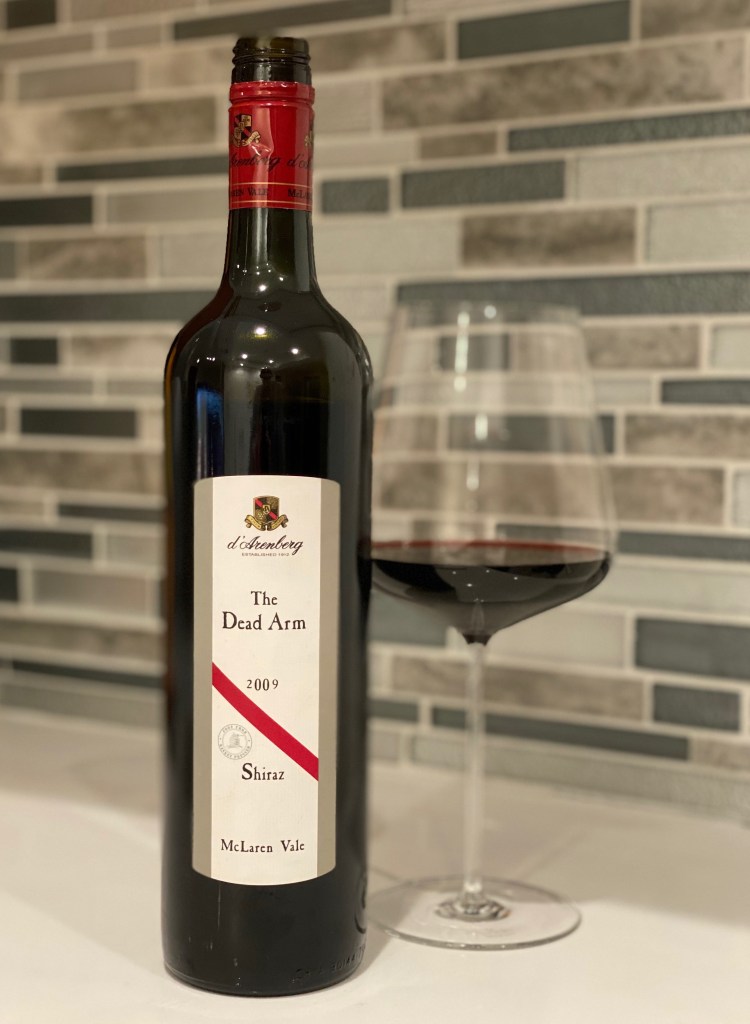
A man striving to reach new heights, Chester became one of the first to plant white Rhône varieties in McLaren Vale in 1995/1996 with 10 acres of Marsanne, 9 acres of Roussanne, and 14 acres of Viognier. Since then, Chester racked up an impressive resume of awards and trophies for both himself and the d’Arenberg winery. One of their highly awarded wines, The Dead Arm Shiraz, is what I am reviewing today and it was first released in 1993. Dead Arm is caused by the fungus Eutypa lata and affects old vines by slowly reducing one half (or arm) of the vine to dead wood. At most wineries, these vines are pruned, replanted, or abandoned but d’Arenberg sustains these low yielding vines to produce powerful and concentrated wines. The fruit for this wine is kept separate throughout the winemaking process and given extra care before being passed through a gentle roll crusher in small batches before foot treading and basket pressing. Primary and secondary fermentation is accomplished in used French and old American oak barriques and the wine is aged for 20 months on lees. Chester and his team select the best barrels for final blending and this is bottled with no fining or filtration.
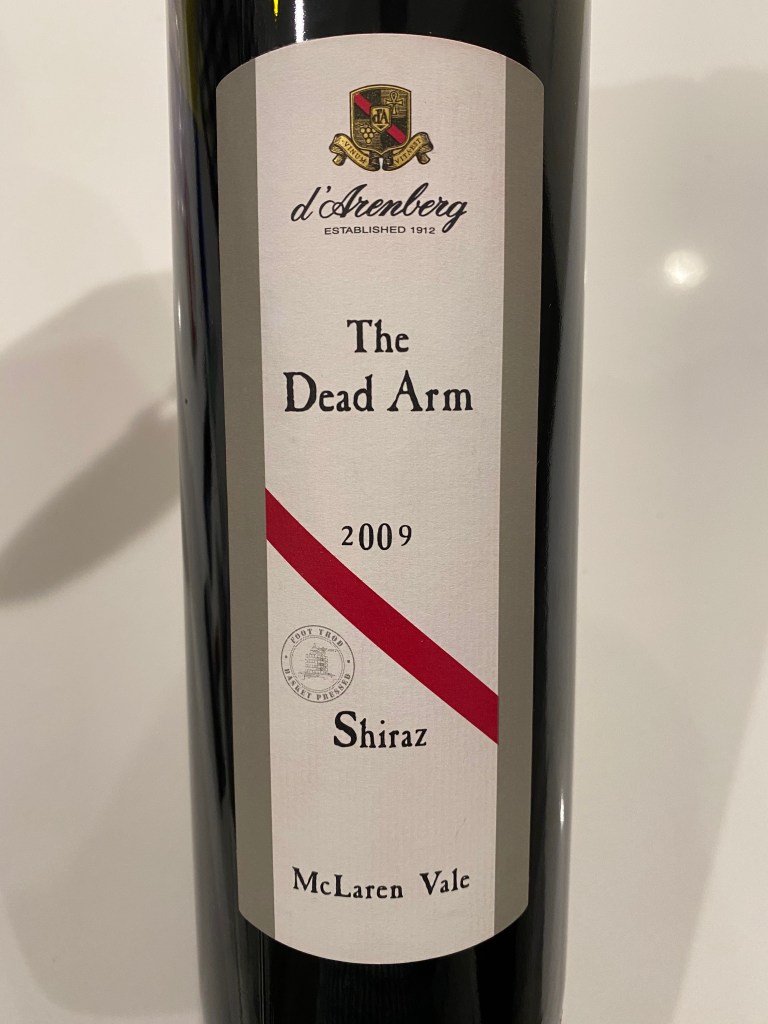
Today’s Wine: 2009 The Dead Arm Shiraz

100% Shiraz/Syrah; 14.5% ABV

The 2009 Dead Arm is deep garnet in color and completely opaque. This demands an hour-plus to open up, but once it does the nose showcases aromas of blackberry, baked black cherry, redcurrant, licorice, smoke, chocolate, coffee, forest floor, underbrush, and charred red meat. Once on the palate, the wine offers notes of blackcurrant, juicy plum, cherry, tobacco, loamy soil, black pepper, wet crushed rock, mocha, tar, and oak. This is full-bodied with high acidity, medium (+) tannins, and a long finish dominated by flavors of dark berries and char. The wine is powerful yet balanced with the structure to go at least another 5 years.

Price: $60 (though slightly cheaper overseas). This is an outstanding value that drinks like some of the “higher end” Shiraz out of Australia. Pair this with herb-roasted leg of lamb, barbecue spareribs, or strong hard cheeses.

Incredible Value in a Second Wine

Today’s Story: Château Montrose

Château Montrose is a historical Bordeaux wine estate located in Saint-Estèphe and established in 1815 by Etienne Théodore Dumoulin on a patch of land his family purchased from Nicolas Alexandre de Ségur but largely forgot. At the time of Etienne’s death in 1861, the estate spanned 95 hectares though his heirs sold it in 1866 to factory owner Mathieu Dollfus who quickly redeveloped and modernized the buildings and winery with the best technology of the time. One of Mathieu’s most interesting achievements, in my opinion, is the construction of a windmill to pump water aboveground and flood the estate which ultimately saved much of the vineyards from phylloxera. After Mathieu passed away in 1886, the estate fell to the Charmolüe family who, from 1896 to 2006, guided Château Montrose through wars and financial crises while crafting some of the best vintages and providing stability. Martin and Olivier Bouygues acquired the estate in 2006 and engaged in a massive renovation project, propelling Château Montrose to ever increasing heights for decades down the road. Montrose, one of fourteen Deuxièmes Crus (Second Growths) in the Bordeaux Wine Official Classification of 1855, produces world-class wines and even placed third with their 1970 vintage in the Judgment of Paris in 1976.

To learn more about this great estate, check out their website here. In particular, I recommend checking out the “From Vine to Wine” section!

Today’s Wine: 2016 La Dame de Montrose

52% Merlot, 35% Cabernet Sauvignon, 11% Petit Verdot, 2% Cabernet Franc; 13.5% ABV

The 2016 La Dame de Montrose is opaque deep ruby and nearly black at its core with purple hues. I decanted this for 6 hours (wanted a preview of my Grand Vins still in hiding) and it needed every second of it. On the nose, I get aromas of blackberry, crème de cassis, black plum, pencil shavings, cigar box, finely crushed rock, dried earth, chocolate, black pepper, and oak. Once in the mouth, the wine showcases notes of blackcurrant, blueberry, cherry, redcurrant, graphite, loamy soil, slate, tobacco, spice box, and toasted oak. This is full-bodied with medium (+) acidity, high tannins, and a long finish. The wine is incredibly promising, and makes me excited to try the Grand Vin in 15 years.

Price: $50 (though you can find steals closer to $40). This is an absolute rockstar for value from the utterly incredible 2016 vintage, though you will have to be patient. Pair this with steak, grilled leg of lamb, or a high-end burger.

High Quality Value Barolo

Today’s Story: Paolo Scavino

Paolo Scavino was founded by Lorenzo Scavino and his son Paolo in 1921 in Castiglione Falletto within the Barolo region of Italy. Throughout its history, Paolo Scavino remains a family endeavor born on traditions of farming and today Enrico Scavino (3rd generation) and his daughters Enrica and Elisa (4th generation) operate the estate. Enrico is nearly 70 years into his work at the winery (he started in 1951 at the age of 10) and he has been instrumental in expending the estate’s holdings to include some of the greatest crus in all of Piedmont. With 30 hectares of vineyards across 20 crus in Castiglione Falletto, Barolo, La Morra, Novello, Serralunga d’Alba, Verduno, and Roddi, Paolo Scavino grows the traditional grapes of Nebbiolo, Barbera, and Dolcetto.

Today’s Wine: 2013 Barolo

100% Nebbiolo; 14.5% ABV

The 2013 Barolo is deep garnet in color and moderately opaque. This needs a good two hour decant, but once it opens up the nose emits aromas of cherry, strawberry, black raspberry, blackberry, anise, dried leather, tobacco, truffle, garden herbs, and oak. On the palate, I get notes of muddled raspberry, black cherry, pomegranate, licorice, rose, crushed granite, scorched earth, chocolate, clove, black tea, and cigar box. This wine is full-bodied with high acidity, medium (+) tannins, and a long finish.

Price: $43. This is a great value Barolo from an outstanding vintage, though I suggest giving it another 3 years in bottle and consuming over the following decade. Pair this with veal chop, venison steak, or assorted cheeses.

Boutique Napa Winery With a Unique Origin

Today’s Story: Phifer Pavitt

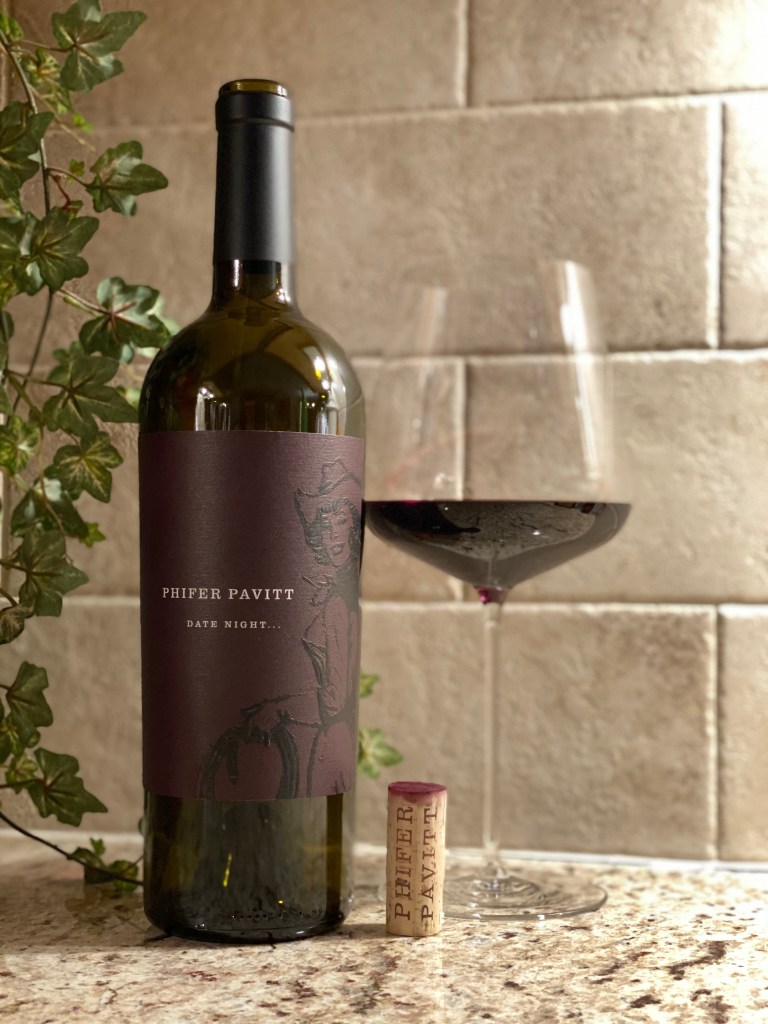
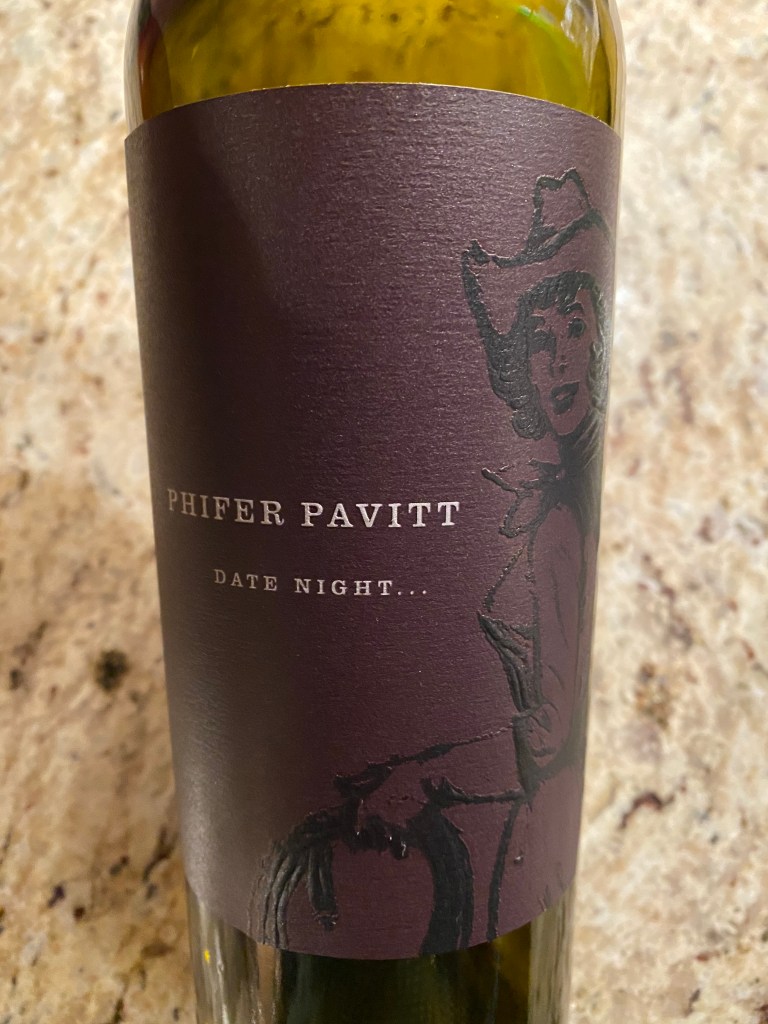
Phifer Pavitt is a boutique, family-owned winery located in the Napa Valley (Calistoga) and owned by Suzanne Phifer Pavitt and her husband Shane Pavitt. Though Suzanne grew up in rural Georgia and Shane in Manhattan Beach, CA, the couple share a love of wine and explored properties along the west coast before ultimately purchasing their property in 1998. Since their first vintage in 2005, Suzanne and Shane source their Cabernet Sauvignon from Temple Family Vineyards in Pope Valley and, since the first vintage in 2011, Sauvignon Blanc from Juliana Vineyards also in Pope Valley. Phifer Pavitt’s signature wine, the Cabernet Sauvignon named “Date Night,” is inspired by Suzanne and Shane’s weekly date night when they typically enjoy a bottle of wine and each other’s company away from work and the chaos everyday life can bring. On these weekly date nights, Suzanne and Shane seem to make decisions that greatly change their life’s scope (from career changes to family planning) so it makes sense their decision to purchase the property for Phifer Pavitt resulted from one of these nights as well. The couple’s wines are generally Bordeaux in style, and they have worked with winemaker Ted Osborne since the winery’s inception with Cabernet Sauvignon and father/father-in-law Gary Warburton with Sauvignon Blanc.

Today’s Wine: 2011 Date Night Cabernet Sauvignon

98% Cabernet Sauvignon, 2% Petit Verdot; 14.5% ABV

The 2011 Date Night is medium to deep ruby in color and almost fully opaque. Once this opens up, the nose showcases aromas of blackberry, plum, black cherry, violet, green pepper, scorched earth, chocolate, bacon fat, green herbs, crushed rock, and oak. There is some heat that needs some time to blow off as well. On the palate, I get notes of blueberry, spiced plum, blackcurrant, fig, licorice, tobacco, caramel, baking spice, wet rock, loamy soil, and smoke. This wine is medium- to full-bodied with medium (+) acidity, medium tannins, and a medium (+) length finish with added notes of iron and oak.

Price: $80. This is a tasty wine, but it’s up in that price-point where it faces significant competition from great value wines that I think pack a bit more of a punch for your “investment.” Pair this with roasted rack of lamb, a blue cheese burger, or braised beef short ribs.

Elegant Rioja That Won’t Break the Bank

Today’s Story: Bodegas Muga

Bodegas Muga is a family-owned winery established in 1932 in Haro, La Rioja, Spain by Isaac Muga and his wife Aurora Caño. Their children, Manuel and Isacín, picked up the baton to carry the winery into its second generation, however it is truly the current third generation responsible for modernizing the estate. Manuel’s sons Manuel, Juan, and Eduardo look after management of the estate, sales, and marketing, whereas Isacín’s sons Jorge and Isaac work in viticulture and winemaking. In recent past, Jorge shifted toward more complex blending in his wines by utilizing typically 20-30% of native varieties besides Tempranillo, particularly Garnacha, Graciano, and Mazuelo. For all of their wines, Muga utilizes classical winemaking methods and fermentation, aging, and storage is accomplished in oak barrels produced by their very own cooperage. The wines are racked using gravity every four months and before bottling they are fined using egg whites. Some of the wines (such as the one I’m reviewing today) are bottled unfiltered.

A relatively large winery, Muga owns 250 hectares of vineyards and produces roughly 1.5 million bottles of wine annually. With their vineyards planted to Tempranillo, Garnacha, Mazuelo, Graciano, Viura, and Malvasía, Muga’s portfolio includes a broad range of wines from White and Rosado to Red Rioja Reservas and Cava (sparkling). You can visit their website here.

Today’s Wine: 2013 Rioja Reserva

70% Tempranillo, 20% Garnacha, 10% Graciano & Mazuelo; 14% ABV

The 2013 Rioja Reserva is nearly fully opaque medium ruby in color. I decanted this for about an hour and the nose opens to express aromas of black cherry, plum, blackberry, purple and blue florals, leather, charred earth, tar, chocolate, vanilla, and oak. On the palate, I get notes of blackcurrant, blackberry, cherry, black raspberry, cola, tobacco, slate, dried rocky earth, green herbs, and smoky mineral. This wine is medium- to full-bodied with medium (+) acidity, dusty medium tannins, and a long finish.

Price: $25 ($16-$18 in Europe). This is an incredible value that drinks with refined elegance now but still has gas in the tank to go another 5+ years. Pair this with roasted pork loin, veal, lasagna, or Manchego cheese.

Not Your Typical Cali Zin

Today’s Story: Joseph Swan Vineyards

Joseph Swan Vineyards was founded during the early 1970s by Joe Swan, a man whose passion for wine spawned at an early age through reading. However, Joe’s career did not begin in wine but rather as an artist, a flight instructor for the Army Air Corps during WWII, and ultimately a pilot for Western Airlines. Though Joe retired in 1974, his passion for wine remained strong through those middle years and he even produced Zinfandel when stationed in Salt Lake City and made friends visiting the Enology and Viticulture department at UC Davis following the war. In 1967, Joe purchased a small farm planted with 13 acres of Zinfandel, fruit trees, and a pasture near Forestville in the Russian River Valley with a plan to follow his dream of operating a small vineyard and winery. Though Joe made Zinfandel in 1968, he quickly received encouragement from André Tchelistcheff (a highly influential winemaker I discussed in my BV posts, as well as Joe’s friend and mentor) to replant his vineyards to Chardonnay and Pinot Noir. With significant inspiration from French winemakers and the belief that lower production would increase his quality, Joe selected low production clones and both pruned and thinned his vines to significantly reduce yield. In 1987, Joe’s son-in-law Rod Berglund worked the Joseph Swan harvest with him and this would unfortunately be Joe’s last vintage. Joe fell ill during 1988 and passed away January, 1989 but his perfectionism and love of wine carries on with his daughter Lynn and son-in-law Rod today.

Today’s Wine: 2012 Mancini Ranch Zinfandel

100% Zinfandel; 12.9% ABV

The 2012 Mancini Ranch Zinfandel is moderately opaque and medium garnet in color with ruby hues. Once this opens up, the nose showcases aromas of tart cherry, strawberry rhubarb, dried raspberry, aged leather, forest floor, truffles, smoked red meat, savory green herbs, baking spice, and cedar. On the palate, I get notes of blackberry, blueberry, cherry pie, dusty strawberry, red licorice, dried tobacco, damp earth, mushroom, cinnamon, pepper, and slight oak. The wine is medium-bodied with medium acidity, medium (-) tannins, and a medium (+) length finish. Overall this is very well-balanced and a complex depiction of old-school Zinfandel that upon tasting does not seem like anything from California.

Price: $32. Joseph Swan produces some of my favorite Pinot Noir in the $35-$45 price-point, and I can now add their Zinfandel to this list of great values. This is a gorgeous Zin unlike many I’ve had from California and demonstrates the restraint this grape can display. Pair this with barbecue chicken, leg of lamb, or tomato-based pasta.

Boutique Napa Valley Estate for Family and Friends

Today’s Story: Zakin Family Estate

Zakin Family Estate consists of 150 acres situated between 1,250 and 1,450 feet above the Napa Valley floor with southwestern exposure on Howell Mountain, though only 3.8 acres are planted to vine. Janice and Jonathan Zakin purchased the property in 1998 to build their dream home, and at the time it was undeveloped and never once planted to vine. When Jan and Jon ultimately decided to clear land and plant their vineyards, they created three distinct vineyard blocks named The Pool Block (located just below their home’s outdoor pool), The Upper Vineyard, and the Back Blocks. 2012 marked the first vintage at Zakin Family Estate, though they held it back for extra aging and released it following the 2013 and 2014 vintages. Now with five vintages bottled, the estate is starting to come into its own and produces typically between 200 and 250 cases annually.

Jon Zakin is originally from New York and found success with a career in tech entrepreneurship which also helped foster his love of French Bordeaux and Napa Valley Cabernet Sauvignon. Jon met Jan, an OB/GYN by trade from Hawaii, in 1998 and the couple married on their new property in 1999. I had the wonderful opportunity to tour the property and taste with Jan and Jon at their home in September, 2019 and it made for one of the most intimate experiences of my recent Napa Valley visit. Jan greeted us with glasses of Rosé which we carried around the property before settling into their main dining room with a board of cheeses, charcuterie, and home-grown figs to accompany our tasting. This was an incredibly peaceful, laid back, and friendly experience where we chatted more like long-lost friends than vintner and patron meeting for the first time.

Jan and Jon hired renowned winemaker Philippe Melka after fixating on a dream to create world-class Cabernet Sauvignon. Philippe grew up in Bordeaux and earned his Geology degree from the University of Bordeaux before his foray into wine at Château Haut-Brion. While at Haut-Brion, Philippe completed a masters program in Agronomy and Enology though with his passion for Cabernet Sauvignon blends ventured out to learn more. Philippe ultimately spent time at Dominus Estate (Napa Valley), Chittering Estate (Australia), Badia O Coltibuono (Chianti, Italy), and Chateau Petrus (Bordeaux) before settling down in Napa Valley and starting Melka Wines alongside his successful consulting business. Philippe is joined by vineyard manager Jim Barbour who has an impressive resume of his own, including work for Hundred Acre, Grace Family, Checkerboard, Blankiet Estate, Revana, Gandona Estate, Keever, Husic, Pillar Rock, and more over his roughly 40 year career.

Today’s Wine: 2012 Cabernet Sauvignon

Predominantly Cabernet Sauvignon, blended with Cabernet Franc (no tech sheet); 14.7% ABV

The 2012 Cabernet Sauvignon is opaque deep purple/ruby in color. I let this decant for 3 hours before serving and it certainly needed every minute of air. Once this opens up, the nose showcases aromas of blackberry purée, spiced plum, blueberry, redcurrant, graphite, tobacco leaf, black volcanic soil, clove, and oak. On the palate, I get notes of blackcurrant, black plum, black cherry, slate, charred rocky earth, baking spice, cracked black pepper, a touch of vanilla, and oak. This is full-bodied with medium (+) acidity, medium (+) but fine-grained tannins, and a long finish with notes of mocha and crushed rock. The wine is incredibly powerful while showcasing gorgeous mountain fruit, though you can tell there is an elegance starting to breach with more bottle age.

Price: $260 purchased at on-site tasting. It is a treat tasting wines from Zakin, whose production typically falls between 200-250 cases annually, as these are made in an opulent style that is utterly delicious and built for the long haul. Pair this with steak au poivre, herb-grilled leg of lamb, or blue cheese.

An Artist’s Barolo

Today’s Story: Vietti

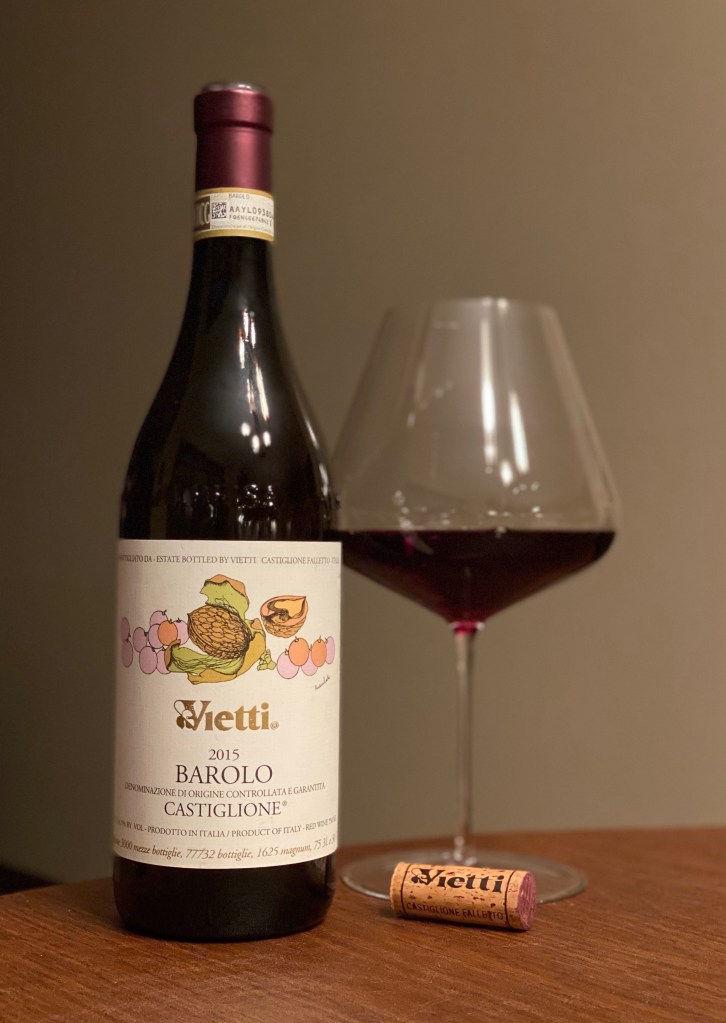
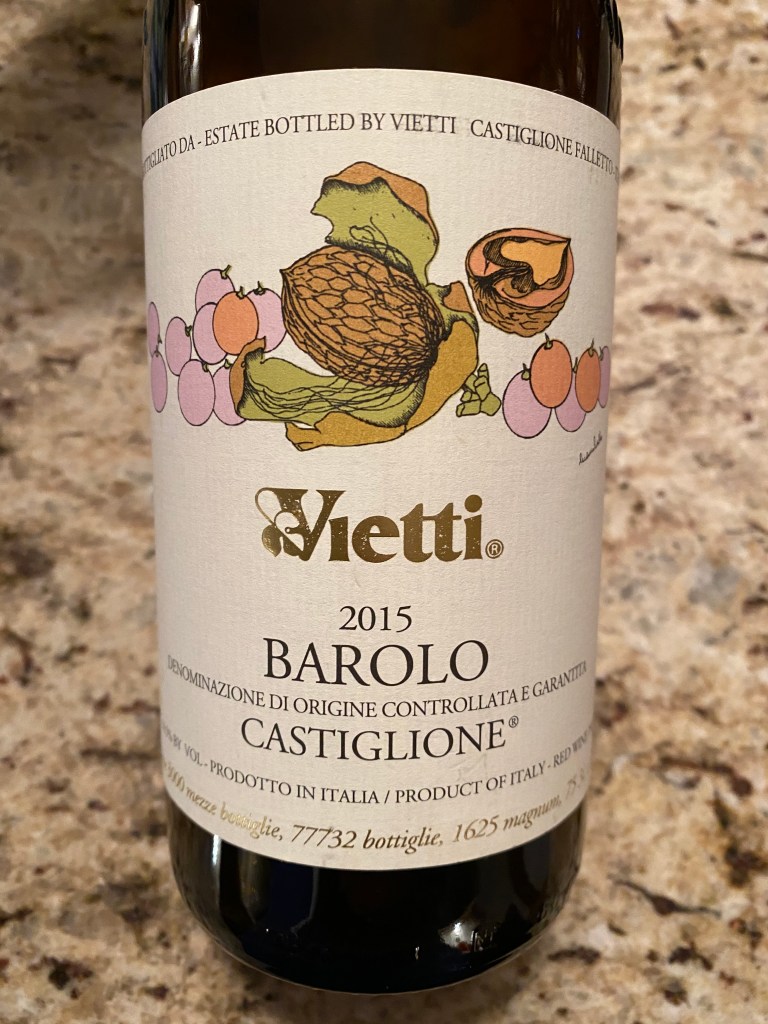
Vietti was established in the late 1800s by Carlo Vietti in Castiglione Falletto, a small village within the Piedmont region of Italy. Throughout its history, Vietti passed from generation to generation and today its guides Luca Currado Vietti and his wife Elena make up the family’s fourth of winemaking. Though Krause Holdings acquired the Vietti estate in 2016, Luca and Elena maintain their familial approach to winemaking and the acquisition allowed them to expand vineyard holdings with a number of prized crus. I would be remiss, however, to skip the 1960s-1970s when discussing Vietti since the estate entered somewhat of a turning point under Luca’s parents Luciana Vietti and winemaker/art connoisseur Alfredo Currado. Alfredo’s contributions include one of the first Barolo crus (Rocche di Castiglione in 1961), single varietal vinification of Arneis in 1967, and the Artist Labels in 1974. The idea for Vietti Artist Labels spawned from an evening and bottle of wine Alfred shared with a group of friends (some of whom were artists) who declared that spectacular wines like the Barolo Rocche they were drinking deserved unique labels designed by artists. Since that evening, certain wine bottlings are adorned with original works of lithographs, xylographies, etchings, silkscreens, and linocuts inspired by a particular wine in a particular vintage and are only used once. Since the 1982 Barolo Villero, all Artist Labels are dedicated to wines exclusively grown in that vineyard.

Today’s Wine: 2015 Barolo Castiglione

100% Nebbiolo; 14.5% ABV

The 2015 Castiglione is pale to medium garnet in color and moderately transparent. I double-decanted this and then let it open up for about an hour, and this needs every bit of air in its youth. The nose showcases aromas of baked cherry, dried strawberry, orange zest, licorice, mint, scorched earth, truffle, tar, and oak. There’s also a bit of heat that will blow off with air or further aging. On the palate, I get notes of bing cherry, black raspberry, stemmy wild strawberry, earthy mushroom, tobacco, rocky soil, bitter dark chocolate, dried green underbrush, and charred oak. This wine is medium- to full-bodied with high acidity, high tannins, and a long finish. Give this 5 more years of bottle age and drink it over the following decade.

Price: $48. This is an outstanding value for well-made, textbook Barolo. If you buy this now give it plenty of air, though this is a great addition for your cellar at an everyday price-point. Pair this with venison steak, bistecca alla fiorentina, white Alba truffles, or assorted cheeses and charcuterie.

Premier Napa Valley Rosé

Today’s Story: Blankiet Estate

Blankiet’s roots start with Claude and Katherine Blankiet, a couple who spent years searching for land conducive to grape growing on the western foothills of the Mayacamas Mountains. Finally, in early 1996, an agent working with the Blankiet family showed them an undeveloped property above the famous Napanook vineyard (and Dominus Estate) and the Blankiets purchased the land on sight. From the onset of their search, Claude and Katherine desired to create world-class, high-quality, small production Bordeaux style wines and now, with ownership of the land, set right to work. During development of the vineyards, the Blankiets brought in famed viticulturist David Abreu and winemaker Helen Turley for their expertise. The terroir of Blankiet consists of three volcanic knolls with alluvial deposits between them thanks to water flowing down from the mountains. The vineyards are broken into four sections, each with a unique subsoil and microclimate, and they used root stocks from First Growth Bordeaux estates to get the ball rolling. Today, they produce 5 wines from the Bordeaux varietals of Cabernet Sauvignon, Merlot, Cabernet Franc, and Petit Verdot.

Blankiet farms their vineyards utilizing organic methods (they are Napa Green Certified) and their position on the hillsides in depleted soils requires a great deal of manual work but results in intensely flavored fruit. During the winter, Blankiet Spur prunes their vines and as they grow throughout the spring and summer vineyard workers thin out buds, flowers, leaves, and grape clusters to reduce yields and enhance the wine’s concentration. During harvest, Blankiet completes up to 32 “mini-harvests” thanks to their array of soils and microclimates between and amongst the four varieties they grow. Though the estate examines sugar levels, acidity, and pH to help in their picking assessments, most of the fruit is harvested by taste tests of the berries and any deemed ready are de-leafed and trimmed of damaged clusters that afternoon. Harvest begins at 4am the following morning so workers can pick fruit in cooler temperatures and avoid the 50+ degree temperature swings common in Blankiet’s vineyards from day to night as well as fruit flies that are inactive at night. All fruit is carried to the winery in small baskets before being destemmed by a gentle machine and sorted by two state-of-the-art optical sorters. A few employees manually check and sort the fruit at the end of the process. After sorting, Blankiet adds carbon dioxide ice which maintains the fruit at a cold temperature while displacing oxygen and this is then gravity loaded into small fermentation tanks to begin cold maceration.

During the actual winemaking process, each pick is fermented separately and cold maceration lasts generally a week which allows enzymes to soften the fruit’s cellular structure but inhibit alcoholic fermentation due to the temperature. Once cold maceration is complete, Blankiet slowly warms the temperature of the fruit mass so alcoholic fermentation can begin and they closely monitor temperatures to help the yeasts thrive. The winemaking team checks each tank two times each day, with pump-overs a result according to taste. When the wines are ready for malolactic fermentation, they are moved to new French oak barrels in a warm cave for several months until they are ultimately moved into the cold aging caves where they call home for the next couple of years. Unlike many wineries today, Blankiet steers clear of adding sulphur dioxide (SO2) to their wine barrels when natural evaporation eventually takes place but they instead refill this open space with more wine. When the wine is ready to be bottled, it is done so on-site without fining or filtration.

I previously wrote about Blankiet in Fit for a King when I reviewed the 2014 Blankiet Estate Paradise Hills Vineyard, and you can also check out this prior post for a description of my visit to the property in September, 2019. For the source of today’s information and more for you to explore, check out Blankiet’s website here.

Today’s Wine: 2016 Prince of Hearts Rosé

Predominantly Merlot, with some Cabernet Franc (no tech sheet); 14% ABV

The 2016 Prince of Hearts Rosé is medium salmon/copper in color and transparent. On the nose, the wine showcases aromas of white peach, ripe melon, cherry, dried herbs, dried rose petal, white florals, cream, and stony minerality. On the palate, I get notes of muddled strawberry, wild raspberry, peach, red apple skins, tropical citrus, white and red florals, white peppery spice, mineral, and a hint of oak. This wine is medium-bodied with vibrant medium (+) acidity into a bright, crisp, and refreshing medium length finish.

Price: $100 direct from winery. This will be difficult to come across if you’re not on Blankiet’s mailing list, however it is worth trying if you find a bottle. Though this is the very expensive end of Rosé, it certainly is the best from California that I’ve tried. Pair this with melon and prosciutto, shrimp, salmon, or a salad with grilled chicken.

Premium Cabernet Sauvignon From a Boutique Napa Vineyard

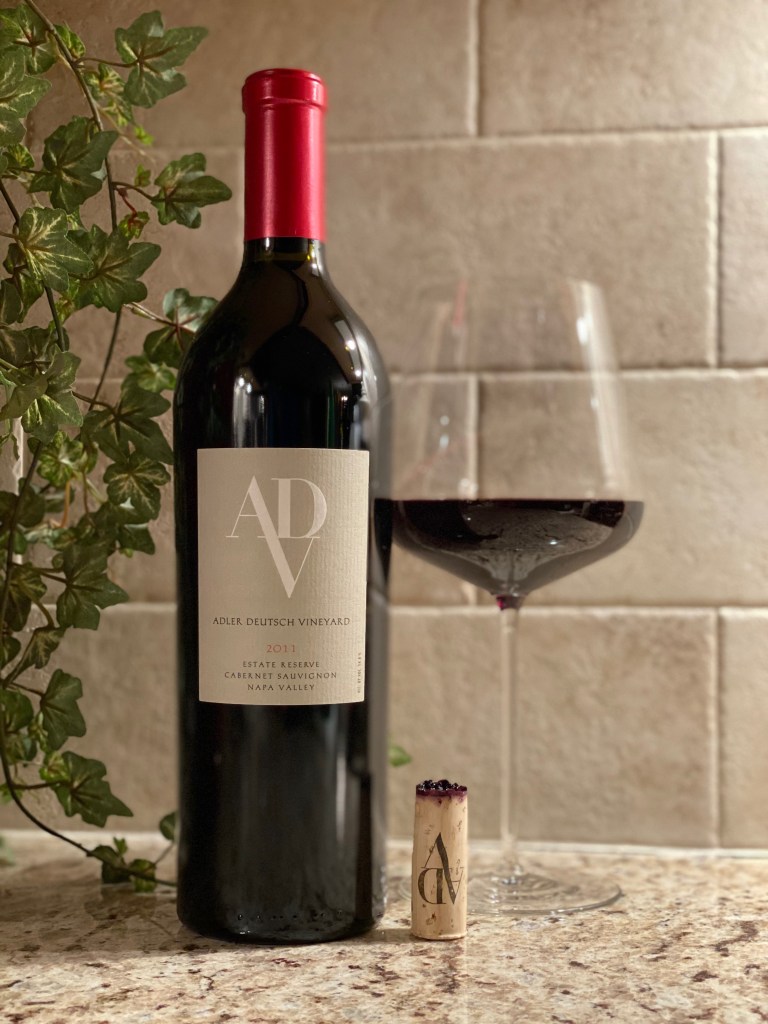
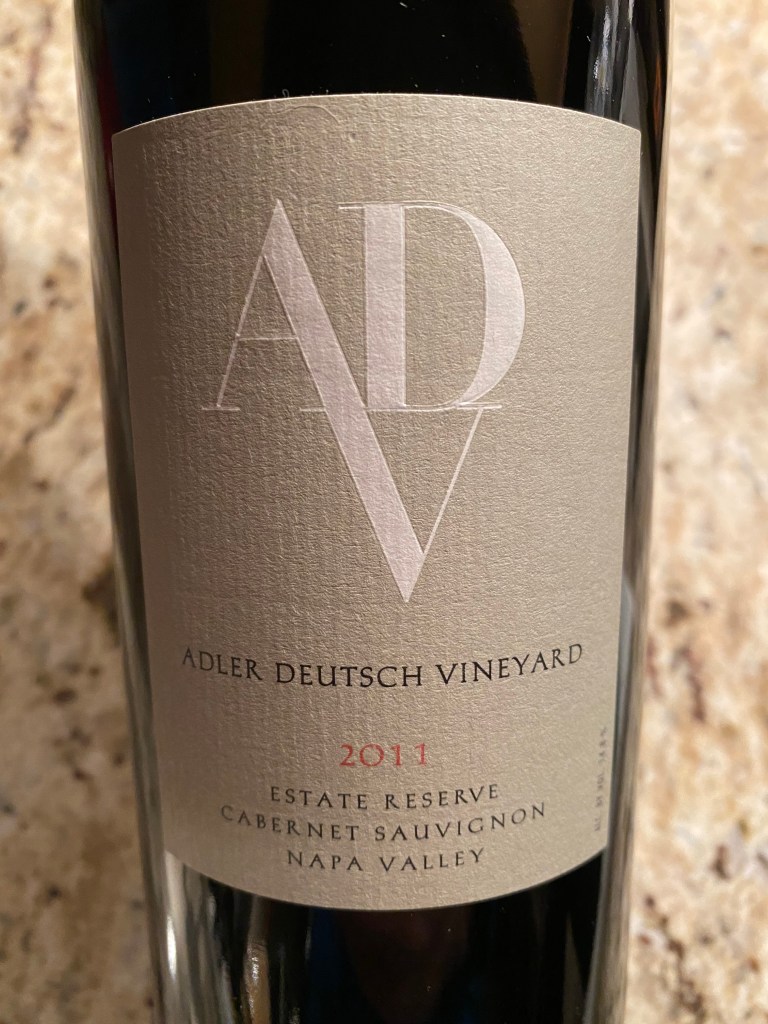
Today’s Story: Adler Deutsch Vineyard

Adler Deutsch Vineyard is a very small, 2-acre vineyard located on the edge of the West Rutherford Bench and owned by vintners Bob Adler and Alexis Deutsch-Adler. ADV works with Cabernet Sauvignon (though some of their wines can be a blend of around 98% Cabernet Sauvignon and 2% Petit Verdot) to produce highly limited and premium wines amounting to a mere couple hundred cases each vintage. Bob and Alexis work very closely with their workers in the vineyard, particularly their winemaker Aaron Pott. Aaron studied Enology at the University of California-Davis before taking a position at Newton under John Kongsgaard, where he also met famed consultant Michel Rolland who helped him land positions in France at Château Troplong Mondot and Château La Tour Figeac. While in France, Aaron received a master’s degree in Viticulture from the Université de Bourgogne and worked for six years before returning to the US at Beringer as their winemaker for the French, Italian, and South American brands. Aaron also worked at St. Clement and Quintessa before establishing his own label, Pott Wine, and consulting for Napa Valley wineries. ADV practices sustainable farming methods with a dedication to ensuring their vineyard thrives for decades to come.

Today’s Wine: 2011 Estate Reserve Cabernet Sauvignon

100% Cabernet Sauvignon; 14.8% ABV

The 2011 Estate Reserve is almost entirely opaque and deep ruby in color with dark purple hues. Once this opens up, the nose showcases aromas of blackberry, blackcurrant, plum, cherry, redcurrant, pencil shavings, sweet tobacco, loamy soil, pepper, milk chocolate, vanilla, and oak. On the palate, I get notes of wild blueberry, blackberry, crème de cassis, black raspberry, cigar box, graphite, scorched earth, cedar, clove, blood, and blue florals. This wine is full-bodied with high acidity, medium (+) tannins, and a long finish dominated by black fruit, cocoa, and dried earth.

Price: $90 (though this appears unavailable in retail markets). This is an outstanding wine that drinks well above its price point for both quality and rarity. ADV only produces a couple hundred cases of wine each year, but if you manage to find some it’s worth a try. Pair this with grilled NY strip steak, black-pepper-crusted Ahi tuna, or rosemary lamb steak.