Timeless Passion in Saint-Estèphe

Today’s Story: Cos d’Estournel

Cos d’Estournel is a historic winery located in the Saint-Estèphe appellation of Bordeaux. The estate is also one of fifteen Deuxièmes Crus (Second Growths) noted in the Bordeaux Wine Official Classification of 1855. Its founder, Louis Gaspard d’Estournel, inherited Cos in 1791 and became immediately convinced that the hill of Cos consisted of exceptional terroir. Without wasting any time, d’Estournel started purchasing neighboring vineyard land to expand his estate from 14 hectares to 45 and implemented many innovative processes to produce magnificent wines. In 1810, the estate received its current name of Cos d’Estournel.

Louis Gaspard d’Estournel was a nonconformist when it came to his vineyards and marketing his wine. For instance, he would typically travel broadly to faraway and unknown places with his wines to introduce them to the world. He even used to sign every bottle by hand to portray not only his dedication but his belief that his wines were some of the best in the world. Interestingly, any wine he didn’t sell while traveling would come back to the estate to be opened and tasted, with these bottles labeled “R” for “Retour des Indes” or “Returned from India.”

Though ownership changed multiple times over the years, the current steward of the estate shares a similar drive for innovation and dedication to d’Estournel. Michel Reybier purchased Cos d’Estournel in 2000 and I believe (based on some of his commentary) this decision was largely due to the emotional attachment he felt to the history and physical presence of the estate. Much like d’Estournel, Michel’s passion for Cos is extreme and he is incredibly active year-round at the estate and in its business dealings. Further, Michel seeks to strike a balance between innovation and tradition, many times in nonconformist manners yet again. Under his ownership, the estate invested dramatically in a complete overhaul of the winery and château by introducing state-of-the-art facilities and equipment while transitioning to a gravity flow winery. The wine I am reviewing today is the first vintage (2008) produced in the brand new winery.

Geography and production facts: Cos d’Estournel today consists of 100 hectares, though vineyard land accounts for only 70 hectares. The vineyards are broken into 30 parcels with 60% planted to Cabernet Sauvignon and 40% to Merlot with small areas of Cabernet Franc and Petit Verdot. Annual production is typically about 32,000 cases.

Fun fact: Cos d’Estournel’s neighbor just to the south is the famous Château Lafite Rothschild, one of the original First Growths. Lafite, of course, is in the Pauillac appellation.

Today’s Wine: 2008 Cos d’Estournel

85% Cabernet Sauvignon, 13% Merlot, 2% Cabernet Franc; 13.8% ABV

I’ve enjoyed several vintages of Cos d’Estournel over the years, each of them being delightful, though this is my first time trying the 2008. Cos typically blends with more Merlot, so this vintage is interesting particularly due to its high percentage of Cabernet Sauvignon. The wine is deep, opaque ruby in color. I let this decant because it is still quite young and certainly needed time to open up. The nose showcases aromas of black plum, blackcurrant, black cherry, graphite, pencil shaving, tobacco, black pepper, and a hint of vanilla. Once in the mouth, I get notes of blackberry, plum, granite, iron, green herbs, smoke, sweet tobacco, and oak. This Cos is full-bodied with high acidity, high yet still refined tannins, and a long finish. An interesting note is that this is the first vintage produced in the new winery facilities at Cos.

Price: $160. Compared to First Growths I think Cos consistently delivers great value if you’re looking at Bordeaux. Definitely give this one a try if you haven’t already. Pair this with steak, a burger, or an assortment of charcuterie and cheeses.

Tear-Jerking Syrah

Today’s Story: Thierry Allemand

Founded in 1982, Thierry Allemand’s winery originated as one member of a small bastion of producers in Cornas who sought to revitalize what was the “red-headed stepchild” of Northern Rhône. Though the wines of Cornas were once adored, the terraced vineyards fell into great disrepair during the early 20th century and many large négociants churned out harsh wines with heavy tannins that drove consumers away. During the 1980s, Thierry Allemand worked for Domaine Robert Michel when he started assembling (and more so rescuing) abandoned vineyards that needed clearing and restructuring of terraced walls. The process of building his own domaine took 15 years and he utilized many things he learned at Domaine Robert Michel (including terrace farming and noninterventionist winemaking) during construction and onward.

Allemand’s vineyards total less than 5 hectares and his annual production is about 650 cases of wine. While all fruit is farmed organically, Allemand takes this a step further and does everything by hand (not even a tractor is used in the vineyards). All of his wines are fermented in stainless steel and open-top wood vats, stems are left on cluster, punch-downs are by foot, and each wine is vinified separately. The wines are bottled unfined and unfiltered, while very little (and sometimes none at all) sulfur is added. Allemand produces the “Les Chaillots” from vines 5-40 years old in limestone and granite, as well as the “Reynard” with vines 34-90 years old in decomposed granite.

Today’s Wine: 2011 Cornas Reynard Vineyard

100% Syrah; 13.5% ABV

My first (and long overdue) bottle of Allemand and I must say I am incredibly impressed. The wine is medium to deep ruby in color and we let this decant due to its young age. Once the wine opens up, the nose showcases aromas of plum, black cherry, blueberry, crunchy cranberry, smoked red meat, fresh leather, purple florals, black peppercorn, cedar, and mint. Right out of the bottle, the nose showed aromas of barnyard and forest floor that mostly blew off after decanting. In the mouth this beauty shows notes of blackberry, blueberry, violet, damp loamy soil, cigar box, slate, crushed stone, and spicy minerality. Medium- to full-bodied with high acidity and dusty medium (+) tannins, this incredible Syrah finishes long with dominating notes of black fruit, crushed rock, and spicy pepper.

Price: $300. Not an everyday wine, though great for a celebration or nice dinner (I drank this at Spago Beverly Hills). Pair this with beef (like Spago’s Snake River Farms Wagyu), duck, pheasant, or even roast chicken and rabbit (like my fellow diners).

A Vanguard on Howell Mountain

Today’s Story: CADE Estate Winery

CADE, the brainchild of Gavin Newsom (governor of California), Gordon Getty (son of oil tycoon J. Paul Getty), and John Conover, blossomed into reality in 2005 with the trio’s need to expand upon PlumpJack, their winery in Oakville. The winery encompasses 54 acres at an elevation of 1,800 feet on Howell Mountain and took roughly four years to complete, with arguably its crowning achievement being that it is the first LEED Gold certified winery in Napa Valley. Two years of planning went into the winery before construction started in 2007, though many of the changes originated in the vineyards where the team converted to organic farming. Like many wineries nowadays, the organic farming approach came about at CADE as a desire to protect the land while growing fruit free from harsh chemicals in an effort to produce higher-quality, truer wines.

The architecture of the winery demands particular attention, as it is quite modern and is a stark contrast to the surrounding views, vineyards, and forests. Made largely of concrete, recycled steel, and glass (and no wood), the winery displays captivating variation between both gentle lines and aggressive rectangular angles. Sticking to their goal of attaining LEED Gold certification, the team utilized recycled products (including blue jeans) for insulation in the tasting room and situated solar panels on the roof to provide electricity. Both the fermentation room and caves are naturally insulated to help reduce production materials and environmental impact. Definitely check out pictures of the winery here on their website.

Fun fact: The CADE name is a tribute to Shakespeare, who referred to wine casks shipped from Bordeaux to England as “cades.”

Today’s Wine: 2009 Napa Cuvée Cabernet Sauvignon

88% Cabernet Sauvignon, 7% Petit Verdot, 5% Merlot; 15.2% ABV

The 2009 Napa Cuvée is deep purple/ruby in color and almost entirely opaque. I let this decant for about 30 minutes, however the wine seemed to blossom right out of the gates. The nose showcases aromas of blackberry, blueberry, mixed wild red berries, cigar box, graphite, black pepper, chocolate, and oak. This does still show a little heat on the nose as well, but it does blow off. Once in the mouth, the wine displays notes of black plum, blackcurrant, crushed blueberry, tobacco, damp rocky soil, ground green herbs, mocha, and a hint of vanilla. This is full-bodied with medium (+) acidity, medium dusty tannins, and a long finish.

Price: $70. This is a good price-point, as I think the complexity this wine shows helps make it a fairly solid value play (especially next to their Howell Mountain bottling). Pair this with steak or a good burger.

My Favorite Riesling Thus Far

Today’s Story: Bioweingut Johannes Zillinger

Bioweingut Johannes Zillinger is a roughly 350 year old winery located in Niederösterreich, Austria. Though Johannes took over the winery in 2013 from his father Hans, he started learning about winemaking at a very young age and grew an early appreciation for organic winemaking. Somewhat of a pioneer in Austrian winemaking, Hans turned organic in 1983 and this helped lay the foundation of Johannes’ view of the vineyards as a habitat that should not be “poisoned” with chemicals. In 2013, Johannes also turned to biodynamic farming which is much more strict than organic farming. For instance, all of his wines are spontaneously fermented, lightly filtered or unfiltered, and little or no sulfur is added only at bottling if needed.

Johannes Zillinger produces a broad range of natural wines, with annual production numbers coming in right around 100,000 bottles. With vineyards covering 18 hectares, Johannes makes everything from Cabernet Sauvignon to Riesling to Zweigelt with several blends and NV bottlings in between.

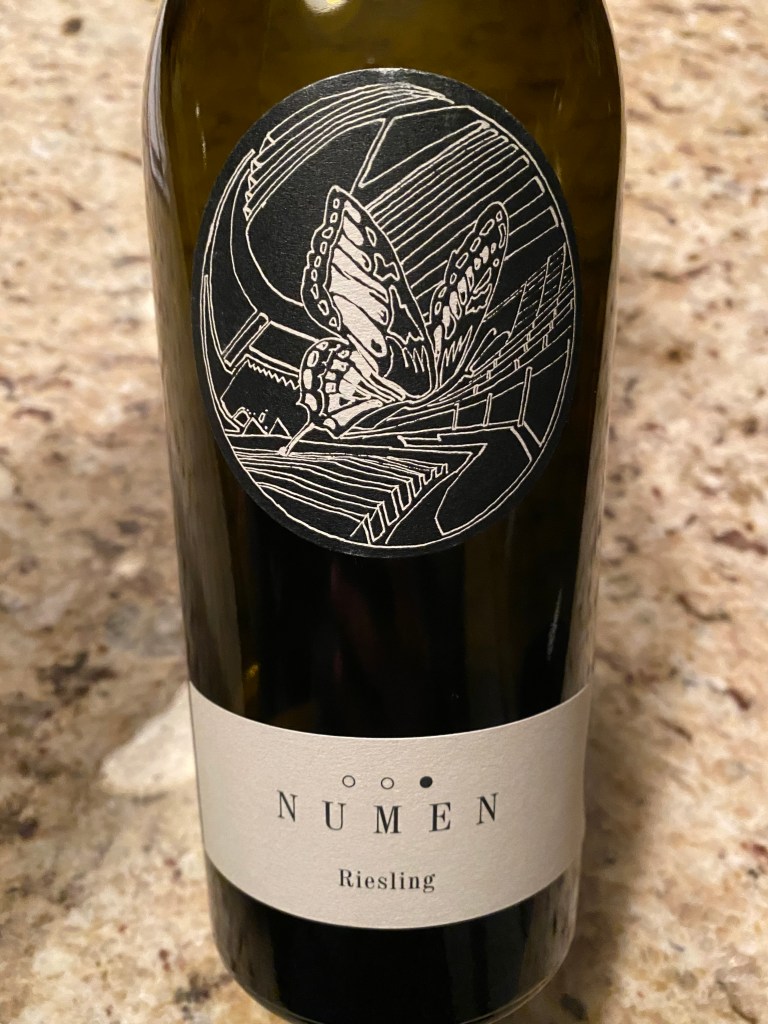
Today’s Wine: 2017 Numen Riesling

100% Riesling; 13% ABV

This Riesling, like all of Johannes’ wines, is spontaneously fermented. Further, the Numen Riesling is unfined, unfiltered, and there are no added sulfites. Though many people seem to be unfamiliar with natural wines, anything from Johannes Zillinger seems to be a great place to start.

The Numen Riesling is medium to deep gold in color, which kind of surprised me as most that I’ve tried are lighter. The nose is incredibly aromatic with aromas of peach, golden pear, yellow apple, meyer lemon, white florals, white pepper, petrol, and cream. Overall the nose provides a very exotic, slightly spicy and complex experience. Once in the mouth, the wine showcases notes of apricot, peach, lemon citrus, green apple, white spice, jasmine, and mineral. The wine is medium-bodied with medium (+) acidity and a long, dry finish.

Price: $50. This is quite possibly my favorite Riesling to date and I highly recommend trying it. Pair this with Chinese or Thai food, roasted pork, or Cajun food.

Easy-Drinking Cab

Today’s Story: Davies Vineyards

I am apparently loving the easy posts lately, as I previously wrote about Davies Vineyards back on October 9 in Who Wants Pie? Davies is a very historic winery with its roots dating back to 1862, while one of their more prominent fun facts is that Chinese laborers dug what became the first hillside caves in Napa Valley in 1870. I dive a bit more into the history, changes in ownership, and “dumb phase” during Prohibition in my previous post, so check it out!

Onto the (more) fun part…

Today’s Wine: 2012 JD Cabernet Sauvignon

76% Cabernet Sauvignon, 18% Malbec, 4% Merlot, 2% Petit Verdot; 13.5% ABV

The 2012 JD is medium to deep ruby in color, though it is moderately transparent. I used the Coravin system to snag a quick glass with lunch and let this breathe in the glass. On the nose, this wine showcases aromas of bright red cherry, redcurrant, blackberry jam, wild blueberry, graphite, cedar, slight baking spice, and a hint of vanilla. Once in the mouth, I get notes of plum, boysenberry, green herbs, asian spice, slate, cinnamon, and oak. This Cab is medium- to full-bodied and feels somewhat airy in the mouth while showing medium acidity, silky and almost fully integrated medium tannins, and a medium length finish. 925 cases produced.

Price: $45. This is a good value wine and an entry-level offering from the historic Davies Vineyards. Its bright fruit and easy drinking should make for a wine any Cab lover would enjoy. Pair this with lamb, steak, or even some bbq ribs or pork.

What Wine Is Meant to Be

Today’s Story: Red Cap Vineyards

Red Cap Vineyards’ story begins in 1998 with Tom and Desiree Altemus when they purchased a 10.5 acre property on Howell Mountain. Though Tom’s background is originally in finance working for IBM, he grew an appreciation for fine wine during business trips and ultimately quit to pursue a career as a chef in 1991. After graduating from the California Culinary Academy in San Francisco, Tom worked for famed chefs and restauranteurs including Michel Richard and Bradley Ogden before settling in at Brava Terrace in St. Helena. With the birth of the couple’s first child, Tom left the restaurant industry and the birth of their second child created the need to expand from Napa to Howell Mountain.

Having purchased their property, the Altemus family started planning their vineyards in 2000 with viability studies and archeological, biological, and botanical surveys. Due to seemingly endless regulations, the land was finally cleared and prepped in 2003 and the first vintage of Cabernet Sauvignon released in 2005 with 50 cases. Having personally visited the property, I can attest that the land is not only beautiful but the vineyard rows are stunning to look at. The vineyards are planted on iron-rich volcanic soil that in person is very red and rocky, while all fruit is grown organically and hand-farmed.

I’d now like to take an opportunity to discuss my visit to Red Cap Vineyards, because as one stop of many in Napa it was my favorite.

I visited Red Cap in September of this year, and my family and I were promptly greeted by Tom at his family’s home. Tom took us around the vineyards and described the soil, fruit, and his wines with such passion that I immediately became more excited to taste with him than I already was. Amongst chit chat, we got to taste grapes off the vine while Tom explained the seed color in relation to how soon he and his team would begin the harvest. After this tour of the property, we went inside to taste the 2016 Sauvignon Blanc and 2014 and 2015 Cabernet Sauvignon.

This tasting was the most intimate I have experienced, with my family and I sitting in the Altemus family home at their table. With wine in front of us, Tom brought out fresh homemade bread (made with yeast from the Red Cap fermentation process) alongside butter and sea-salt. The entire experience made my family and I feel as though we’ve been lifelong friends (or even family) with Tom as the conversation ranged across vast topics and we never felt we were there as visitors of a winery. Comically, we went dramatically over our “scheduled” time for the tasting but to me that is what made it so special. Add this all to the fact that Tom and his winemaker Rudy make mindbogglingly good wine and you can find me in heaven.

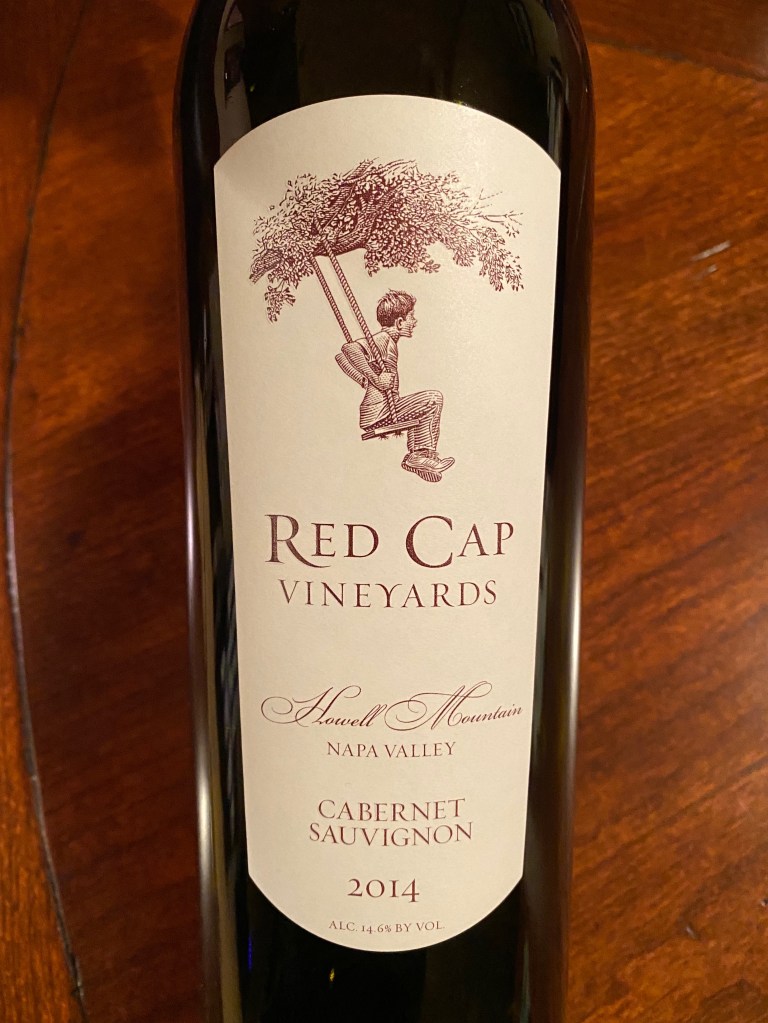
Today’s Wine: 2014 Cabernet Sauvignon

100% Cabernet Sauvignon; 14.6% ABV

Deep ruby (almost purple) in color with moderate staining on the glass. Due to its youth, I let this decant for three hours before drinking it over the following two hours. Once the nose opens up, I get incredibly concentrated aromas of blackberry, blueberry, and red berries alongside licorice, graphite, dried volcanic earth, white pepper, cedar, slight truffle, and green herbs. The palate showcases gorgeous mountain fruit of blueberry, blackberry, and raspberry accompanied by cigar box, baking spice, green underbrush, mint, and earth. This Cab is full-bodied with medium (+) acidity, high yet refined tannins, and a long finish dominated by notes of black cherry. Though this is already drinking beautifully with some air, I will wait at least 3-5 years before opening my next bottle and stagger them every couple years from there. 398 cases produced.

Price: $100 ($85 if you’re a club member). I have been very vocal with my friends and family for several years of the screaming value that Red Cap Cabernet is. Compared to some of their neighbors on Howell Mountain, Red Cap produces utterly incredible wines at a lower price-point. Pair this with steak, beef short ribs, lamb chops, or a high-quality burger.

From My Visit:

Note the red soil.
More rocky, red soil.
Tom giving us a tour of the vineyards.
Tom explaining how seed color can indicate harvest timelines.
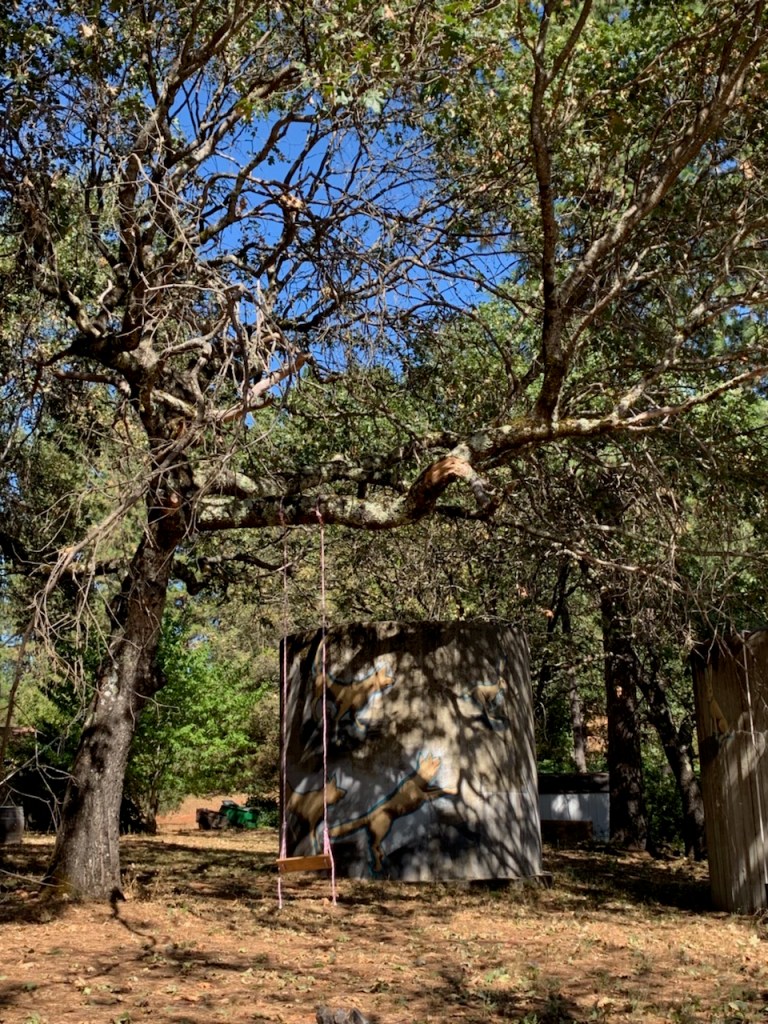
THE swing.

Santa Ynez Sangiovese

Today’s Story: Jonata

Short and sweet again today, as I wrote about Jonata and a different wine in my post Why Wait for Screaming Eagle? back on October 16.

Long story short, if you haven’t read my prior post, Jonata is owned by Stan Kroenke who also owns the LA Rams and Screaming Eagle. Kroenke bought 586 acres of property, though only 84 acres are planted under vine, and like many wineries in the area Jonata found success planting Rhône varietals such as Syrah but also grows Sangiovese and Bordeaux varietals. For more I’d steer you to my prior post.

Today’s Wine: 2010 Tierra

95% Sangiovese, 5% Syrah; 14.9% ABV

This Sangiovese is medium to deep ruby in color. Once this opened up in the decanter, I got aromas of blackberry, blueberry, redcurrant, mocha, smoked game, leather, and black tea leaf. In the mouth, the wine showcases notes of black cherry, blackcurrant, anise, charred earth, smoke, dark chocolate, and espresso. Overall this doesn’t have as much red fruit as I imagined it might, with the wine drinking very dark. This is medium-bodied with high acidity, medium (+) tannins, and a long, inky finish with notes of ground coffee.

Price: $90. I’d love to see this closer to the $75 mark, but I do believe it is fairly priced given its rarity, library release status from the winery, and quality. Pair this with roasted game, a rare steak, or pasta with a beef and tomato sauce.

Rustic, Terroir-Driven Burgundy

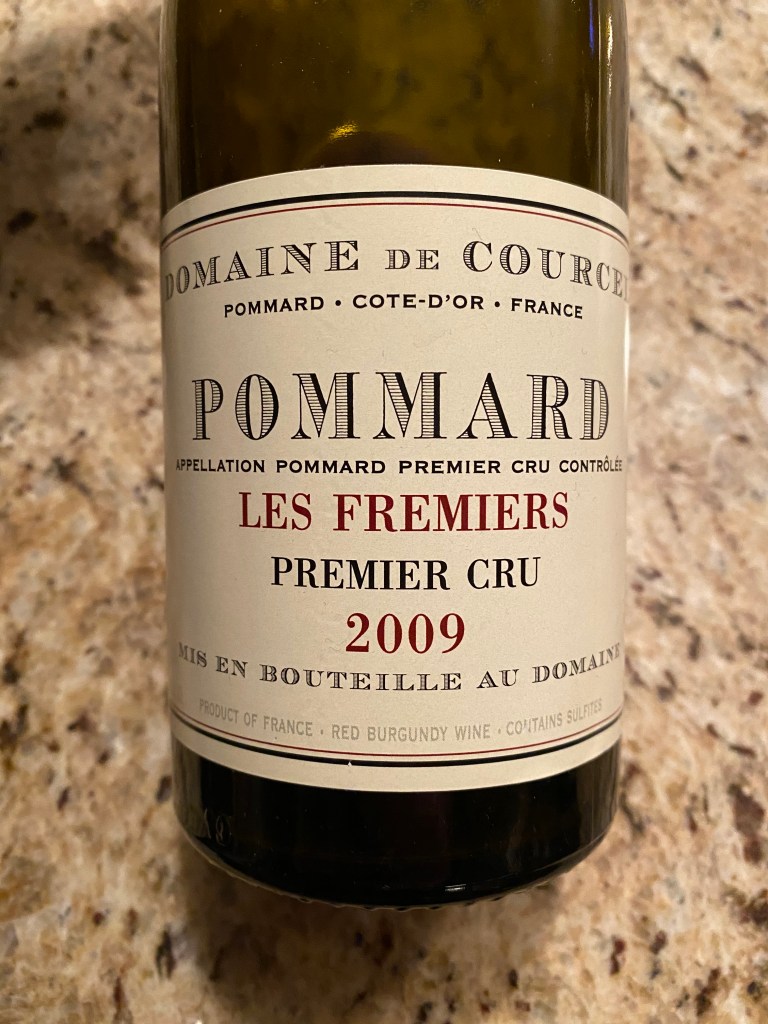
Today’s Story: Domaine de Courcel

Domaine de Courcel was founded roughly 400 years ago in the village of Pommard and is a family winery throughout its history. To this end, today the estate is managed by Anne Bommelaer and Marie de Courcel and its owners include three sisters and one brother who are descendants of the domaine’s founders. Production is somewhat limited at the domaine, with annual production numbers never rising above 30,000 bottles (2,500 cases).

The domaine owns vineyards on 10.5 hectares in Pommard, which is four kilometers from Beaune in the Côte de Beaune. From this land, the domaine produces seven different wines including four 1er Crus that account for roughly 75% of the vineyards. These 1er Crus include Le Grand Clos des Epenots (a monopole of the domaine), Les Rugiens, Les Frémiers (I am reviewing this today), and Les Croix Noires. Domaine de Courcel also produces a Pommard village wine Les Vaumuriens in additional to a Bourgogne Rouge and Bourgogne Blanc. Le Grand Clos des Epenots (about 50% of the domaine’s production) and Les Rugiens come from arguably some of the best vineyards in Pommard.

Throughout their history, the domaine endeavors to produce wines that showcase their individual terroir while being intense with great density. This effort begins in the vineyards where ploughing encourages biological activity and fosters an environment for vines to dig deep to express the terroir. They also prune their vines to optimize ripeness of the fruit and harvest relatively late in the season to maximize sugar intensity in the wines. Onto the winemaking process, grape selection is incredibly thorough and they go through cold maceration followed by low-temperature fermentation in an effort to extract intense aromas. After fermentation is complete, each cuvée goes through carbonic maceration to complete the process. All wine is aged in oak barrels replaced by third each year.

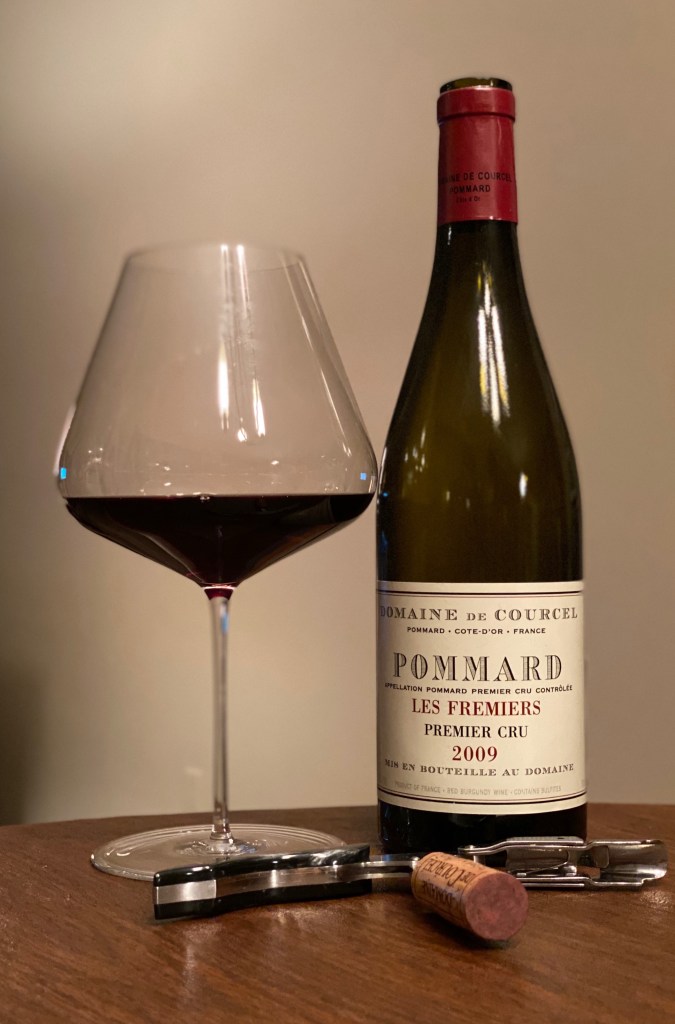
Today’s Wine: 2009 Pommard 1er Cru Les Fremiers

100% Pinot Noir; 13.5% ABV

This bottle came highly recommended by the owner of a local wine store, particularly due to my love of Burgundy and wines that are more terroir-driven. Having tasted this wine now, I would not call it a “people-pleasing” Pinot (though there aren’t many from Burgundy I do) though it hit its mark for my palate.

In appearance the wine is medium ruby while being moderately transparent. This took about 15 minutes to open up in the glass (though I could’ve decanted it to be honest) and the nose showcases aromas of black cherry, cranberry, licorice, cola, cinnamon, sous bois, slight barnyard, truffle, and wet stone. The nose does show some heat as well (alcohol). Once in the mouth, I get notes of ripe cherry, crunchy redcurrant, violet, tobacco, mocha, scorched earth, and spicy white pepper. Today’s Pinot is light- to medium-bodied with medium (+) acidity, medium yet integrated tannins, and a long finish.

Price: $180. Not a cheap bottle of Pinot Noir, but unfortunately almost all of Burgundy has seen massive price jumps over the last several years. This being said, I liked this earthy Pinot relative to some of the more expensive competitors and if you like very rustic wines this could suit you too. Pair this with roast game, grilled red meats, or a cheese and charcuterie plate.

Who Knew They Made a Chardonnay?

Today’s Story: Gargiulo Vineyards

Back-to-back easy posts this weekend, as I previously wrote about Gargiulo in my blog post Italy’s Favorite Grape…from California? back on October 20. If you’d like some background on this small, family-owned winery and haven’t read my previous post, check it out!

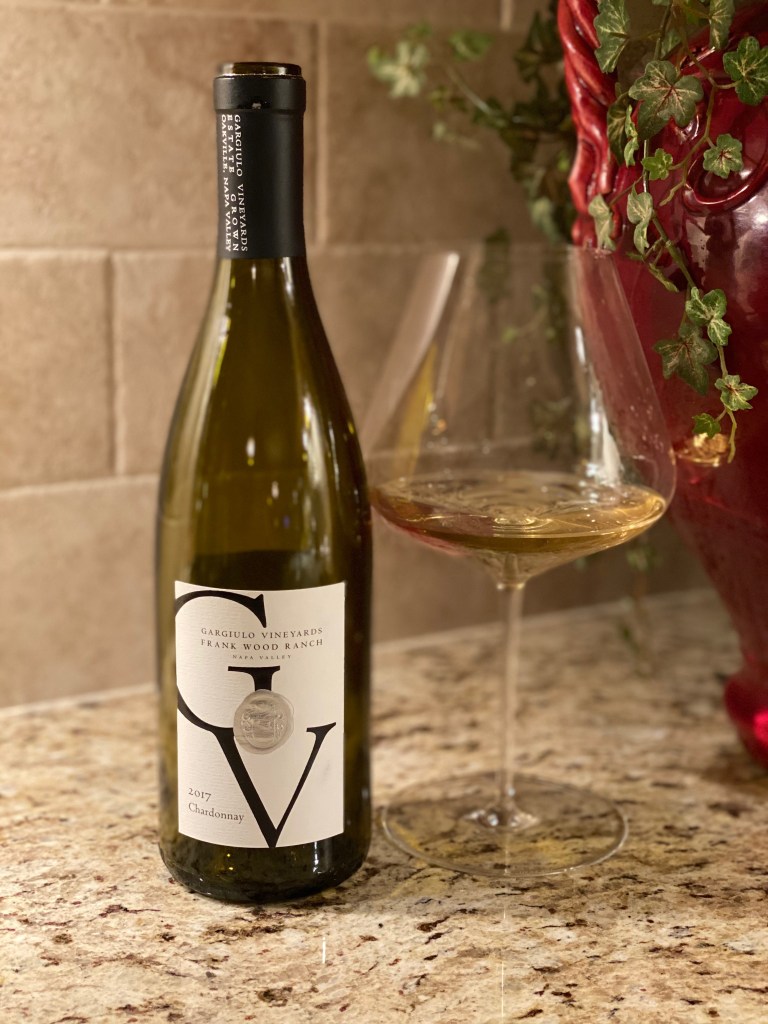
I will note, however, that Gargiulo does not grow their own grapes for the wine I am reviewing today. Known for their Cabs, Gargiulo produced this somewhat “under the radar” Chardonnay with grapes from Rich Frank’s (of Frank Family Vineyards) Wood Ranch Vineyard.

Today’s Wine: 2017 Frank Wood Ranch Chardonnay

100% Chardonnay; 13.6% ABV

I haven’t found a wine from Gargiulo that I didn’t like, with this Chardonnay being no exception. Interestingly enough, I was not entirely aware Gargiulo produced a Chardonnay and this is my first time tasting the wine.

This is pale gold in color and is completely transparent in the glass. The wine blossomed right out of the gates with a nose showcasing aromas of golden pear, stone fruit, lemon zest, almond, vanilla cream, and vibrant saline minerality. Once in the mouth, I get notes of apricot, yellow apple, lemon citrus, pineapple, toast, and a touch of butter. This Chard is medium-bodied with medium (+) acidity and a medium (+) length finish ending full and round. Superb effort again by Gargiulo.

Price: $70. This is up there with the Chateau Montelena Chardonnay (~$50) and Far Niente Chardonnay (~$60) which are two of my favorites. While this is delicious, that extra $10-20 could go toward something else but I won’t try to sway you either way. Pair this with baked chicken, shellfish, or a plate of cheese, pear, and apple.

Consistently Delicious Zin

Today’s Story: Ridge Vineyards

This is an easy one again today, as I previously wrote about Ridge Vineyards in my post History. Quality. Ridge. back on October 19. Long story short, this is another historic Californian winery and they produce some of my favorite Zinfandel-based wines and Cabernet Sauvignon. I highly suggest you read about their history if you haven’t already.

Without further ado…

Today’s Wine: 2012 Geyserville Vineyard

71% Zinfandel, 19% Carignane, 7% Petite Syrah, 2% Mataro, 1% Alicante Bouschet; 14.4% ABV

I’ve had this wine several times and across multiple different vintages, each time being a delightful experience. The wine is medium ruby in color while being moderately opaque. I simply let this breathe in the glass which helped bring out aromas of blackberry, plum, blueberry pie, black licorice, violet, and sweet tobacco. There is not a lick of tertiary aromas yet, which does not surprise me. Once in the mouth, I get notes of very dark plum, black raspberry, blueberry, dates, a hint of charred earth, and a touch of vanilla. This Zinfandel blend is medium-bodied showing medium (+) acidity, medium tannins, and a long finish with notes of black cherry.

Price: $45. As much as it pains me (as a consumer) to see Ridge prices rising from ~$30 a few years ago to where they are now, I still love these wines on a quality perspective. These are consistently well-made wines I suggest everyone try. Pair this with bbq pork or chicken, lamb, or duck breast.