Mouton Just Over the Hill

Today’s Story: Château Mouton Rothschild

Château Mouton Rothschild is a historic and highly regarded wine estate located in the Pauillac appellation on the Left Bank of Bordeaux. It is one of five First Growths in Bordeaux, however it did not achieve this status in the original Bordeaux Wine Official Classification of 1855 and instead received the status in 1973 after significant lobbying by Baron Philippe de Rothschild. The estate traces its roots back to the year 1720, when it took its name of Château Brane Mouton from Joseph de Brane when he purchased the estate from Nicolas-Alexandre de Segur. The estate was producing world-class wines during the 18th and 19th centuries, ultimately shifting hands when Baron Nathaniel de Rothschild purchased Brane Mouton in 1853 in a somewhat run-down state. Baron Nathaniel replanted the vineyards and changed the estate’s name, so Château Mouton Rothschild was born.

Though the Rothschild family owned the estate, Baron Nathaniel was part of the English branch of the family and never really traveled to or became involved in the estate. The modern era of the estate actually began in 1922, when Baron Nathaniel’s grandson Baron Philippe de Rothschild, then 20 years old, took over the estate and devoted his life to it. Baron Philippe wasted no time in improving the status of Mouton, becoming the first owner in Bordeaux to insist that all his wine should be bottled at the estate to maintain the highest quality standards and control from the vineyards to the finished product. This was at a time when many producers sold their wines to négociants in barrel for them to bottle, so it was already a revolutionary idea. With all bottling done at Mouton beginning in 1924, Baron Philippe built the now-famous Grand Chai in 1926 for necessary added storage. This Grand Chai is a popular and awe-inspiring stop on a visit to Mouton, as it is 100 meters long, beautifully designed, and home to 1,000 oak barrels on a single level.

Another important contribution Baron Philippe made to Mouton is the tie into art. Beginning with the 1945 vintage, the labels of the Grand Vin change each vintage and feature artwork created by world-renowned artists specifically for the Mouton bottles. For example, a couple of my favorite artists including Picasso and Warhol were featured in the past and add a unique, fun, and eye-catching aspect to the estate’s wines.

When Baron Philippe passed away in 1988, his daughter Baroness Philippine de Rothschild inherited the Mouton estate and left her acting career to pick up after her father’s passion. With her children Camille, Philippe, and Julien, the Baroness not only expanded the reach of the estate but also oversaw still-increasing quality and a stronger tie into the world of the arts. She also oversaw a renovation of the château, and a new vat room came into function in 2012 with a marriage of traditional and technological progress.

The Mouton estate today consists of 90 hectares (222 acres) of vines, planted to roughly 81% Cabernet Sauvignon, 15% Merlot, 3% Cabernet Franc, and 1% Petit Verdot. The vineyards lie on deep, gravelly soil which provides optimal growing conditions and the average vine age is 44 years. All harvesting occurs entirely by hand, with the fruit destemmed and sorted again at the winery before being gravity fed into the fermentation vats. The majority of these vats are made of oak, with a decent percentage left to stainless steel as well. All aging occurs in new oak barrels for about 20 months.

Today’s Wine: 1988 Château Mouton Rothschild

75% Cabernet Sauvignon, 13% Merlot, 10% Cabernet Franc, 2% Petit Verdot; 12.5% ABV

The 1988 Château Mouton Rothschild is deep garnet in color, not really showing any signs of bricking. I drank this as a pop-and-pour, which seemed to be the best bet as this didn’t really change too much over time in the glass. The aromas are of medium intensity, showcasing notes of cassis, cigar box, graphite, green bell pepper, olive, forest floor, coffee grounds, and cedar. Meanwhile the wine’s flavors are also of medium intensity, displaying notes of dried blackcurrant, tobacco, mocha, mushroom, dried green herbs, and cracked pepper. This is a dry red that is medium-bodied with medium acidity, medium (-) tannins, medium alcohol, and a medium length finish. Though I still get some nice notes on this, it is certainly over the hill with the tertiary notes dominating and the structure showing the test of time. I think drinking this 5 years ago would’ve been the correct timing.

Price: $550 (shared by a friend who paid $450). The value proposition of these wines is often less than stellar, for one because there are incredible values for half the price and two with wines of this age provenance becomes key. This bottle I would say was in very good condition and of excellent provenance, however you may get luckier in your tasting if you have an immaculate bottle. Nonetheless, consider drinking up.
Sleeper Vintage From a Storied Bordeaux Estate

Today’s Story: Château Haut-Bailly

Château Haut-Bailly is a historic Bordeaux wine estate, established during the 1530s by the Goyanèche and Daitze families in the Left Bank appellation of Pessac-Léognan. Haut-Bailly remained in the Daitze family until 1630, when it was purchased by Firmin Le Bailly and Nicolas de Leuvarde who were two wealthy Parisian bankers. It was Firmin Le Bailly who provided the estate with its name, still in use to this day. The Le Bailly family invested significantly in the improvement of the estate and its wines, passing it from generation to generation until 1736 when Thomas Barton came along. Barton, who was an Irishman, used his business savvy and connections to trumpet the quality of Haut-Bailly wines and helped spread them to England and Ireland where they became highly regarded. In 1872, Alcide Bellot des Minières purchased the Haut-Bailly estate and constructed the château which remains to this day. des Minières was also a gifted winemaker, adhering to precise and science-backed philosophies that further improved the wines and, in pricing terms, put them up with Château Lafite Rothschild, Château Latour, Château Margaux, and Château Haut-Brion. Unfortunately, phylloxera took its toll on the estate during the very late 1800s and Haut-Bailly entered the 20th century under a sense of turmoil.

During the first half of the 20th century, Haut-Bailly changed hands multiple times, new and questionable winemaking practices occurred, and the reputation faltered. In 1955, however, Belgian négociant Daniel Sanders purchased the estate and commenced a renaissance for both quality and reputation. Daniel and his son Jean renovated the vineyards and the winery, while also increasing the rigorous quality standards set in place to select fruit for the Grand Vin. By this point Haut-Bailly was a classified Cru Classé in the Classification of Graves in 1953 and 1959, and the wines certainly lived up to it. During the 1970s, however, the wines did take a slight dip once again as Daniel remained reluctant in his old age to give up control to his son Jean. With Daniel’s death in 1980, however, Jean fully took the helm and resumed the rise in quality. Haut-Bailly shifted into the hands of its current owners in 1988, when American banker Robert G. Wilmers purchased the estate. Jean Sanders remained on the team which later included fourth generation Véronique Sanders in a general manager capacity. Though Robert unfortunately passed away in 2017, Haut-Bailly remains in his family’s care with the same dedication and passion to this great and historic estate.

Château Haut-Bailly today consists of 30 hectares of vineyards situated in prime sandy and gravelly soils in the heart of the Pessac-Léognan appellation. The vineyards are planted to 60% Cabernet Sauvignon, 34% Merlot, 3% Petit Verdot, and 3% Cabernet Franc, with the plots undulating and at times reaching 20 meters higher than other plots around them. Haut-Bailly also maintains 4 hectares of century-old vines planted by Alcide Bellot des Minières, and while largely planted to Cabernet Sauvignon these special vineyards have plots of Carmenère, Merlot, Cabernet Franc, Malbec, and Petit Verdot as well.

Harvest and winemaking at Haut-Bailly follow the philosophy of gentleness and minimal intervention. All plots are harvested individually by hand so fruit is picked at optimal ripeness for each variety. After initial sorting in the vineyards, the fruit is destemmed and sorted by hand again before transferring directly into vats for fermentation. Each plot is vinified separately as well, allowing the winemaking team a plethora of blending options to showcase the varieties and terroir in the best sense possible vintage to vintage. Following time in concrete vats, the wines age in French oak barrels for 16-18 months before they are bottled.

To view the source of the information above, please check out the Château Haut-Bailly website here. You can also view pictures of the estate and peruse their portfolio which interestingly includes a Rosé.

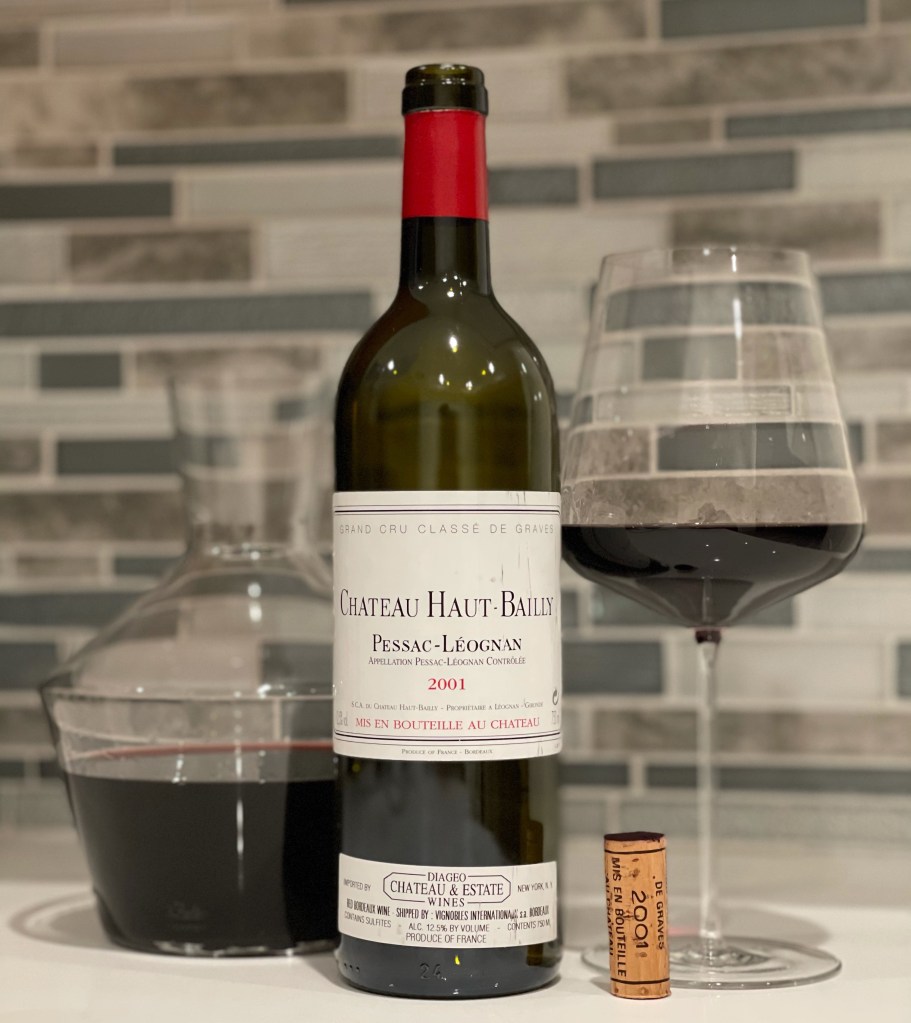
Today’s Wine: 2001 Château Haut-Bailly

65% Cabernet Sauvignon, 35% Merlot; 12.5% ABV

The 2001 Château Haut-Bailly is opaque deep ruby in color with deep garnet variation at the rim. This required a good 1.5 to 2 hours to decant, but it blossomed beautifully. The nose is of pronounced intensity, showcasing classic aromas of crème de cassis, redcurrant, violet, cigar box, black truffle, scorched earth, graphite, pencil shavings, black pepper, gravel, and a touch of vanilla. Meanwhile on the palate I get flavors of pronounced intensity including blackberry, black plum, cassis, licorice, violet, dried tobacco, mushroom, a hint of green bell pepper, dried green herbs, clove, and charred cedar. This dry red is medium- to full-bodied with medium (+) acidity, high but very fine-grained and luxurious tannins, medium alcohol, and a long finish. Gorgeous right now but certainly has the stuffing to develop further for at least another decade.

Price: $120. 2001 is a sleeper vintage in Bordeaux, and selection can sometimes be difficult. However, this 2001 Haut-Bailly is firing on all cylinders and offers very solid value in my opinion given its complexity, performance, age, and promise for the future. Well done.

Finding Value in Fifth Growth Bordeaux

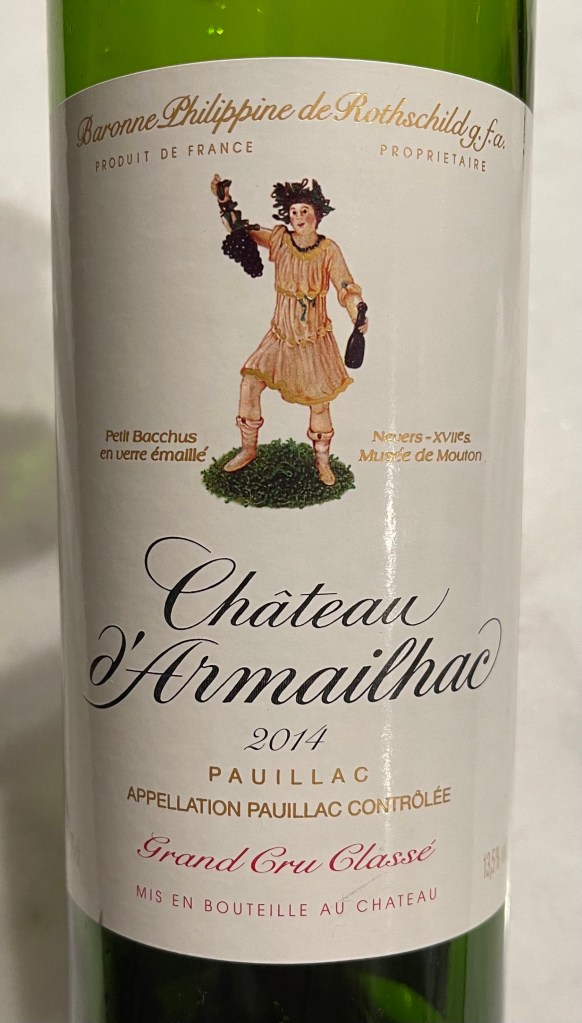
Today’s Story: Château d’Armailhac

Château d’Armailhac is a historic Fifth Growth Bordeaux estate located in Pauillac. Though the estate traces its roots to at least 1680 and brothers Dominique and Guilhem Armailhacq, the first solid record of vines on the property came later in 1750 and included 15 to 16 hectares of vineyards. By the end of the 1700s, the estate (called Mouton d’Armailhacq) benefited from the rapid growth of vineyards in the Médoc and grew to 52 hectares under vine, though the wines were not very highly regarded. The team spent the next several decades working tirelessly on improving the quality of the wines and were ultimately rewarded with higher prices and classification as a Fifth Growth in the Bordeaux Wine Official Classification of 1855. Later, in 1931, Baron Philippe de Rothschild became a minority owner in the estate and took full ownership in 1933. Château d’Armailhac is tightly woven together with Château Mouton Rothschild, with the former holding all technical and agricultural equipment for both estates in their outbuildings. In 1956 the estate was renamed Mouton Baron Philippe, then Mouton Baronne Philippe, and finally Château d’Armailhac in 1989 when Baroness Philippine de Rothschild elected to restore the estate’s original name.

Today, Château d’Armailhac’s vineyards total 70 hectares in northern Pauillac and they are planted to roughly 52% Cabernet Sauvignon, 36% Merlot, 10% Cabernet Franc, and 2% Petit Verdot. The estate’s vineyards are made up of the appellation’s famous deep gravelly soil which is perfect for producing wines of character and elegance. Come harvest, the process begins when the same team of Château Mouton Rothschild deems the fruit ready and all picking is done completely by hand. Each variety and each parcel moves to the winery separately, the grapes are entirely destemmed, and young vine fruit is vinified separately from old vine fruit. The wines age in 25% new oak barrels, with some coming from the Grand Chai of Château Mouton Rothschild, and they are run off every three months until fining with egg whites. Each vintage is only bottled when the winemakers and cellar master deem the wine is ready, so there is no strict formula or timeline for barrel aging.

Previously, I wrote about Château d’Armailhac when I reviewed the 1978 Château Mouton Baronne Philippe. If you care to read about how these wines can age, I encourage you to check out the tasting notes at the link above.

Today’s Wine: 2014 Château d’Armailhac

50% Cabernet Sauvignon, 36% Merlot, 12% Cabernet Franc, 2% Petit Verdot; 13.5% ABV

The 2014 Château d’Armailhac is opaque deep ruby in color, showcasing its youth. When I first pulled the cork, I was nervous this wine was an off bottle showcasing some pronounced nutty and oaky characteristics. However, given three hours to decant my worries were unwarranted and the wine blossomed beautifully. On the nose, which is of medium intensity, I get aromas of crème de cassis, redcurrant, black plum, violet, leather, graphite, cigar box, black pepper, clove, and cedar. Meanwhile the palate, which is deeper and more pronounced in intensity, showcases notes of redcurrant, blackcurrant, black cherry, red plum, licorice, tobacco, dried green herbs, green pepper, vanilla, and clove. This dry red is full-bodied with high acidity, high tannins, medium alcohol, and a long finish.

Price: $60 (I paid 49). I think this wine offers decent value for Pauillac and the greater Left Bank, especially at the sub-$50 price I found it for. While I would like a bit more intensity out of the nose, I still get all the classic Pauillac aromas and the overall balance of the wine is quite good. 2014 Bordeaux is really starting to show well, and I think this is a great effort from d’Armailhac.

Valiant Bordeaux Blanc in a Tough Vintage

Today’s Story: Château Haut-Brion

I recently wrote about Château Haut-Brion when I reviewed the 2014 Le Clarence de Haut-Brion in November, 2020, so if your memory is quite sharp feel free to skip to today’s tasting notes below. If, however, you’d like a refresher you can read on for the history of this great estate.

Château Haut-Brion is a historic Bordeaux wine estate that traces back to at least 1521, and it was awarded First Growth (Premier Grand Cru) status in the Bordeaux Wine Official Classification of 1855. In 1533, Jean de Pontac acquired the land that would become Château Haut-Brion and he immediately set about renovating the vineyards and expanding the estate. He is also the owner who, in 1549, started building the château. Jean de Pontac was instrumental in each vintage under his ownership until he passed away in 1589 at the age of 101, though the estate remained in the Pontac family by passing to his son Arnaud II and then Arnaud II’s nephew Geoffroy. Geoffroy’s son Arnaud III took over during the early 17th century and expanded the château itself while doubling the size of the vineyards. He also used his political influence to extend the fame and reputation of Haut-Brion, particularly in England.

As the influence of Haut-Brion grew, particularly amongst nobility and the intellects of the time (including John Locke), Joseph de Fumel inherited the estate from his father in 1749. The estate’s influence took another leap when, in 1787, Thomas Jefferson visited the château and wrote with great admiration about the soils and wines of Haut-Brion. The rosiness ended during the French Revolution, however, as Joseph de Fumel was beheaded by guillotine and his holdings were divided. Over the next four decades or so, the estate changed hands several times.

In 1836, Joseph Eugène Larrieu purchased the estate and worked tirelessly to improve on the exceptional wines it was known for. His efforts were rewarded when Haut-Brion was awarded Premier Grand Cru status in 1855, though pain struck again through disease and political upheavals within the region in the latter half of the 19th century. In 1859, Amédée took over upon his father’s death and replanted the vineyards over time to deal with mildew. By 1873 when his son Eugène took over Haut-Brion, there was optimism which unfortunately proved futile when phylloxera struck with a vengeance in 1880. Eugène spearheaded a massive replanting of the vineyards yet again, this time using rootstock from North America that was resistant to the disease.

Jumping forward through multiple new ownerships, the Dillon family came into the picture during the early 1900s. The owner at the time, André Gibert, faced the need to find a proper owner for Haut-Brion with no heirs of his own. Clarence Dillon, a banker from New York, visited in 1934 and received notice on his way back to America he could buy the estate. The purchase was finalized in 1935 and the Dillon family remains the owner of Château Haut Brion to this day. This purchase by the Dillon family helped bring Haut-Brion to the modern age, with them first installing electricity, new plumbing, and renovating the cellars. Over the decades that followed leading up to current times, the family continued to improve the estate, modernized the winemaking process with a high tech vat room, and completely renovated the château with utmost attention to detail.

Château Haut-Brion today consists of 51 hectares of vineyards located in the Pessac-Léognan appellation of Bordeaux. Of the 51 hectares, 48 are planted to red varieties of Merlot, Cabernet Sauvignon, Cabernet Franc, and Petit Verdot while the remaining 3 hectares are planted to white varieties of Sémillon and Sauvignon Blanc. Situated across from Château La Mission Haut-Brion (which I wrote about recently as well), Château Haut-Brion shares the same gravelly soil of small quartz stones above a subsoil of clay, sand, and limestone. Following the same practices of their neighbor, all fruit is harvested by hand and then sorted before transferral to temperature controlled vats for fermentation. After two weeks, the vats are drained and the wine moves to barrel where it spends 20-24 months before bottling. Château Haut-Brion produces four wines: Château Haut-Brion, Château Haut-Brion Blanc, and two 2nd wines named Le Clarence de Haut-Brion (red) and La Clarté de Haut-Brion (white).

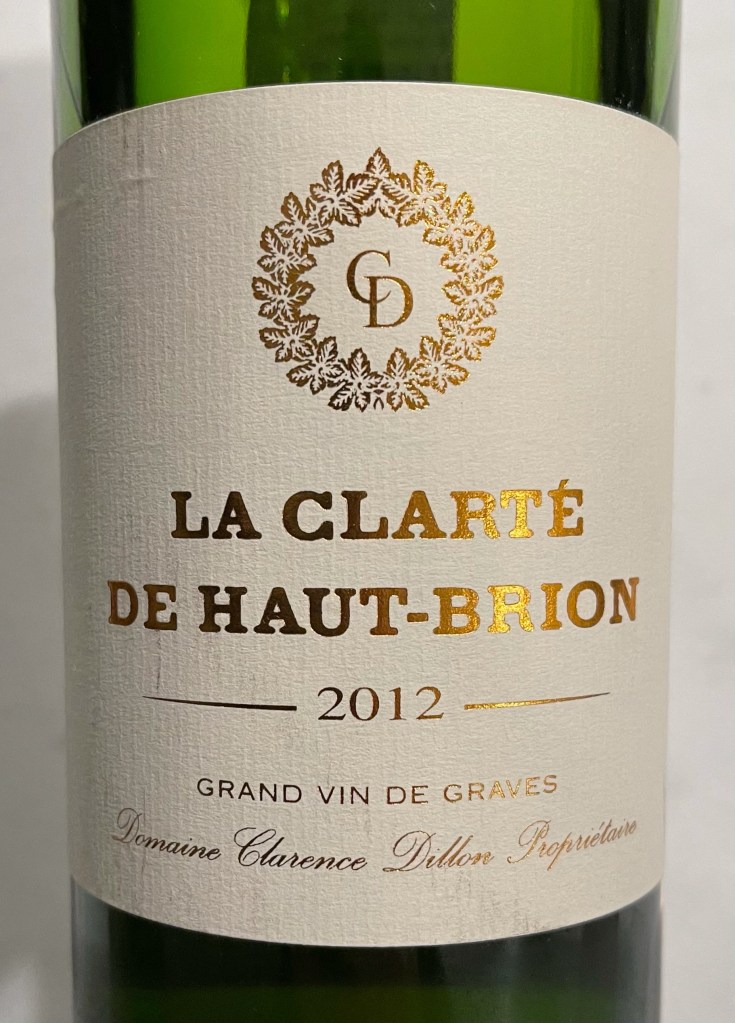
Today’s Wine: 2012 La Clarté de Haut-Brion

58% Sémillon, 42% Sauvignon Blanc; 14% ABV

The 2012 La Clarté de Haut-Brion is transparent pale gold in color. The medium intense nose showcases aromas of lemon, grapefruit, white peach, yellow apple, honeysuckle, dried herbs, chopped grass, white truffle, and wet stone. On the palate, I get medium intensity and notes of lemon, nectarine, grapefruit, dried pineapple, beeswax, chamomile, river stone, and saline mineral. This dry Bordeaux Blanc is medium-bodied with medium (+) acidity and a well-rounded mouthfeel into a medium (+) length finish.

Price: $100 (I paid $89). While not really a great vintage overall for Bordeaux, this was actually a very solid wine and showcases its age beautifully. I think the price I paid is fair given my experience, though I would probably seek out stronger vintages if I’m buying this bottling again.

Historic Pomerol Estate Showcasing Solid Value in an “OK” Vintage

Today’s Story: Château Certan de May

Château Certan de May (fully Château Certan de May de Certan) is a relatively small but historic wine estate situated in the Right Bank appellation of Pomerol in Bordeaux. The estate was established by the de May (Demay) family, who were Scottish settlers in France during the Middle Ages and received the land by royal decree during the 16th century. It wasn’t until the 18th century, however, that the de May family started producing wines which were well-regarded and products of this excellent terroir. To provide you an idea, the estate once included what is now Vieux Château Certan and Château Certan-Giraud but was divided up following the French Revolution. When the last member of the de May family passed away in 1925, the estate passed to the Barreau-Badar family and they own it to this day under Jean-Luc Barreau.

Relatively small in size, Château Certan de May consists of 5.5 hectares of vineyard land planted to 70% Merlot, 25% Cabernet Franc, and 5% Cabernet Sauvignon with an average vine age of 35 years. The vineyard soils are made up of clay and deep gravel, in turn yielding grapes and wines that are powerful and structured, yet elegant and complex. All of the fruit is hand-harvested and the winemaking style is quite traditional before the wines age in 60-80% new oak barrels for 16-20 months. From the mid to late 1980s until the mid to late 2000s, quality was hit or miss but has been drastically improved since then. Annual production sits around 2,000 cases per vintage, and pricing generally isn’t too “terrible” relative to many other wines in the appellation.

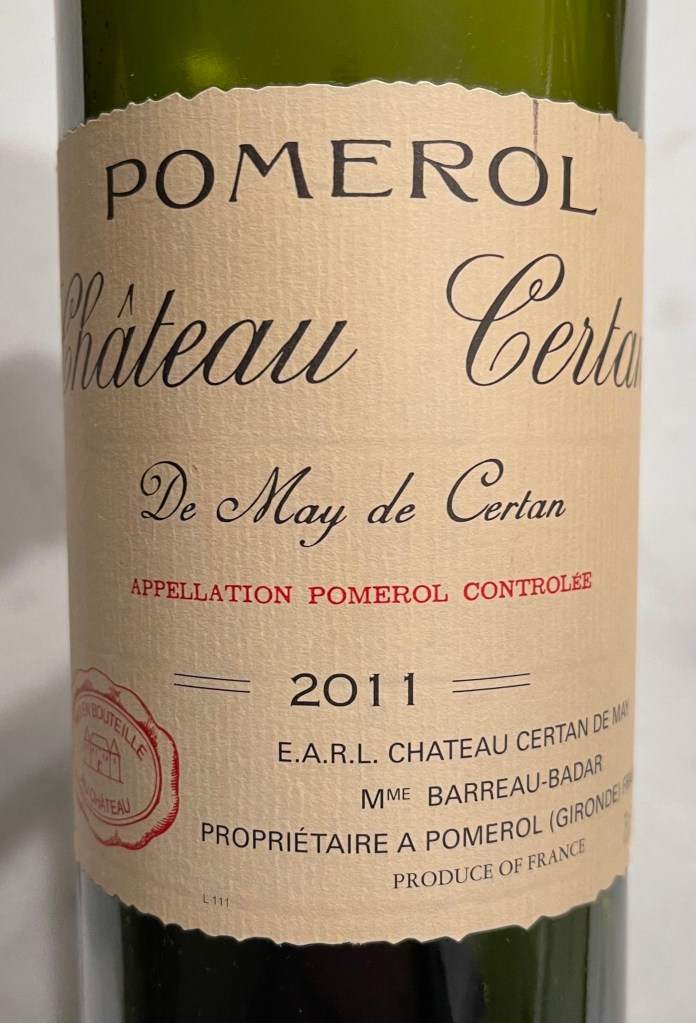
Today’s Wine: 2011 Château Certan de May

Merlot dominant proprietary blend (vineyards planted to 70% Merlot, 25% Cabernet Franc, and 5% Cabernet Sauvignon); 13% ABV

The 2011 Château Certan de May is opaque medium ruby in color. This certainly requires decanting, and I found it showing beautifully around the three hour mark and it only got better from there. The aromas are of medium intensity and include blackcurrant, black raspberry, plum, anise, violets, cigar box, forest floor, black truffle, grilled green herbs, and crushed rock. Meanwhile the flavors on the palate are of medium intensity and showcase black cherry, plum, blackcurrant, dried tobacco, earthy mushroom, chocolate, cola, cracked pepper, green herbs, and cedar. This dry red is medium- to full-bodied with medium acidity, medium tannins, and a long finish.

Price: $80. I was pleasantly surprised with this bottle, and I believe it offers very solid value given the “ok” vintage. For instance, the incredible 2009 and 2010 vintages sell for closer to $120 or $130. This is a very strong effort.

A Very Solid Value Play for Pauillac

Today’s Story: Château Haut-Bages Libéral

Château Haut-Bages Libéral is a Fifth Growth (Cinquième Cru) Bordeaux wine estate located in the Left Bank appellation of Pauillac. Established by the Libéral family who were négociants and vineyard owners in the early 1700s, Haut-Bages Libéral is named for its position on the Bages plateau and in homage to its founding family. The Libéral family created a solid reputation for their wines, ultimately earning classification as a Fifth Growth in the Bordeaux Wine Official Classification of 1855. Though the estate fell to a lower quality and state of somewhat disrepair during the wars and financial crises of the early 1900s, the Cruse family (owners of Château Pontet-Canet at the time) purchased Haut-Bages Libéral in 1960. The Cruse family engaged in widespread replanting of the vineyards and started to improve quality once again, though they sold the estate to the Villars-Merlaut family in 1982. Haut-Bages Libéral reached new heights under the Villars-Merlaut family, and Claire Villars-Lurton continues to run the estate today.

Today, Château Haut-Bages Libéral consists of about 30 hectares of vineyards planted to 70% Cabernet Sauvignon and 30% Merlot. The holdings are in great company within Pauillac, with the larger vineyard area neighboring Château Latour and a smaller vineyard area neighboring Château Pichon Baron. There is a third holding situated more inland as well. Haut-Bages Libéral practices organic viticulture as they work toward certification, though they include many biodynamic practices with an eventual goal of achieving biodynamic certification as well. Château Haut-Bages Libéral produces roughly 10,000 cases of wine per vintage, including the Grand Vin and their second wine (labeled as either Le Pauillac de Haut-Bages Libéral, La Chapelle de Bages, or La Fleur de Haut-Bages Libéral).

Today’s Wine: 2005 Château Haut-Bages Libéral

70% Cabernet Sauvignon, 30% Merlot; 13% ABV

The 2005 Château Haut-Bages Libéral is translucent deep ruby in color, which is still rather youthful and showing absolutely no bricking at this point. After about an hour decanting, this blossomed to showcase classic Pauillac aromas of blackcurrant, black cherry, redcurrant, pencil shavings, cigar box, tilled earth, mushroom, gravel, green herbs, and cedar spill. Meanwhile on the palate I get notes of blackberry, crème de cassis, black cherry, tobacco, graphite, eucalyptus, black truffle, cracked pepper, and iron. This is medium- to full-bodied with medium (+) acidity, medium (+) tannins, and a long finish. Drinks beautifully right now, but has the ability to go for at least another 5 years.

Price: $80 (paid $60 a few years ago). This was a very nice value surprise, especially having paid $60 for it a few years ago. It doesn’t have the power or depth like some of the higher-end 2005 Pauillac I’ve enjoyed, but it’s a very solid wine.

Outstanding Bordeaux Blanc From a Sauternes Legend

Today’s Story: Château d’Yquem

Château d’Yquem is a very special estate, one whose Sauternes are coveted the world over and whose wines are some of my favorites to have tasted. I previously wrote about the 2001 Château d’Yquem, and am excited to return with their Y (Ygrec) bottling today.

Château d’Yquem has a very long, mysterious history that traces its roots back to the 15th Century. One of the most interesting snippets of this history, for instance, is that the estate belonged to the King of England during the Middle Ages! In 1593, however, southwest France again came under control of the French crown by Charles VII and has remained as such since. It was also this year that the d’Yquem estate came under control of Jacques de Sauvage, a descendant of a local noble family. Though some winegrowing practices and late harvesting existed at this time, the Sauvage family did not start building the château for several more years and then began the long process of assembling land for the current estate plot by plot.

Jumping forward in time, it wasn’t until 1711 that the Sauvage family fully owned the estate under Léon de Sauvage d’Yquem. Furthermore, under the rule of Louis XIV, Château d’Yquem received noble status. The magnificent estate switched hands yet again, however, in 1785 when Françoise Joséphine de Sauvage d’Yquem married Count Louis Amédée de Lur-Saluces, a godson of Louis XV. Sadly, three years later in 1788, the Count died in a riding accident but his widow took over management of the estate and quickly displayed her acumen by sustaining and improving d’Yquem. One of the most notable practices at d’Yquem was established under Françoise Joséphine de Sauvage d’Yquem, for instance, which is picking over several passes (sometimes picking one grape at a time). Another notable feat under this young widow is the admiration noble figures around the globe felt toward d’Yquem, including Thomas Jefferson who reportedly purchased 250 bottles of the 1784 vintage for himself and additional bottles for George Washington.

Romain-Bertrand de Lur-Saluces, a grandson of Françoise Joséphine, took over the estate and helped guide it through seemingly endless successes in the second half of the 19th Century. For example, d’Yquem’s wines became a necessity for the rich and powerful throughout Europe, Russia, and Asia. In 1855, Château d’Yquem was awarded Premier Cru Supérieur in the Bordeaux Wine Official Classification of 1855, the only Sauternes awarded this level. Times changed, however, as they always do with estates of this age when World War I came and the château transitioned into a military hospital under Eugène de Lur-Saluces (a son of Romain-Bertrand). Eugène’s son Marquis Bertrand de Lur-Saluces took over the estate following the war (he had served in the trenches) and he is responsible for much of d’Yquem’s strength to this day. For instance, Marquis Bertrand fought relentlessly to save the estate during the Great Depression, helped determine many legal aspects of the Sauternes appellation as President of the Union des Crus Classés de la Gironde for forty years, and was a leading proponent of château bottling to guarantee authenticity. His death in 1968 changed the tides once again.

Though Bertrand was childless at the time of his death, he took precautions and named his nephew Alexandre de Lur-Saluces manager of Château d’Yquem. Alexandre struggled at first through difficult vintages, a crisis in the Bordeaux wine trade, and an inheritance tax that almost forced the estate to fail, though his efforts were saved with the exceptional 1975 vintage followed by several more during the 1980s. Alexandre managed the estate exceptionally well until 1996 when a family feud exploded over his brother’s decision to sell part of his 47% ownership stake, thus in turn requiring LVMH Moët Hennessy-Louis Vuitton to step in and purchase 55% of the estate. Though under new ownership, Alexandre remained manager of the estate until his retirement in 2004.

Though I could go on and on about d’Yquem’s terroir, vineyards, and winemaking practices I will leave it here with the history of Château d’Yquem. I encourage you to take a deeper dive on their website here to truly appreciate what goes into a bottle of this sacred juice.

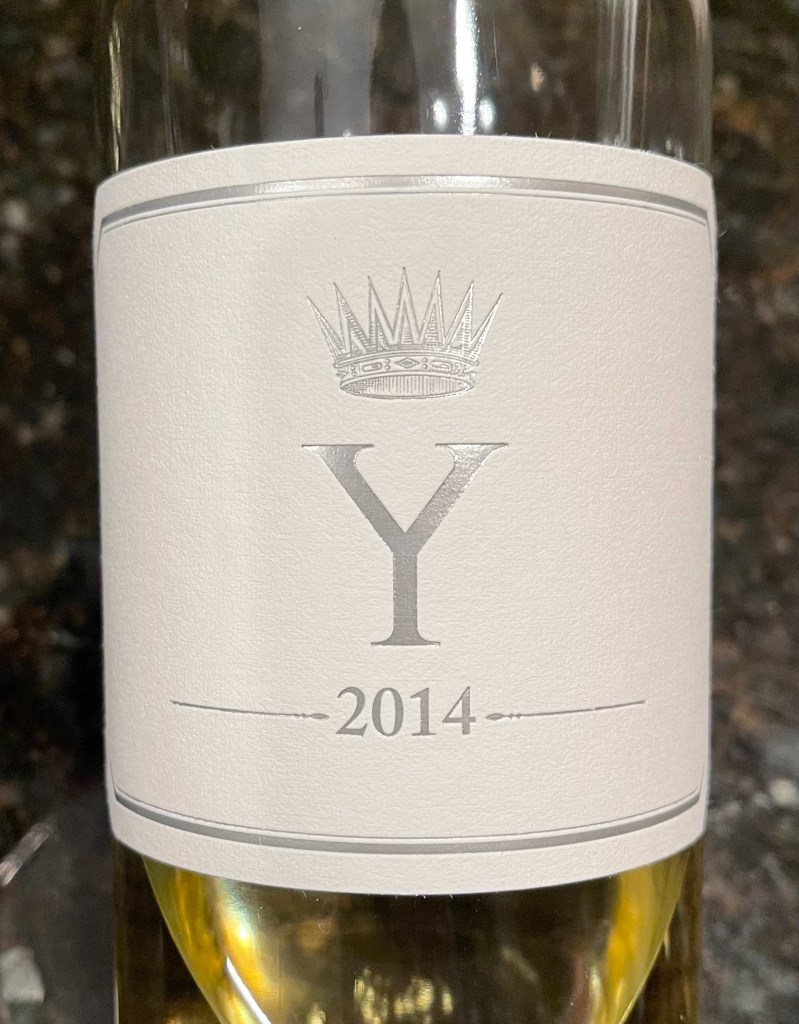
Today’s Wine: 2014 Y (Ygrec) d’Yquem

75% Sauvignon Blanc, 25% Sémillon; 14% ABV

The 2014 Y d’Yquem is transparent pale yellow in color with hues of straw and water white. This absolutely sings out of the bottle, dominated by a nose of white peach, tangerine, apricot, gooseberry, tropical citrus, honeysuckle, freshly cut grass, and beeswax. Meanwhile, on the palate, I get notes of pineapple, grapefruit, peach, lime, cantaloupe, white pepper, white florals, and wet stone. This is medium-bodied with mouthwatering high acidity and a velvety smooth mouthfeel into a long, seductive finish capped off with a touch of caramel (perhaps from the used d’Yquem barrels). Very hard to not gulp this down.

Price: $145. Though very expensive for a white wine, this is a great value in my eyes compared to the top-tier Bordeaux Blancs and other Sauvignon Blancs I’ve tried. This offers incredible depth, opulence, lip-smacking drinkability, and age-ability that is tough to beat.

The King’s Wine

Today’s Story: Château Lafite Rothschild

Château Lafite Rothschild is a world-renowned First Growth Bordeaux wine estate located in the left bank appellation of Pauillac. Though the winemaking prowess of Lafite came centuries later, the estate traces its roots to the year 1234 under ownership of Gombaud de Lafite and is labeled as a medieval fief during the 14th century. Though vines certainly existed on the property by the 17th century, it was Jacques de Ségur who is credited with planting the vineyards in the 1670s and 1680s and setting Lafite on its way to producing highly regarded wines. By the early 18th century, Lafite’s wines found a loyal following in the London market and, during the 1730s, became a darling of Prime Minister Robert Walpole. During that time, Jacques’ son Nicolas-Alexandre de Ségur improved the winemaking process and enhanced the quality and prestige of Lafite as he marketed it in France to the court of Versailles. By the mid-1700s, Lafite became known as “the King’s Wine” and found its place among the royal and aristocratic families of France.

Though Lafite was arguably the pinnacle of Bordeaux winemaking at the time, even becoming a darling of Thomas Jefferson following a later visit in 1787, the estate experienced some difficulties with changing ownership for a number of reasons. First, Alexandre de Ségur did not have any sons so he divided his estate (which included Château Latour) amongst four daughters. His grandson, Count Nicolas Marie Alexandre de Ségur, inherited Lafite but he was forced to sell to relative Nicolas Pierre de Pichard in 1784 due to financial difficulties. This ownership, however, was also short-lived because Nicolas Pierre was executed as part of the Reign of Terror in 1794 during the French Revolution. Lafite fell into public ownership for a few years, until Dutchman Jean de Witt purchased it in 1797 and set off a string of changing ownerships until Baron James de Rothschild purchased Lafite in 1868.

Though the end of the 1800s and first half of the 1900s were quite turbulent for Lafite, the Rothschild family maintained ownership of the estate and brought it back to prominence after World War II. This period included the phylloxera and mildew crises, WWI, the Great Depression, and occupation by German forces during WWII which saw ransacking of the cellars and theft of historical bottles of Lafite. When Baron Elie de Rothschild regained control at the end of 1945, Lafite was once again on the path to greatness with fantastic vintages in 1945, 1947, and 1949. As Baron Elie restored the vineyards and buildings, improved farming methods, and opened the winery to new markets including the United States, Lafite prospered and continues to do so to this day.

The vineyards of Château Lafite Rothschild today consist of 112 hectares planted in the classic, well-draining, deep gravel soils of Pauillac (though this includes 4.5 hectares in Saint Estèphe). They are planted to Cabernet Sauvignon (70%), Merlot (25%), Cabernet Franc (3%), and Petit Verdot (2%) with an average vine age of 39 years. For the Grand Vin, however, they do not use fruit from vines younger than 10 years old so the average vine age for the Grand Vin is closer to 45 years. Lafite practices traditional viticulture based on strict yield control and manual harvests, and they use little to no chemical fertilizers and are transitioning to organic viticulture. Vines are typically re-planted when they reach an age of about 80 years.

In the cellar, Lafite practices traditional vinification methods and ferments their wines separately plot by plot. Some of the fermentation occurs in traditional large oak vats, while some occurs in stainless steel vats before the wines are tasted and drawn off into wine vats. Malolactic fermentation then occurs before the wine is transferred into barrels by batch. Blending occurs after the first racking of these barrels, and then the wines age for 18-20 months. The wines are fined with egg whites and then bottled.

Today’s 1st Wine: 1981 Château Lafite Rothschild

Bordeaux Blend (no details on Lafite’s website); 12% ABV

The 1981 Lafite is translucent medium to deep garnet in color. Keeping with the cellar master’s practices at Lafite, I double decanted this and served it 3 hours later. The nose is rather feminine and took some time to open up, showcasing aromas of redcurrant, licorice, cigar box, pencil shavings, tilled earth, earthy mushroom, graphite, gravel, and cedar. Meanwhile the palate is certainly still kicking, offering notes of blackcurrant, redcurrant, violets, tobacco, forest floor, black truffle, cracked black pepper, graphite, and cedar. This is very well-balanced and medium-bodied with medium (+) acidity, well-integrated medium (-) tannins, and a medium (+) length finish. I don’t see this improving, so drink up if you have any.

Price: $750 (though we acquired it years ago for much less). It is always a special occasion to drink a bottle of Lafite, and the pricing is certainly justifiable based on how perfectly balanced and complex these wines can be. This bottling, however, seems to be past its prime and I wouldn’t suggest spending the money on it at this point.

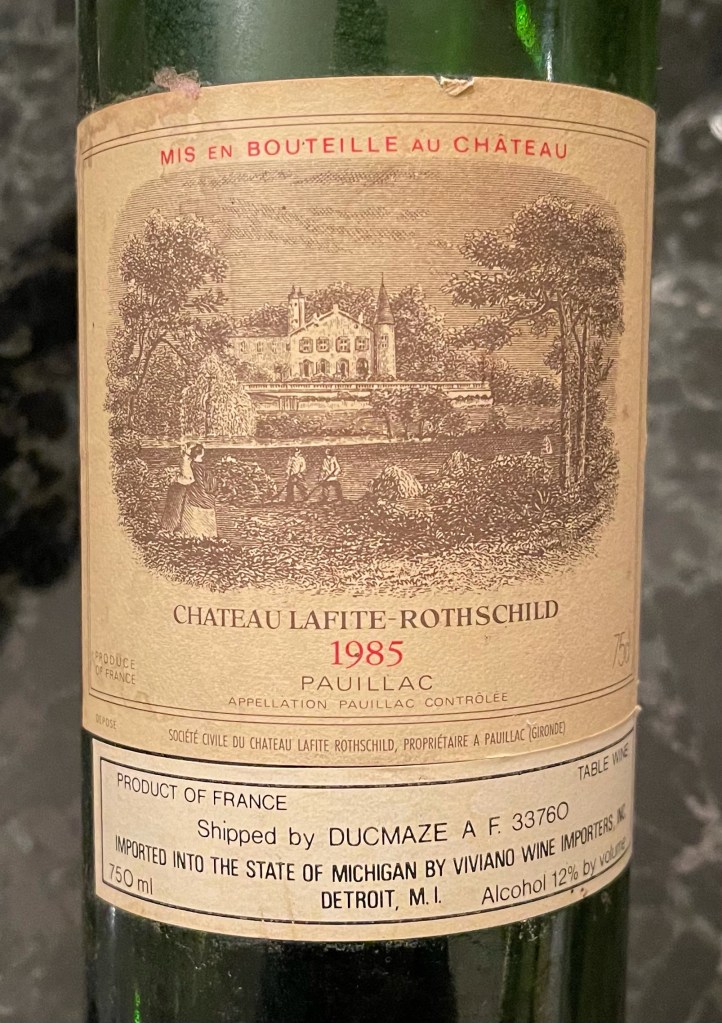
Today’s 2nd Wine: 1985 Château Lafite Rothschild

65% Cabernet Sauvignon, 25% Merlot, 10% Cabernet Franc; 12% ABV

The 1985 Lafite is translucent deep garnet in color, definitely a shade deeper than the 1981. I also double decanted this 3 hours before serving and it really came alive in the glass. The nose showcases classic aromas of blackcurrant, black cherry, black raspberry, lavender, cigar box, forest floor, black truffle, graphite, wet gravel, and grilled herbs. Meanwhile on the palate I get notes of cassis, redcurrant, dried plum, violets, tobacco, pencil shavings, scorched earth, black truffle, graphite, underbrush, and crushed rock minerality. This is medium-bodied with medium (+) acidity, dusty medium (-) tannins, and a long finish. Impeccably balanced with much more power than the 1981 vintage (no shock) tasted side-by-side.

Price: $985 (though we acquired it years ago for much less). This is perhaps the best vintage of Lafite I’ve tasted to date, and while the near four-digit price tag is seemingly outrageous I think it’s worth it for a special occasion.

The Winner Is…

This should come as no shock, but the 1985 absolutely steals the show here. The 1981 vintage is certainly alive and kicking, but is very feminine and I think past its peak in the plateau phase or start of the declining phase. The 1985 is showing its Comet Vintage pedigree, still offering incredible power and a structure that suggests there is still plenty of time to enjoy this bottling. Both wines are incredibly well-balanced and an absolute pleasure to drink, but the 1985 is simply the more perfectly wrapped package.

Aged Pauillac Striking up With the First Growths

Today’s Story: Château Pichon Longueville Comtesse de Lalande

I previously (and somewhat recently) wrote about Château Pichon Longueville Comtesse de Lalande and have reviewed the 1966, 1986, 2003, and 2008 vintages on this blog. Though I’ve tasted a number of other vintages including 1979, 1996, 2005, and 2014, the 1989 vintage remained elusive…until today.

Château Pichon Longueville Comtesse de Lalande is a Second Growth (Deuxième Cru) estate based on the Bordeaux Wine Official Classification of 1855. Pichon Lalande is considered by many to be a classic example of Pauillac, known for its deep, concentrated layers of ripe fruit accompanied by notes of cassis, tobacco, and earth.

With nothing short of a somewhat tumultuous history, Pichon Lalande’s ownership changed hands over the years and earned its name when the founder’s daughter Therese received it as a dowry for her marriage to Jacques de Pichon Longueville. During the 18th century, the estate was dominated by women (Therese de Rauzan, Germaine de Lajus, and Marie Branda de Terrefort) throughout the winemaking process until Baron Joseph de Pichon Longueville took over for his mother. In 1850, with his death, the estate split between his two sons and three daughters and ultimately resulted in the division of Comtesse de Lalande and Pichon Baron.

With no familial heirs, Edouard Miailhe and Louis Miailhe purchased Pichon Lalande following WWI. Edouard’s daughter, May-Eliane de Lencquesaing, took over management in 1978 and became a prominent ambassador for Bordeaux wines while dramatically increasing quality of her estate. One of her major endeavors, and possibly most famous, was growing the size of Pichon Lalande from 40 hectares of vines to 89. In 2007, however, May-Eliane sold a majority stake of the estate to the Rouzaud family, owners of Roederer Champagne, and management changes as well as renovations took place.

Today’s Wine: 1989 Château Pichon Longueville Comtesse de Lalande

45% Cabernet Sauvignon, 35% Merlot, 12% Cabernet Franc, 8% Petit Verdot; 12.5% ABV

The 1989 Pichon Lalande is translucent deep ruby in color with deep garnet hues. There’s absolutely no bricking either, which is fantastic. We served this as a pop and pour and let it develop in the glass, with the nose showcasing aromas of blackcurrant, blackberry, pencil shavings, tobacco, forest floor, cedar, graphite, green pepper, and eucalyptus. Meanwhile on the palate, I get notes of redcurrant, cassis, blackberry, black cherry, cigar box, scorched earth, green underbrush, bell pepper, gravel, and clove. This is medium-bodied with medium (+) acidity, medium tannins, and a long finish. Beautifully balanced and not showing any signs of its age yet.

Price: $300 (but this was shared by a good friend). Though not nearly an inexpensive bottle of wine, if you can verify provenance and find a bottle with a great fill level, I would give this a shot. Pichon Lalande has outperformed with each of the 9 vintages I’ve tried and oftentimes these drink like the First Growths. Great value.

Another Stunning 2014 Bordeaux

Today’s Story: Château Pontet-Canet

Château Pontet-Canet is a historic Bordeaux wine estate located in the Left Bank appellation of Pauillac. In 1705, Jean-François de Pontet (who was Governor of the Médoc) acquired a few acres and planted them to vine. By the 1720s, Jean-François and his descendants had expanded the estate by purchasing parcels in a place known as Canet and Château Pontet-Canet was born. For over a century, Château Pontet-Canet remained in the Pontet family hands and ultimately received classification as a Fifth Growth (Cinquième Cru) in the Bordeaux Wine Official Classification of 1855. A decade later, in 1865, wine merchant Herman Cruse purchased Pontet-Canet and marked the first change in ownership since its establishment.

Though the Cruse family maintained ownership of Pontet-Canet for 110 years, the estate never seemed to live up to its quality potential. This began to change, however, when Cognac merchant Guy Tesseron purchased the estate in 1975 and set about replanting the vines in desperate need of repair. The family then worked on transitioning the vineyards to sustainable farming and a more “minimally invasive” philosophy of viticulture. When Alfred Tesseron took over in 1994, this ultimately spawned into a transition to organic and then biodynamic viticulture, which Pontet-Canet moved to fully by 2005 (they were certified organic and biodynamic several years later in 2010).

This minimally invasive philosophy for the vineyards transfers into the actual winemaking process as well. Beginning with harvest, all fruit is hand-sorted before being destemmed and hand-sorted again. The wine ferments with natural yeasts and minimal intervention, with maceration lasting an average of four weeks before the wine is run off with gravity. Over time, Pontet-Canet has reduced the amount of new oak they use so as to not mask the expression of place in the wine and today the Grand Vin ages in 50% new oak, 35% dolia (concrete amphorae made specifically for Pontet-Canet), and 15% 1-year-old barrels. The 2nd wine (Hauts de Pontet-Canet), meanwhile, ages in 100% 1-year-old oak barrels.

Pontet-Canet is a pretty large estate, today consisting of 120 hectares with 81 hectares planted to vine. The breakdown by variety is 62% Cabernet Sauvignon, 32% Merlot, 4% Cabernet Franc, and 2% Petit Verdot. To learn more about Château Pontet-Canet, I recommend visiting their website here for, at the very least, some great pictures.

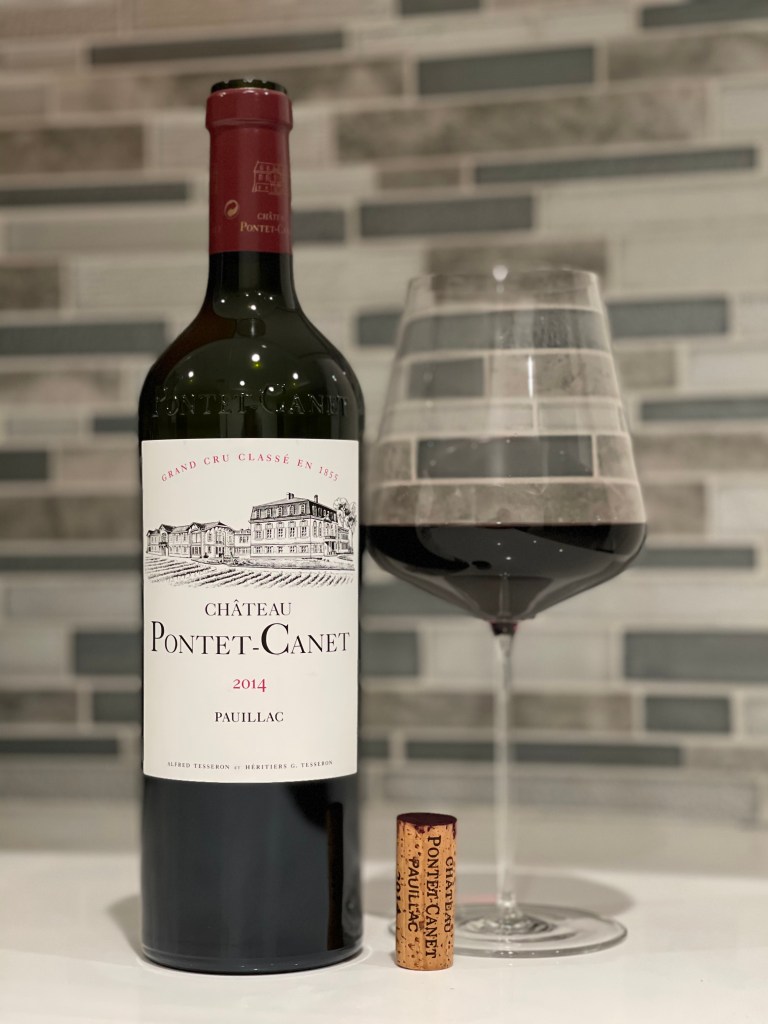
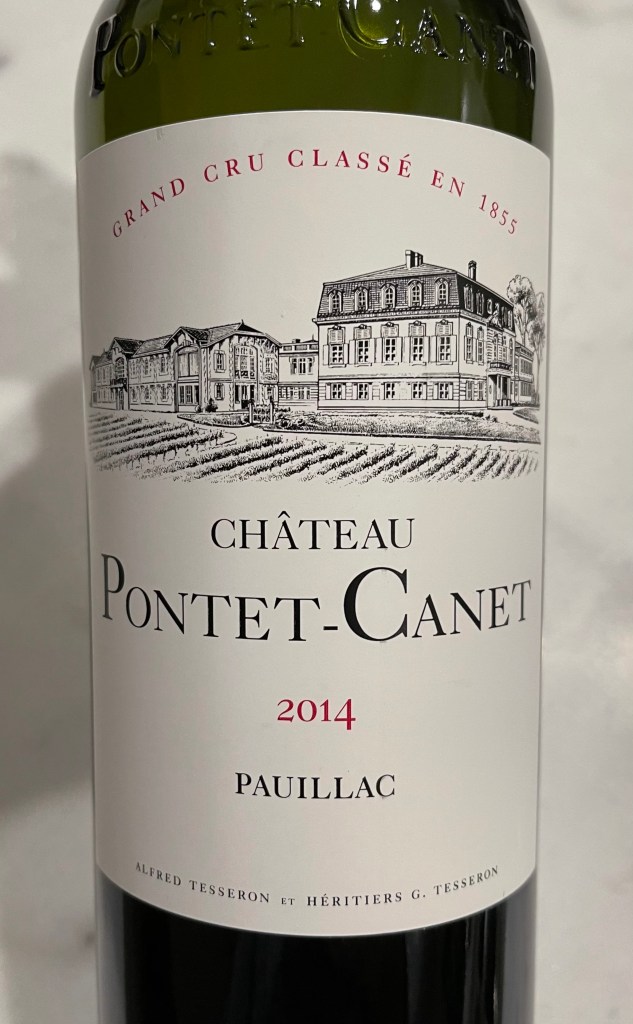
Today’s Wine: 2014 Château Pontet-Canet

65% Cabernet Sauvignon, 30% Merlot, 4% Cabernet Franc, 1% Petit Verdot; 13.5% ABV

The 2014 Pontet-Canet is opaque deep ruby in color. I know this is young, but in an effort to continue my tasting of various 2014 Bordeaux wines I cracked into it early. With that in mind, I decanted this bottle for 6 hours and drank it over the following 2 hours. Once this opens up, the nose showcases classic Pauillac aromas of blackcurrant, black raspberry, plum, redcurrant, lavender, cigar box, pencil shavings, loamy earth, graphite, green herbs, cedar spill, and mild oaky spice. Meanwhile on the palate I get notes of crème de cassis, blackberry, plum, black cherry, violet, anise, tobacco, wet earth, dried coffee grounds, chocolate truffle, black pepper, clove, and a hint of oak. This is full-bodied with beautiful high acidity, high grippy tannins, and a long finish of 45+ seconds. This has plenty of elegance right now, though it is still pure power and should surely develop into an iron fist in a velvet glove.

Price: $120. I think this is a very nice value, as I’m finding with a lot of 2014 Left Bank Bordeaux. Particularly when overshadowed by the 2015 and 2016 vintages, wines like this provide great quality for the price and are just starting to come into their own. I highly recommend adding this Pontet-Canet to your 2014 collections.