Napa People-Pleaser of Palpable Quality

Today’s Story: John Anthony Vineyards

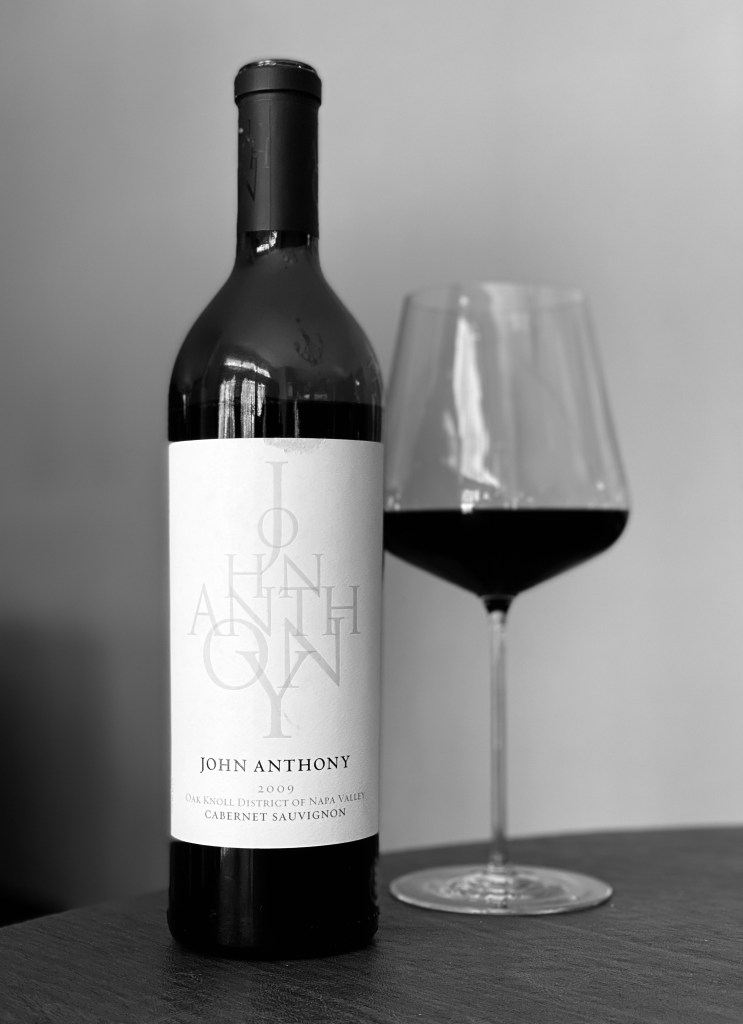
John Anthony Vineyards was established by John Anthony Truchard and his wife Michele after he planted his own vineyards during the late 1990s and harvested his first vintage of Cabernet Sauvignon and Syrah in 2003. A second generation vintner, John learned a great deal about farming and winemaking at an early age working alongside his father at Truchard Vineyards. When he was in his early 20s, John started his own vineyard management company and farmed vineyards on nights and weekends before ultimately planting his own fruit and securing long-term leasing agreements to foster his dream of bottling his own wine. John selected Bordeaux, Burgundy, and Rhône clones when he planted his vineyards and the resulting wines are elegant and terroir-driven while each showcasing a unique place. John oversees the entire winemaking process from vineyard to cellar and bottles his wines into four distinct categories: AVA Series, Single Vineyard, Reserve, and The One. The wine I’m reviewing today falls into the Single Vineyard category, with other options being Crane Vineyard, Church Vineyard, and Coombsville District.

Note: John and Michele also started JaM Cellars in 2009 with the goal of producing affordable yet quality wines. They started with a bold, fruit-forward Cabernet Sauvignon priced under $20 but have since expanded the portfolio to include Butter Chardonnay, Toast Sparkling, and Candy Rosé.

Today’s Wine: 2009 Oak Knoll District Cabernet Sauvignon

100% Cabernet Sauvignon; 15.2% ABV

The 2009 Oak Knoll Cabernet Sauvignon is opaque deep garnet in color with ruby hues and pale garnet variation near the rim of the glass. Once this opens up, the nose showcases aromas of ripe red cherry, dried raspberry, redcurrant, blueberry, cedar, chocolate, clay, musky tobacco, red licorice, and truffle. On the palate, I get notes of dusty blackberry, ripe blueberry, cherry, jammy plum, tobacco leaf, black tea, graphite, forest floor, green garden herbs, coffee, and oak. This wine is medium- to full-bodied with medium acidity, velvety and integrated medium (-) tannins, and a long finish dominated by notes of rose and licorice.

Price: $80 on release (the current vintage 2015 sells for $125 at the winery). This is drinking really well right now and it is not as jammy/fruit-forward as some of the wines from John Anthony I’ve had prior. I still think this fits into the people-pleasing camp but today’s typical Cab lover would enjoy this. Pair with filet mignon, herb-roasted lamb, or mature hard cheeses.

Revisiting an Old Friend

Today’s Story: Gargiulo Vineyards

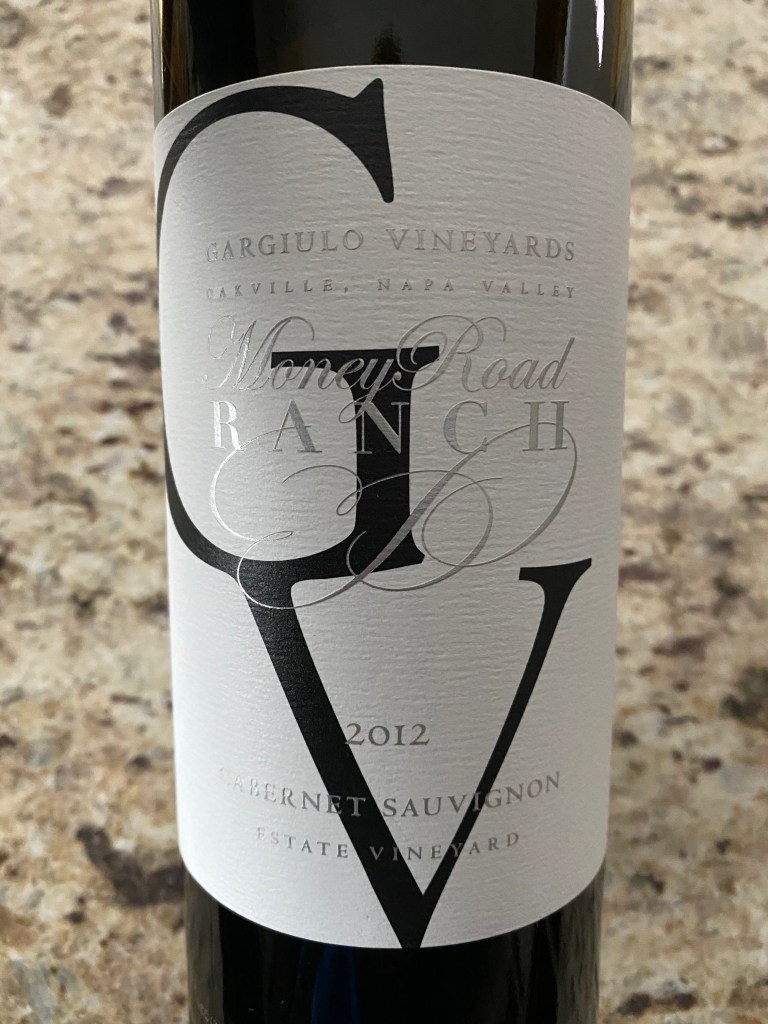
Gargiulo is a small, family-owned winery in Oakville, Napa Valley that produces about 3,400 cases of wine each year from two vineyards. Owners Jeff and Valerie Gargiulo bought their first vineyard, Money Road Ranch, in 1992 to fulfill their winemaking dream, adding to the property in 1997 by purchasing the 575 OVX property. Founded as a Cabernet Sauvignon estate, Gargiulo produces three different Cabs and a Sangiovese, though they also have Cabernet Franc, Petite Verdot, and Merlot planted for blending in their G Major 7 Cab. Gargiulo produces small amounts of Chardonnay from Frank Wood Ranch and a rosé of Sangiovese as well.

I recently reviewed Gargiulo’s 2009 Money Road Ranch Cabernet Sauvignon in Gotta Get That Money (Road), so I thought it would be interesting to check in on the 2012 vintage while it is still fresh in my mind. Earlier, I reviewed Gargiulo’s 2015 Aprile Sangiovese in Italy’s Favorite Grape…from California?.

Today’s Wine: 2012 Money Road Ranch Cabernet Sauvignon

100% Cabernet Sauvignon; 14.6% ABV

The 2012 Money Road Ranch Cab is deep ruby/purple in color and almost entirely opaque. Once this opens up, the wine showcases aromas of blackberry jam, crème de cassis, wild blueberry, spiced plum, redcurrant, green herbs, tobacco, fresh leather, black volcanic soil, slate, and toasted oak. On the palate, I get notes of black cherry, juicy plum, boysenberry, licorice, cedar, damp rocky earth, ground black peppercorn, black tea, cardamom, and a hint of vanilla. This wine is medium- to full-bodied with moderate acidity, remarkably integrated and velvety medium (-) tannins, and a medium (+) length finish that adds notes of iron and smoke. Though you can certainly draw the parallels between the 2009 and 2012 vintages in terms of style and expression, the 2012 is certainly more elegant and velvety in its mouthfeel where I felt the 2009 was a bit more jammy and syrupy. 1,236 cases produced.

Price: $80 direct from the winery upon release. This is a very solid vintage for the Money Road Ranch bottling and, alongside the 2007 and 2013 vintages, one of my favorites that I’ve tried. Pair this with filet mignon, pepper-crusted ahi tuna, or lamb.

Unique Blend from Walla Walla

Today’s Story: K Vintners

K Vintners was established by Charles Smith as his first winery in December 2001. Located at the base of the Blue Mountains in Walla Walla, Washington, K Vintners produces small lot single vineyard Syrah and field blends of Syrah, Cabernet Sauvignon, Grenache, Tempranillo, and Viognier which are all picked by hand, fermented using only natural yeasts, and basket pressed. Though Charles spent a lot of time during his developmental years traveling throughout the state of California and grew an appreciation for wine, his real passion for the beverage spawned during his time living in Scandinavia for roughly a decade. As a manager for rock bands and concert tours, Charles spent a great deal of time wining and dining before moving back to the United States in 1999. On a journey through Walla Walla in late 1999, Charles met a young winemaker who shared his passion for Syrah and Charles was convinced to move to the small city to make his own wine. In December 2001, Charles released 330 cases of his first wine, the 1999 K Syrah.

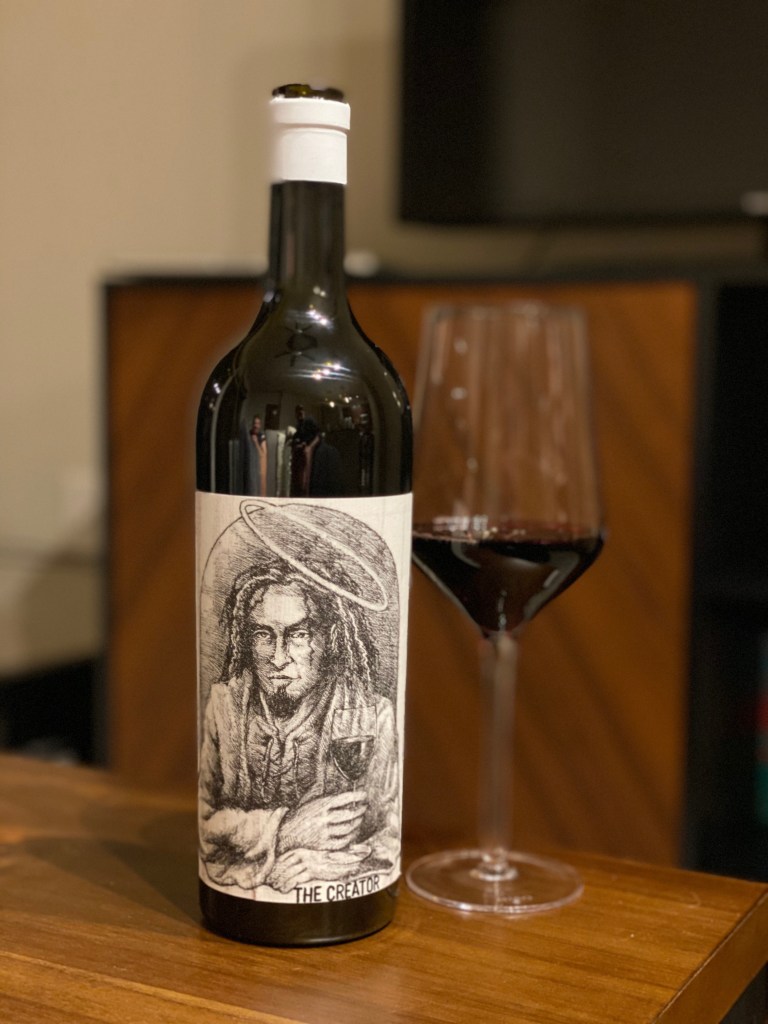
Today’s Wine: 2016 The Creator

80% Cabernet Sauvignon, 20% Syrah; 13.5% ABV

The 2016 The Creator is medium to deep ruby in color and moderately transparent. After some decanting, this wine showcases aromas of black cherry, blackberry, boysenberry, french style green beans, green bell pepper, ground black pepper, underbrush, coffee grounds, black olive, and smoke. The nose is rather herbaceous and earthy with fruit not necessarily leading the show. Once in the mouth, the wine displays notes of plum, blackberry, black raspberry, pomegranate, tobacco, forest floor, dried underbrush, herbal tea leaf, and flint. This is full-bodied with high acidity, medium (+) tannins, and a long finish.

Price: $50. Very pleasantly surprised with this wine, which offers a drinking experience I will remember for a long time thanks especially to the very unique nose. This is a supremely balanced wine for its youth and the velvety mouthfeel and lower than usual alcohol makes for an easy drinker. Pair this with herby red sauce pasta, a good burger, or veal.

Baby Grange

Today’s Story: Penfolds

Penfolds was founded in 1844 by Dr. Christopher Penfold, an English physician by trade, and his wife Mary. Penfolds is one of the oldest and most famous wineries in Australia, with the first vines planted by Dr. and Mrs. Penfold with cuttings they brought when they emigrated there. Over time Penfolds grew successfully and their early production of Claret and Riesling proved popular, though many of the day-to-day operations of the winery fell to Mary since Christopher’s medical practicing occupied much of his time. When Christopher unfortunately passed in 1870, full responsibility fell to Mary. Mary later retired in 1884 and her daughter Georgina took over the estate when Penfolds was producing 1/3 of South Australia’s wine. When Mary died in 1896, the Penfolds legacy was continuing to grow with the exploration of new winemaking techniques and they became the largest winery in Australia by 1907.

In 1948, Penfolds hired who would become one of the most famous winemakers in Australia and throughout the world of wine: Max Schubert. An innovator in his field, Max catapulted Penfolds onto the global stage by crafting wines built for incredible aging through experimentation and ultimately the release of Penfolds Grange in the early 1950s. Labeled as “Grange Hermitage” and crafted with Shiraz, Grange is one of the world’s most famous wines and you often find it at the store for $700+ per bottle. In 1959, the unique “Bin” labeling started at Penfolds with the first being a Shiraz named simply for its storage area in the cellars. This Kalimna Bin 28 became the first Penfolds Bin numbered wine.

Though a lot has changed over the years at Penfolds, the experimental spirit of winemaking continues to live on to this day. All of their wines fit into categories of single vineyard or single block, single region or sub-region, and multi-region or multi-varietal blending in an effort to showcase each category’s character. The wine I’m reviewing today, for instance, fits into the multi-region or multi-varietal category while something like the Magill Estate Shiraz fits into the single vineyard or single block category. At the head of a team of roughly 10 winemakers crafting these wines, Peter Gago is chief winemaker today and the fourth in the history of Penfolds. For more about Penfolds, check out their website here.

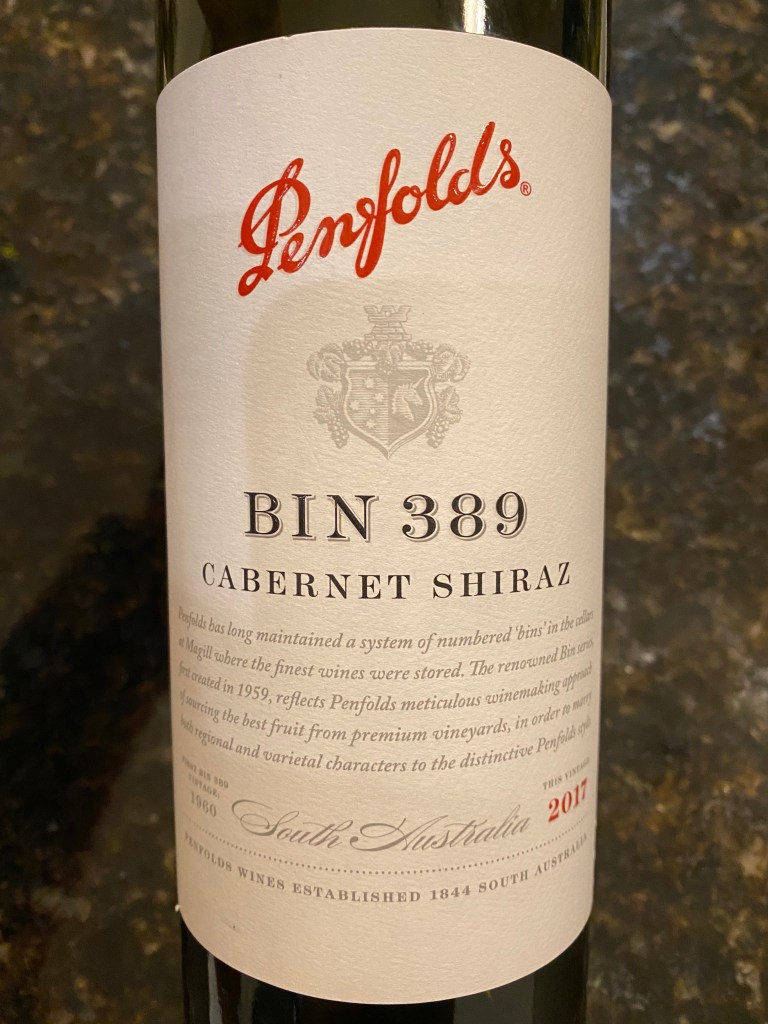
Today’s Wine: 2017 Bin 389 Cabernet Shiraz

54% Cabernet Sauvignon, 46% Shiraz; 14.5% ABV

The 2017 Bin 389 is incredibly opaque and deep purple in color with black at its core. Once this opens up (I drank this over four hours), the nose showcases aromas of blackberry compote, plum, blueberry, smoke, tobacco, forest floor after a rainstorm, wet slate, thyme, eucalyptus, nutmeg, and cedar. On the palate, I get notes of black raspberry, black cherry, blueberry, blackberry, cigar box, damp earth, dark chocolate, mint, vanilla, and oak. This wine is full-bodied with high acidity, medium (+) tannins, and a long finish.

Price: $50. This is a great bottle of wine and while not the cheapest from Grange a great introduction to their portfolio. Though young, this is drinking surprisingly well with some air but I’d lay this down a few more years. Pair this with beef carpaccio, roast beef, or roasted leg of lamb.

Delightful South African Red

Today’s Story: Paserene

Paserene is a relatively new, small, and family operated winery founded by Martin Smith and Ndabe Mareda with the first vintage in 2013. The winery gets its name from the Latin word “Passeriformes”which is used to describe traveling birds including swifts and swallows, and Martin chose this name in homage of his winemaking ventures that took him around the world before ultimately returning home to start his own winery. Martin is a third generation winemaker from the small town of Ashton, and from an early age grew a passion for wine and knew becoming a winemaker was his dream. He first “worked” in the wine industry during a week-long study at Nuy Winery during school and traveled to Portugal to learn at Amorim Cork, though his broader experiences followed after graduating from Elsenburg Agricultural College with studies in viticulture and winemaking. Post-graduation, Martin worked briefly at Vriesenhof Vineyards before spending five years at Cosentino Winery in the Napa Valley. In 2006 Martin moved to Caldwell Winery and worked alongside renowned winemakers including Tim Mondavi and Philippe Melka, though around 2011 he received an offer to become the winemaker at Vilafonte back in South Africa and returned home.

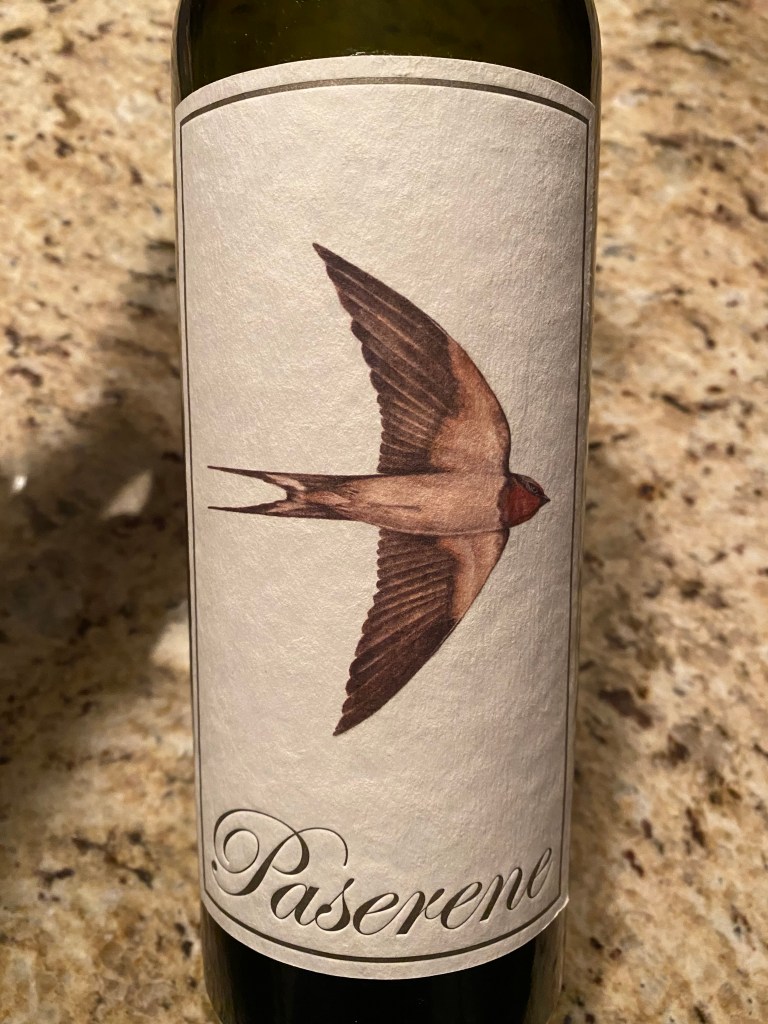
Today’s Wine: 2016 Marathon

53% Cabernet Sauvignon, 42% Petit Verdot, 5% Carménère; 14% ABV

The 2016 Marathon is medium ruby red in color and moderately transparent. This requires some time to breathe, but once it opens up the nose showcases aromas of blackberry, plum, blueberry, licorice, olive, tobacco, volcanic soil, crushed rock, green herbs, and underbrush. Once in the mouth, this wine displays notes of blackberry, blackcurrant, black cherry, red florals, loamy earth, mushroom, black pepper, cigar box, and dried cooking herbs. This is full-bodied with medium (+) acidity, medium tannins, and a medium (+) length finish.

Price: $40 (though this is tough to get in the US and online shows a fairly broad range from $27-55 overseas). This is a high-quality South African wine that is both delicious and offered at a fair price. The bottle today is shared with me by two great friends who recently visited the winery. Pair this with grilled steak, game, veal, or spicy pork.

Powerful Napa Cabernet Sauvignon to Please Any Palate

Today’s Story: Stags’ Leap Winery

Stags’ Leap Winery was established in 1893 by Horace Chase and his wife Mary (Minnie) following Horace’s partnership with his uncle W. W. Thompson on procuring the land. Grapes were first planted on this property in 1872 by T.L. Grigsby of Occidental Winery (today it is known as Regusci Winery), however the Chase family took ownership during the late 1880s and started building their manor house in 1888 after Horace and Mary were married. Around this time, the Stags’ Leap name came about and takes inspiration from native Wappo legends telling the tale of stags leaping to escape their hunters. When the manor house was completed in 1890/1891, the Chase family truly started living up to their reputation as lavish hosts to San Francisco high society and other features of the property soon thereafter included wine caves, a swimming pool, cabanas, gardens, a golf range, tennis courts, and 100 acres of vineyards. Though the first vintage and label bear 1893, there is evidence Horace produced wine from the estate shortly after taking ownership and utilized facilities at Occidental Winery to do so.

Though production of wine ramped up at the estate and Stags’ Leap was producing 40,000 gallons by 1895, several years later in 1908 winemaking ceased and, thanks to Prohibition shortly thereafter, did not resume for quite some time. Though Stags’ Leap was later established as a resort and refuge for San Franciscans escaping the cold Bay Area fogs, wine grapes continued to grow on the property and were sold to other wineries in the area. As decades passed, Stags’ Leap is drenched in rumors of bootleggers, mobsters, ghosts, and gypsies with the manor house and cottages even used as a reunion and rest destination for US naval officers under lease by the US Navy in 1944. In 1972, wine production resumed at the estate under Carl Doumani and winemaking has not stopped again. A new era dawned for the estate at this point, advancing with replanting of the vineyards in 1988, the establishment of Stags Leap District in 1989, and the restoration of the manor house in 2016. Today, Stags’ Leap produces elegant wines that display the fruit of this unique AVA and many of them do not break the bank.

The Stags’ Leap estate as it exists today consists of 85 acres broken into 23 unique blocks by soil type and exposure to the sun. Backing up to the rocky Stags Leap Palisades, the vineyards contain large amounts of volcanic rhyolite and tuff blended with subsoil of Bale loam formed by ancient riverbed sediment. An interesting note when thinking of all the rock in this soil is that when the Napa Valley chills at night, heat radiates from the rock and projects this stored warmth on the grapes until the cool evenings dissipate it. Essentially this feature prolongs the ripening process of the Cabernet Sauvignon and produces wines with good sugar and acidity balance. With all of the fruit from this estate hand-picked and hand-sorted, the winemaker Christophe Paubert believes in a meticulous and hands-on approach to winemaking. Christophe attempts to create balanced wines that are both intense yet characterized by soft tannins, allowing Stags’ Leap to appeal to a broad range of today’s Cabernet Sauvignon lovers but lacking on some of that terroir-driven character I look for.

Note: Stags’ Leap Winery is not to be confused with Stag’s Leap Wine Cellars (note the apostrophe placement). Though both wineries are incredibly historical when it comes to Californian winemaking, Stag’s Leap Wine Cellars produced the wine present in the 1976 Judgment of Paris and placed 1st for the red wines (Chateau Montelena, which I reviewed previously, placed 1st for the whites with their Chardonnay). Adding more apostrophe confusion for you, the Stags Leap District where both wineries are located does not contain an apostrophe. Check it out next time you’re in a store with wine from both estates!

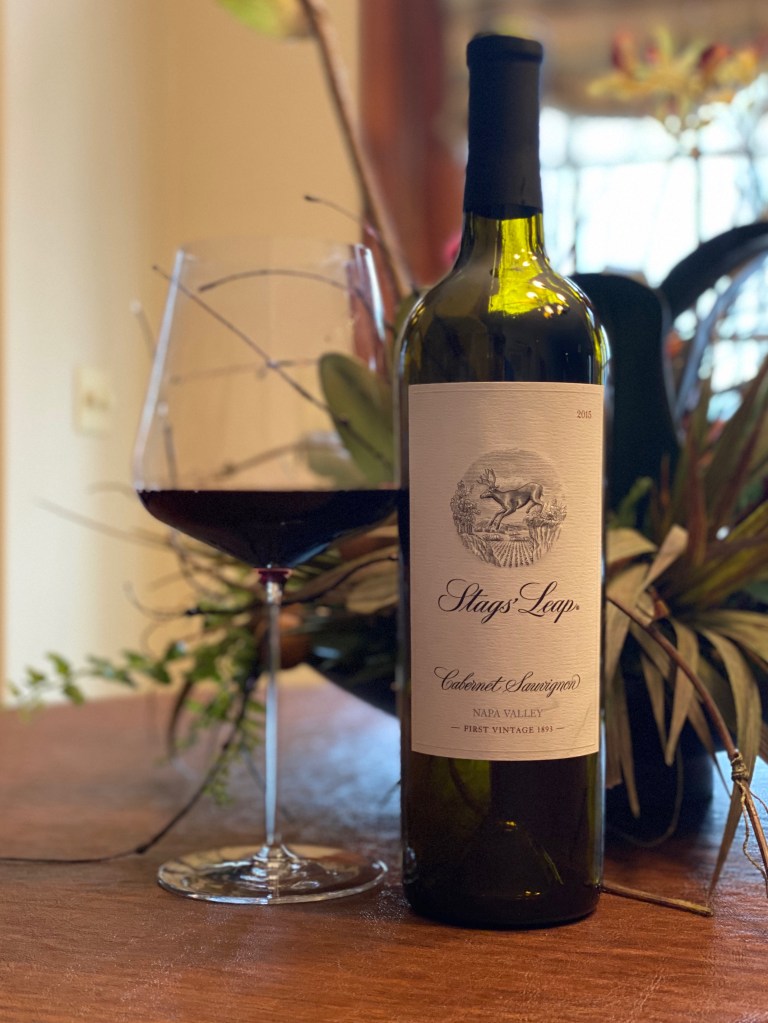
Today’s Wine: 2015 Cabernet Sauvignon

90% Cabernet Sauvignon, 4% Malbec, 4% Merlot, 2% Petit Verdot; 14.5% ABV

The 2015 Cabernet Sauvignon is medium to deep ruby in color and almost entirely opaque. Once this opens up, the nose offers aromas of jammy blackberry, blackcurrant, plum, black cherry, violet, graphite, loamy earth, baking spice, chocolate, and cedar. The nose also displays some heat that I think needs a bit more time to burn off. Once in the mouth, the wine showcases notes of blackberry, blueberry, cassis, licorice, bold tobacco, leather, crushed rock, damp earth, smoke, red and purple florals, and oak. This Cab is full-bodied with medium (+) acidity, supple and rather velvety medium tannins, and a long finish to cap off an overall very bold and fruit-forward drinking experience.

Price: $45. This is always a great value Cab in my opinion and drinks incredibly well compared to other “people pleasing” wines in the same price range or higher. Though this is not my particular style of Cab, I am confident in saying the majority of today’s Cab drinkers would enjoy this bottle. Pair this with steak au poivre, herb roasted lamb, or a quality burger.

Fun Bottling from BV

Today’s Story: Beaulieu Vineyard

Beaulieu Vineyard is one of the most historic wineries in Napa Valley, founded in 1900 by Georges de Latour and his wife Fernande. I wrote about them previously in A Winery Synonymous with Napa Valley Itself when I reviewed the 2014 Tapestry Reserve, as well as in The Maestro when I reviewed the 2010 Maestro Collection Ranch No. 1. If you are not familiar with the history of BV, I highly suggest reading my first post linked above or checking out their website. Today, I will provide you with a little background on their famous Clone wines.

BV produces two highly limited wines with a clone designation, the Clone 4 and Clone 6. BV selected both clones after a 14-year series of trials with UC Davis that began in 1980 because they wanted to determine which clones best suited the terroir for their Rutherford vineyards. The Clone 6 (aka Jackson clone) was first planted during the 1880s by UC Davis professor Eugene Hilgard at the field station at Jackson in the Sierra Foothills, however it was abandoned until the past several decades. Clone 6 is characterized by small loose clusters and small berries that yield concentrated flavors and muscular tannins. The Clone 4 (aka Mendoza clone), meanwhile, was identified and isolated in Argentina before coming to the United States and is characterized by tight clusters of large berries that yield lush and opulent wines. Both Clone 4 and Clone 6 are components for the Georges de Latour and other reserve Cabernet Sauvignon bottlings.

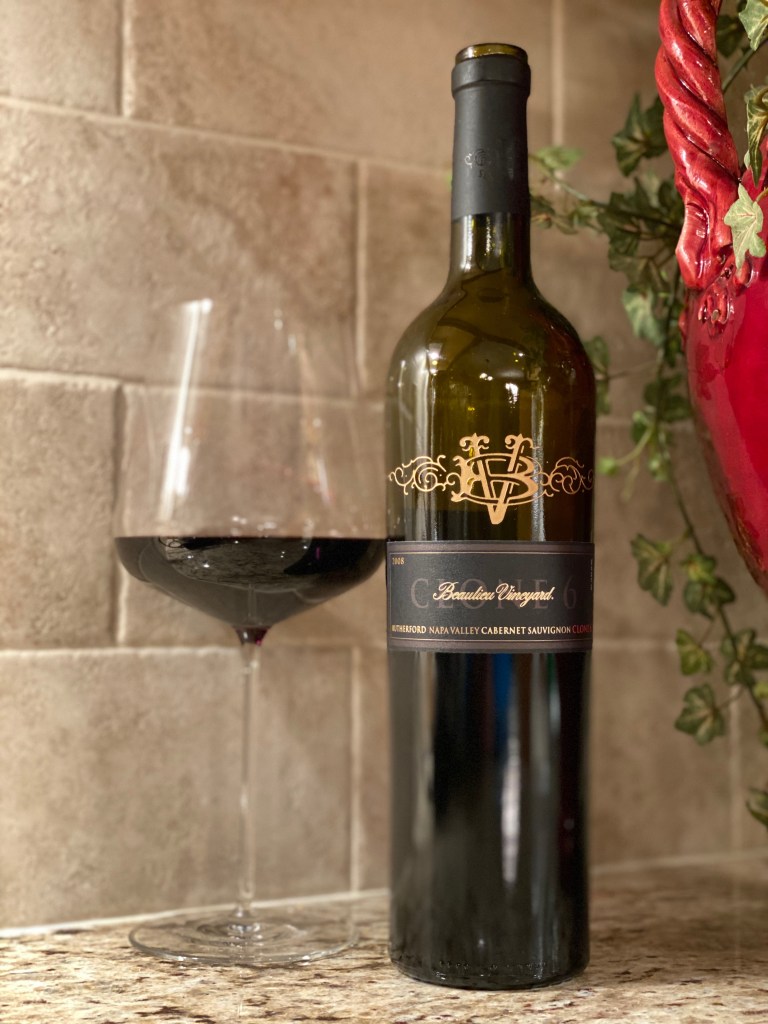
Today’s Wine: 2008 Clone 6

100% Cabernet Sauvignon; 14.9% ABV

The 2008 Clone 6 is opaque deep ruby in color with purple hues at its core. I let this open up in a decanter and the nose showcases aromas of blackberry, blackcurrant, anise, ripe red fruit, forest floor, earthy mushroom, tar, smoke, tobacco, and some oaky spice. Once in the mouth, this wine displays notes of blackberry, blueberry, black cherry, prune, redcurrant, black licorice, coffee bean, cigar box, scorched earth, dried underbrush, black pepper, and oak. This utterly complex and gorgeous wine is full-bodied with medium (+) acidity, medium refined tannins, and a long finish with some inky black fruit notes. The 2008 Clone 6 is not slowing down anytime soon, still full of fruit character and not taking on a ton of tertiary notes or any sediment in the bottle.

Price: $225 on BV’s website (though we purchased this from them in 2015 for ~$150). This is a great special celebration Cabernet Sauvignon, though their less-expensive Georges de Latour ($145-175 depending on vintage) is just as good if not better. Pair this with steak, lamb, or pepper-crusted ahi tuna.

Yountville People Pleaser

Today’s Story: Liparita

Liparita was founded in 1880 by William Keyes, a geologist by trade who discovered remarkable soil for winegrowing on Howell Mountain. When Keyes established his winery, he named it Liparita in homage to Lipari Island off the coast of Sicily because the soils he planted his vines in reminded him of the soils on the island. Liparita became one of the first wineries to bottle their wines with a vineyard designation, their first being the Liparita Howell Mountain Claret. This same wine later became the first from California to win a gold medal at the Paris Exposition in 1900. Unfortunately, like many Californian wineries established around this time, Prohibition and phylloxera greatly damaged Liparita and sent it back to obscurity.

With the rebirth of winemaking in Napa Valley during the middle and late 1900s, the Liparita brand reappeared and subsided yet again over time. In 2006, however, Spencer Hoopes purchased the brand and sought to not only bring it back to life but return Liparita to its glory days. Today, Spencer and his daughter Lindsay lead the winery in efforts to produce quality Cabernet Sauvignon from some of the Napa Valley’s best appellations and parcels. To read more about them individually, check out the website here.

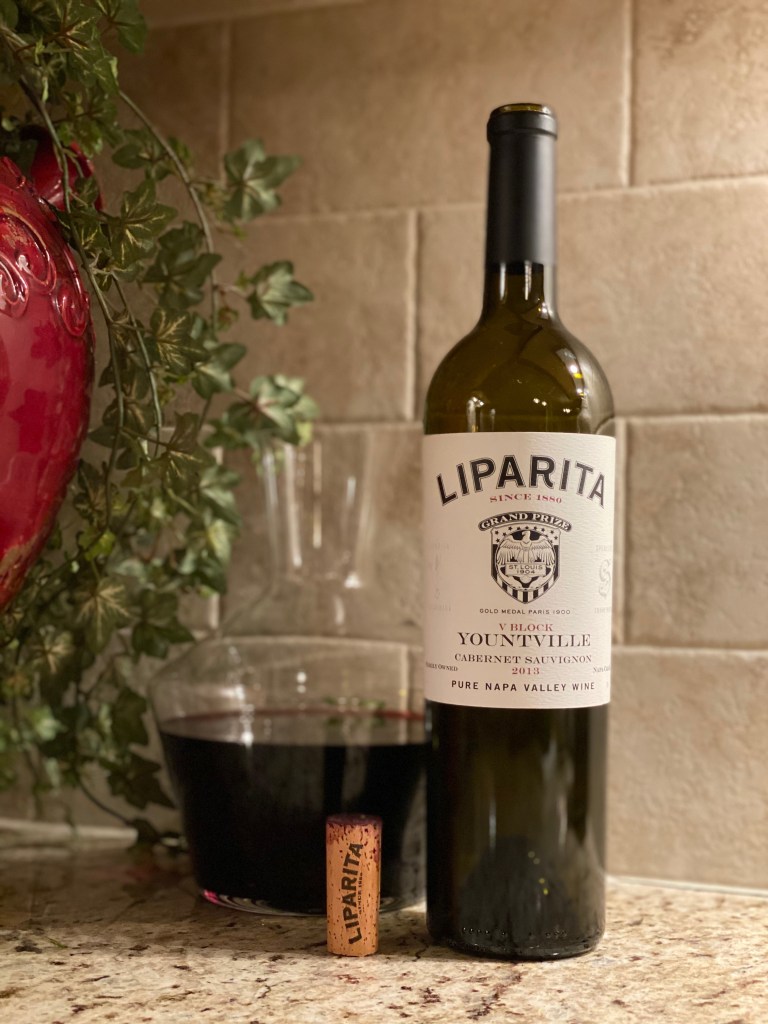
Today’s Wine: 2013 V Block Cabernet Sauvignon

90% Cabernet Sauvignon, 10% Merlot; 15.4% ABV

The 2013 V Block is opaque deep ruby in color with purple at its core. Once this opens up in the decanter, the nose showcases aromas of black cherry, jammy blackberry, redcurrant, boysenberry, cedar, graphite, cocoa, granite, and oak. There is also unfortunately some heat from the rather high ABV. Once in the mouth, this wine offers notes of candied plum, blueberry pie, blackberry compote, black licorice, sweet tobacco, mocha, crushed rock, and vanilla. This Cab is full-bodied with high acidity, grippy medium (+) tannins, and a long finish dominated by inky black fruit.

Price: $65. This is certainly a high-end people-pleaser, so not necessarily fitting for my taste profile. However, for those of you who like Caymus, with how outrageously priced that wine is now I’d say skip it to try this Liparita next time as it is similar in profile but significantly better. Pair this with steak, prime rib, or lamb.

Beautiful Defiance

Today’s Story: Domaine de Trévallon

Domaine de Trévallon as it exists today was established in 1950 when Jacqueline and René Dürrbach fell in love with Alpilles and purchased Mas Chabert and its adjacent property, Trévallon. Jacqueline was a French textile artist whose commissioned tapestry of Picasso’s Guernica by Nelson Rockefeller helped pay for the domaine, and René was a sculptor and painter who was close friends with cubist movement founders Albert Gleizes, Fernand Léger, and Pablo Picasso. Eloi, the son of Jacqueline and René, planted vines on the estate in 1973 where 15 hectares are planted equally to Cabernet Sauvignon (existed there before the arrival of phylloxera) and Syrah as well as 2 hectares planted mainly to Marsanne and Roussanne. Due to great amounts of limestone in the soil and vast scrubland, great effort went into planting the vines by blowing up the soil, ploughing deep, and mixing rock fragments back in amongst the vines. In 1993, the AOC legislation authorized a maximum of 20% Cabernet Sauvignon in the vineyards and threatened to strip Trévallon’s appellation status if they did not reduce their blend from 50%. A staunch proponent of his wine’s unique personality, Eloi did not betray tradition and refused to alter his blend but rather saw the domaine knocked to the lesser Vin de Pays du Bouche du Rhône status. A family effort throughout its history, Domaine de Trévallon is joined today by Eloi’s children Ostiane and Antoine.

Domaine de Trévallon practices organic farming, methods they have used since the founding of the estate. They plow deeply in the soil to encourage vines to dig deeper in seeking out nutrients, shortly prune their vines to reduce yields but enhance the longevity of their vines, and do not use chemical fertilizers or artificial products. In the cellar, the winemaking team practices minimal intervention and use only indigenous yeasts during fermentation. The red wines are made using 100% whole cluster fermentation and are aged for two years in a combination of foudres (95%) and barrels (5%), while the whites see one year of barrel aging. The wines are racked as little as possible and the result is powerful wines that age effortlessly for decades.

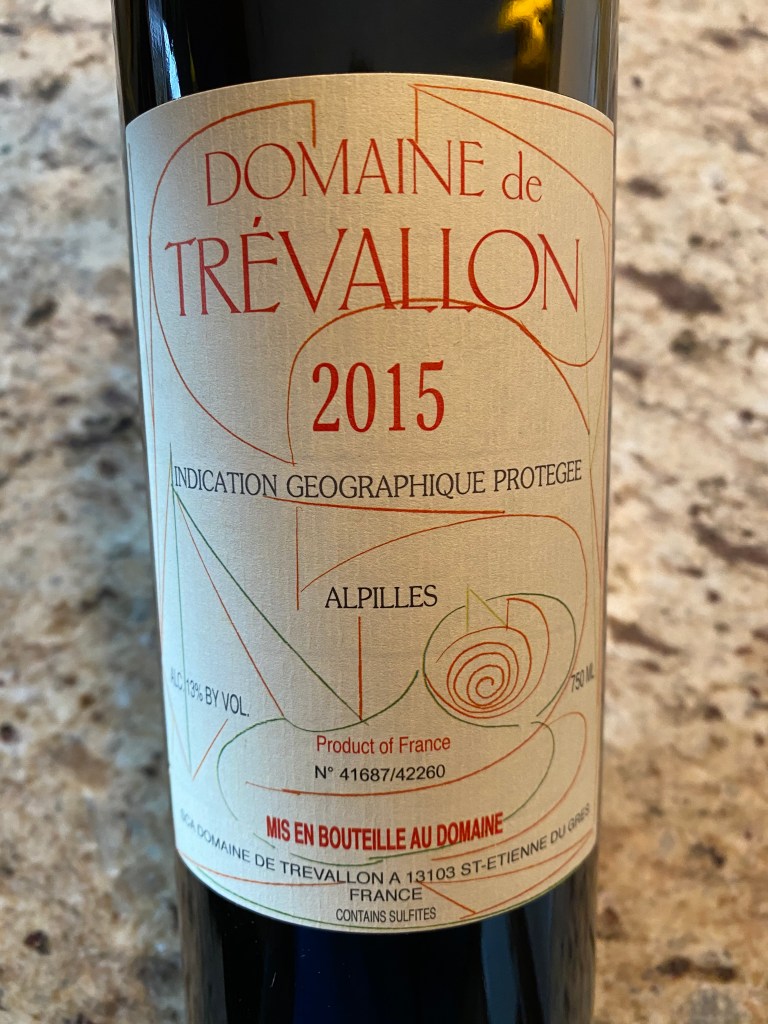
With the backbone of art such an important aspect of Dürrbach family history, it is only fitting the wine labels display it. Though René passed away in 1999 at the age of 89, Eloi previously asked him to create 50 labels beginning with the 1996 vintage using colored pencils. The family selects a new label every vintage based on the characteristics of that unique vintage.

Today’s Wine: 2015 Domaine de Trévallon Rouge

50% Cabernet Sauvignon, 50% Syrah; 13% ABV

The 2015 Trévallon Rouge is deep ruby in color with purple hues and mostly opaque. Due to its youth, I let this wine breathe for about 45 minutes before consuming and drank it over the following couple hours. The nose showcases aromas of wild strawberry, raspberry, plum, licorice, smoke, tobacco, leather, violet, wet rock minerality, and a hint of sandalwood. Once in the mouth, this wine displays notes of black cherry, blackcurrant, candied red fruits, dried forest floor, white pepper, black tea leaves, chalk, eucalyptus, and some peppery spice. This is full-bodied with high acidity, medium tannins, and a long finish. Though starting to show its elegance and finesse, I would wait another 3-5 years before popping one of these and drink it over the following decade.

Price: $65. Trévallon is always an incredible value for high-quality Southern France wines and the dedication to the craft is palpable with each vintage. I highly recommend everyone try one of these wines at least once. Pair this with roasted lamb, beef, cheese and charcuterie, or a chocolate tart garnished with strawberries and raspberries.

Gotta Get That Money (Road)

Today’s Story: Gargiulo Vineyards

Gargiulo is a small, family-owned winery in Oakville, Napa Valley that produces about 3,400 cases of wine each year from two vineyards. Owners Jeff and Valerie Gargiulo bought their first vineyard, Money Road Ranch, in 1992 to fulfill their winemaking dream, adding to the property in 1997 by purchasing the 575 OVX property. Founded as a Cabernet Sauvignon estate, Gargiulo produces three different Cabs and a Sangiovese, though they also have Cabernet Franc, Petite Verdot, and Merlot planted for blending in their G Major 7 Cab. Gargiulo produces small amounts of Chardonnay from Frank Wood Ranch and a rosé of Sangiovese as well.

The Gargiulo family and their winemaker, Kristof Anderson, follow a more hands-off approach to winemaking, who in their words say is “gentle and patient.” When it comes time to harvest the grapes, they do so by hand at dawn, hand sort the grapes three times, and use gravity flow methods for winemaking. This arguably preserves the natural fragrances and flavors of the wines by removing pumps and machinery, and is a reason I believe Gargiulo wines are consistently elegant yet structured to go the distance.

I previously wrote about Gargiulo in Italy’s Favorite Grape…from California? back on October 20, 2019 and have recreated the background above from my previous post. If you’d like to see pictures from my visit to Gargiulo last September, some can be found at the link above.

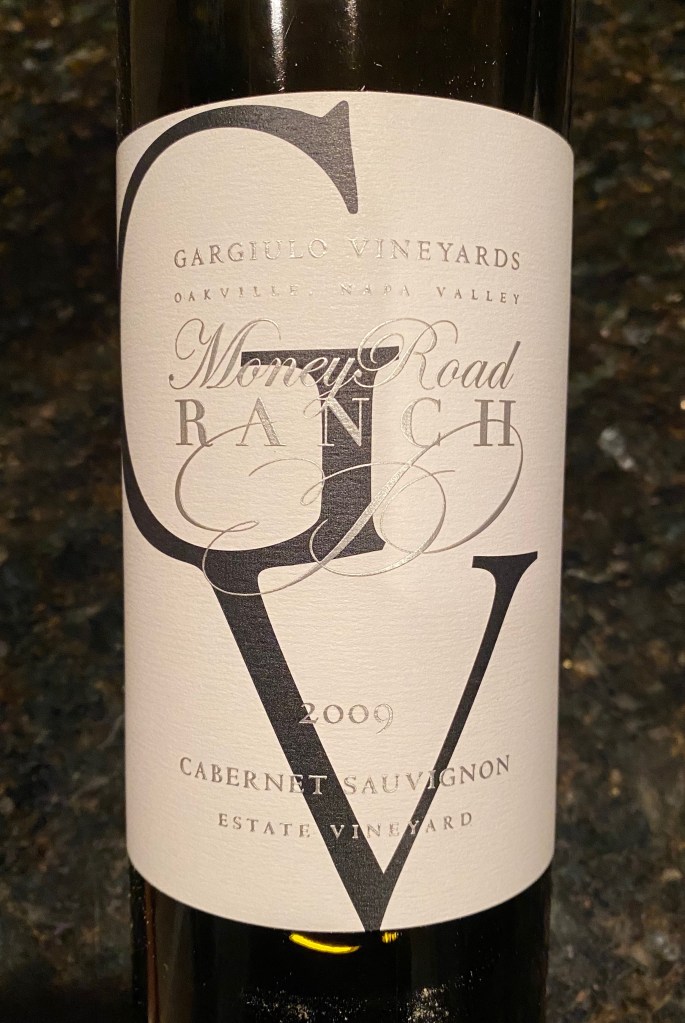
Today’s Wine: 2009 Money Road Ranch Cabernet Sauvignon

100% Cabernet Sauvignon; 14.8% ABV

The 2009 Money Road Ranch Cab is medium to deep ruby in color and slightly transparent. I let this open up in the glass, and after about 30 minutes the nose showcases aromas of blackberry, blueberry, plum, baked red berries, licorice, volcanic earth, cedar, mushroom, baking spice, and oak. There is still a bit of heat as well. On the palate, I get notes of blackberry compote, black cherry, redcurrant, jammy wild strawberry, cigar box, sweet tobacco, damp loamy soil, green herbs, syrupy cola, and a hint of vanilla. This is medium- to full-bodied with high acidity, fully integrated medium (-) tannins, and a long finish. Though this is not my favorite vintage of this wine I’ve had (it’s a bit jammy/syrupy compared to others), this is not showing any signs of slowing down and easily has another 5 years left. 883 cases produced.

Price: $80 direct from winery upon release. In regards to price, this is fairly priced but I would argue to spend a bit more to try their G Major 7 or 575 OVX bottlings, otherwise explore the incredible options around the $80 from other producers. Pair this with steak, roasted lamb, a good burger, or beef short ribs.