Champagne Paul Bara is a small, family run Champagne house established in 1860 in the village of Bouzy in the Montagne de Reims wine region of France. Though initially the property consisted of a farm and a cellar with some vines, Paul Bara was the first of the family to sell Champagne under his name during the 1950s. In 1965, the family transformed a barn into their own press room and winery and set their sights on greater heights. 10 years later, in 1975, Paul Bara began exporting Champagne to the United States and was one of the first houses to do so. As he neared retirement, Paul’s daughter and sixth generation Chantale started helping to produce the wines and run the business before co-running the business in 1986 and later taking over. Since 2018, Chantale’s sister Evelyne Dauvergne began taking on more responsibilities as well.
Champagne Paul Bara consists of 11 hectares of all Grand Cru vineyards in Bouzy, with about 9.5 hectares planted to Pinot Noir and the remaining 1.5 planted to Chardonnay. The vines are rather low yielding and the family practices sustainable viticulture with a major focus on clean farming and biodiversity in the vineyards. All fruit is hand-harvested and hand-sorted, with winemaking in the cellar sticking to more traditional methods and only using first press juice. During aging, the wines rest in the impressive century-old chalk cellars dug by hand 11 meters below the surface of the earth. Total production is around 7,500 cases per year.
To learn more about Champagne Paul Bara and view pictures of the estate, check out their website here.
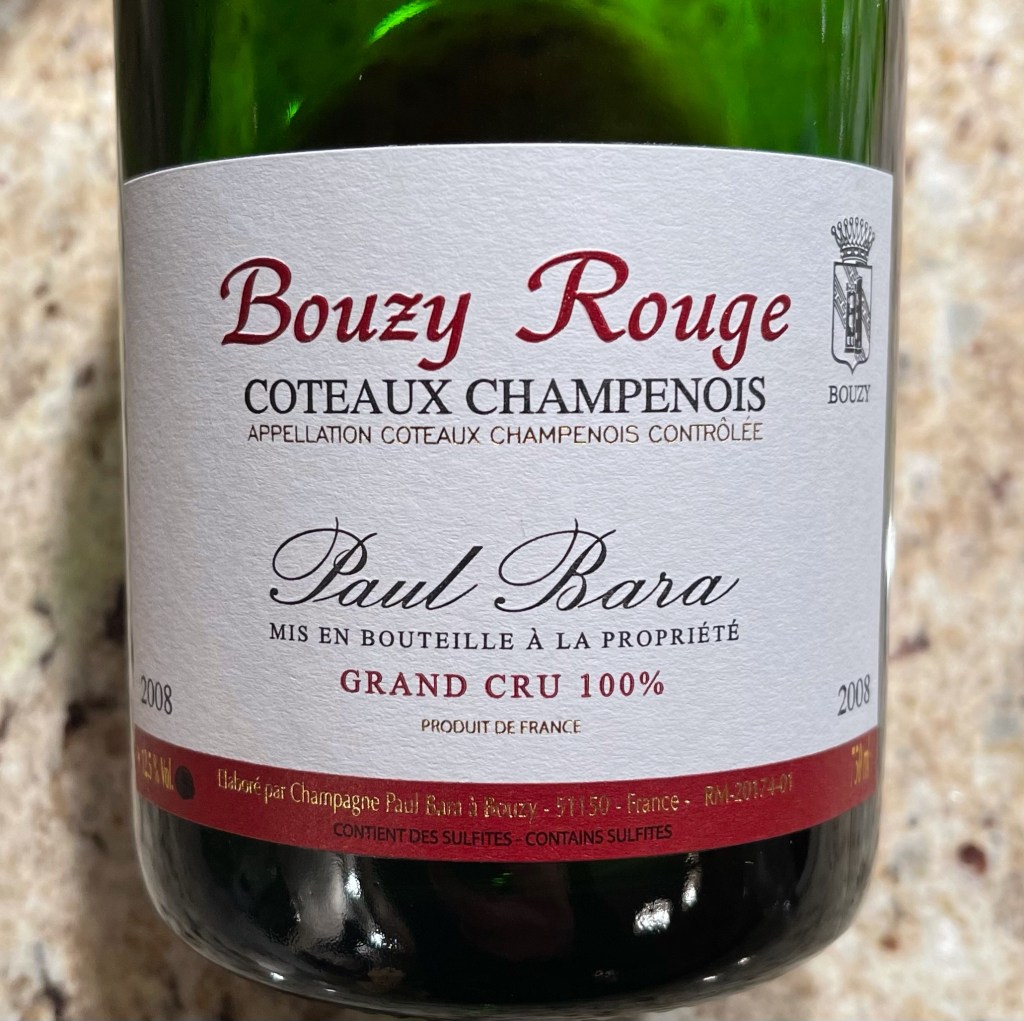
Today’s Wine: 2008 Bouzy Rouge Coteaux Champenois Grand Cru
100% Pinot Noir; 12.5% ABV
The 2008 Bouzy Rouge Coteaux Champenois Grand Cru is translucent pale to medium ruby in color. Given some time to blossom in the glass, the nose showcases aromas of black cherry, cranberry, black raspberry, olive, forest floor, underbrush, and crushed rock. Meanwhile, the palate displays notes of ripe sweet cherry, stemmy strawberry, rose, sous bois, light grilled herbs, mild peppery spice, stony mineral, and a hint of smoke. This is light-bodied with medium (+) acidity, light tannins, and a medium (+) finish.
Price: $55. This is certainly a fun wine, being a still Pinot Noir from a Champagne house known for their incredible quality and Grand Cru holdings, but I don’t think it has the complexities or depth to live up to the price. Nonetheless, it was an easy-drinking and tasty wine.
Domaine Alain Graillot is a family owned and operated Northern Rhône wine estate established by Alain in 1985. Though he cut his teeth working in Burgundy and received advice from Jacques Seysses at Domaine Dujac, Alain returned to his home in Crozes-Hermitage to fulfill the dream of making his own wines. In the short few decades since, Alain’s wines rose to legendary status and are widely considered the greatest coming out of Crozes-Hermitage. The wines sell each year on an allocation basis, with about 50% leaving France and 50% remaining in France with large amounts going to the country’s best restaurants. Though Alain retired in 2008, he is still highly involved at the domaine where his sons Maxime and Antoine now hold the helm.
Though Alain rented vineyards to produce his wines in 1985, by 1988 he began acquiring them and the domaine today consists of about 22 hectares of organically farmed vines. The vineyards are planted mostly to Syrah (Alain’s passion variety), though they do contain about 3 hectares planted to white varieties of Marsanne and Roussanne. In addition to the holdings in Crozes-Hermitage, Alain Graillot owns small parcels of Syrah in Saint-Joseph and a very tiny parcel in Hermitage. Graillot’s vines are incredibly low-yielding thanks to severe pruning, and all fruit is harvested by hand.
In the cellar, Alain and now his son Maxime follow traditional vinification methods and utilize whole cluster fermentation with the red wines (except for the Saint-Joseph which uses destemmed fruit). White wines ferment 50% in one year old oak barrels purchased from top Burgundy estates and 50% in stainless steel tanks. After being blended at the end of winter, the white wines age before bottling in the spring. The reds, on the other hand, ferment in concrete vats and age for one year with about 80% going to one to three year old used Burgundy barrels and the remaining 20% going to vat. Before bottling, the reds are lightly filtered but unfined. Total production is around 10,000 cases annually.
Today’s Wine: 2017 Crozes-Hermitage
100% Syrah; 13.5% ABV
The 2017 Crozes-Hermitage is opaque deep purple in color, which leaves fairly heavy staining on the glass. After spending 2-3 hours in the decanter, this opens up with aromas of plum, blackberry, blueberry, black licorice, violets, black olive, wet rocky earth, underbrush, smoke, and a hint of oak. The palate, meanwhile, is opulent and decidedly sexy with notes of blackberry, cassis, black plum, tobacco, black tea leaf, scorched earth, crushed rock minerality, black pepper, and mild oak-driven spice. This is medium-bodied with medium (+) acidity, fine-grained but high tannins, and a medium (+) length finish. Give this another 3-5 years and it’ll be singing.
Price: $35. I think this is somewhere between fairly-priced and a great value. I know this is young but it has great finesse to it already that I think will improve with bottle age. It also exhibits a great sense of place that would be a great addition into any Syrah lover’s lineup, particularly if they’re not familiar with Crozes-Hermitage.
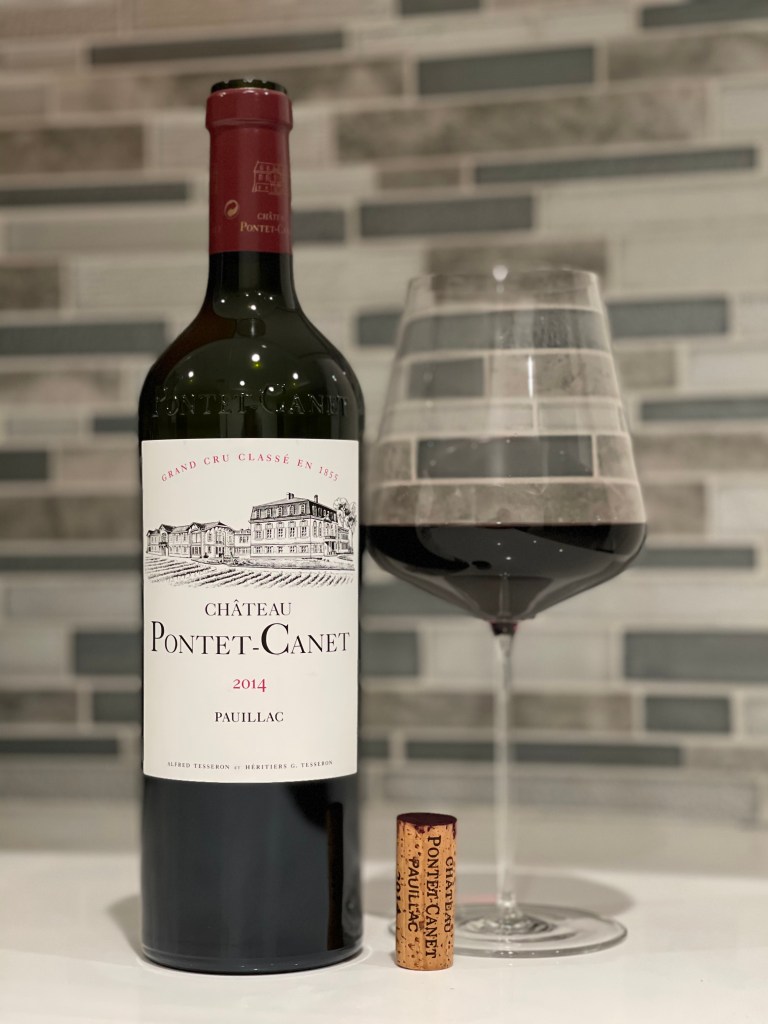
Château Pontet-Canet is a historic Bordeaux wine estate located in the Left Bank appellation of Pauillac. In 1705, Jean-François de Pontet (who was Governor of the Médoc) acquired a few acres and planted them to vine. By the 1720s, Jean-François and his descendants had expanded the estate by purchasing parcels in a place known as Canet and Château Pontet-Canet was born. For over a century, Château Pontet-Canet remained in the Pontet family hands and ultimately received classification as a Fifth Growth (Cinquième Cru) in the Bordeaux Wine Official Classification of 1855. A decade later, in 1865, wine merchant Herman Cruse purchased Pontet-Canet and marked the first change in ownership since its establishment.
Though the Cruse family maintained ownership of Pontet-Canet for 110 years, the estate never seemed to live up to its quality potential. This began to change, however, when Cognac merchant Guy Tesseron purchased the estate in 1975 and set about replanting the vines in desperate need of repair. The family then worked on transitioning the vineyards to sustainable farming and a more “minimally invasive” philosophy of viticulture. When Alfred Tesseron took over in 1994, this ultimately spawned into a transition to organic and then biodynamic viticulture, which Pontet-Canet moved to fully by 2005 (they were certified organic and biodynamic several years later in 2010).
This minimally invasive philosophy for the vineyards transfers into the actual winemaking process as well. Beginning with harvest, all fruit is hand-sorted before being destemmed and hand-sorted again. The wine ferments with natural yeasts and minimal intervention, with maceration lasting an average of four weeks before the wine is run off with gravity. Over time, Pontet-Canet has reduced the amount of new oak they use so as to not mask the expression of place in the wine and today the Grand Vin ages in 50% new oak, 35% dolia (concrete amphorae made specifically for Pontet-Canet), and 15% 1-year-old barrels. The 2nd wine (Hauts de Pontet-Canet), meanwhile, ages in 100% 1-year-old oak barrels.
Pontet-Canet is a pretty large estate, today consisting of 120 hectares with 81 hectares planted to vine. The breakdown by variety is 62% Cabernet Sauvignon, 32% Merlot, 4% Cabernet Franc, and 2% Petit Verdot. To learn more about Château Pontet-Canet, I recommend visiting their website here for, at the very least, some great pictures.
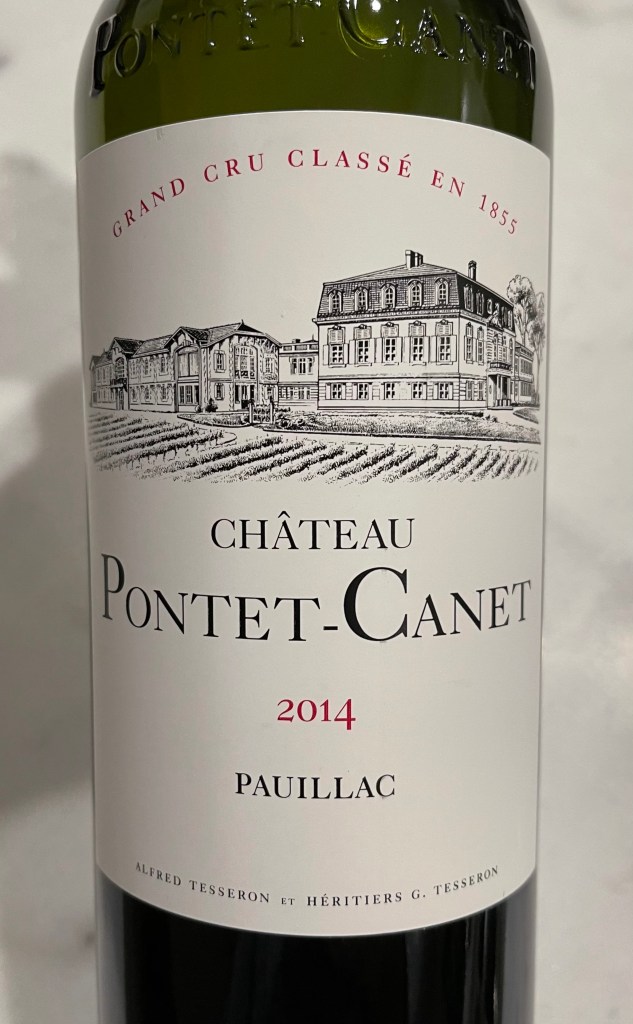
The 2014 Pontet-Canet is opaque deep ruby in color. I know this is young, but in an effort to continue my tasting of various 2014 Bordeaux wines I cracked into it early. With that in mind, I decanted this bottle for 6 hours and drank it over the following 2 hours. Once this opens up, the nose showcases classic Pauillac aromas of blackcurrant, black raspberry, plum, redcurrant, lavender, cigar box, pencil shavings, loamy earth, graphite, green herbs, cedar spill, and mild oaky spice. Meanwhile on the palate I get notes of crème de cassis, blackberry, plum, black cherry, violet, anise, tobacco, wet earth, dried coffee grounds, chocolate truffle, black pepper, clove, and a hint of oak. This is full-bodied with beautiful high acidity, high grippy tannins, and a long finish of 45+ seconds. This has plenty of elegance right now, though it is still pure power and should surely develop into an iron fist in a velvet glove.
Price: $120. I think this is a very nice value, as I’m finding with a lot of 2014 Left Bank Bordeaux. Particularly when overshadowed by the 2015 and 2016 vintages, wines like this provide great quality for the price and are just starting to come into their own. I highly recommend adding this Pontet-Canet to your 2014 collections.
Xavier Vignon is a well-known wine consultant and négociant, specializing in the wines of the Rhône Valley and in particular Châteauneuf-du-Pape. The son of an agriculturalist and stone mason, Xavier grew up with the mentality that hard work and determination is necessary in everything one does. With a mind for science and music, Xavier joined a paleontology club that took him to Reims, Champagne and he just so happened to launch a passion for wine while there. While he waited for admission to study France’s National Diploma of Oenology, Xavier worked harvests in Champagne for multiple houses and built up experiences with wine along the way. When he was finally admitted, he took a spot in Montpellier and received a dual degree in oenology and agronomy. Before settling down in the Rhône Valley, however, Xavier traveled to and worked in Alsace, Bordeaux, Napa, and Australia to perfect his craft. In 1996, Xavier started working as a wine consultant for a few dozen estates and he was centered in the region of Vaucluse.
Around the early 2000s, Xavier started putting some focus on a brand of his own through a négociant model. He began bottling his wines under Xavier Vins, and this small production endeavor was largely for himself and friends in an anonymous fashion. Xavier Vins released its first Châteauneuf-du-Pape in 2007, and soon fell onto the radar of Robert Parker. Parker praised Xavier’s wines, giving all scores over 90 points, and in 2012 Xavier left the Oenological Institute of Champagne to devote more time on his own wines. Though Xavier continues to consult for a number of wineries to this day, his namesake wines are his bread and butter and he crafts them at Château Husson since he does not have his own domaine.
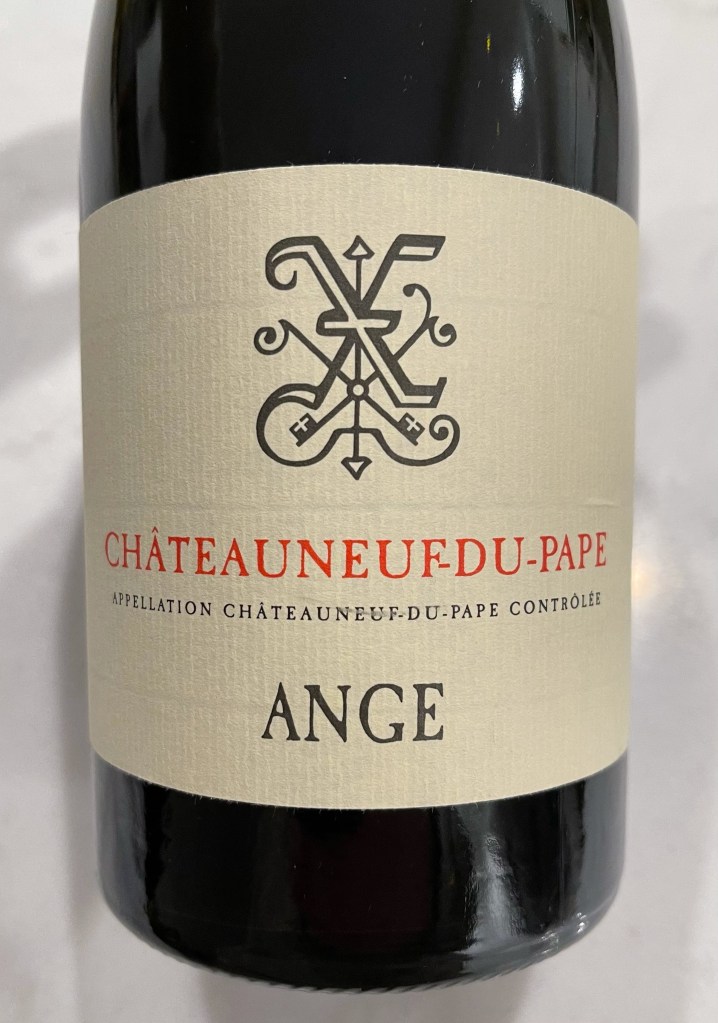
Today’s Wine: 2001 Châteauneuf-du-Pape Cuvée Ange
Unknown blend of 13 AOP Châteauneuf-du-Pape varieties; 14.5% ABV
The 2001 Cuvée Ange is a very special wine in the Xavier Vignon portfolio, as it is named after his son Ange who was born in the year 2001. What’s more, this is also a highly unusual wine in that Xavier sought out some of the best 2001 Châteauneuf-du-Pape wines from his partner winemakers over the course of nearly a decade and he did not blend them until 2010. Not stopping there, the blended wine went into barrels for further aging, and these barrels were submerged in tanks of wine to preserve the freshness of fruit. This wine was not bottled until 2019 (!!) to coincide with Ange’s 18th birthday, and the result is an unbelievably balanced, complex, and deep beauty of a wine.
In the glass, the 2001 Cuvée Ange is deep garnet in color and almost opaque. I decanted this for 3 hours, but it really started showing its best after about 4.5 hours as I was drinking it. The gorgeous, complex nose showcases aromas of blackberry, plum, black cherry, anise, violet, cigar box, cured game, truffle, forest floor, crushed rock, thyme, clove, and bright mineral. The palate is equally complex, displaying notes of black plum, cassis, inky blackberry, sweet tobacco, smoked red meat, freshly tilled soil, smoke, coffee grounds, cracked black pepper, dark chocolate, baking spice, and stony minerality. Still incredibly youthful and beautifully balanced, this is full-bodied with medium (+) acidity, medium (+) velvety tannins, and a medium (+) length finish.
Price: $90. I think this is very appropriately priced, as it is beautifully deep, complex, and full of life. It is also an incredibly unique and fun wine that honestly beat any expectation I had set for it.
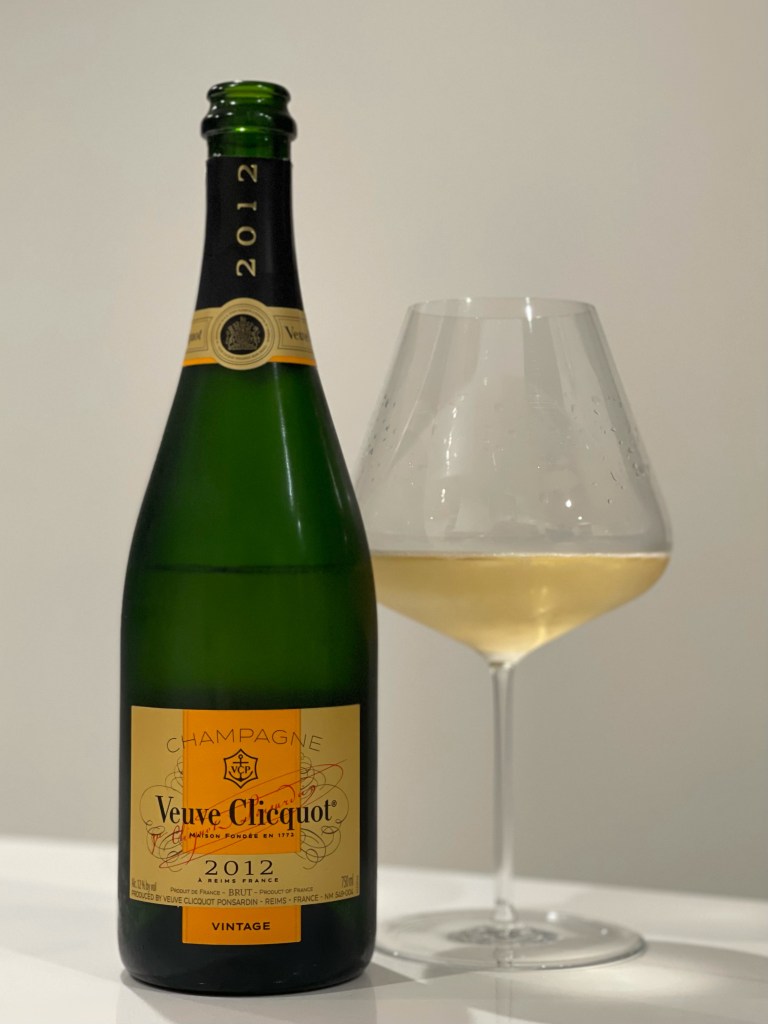
Veuve Clicquot is a large, well-known Champagne house established in Champagne, France in 1772 by Philippe Clicquot. In 1805, the house was taken over by perhaps one of (in hindsight) the most famous personalities of Champagne: Madame Clicquot, who was the widow of Philippe’s son François. Thanks to a great education and noble birth, Madame Clicquot quickly demonstrated her business prowess by creating the first-ever recorded vintage Champagne in 1810 and in 1814 triumphed over a European trade embargo by shipping her wine to Russia. In 1816, the Madame invented the riddling table which produces clear Champagnes and she became known as “La Grande Dame” of the region (which happens to be the name of the house’s highest end bottling today). She did not stop here, however, introducing the first rosé d’assemblage in 1818 by blending red wines instead of elderberry solutions. Though Madame Clicquot passed away in 1866, the house continued to rise in stature and, in 1877, trademarked their signature yellow label that stands out in any grocery store or wine shop today.
Veuve Clicquot continued to grow and adapt over the following decades, constantly improving their winemaking methods and modernizing their tools. By the house’s 200th anniversary in 1972, they were one of the most recognizable Champagne brands and introduced the top bottling of La Grande Dame. The house was later acquired by Louis Vuitton in 1986 (became LVMH, or Moët Hennessy Louis Vuitton, in 1987) and continued to grow, with the next breakthrough in 2004 with the release of their NV Rosé. While a very large house, Veuve Clicquot is still instantly recognizable and can be depended on for its consistent quality from vintage to vintage and non-vintage from year to year.
Today, the Clicquot vineyards consist of 390 hectares of which 86% are situated across 12 of the 17 Grand Crus and 20 of the 44 1er Crus of the Champagne region. In terms of the vines themselves, 47% are planted to Chardonnay, 36% to Pinot Noir, and 17% to Pinot Meunier with all farmed adhering to sustainable practices and zero use of herbicides.
For more, check out the incredibly extensive Veuve Clicquot website here. At the very least, I highly recommend reading through the details of harvest and winemaking here, which are too great for me to do them any justice.
The 2012 Brut Champagne is transparent to medium gold in color with deep gold variation along the edges of the glass. Beautifully effervescent in the glass, the wine emits aromas of ripe green apple, pear, white peach, stone fruit, white florals, brioche, and dried vanilla. Moving onto the palate, this displays notes of lemon and lime zest, green apple skins, peach, chalk, light green herbs, slight earth, toasted almond, and lees. This is a very linear and precise bottle of Champagne while being medium-bodied and offering vibrant high acidity into a crisp medium (+) length finish.
Price: $85. I think this is pretty fairly priced for a vintage Champagne compared to some of the other large Champagne houses, however I must say it gets beaten by a number of grower Champagne producers I’ve tried over the years. Even the standard NV yellow label isn’t too terribly far behind this vintage bottling, missing out largely on focus and depth. Regardless, Clicquot always gives you exactly what you expect with great consistency, so take that how you will.
Today’s Story: Château Mouton Baronne Philippe (Château d’Armailhac)
Château Mouton Baronne Philippe, or Château d’Armailhac as it is known today, is a historic Fifth Growth Bordeaux estate located in Pauillac. Though the estate traces its roots to at least 1680 and brothers Dominique and Guilhem Armailhacq, the first solid record of vines on the property came later in 1750 and included 15 to 16 hectares of vineyards. By the end of the 1700s, the estate (called Mouton d’Armailhacq) benefited from the rapid growth of vineyards in the Médoc and grew to 52 hectares under vine, though the wines were not very highly regarded. The team spent the next several decades working tirelessly on improving the quality of the wines and were ultimately rewarded with higher prices and classification as a Fifth Growth in the Bordeaux Wine Official Classification of 1855. Later, in 1931, Baron Philippe de Rothschild became a minority owner in the estate and took full ownership in 1933. Mouton d’Armailhacq is tightly woven together with Château Mouton Rothschild, with the former holding all technical and agricultural equipment of the latter in their outbuildings. In 1956 the estate was renamed Mouton Baron Philippe, then Mouton Baronne Philippe, and finally Château d’Armailhac in 1989 when Baroness Philippine de Rothschild elected to restore the estate’s original name.
Today, Château d’Armailhac’s vineyards total 70 hectares in northern Pauillac and they are planted to roughly 52% Cabernet Sauvignon, 36% Merlot, 10% Cabernet Franc, and 2% Petit Verdot. The estate’s vineyards are made up of the appellation’s famous deep, gravelly soil which is perfect for producing wines of character and elegance. Come harvest, the process begins when the same team of Château Mouton Rothschild deems the fruit ready and all picking is done completely by hand. Each variety and each parcel moves to the winery separately, the grapes are entirely destemmed, and young vine fruit is vinified separately from old vine fruit. The wines age in 25% new oak barrels, with some coming from the Grand Chai of Château Mouton Rothschild, and they are run off every three months until fining with egg whites. Each vintage is only bottled when the winemakers and cellar master deem the wine is ready, so there is no strict formula or timeline for barrel aging.
Today’s Wine: 1978 Château Mouton Baronne Philippe
Unknown blend; 11.5% ABV
The 1978 Château Mouton Baronne Philippe is translucent medium garnet in color with no significant signs of bricking yet. I drank this as a pop and pour, though the nose did develop in the glass to showcase aromas of worn leather, tobacco, pencil shavings, graphite, bell pepper, eucalyptus, forest floor, truffle, menthol, and cedar with a backdrop of redcurrant and dried cherry clinging on. The palate is about as complex as the nose but not as expressive, with notes of cherry, brambly strawberry, redcurrant, cigar box, sous bois, dried green herbs, dried gravel, cracked pepper, and earthy mushroom. This is holding up well with medium body, medium acidity, fully integrated medium (-) tannins, and a medium (+) length finish.
Price: $75. Provenance is absolutely key here, like most older wines, and I was very lucky to get this from a wine store that sourced from the estate itself in OWC. This wine was absolutely singing and the $75 I paid for it is certainly a great value.
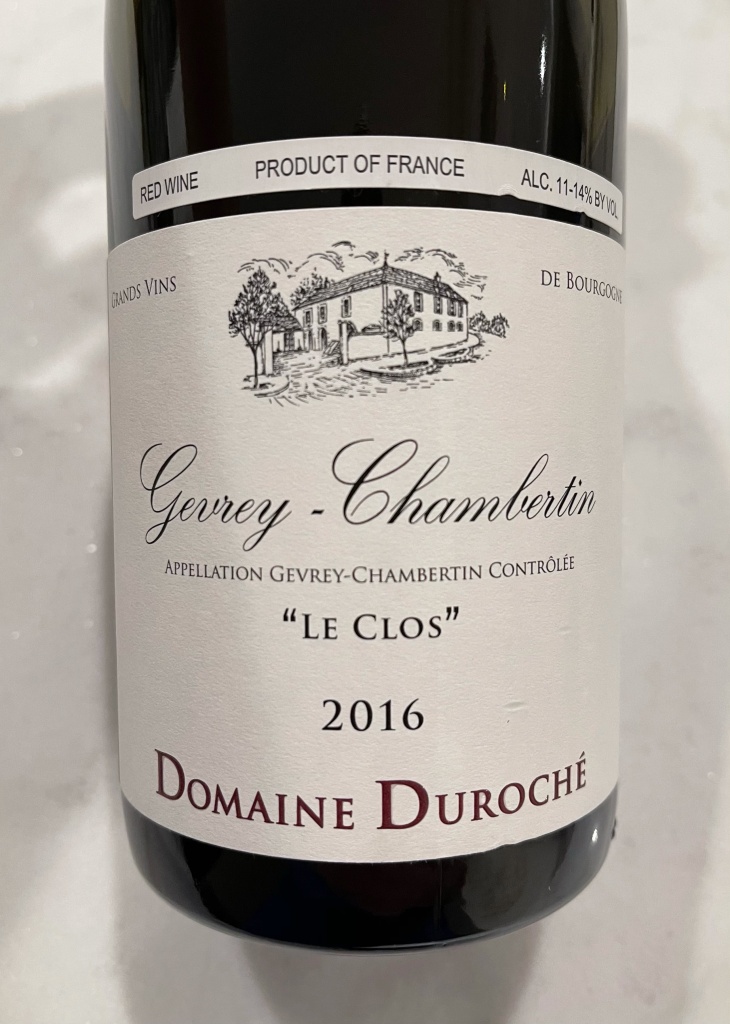
Domaine Duroché is a family owned and operated wine estate located in the Gevrey-Chambertin village in Burgundy. The Duroché family owns roughly 8.25 hectares of vineyards in Gevrey-Chambertin, producing wines that begin with both Bourgogne Rouge and Blanc before climbing through several village and 1er Cru bottlings to their Grand Cru sites of Charmes, Griottes, Latricieres, and Clos de Beze. Though the family has been bottling their wines since 1933, the quality of the domaine catapulted to new heights under the current leadership of fifth generation Pierre Duroché. Though Pierre is a relatively young winemaker in Gevrey, he refrains from being too heavy handed and seeks to create wines of elegance and finesse as compared to some of his neighbors favoring a bigger, bolder, and oakier style. Pierre and his family farm the vineyards using as few chemicals as possible (relying only on some sulfur or copper for treatments), and all fruit is hand-harvested and sorted before fermentation using only native yeasts. New oak usage varies by level of wine but always remains as minimal as possible, and the wines are bottled without fining or filtration. Beginning with the 2017 vintage, Pierre and his wife Marianne purchase fruit from her family to supply their new Vosne-Romanée Village and Echezeaux Grand Cru bottlings.
Today’s Wine: 2016 Gevrey-Chambertin Le Clos
100% Pinot Noir; 13% ABV
The 2016 Gevrey-Chambertin Le Clos is pale to medium ruby in color and slightly translucent. I let this slow ox in the bottle for a while before letting it open up in the glass, blossoming into a nose of black cherry, dried strawberry, boysenberry, charred earth, eucalyptus, crushed rock, stony mineral, and light oak. Still fairly tight on the palate, this took some time to open up and showcase notes of cherry, stemmy strawberry, raspberry, red and blue florals, leather, rocky earth, and mineral. The wine is light- to medium-bodied with medium (+) acidity, medium (-) tannins, and a long finish. Gorgeous Gevrey minerality with this one, but it does need probably at least 5 years of cellaring to come into its own.
Price: $65. I think this is a very good value red Burgundy, though I don’t necessarily think it will remain this fairly priced for long. Pierre Duroché is certainly a rising star in Gevrey-Chambertin and I would highly recommend picking some of this up if you come across it.
Today’s Story: Château Pichon Longueville Comtesse de Lalande
I previously wrote about Château Pichon Longueville Comtesse de Lalande when I tasted the 1966, 1986, and 2003 vintages. Though I’ve had this wine many times and from vintages not written about (including 2014 which is showing very nicely now), I wanted to revisit them today for the 2008 vintage. Regularly I hear great things about the often “underrated” 2008 vintage for Bordeaux, so I figured it’s time to check for myself.
Château Pichon Longueville Comtesse de Lalande is a Second Growth (Deuxième Cru) estate based on the Bordeaux Wine Official Classification of 1855. Pichon Lalande is considered by many to be a classic example of Pauillac, known for its deep, concentrated layers of ripe fruit accompanied by notes of cassis, tobacco, and earth.
With nothing short of a somewhat tumultuous history, Pichon Lalande’s ownership changed hands over the years and earned its name when the founder’s daughter Therese received it as a dowry for her marriage to Jacques de Pichon Longueville. During the 18th century, the estate was dominated by women (Therese de Rauzan, Germaine de Lajus, and Marie Branda de Terrefort) throughout the winemaking process until Baron Joseph de Pichon Longueville took over for his mother. In 1850, with his death, the estate split between his two sons and three daughters and ultimately resulted in the division of Comtesse de Lalande and Pichon Baron.
With no familial heirs, Edouard Miailhe and Louis Miailhe purchased Pichon Lalande following WWI. Edouard’s daughter, May-Eliane de Lencquesaing, took over management in 1978 and became a prominent ambassador for Bordeaux wines while dramatically increasing quality of her estate. One of her major endeavors, and possibly most famous, was growing the size of Pichon Lalande from 40 hectares of vines to 89. In 2007, however, May-Eliane sold a majority stake of the estate to the Rouzaud family, owners of Roederer Champagne, and management changes as well as renovations took place.
Today’s Wine: 2008 Château Pichon Longueville Comtesse de Lalande
The 2008 Pichon Lalande is opaque medium to deep ruby in color. After 4 hours or so in the decanter, the wine seems perfectly open and the nose showcases classic aromas of blackcurrant, redcurrant, cassis, pencil shavings, cigar box, scorched earth, gravel, cracked pepper, green herbs, and mild oak. Moving onto the palate, I get more classic notes of cassis, black cherry, plum, licorice, violet, tobacco, graphite, loamy earth, underbrush, and chocolate. This is medium- to full-bodied with medium (+) acidity, medium (+) dusty tannins, and a long finish. Gorgeous wine from an underrated vintage, and I think this has a very long life still ahead of it.
Price: $140 ($180 average online). Relative to vintages around this such as 2005, 2009, or 2010, this is a great value play particularly at the price I found it for. While it doesn’t have the power some of these stronger vintages possess, it is a gorgeous wine nonetheless that is really starting to come into its own.
Château Haut-Brion is a historic Bordeaux wine estate that traces back to at least 1521, and it was awarded First Growth (Premier Grand Cru) status in the Bordeaux Wine Official Classification of 1855. In 1533, Jean de Pontac acquired the land that would become Château Haut-Brion and he immediately set about renovating the vineyards and expanding the estate. He is also the owner who, in 1549, started building the château. Jean de Pontac was instrumental in each vintage under his ownership until he passed away in 1589 at the age of 101, though the estate remained in the Pontac family by passing to his son Arnaud II and then Arnaud II’s nephew Geoffroy. Geoffroy’s son Arnaud III took over during the early 17th century and expanded the château itself while doubling the size of the vineyards. He also used his political influence to extend the fame and reputation of Haut-Brion, particularly in England.
As the influence of Haut-Brion grew, particularly amongst nobility and the intellects of the time (including John Locke), Joseph de Fumel inherited the estate from his father in 1749. The estate’s influence took another leap when, in 1787, Thomas Jefferson visited the château and wrote with great admiration about the soils and wines of Haut-Brion. The rosiness ended during the French Revolution, however, as Joseph de Fumel was beheaded by guillotine and his holdings were divided. Over the next four decades or so, the estate changed hands several times.
In 1836, Joseph Eugène Larrieu purchased the estate and worked tirelessly to improve on the exceptional wines it was known for. His efforts were rewarded when Haut-Brion was awarded Premier Grand Cru status in 1855, though pain struck again through disease and political upheavals within the region in the latter half of the 19th century. In 1859, Amédée took over upon his father’s death and replanted the vineyards over time to deal with mildew. By 1873 when his son Eugène took over Haut-Brion, there was optimism which unfortunately proved futile when phylloxera struck with a vengeance in 1880. Eugène spearheaded a massive replanting of the vineyards yet again, this time using rootstock from North America that was resistant to the disease.
Jumping forward through multiple new ownerships, the Dillon family came into the picture during the early 1900s. The owner at the time, André Gibert, faced the need to find a proper owner for Haut-Brion with no heirs of his own. Clarence Dillon, a banker from New York, visited in 1934 and received notice on his way back to America he could buy the estate. The purchase was finalized in 1935 and the Dillon family remains the owner of Château Haut Brion to this day. This purchase by the Dillon family helped bring Haut-Brion to the modern age, with them first installing electricity, new plumbing, and renovating the cellars. Over the decades that followed leading up to current times, the family continued to improve the estate, modernized the winemaking process with a high tech vat room, and completely renovated the château with utmost attention to detail.
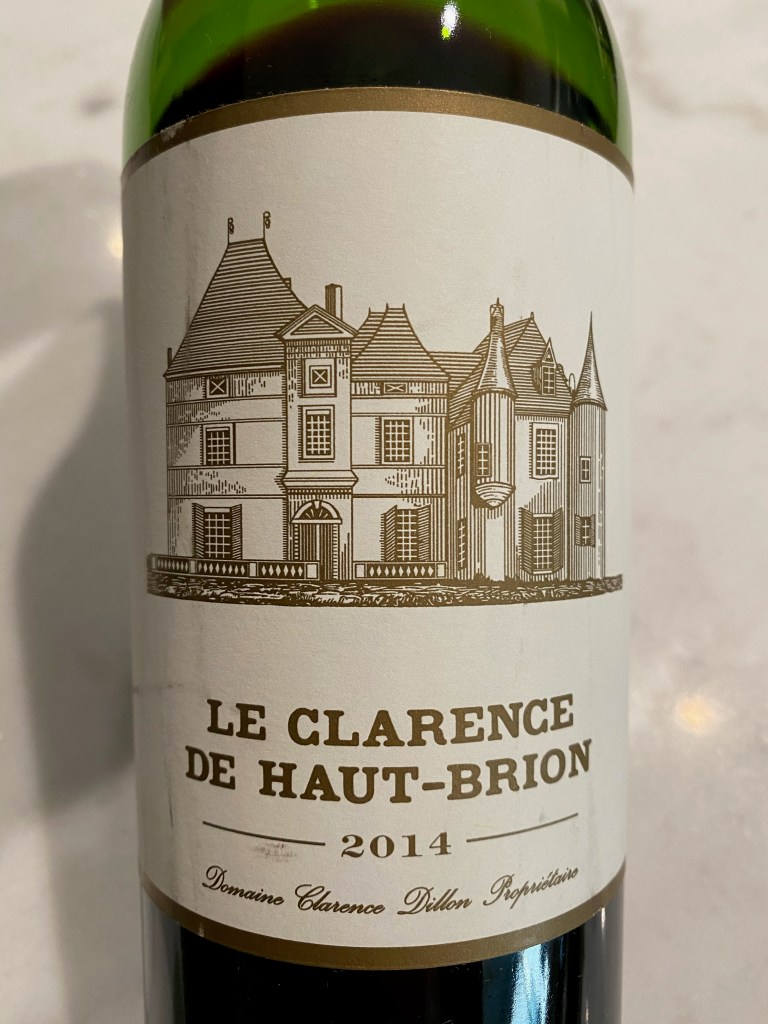
Château Haut-Brion today consists of 51 hectares of vineyards located in the Pessac-Léognan appellation of Bordeaux. Of the 51 hectares, 48 are planted to red varieties of Merlot, Cabernet Sauvignon, Cabernet Franc, and Petit Verdot while the remaining 3 hectares are planted to white varieties of Sémillon and Sauvignon Blanc. Situated across from Château La Mission Haut-Brion (which I wrote about two days ago), Château Haut-Brion shares the same gravelly soil of small quartz stones above a subsoil of clay, sand, and limestone. Following the same practices of their neighbor, all fruit is harvested by hand and then sorted before transferral to temperature controlled vats for fermentation. After two weeks, the vats are drained and the wine moves to barrel where it spends 20-24 months before bottling. Château Haut-Brion produces four wines: Château Haut-Brion, Château Haut-Brion Blanc, and two 2nd wines named Le Clarence de Haut-Brion (red) and La Clarté de Haut-Brion (white).
To read more of the history of Château Haut-Brion, view images of the beautiful château, or explore vintages of wines, visit the website here (also the source of the information above).
The 2014 Le Clarence de Haut-Brion is medium to deep ruby in color and almost opaque. I decanted this wine for 4 hours, though it did really start opening up around the 2 hour mark and only improved from there. On the nose, this gorgeous wine showcases aromas of blackcurrant, black raspberry, cigar box, violet, forest floor, gravel, graphite, and thyme. Moving to the palate, I get notes of black cherry, cassis, pomegranate, tobacco, pepper, tilled earth, crushed rock, and a hint of charred oak. This is full-bodied with medium (+) acidity, medium (+) tannins, and a long finish. Superb effort and the best 2nd wine from the 2014 vintage I’ve had to date.
Price: $100 (though many bottles are priced closer to $130 online). Though not an inexpensive bottle of wine, I find this to be a very strong value play particularly given the vintage (often undervalued) and relative value to the Grand Vin. This has everything you want out of a great Bordeaux, punching well above its price point.
Château La Mission Haut-Brion is a highly regarded Bordeaux wine estate with history dating back to 1540. That year, merchant Arnaud de Lestonnac purchased the land that would become La Mission Haut-Brion and he married Marie, sister of Jean de Pontac of neighboring Château Haut-Brion. By the time of his death in 1548, the estate produced great wines and management fell to his son Pierre who set about enhancing the reputation further. A century later, in 1682, Pierre’s daughter Olive de Lestonnac (who had devoted her life to charitable works and had no children) gifted the estate by annuity in her will to the Lazarists of Bordeaux and La Mission became property of the Catholic Church.
The Lazarists quickly set about developing the vineyards further, with great emphasis on improving farming practices, quality of the wines, and reputation. By the early 1700s, La Mission produced 24 barrels of wine annually and, by the mid 1700s, became recognized by French nobility for the immense quality of these wines. The incredible improvement and quality under the Lazarists shifted hands, however, in 1792 when the property was confiscated by the state during the French Revolution. Businessman Martial-Victor Vaillant purchased the estate in auction, however his family’s ownership was short-lived when his daughter sold it to Célestin Coudrin-Chiapella in 1821. As its first American owner, Chiapella continued to improve La Mission and set about retiring there one day. Having come from New Orleans, the family also stressed the importance of trade and Old World/New World ties which catapulted the estate to high regard throughout France, the UK, and the US.
Château La Mission Haut-Brion shifted ownership again in 1919 when Frédéric Otto Woltner, another Bordeaux merchant, purchased it. The Woltner family helped bring the estate into the modern era, in part by implementing the use of stainless steel vats to better control fermentation and, since 1927, producing a white wine. Frédéric passed away in 1933 and passed the estate to his three children, with Henri leading management. During WWII, the family was forced to house German officers at the château but miraculously kept them from raiding the cellars by demanding respect from their “guests.” Following the war, the Woltner family regained complete control until Henri passed away in 1974.
With La Mission up for sale yet again in 1983, Domaine Clarence Dillon came in and purchased the estate through a very natural transition. The Dillon family immediately started improving the estate even further, beginning in the vineyards and progressing through renovations to construction of new buildings and cellars. Though the estate has lived through a somewhat tumultuous history due to ownership changes and wars, they released highly revered wines over the centuries known for quality and consistency that is largely unmatched anywhere in the world.
Château La Mission Haut-Brion consists of 29 hectares of vineyards in the Pessac-Léognan appellation. Situated on an elevated gravel terrace, the soil of La Mission is particularly suited for growing wine grapes with a subsoil of clay, sand, and limestone. Of the 29 hectares, 25 are planted to red varieties of Merlot, Cabernet Sauvignon, and Cabernet Franc; the remaining 4 hectares are planted to white varieties of Sémillon and Sauvignon Blanc. All fruit is harvested by hand and sorted before fermentation in steel vats. After two weeks, the wines are drained and transferred to new oak barrels for 20-24 months before ultimately moving to bottle and aging further.
To learn more about this great estate, run through their wines over the years, or view images, I encourage you to visit the website here (also the source of the information above).
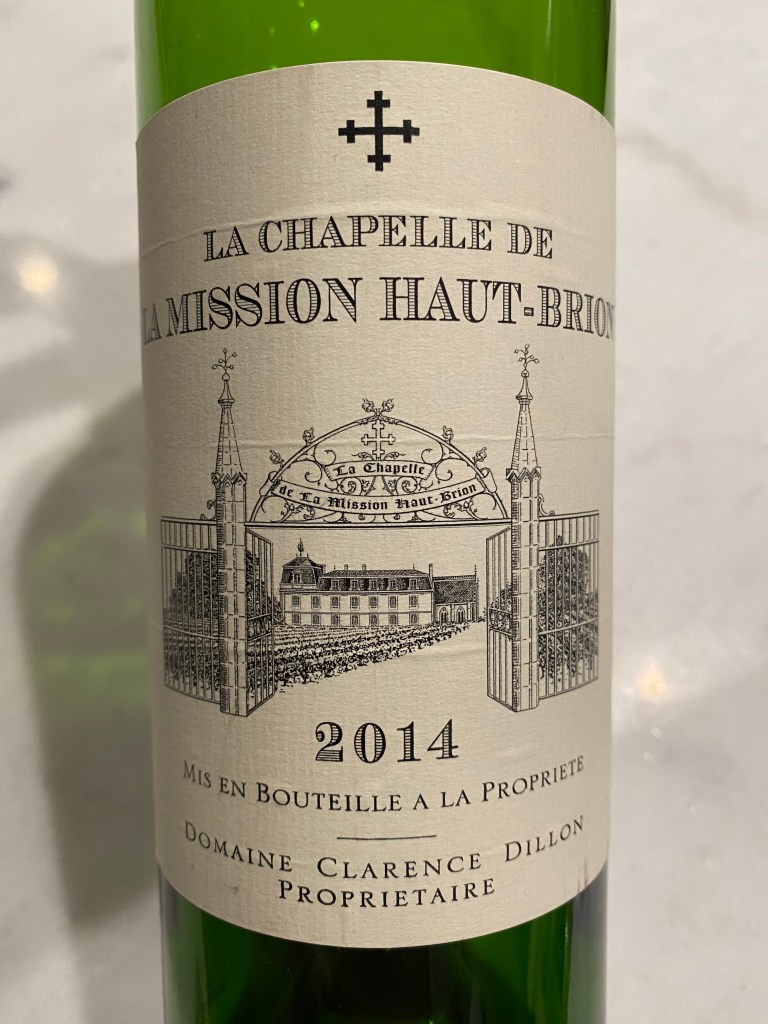
Today’s Wine: 2014 La Chapelle de La Mission Haut-Brion
The 2014 La Chapelle de La Mission Haut-Brion is opaque deep ruby in color. I gave this about 3 hours to open up, and the nose showcases aromas of plum, blackcurrant, violet, tobacco, gravel, truffle, dried underbrush, pepper, and cedar. Once in the mouth, the wine displays notes of blackcurrant, black raspberry, fig, cigar box, smoke, forest floor, crushed rock, and bell pepper. The Cabernet Franc is quite evident in this one. The wine is medium- to full-bodied with medium (+) acidity, fine grained medium tannins, and a medium (+) length finish.
Price: $65. I think this is one of the better value Bordeaux wines, particularly for the second wine of an estate with as high stature as Château La Mission Haut-Brion. Coupled with the fact the 2014 vintage can be often overlooked, this is a very nice wine for its cost.









 JB's Wine Talk