High Quality People Pleaser

Today’s Story: Alpha Omega

This is an easy one today so I can prepare for the Christmas Eve festivities, and if you celebrate the holiday as well my wine review shouldn’t keep you too busy! I wrote about Alpha Omega a couple times in the past, first reviewing the 2015 Unoaked Chardonnay in A Napa Take On Chablis and then the 2016 Cabernet Franc in The Cabernet in Cabernet Sauvignon.

Long story short, Alpha Omega is the creation of Robin and Michelle Baggett following their move to Napa Valley in 2006. Though Robin began his foray into wine much earlier, in 1988 as a grape grower and in 1998 by starting Tolosa Winery, Michelle worked in the design and development of hospitality brands before the couple culminated their pursuits into Alpha Omega. Today, Alpha Omega is known largely for their red wines and particularly high-quality single vineyard Cabernet Sauvignon, though they produce Chardonnay, Sauvignon Blanc, and late harvest wines as well.
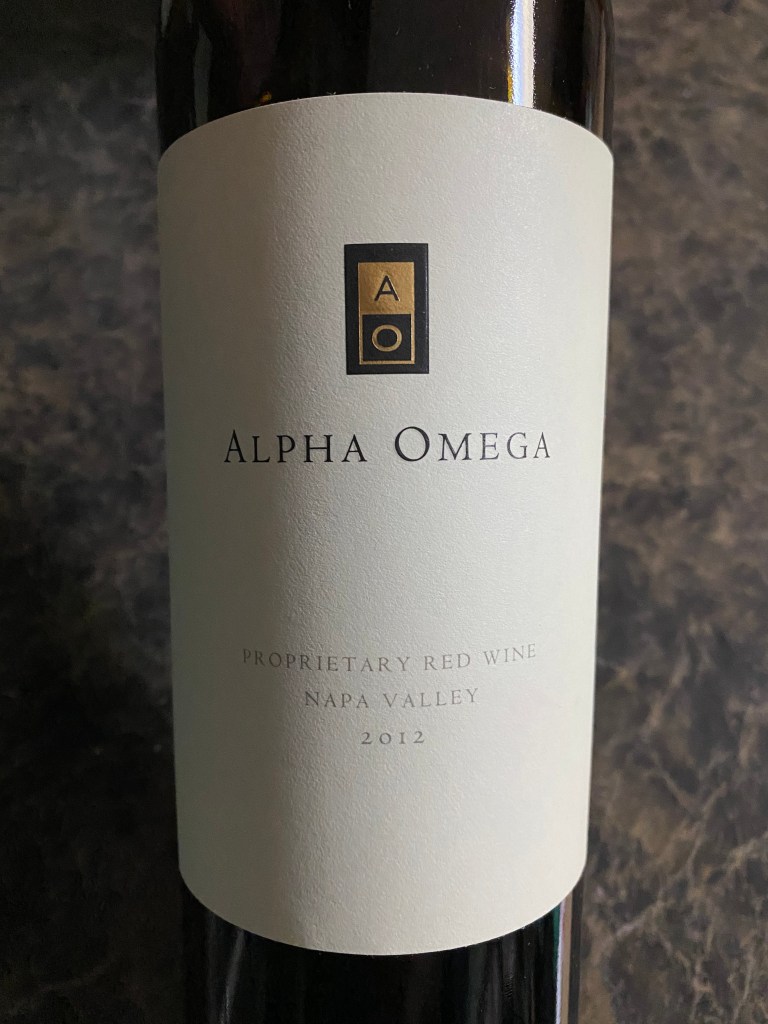
Today’s Wine: 2012 Proprietary Red Wine

61% Cabernet Sauvignon, 32% Merlot, 7% Cabernet Franc; 14.6% ABV

The 2012 Proprietary Red is opaque deep ruby in color, almost black at its core. This needs some time to breathe, though once it opens up the nose emits aromas of blackberry, blueberry, plum, cassis, black cherry, cedar, graphite, tar, cinnamon, and oak. In the mouth, this expressive palate shows notes of blackberry, juicy plum, prune, dried leather, loamy earth, cocoa, black pepper, licorice, lavender, and a touch of vanilla. This bottling from Alpha Omega is medium- to full-bodied with high acidity, grippy medium (+) tannins, and a medium (+) finish with inky, concentrated dark fruit notes dominating.

Price: $90. Personally, I would pay up for the single vineyard wines from Alpha Omega or go with a different producer in the same price range. This wine is a bit far into the “people pleasing” category in my opinion with its rich, concentrated, and expressive fruit alongside vanilla and oak. This being said, however, most people would like this. Pair this with steak, a burger, pepper-crusted tuna, or grilled lamb.

High Quality Napa Cab That Won’t Break the Bank

Today’s Story: Groth Vineyards & Winery

Groth was founded in Oakville in 1982 by Dennis, a former executive at Atari, and Judy Groth. Though Groth is now very well-established in the heart of the Napa Valley and Dennis is highly involved in the wine community there, the couple almost purchased vineyard property in Sonoma County to pursue their dreams. It was the sheer beauty of vineyards on the valley floor that captivated their attention and fostered their move to the Napa Valley several years after founding the winery.

Groth Vineyards is truly a family endeavor today, with a couple of Dennis and Judy’s children active in day-to-day operations. The winery is also a state of the art institution, undergoing major construction in 2007 that brought along an extended crush pad, a second tank room for smaller barrels, and a remodeled Reserve barrel room. Groth consists of two major vineyard areas, roughly 100 acres for the estate vineyard and Cabernet Sauvignon and another 44 acres in Yountville where they get their Chardonnay and Merlot fruit.

Fun fact: the 1985 Groth Reserve Cabernet Sauvignon is the first American wine ever to have received a perfect 100-point score by Robert Parker.

Today’s Wine: 2013 Cabernet Sauvignon

80% Cabernet Sauvignon, 20% Merlot; 14.9% ABV

The 2013 Cab is medium ruby in color with rose/garnet rim variation. To be honest, this is lighter in appearance than I expected. On the nose, I get aromas of cherry, blackcurrant, plum, black licorice, cigar box, baking spice, mint, and oak. Once in the mouth, this wine showcases notes of black cherry, jammy blueberry, inky blackberry, black pepper, tobacco, clove, vanilla, and rocky minerality. This is full-bodied with high acidity, medium (+) tannins, and a long finish.

Price: $50. I think this is a solid value for the quality of the wine. Groth also produces a Reserve Cabernet Sauvignon, which is typically in the $100-120 per bottle range. Pair this with steak, prime rib, or beef short ribs.

Beauty from Howell Mountain

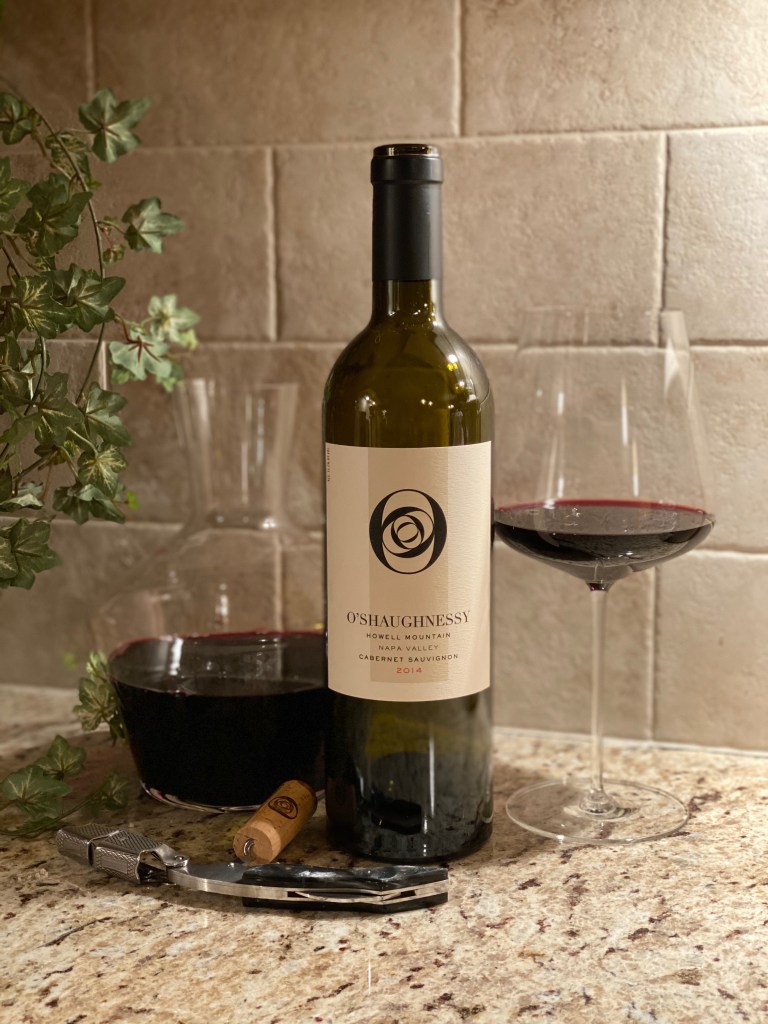
Today’s Story: O’Shaughnessy Estate Winery

O’Shaughnessy is a small, family-owned winery founded by Betty O’Shaughnessy Woolls and Paul Woolls in the late 1990s. Betty’s background is in real estate investment and development, though she grew a passion for food and wine that ultimately brought her to Napa Valley in 1990 when she purchased a home with vineyards in Oakville. Paul’s background on the other hand is law, though he also developed a passion for wine living in New Mexico during his college years. The two met at a wine tasting and have been partners in life and in winemaking ever since.

In 1997, the couple planted 35 acres on Howell Mountain (29 acres of Cabernet Sauvignon and the remaining 6 acres a mix of Cabernet Franc, Petit Verdot, Merlot, Malbec, Carmenere, St. Macaire and Gros Verdot) on a 120 acre property. Several years later, in 2000, they expanded to Mt. Veeder by acquiring a 55 acre property to which 17 acres are planted. O’Shaughnessy’s Mt. Veeder holdings grew again in 2006 with the addition of a 265 acre property, though only 32 acres are planted and most is Cabernet Sauvignon. Lastly, we cannot forget the Oakville property where 32 acres surrounding Betty and Paul’s home are planted to Sauvignon Blanc, Chardonnay, and Cabernet Sauvignon.

O’Shaughnessy, like many smaller high-quality wineries with more-or-less distinctive vineyard sites, employs a winemaking philosophy that puts terroir at the forefront. Though the winery and all equipment is quite modern, the winemaker Sean Capiaux seeks to produce classic wines that are naturally fermented and bottled unfined and unfiltered. The resulting wines are elegant, expressive, and age-worthy while demanding respect for a still reasonable price tag.

Today’s Wine: 2014 Howell Mountain Cabernet Sauvignon

79% Cabernet Sauvignon, remaining 21% a blend of Malbec, Merlot, Cabernet Franc, Carmenère, Petit Verdot, and St. Macaire; 15.2% ABV

The 2014 Howell Mountain Cab is an opaque, deep ruby/purple color with rim variation heavy on the purple side. Decanting is a must with this one, as its youth and powerful profile demand air time. The nose offers aromas of classic mountain fruit such as blueberry (very prominent) and blackberry alongside licorice, violet, aged leather, earth, dark chocolate, graphite, and oak. Once in the mouth, the wine showcases notes of blueberry, crushed blackberry, plum, wild black raspberry, red and purple florals, crushed stone, and dried silt. As expected this is full-bodied with high acidity, elegant medium tannins, and a long finish.

Price: $110. I think this is appropriately priced while being a wonderful representation of Howell Mountain. O’Shaughnessy produces some of my favorite Cabernets, I just wish I got to drink them more often. Pair this with steak, lamb, a good burger, or beef short ribs.

The Matriarch of Diamond Mountain

Today’s Story: Davies Vineyards

Davies Vineyards is one of the most historic wineries in the Napa Valley, known as having the first hillside caves for storing and aging wine in the region. While known for their Cabernet Sauvignon, Davies also produces Pinot Noir as well as Sparkling wine under the Schramsberg label. For more on their history, check out my previous blog post Who Wants Pie?

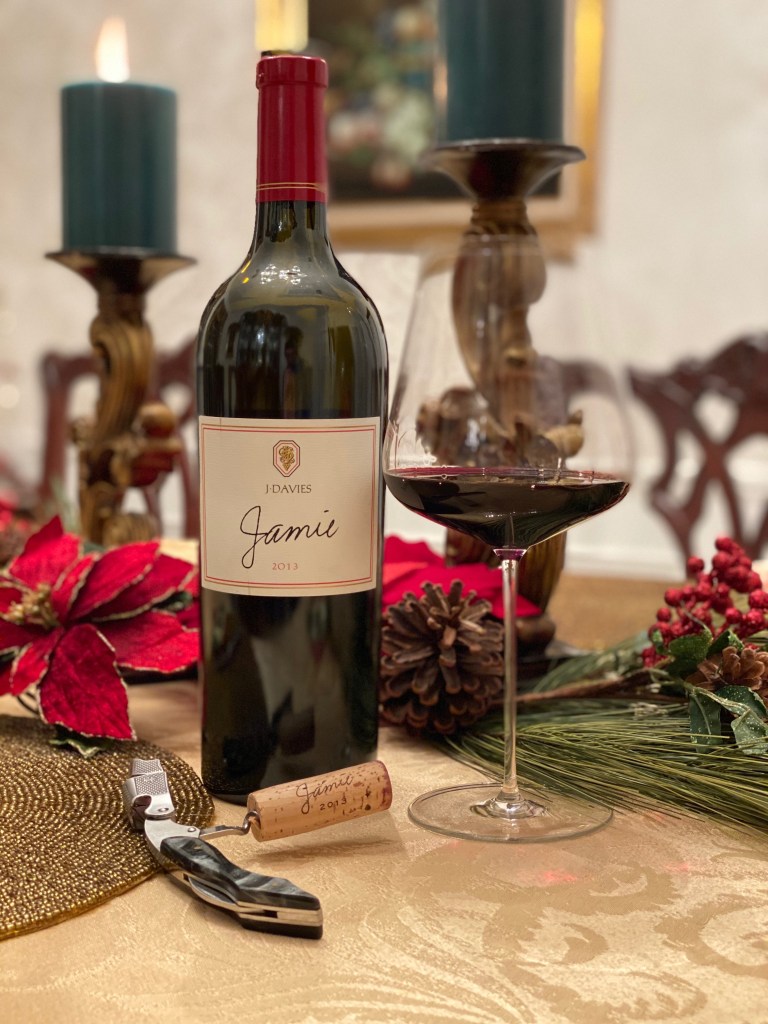
Today’s Wine: 2013 Jamie Cabernet Sauvignon

91% Cabernet Sauvignon, 6% Malbec, 3% Petit Verdot; 14.8% ABV

The Jamie bottling is Davies’ highest-end Cabernet Sauvignon, coming from their historic Diamond Mountain property. This wine is named in honor of Jamie Davies, with the label bearing her signature, who alongside her husband Jack revived Jacob Schram’s land and the Schramsberg label. The fruit for this wine comes from three vineyard blocks totaling 41 acres ranging from 500 to 1,000 feet elevation. Two blocks are from the original Schram holdings (Napa’s first hillside vineyards) and the third is the McEachran parcel planted in 1878.

The 2013 Jamie is deep opaque ruby in color. This bottle certainly needed some time in the decanter, and once the nose opens it showcases aromas of blackberry, plum, black licorice, cigar box, tobacco, perfumed purple florals, and oak. In the mouth, this wine shows notes of blackberry, blackcurrant, black raspberry, anise, graphite, cedar, and damp soil. The wine is full-bodied with medium (+) acidity, medium (+) tannins, and a medium (+) length finish. 275 cases produced.

Price: $200. While this is a delicious wine, I do not think it’s worth its price tag. This is twice as expensive as the other Cabs in the Davies portfolio and almost four times as expensive as their JD label. If you find yourself with a bottle, pair it with prime rib, filet mignon, or a New York strip.

A Winery Synonymous with Napa Valley Itself

Today’s Story: Beaulieu Vineyard

Beaulieu Vineyard is one of the most historic wineries in Napa Valley, founded in 1900 by Georges de Latour and his wife Fernande. Located in the Rutherford AVA, BV got its name from Fernande when she first saw the property and said it was a “beautiful place,” or “beau lieu.” Georges de Latour sold his successful cream of tartar business shortly thereafter and the couple purchased 4 acres with the intent of producing wines that could stand up to their native France. When they began planting, de Latour brought in Phylloxera-resistant rootstock from Europe in order to buck the trend of a California wine industry in trouble.

Though I have written about several wineries with origins in the late 1800s or early 1900s, BV is different in that unlike many of their neighbors they not only survived Prohibition but thrived during Prohibition. How? BV started selling sacramental wine to the Catholic Church and saw their business increase by four times while those around them shuttered their wineries. Once Prohibition ended, however, the story becomes more “traditional” Napa with de Latour focusing on how to create the best wines from his land by instituting updated farming and winemaking techniques. In an effort to raise his status higher, de Latour traveled to his native France to meet André Tchelistcheff, a world-renowned viticulturist and enologist, who championed continuous innovation. It was André who, upon tasting the 1936 vintage of BV’s Private Reserve wine, encouraged de Latour to bottle their flagship wine. André would become BV’s winemaker, a role he would maintain for over 30 years. In 1940 BV released their first Georges de Latour Private Reserve Cabernet Sauvignon, a wine still in production today.

BV has come a very long way from the initial 4 acre plot in 1900. BV currently operates on roughly 1,100 acres of estate vineyards, broken down into different “Ranch” designations. Ranch 1 (79 planted acres) came along in 1903, Ranch 2 (85 planted acres) in 1910, Ranch 3 in 1933 after the repeal of Prohibition, and so on. One of the cool features of BV’s winemaking technique is that each small vineyard lot stays separated throughout the entire process (not an easy feat with their vast holdings). During winemaking, each wine ferments such that the best expression of the fruit results. For instance, the white wines are cold-fermented to display a bright, vibrant character while the red wines are cold-soaked to showcase optimal color, flavor, and tannin. The reds are then fermented in small barrels and aged in oak varying in age, level of toast, and type.

For more on Beaulieu Vineyard’s history, portfolio of wines, or winemaking processes check out the website here, a source of much of the information above.

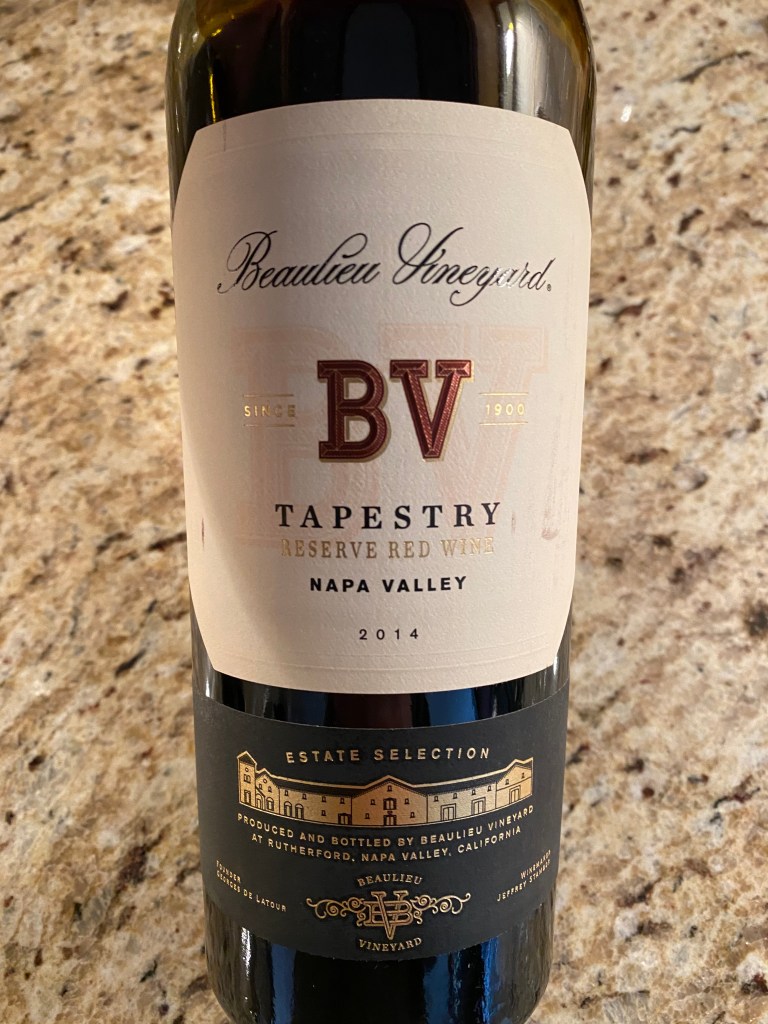
Today’s Wine: 2014 Tapestry Reserve

76% Cabernet Sauvignon, 13% Merlot, and remaining 11% between Petit Verdot, Malbec, and Cabernet Franc; 14.8% ABV

The 2014 Tapestry is deep ruby in color and is slightly transparent. I simply let this open up in the glass, and once it did the nose showcases aromas of blackberry, dark plum, redcurrant, cedar, crushed rock, light baking spice, and a touch of oak. Once in the mouth, this wine shows notes of black cherry, blueberry, pomegranate, dry chalky earth, licorice, graphite, vanilla, and green cooking herbs. This wine is full-bodied with medium (+) acidity, medium yet refined tannins, and a medium (+) length finish. Tapestry is always a wonderful wine from this storied producer.

Price: $45. This is a great value Bordeaux blend, a view I consistently have when trying this bottling across vintages. From a producer that makes wine from $7 per bottle to $100+ per bottle, this is great for BV’s portfolio as well as the overall wine community portfolio. Pair this with steak, a good burger, or lamb.

A Vanguard on Howell Mountain

Today’s Story: CADE Estate Winery

CADE, the brainchild of Gavin Newsom (governor of California), Gordon Getty (son of oil tycoon J. Paul Getty), and John Conover, blossomed into reality in 2005 with the trio’s need to expand upon PlumpJack, their winery in Oakville. The winery encompasses 54 acres at an elevation of 1,800 feet on Howell Mountain and took roughly four years to complete, with arguably its crowning achievement being that it is the first LEED Gold certified winery in Napa Valley. Two years of planning went into the winery before construction started in 2007, though many of the changes originated in the vineyards where the team converted to organic farming. Like many wineries nowadays, the organic farming approach came about at CADE as a desire to protect the land while growing fruit free from harsh chemicals in an effort to produce higher-quality, truer wines.

The architecture of the winery demands particular attention, as it is quite modern and is a stark contrast to the surrounding views, vineyards, and forests. Made largely of concrete, recycled steel, and glass (and no wood), the winery displays captivating variation between both gentle lines and aggressive rectangular angles. Sticking to their goal of attaining LEED Gold certification, the team utilized recycled products (including blue jeans) for insulation in the tasting room and situated solar panels on the roof to provide electricity. Both the fermentation room and caves are naturally insulated to help reduce production materials and environmental impact. Definitely check out pictures of the winery here on their website.

Fun fact: The CADE name is a tribute to Shakespeare, who referred to wine casks shipped from Bordeaux to England as “cades.”

Today’s Wine: 2009 Napa Cuvée Cabernet Sauvignon

88% Cabernet Sauvignon, 7% Petit Verdot, 5% Merlot; 15.2% ABV

The 2009 Napa Cuvée is deep purple/ruby in color and almost entirely opaque. I let this decant for about 30 minutes, however the wine seemed to blossom right out of the gates. The nose showcases aromas of blackberry, blueberry, mixed wild red berries, cigar box, graphite, black pepper, chocolate, and oak. This does still show a little heat on the nose as well, but it does blow off. Once in the mouth, the wine displays notes of black plum, blackcurrant, crushed blueberry, tobacco, damp rocky soil, ground green herbs, mocha, and a hint of vanilla. This is full-bodied with medium (+) acidity, medium dusty tannins, and a long finish.

Price: $70. This is a good price-point, as I think the complexity this wine shows helps make it a fairly solid value play (especially next to their Howell Mountain bottling). Pair this with steak or a good burger.

Easy-Drinking Cab

Today’s Story: Davies Vineyards

I am apparently loving the easy posts lately, as I previously wrote about Davies Vineyards back on October 9 in Who Wants Pie? Davies is a very historic winery with its roots dating back to 1862, while one of their more prominent fun facts is that Chinese laborers dug what became the first hillside caves in Napa Valley in 1870. I dive a bit more into the history, changes in ownership, and “dumb phase” during Prohibition in my previous post, so check it out!

Onto the (more) fun part…

Today’s Wine: 2012 JD Cabernet Sauvignon

76% Cabernet Sauvignon, 18% Malbec, 4% Merlot, 2% Petit Verdot; 13.5% ABV

The 2012 JD is medium to deep ruby in color, though it is moderately transparent. I used the Coravin system to snag a quick glass with lunch and let this breathe in the glass. On the nose, this wine showcases aromas of bright red cherry, redcurrant, blackberry jam, wild blueberry, graphite, cedar, slight baking spice, and a hint of vanilla. Once in the mouth, I get notes of plum, boysenberry, green herbs, asian spice, slate, cinnamon, and oak. This Cab is medium- to full-bodied and feels somewhat airy in the mouth while showing medium acidity, silky and almost fully integrated medium tannins, and a medium length finish. 925 cases produced.

Price: $45. This is a good value wine and an entry-level offering from the historic Davies Vineyards. Its bright fruit and easy drinking should make for a wine any Cab lover would enjoy. Pair this with lamb, steak, or even some bbq ribs or pork.

Who Knew They Made a Chardonnay?

Today’s Story: Gargiulo Vineyards

Back-to-back easy posts this weekend, as I previously wrote about Gargiulo in my blog post Italy’s Favorite Grape…from California? back on October 20. If you’d like some background on this small, family-owned winery and haven’t read my previous post, check it out!

I will note, however, that Gargiulo does not grow their own grapes for the wine I am reviewing today. Known for their Cabs, Gargiulo produced this somewhat “under the radar” Chardonnay with grapes from Rich Frank’s (of Frank Family Vineyards) Wood Ranch Vineyard.

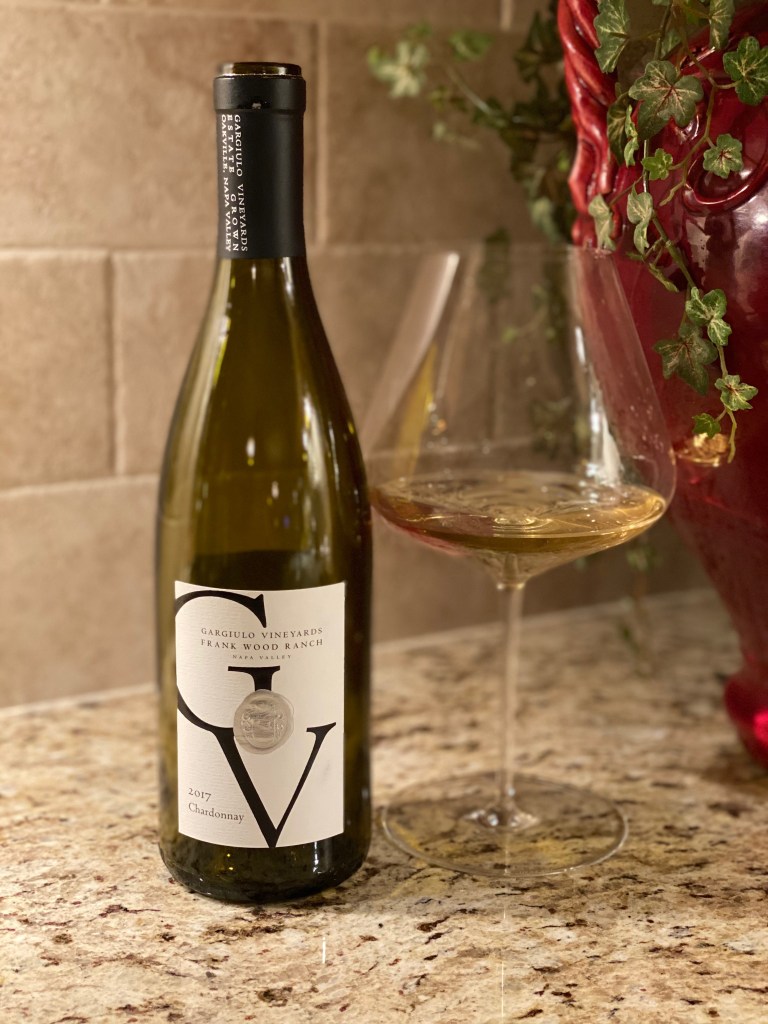
Today’s Wine: 2017 Frank Wood Ranch Chardonnay

100% Chardonnay; 13.6% ABV

I haven’t found a wine from Gargiulo that I didn’t like, with this Chardonnay being no exception. Interestingly enough, I was not entirely aware Gargiulo produced a Chardonnay and this is my first time tasting the wine.

This is pale gold in color and is completely transparent in the glass. The wine blossomed right out of the gates with a nose showcasing aromas of golden pear, stone fruit, lemon zest, almond, vanilla cream, and vibrant saline minerality. Once in the mouth, I get notes of apricot, yellow apple, lemon citrus, pineapple, toast, and a touch of butter. This Chard is medium-bodied with medium (+) acidity and a medium (+) length finish ending full and round. Superb effort again by Gargiulo.

Price: $70. This is up there with the Chateau Montelena Chardonnay (~$50) and Far Niente Chardonnay (~$60) which are two of my favorites. While this is delicious, that extra $10-20 could go toward something else but I won’t try to sway you either way. Pair this with baked chicken, shellfish, or a plate of cheese, pear, and apple.

Rare Riesling from Napa

Today’s Story: Palmaz Vineyards

Palmaz Vineyards, as it exists today, was founded in 1997 by Julio and Amalia Palmaz. Julio is a medical doctor by trade, credited with being a co-creator of the heart stent, though he and his wife Amalia always believed that close attention and care to their land can produce superior quality wines for generations to come.

Before I get too far, I’d like to take a step back to the origin of winemaking on their plot of land. In 1852, a man by the name of Henry Hagen moved to the West Coast in pursuit of Gold Rush treasures. Though he originally lived in San Francisco, in 1881 he purchased a plot of land at the southeastern edge of Napa Valley against Mount George and founded Cedar Knoll Vineyard and Winery. At that time a pioneer in Napa Valley, Hagen produced high-quality wines served throughout San Francisco high society and even won a silver medal for his brandy at the 1889 World’s Fair in Paris.

Fortunes changed, however, with Hagen’s death in 1895 and, as many wineries of the time experienced, the onset of Prohibition in 1919. With 450 acres of land in the hands of Hagen’s kin who didn’t share his passion for wine, winemaking ceased and the estate fell into disrepair.

Circling back to the Palmaz family, Julio and Amalia purchased, restored, and modernized the long-lost winery while building an estate totaling 600 acres with 64 acres under vine. One of the coolest features of the winery is their caves, which total 100,000 square feet and are listed as the largest in Napa Valley. The winery is built into an 18-story cavern behind Mount George, allowing for gravity-flow production of wine while also providing a naturally cool environment. The crowning achievement, in my opinion, of the Palmaz renovations is in their “fermentation dome” where the ceiling showcases high-tech data points and charts for easy monitoring of the wine during fermentation. This thing looks like it could control the Starship Enterprise so I highly suggest you take a look at pictures online and on their website here.

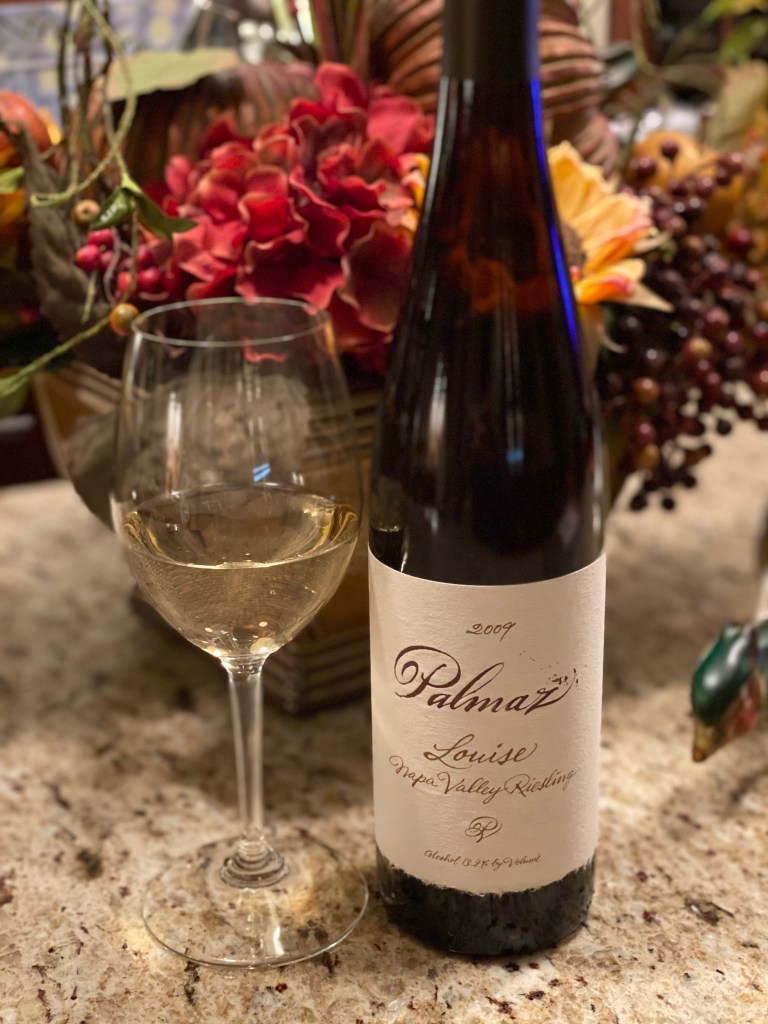
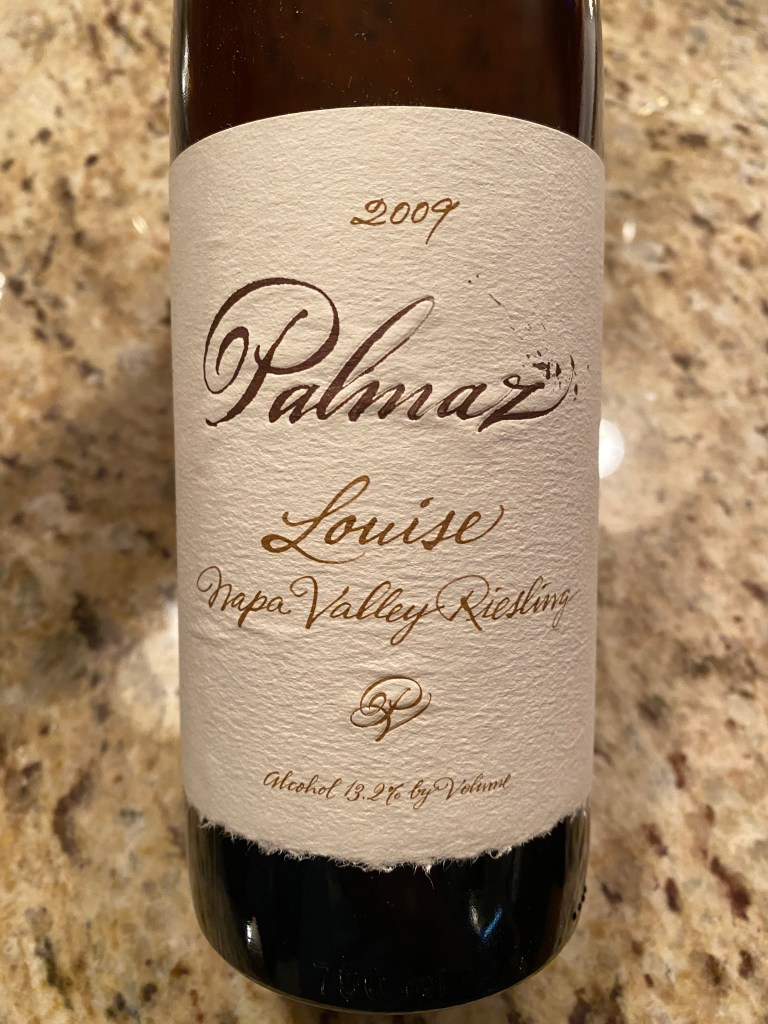
Today’s Wine: 2009 Louise Riesling

100% Riesling; 13.2% ABV

Palmaz is known for their Cabernet Sauvignon, particularly the Gaston which is produced from the best lots and only in certain vintages, several of which I’ve been able to enjoy. If you find a bottle of their Cabernet on a shelf, I suggest you give it a shot (though it is not cheap at about $130-150 per bottle). All this being said, I was unaware Palmaz produced a Riesling and I am excited to review it today.

Almost perfectly clear, this Riesling is pale straw/yellow in color with rim variation of water white. The nose is classic Riesling with aromas of petrol, green apple, and lime zest as well as pineapple, white florals, and slight nutty notes. Once in the mouth, this light- to medium-bodied white showcases notes of tangerine, peach, green apple, lemon peel, beeswax, and slight white spice. This is a creamy textured Riesling and not as dry as I prefer, showing medium acidity and a rounded medium length finish. 150 cases produced.

Price: $95. This is high in my opinion, though I think the rarity of this bottling plays into the price. I’d say skip this one and look toward Alsace or Mosel if you’re spending that kind of money. Pair this (like most Rieslings) with Chinese food, spicy Thai food, or even Tex-Mex.

Historic Napa Cab

Today’s Story: Far Niente

Far Niente was founded in 1885 by a forty-niner of the California gold rush named John Benson. John constructed his winery just below the hillsides in western Oakville, and he had it designed by Hamden McIntyre who was behind the Christian Brothers winery (now the CIA at Greystone). Like several prominent wineries today, John built Far Niente to function as a gravity flow winery.

Though Far Niente was quite successful for its first few decades, during the onset of Prohibition in 1919 it was abandoned and fell into disrepair. It wasn’t until sixty years later in 1979 that a man by the name of Gil Nickel purchased the dilapidated winery and began a three year restoration project. Winemaking resumed once again in 1982 with the harvest of the estate’s first Cabernet Sauvignon as well as Chardonnay. To this day, Far Niente continues to only produce Cabernet Sauvignon and Chardonnay.

Switching gears a little bit, in addition to their Cabernet Sauvignon and Chardonnay bottlings you can find at many wine stores (and sometimes grocery stores), Far Niente releases a Cave Collection. Their Cave Collection wines make up an annual limited release of wines from the Far Niente library and are simply the Cabs and Chards put aside by the winery for further aging before release. You can tell the difference between a normal bottle and a Cave Collection by the black band added around the capsule. Their goal with the Cave Collection, which started in the late 1980s, is to provide collectors an opportunity to taste more mature wines without waiting years to age them themselves. This is a great way for wine enthusiasts and collectors to guarantee provenance of aged wine.

Today’s Wine: 2011 Cabernet Sauvignon Cave Collection

100% Cabernet Sauvignon; 13.7% ABV

I’ve had a lot of wine from Far Niente (including their family of wines Nickel & Nickel, EnRoute, Bella Union, and Dolce) but this bottle truly surprised me. Had I tasted this blind, I probably would’ve called it Left Bank Bordeaux. In appearance this is deep, opaque ruby. I opened this bottle for an hour, then decanted it for about another hour. The nose offers aromas of blackcurrant, crushed blackberry, forest floor, slight barnyard, purple florals, graphite, and mocha. Once in the mouth, I get flavors of blackberry, blueberry, cigar box, pencil shavings, damp earth, dark roast coffee grounds, and slight pepper. Full-bodied with medium (+) acidity, dusty and refined medium tannins, and a long finish with notes of blackberry and black cherry. With a very tough vintage for Napa in 2011, Far Niente killed it with this bottling.

Price: $240. A good bottle of wine for a special occasion (we opened this with family in town from out of state). Pair this with filet mignon or slow cooked short rib.