You Win Some, You Lose Some

Today’s Story: Château Pichon Longueville Comtesse de Lalande

Château Pichon Longueville Comtesse de Lalande is a Second Growth (Deuxième Cru) estate based on the Bordeaux Wine Official Classification of 1855. Pichon Lalande is considered by many to be a classic example of Pauillac, known for its deep, concentrated layers of ripe fruit accompanied by notes of cassis, tobacco, and earth.

With nothing short of a somewhat tumultuous history, Pichon Lalande’s ownership changed hands over the years and earned its name when the founder’s daughter Therese received it as a dowry for her marriage to Jacques de Pichon Longueville. During the 18th century, the estate was dominated by women (Therese de Rauzan, Germaine de Lajus, and Marie Branda de Terrefort) throughout the winemaking process until Baron Joseph de Pichon Longueville took over for his mother. In 1850, with his death, the estate split between his two sons and three daughters and ultimately resulted in the division of Comtesse de Lalande and Pichon Baron.

With no familial heirs, Edouard Miailhe and Louis Miailhe purchased Pichon Lalande following WWI. Edouard’s daughter, May-Eliane de Lencquesaing, took over management in 1978 and became a prominent ambassador for Bordeaux wines while dramatically increasing quality of her estate. One of her major endeavors, and possibly most famous, was growing the size of Pichon Lalande from 40 hectares of vines to 89. In 2007, however, May-Eliane sold a majority stake of the estate to the Rouzaud family, owners of Roederer Champagne, and management changes as well as renovations took place.

I’ve written about Pichon Lalande several times before, with reviews on the 1966, 1986, 1989, 2003, and 2008 vintages.
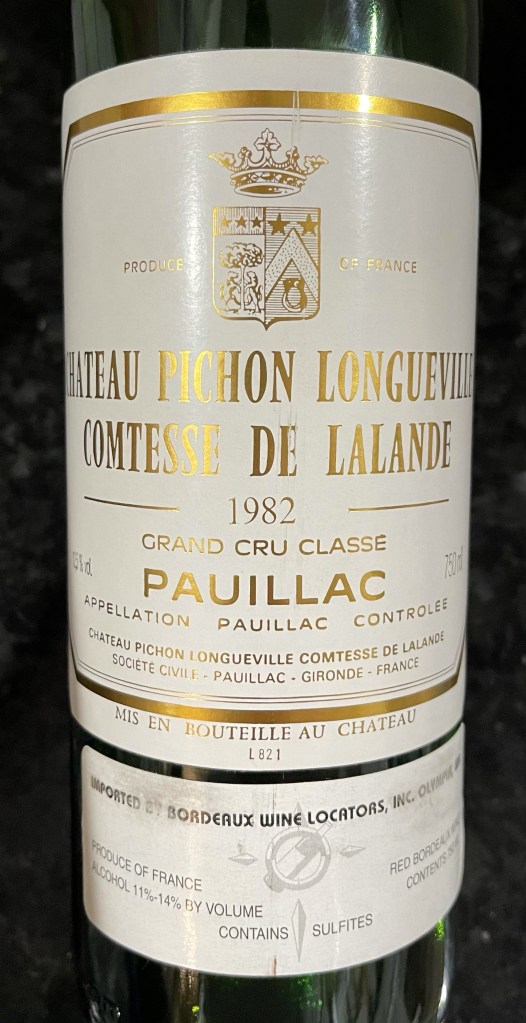
Today’s Wine: 1982 Château Pichon Longueville Comtesse de Lalande

Bordeaux Blend (no tech sheet); 12.5% ABV

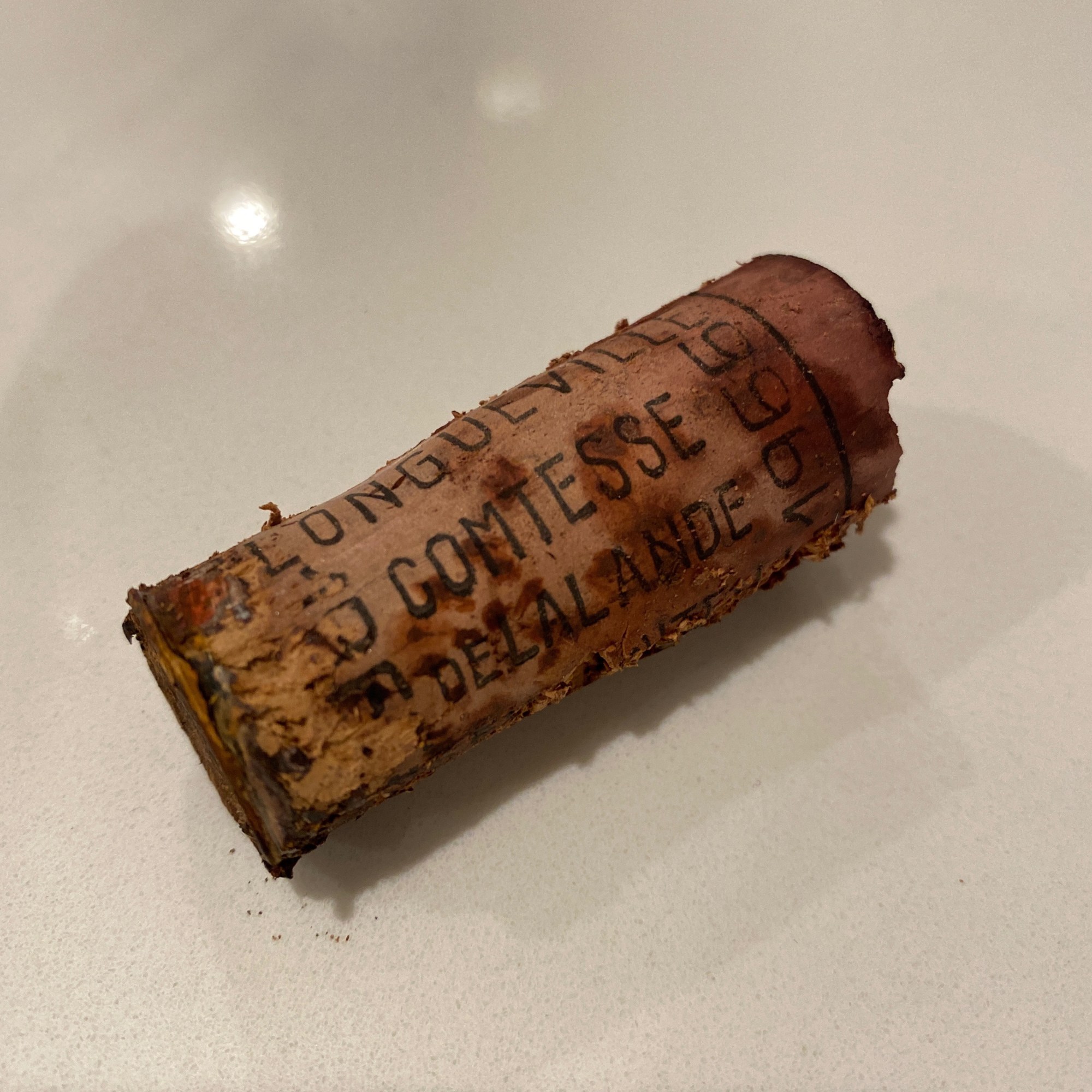
I must put a disclaimer on this bottle, as we learned only after pulling the cork this was recorked at the château in 1993. The bottle appears immaculate, fill level is into the neck, the cork is in perfect shape, and there are zero signs of seepage. However my tasting companions and I were disappointed in the wine and I think it might have something to do with the recorking…especially how recent it occurred after the vintage.

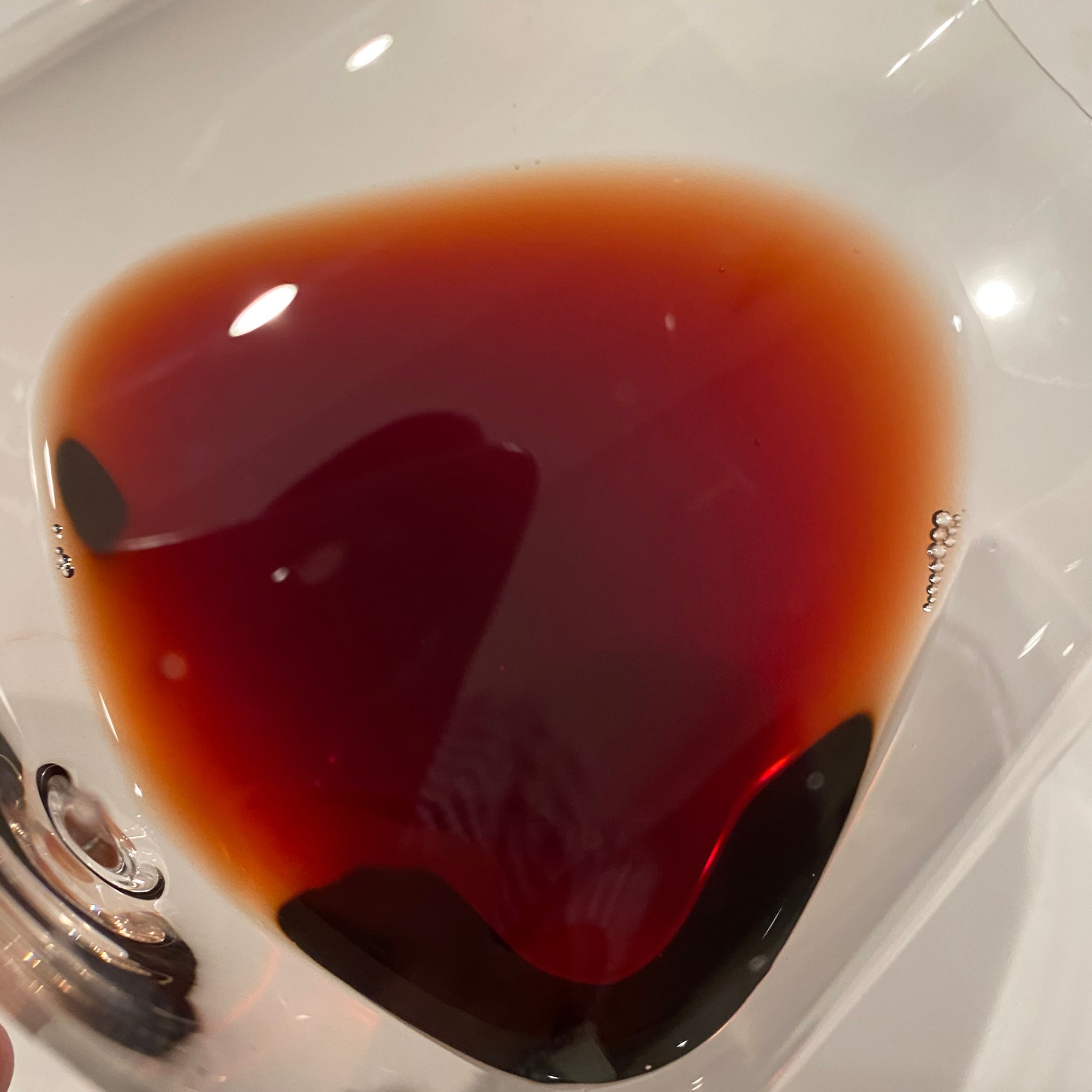
The 1982 Pichon Lalande is deep garnet in color. This was rather muted out of the bottle and after 30-45 minutes in the glass, so I decided to decant it. The aromas are of medium intensity, with the nose showcasing notes of blackcurrant, cigar box, scorched earth, graphite, eucalyptus, cinnamon, and creme brûlée. Meanwhile the palate is certainly better and flavors are pronounced, displaying notes of blackcurrant, dried black plum, tobacco, graphite, forest floor, truffle, and cedar. This dry red is medium- to full-bodied with high acidity, medium (+) but fine-grained tannins, medium alcohol, and a long finish. The structure is still very impressive, but the nose is quite lackluster and the palate is better but not at all complex. Overall this was very disappointing given the reputation of the wine, but I think it’s due to the bottle being recorked so early in its life.

Price: $1,000 (shared by a friend who paid $500). I would like to taste this wine again, preferably one with its original cork and strong provenance. This was supposed to be an ethereal wine, but unfortunately it had its issues that outweigh the incredible structure. Certainly not worth the price paid in this instance.

Recorked in 1993

As you can see on the cork, this bottle was rebottled at the château in 1993, per the phrase “rebouche au château en 1993.” I think this is why the bottle didn’t live up to our expectations, as this is certainly not ideal. What’s interesting and somewhat concerning is how short after the vintage this occurred (assuming this was bottled after two years that’s only nine years in bottle before being recorked). You win some, you lose some.

Aged Pauillac Striking up With the First Growths

Today’s Story: Château Pichon Longueville Comtesse de Lalande

I previously (and somewhat recently) wrote about Château Pichon Longueville Comtesse de Lalande and have reviewed the 1966, 1986, 2003, and 2008 vintages on this blog. Though I’ve tasted a number of other vintages including 1979, 1996, 2005, and 2014, the 1989 vintage remained elusive…until today.

Château Pichon Longueville Comtesse de Lalande is a Second Growth (Deuxième Cru) estate based on the Bordeaux Wine Official Classification of 1855. Pichon Lalande is considered by many to be a classic example of Pauillac, known for its deep, concentrated layers of ripe fruit accompanied by notes of cassis, tobacco, and earth.

With nothing short of a somewhat tumultuous history, Pichon Lalande’s ownership changed hands over the years and earned its name when the founder’s daughter Therese received it as a dowry for her marriage to Jacques de Pichon Longueville. During the 18th century, the estate was dominated by women (Therese de Rauzan, Germaine de Lajus, and Marie Branda de Terrefort) throughout the winemaking process until Baron Joseph de Pichon Longueville took over for his mother. In 1850, with his death, the estate split between his two sons and three daughters and ultimately resulted in the division of Comtesse de Lalande and Pichon Baron.

With no familial heirs, Edouard Miailhe and Louis Miailhe purchased Pichon Lalande following WWI. Edouard’s daughter, May-Eliane de Lencquesaing, took over management in 1978 and became a prominent ambassador for Bordeaux wines while dramatically increasing quality of her estate. One of her major endeavors, and possibly most famous, was growing the size of Pichon Lalande from 40 hectares of vines to 89. In 2007, however, May-Eliane sold a majority stake of the estate to the Rouzaud family, owners of Roederer Champagne, and management changes as well as renovations took place.

Today’s Wine: 1989 Château Pichon Longueville Comtesse de Lalande

45% Cabernet Sauvignon, 35% Merlot, 12% Cabernet Franc, 8% Petit Verdot; 12.5% ABV

The 1989 Pichon Lalande is translucent deep ruby in color with deep garnet hues. There’s absolutely no bricking either, which is fantastic. We served this as a pop and pour and let it develop in the glass, with the nose showcasing aromas of blackcurrant, blackberry, pencil shavings, tobacco, forest floor, cedar, graphite, green pepper, and eucalyptus. Meanwhile on the palate, I get notes of redcurrant, cassis, blackberry, black cherry, cigar box, scorched earth, green underbrush, bell pepper, gravel, and clove. This is medium-bodied with medium (+) acidity, medium tannins, and a long finish. Beautifully balanced and not showing any signs of its age yet.

Price: $300 (but this was shared by a good friend). Though not nearly an inexpensive bottle of wine, if you can verify provenance and find a bottle with a great fill level, I would give this a shot. Pichon Lalande has outperformed with each of the 9 vintages I’ve tried and oftentimes these drink like the First Growths. Great value.

The Underrated 2008 Bordeaux Vintage Showing Just Fine at Pichon Lalande

Today’s Story: Château Pichon Longueville Comtesse de Lalande

I previously wrote about Château Pichon Longueville Comtesse de Lalande when I tasted the 1966, 1986, and 2003 vintages. Though I’ve had this wine many times and from vintages not written about (including 2014 which is showing very nicely now), I wanted to revisit them today for the 2008 vintage. Regularly I hear great things about the often “underrated” 2008 vintage for Bordeaux, so I figured it’s time to check for myself.

Château Pichon Longueville Comtesse de Lalande is a Second Growth (Deuxième Cru) estate based on the Bordeaux Wine Official Classification of 1855. Pichon Lalande is considered by many to be a classic example of Pauillac, known for its deep, concentrated layers of ripe fruit accompanied by notes of cassis, tobacco, and earth.

With nothing short of a somewhat tumultuous history, Pichon Lalande’s ownership changed hands over the years and earned its name when the founder’s daughter Therese received it as a dowry for her marriage to Jacques de Pichon Longueville. During the 18th century, the estate was dominated by women (Therese de Rauzan, Germaine de Lajus, and Marie Branda de Terrefort) throughout the winemaking process until Baron Joseph de Pichon Longueville took over for his mother. In 1850, with his death, the estate split between his two sons and three daughters and ultimately resulted in the division of Comtesse de Lalande and Pichon Baron.

With no familial heirs, Edouard Miailhe and Louis Miailhe purchased Pichon Lalande following WWI. Edouard’s daughter, May-Eliane de Lencquesaing, took over management in 1978 and became a prominent ambassador for Bordeaux wines while dramatically increasing quality of her estate. One of her major endeavors, and possibly most famous, was growing the size of Pichon Lalande from 40 hectares of vines to 89. In 2007, however, May-Eliane sold a majority stake of the estate to the Rouzaud family, owners of Roederer Champagne, and management changes as well as renovations took place.

Today’s Wine: 2008 Château Pichon Longueville Comtesse de Lalande

63% Cabernet Sauvignon, 29% Merlot, 5% Petit Verdot, 3% Cabernet Franc; 13% ABV

The 2008 Pichon Lalande is opaque medium to deep ruby in color. After 4 hours or so in the decanter, the wine seems perfectly open and the nose showcases classic aromas of blackcurrant, redcurrant, cassis, pencil shavings, cigar box, scorched earth, gravel, cracked pepper, green herbs, and mild oak. Moving onto the palate, I get more classic notes of cassis, black cherry, plum, licorice, violet, tobacco, graphite, loamy earth, underbrush, and chocolate. This is medium- to full-bodied with medium (+) acidity, medium (+) dusty tannins, and a long finish. Gorgeous wine from an underrated vintage, and I think this has a very long life still ahead of it.

Price: $140 ($180 average online). Relative to vintages around this such as 2005, 2009, or 2010, this is a great value play particularly at the price I found it for. While it doesn’t have the power some of these stronger vintages possess, it is a gorgeous wine nonetheless that is really starting to come into its own.

Unbelievably Youthful Bordeaux From the 1966 Vintage

Today’s Story: Chateau Pichon Lalande

Chateau Pichon Longueville Comtesse de Lalande is a historic estate that traces its routes to the late 1600s and ranks as a Second Growth (Deuxième Cru) based on the Bordeaux Wine Official Classification of 1855. I previously wrote about Pichon Lalande when reviewing their 1986 vintage in Bordeaux Battle and the 2003 vintage in Decidedly Opulent Pauillac. To save myself (and yours as a reader) the hassle of reproducing (or reading) such a detailed and lengthy history, I will copy my short previous write-up below.

Pichon Lalande is considered by many to be a classic example of Pauillac, known for its deep, concentrated layers of ripe fruit accompanied by notes of cassis, tobacco, and earth.

With nothing short of a somewhat tumultuous history, Pichon Lalande’s ownership changed hands over the years and earned its name when the founder’s daughter Therese received it as a dowry for her marriage to Jacques de Pichon Longueville. During the 18th century, the estate was dominated by women (Therese de Rauzan, Germaine de Lajus, and Marie Branda de Terrefort) throughout the winemaking process until Baron Joseph de Pichon Longueville took over for his mother. In 1850, with his death, the estate split between his two sons and three daughters and ultimately resulted in the division of Comtesse de Lalande and Pichon Baron.

With no familial heirs, Edouard Miailhe and Louis Miailhe purchased Pichon Lalande following WWI. Edouard’s daughter, May-Eliane de Lencquesaing, took over management in 1978 and became a prominent ambassador for Bordeaux wines while dramatically increasing quality of her estate. One of her major endeavors, and possibly most famous, was growing the size of Pichon Lalande from 40 hectares of vines to 89. In 2007, however, May-Eliane sold a majority stake of the estate to the Rouzaud family, owners of Roederer Champagne, and management changes as well as renovations took place.

Today’s Wine: 1966 Chateau Pichon Lalande

45% Cabernet Sauvignon, 35% Merlot, 12% Cabernet Franc, 8% Petit Verdot; 13% ABV

The 1966 Pichon Lalande is medium garnet in color and moderately transparent. This wine is singing as a pop-and-pour, with the nose showcasing aromas of graphite, cigar box, forest floor, truffle, and peppercorn followed by faint redcurrant, cranberry, dried violet, and green herbs in the background. On the palate, I get notes of pencil shavings, dried tobacco leaf, leather, black tea leaf, underbrush, gravel, and mushroom with cassis and redcurrant poking through. This is still medium-bodied with lively medium acidity, medium (-) dusty tannins, and a medium (+) length finish. Best during the first 1-1.5 hours, but honestly didn’t fall apart too much slightly beyond hour 2 (when it was gone).

Price: $350. Provenance is key here, but if proven and you can find this for sale it is absolutely worth the tag. My bottle threw almost zero sediment, the color and structure were both profound, and this drank incredibly youthful given its age. I would’ve pegged this as 1980s if I tasted it blind. Pair this with wagyu filet mignon, earthy mushrooms and/or truffle, or mild cheese.