A Friend of Henri Jayer Is a Friend of Mine

Today’s Story: Domaine Philippe Charlopin

Domaine Philippe Charlopin was established by Philippe when he purchased his first vines in Gevrey-Chambertin in 1978. The son of a vigneron who rented vines rather than owned his own, Philippe comes from humble beginnings and started his own career as a vigneron-ouvrier in 1977. Throughout his early years, Philippe was a student of the great Henri Jayer and his winemaking philosophy is greatly impacted by Henri, with the two later becoming close friends. Though Philippe expanded with a parcel of Clos St. Denis in 1983 and later throughout various appellations, he only made Pinot Noir until his son Yann joined the domaine in 2004. Yann was passionate for crafting white wines, so they purchased 5 hectares of vines in Chablis, 2 hectares in Pernand-Vergelesses, and a small parcel of Corton-Charlemagne to augment their portfolio with Chardonnay. Today, Domaine Philippe Charlopin encompasses 25 hectares of sustainably farmed vines across 36 different appellations which are divided into 140 parcels.
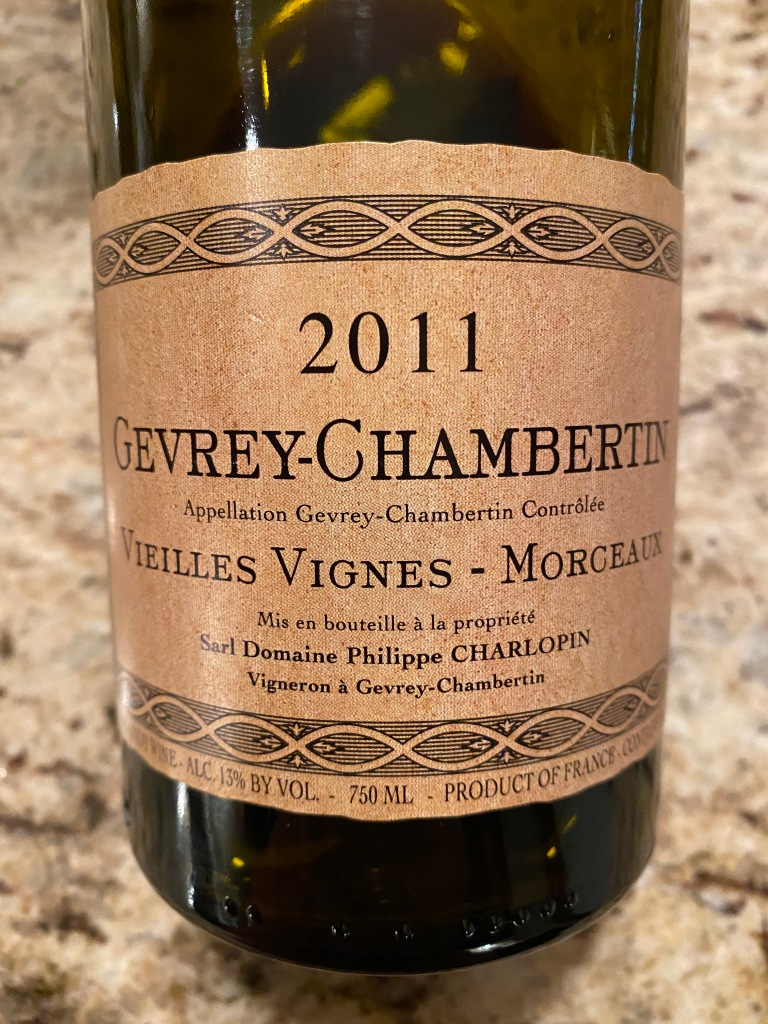
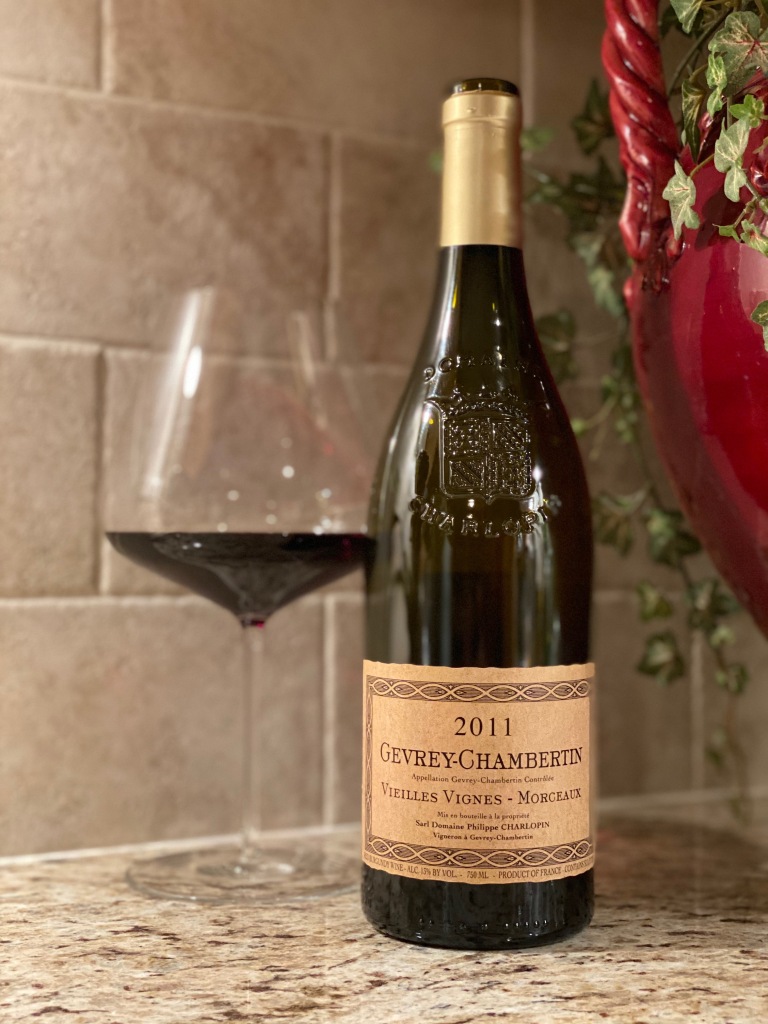
Today’s Wine: 2011 Gevrey-Chambertin Vieilles Vignes Morceaux

100% Pinot Noir; 13% ABV

The 2011 Morceaux is pale to medium ruby in color and moderately transparent. I let this breathe in the glass for about 30 minutes, allowing the nose to reveal aromas of black cherry, dried strawberry, blue florals, forest floor, worn leather, asphalt, tar, dried green underbrush, incense, and light oak. Once in the mouth, this wine showcases notes of cherry, cranberry, black raspberry, blood orange, violet, wet gravel, tobacco, rocky soil, iron, green herbs, and sandalwood. This is medium-bodied with medium (+) acidity, medium (-) tannins, and a medium (+) length finish. Sourced from 60- to 100-year-old vines planted in clay and limestone soil.

Price: $90 (though this is tough to find in the US and looks to originally sell around $65). This is a gorgeous Gevrey-Chambertin from one of the tougher vintages in recent past, and it doesn’t show pyrazines like some of the other 2011 Burgundy I’ve had. Pair this with beef bourguignon, saddle of lamb, or coq au vin.

Pinot Noir From the Team Behind Far Niente

Today’s Story: EnRoute Winery

EnRoute was founded in 2007 by the partners behind Far Niente Winery thanks to their passion for Pinot Noir. Since they stick to Chardonnay and Cabernet Sauvignon at their Far Niente estate, the owners decided it best to create EnRoute in the Russian River Valley, an AVA within Sonoma County known for their Pinot Noir. While EnRoute produces one blended Pinot Noir under the name Les Pommiers, their current releases focus on four single vineyard bottlings from Amber Ridge Vineyard, Bucher Vineyard, Marty’s Vineyard, and Northern Spy Vineyard. The first single vineyard offerings came in the 2013 vintage from Amber Ridge and Northern Spy. Also in 2013, EnRoute released their first Chardonnay under the name Brumaire for the morning fog. To check out some details about the EnRoute vineyards including maps, check out the website here.

Today’s Wine: 2014 Northern Spy Vineyard Pinot Noir

100% Pinot Noir; 14.5% ABV

The 2014 Northern Spy Pinot Noir is deep ruby in color and actually almost purple at its core while being nearly fully opaque. Once this opens up, the nose showcases aromas of cranberry, black cherry, dried raspberry, leather, bergamot, mint, cola, sweet tobacco, and rose. In the mouth, this wine offers notes of blackberry, strawberry rhubarb, ripe cherry, black tea leaf, baking spice, earth, tar, peppery spice, and oak. This Pinot is medium-bodied with mouthwatering high acidity, medium (-) tannins, and a medium length finish which is shorter than hoped.

Price: $85. Not my favorite single vineyard bottling from EnRoute, though this could be a vintage story. I’ve heard good things about the 2014 Hop Kiln Vineyard though, but have yet to pop it. Check out their Les Pommiers for $60 if you’re interested in exploring the brand. Pair this with roasted chicken, smoked salmon, or pork loin.

The Caymus of Pinot Noir

Today’s Story: Belle Glos

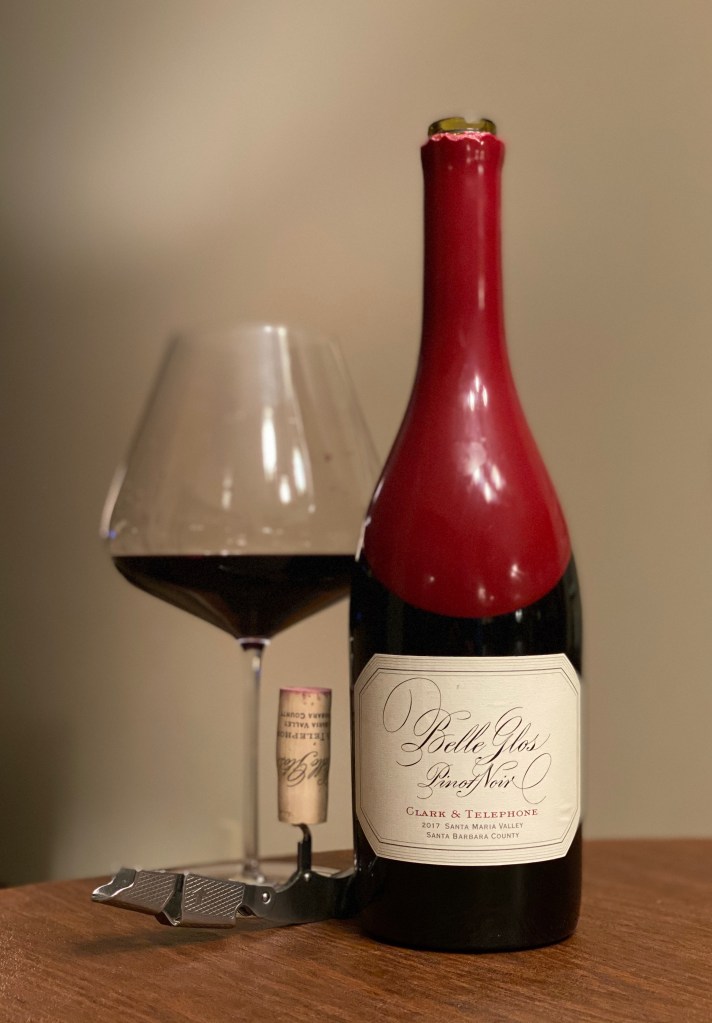
Belle Glos was established in 2001 by Joe Wagner, a fifth generation Napa Valley winemaker who grew up in the vineyards and worked alongside his father at Caymus Vineyards. With great admiration for Lorna Belle Glos Wagner, his grandmother and co-founder of Caymus Vineyards, Joe named his new endeavor in her honor. Though his family previously produced Pinot Noir from Napa Valley fruit between 1972 and 1990, the wines did not display what they thought possible out of the variety and began searching for cooler coastal appellations suited for Pinot Noir. Joe soon thereafter produced his first vintage at Belle Glos from the Taylor Lane and Clark & Telephone Vineyards, the first of several vineyard-designated wines Belle Glos would create. By 2004, Belle Glos added the Las Alturas vineyard in the Santa Lucia Highlands to their portfolio and 2011 marked the first vintage from the Dairyman Vineyard in the Russian River Valley appellation of Sonoma County. Each year, Belle Glos releases the Clark & Telephone, Las Alturas, and Dairyman bottlings in accordance with their initial goal of producing single-vineyard Pinot Noir, however occasionally they offer limited release wines when vintage conditions allow.

Today’s Wine: 2017 Clark & Telephone Pinot Noir

100% Pinot Noir; 14.6% ABV

The 2017 Clark & Telephone is opaque and rather deep ruby in color, actually almost purple. Given 30 minutes or so to open up, the nose showcases aromas of black raspberry, cranberry, licorice, red and blue florals, leather, cedar, baking spice, and mild chocolate. There is also some heat thanks to the ABV that is unfortunately a bit off-putting. Once in the mouth, the wine offers notes of cherry, strawberry jam, blackberry, sweet tobacco, damp earth, white pepper, cinnamon, coconut, and vanilla. This is medium- to full-bodied with high acidity, medium (-) tannins, and a medium length finish. No doubt this needs a few more years of aging.

Price: $55. This is high for what it is, in my opinion, and seems too heavy-handed by the winemaker. While I’m sure this boozy fruit-bomb would have wide appeal (I nicknamed this the Caymus of Pinot Noir, which is funny because it’s also in the Wagner family), I would skip it for quality options in the $30-40 range. Pair this with grilled chicken, pork, or pasta.

One of the Most Important Women in Wine

Today’s Story: Merry Edwards Winery

Merry Edwards Winery was established in 1997 by Merry Edwards and her husband Ken Coopersmith. However, Merry experienced quite a successful career before creating her namesake winery starting with her master’s degree in Food Science with an emphasis in Enology from UC Davis in 1973. After graduation, Merry fought to become a winemaker (not a lab technician like many women in the field during that time) and she was ultimately hired by Mount Eden Vineyards in February 1974 as winemaker. Merry spent three vintages with Mount Eden and during 1975 selected some of their Pinot Noir cuttings to send to UC Davis for heat treatment and propagation which resulted in UCD clone 37 (the “Merry Edwards selection”) that is planted in the Georganne Vineyard which sources fruit for the wine I am reviewing today.

In 1977, Merry Edwards spent time in France studying clone research at the University of Beaune and later moved to Sonoma County to become the founding winemaker of Matanzas Creek Winery. Shortly thereafter, Merry purchased property in the Russian River Valley in 1981 with plans for a family winery and built Merry Vintners Winery (focused on Chardonnay) in 1984 alongside her consulting business. Several years later, in 1996, Merry purchased 24 acres of what would become the Meredith Estate Vineyard and, in 1997 after meeting her would-be husband Ken, co-founded Merry Edwards Winery and produced her first namesake Pinot Noir.

Over time, Merry and Ken grew their holdings through vineyard purchases and leasing agreements and today produce Pinot Noir, Chardonnay, and Sauvignon Blanc. The Sauvignon Blanc is Merry’s favorite white wine from what I’ve heard, and it is indeed a must-try for any Sauvignon Blanc fan particularly those made in a Bordeaux Blanc style. This being said, Merry’s winemaking career that almost spans 50 years is dominated by her being a self-proclaimed perfectionist with a goal of producing wines that reflect the terroir rather than her own hand. Coupled with her winemaking philosophy, Merry also believes in sustainable farming and energy practices that help prolong both her own land and the environment around it. For more on Merry Edwards, check out the very extensive website here, as I could surely write an entire novel on this blog post and bog down your emails.

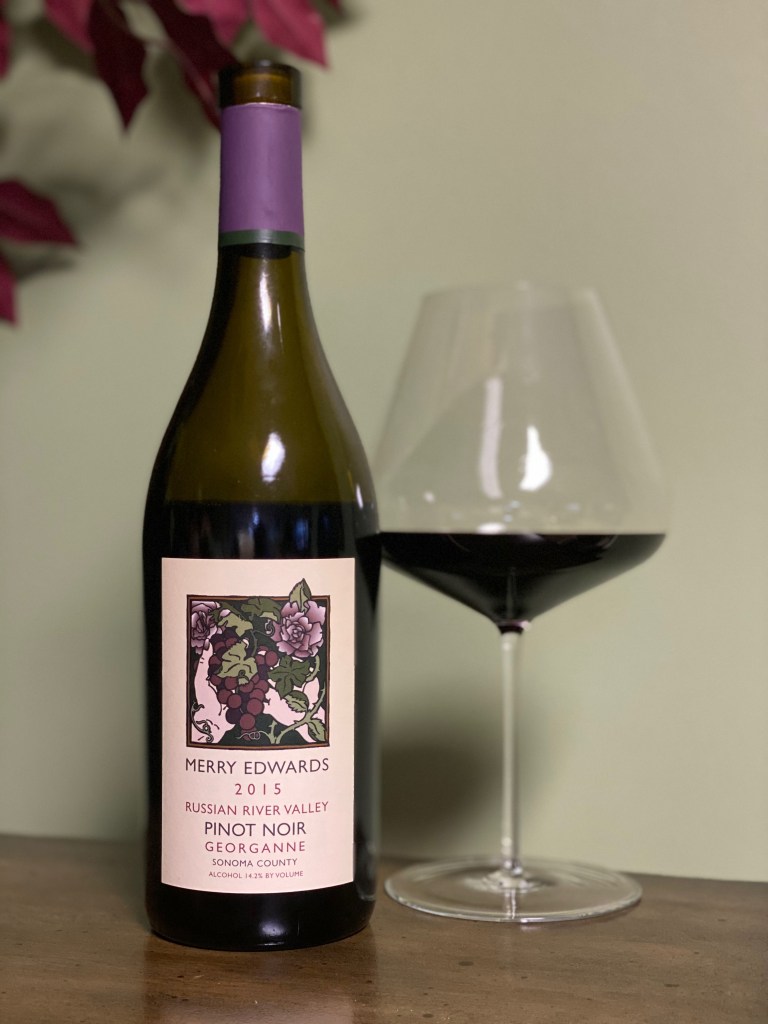
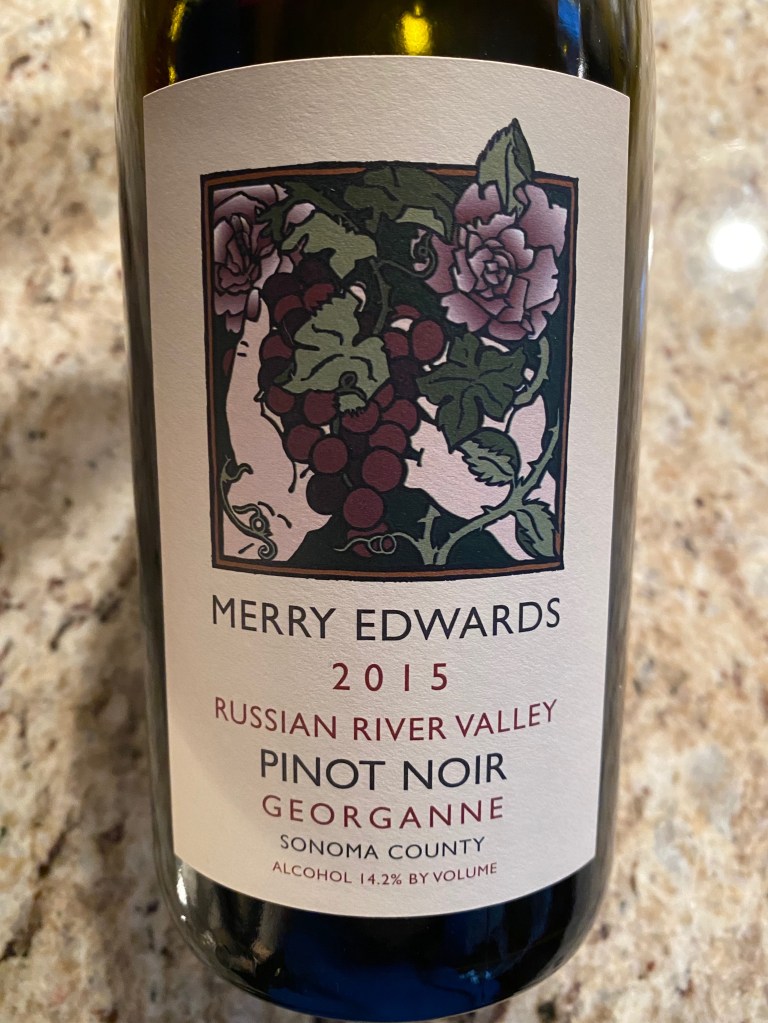
Today’s Wine: 2015 Georganne Pinot Noir

100% Pinot Noir; 14.2% ABV

The 2015 Georganne Pinot Noir is medium to deep purple/ruby in color and almost entirely opaque. I simply let this open up in the glass for 15-30 minutes to reveal aromas of black cherry, black raspberry, blueberry, acai, charred cedar, damp forest floor, wet gravel, blue and purple florals, and a hint of wild herbs mingled with peppery spice. Once in the mouth, this wine displays notes of cherry, dried raspberry, tart wild blueberry, red florals, sweet tobacco, loamy soil, mushroom, chocolate, clove, and oak. The wine is medium- to full-bodied with high acidity, medium (-) tannins, and a long finish dominated by herbaceous and cranberry tones.

Price: $63 upon release (I’m now seeing closer to $85 average online). Georganne is one of Merry Edwards’ newest vineyards and I am surprised by the elegance and finesse this wine displays as compared to some of her other vineyard designated wines that take more time in the bottle to blossom. Pair this with salmon, duck, or Panko-crusted rack of lamb.

Quality Volnay Village

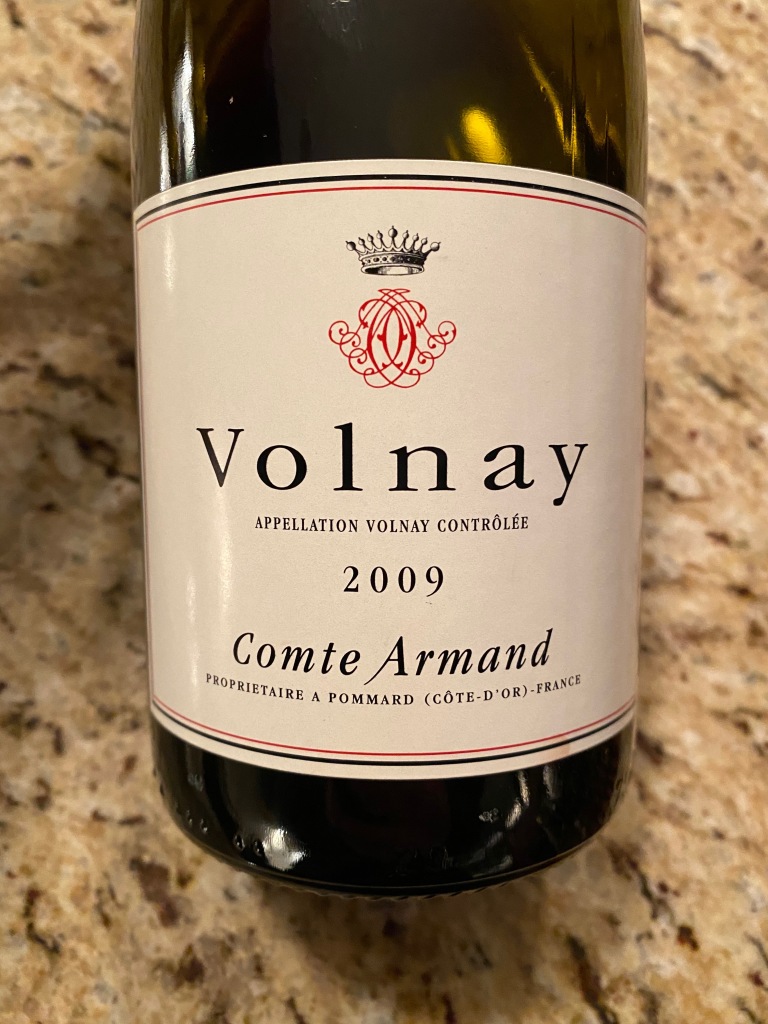
Today’s Story: Domaine Comte Armand

Domaine Comte Armand (also known as Domaine des Epeneaux) was established in the late 18th century when Nicolas Marey took ownership of the 5 hectare monopole Clos des Epeneaux. In 1828, the property came into the Comte Armand family and Clos des Epeneaux remained the only source of their fruit until 1994 when the domaine expanded and purchased property in Volnay. Today the domaine consists of roughly 9 hectares and is under supervision of Vicomte Gabriel Armand, a Parisian lawyer. The family, however, has relied on resident-managers throughout the domaine’s history to manage the estate’s affairs and Vicomte Gabriel Armand continues this tradition today. Benjamin Leroux became winemaker at Comte Armand in 1999 at the age of 23 and he completed the transition to biodynamic farming shortly thereafter. Benjamin transitioned to his own projects in 2014, however, handing the reigns to Paul Zinetti. Comte Armand produces Pinot Noir, Chardonnay, and Aligoté and vinifies their wines 100% de-stemmed, uses 20-30% new oak for aging, and bottles the reds unfined and unfiltered but the whites fined and lightly filtered.

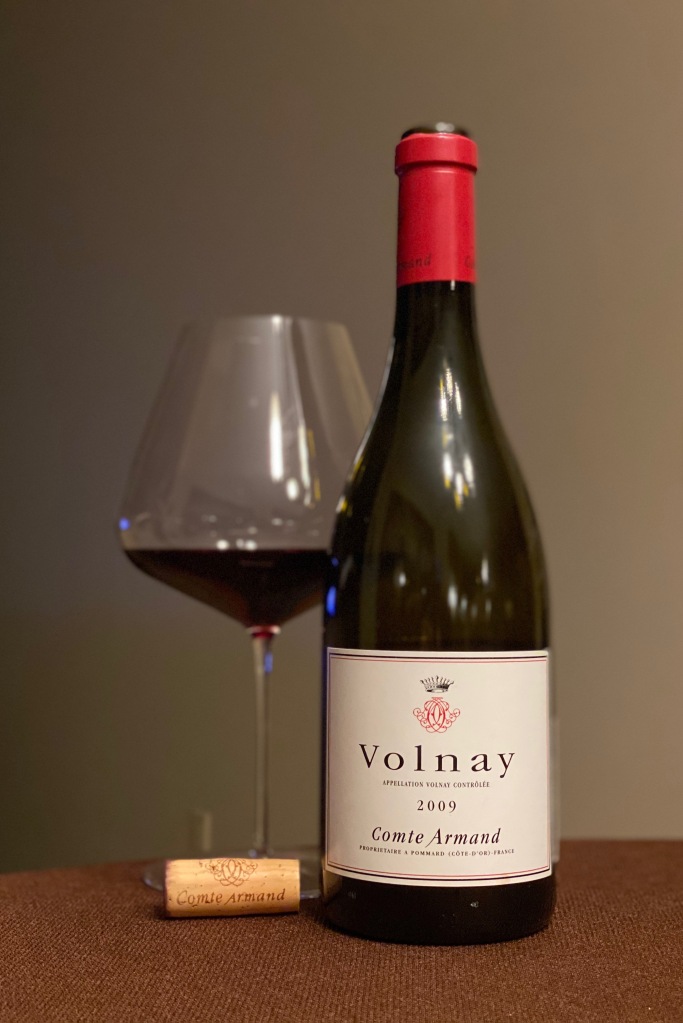
Today’s Wine: 2009 Volnay

100% Pinot Noir; 13% ABV

The 2009 Volnay is medium to deep garnet in color and moderately transparent. I did not decant this wine but let it open up in the glass to reveal aromas of ripe red cherry, pomegranate, dried strawberry, forest floor, leather, rose petal, green herbs, cinnamon, and sandalwood. Once in the mouth, this wine offers notes of cranberry, tart cherry, raspberry, tobacco, black pepper, charred earth, black truffle, mineral, and a hint of vanilla. This is medium-bodied with medium (+) acidity, medium (-) tannins, and a long finish. Not the best red I’ve had from Volnay, but certainly not the worst as this is very easy drinking and should be pleasing to most palates. Typically about 460 cases produced.

Price: $90. Not a bad price-point for this regional Burgundy, though since it’s nothing to write home about I would suggest exploring 1er Cru options or sampling something else at a slightly lower price to begin exploring Volnay. Pair this with salmon, roasted chicken, or duck.

One of the Most Important Names in Burgundy

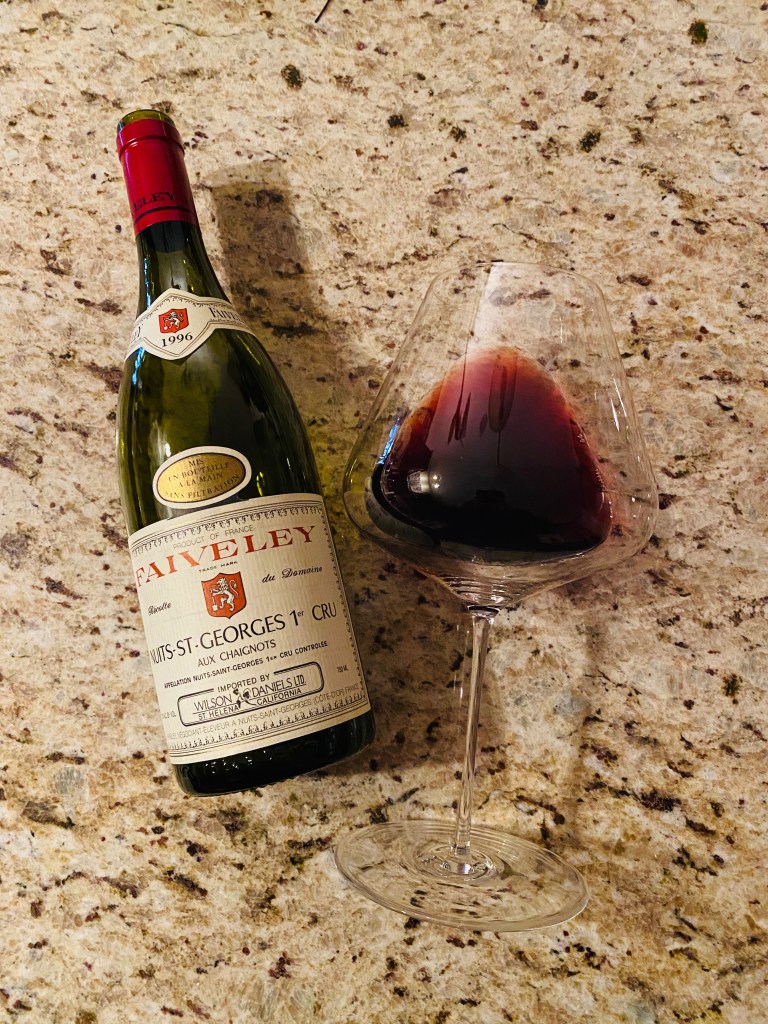
Today’s Story: Domaine Faiveley

Domaine Faiveley was founded in 1825 as Maison Joseph Faiveley by Pierre Faiveley, a cobbler by trade who was also passionate about wine. Pierre worked his cobbler and wine merchant businesses side-by-side until the end of the 1840s when he decided to put all of his energy into the wine trade. In 1860, Joseph Faiveley began his wine merchant business with vine parcels he inherited from his uncle and his entrepreneurial spirit led him to export wines to Northern Europe to expand his brand. A plasterer, painter, and glazier by trade, Joseph exported his wines most notably to Belgium and the Netherlands and often exchanged his wines for textiles. In 1873, Joseph expanded his holdings by acquiring Nuits-Saint-Georges 1er Cru Les Porêts-Saint-Georges, Les Lavières, and the monopole of Corton Clos des Cortons Grand Cru.

François Faiveley, a doctor by trade, moved to Nuits-Saint-Georges in 1889 and spent the remainder of his life fighting to save the domaine’s vines from phylloxera, the worst crisis in Burgundy’s history at the end of the 19th century. In 1893 the domaine acquired vines in the Nuits-Saint-Georges 1er Cru Les Saint-Georges climat and in 1911 the famed Clos-de-Vougeot Grand Cru parcel.

In 1919, Georges Faiveley took over the domaine and shortly thereafter faced the economic crisis of the early 1930s that nearly destroyed his holdings. During the crisis, the domaine’s cellars were filled with inventory (even Grand Cru wines whose barrels were worth more than the wines inside them) and Georges decided to start the Confrérie des Chevaliers du Tastevin, a rebirth of an ancient wine brotherhood from the Middle Ages. With nobody buying the wines, Georges invited this brotherhood to the domaine and they drank wines together and helped provide rebirth to the popularity of Burgundy wines.

As the economic crisis subsided and Burgundian wines grew in popularity, the domaine acquired more vineyards and remained a family endeavor. In 1947, Guy Faiveley followed in his father’s footsteps and joined the domaine. He also became the Grand Master of the Confrérie des Chevaliers du Tastevin in 1969 and worked tirelessly to share his wines with the brotherhood and the world. In 1976, François Faiveley joined his family domaine at the age of 25 and continued acquiring vineyards. François produced wines known for their rich and concentrated character as well as long aging ability.

Today, Domaine Faiveley is under the guiding hands of its seventh generation in Erwan and Eve Faiveley. Erwan was always passionate for Burgundy wines and his family’s estate, so he took over from his father in 2005 and quickly set about investing in new facilities to modernize the winery and improve on the already exceptional quality in the wines. In 2014, his sister Eve joined the domaine after working in the cosmetics industry. She is the first daughter in seven generations of the family.

For more including their portfolio of wines, farming and winemaking methods, as well as pictures of the domaine, check out there website here. There are a lot of cool rabbit holes to go down!

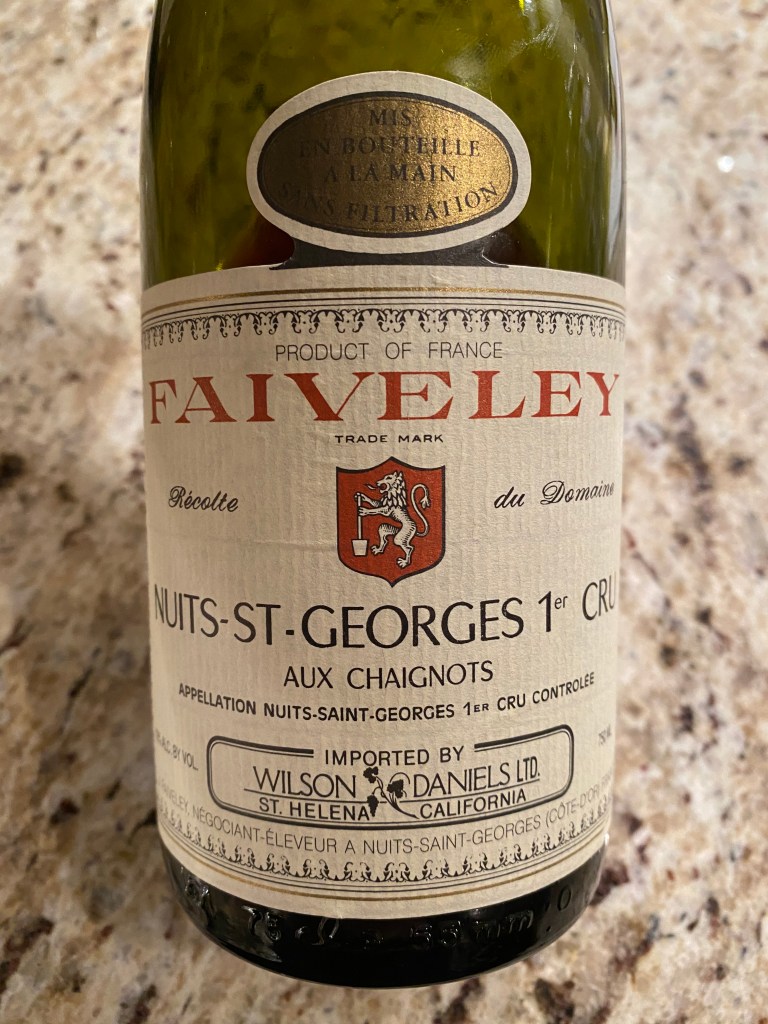
Today’s Wine: 1996 Nuits-Saint-Georges 1er Cru Aux Chaignots

100% Pinot Noir; 13% ABV

The 1996 Aux Chaignots is medium garnet in color and moderately transparent. I simply let this breathe for a bit in the glass and there was some funk that needed to blow off, though I decided not to decant the wine in case it became oxidized too quickly. On the nose, I get aromas of dried raspberry and strawberry, cherry, rose, tobacco, forest floor, truffle, wet gravel, thyme, underbrush, and a touch of oak. Once in the mouth, this wine showcases notes of cherry, cranberry, black raspberry, sous bois, dried green herbs, earthy mushroom, slate, and peppery spice. This nicely aged Burgundy is medium-bodied with medium (+) acidity, medium (-) dusty tannins, and a long finish.

Price: $130. Not a bad price for aged red Burgundy from one of the best producers in Nuits-Saint-Georges. This wine has the structure to go a little further, though I would drink up now. Pair this with roasted chicken, roasted pork, feathered game, or mild cheeses.

Outstanding Pommard from a Superb Vintage

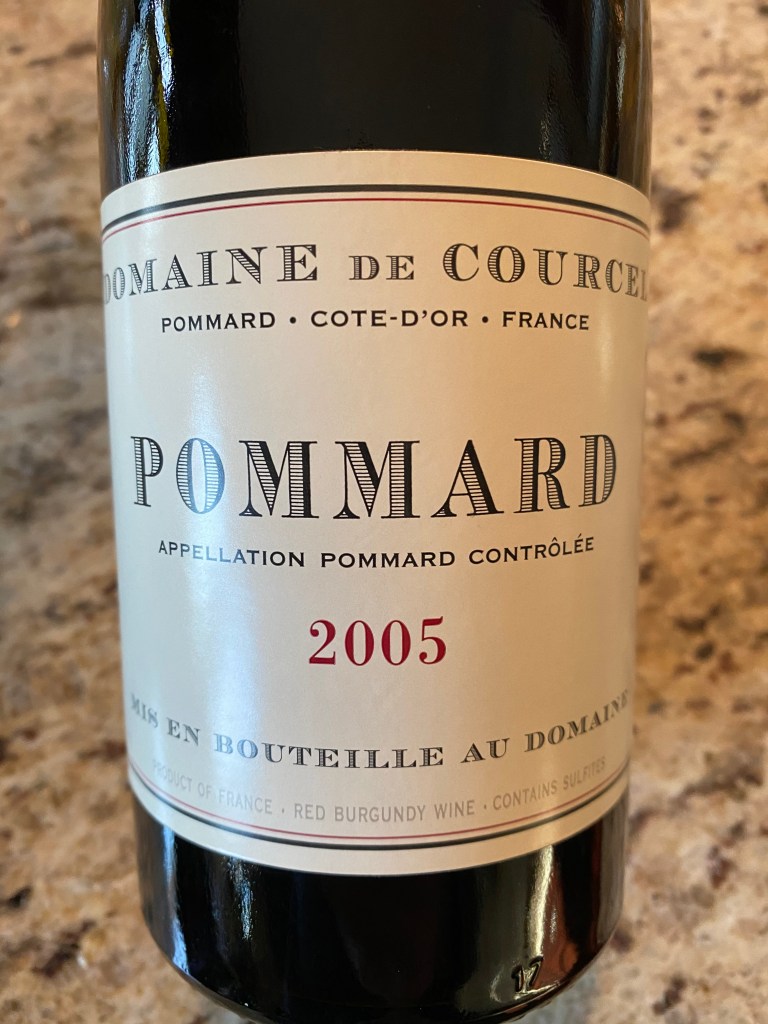
Today’s Story: Domaine de Courcel

I previously wrote about Domaine de Courcel in Rustic, Terroir-Driven Burgundy when I reviewed their 2009 Pommard 1er Cru Les Fremiers, though I will reproduce a brief history here and you can read my prior post for some additional notes on their winemaking processes.

Domaine de Courcel was founded roughly 400 years ago in the village of Pommard and is a family winery throughout its history. To this end, today the estate is managed by Anne Bommelaer and Marie de Courcel and its owners include three sisters and one brother who are descendants of the domaine’s founders. Production is somewhat limited at the domaine, with annual production numbers never rising above 30,000 bottles (2,500 cases).

The domaine owns vineyards on 10.5 hectares in Pommard, which is four kilometers from Beaune in the Côte de Beaune. From this land, the domaine produces seven different wines including four 1er Crus that account for roughly 75% of the vineyards. These 1er Crus include Le Grand Clos des Epenots (a monopole of the domaine), Les Rugiens, Les Frémiers, and Les Croix Noires. Domaine de Courcel also produces a Pommard village wine Les Vaumuriens in additional to a Bourgogne Rouge and Bourgogne Blanc. Le Grand Clos des Epenots (about 50% of the domaine’s production) and Les Rugiens come from arguably some of the best vineyards in Pommard.

Today’s Wine: 2005 Pommard

100% Pinot Noir; 13% ABV

The 2005 Pommard is pale to medium ruby in color and slightly transparent. The wine was beautiful right out of the bottle, but as this opens up in the glass it truly blossoms to showcase a nose with aromas of black cherry, dried raspberry, red florals, red licorice, forest floor after a rainstorm, truffle, underbrush, cinnamon, slight musty cellar, pinch of pepper, and a faint hint of oak. Once in the mouth, this beauty shows notes of cranberry, dusty strawberry, sweet ripe cherry, dry rocky soil, tobacco leaf, ground green herbs, mushroom, crushed rock, and a touch of spice. This is medium- to full-bodied with medium (+) acidity, medium dusty tannins, and a long finish with notes of iron and smoke.

Price: $150. Though pricing on this is up there with good quality 1er Cru Burgundy, this is an outstanding vintage and bottling from Domaine de Courcel that stands up at this price point. Pair this with game, venison, or beef.

Burgundian Elegance in Oregon

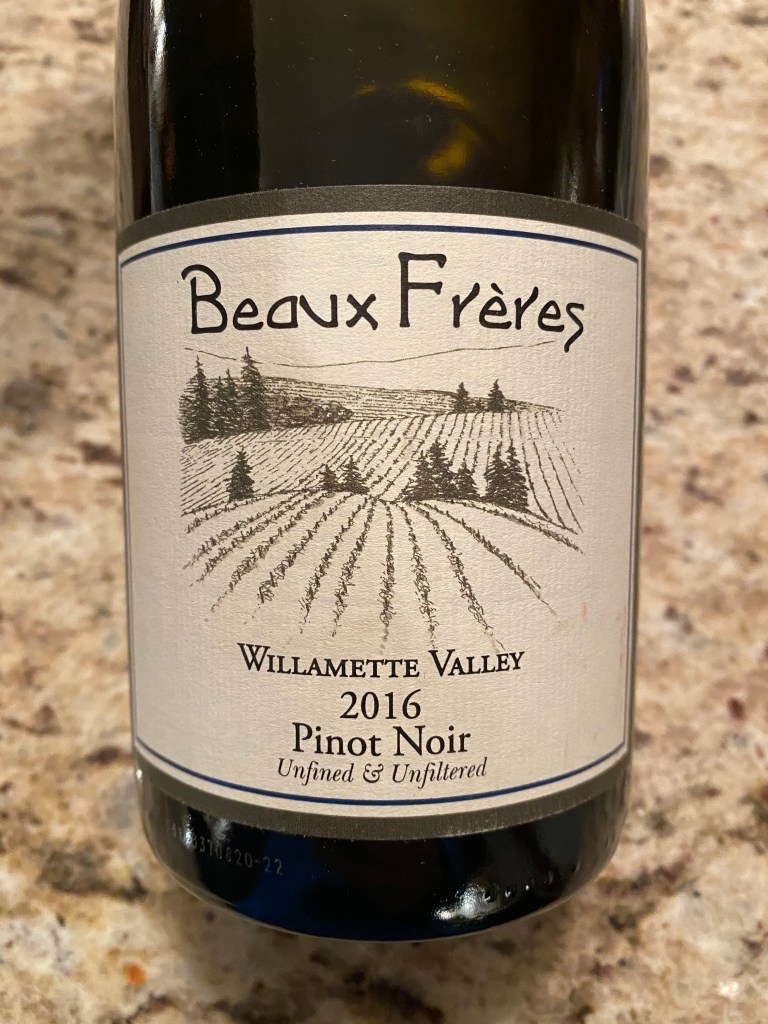
Today’s Story: Beaux Frères

The groundwork for Beaux Frères occurred in the late 1980s when Michael Etzel discovered an 88 acre pig farm for sale on Ribbon Ridge in the Northern Willamette Valley, Oregon. Though he and his family lived in Colorado at the time, Michael decided to purchase the farm with brother-in-law Robert Parker (yes the wine critic) and set about transitioning some of the farm to vineyards. In 1988, Michael planted his first five acres of vineyards with Pinot Noir and harvested his first fruit in 1990. While Michael waited for his vines to bear fruit, he worked four harvests at Ponzi Winery and with his first harvest in 1990 sold fruit to Ken Wright and Dick Ponzi while only saving enough for one barrel of wine for himself. In 1991, Michael renovated one of the barns on the property to create his own winery and his efforts jump-started the transition to estate bottled wines.

Today, the Beaux Frères property consists of 50 acres of forest (Douglas fir trees), 8 acres of buildings including a home, barns, and winery, and 24 of the remaining 30 acres are planted to vine. The Beaux Frères Vineyard sits at an elevation of 400 feet and is planted with both own-rooted Pommard and Wädenswil clones, as well as younger Dijon clones on phylloxera-resistant rootstocks. Beaux Frères also farms the Upper Terrace Vineyard which sits slightly north of the Beaux Frères Vineyard and was first planted in 2000 with Dijon clones of Pinot Noir on 9 of the 40 total acres. Michael and his team practice many biodynamic farming methods in caring for their vineyards, a practice they picked up several years ago. The team avoids commercial sprays, composts on-site, grafts their own cuttings, and monitors the vines regularly.

Throughout the winemaking process, Michael and his son Mike (head winemaker) believe in minimal intervention and handling. To this end, they allow their wines to ferment spontaneously using only indigenous yeasts and utilize traditional punch downs and pump overs by hand. After pressing, they move the contents into French oak barrels ranging in 30-50% new (depending on vintage) and secondary fermentation occurs naturally at a slower rate in the barrel cellar. The only racking these wines see occurs after 10-12 months of barrel aging (to limit exposure to oxygen) which also helps limit the SO2 required to preserve the wine (if any is added at all) thanks to a natural buildup of CO2 during and after malolactic fermentation. The resulting wines are rather traditional in both production and expression, similar to classical red Burgundies.

Today’s Wine: 2016 Willamette Valley Pinot Noir

100% Pinot Noir; 14.1% ABV

The 2016 Pinot Noir is medium ruby in color with rose variation near the edge of the glass and almost entirely opaque. The nose showcases aromas of ripe cherry, black raspberry, red licorice, purple florals, black tea, mineral, baking spice, and a hint of milk chocolate. Once in the mouth, this wine offers notes of blueberry, raspberry, black cherry, rose, a hint of damp earth, rocky minerality, clove, and oak. This is medium-bodied with high acidity, medium (-) tannins, and a long finish.

Price: $60. This is a high-quality, elegant, and luxuriously-textured Pinot Noir that I believe to be appropriately priced. It makes me think of an Oregon version of Kosta Browne or Williams Selyem. Pair this with salmon, chicken, pork, or duck.

Remarkably Profound Oregon Pinot Noir

Today’s Story: Antica Terra

Antica Terra was established in 2005 by Scott Adelson, John Mavredakis, and Michael Kramer, three friends and partners who had collaborated before and dreamed of owning a vineyard together. This being said, vines were first planted in 1989 on the property, an 11 acre vineyard on pre-historic seabed in the Eola-Amity Hills of Oregon’s Willamette Valley. Having taken ownership of their new vineyard, Scott, John, and Michael started seeking a winemaker and their crosshairs quickly fell upon Maggie Harrison. Maggie began her winemaking career at Sine Qua Non (known for $200-$1,000+ bottles of cult Rhone varietal wines) working for Manfred Krankl and her expertise was quickly realized. In 2004, Manfred encouraged her to begin her own Syrah project on the side, and Lillian was born (I reviewed two of these Syrahs previously). Maggie worked tirelessly on her passion project wines while still tending to barrels at Sine Qua Non, demonstrating her pure passion for the craft. When Scott, John, and Michael asked Maggie to become their winemaker, she refused profusely though the three friends ultimately convinced her to simply visit the property to offer her opinions of the vineyard. 26 seconds after Maggie stepped foot into the vineyards and observed the fossils, oaks, and vines, “she found herself hunched beneath one of the trees, phone in hand, explaining to her husband that they would be moving to Oregon.” Source

The vineyard of Antica Terra is rather intense, both in appearance above the earth and underground for the vines. The vines find home amongst fossilized oyster shells and sandstone with no topsoil, leaving them to struggle for nutrients and in turn producing incredibly unique fruit. Aboveground, the vineyard is strewn with boulders, steep grades, and vines that (due to the soil) appear spindly and frail. Fruit for Antica Terra wines forms in tiny clusters with thick-skinned grapes that are half the size that is typical for their varieties and the canopy of these plants is incredibly sensitive. Maggie provides immense care and attention to these delicate vines, which culminates into unique and immeasurably profound wines. Antica Terra produces four Pinot Noir bottlings, two Chardonnays, and one Rosé.

To explore the wines of Antica Terra, join the mailing list, or plan a visit, check out their website here.

Today’s Wine: 2017 Botanica Pinot Noir

100% Pinot Noir; 14% ABV

The 2017 Botanica is pale ruby in color with slight variation toward deep garnet. This was surprisingly approachable right out of the bottle, though changed over time revealing aromas of cherry, cranberry, smoked game, earth, wet gravel, sweet tobacco, ground green cooking herbs, black licorice, rocky minerality, and a touch of oak. Once in the mouth, the wine showcases notes of crunchy raspberry, strawberry, cranberry sauce, smoke, rose, white pepper, loamy earth, a hint of nutmeg, and graphite. This Pinot is medium-bodied with medium (+) acidity, medium tannins, and a medium (+) length finish. There was some slight heat on the nose, but all around this is approachable and that heat should integrate with a couple more years of cellaring.

Price: $110 direct from winery. I am a huge fan of Antica Terra when it comes to American Pinot Noir, and Maggie Harrison’s winemaking skill for both this wine and her Lillian Syrahs make them worthy of trying. Pair this with duck, pork tenderloin, or grilled salmon.

Young and Exciting NorCal Pinot Noir

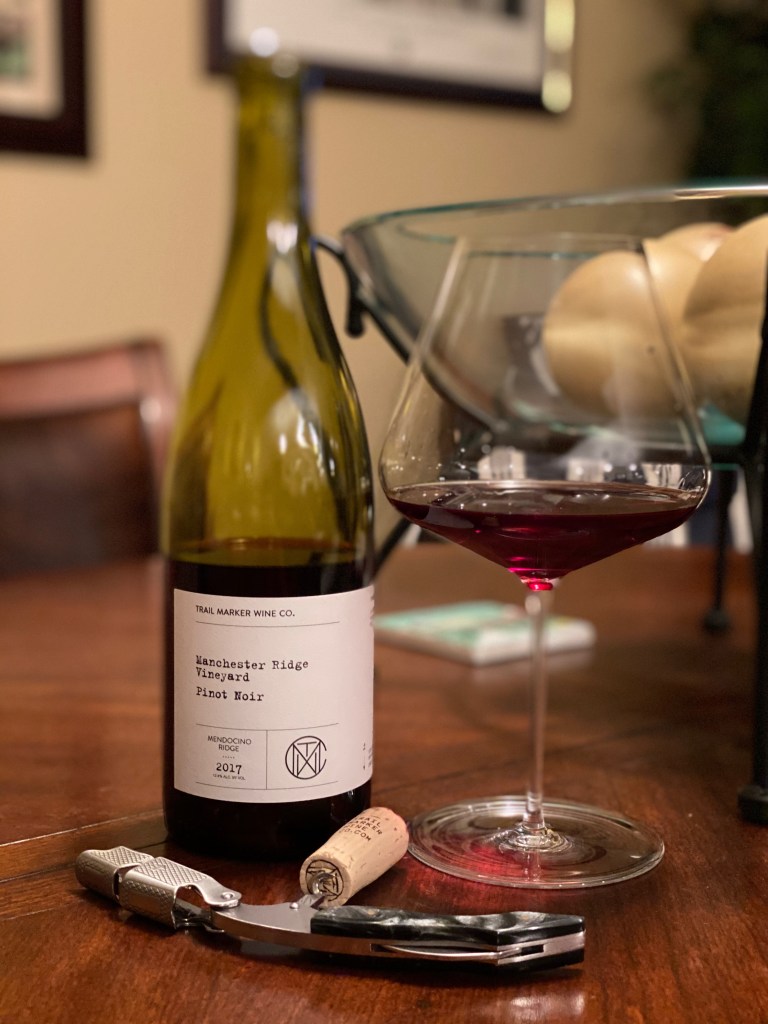
Today’s Story: Trail Marker Wine Co.

Trail Marker Wine Co. was founded in 2012 by Drew Huffine and Emily Virgil, a husband and wife duo. Drew originally studied English during his undergraduate and Masters programs, however after working for the Colorado Wine Company and being encouraged by Kent Humphrey of Eric Kent Wines to work a harvest his career shifted. Drew moved from English to wine and held positions with Copain, DuMol, Kosta Brown, and Wither Hills before becoming the winemaker for Tuck Beckstoffer Wines. After Drew met Emily, whose background is in costume design for the film industry in Los Angeles and who also shares a passion for wine, the two decided to create their own venture and moved to the Bay Area to start Trail Marker Wine Co.

Drew and Emily originally started Trail Marker with Chardonnay and Pinot Noir as their focus, and as a matter of fact their first wine came from the purchase of 1 ton of Chardonnay grapes from the remote Manchester Ridge vineyard located at 2,000 feet elevation above the Anderson Valley. This being said, Trail Marker has since branched out to Carignan, Zweigelt, and Blaufränkisch which are all sourced from small, remote, and responsibly-farmed vineyards from Mendocino to Santa Ynez. Through this approach, the goal of Trail Marker is to produce wines from cooler coastal sites that produce fruit that develops with lower sugar content and in turn produces wines with higher acidity and lower alcohol. As you might guess at this point, this philosophy finds home in the cellar as well with all of Trail Marker’s wines produced in hands-off fashion: fermentation is accomplished only with indigenous yeasts, little or no new oak is used, and handling is minimal. Thanks to their classic, Old World way of producing wines from some of the most unique vineyards in California, Trail Marker is unsurprisingly one of the most exciting new wineries I’ve come across in some time.

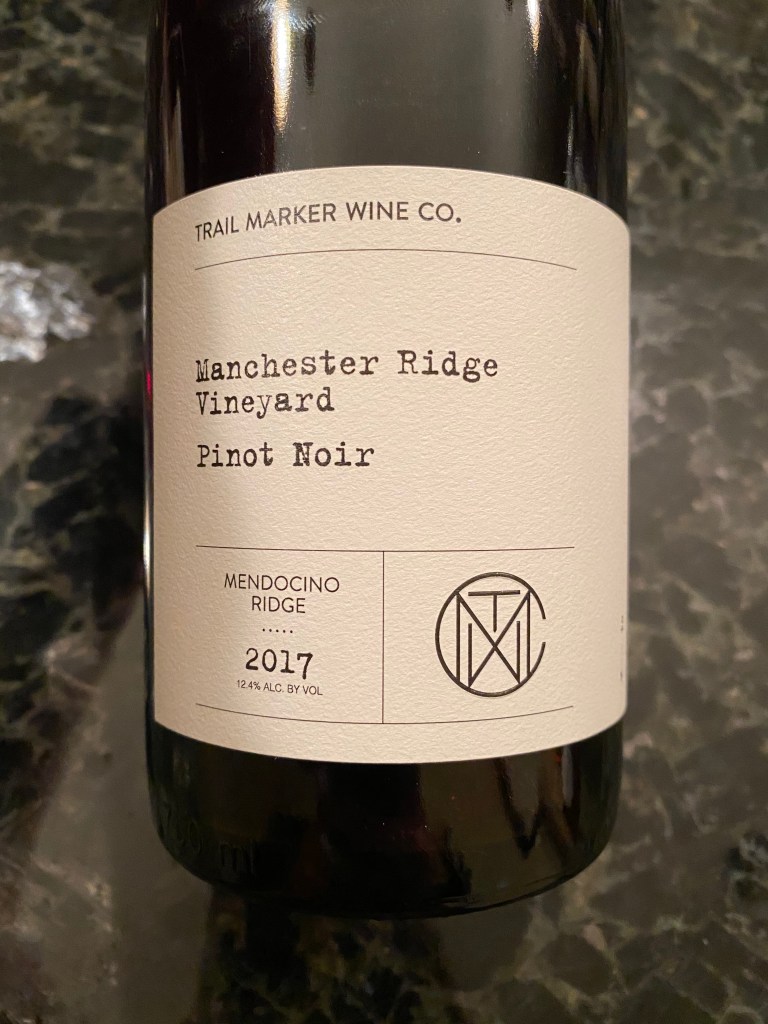
Today’s Wine: 2017 Manchester Ridge Vineyard Pinot Noir

100% Pinot Noir; 12.4% ABV

The 2017 Manchester Ridge Vineyard Pinot Noir is very pale ruby in color (almost rose petal) and nearly fully transparent. I let this wine open up in the glass for about 30 minutes, though it probably could’ve gone longer due to its youth. The nose showcases aromas of cranberry, redcurrant, red cherry, dried herbs, red and blue florals, earth, white spice, mineral, and wet stone. Once in the mouth, I get notes of tart cranberry, strawberry rhubarb, pomegranate, sweet tobacco, underbrush, white pepper, and slate. This is a medium-bodied Pinot with high acidity, low tannins, and a long finish.

Price: $44. This is a new producer for me and a wine I grabbed on an explorative impulse at the store. Nonetheless, I think this is a delicious PN at a solid price-point and I would buy this again. Pair this with roasted chicken, duck breast, or grilled salmon.