One of My Favorite CdP’s

Today’s Story: Domaine du Pégau

Domaine du Pégau is one of the great estates in Châteauneuf-du-Pape, and though it became officially established in 1987 its roots and those of its proprietors extend significantly further back in time. Today the domaine is under guidance of Paul Féraud and his daughter Laurence, though the Féraud family can be traced as far back as 1670 in Châteauneuf-du-Pape. Titles to the earliest Féraud vineyards reach 1733, though the family sold most of their production in bulk to top négociants (like Jaboulet-Aîné, David & Foillard, and Guigal) when Paul joined the family business. In 1964, however, this all changed when Paul decided to bottle about 420 cases under his own name when estate bottling really started to pick up. 1987 marked the year when Laurence joined her father and the duo changed their name and label from Domaine Féraud to Domaine du Pégau. Pégau spanned a somewhat small 17 acres of vines at this time, with still a significant amount of produce sold to négociants, but as Laurence took a larger and larger role they phased out selling fruit and the 1990 harvest was fully used for their own wines. Today the domaine consists of 21 hectares of vines in Châteauneuf-du-Pape with another 5 hectares in Côtes du Rhône, 20 hectares in Côtes du Rhône Villages, and 19 hectares classified Vin de France.
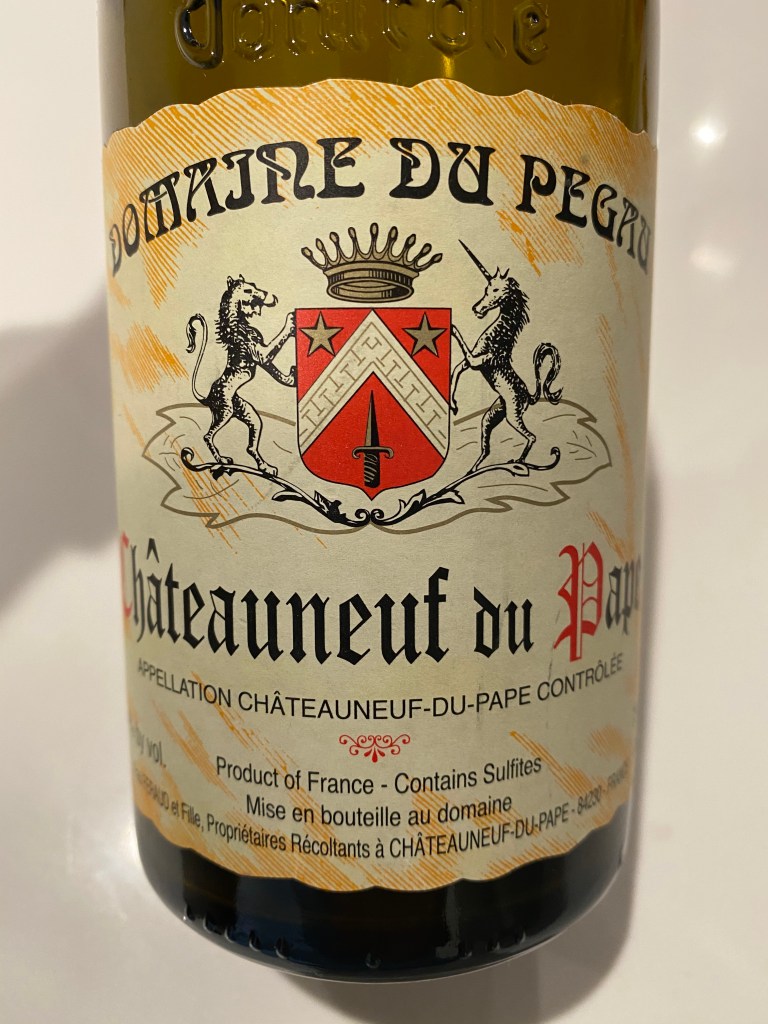
Today’s Wine: 2009 Châteauneuf-du-Pape Cuvée Réservée

85% Grenache, 9% Syrah, 4% Mourvèdre, with the balance Counoise and other authorized varieties (best guess – no tech sheet); 14% ABV

The 2009 Cuvée Réservée is opaque deep garnet in color with medium ruby variation. I decanted this for 3 hours, which allowed some funk to blow off the nose. Once this opens up, aromas of blackcurrant, black raspberry, boysenberry, cigar box, graphite, forest floor, truffle, slate, clove, and underbrush leap from the glass. On the palate, I get notes of brambleberry, figs, black cherry, anise, red and purple florals, tobacco, charred earth, earthy mushroom, rocky mineral, coffee grounds, and game. The wine is medium-bodied with medium acidity, dusty medium (+) tannins, and a long finish with added notes of iron and smoke. This is drinking magnificently right now, given the time to open up.

Price: $100. I think this is very fairly priced, as Pégau with the 2009 vintage produced a wine of depth, elegance, and complexity that reaffirms them as an estate to beat in CdP. Pair with herb-grilled lamb, wild boar, or charcuterie.
Excellent Value From One of the Rhône Valley’s Most Famous Domaines

Today’s Story: Domaine Paul Jaboulet Aîné

Domaine Paul Jaboulet Aîné is one of the most historic wineries in all of the Rhône Valley, established in 1834 by Antoine Jaboulet in Tain l’Hermitage. Though nowadays we know Tain l’Hermitage (particularly Hermitage and Crozes-Hermitage) very well, it was a quiet winegrowing region when Antoine started assembling vineyards there. One of his greatest vineyards, and arguably one of the most famous in the world of wine, La Chapelle in Hermitage has been with the domaine since its origin and created a leaping point for the generational expansion throughout Crozes-Hermitage, Cornas, Gigondas, Côtes Rotie, Condrieu, and Chateauneuf-du-Pape amongst other appellations. When Antoine passed away, his vineyards went to sons Henri and Paul (the latter the source of the domaine’s name) and passed from generation to generation for nearly two centuries. In the latter half of the 1900s, Gerard Jaboulet promoted Rhône Valley wines throughout the world in an effort to expand their reputation even more. When Gerard passed away in 1997, however, Domaine Paul Jaboulet Aîné passed to his sons Philippe and Jacques until, in 2006, Jean-Jacques Frey purchased the domaine. Jean-Jacques’ daughter Caroline is today’s winemaker and viticulturist at the domaine, and her striving for excellence in every facet of the role is bringing this historic estate to new heights. Caroline achieved sustainable farming status in 2006, and has since started moving toward organic and biodynamic viticulture as well.

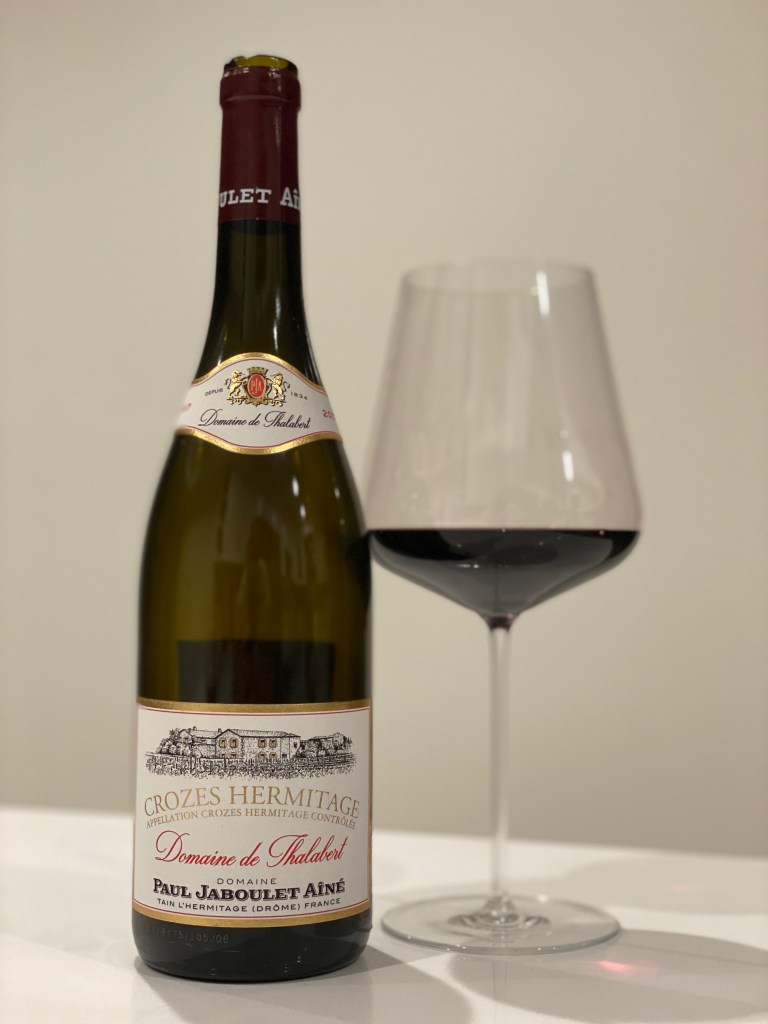
Today’s Wine: 2017 Crozes-Hermitage Domaine de Thalabert

100% Syrah; 13.5% ABV

The 2017 Crozes-Hermitage Domaine de Thalabert is opaque deep purple in color. I decanted this for 4 hours, with the wine blossoming to showcase a nose of black plum, blackberry, cassis, violet, worn leather, hint of nail polish remover, wet rock, light smoke, and mocha. Once in the mouth, the wine displays notes of blackcurrant, black plum, black cherry, licorice, mild tobacco, granite, savory green herbs, chalky mineral, and blood. This is medium-bodied with medium (+) acidity, medium tannins, and a long finish.

Price: $30. Today’s wine is another outstanding value (I do try to find them as often as possible). This drinks with depth and opulence but remains beautifully elegant and with a structure to go for at least another decade. Pair with smoked duck breast, high-quality ribeye, or grilled sea bass.

Lean Chardonnay That Begins With the Farmers

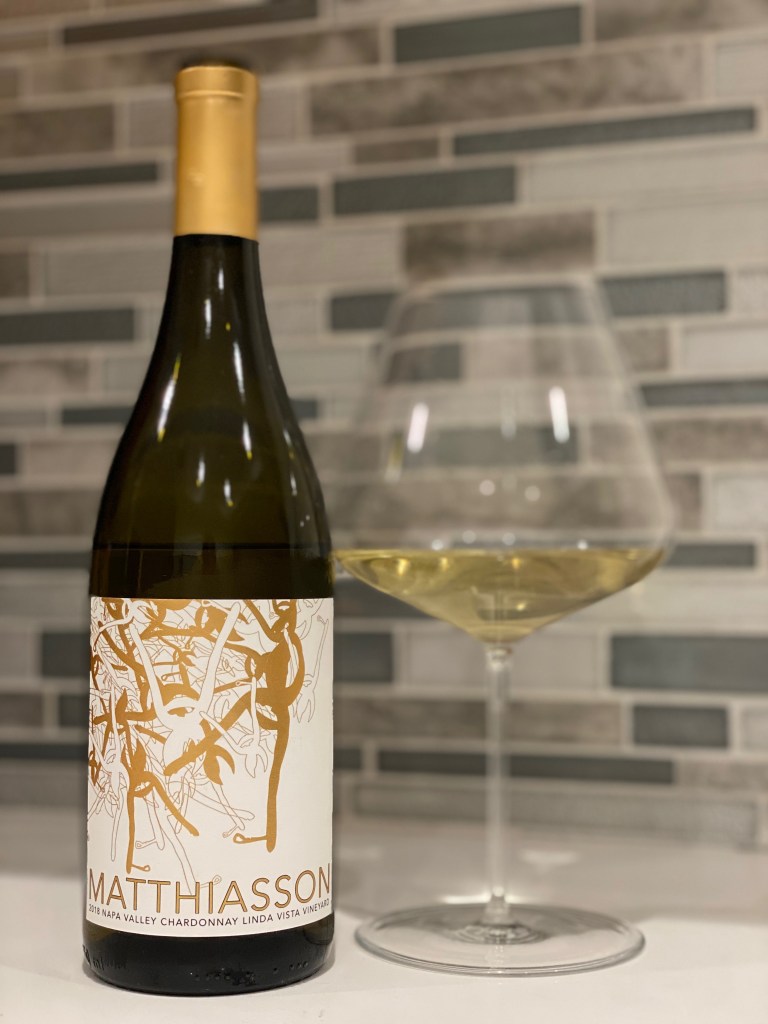
Today’s Story: Matthiasson Family Vineyards

Matthiasson Family Vineyards is a small winery established in 2003 by Steve and Jill Klein Matthiasson. Steve grew up passionate about farming, passing time as a gardener and cook while in college before co-writing the California manual on sustainable vineyard practices in 1999 after graduate school for horticulture. Jill is also passionate for farming, particularly the sustainability side of it, and she studied botany at Penn before ultimately attending UC Davis for grad school studying traditional methods for soil health.

Matthiasson is probably most well-known for their Napa Valley White Wine (an interesting blend of Sauvignon Blanc, Semillon, Ribolla Gialla, and Tocai Friulano), but they also either grow or source (often by lease) Chardonnay, Cabernet Sauvignon, Merlot, and Cabernet Franc amongst other varieties. Steve and Jill maintain their own vineyard in the West Oak Knoll area, while sourcing from others throughout the Napa Valley and Sonoma County including Red Hen, Bengier, and Linda Vista amongst others. All of the vineyards are either organically farmed or transitioning to organic viticulture, and as you might guess Steve and Jill believe great wine starts in the vineyards. Steve is pretty involved in each vineyard they source fruit from, catering farming practices to each specific one so that no matter the source their fruit is healthy and fully ripe. Coupled with his traditional winemaking methods, the Matthiasson wines come out beautifully balanced with lower levels of alcohol and gorgeous acidity.

Today’s Wine: 2018 Linda Vista Vineyard Chardonnay

100% Chardonnay; 12.2% ABV

The 2018 Linda Vista Chardonnay is transparent pale straw/gold in color with water white variation near the rim. Once this opens up in the glass, the nose emits aromas of golden apple, underripe pear, lemon citrus, honeysuckle, chamomile, vanilla, and saline mineral. On the palate, I get notes of white peach, golden apple skins, melon, tropical citrus, white lily, brioche toast, crushed stone mineral, and light spice. The wine is medium-bodied with medium (+) acidity into a long, refreshing finish.

Price: $28 ($32 direct from winery). This is an outstanding value for Napa Chardonnay. While many competitors can be flabby or have far too much oak, this is lean and drinks with beautiful precision (almost feels Burgundian). Pair with roasted chicken, oysters, or salmon.

Rioja to Be Cherished for Decades to Come

Today’s Story: La Rioja Alta

La Rioja Alta is a historic winery established in 1890 by five Riojan and Basque families in Haro’s Station Quarter. The endeavor was named Sociedad Vinícola de La Rioja Alta, and in 1904 La Rioja Alta merged with Ardanza Winery. The two years, 1890 and 1904, are important for La Rioja Alta and today’s Gran Reservas 890 and 904 allude directly to those milestones. Today, La Rioja Alta practices sustainable viticulture with 16 hectares dedicated to organic viticulture, limiting treatments in the vineyards and utilizing renewable energy to support many of their operations. La Rioja Alta produces their wines from estate vineyards, with yields kept to under 5,000 kilos per hectare in order to yield higher quality fruit. All of the barrels are produced onsite by the Rioja Alta cooperage, and they use oak imported from the United States which they dry in open air for 2 years before use. All barrels are racked individually by candlelight and the wines go through long aging to preserve harmony and balance before release.

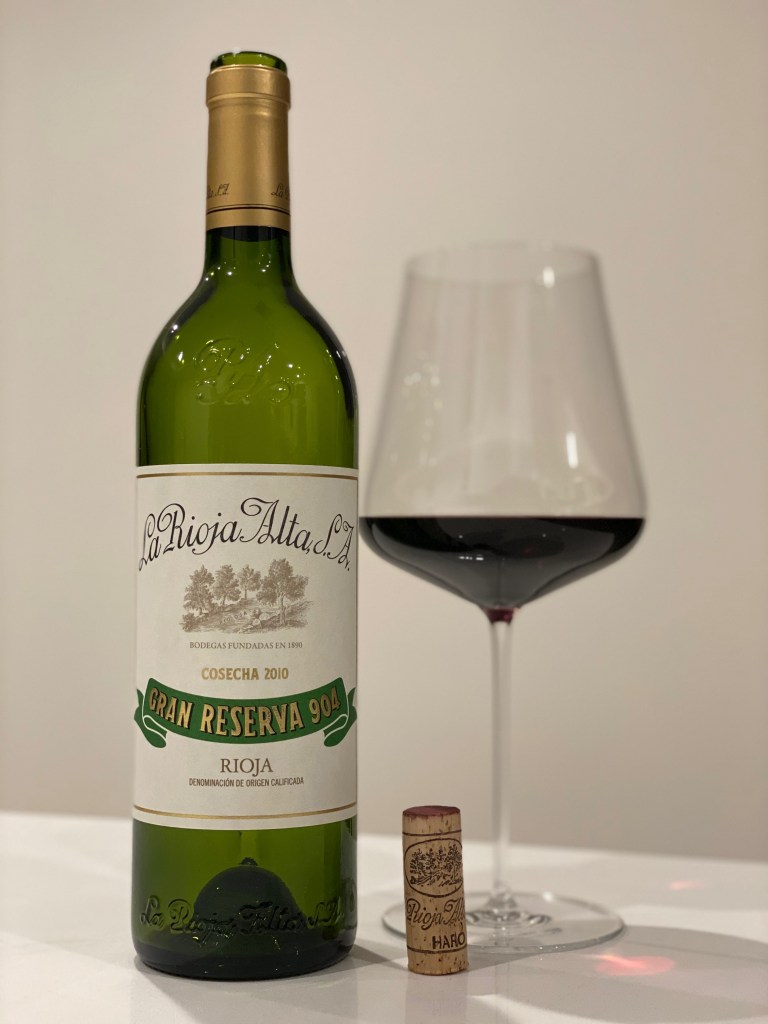
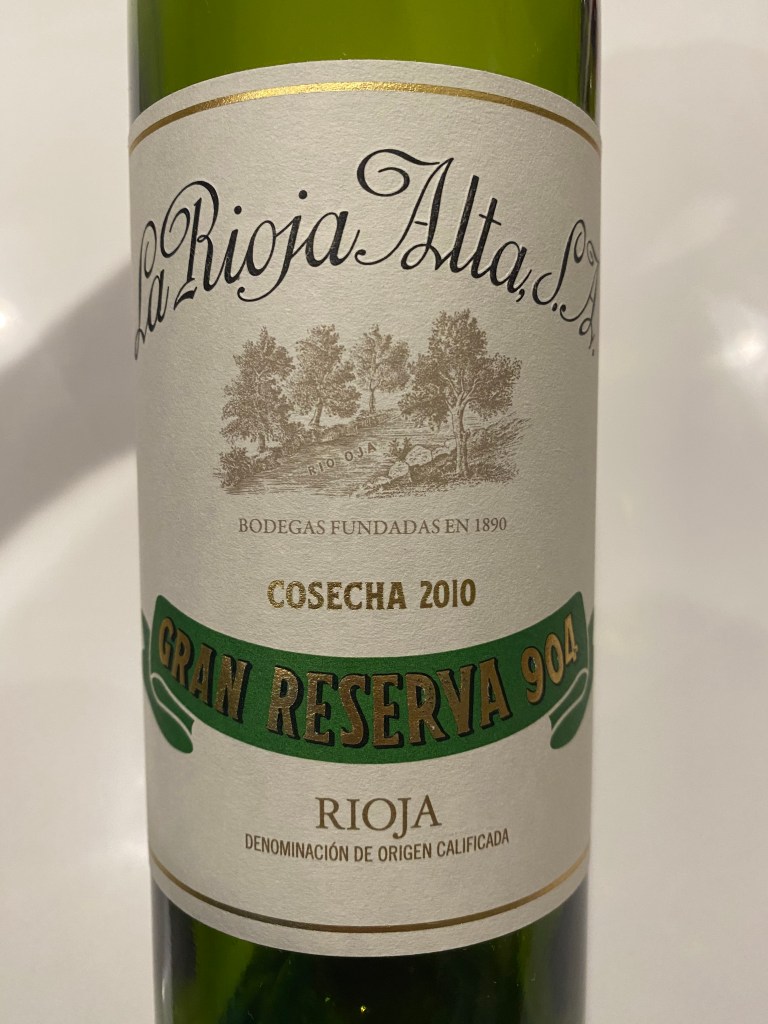
Today’s Wine: 2010 Rioja Gran Reserva 904

90% Tempranillo, 10% Graciano; 13.5% ABV

The 2010 Gran Reserva 904 is translucent deep garnet in color with ruby hues. I decanted this for 7 hours and drank it over 2 hours, though in honesty this could’ve opened up longer. The nose showcases aromas of blackberry jam, blueberry, raspberry, blue/purple/red floral bouquet, dried tobacco leaf, savory herbs, coconut, cinnamon, and vanilla bean. On the palate, I get notes of spiced plum, juicy blueberry, raspberry, violet and lavender, licorice, tobacco, pebbles, thyme, baking spice, and cedar. This is medium-bodied with medium acidity, velvety medium tannins, and an incredibly silky mouthfeel into a long finish. Give this 5-7 years in the cellar and drink over the following 2-3 decades.

Price: $58 (typically averages $66). This is absolutely worth the price, being undoubtably the best young Rioja I’ve enjoyed to date. The wine drinks with pure elegance and finesse after a long decant, but has the structure to age effortlessly for decades to come. Pair with roasted lamb, roasted game bird, or chorizo and Manchego cheese.

Rising Star in Cornas

Today’s Story: Domaine Vincent Paris

Domaine Vincent Paris was established in 1997 with 1 hectare of inherited vines in Cornas. Vincent studied enology for four years before working alongside his uncle, famed Cornas vigneron Robert Michel, and desiring autonomy with his own wines. Vincent set about planting vines in St. Joseph and Cornas, ultimately acquiring La Geynale in 2007 and farming a total of 8 hectares today. Vincent farms 1.5 hectares of Saint Joseph, 6 of Cornas, and 0.5 of Vin de Pays with meticulous attention and refuses to use insecticide or chemical fertilizers while limiting treatments. Vincent severely prunes his vines (to only 4 bunches per vine) which helps produce concentrated, high quality berries and cuts down on green harvests. In the cellar, Vincent destems his fruit to varying levels and ferments the wines naturally after cold maceration at relatively lower temperatures. The wines spend 3 months in vats and then a year in oak barrels that are never new but rather 2-8 years old in an effort to not mask terroir, before they are ultimately bottled with light fining but no filtration.

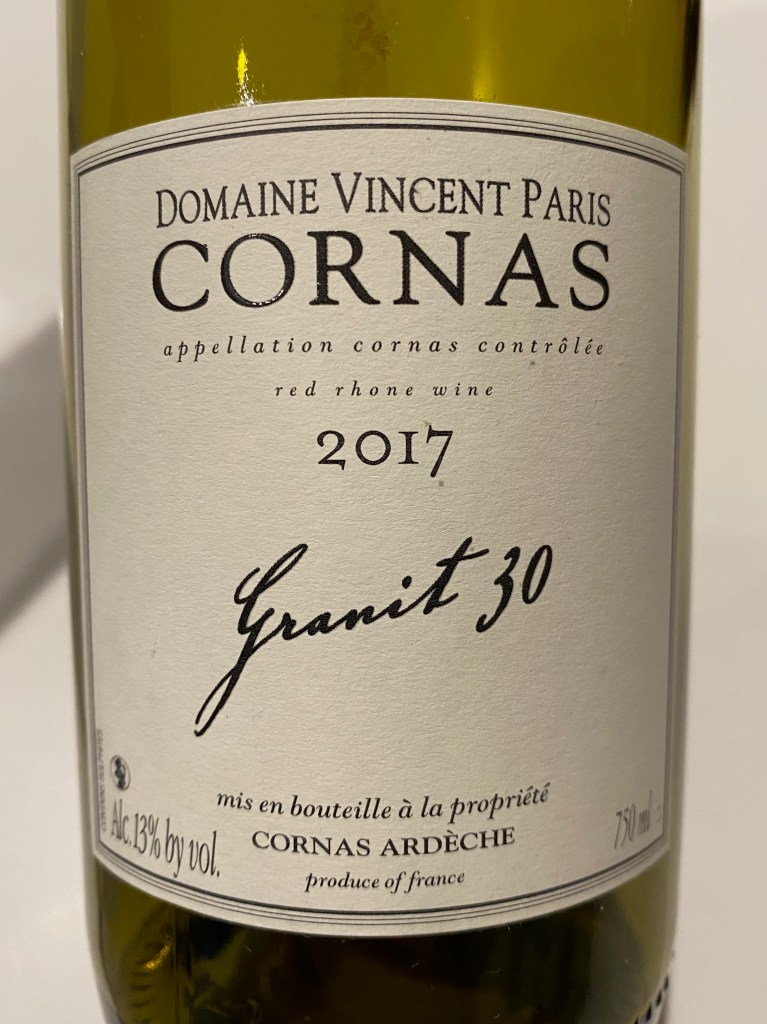
Today’s Wine: 2017 Granit 30

100% Syrah; 13% ABV

The 2017 Granit 30 is opaque medium to deep purple in color. I decanted this for four hours, which allowed the nose to blossom and showcase aromas of blackberry, black plum, overripe blueberry, bacon fat, violet, wet rocky/clay earth, charred herbs, rubber, and gravel. Once in the mouth, the wine displays notes of dusty blackberry, black cherry, cassis, anise, sweet tobacco, mild smoke, granite, black pepper, chocolate, and iron. There is even a funky note of root beer flavored Bottle Cap candy! This is medium-bodied with medium acidity, medium tannins, and a long finish.

Price: $40 (might be able to find it a few bucks cheaper). This is a really nice value for Cornas, especially if you can snag it for around $35. While the Granit 30 is the more approachable and modern bottling, this drank significantly less people-pleasing than I was expecting (which is great). Pair with herb roasted lamb, venison steak, or braised beef ribs.

Luxurious but Terroir-Driven Oregon Pinot Noir

Today’s Story: North Valley Vineyards (Soter Vineyards)

North Valley Vineyards is a partnership between Tony & Michelle Soter, winemaker James Cahill, and Director of Sales & Marketing Brian Sypher. Though the wines are produced and bottled by Soter Vineyards, North Valley Pinot Noir, Chardonnay, and Rosé are in a sense the “regional” wines coming from sustainably-farmed vineyards in the Willamette Valley rather than Mineral Springs Ranch, Soter’s estate vineyard. Diving a bit deeper, the team sources their fruit from the Dundee Hills, Eola-Amity Hills, Ribbon Ridge, Yamhill-Carolton, and McMinnville viticultural areas with vineyards including Roe & Roe, Beacon Hill, Momtazi, and Zena Crown. Though Tony and James are highly involved in the farming of these vineyards (affectionately referred to as “satellite estate vineyards”) and they could certainly yield exceptional single vineyard bottlings, North Valley Vineyards carefully blends the wines from each site into the finished product. Tony and James produce their North Valley wines with gentle, traditional winemaking practices and age them in French oak typically only 5-15% new.

Today’s Wine: 2017 North Valley Reserve Pinot Noir

100% Pinot Noir; 13.8% ABV

The 2017 North Valley Reserve Pinot Noir is moderately opaque pale ruby/purple in color. This needs an hour to breathe, but once it does the nose showcases aromas of black cherry, dried blueberry, blood orange peel, leather, rocky soil, wet slate, pine, and cola. There is some slight heat but I think it’s due to the young age. On the palate, I get notes of black raspberry, baked cherry, juicy blackberry, blue florals, silt, mushroom, eucalyptus, allspice, and stony mineral. This is medium-bodied with medium (+) acidity, medium (-) tannins, and a long finish.

Price: $60 from the winery (though I paid $42 retail). I think this is somewhere between fairly priced and a good value at $60, but if you can find a deal like I did it is an absolute steal. This has all the characteristics of great Oregon Pinot Noir and, while it has that luxurious feel to it, doesn’t seem too heavy handed by the winemaker. Pair with duck breast, herb roasted pork, or dark chocolate.

Mouthwatering Village Level Chablis

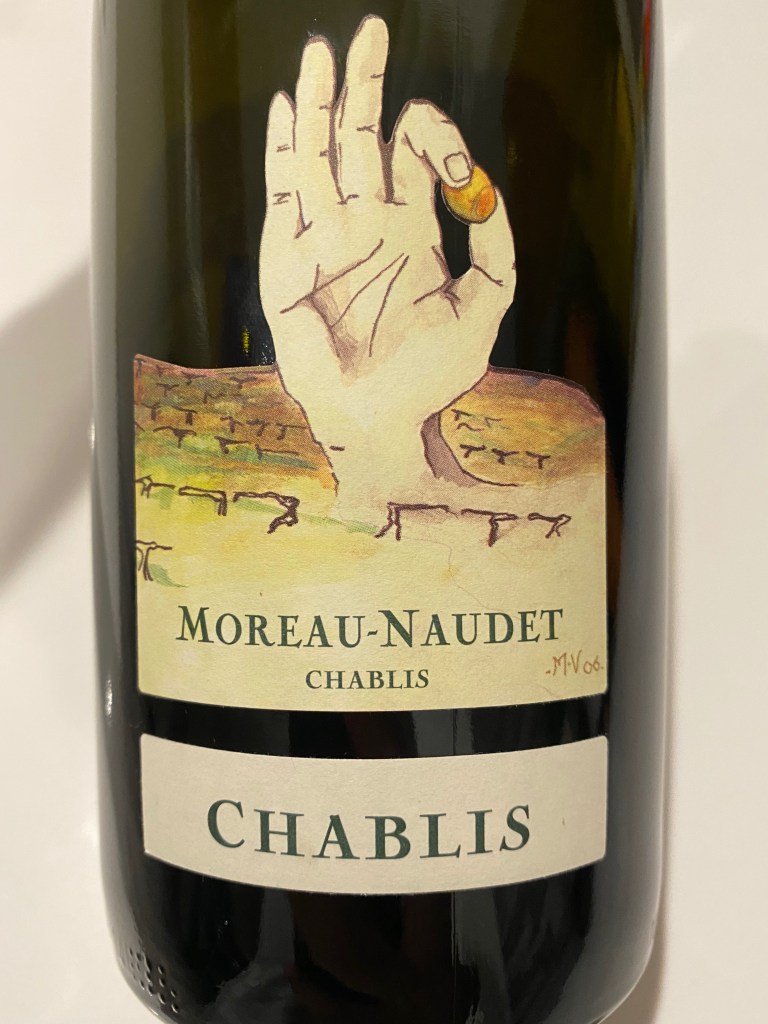
Today’s Story: Domaine Moreau-Naudet

Domaine Moreau-Naudet is a small estate located in the Chablis region of northern Burgundy. Though Moreau-Naudet has been a family-run domaine for quite some time, it was 1999 when Stéphane Moreau joined his father and drastically shifted the winemaking practices. Stéphane transitioned to fully organic viticulture alongside biodynamic practices, started harvesting his vineyards completely by hand, and practiced a minimal intervention winemaking style that includes natural yeast fermentation, slow élevage in large oak barrels, and minimal added sulphur. Stéphane was a nonconformist for Chablis in this sense, and took significant inspiration from Vincent Dauvissat, Didier Dagueneau, and Nadi Foucault. Sadly, Stéphane passed away incredibly too young (in his upper 40s) in 2016 and the future of the domaine fell to questioning. Shortly thereafter, however, Stéphane’s wife Virginie and his assistant winemaker displayed great adeptness by stepping in and remaining steadfast to Stéphane’s philosophy and style then and to this day.

Today’s Wine: 2017 Chablis

100% Chardonnay; 12.5% ABV

The 2017 Chablis is medium gold in color with water white variation near the rim. Give this 30 minutes to an hour to open up and you will be handsomely rewarded. The nose showcases aromas of white peach, lemon peel, stone fruit, summer melon, honeysuckle, and chalky mineral. On the palate, I get notes of lemon zest, baked pineapple, quince, green apple skins, white florals, flint, and saline mineral. This is medium-bodied with vibrant high acidity and a well-rounded mouthfeel into a long, mouthwatering finish. While the wine doesn’t have as much depth as I was hoping for, its precision makes up for that and makes me excited to try it again in a few years.

Price: $35 (though you can find this cheaper, especially in Europe). This is a great value and it’s hard to believe this is a village wine thanks to its finesse and precision. Would love to try this again in a few years. Pair with oysters, snails with garlic butter, or gougères.

Outstanding Value From the Tuscan New Wave

Today’s Story: Montepeloso

Montepeloso is a small, 15 acre estate located in the Tuscan comune of Suvereto. Current owner and winemaker Fabio Chiarelotto purchased the estate in 1998, though Montepeloso was already producing world class wines under original owners Willi and Doris Neukom. When Fabio took the helm, he undertook an immense overhaul of the vineyards, reshaping them over the course of 8 years by retraining, pruning, and regrafting a significant number of vines. Fabio loved the wines of Montepeloso before this drastic feat, however he rightfully assumed that the terroir had so much more to offer in producing elegant and finessed wines rather than concentrated examples easy to make in the hot climate. Fabio’s wines are proclaimed as some of the greatest examples of Tuscany’s “new wave,” characterized as “beautiful, profound, and expressive.” Fabio practices biodynamic viticultural methods, relatively short macerations, fermentation using only native yeasts, and bottles his wines without filtration.

Today’s Wine: 2016 Eneo

45% Sangiovese, 35% Montepulciano, 15% Alicante, 5% Marselan; 14.5% ABV

The 2016 Eneo is opaque medium ruby in color with some purple hues. This needs at least 1-2 hours to really open up, but once it does the nose showcases aromas of plum, blueberry, black cherry, anise, lavender, cigar box, dry chalky soil, dried green herbs, light baking spice, milk chocolate, and light oak. Once in the mouth, this beauty displays notes of brambleberry, black raspberry, black plum, mild tobacco, scorched earth, slate, savory herbs, black pepper, and espresso. This is full-bodied with medium (+) acidity, fine-grained medium (+) tannins, and a long finish dominated by black fruit and purple/blue florals.

Price: $45. This is an outstanding value, and certainly one of the greatest out of Tuscany I’ve had in a long, long time. The finesse and depth this shows at such a young age is breathtaking, and I would love to stick this into a blind tasting lineup with wines twice it’s price. Pair with Bistecca alla Fiorentina, hearty red sauce pastas, or charcuterie and Parmigiano Reggiano.

Chacra’s Experimental Pinot Noir

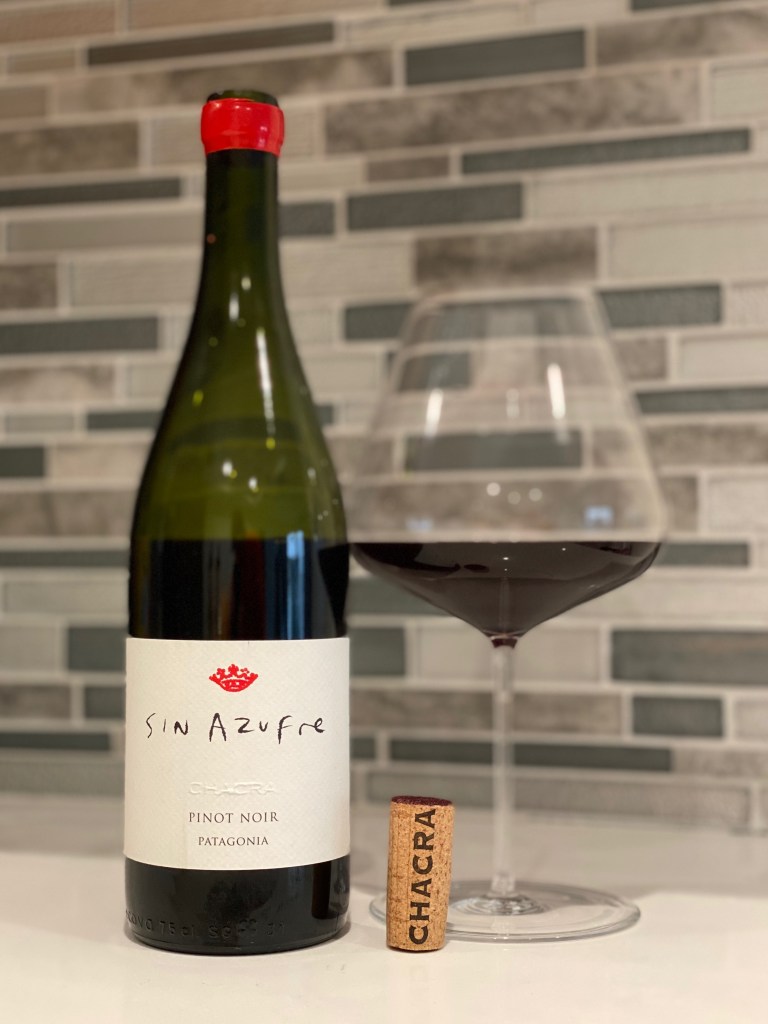
Today’s Story: Bodega Chacra

I was so thoroughly impressed with the 2018 Chacra Mainqué Chardonnay that I reviewed almost two weeks ago (Beautiful Union of Burgundy and Patagonia) that I decided to try another wine from them today.

To review, Bodega Chacra is a small winery established in the Río Negro region of Patagonia in 2004 by Piero Incisa della Rocchetta. Piero’s goal is to create transparent, honest wines that showcase his unique terroir through organic and biodynamic viticulture, so he eschews the use of artificial fertilizers, pesticides, or herbicides. Instead, Piero uses vegetable and mineral preparations in his compost alongside a range of biodynamic practices ranging from the horn manure preparation and horn silica preparation to the German chamomile preparation and oak bark preparation. Detailed explanations of each biodynamic preparation can be found here. Chacra’s vineyards produce low yields and fruit selection is incredibly rigorous come harvest, so only the best and healthiest grapes make the wine. Maceration and fermentation occur in small tanks with an emphasis on skin contact, and the wines age in extra fine grain French oak barrels. All of the Pinot Noir is bottled 100% natural and unfiltered.

Today’s Wine: 2018 Sin Azufre Pinot Noir

100% Pinot Noir; 12.5% ABV

The 2018 Sin Azufre Pinot Noir is opaque pale purple in color. Once this opens up, the nose showcases aromas of dusty red cherry, brambleberry, violet, leather, tilled rocky soil, slight barnyard, crushed rock, graphite, and a hint of oak. There was some olive on the nose but that blew off after an hour. On the palate, I get notes of dried tart cherry, dusty raspberry, brambly blueberry, rose petal, sweet tobacco, black tea leaf, dried earth with finely crushed rock minerality, green underbrush, and clove. This is light- to medium-bodied with medium (+) acidity, medium (-) tannins, and a medium (+) length finish.

Price: $35. This is a difficult one for me on a value perspective. When it comes to the majority of today’s wine drinkers, this would not be a good value simply because I don’t think the average consumer would like it. When it comes to the explorers or those who want to liven up their palate and are familiar with “natural” wines, I think this is a great value. Pair this with rosemary and thyme chicken, roasted duck breast, or charcuterie with Brie or Gruyère cheese.

Gorgeous Amarone With Great QPR

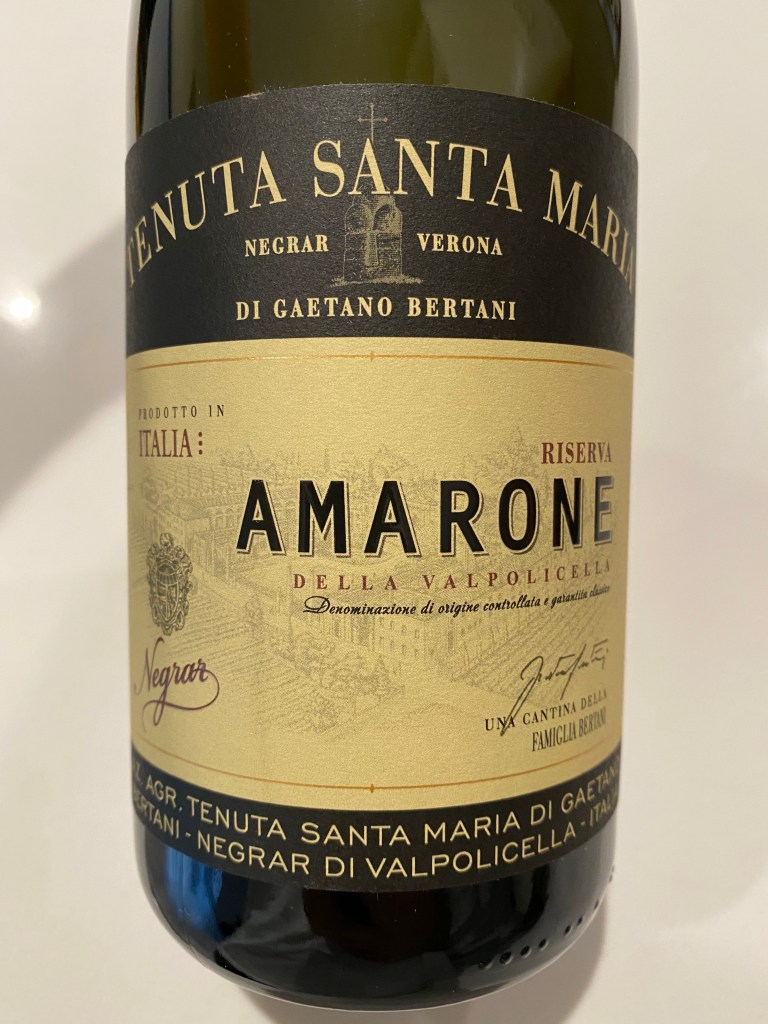
Today’s Story: Tenuta Santa Maria

Tenuta Santa Maria was established by the Bertani Family, a family with deep roots in the Valpolicella region of Veneto. Documents place the family in Valpolicella as early as the mid-1500s, though it was brothers Gaetano and Giovan Battista Bertani during the mid to late 1800s who ventured to create a new standard for their family’s wines. After being exiled to France, Gaetano Bertani returned and brought back an appreciation for the Guyot Method and the brothers practiced it when planting their vineyards with high vine density to reduce yields and create more concentrated fruit. Though Santa Maria follows traditional winemaking methods for the Veneto region passed down through generations of vintners, they also appreciate technological advancement and utilize modern techniques to produce the highest quality wines possible. Today Tenuta Santa Maria is guided by Gaetano Bertani, the great-grandson of founding brother Gaetano, and his sons with utmost respect for their history and fact that they are one of the oldest Italian winemaking families still in operation.

Today’s Wine: 2013 Amarone della Valpolicella Riserva

75% Corvina, 15% Corvinone, 10% Rondinella; 16% ABV

The 2013 Amarone della Valpolicella Riserva is medium to deep garnet with ruby hues. I decanted this for around 3 hours which greatly helped the wine blossom, however right out of the bottle this was a beauty. On the nose, I get aromas of cherry liqueur, sweet plum, fig, anise, purple florals, dried leather, crushed rock, cinnamon, and spice. Once in the mouth, this wine displays notes of sweet cherry, boysenberry, prune, licorice, dried rose, tobacco, dried rocky earth, brown sugar, nutmeg, and chocolate. This is medium- to full-bodied with medium (+) acidity, velvety medium tannins, and a long finish. It’s amazing how incredibly well-balanced this wine is, particularly given the 16% ABV which you would never guess.

Price: $74. Great QPR on this bottle, especially when compared to Quintarelli or Dal Forno Amarone that sells for $300+ (and more for the Riservas). Now I’m not saying this is the same calibre as Quintarelli or Dal Forno, but its elegance, balance, and quality are enough to make me think of them. Pair this with Wagyu filet mignon, wild boar, or parmigiano reggiano.