Easy-Going and Straightforward Alsatian Riesling

Today’s Story: Maison Trimbach

Maison Trimbach is one of the most notable winemakers in Alsace, established in 1626 by Jean Trimbach. Today Trimbach is under the guidance of Hubert Trimbach and his nephews Jean and Pierre, rounding out 12 generations of family ownership and shared knowledge. Pierre’s daughter Anne, the oldest of the 13th generation, also now works in the family business. Though Trimbach’s world recognition greatly expanded in 1898 when Frédéric Emile Trimbach earned the highest marks at the International Wine Fair in Brussels, Trimbach is largely famous for the legendary Clos Sainte Hune vineyard. Located in the Rosacker Grand Cru vineyard, Clos Ste Hune has belonged to the Trimbach family for over two centuries and produces some of the most exquisite Alsatian Riesling in existence.

The Trimbach estate consists of 40 hectares (about 100 acres) encompassing 50 parcels across six villages that include Bergheim, Ribeauvillé, and Hunawihr. Trimbach also operates as a négociant business to produce additional non-estate wines. All of Trimbach’s winegrowing practices are sustainable and they try to preserve the natural environment of the vineyards. Trimbach practices close pruning and soil tilling while encouraging moderate yields and rigorous fruit selection come harvest which is accomplished entirely by hand. When the grapes are gently crushed at the winery, juices flow via gravity and Pierre vinifies and matures the wines adhering to centuries of tradition with both finesse and focus on the terroir. After being bottled each spring, the wines are released by maturity with some spending 5 to 7 years in the cellars to achieve balance before release.

I previously wrote about the 2016 Gewurztraminer and 2014 Clos Ste Hune from Trimbach.

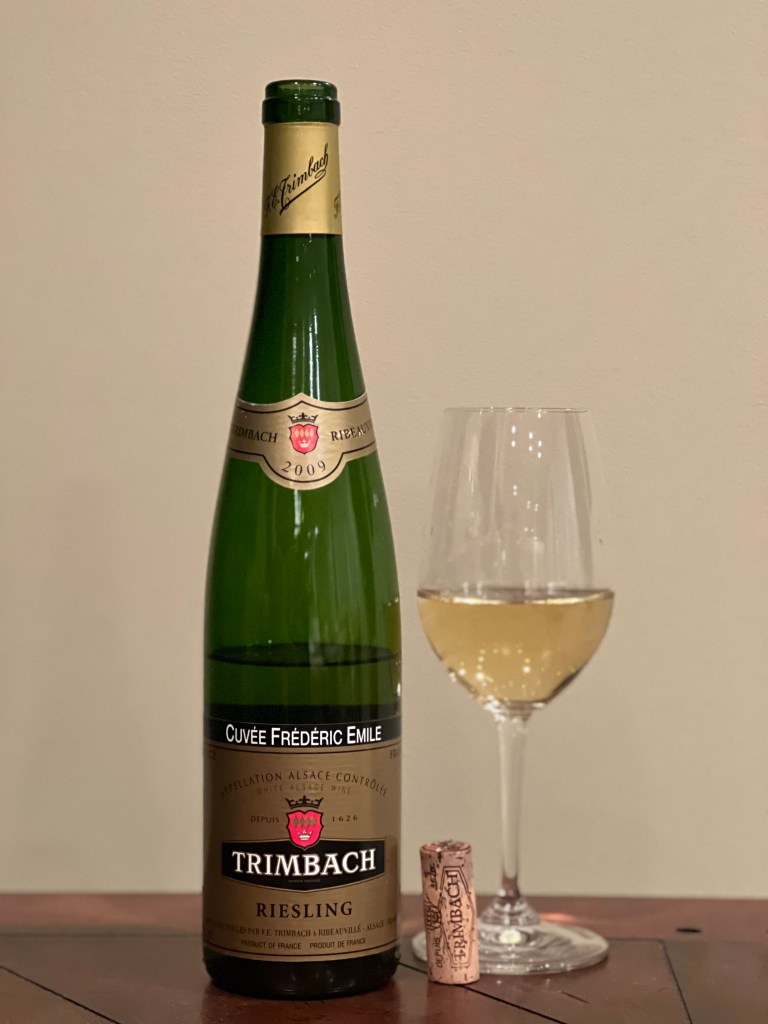
Today’s Wine: 2009 Riesling Cuvée Frédéric Emile

100% Riesling; 13.5% ABV

The 2009 Riesling Cuvée Frédéric Emile is pale gold in color. The aromas are of medium (+) intensity, but the nose is rather straightforward offering up notes of peach, yellow apple, apricot, lime zest, petrol, slate, and mineral. Meanwhile the flavors are also of medium (+) intensity and the palate showcases classic notes of peach, ripe pear, apricot, lime, white florals, limestone, and petrol. This dry Riesling is medium- to full-bodied with medium (+) acidity, medium alcohol, and a long finish. This is a very good and straightforward wine, though I think there are stronger vintages of the Cuvée Frédéric Emile.

Price: $65. This is in a very competitive price-point to where I do think there are better values out there when it comes to dry Riesling. Whether it be bottlings a fraction of the cost or Grand Cru options around this price, there are a number of options. Though that’s not to be said without admitting this is a very high-quality bottling from a world-renowned producer.
Complex and Balanced Aussie Shiraz Showing Beautifully With Age

Today’s Story: Torbreck Vintners

Torbreck Vintners was established in 1994 by David Powell in Marananga of the Barossa Valley in South Australia. Torbreck began by sharecropping fruit from an abandoned dry-grown and old vine vineyard, though overtime they did purchase estate vineyards but continue to source from growers to fill out the portfolio of wines. Torbreck specializes in Shiraz, however they produce wines with other Rhône varieties including Grenache, Mourvèdre, Viognier, Marsanne, and Roussanne. Many of Torbreck’s source vineyards are generations old, with some of the vines producing fruit for their RunRig bottling 120-160 years old. Yields are painfully low, resulting in wines that are very complex and representative of their terroir. Winemaking is characterized by minimal intervention, and the Torbreck team views themselves as custodians rather than heavy-handers in the cellar. The wines age in barrel for as long as they deem fit to allow for the wine’s best expression, and all bottling is accomplished unfined and unfiltered. Each vintage, roughly 70,000 cases are produced.

I previously reviewed the 2019 Woodcutter’s Semillon from Torbreck.

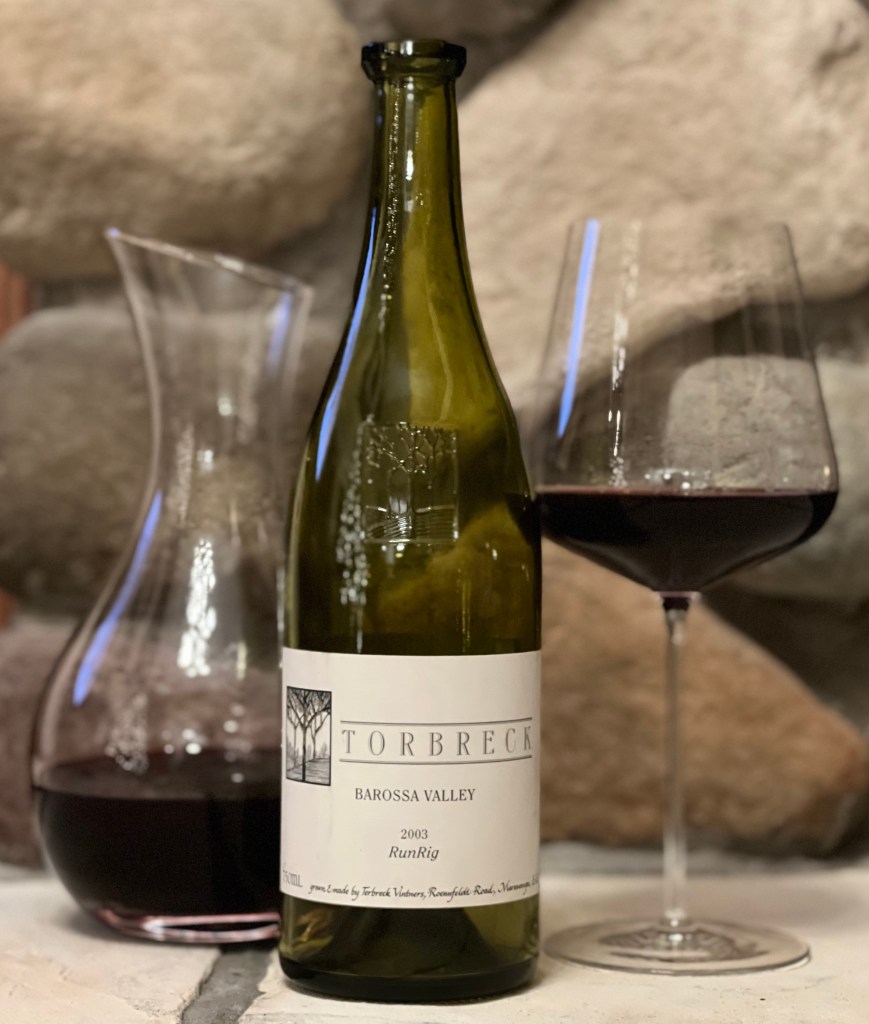
Today’s Wine: 2003 RunRig

95% Shiraz, 5% Viognier; 14.5% ABV

The 2003 RunRig is medium to deep ruby in color, not really showing signs of its age. I decanted this for sediment and drank it about an hour later. The aromas are of pronounced intensity, with the nose showcasing notes of plum, blueberry, blackberry, violets, licorice, tobacco, forest floor, mushroom, charred green herbs, black olive, wet rock, and a hint of smoke. Meanwhile the flavors are also of pronounced intensity and the palate offers up notes of blueberry, spiced plum, blackberry, black cherry, violet, anise, smoked meat, earthy mushroom, scorched earth, charred herbs, and black olive. This dry red is medium- to full-bodied with medium acidity, medium (+) but fine-grained tannin, high alcohol, and a long finish. An outstanding wine that is drinking beautifully right now.

Price: $200. While this bottle is pricey, I think it is absolutely worth the price. At its current stage the wine is incredibly deep, complex, well-balanced, and structurally sound. The finish goes on and on and we caught this in the perfect window.

Complex and Fun Experimental White Blend

Today’s Story: Ovid Napa Valley

Ovid Napa Valley is a “cult” winery established in 2000 by husband and wife Mark Nelson and Dana Johnson, and 2005 was their inaugural vintage. Situated at 1,400 feet elevation on secluded Pritchard Hill, Ovid consists of a 15 acre vineyard planted largely to Cabernet Sauvignon and Cabernet Franc, though it includes plots of Merlot, Petit Verdot, and Syrah as well. Ovid practices organic viticulture and the vineyard is broken into one-acre blocks with various rootstocks and clones to allow for an experimental philosophy of winemaking. They recently cleared more acreage to expand their vineyard holdings as well. Winemaker Austin Peterson has been with Ovid since 2006, and he enjoys utilizing both traditional and cutting edge winemaking techniques to produce wines with a sense of place. The Ovid winery utilizes gravity flow to minimize handling of the wines, and fermentation is accomplished using native and non-native yeasts before the wines age and transfer to bottle unfined and unfiltered.

Ovid remains steadfast in their support of sustainable practices in the vineyards and the winery, keeping bees, using cover crops, and utilizing their own compost to avoid inhibiting natural biodiversity. They also placed owl boxes, bluebird boxes, and an insectary garden on the property to facilitate a more natural form of pest control. Ovid even maintains a fruit and nut orchard where they grow cherries, plums, pluots, peaches, pomegranates, and persimmons which are then allocated to Napa restaurants including The French Laundry and The Restaurant at Meadowood (which unfortunately burned down in 2020). The winery itself is powered by solar energy and built of wood, stone, and concrete which blends effortlessly into the mountainous surroundings.

In terms of production, Ovid crafts four main wines which include their signature Ovid Napa Valley (Cabernet Sauvignon dominant), Hexameter (Cabernet Franc dominant), Loc. Cit. (100% Cabernet Sauvignon from the best plots only in the best vintages), and Syrah. As special as the main Ovid wines are, they also release highly limited quantities of Experiment bottlings which change vintage to vintage to showcase the unique blends, varieties, winemaking styles, and terroir Peterson has to play with. Total production is said to be between 1,000 and 1,200 cases per vintage, with roughly 85% of that going direct to customers on the membership list.

To learn more about Ovid and their wines, view pictures of the beautiful winery, or find the source for much of today’s information above, visit the Ovid website here. I also previously wrote about Ovid when I reviewed the 2015 Hexameter.

Today’s Wine: 2016 Experiment No. W3.6

36.27% Sauvignon Blanc, 20.82% Grenache Blanc, 19.28% Albariño, 9.26% Viognier, 7.86% Roussanne, 6.51% Vermentino; 14.3% ABV

The 2016 Experiment No. W3.6 is pale yellow in color. Its aromas are of medium (+) intensity, with the nose showcasing notes of lemon zest, honeydew melon, Asian pear, mango, lemongrass, white lily, wet stone, and a touch of wax. The flavors are also of medium (+) intensity, and the palate offers up notes of yellow apple, pear, lemon and lime zest, mango, grapefruit, honeysuckle, grass, beeswax, and stony mineral. This dry white blend is medium-bodied with medium (+) acidity, high alcohol, and a medium (+) length finish. This is a very good and fun wine.

Price: $110. Pricing here is a bit high in terms of value perspective, as this is very expensive for a Napa Valley white wine. Nonetheless, I love these Ovid Experiment bottlings as they show a fun side of winemaking while this one is complex, well-balanced, and downright quaffable. I think rarity of these wines plays an effect on the price but if you have the chance to try one I wouldn’t turn it down.

A Fix of Realm for the 2020 Vintage

Today’s Story: Realm Cellars

Realm Cellars was founded in 2002 with a focus on producing high-quality, limited production Bordeaux blend and single vineyard Cabernet Sauvignon wines. Co-Founder Juan Mercado left his role as a hospital administrator in San Francisco to pursue working in the wine industry and, until recently, Realm sourced their fruit from historical, high-quality vineyards (like Dr. Crane, To Kalon, and Farella) rather than growing their own. Though Juan is no longer with Realm, the winery is spearheaded by Managing Partner Scott Becker and their excellent winemaker Benoit Touquette. Michel Rolland consults for the project as well.

One of my favorite aspects of Realm (more a “that’s really cool” kind of thing) is their inspiration from Shakespeare. For example, the title of my blog post on the 2016 The Bard starts the line “This blessed plot, this earth, this realm” from Shakespeare’s Richard II, a line noted on every bottle of Realm wine, on their corks, and highlighted on the label of The Bard. Realm’s Bordeaux blends include The Tempest, named for the violent storm and play thought to be one of Shakespeare’s last; Falstaff, named for the fat, vain, boastful, and cowardly knight present in four of Shakespeare’s plays for comic relief; and of course The Bard, named for Shakespeare himself. Each wine highlights a particular variety, ranging from Merlot to Cabernet Franc to Cabernet Sauvignon, respectively.

As far as their single vineyard wines go, Realm produces Farella (100% Cab), Houyi (100% Cab), Beckstoffer Dr. Crane (95% Cab, 5% Petit Verdot), Beckstoffer To Kalon (100% Cab), Moonracer (Cab dominant blend), and a white wine called Fidelio (Sauvignon Blanc). As I mentioned in the beginning of this post, recently Realm started producing wine from their own fruit which is where Moonracer comes in. This wine comes from their vineyard on Wappo Hill in the Stags Leap District and is named for the Wappo Native Americans who were known for bravery, strength, and athleticism. The Wappos often took part in (and are said to have won most) inter-tribal races during a full moon, hence the name Moonracer.

I previously reviewed the 2016 The Bard, 2013 The Tempest, and 2019 Fidelio Sauvignon Blanc from Realm.

Today’s Wine: 2020 La Fe Rosé

90% Merlot, 10% Cabernet Sauvignon; 13.9% ABV

The 2020 La Fe Rosé is pale copper in color. The aromas are of medium (+) intensity, with the nose showcasing notes of watermelon, white raspberry, white cherry, cantaloupe, rose petal, finely crushed stone, and a hint of underbrush. Meanwhile the flavors are also of medium (+) intensity and the palate offers up notes of white peach, strawberry, bing cherry, watermelon, rose water, white pepper, stony mineral, and green herbs on the finish. This dry rosé is medium- to full-bodied with medium acidity, high alcohol, and a medium (+) length finish.

Price: $75. This is quite pricey for a rosé, so there are certainly better “values” out there on a dollar-per-dollar basis. Nonetheless this is a delightful bottle of wine and one of few Merlot/Cabernet blended rosés that I truly enjoyed. This maintains a brightness while offering up nice mineral tones in a fairly deep presentation. Perfect to keep up my Realm fix for a very tough vintage.

Note: This is the only wine Realm made in the 2020 vintage, and it’s also their first rosé. Following the 2020 fires in the Napa Valley, Realm’s winemaking team made the decision to not risk producing their Cabernet Sauvignon wines due to risk of smoke taint and loss of fruit. This rosé was carefully made and monitored using very delicate winemaking practices from Farella and Moonracer fruit.

San Benito County Pinot Noir Drinking Beautifully Right Now

Today’s Story: Williams Selyem

Williams Selyem is a highly-regarded winery with a homegrown, almost comical, origin story. During the 1970s, Burt Williams received several tons of free grapes from a grower with an abundance of fruit that would otherwise most likely go to waste. With his friend Ed Selyem, in 1979 the pair started making wine at Burt’s house over the weekends with Zinfandel grapes from the Martinelli family. Though the two set out to make wine only for themselves as a hobby, Burt and Ed fully devoted to the endeavor in 1981 and named their winery Hacienda del Rio.

They bottled their first vintage in 1982 and released it commercially in 1983, however Hacienda Winery quickly sent a cease and desist letter that resulted in removal of “Hacienda” from Burt and Ed’s labels. In 1984, Burt and Ed moved production to a nearby garage in Fulton and released the first vintage with the now famous and globally-recognized Williams Selyem label.

Williams Selyem picked up steam very quickly for a new winery in California. In 1985, they released their first vineyard-designated Pinot Noir from the Rochioli Vineyard and in 1987 that wine won the California State Fair Sweepstakes Prize for top red wine. With its status blown open, Williams Selyem grew a cult following and they needed to create a waitlist that immediately spanned 2-3 years. In 1989, Williams Selyem relocated to the Allen Ranch facility on Westside Road and in 1992 Burt and Ed quit their day jobs to focus 100% on their wine.

Six years later, however, in 1998 Burt and Ed sold Williams Selyem to John Dyson who was a longtime customer. John and his wife Kathe still own the winery today, and throughout their proprietorship greatly expanded winemaking by adding estate vineyards along the way. In my opinion, their crowning and historic achievement came in 2009 when Wine Enthusiast Magazine rated the 2007 Williams Selyem Litton Estate Pinot Noir 100 points. This was the first North American Pinot Noir in history to achieve a perfect score by a major wine publication, and while I do not buy wine simply based on score and have my issues with the scale, I can appreciate the historic achievement. In early 2021, Domaine Faiveley of Burgundy purchased a minority stake in Williams Selyem which may one day lead to their ownership. So far though, there doesn’t appear to be any major changes in the production of wine.

I previously reviewed the 2014 Ferrington Vineyard Pinot Noir and 2016 Three Sisters Vineyard Chardonnay from Williams Selyem.

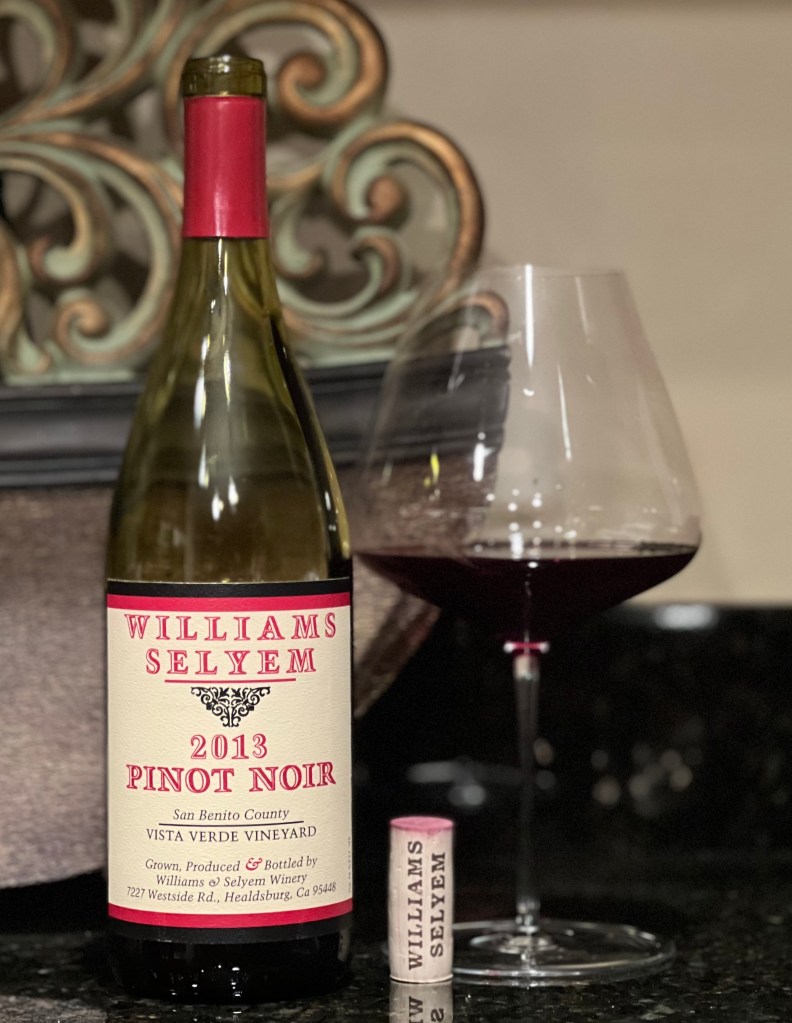
Today’s Wine: 2013 Vista Verde Vineyard Pinot Noir

100% Pinot Noir; 13.6% ABV

The 2013 Vista Verde Vineyard Pinot Noir is medium ruby in color and rather youthful in appearance. Given some time in the glass, this opens with aromas of medium (+) intensity and a nose of dried cherry, black raspberry, muddled strawberry, lavender, leather, scorched earth, charred green herbs, and smoke. The flavors are also of medium (+) intensity, with the palate showcasing notes of black cherry, plum, cranberry, black tea, smoked meat, a hint of black olive, dried herbs, crushed stone, smoke, and clove. This dry red is light- to medium-bodied with medium (+) acidity, light and fully-integrated tannin, medium alcohol, and a long finish.

Price: $110 (paid $75 from the winery). While there are better values out there especially at today’s market pricing for this bottle, the $75 level we purchased these at is rather fair. This wine is complex, well-balanced, and finishes long while being of incredible quality. Drinking beautifully right now.

Solid Bourgogne Blanc From the Queen of Burgundy

Today’s Story: Maison Leroy

Maison Leroy was founded in 1868 by François Leroy who was a winemaker and vineyard owner at Auxey-Duresses as well as Meursault, Pommard, Chambertin, Musigny, Clos Vougeot, and Richebourg. Though François sold his wines through Comptoir des Proprietaires de la Cote-d’Or in Beaune, his desire of enlarging his business led to the foundation of Maison Leroy. When François’ son Joseph joined the business alongside his wife Louise Curteley, the two grew Auxey-Duresses by producing liquors and distilled alcohols alongside the wine and garnered significant critical acclaim during the late 1800s and early 1900s. Henri Leroy, son of Joseph and Louise, joined the Maison in 1919 and further extended the family business by creating a subsidiary to produce eaux-de-vie alcohol near Cognac. One of Henri’s great achievements in Burgundy, however, came through his friendship with Edmond Gaudin de Villaine whose wife and brother-in-law (Jacques Chambon) inherited Domaine de la Romanée-Conti in 1912. Though the domaine went up for sale during the financial crises of the 1920s, Henri convinced Edmond not to sell his ownership and later purchased Jacques’ half in 1942 to cement the de Villaine and Leroy families as equal owners of Domaine de la Romanée-Conti (DRC). Henri worked tirelessly at DRC for the following four decades until his death in 1980, having turned the domaine into one of the most famous in the world and a producer of today’s most expensive wines.

Lalou Bize-Leroy, Henri’s daughter, joined Maison Leroy in 1955 and became President-General Director in 1971. Lalou, or Madame Leroy, worked tirelessly to understand the diverse terroir of Burgundy’s vineyards and selects her purchased wine with intense scrutiny and demand for quality. Madame Leroy also accompanied her father Henri at DRC until his death and became Co-Gerante with Aubert de Villaine from 1974 to 1992. While Maison Leroy’s village wines truly drink on par with some of the great 1er Cru equivalents throughout Burgundy and the 1er Crus drink like Grand Crus, Madame Leroy founded Domaine Leroy in 1988 after Takashimaya, an owner of luxury department stores in Japan, purchased 1/3 of the company and funded the purchase of vineyards. Madame Leroy purchased the estates of Charles Noellat at Vosne-Romanée and Philippe-Rémy at Gevrey-Chambertin to get the domaine running and she immediately transitioned to biodynamic farming for all of her vines. While Maison Leroy wines typically start around $70 per bottle and go into the several hundreds of dollars, Domaine Leroy produces wines in the thousands of dollars per bottle up into the tens of thousands of dollars due to their immeasurable quality and rarity.

Though the following is a description of the winemaking practices at Domaine Leroy and not necessarily Maison Leroy, I think it is important to include because of the demonstration it shares of Madame Leroy’s strict winemaking and quality standards. Starting in her vineyards, Madame Leroy follows a strict set of guidelines which includes spreading “Maria Thun”-type compost and manure throughout the vineyards as needed while hand-tilling the soil. At Domaine Leroy, they do not replant vineyards but rather replant individual vines as needed using buds of sister vines in the same vineyards. Leroy practices the Guyot pruning method from mid-January to early April only when the moon is passing the constellations Sagittarius, Aries, Leo, and, if necessary, also Aquarius, Gemini, and Libra keeping with strict biodynamic practices. They also remove a selection of buds to keep yields lower, remove buds from the trunk of the rootstock, and remove excess buds growing between nodes but do not clip the end of vines to keep the last bud in tact. At harvest, Domaine Leroy selects all fruit carefully by hand and carries them to the winery in small baskets before they are double hand-sorted on a stationary table to guarantee selection of the healthiest grapes. Fermentation is accomplished in large wooden barrels without destemming or crushing the fruit to avoid oxidation and preserve natural yeasts on the grape skins. Fermentation is not rushed and the fruit goes through extended periods of maceration before the wine is pressed and sent into the first level of the cellar until malolactic fermentation is complete. Using only gravity, the wine is then poured off the lees into the lower second level of the cellar where wine is stored until it is bottled.

For the source of the information above and more, check out Leroy’s website here. I also previously reviewed the 2010 Côte de Beaune-Villages from Maison Leroy.

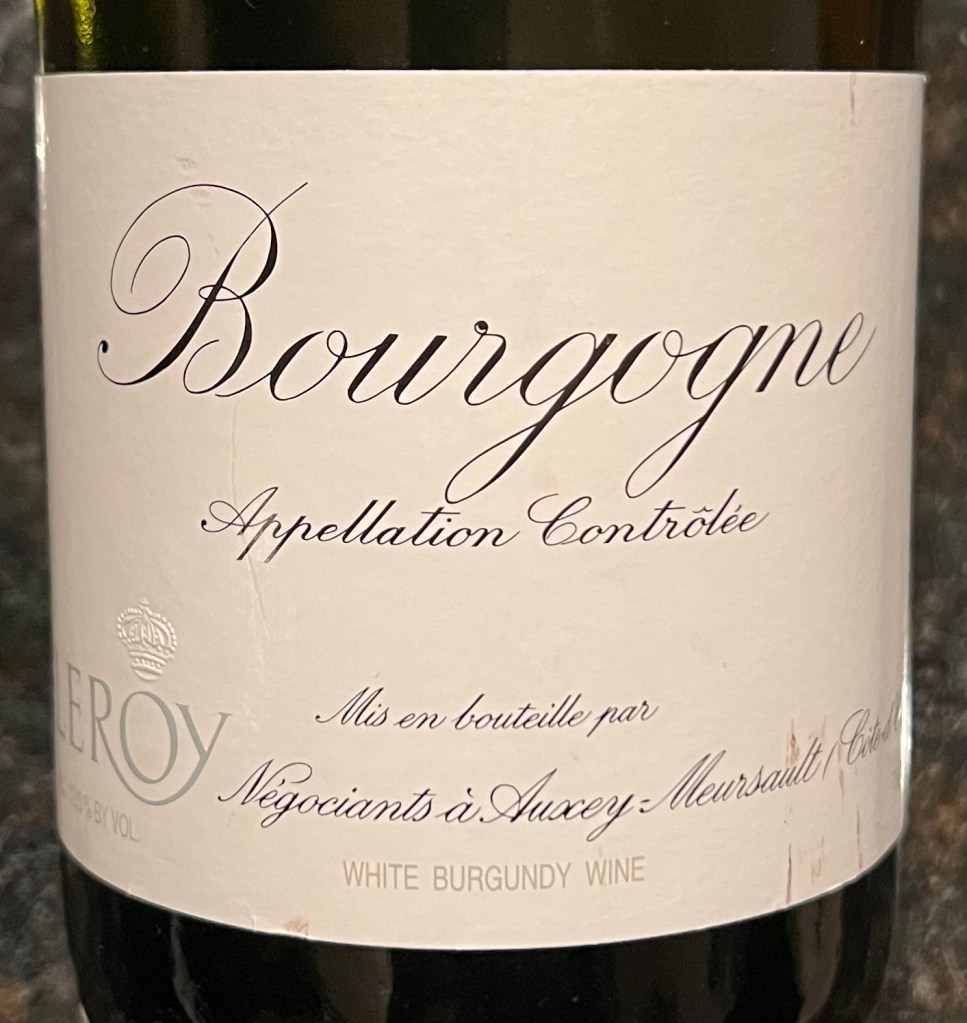
Today’s Wine: 2014 Bourgogne Blanc

100% Chardonnay; 12.5% ABV

The 2014 Bourgogne Blanc is pale gold in color. This truly blossomed after about 45 minutes in the glass, with the aromas of medium (+) intensity and the nose showcasing notes of green apple, pear, Meyer lemon, white wildflower, flint, raw almond, dried vanilla, and a hint of butter. Meanwhile the flavors are also of medium (+) intensity and the palate displays notes of crisp green apple, underripe pear, white peach, melon, honeysuckle, white pepper, and crushed rock minerality. This dry white is medium- to full-bodied with medium acidity, medium alcohol, and a medium (+) finish. Very good but not as racy as other 2014 BB I’ve enjoyed in the past.

Price: $100 (paid $45 a few years ago). From a value standpoint, I think this is a bit of a stretch at the current market prices around $100. However finding this closer to $70 would be a solid entry and the $45 we got it for several years ago is screaming value.

Santa Ynez Valley Red Blend Drinking Beautifully After a Decade

Today’s Story: Jonata

Jonata is a red-wine-focused winery established in the Santa Ynez Valley by Stan Kroenke, owner of Screaming Eagle and the LA Rams. Jonata’s vines are planted in the Santa Ynez Valley on California’s Central Coast, and although Kroenke bought 586 acres of property only 84 acres are planted under vine. Like many wineries in the area, Jonata found success planting Rhône varieties such as Syrah but also grows Sangiovese and Bordeaux varieties. As far as soil goes, the entire Jonata property is sand (specifically Careaga Sandstone) which is known to be highly aerative with low water holding capacity and therefore low fertility for fruit. However, thanks to their adept winemaker Matt Dees, Jonata is able to produce exceptional wines and some of the best Cabernet Sauvignon in the Ballard Canyon appellation.

On the topic of quality, Jonata in their words seeks to become “the vanguard of an emerging quality movement in California winegrowing.” Great care is put into their vineyards and the winemaking process, resulting in a relatively small production of about 4,725 cases per year across 8 wines (2,426 cases being their Todos red blend). Sustainability is also a major point of focus for the winery, integrating livestock (chicken, turkeys, goats, pigs, and sheep) into the farming model to naturally enhance the soil. Jonata also maintains a communal garden and an orchard that produces olive oil and honey from bees raised on the ranch. Source: https://www.jonata.com/.

I previously wrote about the 2005 El Corazón de Jonata, 2010 Tierra, and 2006 El Alma de Jonata.

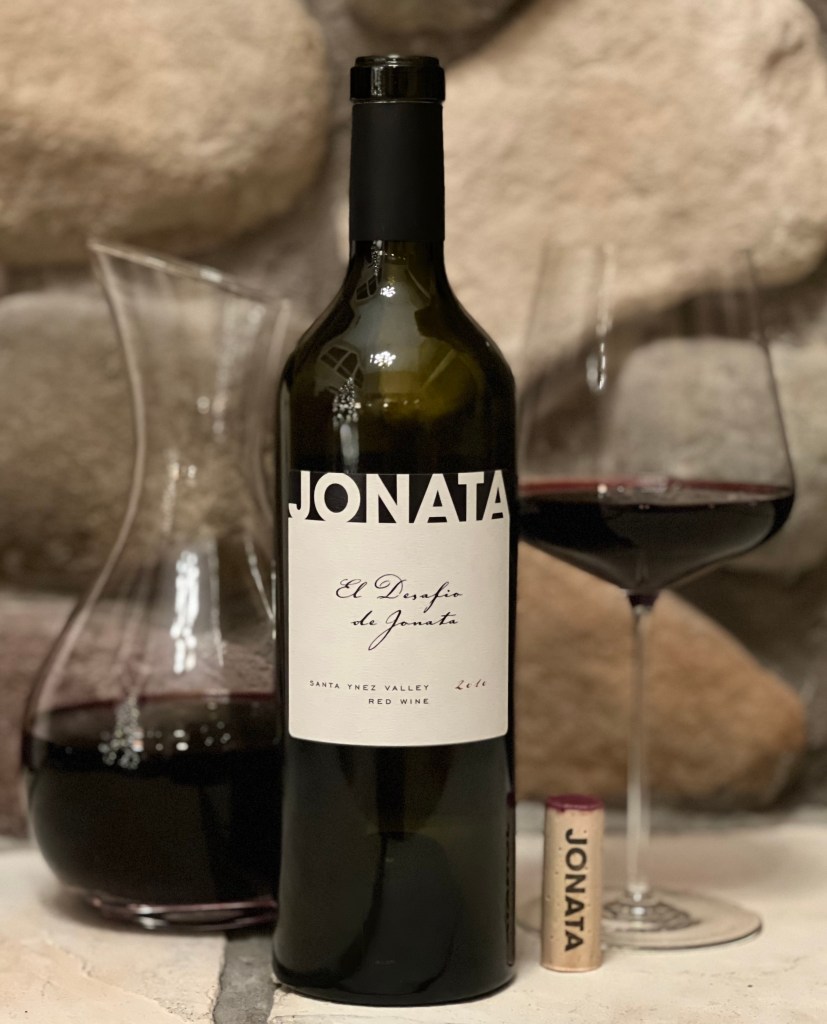
Today’s Wine: 2010 El Desafio de Jonata

43% Cabernet Sauvignon, 32% Cabernet Franc, 14% Petit Verdot, 11% Merlot; 14.5% ABV

The 2010 El Desafio de Jonata is deep ruby in color and completely opaque. I gave this about an hour in the decanter, which helped remove some light sediment and the wine opened beautifully. The aromas are of pronounced intensity, with the nose showcasing notes of blackberry, plum, black cherry, blueberry, licorice, green bell pepper, underbrush, scorched earth, a hint of truffle, light baking spice, and cocoa. Meanwhile the flavors are of medium (+) intensity and the palate offers notes of black cherry, redcurrant, brambly blackberry, spiced plum, sweet tobacco, violets, smoked meat, charred herbs, green peppercorn, gravel, mocha, and a touch of vanilla. This dry red blend is full-bodied with medium (+) acidity, medium (+) but fine-grained and well-integrated tannin, high alcohol, and a long finish.

Price: $130. This is a very competitive price-point, especially compared to many of the Cabernet-dominant blends in the “more famous” Napa Valley. However, I think this bottling is well worth its price as it is both intense, complex, and finishes long. This is drinking beautifully right now.

A Great Representation of Austrian Grüner Veltliner

Today’s Story: Weingut Veyder-Malberg

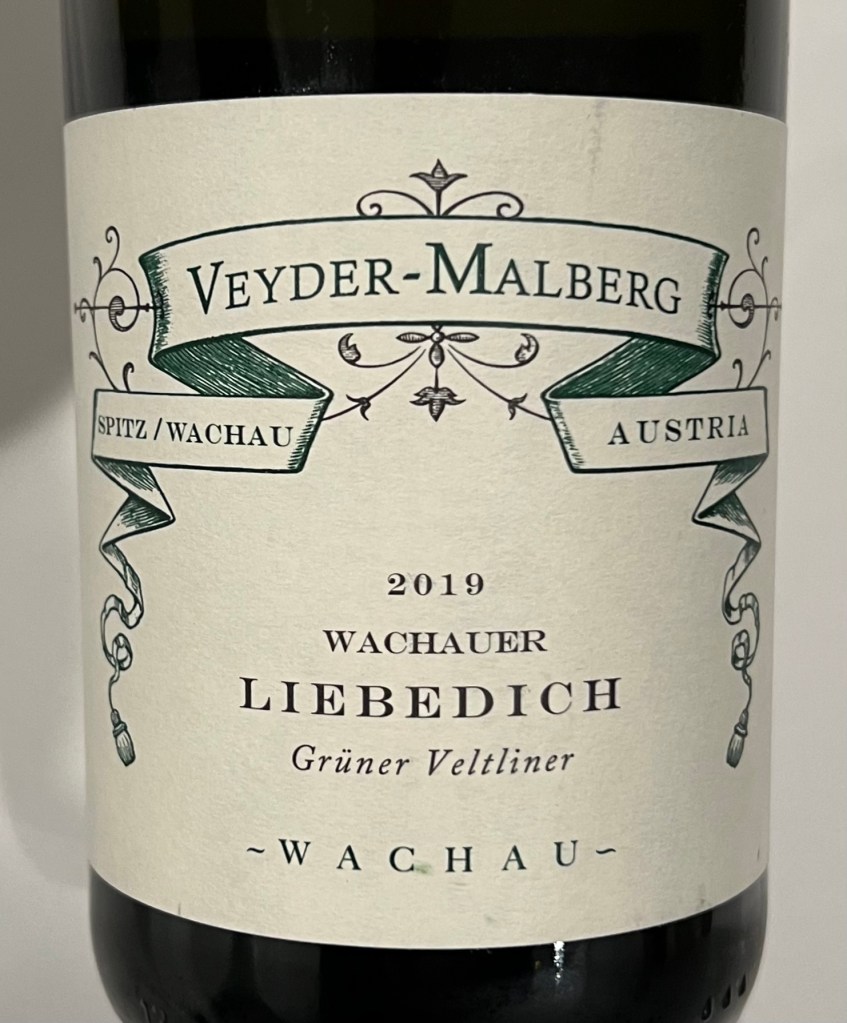
Weingut Veyder-Malberg, established in 2008 by winemaker Peter Veyder-Malberg, is a relatively new estate and winery in the town of Spitz within the Wachau Valley of Austria. Peter studied Lithography in Munich in 1986 before wrapping up at the Business College at the Institute for Economic Development in Vienna in 1988, though he transitioned into wine while studying at the Napa Valley College of Viticulture in 1991. He also worked at Pine Ridge Vineyards in Napa this same year. With a couple decades of winemaking experience under his belt, Peter turned to the Wachau and its steep, terraced vineyards to make wines of his own.

Peter’s philosophy starts with a focus on the land itself, particularly in the vineyards of the Wachau that were at risk of being torn out due to the incredibly labor-intensive farming necessary. Many of the vineyards in the Wachau are steep and terraced, requiring that all work be accomplished by hand. Peter started by acquiring plots with old vines aged 30 to 70 years and works exclusively with organic and biodynamic farming practices. When it’s time for harvest, Peter doesn’t focus as much on sugar levels but instead prioritizes pH levels to determine when it’s time to pick. Of course he looks at physiological ripeness of the fruit as well, but this focus on pH not only helps showcase the variety and terroir in a transparent fashion but makes the wines long-lived. All of Peter’s wines ferment with native yeast with no added enzymes, while the entire process is minimally invasive until a light fining for some of the wines at bottling.

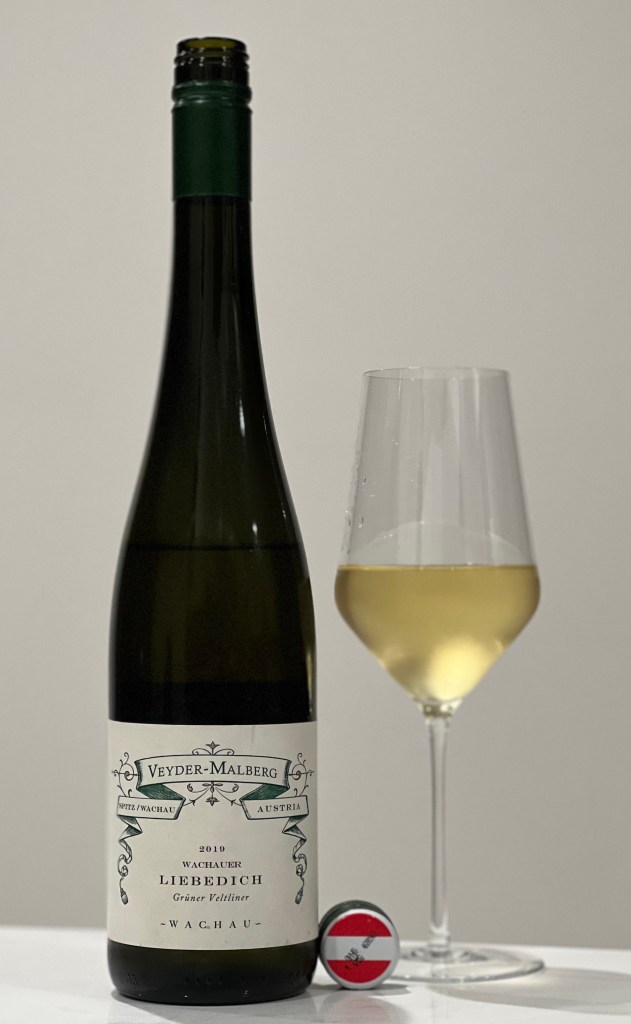
Today’s Wine: 2019 Liebedich Grüner Veltliner

100% Grüner Veltliner; 12.5% ABV

The 2019 Liebedich Grüner Veltliner is pale yellow in color. The aromas are of medium intensity, with the nose showcasing classic Grüner notes of delicate green apple, ripe pear, honeydew melon, peach skin, honeysuckle, white pepper, and crushed gravel. Meanwhile the flavors are also of medium intensity and the palate displays notes of white peach, Asian pear, lemon zest, flint, white pepper, white chocolate, and stony mineral. This dry white is light- to medium-bodied with medium (+) acidity, medium alcohol, and a medium length finish. This is a very nice Grüner and a solid representation of the variety, all while being easy-drinking and enjoyable.

Price: $44. I think this is a pretty fair price-point for this bottling. Even though it’s not incredibly intense or long on the finish, I find this to be a good representation and the quality is clearly very high. And I do imagine this only gets more expressive with age and a long life ahead. While you might find better “values,” this is a bottle to check out at some point in your Grüner ventures.

The Newest Project From the Harlan Family

Today’s Story: Promontory

Promontory is a boutique, ultra-premium winery established in the Napa Valley in 2009 by H. William “Bill” Harlan. During the early 1980s, Bill was hiking along the mountainous southwestern ridge of Oakville when he discovered a vast “territory” scooped out of rugged landscape. Bill immediately fell captivated by the untamed property and set his eyes upon it for what might become another family winemaking venture, however the Harlan family was unable to acquire the land until 2008. Today the property consists of about 900 acres, though only about 50 acres are planted to vine with a plan to grow to no more than 70 acres. The site is incredibly unique in that it contains two fault lines, creating drastic topographical and soil variation amongst volcanic, sedimentary, and metamorphic soils. Each vintage, winemaker David Cilli and his team harvest the fruit across roughly 70 different lots which is a painstaking and mind-boggling feat to ultimately blend and showcase the terroir at its best.

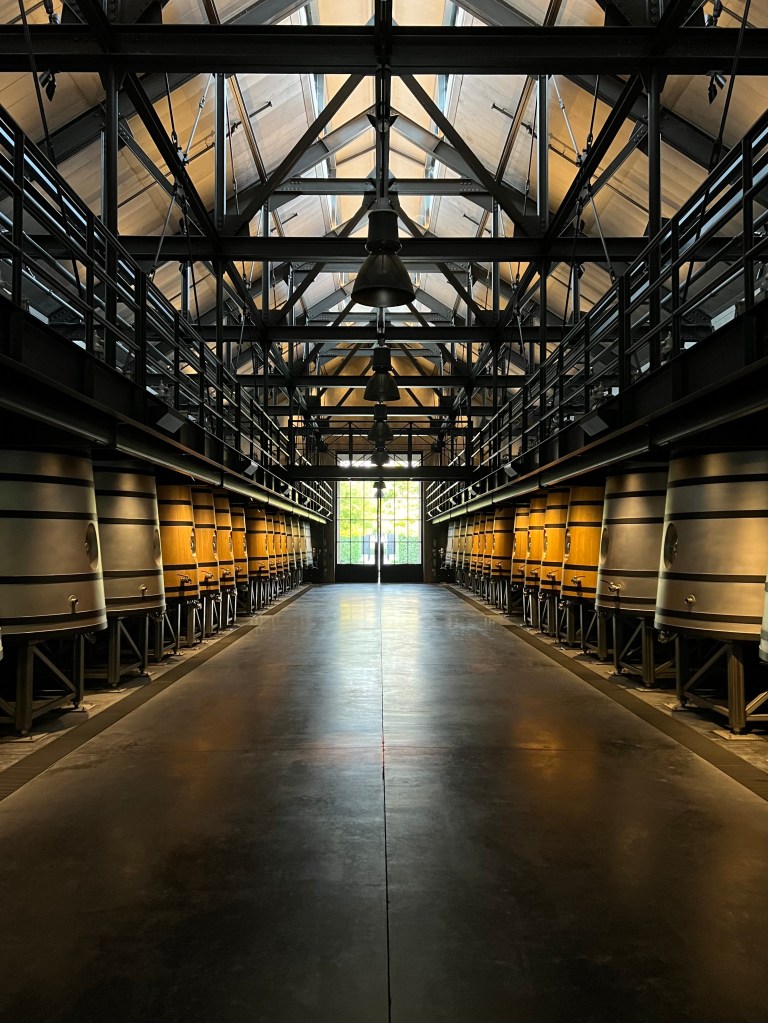
When it comes to the winemaking itself, David and team have the best equipment and fermentation vessels to play with. Upon receipt of their fruit and each micro-lot, fermentation vessels range in size and include oak tank, concrete tank, stainless steel tank, and individual barrels. The fermentation room (pictured below) is set up such that a hopper can descend to be filled with fruit, then raised and moved above the tanks to fill each individually via gravity. Once fermentation is complete, the wine is moved to Stockinger casks for an extended aging period. This is rather unusual for a Napa winery, as Stockinger vessels (made in Austria) are large and offer arguably as little oak influence as possible due to the size and toasting program selected. This use, coupled with a five-year aging program, allows the wine to integrate the minimal oak seamlessly while showcasing the fruit and territory in the best way possible.

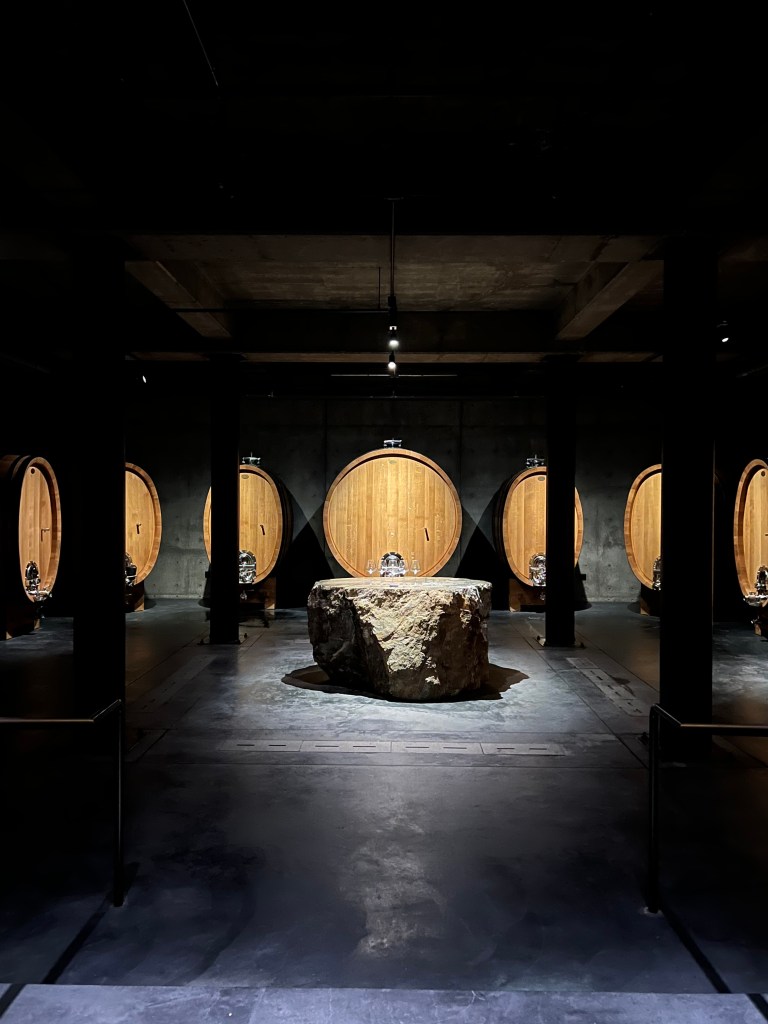
Unlike the other Harlan family properties that can be difficult or downright impossible to visit, Promontory is open to the public with reservations and tasting experiences are incredibly intimate. I’ve had the privilege of visiting Promontory three times so far, and each time one is met with Champagne while taking in the sites and discussing the Promontory philosophy. Next comes a tour of the production facilities and the cellar which includes a sample from cask, leading up to a sit-down tasting of two library bottlings of Promontory. As a bonus, I included some photos from my visits below today’s tasting notes.

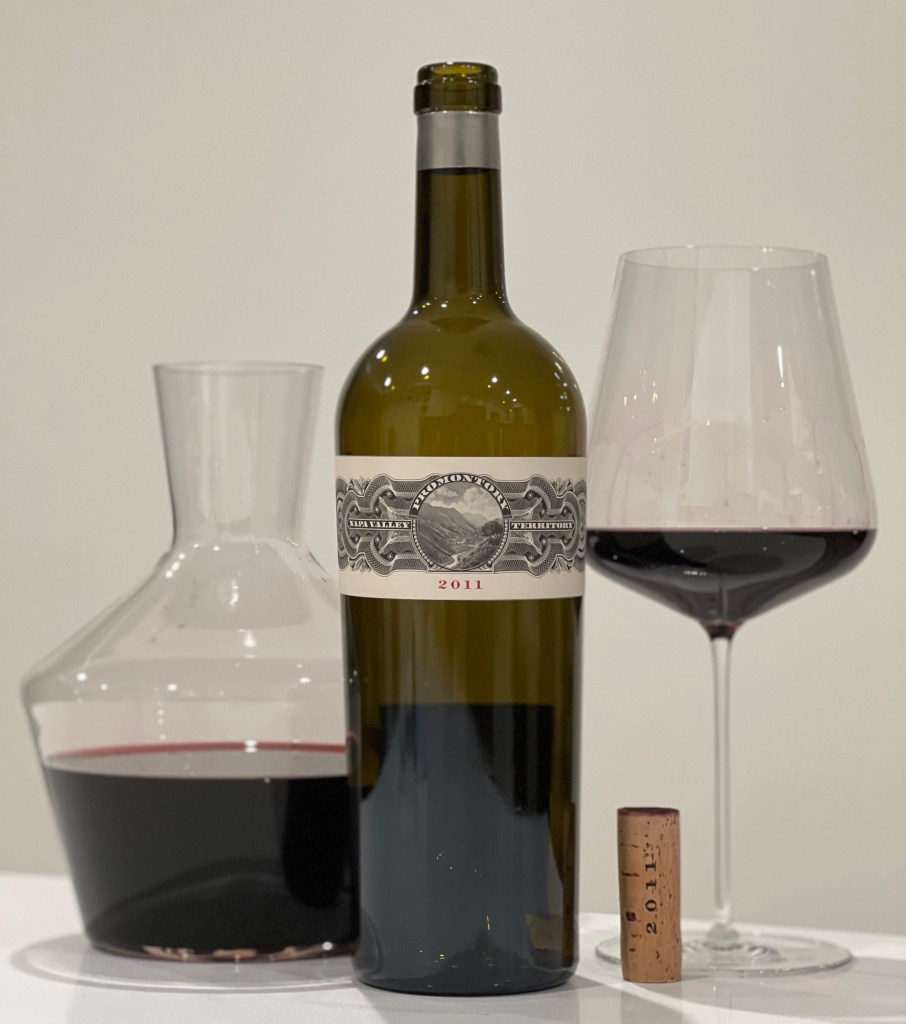
Today’s Wine: 2011 Promontory

100% Cabernet Sauvignon; 14.5% ABV

The 2011 Promontory is deep ruby in color and rather youthful in appearance. I decanted this for about an hour and drank it over the following one to two hours. The aromas are of pronounced intensity, with the rather complex nose showcasing notes of blackcurrant, blackberry, dried blueberry, licorice, violets, tobacco, crushed volcanic rock, graphite, savory green herbs, menthol, a hint of pyrazine, and mocha. There’s a touch of very well-integrated fine oak there as well. Meanwhile the flavors are also of pronounced intensity, with the palate displaying notes of blackberry, blueberry, plum, sweet tobacco, anise, violets, graphite, scorched earth, black truffle, charred green herbs, black pepper, espresso, and mild vanilla. This dry red is full-bodied with medium (+) acidity, medium (+) but refined tannins, high alcohol, and a long finish. This is an outstanding wine and is perfectly balanced.

Price: $850. This is a price-point where it’s somewhat impossible to discuss value, however this is an exceptional wine. I’ve been in love with the 2011 Napa Cabernet vintage as they come into their own over the past year or two and this is perhaps my favorite of the vintage. Though 2011 needs careful vetting at times, the 2011 Promontory is intense, complex, and beautifully balanced with gas left in the tank for cellaring.

Photos From My Visits

View from the reception hall, facing Harlan Estate.
Fermentation room, with varying vessel size and material visible.
Our glasses set up in the cellar for our cask sample of the 2019 vintage.

Mind-Boggling Complexity Out of a New Zealand Syrah

Today’s Story: Bilancia

Bilancia is a small winery and estate established by Lorraine Leheny and Warren Gibson in 1997 in Hawke’s Bay, New Zealand. Lorraine and Warren are both winemakers by trade and studied at Roseworthy Agricultural College in South Australia, ultimately making wines in Australia, Hungary, Italy, California, France, and Portugal between the two of them. Bilancia’s focal point is a 6 hectare (15 acre) vineyard known as La Collina, and it is planted to Syrah, Viognier, Chardonnay, and a small amount of Gewürztraminer. Bilancia also sources Pinot Gris from Black Bridge Estate and other high-quality fruit from several renowned Hawke’s Bay vineyards.

I previously reviewed the 2007 La Collina Syrah, an earlier vintage of the wine I am reviewing today.

Today’s Wine: 2016 La Collina Syrah

100% Syrah; 13% ABV

The 2016 La Collina Syrah is deep ruby in color with garnet hues along the rim of the glass. I decanted this for about an hour and it changed drastically over the course of consumption. The aromas are of pronounced intensity, with the incredibly deep and complex nose showcasing notes of blueberry, dehydrated plum, blackberry, anise, violet, gunsmoke, incense, cracked black pepper, scorched earth, black tea, cinnamon, dried vanilla bean, and clove. The flavors are also pronounced and the palate is equally complex, offering up notes of blueberry, blackberry, spiced plum, sweet tobacco, bacon fat, licorice, charred green herbs, black olive, cracked green peppercorn, volcanic rock, milk chocolate, mild toasted oak, clove, and a hint of smoke. This dry red is full-bodied with medium (+) acidity, medium (+) but fine-grained tannins, medium alcohol, and a long finish.

Price: $95. This wine is absolutely worth its price and, while not cheap, offers great value. The depth and complexity is truly mind-boggling, all wrapped together in a well-balanced wine that finishes quite long. The incense aroma is quite captivating on its own.