Young, Complex, and Very Promising Ribera del Duero

Today’s Story: Dominio de Pingus Psi

Psi was born out of passion by Peter Sisseck of Dominio de Pingus fame. While Pingus is arguably the pinnacle for the best that wines can be from Ribera del Duero and Spain overall, Peter established Psi to focus more on how old vines and improved farming practices could demonstrate the true overlooked potential of the region. Ribera del Duero has long been a source of “quantity over quality” mentality because the farmers are often paid by the ton and chemical use runs rampant. Peter, however, works with growers who he has helped shift to organic and biodynamic farming practices with emphasis on quality, purity of fruit, and expression of terroir. As quality of fruit improves, Peter pays his partner growers higher rates. The wines of Psi are then produced using more traditional winemaking techniques, with long macerations and rare use of new oak. Psi is no doubt an exciting development in Ribera del Duero, and it will be fun to see how the wines change and improve over time.

I previously reviewed the 2009 Psi Ribera del Duero, so I wanted to return today and taste a younger vintage.
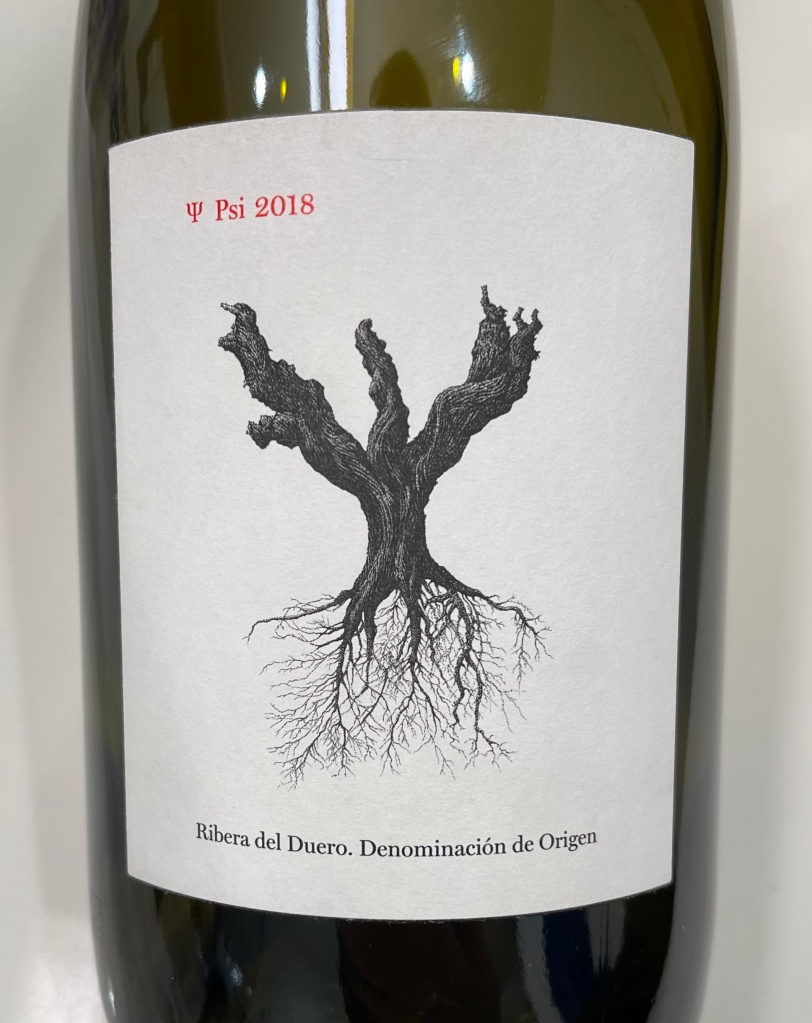
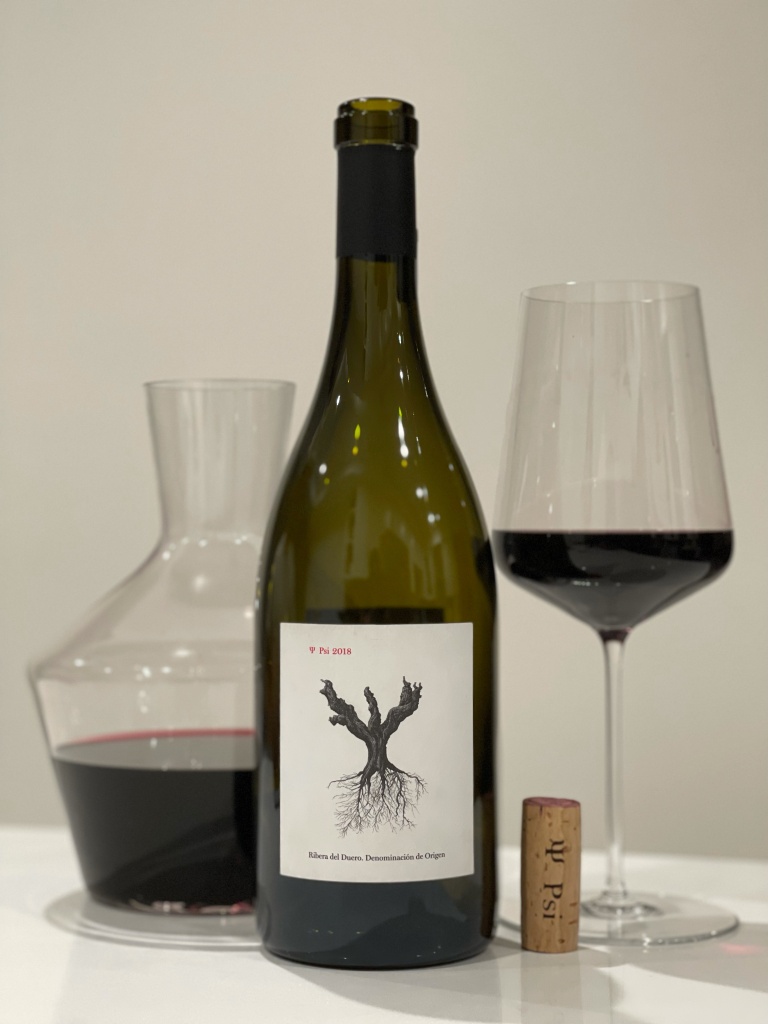
Today’s Wine: 2018 Psi Ribera del Duero

86% Tempranillo, 12% Garnacha, 2% other local varieties; 14.5% ABV

The 2018 Psi is deep ruby in color and entirely opaque. I decanted this for about two hours due to its youth, and drank it over the following hour-plus. The aromas are of medium (+) intensity, and the nose showcases aromas of black cherry, fig, anise, tobacco, smoked meat, scorched earth, gravel, grilled herbs, cedar, and chocolate. Meanwhile the flavors are also of medium (+) intensity, with the palate displaying notes of black cherry, stewed black plum, fig, blackberry, black licorice, tobacco, crushed rock, baking spice, and cedar. This dry red is full-bodied with high acidity, high tannins, high alcohol, and a long finish. There is already great balance here and this bodes well for the long haul as well given the structure.

Price: $32. This offers great value in my opinion, particularly given you can find it at some stores for closer to $25 and to me it drinks closer to a $40-50 bottle. The quality is no-doubt incredibly high and I was blown away by how complex this is for such a young age. Definitely decant for a while if you open this now.

Crisp and Incredibly Fun Austrian Amber Wine

Today’s Story: Weingut Werlitsch

Weingut Werlitsch is a relatively small family-owned and operated wine estate and farm located in southern Styria in Austria. Viticulture and winemaking are spearheaded by Ewald Tscheppe, who took over this family property at the age of 26. Though the Tscheppe family had been involved in winemaking and farming for generations, Ewald is part of a newer generation making exciting, complex, and long-lived wines while advocating for biodynamic viticulture and minimally invasive winemaking. The estate consists of about 18 hectares (44 acres) with roughly 12.5 hectares (31 acres) planted to vineyards and the balance dedicated to the winery, forests, pastures, and gardens. Weingut Werlitsch is certified biodynamic, and practically all of the vineyard work is done by hand thanks to the very steep slopes that make up the property. The vineyards are planted predominantly to Sauvignon Blanc and Morillon (a biotype of Chardonnay), though Ewald also grows Welschriesling. All fruit is hand-harvested, experiences slow pressing, and goes through fermentation only with native yeasts. Élevage is in large barrels and Austrian foudres, and the wines age typically for a minimum of 18 months but may see as long as 36 months. Bottling is accomplished with the wines unfiltered, and no SO2 is added unless absolutely necessary.

I recently reviewed two other bottlings from Weingut Werlitsch, first the 2017 Glück which is similar in profile to the wine I’m reviewing today and then the 2017 Ex Vero I.

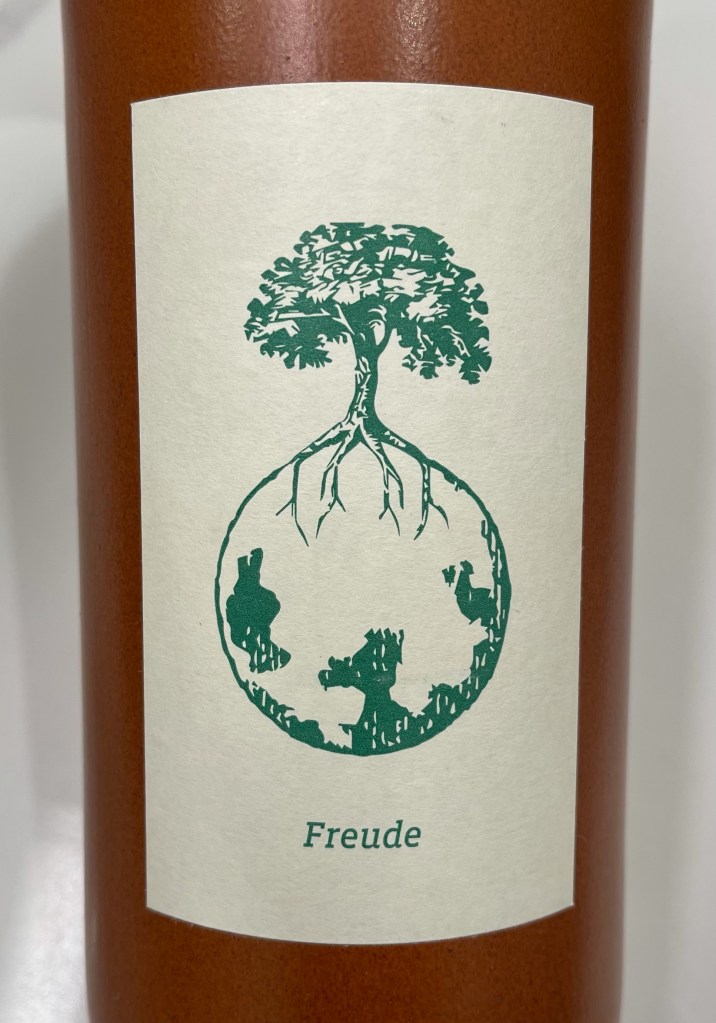
Today’s Wine: 2017 Freude

70% Sauvignon Blanc, 30% Chardonnay; 12.5% ABV

The 2017 Freude is pale to medium amber in color and slightly hazy. Given some time to warm up from cellar temperature and breathe, this blossoms into a gorgeous and complex wine. The aromas are of pronounced intensity, and the nose showcases aromas of orange marmalade, dried apricot, dried orange peel, honeysuckle, oregano, wet slate, brine, slightly under-baked bread, honey, and toasted almond. Meanwhile the flavors are also of pronounced intensity and the palate displays notes of peach, mandarin orange, dried apricot, marzipan, dill, chamomile, honey, chalk, toasted almond, and unsweetened vanilla yogurt. This dry amber wine is medium-bodied with medium (+) acidity, medium tannins, medium alcohol, and a long finish. Absolutely outstanding.

Price: $55. I know this is not an inexpensive bottle, particularly for an amber/orange wine, though I think this offers tremendous value. Not only is this incredibly complex, well-balanced, and of extreme quality, it’s a very fun wine and I prefer this to the Glück I had recently.

Affordable but High Quality Madeira

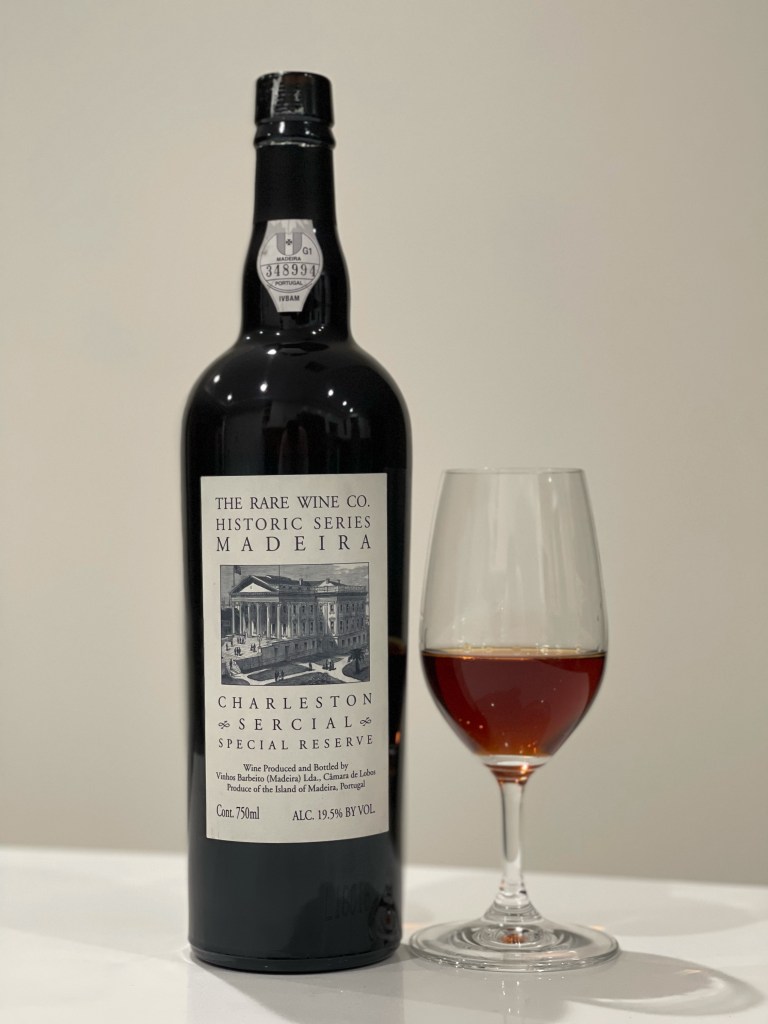
Today’s Story: The Rare Wine Co. Historic Series Madeira

The Rare Wine Co. Historic Series Madeira is a project launched in 1998 by Ricardo Freitas (owner of Madeira producer Vinhos Barbeito) and Mannie Berk (owner of The Rare Wine Company). The project was launched out of a mutual appreciation and love of Madeira, a wine that was America’s most highly sought-after during the 18th and 19th centuries before falling into obscurity. With a core portfolio of wines names after American cities where Madeira was most-prized, the Historic Series Madeira bottlings are meant to capture the unique style of each place. These include the Baltimore Rainwater Special Reserve, Charleston Sercial Special Reserve, Savannah Verdelho Special Reserve, Boston Bual Special Reserve, and New York Malmsey Special Reserve which showcase the tendency for drier Madeira in the southern states and sweeter Madeira in the northern states. In addition to this core portfolio, the Historic Series Madeira also includes limited releases named for Thomas Jefferson, George Washington, James Madison, and the city of New Orleans. All wines are blended with Madeira ranging from 10 to 60 years old, and they are meant to be affordable bottlings to re-introduce this great wine to wider groups of consumers.

Today’s Wine: NV Charleston Sercial Special Reserve Madeira

100% Sercial; 19.5% ABV

The NV Charleston Sercial Special Reserve is pale tawny in color. The aromas are of pronounced intensity, and the rather complex nose displays notes of dried red apple, orange peel, dried apricot, toffee, caramel, honey, hazelnut, walnut, and saline. Meanwhile the flavors are also of pronounced intensity, with the palate showcasing notes of fig, charred lemon, orange peel, dried apricot, honey, caramel, nutmeg, and toasted almond. This off-dry Madeira is light- to medium-bodied with mouthwatering medium (+) acidity, low tannins, high alcohol, and a medium (+) length finish.

Price: $50. I think this is a solid value for Madeira, and I’ve found that to generally be the case with the Rare Wine Co. Madeira bottlings I’ve tried. This is a very good representation of Sercial Madeira, and it offers very solid complexity, balance, and length.

Top-Notch and Beautifully-Aged New Zealand Syrah

Today’s Story: Bilancia

Bilancia is a small winery and estate established by Lorraine Leheny and Warren Gibson in 1997 in Hawke’s Bay, New Zealand. Lorraine and Warren are both winemakers by trade and studied at Roseworthy Agricultural College in South Australia, ultimately making wines in Australia, Hungary, Italy, California, France, and Portugal between the two of them. Bilancia’s focal point is a 6 hectare (15 acre) vineyard known as La Collina, and it is planted to Syrah, Viognier, Chardonnay, and a small amount of Gewürztraminer. Bilancia also sources Pinot Gris from Black Bridge Estate and other high-quality fruit from several renowned Hawke’s Bay vineyards.

Today’s Wine: 2007 La Collina Syrah

100% Syrah; 13.5% ABV

The 2007 La Collina Syrah is deep garnet in color but it’s still holding onto some deep ruby hues as well. The aromas are of medium intensity, and the nose showcases notes of blueberry, blackberry, anise, forest floor, truffle, milk chocolate, and dried green herbs. Meanwhile the flavors are also of medium intensity and the palate displays notes of blueberry, dried plum, sweet tobacco, earthy mushroom, cracked green peppercorn, chocolate, and mild spice. This dry red is medium-bodied with medium acidity, medium (-) tannins, medium alcohol, and a long finish. The tertiary characteristics are certainly pronounced in this beautifully-aged Syrah, however the fruit is still very much alive and well.

Price: $85. Given the age on this and the rarity of the wine, I think this is very fairly priced. This is drinking beautifully right now and I would argue has a few years left, but the balance, purity, and length of the wine all speak to the high quality.

Beautifully Pure Lodi Zinfandel

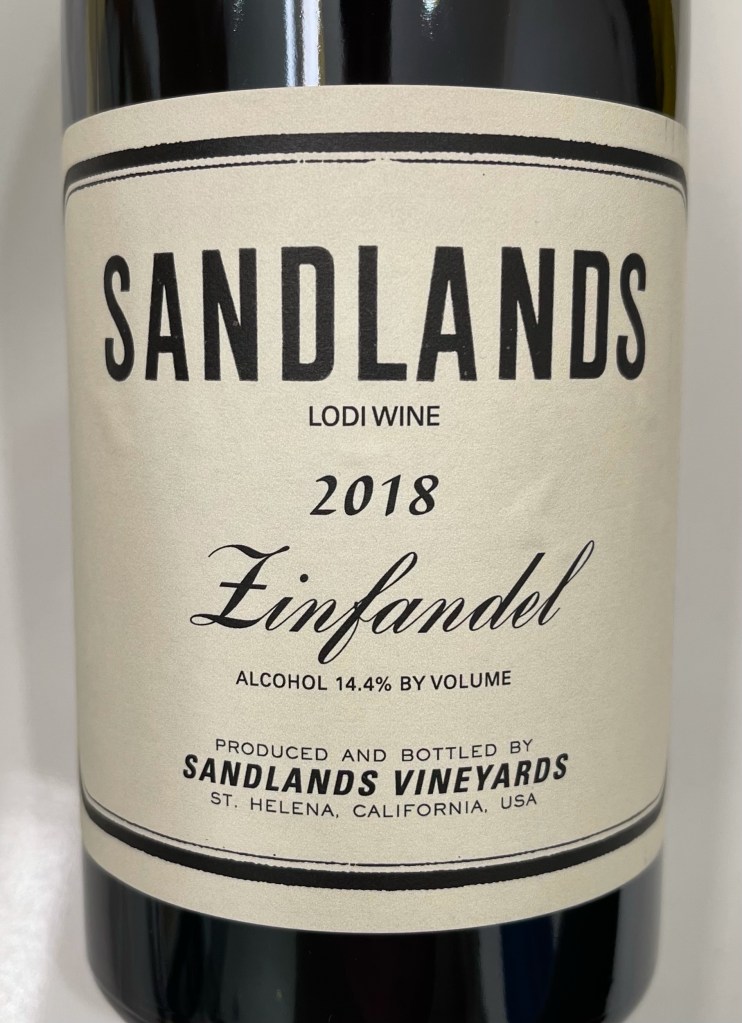
Today’s Story: Sandlands Vineyards

Sandlands Vineyards is a small family-owned and operated passion project of Tegan and Olivia Passalacqua established in 2010. Tegan, a winemaker with a proven track record of crafting fantastic old vine Zinfandel at Turley Wine Cellars, branched out into this side project with a focus on ancient and “forgotten” varieties. In the far reaches of California winegrowing in Lodi, Contra Costa County, Santa Lucia Highlands, Amador County, and the more familiar Sonoma Coast, Tegan sources Chenin Blanc, Cinsault, Trousseau, Carignane, Mataro, Syrah, Zinfandel, and other varieties from vines that are at times more than 100 years old. Though these varieties and the vineyards he sources from have been farmed for decades and generations, they oftentimes lay outside of the “norm” for California viticulture and are even mostly planted in decomposed granite (i.e. sand). What’s more, the vineyards Tegan works with are typically head-trained, dry-farmed, and own rooted. Tegan crafts these wines in a traditional and minimally invasive manner, allowing the unique terroir and vine to shine through in each bottling which results in lower alcohol, easy drinking, but complex wines. Production is miniscule and quantities are quoted by the barrel, so these can be hard to find and the mailing list is the easiest way.

It seems Sandlands is becoming somewhat of a staple for me, as I previously reviewed the 2018 Lodi Red Table Wine and 2018 Santa Lucia Highlands Syrah. I also plan to review the 2017 Chenin Blanc soon.

Today’s Wine: 2018 Lodi Zinfandel

100% Zinfandel; 14.4% ABV

The 2018 Lodi Zinfandel is medium ruby in color. This was a late-night Coravin pour, so I simply let it open up in the glass. The aromas are of pronounced intensity, and the nose showcases aromas of blueberry, blackberry compote, plum, muddled strawberry, sweet tobacco, and cinnamon. Meanwhile the flavors are also of pronounced intensity, with the palate displaying notes of blackberry, black cherry, blueberry, black raspberry, sweet tobacco, mild green herbs, and a touch of baking spice. This dry red is medium-bodied with medium acidity, medium tannins, high alcohol, and a medium (+) finish. There is remarkable balance in this wine for how young it is, and in my opinion this is one of the best expressions of Zinfandel that I’ve tasted.

Price: $50 (I paid $40). I think this offers very solid value, particularly for how pure and true to variety and terroir it is. I don’t drink a ton of Zinfandel, but when I do wines like this are exactly what I’m looking for.

High Quality and Low Production Sonoma Cab

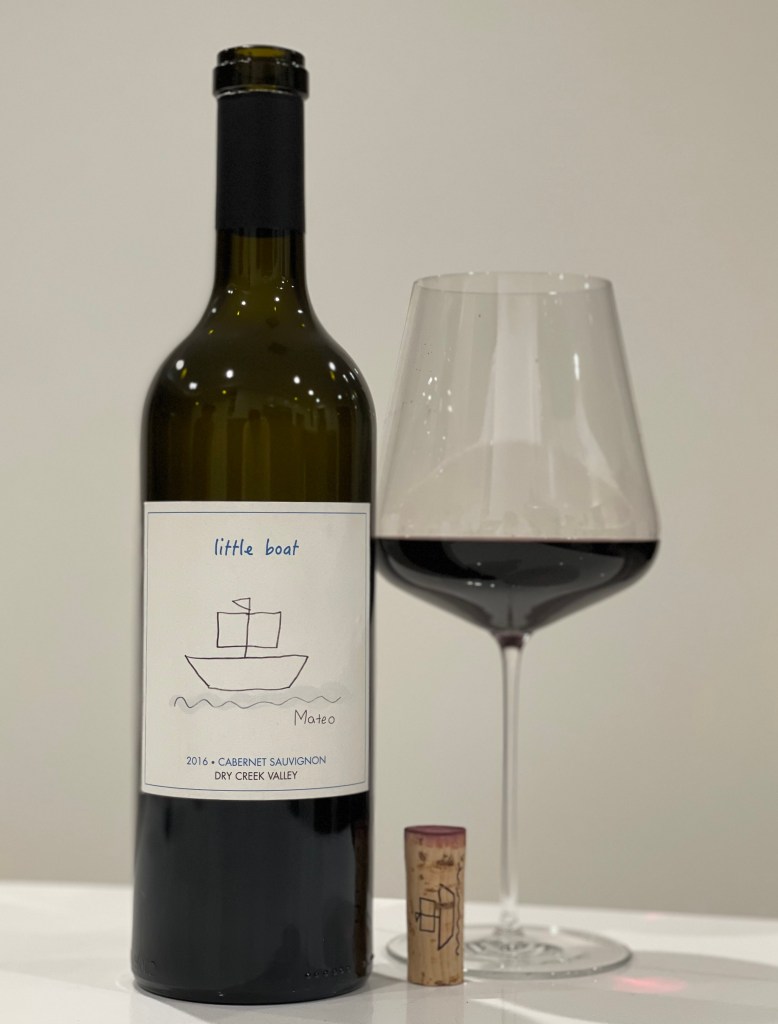
Today’s Story: Little Boat

Little Boat is a very small winery in Sonoma, California, however there isn’t much information about them that I could find. They did come onto my radar last year though, when I happened to meet proprietor José Ignacio Cuenca at a Los Angeles restaurant and we struck up a friendly conversation and discussed his wines. I also had the pleasure of meeting his son Mateo, who created the artwork on the Little Boat labels. Little Boat is a group effort, and José works with winegrower Brad Alper, winemaker William Knuttel, Mike Miller, and the Treyzon family. They also receive help from sommeliers Harley Carbery, Phillip Dunn, Lucas Payá, and Robert Smith MS. Little Boat produces a range of wines including most notably a Russian River Valley Chardonnay, a Russian River Valley Pinot Noir, and a Dry Creek Valley Cabernet Sauvignon. There is also a rosé and very limited quantities of a reserve Pinot Noir. Placement of these wines is highly selective, and they are generally found in high-end hotels and restaurants or highly curated and boutique wine stores.

I very recently wrote about the 2018 Little Boat Pinot Noir, so please feel free to check out those tasting notes if you haven’t already!

Today’s Wine: 2016 Cabernet Sauvignon

100% Cabernet Sauvignon; 14.5% ABV

The 2016 Cabernet Sauvignon is deep ruby in color. I let this open up for about an hour, though for being so young it was fairly friendly right out of the gates. The aromas are of pronounced intensity, with the nose showcasing notes of blackberry, redcurrant, red plum, sweet tobacco, dried earth, dried green herbs, chocolate, vanilla, and cedar. There’s some heat there too from the alcohol. Meanwhile the flavors are also of pronounced intensity, and the palate displays notes of redcurrant, black cherry, black raspberry, blueberry, tobacco, coffee grounds, milk chocolate, vanilla, and baking spice. This dry red is full-bodied with medium (+) acidity, high tannins, high alcohol, and a medium (+) finish.

Price: $40. This offers very solid value, though for me it fits into the camp of high-quality people pleaser. The fruit is slightly jammy, though there is some complexity here that’s intriguing. You can certainly notice the oak as well, so while not my preferred style I think many consumers would enjoy this.

Tasty New Bottling From Ridge

Today’s Story: Ridge Vineyards

Ridge Vineyards, a historic California winery, found its beginnings near the top of Monte Bello Ridge in 1885. Osea Perrone, an Italian doctor in San Francisco, bought 180 acres and constructed the winery into three levels of the mountain using native limestone. He produced the first vintage under the Monte Bello Winery label in 1892, however later as Prohibition crippled the wine industry the facilities were abandoned.

Once Prohibition ended (thankfully), a man by the name of William Short purchased the winery and replanted several parcels to Cabernet Sauvignon in the late 1940s. The breakthrough came, however, in 1959 when the winery changed hands again to Dave Bennion, Hew Crane, Charlie Rosen, and Howard Ziedler and the partnership produced a quarter-barrel of “Estate” Cabernet. One of the greatest Cali Cabs at the time, this Monte Bello wine inspired Dave Bennion to leave Stanford Research Institute (where all partners worked) to focus on winemaking full-time.

As winemaking ramped up at Ridge, I would be remiss not to mention their Zinfandel, first made in 1964 from vines further down the mountain. In 1966, they produced their first Geyserville Zin that many of you should be able to find at your local wine store. By 1968, the winery was approaching 3,000 cases of annual production and had grown from 15 to 45 acres following an acquisition of the original Monte Bello terraces. Ridge demonstrated a quality and character in the upper echelon of California wines, with their 1971 Cab ultimately entered into the Paris Tasting of 1976.

As further background on Ridge, I’d like the opportunity to discuss their winemaking practices as well. Calling their style “pre-industrial,” Ridge shies away from chemicals and additives prevalent in the industry nowadays. They ferment their wines only with natural yeast, do not use commercial enzymes or nutrients to affect color, flavor, or tannin in the wines, and are certified organic. Further, one of my favorite features of a bottle of Ridge is the back label that tells the winemaking process and lists ingredients, which is not common.

Ridge is somewhat of a staple producer for me, so I’ve reviewed a number of their wines previously. If you missed my prior notes and are interested in exploring my thoughts on other bottlings in the portfolio, feel free to check out the 2016 Estate Chardonnay, 2018 Adelaida Vineyard Roussanne, 2012 Lytton Springs, 2012 Geyserville Vineyard, and 2015 Syrah/Grenache/Mataro.

Today’s Wine: 2018 Grenache Blanc

75% Grenache Blanc, 15% Picpoul, 10% Roussanne; 14% ABV

The 2018 Grenache Blanc is pale yellow in color. This is still rather young, but given about 30 minutes to open up in the glass it blossoms. The aromas are of medium intensity, with the nose showcasing notes of yellow apple, golden pear, honeysuckle, almond, a hint of vanilla, and a touch of buttercream. Meanwhile the flavors are also of medium intensity and the palate displays notes of lemon zest, ripe pear, white peach, saline mineral, mild toffee, honey, and toasted bread. This dry white is medium-bodied with medium (+) acidity, high alcohol, and a medium (+) length finish. Fairly big of a Grenache Blanc, but this is downright delicious.

Price: $30. I think this offers very solid value, which seems to be the case with a number of wines from Ridge. This is their first vintage of the Grenache Blanc bottling, and I will certainly revisit it in a couple more years and continue to check these out in future vintages.

From Grapes and Grapes Alone

Today’s Story: Anders Frederik Steen

Anders Frederik Steen, a chef and sommelier by trade from Denmark, started making wines in 2013 and is based in the village of Valvignères in the Ardèche of Southern France. Centered in a belief that wine should be made with grapes and grapes alone, Anders produces “one-off” wines each vintage that will vary in blend, style, and name simply because he makes wines in an incredibly natural style without following any “recipe.” What’s more, he never thinks ahead to what his wines will or should be like until actually tasting the fruit at harvest. Anders sources grapes from his friends Jocelyne & Gérald Oustric, who own a farm and organically-farmed vineyards planted in clay and limestone soils. Reds are either destemmed by hand or pressed directly, while the whites are pressed directly in an old wooden press. Fermentation occurs at times by single variety and at others with co-fermentation of several varieties, though the constant that remains is fermentation is spontaneous with only native yeasts in open-top containers under the sky. Anders is as hands-off as possible throughout the entire winemaking and aging processes, and all wines are bottled unfined, unfiltered, and with zero additions.

To explore Anders’ range of wines and their unique names, check out his website here.

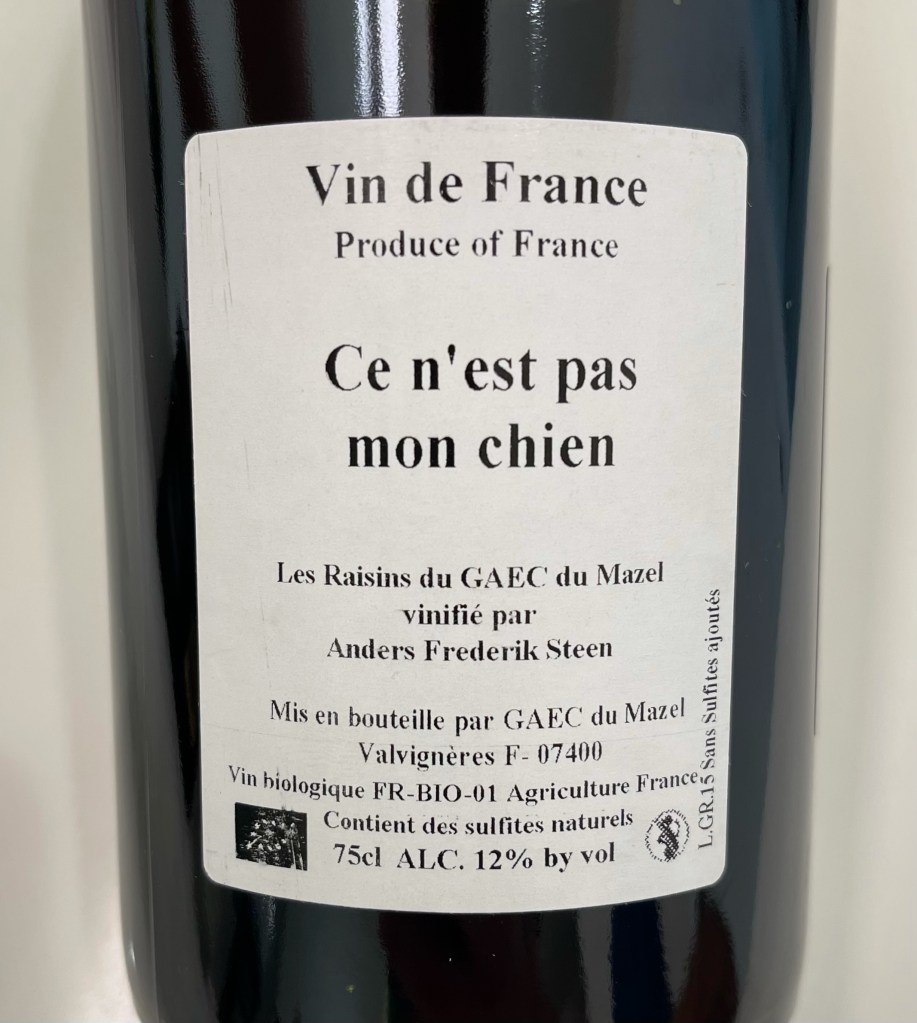
Today’s Wine: 2015 Ce n’est pas mon chien

100% Grenache; 12% ABV

The 2015 Ce n’est pas mon chien (It’s not my dog) is pale ruby in color. This seemed fairly ready to go out of the bottle, so I elected to let this open up in the glass without decanting. The aromas are of medium (+) intensity, with the nose showcasing notes of cherry, strawberry, black raspberry, red rose, smoked game, scorched earth, mushroom, wet gravel, and charred green herbs. Meanwhile the flavors are of medium intensity and the palate displays notes of tart red cherry, stewed strawberry, red plum, mild tobacco, forest floor, dried green herbs, and earthy mushroom. There’s an incredibly mineral-driven backbone throughout the wine (both on the nose and palate) as well. This dry red is light- to medium-bodied with medium (+) acidity, medium tannins, medium alcohol, and a long finish.

Price: $35. This is a very solid value, but it’s not for the faint of heart. If you like mineral and terroir-driven wines (particularly ones that show a variety in a way you’re not used to) this is for you. If you like fruity, easy-drinking modern wines…look elsewhere.

Delicate and Floral Rhône Blend From Paso Robles

Today’s Story: Booker Vineyard

Booker Vineyard as it exists today stems from the purchase of 100 acres by Eric and Lisa Jensen in 2001. The history of this land, however, traces back to the late 1920s when Claude and Dick Booker, two orphaned brothers, purchased land on Paso’s Westside that amassed to more than 1,200 acres by the turn of the century. The Bookers were some of Paso’s best-known residents for their farming knowledge and philanthropy, with their largest gift being 100% of their estate left to charity when Dick died in 1990 and Claude died in 2000.

Now back to 2001 with Eric and Lisa, the couple intended to use their new land to grow grapes for some of the best wineries in the Paso Robles area. Though they achieved this goal selling grapes to Saxum for five years and L’Aventure for two years, Eric and Lisa wanted more out of their land and decided to bottle their own wine beginning with the 2005 vintage. A unique and more personalized expression of their land, Booker wines are made by Eric Jensen himself.

Though Booker did not receive organic certification until April 2021 and they are not certified biodynamic, their farming practices have always pulled inspiration from both philosophies. The Jensens have come to realize that biodynamic farming practices help maintain the interconnected lifestyle and cycles of all entities in the vineyards, providing a boost to soil and vine health that becomes apparent in their wines. Furthermore, the vines are planted in rather high density so each plant can focus its energy on few clusters that create concentrated wines rather than an abundance of fruit. This is also important because Booker’s vineyards do not get much water.

Much like the mentality in the vineyards, Booker makes their wines in minimalist fashion. Eric strives to interfere as little as possible, with his red wine fermentations started using pump-overs and moving to punch-downs in most cases once fermentation starts. The wines are not racked until bottling and these wines are typically aged for 18 months. With his white wines, Eric doesn’t stick to a particular formula or practice and tries to make wines that stand out within the region. For more, check out the Booker website here where much of the above information finds its source.

To explore another bottling from Booker after today’s tasting notes, I previously reviewed the 2016 Vertigo GSM Red Blend.

Today’s Wine: 2017 White

49% Roussanne, 30% Viognier, 12% Chardonnay, 4% Clairette Blanc, 3% Grenache Blanc, 2% Marsanne; 14.8% ABV

The 2017 White is pale to medium gold in color. I let this open up in the glass for about 30 minutes or so. The aromas are of medium intensity, and the very delicate and floral nose showcases aromas of dried pineapple, white peach, mango, white lily, chamomile, brioche, and wet river stone. The flavors are also of medium intensity, and on the palate I get notes of pineapple, Meyer lemon, tropical citrus, orange peel, beeswax, chamomile, dried wild herbs, and stony mineral. This dry white blend is medium- to full-bodied with an oily mouthfeel, medium (+) acidity, high alcohol, and a medium (+) length finish.

Price: $50. I think this is a solid price-point for this wine, particularly for how true to variety it is given the blend. The ABV is certainly higher than I prefer in my wines, but it doesn’t stick out at all and the balance here is great. While there may be better “values,” this is a delicious wine from a great producer.

Small Production Pinot Noir in a People-Pleasing Style

Today’s Story: Little Boat

Little Boat is a very small winery in Sonoma, California, however there isn’t much information about them that I could find. They did come onto my radar last year though, when I happened to meet proprietor José Ignacio Cuenca at a Los Angeles restaurant and we struck up a friendly conversation and discussed his wines. I also had the pleasure of meeting his son Mateo, who created the artwork on the Little Boat labels. Little Boat is a group effort, and José works with winegrower Brad Alper, winemaker William Knuttel, Mike Miller, and the Treyzon family. They also receive help from sommeliers Harley Carbery, Phillip Dunn, Lucas Payá, and Robert Smith MS. Little Boat produces a range of wines including most notably a Russian River Valley Chardonnay, a Russian River Valley Pinot Noir, and a Dry Creek Valley Cabernet Sauvignon. There is also a rosé and very limited quantities of a reserve Pinot Noir. Placement of these wines is highly selective, and they are generally found in high-end hotels and restaurants or highly curated and boutique wine stores.

Today’s Wine: 2018 Pinot Noir

100% Pinot Noir; 14.5% ABV

The 2018 Pinot Noir is medium ruby in color. Straight out of the bottle, I wasn’t getting much on this besides some heat from the alcohol so I let this open up in the glass for about 45 minutes to an hour. The aromas are of medium intensity, with the nose showcasing notes of black cherry, plum, licorice, leather, baking spice, vanilla, and toasted oak. The heat never really blows off. Meanwhile the flavors are also of medium intensity, and the palate displays notes of strawberry, black cherry, red plum, leather, green herbs, chocolate, and baking spice. Alcoholic heat carries over to the palate as well. This dry red is medium-bodied with medium (+) acidity, medium (-) tannins, high alcohol, and a medium length finish. While not my preferred style at this stage, hopefully it becomes better integrated and more complex with a few more years in the bottle.

Price: $36. At this price-point I think the wine offers solid value but it still needs some time to come together in the bottle. For me, even though this is young I find it somewhat jammy and it seems heavy-handed in the winemaking process. Personally I prefer very terroir-driven Pinot Noir made in a minimally invasive style, though I think this wine could have broad appeal. The alcohol is a bit too high for me as well, so I’ll be looking for it to integrate.