Legendary Alsatian Riesling With a Long Life Ahead

Today’s Story: Maison Trimbach

Maison Trimbach is one of the most notable winemakers in Alsace, established in 1626 by Jean Trimbach. Today Trimbach is under the guidance of Hubert Trimbach and his nephews Jean and Pierre, rounding out 12 generations of family ownership and shared knowledge. Pierre’s daughter Anne, the oldest of the 13th generation, also now works in the family business. Though Trimbach’s world recognition greatly expanded in 1898 when Frédéric Emile Trimbach earned the highest marks at the International Wine Fair in Brussels, Trimbach is largely famous for the legendary Clos Sainte Hune vineyard. Located in the Rosacker Grand Cru vineyard, Clos Ste Hune has belonged to the Trimbach family for over two centuries and produces some of the most exquisite Alsatian Riesling in existence.

The Trimbach estate consists of 40 hectares (about 100 acres) encompassing 50 parcels across six villages that include Bergheim, Ribeauvillé, and Hunawihr. Trimbach also operates as a négociant business to produce additional non-estate wines. All of Trimbach’s winegrowing practices are sustainable and they try to preserve the natural environment of the vineyards. Trimbach practices close pruning and soil tilling while encouraging moderate yields and rigorous fruit selection come harvest which is accomplished entirely by hand. When the grapes are gently crushed at the winery, juices flow via gravity and Pierre vinifies and matures the wines adhering to centuries of tradition with both finesse and focus on the terroir. After being bottled each spring, the wines are released by maturity with some spending 5 to 7 years in the cellars to achieve balance before release.

I previously wrote about Trimbach when I reviewed their 2016 Gewurztraminer, so feel free to check that out if you missed it!

Today’s Wine: 2014 Clos Ste Hune

100% Riesling; 14.5% ABV

The 2014 Clos Ste Hune is pale yellow in color with greenish hints. Aromas are of pronounced intensity and laser-focused, with the nose showcasing lemon, crisp green apple, tropical citrus, white peach, honeysuckle, petrol, a hint of smoke, and crushed rock mineral. Meanwhile flavors on the palate are also of pronounced intensity, displaying notes of green apple, lemon zest, pineapple, white peach, white florals, petrol, mild smoke, and saline mineral. This Riesling is bone dry and full-bodied with razor-sharp high acidity, high alcohol, and a long finish. Outstanding with a long, long life ahead but this is already showing incredible precision and balance.

Price: $300. This is another wine with a value proposition that’s difficult to discuss, simply because there are better “values” out there for significantly less money. That being said though, these wines are truly legendary and perhaps the greatest Riesling the Alsace region has to offer. It’s certainly the best Riesling I’ve had to date, by a mile.

Ultimate Napa Valley Cult Cabernet

Today’s Story: Harlan Estate

Harlan Estate is a highly regarded “cult” Napa Valley winery, established in 1984 by developer H. William Harlan in the western hills of Oakville. The Harlan property consists of 240 acres, about 40 of which are cleared for viticulture activity and planted to 70% Cabernet Sauvignon, 20% Merlot, 8% Cabernet Franc, and 2% Petit Verdot. Harlan’s first commercial vintage is the 1990, which was released in 1996, and over time the estate has commanded incredible critical praise and accompanying price action in becoming what many people refer to as the ultimate cult Napa wine. A staple in the winemaking process at Harlan is rigorous selection of fruit both in the vineyards and the winery, as only the highest quality fruit is accepted, triple sorted, and destemmed. Fermentations occur in open top vats with indigenous yeasts, then the wines feed into the barrel room for aging in French oak barrels for 24-36 months depending on vintage. Production is fairly limited, with 1,200 to about 2,000 cases produced of the flagship Harlan Estate bottling and about 900 cases produced of the estate’s second wine called The Maiden.

Today’s Wine: 2015 Harlan Estate

Proprietary blend, but I believe about 85% Cabernet Sauvignon with the balance Merlot, Cabernet Franc, and Petit Verdot; 14.8% ABV

The 2015 Harlan Estate is deep ruby in color. This powerful and opulent red needs at least 3 hours to open up in the decanter at this stage, but one is highly rewarded with the air time. Aromas are of pronounced intensity, with the remarkably complex nose showcasing cassis, blackberry, blueberry, violet, licorice, cigar box, pencil shavings, graphite, scorched earth, coffee grounds, vanilla, caramel, and clove. Meanwhile the palate also offers flavors of pronounced intensity, displaying notes of blackcurrant, blackberry, blueberry, anise, violet, tobacco, graphite, mocha, chocolate, and clove. This dry red is full-bodied with medium (+) acidity, high but velvety tannins, high alcohol, and a long finish.

Price: $1,350. The value conversation kind of goes out the window at this price-point, and all I can really say is this is a gorgeous cult Napa Cab that hits on all the quality measures. The balance at such a young age is already near perfect, the length of the finish hits that one minute mark, and the intensity and complexity speak for themselves. Glorious wine, but it really needs the air or cellar time.

Ole Reliable From Reims

Today’s Story: Krug

Krug is a highly regarded Champagne house established in Reims, France in 1843 by Joseph Krug. Krug has maintained a reputation throughout its entire existence of producing incredibly high quality wines, being unique to this day as the first and only house to create only prestige Champagnes every year since its establishment. Krug’s most widely produced Champagne, the Grande Cuvée, is the house’s most popular and a blending of more than 120 wines to craft the best expression of time and place each vintage. The house produces several other wines, including a non-vintage Rosé, vintage Krug, a vintage single-vineyard Blanc de Blanc called Clos du Mesnil, a vintage single-vineyard Blanc de Noir called Clos d’Ambonnay, and Krug Collection back-vintage wines. Though the house is now owned with a majority by LVMH, the Krug family remains actively involved with sixth-generation Olivier Krug today.

Today’s Wine: NV Krug Grande Cuvée 168ème Édition

52% Pinot Noir, 35% Chardonnay, 13% Meunier; 12.5% ABV

The NV Grande Cuvée 168ème Édition is pale gold in color with lively bubbles. The aromas are of medium intensity, showcasing yellow apple, pear, white blossom, brioche, slight reduction, and chalky mineral. Meanwhile the palate is also of medium intensity, displaying notes of crisp green apple, white peach, white florals, almond, brioche, and honey. This dry Champagne is medium-bodied with high acidity, medium alcohol, and a medium (+) length finish.

Price: $170. I wouldn’t go so far as to say this is a great value, but that’s simply because there are so many grower Champagne’s out there that come in at half or less than half the price and drink just as well. Krug is, however, probably my favorite Champagne in this price range and this 168ème Édition is a great bottling based on the 2012 vintage. Krug is consistently exceptional and every Champagne lover needs to try some at least once.

Precise and Linear 1er Cru Chablis

Today’s Story: Louis Jadot

Louis Jadot is a very large and prominent wine producer in the Burgundy wine region of France, established in Beaune in 1859 by Louis Henri Denis Jadot. Though the house owns fairly extensive acreage of their own vineyards, they also purchase high quality fruit throughout Burgundy and offer an incredibly extensive portfolio of wines ranging from Bourgogne and Beaujolais through to some of the great 1er Cru and Grand Cru wines across the Côte d’Or and up to Chablis. Though production is high with both the domaine holdings and négociant business, Louis Jadot is an important example that quality does not have to suffer. The winemaking team blends tradition with technology in the cellar, producing wines with as little intervention as possible given their scale and using restrained amounts of new oak depending on vintage conditions.

Today’s Wine: 2017 Chablis 1er Cru Fourchaume

100% Chardonnay; 13% ABV

The 2017 Chablis 1er Cru Fourchaume is pale gold in color. Given some time to open up in the glass, this wine blossoms into beautifully expressive aromas with pronounced intensity. The nose showcases aromas of crisp underripe pear, lemon, white peach, white florals, flint, gunsmoke, and wet river stone. Meanwhile the palate is also of pronounced intensity, displaying notes of tart green apple, lemon zest, white peach, honeysuckle, flint, a hint of smoke, dill, and saline mineral. This dry white is medium-bodied with racy high acidity, medium alcohol, and a long finish.

Price: $50. I think this is very, very good value. The intensity and precision in this wine are very impressive, while the flavor profile and complexity at a young age promote promise for the future with the coupled high acidity. Many people say Fourchaume is as close as you can get to a Grand Cru without being one, and it shows.

Shining Star in Tuscan Winemaking

Today’s Story: Bibi Graetz

Az. Agr. Bibi Graetz is a Tuscan wine producer located in the hills of Fiesole overlooking Florence, and it was established in 2000 by artist and winemaker Bibi Graetz. Bibi has quickly catapulted to near cult-status, producing exceptional wines from old vines using Sangiovese, Colorino, and Canaiolo for the reds and Ansonica and Vermentino for the whites. Bibi started off small, making wine from 5 acres of vineyards on his parents’ property around the medieval castle, Castello di Vincigliata, they call home. He also sources fruit from vineyards around Tuscany, putting an emphasis on old vines for their added complexity and concentration. In the Testamatta I am reviewing today, for example, vine age is 35-50 years and for his Colore bottling the vine age is over 70 years. These vineyards total around 75 acres across 20 small plots, which are all farmed organically. Bibi does not adhere to DOC or DOCG regulations, instead practicing an “artisanal approach” to winemaking (he has no formal training) so his wines are labelled as Indicazione Geografica Tipica (IGT).

Today’s Wine: 2016 Testamatta

100% Sangiovese; 13.5% ABV

The 2016 Testamatta is medium ruby in color. Given about 1-2 hours in the decanter, this blossoms into a beautifully expressive wine with aromas of pronounced intensity. The nose showcases black cherry, black raspberry, anise, lavender, tobacco, leather, scorched earth, black truffle, tomato leaf, clay, and mild baking spice. Meanwhile the palate is also of pronounced intensity with notes of red cherry, red plum, black raspberry, roasted tomato, tobacco, black tea, oregano, iron, and clove. This dry red is full-bodied with medium (+) acidity, high but refined tannins, medium alcohol, and a long, long finish. Outstanding wine that is already beautifully balanced and finessed with only promise for the future.

Price: $100 average (though I paid $70 and you can oftentimes find it for a similar price). This is a glorious Sangiovese, offering great balance, length, intensity, and complexity for the price. I’ve seen these prices creep up (and these wines get considerable attention from critics) however for now these remain a very strong addition to your cellar.

Refreshing Italian White for the Summer Months

Today’s Story: Feudi di San Gregorio

Feudi di San Gregorio is a fairly large winery established in 1986 in the village of Sorbo Serpico in Irpinia (Province of Avellino) of the Campania region of Southern Italy. Though Feudi di San Gregorio consists of about 300 hectares of vineyards and they produce roughly 3.5 million bottles of wine annually, the winery is known for their high quality and a dedication to native varieties such as Aglianico, Falanghina, Greco, and Fiano. Many of their vines are a century old (some even closer to 150 years old), providing Feudi di San Gregorio with unique holdings after many of their neighbors replanted to non-native varieties. This being said, they don’t entirely ignore non-native varieties and have a small percentage of their vines planted to Merlot. With all these factors in mind, Feudi di San Gregorio is often credited as a leading winery bringing glory to Campania with a marriage of tradition and modern winemaking.

I previously wrote about the Feudi di San Gregorio 2010 Pàtrimo, so feel free to check that out if Merlot is your thing!

Today’s Wine: 2016 Fiano di Avellino

100% Fiano; 13% ABV

The 2016 Fiano di Avellino is medium yellow in color with deep straw hues. Aromas are of medium intensity but beautifully perfumed, showcasing notes of lemon, pear skins, yellow apple, honeysuckle, beeswax, dried green herbs, and chalky mineral. Meanwhile the palate is also of medium intensity, with notes of lemon, pear, honeydew melon, nectarine, chamomile, flint, white pepper, and savory herbs. This dry white is light- to medium-bodied with medium (+) acidity, medium alcohol, and a long finish. This is a very enjoyable and refreshing wine.

Price: $22. Fiano is a variety that I need to explore further, though for the price-point here I think this offers pretty solid value. The quality is palpable and this wine is an absolute pleasure to drink, so I’ll be stocking up for the warmer weather.

Fun Sicilian Blend From a Rising Star

Today’s Story: Azienda Agricola Arianna Occhipinti

Azienda Agricola Arianna Occhipinti is a continuously rising star of a winery established by Arianna Occhipinti in the Vittoria region of southeastern Sicily in 2004. Though Arianna started making her own wines at the young age of 22, she first got into wine even younger at age 16 thanks to a visit to Vinitaly with her uncle Giusto Occhipinti of COS, another benchmark Sicilian wine producer. Today Arianna works with estate fruit, sourced from her 25 hectares of certified organic vineyards which are planted to about 50% Frappato, 35% Nero d’Avola, and 15% between the white varieties of Albanello and Zibibbo. Arianna never irrigates her vineyards or uses any chemicals, and since 2009 she transitioned to biodynamic viticulture. As far as philosophy goes, Arianna’s wines are meant to showcase the terroir of Vittoria, and they are made in as “natural” a way as possible. Vineyard work is very manual, all grape and wine movements use gravity, and the wines ferment with only indigenous yeasts in concrete tanks before aging in neutral oak. Arianna produces ten wines (including three single-vineyard bottlings called Vino di Contrada) and total production each vintage is around 10,000 cases.

To learn more or view the portfolio of Occhipinti wines in more depth, I recommend visiting the website here.

Today’s Wine: 2019 SP68 Rosso

70% Frappato, 30% Nero d’Avola; 12.5% ABV

The 2019 SP68 Rosso is medium ruby in color. Given about 30-45 minutes to open up in the glass, the nose offers up aromas of red cherry, dried strawberry, red rose, mild tobacco, gravel, dried garden herbs, and scorched earth with medium intensity. Meanwhile the flavors on the palate are also of medium intensity, showcasing notes of pomegranate, red plum, tart cherry, candied rose, eucalyptus, white pepper, and crushed rock minerality. This dry red is light- to medium-bodied with medium acidity, medium (-) tannins, medium alcohol, and a medium (+) length finish.

Price: $28. I think this offers pretty solid value for the price. Even though I would prefer a bit more intensity out of it, the balance, length, and complexity of the wine all shine and should only get better in another year or two. Very easy to drink, so the bottle didn’t last long.

Quintessential Northern Rhône Syrah

Today’s Story: Domaine Faury

Domaine Faury is a family-owned and operated Northern Rhône wine estate, established in 1979 by Philippe Faury. Though Philippe’s father, Jean, settled the family in the tiny hamlet of Ribaudy in the hills of Chavanay, his wine production was somewhat limited and often sold in bulk to locals alongside peaches, cherries, and apricots. When Philippe took over, however, he transitioned the estate to focus entirely on wine production and grew the 2.5 hectare holdings over time into the 17 hectares the Faury family owns today. In 2006, Philippe’s son Lionel took over management of the estate and the two work side-by-side crafting traditionally made and terroir-centric wines. Dedicated largely to Syrah with smaller plantings of Viognier, Marsanne, and Roussanne, Domaine Faury owns vineyards in the appellations of Côte-Rôtie, Condrieu, and Saint-Joseph as well as IGP Collines Rhodaniennes.

Lionel seeks to produce wines with a true sense of place while also showcasing the signature characteristics of each variety. Winemaking is therefore rather minimally invasive, starting with gentle crushing and temperature-controlled fermentations onto pigéage (punch downs) by foot rather than machine or tools. To preserve the more delicate and floral aromas of his wines while offering an accompanying freshness, Lionel eschews the overt use of new oak and instead opts for a combination of very large old barrels such as demi-muids and foudres. Attention to detail and an artisanal approach to winemaking is palpable in these wines, and production is capped at around 7,000 cases per vintage.

Today’s Wine: 2017 Côte-Rôtie Emporium

+/- 98% Syrah, +/- 2% Viognier; 13% ABV

The 2019 Côte Rôtie Emporium is medium purple in color. I decanted this for an hour and drank it over the following two hours, with it only becoming more impressively nuanced over time. The aromas are of pronounced intensity, showcasing notes of blueberry, black cherry, blackberry, violet, sweet tobacco, smoked game, crushed rock, graphite, black pepper, and roasted coffee. Meanwhile the palate is of medium (+) intensity, displaying flavors of brambly blackberry, blueberry, plum, black olive, blue and purple florals, charred green herbs, iron, a hint of smoke, and mild baking spice. This dry red is medium-bodied with medium (+) acidity, medium but refined and silky tannins, medium alcohol, and a long finish.

Price: $100. While this may not be the best “value” of Northern Rhône, I struggle to recall a wine I’ve had that has been this spot-on of a representation of the variety and the region. This is a gorgeous, gorgeous wine with elegance, finesse, and a magnificent perfume already at such a young age.

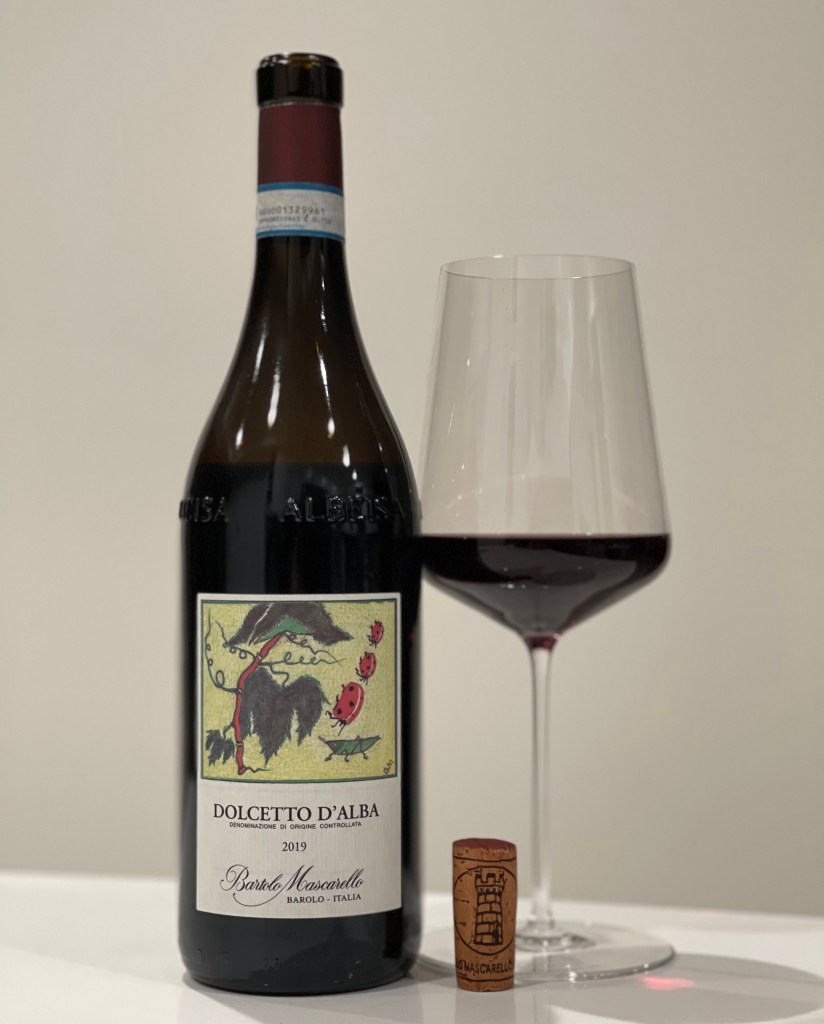
Traditional Dolcetto From a Piedmontese Legend

Today’s Story: Cantina Bartolo Mascarello

Cantina Bartolo Mascarello is a highly regarded wine producer located in the Piedmont region of northwestern Italy, and they are known for their traditionally-made Barolo. Though the Mascarello family traces their viticultural roots back to the 19th century, they typically sold grapes to the larger houses and did not bottle their own wines until Giulio Mascarello established his own cellar in 1918 after returning from World War I. Giulio learned winemaking from his father Bartolomeo, who was previously the cellar master at the Cantina Sociale di Barolo, and it was a rare feat at the time for Giulio to bottle his own wines. He did, however, sell a majority of his wines in demijohns as well to start.

By the 1930s, Giulio was purchasing prime vineyards in the crus of Cannubi, San Lorenzo, and Rué for blending into his signature single Barolo bottling. Giulio’s son Bartolo, for whom the estate is named after today, joined his father in 1945 after World War II and the two worked alongside one another until Giulio’s death in 1981. Though many producers during the 1960s and 1970s started bottling single cru Barolo, Bartolo remained steadfast to traditions in only bottling a blending of his vineyard sites. His reputation as a staunch traditionalist grew even more during the 1980s and 1990s, as critics and consumers forged an assault on traditional Barolo by favoring the bigger, bolder, and barrique-aged wines. Bartolo never wavered in his traditions, and passed this spirit onto his daughter Maria Teresa Mascarello who runs the estate today.

Bartolo Mascarello is a relatively small producer of Barolo, owning and farming 5 hectares of vineyards which results in about 1,250 cases of Barolo and an additional 1,250 cases of their other bottlings (Barbera, Dolcetto, and Langhe Nebbiolo) produced each vintage. Maria Teresa maintains holdings in the Cannubi, San Lorenzo, and Rué crus of the Barolo commune, as well as the Rocche di Annunziata cru in the commune of La Morra. All sites are farmed by hand without the use of chemical fertilizers or pesticides, and harvest is accomplished by hand as well. The Barolo goes through alcoholic fermentation in old cement vats without temperature control using indigenous yeasts, sees 30-50 day maceration, and then ages in large untoasted Slavonian oak botti for generally three years. Once the wine is bottled, it sits for one year prior to release. In addition to the very traditionally-made Barolo, Maria Teresa produces small amounts of Barbera, Dolcetto, and Langhe Nebbiolo as well.

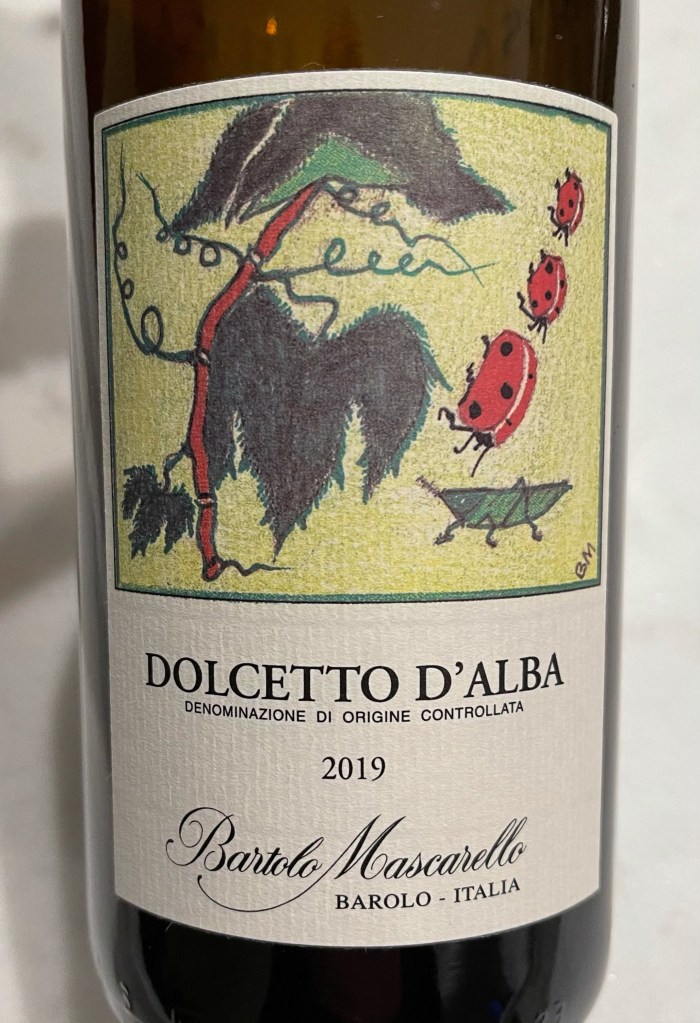
Today’s Wine: 2019 Dolcetto d’Alba

100% Dolcetto; 13.5% ABV

The 2019 Dolcetto d’Alba is medium purple in color with ruby hues. Medium intensity on the nose, offering up aromas of blackberry, black plum, blueberry, violet, leather, black pepper, and mocha. Meanwhile the flavors are also of medium intensity, with the palate showcasing notes of blackberry, black plum, black cherry, tobacco, black pepper, charred green herbs, and cocoa. This dry red is medium-bodied with medium acidity, light tannins, medium alcohol, and a medium length finish.

Price: $45 (I paid $35). I admittedly don’t drink really any Dolcetto, though from what I’ve read this seems like a very nice wine for the $35 I paid for it. I can tell the traditional winemaking and attention to detail are there, and this is simply a beautifully perfumed and easy-drinking wine.

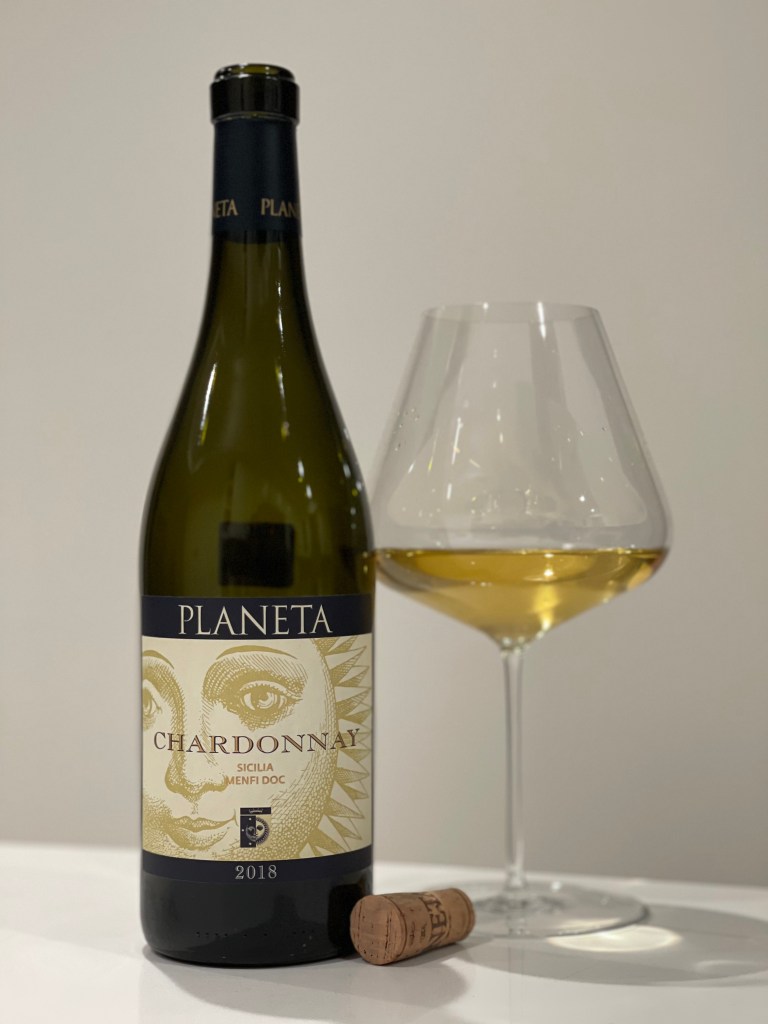
Beautiful Representation of Chardonnay From Sicily

Today’s Story: Planeta Winery

Planeta is a large, family-owned and operated Sicilian wine estate that actually consists of six separate estates spread across Sambuca di Sicilia, Menfi, Vittoria, Noto, Etna, and Capo Milazzo. Though the Planeta family has been involved in Sicilian agriculture and viticulture for five centuries and 17 generations, they built their first winery under the Planeta Winery label only in 1995. Cousins Alessio and Santi Planeta founded the venture with their uncle Diego Planeta, who was already a well-established and highly regarded individual in the Sicilian wine world (particularly for his time with the Settesoli wine cooperative). Planeta is a major innovator when it comes to increasing quality of Sicilian wines, utilizing their vast terroir portfolio to trumpet both native and international varieties best suited for each individual site. Sustainability is a major push for Planeta, and they farm all vineyards with this in mind. Meanwhile winemaking can best be described as “open-minded,” a term that while vague speaks to the mission of producing wines with a sense of place and from the best varieties possible for each distinct estate.

To explore each estate in depth, peruse the extensive portfolio of wines, or simply view pictures of the incredible Planeta vineyards, I encourage you to visit their website here.

Today’s Wine: 2018 Chardonnay

100% Chardonnay; 14% ABV

The 2018 Chardonnay is pale to medium gold in color. Given some time to blossom in the glass, the aromas are of pronounced intensity and include ripe yellow apple, stone fruit, lemon zest, pineapple, vanilla cream, a hint of butter, and clove. Meanwhile the flavors on the palate are also of pronounced intensity, showcasing notes of yellow apple, pineapple, peach, white florals, butter, vanilla, clove, and crushed rock minerality. This dry Chardonnay is medium- to full-bodied with medium (+) acidity, high alcohol, and a medium (+) length finish. Comes across fairly Burgundian.

Price: $36. I think this actually offers pretty solid value, especially compared to the California Chardonnay and white Burgundy I tasted alongside it (they were 80% and 40% more expensive, respectively). The intensity and balance in this wine are quite good, and it should only improve with another 3-5 years in the bottle.