RAEN Winery is a relatively small Pinot-Noir-focused venture established in the Sonoma Coast of California in 2013 by brothers Carlo and Dante Mondavi. As fourth-generation winegrowers and the children of Tim Mondavi (who was instrumental in the production of California Pinot Noir during the early 1970s), Carlo and Dante grew an absolute passion for wine and particularly Pinot Noir. Working with three unique vineyard sites, RAEN produces a Sonoma Coast Royal St. Robert Pinot Noir, a Fort Ross-Seaview Home Field Pinot Noir, and a Freestone-Occidental Bodega Pinot Noir. They also produce small quantities of Chardonnay from the Charles Ranch Vineyard in Fort Ross-Seaview and The Monarch Challenge Rosé to benefit The Monarch Challenge movement. RAEN’s wines are fermented 100% whole cluster with native yeast and age in neutral French oak barrels for 10-20 months depending on site and vintage. When the team feels the wines are ready, they are bottled unfined and unfiltered with the goal of allowing each bottling to showcase a true sense of place.
Fun fact: RAEN is named for Research in Agriculture and Enology Naturally.
To learn more about the wines or details about each vineyard site, you can visit the RAEN website here.
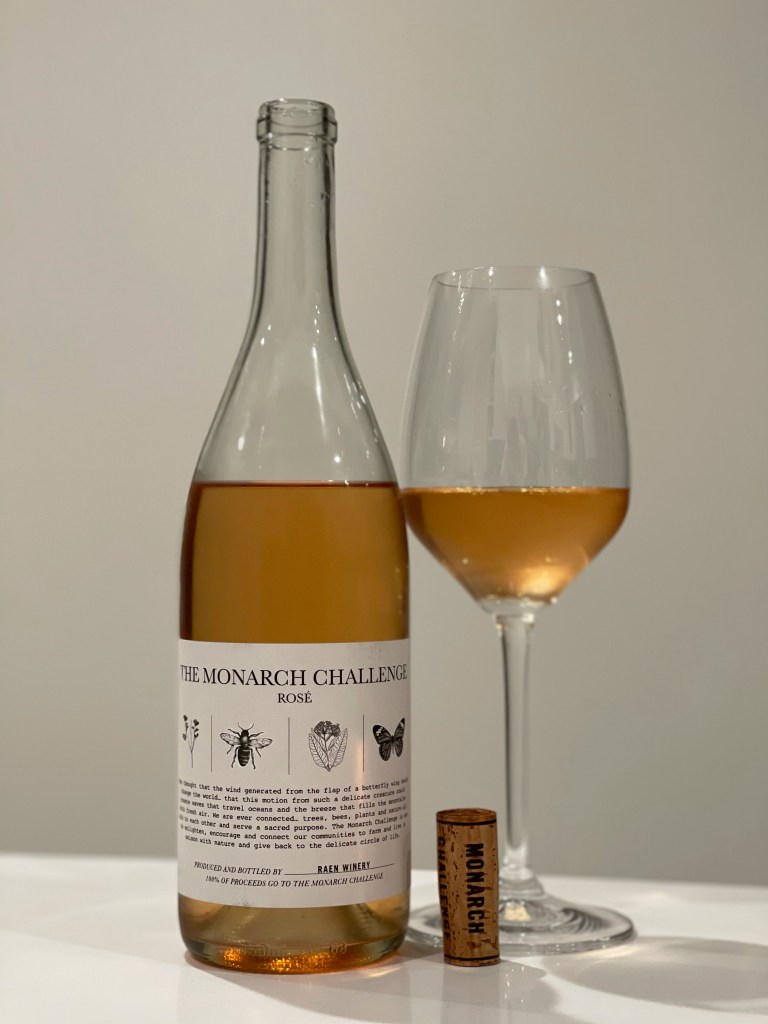
Today’s Wine: 2019 The Monarch Challenge Rosé
100% Pinot Noir; 12.9% ABV
The 2019 Monarch Challenge Rosé is transparent medium copper in color. The aromas are of medium (-) intensity and the nose isn’t all that complex, showcasing notes of fresh strawberry, raspberry, watermelon, rose, mild herbs, and dried stone minerality. Meanwhile on the palate flavors are of medium intensity, showcasing strawberry, raspberry, pomegranate, orange zest, white pepper, and dried herbs. This dry rosé is light- to medium-bodied with medium acidity, medium alcohol, and a medium (+) length finish. Overall, while not complex this is a refreshing and enjoyable wine that went down quickly.
Price: $25 (I paid $19). This is pretty fairly-priced and I am glad to have gotten it on sale which makes it even more reasonable. These wines also support a great cause, with 100% of the proceeds going to The Monarch Challenge which is a movement supporting cleaner farming in the areas of Sonoma and Napa.
I wrote about Radio-Coteau a short six days ago, however I was so pleasantly taken aback by the 2011 Las Colinas Syrah I ventured out to pick up a bottle of their Pinot Noir. If you read the backstory on Radio-Coteau in my last post, feel free to skip the next paragraph and jump right into today’s tasting notes.
Radio-Coteau is somewhat of a cult winery (though not in the sense many people use the term nowadays) established by winemaker Eric Sussman in 2002. Though the winery is situated in Sebastopol and Eric owns a ridgetop estate vineyard above the town of Occidental, he also sources fruit from vineyards throughout the cooler climates of the northern coast within western Sonoma County and Anderson Valley. Eric brings his impressive history with wine to Radio-Coteau, one that includes stints in Washington’s Yakima Valley, the 1995 vintage in Pauillac on the Left Bank of Bordeaux, and the 1996 vintage in Burgundy at Domaine Comte Armand of Pommard and Domaine Jacques Prieur of Meursault. It was in France when Eric first heard the term “radio-coteau,” which means “word of mouth” or literally “broadcasting from the hillside.” Coupled with his flair for Old World style wines, Eric named his winery after this phrase to signify both a tight-knit community mindset as well as his wines being a true representation of the terroir. Working extensively with organic and biodynamic viticulture in well-drained marine soils, Eric produces refined examples of Chardonnay, Riesling, Pinot Noir, Syrah, and Zinfandel.
Once again, I do recommend a visit to the winery’s interactive website here.
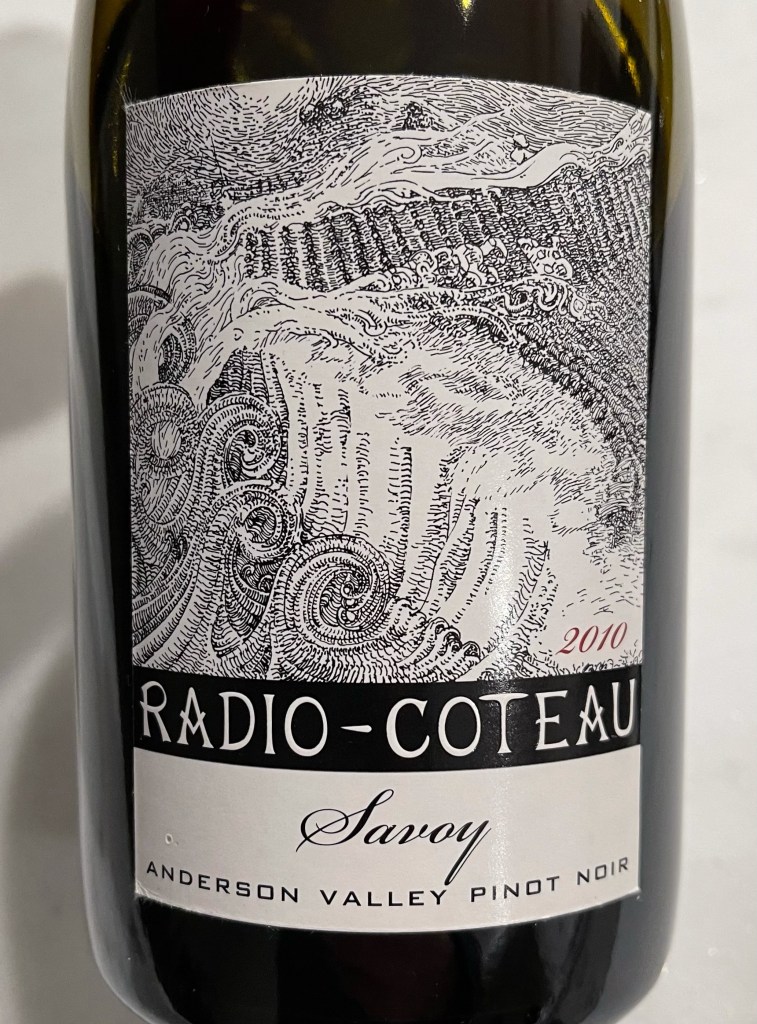
Today’s Wine: 2010 Savoy Pinot Noir
100% Pinot Noir; 14.1% ABV
The 2010 Savoy Pinot Noir is medium to deep garnet in color. Given 45 minutes or so to blossom in the glass, this showcases pronounced intensity with aromas of black cherry, black raspberry, stemmy wild strawberry, red rose petal, black olive, leather, forest floor/wet leaves, dried green herbs, mint, clove, and cinnamon. Meanwhile on the palate I get equally complex flavors with pronounced intensity, with notes of black cherry, plum, pomegranate, red rose, tobacco, forest floor, earthy mushroom, grilled herbs, cracked green peppercorn, clove, and charred oak. This dry red is medium-bodied with medium (+) acidity, medium (-) tannins, high alcohol, and a long finish. This is very Burgundian but the ripeness of the California fruit does shine through. While the alcohol doesn’t show heat per se, the body is certainly boosted by it. 462 cases produced.
Price: $75. This is getting up there in price for Cali Pinot, however I think it does deserve to fight up alongside the “big boys” of cult Pinot Noirs that sell for $100-125. While there are no doubt better value plays closer to $50, I would buy this again.
Big Table Farm is a relatively small winery and farm established in the Willamette Valley of Oregon in 2006 by winemaker Brian Marcy and artist/farmer Clare Carver. Brian worked with wine in Napa Valley prior to starting Big Table Farm, spending a decade with stints at heavyweights like Turley Wine cellars, Neyers Vineyards, Blankiet Estate, and Marcassin to hone his craft. Meanwhile Clare is a gifted artist and designs wine labels, many of which have been awarded. Dedicated to Pinot Noir, Chardonnay, and small amounts of Pinot Gris and Syrah, Big Table Farm commenced with only 150 cases of wine and has grown to a few thousand cases today. The wines are made in a minimal style, designed to showcase each unique source’s terroir and all wines are bottled unfined and unfiltered. With a major emphasis on sustainability and Clare’s passion for farming, the duo’s 70 acre property also acts as a working farm where they produce seasonal vegetables and raise animals. A visit to the property will not only showcase the wines, but you will see hens, pigs, goats, draft horses, and cows wandering about with an area dedicated to bee hives as well.
Big Table Farm has an outstanding website, filled with pictures, videos, and incredible detail. I highly recommend visiting them here.
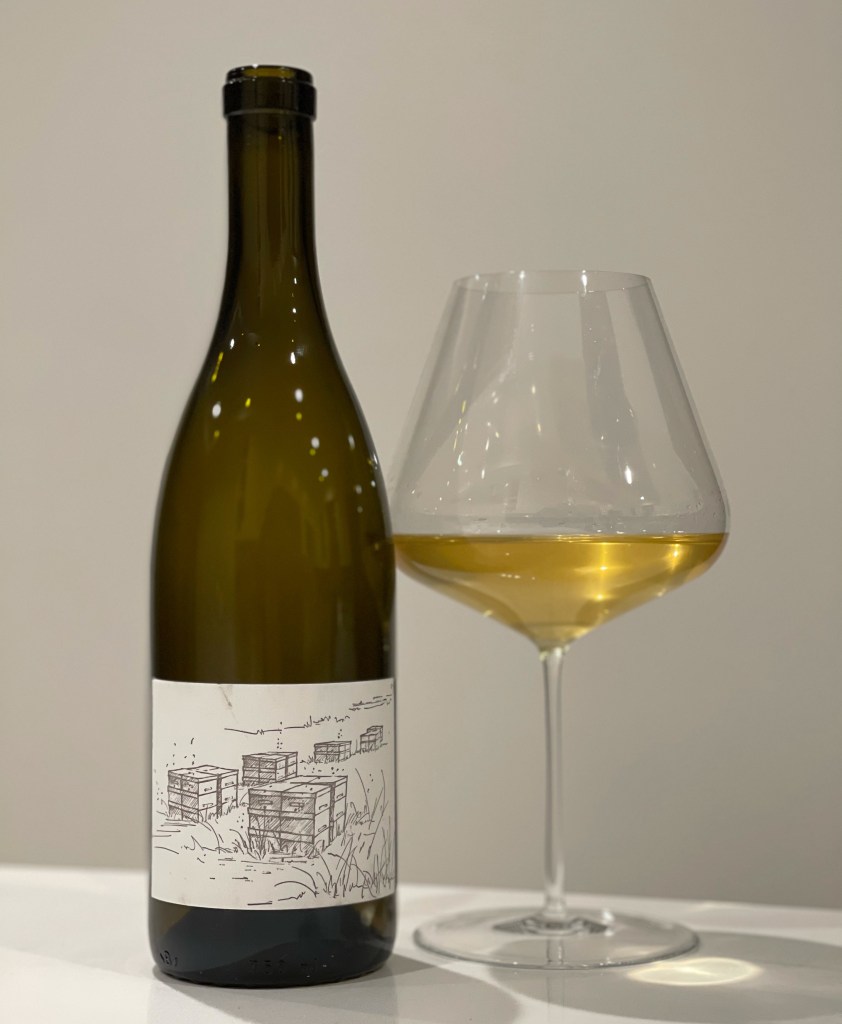
Today’s Wine: 2014 Willamette Valley Chardonnay
100% Chardonnay; 13.2% ABV
The 2014 Willamette Valley Chardonnay is transparent medium gold in color and slightly hazy. This really started to show nicely after 30-45 minutes in the glass, with the nose showcasing medium intense aromas of yellow apple, golden pear, a hint of lemon custard, white florals, chalky mineral, a hint of smoke, and mild white peppery spice. Meanwhile the palate is also of medium intensity, displaying notes of yellow apple, crisp pear, dried pineapple, wet stone, dried herbs, honeysuckle, dill, and a hint of oak. This dry Chardonnay is medium-bodied with medium acidity, medium alcohol, and a medium (+) length finish. Took some coaxing to pull apart the notes on this one, but the balance is incredible.
Price: $44 (I paid $28 on sale). I think the typical $44ish price tag is very reasonable here, as this is a fun, different, delicious, and well-made Chardonnay. If you are fortunate to find it on sale like I did, snag it because this offers tremendous value at the $28 level I paid.
Château Haut-Bailly is a historic Bordeaux wine estate, established during the 1530s by the Goyanèche and Daitze families in the Left Bank appellation of Pessac-Léognan. Haut-Bailly remained in the Daitze family until 1630, when it was purchased by Firmin Le Bailly and Nicolas de Leuvarde who were two wealthy Parisian bankers. It was Firmin Le Bailly who provided the estate with its name, still in use to this day. The Le Bailly family invested significantly in the improvement of the estate and its wines, passing it from generation to generation until 1736 when Thomas Barton came along. Barton, who was an Irishman, used his business savvy and connections to trumpet the quality of Haut-Bailly wines and helped spread them to England and Ireland where they became highly regarded. In 1872, Alcide Bellot des Minières purchased the Haut-Bailly estate and constructed the château which remains to this day. des Minières was also a gifted winemaker, adhering to precise and science-backed philosophies that further improved the wines and, in pricing terms, put them up with Château Lafite Rothschild, Château Latour, Château Margaux, and Château Haut-Brion. Unfortunately, phylloxera took its toll on the estate during the very late 1800s and Haut-Bailly entered the 20th century under a sense of turmoil.
During the first half of the 20th century, Haut-Bailly changed hands multiple times, new and questionable winemaking practices occurred, and the reputation faltered. In 1955, however, Belgian négociant Daniel Sanders purchased the estate and commenced a renaissance for both quality and reputation. Daniel and his son Jean renovated the vineyards and the winery, while also increasing the rigorous quality standards set in place to select fruit for the Grand Vin. By this point Haut-Bailly was a classified Cru Classé in the Classification of Graves in 1953 and 1959, and the wines certainly lived up to it. During the 1970s, however, the wines did take a slight dip once again as Daniel remained reluctant in his old age to give up control to his son Jean. With Daniel’s death in 1980, however, Jean fully took the helm and resumed the rise in quality. Haut-Bailly shifted into the hands of its current owners in 1988, when American banker Robert G. Wilmers purchased the estate. Jean Sanders remained on the team which later included fourth generation Véronique Sanders in a general manager capacity. Though Robert unfortunately passed away in 2017, Haut-Bailly remains in his family’s care with the same dedication and passion to this great and historic estate.
Château Haut-Bailly today consists of 30 hectares of vineyards situated in prime sandy and gravelly soils in the heart of the Pessac-Léognan appellation. The vineyards are planted to 60% Cabernet Sauvignon, 34% Merlot, 3% Petit Verdot, and 3% Cabernet Franc, with the plots undulating and at times reaching 20 meters higher than other plots around them. Haut-Bailly also maintains 4 hectares of century-old vines planted by Alcide Bellot des Minières, and while largely planted to Cabernet Sauvignon these special vineyards have plots of Carmenère, Merlot, Cabernet Franc, Malbec, and Petit Verdot as well.
Harvest and winemaking at Haut-Bailly follow the philosophy of gentleness and minimal intervention. All plots are harvested individually by hand so fruit is picked at optimal ripeness for each variety. After initial sorting in the vineyards, the fruit is destemmed and sorted by hand again before transferring directly into vats for fermentation. Each plot is vinified separately as well, allowing the winemaking team a plethora of blending options to showcase the varieties and terroir in the best sense possible vintage to vintage. Following time in concrete vats, the wines age in French oak barrels for 16-18 months before they are bottled.
To view the source of the information above, please check out the Château Haut-Bailly website here. You can also view pictures of the estate and peruse their portfolio which interestingly includes a Rosé.
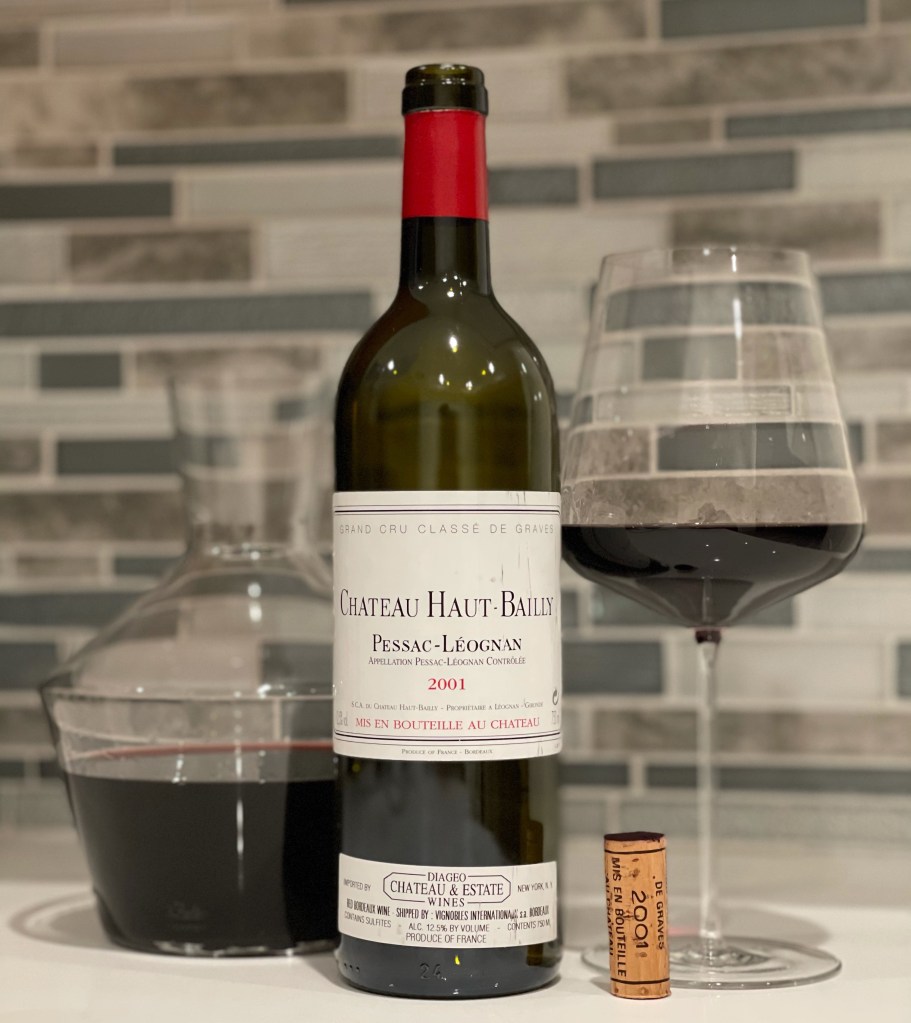
Today’s Wine: 2001 Château Haut-Bailly
65% Cabernet Sauvignon, 35% Merlot; 12.5% ABV
The 2001 Château Haut-Bailly is opaque deep ruby in color with deep garnet variation at the rim. This required a good 1.5 to 2 hours to decant, but it blossomed beautifully. The nose is of pronounced intensity, showcasing classic aromas of crème de cassis, redcurrant, violet, cigar box, black truffle, scorched earth, graphite, pencil shavings, black pepper, gravel, and a touch of vanilla. Meanwhile on the palate I get flavors of pronounced intensity including blackberry, black plum, cassis, licorice, violet, dried tobacco, mushroom, a hint of green bell pepper, dried green herbs, clove, and charred cedar. This dry red is medium- to full-bodied with medium (+) acidity, high but very fine-grained and luxurious tannins, medium alcohol, and a long finish. Gorgeous right now but certainly has the stuffing to develop further for at least another decade.
Price: $120. 2001 is a sleeper vintage in Bordeaux, and selection can sometimes be difficult. However, this 2001 Haut-Bailly is firing on all cylinders and offers very solid value in my opinion given its complexity, performance, age, and promise for the future. Well done.
Hyde de Villaine Wines (HdV) is a family owned and operated wine estate established in Carneros in 2000 as a joint venture between the Hyde family of Napa Valley and the de Villaine family of Burgundy. Spearheaded by Larry Hyde, a member of one of the region’s most highly regarded winegrowing families, and Aubert de Villaine, co-director of Domaine de la Romanée-Conti, HdV came to fruition through Aubert’s marriage to Pamela Fairbanks who is Larry’s cousin. Using fruit exclusively from the coveted Hyde Vineyard in eastern Carneros, HdV crafts Chardonnay, Pinot Noir, and small amounts of Syrah as well as a Cabernet Sauvignon/Merlot blend utilizing minimal intervention winemaking in an effort to allow the wines to speak of their terroir, variety, and vintage.
The vines which provide fruit for HdV Wines are farmed with a combination of sustainable, organic, and biodynamic practices to both ensure the land is viable for generations to come and this helps the grapes truly express themselves rather than a heavy hand. HdV receives first right of refusal in the vineyards, with remaining fruit sold to Napa heavyweights of the likes of Kistler, Patz & Hall, DuMOL, Ramey, and Schramsberg amongst others. HdV typically picks their fruit a couple weeks earlier than those around them, in large part to preserve more of the natural acidity and a beautiful minerality after the style of Burgundy. There is rigorous sorting in the vineyards, at the picking bins, and again at the winery to ensure only the highest quality fruit makes it into the wines. The winery itself is organized such that gravity plays a dominant part, and the wines see a combination of stainless steel, wooden vats, and oak barrels over time. Overall the winemaking philosophy is minimal intervention, again circling back to the idea that all wines should demonstrate a true sense of place. Chardonnay ages in 15-20% new medium toast French oak for about a year, followed by 3-4 months in stainless steel before being bottled unfined and unfiltered.
To learn more or explore the HdV portfolio of wines, check out their website here.
Today’s Wine: 2016 Le Début Chardonnay
100% Chardonnay; 13.9% ABV
The 2016 Le Début Chardonnay is transparent medium gold in color. After about 30 to 45 minutes in the glass, the nose showcases aromas of pineapple, ripe pear, peach, lemon zest, honeysuckle, dried vanilla, almond, and light butter with medium intensity. The palate is much more pronounced in intensity with notes of yellow apple, yellow pear, lemon curd, peach, pineapple, wet stone, dill, vanilla cream, and light smoke. This is dry and medium- to full-bodied with medium (+) acidity, medium alcohol, and a long finish. 550 cases produced.
Price: $50. This is a very good Napa Chardonnay, and on a value perspective I believe it is relatively fairly priced. You can certainly find wines of this quality or slightly better for about $10-15 less, but naturally they become much harder to find. I would certainly explore more wines in the HdV portfolio.
Garage Wine Co. is a boutique winery established in Chile in 2001 by Derek Mossman, his wife Pilar Miranda, and friend Alvaro Peña. The venture quite literally started in Derek and Pilar’s garage with production limited to family and friends, and the team sources fruit from small, dedicated winegrowers in Maule and Maipo. With a portfolio that includes Cabernet Sauvignon, Cabernet Franc, País, Carignan, Cinsault, and other varieties, Garage Wine Co. produces a few thousand cases of wine each vintage in a traditional and minimal fashion. For instance, all wines are made by hand and fermentation occurs only with native yeasts in small tanks with manual punch-downs. Throughout the winemaking process the team makes zero additions and the wines see zero or minimal new wood before bottling and ultimately end up with very low sulfites. As a fun fact, Garage Wine Co. uses recycled bottles for all of their wines to lessen their carbon footprint and, should you line up a number of their wines together, this is apparent.
I highly suggest checking out the Garage Wine Co. website here, as they have a wonderful photo gallery and strong social media presence. You can also find more information about the wines or their vineyard sites.
Today’s Wine: 2017 215 BC Ferment País
100% País; 13% ABV
The 2017 215 BC Ferment País is pale ruby in color with garnet hues. This is pretty much ready to go right out of the bottle, offering up medium intense aromas of ripe red cherry, stewed strawberry, licorice, rose, sage, and mild smoke. Meanwhile the palate is also of medium intensity, showcasing notes of cherry, raspberry, red plum, rose, anise, dried green herbs, and graphite. This fresh and enjoyable red is quite dry and light- to medium-bodied with medium acidity, medium tannins, medium alcohol, and a medium length finish. All-in this is an easy-going wine which I think would be a perfect match for those summer days where instead of pulling a white wine you want to go for a red.
Price: $19. This is my first País, so I’m not too sure where this bottling stands on a value perspective. However, for its price I certainly enjoy drinking it. The fruit quality here is very solid and there is some terroir poking through, though I don’t think this necessarily fits the potential of the variety to a T based on my research.
Ceritas Wines is a small, family-owned winery spearheaded by husband and wife duo John and Phoebe Raytek. John and Phoebe source their fruit from trusted vintners mainly in the West Sonoma Coast and Santa Cruz Mountains, with all sites practicing sustainable or organic viticulture. John is highly involved in the vineyards they source from, and in many cases the vintners only sell fruit to Ceritas and are labeled “Monopoles.” Considering himself a winemaker of the Old World style, John believes that fruit should lead the way throughout the winemaking process and he is merely there to watch over, listen, and learn about each unique site. In the cellar, John practices minimal intervention but “flexible” winemaking, with the wines meant to showcase with honesty and transparency the terroir of each specific vineyard site.
To discover more, such as detailed descriptions of each vineyard site or view the other wines in the Ceritas portfolio, check out their website here.
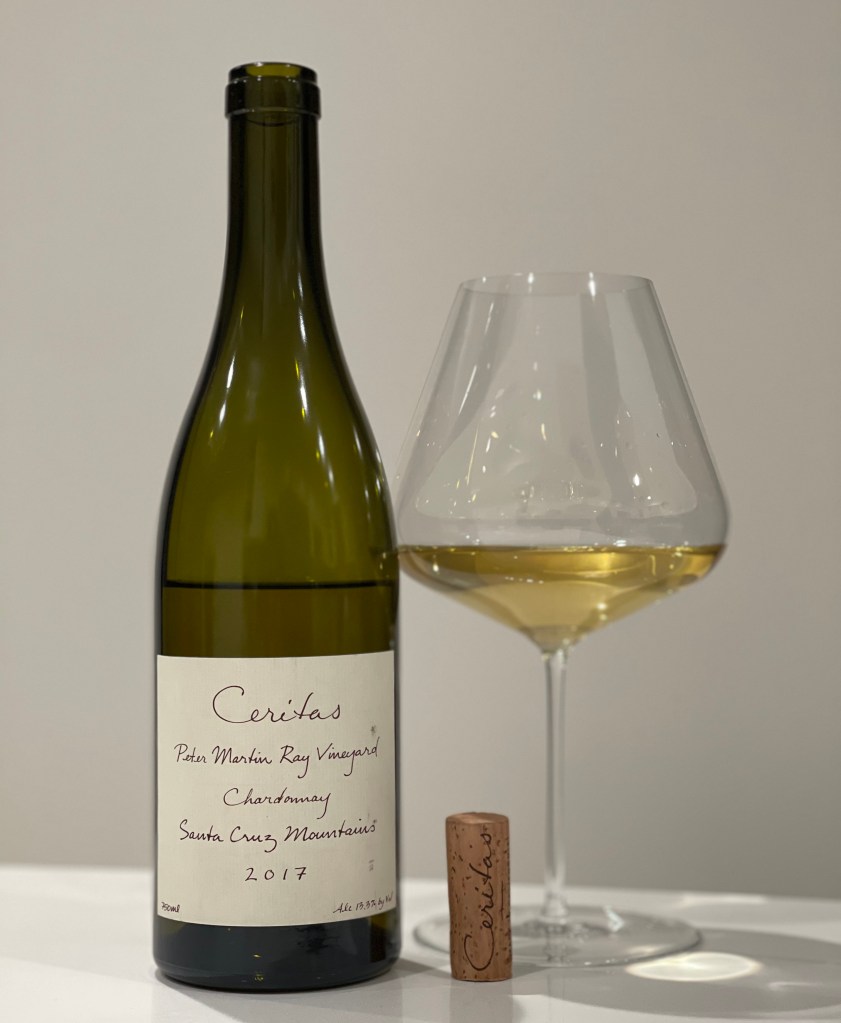
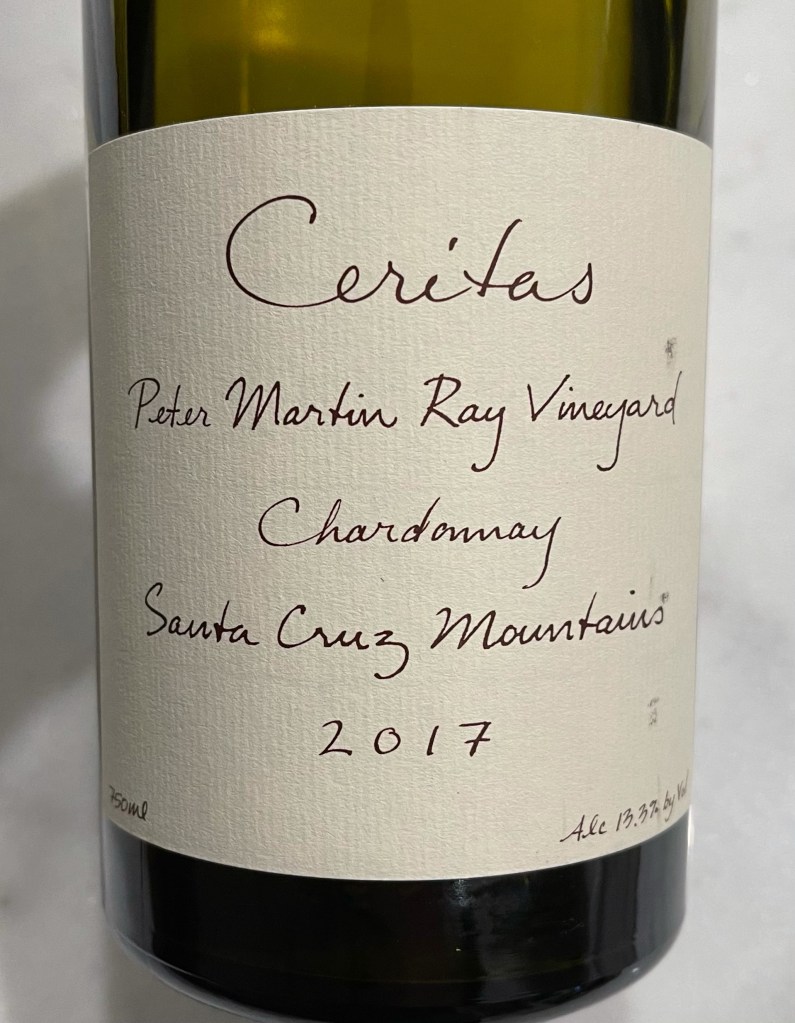
Today’s Wine: 2017 Peter Martin Ray Vineyard Chardonnay
100% Chardonnay; 13.3% ABV
The 2017 Peter Martin Ray Vineyard Chardonnay is transparent pale gold in color. This took about 45 minutes to really blossom in the glass, with the nose eventually opening up to showcase medium intense aromas of yellow apple, lemon, white peach, honeysuckle, flint, wet stone, dried vanilla, and a hint of smoke. Meanwhile the flavors on the palate are quite pronounced, with notes of crisp yellow apple, white peach, lemon, a touch of pineapple, honeysuckle, dill, flint, and a hint of stony mineral. This dry Chardonnay is medium-bodied with high acidity, medium alcohol, and a long finish.
Price: $65. This is a really, really good bottle from Ceritas again. With time in the bottle this should add extra gorgeous complexities and the acidic backbone should help it hold up as the wine develops. This being said though, I think I’d pay the slightly higher secondary market price for the Trout Gulch Chardonnay (though both Chards released the other week at $59 each on the mailing list). Though a year older, the 2016 Trout Gulch I had not too long ago seems to be in a class of its own and that seems to be the general consensus vintage after vintage.
Radio-Coteau is somewhat of a cult winery (though not in the sense many people use the term nowadays) established by winemaker Eric Sussman in 2002. Though the winery is situated in Sebastopol and Eric owns a ridgetop estate vineyard above the town of Occidental, he also sources fruit from vineyards throughout the cooler climates of the northern coast within western Sonoma County and Anderson Valley. Eric brings his impressive history with wine to Radio-Coteau, one that includes stints in Washington’s Yakima Valley, the 1995 vintage in Pauillac on the Left Bank of Bordeaux, and the 1996 vintage in Burgundy at Domaine Comte Armand of Pommard and Domaine Jacques Prieur of Meursault. It was in France when Eric first heard the term “radio-coteau,” which means “word of mouth” or literally “broadcasting from the hillside.” Coupled with his flair for Old World style wines, Eric named his winery after this phrase to signify both a tight-knit community mindset as well as his wines being a true representation of the terroir. Working extensively with organic and biodynamic viticulture in well-drained and marine soils, Eric produces refined examples of Chardonnay, Riesling, Pinot Noir, Syrah, and Zinfandel.
For more on Radio-Coteau, I suggest visiting the extensive website here. There are some very interactive maps of the vineyards, and fantastic photos that also show the livestock and gardens living on the estate site.
Today’s Wine: 2011 Las Colinas Syrah
100% Syrah; 13.3% ABV
The 2011 Las Colinas Syrah is opaque medium purple in color. This was firing on all cylinders as a pop-and-pour, so I simply let it evolve in the glass in lieu of decanting. The aromas leap out of the glass with pronounced intensity, offering up red plum, cherry, blackberry, dried violet, cigar box, licorice, gamey meat, dried underbrush, smoke, scorched earth, and clove. Meanwhile the palate is equally intense with notes of black plum, black cherry, blueberry, violet, tobacco, dried herbs, slate, black pepper, chalky mineral, mild chocolate, and baking spice. This dry Sonoma Coast Syrah is medium- to full-bodied with medium acidity, medium but refined tannins, medium alcohol, and a long finish. This is as Old World as it gets for California, and is certainly one of the most elegant Cali Syrah’s I’ve had to date. 330 cases produced.
Price: $50. I think I’m on a value streak lately because this Syrah is absolutely worth its price and can even strike up there with high-quality Northern Rhône bottlings. This is perhaps the most elegant and finessed California Syrah I’ve tasted for the price-point and is deliciously chuggable. Well done.
Sami-Odi is a small but highly regarded winery established in the Barossa Valley of Australia by Fraser McKinley in 2006. Working exclusively with Syrah/Shiraz from the Hoffmann family’s esteemed Dallwitz Vineyard, McKinley farms his rows of often very old vines (some dating back to the 1880s) adhering to organic viticulture. He also picks earlier than most around him, based largely on his high level of importance placed on acidity. Sami-Odi produces two wines each vintage with blending the name of the game, one of them being a vintage bottling assembled from fruit of varying vine age and blocks, with the other being a non-vintage assemblage of various blocks, vine age, and vintage. The Sami-Odi wines are a result of traditional winemaking, with manual work prevalent alongside whole-cluster fermentation and no additions save for a minimal amount of sulfur. Aging occurs in neutral oak, and bottling is gravity-fed with the wines always unfined and unfiltered.
Today’s Story: NV Little Wine #9
100% Syrah (yes, Fraser calls it Syrah and not Shiraz); 14.1% ABV
The NV Little Wine #9 is opaque deep purple in color. This is an assemblage of 42% 2019 vintage, 37% 2018, 13% 2017, 4% 2016, and 4% 2015 so I decanted it for about 5 hours due to the youthful tilt. The nose is elegantly perfumed and an absolute showstopper, offering up with pronounced intensity aromas of black plum, blueberry, blackberry, crushed violets, licorice, worn leather, a hint of smoked game, tobacco, freshly-sharpened lead pencil, subtle dried earth, and mild baking spice. Meanwhile the palate is also of pronounced intensity, showcasing notes of rich black plum, blackberry, ripe blueberry, blue and purple florals, tobacco, eucalyptus, cracked green peppercorn, black tea, clove, and a hint of smoke. This dry red is medium- to full-bodied with medium (+) acidity, medium (+) but fine-grained tannins, and a long, lingering finish. What’s amazing is how concentrated and powerful the wine is, but at the same time it is incredibly restrained and just downright beautiful. 537 cases produced.
Fruit sourced from vines planted in 1996, 1995, 1960, 1927, and prior to 1912.
Price: $100. To be honest, I am incredibly lucky to have purchased this bottle in the USA. I’ve been tracking down some Sami-Odi for about a year now, and I think it lives up to the hype. This is an awesome and outrageously complex Aussie Syrah well worth the price-point. If you’re fortunate enough to find some, buy it.
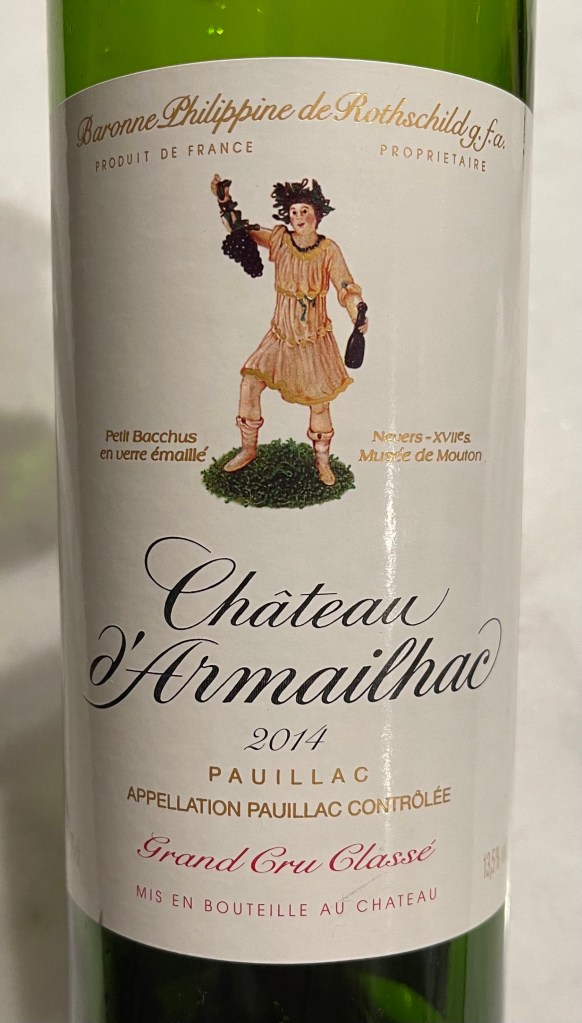
Château d’Armailhac is a historic Fifth Growth Bordeaux estate located in Pauillac. Though the estate traces its roots to at least 1680 and brothers Dominique and Guilhem Armailhacq, the first solid record of vines on the property came later in 1750 and included 15 to 16 hectares of vineyards. By the end of the 1700s, the estate (called Mouton d’Armailhacq) benefited from the rapid growth of vineyards in the Médoc and grew to 52 hectares under vine, though the wines were not very highly regarded. The team spent the next several decades working tirelessly on improving the quality of the wines and were ultimately rewarded with higher prices and classification as a Fifth Growth in the Bordeaux Wine Official Classification of 1855. Later, in 1931, Baron Philippe de Rothschild became a minority owner in the estate and took full ownership in 1933. Château d’Armailhac is tightly woven together with Château Mouton Rothschild, with the former holding all technical and agricultural equipment for both estates in their outbuildings. In 1956 the estate was renamed Mouton Baron Philippe, then Mouton Baronne Philippe, and finally Château d’Armailhac in 1989 when Baroness Philippine de Rothschild elected to restore the estate’s original name.
Today, Château d’Armailhac’s vineyards total 70 hectares in northern Pauillac and they are planted to roughly 52% Cabernet Sauvignon, 36% Merlot, 10% Cabernet Franc, and 2% Petit Verdot. The estate’s vineyards are made up of the appellation’s famous deep gravelly soil which is perfect for producing wines of character and elegance. Come harvest, the process begins when the same team of Château Mouton Rothschild deems the fruit ready and all picking is done completely by hand. Each variety and each parcel moves to the winery separately, the grapes are entirely destemmed, and young vine fruit is vinified separately from old vine fruit. The wines age in 25% new oak barrels, with some coming from the Grand Chai of Château Mouton Rothschild, and they are run off every three months until fining with egg whites. Each vintage is only bottled when the winemakers and cellar master deem the wine is ready, so there is no strict formula or timeline for barrel aging.
Previously, I wrote about Château d’Armailhac when I reviewed the 1978 Château Mouton Baronne Philippe. If you care to read about how these wines can age, I encourage you to check out the tasting notes at the link above.
The 2014 Château d’Armailhac is opaque deep ruby in color, showcasing its youth. When I first pulled the cork, I was nervous this wine was an off bottle showcasing some pronounced nutty and oaky characteristics. However, given three hours to decant my worries were unwarranted and the wine blossomed beautifully. On the nose, which is of medium intensity, I get aromas of crème de cassis, redcurrant, black plum, violet, leather, graphite, cigar box, black pepper, clove, and cedar. Meanwhile the palate, which is deeper and more pronounced in intensity, showcases notes of redcurrant, blackcurrant, black cherry, red plum, licorice, tobacco, dried green herbs, green pepper, vanilla, and clove. This dry red is full-bodied with high acidity, high tannins, medium alcohol, and a long finish.
Price: $60 (I paid 49). I think this wine offers decent value for Pauillac and the greater Left Bank, especially at the sub-$50 price I found it for. While I would like a bit more intensity out of the nose, I still get all the classic Pauillac aromas and the overall balance of the wine is quite good. 2014 Bordeaux is really starting to show well, and I think this is a great effort from d’Armailhac.







 JB's Wine Talk