Entry Level to a Northern Rhône God

Today’s Story: Domaine Jean-Louis Chave

Domaine Jean-Louis Chave is one of, if not the most, highly regarded northern Rhône domains and it was established by the Chave family in 1481. Still family-owned and operated to this day, Domaine JL Chave produces arguably some of the greatest Hermitage and Saint-Joseph wines on the market. Though initially winemakers in the Saint-Joseph appellation, the Chave family started buying vineyards in the Hermitage appellation during the mid-1800s and moved there entirely by the end of the 19th century as phylloxera ravaged their vineyards in Saint-Joseph. The domain revitalized these holdings, however, during the early 1990s when 16th generation Jean-Louis joined his father Gérard and replanted the vineyards there. Today, the domain is one of the largest landowners on the Hill of Hermitage with about 14.5 hectares planted to vine, though the Saint-Joseph bottlings are nothing to snooze over.

Jean-Louis and Gérard are staunch traditionalists from the way they farm their vineyards to the way they make their wines. In the vineyards this means unyielding attention to detail, very small yields, and full ripeness. In the cellar, they typically destem the grapes before fermentation in stainless steel, cement vats, or old open-top French barrels then age the wines for around 18 months in minimal new oak. The entire process is minimally invasive and all wines are bottled unfiltered following blending.

With this in mind, however, their skill is seemingly most appreciated in the way that they blend the wines into the final Hermitage bottling. The domain never bottles single-vineyard wines, even though they own 14 different parcels across 9 vineyards and the quality of these individual vineyards or lieux dits can be immaculate. Instead, Jean-Louis and Gérard start every vintage from “scratch” and vinify every lot separately before blending them together into the final wine. Each vintage the percentage from each lot will vary, and each vintage the wines will show a unique charm. The Hermitage bottling is 100% Syrah, which is planted on about 10 hectares of the Chave family’s total 14.5. Chave also produces an Hermitage Blanc made of 80-85% Marsanne and 15-20% Roussanne, with the fruit sourced from the remaining 4.5 hectares or so. Tying into today’s post, Chave also makes a Saint-Joseph bottling from their vines in that appellation and it is 100% Syrah.

At the end of the day, when you see a bottle with the name Jean-Louis Chave on it you can expect a concentrated, elegant, finessed, and complex wine built for the ages. The Chave Hermitage typically needs 15 years to really start coming together in the bottle, though this depends on vintage and the great ones can go for 50+ years. Expect to pay around $80 for the Saint-Joseph, $250-300+ for the Hermitage Blanc, $350-400+ for the Hermitage Rouge, or $5,000-10,000+ for the ultra-rare Cuvée Cathelin which has been produced only a handful of times in miniscule quantities from the greatest vintages.

Today’s Wine: 2017 Saint-Joseph

100% Syrah; 14.5% ABV

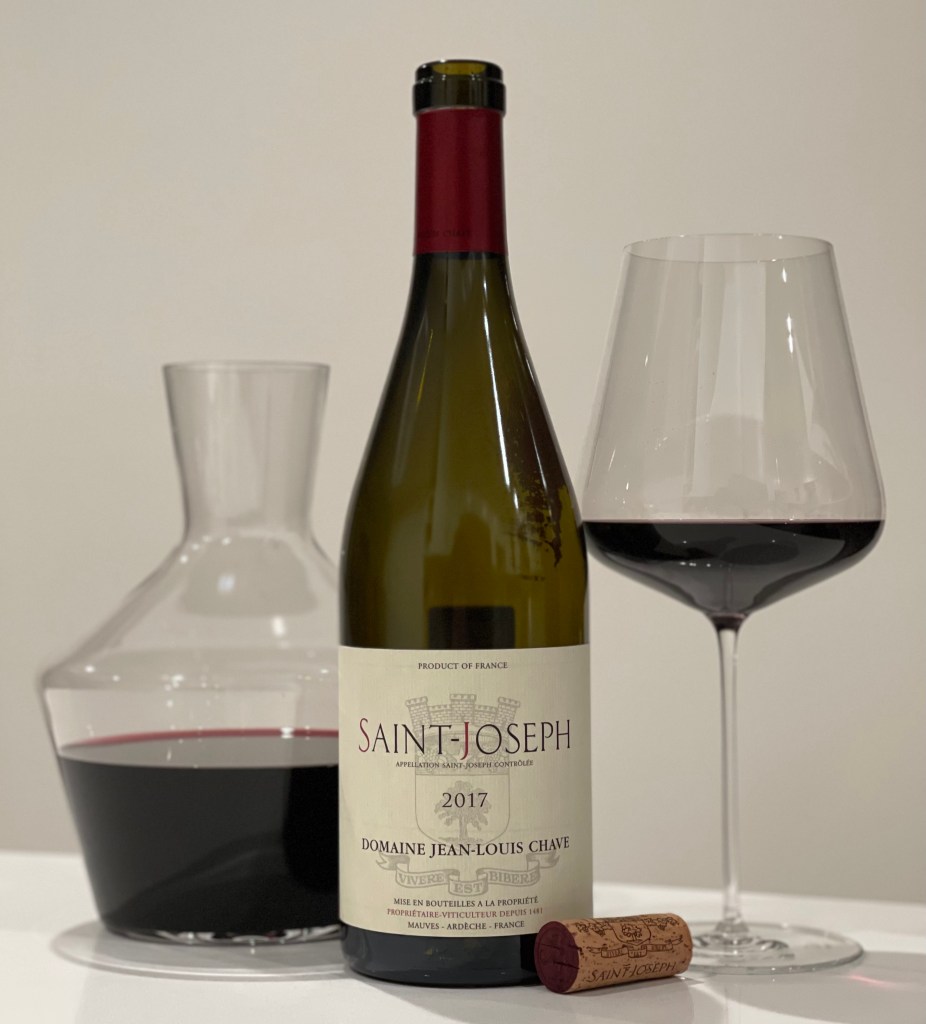
The 2017 Saint-Joseph is opaque deep purple in color, clearly demonstrating its youth. I decanted this for two hours and drank it over the following two hours, which at this stage is quite advantageous. Aromas are of medium intensity with black plum, blackberry, blueberry, black cherry, licorice, violet, black pepper, smoke, chocolate, and cedar. Meanwhile on the palate I get medium (+) intensity with notes of blackberry, black plum, blueberry, black raspberry, anise, sweet tobacco, rocky earth, dried green herbs, black pepper, clove, charred cedar, and smoke. I am quite honestly surprised how much depth there is here at such a young age. This dry red is full-bodied with medium (+) acidity, high tannins, high alcohol, and a long finish. Given several more years to better integrate the tannins and alcohol, I think this will be a rockstar.

Price: $80. I’ve had several vintages of this wine (fortunately some older than this bottle) but the one constant that remains is that I believe this is a very solid value. Given some time to age, these become beautifully balanced wines that showcase their terroir with remarkable depth and complexity. Plus they’re a great “middle-ground” in the Chave portfolio! If you include his JL Chave Sélection négociant wines, that is…
Boutique Bordeaux Blend at a Great Spot Right Now

Today’s Story: Kapcsándy Family Winery

I wrote about Kapcsándy way back in February, 2020 when I reviewed the 2014 Estate Cuvée, so I figured it’s a good time to check back in and try an older vintage.

Kapcsándy Family Winery was established by Lou Kapcsándy and is a small, family owned and operated estate in Yountville of the Napa Valley. An immigrant from Hungary, Lou arrived in the United States in 1956 and worked as a chemical engineer and manufacturer in the Bay Area of California and Seattle. Wine became a focal point for Lou during his successful career thanks to colleagues in the wine business, however his desire to establish his own winery one day came after a visit to Château Leoville Las Cases with his wife Bobbie in 1998. With their son Louis Jr., Lou and Bobbie started searching for property in the Napa Valley when they stumbled upon the 20 acre State Lane Vineyard in Yountville which had been destroyed the previous year by phylloxera. In May 2000, the Kapcsándy family closed on this historic property (it was the source of fruit for Beringer’s Private Reserve Cabernet Sauvignon) and embarked on massive replanting of the vineyards. They planted the main Bordeaux varieties of Cabernet Sauvignon, Merlot, Cabernet Franc, and Petit Verdot, though also planted several acres to Hungarian Furmint. When the winery was completed in 2005, Lou’s vision was finally realized and both he and Louis Jr. remain highly involved today.

Kapcsándy wines are inspired by Bordeaux both in terms of vineyard management and winemaking style, resulting in lower-alcohol wines made from 100% estate-grown fruit. With both Lou and Louis Jr. active in the vineyards and estate management everyday, Kapcsándy practices sustainable farming with great appreciation for their soil and the environment. The family constructed nesting boxes, perch poles, and songbird houses to avoid the use of chemicals for pest control, and they also add compost to the vineyards and natural fertilizers to supply bacteria, photo nutrients, and trace elements which prove beneficial for vine growth. Further, Kapcsándy plants cover crops between the vines to prevent erosion and encourage beneficial insects to inhabit the vineyards and enhance this natural ecosystem. For more, check out the Kapcsándy website here.

Today’s Wine: 2005 Estate Cuvée

56% Cabernet Sauvignon, 40% Merlot, and 4% Cabernet Franc; 14.1% ABV

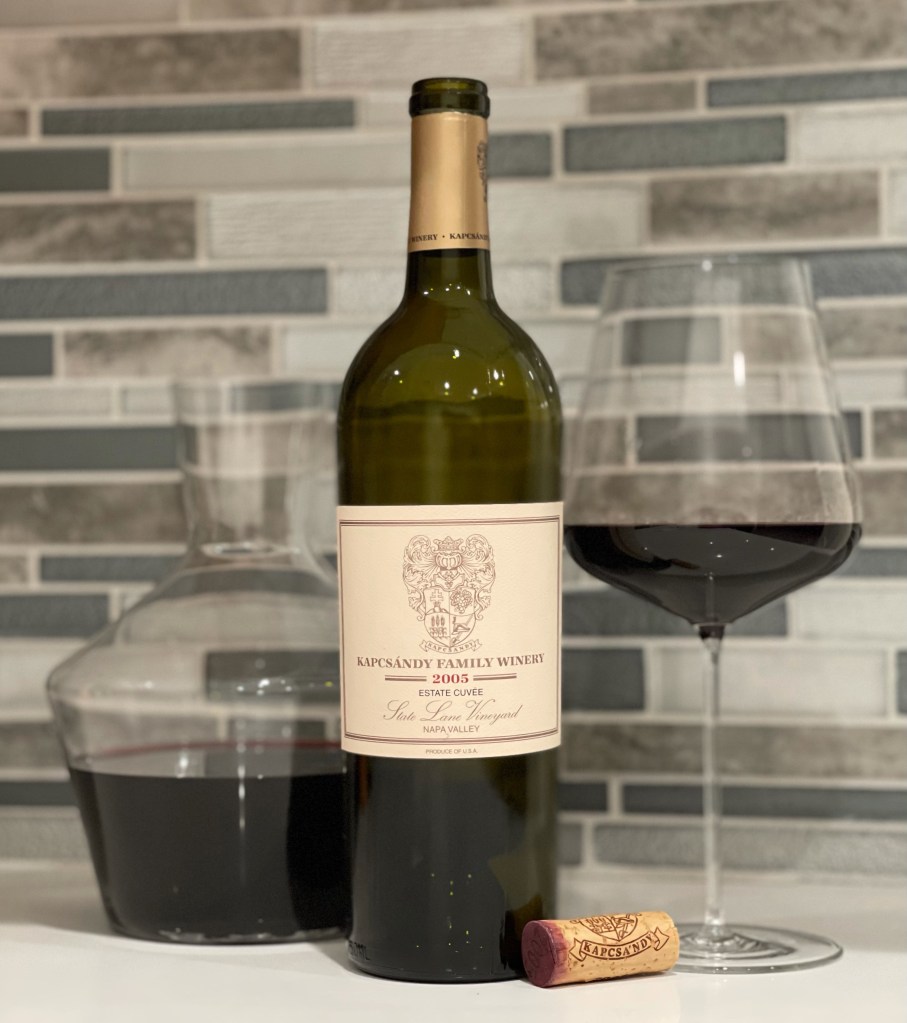
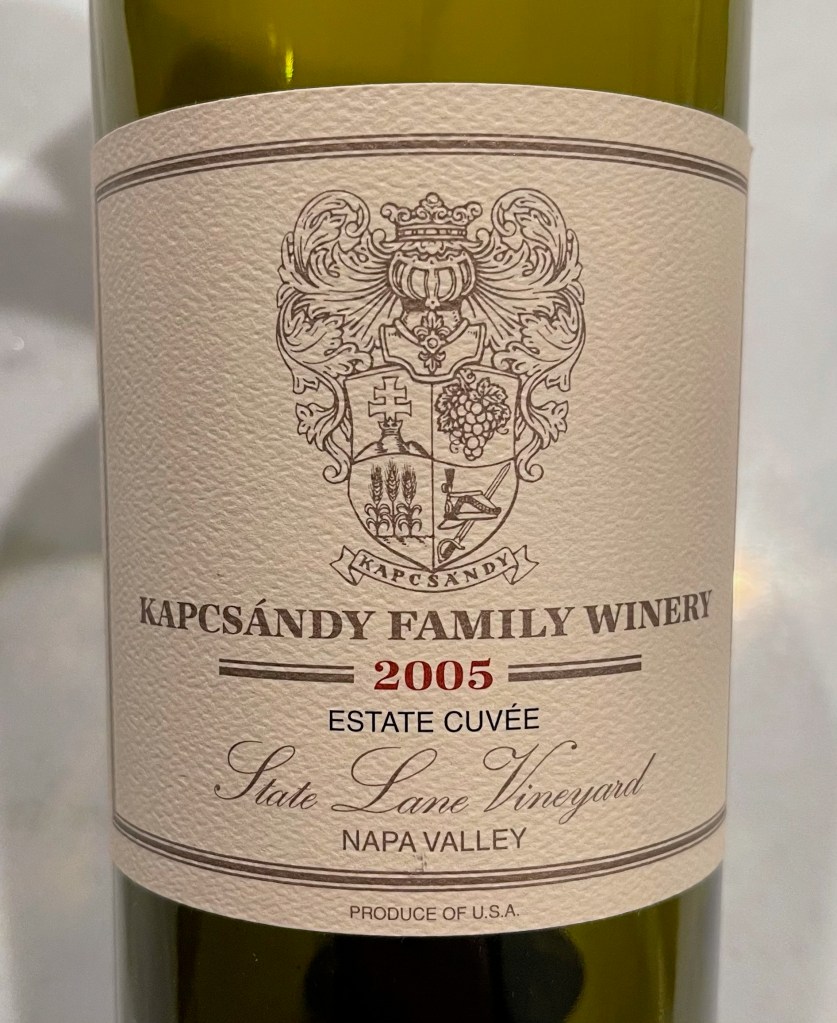
The 2005 Estate Cuvée is opaque deep ruby in color, still quite youthful. I decanted this for about 90 minutes and drank it over the following two hours, which really helps showcase the complexity of the bottling. The nose emits aromas of blackberry, crème de cassis, black raspberry, plum, cigar box, scorched earth, graphite, menthol, chocolate, clove, and coffee. Meanwhile on the palate I get notes of blackcurrant, blueberry, black cherry, black raspberry, anise, tobacco, eucalyptus, mocha, slate, iron, and cedar. This is medium- to full-bodied with medium (+) acidity, medium tannins, and a long finish. Drinks very much like Bordeaux, with at least 5 more years of prime drinking.

Price: $150 (I paid $95 on sale). I think $150 is a pretty fair price for this bottling with the amount of age on it, particularly given how complex and elegant it is. Though Kapcsándy can be difficult to find, I think this entry level is worth trying. Finding it on sale sub-$100 is a steal.

Young but Beautifully Complex Etna Rosso

Today’s Story: Passopisciaro – Vini Franchetti

Passopisciaro is a highly regarded wine estate founded in 2000 by Andrea Franchetti on the northern slopes of Mount Etna. Franchetti purchased an old farm and cellars at about 1,000 meters up the volcano and they desperately needed restoration, clearing, and replanting of the vineyards. Franchetti was somewhat instrumental in the renaissance for Etna winemaking, taking great risk by working on an active volcano surrounded by ancient estates long abandoned due to lava flow. He focuses primarily on the native Nerello Mascalese variety, but grows Chardonnay, Petit Verdot, and Cesanese d’Affile as well between roughly 600 meters and 1,100 meters in elevation.

Today, Passopisciaro consists of 26 hectares planted to Nerello Mascalese, 4 hectares planted to Chardonnay, and 2 hectares of Petit Verdot and Cesanese d’Affile. Franchetti makes six wines with 100% Nerello Mascalese, and they range from the Passorosso (blended from various elevations and terroirs) to five different Cru, or Contrada as they are known on Etna, bottlings he introduced in 2008. The five Contrada bottlings of Chiappemacine, Porcaria, Guardiola, Sciaranuova, and Rampante come from different elevations and are planted in varying lava flows that offer unique mineral characteristics. His red blend of Petit Verdot and Cesanese d’Affile, called Franchetti, entered the portfolio in 2005 and his Chardonnay, called Passobianco, entered in 2007.

Winemaking is without a doubt very unique on Mount Etna for a number of factors. First, the fact that this is an active volcano with frequent smoke plumes and lava flows which can destroy vines…or worse. Second, the elevation stretches to 3,300 meters on Mount Etna and even vines planted 1/3 of the way up face winds and drastic temperature swings, though it does stay cooler and help produce more complex and elegant wines. And third, the soil is naturally very rocky and volcanic and, due to its black color, diffuses sunlight across and throughout the ground to provide additional indirect sunlight to the vines. Franchetti seems to have mastered these elements, crafting wines with a true sense of place, great depth and complexity, and beautiful purity of fruit.

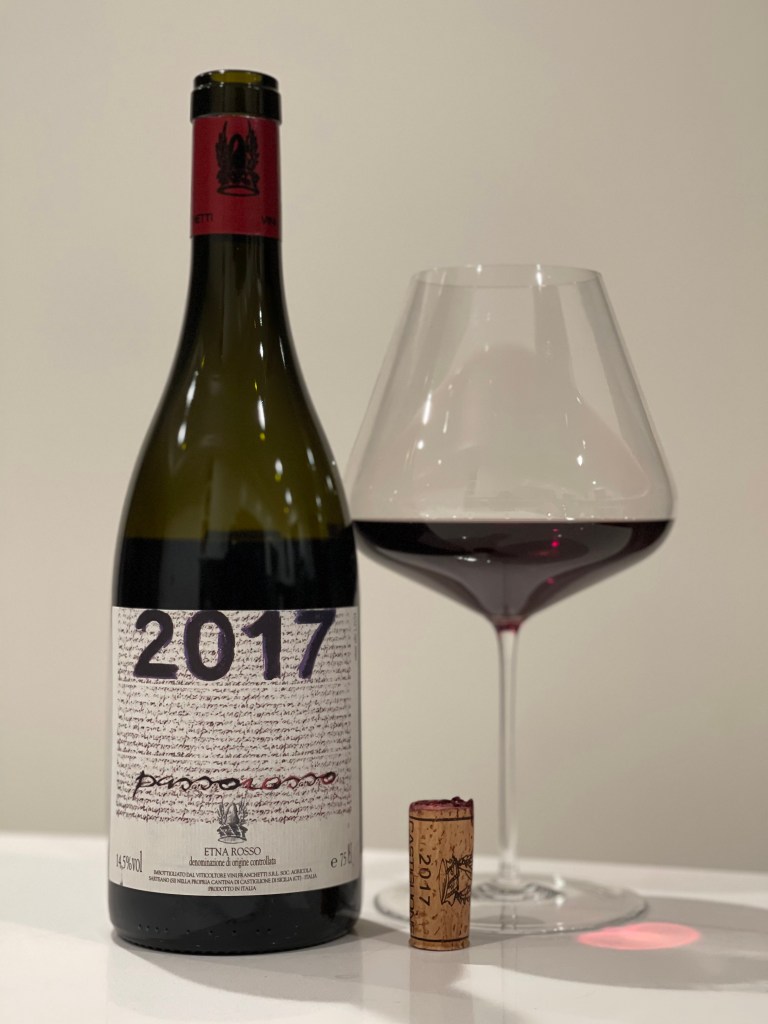
Today’s Wine: 2017 Passorosso Etna Rosso

100% Nerello Mascalese; 14.5% ABV

The 2017 Passorosso Etna Rosso is translucent medium ruby in color. Given about an hour to open up, the wine showcases a surprisingly deep nose of red cherry, raspberry, strawberry, black plum, red rose, leather, scorched volcanic earth, black pepper, dried green herbs, cocoa powder, and cedar with pronounced intensity. Meanwhile on the palate I get notes of cranberry, sour red cherry, pomegranate, blood orange, licorice, violet, tobacco, smoke, crushed rock mineral, and chocolate. This dry red is full-bodied with high acidity, high tannins, and a long finish. Very young, and the tannin and alcohol should integrate beautifully with a couple more years of bottle age.

Price: $35. I think this is a great value, especially given how beautifully it drinks at such a young age. Give this one or two more years to better integrate the alcohol and tannin, but this certainly has the stuffing to drink well for the next 5+ years.

Deliciously Pure Champagne From a Unique House

Today’s Story: Champagne Leclerc Briant

Champagne Leclerc Briant is a unique Champagne house established in 1872 by Lucien Leclerc in the village of Cumières. In 1955, however, the house moved to Épernay following Bertrand Leclerc’s marriage to Jacqueline Briant and they formed the négociant business Champagne Leclerc Briant. Leclerc Briant helped push the boundaries in Champagne, becoming one of the first houses to adopt organic viticulture during the 1960s and bottle single-vineyard Champagnes during the 1970s. Under Pascal, Bertrand and Jacqueline’s son, Leclerc Briant started dabbling with biodynamic viticulture during the 1980s and they became Demeter biodynamic certified in 2003. Unfortunately, Pascal passed away in 2010 far too soon and Leclerc Briant fell into tough times and faced extinction for a couple years, selling off the majority of their vineyards. In 2012, however, an American couple Mark Nunelly and Denise Dupré purchased the house alongside Champagne native Frédéric Zeimett and oenologist Hervé Jestin and the team has brought Leclerc Briant back to greatness.

Leclerc Briant consists of a very small 0.6 hectare vineyard called La Croisette, which is adjacent to the winery in Épernay. They also own roughly 9.6 hectares across various 1er and Grand Cru vineyards, though they source small amounts of Pinot Noir from the Aube and have long-term purchase agreements with other vignerons who own organically or biodynamically farmed vineyards. In the cellars, Jestin practices a non-invasive style of winemaking and sees himself as an observer and guide rather than a heavy hander. The wines all go through spontaneous fermentation and vinify in INOX tank, terracotta egg, or French oak barrel before malolactic fermentation is allowed to happen naturally. After at least nine months in barrel, the wines experience extended aging in the cellars and dosage levels are minimal or at times nonexistent at all to allow the wines to showcase themselves in pure form. All the wines are then bottled unfined and unfiltered.

To view the range of wines from Leclerc Briant, visit the website here. There are truly some unique bottlings, including one that ages submerged 60 meters in the Atlantic Ocean!

Today’s Wine: 2009 Extra Brut Champagne

40% Pinot Noir, 40% Chardonnay, 20% Pinot Meunier; 12% ABV

The 2009 Extra Brut Champagne is transparent medium to deep gold in color. On the nose, I get aromas of lemon, green apple, honeysuckle, brioche, almond, chalk, and lees characteristics such as cheese rind and baked bread. Meanwhile the palate is drop-dead gorgeous with notes of green apple, crisp golden pear, lemon zest, white florals, toast, cheese rind, roasted nuts, cream, and saline mineral. This is light- to medium-bodied with vibrant medium (+) acidity and a long finish. Disgorged in June 2017. Dosage 4 g/L.

Price: $80. I actually think this is a very solid value for vintage Champagne. The precision and vibrancy of the wine is remarkable and this is all around a beautifully pure expression of the terroir. Highly recommended.

Nicely Aged Brunello Riserva

Today’s Story: Uccelliera

Uccelliera is a small wine estate located in the Tuscan village of Castelnuovo dell’Abate in Montalcino, and it was established in 1986 by Andrea Cortonesi. Andrea purchased his property from the neighboring Ciacci Piccolomini, and at the time the Uccelliera farm consisted of 4 hectares and was pretty run-down with less than a hectare planted to vine. Andrea quickly set about transitioning the property to focus on viticulture, though he did keep the olive trees to make extra virgin olive oil as well. Andrea produced his first vintage in 1991 and production amounted to a measly 500 bottles, though fortunately for us consumers he grew his property to about 6 hectares over time with most of that planted to vine. All of the work in the vineyards is accomplished by hand, and Andrea produces a Brunello di Montalcino, Brunello di Montalcino Riserva, Rosso di Montalcino, and a “Super Tuscan” called Rapace which are all very highly regarded.

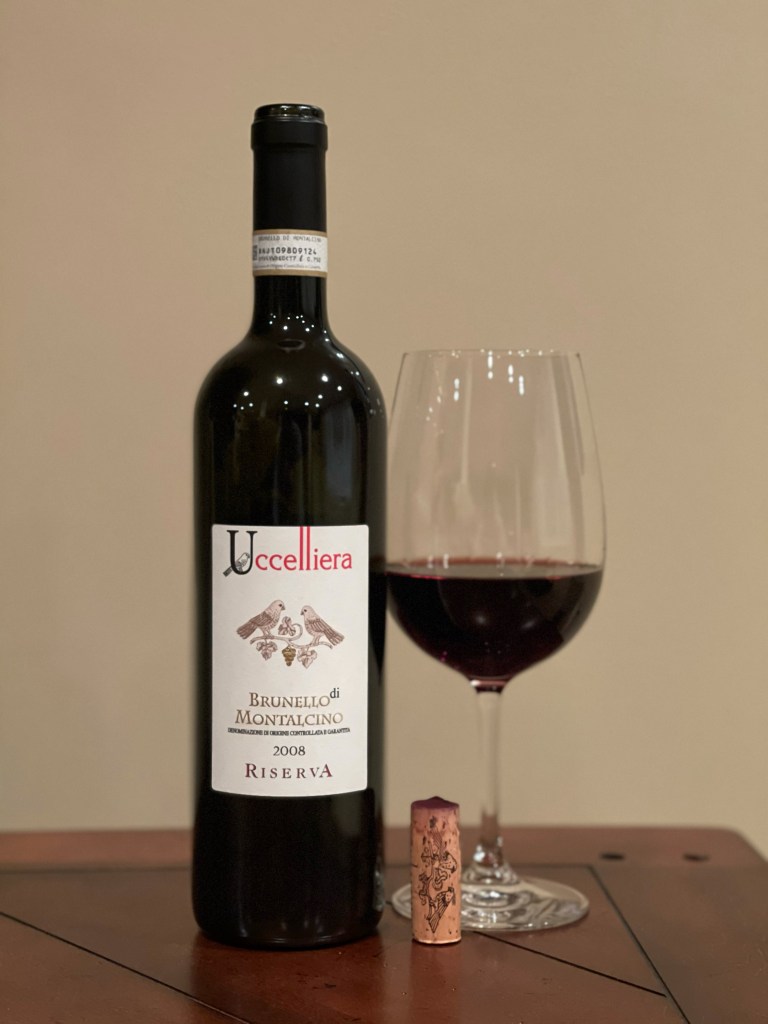
Today’s Wine: 2008 Brunello di Montalcino Riserva

100% Sangiovese; 14.5% ABV

The 2008 Brunello di Montalcino Riserva is deep garnet in color and almost opaque. There is a good amount of very fine sediment and this needs about an hour to decant, but once it does the nose showcases gorgeous aromas of dried cherry, cranberry, leather, anise, red rose, forest floor, mushroom, and tar. Meanwhile on the palate I get notes of black cherry, dried strawberry, black raspberry, licorice, tobacco, truffle, black tea leaf, sage, and cedar. This is medium- to full-bodied with medium (+) acidity, high tannins, and a long finish. Drinks beautifully right now but will be fun to revisit in 2-3 years.

Price: $180 (paid $100 a few years ago). This is a very, very solid Brunello and I think the price-tag is justified but there are certainly better “values” out there. Finding this a few years ago for $100 was a steal!

A Renaissance for the Mondavi Family

Today’s Story: Continuum Estate

Continuum Estate was established in 2005 by Robert Mondavi and his children Tim and Marcia following their sale of Robert Mondavi Winery in 2004 to Constellation Brands. In 2008, they purchased the estate vineyard high up on Pritchard Hill in the Vaca Mountains on the eastern boundary of the Napa Valley, and the winery was finished in time for the 2013 harvest. While most of the fruit they used starting 2008 was from the Continuum estate vineyard, they did not use 100% estate fruit until 2012. Though Robert passed away in 2008, Continuum is still run today by siblings Tim and Marcia Mondavi with the help of their children.

Continuum consists of about 172 acres, of which roughly 62 acres are planted to the Bordeaux varieties of Cabernet Sauvignon, Merlot, Cabernet Franc, and Petit Verdot. The property sits at elevations between 1,325 and 1,600 feet, offering both optimal winegrowing conditions and impressive views of the valley below. Continuum focuses on one premium Bordeaux blend each vintage, though they do produce a second wine called Novicium from the younger vines and it is typically Merlot-dominant or closer to an equal blending of the four varieties.

In making their wines, Continuum practices organic viticulture though they are not certified. All fruit is hand-harvested into small baskets, then hand-sorted, destemmed, and hand-sorted again. The resulting fruit is gravity-fed into small French oak and cement tanks for fermentation to begin. Following primary fermentation, the wines are drained into 85% new French oak barrels for malolactic fermentation and aging. Each vintage roughly 25-30% of the lots will be declassified because they do not meet the strict quality standards of the team, and each vintage spends 19-20 months aging in barrel. The wines are bottled unfined and unfiltered.

Today’s Wine: 2014 Continuum Proprietary Red

65% Cabernet Sauvignon, 15% Cabernet Franc, 15% Petit Verdot, 5% Merlot; 14.8% ABV

The 2014 Continuum is opaque deep ruby in color with deep purple hues. Given about 2 hours in the decanter, this blossoms into aromas of blueberry, plum, blackberry compote, black cherry, licorice, pipe tobacco, tilled rocky soil, sage, pine, and cedar. Meanwhile on the palate I get notes of cassis, sweet blueberry, spiced plum, redcurrant, blue and purple florals, pine, crushed rock, baking spice, iron, dried vanilla, light smoke, and green herbs. This is full-bodied with medium (+) acidity, fine-grained medium (+) tannins, and a long finish. A very opulent and silky wine that probably needs another 3-5 years of cellaring.

Price: $220. Like many of the wines produced on Pritchard Hill, this is not an inexpensive bottle. In value terms, I think this is a bit of a stretch and there are wines which drink just as well if not slightly better around the $150 mark. Nonetheless, this is a delicious wine and I think it is a solid renaissance for the Mondavi family.

Exquisite Loire Valley Cabernet Franc

Today’s Story: Domaine de la Chevalerie

Domaine de la Chevalerie is a small family-owned estate and winery established in 1640 by the Caslot family. Located in the village of Restigné within the Loire Valley, the domain consists of about 33 hectares of vineyards planted entirely to Cabernet Franc. A true family affair, the domain is run by siblings Stéphanie and Emmanuel who joined their father Pierre in the early 2000s. Pierre’s first task he set upon his children was to convert the entire domain to organic viticulture and winemaking, which they received certification for in 2008. By 2012, the domain transitioned entirely to biodynamics and received the Demeter certification. Though Pierre unfortunately passed away in 2014, Stéphanie and Emmanuel carry on the legacy aided by their younger sister Laurie who joined in 2018.

In their goal to produce terroir-driven wines that showcase a true sense of place, the Caslot family goes further than biodynamics alone and practices a minimally invasive winemaking style. All fruit is hand-harvested into small baskets before being sorted, destemmed, and sorted again. The grapes are not crushed, but instead transfer into vat by gravity to begin fermentation with only indigenous yeasts. After fermentation, the wines move to demi-muids and large 400 to 500 liter neutral barrels for aging. They add minimal SO2 and generally bottle the wines unfined and unfiltered.

To explore the family’s vineyard holdings, portfolio of wines, or read more I recommend visiting their website here.

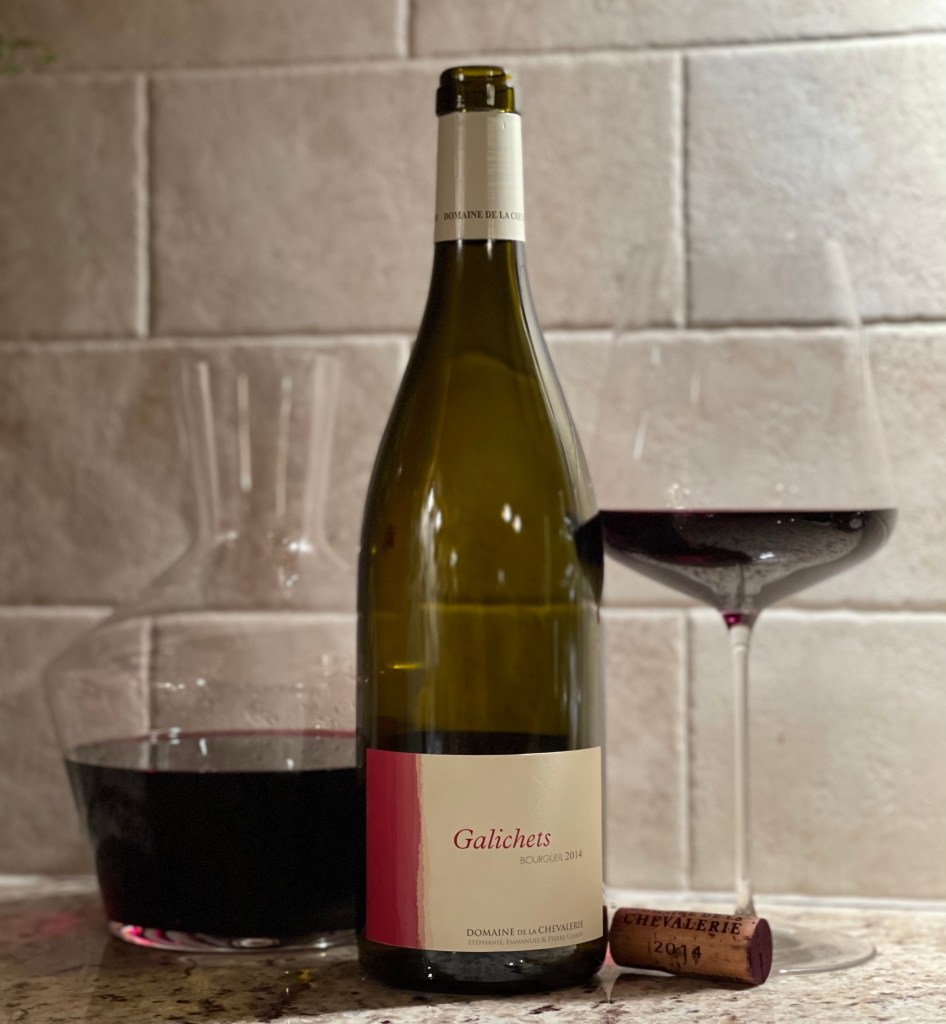
Today’s Wine: 2014 Bourgueil Galichets

100% Cabernet Franc; 13% ABV

The 2014 Bourgueil Galichets is medium ruby in color and nearly opaque. This is an absolutely gorgeous wine out of the bottle, but really needs 45 minutes to an hour of decanting to truly open up and shine. On the nose, I get pronounced aromas of redcurrant, bing cherry, strawberry, black raspberry, slight barnyard, tilled earth, crushed rock, mild chili pepper, and dried underbrush. Meanwhile the palate showcases notes of crunchy cranberry, stemmy strawberry, raspberry, cigar tobacco, scorched earth, gravel, charred bell pepper, and crushed rock minerality. This dry red is medium-bodied with medium (+) acidity, fine-grained medium (+) tannins, and a medium (+) length finish.

Price: $30 (might be able to find this closer to $25). This is an outstanding bottle of wine, particularly given its price-point, balance, and complexity. A very solid value play here, and definitely worth seeking out.

Perfectly Aged Napa Valley Chardonnay

Today’s Story: Chateau Montelena

Though I’ve written about Chateau Montelena a few times previously, I feel obligated to revisit them again today after tasting this magnificent 1995 Chardonnay. You may have read my posts for the 2011 Estate Cabernet Sauvignon, 2009 Chardonnay, and/or Twenty Year Ruby, though I will paste the history of this great estate again for convenience.

Chateau Montelena traces its roots back to 1882 when Alfred L. Tubbs purchased 254 acres of rugged land with the dream of turning it into vineyards. Tubbs first planted his vineyards before constructing the chateau in 1886 and bringing in a winemaker from France, and by 1896 the A.L. Tubbs Winery was the seventh-largest in the Napa Valley. This prowess was short-lived, however, when winemaking shut down during Prohibition. With its repeal in 1933, Alfred’s grandson Chapin Tubbs continued harvesting the vineyards to make some wine and started selling fruit to others. He rechristened the winery to Chateau Montelena Winery in 1940 with the name derived from a contraction of Mount St. Helena.

In 1947, Chapin unfortunately passed away and winemaking at Chateau Montelena ceased again two years later. The Tubbs family sold this magnificent estate in 1958 to Yort and Jeanie Frank, a couple who emigrated from Hong Kong after WWII and were then seeking a peaceful place to retire. The Franks did not resume winemaking but rather worked to transform some of the overgrown grounds into a lake and landscaping reminiscent of their native gardens back home. Jade Lake on the property still provides evidence of this today and remains a beautiful and peaceful sanctuary.

The renaissance of this great winemaking estate, however, came about in the early 1970s under the leadership of Jim Barrett. Barrett quickly cleared and replanted the vineyards and brought in modern winemaking equipment alongside a team to oversee the vineyards and production. In 1972, winemaking resumed at Chateau Montelena and within years it would become one of the most important wineries in all of California and at that time even throughout the world. Chateau Montelena today thrives under the watchful eyes of Jim’s son, Bo Barrett.

Arguably the most important event in Chateau Montelena’s history occurred in 1976, though halfway around the world in France. Steven Spurrier, a British wine merchant, sought to put the best Californian wines head to head with the best French wines and assembled the Paris Wine Tasting of 1976 (known as the Judgment of Paris). There were an assortment of red wines and an assortment of white wines, with the Chateau Montelena Chardonnay being one of six Californian whites going against four greats from France’s Burgundy region. The 1973 Chateau Montelena Chardonnay beat all of the other white wines in a blind tasting and shocked not only the panel and those in attendance but the entire world, cementing California as a winemaking region demanding respect. Funny enough, Stag’s Leap Wine Cellars also in Napa Valley won for the red wines with their 1973 Cabernet Sauvignon.

If you’d like something a bit more “fun” to learn about Chateau Montelena, watch the movie Bottle Shock starring Alan Rickman, Bill Pullman, and Chris Pine.

Today’s Wine: 1995 Chardonnay

100% Chardonnay; 13.5% ABV

The 1995 Chardonnay (from magnum) is absolutely beautiful deep gold and transparent. The nose showcases gorgeous and well-aged aromas of apricot, golden pear, tangerine, honeysuckle, white truffle, dried herbs, and wet river stone. Meanwhile the palate displays notes of charred pineapple, apricot, golden delicious apple, white florals, honey, exotic white peppery spice, clove, and crushed rock minerality. Though not the most complex or deepest wine, this is absolutely perfect in terms of balance and I can’t find a single fault with it. The wine offers a fully round, plush, and opulent mouthfeel and is medium-bodied with still-vibrant medium (+) acidity into a long finish.

Price: $90 for 750ml or $180 for this magnum direct from the winery. For a magnum stored in the Montelena cellars until we took delivery late 2019, this is absolutely worth the price. This wine is a breathtaking example of aged Napa Valley Chardonnay and I look forward to drinking it again in another year or two.

Rustic Yet Elegant Italian Merlot

Today’s Story: Feudi di San Gregorio

Feudi di San Gregorio is a fairly large winery established in 1986 in the village of Sorbo Serpico in Irpinia (Province of Avellino) of the Campania region of Southern Italy. Though Feudi di San Gregorio consists of about 300 hectares of vineyards and they produce roughly 3.5 million bottles of wine annually, the winery is known for their high quality and a dedication to native varieties such as Aglianico, Falanghina, Greco, and Fiano. Many of their vines are a century old (some even closer to 150 years old), providing Feudi di San Gregorio with unique holdings after many of their neighbors replanted to non-native varieties. This being said, they don’t entirely ignore non-native varieties and have a small percentage of their vines planted to Merlot. With all these factors in mind, Feudi di San Gregorio is often credited as a leading winery bringing glory to Campania with a marriage of tradition and modern winemaking.

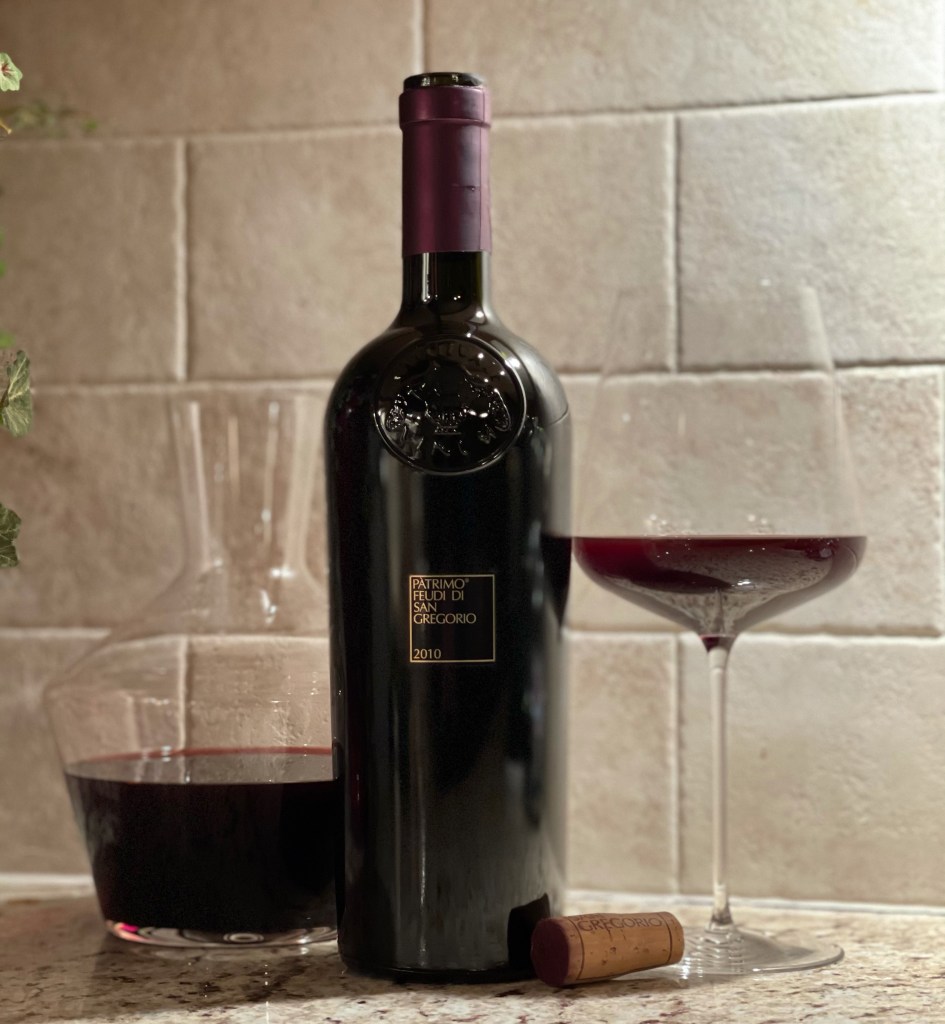
Today’s Wine: 2010 Pàtrimo

100% Merlot; 14% ABV

The 2010 Pàtrimo is opaque deep ruby in color with a touch of deep garnet variation near the rim. Still youthful in appearance and taste out of the bottle, I decanted this for about 90 minutes. Afterwards, the nose exploded into aromas of blackberry, plum, licorice, sweet tobacco, savory grilled herbs, sun-dried earth, clay, chocolate, and slight oaky spice. Meanwhile on the palate I get notes of black cherry, blackberry, plum, cola, tobacco, green herbs, bay leaf, crushed rock, scorched earth, iron, and bitter chocolate. This is medium- to full-bodied with medium acidity, dusty medium (+) tannins, and a long finish. While very elegant, this is fairly rustic for a Merlot and certainly shows its Italian charm.

Price: $120 to $165 depending on location (I paid $40 on sale in 2018). I think the $120 range is rather fair, though if you find this closer to $165 that is certainly pushing it. This wine is absolutely gorgeous right now and offers great depth and the ability to go for at least another 5 years. Me paying $40 for this was an absolute robbery, and I’m thankful to have two bottles left to try over the years to come.

A Napa Homage to Bordeaux’s Right Bank

Today’s Story: Blankiet Estate

Blankiet’s roots start with Claude and Katherine Blankiet, a couple who spent years searching for land conducive to grape growing on the western foothills of the Mayacamas Mountains. Finally, in early 1996, an agent working with the Blankiet family showed them an undeveloped property above the famous Napanook vineyard (and Dominus Estate) and they purchased the land on sight. From the onset of their search, Claude and Katherine desired to create world-class, high-quality, and small production Bordeaux style wines and then, with ownership of the land, set right to work. During development of the vineyards, the Blankiet family brought in famed viticulturist David Abreu and winemaker Helen Turley for their expertise. The terroir of Blankiet consists of three volcanic knolls with alluvial deposits between them, thanks to water flowing down from the mountains. The vineyards are broken into four sections, each with a unique subsoil and microclimate, and they planted root stocks from First Growth Bordeaux estates to get the ball rolling. Today, they produce 5 wines from the Bordeaux varieties of Cabernet Sauvignon, Merlot, Cabernet Franc, and Petit Verdot.

Blankiet farms their vineyards utilizing organic methods (they are Napa Green Certified) and their position on the hillsides in depleted soils requires a great deal of manual work but results in intensely flavored fruit. During the winter, Blankiet Spur prunes their vines and later thin out buds, flowers, leaves, and grape clusters throughout the spring and summer to reduce yields and enhance the wines’ concentration. During harvest, Blankiet completes up to 32 “mini-harvests” thanks to their array of soils and microclimates between and amongst the four varieties they grow. Though the estate examines sugar levels, acidity, and pH to help in their picking assessments, most of the fruit is harvested by taste tests of the berries and any deemed ready are de-leafed and trimmed of damaged clusters that afternoon. Harvest begins at 4am the following morning so workers can pick fruit in cooler temperatures and avoid the 50+ degree temperature swings common in Blankiet’s vineyards from day to night, as well as fruit flies that are inactive at night. All fruit is carried to the winery in small baskets before being destemmed by a gentle machine and sorted by two state-of-the-art optical sorters. A few employees manually check and sort the fruit at the end of the process. After sorting, Blankiet adds carbon dioxide ice which maintains the fruit at a cold temperature while displacing oxygen and this is then gravity loaded into small fermentation tanks to begin cold maceration.

During the actual winemaking process, each pick is fermented separately and cold maceration lasts generally a week which allows enzymes to soften the fruit’s cellular structure but inhibit alcoholic fermentation due to the temperature. Once cold maceration is complete, Blankiet slowly warms the temperature of the fruit mass so alcoholic fermentation can begin and they closely monitor temperatures to help the yeasts thrive. The winemaking team checks each tank two times each day, with pump-overs a result according to taste. When the wines are ready for malolactic fermentation, they are moved to new French oak barrels in a warm cave for several months until they are ultimately moved into the cold aging caves where they call home for the next couple of years. Unlike many wineries today, Blankiet steers clear of adding sulphur dioxide (SO2) to their wine barrels when natural evaporation eventually takes place, instead refilling this open space with more wine. When the wine is ready to be bottled, it is done so on-site without fining or filtration.

For further reading, I previously reviewed the 2014 Blankiet Estate Paradise Hills Vineyard and their 2016 Prince of Hearts Rosé. The background/history is the same, but the tasting notes may be interesting to you. The Blankiet Estate website is also very informative, with great pictures too.

Today’s Wine: 2014 Rive Droite

92% Merlot, 8% Cabernet Franc; 14.6% ABV

The 2014 Rive Droite is translucent medium to deep ruby in color. I decanted this for about 90 minutes, allowing the wine to blossom with aromas of blackberry, blueberry, red plum, black raspberry, graphite, hint of smoke, mocha, vanilla, and toasted oak. Meanwhile on the palate I get notes of black cherry, plum, redcurrant, sweet tobacco, chocolate, clove, hint of cracked pepper, espresso, and cedar. This is full-bodied with medium acidity, velvety medium (+) tannins, and a long finish. I think this needs another 5 years to drop the baby fat and develop some tertiary notes, though it’s already drinking like liquid silk.

Price: $195 at the winery ($250 average online). This is a phenomenal wine and doesn’t drink like Napa Merlot we are used to, however it is certainly a value stretch particularly if you are paying secondary market prices. The quality, finesse, and aging ability are all there which makes this a fantastic bottle for a special occasion, but you can find better values in Napa or on the Right Bank of Bordeaux itself.