Rioja That Left Me Speechless for the Price

Today’s Story: La Rioja Alta

I previously wrote about La Rioja Alta back in May when I reviewed the 2010 Rioja Gran Reserva 904, but their 2010 Viña Ardanza Selección Especial was too tempting to pass up today.

La Rioja Alta is a historic winery established in 1890 by five Riojan and Basque families in Haro’s Station Quarter. The endeavor was named Sociedad Vinícola de La Rioja Alta, and in 1904 La Rioja Alta merged with Ardanza Winery. The two years, 1890 and 1904, are important for La Rioja Alta and today’s Gran Reservas 890 and 904 allude directly to those milestones. Today, La Rioja Alta practices sustainable viticulture with 16 hectares dedicated to organic viticulture, limiting treatments in the vineyards and utilizing renewable energy to support many of their operations. La Rioja Alta produces their wines from estate vineyards, with yields kept to under 5,000 kilos per hectare in order to yield higher quality fruit. All of the barrels are produced onsite by the Rioja Alta cooperage, and they use oak imported from the United States which they dry in open air for 2 years before use. All barrels are racked individually by candlelight and the wines go through long aging to preserve harmony and balance before release.

Today’s Wine: 2010 Viña Ardanza Rioja Reserva Selección Especial

80% Tempranillo, 20% Garnacha; 13.5% ABV

The 2010 Selección Especial is translucent medium ruby or even dark garnet in color. I decanted this bottle for 6 hours and drank it over the following 2 hours, and the wine needed every second it. Once this opens up, the captivating and classic nose offers aromas of dried black cherry, plum, dried strawberry, tobacco, leather, loamy earth, smoked game, graphite, cola, chocolate, and oak. The palate is equally tantalizing, showcasing notes of cherry, black raspberry, redcurrant, stewed strawberry, blood orange peel, pipe tobacco, sun-dried earth, wet crushed rock, dill, clove, mild vanilla, and slight baking spice. This is medium-bodied with medium (+) acidity, medium tannins, and a medium (+) length finish. While beautifully expressive and a textbook Rioja now, this will only get better in 5-10 years and keep well beyond that. The Selección Especial designation was made in only 4 vintages over the bottling’s 77 year history: 1964, 1973, 2001, and 2010.

Price: $40 (I paid closer to $50). The value here is incredible. If you can find this for $40 (or even less in some locations) I would honestly purchase it by the case. I would even buy it by the case at $50. For how this drinks now with a lot of air, I can only imagine what the coming decades will bring.

Wonderful Napa Chardonnay for a Special Occasion

Today’s Story: Kongsgaard Wine

Kongsgaard Wine is a boutique family-owned and operated winery established in 1996 by John and Maggy Kongsgaard. However, John and Maggy (who unfortunately passed away earlier this year) are fifth generation Napa natives and began planting The Judge vineyard during the 1970s on land owned by the Kongsgaard family since the 1920s. The Judge vineyard today consists of about 10 acres, with the original 8 of Chardonnay augmented by 1 acre of Roussanne and Viognier in 1995 and 1 acre of Cabernet Sauvignon in 2001. Kongsgaard further expanded in 2004 by purchasing estate vineyards high up on Atlas Peak, and the family directs farming on additional acreage in Carneros through long-term leasing agreements. With the estate vineyards known for incredibly rocky soils, difficult elevation, and ultra-low yields, the fruit is generally very intense and concentrated.

A student of traditional European winemaking and Michel Rolland, John crafts his wines with incredible patience and a hands-off mentality in the cellar. John barrel ferments his wines (which sometimes takes up to an entire year) and does not add any yeast or bacteria. Further, John adds little to no SO2 and lets his wines rest in oak barrels for two years. Though the wines do see extensive time in oak, due to the intensity and concentration of the fruit oftentimes the oak comes into the wine only as a background or afterthought and not as an overbearing influence common in many modern Napa Chardonnays. John’s wines are bottled unfined and unfiltered, and they are known for their power and intensity in youth but have the ability to age for decades down the road.

John’s wines are born from passion and great care, with production limited to what he and his son Alex can make largely by hand. Kongsgaard bottles The Judge Chardonnay, a second Chardonnay, Cabernet Sauvignon, Syrah, a Viognier and Roussanne blend, and Sauvignon Blanc. Total production is around 3,300 cases.

Fun Fact: John is famous for creating the first unfiltered Chardonnay in California during his winemaking stint at Newton from 1983 to 1996.

Today’s Wine: 2018 Chardonnay

100% Chardonnay; 14.1% ABV

The 2018 Chardonnay is transparent medium to deep gold in color. I know this is downright infanticide with this wine, but after about an hour of air I was actually blown away by how expressive it is already. Starting with the nose, I get aromas of yellow apple, golden pear, stone fruit, white wildflower, matchstick, light smoke, flint, crushed rock, and a hint of oak. While quite big and downright opulent on the palate, this is much more approachable and deeper than I was expecting with notes of peach, yellow apple skins, snap pea, ginger spice, honeysuckle, hazelnut, flint, a hint of butter, and toasted oak. This is medium- to full-bodied with medium acidity, a very well-rounded and opulent mouthfeel, and a long finish. I’d still say give it a few more years, but it is nice to know that it’s quite approachable after some time decanting. 2,200 cases produced.

Price: $125 (looks like $100 if you’re a member). This is a very tough price point for me to discuss value without some trouble, particularly because there are a number of white Burgundies that punch at this point for the same price or slightly less. HOWEVER, to augment your cellar or tasting experience with some high quality Napa Chardonnay (one of the best I’ve had) I would certainly buy this again. It has incredible depth and those gorgeous but hard to find matchstick and flint characteristics, all while being in my opinion still a few years too young! Would love to try this again in the future.

Gorgeous Valpolicella From Perhaps the Most Important Name in Veneto

Today’s Story: Giuseppe Quintarelli

Giuseppe Quintarelli is a legendary family-owned and operated wine estate located in Italy’s Veneto region. The estate traces its roots to the early 1900s when Silvio Quintarelli tended vines as a sharecropper in Figari with his brothers, however Silvio moved to Cerè di Negrar and established his own estate in 1924 which can be considered a more official founding date. By the 1950s, Silvio’s son Giuseppe came into his own as a winemaker and took over the family estate with an immediate mission of tirelessly improving the quality of his wines. It is this Giuseppe whose name today adorns the bottles, and he is largely considered the Father of Amarone which he worked to perfect over a 60 year career.

A staunch traditionalist and perfectionist, Giuseppe’s wines are the benchmark for quality when it comes to Amarone and Valpolicella. At the Quintarelli estate, which consists of about 12 hectares of vineyards, they eschew the use of chemical herbicides and intentionally foster low yields through strict pruning and green harvesting in an effort to bolster quality, not quantity. Harvest is accomplished with multiple passes through the vineyards by plot and variety to ensure all fruit is picked at the most opportune time, and there are very strict standards for how to qualify fruit as acceptable. As an example of how far the Quintarelli family is willing to go, they will not bottle an Amarone in vintages they deem anything but the utmost quality, instead bottling the Rosso del Bepi with declassified fruit. A subset of the Quintarelli’s perfectionism is their patience. Once the wines are transferred to Slavonian oak botti for aging, the Amarone remains for 8 years and the Amarone Riserva for 10 years before they are bottled and released only when ready. Even the Valpolicella Classico Superiore I am reviewing today spends 7 years in oak botti!

Though Giuseppe passed away in 2012 at the age of 84, the Quintarelli estate is managed today by his daughter Fiorenza and son-in-law Giampaolo Grigoli. With the help of their sons Francesco and Lorenzo, Fiorenza and Giampaolo remain steadfast to the traditions and sky-high demands passed down by Giuseppe. Similar to the longevity of their great wines, it appears the Quintarelli estate will remain a family endeavor and benchmark of the region for the years to come.

Today’s Wine: 2012 Valpolicella Classico Superiore

Blend of Corvina, Corvinone, and Rondinella; 15% ABV

The 2012 Valpolicella Classico Superiore is somewhat translucent medium ruby in color with hues of dark garnet. I decanted this for an hour or two, which helped the nose blossom into aromas of blackberry, plum, prune, black raspberry, licorice, cedar spill, tobacco, mint, savory green herbs, wet rocky earth, and graphite. Moving onto the palate, this rustic and complex Valpolicella displays notes of black cherry, juicy plum, cassis, anise, dried raisin, leather, cigar box, forest floor, slate, eucalyptus, wild herbs, and bitter chocolate. This is full-bodied with medium (+) acidity, medium tannins, and a long, elegant finish.

In producing this wine, 50% of the grapes are pressed immediately after harvest and 50% are pressed after drying for two months. Following three to four days of maceration, primary fermentation begins using only indigenous yeasts and the wine is racked until February. The second alcoholic fermentation begins after the wine is racked onto the lees, and once complete moves to Slavonian oak barrels for seven years before bottling.

Price: $100 (can probably find closer to $80 in some locations). As with the other Quintarelli wines I’ve enjoyed over the years, I think this is worth every penny. There is a rare level of palpable quality in this wine and the balance, depth, and pure beauty of it did not allow the bottle to last long. If you are new to Quintarelli, I can’t recommend the wines enough.

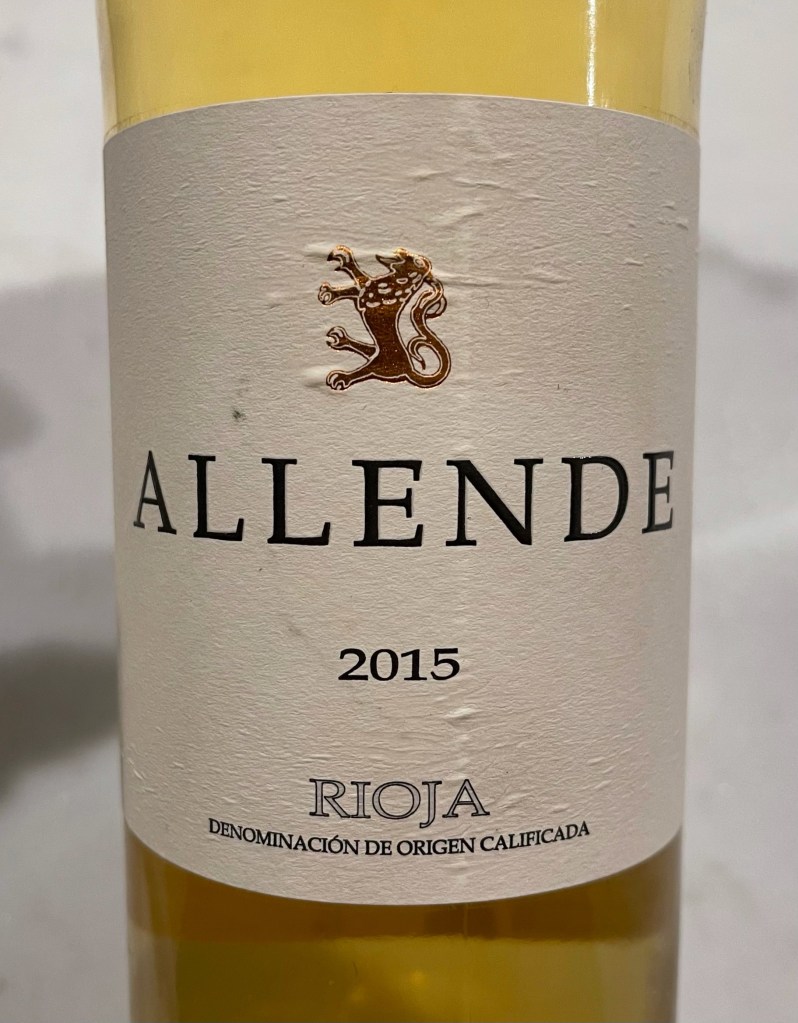
Refreshing Rioja Blanco With a Strong Value Proposition

Today’s Story: Finca Allende

Finca Allende was established in 1986 by Miguel Ángel de Gregorio in the hilltop town of Briones in the Rioja Alta region of Spain. Allende’s home, the Ibarra Palace, is a mansion built in 1675 for Don Pedro Ibarra and it’s situated amongst hillside vineyards that capture both Mediterranean and Atlantic influences in a unique and diverse terroir. Allende operates in three vineyards, each with their own microclimate and soil types to enhance various characters of the winegrowing process: Mártires (planted in 1970 in clay soil), El Calvario (planted in 1945 in stony/gravelly soils), and Aurus (60 year average vine age in clay and deep gravel soils). In caring for these vineyards, Allende refuses to use herbicides or synthetic chemicals and practices more traditional and manual farming (like plowing most vines with mules). All fruit is hand-harvested, hand-sorted three times, and manually punched down. Long aging in both barrel and bottle help guide the wines into the “Allende style” which is often fully-rounded, fuller bodied, and well-structured.

Today’s Wine: 2015 Rioja Blanco

95% Viura, 5% Malvasia; 13.5% ABV

The 2015 Rioja Blanco is transparent medium to deep gold in color. This is a lovely wine on the nose, showcasing aromas of lemon zest, peach, juicy pear, golden apple, honeysuckle, white truffle, dill, and vanilla cream. Moving onto the palate, I get notes of honeydew, lime zest, grapefruit, ripe pear, white florals, mild green herbs, exotic white spice, and almond. This is medium-bodied with medium (+) acidity, a fully-rounded and somewhat oily mouthfeel, and a long refreshing finish.

Price: $30. I think this is a very nice value wine, and to be honest I’ve found quite a few Riojas and Rioja Blancos that can be. This seems to be drinking incredibly well right now and I see it being at a great point for at least a few more years.

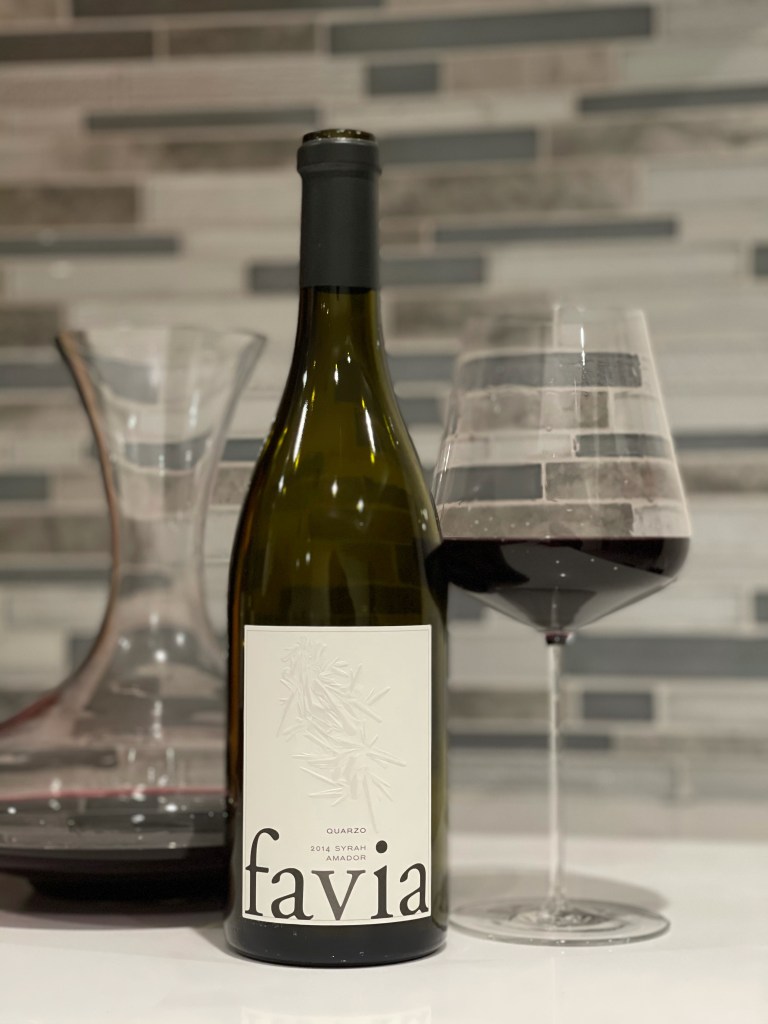
Powerful Yet Beautiful Amador County Syrah

Today’s Story: Favia Wines

I seem to be in a trend right now of revisiting wineries I previously wrote about, with my last post on Favia being in December of last year for their 2013 Linea Sauvignon Blanc.

Favia was founded in 2003 by viticulturist Annie Favia and winemaker Andy Erickson, a husband and wife duo. Annie has experience working with John Kongsgaard and Cathy Corison, though her viticulturist expertise came working under David Abreu. Andy also has an extensive resume, which includes winemaking stints at Screaming Eagle, Dalla Valle, Ovid, Harlan Estate, and Staglin amongst others. Andy also consults for Arietta, Mayacamas, and Dancing Hares Vineyard.

I had an opportunity to visit Favia for a tour and tasting last year, and it truly is a special experience. Annie and Andy live on the property in a home built in 1886 for the Carbone family, who are believed to be the first Italian immigrants to Napa Valley. Though modernized, Annie and Andy restored the home using historical documents alongside other structures on the property. A very cool feature, the cellar sits under the family home and Favia stores their wine right where they live. Strong believers in biodynamic practices and caring for the earth, Annie and Andy planted fruit trees, an olive orchard, and a garden (which we got to try a tomato from) in addition to the existing walnut orchard.

I highly suggest a visit to Favia if you take a trip to Napa Valley, as it’s a very small, unique tasting experience and is not too far from downtown Napa. In the meantime, check out their website here to browse their wines and see incredible pictures of the property.

Today’s Wine: 2014 Quarzo Syrah

100% Syrah; 14.8% ABV

The 2014 Quarzo Syrah is opaque deep purple in color, though nearly black with fairly heavy staining. After about 45 minutes in the decanter, this really opened up nicely and the nose showcases aromas of blackberry compote, rich black plum, blueberry, black licorice, dried tobacco leaf, rocky earth, slight baking spice, and mild oak. There is some slight heat there too, but it’s not incredibly noticeable and should hopefully fully integrate with another couple years in bottle. On the palate, this classic Syrah offers notes of inky blackberry, black plum, black cherry, anise, tobacco, damp earth, slate, green peppercorn, and chocolate. This is full-bodied with medium acidity, medium (+) but polished tannins, and a long finish.

Price: $70. I think this wine is very appropriately priced based on its quality and true to variety form. This is a classic California Syrah that is big and bold yet beautiful with great depth. Andy and Annie’s wines are always enjoyable, and I also highly recommend a visit to the winery next time you are in Napa Valley.

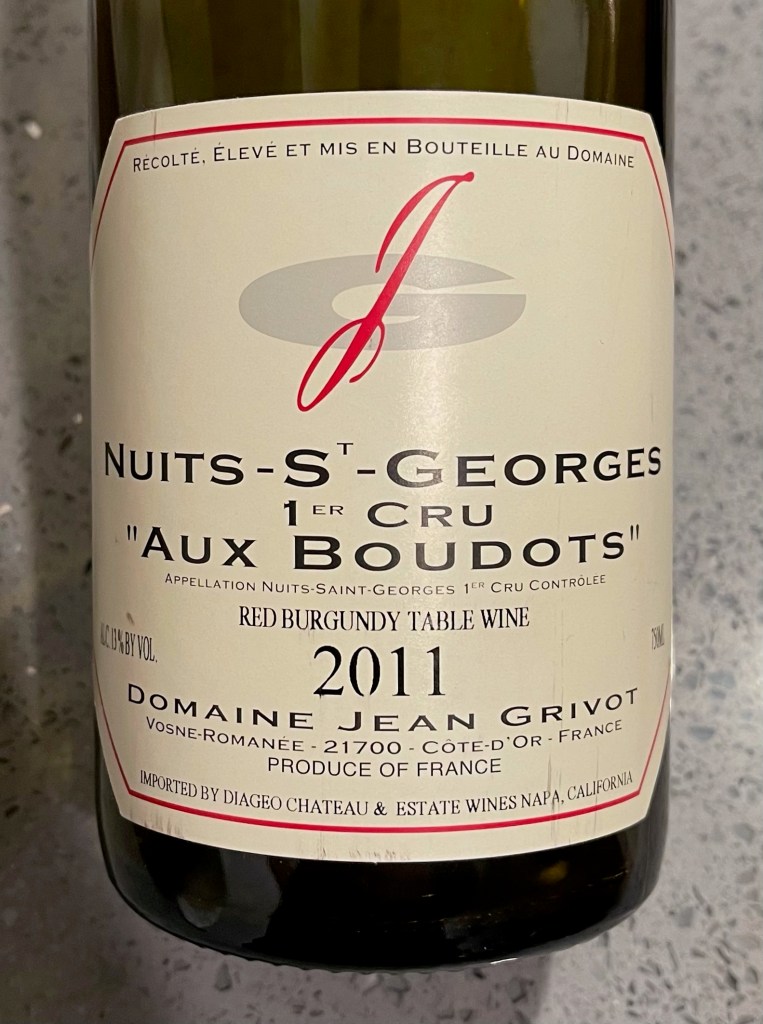
Valiant Effort in a Tough Vintage for Burgundy

Today’s Story: Domaine Jean Grivot

I wrote about Domaine Jean Grivot back in March when I reviewed the 2016 Nuits-St-Georges Les Charmois, though I figured it could be fun checking in on another bottling as one of my Thanksgiving wines.

Domaine Jean Grivot is a relatively small family owned and operated Burgundian estate now under guide of the fifth generation Étienne Grivot, his wife Marielle, and their children Mathilde and Hubert. Étienne took over the domaine from his father Jean Grivot in 1987, and Jean had taken over from his father following his death in 1955. The majority of the domaine’s vineyards are located in Vosne-Romanée, however over time their growth to 15.5 hectares stretches across 22 appellations in additional villages of Vougeot, Chambolle-Musigny, and Nuits-Saint-Georges. The domaine’s holdings include notable Grand Cru vineyards in Clos de Vougeot, Echézeaux, and Richebourg, as well as 8 Premier Crus including Les Beaux Monts and Suchots in Vosne-Romanée. Their vineyards are farmed organically founded in a desire for minimal impact on the environment and removal of chemicals in the vineyards. In Richebourg, Echézeaux, Beau Monts, and Suchots, the domaine even uses a horse to plough the vineyards in an effort to minimize impact on the soil. Harvest is accomplished by hand and the grapes are 95-100% destemmed before beginning fermentation using only natural yeasts. Unlike other winemakers in Burgundy, Grivot does not like punch downs before fermentation begins but rather pumps over the wines after fermentation is complete and before they spend 15 months in barrels.

Today’s Wine: 2011 Nuits-St-Georges 1er Cru Aux Boudots

100% Pinot Noir; 13% ABV

The 2011 Aux Boudots is translucent pale to medium ruby in color. I let this slow ox for about 30-45 minutes before further air time in the glass, helping the wine express aromas of black cherry, dried cranberry, dried tobacco leaf, dry tilled earth, underbrush, gravel, and green pepper. Once in the mouth, this showcases notes of black raspberry, black cherry, spiced plum, tobacco, leather, forest floor, rocky mineral, pepper, and dried green herbs. This is a delightful wine from a difficult vintage, and it is medium-bodied with medium acidity, medium (-) dusty tannins, and a medium (+) length finish.

Price: $200 (can find it closer to $160 in some locations). While no doubt a wonderful bottle of wine, I struggle to call this great “value” because while Burgundy prices have gone through the roof lately there are still some great options around this price from stronger vintages. If you can find it closer to $160, then by all means give it a try.

High Quality Sauvignon Blanc From Coombsville

Today’s Story: Realm Cellars

Realm Cellars is a winery I previously wrote about and will most likely write about again based on my experiences with their wines. You may recall my notes on the 2016 The Bard (one of my earliest posts) or my 2013 The Tempest if you’ve been around since early this year.

Realm was founded in 2002 with a focus on producing high-quality, limited production Bordeaux blend and single vineyard Cabernet Sauvignon wines. Co-Founder Juan Mercado left his role as a hospital administrator in San Francisco to pursue working in the wine industry and, until recently, Realm sourced their fruit from historical, high-quality vineyards (like Dr. Crane, To Kalon, and Farella) rather than growing their own. Juan runs the winery with Managing Partner Scott Becker, they have an excellent winemaker in Benoit Touquette, and Michel Rolland consults.

One of my favorite aspects of Realm (more a “that’s really cool” kind of thing) is their inspiration from Shakespeare. For example, the title of my blog post on the 2016 The Bard starts the line “This blessed plot, this earth, this realm” from Shakespeare’s Richard II, a line noted on every bottle of Realm wine, on their corks, and highlighted on the label of The Bard. Realm’s Bordeaux blends include The Tempest, named for the violent storm and play thought to be one of Shakespeare’s last; Falstaff, named for the fat, vain, boastful, and cowardly knight present in four of Shakespeare’s plays for comic relief; and of course The Bard, named for Shakespeare himself. Each wine highlights a particular variety, ranging from Merlot to Cabernet Franc to Cabernet Sauvignon, respectively.

As far as their single vineyard wines go, Realm produces Farella (100% Cabernet Sauvignon), Houyi (100% Cabernet Sauvignon), Beckstoffer Dr. Crane (95% Cabernet Sauvignon, 5% Petit Verdot), Beckstoffer To Kalon (100% Cabernet Sauvignon), Moonracer (Cabernet Sauvignon dominant blend), and a white wine called Fidelio (Sauvignon Blanc). As I mentioned in the beginning of this post, recently Realm started producing wine from their own fruit which is where Moonracer comes in. This wine comes from their vineyard on Wappo Hill in the Stags Leap District and is named for the Wappo Native Americans who were known for bravery, strength, and athleticism. The Wappos often took part in (and are said to have won most) inter-tribal races during a full moon, hence the name Moonracer.

Today’s Wine: 2019 Fidelio Sauvignon Blanc

100% Sauvignon Blanc; 14.1% ABV

The 2019 Fidelio is transparent pale to medium straw yellow in color with greenish hues near the rim of the glass. This is a gorgeous wine, with aromas of tangerine, lime, white peach, pineapple, freshly cut grass, saline mineral, and hazelnut leaping from the glass. Upon tasting, the wine showcases notes of grapefruit, peach, lemon zest, mango, tropical citrus, crushed rock minerality, cream, and slight spice all wrapped up into a plush and sexy mouthfeel. This Sauvignon Blanc is medium-bodied with vibrant, mouthwatering acidity into a long, tantalizing finish.

Price: $70. While very hard for me to call this a good “value” wine because it is a very expensive California Sauvignon Blanc, I do think the price is justified here. This seems to be a wine Realm put a lot of thought and effort into (after consulting Andy Erickson on vineyard selection) and it shows. I would put this up there with some of my favorite California Sauvignon Blancs in a heartbeat.

Pure Beauty and Elegance in Puligny-Montrachet

Today’s Story: Domaine Leflaive

It’s hard to believe more than a year has passed since I reviewed Domaine Leflaive’s 1995 Bienvenues Bâtard-Montrachet, so revisiting this great estate is long overdue.

Domaine Leflaive is a very highly regarded winery located in Puligny-Montrachet, Côte de Beaune, Burgundy. While origins of the estate come as early as 1717 with Claude Leflaive, the winery as it is today seems to begin with Joseph Leflaive (1870-1953). Initially working as a naval engineer who helped develop the first French submarine, Joseph cared for his family’s vines in Puligny-Montrachet following his marriage. Thanks to phylloxera, many of the vines needed dramatic replanting and many of the produce at the time sold to wine merchants. Thus, in the 1920s, Joseph replanted the parcels of his estate and started selling wines under his own label.

When Joseph died in 1953, Domaine Leflaive came under the control of his four children (Jo, Vincent, Anne, and Jeanne) and the family desired to maintain the winery at the peak of excellence. Jo, an insurance underwriter by trade, took over the administrative and financial management of Domaine Leflaive while Vincent, an engineer who studied management and business, covered the vineyard, wines, and commercial side of the business. Over time, Domaine Leflaive produced some of the greatest white Burgundy wines and continues to be a family endeavor. In 1990, Vincent’s daughter Anne Claude became joint manager with Jo’s son Olivier and the two learned from Vincent until his death in 1993 and Anne Claude was named manager.

Much changed at the estate since the 1990s, though it is still run by the family. Today’s steward is Brice de La Morandiere, Anne Claude’s nephew and great-grandson of Joseph Leflaive. Brice’s largest contributions so far include the updating of historic buildings on the estate and enhancements to the winemaking process that include new corks to allow for prolonged aging of the Domaine’s wines.

To wrap up, I will leave you with a brief conversation on the farming and winemaking practices of Domaine Leflaive. Leflaive practices biodynamic farming in an effort to understand and appreciate all natural phenomena that ultimately strengthen the immunity of their vines. They tend to their soil with the use of products made from vegetable, animal, and mineral matter at certain points during the annual cycle, while working the land by tilling and scraping. Further, Leflaive practices organic cultivation of the vines. You can read more in-depth on their practices here.

Today’s Wine: 2007 Puligny-Montrachet

100% Chardonnay; 13% ABV

The 2007 Puligny-Montrachet is transparent and an absolutely gorgeous deep gold in color. Given some time to blossom in the glass, this stunner reveals aromas of golden pear, yellow apple, white peach, honeysuckle, toffee, flint rock, white pepper, hazelnut, brioche, butter, and vanilla cream. The complexity continues onto the palate with notes of crisp golden apple, ripe pear, lemon zest, white florals, almond, crème brûlée, honey, dill, chalk, and toasted oak. This is medium-bodied with racy medium (+) acidity and a well-rounded mouthfeel into a long, long finish.

Price: $200. This is one of those wines with a price tag that makes your eyes pop, however it reminds you of the greatness white Burgundy can be and that Leflaive produces. This could undoubtedly be a 1er Cru from a number of other producers, and is certainly worth the hit to your wallet.

Very Pleasant Surprise With an Aged Pauillac

Today’s Story: Château Mouton Baronne Philippe (Château d’Armailhac)

Château Mouton Baronne Philippe, or Château d’Armailhac as it is known today, is a historic Fifth Growth Bordeaux estate located in Pauillac. Though the estate traces its roots to at least 1680 and brothers Dominique and Guilhem Armailhacq, the first solid record of vines on the property came later in 1750 and included 15 to 16 hectares of vineyards. By the end of the 1700s, the estate (called Mouton d’Armailhacq) benefited from the rapid growth of vineyards in the Médoc and grew to 52 hectares under vine, though the wines were not very highly regarded. The team spent the next several decades working tirelessly on improving the quality of the wines and were ultimately rewarded with higher prices and classification as a Fifth Growth in the Bordeaux Wine Official Classification of 1855. Later, in 1931, Baron Philippe de Rothschild became a minority owner in the estate and took full ownership in 1933. Mouton d’Armailhacq is tightly woven together with Château Mouton Rothschild, with the former holding all technical and agricultural equipment of the latter in their outbuildings. In 1956 the estate was renamed Mouton Baron Philippe, then Mouton Baronne Philippe, and finally Château d’Armailhac in 1989 when Baroness Philippine de Rothschild elected to restore the estate’s original name.

Today, Château d’Armailhac’s vineyards total 70 hectares in northern Pauillac and they are planted to roughly 52% Cabernet Sauvignon, 36% Merlot, 10% Cabernet Franc, and 2% Petit Verdot. The estate’s vineyards are made up of the appellation’s famous deep, gravelly soil which is perfect for producing wines of character and elegance. Come harvest, the process begins when the same team of Château Mouton Rothschild deems the fruit ready and all picking is done completely by hand. Each variety and each parcel moves to the winery separately, the grapes are entirely destemmed, and young vine fruit is vinified separately from old vine fruit. The wines age in 25% new oak barrels, with some coming from the Grand Chai of Château Mouton Rothschild, and they are run off every three months until fining with egg whites. Each vintage is only bottled when the winemakers and cellar master deem the wine is ready, so there is no strict formula or timeline for barrel aging.

Today’s Wine: 1978 Château Mouton Baronne Philippe

Unknown blend; 11.5% ABV

The 1978 Château Mouton Baronne Philippe is translucent medium garnet in color with no significant signs of bricking yet. I drank this as a pop and pour, though the nose did develop in the glass to showcase aromas of worn leather, tobacco, pencil shavings, graphite, bell pepper, eucalyptus, forest floor, truffle, menthol, and cedar with a backdrop of redcurrant and dried cherry clinging on. The palate is about as complex as the nose but not as expressive, with notes of cherry, brambly strawberry, redcurrant, cigar box, sous bois, dried green herbs, dried gravel, cracked pepper, and earthy mushroom. This is holding up well with medium body, medium acidity, fully integrated medium (-) tannins, and a medium (+) length finish.

Price: $75. Provenance is absolutely key here, like most older wines, and I was very lucky to get this from a wine store that sourced from the estate itself in OWC. This wine was absolutely singing and the $75 I paid for it is certainly a great value.

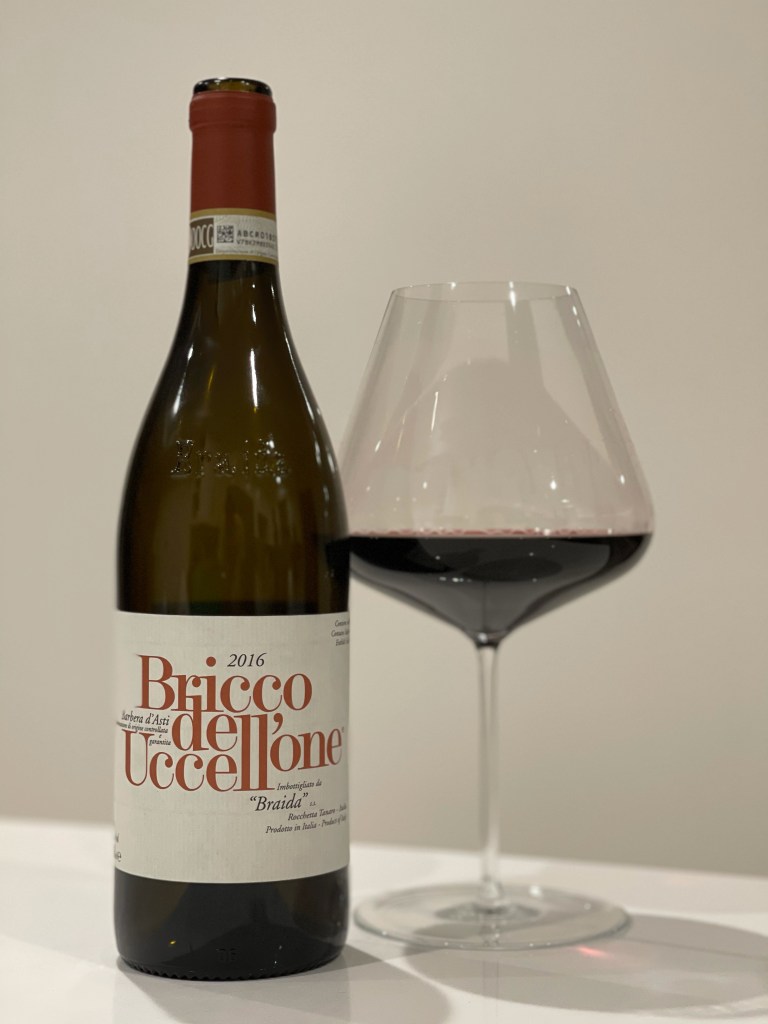
Who Says Barbera Has to Be a Lesser Wine?

Today’s Story: Braida

Braida is a family winery established in 1961 by Giacomo Bologna in the province in Asti in Piedmont, Italy. Though Piedmont is dominated by Nebbiolo and famous for its Barolo and Barbaresco, a large percentage of vineyard land is planted to the Barbera variety which, largely until Giacomo, was known to produce a cheap, highly acidic table wine. A staunch enthusiast for wine, his town of Rocchetta Tanaro, and the Barbera variety, Giacomo set about to rattle Piedmont by showcasing the untapped potential of Barbera simply by improving viticultural methods and aging the wines in small, French oak barriques. During the 1980s, Giacomo proved his point with great acclaim for his Bricco dell’Uccellone (1982), Bricco della Bigotta (1985), and Ai Suma (1989). These wines in turn demonstrate the immense promise, ageability, and complexity of Barbera done right and Giacomo will forever be appreciated by the wine world for his passion. Though Giacomo very sadly passed away prematurely on Christmas Day in 1990, his widow Anna and their children Raffaella and Giuseppe continue his legacy with unwavering dedication to his principles, their home, and the “fruit” of their labor.

Today’s Wine: 2016 Bricco dell’Uccellone Barbera d’Asti

100% Barbera; 16% ABV

The 2016 Bricco dell’Uccellone is opaque deep ruby in color with nearly black/deep purple hues in the bowl. I decanted this for 3 hours or so and drank it over the following hour, with the nose opening to showcase blackberry, black plum, tart red cherry, anise, dried green herbs, bitter chocolate, crushed rock, and oak. While not overbearing, there is slight heat as well that should integrate with age. Moving onto the palate, this gorgeous Barbera displays notes of plum, blackberry, sour dark cherry, tomato paste, cigar box, scorched earth, oregano, black pepper, and charred oak. This is full-bodied with medium (+) acidity, high tannins, and a long finish.

Price: $80. Most may very well see this as a very expensive Barbera, and they would not be wrong because Barbera is overshadowed by the Nebbiolo (Barolo and Barbaresco) of Piedmont. However, this is a wine to prove a point – that Barbera can be high quality, complex, and beautiful. The price here is justified in my opinion, though I do find myself partial to their 2015 Bricco della Bigotta I drank for about the same price.