Incredible QPR From Chianti Classico

Today’s Story: Castello di Monsanto

Castello di Monsanto is a family-owned estate and winery in the Barberino Tavarnelle municipality of Chianti Classico. Aldo Bianchi was born in San Gimignano, however he left before WWII to seek opportunities in northern Italy. When Aldo visited Chianti again, however, he fell in love with Castello di Monsanto and purchased the property. It was Aldo’s son Fabrizio, however, who through a love of wine and entrepreneurial spirit realized the potential of their terroir and produced their first wine in 1962 using fruit from the Il Poggio vineyard. This was a special endeavor, not simply for it being the first Monsanto wine, but because it was the first single-vineyard Chianti Classico Cru. Fabrizio did, however, make a Chianti Classico Riserva in 1962 as well. As time passed Fabrizio augmented the Monsanto portfolio with Fabrizio Bianchi Sangioveto Grosso (100% Sangiovese in 1974), Nemo (100% Cabernet Sauvignon in 1981), Fabrizio Bianchi Chardonnay (in 1990), and more. Today, Fabrizio’s daughter Laura (who joined in 1989) works alongside him at Monsanto to carry the estate onto another generation.

To learn more about Castello di Monsanto and view pictures of the vineyards, cellar, and castello, check out the website here.

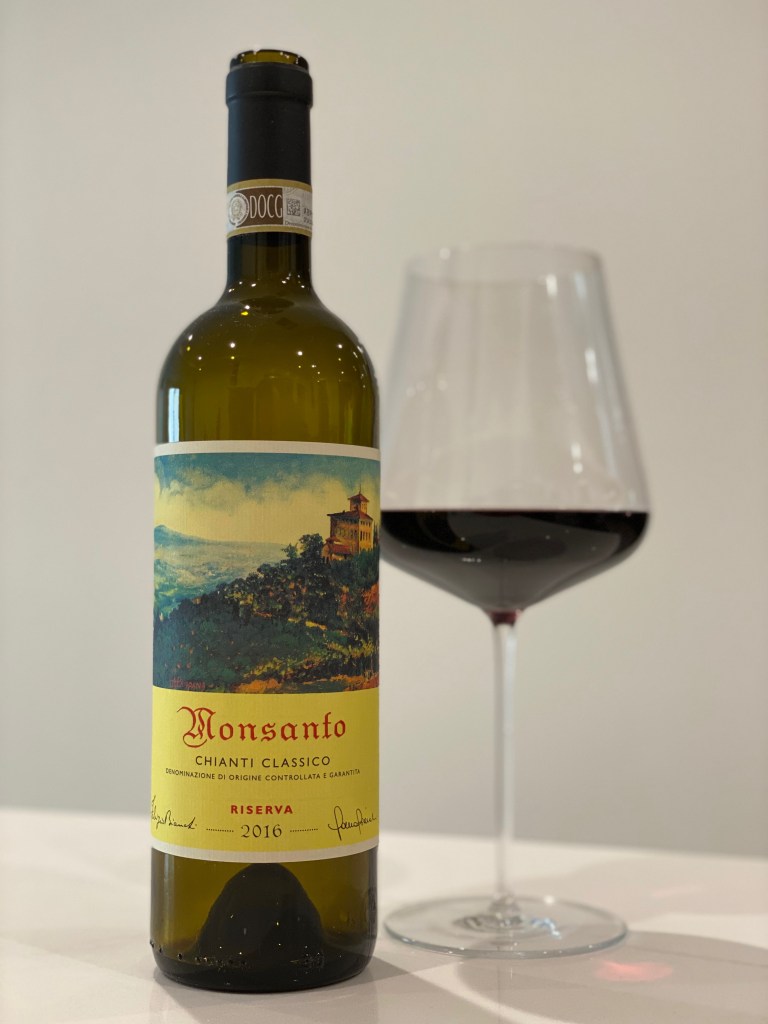
Today’s Wine: 2016 Chianti Classico Riserva

90% Sangiovese, 10% Canaiolo and Colorino; 14% ABV

The 2016 Chianti Classico Riserva is mostly opaque medium ruby in color with garnet hues. I decanted this for 2 hours thanks to its youth, and the nose showcases aromas of ripe cherry, cranberry, plum, anise, loamy earth, tar, savory herbs, and light oak. Once on the palate, the wine displays notes of brambleberry, dusty black raspberry, pomegranate, black cherry, tobacco, crushed rocky soil, mild baking spice, coffee bean, and oak. This is medium-bodied with medium acidity, medium (+) dusty tannins, and a long finish.

Price: $25. Outstanding QPR, and one of those wines to buy by the case to stock in your cellar. This is incredibly young but approachable with air, and will drink well for another decade or two at least. Pair with pasta bolognese, ossobucco, or meat lover’s pizza.
Powerful Zinfandel-Based Blend From Sonoma County

Today’s Story: Bedrock Wine Co.

Bedrock Wine Co. was established in 2007 by Morgan Twain-Peterson in a converted chicken coop in his friend’s backyard. Though Bedrock has grown over the years, Morgan stays true to a mission of working with respected growers throughout the state of California in preserving and breathing new life into old vineyards dating to the late 1800s and early 1900s. Working with vineyards from Contra Costa County, Sonoma Valley, Oakville, Lodi, the Russian River Valley, and beyond, Morgan produces wines with Zinfandel, Mourvèdre, Carignan, Petite Sirah, Alicante Bouschet, Grenache, Semillon, Gewurztraminer, Trousseau Gris, and Riesling. He also works with a handful of other varieties and is always on the hunt for more to explore. Though his blends can seem pretty eclectic, Morgan keeps his winemaking simple by gently handing the fruit, fermenting with whole clusters and only native yeasts, and rarely or never fining the wines.

For more on Bedrock’s history, the vineyards they work with, or the portfolio of wines, check out the website here.

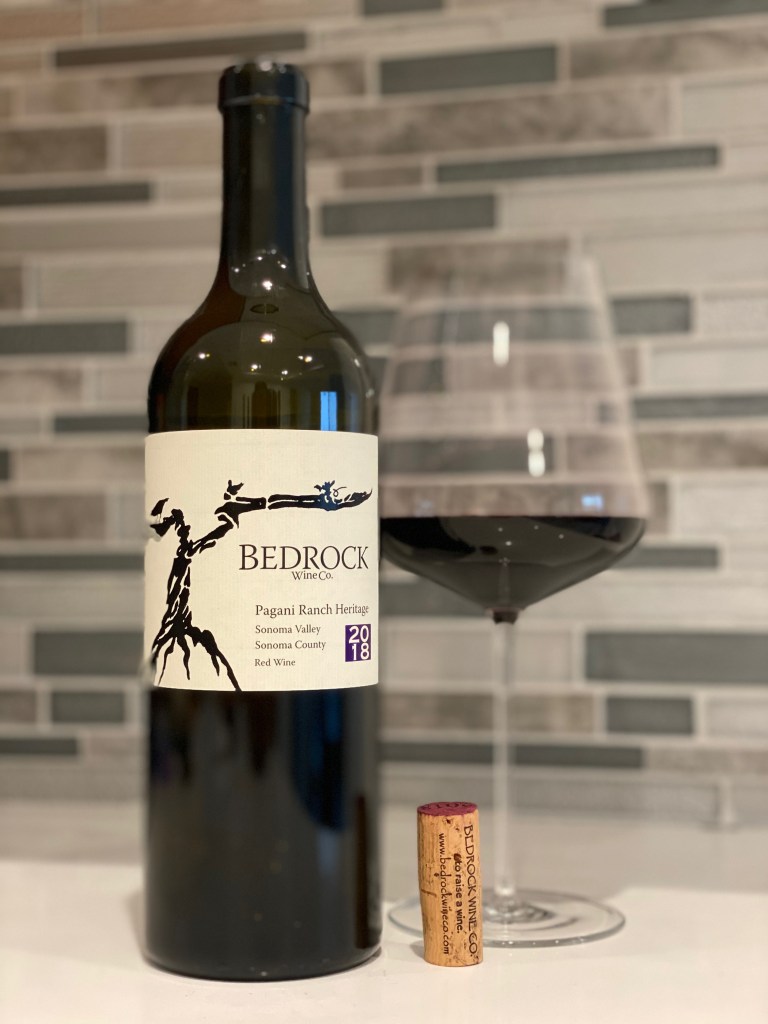
Today’s Wine: 2018 Pagani Ranch Heritage

Zinfandel dominant blend with Alicante Bouschet, Lenoir, Grand Noir, and Petite Sirah (no tech sheet); 14.5% ABV

The 2018 Pagani Ranch Heritage is opaque deep purple in color with dark fuchsia near the rim. I decanted this for about 2 hours, allowing the expressive nose to showcase blackberry, blueberry, plum, anise, leather, chiseled rock, cracked pepper, chocolate, and oak. Once in the mouth, this bold and powerful wine displays notes of black plum, black cherry, cassis, unlit cigar, wet slate, tar, peppery spice, and charred oak. The wine is medium- to full-bodied with medium acidity, medium (+) chewy tannins, and a long finish. Fantastic now with some air, but will only get better with age.

Price: $50. Without a doubt worth the price, but would be immensely more rewarding if you have the patience to lay this down and check on it in another five years. This is a bold, thought-provoking wine that will pair with barbecue pork ribs, bacon-wrapped ribeye steak, or lasagna.

Traditional Brunello di Montalcino for a Great Value

Today’s Story: Fattoria dei Barbi

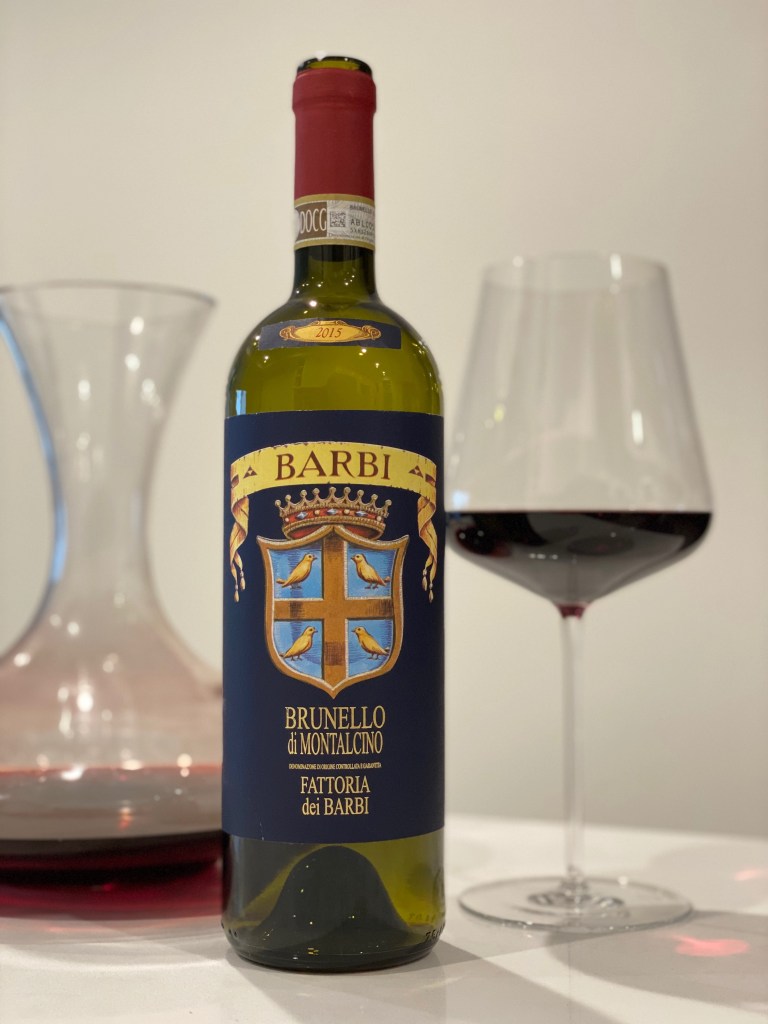
Fattoria dei Barbi is a historic estate in Montalcino, founded in 1790 by the Colombini family who were one of the region’s most influential and noble families. Though they established Barbi in 1790, the family owned land in Montalcino dating back to 1352 and first built Poggio alle Mura (now Castello Banfi) and then Argiano. The Colombini family greatly helped build the prestige and quality of Brunello di Montalcino as one of the original producers, with bottles back to 1870 in their cellars today. Barbi was the first Montalcino estate to ship wine to France (1817), by mail order (1832), and to the United States (1962), England (1969), and Japan (1975). Today the estate spans more than 306 hectares and is under guidance of 20th generation family member Stefano Cinelli Colombini.

To learn more about Stefano, this historic estate, or peruse their portfolio of wines, you can visit the website here.

Today’s Wine: 2015 Brunello di Montalcino

100% Sangiovese; 14.5% ABV

The 2015 Brunello is medium to deep garnet in color and mostly opaque. Given a couple hours to decant, the wine blossoms to showcase a nose of black cherry, redcurrant, dried strawberry, cedar, tobacco leaf, worn leather, loamy earth, gravel, and savory herbs. Once on the palate, the wine displays notes of plum, juicy blackberry, black raspberry, stemmy tomato paste, blue florals, licorice, tobacco, oregano, espresso, and black pepper. This is medium- to full-bodied with medium acidity, medium (+) grippy tannins, and a long finish.

Price: $45. The 2015 Barbi Brunello di Montalcino is a great value for the region and is beautifully traditional. Give this another 5 years of bottle age and drink it over the following decade. Pair with Bistecca alla Fiorentina, herb-roasted leg of lamb, or Pecorino cheese.

Textbook New World Viognier

Today’s Story: Cristom Vineyards

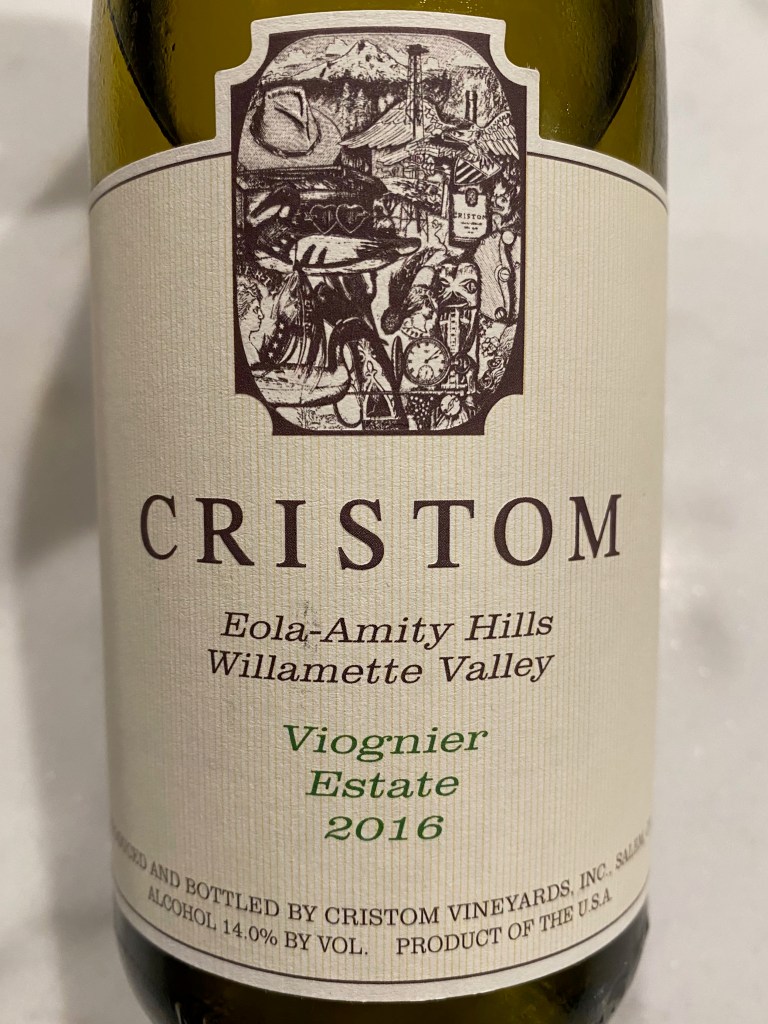
Cristom Vineyards was founded in 1992 by Paul and Eileen Gerrie in the Eola-Amity Hills AVA of the Willamette Valley. Established out of an appreciation of winemaking, the land, and Burgundy’s concept of terroir, Cristom is known for their estate Pinor Noirs. Cristom consists of eight estate vineyards totaling just over 100 acres, four of which are planted to Pinot Noir (Eileen, Jessie, Louise, and Marjorie) and four that are planted to Pinot Gris, Chardonnay, Viognier, and Syrah. Cristom’s vineyards are all certified sustainable and carefully tended such that come harvest all fruit is as healthy and expressive of the terroir as possible. Cristom winemaker Steve Doerner practices minimal intervention in the cellar and wines are fermented whole cluster with native yeasts, all in an effort to produce high quality and elegant wines with a sense of place.

Today’s Wine: 2016 Estate Viognier

100% Viognier; 14% ABV

The 2016 Estate Viognier is pale straw/yellow in color with medium gold and water white hues. On the nose, I get aromas of tangerine, white peach, honeysuckle, toffee, vanilla bean, and saline mineral. Once in the mouth, the wine showcases notes of apricot, mango, peach, white florals, wax, and herbs with an almost medicinal character. This is medium- to full-bodied with medium (-) acidity and an oily mouthfeel into a rounded, long finish. 978 cases produced.

Price: $30 average (I paid $22). I would surely pay $30 for this, because it is a great example of New World Viognier, but I can call it a value much closer to the $22 I paid. There wasn’t as much depth in this that I hoped for. Pair with quail, lobster, or sea bass.

Tasty Bordeaux Blend to Broaden Your Palate

Today’s Story: Viñas de la Erre

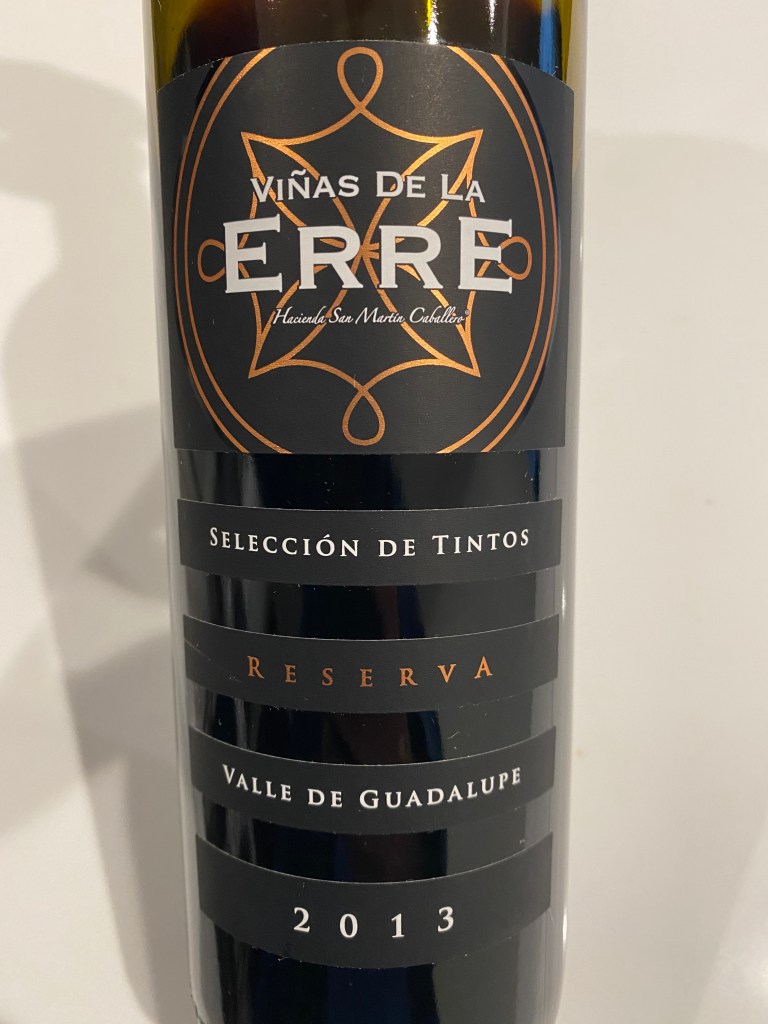
Viñas de la Erre is a family owned and operated winery established in Valle de Guadalupe in 2009. The Erre family acquired the Hacienda San Martín Caballero back in 1985, however it functioned mostly as a family farm and way for the family to expand their legacy in Guadalupe. In 2008, however, Claudio met Rogelio Morales who was then cellar manager and assistant winemaker at Spring Mountain Winery in Napa and they struck up a friendship. When Rogelio and his family visited the Erre’s in Valle de Guadalupe, Rogelio realized the potential of the land for winegrowing and offered to help mentor the change from farming to winemaking. Since fully launching in 2014, Viñas de la Erre practices full estate bottling (similar to Spring Mountain) and winegrower Ernesto I. Rocha, enologist Rogelio, and vineyard manager Claudio work to craft premium estate wines. Together as a team they sustain the vineyards, hand harvest all fruit, and monitor the winemaking process from fermentation to barrel aging and bottling.

Today’s Wine: 2013 Selección de Tintos Reserva

68% Cabernet Franc, 16% Petite Verdot, 12% Merlot, 4% Cabernet Sauvignon; 13.8% ABV

The 2013 Selección de Tintos Reserva is opaque deep ruby in color. I recommend giving this a good 45 minute decant before enjoying. The nose showcases aromas of black cherry, blackberry, tobacco, scorched earth, dried herbs, black pepper, chocolate, and oak. Once on the palate, I get notes of black plum, blackcurrant, black raspberry, anise, sweet tobacco, rocky earth, underbrush, and light baking spice. This is medium-bodied with medium acidity, medium tannins, and a medium (+) finish.

Price: $31. This drinks right around it’s price-point, but I’d love to see this closer to $22-25 per bottle. I noticed during some research this sold for $42 at one point, which I believe is definitely too high. Pair with roasted pork, beef burgers, or pepper-crusted steak.

High Quality Washington Bordeaux Blend That Drinks Like Left Bank Bordeaux

Today’s Story: L’Ecole No. 41

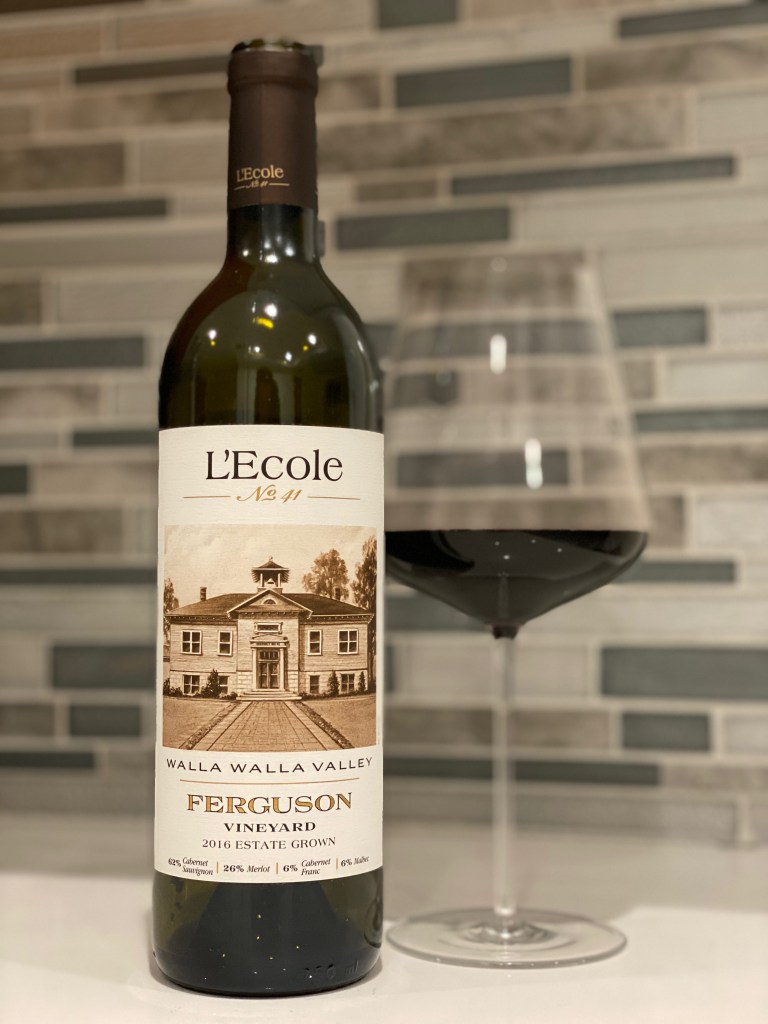
L’Ecole is a family-owned winery established by Baker and Jean Ferguson in 1983 in the Walla Walla Valley of Washington State. L’Ecole is the third-oldest winery in Walla Walla and today is under guide of 2nd generation owners Marty and Megan Clubb (Megan is the daughter of Baker and Jean) and their children Riley and Rebecca. Marty and Megan moved from San Francisco to Walla Walla in 1989 where Marty took on the role of manager and winemaker at L’Ecole, while Riley and Rebecca remain involved. Marty, alongside Norm McKibben of Pepper Bridge Winery and Gary Figgins of Leonetti Cellar, partnered to expand Seven Hills Vineyard in 1997 and develop SeVein (1,800 adjacent acres) in the mid-2000s and are largely considered pioneers of winemaking in the Walla Walla Valley.

In addition to their two estate vineyards Ferguson and Seven Hills, L’Ecole contracts with a number of respected winegrowers throughout the Walla Walla and Columbia Valleys. The Ferguson and Seven Hills Vineyards are certified sustainable, as is the Pepper Bridge Vineyard where L’Ecole has been sourcing fruit since the early 1990s. Marty and his team have a pretty tight grip on viticulture not only in their estate vineyards but in those they source from, practicing aggressive pruning, drip irrigation, and shoot thinning to produce wines that are vibrant and expressive but show their unique place. During the winemaking process, Marty strives to create wines that are expressive and highly aromatic. He and the team handle fruit very delicately and use gravity flow, limited adjustments during fermentation, gentle racking, and minimal fining and filtration at bottling.

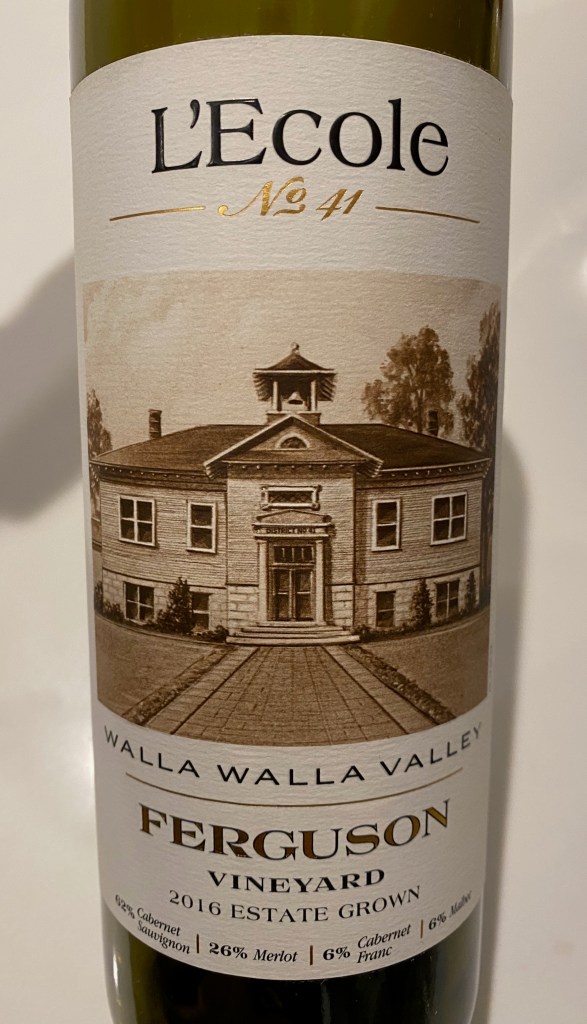
Today’s Wine: 2016 Ferguson Vineyard Bordeaux Blend

62% Cabernet Sauvignon, 26% Merlot, 6% Cabernet Franc, 6% Malbec; 14.5% ABV

The 2016 Ferguson Vineyard is opaque deep purple/ruby and nearly black at the core. This deserves a good 4 hour decant, with the nose showcasing aromas of blackcurrant, redcurrant, blackberry, fig, cigar box, pencil shavings, forest floor, wet slate, espresso, and black peppercorn. Once in the mouth, the wine displays notes of crème de cassis, black cherry, dusty blueberry, anise, tobacco, potting soil, graphite, dark chocolate, and charred oak. This is full-bodied with medium (+) acidity, high but tightly knit tannins, and a long finish.

Price: $50. Really good value. The quality is remarkable and if tasting this blind I would call it a high quality Left Bank Bordeaux. Pair with prime ribeye, garlic/rosemary roasted lamb, or venison.

Screaming Value From Heathcote, Australia

Today’s Story: Jasper Hill

Jasper Hill is a small family owned and operated winery in Heathcote, Australia founded by Ron and Elva Laughton. The Laughtons planted their vineyards beginning in 1975 with all of the vines own rooted (not grafted for resistance to Phylloxera) and today they include Emily’s Paddock (3ha Shiraz with 5% Cabernet Franc) and Georgia’s Paddock (12ha Shiraz, 3ha Riesling, and 1ha each of Semillon, Nebbiolo, and Viognier). There was a third vineyard, Cornella Vineyard, that was 4ha Grenache but it unfortunately burned in 2013. Jasper Hill’s vineyards are organically farmed and they do not use irrigation, insecticides, herbicides, synthetic fungicides, or artificial fertilizers. Meanwhile all pruning and harvesting is accomplished by hand and tillage remains low. Thanks to minimal intervention in both the vineyards and cellar, Jasper Hill wines are meant to display their terroir with honesty while maintaining the innate character of each variety.

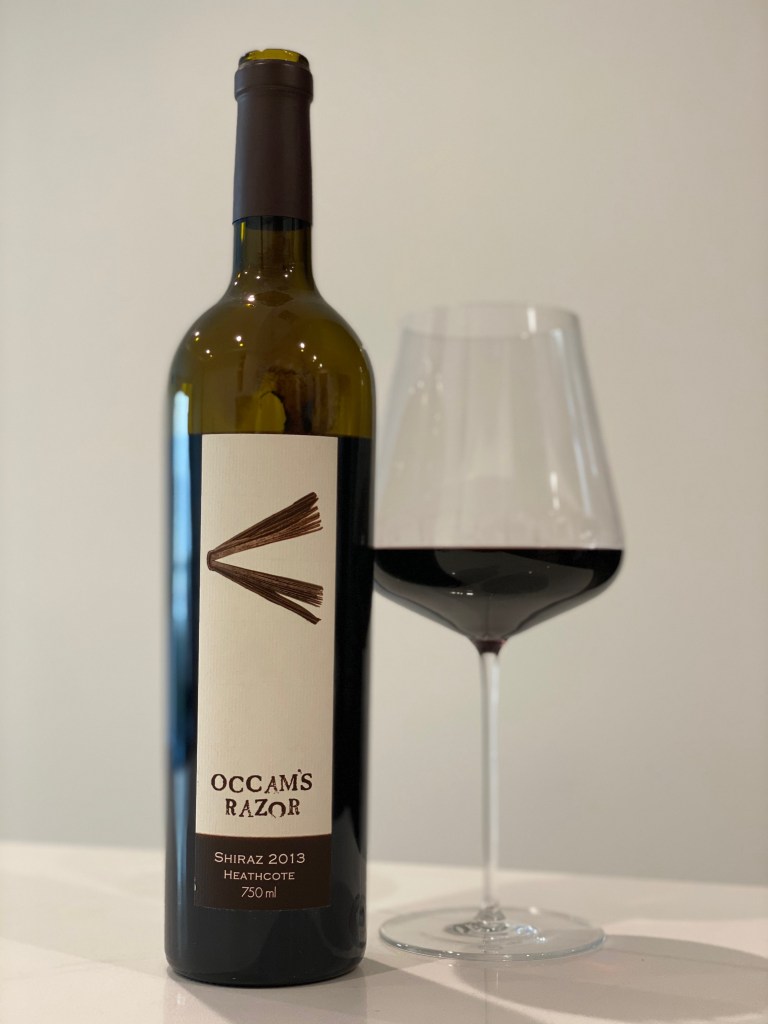
2013 Occam’s Razor Shiraz

100% Shiraz (Syrah); 15% ABV

The 2013 Occam’s Razor Shiraz is opaque deep purple in color with ruby variation near the rim. After opening up for an hour and a half, the wine showcases a nose of blackberry, juicy plum, blueberry, cassis, lavender, cigar box, wet gravelly soil, graphite, light baking spice, and toasted oak. Once on the palate, this displays notes of black plum, black cherry, redcurrant, black licorice, sweet tobacco, loamy earth, smoke, slate, black pepper, and chocolate. This is full-bodied with medium acidity, medium (+) somewhat chewy tannins, and a long finish dominated by black fruits and iron.

Price: $30. This is an outstanding value, perhaps the greatest value Shiraz I’ve had to date. The wine drinks with such elegance and beauty you could mistake this for something at least twice its price. Pair with a bacon cheeseburger, roasted leg of lamb, or duck.

Tasty and Opulent Nero d’Avola

Today’s Story: Gulfi

Gulfi is a family owned and operated wine estate located in Chiaramonte Gulfi, and it was established by Raffaele Catania. Though Raffaele fled Sicily during the crisis following WWII and moved to France, he always desired to return to Chiaramonte Gulfi and even sent his savings there with the hope of purchasing property. In 1970, the Catania family moved back to Sicily and Raffaele devoted himself to winemaking which began during the 1980s following the first release of Gulfi’s Nerojbleo label. When Raffaele passed away in 1995, his son Vito had the important decision of leaving his career in the chemical sector (at his own company no less) or selling the family vineyards. Fortunately for Gulfi, Vito had a deep-rooted interest in wine from growing up in France and decided to take over the Gulfi winery.

Gulfi practices organic viticulture by not using any chemical fertilizers, insecticides, or pesticides and only uses manure and/or leguminous crops in the vineyard to enrich the soil. Meanwhile the hot and dry climate defends against insects and mold. Furthermore, Gulfi does not irrigate their vineyards which forces the vines to struggle and reach deeply for nutrients in turn producing higher quality and healthier fruit. Gulfi grows Nero d’Avola, Frappato, Nerello Mascalese, Nerello Cappuccio, Carricante, and Albanello (all native varieties) and all are harvested manually.

Today’s Wine: 2016 NeroBufaleffj

100% Nero d’Avola; 14% ABV

The 2016 NeroBufaleffj is opaque medium purple/ruby in color. Given about an hour to open up, the nose showcases aromas of black cherry, black plum, prune, licorice, dried tobacco, charred loamy earth, cocoa powder, and light oaky spice. On the palate, this wine displays notes of spiced black plum, dark cherry cola, jammy blackberry, dried strawberry, anise, tobacco, dusty volcanic earth, dried green herbs, and a hint of oak. This is full-bodied with medium (+) acidity, medium (+) tannins, and a long finish dominated by syrupy black and blue fruits.

Price: Typically $40-45 (I paid $35). Very well-priced if you can find it around $35 like I did, but I think the more common $40-45 range puts this a little over the top to be called good value. Without a doubt a delicious wine though. Pair with grilled game, beef stew, or mature cheeses.

A Truly Special Riesling

Today’s Story: Weingut Reichsrat von Buhl

Reichsrat von Buhl was established in 1849 by Franz Peter Buhl, and the estate quickly became a benchmark of quality for Forster Riesling. Thanks to uncompromising quality, von Buhl Rieslings became some of the most expensive in the world and even filled the glasses of those toasting the opening of the Suez Canal in 1869. Even Otto von Bismarck became a loving fan of von Buhl wines and praised their Ungeheuer which is sourced from the best plot of the 29 hectare Grand Cru Ungeheuer vineyard.

In 1909, Franz Eberhard Buhl (the son of Armand von Buhl and Juliane Schellhorn-Wallbillich) orchestrated the marriage of the von Buhl and Schellhorn-Wallbillich wineries, establishing one of the largest privately owned German wine estates at over 200 hectares. At this point, Franz Eberhard changed the winery name to Reichsrat von Buhl (adding his title as a member in the house of Lords in the kingdom of Bavaria). Franz Eberhard passed away young in 1921 and his widow Frieda Piper von Buhl adeptly ran the estate until her death in 1952. With no familial heirs to the estate, Reichsrat von Buhl went to Georg Enoch Freiherr von und zu Guttenberg who was a political friend of Franz Eberhard.

Over time, Reichsrat von Buhl decreased in size to about 52 hectares of vineyard land thanks to financial challenges, though they maintained ownership of some of the greatest sites in Deidesheim and Forst. From 1989 to 2013, von Buhl was leased to Japanese business man Toyohiro Tokuoka but changed ownership in 2005 to a local businessman named Achim Niederberger. When Tokuoka’s lease ended in 2013, von Buhl went back to being a family-run estate and winery.

All vineyards owned by Reichsrat von Buhl are certified organic and the current team is unified behind natural and sustainable viticulture. All white wines from von Buhl are Riesling (except for two noble sweet wines) and all red wines and rosé are made from Pinot Noir. Of all the land planted to vine that von Buhl owns, 45% is classified as either VDP.Erste Lage® (Premier Cru) or VDP.Grosse Lage® (Grand Cru) – source. For more on this historic German estate, check out the website here.

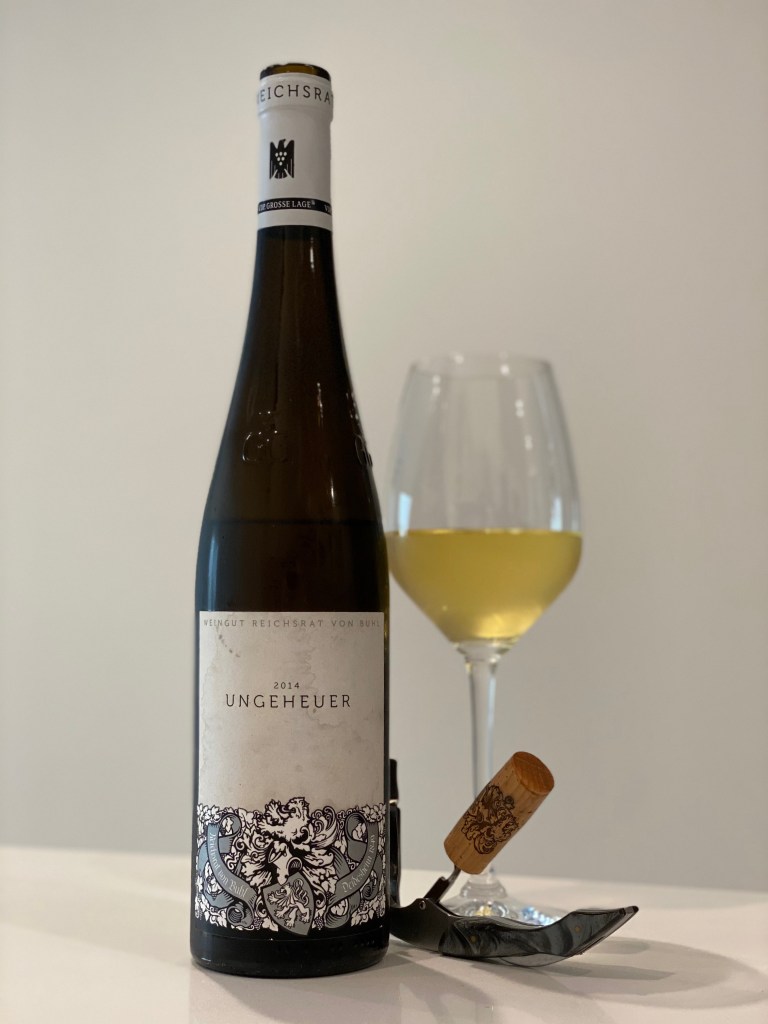
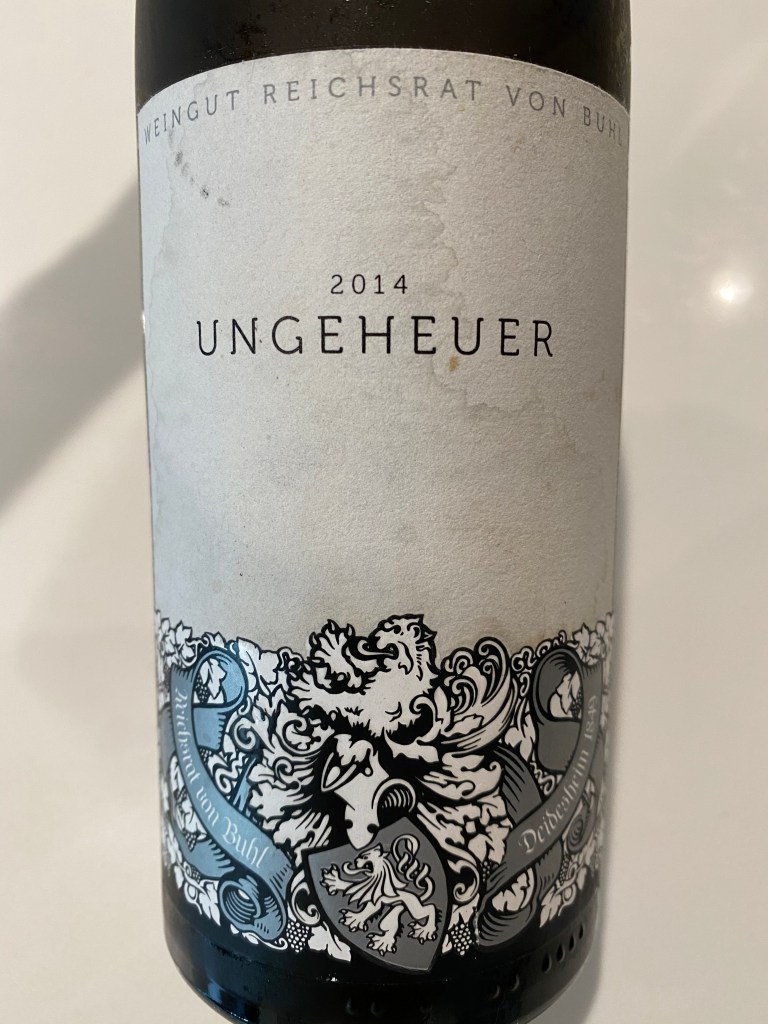
Today’s Wine: 2014 Forster Ungeheuer Riesling Großes Gewächs

100% Riesling; 13% ABV

The 2014 Ungeheuer Riesling GG is transparent medium yellow in color with medium to deep straw hues. As the wine opens up, it constantly evolves and showcases its complexity transitioning from dominant aromas of dried gravel, petrol, and pineapple into apricot, peach, white florals, exotic Asian spice, honey, and smoke. Once in the mouth, this gorgeous Riesling displays notes of white peach, lemon zest, green apple skins, apricot, saline and crushed rock minerality, honeysuckle, beeswax, flint, and dried herbs. This is medium-bodied and bone-dry with gorgeous high acidity and a lush mouthfeel into an incredibly long finish.

Price: $70 (but looks like there is some in bond for ~$40/btl in 6 packs). To be honest I would buy the 6 packs in bond from Europe if I could, because this is absolutely worth every penny of the $70 I paid. Riesling is a variety I am trying to explore further, but this is certainly the greatest example I’ve had to date. Pair with chicken Pad Thai, roasted pork, or sushi.

There’s Only Beauty Here

Today’s Story: Jolie-Laide

Jolie-Laide is a boutique winery established by Scott Schultz in Forestville, CA, though he sources his fruit from trusted vintners across a range of appellations. “Jolie-Laide” translates to “pretty ugly,” and is a French term of endearment for something not conventionally beautiful which in this case stems to lesser known or “unloved” grape varieties Scott works with. I reviewed two wines from Jolie-Laide previously, first the 2016 Provisor Vineyard Grenache in A Journey for the Mind and Palate and most recently the 2019 Trousseau Gris in Incredibly Versatile Trousseau Gris. For a more detailed overview at how Scott makes his wines or where he sources his fruit from, you can check out these prior posts if you haven’t already.

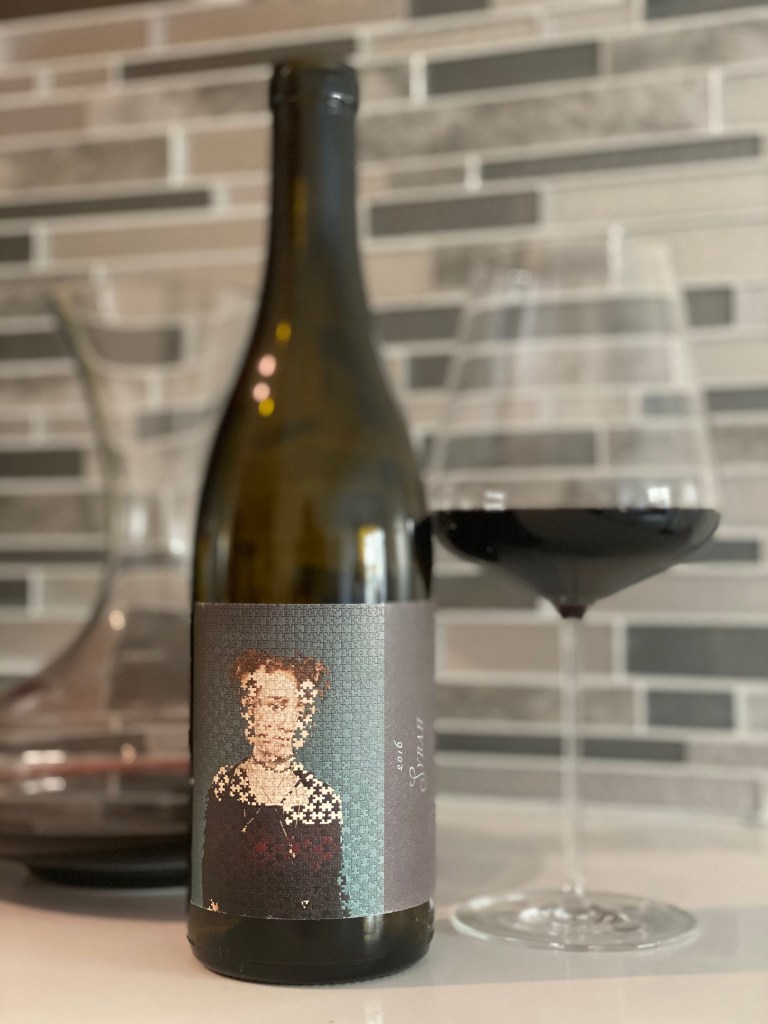
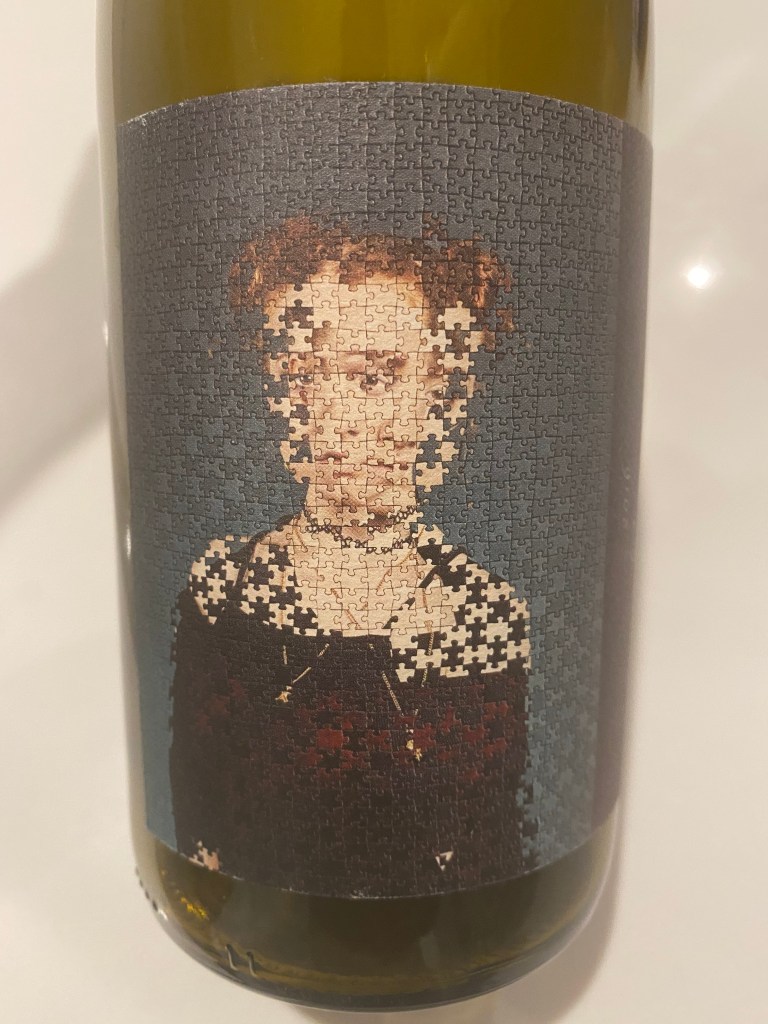
Today’s Wine: 2016 Halcon Vineyard Syrah

100% Syrah; 12.8% ABV

The 2016 Halcon Vineyard Syrah is opaque medium purple in color with ruby hues. Given an hour and a half or so to open up, the wine showcases a nose of blackberry, plum, black cherry, smoked charcuterie, tobacco, charred earth, green herbs, black peppercorn, and crushed rock minerality. On the palate, I get notes of brambleberry, blueberry, boysenberry, black raspberry, licorice, sweet tobacco leaf, red florals, dried rocky soil, graphite, savory mixed herbs, and a hint of oaky spice. This is full-bodied with medium acidity, high tannins, and a long finish dominated by chewy red and black fruits.

Price: $44. Another outstanding value from Jolie-Laide, and my favorite wine I’ve tried from them so far. This has everything you could want from a Cali Syrah twice its price: depth, evolving complexity each hour it breathes, finesse, and character. Pair with herb-grilled lamb, spicy Korean-style pork, or a quality burger.