Left Bank Elegance

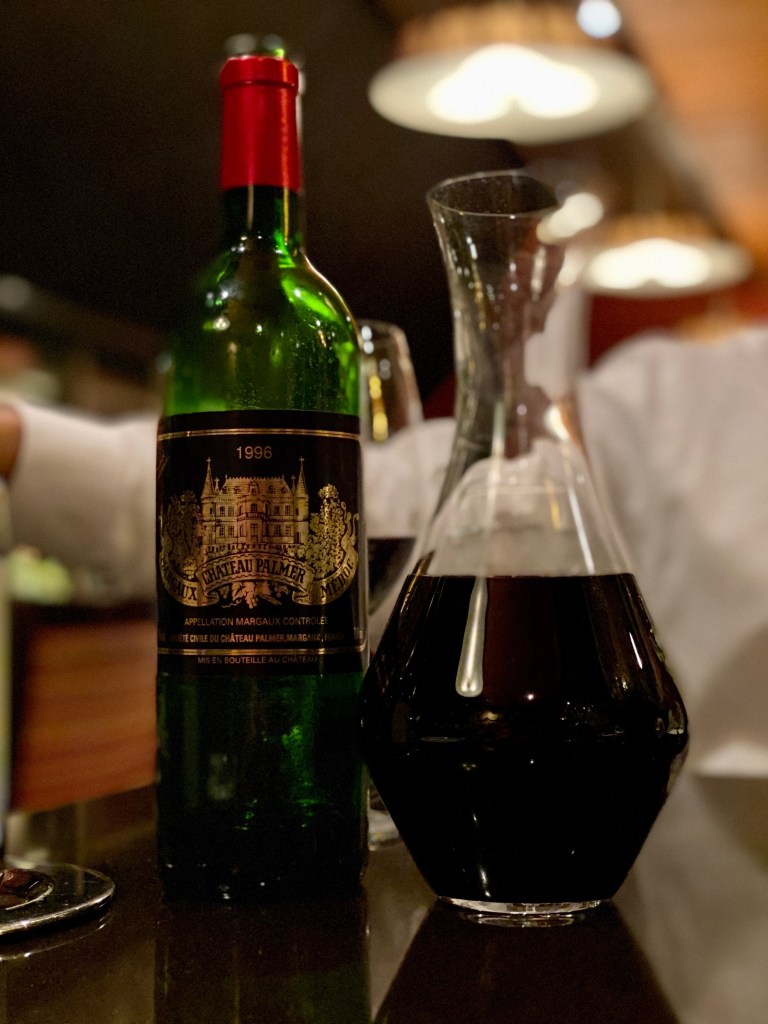
Today’s Story: Château Palmer

Château Palmer is a historic winery in the Margaux appellation of Bordeaux with roots back to 1748. Once part of Château d’Issan, 50 hectares of vines came to the Gascq family through division of d’Issan by the estate’s heirs in 1748. The Gascq family took this land and started producing wine under Château de Gascq, quickly becoming a well-known winery who served the court of Versailles under Louis XV.

In 1814, however, Madame Marie Bumet de Ferrière (the widow of the last remaining Gascq heir) sold the estate to English Lieutenant Colonel Charles Palmer (later a Major General in the British Army). Palmer spent decades enlarging the estate and modernizing its winery, with Château Palmer spanning 163 hectares with 82 hectares under vine by 1831. Unfortunately for this great estate, Charles Palmer faced some financial issues that forced a sale and the estate fell under control of an agricultural mortgage corporation.

Several years later, Château Palmer returned to private hands when Émile and Isaac Péreire purchased it in 1853. The Péreire brothers previously built an empire spanning railways, real estate, and banking (they were rivals of the Rothschild family) but wanted to add a winery having grown up in Bordeaux. Unfortunately for the estate given its recent turmoil, Château Palmer received the Troisième Cru (Third Growth) designation in the Bordeaux Wine Official Classification of 1855. I say this is unfortunate only because Palmer used to have a reputation similar to Château Margaux and Château Beychevelle.

Though Palmer eventually grew to 177 hectares with 102 hectares under vine, the estate as it exists today came about in 1938. Owners had to sell land parcels thanks to World War I and the Great Depression, though the Mähler-Besse family from the Netherlands and the Sichel family took over and descendants helped rebuild the estate following World War II. Though the two families are still involved, they have entrusted management of Château Palmer with Thomas Duroux, a former winemaker at Tenuta Dell’Ornellaia.

I would like to end this post with some comments on the values of Château Palmer. Like many great historic estates, Palmer believes they must respect their soils and vineyards to achieve the greatest expression in their wines. To this end, they explored biodynamic farming in 2008 and the practice soon became a necessity in the eyes of those running the estate. Sheep graze on the land and in the vineyards, grass and flowers grow naturally, and the estate stopped using agrochemicals. These efforts are so far greatly rewarded, with Palmer producing some of the greatest Third Growth wines.
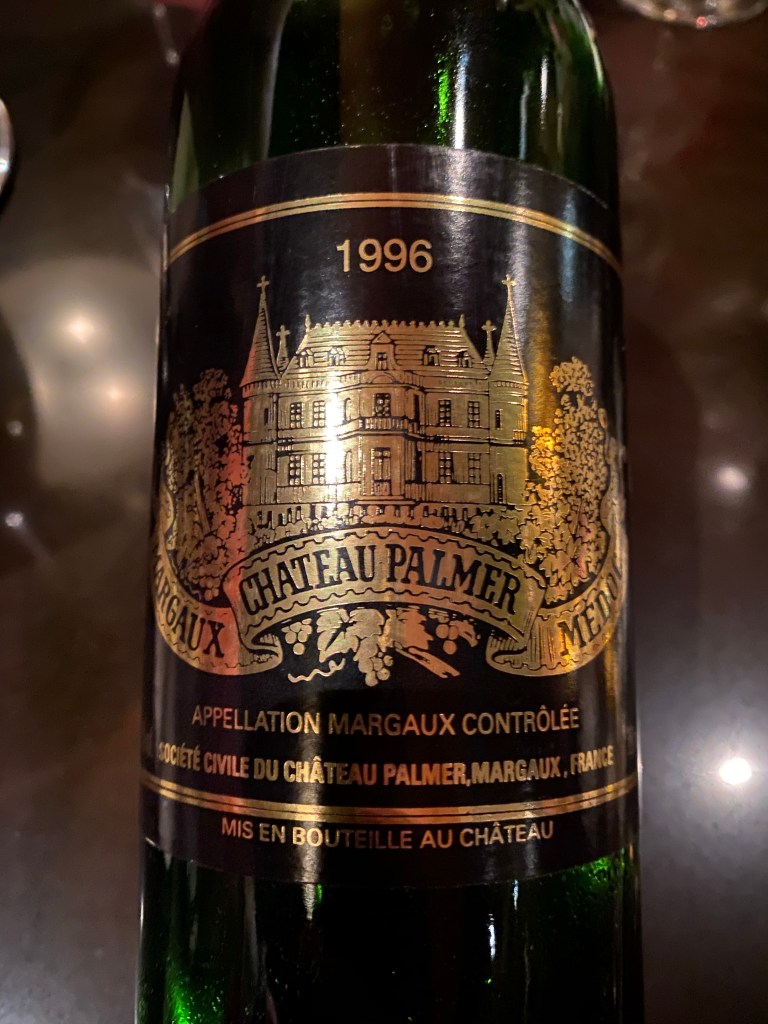
Today’s Wine: 1996 Château Palmer

55% Cabernet Sauvignon, 40% Merlot, 5% Petit Verdot; 12.5% ABV

The 1996 Palmer is medium to deep ruby in appearance and moderately transparent as you edge toward the rim of the glass. Once this wine opens up in a decanter, the complex nose showcases aromas of blackcurrant, blueberry, black plum, violet, pencil shavings, forest floor, tobacco, truffle, black pepper, green underbrush, and coffee grounds. In the mouth, the wine offers notes of blackberry, blackcurrant, anise, cigar box, sweet tobacco, graphite, crushed rock, chalky minerality, and a hint of oak. The wine is full-bodied with high acidity, medium but elegant tannins, and a long finish.

Price: $250. A nice bottle of wine for a celebration with family, though this is not one of Palmer’s greatest vintages. I had a 1995 not too long ago that showed very well and was a bit more powerful, a nice surprise given it’s also not one of the greatest vintages. Pair this with high quality steaks or lamb.

High Quality Napa Cab That Won’t Break the Bank

Today’s Story: Groth Vineyards & Winery

Groth was founded in Oakville in 1982 by Dennis, a former executive at Atari, and Judy Groth. Though Groth is now very well-established in the heart of the Napa Valley and Dennis is highly involved in the wine community there, the couple almost purchased vineyard property in Sonoma County to pursue their dreams. It was the sheer beauty of vineyards on the valley floor that captivated their attention and fostered their move to the Napa Valley several years after founding the winery.

Groth Vineyards is truly a family endeavor today, with a couple of Dennis and Judy’s children active in day-to-day operations. The winery is also a state of the art institution, undergoing major construction in 2007 that brought along an extended crush pad, a second tank room for smaller barrels, and a remodeled Reserve barrel room. Groth consists of two major vineyard areas, roughly 100 acres for the estate vineyard and Cabernet Sauvignon and another 44 acres in Yountville where they get their Chardonnay and Merlot fruit.

Fun fact: the 1985 Groth Reserve Cabernet Sauvignon is the first American wine ever to have received a perfect 100-point score by Robert Parker.

Today’s Wine: 2013 Cabernet Sauvignon

80% Cabernet Sauvignon, 20% Merlot; 14.9% ABV

The 2013 Cab is medium ruby in color with rose/garnet rim variation. To be honest, this is lighter in appearance than I expected. On the nose, I get aromas of cherry, blackcurrant, plum, black licorice, cigar box, baking spice, mint, and oak. Once in the mouth, this wine showcases notes of black cherry, jammy blueberry, inky blackberry, black pepper, tobacco, clove, vanilla, and rocky minerality. This is full-bodied with high acidity, medium (+) tannins, and a long finish.

Price: $50. I think this is a solid value for the quality of the wine. Groth also produces a Reserve Cabernet Sauvignon, which is typically in the $100-120 per bottle range. Pair this with steak, prime rib, or beef short ribs.

Youthful Burgundian Elegance

Today’s Story: Joseph Drouhin

Joseph Drouhin is one of the great historic producers in Burgundy, with origins dating back to 1880. Today, it is one of the largest estates consisting of 78 hectares (193 acres) throughout Chablis, Côte de Nuits, Côte de Beaune, and Côte Chalonnaise. I previously wrote about the estate on November 2 in Refined, Aged Burgundy and for more background I’d suggest reading it if you haven’t already.

Today’s Wine: 2012 Beaune Clos des Mouches 1er Cru

100% Pinot Noir; 13% ABV

The 2012 Clos des Mouches is pale ruby/garnet in color and quite transparent. Though I didn’t have proper glassware (as demonstrated in the picture) once the wine opens up the nose showcases aromas of cherry, strawberry, raspberry, forest floor, slight barnyard, red rose, smoke, leather, and oak. On the palate I get notes of black cherry, wild strawberry, earth, pepper, tobacco, coffee, green underbrush, mushroom, and mineral. This wine is light- to medium-bodied with high acidity, refined medium (-) tannins, and a medium length finish. A great bottling from Joseph Drouhin, though certainly not my favorite, and this needs at least another decade in the cellar.

Price: $120. This is a good price point, however I wouldn’t buy this unless you plan on cellaring it for another 5+ years. This seems like it needs time to come together and drop some of its baby fat, though I didn’t have a decanter and a long decant could perhaps do the trick. Pair this with duck, lamb, or a good burger.

Preeminent California Zin

Today’s Story: Turley Wine Cellars

Turley was founded in 1993 by Larry Turley, the brother of famed winemaker Helen Turley. During the earlier years, Helen even consulted for her brother’s new winery. Though Larry entered the wine business more than a decade earlier in 1981 by co-founding Frog’s Leap Winery in Rutherford, he learned his love of Zinfandel and the vision for Turley was born. Turley Wine Cellars makes 47 different wines from over 50 different vineyards, all of which are of the Zinfandel or Petite Syrah varieties. With their specialty single-vineyard red Zinfandel bottlings, Turley sources from old vineyards with some dating back to the late 19th and early 20th centuries and they are considered by many to be the best Zinfandel wines made in California.

Turley Wine Cellars started with one location in St. Helena in the Napa Valley, though during expansion opened a second winery in Templeton in San Luis Obispo county. Today, they have a third location in Amador County. As of 2011, Turley was producing 16,000 cases of wine and becoming a member of their private wine club can still take up to two years. All of the vineyards sourced for Turley are either certified organic or in the process of bering certified, and during the winemaking process all wines are fermented with natural yeasts.

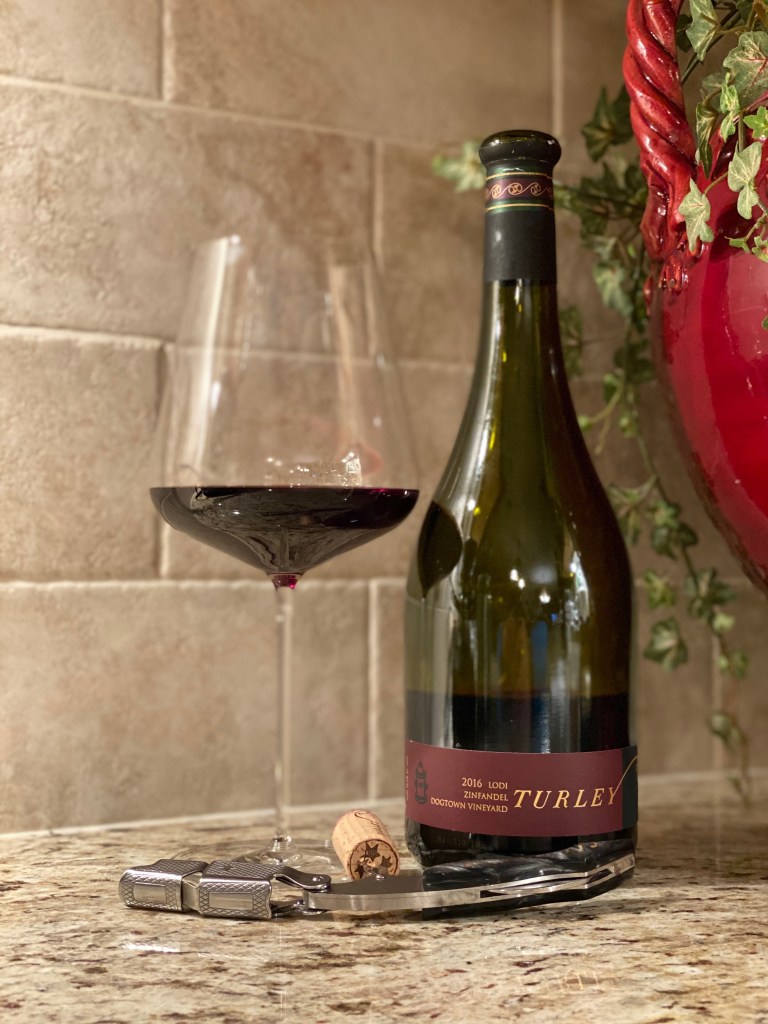
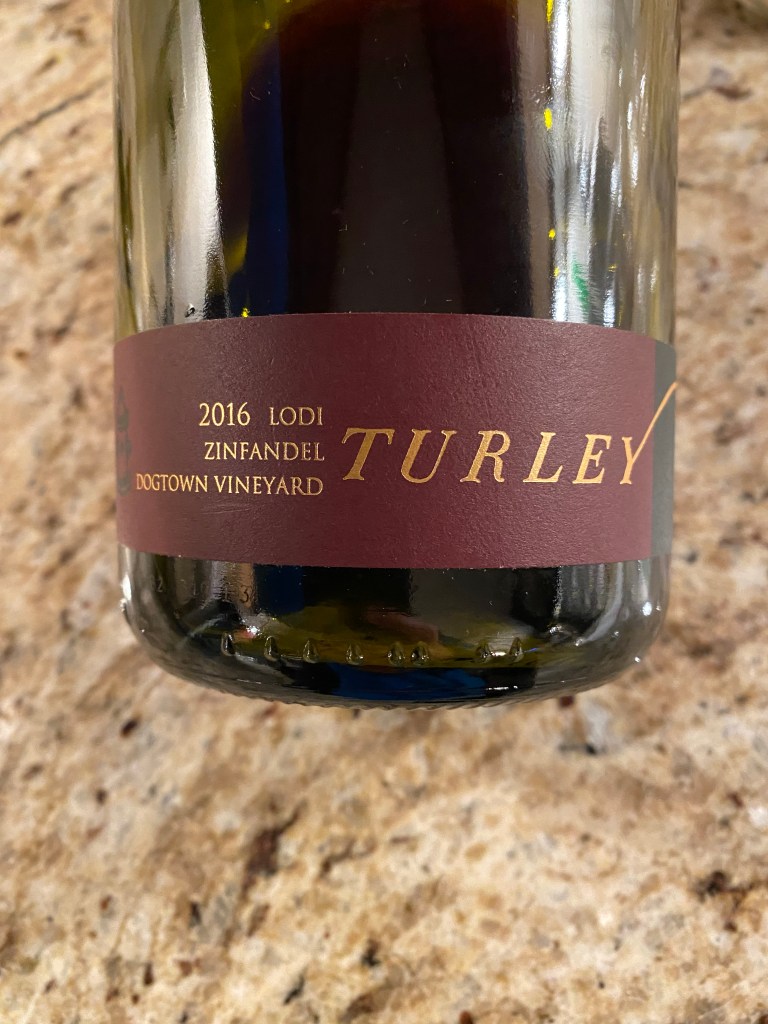
Today’s Wine: 2016 Dogtown Vineyard Zinfandel

100% Zinfandel; 15.3% ABV

The 2016 Dogtown Vineyard Zinfandel is medium ruby in color with rose variation toward the rim of the glass. Once this wine opens up, the nose showcases aromas of black cherry, raspberry, pine, earth, black shoe polish, leather, smoke, and dried green herbs. On the palate, I get notes of cherry, cranberry, raspberry, ripe black plum, tobacco, baking spice, green herbs, and oak. Like many Zinfandels, the sweet fruit dominates here. This is full-bodied with high acidity, medium tannins, and a medium (+) length finish.

Price: $65. Certainly not an inexpensive Zinfandel, though the Dogtown Vineyard is consistently the lowest-yielding vineyard of the over 50 vineyards Turley makes wine from. If this is a little steep, Turley’s portfolio consists of 47 different wines of varying price-point. Pair this with barbecue, especially chicken or pork.

Beauty from Howell Mountain

Today’s Story: O’Shaughnessy Estate Winery

O’Shaughnessy is a small, family-owned winery founded by Betty O’Shaughnessy Woolls and Paul Woolls in the late 1990s. Betty’s background is in real estate investment and development, though she grew a passion for food and wine that ultimately brought her to Napa Valley in 1990 when she purchased a home with vineyards in Oakville. Paul’s background on the other hand is law, though he also developed a passion for wine living in New Mexico during his college years. The two met at a wine tasting and have been partners in life and in winemaking ever since.

In 1997, the couple planted 35 acres on Howell Mountain (29 acres of Cabernet Sauvignon and the remaining 6 acres a mix of Cabernet Franc, Petit Verdot, Merlot, Malbec, Carmenere, St. Macaire and Gros Verdot) on a 120 acre property. Several years later, in 2000, they expanded to Mt. Veeder by acquiring a 55 acre property to which 17 acres are planted. O’Shaughnessy’s Mt. Veeder holdings grew again in 2006 with the addition of a 265 acre property, though only 32 acres are planted and most is Cabernet Sauvignon. Lastly, we cannot forget the Oakville property where 32 acres surrounding Betty and Paul’s home are planted to Sauvignon Blanc, Chardonnay, and Cabernet Sauvignon.

O’Shaughnessy, like many smaller high-quality wineries with more-or-less distinctive vineyard sites, employs a winemaking philosophy that puts terroir at the forefront. Though the winery and all equipment is quite modern, the winemaker Sean Capiaux seeks to produce classic wines that are naturally fermented and bottled unfined and unfiltered. The resulting wines are elegant, expressive, and age-worthy while demanding respect for a still reasonable price tag.

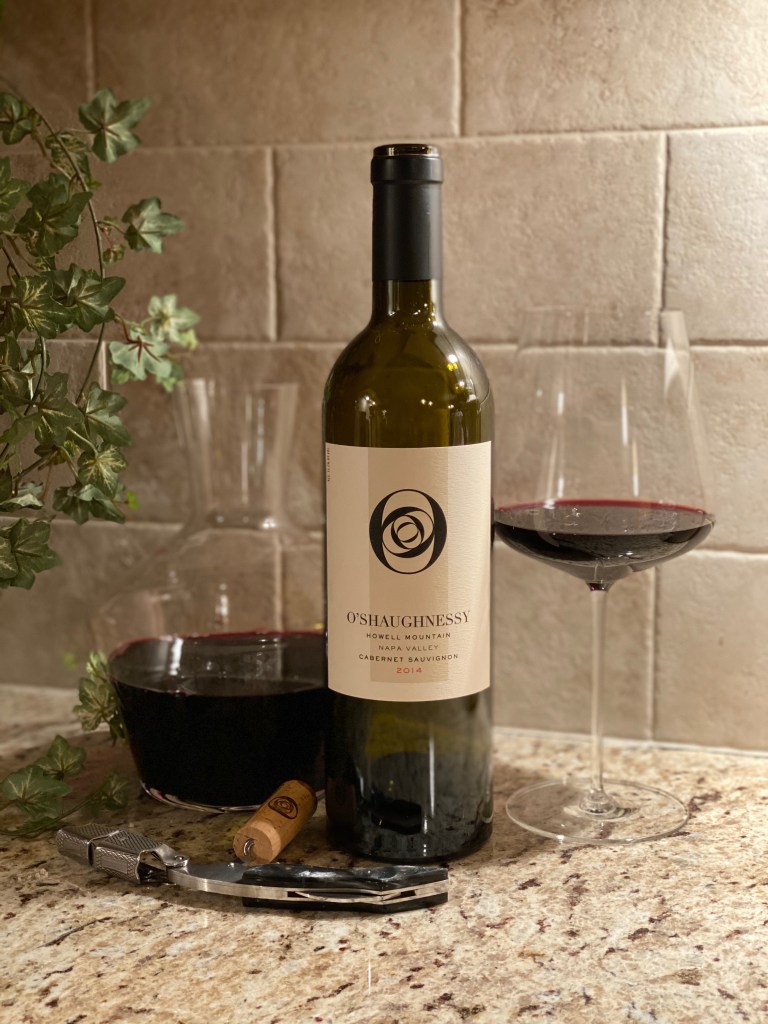
Today’s Wine: 2014 Howell Mountain Cabernet Sauvignon

79% Cabernet Sauvignon, remaining 21% a blend of Malbec, Merlot, Cabernet Franc, Carmenère, Petit Verdot, and St. Macaire; 15.2% ABV

The 2014 Howell Mountain Cab is an opaque, deep ruby/purple color with rim variation heavy on the purple side. Decanting is a must with this one, as its youth and powerful profile demand air time. The nose offers aromas of classic mountain fruit such as blueberry (very prominent) and blackberry alongside licorice, violet, aged leather, earth, dark chocolate, graphite, and oak. Once in the mouth, the wine showcases notes of blueberry, crushed blackberry, plum, wild black raspberry, red and purple florals, crushed stone, and dried silt. As expected this is full-bodied with high acidity, elegant medium tannins, and a long finish.

Price: $110. I think this is appropriately priced while being a wonderful representation of Howell Mountain. O’Shaughnessy produces some of my favorite Cabernets, I just wish I got to drink them more often. Pair this with steak, lamb, a good burger, or beef short ribs.

Beautiful Expression of Teroldego

Today’s Story: Agricola Foradori

Agricola Foradori traces its roots back to 1901 when the winery was established, however it did not come into the Foradori family until 1939 when Vittorio Foradori purchased it. The winery became a family venture when Roberto Foradori joined in 1960, coincidentally the same year of the family’s first vintage. Years later, in 1976, Vittorio unfortunately passed away unexpectedly and his wife Gabriella Casna Foradori managed the winery until their daughter Elisabetta could graduate with her enology degree. In 1984, Elisabetta faced her first vintage as a 19 year old though she already had her heart set on propelling her family’s winery and the Teroldego variety to high standards. Over time Foradori remained a family endeavor, with Elisabetta’s son Emilio working his first vintage in 2012 and her son Theo joining in 2015. Elisabetta’s daughter Myrtha joined this year to garden vegetables on the estate as well as plan for farming and expansion over the years to come.

One of the most important changes at Foradori over time, in my opinion, is the change to biodynamic farming in 2002. Though Elisabetta’s primary goal when first taking over the winery was the survival of the winery itself, over time she realized the importance of caring for land in such delicate manner to allow natural cycles and processes proliferate. Her minimalistic intervention in the vineyards and winery allows the fruit to express itself transparently, producing wines that are ideal demonstrators of place. In the winery, Elisabetta lightly (if at all) guides the wines through fermentation where there is no temperature control and only indigenous yeasts are used. Fermentation also takes place in different containers than the aging process, varying from oak casks and open-top tanks to clay tinajas. No sulphites are added until after the first racking (typically 6-8 months after drawing from the skins) so no wine will have more than 30mg/L SO2. At bottling, all wines are unfiltered.

Winery Statistics (found on the Foradori website here):

“We harvest the grapes from vineyards covering 28 hectares – 70% of Teroldego, 20% of Manzoni Bianco, 5% of Nosiola and 5% of Pinot Grigio – to produce an average of 160,000 bottles per year: 50,000 of Foradori, 20,000 of Granato, 25,000 of Fontanasanta Manzoni Bianco, 10,000 of Fontanasanta Nosiola, 10,000 of Fuoripista Pinot Grigio and 12,000 for each of vineyards of Sgarzon and Morei and 25,000 bottles of Lezèr.”

I encourage you to discover more for yourself on the Foradori website, particularly the tabs regarding the region, portfolio of wines, and photo gallery.

Today’s Wine: 2016 Granato

100% Teroldego; 13% ABV

This wine is an opaque deep purple color almost black at its core. Due to its youth, this certainly required a long decant. Once it opens up, the nose showcases aromas of blackberry, blueberry, wild red berries, farm land, violet, tar, smokey minerality, and mint. In the mouth, the Granato shows notes of blueberry, pomegranate, cranberry, lavender, forest floor, black tea leaf, and slight baking spice (especially cinnamon). The wine is medium- to full-bodied with high acidity, medium tannins, and a long finish. I suggest giving this a few more years of bottle age before drinking and this will drink magnificently for at least a decade beyond that.

Price: $75 (though you can find this for $60 or less in Europe). I like the price point (particularly overseas this is a screaming value), particularly for its complexity, ageability, and palpable high quality. Pair this with beef, lamb, or meat/red sauce pasta.

The Matriarch of Diamond Mountain

Today’s Story: Davies Vineyards

Davies Vineyards is one of the most historic wineries in the Napa Valley, known as having the first hillside caves for storing and aging wine in the region. While known for their Cabernet Sauvignon, Davies also produces Pinot Noir as well as Sparkling wine under the Schramsberg label. For more on their history, check out my previous blog post Who Wants Pie?

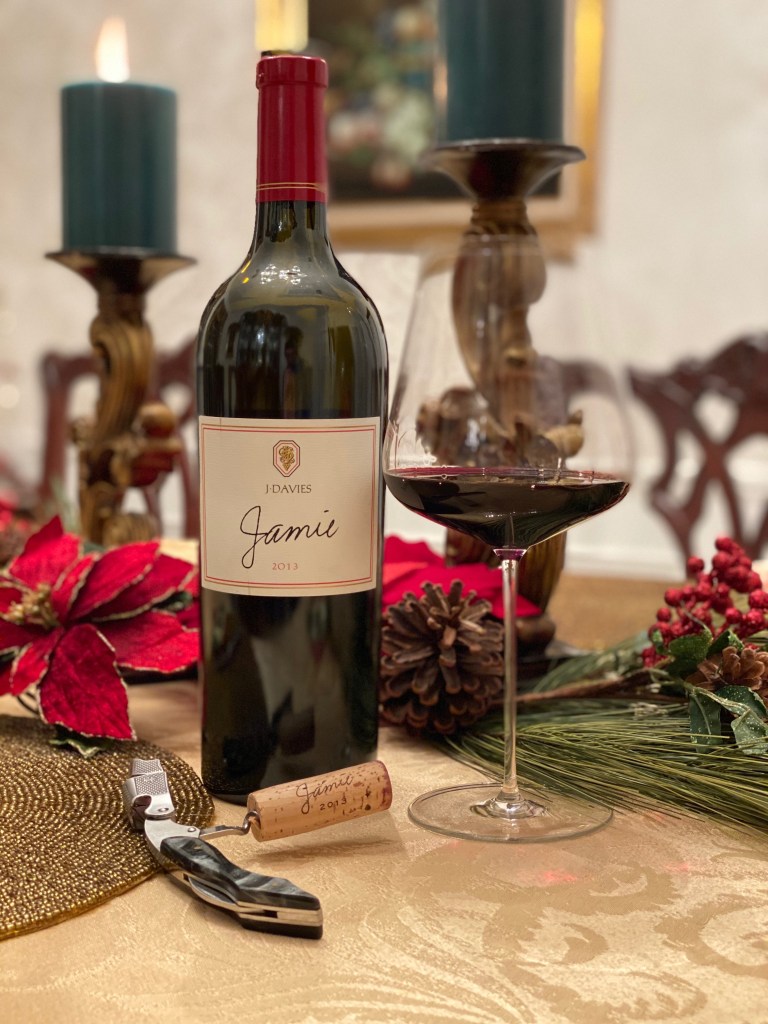
Today’s Wine: 2013 Jamie Cabernet Sauvignon

91% Cabernet Sauvignon, 6% Malbec, 3% Petit Verdot; 14.8% ABV

The Jamie bottling is Davies’ highest-end Cabernet Sauvignon, coming from their historic Diamond Mountain property. This wine is named in honor of Jamie Davies, with the label bearing her signature, who alongside her husband Jack revived Jacob Schram’s land and the Schramsberg label. The fruit for this wine comes from three vineyard blocks totaling 41 acres ranging from 500 to 1,000 feet elevation. Two blocks are from the original Schram holdings (Napa’s first hillside vineyards) and the third is the McEachran parcel planted in 1878.

The 2013 Jamie is deep opaque ruby in color. This bottle certainly needed some time in the decanter, and once the nose opens it showcases aromas of blackberry, plum, black licorice, cigar box, tobacco, perfumed purple florals, and oak. In the mouth, this wine shows notes of blackberry, blackcurrant, black raspberry, anise, graphite, cedar, and damp soil. The wine is full-bodied with medium (+) acidity, medium (+) tannins, and a medium (+) length finish. 275 cases produced.

Price: $200. While this is a delicious wine, I do not think it’s worth its price tag. This is twice as expensive as the other Cabs in the Davies portfolio and almost four times as expensive as their JD label. If you find yourself with a bottle, pair it with prime rib, filet mignon, or a New York strip.

A Winery Synonymous with Napa Valley Itself

Today’s Story: Beaulieu Vineyard

Beaulieu Vineyard is one of the most historic wineries in Napa Valley, founded in 1900 by Georges de Latour and his wife Fernande. Located in the Rutherford AVA, BV got its name from Fernande when she first saw the property and said it was a “beautiful place,” or “beau lieu.” Georges de Latour sold his successful cream of tartar business shortly thereafter and the couple purchased 4 acres with the intent of producing wines that could stand up to their native France. When they began planting, de Latour brought in Phylloxera-resistant rootstock from Europe in order to buck the trend of a California wine industry in trouble.

Though I have written about several wineries with origins in the late 1800s or early 1900s, BV is different in that unlike many of their neighbors they not only survived Prohibition but thrived during Prohibition. How? BV started selling sacramental wine to the Catholic Church and saw their business increase by four times while those around them shuttered their wineries. Once Prohibition ended, however, the story becomes more “traditional” Napa with de Latour focusing on how to create the best wines from his land by instituting updated farming and winemaking techniques. In an effort to raise his status higher, de Latour traveled to his native France to meet André Tchelistcheff, a world-renowned viticulturist and enologist, who championed continuous innovation. It was André who, upon tasting the 1936 vintage of BV’s Private Reserve wine, encouraged de Latour to bottle their flagship wine. André would become BV’s winemaker, a role he would maintain for over 30 years. In 1940 BV released their first Georges de Latour Private Reserve Cabernet Sauvignon, a wine still in production today.

BV has come a very long way from the initial 4 acre plot in 1900. BV currently operates on roughly 1,100 acres of estate vineyards, broken down into different “Ranch” designations. Ranch 1 (79 planted acres) came along in 1903, Ranch 2 (85 planted acres) in 1910, Ranch 3 in 1933 after the repeal of Prohibition, and so on. One of the cool features of BV’s winemaking technique is that each small vineyard lot stays separated throughout the entire process (not an easy feat with their vast holdings). During winemaking, each wine ferments such that the best expression of the fruit results. For instance, the white wines are cold-fermented to display a bright, vibrant character while the red wines are cold-soaked to showcase optimal color, flavor, and tannin. The reds are then fermented in small barrels and aged in oak varying in age, level of toast, and type.

For more on Beaulieu Vineyard’s history, portfolio of wines, or winemaking processes check out the website here, a source of much of the information above.

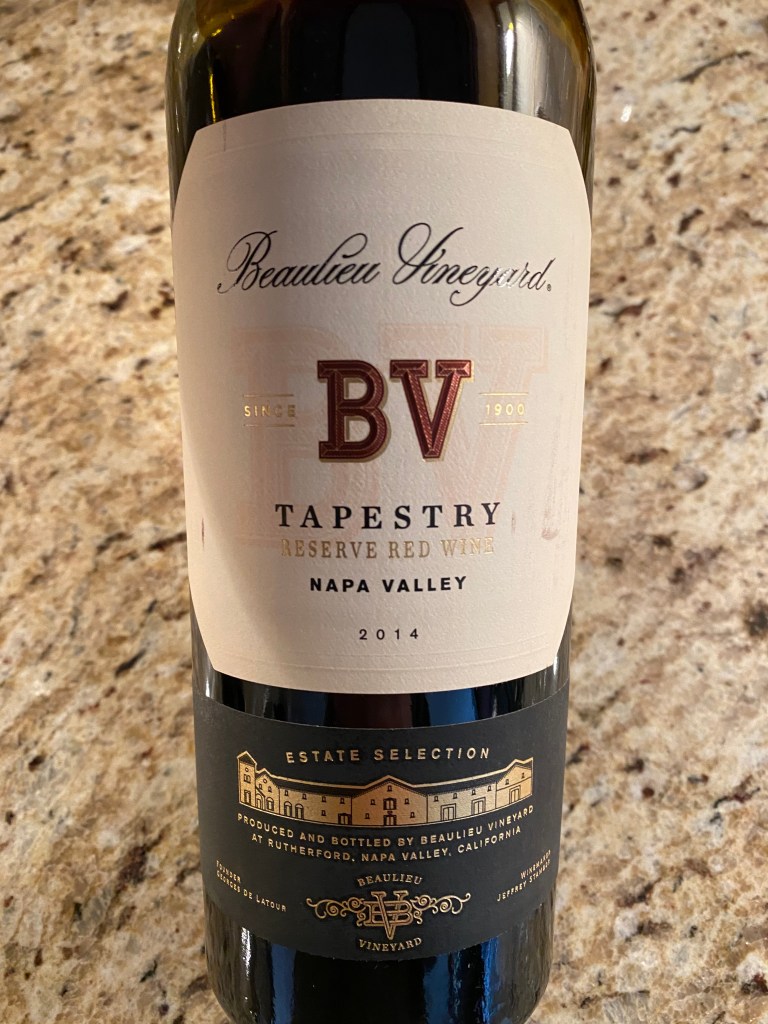
Today’s Wine: 2014 Tapestry Reserve

76% Cabernet Sauvignon, 13% Merlot, and remaining 11% between Petit Verdot, Malbec, and Cabernet Franc; 14.8% ABV

The 2014 Tapestry is deep ruby in color and is slightly transparent. I simply let this open up in the glass, and once it did the nose showcases aromas of blackberry, dark plum, redcurrant, cedar, crushed rock, light baking spice, and a touch of oak. Once in the mouth, this wine shows notes of black cherry, blueberry, pomegranate, dry chalky earth, licorice, graphite, vanilla, and green cooking herbs. This wine is full-bodied with medium (+) acidity, medium yet refined tannins, and a medium (+) length finish. Tapestry is always a wonderful wine from this storied producer.

Price: $45. This is a great value Bordeaux blend, a view I consistently have when trying this bottling across vintages. From a producer that makes wine from $7 per bottle to $100+ per bottle, this is great for BV’s portfolio as well as the overall wine community portfolio. Pair this with steak, a good burger, or lamb.

Rising Star in Sonoma County

Today’s Story: Daniel Cohn Wine Company (Bellacosa)

Daniel Cohn started Bellacosa following the sale of his family’s famous winery, BR Cohn, in 2015. Having grown up in the Sonoma Valley, Daniel was surrounded by wine since an early age. He walked the vineyards as a young boy and played in the soil, worked in the cellars racking barrels and cleaning tanks as he grew older, and learned the wine business as it grew into one of his greatest passions. Add this all to the fact that Daniel grew up around winemakers such as Helen Turley, Merry Edwards, and Steve MacRostie and it is no surprise he ventured out to create this new endeavor with Bellacosa.

Daniel has so far experienced much success with his new label, being named one of the Top 10 Hottest Wine Brands by Wine Business in 2016. This did not come without a cost, however, as Daniel spends enormous amounts of time traveling to sell his wine. For instance, during 2016 Daniel spent 308 days traveling racking up over 200,000 air miles while visiting 250 cities across the United States. Everywhere he goes, Daniel flies coach class, brings a suitcase with three bottles of wine, feasts on Chick-fil-A and Taco Bell, and books budget hotels last minute to get both best price and constant movement. This work ethic is truly admirable, and one of my favorite stories is how Whole Foods and Trader Joe’s started selling his wine in select locations because he walked into the stores with a bottle of wine and asked over a tasting. For more on Daniel’s tireless efforts, check out this Forbes article.

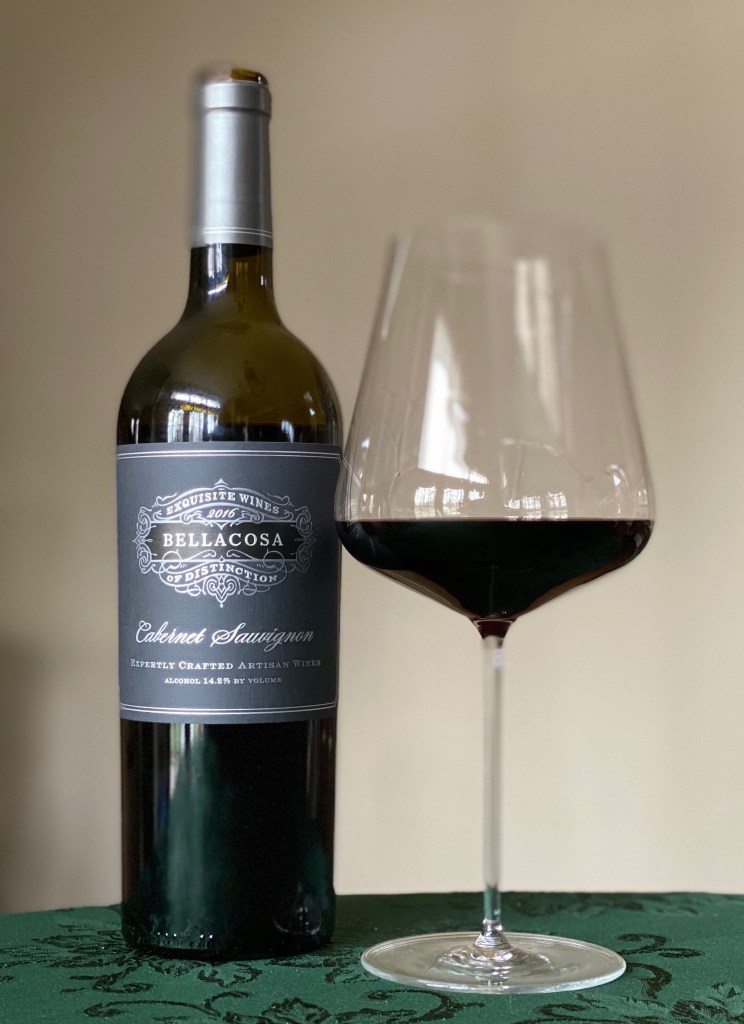
Today’s Wine: 2016 Bellacosa Cabernet Sauvignon

100% Cabernet Sauvignon; 14.2% ABV

The 2016 Bellacosa is deep ruby (almost purple) in color. On the nose I get aromas of blackberry compote, blueberry, plum, strawberry rhubarb, brown sugar and baking spice, vanilla, slight smoked meet, and a hint of alcohol. Once in the mouth, this wine showcases notes of blueberry, raspberry, cranberry, light dusty earth, milk chocolate, and vanilla. One thing I’d like to note is that this wine seems to fall apart by the mid-palate, almost in such a way I had to ask myself, “that’s it?” Nonetheless, this is medium- to full-bodied with medium (+) acidity, medium (-) silky tannins, and a medium length finish with notes of red cherry and blood.

Price: $24. This is certainly a nice value and one of the better Sonoma Cabs I’ve had for price. Further, this is certainly within the “people pleasing” category for Cabernet Sauvignon so it could make a good wine to bring to Christmas dinner in a few weeks. Pair this with a bacon cheeseburger with caramelized onions on top.

For the Bold and the Daring

Today’s Story: Domaine Leon Barral

Domaine Leon Barral was founded in 1993 in the Faugères appellation, which lies within the heart of Languedoc-Roussillon (the Languedoc). Didier Barral, the proprietor today, is the 13th generation of his family to grow grapes though he is the first to start estate bottling his own wine under the domaine. From the domaine’s beginning, Didier devoted his 30 hectares of vineyards to biodynamic farming practices and is seen by many as a pioneer and visionary. For instance, one of the very unique aspects of Didier’s farming is his use of cows, horses, and pigs that roam the vineyards during the winter months to graze on cover crop while naturally fertilizing the soil. These animal helpers bring with them mushrooms, earthworms, ants, flies, toads, larks, and other lifeforms that all help aerate and add nutrients to the soil. For pictures of some of these helpers, check out the domaine’s website here.

If you couldn’t tell by now from what is written above, Didier is a naturalist winemaker. While it certainly starts with his biodynamic farmings practices, Didier utilizes very stringent practices in harvesting and in the cellar. During harvest, all grapes are harvested and sorted by hand and are sometimes destemmed and other times left whole cluster (depending on variety). The wine is vinified by gravity in large cement tanks, it is fermented with only natural yeasts, and maceration takes place for 3-4 weeks with manual punchdowns. Didier’s wines are also never racked, fined, or filtered and only a small dose of SO2 is added if necessary at bottling.

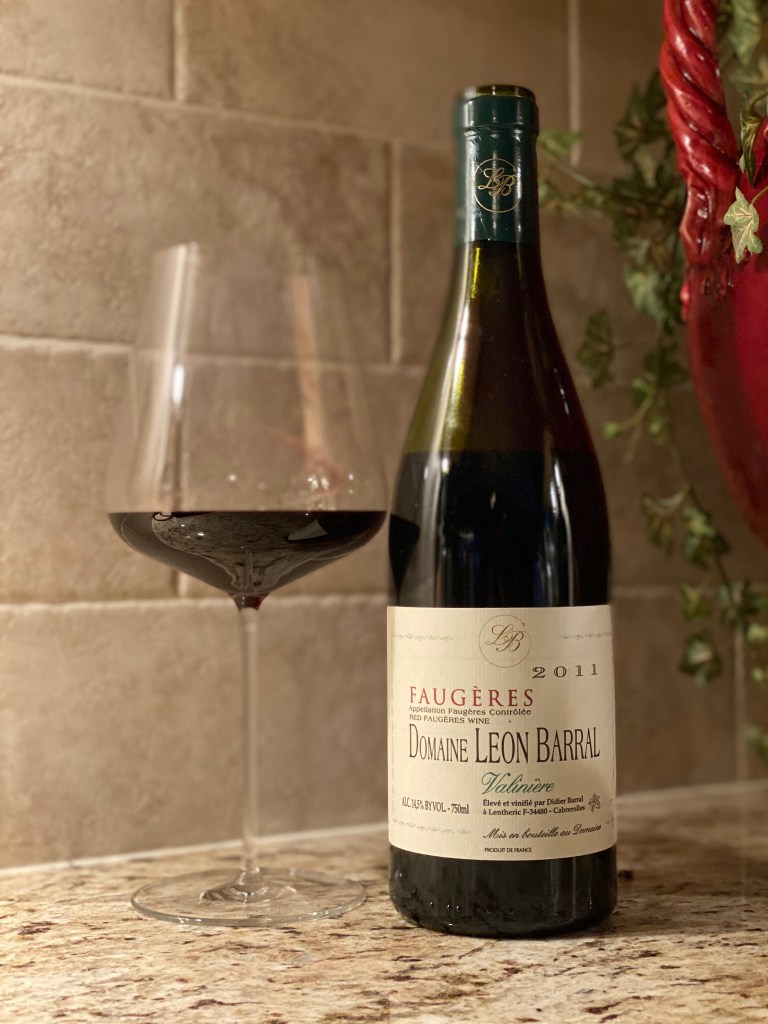
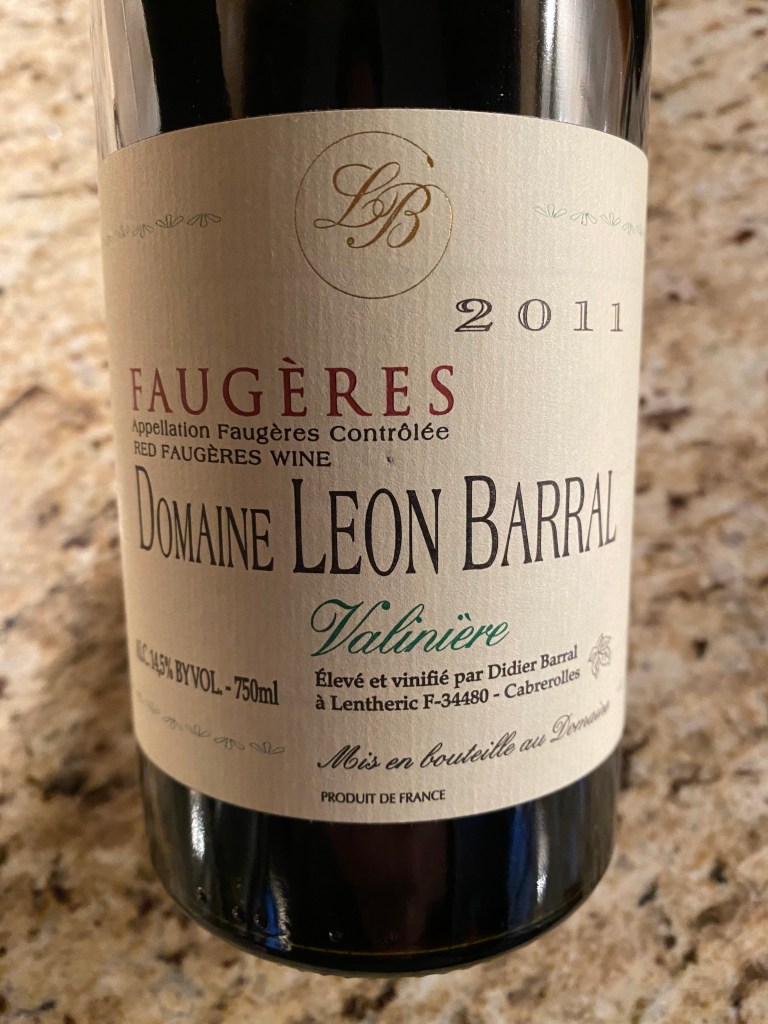
Today’s Wine: 2011 Faugères Valinière

80% Mourvèdre, 20% Syrah; 14.5% ABV

The Valinière is Barral’s smallest production cuvée, coming from 4.3 hectares of vines 15-30 years old. Like all of his vineyard land, these vines are planted in schist. The 2011 is deep, opaque ruby in color with garnet rim variation. There is sediment in the glass thanks to this being unfined and unfiltered (and possibly due to age). Once this opens up, the intense nose showcases aromas of blueberry, plum, black licorice, violet, nail polish remover, smoke, leather, damp soil, and a hint of barnyard. In the mouth, the wine shows notes of ripe black cherry, blueberry, red licorice, game, black pepper spice, wet rocky soil, and vibrant minerality. The 2011 Valinière is full-bodied with high acidity, dusty medium tannins, and a very long finish.

Price: $79. This wine is NOT for everybody. It is not for those who like big jammy, fruit-forward wines; it is not for those who like elegant, easy to drink wines. This being said, I was greatly impressed and enjoyed this wine (though my palate can become quite tired of the people-pleasers or the wines you can find anywhere). This is one of the greatest representations of “place” I have had to date (remember the farm animals). Pair this with grilled game meats or a dry-aged steak.