Old-World-Styled Pinot Noir From California

Today’s Story: Mount Eden Vineyards

Mount Eden Vineyards was established in 1945 in the Santa Cruz Mountain Appellation of California, with a focus of crafting small lots of Cabernet Sauvignon, Chardonnay, and Pinot Noir. Located at an elevation of 2,000 feet above the Santa Clara Valley floor, Mount Eden Vineyards is widely considered one of the first “boutique” California wineries and remains true to this philosophy today. Mount Eden believes every bottle is an expression of their terroir and thus winemaker Jeffrey Patterson spends most of his time in the vineyards connecting to his fruit and vines and centering his efforts on producing quality (not high-quantity) fruit. Part of Jeffrey’s focus in the vineyards is also making sure that this land will produce quality fruit for generations to come, so he feels deeply connected to the need to care for his vineyards. In the cellar, Jeffrey practices minimal intervention and all fruit is handled gently before going through fermentation using only natural yeasts. For more on the history of this wonderful winery, check out their website here.

Today’s Wine: 2015 Pinot Noir

100% Pinot Noir; 13.5% ABV

The 2015 Pinot Noir is pale ruby in color and moderately opaque. This is incredibly young and needs a couple hours to open up, but once it does the nose showcases aromas of cherry, black raspberry, black olive, mint, freshly ground green herbs, pine, charred cedar, leather, rocky earth, and incense. Once on the palate, the wine displays notes of tart cherry, dried strawberry, boysenberry, crunchy cranberry, red licorice, rose petal, sweet tobacco, scorched earth, underbrush, rocky minerality, and exotic spice. This is medium-bodied with an incredibly elegant and velvety mouthfeel, vibrant medium (+) acidity, medium (-) tannins, and a long finish. 936 cases produced.

Price: $65. This is an incredibly high-quality Pinot Noir that drinks on par or better than many $100 Pinot Noirs I’ve enjoyed. The one thing to keep in mind, though, is you need to be patient with this and give it at least another 5-7 years of bottle age. Pair this with rack of lamb, herb grilled pork chops, or eggplant parmigiana.
Small Batch Bordeaux Blend From Paso Robles

Today’s Story: Aleksander Wine

Aleksander is a small, family-owned boutique winery established by NBA player Sasha Vujacic and his family when his parents Goran and Ksenija discovered their property in 2009. On what became S&G Estate, a 30 acre property in Paso Robles complete with estate vineyards and its own winery, Aleksander produces Merlot-dominant Bordeaux blends in a “White Label” bottling and a “Reserve” bottling. Aleksander ages their wines in a mix of French, Serbian, and Eastern European oak barrels with the White Label wines calling them home for a minimum of 18 months and the Reserve wines a minimum of 24 months. All wines are aged in the bottles a minimum of 10 months before release.

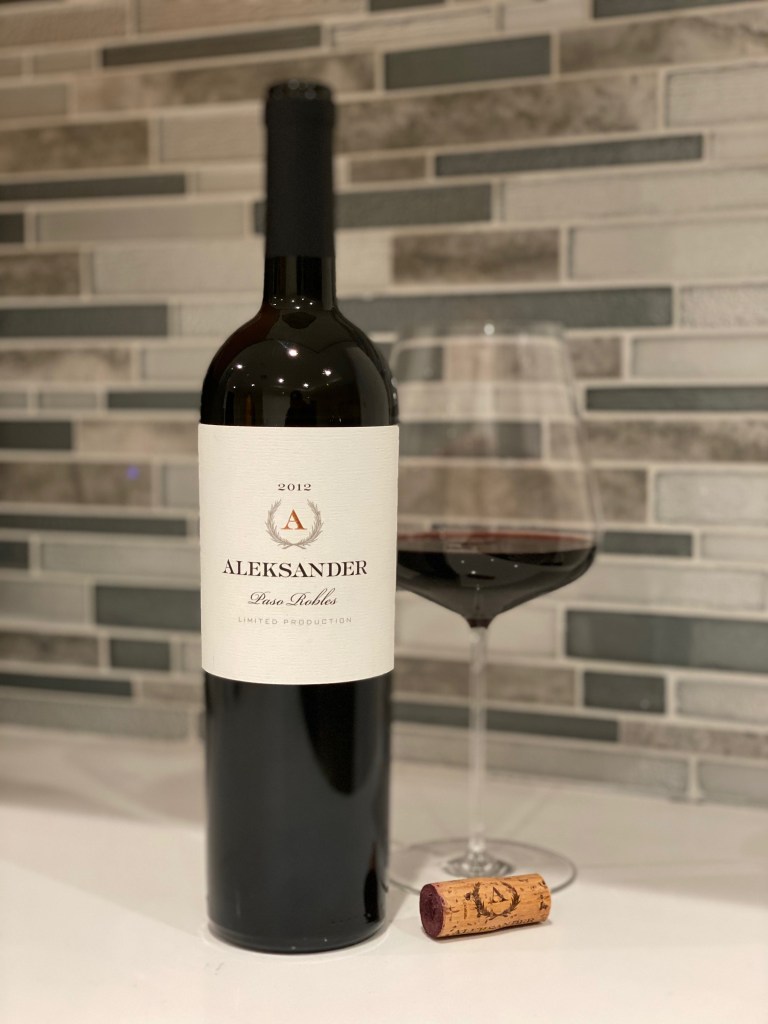
Today’s Wine: 2012 Aleksander Red Blend

55% Merlot, 22% Cabernet Sauvignon, 15% Cabernet Franc, 8% Petit Verdot; 13.8% ABV

The 2012 Aleksander is opaque deep ruby in color with deep purple hues in the bowl. Once this opens up, the nose showcases aromas of blackberry, blueberry, plum, black cherry, redcurrant, violet, loamy soil, wet slate, cigar box, chocolate, and oaky spice. On the palate, I get notes of cassis, anise, blackberry, baked cherry, worn leather, wet gravel, charred earth, ground coffee, dark chocolate, baking spice, and oak. This wine is medium- to full-bodied with high acidity, medium (+) tannins, and a medium (+) length finish.

Price: $70. This is a very solid wine, though it is certainly toward the higher end of price-point I’ve paid for Paso Robles Bordeaux blends. That being said, I think this does stand up to a lot of the Napa wines in this price range and this, while being restrained in ABV and not a jammy fruit bomb, should have broad appeal. Pair this with roasted duck breast, filet mignon, or herb-grilled pork.

Incredible Value from Andy Erickson

Today’s Story: Leviathan Wine

Leviathan was founded in 2004 by renowned winemaker Andy Erickson. Andy’s goal with creating Leviathan was to create a unique red blend sourcing Cabernet Sauvignon, Syrah, Cabernet Franc, and Merlot from some of Northern California’s best vineyards and each year releasing a bottling of different blends. For those of you who are not familiar with Andy, his resume in California winemaking is extensive and includes stints at Screaming Eagle, Harlan Estate, and Staglin as well as consulting roles at Dalla Valle, Arietta, Dancing Hares Vineyard, Mayacamas, and Ovid. Andy also co-founded and co-owns Favia Wines with his wife Annie and together they are producing some of my favorite wines I’ve really come to love over the past several years.

Today’s Wine: 2015 Leviathan

Cabernet Sauvignon, Syrah, Cabernet Franc, Merlot (exact blend not provided); 14.8% ABV

The 2015 Leviathan is deep purple and almost black in color while being completely opaque like a starless night sky. Once this opens up, the nose emits aromas of blackberry, black plum, wild blueberry, redcurrant, black raspberry, graphite, dried tobacco, potting soil, black truffle, mocha, cinnamon, and cedar. On the palate, I get notes of black cherry, cassis, blackberry compote, black licorice, violet, worn leather, charred earth, smoke, green peppercorn, chocolate, and oak. This wine is full-bodied with medium (+) acidity, medium (+) grippy tannins, and a long finish dominated by dark chocolate and black fruit notes.

Price: $45. This is an outstanding value while its complexity and high quality are both mind-boggling but not shocking because this is after all an Andy Erickson wine. Pair this with steak au poivre, grilled lamb, or grilled portobello mushroom.

The Maestro

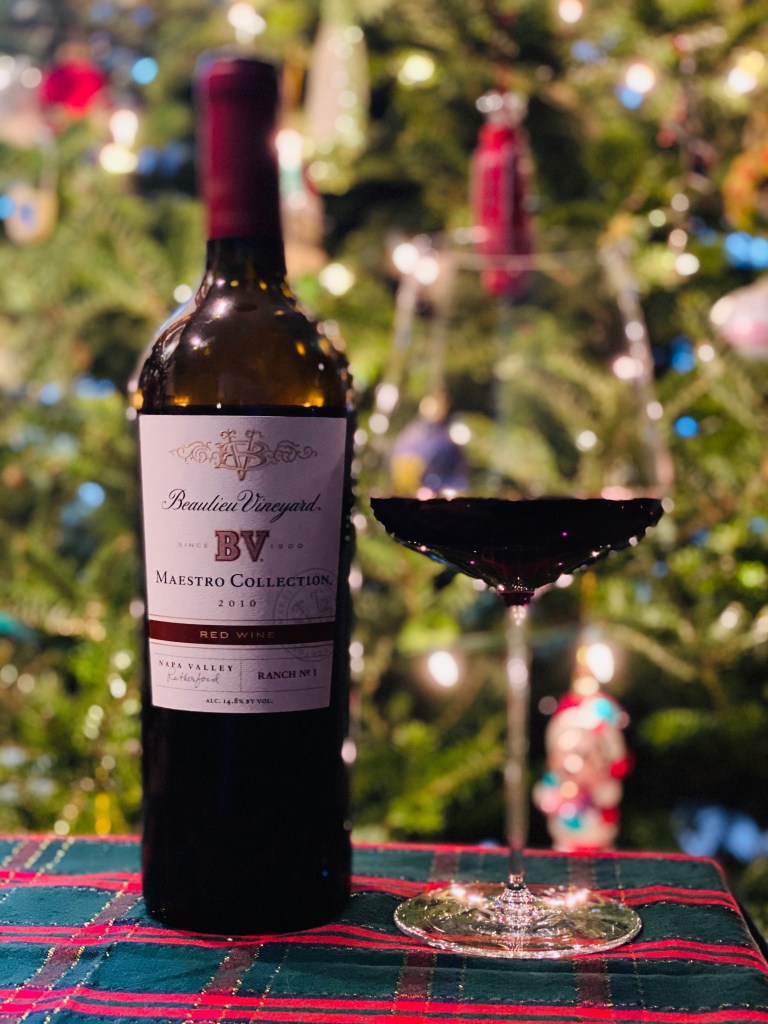
Today’s Story: Beaulieu Vineyard

Beaulieu Vineyard is one of the most historic wineries in Napa Valley, founded in 1900 by Georges de Latour and his wife Fernande. I previously wrote about their history in A Winery Synonymous with Napa Valley Itself back on December 8, and if you are unfamiliar with the winery or their history I highly suggest reading this prior post.

Though I won’t rewrite the entire backstory here today, I do want to give more color on the Maestro Collection which my wine today is part of. As I discussed in my prior post, world-renowned viticulturist and enologist André Tchelistcheff joined BV and brought European methods of cultivation and pruning with him. His contributions from the start seem endless, from his tasting of the 1936 vintage of the BV Private Reserve and encouraging Georges de Latour to bottle it separately to his experimentations with micro-plots of different grape varieties and small-lot fermentation. As one of the most influential and iconic winemakers in the Napa Valley, André worked with BV for 40 years as winemaker and gained the nickname the “Maestro.” Though André retired in 1973, he joined BV again in 1991 to help the winemaking team study the effects of vintage and bottle age on 50 vintages of Private Reserve Georges de Latour and he also helped experiment with small-lot wines. It is these small-lot wines produced using unique varietals, vineyard lots, and blends that make up the Maestro Collection, justifiably named in André’s honor.

Today’s Wine: 2010 Maestro Collection Ranch No. 1 Red Blend

I unfortunately could not find a percentage breakdown of varieties in this wine, though I do know this to be Cabernet Sauvignon dominant (I assume ~70-75%) blended with Merlot and a splash of Petit Verdot. 14.8% ABV

The 2010 Maestro Collection Ranch No. 1 is medium ruby in color and almost entirely opaque. This needs about an hour to open up, but once it does the nose showcases aromas of blackberry, cassis, plum, dried earth, cigar box, chocolate, nutmeg, and oak. Once in the mouth, I get notes of blackberry, blueberry, black cherry, sweet tobacco, slate, leather, vanilla, and a hint of licorice. This wine is medium- to full-bodied with medium (+) acidity, dusty medium (+) tannins, and a long finish with herbaceous overtones.

Price: $95. While this is a delicious wine and the Maestro Collection is fairly limited, I find it hard to justify paying twice the price of a BV Tapestry Reserve which I consistently find to be good value. Pair this with steak, a good burger, or lamb.

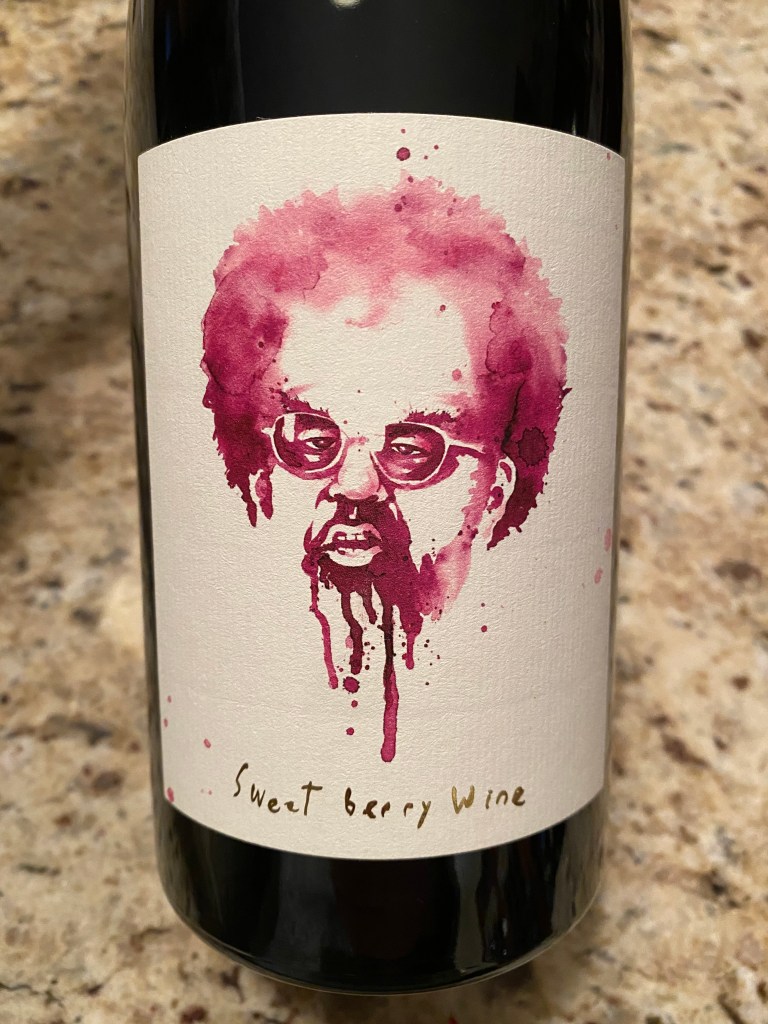
Sweet Berry Wine!!

Supposed to spit it out…..but no way Jose am I spittin’ this stuff out, it tastes like fruit!

Dr. Steve Brule

Today’s Story: Las Jaras Wines

Las Jaras Wines was founded in 2014 by winemaker Joel Burt and Hollywood comedian/director Eric Wareheim. Joel Burt, a winemaker at Domaine Chandon, was growing tired of making wines in a cookie-cutter, corporate, and mass-produced manner when he met Eric and the two realized they shared a passion for fine wine. The duo started planning their own wine label where they could produce wines in homage of “the old days” (think 1970s Napa) and Las Jaras was born. Joel describes their Cabernet “like a Dunn from the 80s, but way more approachable” and each wine in the portfolio is made largely using similar traditional techniques.

To achieve this style of wine, Joel remains very hands-off throughout the winemaking process. Las Jaras sources their fruit from various old vine vineyards, though most comes from Mendocino County. All fruit is hand-harvested and each variety goes through separate winemaking processes, all being hand-sorted at the crusher. Though each variety is vinified differently to best express that variety’s unique character, the long story short here is that Joel doesn’t add sulfur, the wines ferment with only natural yeasts, and bottling is accomplished with no fining or filtration. Today will be my first bottle from Las Jaras (and hopefully not my last) as I can appreciate wines made in traditional fashion with lower SO2 and alcohol content to better express the terroir.

Today’s Wine: 2018 Sweet Berry Wine

54% Carignan, 28% Zinfandel, 12% Charbono, 3% Cabernet Sauvignon, 3% Valdiguie; 13% ABV

The 2018 Sweet Berry Wine is a beautiful medium purple in color and moderately opaque. This takes a little bit of time to open up, but once it does the nose showcases aromas of blueberry, raspberry, strawberry jam, licorice, sweet tobacco, cured meat, cinnamon, and violet. In the mouth, this Carignan-dominated blend shows notes of tart cherry, cranberry sauce, plum, wild underripe raspberry, baking spice, sweet tobacco, and green herbs. Overall both the nose and palate come off quite sweet, actually reminding me somewhat of the Martha Stoumen Zinfandel I reviewed not too long ago. The wine is medium-bodied with high acidity, low tannins (surprisingly), and a long finish.

Price: $35. All gimmicks aside, I think this is a great value particularly for those not familiar with a more “natural” way of making wine. I put “natural” in quotes because Joel Burt takes the word with a grain of salt when it comes up to describe his style, but it does fit. Pair this with honestly any type of food you want, but steer toward chicken, duck, pork, or beef brisket – and you can add barbecue to all of that minus the duck.

For a little comedy behind this wine, check out the video here. For a more serious note on the winemaking process for this bottling (they go into a lot of great detail) check out the fact sheet here.

Relatively New GSM from Paso

Today’s Story: Booker Vineyard

Booker Vineyard as it exists today stems from the purchase of 100 acres by Eric and Lisa Jensen in 2001. The history of this land, however, traces back to the late 1920s when Claude and Dick Booker, two orphaned brothers, purchased land on Paso’s Westside that amassed to more than 1,200 acres by the turn of the century. The Bookers were some of Paso’s best-known residents for their farming knowledge and philanthropy, with their largest gift being 100% of their estate left to charity when Dick died in 1990 and Claude died in 2000.

Now back to 2001 with Eric and Lisa, the couple intended to use their new land to grow grapes for some of the best wineries in the Paso Robles area. Though they achieved this goal selling grapes to Saxum for five years and L’Aventure for two years, Eric and Lisa wanted more out of their land and decided to bottle their own wine beginning with the 2005 vintage. A unique and more personalized expression of their land, Booker wines are made by Eric Jensen himself.

Though Booker is not certified organic or biodynamic, their farming practices pull inspiration from both methods. The Jensens have come to realize that biodynamic farming practices help maintain the interconnected lifestyle and cycles of all entities in the vineyards, providing a boost to soil and vine health that becomes apparent in their wines. Furthermore, the vines are planted in rather high density so each plant can focus its energy on few clusters that create concentrated wines rather than an abundance of fruit. This is also important because Booker’s vineyards do not get much water.

Much like the mentality in the vineyards, Booker makes their wines in minimalist fashion. Eric strives to interfere as little as possible, with his red wine fermentations started using pump-overs and moving to punch-downs in most cases once fermentation starts. The wines are not racked until bottling and these wines are typically aged for 18 months. For more, check out the Booker website here where much of the above information finds its source.

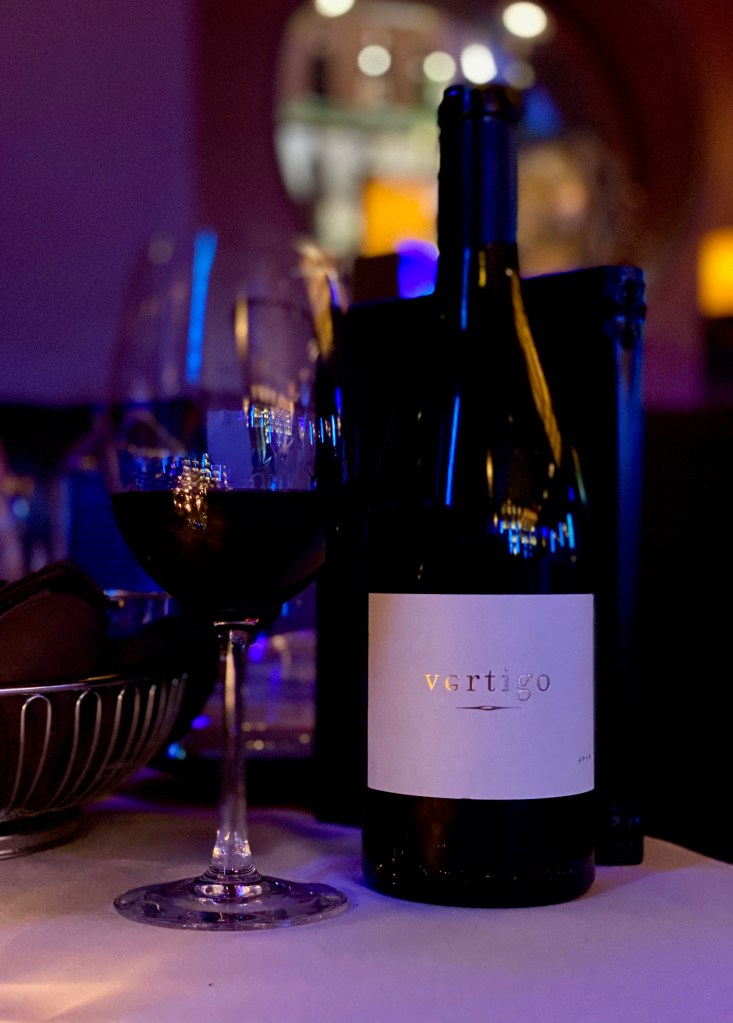
Today’s Wine: 2016 Vertigo GSM Red Blend

52% Syrah, 30% Grenache, 18% Mourvèdre; 14.9% ABV

The 2016 Vertigo is medium to deep ruby in color and moderately transparent. Once the wine opens up (you will need to decant this) the nose offers enticing aromas of blackberry, blueberry, red berry jam, baked cherry, licorice, lavender, a touch of smoke, leather, game, chocolate, and a hint of vanilla. On the palate this wine displays delicious notes of blackberry compote, blueberry, black plum, candied cherry, scorched earth, graphite, blood, bitter chocolate, green herbs, and stony minerality. The wine is medium-bodied with high acidity, high tannins, and a long grippy finish dominated by dark berries and plum. Overall this is a complex yet sweet GSM that, while beautiful now with some air, needs time to fully come together in the cellar.

Price: $80. This is not cheap but fairly priced, though I would steer you toward better value wines (such as Ridge GSM) if you intend to drink it now. You need to be patient for a few more years with this one but will be handsomely rewarded. Pair this with red meats and game accompanied by mushroom or pepper sauce.

Preeminent California Zin

Today’s Story: Turley Wine Cellars

Turley was founded in 1993 by Larry Turley, the brother of famed winemaker Helen Turley. During the earlier years, Helen even consulted for her brother’s new winery. Though Larry entered the wine business more than a decade earlier in 1981 by co-founding Frog’s Leap Winery in Rutherford, he learned his love of Zinfandel and the vision for Turley was born. Turley Wine Cellars makes 47 different wines from over 50 different vineyards, all of which are of the Zinfandel or Petite Syrah varieties. With their specialty single-vineyard red Zinfandel bottlings, Turley sources from old vineyards with some dating back to the late 19th and early 20th centuries and they are considered by many to be the best Zinfandel wines made in California.

Turley Wine Cellars started with one location in St. Helena in the Napa Valley, though during expansion opened a second winery in Templeton in San Luis Obispo county. Today, they have a third location in Amador County. As of 2011, Turley was producing 16,000 cases of wine and becoming a member of their private wine club can still take up to two years. All of the vineyards sourced for Turley are either certified organic or in the process of bering certified, and during the winemaking process all wines are fermented with natural yeasts.

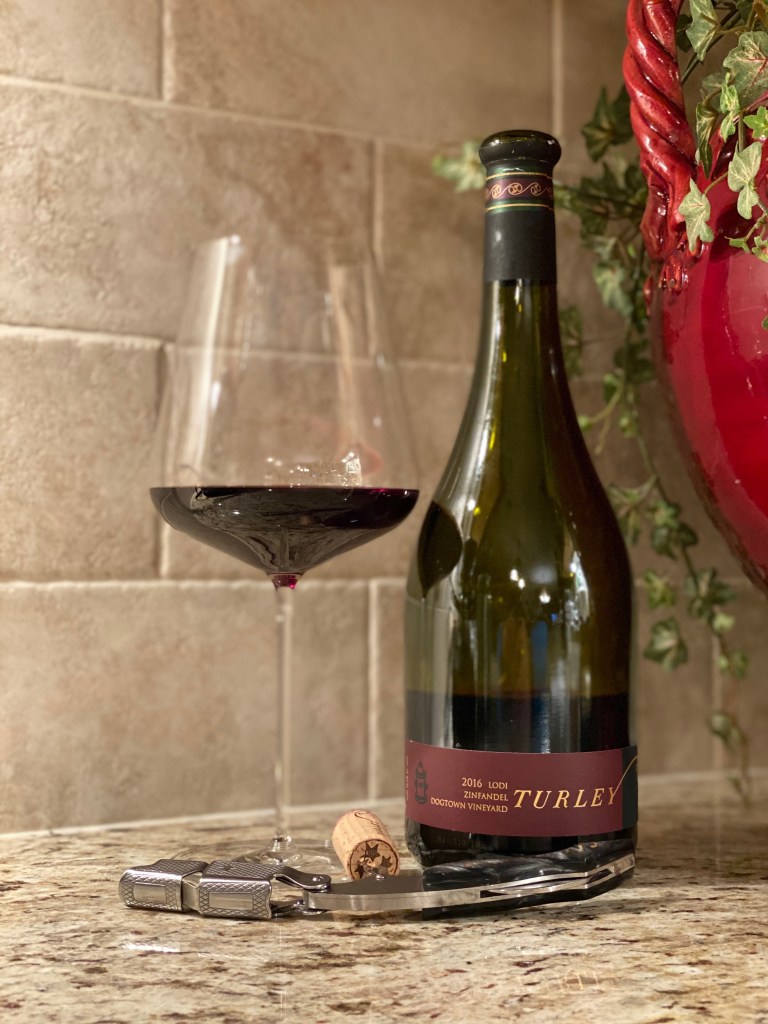
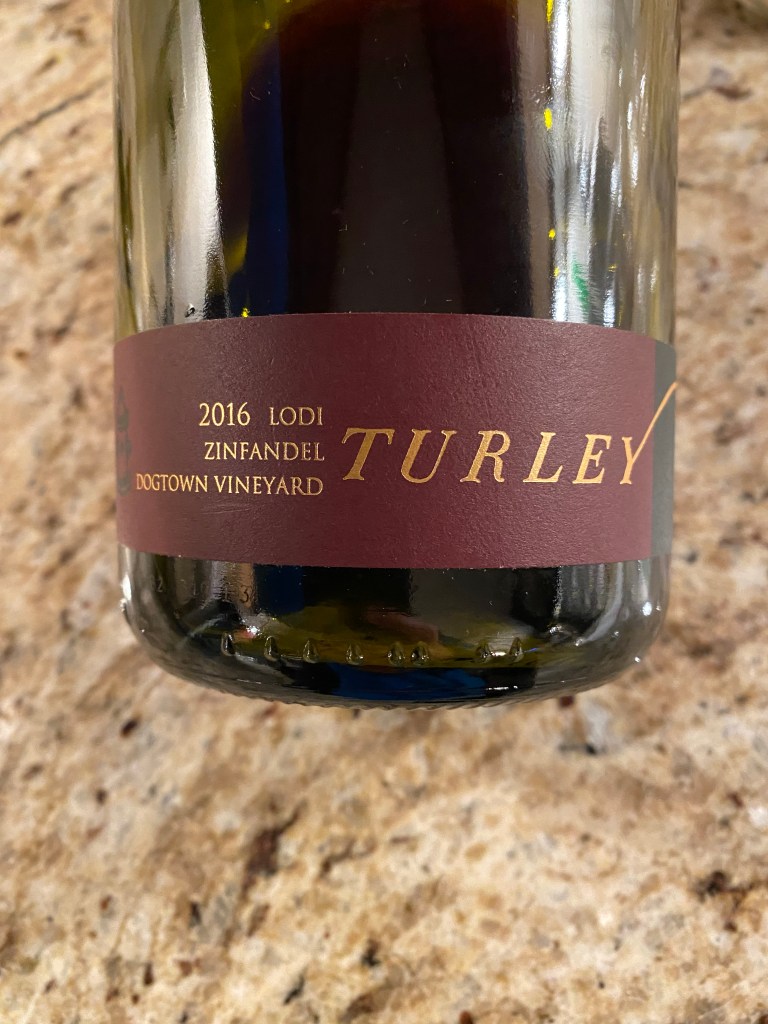
Today’s Wine: 2016 Dogtown Vineyard Zinfandel

100% Zinfandel; 15.3% ABV

The 2016 Dogtown Vineyard Zinfandel is medium ruby in color with rose variation toward the rim of the glass. Once this wine opens up, the nose showcases aromas of black cherry, raspberry, pine, earth, black shoe polish, leather, smoke, and dried green herbs. On the palate, I get notes of cherry, cranberry, raspberry, ripe black plum, tobacco, baking spice, green herbs, and oak. Like many Zinfandels, the sweet fruit dominates here. This is full-bodied with high acidity, medium tannins, and a medium (+) length finish.

Price: $65. Certainly not an inexpensive Zinfandel, though the Dogtown Vineyard is consistently the lowest-yielding vineyard of the over 50 vineyards Turley makes wine from. If this is a little steep, Turley’s portfolio consists of 47 different wines of varying price-point. Pair this with barbecue, especially chicken or pork.

A Winery Synonymous with Napa Valley Itself

Today’s Story: Beaulieu Vineyard

Beaulieu Vineyard is one of the most historic wineries in Napa Valley, founded in 1900 by Georges de Latour and his wife Fernande. Located in the Rutherford AVA, BV got its name from Fernande when she first saw the property and said it was a “beautiful place,” or “beau lieu.” Georges de Latour sold his successful cream of tartar business shortly thereafter and the couple purchased 4 acres with the intent of producing wines that could stand up to their native France. When they began planting, de Latour brought in Phylloxera-resistant rootstock from Europe in order to buck the trend of a California wine industry in trouble.

Though I have written about several wineries with origins in the late 1800s or early 1900s, BV is different in that unlike many of their neighbors they not only survived Prohibition but thrived during Prohibition. How? BV started selling sacramental wine to the Catholic Church and saw their business increase by four times while those around them shuttered their wineries. Once Prohibition ended, however, the story becomes more “traditional” Napa with de Latour focusing on how to create the best wines from his land by instituting updated farming and winemaking techniques. In an effort to raise his status higher, de Latour traveled to his native France to meet André Tchelistcheff, a world-renowned viticulturist and enologist, who championed continuous innovation. It was André who, upon tasting the 1936 vintage of BV’s Private Reserve wine, encouraged de Latour to bottle their flagship wine. André would become BV’s winemaker, a role he would maintain for over 30 years. In 1940 BV released their first Georges de Latour Private Reserve Cabernet Sauvignon, a wine still in production today.

BV has come a very long way from the initial 4 acre plot in 1900. BV currently operates on roughly 1,100 acres of estate vineyards, broken down into different “Ranch” designations. Ranch 1 (79 planted acres) came along in 1903, Ranch 2 (85 planted acres) in 1910, Ranch 3 in 1933 after the repeal of Prohibition, and so on. One of the cool features of BV’s winemaking technique is that each small vineyard lot stays separated throughout the entire process (not an easy feat with their vast holdings). During winemaking, each wine ferments such that the best expression of the fruit results. For instance, the white wines are cold-fermented to display a bright, vibrant character while the red wines are cold-soaked to showcase optimal color, flavor, and tannin. The reds are then fermented in small barrels and aged in oak varying in age, level of toast, and type.

For more on Beaulieu Vineyard’s history, portfolio of wines, or winemaking processes check out the website here, a source of much of the information above.

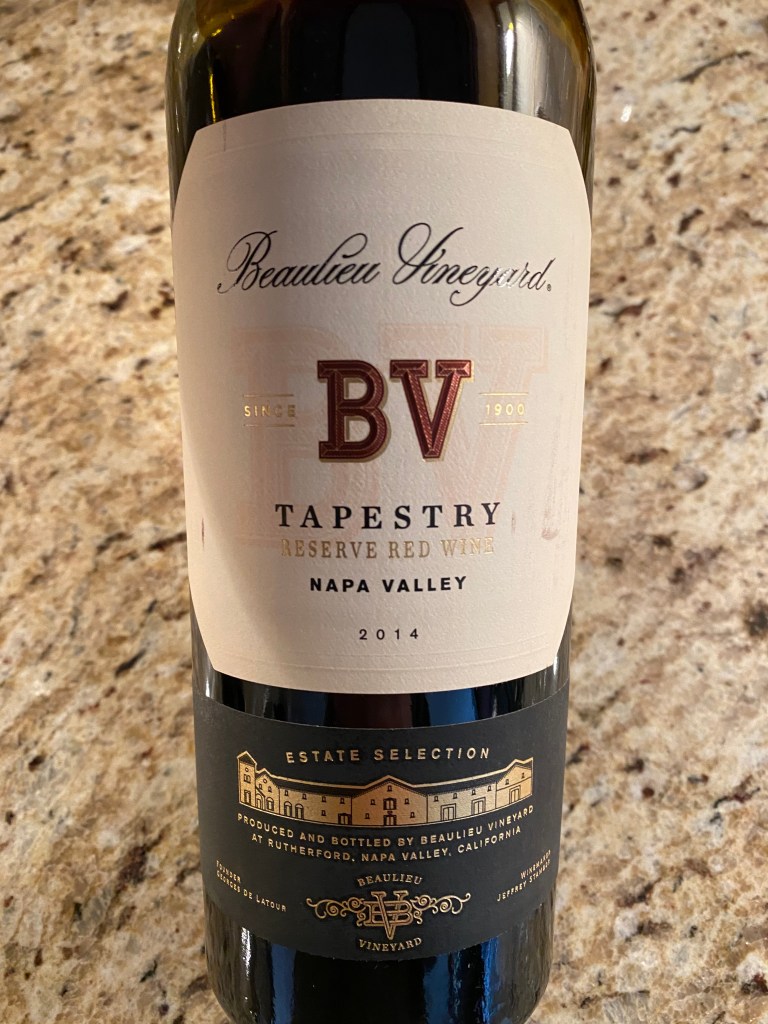
Today’s Wine: 2014 Tapestry Reserve

76% Cabernet Sauvignon, 13% Merlot, and remaining 11% between Petit Verdot, Malbec, and Cabernet Franc; 14.8% ABV

The 2014 Tapestry is deep ruby in color and is slightly transparent. I simply let this open up in the glass, and once it did the nose showcases aromas of blackberry, dark plum, redcurrant, cedar, crushed rock, light baking spice, and a touch of oak. Once in the mouth, this wine shows notes of black cherry, blueberry, pomegranate, dry chalky earth, licorice, graphite, vanilla, and green cooking herbs. This wine is full-bodied with medium (+) acidity, medium yet refined tannins, and a medium (+) length finish. Tapestry is always a wonderful wine from this storied producer.

Price: $45. This is a great value Bordeaux blend, a view I consistently have when trying this bottling across vintages. From a producer that makes wine from $7 per bottle to $100+ per bottle, this is great for BV’s portfolio as well as the overall wine community portfolio. Pair this with steak, a good burger, or lamb.

Rising Star in Sonoma County

Today’s Story: Daniel Cohn Wine Company (Bellacosa)

Daniel Cohn started Bellacosa following the sale of his family’s famous winery, BR Cohn, in 2015. Having grown up in the Sonoma Valley, Daniel was surrounded by wine since an early age. He walked the vineyards as a young boy and played in the soil, worked in the cellars racking barrels and cleaning tanks as he grew older, and learned the wine business as it grew into one of his greatest passions. Add this all to the fact that Daniel grew up around winemakers such as Helen Turley, Merry Edwards, and Steve MacRostie and it is no surprise he ventured out to create this new endeavor with Bellacosa.

Daniel has so far experienced much success with his new label, being named one of the Top 10 Hottest Wine Brands by Wine Business in 2016. This did not come without a cost, however, as Daniel spends enormous amounts of time traveling to sell his wine. For instance, during 2016 Daniel spent 308 days traveling racking up over 200,000 air miles while visiting 250 cities across the United States. Everywhere he goes, Daniel flies coach class, brings a suitcase with three bottles of wine, feasts on Chick-fil-A and Taco Bell, and books budget hotels last minute to get both best price and constant movement. This work ethic is truly admirable, and one of my favorite stories is how Whole Foods and Trader Joe’s started selling his wine in select locations because he walked into the stores with a bottle of wine and asked over a tasting. For more on Daniel’s tireless efforts, check out this Forbes article.

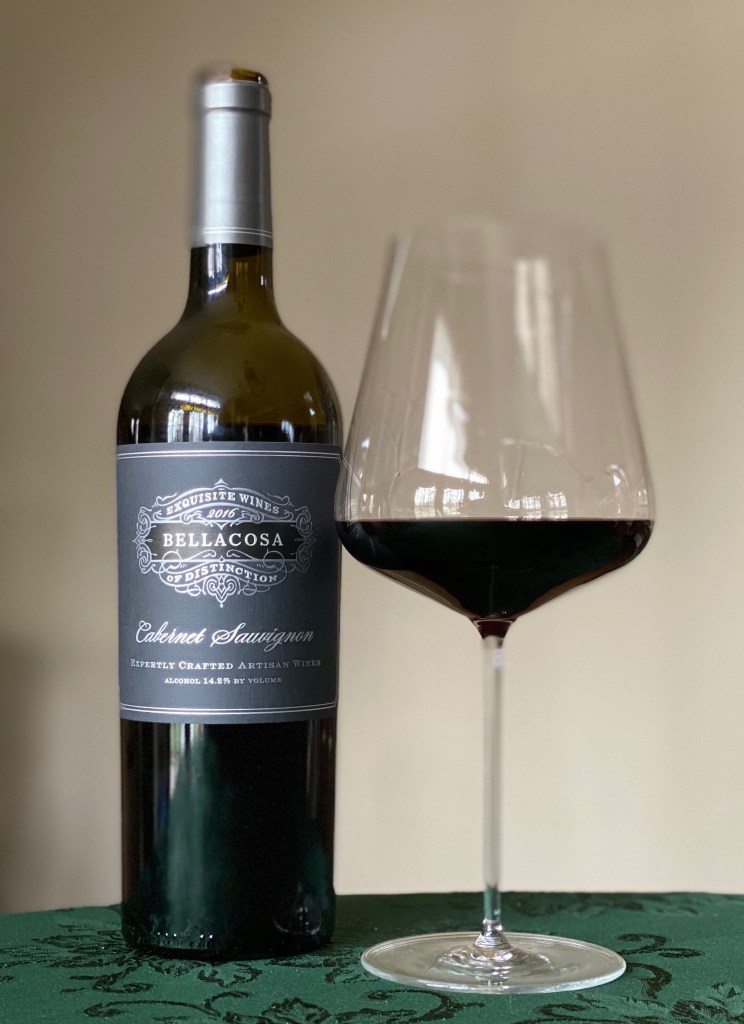
Today’s Wine: 2016 Bellacosa Cabernet Sauvignon

100% Cabernet Sauvignon; 14.2% ABV

The 2016 Bellacosa is deep ruby (almost purple) in color. On the nose I get aromas of blackberry compote, blueberry, plum, strawberry rhubarb, brown sugar and baking spice, vanilla, slight smoked meet, and a hint of alcohol. Once in the mouth, this wine showcases notes of blueberry, raspberry, cranberry, light dusty earth, milk chocolate, and vanilla. One thing I’d like to note is that this wine seems to fall apart by the mid-palate, almost in such a way I had to ask myself, “that’s it?” Nonetheless, this is medium- to full-bodied with medium (+) acidity, medium (-) silky tannins, and a medium length finish with notes of red cherry and blood.

Price: $24. This is certainly a nice value and one of the better Sonoma Cabs I’ve had for price. Further, this is certainly within the “people pleasing” category for Cabernet Sauvignon so it could make a good wine to bring to Christmas dinner in a few weeks. Pair this with a bacon cheeseburger with caramelized onions on top.

Stunningly Natural Zin

Today’s Story: Martha Stoumen Wines

Martha Stoumen Wines is a project dedicated to making natural wines in a patient, environmentally considerate manner. Following her study of traditional agricultural systems and Italian as an undergraduate, Martha worked the vineyards, olive orchard, and winery of a small farm and learning center in Tuscany. These experiences built her foundation as a grape grower due to her time spent mostly in the vineyards, something that would prove instrumental in how she would view winemaking back in the US.

Today, Martha herself leases and farms about half of the vineyards yielding fruit for her wines, while the other half are farmed by multi-generation farmers who share her philosophies. One of the most important words for Martha’s growing philosophy is “patience.” This includes composting rather than using fertilizers, not using insecticides but rather allowing nature to take its course, and working largely by hand. Martha also prunes her vines for a long life ahead rather than focusing on yields like many other producers nowadays.

During her winemaking process, Martha is as hands-off as possible. For example, fermentation is accomplished with only natural yeasts and bacteria present on the skins. She also allows for longer maceration and aging in pursuit of stability of her wines, rather than adding tannin, acid, or stabilization agents. For all of this above and more, I encourage you to visit her website here.

Today’s Wine: 2018 Zinfandel Venturi Vineyard

100% Zinfandel; 12.7% ABV

The wine is medium purple in appearance while being opaque and slightly hazy. Once this opened up a bit, the nose showcases aromas of plum, wild blueberry, perfumed lavender, charcuterie (especially an earthy prosciutto), wet slate, and slight baking spice. On the palate I get notes of jammy plum, black raspberry compote, allspice, black tea, and sweet tobacco. This wine is medium-bodied with high, lip-smacking acidity, medium (+) tannins, and a very long grippy finish. 462 cases produced.

Price: $38. This is most definitely worth a try. The wine is very true (an honest representation of California Zinfandel) and this is quite different from all of the Zins I have tried so far. Really cool wine to pair with bbq pork, bbq chicken, lamb, or even pizza and pasta.