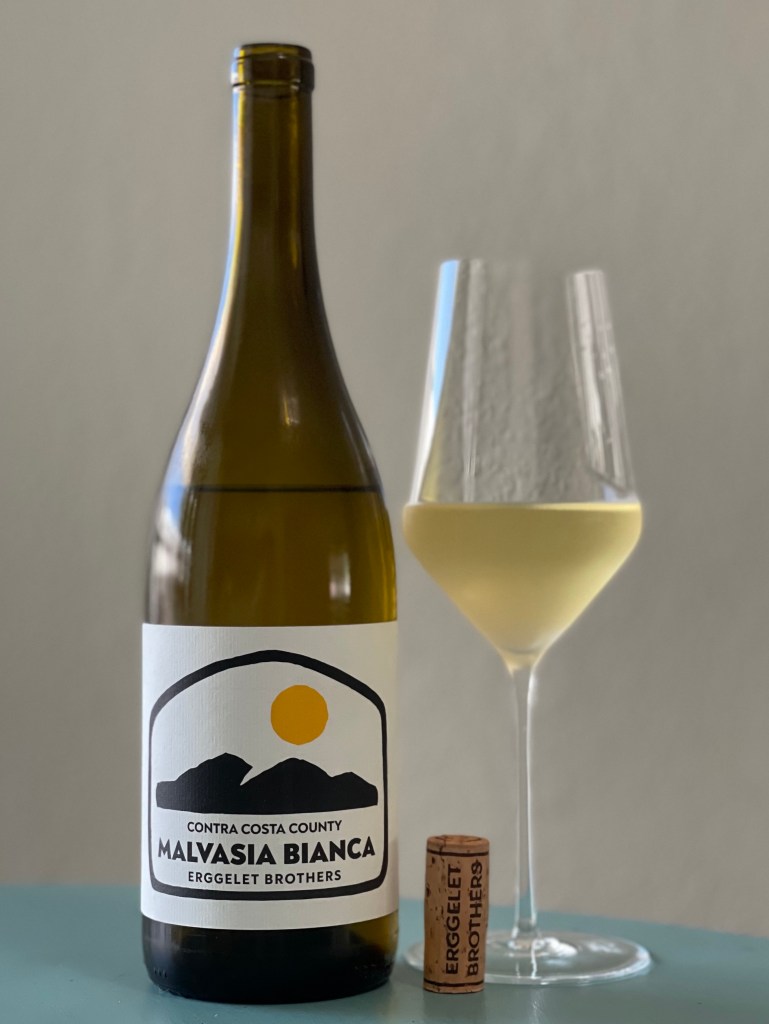
Easygoing Malvasia Bianca From Contra Costa County

Today’s Story: Erggelet Brothers

Erggelet Brothers is a small wine producer which, as the name implies, was established by brothers Julian and Sebastian Erggelet. Julian and Sebastian grew up in southern Germany, and though Julian studied Medicine and Sebastian studied Philosophy & Economics the two picked up an appreciation and passion for wine along the way. Sebastian went back to school for Viticulture & Enology while Julian finished up his medical degree, and afterwards the brothers embarked on travels around the world and worked wine harvests, in cellars, and in kitchens to hone their palates in France, Switzerland, Australia, and Spain. The brothers journeyed to California in 2014 and worked at OVID, Seven Stones, and Martin Estate before ultimately starting their own winemaking project in 2015.

Today Julian and Sebastian source fruit from Contra Costa County in California, as well as some Pinot Noir from Oregon. The brothers put a major emphasis on farming, particularly “intentional” and organic farming. Julian and his wife Alli run an organic farming project called The Urban Edge in Brentwood, CA as well where they not only farm the Cecchini Family Vineyard but also grow 25 acres of mixed stone fruit, 5 acres of mixed vegetables, and 5 acres of asparagus. They also keep a watchful eye over ducks, chickens, goats, sheep, and rabbits.

Within the Contra Costa County, the Erggelet brothers source from two vineyards: Cecchini Family Vineyard and Del Barba Vineyard. They receive their Malvasia Bianca from Cecchini Family Vineyard, and Del Barba provides them with Carignane, Mataro, and Zinfandel. All wines ferment with indigenous yeasts and there are zero additions throughout the winemaking process. Come bottling, each wine is bottled unfined and unfiltered.
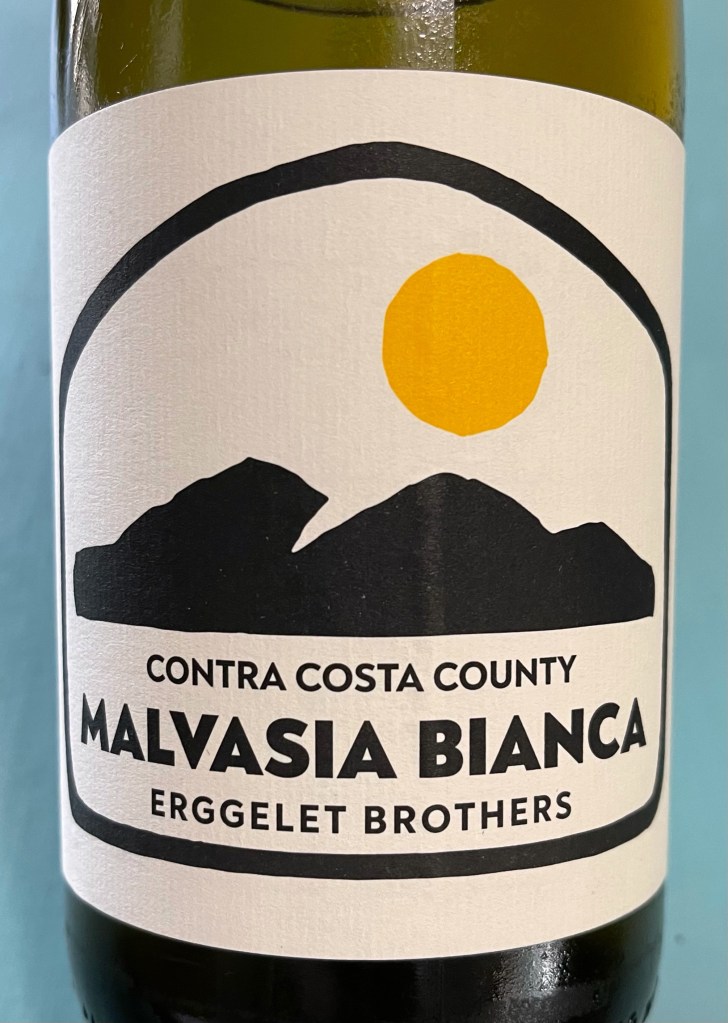
Today’s Wine: 2019 Cecchini Family Vineyard Malvasia Bianca

100% Malvasia Bianca; 12% ABV

The 2019 Cecchini Family Vineyard Malvasia Bianca is pale to medium yellow in color. Aromas are of medium intensity, and the nose showcases delicate aromas of peach skins, lime zest, yellow apple, white floral blossom, beeswax, and rosemary. Meanwhile the flavors are also of medium intensity and the palate displays notes of peach, apricot, lime, white florals, honeycomb, wax, and sage. This dry white is light- to medium-bodied with medium (+) acidity, medium alcohol, and a medium (+) length finish. This is a very good and fun wine that didn’t last long once the cork was pulled. 100 cases produced.

Price: $25. I think this is incredibly fairly-priced and offers good value given the balance, structure, and solid complexity. The only Malvasia I’ve had has always been Madeira, so I was excited to try this and it was everything I hoped for.

Off-Dry Riesling From California’s North Coast

Today’s Story: Benevolent Neglect

Benevolent Neglect is a small passion project of winemaking friends Matt Nagy and Ben Brenner. As the name implies, winemaking here is best called minimal intervention as Matt and Ben believe a winemaker is meant to translate what the vineyard provides and not come in with a heavy hand in the cellar. The team rarely uses new oak, they don’t use oak substitutes, and eschew additives common in many corners of the winemaking world. They also refrain from adding water or acidity to alter the wines’ natural balance. All reds are unfined and unfiltered, while some of the whites only see filtering. Benevolent Neglect sources their fruit from the Central and North Coasts of California as well as Napa/Sonoma, producing a range of wines that stretch from Chardonnay and Cabernet Sauvignon to Rhône varieties and Ribolla Gialla.

Today’s Wine: 2018 Riesling

100% Riesling; 11.3% ABV

The 2018 Riesling is medium straw in color and transparent. Aromas are of pronounced intensity, with the nose displaying notes of lime, white peach, grapefruit, green apple skins, honeysuckle, and a small hint of petrol. Meanwhile the flavors are of medium intensity, while the palate displays notes of green apple, lemon and lime zest, crisp pear, honey, and saline. This off-dry Riesling (RS of 15g/L) is medium-bodied with high acidity, medium (-) alcohol, and a medium (+) length finish.

Price: $28 (often found closer to $40). I think for $28 this is a solid Riesling and a fun one to try given the minimally invasive winemaking style and region where it comes from. It lacks in intensity on the palate for me, but overall it’s an enjoyable and fun Riesling to try.

An Unusually Approachable Dunn Howell Mountain Cab

Today’s Story: Dunn Vineyards

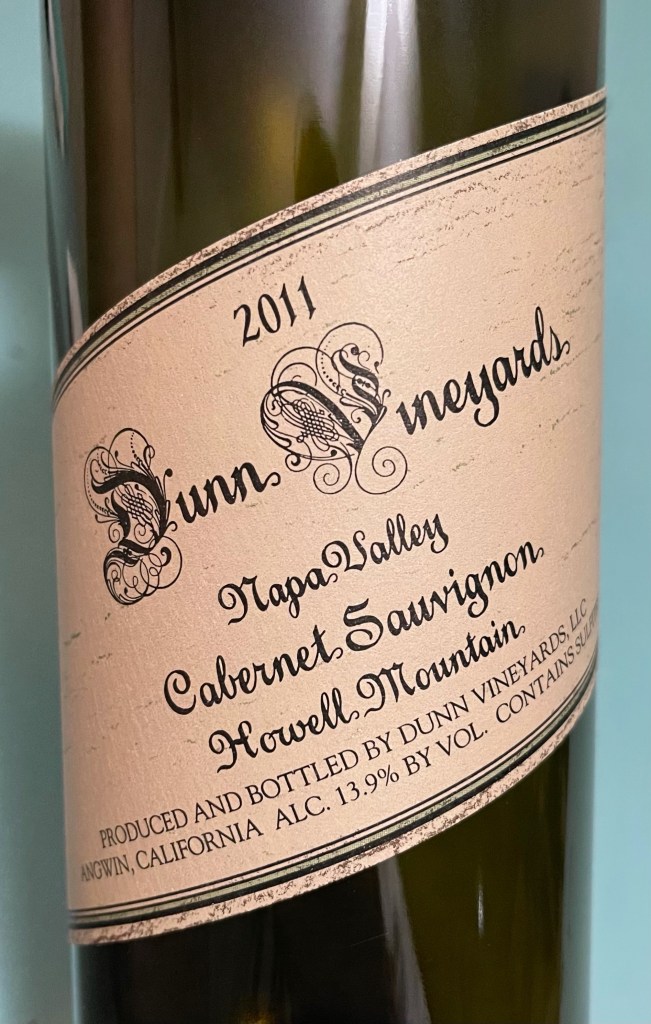
Dunn Vineyards dates to 1979 when Randy and Lori Dunn purchased a 14 acre parcel in Angwin with about 5 acres planted to Cabernet Sauvignon. Though Randy worked as a winemaker in Rutherford for his day job, he spent the nights and weekends with Lori and their young son Mike farming their vines. The Dunn family also farmed Harry Frank’s adjacent vineyards and purchased the fruit resulting in a first harvest of 9 tons of fruit. With an additional purchase of 3 tons from Beatty Ranch, the Dunn’s were on their way to producing their first vintage.

The family moved onto their property shortly thereafter with another young child, Jennifer, and Dunn Vineyards was officially bonded in 1981. After their second daughter, Kristina, was born, Randy was still working in Rutherford when the winery’s success picked up and encouraged him to leave his job in 1985 to move into a new family house and put all of their effort into Dunn Vineyards. By the late 1980s, Randy was consulting for other wineries, their wine was selling out, and the family needed to burrow into the mountain in 1989 to create more room for barrels.

Mike returned in 1999 and three years later became a full-time employee at Dunn Vineyards and after Kristina graduated from Cal Poly with a degree in winemaking and viticulture she joined as well. Today, Kristina’s daughters play in the vineyards and Mike’s son helps bottle the wines, making it seem the family tradition at Dunn Vineyards is set to continue into three generations and beyond. Today, the family farms 42 acres of Cabernet Sauvignon high up on Howell Mountain and the resulting wines are elegant yet profound and built for cellaring.

I previously reviewed the 2014 Napa Valley Cabernet Sauvignon from Dunn, which is a generally more accessible bottling made from mountain and valley floor fruit.

Today’s Wine: 2011 Howell Mountain Cabernet Sauvignon

100% Cabernet Sauvignon; 13.9% ABV (though it seems like it’s actually slightly higher)

The 2011 Howell Mountain Cabernet Sauvignon is deep ruby in color and opaque. Given a couple hours to decant, this wine blossoms into a complex and approachable bottling. The aromas are of pronounced intensity, with the nose showcasing notes of blackberry, blueberry, cassis, anise, menthol, lavender, leather, tobacco, and chocolate. There’s a touch of brett as well but not enough to detract. Meanwhile the flavors are also of pronounced intensity and the palate displays notes of black cherry, plum, blueberry, blackberry, dried tobacco, menthol, licorice, dried green herbs, and a touch of oak-driven spice. This dry red is medium- to full-bodied with medium acidity, medium (+) but refined tannins, medium (+) alcohol, and a medium (+) length finish.

Price: $160 (I paid $112). I’ve long been a fan of Dunn’s wines, and I think they offer solid value next to their counterparts in other mountain AVAs and especially those on the valley floor. Though you have to be very patient with the Howell Mountain bottlings, this 2011 was rather approachable given the vintage conditions and I will certainly try to buy more.

A Refreshing and Minimal Intervention Chenin Blanc

Today’s Story: Lo-Fi Wines

Lo-Fi Wines was established in 2014 by lifelong friends Mike Roth and Craig Winchester. Centered in a belief wines should be honest and transparent representations of their vintage and variety, Lo-Fi wines are meant to be consumed as everyday drinkers to pair with a broad range of foods and not locked away in the cellar. Through minimal intervention winemaking, Lo-Fi wines ferment naturally with native yeasts and see minimal to zero sulfur additions and no pH adjustments. The wines age in neutral oak barrels and are mostly bottled unfiltered, with the final product an easy-drinking and low alcohol wine. A number of the wines also see whole cluster fermentation and carbonic maceration.

I previously reviewed the 2020 Gamay / Pinot Noir from Lo-Fi.

Today’s Wine: 2020 Jurassic Park Vineyard Chenin Blanc

100% Chenin Blanc; 12.5% ABV

The 2020 Jurassic Park Vineyard Chenin Blanc is pale gold in color. Aromas are of medium intensity, with the nose showcasing notes of yellow apple, pear skins, stone fruit, honey, white florals, and wet stone minerality. Meanwhile the flavors are also of medium intensity and the palate displays notes of pear, yellow apple, lemon zest, peach, chamomile, honey, and saline. This dry white is medium-bodied with medium (+) acidity, medium alcohol, and a medium (+) length finish. Easy drinking though it’s slightly funky/reductive particularly on the nose. 195 cases produced.

Price: $26. I haven’t had a ton of Chenin Blanc yet and it’s a variety I’m trying to explore more, but for the price this is a solid and fun one to try. While not the most intense wine, this offers a good array of aromas and flavors wrapped into an easy-drinking and enjoyable bottle. Enjoyable on its own or paired with food.

Old School Napa Chardonnay for the Cellar

Today’s Story: Mayacamas Vineyards

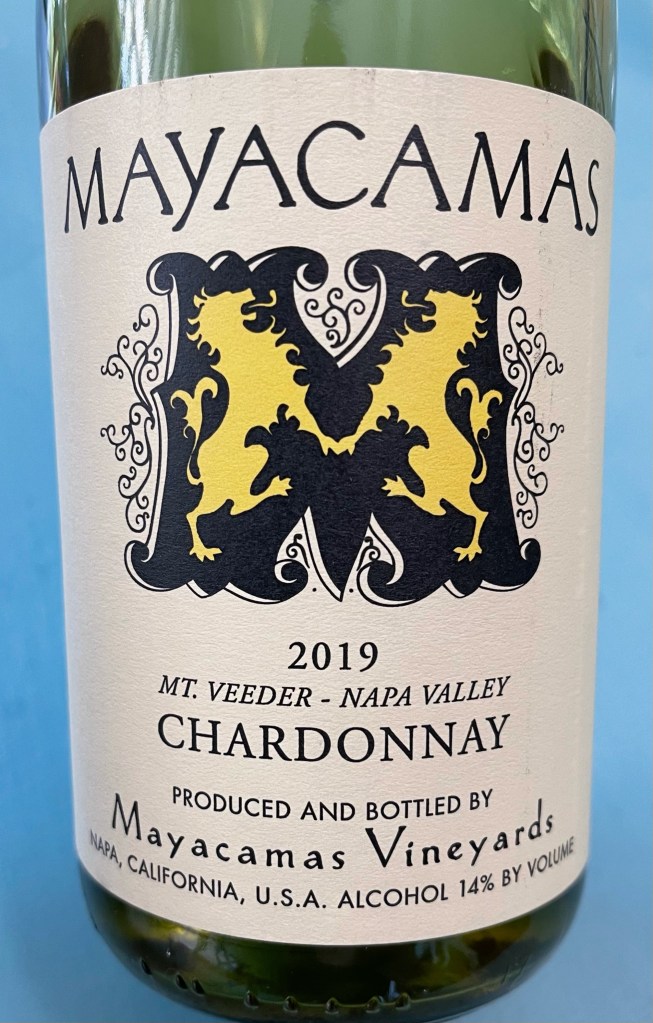
Mayacamas was established in 1889 by German immigrant John Henry Fisher and is located in the Mt. Veeder AVA of the Napa Valley. Fisher went bankrupt in the early 1900s, however, and the winery ceased production with the onset of Prohibition (although bootleggers are said to have made wine in the cellars during the early years). Mayacamas was owned by the Brandlin family during the 1920s and 1930s, before being purchased by Jack and Mary Taylor in 1941 when the estate received its current name. Mayacamas changed hands yet again in 1968 when Robert and Elinor Travers purchased it, with the couple quickly setting about expanding the aging facilities and vineyard holdings while planting and replanting vines. Charles and Ali Banks purchased Mayacamas in 2007, though the winery has since changed hands again to the Schottenstein family.

Though the history of Mayacamas is long and inclusive of many ownership changes, the one constant is the traditional style of winemaking they practice. Mayacamas was one of the wines in the 1976 Judgment of Paris (they poured their 1971 Cabernet Sauvignon) which showed the estate can stand up with the greatest Californian and French wines of the world. Mayacamas dry farms their vineyards and transitioned a large portion to organic viticulture in 2013, further enhancing the quality of fruit. Very traditional in style, they age the wines in neutral oak to not mask any of the true expressions of the Cabernet Sauvignon variety or the terroir.

I previously wrote about Mayacamas when I reviewed the 1989 Cabernet Sauvignon last June.

Today’s Wine: 2019 Chardonnay

100% Chardonnay; 14% ABV

The 2019 Chardonnay is pale gold in color and transparent. 30 to 40 minutes in the glass does the wine wonders at this youthful stage. The aromas are of pronounced intensity, with the nose showcasing aromas of green apple, ripe pear, lemon zest, melon rind, honeysuckle, flint, and minerality reminiscent of finely crushed rock. Meanwhile the flavors are also pronounced, with the palate displaying notes of Granny Smith apple skins, lime pith, poached pear, chamomile, wet stone, mild white pepper, and almond. This dry white is medium-bodied with medium (+) acidity, high alcohol, and a long finish.

Price: $50. I think this is very well-priced and offers solid value. The intensity, complexity, and structure bode well for the longer term and this is made in a very old school style which I love.

Fun and Refreshing Napa White Blend That Begs for an Oyster Pairing

Today’s Story: Matthiasson Family Vineyards

Matthiasson Family Vineyards is a relatively small winery established in 2003 by Steve and Jill Klein Matthiasson. Steve grew up passionate about farming, passing time as a gardener and cook while in college before co-writing the California manual on sustainable vineyard practices in 1999 after graduate school for horticulture. Jill is also passionate for farming, particularly the sustainability side of it, and she studied botany at Penn before ultimately attending UC Davis for grad school studying traditional methods for soil health.

Matthiasson is probably most well-known for their Napa Valley White Wine that I’m reviewing today (an interesting blend of Sauvignon Blanc, Semillon, Ribolla Gialla, and Tocai Friulano), but they also either grow or source (often by lease) Chardonnay, Cabernet Sauvignon, Merlot, and Cabernet Franc amongst other varieties. Steve and Jill maintain their own vineyard in the West Oak Knoll area, while sourcing from others throughout the Napa Valley and Sonoma County including Red Hen, Bengier, and Linda Vista amongst others. All of the vineyards are either organically farmed or transitioning to organic viticulture, and as you might guess Steve and Jill believe great wine starts in the vineyards. Steve is pretty involved in each vineyard they source fruit from, catering farming practices to each specific one so that no matter the source their fruit is healthy and fully ripe. Coupled with his traditional winemaking methods, the Matthiasson wines come out beautifully balanced with lower levels of alcohol and gorgeous acidity.

I previously wrote about Matthiasson when I reviewed the 2018 Linda Vista Vineyard Chardonnay back in May, 2020.

Today’s Wine: 2019 White Wine

50% Sauvignon Blanc, 25% Ribolla Gialla, 23% Semillon, 2% Tocai Friulano; 12.5% ABV

The 2019 White Wine is pale yellow in color. The aromas are of pronounced intensity and the nose is absolutely gorgeous, showcasing notes of white peach, lemon pith, seashell, flint, raw almond, slight reduction (almost like petrol), wet river stone, and dried straw/hay. Flavors are also of pronounced intensity, with the palate displaying notes of green apple, pineapple, white peach, lime zest, beeswax, wet rock, saline minerality, and mild oaky spice. This dry white blend is medium-bodied with vibrant, high acidity, medium alcohol, and a medium (+) length finish. The wine begs for an oyster pairing and the finish leaves one craving the next sip. 893 cases produced.

Price: $40. Though not inexpensive, I believe this wine offers great value solely based on its complexity, balance, and intensity. Then factor in that it’s fun, refreshing, and can age for quite a few years and you’ve got a showstopper.

Refreshing Pinot Grigio for the Summer Months

Today’s Story: Gargiulo Vineyards

Gargiulo is a relatively small, family-owned winery in Oakville, Napa Valley that produces about 3,400 to 4,000 cases of wine each year from two vineyards. Owners Jeff and Valerie Gargiulo bought their first vineyard, Money Road Ranch, in 1992 to fulfill their winemaking dream, adding to the property seven years later by purchasing the 575 OVX property. Founded as a Cabernet Sauvignon estate, Gargiulo produces three different Cabs and a Sangiovese, though they also have Cabernet Franc, Petite Verdot, and Merlot planted for blending in their G Major 7 Cab. Gargiulo produces small amounts of Chardonnay from Frank Wood Ranch, a rosé of Sangiovese, and a Pinot Grigio as well.

The Gargiulo family and their winemaker, Kristof Anderson, follow a more hands-off approach to winemaking, who in their words say is “gentle and patient.” When it comes time to harvest the grapes, they do so by hand at dawn, hand sort the grapes three times, and use gravity flow methods for winemaking. This arguably preserves the natural fragrances and flavors of the wines by removing pumps and machinery, and is a reason I believe Gargiulo wines are consistently elegant yet structured to go the distance.

I previously wrote about Gargiulo when I reviewed the 2015 Aprile, 2017 Frank Wood Ranch Chardonnay, 2009 Money Road Ranch Cabernet Sauvignon, and 2012 Money Road Ranch Cabernet Sauvignon.

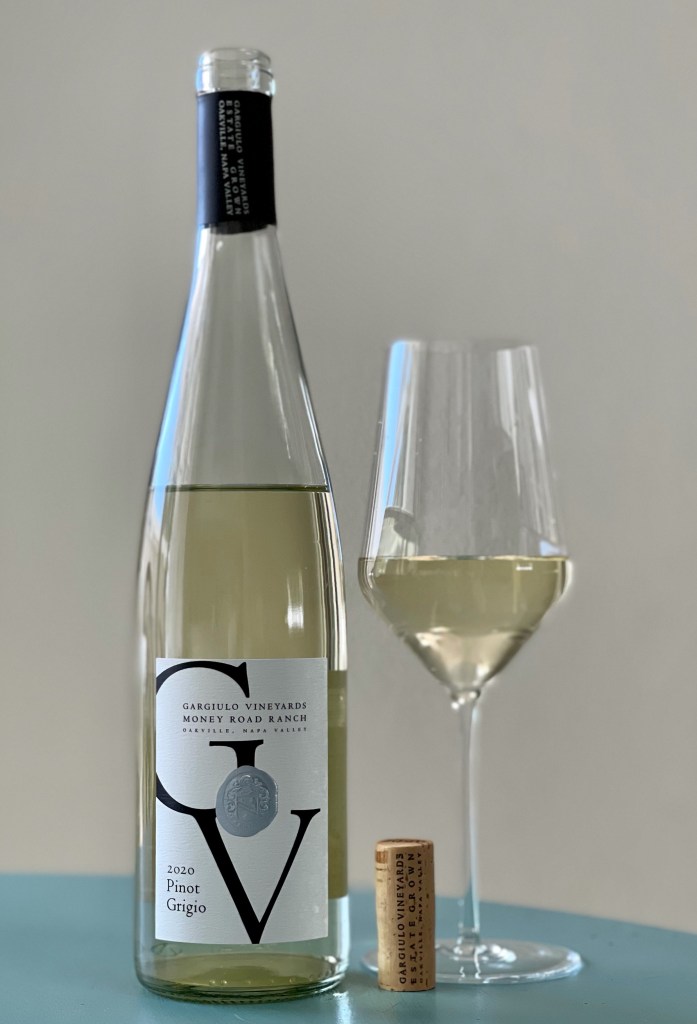
Today’s Wine: 2020 Money Road Ranch Pinot Grigio

100% Pinot Grigio; 12.5% ABV

The 2020 Money Road Ranch Pinot Grigio is pale yellow in color with mild greenish hues near the rim of the glass. The aromas are of medium intensity, with the nose showcasing notes of white peach, lemon zest, fresh cantaloupe, white wildflower, lemongrass, and wet stone. Meanwhile the flavors are also of medium intensity and the palate displays notes of green apple, lime zest, pear, nectarine, grapefruit, honeysuckle, and gravel. This refreshing dry white is light- to medium-bodied with vibrant and mouthwatering high acidity, medium alcohol, and a long finish. Very good representation of the variety, and one that isn’t too common in the Napa Valley.

Price: $40. This is very pricey for a Pinot Grigio, however the quality is impeccable and this is a great representation of the variety. Coupled with the wine’s great balance, small production, and purity I would buy this again. Very refreshing and enjoyable on a hot day.

Great Value Pinot Noir to Stand Up to the Cult Wineries of the Russian River Valley

Today’s Story: Little Boat

Little Boat is a very small wine producer based out of Sonoma, California and it was established out of passion for wine and a father’s love for his son. I first learned of Little Boat when I met proprietor José Ignacio Cuenca at a Los Angeles restaurant, where we struck up a friendly conversation about family, wine, and other topics. I also had the pleasure of meeting his son Mateo, who created the artwork on the Little Boat labels. Little Boat is a group effort, and José works with Brad Alper, William Knuttel, Mike Miller, and the Treyzon family to craft these wines. They also receive help from sommeliers Harley Carbery, Phillip Dunn, Lucas Payá, and Robert Smith MS. Little Boat produces a range of wines including most notably a Russian River Valley Chardonnay, a Russian River Valley Pinot Noir, and a Dry Creek Valley Cabernet Sauvignon. (I previously wrote about the Pinot and Cab). There is also a rosé, very limited quantities of a reserve Pinot Noir, and a Rioja! Placement of these wines is highly selective, and they are generally found in high-end hotels and restaurants or highly curated wine stores.

I previously wrote about the 2018 Little Boat Pinot Noir and 2016 Little Boat Cabernet Sauvignon, so I’m excited to review the 2018 Pinot Noir Reserve today.

Today’s Wine: 2018 Pinot Noir Reserve

100% Pinot Noir; 13.7% ABV

The 2018 Pinot Noir Reserve is pale ruby in color. Aromas are of pronounced intensity, with the nose showcasing notes of black cherry, black raspberry, red plum, violet, leather, cracked pepper, and cedar. Meanwhile the flavors are of medium (+) intensity and the palate showcases notes of strawberry, red cherry, dried red licorice, tobacco, underbrush, charred green herbs, and mild baking spice. This dry red is light- to medium-bodied with medium (+) acidity, medium (-) tannins, medium alcohol, and a medium (+) length finish. This wine can stand up to any of the “big names” of Russian River Valley Pinot Noir, and it’s certainly a treat to taste.

Price: $45. This offers considerable value for Russian River Valley Pinot Noir, particularly given its intensity, complexity, and balance at this young age. As I tasted this and the “cult” RRV winery names popped into my mind, I was truly impressed by this Little Boat bottling.

Fun Natural Red Blend From a Relatively New California Producer

Today’s Story: Lo-Fi Wines

Lo-Fi Wines was established in 2014 by lifelong friends Mike Roth and Craig Winchester. Centered in a belief wines should be honest and transparent representations of their vintage and variety, Lo-Fi wines are meant to be consumed as everyday drinkers to pair with a broad range of foods and not locked away in the cellar. Through minimal intervention winemaking, Lo-Fi wines ferment naturally with native yeasts and see minimal to zero sulfur additions and no pH adjustments. The wines age in neutral oak barrels and are mostly bottled unfiltered, with the final product an easy-drinking and low alcohol wine. A number of the wines also see whole cluster fermentation and carbonic maceration, including the wine I am reviewing today.

Today’s Wine: 2020 Gamay / Pinot Noir

72% Gamay, 28% Pinot Noir; 12% ABV

The 2020 Gamay / Pinot Noir is pale garnet in color and it almost has hues of deep salmon. This is unfiltered so there is some sediment as well. A bit funky right out of the bottle, I decided to let this open up in the glass for about 45 minutes and it was singing. The aromas are of medium intensity, though the nose is gorgeous with aromas of bright red cherry, strawberry, cranberry, gamey red meat, hibiscus, white pepper, and stony mineral. Meanwhile the flavors are also of medium intensity and the palate displays notes of cherry, wild raspberry, freshly picked strawberry, rose, violet, white pepper, and savory green herbs. This dry red blend is light-bodied with medium (+) acidity, low tannins, medium alcohol, and a medium length finish. 710 cases produced.

Price: $22. I think this offers very solid value, particularly given its high quality, balance, and drinkability. While this could be more intense or longer on the finish, I don’t think that’s necessarily a focal point as these are meant to be consumed young and enjoyed by all.

Mature and Elegant Napa Cab With “Cult” Beginnings

Today’s Story: BOND

BOND was established in 1996 by H. William Harlan and Bob Levy with the goal of creating single vineyard designate wines from a small number of carefully selected Napa Valley vineyards of “Grand Cru” quality. Though BOND does not own their vineyard sites, they currently have partnerships with five vineyard owners and all vineyard management is done by the BOND team themselves rather than the owners. Today BOND produces the Grand Crus of Melbury (est. 1999), Vecina (est. 1999), St. Eden (est. 2001), Pluribus (est. 2003), and Quella (est. 2006). They also craft a second wine called Matriarch (which I am reviewing today) and it is a blend of all five sites from the wine not included in the Grand Cru bottlings. The five vineyard sites are small hillside vineyards of Cabernet Sauvignon, ranging from 7 to 11 acres in size. Total annual production for each Cru ranges from about 400-700 cases, whereas production of the Matriarch is less than 1,500 cases.

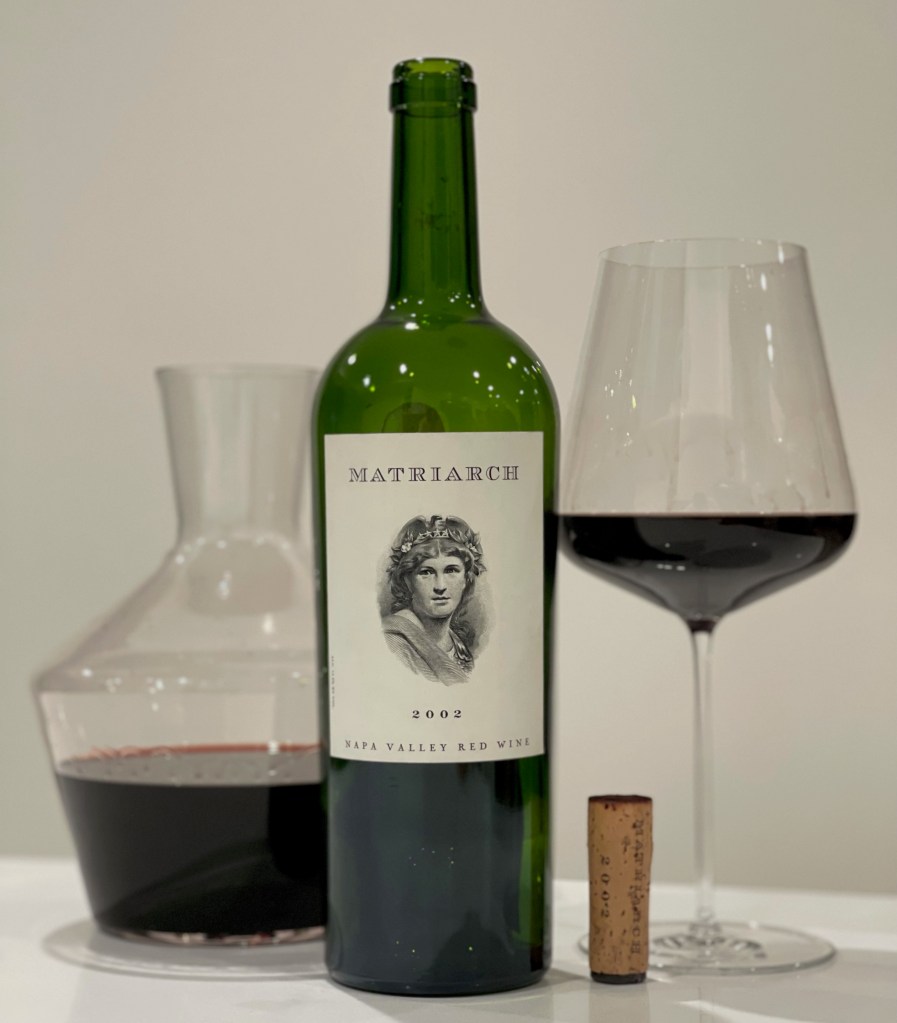
Today’s Wine: 2002 Matriarch

100% Cabernet Sauvignon; 14.5% ABV

The 2002 Matriarch is deep garnet in color but it is still incredibly dark and opaque for its age. I decanted this for sediment, but it really only took about 30 minutes to show beautifully. The aromas are of pronounced intensity, with the incredibly complex nose showcasing notes of crème de cassis, stewed plum, prune, fig, licorice, cigar box, leather, damp earth, graphite, mushroom, dried green herbs, and chocolate. Flavors are also of pronounced intensity, and the equally complex palate displays notes of blackberry, blackcurrant, black cherry, fig, rich baked plum, tobacco, licorice, charred herbs, wet soil, cocoa powder, and coffee grounds. This dry red is medium- to full-bodied with medium (+) acidity, mature medium tannins, high alcohol, and a long finish. Absolutely gorgeous, and I don’t think it gets any better from here.

Price: $180. This is very appropriately priced, and given the rest of the wines in the Harlan family portfolio it offers great value if you’d like to see what their wines are all about. With the Matriarch much like the Mascot, these are wines that remain a staple for me when I purchase my Napa Cab allocations.