Fun and Easygoing Riesling From Northwest Italy

Today’s Story: Oddero

Oddero is one of the great, historical producers of Barolo and Barbaresco, with the family owning property in Piedmont dating back to the 18th century. This being said, Giovanni Battista Oddero started producing wines in the commune of La Morra sometime between the 18th and 19th centuries, kicking off what today marks seven generations of winemaking for the Oddero family.

As Oddero’s wines found their way into the world, first by small barrels, bottling began in 1878 under Giacomo Oddero and the winery recently discovered that their Barolo was exported to the Americas via small barrels as early as the late 19th century. This is in stark contrast to today’s winery, which is impacted immeasurably by another Giacomo (grandson of the above).

The second Giacomo worked tirelessly during the 1950s to renovate the farm and winery, meanwhile fighting to demonstrate the quality of Piedmont wines to the world. In doing so, Giacomo helped lay the foundation for DOC and DOCG certifications for wines of the Langhe and guided agricultural regulation for products such as cheese, nuts, and vegetables.

Today, Oddero is led by his daughter Mariacristina and two grandchildren, Isabella and Pietro. Together they work 35 hectares (about 86 acres) of vineyards of which 16.5 hectares are planted to Nebbiolo in Barolo and Barbaresco. Oddero started experimenting with organic farming practices in 2008, ultimately becoming certified organic in their Nebbiolo, Barbera, and Dolcetto vineyards while the Moscato and Riesling vineyards are still sustainably farmed.

I previously reviewed a couple of Oddero’s wines, first the 2010 Oddero Barolo and then the 2012 Barolo Riserva Bussia Vigna Mondoca.
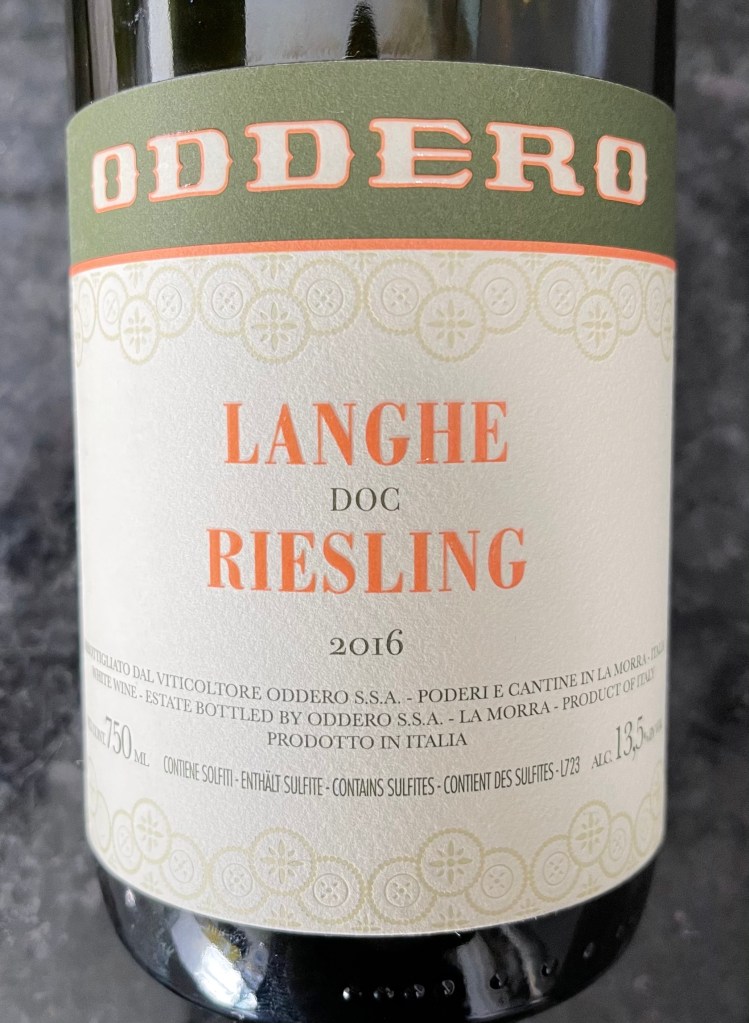
Today’s Wine: 2016 Langhe Riesling

100% Riesling; 13.5% ABV

The 2016 Langhe Riesling is pale yellow in color. Aromas are of medium intensity, showcasing notes of tropical citrus, tangerine, white peach, yellow apple, white floral blossom, petrol, and stony mineral. Meanwhile the flavors are also of medium intensity, with the palate displaying notes of white peach, pineapple, lemon zest, stone fruit, honeysuckle, and crushed rock. This dry Riesling is medium- to full-bodied with medium (+) acidity, medium alcohol, and a medium (+) length finish. This is a very easy-drinking wine, quite enjoyable for patio sipping. It’s not too complex and not as intense as other Rieslings, but it’s a fun wine. Roughly 333 cases produced.

Price: $25. I think this is pretty fairly priced, but there are better values out there in terms of complexity and intensity. It’s a fun wine with an uncommon variety in its region, and as I mentioned a great patio sipper.

Shining Star in Tuscan Winemaking

Today’s Story: Bibi Graetz

Az. Agr. Bibi Graetz is a Tuscan wine producer located in the hills of Fiesole overlooking Florence, and it was established in 2000 by artist and winemaker Bibi Graetz. Bibi has quickly catapulted to near cult-status, producing exceptional wines from old vines using Sangiovese, Colorino, and Canaiolo for the reds and Ansonica and Vermentino for the whites. Bibi started off small, making wine from 5 acres of vineyards on his parents’ property around the medieval castle, Castello di Vincigliata, they call home. He also sources fruit from vineyards around Tuscany, putting an emphasis on old vines for their added complexity and concentration. In the Testamatta I am reviewing today, for example, vine age is 35-50 years and for his Colore bottling the vine age is over 70 years. These vineyards total around 75 acres across 20 small plots, which are all farmed organically. Bibi does not adhere to DOC or DOCG regulations, instead practicing an “artisanal approach” to winemaking (he has no formal training) so his wines are labelled as Indicazione Geografica Tipica (IGT).

Today’s Wine: 2016 Testamatta

100% Sangiovese; 13.5% ABV

The 2016 Testamatta is medium ruby in color. Given about 1-2 hours in the decanter, this blossoms into a beautifully expressive wine with aromas of pronounced intensity. The nose showcases black cherry, black raspberry, anise, lavender, tobacco, leather, scorched earth, black truffle, tomato leaf, clay, and mild baking spice. Meanwhile the palate is also of pronounced intensity with notes of red cherry, red plum, black raspberry, roasted tomato, tobacco, black tea, oregano, iron, and clove. This dry red is full-bodied with medium (+) acidity, high but refined tannins, medium alcohol, and a long, long finish. Outstanding wine that is already beautifully balanced and finessed with only promise for the future.

Price: $100 average (though I paid $70 and you can oftentimes find it for a similar price). This is a glorious Sangiovese, offering great balance, length, intensity, and complexity for the price. I’ve seen these prices creep up (and these wines get considerable attention from critics) however for now these remain a very strong addition to your cellar.

Refreshing Italian White for the Summer Months

Today’s Story: Feudi di San Gregorio

Feudi di San Gregorio is a fairly large winery established in 1986 in the village of Sorbo Serpico in Irpinia (Province of Avellino) of the Campania region of Southern Italy. Though Feudi di San Gregorio consists of about 300 hectares of vineyards and they produce roughly 3.5 million bottles of wine annually, the winery is known for their high quality and a dedication to native varieties such as Aglianico, Falanghina, Greco, and Fiano. Many of their vines are a century old (some even closer to 150 years old), providing Feudi di San Gregorio with unique holdings after many of their neighbors replanted to non-native varieties. This being said, they don’t entirely ignore non-native varieties and have a small percentage of their vines planted to Merlot. With all these factors in mind, Feudi di San Gregorio is often credited as a leading winery bringing glory to Campania with a marriage of tradition and modern winemaking.

I previously wrote about the Feudi di San Gregorio 2010 Pàtrimo, so feel free to check that out if Merlot is your thing!

Today’s Wine: 2016 Fiano di Avellino

100% Fiano; 13% ABV

The 2016 Fiano di Avellino is medium yellow in color with deep straw hues. Aromas are of medium intensity but beautifully perfumed, showcasing notes of lemon, pear skins, yellow apple, honeysuckle, beeswax, dried green herbs, and chalky mineral. Meanwhile the palate is also of medium intensity, with notes of lemon, pear, honeydew melon, nectarine, chamomile, flint, white pepper, and savory herbs. This dry white is light- to medium-bodied with medium (+) acidity, medium alcohol, and a long finish. This is a very enjoyable and refreshing wine.

Price: $22. Fiano is a variety that I need to explore further, though for the price-point here I think this offers pretty solid value. The quality is palpable and this wine is an absolute pleasure to drink, so I’ll be stocking up for the warmer weather.

Fun Sicilian Blend From a Rising Star

Today’s Story: Azienda Agricola Arianna Occhipinti

Azienda Agricola Arianna Occhipinti is a continuously rising star of a winery established by Arianna Occhipinti in the Vittoria region of southeastern Sicily in 2004. Though Arianna started making her own wines at the young age of 22, she first got into wine even younger at age 16 thanks to a visit to Vinitaly with her uncle Giusto Occhipinti of COS, another benchmark Sicilian wine producer. Today Arianna works with estate fruit, sourced from her 25 hectares of certified organic vineyards which are planted to about 50% Frappato, 35% Nero d’Avola, and 15% between the white varieties of Albanello and Zibibbo. Arianna never irrigates her vineyards or uses any chemicals, and since 2009 she transitioned to biodynamic viticulture. As far as philosophy goes, Arianna’s wines are meant to showcase the terroir of Vittoria, and they are made in as “natural” a way as possible. Vineyard work is very manual, all grape and wine movements use gravity, and the wines ferment with only indigenous yeasts in concrete tanks before aging in neutral oak. Arianna produces ten wines (including three single-vineyard bottlings called Vino di Contrada) and total production each vintage is around 10,000 cases.

To learn more or view the portfolio of Occhipinti wines in more depth, I recommend visiting the website here.

Today’s Wine: 2019 SP68 Rosso

70% Frappato, 30% Nero d’Avola; 12.5% ABV

The 2019 SP68 Rosso is medium ruby in color. Given about 30-45 minutes to open up in the glass, the nose offers up aromas of red cherry, dried strawberry, red rose, mild tobacco, gravel, dried garden herbs, and scorched earth with medium intensity. Meanwhile the flavors on the palate are also of medium intensity, showcasing notes of pomegranate, red plum, tart cherry, candied rose, eucalyptus, white pepper, and crushed rock minerality. This dry red is light- to medium-bodied with medium acidity, medium (-) tannins, medium alcohol, and a medium (+) length finish.

Price: $28. I think this offers pretty solid value for the price. Even though I would prefer a bit more intensity out of it, the balance, length, and complexity of the wine all shine and should only get better in another year or two. Very easy to drink, so the bottle didn’t last long.

Traditional Dolcetto From a Piedmontese Legend

Today’s Story: Cantina Bartolo Mascarello

Cantina Bartolo Mascarello is a highly regarded wine producer located in the Piedmont region of northwestern Italy, and they are known for their traditionally-made Barolo. Though the Mascarello family traces their viticultural roots back to the 19th century, they typically sold grapes to the larger houses and did not bottle their own wines until Giulio Mascarello established his own cellar in 1918 after returning from World War I. Giulio learned winemaking from his father Bartolomeo, who was previously the cellar master at the Cantina Sociale di Barolo, and it was a rare feat at the time for Giulio to bottle his own wines. He did, however, sell a majority of his wines in demijohns as well to start.

By the 1930s, Giulio was purchasing prime vineyards in the crus of Cannubi, San Lorenzo, and Rué for blending into his signature single Barolo bottling. Giulio’s son Bartolo, for whom the estate is named after today, joined his father in 1945 after World War II and the two worked alongside one another until Giulio’s death in 1981. Though many producers during the 1960s and 1970s started bottling single cru Barolo, Bartolo remained steadfast to traditions in only bottling a blending of his vineyard sites. His reputation as a staunch traditionalist grew even more during the 1980s and 1990s, as critics and consumers forged an assault on traditional Barolo by favoring the bigger, bolder, and barrique-aged wines. Bartolo never wavered in his traditions, and passed this spirit onto his daughter Maria Teresa Mascarello who runs the estate today.

Bartolo Mascarello is a relatively small producer of Barolo, owning and farming 5 hectares of vineyards which results in about 1,250 cases of Barolo and an additional 1,250 cases of their other bottlings (Barbera, Dolcetto, and Langhe Nebbiolo) produced each vintage. Maria Teresa maintains holdings in the Cannubi, San Lorenzo, and Rué crus of the Barolo commune, as well as the Rocche di Annunziata cru in the commune of La Morra. All sites are farmed by hand without the use of chemical fertilizers or pesticides, and harvest is accomplished by hand as well. The Barolo goes through alcoholic fermentation in old cement vats without temperature control using indigenous yeasts, sees 30-50 day maceration, and then ages in large untoasted Slavonian oak botti for generally three years. Once the wine is bottled, it sits for one year prior to release. In addition to the very traditionally-made Barolo, Maria Teresa produces small amounts of Barbera, Dolcetto, and Langhe Nebbiolo as well.

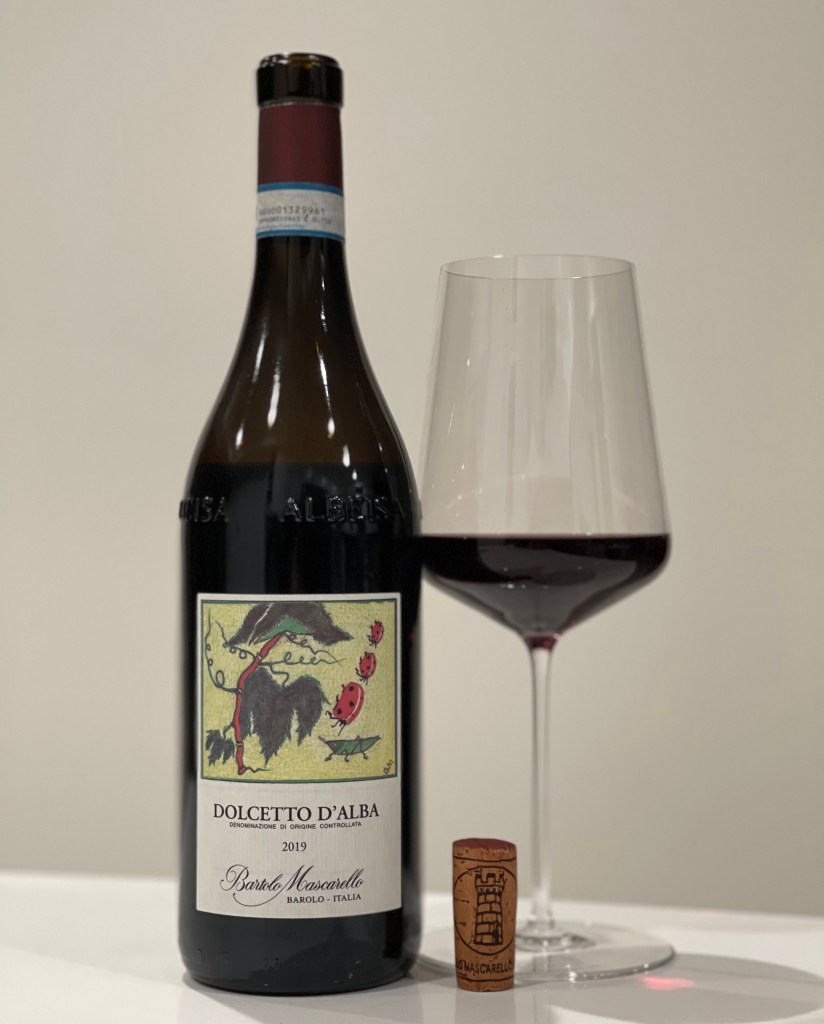
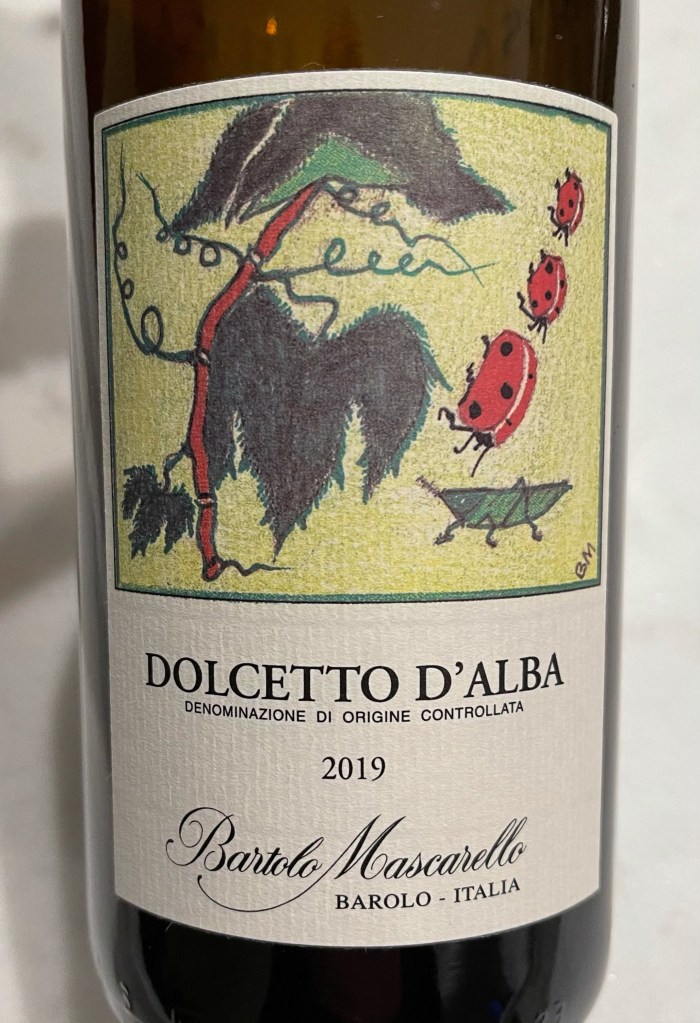
Today’s Wine: 2019 Dolcetto d’Alba

100% Dolcetto; 13.5% ABV

The 2019 Dolcetto d’Alba is medium purple in color with ruby hues. Medium intensity on the nose, offering up aromas of blackberry, black plum, blueberry, violet, leather, black pepper, and mocha. Meanwhile the flavors are also of medium intensity, with the palate showcasing notes of blackberry, black plum, black cherry, tobacco, black pepper, charred green herbs, and cocoa. This dry red is medium-bodied with medium acidity, light tannins, medium alcohol, and a medium length finish.

Price: $45 (I paid $35). I admittedly don’t drink really any Dolcetto, though from what I’ve read this seems like a very nice wine for the $35 I paid for it. I can tell the traditional winemaking and attention to detail are there, and this is simply a beautifully perfumed and easy-drinking wine.

Beautiful Representation of Chardonnay From Sicily

Today’s Story: Planeta Winery

Planeta is a large, family-owned and operated Sicilian wine estate that actually consists of six separate estates spread across Sambuca di Sicilia, Menfi, Vittoria, Noto, Etna, and Capo Milazzo. Though the Planeta family has been involved in Sicilian agriculture and viticulture for five centuries and 17 generations, they built their first winery under the Planeta Winery label only in 1995. Cousins Alessio and Santi Planeta founded the venture with their uncle Diego Planeta, who was already a well-established and highly regarded individual in the Sicilian wine world (particularly for his time with the Settesoli wine cooperative). Planeta is a major innovator when it comes to increasing quality of Sicilian wines, utilizing their vast terroir portfolio to trumpet both native and international varieties best suited for each individual site. Sustainability is a major push for Planeta, and they farm all vineyards with this in mind. Meanwhile winemaking can best be described as “open-minded,” a term that while vague speaks to the mission of producing wines with a sense of place and from the best varieties possible for each distinct estate.

To explore each estate in depth, peruse the extensive portfolio of wines, or simply view pictures of the incredible Planeta vineyards, I encourage you to visit their website here.

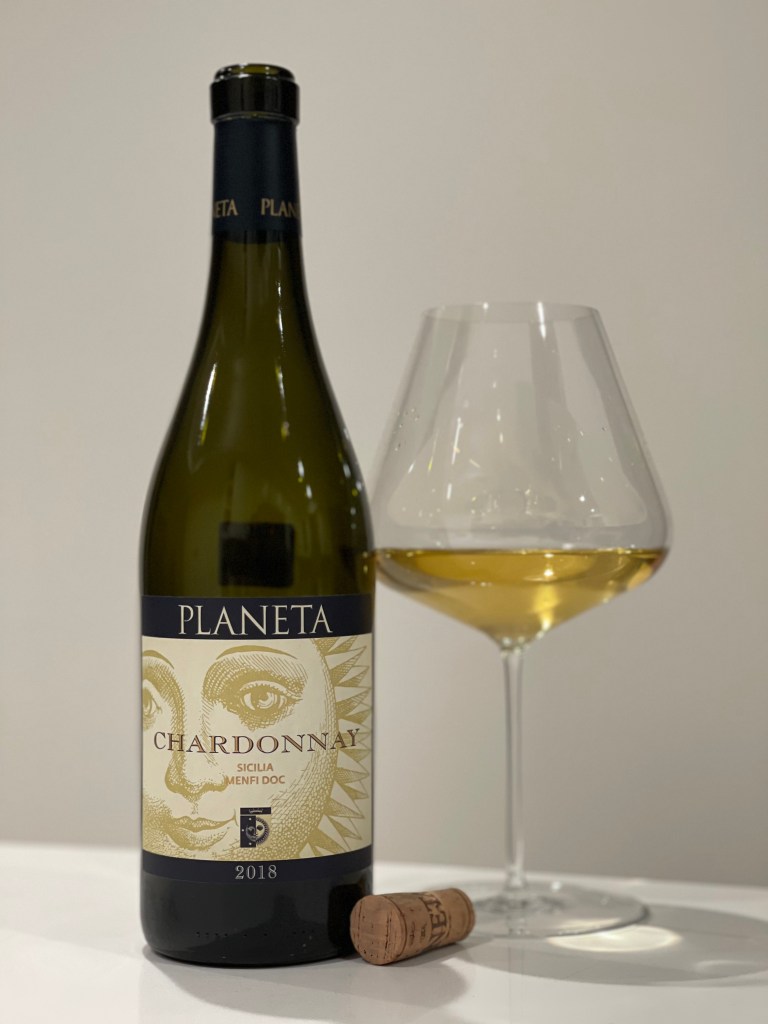
Today’s Wine: 2018 Chardonnay

100% Chardonnay; 14% ABV

The 2018 Chardonnay is pale to medium gold in color. Given some time to blossom in the glass, the aromas are of pronounced intensity and include ripe yellow apple, stone fruit, lemon zest, pineapple, vanilla cream, a hint of butter, and clove. Meanwhile the flavors on the palate are also of pronounced intensity, showcasing notes of yellow apple, pineapple, peach, white florals, butter, vanilla, clove, and crushed rock minerality. This dry Chardonnay is medium- to full-bodied with medium (+) acidity, high alcohol, and a medium (+) length finish. Comes across fairly Burgundian.

Price: $36. I think this actually offers pretty solid value, especially compared to the California Chardonnay and white Burgundy I tasted alongside it (they were 80% and 40% more expensive, respectively). The intensity and balance in this wine are quite good, and it should only improve with another 3-5 years in the bottle.

Fun but Beautiful Italian “Orange” Wine

Today’s Story: Vodopivec

Vodopivec is a boutique winery established in the Carso region of northeastern Italy by Paolo Vodopivec. The estate consists of six hectares of vineyards, planted entirely to the Vitovska variety and farmed adhering to organic principles with the use of some biodynamic methods. Simply put, Paolo views himself as an observer and never irrigates his vineyards, transports top soil, or uses synthetic chemicals, herbicides, or pesticides. In a given vintage, Paolo will produce one to four wines depending on conditions, though he seems to average one to two wines per vintage. Paolo is not a man to force his vines into production either, and may skip a vintage if the conditions are poor (the rainy 2008 vintage, for example, yielded no wines). Paolo is minimally invasive in the cellar, pressing with a manual basket press and allowing his wines to naturally ferment on the skins in Georgian amphora. The wines age in large Slavonian oak botti for 2-3 years, then spend another year or so in bottle before release. While production varies vintage to vintage, Paolo will generally only reach 11,000 bottles (about 916 cases) at maximum.

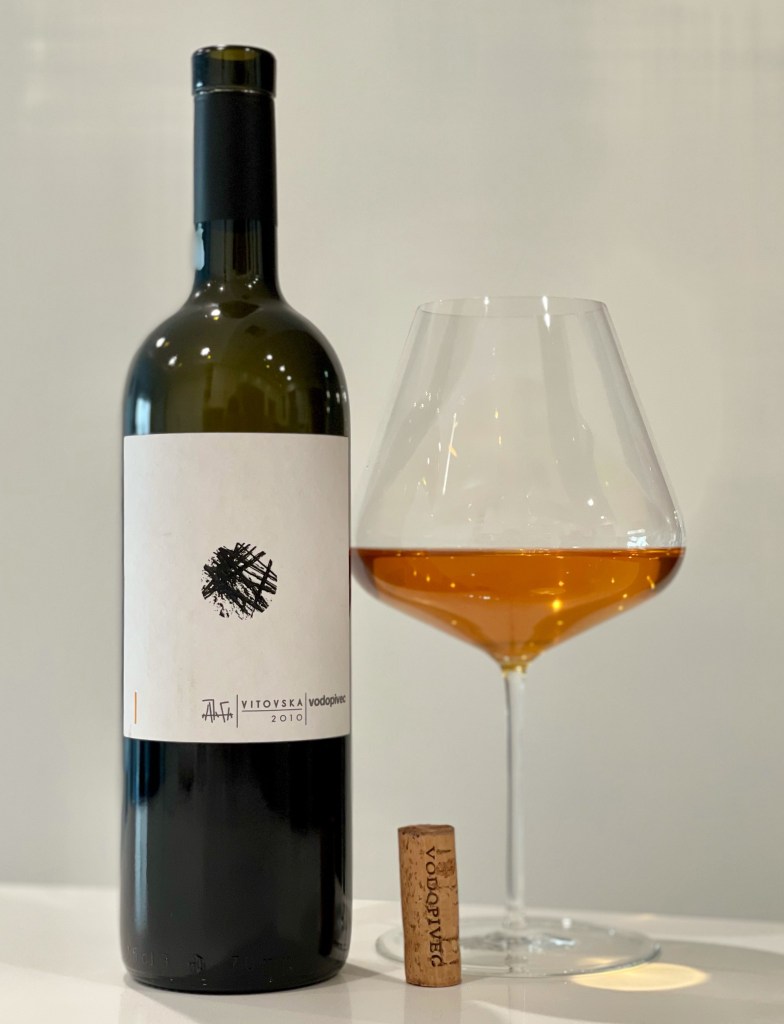
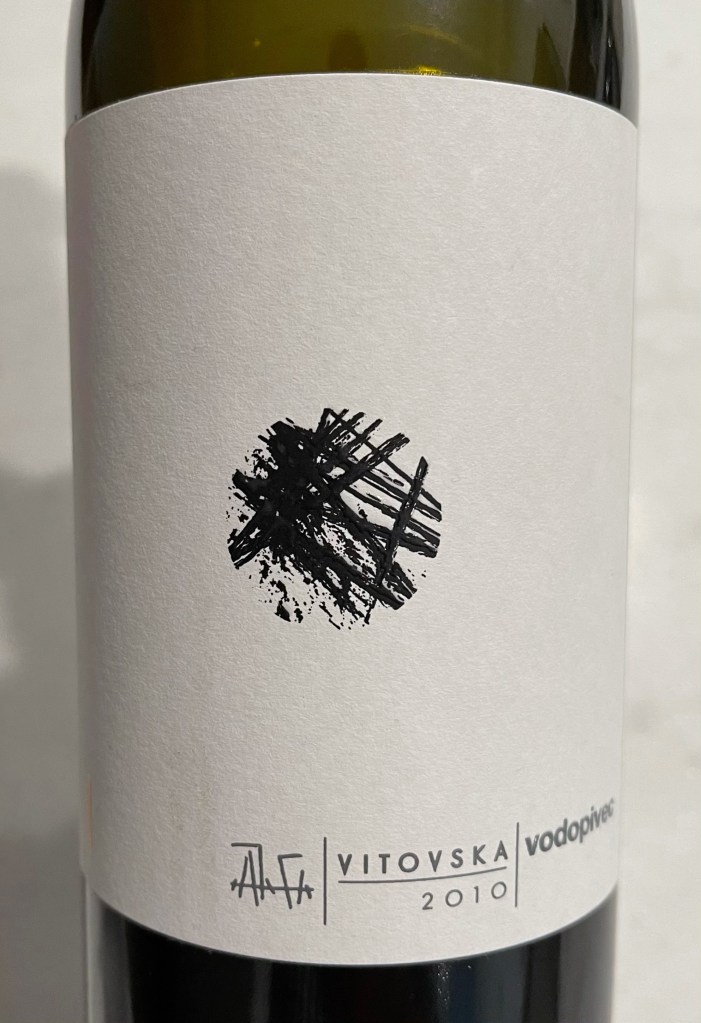
Today’s Wine: 2010 Vitovska

100% Vitovska; 12.5% ABV

The 2010 Vitovska is medium amber in color. It’s transparent but a touch hazy due to small amounts of sediment in the bottle, but you can filter this out. Aromas are of medium intensity, with the nose showcasing notes of ripe apricot, peach, tangerine, mandarin orange, white florals, dried thyme, basil, wet stone, and a hint of crushed rock minerality. Meanwhile the flavors are also of medium intensity, with the palate offering notes of dried apricot, orange zest, peach, honeysuckle, dried green herbs, and saline mineral. This dry “orange” wine is light- to medium-bodied with medium (+) acidity, light tannins, medium alcohol, and a long finish. Destemmed and fermented in Georgian amphora with 6 months of skin contact.

Price: $60 (I paid $35). This is a very fun, pure, and well-made wine that, while I haven’t had enough wines like it to determine a value proposition, I think is worth trying. The balance and sense of place coming from the glass is both very impressive and inviting. I plan to buy more, especially at $35.

Refreshing Etna Bianco With a True Sense of Place

Today’s Story: Tenuta delle Terre Nere

Tenuta delle Terre Nere is a somewhat young but highly regarded winery and estate founded by Marc de Grazia on the northern slopes of Mount Etna in Sicily. Tenuta delle Terre Nere produced its first commercial vintage in 2002, and the estate focuses on local Sicilian varieties with Nerello Mascalese and Carricante of principal importance. The estate today consists of about 55 hectares, of which 27 hectares are planted to vines in production and 7 hectares are breeding. The holdings are broken up into 24 parcels across six crus and range in elevation from 600 to 1,000 meters above sea level, with an ultimate plan to reach 38 hectares planted to vine. Aside from the 7 hectares recently planted, Terre Nere works with vines aged 50 to 100 years old, and the estate even has one parcel that survived phylloxera and is 130-140 years old! Marc de Grazia has long been a proponent of single cru Etna wines, so he vinifies, ages, bottles, and labels each of his crus individually. These include Calderara Sottana, San Lorenzo, Bocca d’Orzo, Santo Spirito, Guardiola, and Feudo di Mezzo. All viticulture has been organic since Terre Nere was established (certified in 2010), and the prior owners farmed their vineyards organically for the previous two generations as well. Winemaking is meant to be minimally invasive, allowing de Grazia to showcase the unique Etna terroir in all of his wines.

To learn more, view images of the estate and vineyards, or explore the range of wines from Tenuta delle Terre Nere, I recommend visiting their website here.

Today’s Wine: 2019 Etna Bianco

60% Carricante, 25% Catarratto, 10% Grecanico, 5% Minnella; 12.5% ABV

The 2019 Etna Bianco is pale yellow in color and transparent. Aroma intensity on the nose is rather light, and this took some effort to pull out notes of crisp underripe pear, meyer lemon, white peach, white florals, dried herbs, mild cheese, and volcanic minerality. Meanwhile the palate offers medium intensity, showcasing notes of crisp yellow apple, lemon curd, white grapefruit, lime zest, underripe pineapple, honeysuckle, and saline. This dry white is light- to medium-bodied with high acidity, medium alcohol, and a medium (+) length finish. Very crisp and refreshing, and it seems like it’d be a good pairing for oysters.

Price: $25. I would like to see some more intensity out of this wine, though perhaps it will evolve in the bottle over the next few years. Nonetheless, this is a good Carricante-dominant wine showcasing its sense of place well for the price.

Nicely Aged Brunello Riserva

Today’s Story: Uccelliera

Uccelliera is a small wine estate located in the Tuscan village of Castelnuovo dell’Abate in Montalcino, and it was established in 1986 by Andrea Cortonesi. Andrea purchased his property from the neighboring Ciacci Piccolomini, and at the time the Uccelliera farm consisted of 4 hectares and was pretty run-down with less than a hectare planted to vine. Andrea quickly set about transitioning the property to focus on viticulture, though he did keep the olive trees to make extra virgin olive oil as well. Andrea produced his first vintage in 1991 and production amounted to a measly 500 bottles, though fortunately for us consumers he grew his property to about 6 hectares over time with most of that planted to vine. All of the work in the vineyards is accomplished by hand, and Andrea produces a Brunello di Montalcino, Brunello di Montalcino Riserva, Rosso di Montalcino, and a “Super Tuscan” called Rapace which are all very highly regarded.

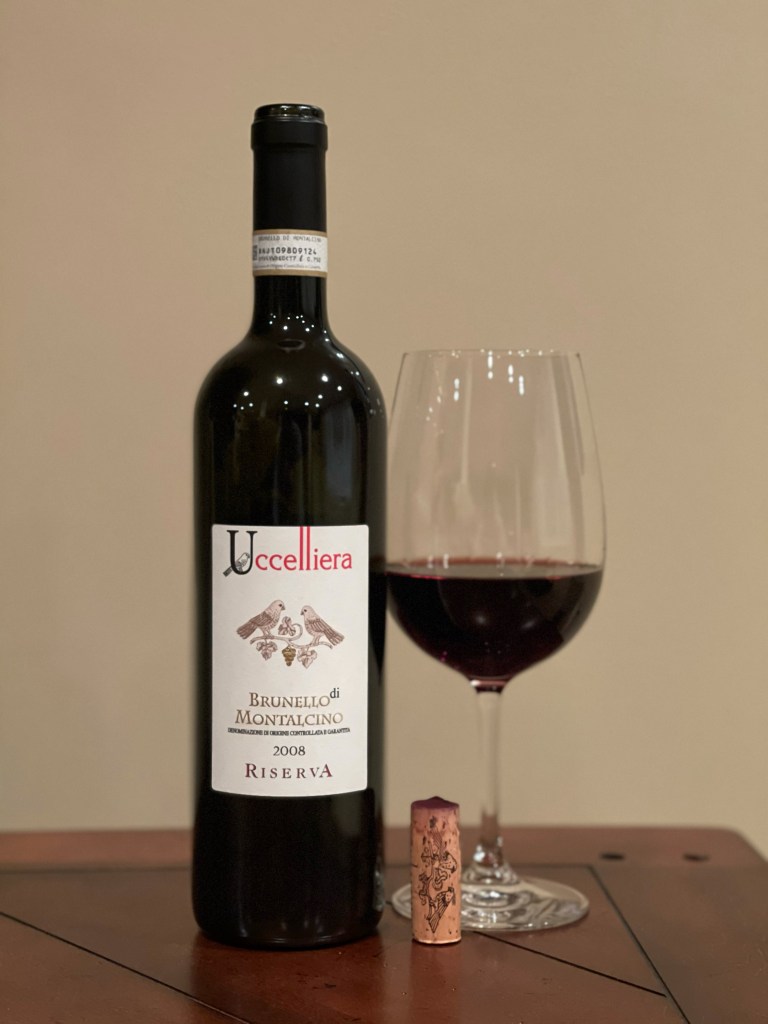
Today’s Wine: 2008 Brunello di Montalcino Riserva

100% Sangiovese; 14.5% ABV

The 2008 Brunello di Montalcino Riserva is deep garnet in color and almost opaque. There is a good amount of very fine sediment and this needs about an hour to decant, but once it does the nose showcases gorgeous aromas of dried cherry, cranberry, leather, anise, red rose, forest floor, mushroom, and tar. Meanwhile on the palate I get notes of black cherry, dried strawberry, black raspberry, licorice, tobacco, truffle, black tea leaf, sage, and cedar. This is medium- to full-bodied with medium (+) acidity, high tannins, and a long finish. Drinks beautifully right now but will be fun to revisit in 2-3 years.

Price: $180 (paid $100 a few years ago). This is a very, very solid Brunello and I think the price-tag is justified but there are certainly better “values” out there. Finding this a few years ago for $100 was a steal!

Rustic Yet Elegant Italian Merlot

Today’s Story: Feudi di San Gregorio

Feudi di San Gregorio is a fairly large winery established in 1986 in the village of Sorbo Serpico in Irpinia (Province of Avellino) of the Campania region of Southern Italy. Though Feudi di San Gregorio consists of about 300 hectares of vineyards and they produce roughly 3.5 million bottles of wine annually, the winery is known for their high quality and a dedication to native varieties such as Aglianico, Falanghina, Greco, and Fiano. Many of their vines are a century old (some even closer to 150 years old), providing Feudi di San Gregorio with unique holdings after many of their neighbors replanted to non-native varieties. This being said, they don’t entirely ignore non-native varieties and have a small percentage of their vines planted to Merlot. With all these factors in mind, Feudi di San Gregorio is often credited as a leading winery bringing glory to Campania with a marriage of tradition and modern winemaking.

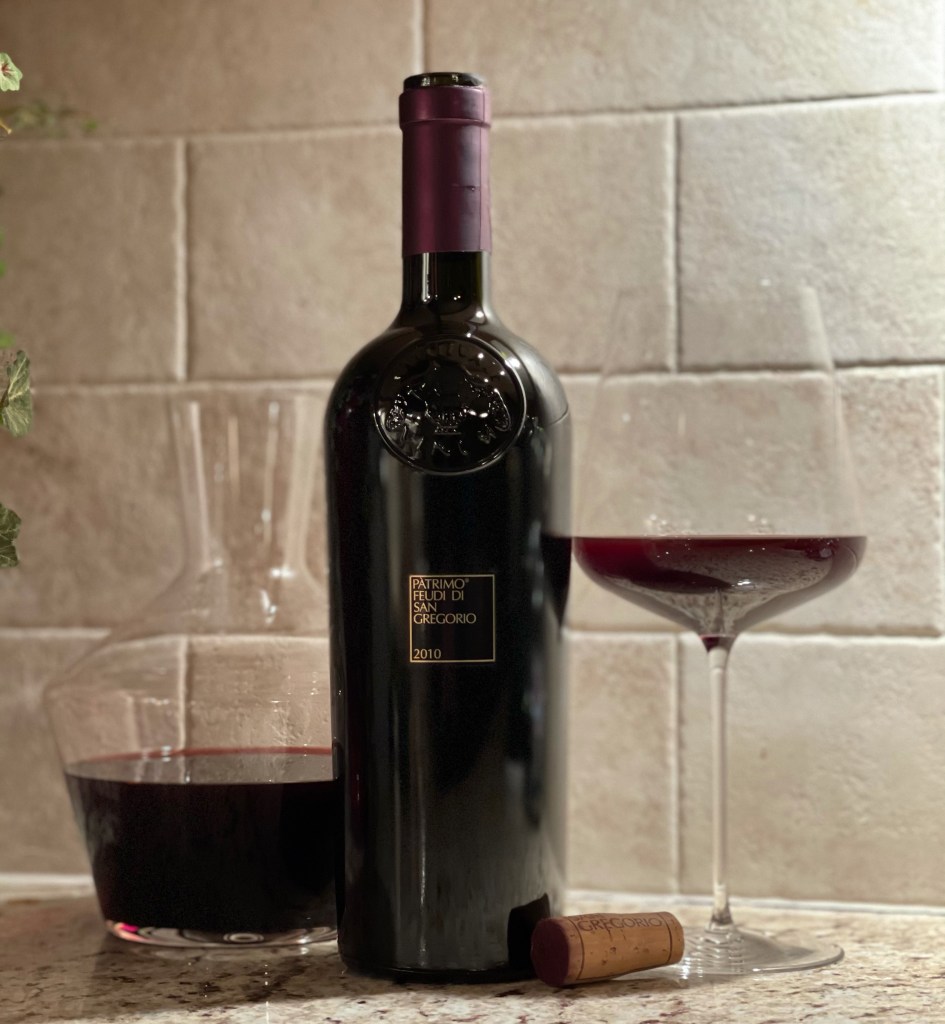
Today’s Wine: 2010 Pàtrimo

100% Merlot; 14% ABV

The 2010 Pàtrimo is opaque deep ruby in color with a touch of deep garnet variation near the rim. Still youthful in appearance and taste out of the bottle, I decanted this for about 90 minutes. Afterwards, the nose exploded into aromas of blackberry, plum, licorice, sweet tobacco, savory grilled herbs, sun-dried earth, clay, chocolate, and slight oaky spice. Meanwhile on the palate I get notes of black cherry, blackberry, plum, cola, tobacco, green herbs, bay leaf, crushed rock, scorched earth, iron, and bitter chocolate. This is medium- to full-bodied with medium acidity, dusty medium (+) tannins, and a long finish. While very elegant, this is fairly rustic for a Merlot and certainly shows its Italian charm.

Price: $120 to $165 depending on location (I paid $40 on sale in 2018). I think the $120 range is rather fair, though if you find this closer to $165 that is certainly pushing it. This wine is absolutely gorgeous right now and offers great depth and the ability to go for at least another 5 years. Me paying $40 for this was an absolute robbery, and I’m thankful to have two bottles left to try over the years to come.