Textbook Aged Barolo From a Monumental Vintage

Today’s Story: Piero Testore

Unfortunately, today’s producer is another that, no matter how hard I try, does not appear to have a searchable history. I once again found accords of a select few enjoying the wines of Piero Testore, which according to CellarTracker consist of 1967 and 1974 vintages of Barolo. I’m sure there is more out there somewhere, so if anyone knows about the history of Piero Testore please let me know!

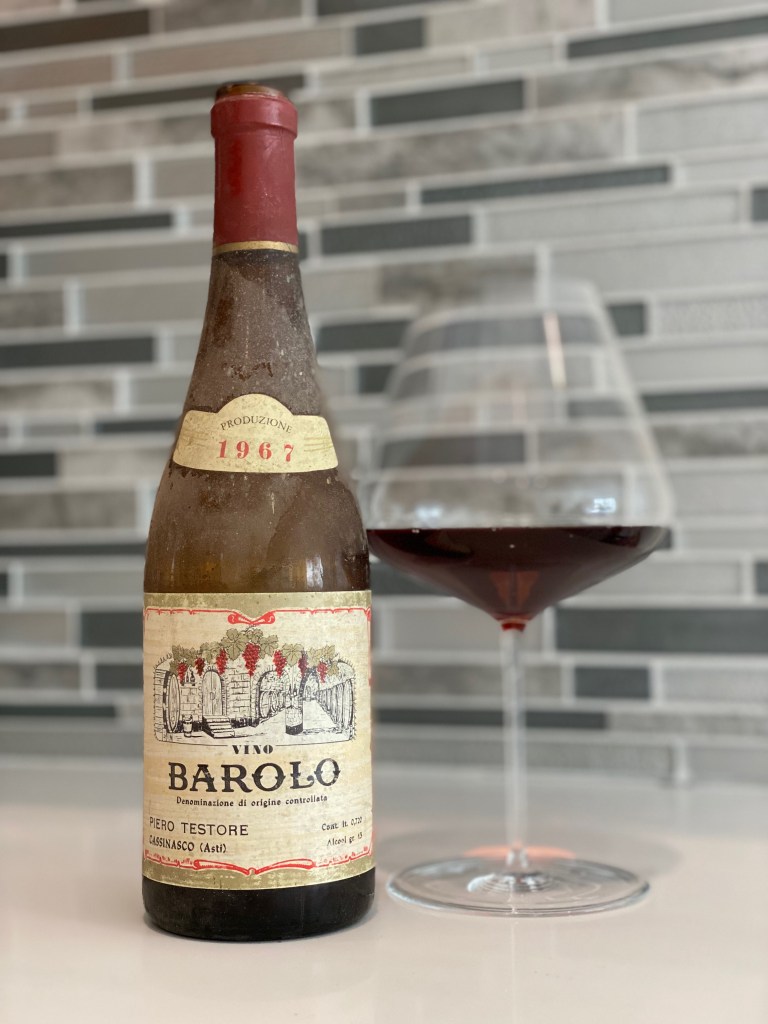
Today’s Wine: 1967 Barolo

100% Nebbiolo; 13% ABV

The 1967 Barolo is pale tawny in color holding onto pale ruby in the bowl of the glass. This certainly needed some time to breathe and really started to show well after 4 hours decanting. On the nose, I get dominating aromas of forest floor, earthy mushroom, and musty cellar before a beautiful bouquet of stewed cherry, dried rose, anise, dried herbs, tea leaves, tar, and cinnamon. On the palate, this displays notes of dried cherry, stemmy raspberry, dried-out licorice, dried rose, mild tobacco, truffle, sous bois, and light peppery spice. Beautifully aged, this Barolo is medium-bodied with medium acidity, integrated medium (-) tannins, and a medium length finish.

Price: I paid $60, though I’m not sure what the market value of this is/should be. I’m certainly glad I took the chance on this bottle because once it opened up, it was not only fun but incredibly enjoyable. It doesn’t hurt that the 1967 vintage for Piedmont is one of the excellent, milestone vintages. Pair this with filet mignon, veal, or white Alba truffles.

Chianti Classico Built for the Long Haul

Today’s Story: Fontodi

Fontodi is a historical wine estate located in Panzano in the heart of Chianti Classico. Though vines have been cultivated there dating to the Roman Empire and vinification history at the estate traces its roots to at least the 16th century, the Manetti family who currently operates the estate acquired it more recently in 1968. Prior to purchasing Fontodi, the Manettis produced terracotta tiles for several centuries which, alongside winemaking, is another activity the Chianti region is famous for. The Manetti family poured a large amount of resources into the estate, which today consists of around 130 hectares with 70 hectares planted to vine and certified organic. The great quality of their tiles crossed over into the wines, which come from vineyards that are sustainably-farmed where the family eschews chemical use. Vinification takes place in Fontodi’s incredibly modern cellar built across multiple levels to make use of gravity flow and the wines age in French oak barrels.

Today’s Wine: 2015 Chianti Classico

100% Sangiovese; 15% ABV

The 2015 Chianti Classico is opaque deep ruby in color. I decanted this for 3 hours and drank it over the following hour. The nose showcases aromas of black cherry, blackcurrant, black plum, red licorice, rose and violet, tobacco, truffle, scorched earth, mocha, white pepper, and sage. There is also some heat which throws off the balance and needs time to integrate. Once in the mouth, the wine displays notes of blackberry, jammy blueberry, rich black plum, black cherry, cigar box, graphite, dried chalky soil, ground green herbs, black pepper, and espresso. This is medium- to full-bodied with medium (+) acidity, grippy medium (+) tannins, and a long finish dominated by black and blue fruit. Needs at minimum another 5 years, as it’s kind of a kick in the teeth right now, but the quality is certainly there.

Price: $42. A very solid QPR with this one, but there are other Chianti Classicos that are cheaper, more approachable now, offer similar complexity, AND have the structure to go the distance like this bottle. But don’t get me wrong, this is certainly worth a try if it’s in your price range and you have the patience to lay it down. Pair this with lasagna, chicken parm, or pizza.

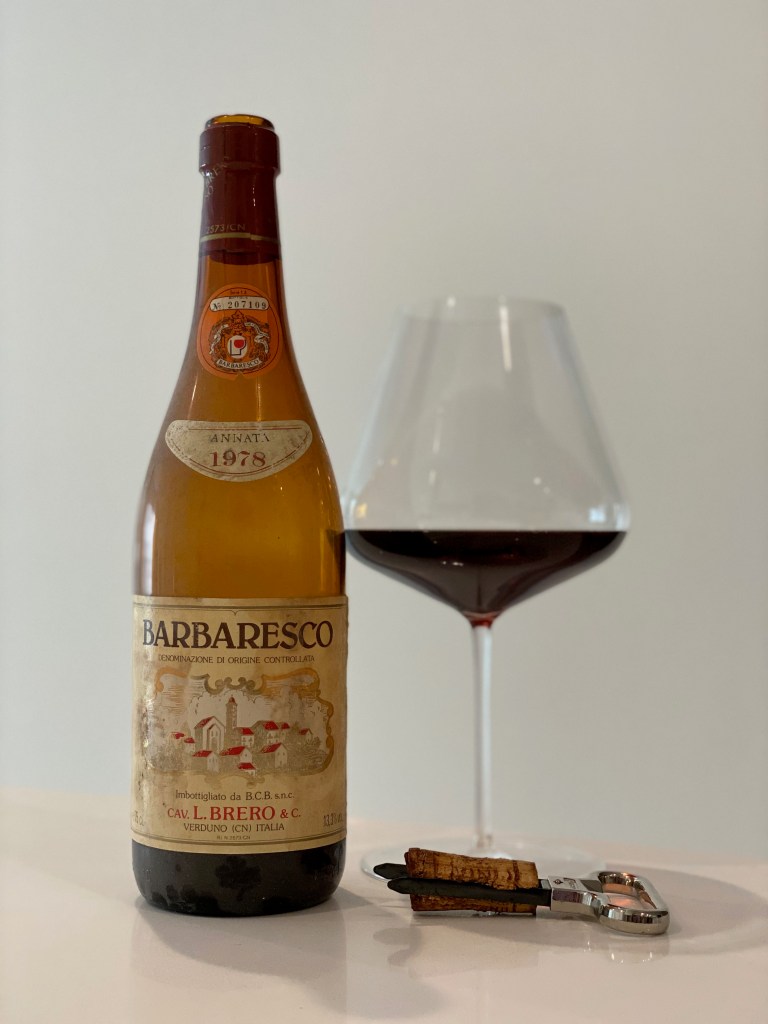
Perfectly Aged Barbaresco

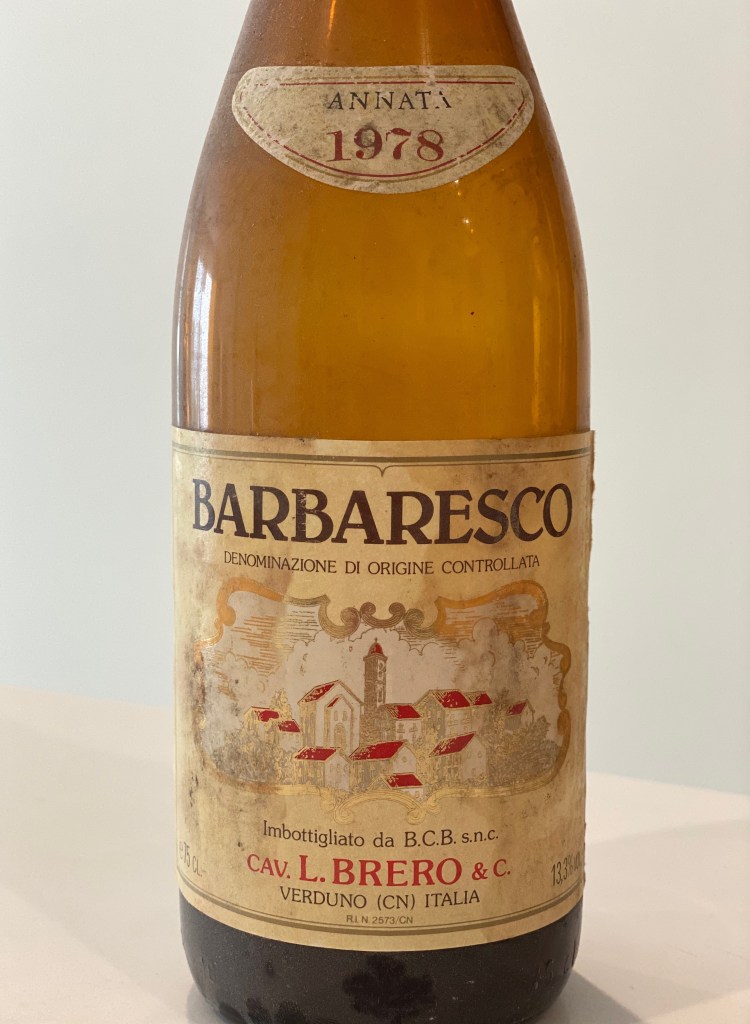
Today’s Story: Cav. L. Brero & C.

I could not, for the life of me, find any information about Brero. I could, however, find accounts of others enjoying their wines; but no family/winery history or if they are still producing wine (I would put my money on “no”). If you can tell me anything about Brero, please do! If not, enjoy the tasting notes of their 1978 Barbaresco below.

Today’s Wine: 1978 Barbaresco

100% Nebbiolo; 13.3% ABV

The 1978 Barbaresco is moderately transparent and pale garnet in color heading toward pale tawny. The nose is dominated by tertiary notes like forest floor, earthy mushroom, damp cellar, and tar but after a little over an hour in the decanter blossoms to showcase aromas of delicate dried red rose, cherry, dried raspberry, a pinch of cinnamon, black tea, and tobacco. On the palate, which is vibrantly alive, the wine displays sweet red cherry, dried raspberry, savory green herbs, red and purple florals, tobacco, forest floor, truffle, stemmy underbrush, and white peppery spice. This is medium-bodied with still lively medium (+) acidity, integrated but dusty medium (-) tannins, and a medium length finish. There is still remarkable structure in this wine but I would drink it now.

Price: I paid $80, who knows what it’s worth! This was an immaculate bottle and provided a very fun drinking experience. Pair this with veal, pheasant, or filet mignon with truffles.

Remarkable Quality From Barbaresco That Won’t Break the Bank

Today’s Story: Produttori del Barbaresco

Produttori del Barbaresco was established in 1958 when, during widespread poverty of the 1950s, a priest in the village of Barbaresco gathered 19 small Nebbiolo growers to pool their resources/fruit and produce wine together to survive. For the first three vintages, the group made their wine in the church basement until they built a winery across the town square where Produttori del Barbaresco is still located. Today, the Produttori consists of 51 members and controls over 100 hectares of vineyards planted entirely to Nebbiolo to craft only Barbaresco D.O.C.G. and a more approachable Nebbiolo Langhe. Though each family is in complete control of their land, when it is time to come together in the cellar the wines are made using traditional methods including 18-21 day primary fermentation and aging in botti for up to three years. In exceptional vintages, the Produttori produces 9 single-vineyard Barbaresco wines from the remarkable Asili, Rabajà, Pora, Montestefano, Ovello, Pajè, Montefico, Muncagota, and Rio Sordo crus. The cooperative’s total annual output is roughly 45,000 cases of which 50% are Barbaresco, 30% are single-cru, and 20% are Nebbiolo Langhe.

Produttori del Barbaresco vineyards range from 600-1,300 feet above sea level on steep hills and consist largely of clay and limestone marl with veins of sand. The land varies greatly due not only to its size and varying microclimates, but also in terms of various crus such as how Ovello, Montefico, and Montestefano having higher clay content. The distinct personalities of the fruit from each cru blend together into the final wine to beautifully marry some of Barbaresco’s greatest vineyards in an unusual and honest representation of the terroir. To learn more about the individual crus and browse a gallery of the vineyards, check out the Produttori website here.

Today’s Wine: 2016 Barbaresco

100% Nebbiolo; 14.5% ABV

The 2016 Barbaresco is deep garnet in color and slightly transparent. I decanted this for 3.5 hours and drank it over the following 2. The nose showcases aromas of black cherry, dried raspberry, blood orange, licorice, rose petal, violet, dry tobacco, loamy earth, damp cellar, tar, hay, dried herbs, and cedar. There is a touch of heat as well. Once on the palate, the wine displays notes of black cherry, raspberry, cranberry, red rose, dried leather, clay, ground peppercorn, pipe tobacco, asphalt, and smoke. This is medium-bodied with medium (+) acidity, grippy medium (+) tannins, and a medium (+) length finish. Certainly approachable with a good deal of decanting, but this needs another 5-7 years in bottle.

Price: $40. Crazy, crazy good value and a wine I cannot count how many times I recommended to friends and family. Often overshadowed by Barolo (though that seems to be changing) Barbaresco is another wine made from Nebbiolo you need to try and this is one of the great producers. Pair this with wild duck, veal chop, or filet mignon.

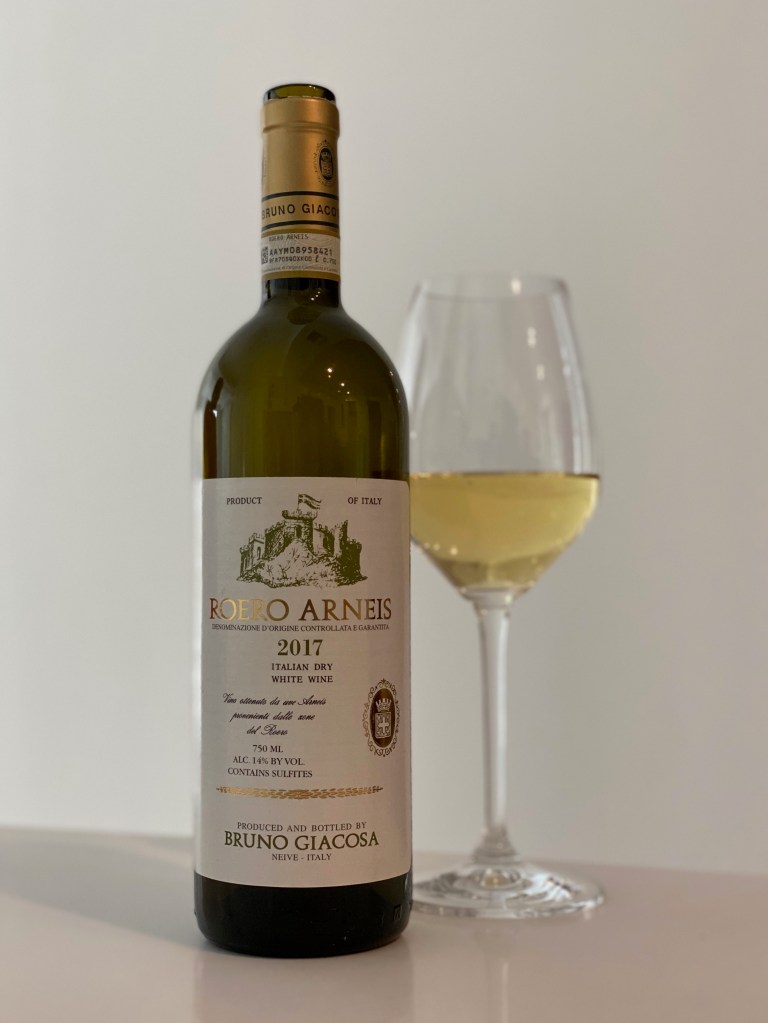
Refreshing Arneis From an Italian Legend

Today’s Story: Bruno Giacosa

Bruno Giacosa was one of the most respected and legendary winemakers not only in Piedmont, Italy where he crafted some of the most highly regarded and traditionally made Barolo and Barbaresco, but throughout Italy and the world. At age 13, Bruno helped his father and grandfather in the cellar of their Langhe winery and joined the family business full-time two years later. Though Bruno never studied to become an enologist, his appreciation of traditionally made Barolo and Barbaresco spawned from this time with his family and instilled in him some of the most important practices he followed for his entire career until his death at the age of 88 in early 2018. Bruno was quite adept at selecting parcels and fruit for his wines, and always emphasized intentionally small grape yields, limiting treatments in the vineyards, traditional vinification methods, and allowing the wines to honestly display the terroir and typicity through minimal intervention. Historically, Bruno crafted his wines with fruit sourced/purchased from some of the greatest crus of Barolo and Barbaresco and it wasn’t until the early 1980s he purchased his own vineyards as estate-bottling rose in prominence. In 1982, Bruno purchased the Falletto di Serralunga d’Alba vineyard which became the source of arguably his greatest Barolos ever made, followed in near significance by his purchase of the Asili and Rabajá plots in Barbaresco in 1996. Today, the Bruno Giacosa estate is in the capable hands of his daughter Bruna alongside his longtime enologist Dante Scaglione and they continue Bruno’s winemaking philosophies while respecting traditional techniques.

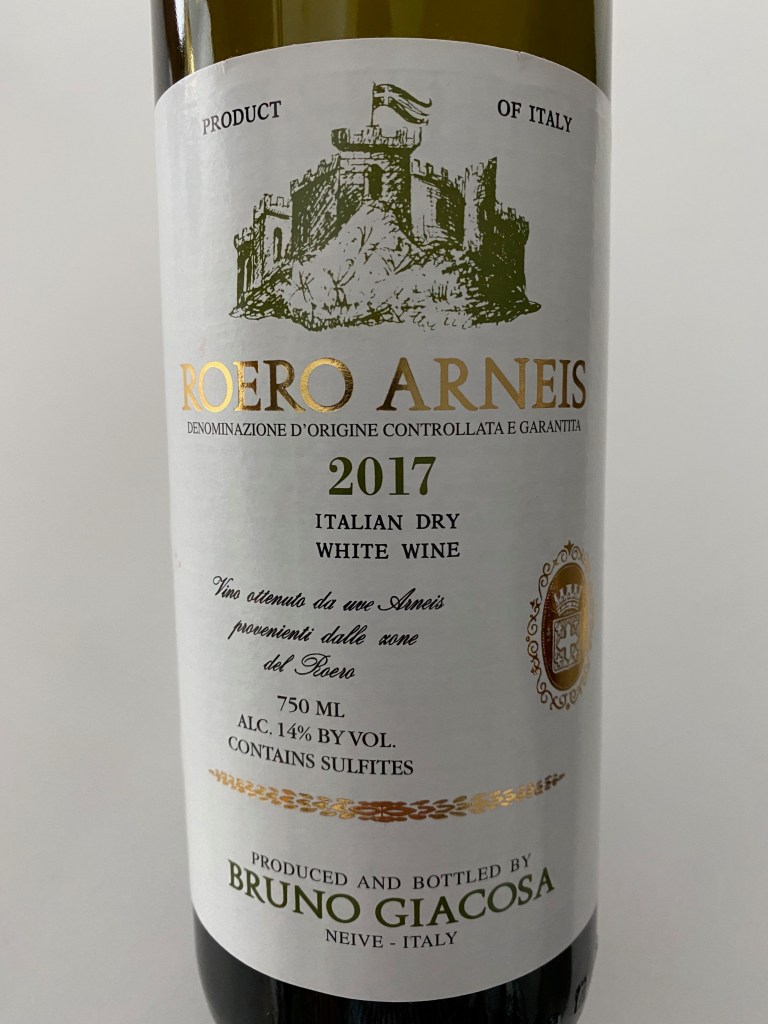
Today’s Wine: 2017 Roero Arneis

100% Arneis; 14% ABV

The 2017 Arneis is transparent deep straw in color with golden hues. On the incredibly aromatic and somewhat earthy nose, the wine emits aromas of white peach, golden apple, stone fruit, lemon zest, grass, white florals (especially lily), saline minerality, and cream. Once in the mouth, the wine displays notes of pear, peach, dried pineapple, lemon, stone fruit, white and yellow florals, honey, beeswax, almond, white peppery spice, slate, and mineral. This is medium-bodied and bone-dry with vibrant medium acidity and a crisp mouthwatering finish. Definitely a bottle of wine for the beach.

Price: $26. Outstanding value and one of the more exciting white wines I’ve had lately. I highly recommend enjoying this on a hot summer’s day. Pair this with roasted chicken, light seafood, or creamy cheeses.

Gorgeous Etna Rosso With an Incredible Backstory

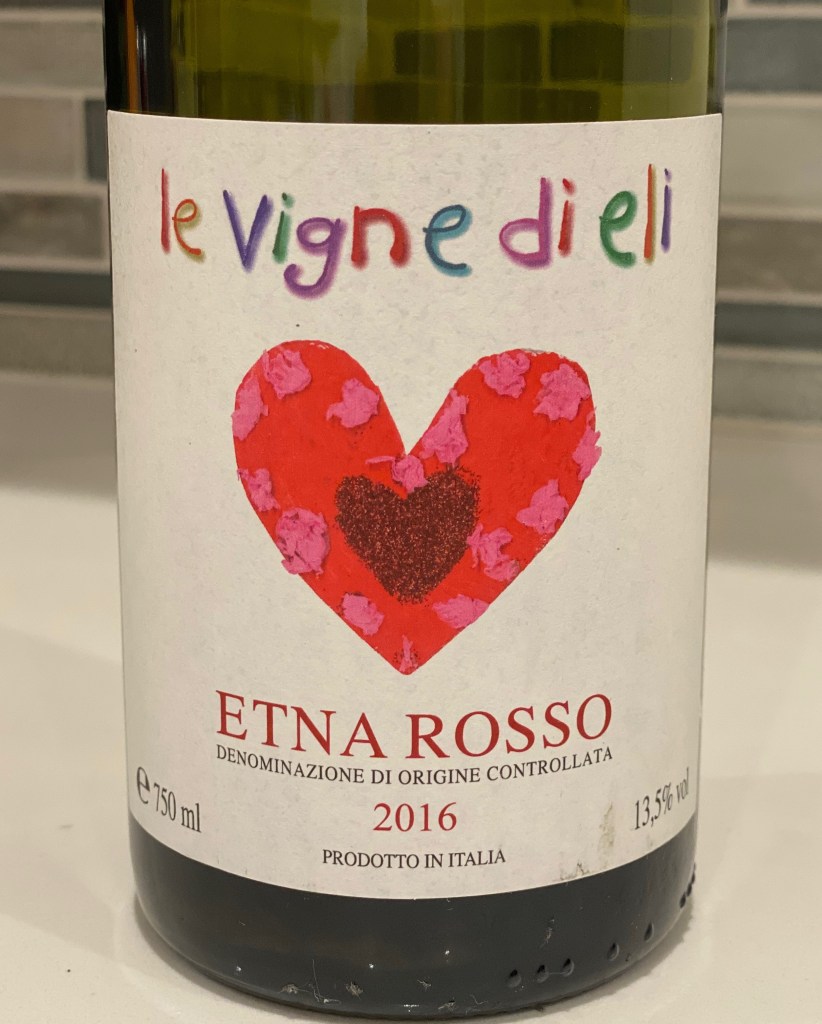
Today’s Story: Le Vigne di Eli

Le Vigne di Eli is a small, family-owned winery established on the slopes of Mount Etna in 2006 by Marco de Grazia who is also behind the acclaimed Tenuta delle Terre Nere. Marco decided to establish Le Vigne di Eli after being offered two of Etna’s tiniest and most coveted vineyards (Feudo di Mezzo and Moganazzi-Voltasciara), though instead of adding them to his portfolio at Tenuta delle Terre Nere he started another winery. Marco says the two vineyards made him think of his daughter Elena (Eli), so not only did he create this winery out of his love for her but he uses her artwork on his labels and dedicates a significant portion of his profits to the Ospedale Pediatrico Meyer children’s hospital in Florence to make it truly a “child’s estate.” Over time Marco selected additional tiny vineyards to increase his offerings and the estate produces about 20,000 bottles annually across several Etna Bianco and Etna Rosso bottlings.

Today’s Wine: 2016 Etna Rosso

98% Nerello Mascalese, 2% Nerello Cappuccio; 13.5% ABV

The 2016 Etna Rosso is moderately opaque and medium garnet in color with bright ruby hues. I let this breathe in the glass for about an hour and the nose emits aromas of ripe strawberry, muddled raspberry, red cherry, red licorice, lavender, tobacco, barnyard, volcanic soil, savory Italian herbs, marine minerality, and oak. Once on the palate, the wine offers notes of strawberry, cherry, wild raspberry, red and purple florals, sweet tobacco, graphite, baking spice, crushed rock minerality, and smoke. This is light- to medium-bodied with vibrant medium (+) acidity, refined medium tannins, and a long herbaceous finish. The wine is incredibly precise and its drinking experience is completely gorgeous. 1,000 cases produced.

Price: $30. This is one of the better Etna Rosso wines I’ve had, and for this price it is a screaming value as a lot of Etna Rosso is (for now). Pair this with chicken parmigiana, tuna with tomatoes, roasted pork, or even pepperoni pizza.

Outstanding Value from Chianti Classico

Today’s Story: Castello di Volpaia

Castello di Volpaia is a historic winery situated in the fortified medieval village of Volpaia in the heart of Chianti Classico. Drenched in winemaking history, Volpaia’s viticultural roots trace to 1172 and they were a founding member of the Lega del Chianti (Chianti League) in 1250. In 1966, a printer and bookbinder named Raffaello Stianti purchased the Volpaia estate and 2/3 of the village, later giving it to his daughter Giovannella and her newlywed husband Carlo Mascheroni as a wedding gift in 1972. Carlo and Giovannella instituted a major renovation project to modernize the winery and convert historical buildings into cellars, all while instituting an underground “wineduct” that carries wine from their fermentation tanks to the cellar by gravity. Castello di Volpaia is the highest elevation winery in Chianti Classico with 114 acres of vineyards situated between 1,300-2,100 feet above sea level. All viticultural practices at the estate are certified organic by Q Certificazioni srl.

Today’s Wine: 2016 Chianti Classico Riserva

100% Sangiovese; 13.5% ABV

The 2016 Chianti Classico Riserva is mostly opaque and medium garnet in color with ruby hues. This needs to decant for an hour or two, but once it does the nose blossoms to showcase aromas of black cherry, blackcurrant, anise, lavender, smoked game, tobacco leaf, damp gravel, dark chocolate, sage, and oak. Once on the palate, this wine delivers notes of blackberry compote, spiced black plum, brambleberry, black cherry, violet, licorice, crushed rock, wet volcanic soil, smoke, savory green herbs, and blood. This is full-bodied with high acidity, medium (+) tannins, and a very long finish. The wine is beautifully complex for how young it is, and based on its structure I would give this another 7-10 years to develop in the bottle.

Price: $35. This is one of the greatest value Italian wines I’ve had, and every time I find either this vintage or the 2015 I stock up. Pair this with chicken parmigiana, ossobuco, or lamb chops.

High Quality Value Barolo

Today’s Story: Paolo Scavino

Paolo Scavino was founded by Lorenzo Scavino and his son Paolo in 1921 in Castiglione Falletto within the Barolo region of Italy. Throughout its history, Paolo Scavino remains a family endeavor born on traditions of farming and today Enrico Scavino (3rd generation) and his daughters Enrica and Elisa (4th generation) operate the estate. Enrico is nearly 70 years into his work at the winery (he started in 1951 at the age of 10) and he has been instrumental in expending the estate’s holdings to include some of the greatest crus in all of Piedmont. With 30 hectares of vineyards across 20 crus in Castiglione Falletto, Barolo, La Morra, Novello, Serralunga d’Alba, Verduno, and Roddi, Paolo Scavino grows the traditional grapes of Nebbiolo, Barbera, and Dolcetto.

Today’s Wine: 2013 Barolo

100% Nebbiolo; 14.5% ABV

The 2013 Barolo is deep garnet in color and moderately opaque. This needs a good two hour decant, but once it opens up the nose emits aromas of cherry, strawberry, black raspberry, blackberry, anise, dried leather, tobacco, truffle, garden herbs, and oak. On the palate, I get notes of muddled raspberry, black cherry, pomegranate, licorice, rose, crushed granite, scorched earth, chocolate, clove, black tea, and cigar box. This wine is full-bodied with high acidity, medium (+) tannins, and a long finish.

Price: $43. This is a great value Barolo from an outstanding vintage, though I suggest giving it another 3 years in bottle and consuming over the following decade. Pair this with veal chop, venison steak, or assorted cheeses.

An Italian Legend

Today’s Story: Mastroberardino

Mastroberardino is a family-operated winery founded in 1878 in Atripalda within the Provincia di Avellino in the Campania region of southern Italy. While widely known for their production of Taurasi DOCG, Mastroberardino further cemented themselves into Italian viticultural history through tireless efforts to identify and protect native ancient varieties in Campania, particularly those formerly grown in Pompeii. For instance, Mastroberardino was selected by the Italian government in 1996 to oversee the Villa dei Misteri project in Pompeii where they replanted vineyards destroyed by the eruption of Mt. Vesuvius in AD 79 using the same plans, varieties, viticulture, and winemaking practices of that period in time. Though the winery has had its ups and downs over time (including near collapse following WWII due to economic hardship, phylloxera, neglect, and even family feuds), Antonio Mastroberardino resurrected his family’s legacy and helped build the winery into what it is today: a standard bearer of winemaking in southern Italy. Traditionalists in style, Mastroberardino continues to make some of Italy’s most historically important wines with Antonio’s son Piero now at the helm.

The wine I am reviewing today received countless critical acclaim, and is largely considered the wine that brought significant attention to winemaking in the Campania region and the immense potential of the Aglianico variety.

Today’s Wine: 1968 Taurasi Riserva

100% Aglianico; 12% ABV

The 1968 Taurasi Riserva is almost entirely opaque and is deep ruby in color with garnet variation, especially near the rim. This is shockingly youthful right out of the bottle and we let it decant for about an hour before enjoying over the next hour-plus. The nose showcases aromas of black cherry, black plum, forest floor, tobacco leaf, black truffle, smoked game, white pepper, black tea, underbrush, oregano, and dried rose. Once in the mouth, this beautiful wine displays notes of dried blackberry, black cherry, cigar box, forest floor, mushroom, leather, tar, ash, smoke, peppercorn, and green herbs. The wine is medium- to full-bodied with medium (+) acidity, refined medium tannins, and a long finish.

Price: $850 (though this came into our possession years ago for a much lower cost). This is truly a unicorn wine that I will surely never taste again, and a bottle we were very lucky to receive with the purchase of a private wine collection. Pair this with braised beef, venison, wild boar, or grilled lamb.

An Italian Great

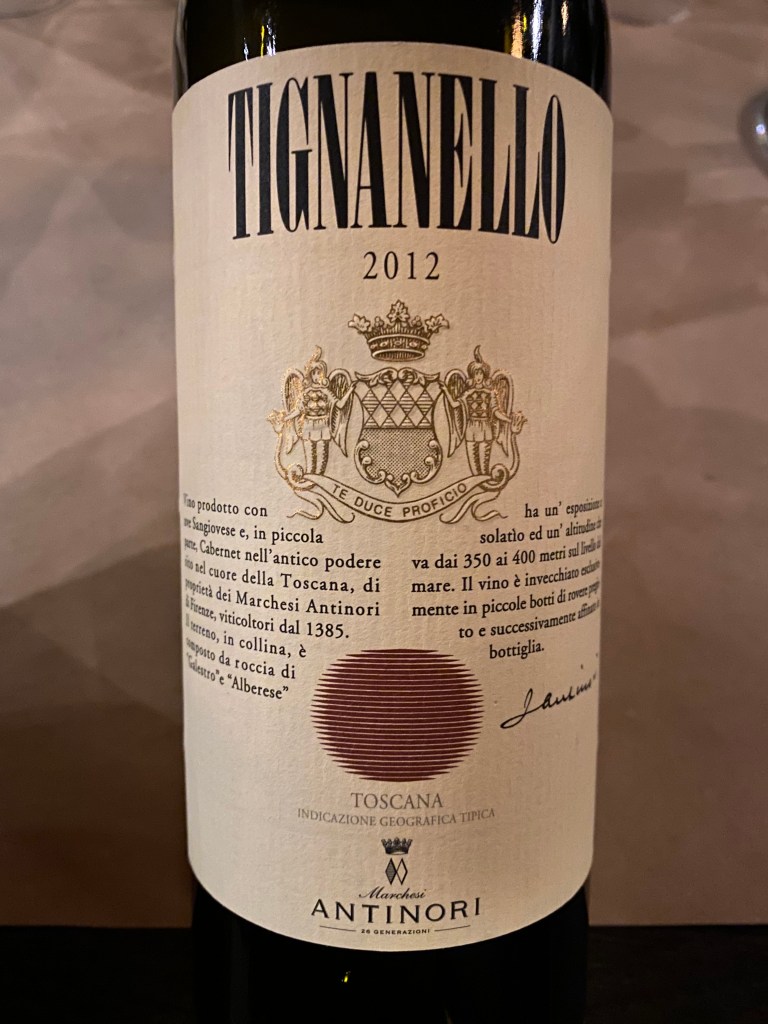
Today’s Story: Marchesi Antinori and Tenuta Tignanello

Marchesi Antinori traces its roots to 1385 when Giovanni di Piero Antinori joined the Arte Fiorentina dei Vinattieri (Florentine Winemakers’ Guild) and the family has been making wine since through 26 generations. I recently reviewed one of the family’s other wines, the 2016 Chianti Classico Riserva Tenuta Tignanello in Chianti Classico for a Remarkable Value. Interestingly, that Chianti Classico is made using fruit from Tenuta Tignanello, one of the great estates owned and operated by the Antinori family. Tenuta Tignanello is located between the Greve and Pesa river valleys in Tuscany on 319 hectares with 127 hectares planted to vine in calcareous rocky soils with alberese and marl. Though some of the Tignanello fruit goes into the Chianti, Tignanello’s prized vineyards and signature wines of Tignanello and Solaia are some of the most influential and important wines in Tuscan winemaking history.

Today’s Wine: 2012 Tignanello

85% Sangiovese, 10% Cabernet Sauvignon, 5% Cabernet Franc; 13.5% ABV

The 2012 Tignanello is deep ruby red in color and almost entirely opaque. This wine requires at least an hour in the decanter to truly blossom, but once it opens up the nose is characterized by aromas of blackcurrant, blueberry, red cherry, strawberry, violet, blue florals, graphite, smokey earth, crushed rock, savory green herbs, and tar. On the palate, this wine showcases notes of plum, black cherry, wild raspberry, licorice, rosemary, dried tobacco, red and blue florals, dried and dusty rocky soil, white pepper, and clove. This wine is full-bodied with moderate acidity, medium dusty tannins, and a long finish while being elegant and supple in mouthfeel and supremely classy overall.

Price: $100. Tignanello is always worthy of its price tag and even though it is not cheap provides great value for high quality Italian wine. Pair this with bistecca alla fiorentina, herb-roasted lamb, or assorted cheese and charcuterie.