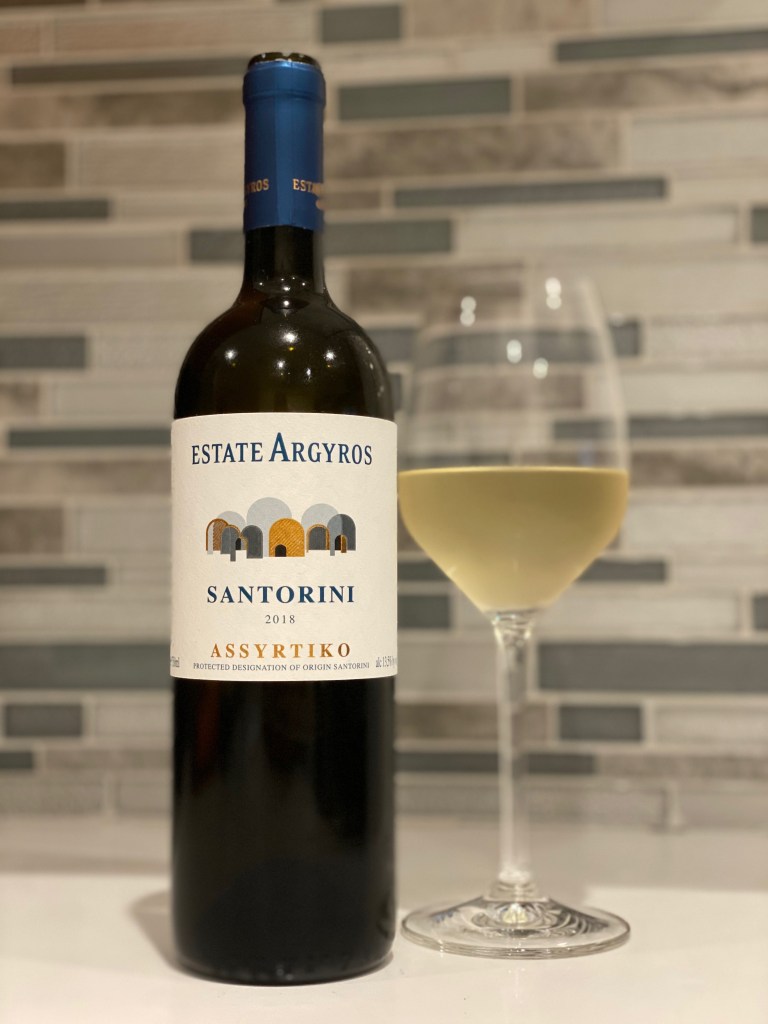
Refreshing and Fun White From Santorini

Today’s Story: Estate Argyros

Estate Argyros was established in 1903 on the island of Santorini and today is run by fourth generation winemaker Matthew Argyros. The estate consists of 120 hectares with vines averaging 70 years old, all of which are ungrafted (original rootstock) thanks to the island’s inorganic soil providing immunity to Phylloxera. All vineyards are planted to indigenous varieties of Santorini, including Assyrtiko, Aidani, and Mavrotragano. Argyros farms their vineyards organically under sustainable guidelines, using no pesticides and only grape skins and stems following harvest as compost. All harvesting is accomplished by hand and winemaking is very traditional, yielding wines that are transparent representations of their very unique and difficult terroir.

Today’s Wine: 2018 Assyrtiko

100% Assyrtiko; 13.5% ABV

The 2018 Assyrtiko is transparent pale gold/yellow in color with water white variation near the rim. Once this opens up, the nose showcases aromas of lemon and lime zest, green apple skins, white lily, damp grass, saline mineral, flint, and light smoke. On the palate, the wine displays notes of lime, grapefruit, lemongrass, peach, sea salt, volcanic minerality, and chalk. This is light- to medium-bodied and bone dry with high acidity into a crisp and refreshing finish. The fruit is sourced from 100-120 year old ungrafted vines and fermented in stainless steel vats.

Price: $30. This is a solid value for its quality, and it’s also a fun wine to try because I hadn’t had any Assyrtiko before. Pair this with oysters, sushi, or salad with grilled chicken.
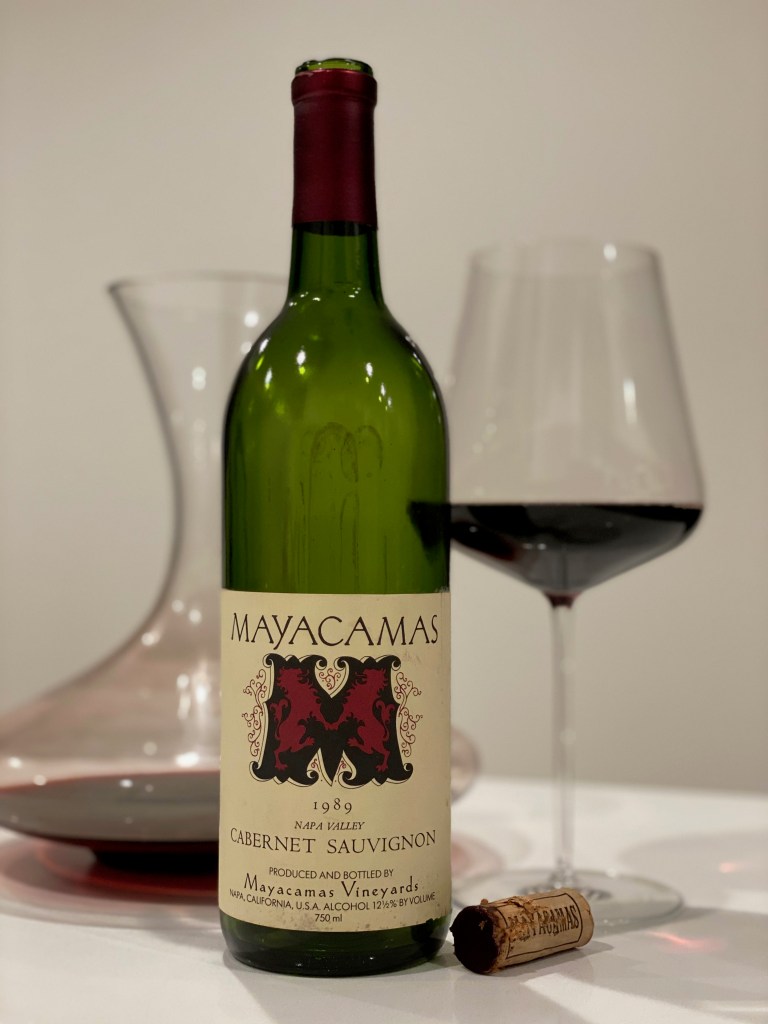
Beautiful and Traditional Napa Cab

Today’s Story: Mayacamas Vineyards

Mayacamas was established in 1889 by German immigrant John Henry Fisher and is located in the Mt. Veeder AVA of the Napa Valley. Fisher went bankrupt in the early 1900s, however, and the winery ceased production with the onset of Prohibition (although bootleggers are said to have made wine in the cellars during the early years). Mayacamas was owned by the Brandlin family during the 1920s and 1930s, before being purchased by Jack and Mary Taylor in 1941 when the estate received its current name. Mayacamas changed hands yet again in 1968 when Robert and Elinor Travers purchased it, with the couple quickly setting about expanding the aging facilities and vineyard holdings while planting and replanting vines. Charles and Ali Banks purchased Mayacamas in 2007, though the winery has since changed hands again to the Schottenstein family.

Though the history of Mayacamas is long and inclusive of many ownership changes, the one constant is the traditional style of winemaking they practice. Mayacamas was one of the wines in the 1976 Judgment of Paris (they poured their 1971 Cabernet Sauvignon) which showed the estate can stand up with the greatest Californian and French wines of the world. Mayacamas dry farms their vineyards and transitioned a large portion to organic viticulture in 2013, further enhancing the quality of fruit. Very traditional in style, they age the wines in neutral oak to not mask any of the true expressions of the Cabernet Sauvignon variety or the terroir.

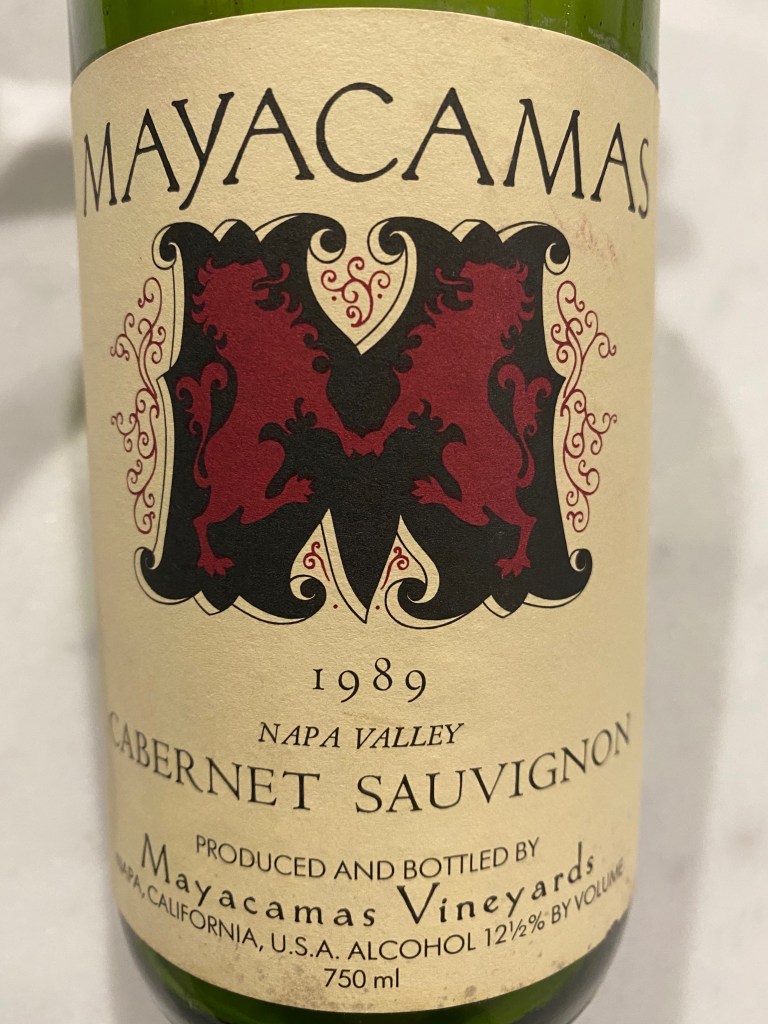
Today’s Wine: 1989 Cabernet Sauvignon

100% Cabernet Sauvignon; 12.5% ABV

The 1989 Cabernet Sauvignon is very youthful opaque deep garnet in color with plenty of ruby left. After 3 hours in the decanter, this beauty blossomed with a nose of blackcurrant, blackberry, cherry, redcurrant, pencil shavings, cigar box, tobacco, forest floor, truffle, gravel, and thyme. On the palate, the wine displays notes of blackberry, crème de cassis, black plum, redcurrant, violet, graphite, tobacco, sous bois, green herbs, cracked black pepper, and cedar. This is medium-bodied with medium (+) acidity, medium dusty tannins, and a long finish. If tasted blind 100 times, I’d call this 1st or 2nd Growth Left Bank Bordeaux every time.

Price: $200. If provenance is impeccable, like this bottle was, this is absolutely worth the price. Drinking up there with some of the greats of Bordeaux, this is an incredible value. Pair with filet mignon, roasted lamb, or portobello mushrooms.

Unique Grenache That Drinks Almost Like a Rosé

Today’s Story: Whitcraft Winery

I wrote about Whitcraft a few days ago when reviewing the 2016 Pence Ranch Clone 828 Pinot Noir, so I’ll make your Saturday reading light and move onto the tasting notes. If you missed my post about Whitcraft earlier this week, you can find it here.

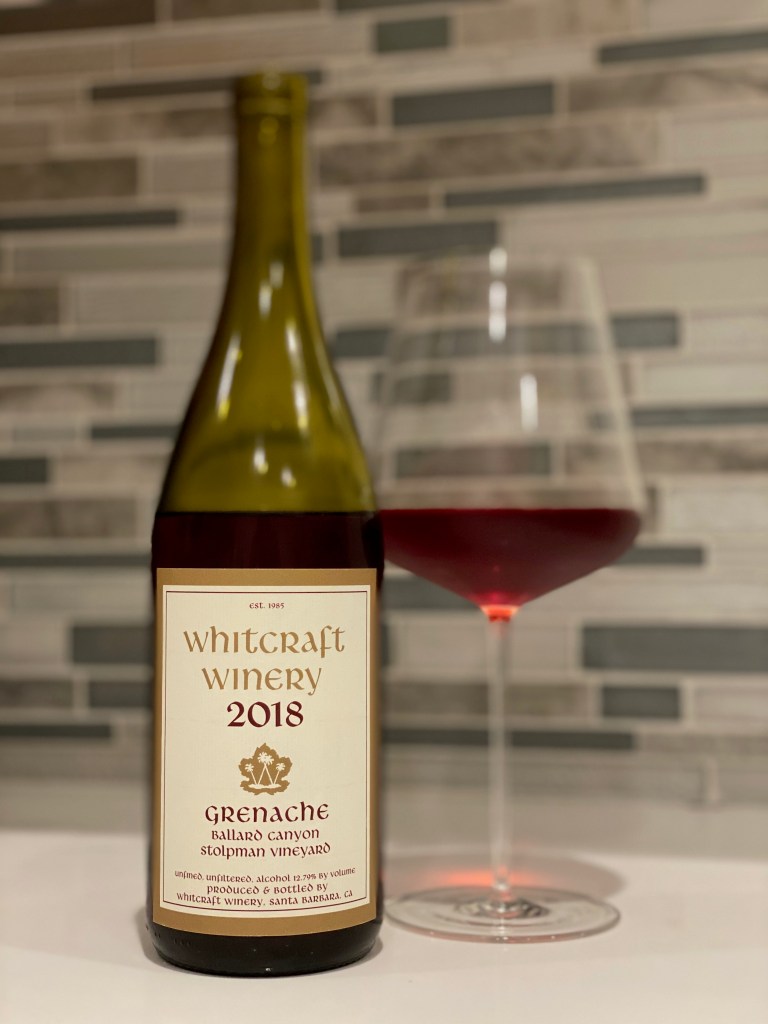
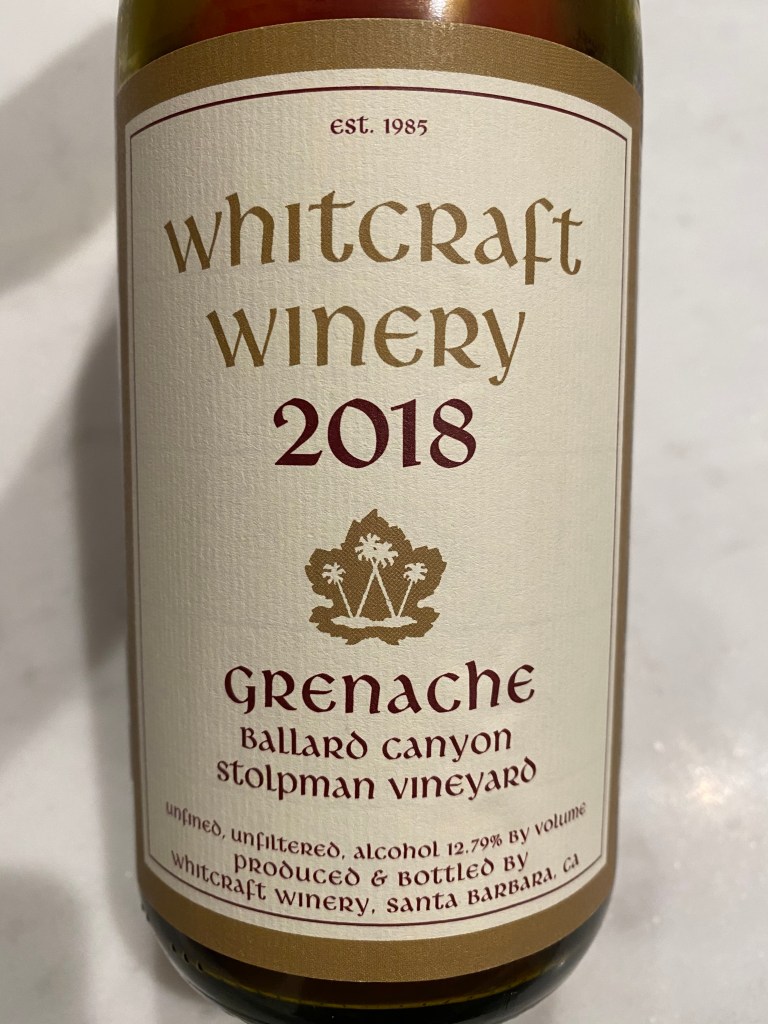
Today’s Wine: 2018 Stolpman Vineyard Grenache

100% Grenache; 12.79% ABV

The 2018 Stolpman Vineyard Grenache is deep salmon and rose petal in color with medium pink variation. This is a very light Grenache, looking and drinking almost like a rosé. On the nose, I get aromas of strawberry, cranberry, rose, leather, gravel, underbrush, rocky mineral, and slight spice. Once in the mouth, the wine showcases notes of raspberry, tart red cherry, baked plum, red and purple florals, cinnamon, mint, herbs, and peppery spice. This is medium-bodied with medium acidity, medium (-) tannins, and a medium (+) finish. All around a great summer red.

Price: $45. I find this one tough to describe on a value perspective, because it’s not your typical Grenache and it’s not a rosé. This in mind, it’s a super fun wine to taste and I loved it for the warm weather. It’s also very high-quality like most Whitcraft wines are. Pair this with bruschetta, charcuterie and cheese, or a lobster roll.

Clean, Honest, and Burgundian Cali Pinot Noir

Today’s Story: Ceritas Wines

Ceritas Wines is a small, family-owned winery spearheaded by husband and wife duo John and Phoebe Raytek. John and Phoebe source their fruit from trusted vintners mainly in the West Sonoma Coast and Santa Cruz Mountains, with all sites practicing sustainable or organic viticulture. John is highly involved in the vineyards they source from, and in many cases the vintners only sell fruit to Ceritas and are labeled “Monopoles.” Considering himself a winemaker of the Old World style, John believes that fruit should lead the way throughout the winemaking process and he is merely there to watch over, listen, and learn about each unique site. In the cellar, John practices minimal intervention but “flexible” winemaking, with the wines meant to showcase with honesty and transparency the terroir of each specific vineyard site.

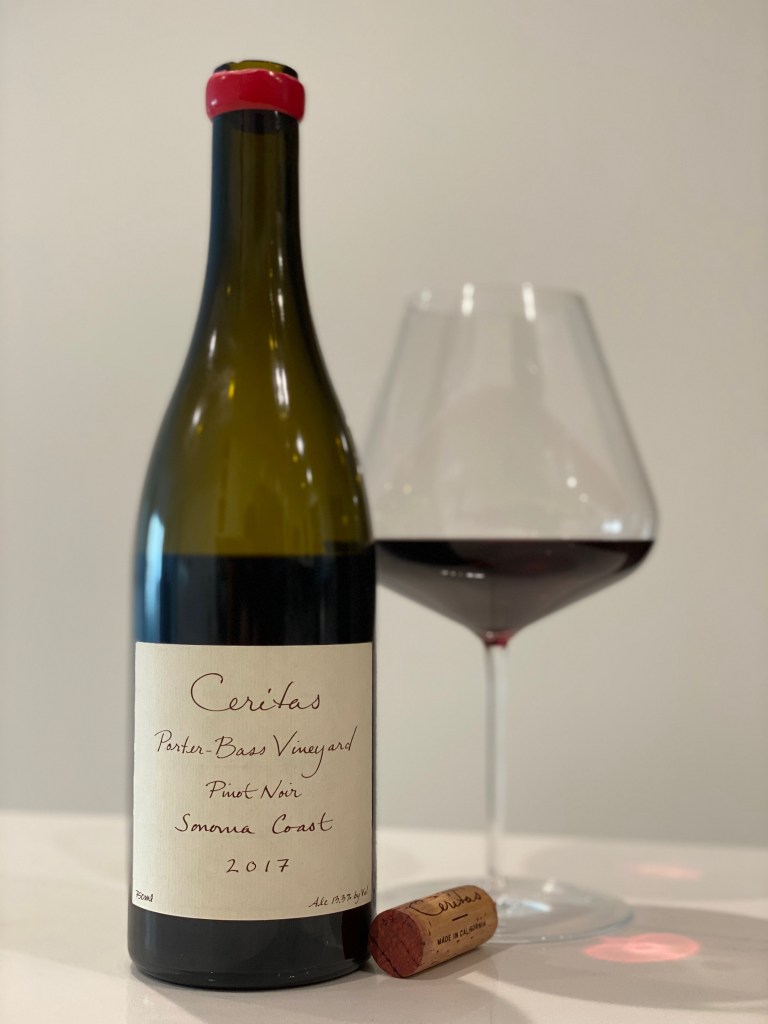
Today’s Wine: 2017 Porter-Bass Vineyard Pinot Noir

100% Pinot Noir; 13.3% ABV

The 2017 Porter-Bass Vineyard Pinot Noir is mostly opaque pale ruby in color with hints of purple. This took a good hour to open up in the glass, with the nose showcasing aromas of red cherry, strawberry, blueberry, rose petal, forest floor, stemmy underbrush, crushed rock, flint, and mineral. On the palate, I get notes of dusty raspberry, dried cherry, crunchy pomegranate, plum, slightly stale licorice, violet, garden herbs, and stony mineral. This is light- to medium-bodied with medium acidity, medium (-) tannins, and a long finish. Gorgeous wine and very Burgundian in style, though 3 more years in the bottle will do it wonders.

Price: $75. Though not an inexpensive Pinot Noir, this still offers strong QPR when compared to the “big boys” of California Pinot Noir and the quality is impeccable. Pair this with roasted chicken, duck breast, or charcuterie.

Refreshing and Well-Made Bourgogne Aligoté

Today’s Story: Domaine Jean-Claude Ramonet

I previously wrote about Jean-Claude Ramonet when I reviewed the 2015 Chassagne-Montrachet 1er Cru Clos Saint-Jean in Exploring a Red From a Legendary Producer of White Burgundy. Domaine Ramonet was established in Chassagne-Montrachet in the late 1920s by Pierre Ramonet, and quickly became one of the preeminent producers of white Burgundy. Though the domaine has had its ups and downs over time largely due to premature oxidation in the 1990s, Jean-Claude Ramonet has returned the wines to fresh heights and remains a force to be reckoned with in the world of white Burgundy.

In the vineyards, Ramonet likes to work with older vines and keep his yields low. Most of the wines are produced from vines 12 to 50 years old, though they typically like to use vines 18 years or older. The domaine’s vinification practices are traditional in nature, with the whites starting in tanks before transfer to French oak barrels and the reds in cement vats for maceration and fermentation. New oak usage varies by wine and vintage, with the whites typically seeing 10-15% for village wines, 30-40% for 1er Crus, and 50%+ for the Grand Crus. Reds typically see 10-20% new oak for village wines and 30-40% for 1er Crus. None of the white wines are bottled fined or filtered.

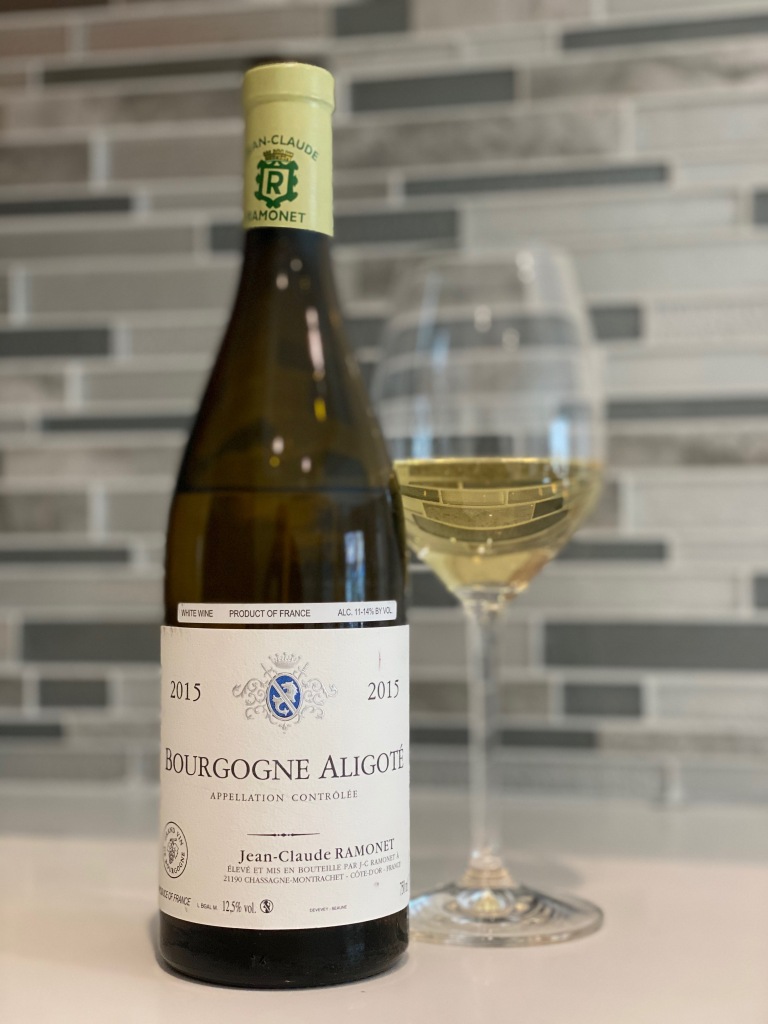
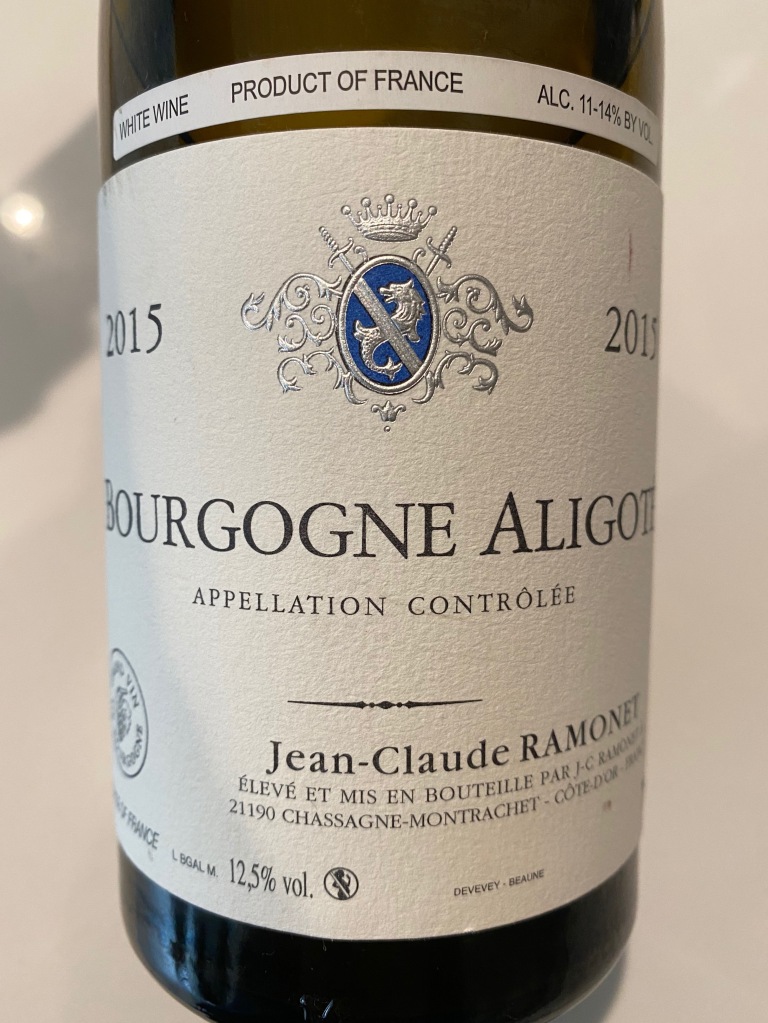
Today’s Wine: 2015 Bourgogne Aligoté

100% Aligoté; 12.5% ABV

The 2015 Bourgogne Aligoté is transparent medium yellow in color with deep straw variation. On the nose, the wine showcases aromas of golden apple, white peach, white florals, cotton candy, dried vanilla, mild herbs, and mineral. Once on the palate, this displays notes of lemon citrus, yellow apple skins, snap pea, white wildflower, wax, and dill. The wine is light- to medium-bodied with high acidity and a plush, luxurious mouthfeel into a lingering but refreshing finish.

Price: $50. This is a very well-made, high quality Aligoté that I think justifies the price-point. Pair with oysters, roasted chicken, or cheese.

Beautifully Honest Santa Rita Hills Pinot Noir

Today’s Story: Whitcraft Winery

Whitcraft is a small, family-owned and operated winery in Santa Barbara, CA known for their traditionally made and “unadulterated” Pinot Noir and Chardonnay. Established in 1985 by Chris and Kathleen (Barnato) Whitcraft, the winery started as a passion for both the craft of winemaking and the lifestyle. Chris learned from California greats including Joe Heitz, Dick Graff, and Burt Williams while simultaneously hosting a radio show about wine from 1978 to 1989. Chris and Kathleen’s son Drake joined the family winery and took over in 2007, maintaining the traditional practices of hand-harvesting, foot-pressing, no added enzymes, and native yeast fermentation. Whitcraft’s wines are pure, well-balanced, and honest representations of the fruit and terroir, often remaining low in alcohol and not seeing much added SO2. Drake hand fills and corks his wines, with production incredibly limited and often reserved for mailing list clients or restaurants. Though Chris passed away in 2014, his vision and passion live on through Drake to this day.

Today’s Wine: 2016 Pence Ranch Clone 828 Pinot Noir

100% Pinot Noir; 13.49% ABV

The 2016 Pence Ranch Clone 828 Pinot Noir is translucent pale ruby in color. Once this opens up, the nose displays aromas of ripe red cherry, wild raspberry, forest floor, stemmy underbrush, mint, dusty dried rock, and light baking spice. Moving to the palate, the wine showcases notes of strawberry, black cherry, cranberry, licorice, tobacco, loamy earth, white pepper, and green herbs and vegetation. This is light- to medium-bodied with medium acidity, light tannins, and a medium (+) finish. Would love to revisit this wine with a few more years of bottle age.

Price: $68. Whitcraft Pinot Noirs are some of my favorites out of California, and while they don’t have that opulence found in a lot of cult Cali Pinots I think they strike up right with some of the big dogs and therefore make a good value play. Pair with grilled duck breast, herb-roasted chicken, or goat cheese and salami.

Outstanding Traditional Rosso di Montalcino

Today’s Story: Biondi-Santi (Tenuta Greppo)

Biondi-Santi (Tenuta Greppo) traces its roots to the mid-1800s when Clemente Santi realized the immense promise of the land and vineyards in the heart of Montalcino. A writer with a profound knowledge of chemistry, Clemente set about crafting wines built for long-term aging and utilized racking and barrel aging techniques that were much more advanced than neighboring producers. Clemente started gaining admiration for his wines, particularly the 1865 vintage of red wine at the 1867 Universal Expo in Paris. After Clemente passed away, his grandson Ferruccio took over and continued the drive of producing age worthy wines with 100% Sangiovese. Though he passed away in 1917, in 1932 Ferruccio was credited with the invention of Brunello di Montalcino by an interministerial commission studying the area.

Ferruccio’s son Tancredi took over management of the estate following his father’s death, quickly becoming an ambassador for Brunello and bringing the wines to new heights. One of the unique practices Tancredi started is the refilling of old bottles of reserve wines, beginning with the 1888 and 1891 vintages in 1927. With Brunello wines at new heights of quality, particularly those of Biondi-Santi, Tancredi’s son Franco eventually took over the estate and brought them to wider audiences. Franco travelled the world tirelessly to showcase the longevity and beauty of his wines, while also growing the estate from 4 hectares to the current 25. Today, Franco’s sons Jacopo and Alessandra work at the estate and are joined by Jacopo’s son Tancredi who marks the seventh generation of family tradition.

The winemaking practices at Biondi-Santi are very traditional, beginning with manual harvesting of fruit and sorting in the vineyards at the end of each row. The fruit is gently crushed for native yeast fermentation in concrete tanks, with the musk pumped over twice daily. Malolactic fermentation occurs under temperature control, lasting 30 days, before the wine is transferred to large Slavonian oak barrels to age. The Brunellos then spend at least 3 years in these barrels before being bottled, where it sits for at least another 6 months before release.

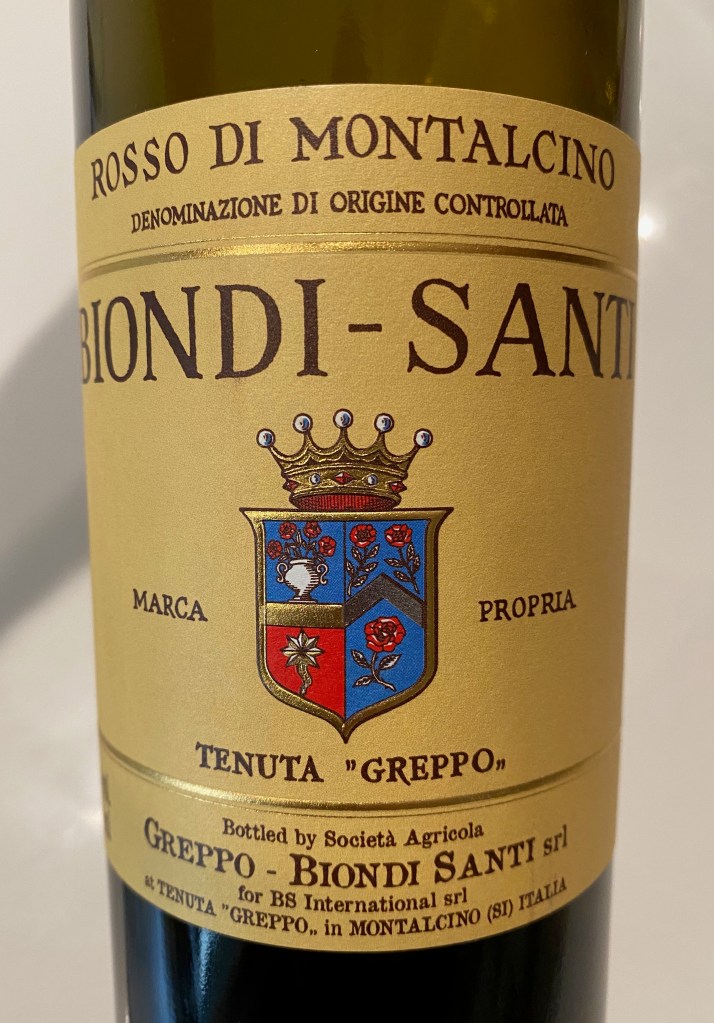
Today’s Wine: 2015 Rosso di Montalcino

100% Sangiovese; 13.5% ABV

The 2015 Rosso di Montalcino is translucent medium garnet in color. This wine showed its best after two hours in the decanter, with the nose showcasing aromas of cherry, dried strawberry, tomato paste, red rose, licorice, tobacco, dried earth, savory herbs, and mocha. Once on the palate, the wine displays notes of cranberry, tart cherry, raspberry, strawberry, violet, leather, tea leaf, woody spice, crushed rock, and underbrush. This is medium-bodied with medium (+) acidity, medium fine-grained tannins, and a medium (+) length finish.

Price: $110 (cheaper in Europe). Certainly not cheap (particularly for Rosso di Montalcino) but an outstanding bottle of wine that lives up to the great Biondi-Santi name. This is a very precise wine drinking beautifully now, but the ageability is certainly there. Pair with meat sauce pasta, lamb with rosemary, or Pecorino cheese.

Rasteau That Unfortunately Does Not Live Up to the Hype

Today’s Story: Domaine Gourt de Mautens

Domaine Gourt de Mautens was established by Jérôme Bressy in 1996 and is located in Rasteau of Southern Rhône. Though Bressy’s family owned vineyards in Rasteau for some time, the small AOC was not incredibly well-known. Jérôme’s father Yves converted his vineyards to organic viticulture in 1989 which allowed Jérôme to inherit healthy vines (30-100 years old) and soils for his first vintage, though he quickly took this a step further and started practicing biodynamic farming (later certified in 2008). The domaine consists of 13 hectares with chalky top soil composed of rocky clay and marl, largely attributed to the fact that water tends to flow toward the domaine following a storm. The name itself comes from “a place where the water flows” (Gourt) and “storm or bad weather” (Mautens). Bressy’s vines struggle due to poor nutrients in the soil, however, and produce low yields of 10-15 hl/ha. All harvesting is manual, and the fruit is sorted three times before beginning natural yeast fermentation. After the wines age, they are bottled unfined and unfiltered.

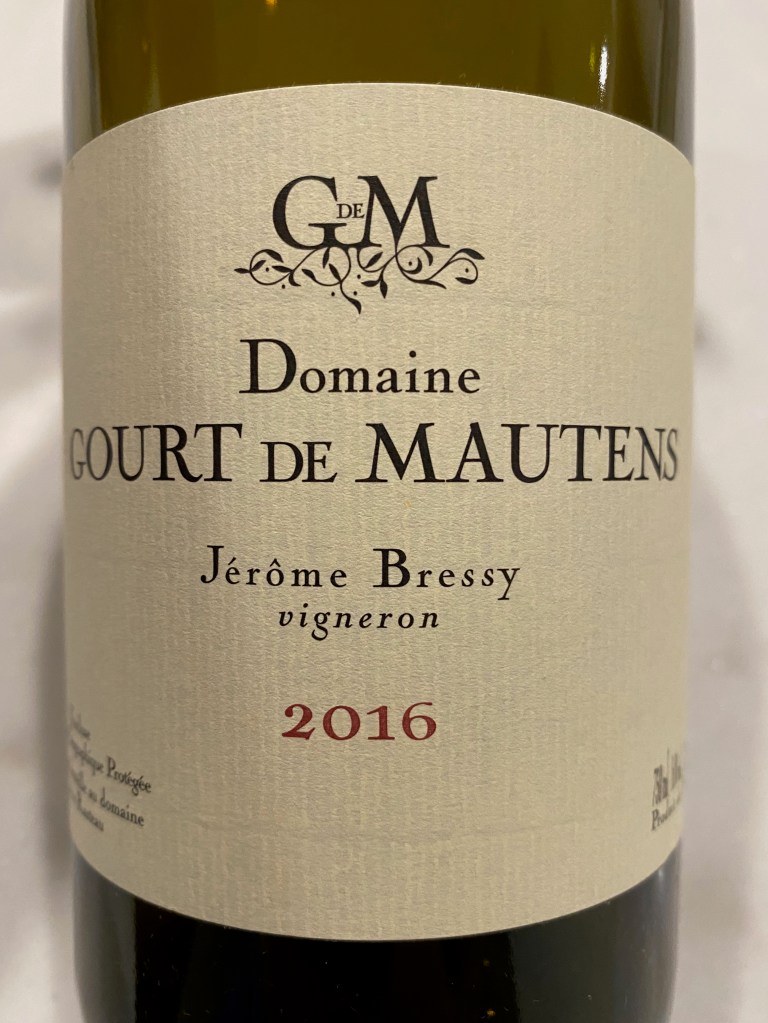
Today’s Wine: 2016 Vaucluse Rouge

Blend of Grenache, Carignan, Mourvèdre, Syrah, Counoise, Cinsault, Vaccarèse, and Terret Noir; 16% ABV

The 2016 Vaucluse Rouge is opaque medium to deep purple in color. This needs some generous time in the decanter to open up, but once it does the nose showcases aromas of black plum, crème de cassis, black raspberry, fig, black licorice, crushed rock, mild herbs, and black pepper. There’s also a slight sting of alcohol. Once on the palate, the wine shows notes of black cherry, candied strawberry, spiced plum, violet, light smoke, savory herbs, and milk chocolate. This is full-bodied with medium acidity, medium (-) tannins, and a long finish.

Price: $60. This is not my style of wine. It comes across rather big, sweet, and boozy (though I will say the ABV surprisingly doesn’t throw off the balance too much). It drinks more like a cocktail to me, and though I hoped saving some wine for day 2 would be better, it is all too much the same. Perhaps this is a vintage (or off bottle) story, but I don’t think it lives up to the hype.

Incredible Quality Just Outside Ribera del Duero

Today’s Story: Galia

Galia was established in 2009 as a personal project of vigneron Jérôme Bougnaud with the partnership of Daniel García-Pita of El Regajal. Though Jérôme comes from a lineage of winemakers in Cognac, France, he works extensively in Spain and particularly along the Duero River and just outside the official borders of Ribera del Duero in Castilla y León. Galia’s vineyards consist of relatively small parcels and are scattered along the river within the provinces of Soria, Burgos, and Valladolid. Most of these vineyards sit at 795-1,000m above sea level and consist of old vines aging 50-100+ years old. Jérôme practices organic viticulture and all fruit is harvested manually before going through whole cluster or partial whole cluster natural fermentation. The wines age in 15% new French oak barrels before being bottled unfined and unfiltered. Since many of these wines are bottled as Vino de Mesa because the vineyards lay outside established D.O.s, they can be an outstanding play for value given the incredible yet “under the radar” quality of land.

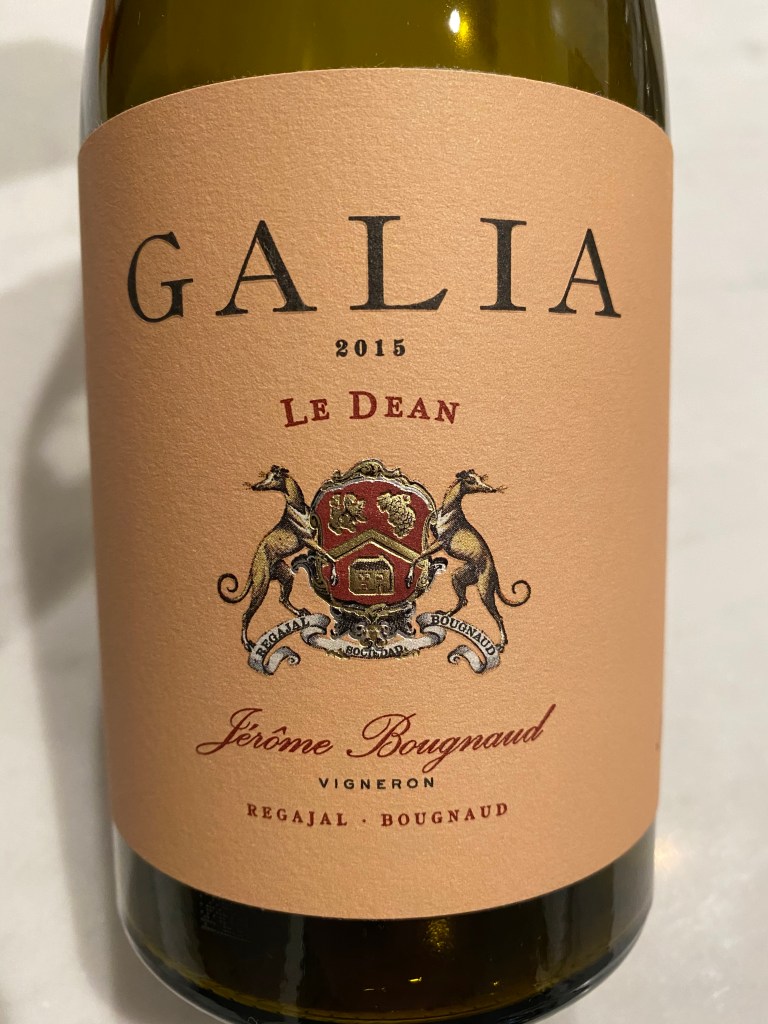
Today’s Wine: 2015 Le Dean

99% Tinto Fino (Tempranillo), 1% Albillo; 15% ABV

The 2015 Galia Le Dean is opaque medium to deep ruby in color with deep purple hues. Once this opens up (I gave it 3 hours in the decanter), the nose showcases aromas of dusty cherry, plum, dried fig, leather, pipe tobacco, forest floor, dried herbs, and cedar. Once in the mouth, the wine displays notes of black cherry, brambleberry, licorice, tobacco, loamy earth, chunky crushed rock and clay, underbrush, and chocolate. This is medium- to full-bodied with medium acidity, medium (+) tannins, and a long finish. 758 bottles produced.

Price: $55. Very high quality and well-made for the price, with the depth and balance (you can’t even tell this is 15% ABV) pushing this into the good value category. Pair with roasted lamb, suckling pig, or charcuterie.

Fun and Delicious Grower Champagne

Today’s Story: Domaine Francis Orban

Domaine Francis Orban was established in 1929 by Léopold Orban in the small village of Leuvrigny, not too far from Epernay. Though Léopold initially sold his fruit to the larger houses of Epernay, he decided to branch out and make his own wines as one of the first Grower Champagne houses in Leuvrigny. The domaine today spans 18 acres of vineyards between Leuvrigny and Sainte-Gemme, with 90% planted to Pinot Meunier and vines averaging 30-40 years old. The vineyards are farmed utilizing sustainable viticulture, harvesting is done completely by hand, and fermentation is accomplished using only indigenous yeasts in stainless steel tanks. In the NV bottlings, about 50% of the blend is comprised of reserve wines. Francis Orban is today’s 4th generation steward of the domaine, following the footsteps of his great-grandfather Léopold, grandfather Gaëtan, and father Pol.

Today’s Wine: NV Champagne Extra Brut

100% Pinot Meunier; 12% ABV

The Champagne Extra Brut is transparent deep gold in color. On the nose, I get aromas of yellow apple skins, golden pear, brioche, white pepper, almond, clay, and mineral. Once in the mouth, the wine showcases notes of lemon citrus, green apple, toasted nuts, toast, crushed rock, and cream. This is very dry and medium-bodied with high acidity and a crisp, refreshing finish.

Price: $45. Great QPR with this one, which tends to be the case with almost every grower Champagne I’ve had over the years. This wine is also incredibly fun to try, not simply for the fact it is 100% Pinot Meunier (typically a blending variety in Champagne) but also because it is Extra Brut with dosage of 3 g/l. Drink this on its own or pair with caviar or shrimp.