Yountville Hidden Gem

Today’s Story: Kapcsándy Family Winery

Kapcsándy Family Winery was established by Lou Kapcsándy and is a small, family owned and operated estate in Yountville of the Napa Valley. An immigrant from Hungary, Lou arrived in the United States in 1956 and worked as a chemical engineer and manufacturer in the Bay Area of California and Seattle. Wine became a focal point for Lou during his successful career thanks to colleagues in the wine business, however his desire to establish his own winery one day came after a visit to Château Leoville Las Cases with his wife Bobbie in 1998. With their son Louis Jr., Lou and Bobbie started searching for property in the Napa Valley when they stumbled upon the 20 acre State Lane Vineyard in Yountville which had been destroyed the previous year by phylloxera. In May 2000, the Kapcsándy family closed on this historic property (it was the source of fruit for Beringer’s Private Reserve Cabernet Sauvignon) and embarked on massive replanting of the vineyards. They planted the main Bordeaux varieties of Cabernet Sauvignon, Merlot, Cabernet Franc, and Petit Verdot, though also planted several acres to Hungarian Furmint. When the winery was completed in 2005, Lou’s vision was finally realized and both he and Louis Jr. remain highly involved today.

Kapcsándy wines are inspired by Bordeaux both in terms of vineyard management and winemaking style, resulting in lower-alcohol wines made from 100% estate-grown fruit. With both Lou and Louis Jr. active in the vineyards and estate management everyday, Kapcsándy practices sustainable farming with great appreciation for their soil and the environment. The family constructed nesting boxes, perch poles, and songbird houses to avoid the use of chemicals for pest control, and they also add compost to the vineyards and natural fertilizers to supply bacteria, photo nutrients, and trace elements which prove beneficial for vine growth. Further, Kapcsándy plants cover crops between the vines to prevent erosion and encourage beneficial insects to inhabit the vineyards and enhance this natural ecosystem. For more, check out the Kapcsándy website here.

Today’s Wine: 2014 Estate Cuvée

72% Cabernet Sauvignon, 19% Merlot, 9% Petit Verdot; 13.8% ABV

The 2014 Estate Cuvée is deep ruby in color and almost fully opaque. I let this bottle decant for three hours before drinking any, and the nose showcases aromas of blackberry, blackcurrant, black cherry, anise, lilac, gravelly earth, black peppercorn, dried green herbs, and some light oak. Once on the palate, this wine offers notes of blackberry, blueberry, redcurrant, cherry, graphite, sweet tobacco, loamy earth, chocolate, rosemary, and rocky minerality. The wine is full-bodied with medium (+) acidity, silky but medium tannins, and a long finish. 750 cases produced.

Price: $140. Not a cheap bottle of wine, but for both its quality and rarity this is an outstanding bottle. Compared to the previous Kapcsàndy bottle I had (one multiple times this price) this is a great entry into the estate’s portfolio. Pair this with filet mignon, pepper-crusted Ahi tuna steak, or herb roasted lamb.

Baby Grange

Today’s Story: Penfolds

Penfolds was founded in 1844 by Dr. Christopher Penfold, an English physician by trade, and his wife Mary. Penfolds is one of the oldest and most famous wineries in Australia, with the first vines planted by Dr. and Mrs. Penfold with cuttings they brought when they emigrated there. Over time Penfolds grew successfully and their early production of Claret and Riesling proved popular, though many of the day-to-day operations of the winery fell to Mary since Christopher’s medical practicing occupied much of his time. When Christopher unfortunately passed in 1870, full responsibility fell to Mary. Mary later retired in 1884 and her daughter Georgina took over the estate when Penfolds was producing 1/3 of South Australia’s wine. When Mary died in 1896, the Penfolds legacy was continuing to grow with the exploration of new winemaking techniques and they became the largest winery in Australia by 1907.

In 1948, Penfolds hired who would become one of the most famous winemakers in Australia and throughout the world of wine: Max Schubert. An innovator in his field, Max catapulted Penfolds onto the global stage by crafting wines built for incredible aging through experimentation and ultimately the release of Penfolds Grange in the early 1950s. Labeled as “Grange Hermitage” and crafted with Shiraz, Grange is one of the world’s most famous wines and you often find it at the store for $700+ per bottle. In 1959, the unique “Bin” labeling started at Penfolds with the first being a Shiraz named simply for its storage area in the cellars. This Kalimna Bin 28 became the first Penfolds Bin numbered wine.

Though a lot has changed over the years at Penfolds, the experimental spirit of winemaking continues to live on to this day. All of their wines fit into categories of single vineyard or single block, single region or sub-region, and multi-region or multi-varietal blending in an effort to showcase each category’s character. The wine I’m reviewing today, for instance, fits into the multi-region or multi-varietal category while something like the Magill Estate Shiraz fits into the single vineyard or single block category. At the head of a team of roughly 10 winemakers crafting these wines, Peter Gago is chief winemaker today and the fourth in the history of Penfolds. For more about Penfolds, check out their website here.

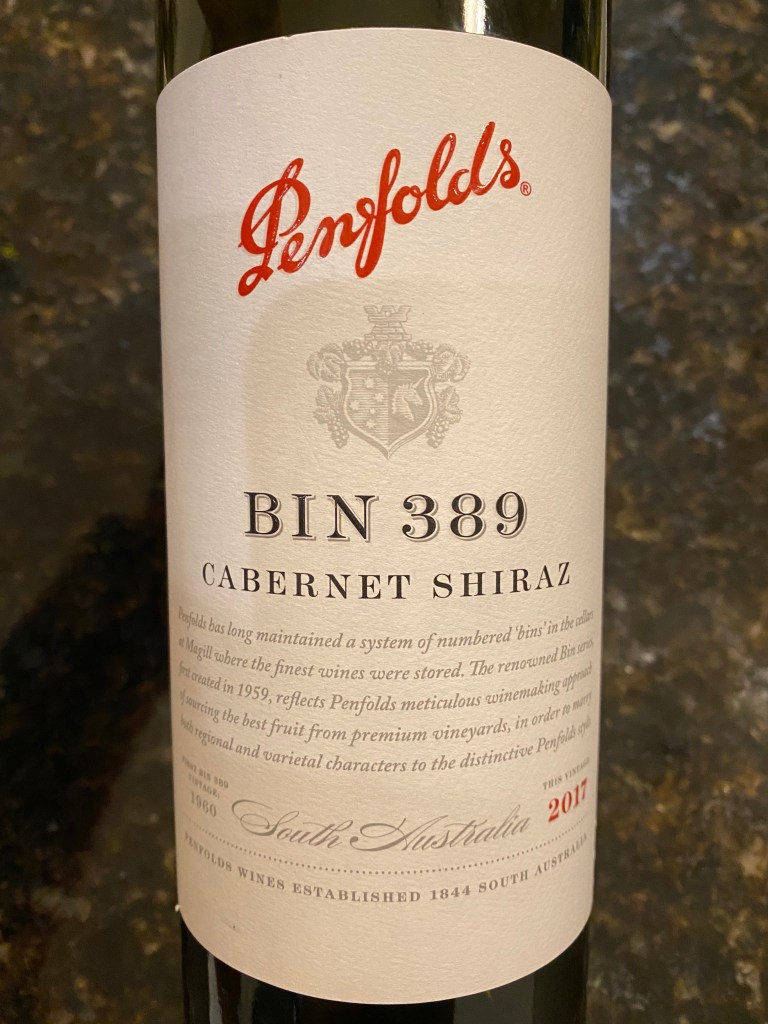
Today’s Wine: 2017 Bin 389 Cabernet Shiraz

54% Cabernet Sauvignon, 46% Shiraz; 14.5% ABV

The 2017 Bin 389 is incredibly opaque and deep purple in color with black at its core. Once this opens up (I drank this over four hours), the nose showcases aromas of blackberry compote, plum, blueberry, smoke, tobacco, forest floor after a rainstorm, wet slate, thyme, eucalyptus, nutmeg, and cedar. On the palate, I get notes of black raspberry, black cherry, blueberry, blackberry, cigar box, damp earth, dark chocolate, mint, vanilla, and oak. This wine is full-bodied with high acidity, medium (+) tannins, and a long finish.

Price: $50. This is a great bottle of wine and while not the cheapest from Grange a great introduction to their portfolio. Though young, this is drinking surprisingly well with some air but I’d lay this down a few more years. Pair this with beef carpaccio, roast beef, or roasted leg of lamb.

Ridge Hits the Mark Again

Today’s Story: Ridge Vineyards

I’m traveling today, so I figured I would make this easy and review a wine whose backstory I shared earlier in History. Quality. Ridge. when I reviewed the 2015 GSM and Consistently Delicious Zin when I reviewed the 2012 Geyserville. If you are unfamiliar with this historic Californian wine estate, I suggest checking out my first blog linked above or their website here. At the very least, between my prior two posts and this one today you can get tasting notes on three different wines in their portfolio!

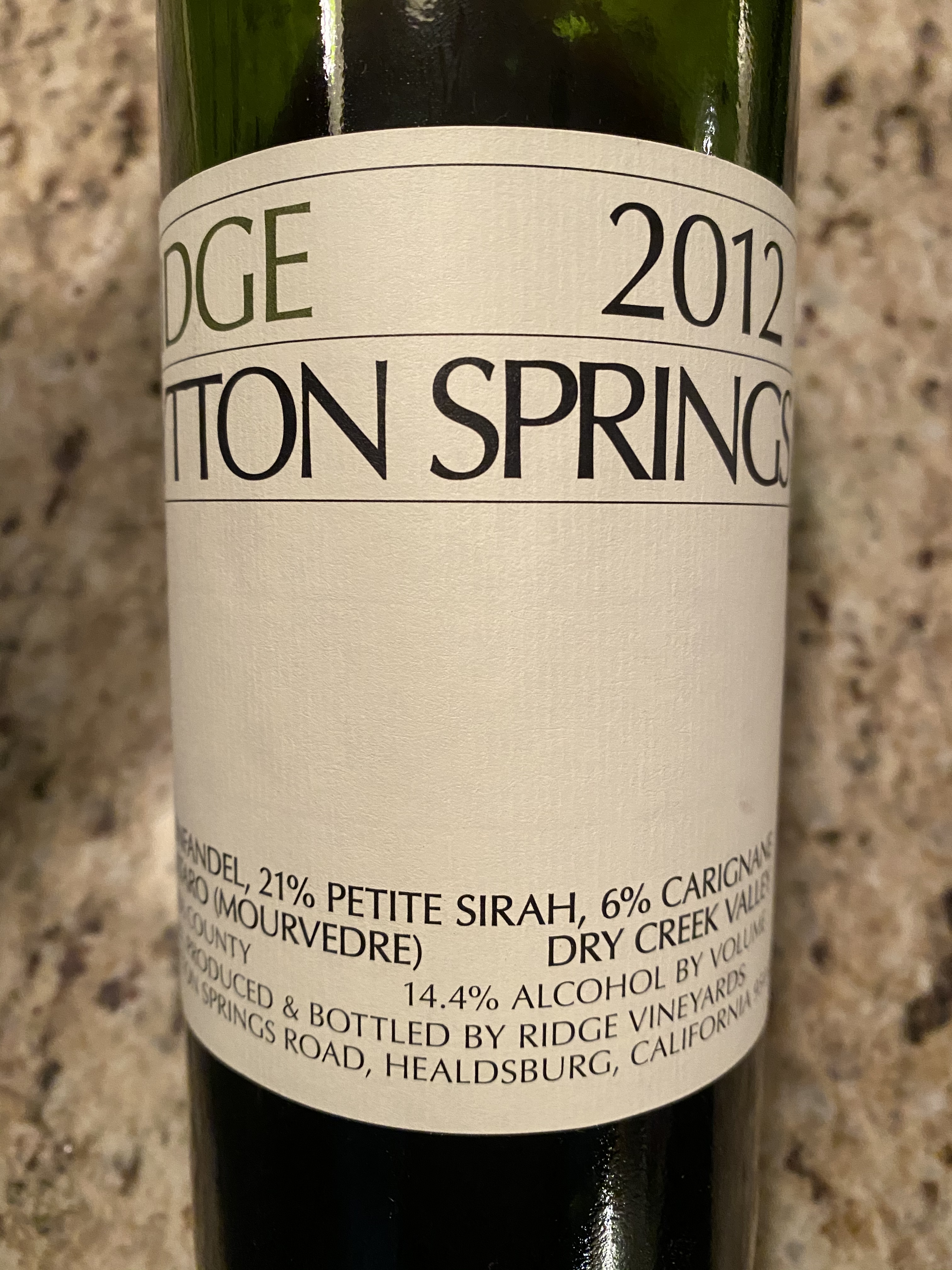
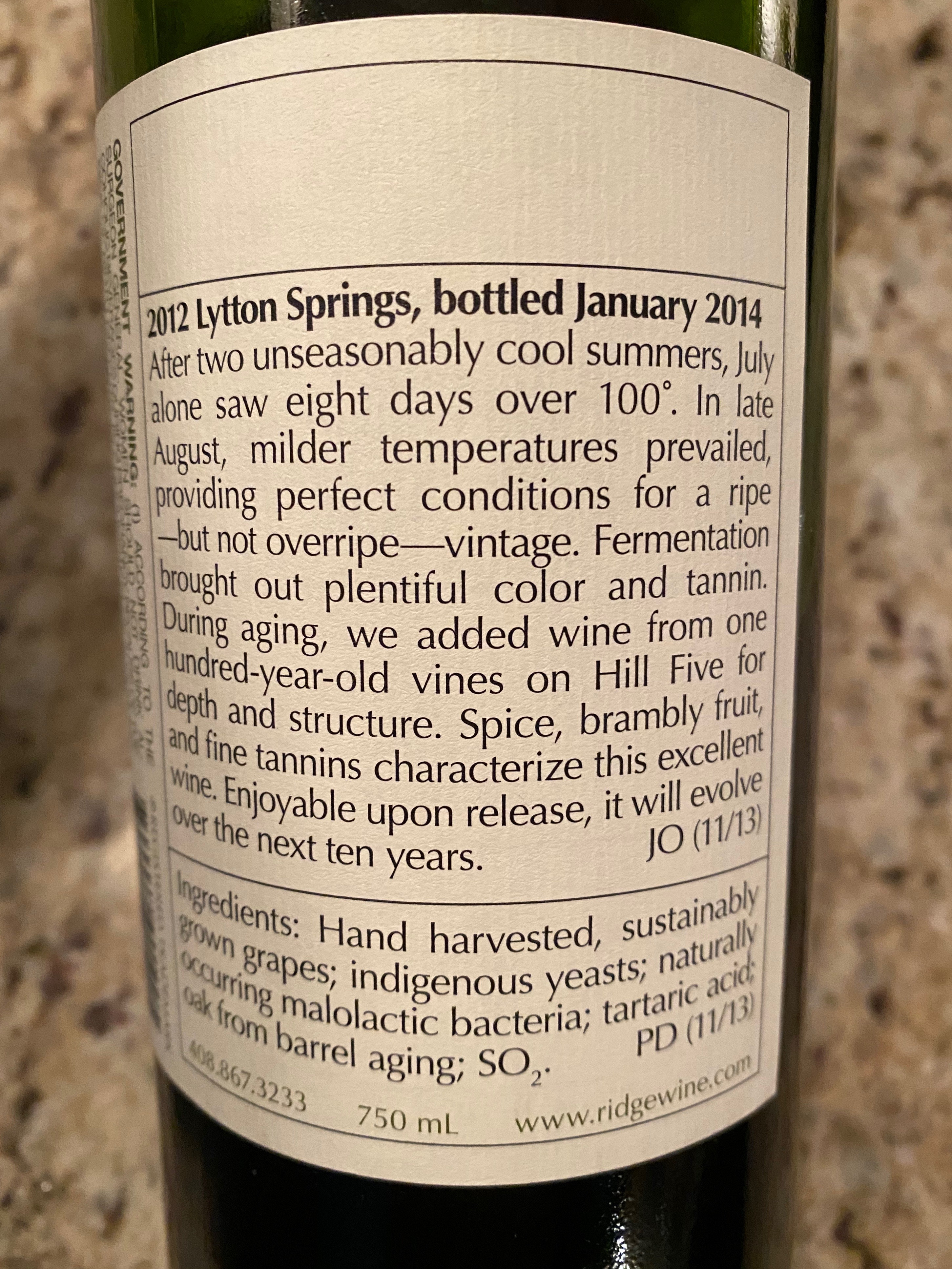
Today’s Wine: 2012 Lytton Springs

70% Zinfandel, 21% Petite Sirah, 6% Carignane, 3% Mataro; 14.4% ABV

The 2012 Lytton Springs is opaque purple in color and actually almost black at its core. Once this opens up over 30-45 minutes, the nose emits aromas of plum, dusty blueberry, blackberry, sweet tobacco, licorice, loamy earth, wet gravel, cola, and oak. On the palate, I get notes of jammy blackberry, prunes, juicy plum, damp rocky soil, tobacco leaf, black tea, chocolate, baking spice, and charred oak. This wine is full-bodied with medium (+) acidity, medium grippy tannins, and a medium (+) length finish dominated by black fruit compote and mocha.

Price: $35 direct from the winery. Though prices have come up a little for these (the average I can find online seems to be about $44 per bottle), Ridge makes some of the most consistent and quality Zinfandel blends. If you find some of their wine, particularly sub-$40, snag it. Pair this with red sauce meat pasta, barbecue chicken, or barbecue pulled pork sandwiches.

Fun Orange Wine for the Adventurous

Today’s Story: Tre Monti

Tre Monti was established in 1974 by Sergio and Thea Navacchia. Thea was a major driving force behind the winery throughout their inaugural decade-plus, and together with her husband Sergio became pioneers in a sense by planting large densities per hectare and experimenting with non-traditional vines. During the 1980s, the couple collaborated with a young Francesco Spagnolli before working with Vittorio Fiore and later Donato Lanati, all quite instrumental in making Tre Monti what it is today. Thea unfortunately passed away in 1989, however, though this tragic event inspired her children Vittorio and David to join their father in managing the estate. While Sergio continues to run the show, Vittorio controls the enological side of the business while David, who has a background in Law, controls the financial and marketing aspects.

In the cellars, Vittorio follows a minimal intervention philosophy in order to showcase the integrity of his fruit as well as the terroir from which it comes. The winery became certified organic in 2014 and the team refrains from using unnatural products in the vineyards thanks to this practice. To learn more about the estate, their farms, or their wines, check out the website linked here. If anything, it gives you a nice representation of how down to earth, friendly, and passionate the Navacchia family seems to be.

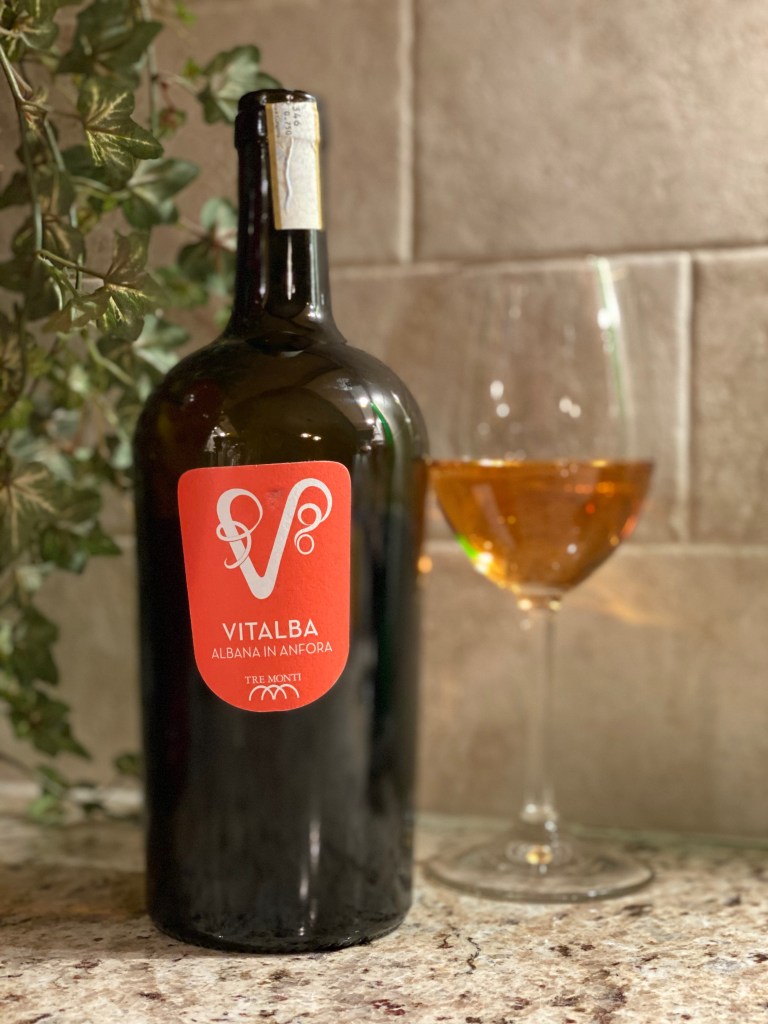
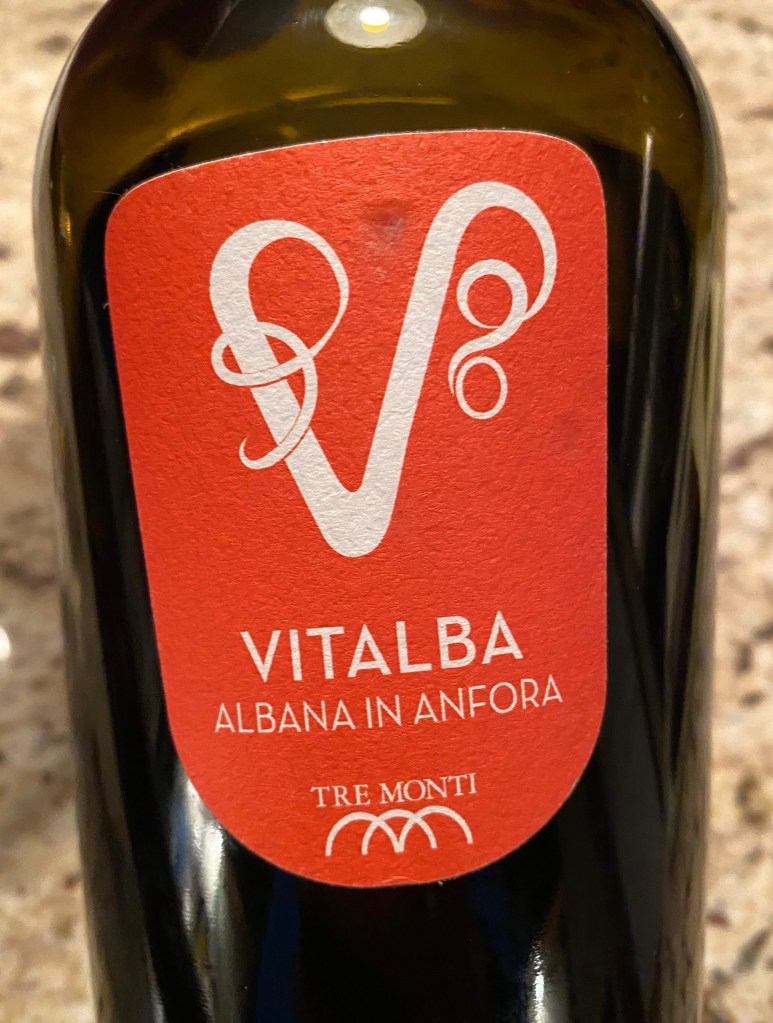
Today’s Wine: 2017 Vitalba Albana in Anfora

100% Albana; 14.5% ABV

The 2017 Vitalba is a fully transparent pale to medium amber color with peach variation. On the nose, this wine showcases aromas of apricot, cantaloupe, stone fruit, mango, orange marmalade, honey, white and yellow florals, and some bright herbaceous overtones. Once in the mouth, the wine offers notes of golden apple, peach, dried apricot, nectarine, lemon zest, pineapple juice, bright peppery mineral, and ginger. This is medium- to full-bodied with mouthwatering high acidity, light tannins (!), and a medium (+) length finish. Really refreshing and a fun wine to try, this is fermented in Georgian amphora (kvevri) using only natural yeasts and sees 95 day maceration. 125 cases produced.

Price: $24. For its price, this is a fun “orange wine” to try and offers a structure many wine drinkers probably do not experience from a white grape variety. If you come across this bottle and are in the mood for an adventure, check it out. Pair this with assorted white fish, goat cheese, fruit tarts, or apple pie.

Barolo That Won’t Break the Bank

Today’s Story: G.D. Vajra

G.D. Vajra was established in 1972 by Aldo Vaira and is named after his father Giuseppe Domenico. A few years earlier, in 1968 to be exact, Aldo joined a mass of student protestors in the streets of Turin however was discovered by his father and immediately sent to his grandparents’ farm in Barolo for a summer away from trouble. After spending several months on the farm, Aldo’s dream of one day starting a winery began to blossom and he joined Suolo e Salute in 1971 where he became a pioneer of organic agriculture in Piedmont. With the inclement weather and poor vintage of 1972, Aldo was faced with either leaving his fruit on the vines to rot or defiantly bottle wines, laying the foundation of G.D. Vajra. During the mid 1980s and early 1990s, Aldo’s three children Giuseppe, Francesca, and Isidoro were born and continue to operate the winery today as a family endeavor.

G.D. Vajra is located in the village of Vergne in the commune of Barolo, with vineyards planted 400 meters above sea level. Over time, Aldo gradually increased his land holdings under vine to 60 hectares of which 10 hectares are planted to Nebbiolo. With vines located in Bricco delle Viole, Ravera, Fossati, La Volta, and Coste di Vergne amongst other sites, Aldo crafts magnificent wines in a traditionalist style coupled with modern practices particularly when it comes to using oak. To learn more about G.D. Vajra or scroll through their portfolio of wines, check out the website here.

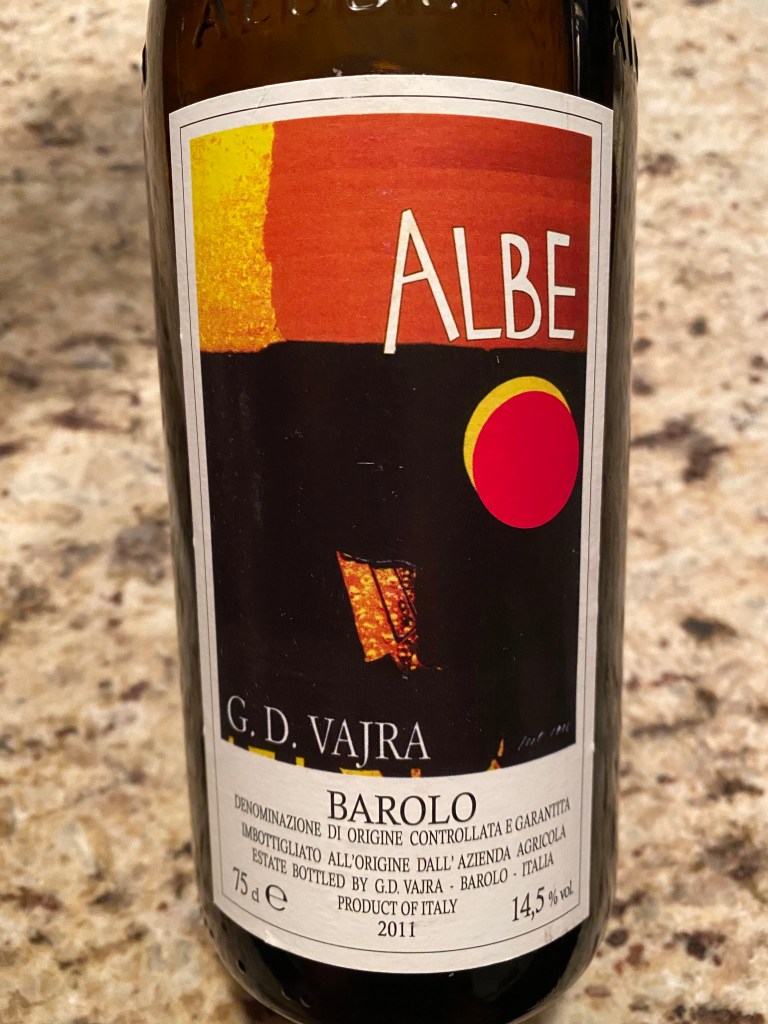
Today’s Wine: 2011 Barolo Albe

100% Nebbiolo; 14.5% ABV

The 2011 Albe is bright medium ruby red in color and moderately transparent. Once this opens up in the decanter, the nose offers aromas of black raspberry, bing cherry, licorice, rose petal, smoke, tar, forest floor, black tea, white pepper, and oak. There’s also some heat on the nose that will take some time to blow off. Once in the mouth, I get notes of sour cherry, raspberry, strawberry, truffle, scorched earth, tobacco, crushed granite, chocolate, and oaky spice. This wine is full-bodied with high acidity, medium (+) tannins, and a medium (+) length finish.

Price: $36. At this price point I was hoping for a lot out of this bottle in terms of value, but the wine seems a bit too out of balance for me particularly with the alcohol. While 2011 was not a bad vintage for Barolo by any means, maybe it would be better to try something from 2010 or 2015. Pair this with pheasant, duck, or pork chops.

Pinot Noir From the Team Behind Far Niente

Today’s Story: EnRoute Winery

EnRoute was founded in 2007 by the partners behind Far Niente Winery thanks to their passion for Pinot Noir. Since they stick to Chardonnay and Cabernet Sauvignon at their Far Niente estate, the owners decided it best to create EnRoute in the Russian River Valley, an AVA within Sonoma County known for their Pinot Noir. While EnRoute produces one blended Pinot Noir under the name Les Pommiers, their current releases focus on four single vineyard bottlings from Amber Ridge Vineyard, Bucher Vineyard, Marty’s Vineyard, and Northern Spy Vineyard. The first single vineyard offerings came in the 2013 vintage from Amber Ridge and Northern Spy. Also in 2013, EnRoute released their first Chardonnay under the name Brumaire for the morning fog. To check out some details about the EnRoute vineyards including maps, check out the website here.

Today’s Wine: 2014 Northern Spy Vineyard Pinot Noir

100% Pinot Noir; 14.5% ABV

The 2014 Northern Spy Pinot Noir is deep ruby in color and actually almost purple at its core while being nearly fully opaque. Once this opens up, the nose showcases aromas of cranberry, black cherry, dried raspberry, leather, bergamot, mint, cola, sweet tobacco, and rose. In the mouth, this wine offers notes of blackberry, strawberry rhubarb, ripe cherry, black tea leaf, baking spice, earth, tar, peppery spice, and oak. This Pinot is medium-bodied with mouthwatering high acidity, medium (-) tannins, and a medium length finish which is shorter than hoped.

Price: $85. Not my favorite single vineyard bottling from EnRoute, though this could be a vintage story. I’ve heard good things about the 2014 Hop Kiln Vineyard though, but have yet to pop it. Check out their Les Pommiers for $60 if you’re interested in exploring the brand. Pair this with roasted chicken, smoked salmon, or pork loin.

The Wine That Shocked the World

Today’s Story: Chateau Montelena

Chateau Montelena traces its roots back to 1882 when Alfred L. Tubbs purchased 254 acres of rugged land with the dream of turning it into vineyards. Tubbs first planted his vineyards before constructing the chateau in 1886 and bringing in a winemaker from France, and by 1896 the A.L. Tubbs Winery was the seventh-largest in the Napa Valley. This prowess was short-lived, however, when winemaking shut down during Prohibition. With its repeal in 1933, Alfred’s grandson Chapin Tubbs continued harvesting the vineyards to make some wine and started selling fruit to others. He rechristened the winery to Chateau Montelena Winery in 1940 with the name derived from a contraction of Mount St. Helena.

In 1947, Chapin unfortunately passed away and winemaking at Chateau Montelena ceased again two years later. The Tubbs family sold this magnificent estate in 1958 to Yort and Jeanie Frank, a couple who emigrated from Hong Kong after WWII and were then seeking a peaceful place to retire. The Franks did not resume winemaking but rather worked to transform some of the overgrown grounds into a lake and landscaping reminiscent of their native gardens back home. Jade Lake on the property still provides evidence of this today and remains a beautiful and peaceful sanctuary.

The renaissance of this great winemaking estate, however, came about in the early 1970s under the leadership of Jim Barrett. Barrett quickly cleared and replanted the vineyards and brought in modern winemaking equipment alongside a team to oversee the vineyards and production. In 1972, winemaking resumed at Chateau Montelena and within years it would become one of the most important wineries in all of California and at that time even throughout the world. Chateau Montelena today thrives under the watchful eyes of Jim’s son, Bo Barrett.

Arguably the most important event in Chateau Montelena’s history occurred in 1976, though halfway around the world in France. Steven Spurrier, a British wine merchant, sought to put the best Californian wines head to head with the best French wines and assembled the Paris Wine Tasting of 1976 (known as the Judgment of Paris). There were an assortment of red wines and an assortment of white wines, with the Chateau Montelena Chardonnay being one of six Californian whites going against four greats from France’s Burgundy region. The 1973 Chateau Montelena Chardonnay beat all of the other white wines in a blind tasting and shocked not only the panel and those in attendance but the entire world, cementing California as a winemaking region demanding respect. Funny enough, Stag’s Leap Wine Cellars also in Napa Valley won for the red wines with their 1973 Cabernet Sauvignon.

I reviewed the 2011 Chateau Montelena Estate Cabernet Sauvignon in my first ever blog post here if you would like to read tasting notes for a red offering in their portfolio. Further, if you’d like to learn more independently about Chateau Montelena’s winemaking process check out the website here. If you’d like something a bit more “fun” to learn about Chateau Montelena, watch the movie Bottle Shock starring Alan Rickman, Bill Pullman, and Chris Pine.

Today’s Wine: 2009 Chardonnay

100% Chardonnay; 13.6% ABV

The 2009 Chardonnay is a beautiful deep gold in color while being fully transparent. On the nose, this showcases aromas of green apple, stone fruit, golden pear, white lily florals, lemon citrus, cream, honey, refreshing minerality, dried straw, and a hint of toast. Once in the mouth, this beauty displays notes of dried apricot, white peach, pear, lemon zest, dry gravel, grass, light caramel, white pepper, and shaved hazelnut. This is drinking incredibly well right now while being full-bodied with vibrant medium (+) acidity and a fully rounded finish that lingers with you for quite some time.

Price: $80 direct from winery after visiting last September. Montelena Chardonnay is always one of my favorites, and you can typically find current release vintages in the $55 price range at a wide range of stores. You must try this wine of historic origin at least once. Pair this with shellfish, a lobster roll, roasted chicken, or assorted cheeses.

Delightful South African Red

Today’s Story: Paserene

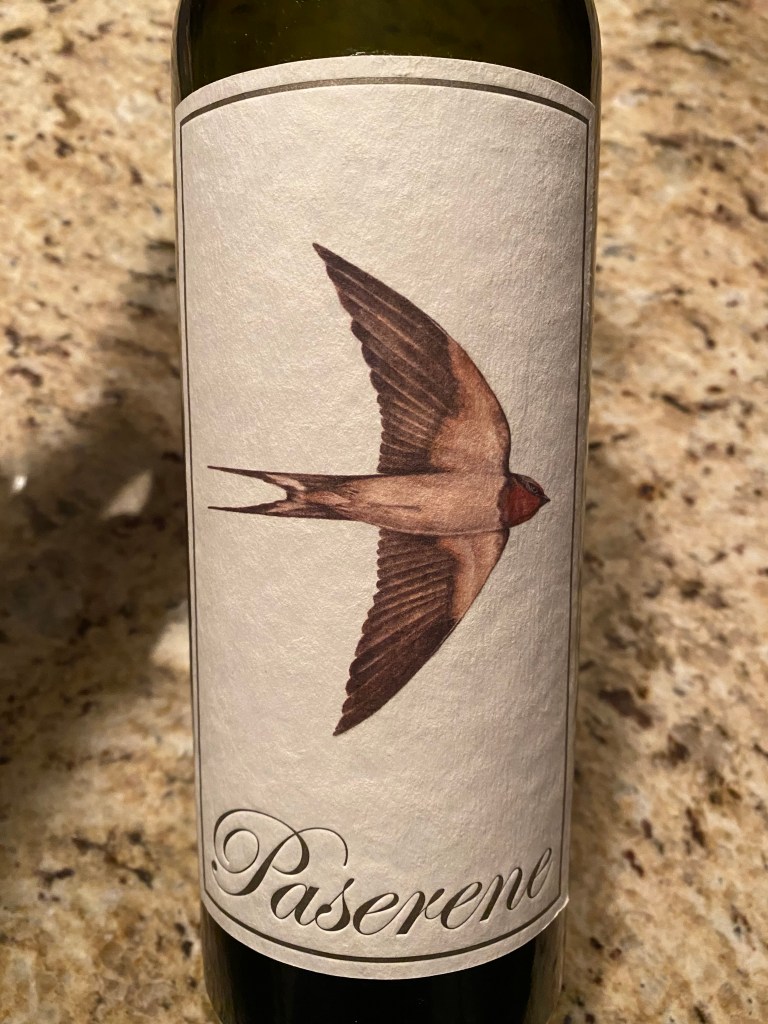
Paserene is a relatively new, small, and family operated winery founded by Martin Smith and Ndabe Mareda with the first vintage in 2013. The winery gets its name from the Latin word “Passeriformes”which is used to describe traveling birds including swifts and swallows, and Martin chose this name in homage of his winemaking ventures that took him around the world before ultimately returning home to start his own winery. Martin is a third generation winemaker from the small town of Ashton, and from an early age grew a passion for wine and knew becoming a winemaker was his dream. He first “worked” in the wine industry during a week-long study at Nuy Winery during school and traveled to Portugal to learn at Amorim Cork, though his broader experiences followed after graduating from Elsenburg Agricultural College with studies in viticulture and winemaking. Post-graduation, Martin worked briefly at Vriesenhof Vineyards before spending five years at Cosentino Winery in the Napa Valley. In 2006 Martin moved to Caldwell Winery and worked alongside renowned winemakers including Tim Mondavi and Philippe Melka, though around 2011 he received an offer to become the winemaker at Vilafonte back in South Africa and returned home.

Today’s Wine: 2016 Marathon

53% Cabernet Sauvignon, 42% Petit Verdot, 5% Carménère; 14% ABV

The 2016 Marathon is medium ruby red in color and moderately transparent. This requires some time to breathe, but once it opens up the nose showcases aromas of blackberry, plum, blueberry, licorice, olive, tobacco, volcanic soil, crushed rock, green herbs, and underbrush. Once in the mouth, this wine displays notes of blackberry, blackcurrant, black cherry, red florals, loamy earth, mushroom, black pepper, cigar box, and dried cooking herbs. This is full-bodied with medium (+) acidity, medium tannins, and a medium (+) length finish.

Price: $40 (though this is tough to get in the US and online shows a fairly broad range from $27-55 overseas). This is a high-quality South African wine that is both delicious and offered at a fair price. The bottle today is shared with me by two great friends who recently visited the winery. Pair this with grilled steak, game, veal, or spicy pork.

The Caymus of Pinot Noir

Today’s Story: Belle Glos

Belle Glos was established in 2001 by Joe Wagner, a fifth generation Napa Valley winemaker who grew up in the vineyards and worked alongside his father at Caymus Vineyards. With great admiration for Lorna Belle Glos Wagner, his grandmother and co-founder of Caymus Vineyards, Joe named his new endeavor in her honor. Though his family previously produced Pinot Noir from Napa Valley fruit between 1972 and 1990, the wines did not display what they thought possible out of the variety and began searching for cooler coastal appellations suited for Pinot Noir. Joe soon thereafter produced his first vintage at Belle Glos from the Taylor Lane and Clark & Telephone Vineyards, the first of several vineyard-designated wines Belle Glos would create. By 2004, Belle Glos added the Las Alturas vineyard in the Santa Lucia Highlands to their portfolio and 2011 marked the first vintage from the Dairyman Vineyard in the Russian River Valley appellation of Sonoma County. Each year, Belle Glos releases the Clark & Telephone, Las Alturas, and Dairyman bottlings in accordance with their initial goal of producing single-vineyard Pinot Noir, however occasionally they offer limited release wines when vintage conditions allow.

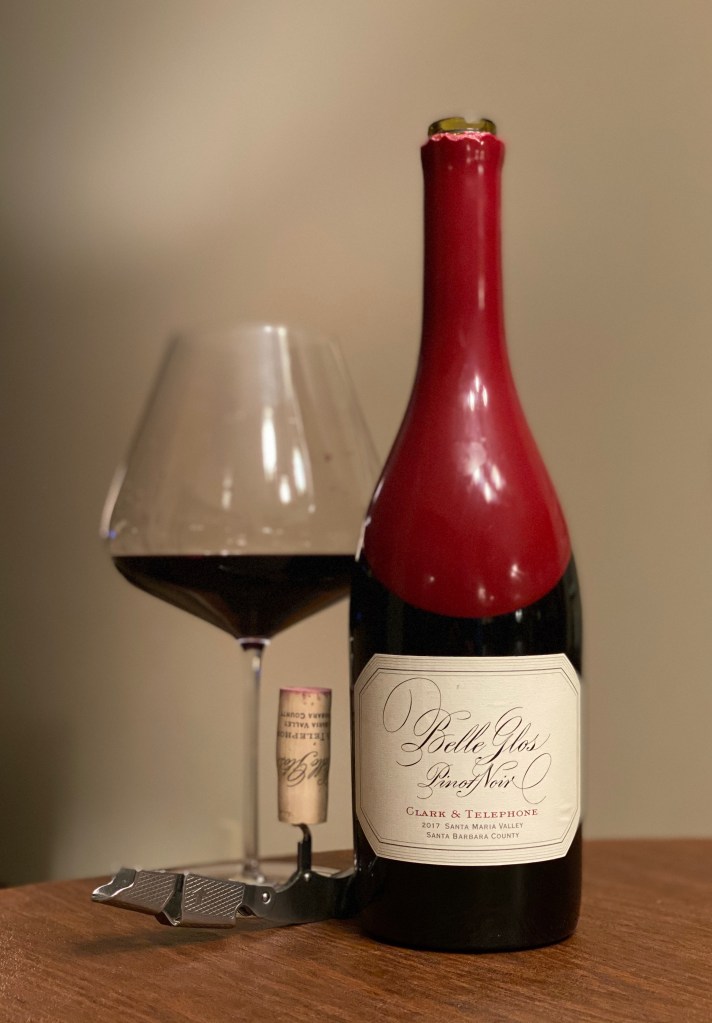
Today’s Wine: 2017 Clark & Telephone Pinot Noir

100% Pinot Noir; 14.6% ABV

The 2017 Clark & Telephone is opaque and rather deep ruby in color, actually almost purple. Given 30 minutes or so to open up, the nose showcases aromas of black raspberry, cranberry, licorice, red and blue florals, leather, cedar, baking spice, and mild chocolate. There is also some heat thanks to the ABV that is unfortunately a bit off-putting. Once in the mouth, the wine offers notes of cherry, strawberry jam, blackberry, sweet tobacco, damp earth, white pepper, cinnamon, coconut, and vanilla. This is medium- to full-bodied with high acidity, medium (-) tannins, and a medium length finish. No doubt this needs a few more years of aging.

Price: $55. This is high for what it is, in my opinion, and seems too heavy-handed by the winemaker. While I’m sure this boozy fruit-bomb would have wide appeal (I nicknamed this the Caymus of Pinot Noir, which is funny because it’s also in the Wagner family), I would skip it for quality options in the $30-40 range. Pair this with grilled chicken, pork, or pasta.

Powerful Napa Cabernet Sauvignon to Please Any Palate

Today’s Story: Stags’ Leap Winery

Stags’ Leap Winery was established in 1893 by Horace Chase and his wife Mary (Minnie) following Horace’s partnership with his uncle W. W. Thompson on procuring the land. Grapes were first planted on this property in 1872 by T.L. Grigsby of Occidental Winery (today it is known as Regusci Winery), however the Chase family took ownership during the late 1880s and started building their manor house in 1888 after Horace and Mary were married. Around this time, the Stags’ Leap name came about and takes inspiration from native Wappo legends telling the tale of stags leaping to escape their hunters. When the manor house was completed in 1890/1891, the Chase family truly started living up to their reputation as lavish hosts to San Francisco high society and other features of the property soon thereafter included wine caves, a swimming pool, cabanas, gardens, a golf range, tennis courts, and 100 acres of vineyards. Though the first vintage and label bear 1893, there is evidence Horace produced wine from the estate shortly after taking ownership and utilized facilities at Occidental Winery to do so.

Though production of wine ramped up at the estate and Stags’ Leap was producing 40,000 gallons by 1895, several years later in 1908 winemaking ceased and, thanks to Prohibition shortly thereafter, did not resume for quite some time. Though Stags’ Leap was later established as a resort and refuge for San Franciscans escaping the cold Bay Area fogs, wine grapes continued to grow on the property and were sold to other wineries in the area. As decades passed, Stags’ Leap is drenched in rumors of bootleggers, mobsters, ghosts, and gypsies with the manor house and cottages even used as a reunion and rest destination for US naval officers under lease by the US Navy in 1944. In 1972, wine production resumed at the estate under Carl Doumani and winemaking has not stopped again. A new era dawned for the estate at this point, advancing with replanting of the vineyards in 1988, the establishment of Stags Leap District in 1989, and the restoration of the manor house in 2016. Today, Stags’ Leap produces elegant wines that display the fruit of this unique AVA and many of them do not break the bank.

The Stags’ Leap estate as it exists today consists of 85 acres broken into 23 unique blocks by soil type and exposure to the sun. Backing up to the rocky Stags Leap Palisades, the vineyards contain large amounts of volcanic rhyolite and tuff blended with subsoil of Bale loam formed by ancient riverbed sediment. An interesting note when thinking of all the rock in this soil is that when the Napa Valley chills at night, heat radiates from the rock and projects this stored warmth on the grapes until the cool evenings dissipate it. Essentially this feature prolongs the ripening process of the Cabernet Sauvignon and produces wines with good sugar and acidity balance. With all of the fruit from this estate hand-picked and hand-sorted, the winemaker Christophe Paubert believes in a meticulous and hands-on approach to winemaking. Christophe attempts to create balanced wines that are both intense yet characterized by soft tannins, allowing Stags’ Leap to appeal to a broad range of today’s Cabernet Sauvignon lovers but lacking on some of that terroir-driven character I look for.

Note: Stags’ Leap Winery is not to be confused with Stag’s Leap Wine Cellars (note the apostrophe placement). Though both wineries are incredibly historical when it comes to Californian winemaking, Stag’s Leap Wine Cellars produced the wine present in the 1976 Judgment of Paris and placed 1st for the red wines (Chateau Montelena, which I reviewed previously, placed 1st for the whites with their Chardonnay). Adding more apostrophe confusion for you, the Stags Leap District where both wineries are located does not contain an apostrophe. Check it out next time you’re in a store with wine from both estates!

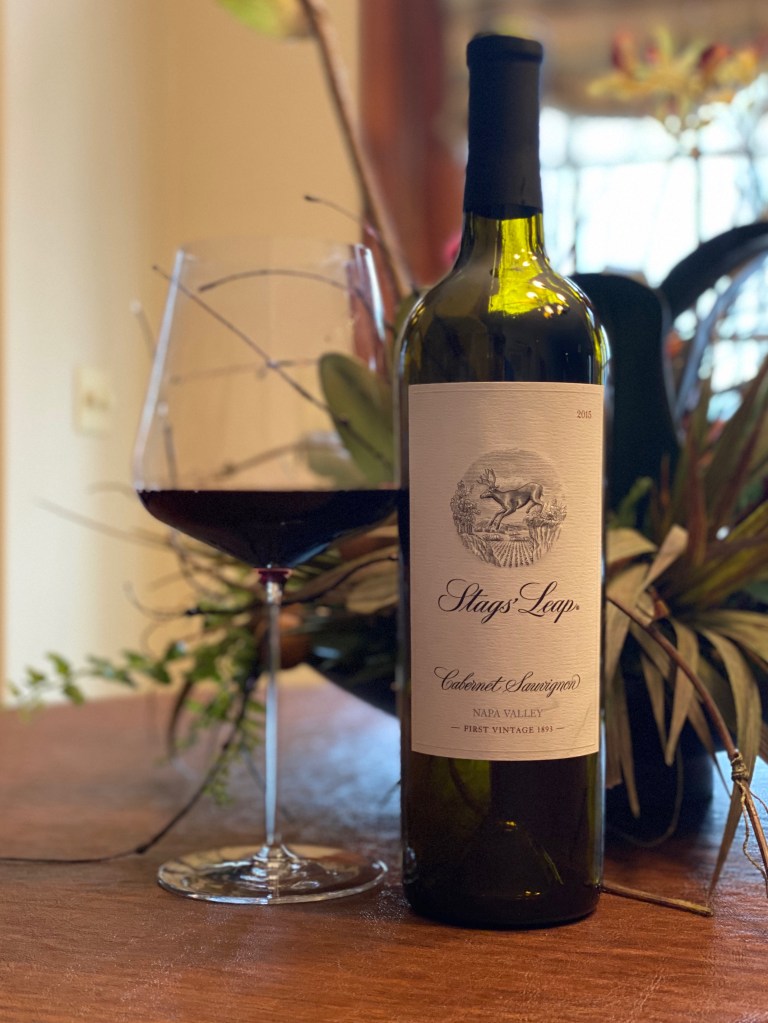
Today’s Wine: 2015 Cabernet Sauvignon

90% Cabernet Sauvignon, 4% Malbec, 4% Merlot, 2% Petit Verdot; 14.5% ABV

The 2015 Cabernet Sauvignon is medium to deep ruby in color and almost entirely opaque. Once this opens up, the nose offers aromas of jammy blackberry, blackcurrant, plum, black cherry, violet, graphite, loamy earth, baking spice, chocolate, and cedar. The nose also displays some heat that I think needs a bit more time to burn off. Once in the mouth, the wine showcases notes of blackberry, blueberry, cassis, licorice, bold tobacco, leather, crushed rock, damp earth, smoke, red and purple florals, and oak. This Cab is full-bodied with medium (+) acidity, supple and rather velvety medium tannins, and a long finish to cap off an overall very bold and fruit-forward drinking experience.

Price: $45. This is always a great value Cab in my opinion and drinks incredibly well compared to other “people pleasing” wines in the same price range or higher. Though this is not my particular style of Cab, I am confident in saying the majority of today’s Cab drinkers would enjoy this bottle. Pair this with steak au poivre, herb roasted lamb, or a quality burger.