Stunningly Natural Zin

Today’s Story: Martha Stoumen Wines

Martha Stoumen Wines is a project dedicated to making natural wines in a patient, environmentally considerate manner. Following her study of traditional agricultural systems and Italian as an undergraduate, Martha worked the vineyards, olive orchard, and winery of a small farm and learning center in Tuscany. These experiences built her foundation as a grape grower due to her time spent mostly in the vineyards, something that would prove instrumental in how she would view winemaking back in the US.

Today, Martha herself leases and farms about half of the vineyards yielding fruit for her wines, while the other half are farmed by multi-generation farmers who share her philosophies. One of the most important words for Martha’s growing philosophy is “patience.” This includes composting rather than using fertilizers, not using insecticides but rather allowing nature to take its course, and working largely by hand. Martha also prunes her vines for a long life ahead rather than focusing on yields like many other producers nowadays.

During her winemaking process, Martha is as hands-off as possible. For example, fermentation is accomplished with only natural yeasts and bacteria present on the skins. She also allows for longer maceration and aging in pursuit of stability of her wines, rather than adding tannin, acid, or stabilization agents. For all of this above and more, I encourage you to visit her website here.

Today’s Wine: 2018 Zinfandel Venturi Vineyard

100% Zinfandel; 12.7% ABV

The wine is medium purple in appearance while being opaque and slightly hazy. Once this opened up a bit, the nose showcases aromas of plum, wild blueberry, perfumed lavender, charcuterie (especially an earthy prosciutto), wet slate, and slight baking spice. On the palate I get notes of jammy plum, black raspberry compote, allspice, black tea, and sweet tobacco. This wine is medium-bodied with high, lip-smacking acidity, medium (+) tannins, and a very long grippy finish. 462 cases produced.

Price: $38. This is most definitely worth a try. The wine is very true (an honest representation of California Zinfandel) and this is quite different from all of the Zins I have tried so far. Really cool wine to pair with bbq pork, bbq chicken, lamb, or even pizza and pasta.

Georgian Traditionalist

Today’s Story: Shalauri Cellars

Shalauri Cellars is a relatively new Georgian producer whose first vintage came in 2013 with releases of Mtsvane, Rkatsiteli, and Saperavi. Shalauri’s goal is to create artisanal wines by utilizing the traditional approach of fermentation and aging in Qvevri. For those not familiar with the Qvevri Method (I was not when I purchased this bottle), it is an 8,000 year-old process of winemaking wherein a massive clay jar (Qvevri) is buried underground to provide a naturally cool and even environment for fermentation and aging. Further, the Qvevri being surrounded by earth helps reinforce the jar which may otherwise break under pressure of the wine. One additional important note about Shalauri is that they are one of few wineries of their small scale bottle aging wine before releasing it commercially.

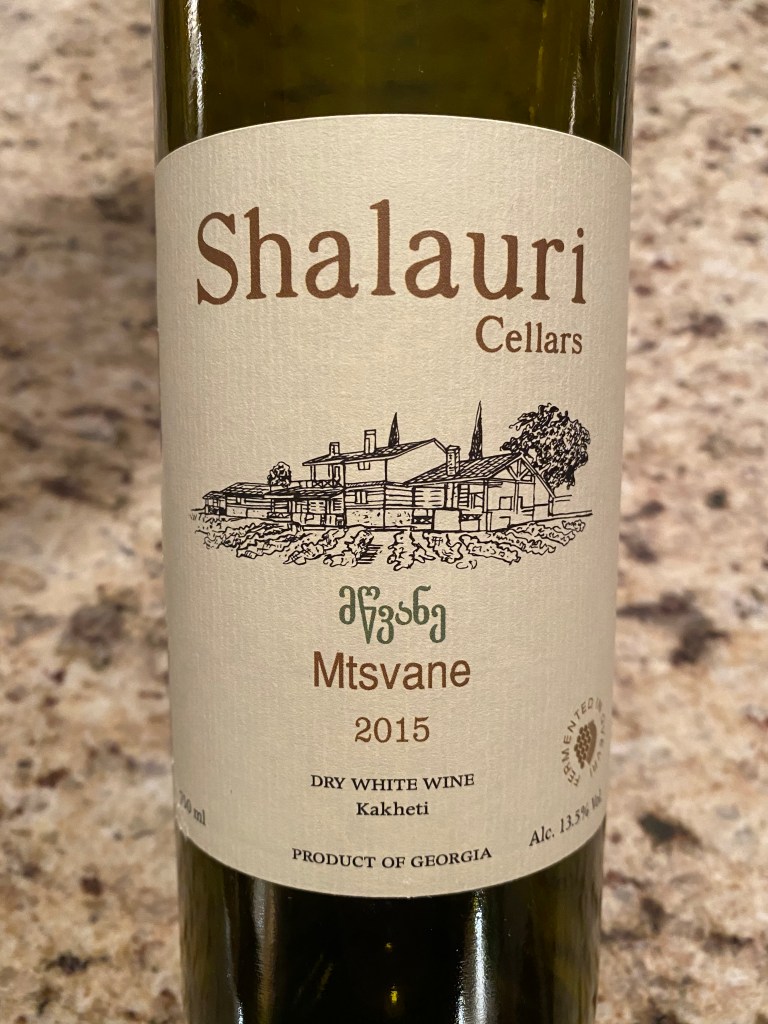
Today’s Wine: 2015 Mtsvane

100% Mtsvane; 13.5% ABV

When I asked for a bottle of wine that would be new to me, the owner of a local wine store steered me toward this Mtsvane. The wine is fermented and aged using the Qvevri Method, which I mentioned above, while seeing extended skin contact of six months. Further, the winemaker tries to interfere with the process as little as possible. I’ve had a few white wines from around the world that pick up tannin and body from prolonged skin contact, but this is my first from Georgia.

In appearance the wine is amber orange with deep yellow variation near the edges of the glass. This is also incredibly transparent, almost acting as a magnifying glass. The nose is somewhat muted, though is dominated by aromas of tangerine, orange zest, honey, marmalade, and hazelnut. Once in the mouth, the wine showcases notes of charred pineapple, crisp red apple, white peppery spice, slight lemon citrus, caramel, and almond. This wine is medium- to full-bodied with medium (+) acidity, medium tannins (thanks to the prolonged skin contact), and a long chewy finish.

Price: $28. I’ve had less expensive wines that achieve the “unusual” effect of tannin in a white wine, but this is very well done and is a cool experience from a country you might not know produces wine. Pair this with mature cow cheese, chicken, or pork. I drank this with a roasted apple cider pork loin.

Thank God Vineyard Leases End

Today’s Story: Domaine Cecile Tremblay

Domaine Cecile Tremblay has a very interesting history, partly because she did not start making wines until 2003 though her family owned vineyards for several generations. Cecile is the great-granddaughter of Edouard Jayer, uncle of the famed Henri Jayer (go Google some of his wines, and perhaps sell your car to buy a bottle). Cecile’s family inherited vineyards from Edouard, though the two generations before her leased out the land to other producers and did not make their own wine. In 2003, however, with the expiration of a lease on three hectares of vines Cecile started making wine under her own label with a plan for further growth. For instance, the Domaine owns roughly 10 hectares of vineyard land and while more of this becomes free from leasing agreements in 2021, Cecile rented or purchased land along the way in communes such as Gevrey-Chambertin.

When Cecile took over her family’s land for her own use, the vineyards were in no standing to produce high quality wines. The producers leasing the land, for instance, used too much fertilizer for Cecile’s taste and utilized herbicides instead of ploughing. Throughout her time thus far as a winemaker, Cecile transitioned to organic farming and many of her practices include biodynamic farming measures as well. During maintenance of her vineyards, Cecile ploughs the soil mechanically and with horses while using copper sulfate to prevent mildew and other fungi.

Similar to her views on caring for her vines, Cecile is very traditional in her winemaking process. She presses her grapes with an old-fashioned vertical press and her wines see only a moderate amount of new wood during fermentation and aging. All of this effort culminates into wines that are refined and elegant, though built for the long haul.

Today’s Wine: 2011 Chambolle-Musigny Les Cabottes

100% Pinot Noir; 13% ABV

This bottle was gifted to me by a great friend, and after opening it today I sure am happy that I recently purchased another one. Right out of the bottle I can tell this will be a bold Burgundy thanks to its medium to deep ruby (but mostly clear) color. The nose on this thing is sort of a roller coaster (of emotions) as I get aromas of black cherry, boysenberry, eucalyptus, mint, purple florals, ground coffee, tobacco leaf, and moist forest floor. This even took on notes of gravel/crushed rock as it sat in the glass. The palate continues this dark theme with notes of wild blackberry and blueberry, licorice, smoked red meat, crushed granite, mocha, and tobacco. Shockingly (for me) full-bodied, this wine shows high acidity, medium (+) tannins, and what seems like an immeasurably long finish. This is one of those wines that makes me want to smell the glass all day, and eat the glass when that last drop is gone.

Price: $110 (though I got lucky and the going rate online is about $300). I would buy this again in my sleep at $110 and I’d even buy it again at $300. This is an exceptional bottle from an “off vintage” and the complexity I get out of this wine is mind-boggling. This will also age gracefully for another 15+ years! Pair this with filet mignon, rabbit, quail, or duck…and if you can accompany these dishes with black truffle you’re in for a real treat.

A Modernist’s Nebbiolo

Today’s Story: Conterno Fantino

Founded in 1982 by Claudio Conterno and Guido Fantino, Conterno Fantino has grown into a somewhat large (~140,000 total bottles annually) producer of Nebbiolo, Barbera, Dolcetto, and Chardonnay. This being said, the winery employs only about 10 people at a given time including Alda, Fabio, and Elisa Fantino who joined over the years. During an expansion for the winery in 2008, Conterno Fantino implemented solar panels and a geothermal system to conserve energy in pursuit of their environmental impact goals, which I will delve into a bit more speaking about the winemaking process.

Throughout harvest and winemaking, Conterno Fantino employs methods such as manual picking of fruit, spontaneous fermentation from indigenous yeasts, and careful use of wood for aging the wine while minimizing sulfites. Taking a step back, the entire farming process is certified organic in an attempt to preserve the land’s biodiversity with a goal of environmental sustainability. All this being said, Conterno Fantino is a great example of modernist Italian winemaking, particularly for Barolo. Namely, Conterno Fantino ages their Barolo in French oak barriques after relatively short maceration and fermentation. While I am not reviewing one of their Barolos today, hopefully I will in the near future.

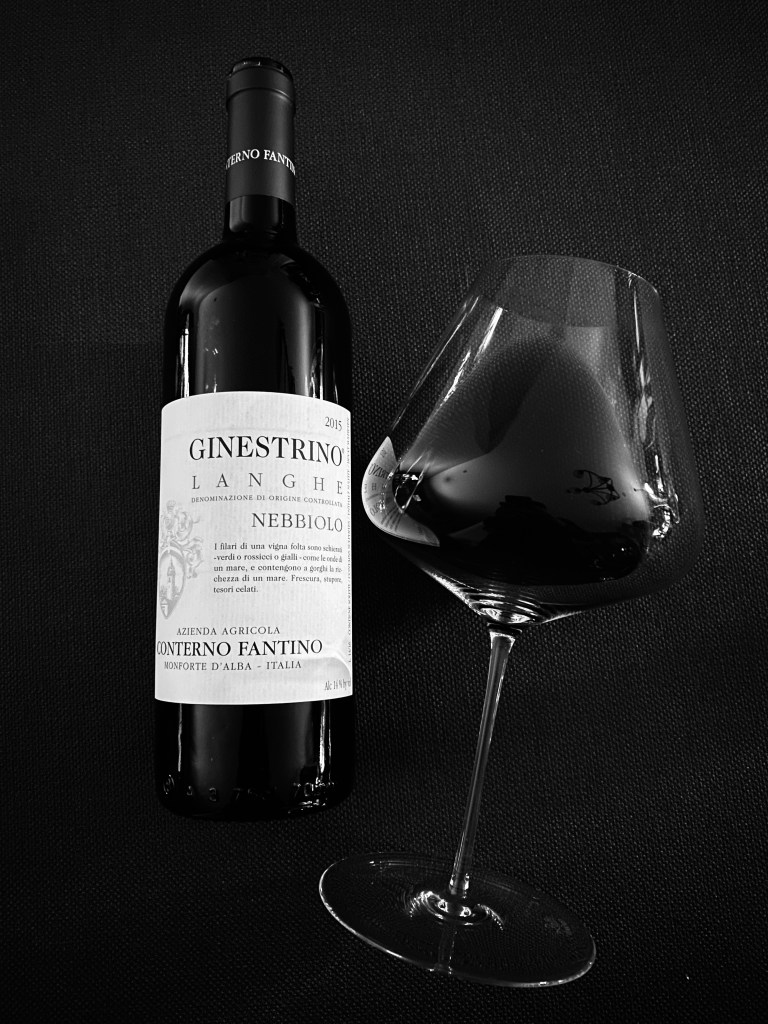
Today’s Wine: 2015 Langhe Nebbiolo Ginestrino

100% Nebbiolo; 14% ABV

I normally don’t pair Nebbiolo with spaghetti (I prefer a Sangiovese such as Chianti), however, when duty calls and this is what I can find, we drink it. The wine is clear, pale to medium ruby in color which is a bit lighter than most young Nebbiolo wines I’ve tried. Once this opens in a decanter, the nose showcases aromas of cherry, strawberry rhubarb, tomato sauce, tar, red licorice, and mixed green herbs. On the palate, we get notes of cherry, dried raspberry, gravel and slate, slightly smokey earth, and tobacco. Overall very easy drinking with not a whole lot to it, this wine is medium-bodied with medium (+) acidity and medium (surprisingly not medium (+) to high) tannins with a medium (+) length finish.

Price: $35. This is a good price-point for entry level, drinkable-while-young Nebbiolo. Though I am a staunch proponent of traditionalist winemaking, this wine could be a great entry for those not familiar with the Nebbiolo grape or Italian wine as a whole. The wine paired easily with red/meat sauce pasta, though would also go well with lightly peppered ribeye, prime rib, or smoked duck.

Must-Try Red from Greece

Today’s Story: Thymiopoulos Vineyards

For several generations, the Thymiopoulos family has owned vineyards in Naoussa, though they typically sold the fruit to other wineries without making their own wine. This changed, however, when Apostolos Thymiopoulos completed his oenology program at the University of Athens and returned to the family vineyards to produce a wine under his own label. Thymiopoulos Vineyards was born and their first wine released in 2004, becoming a successful bottling throughout both Greece and Europe as a whole.

Like many producers in the Old World, Apostolos farms his vineyards in a very traditional manner. He limits or does away with chemical use and many of his practices fall under biodynamic farming norms. Apparently, Apostolos even borrows his neighbors’ cows to mow the grass after harvest in the vineyards (source). Apostolos owns several dozen vineyards, and in order to help care for them all he enlists people from his village with vineyard experience for help. This allows him to foster a unique bond within his community, as well as provides him the opportunity to know each vineyard like the back of his hand.

Today’s Wine: 2016 Rapsani Terra Petra

50% Xinomavro, 35% Krassato, 15% Stavroto; 13.5% ABV

This wine came recommended to me thanks to one of the owners of a local wine store. In appearance, the wine is a clear, pale ruby color. The nose on this wine is an absolute thing of beauty, one so aromatic and crisp I felt like I got slapped in the face (but in a good way). Right out of the gates I got aromas of cherry, strawberry jam, very clean florals reminiscent of red rose and white wildflower, cedar, leather, mild and slightly sweet tobacco, and a hint of cinnamon. In the mouth, the wine showcases notes of sour cherry, wild strawberry, home-garden-grown cherry tomatoes, rocky-soil-esque minerality, faint vanilla, and a touch of oak. The wine is overall very dry and is medium-bodied with mouthwatering high acidity, medium tannins, and a very long finish. This is drinking beautifully (and is one of my favorite wines in recent past) but I really want to try it again in three years.

Price: $35. I’ve only had a couple Greek wines so far, but this is a screaming value. The nuances and absolute shock I received from the profoundly beautiful bouquet of aromas says it all. Pair this with chicken, pork, or cheese-based pastas.

Small Batch Syrah

Today’s Story: Lillian Winery

This should be a fairly short and easy read today, as I already talked about the history of Lillian Winery in my post Sensual Syrah a few weeks back. Long story short, Maggie Harrison worked with the Krankl family at Sine Qua Non, and Manfred Krankl encouraged her to start her own Syrah endeavor. Lillian was born in 2004 from that encouragement.

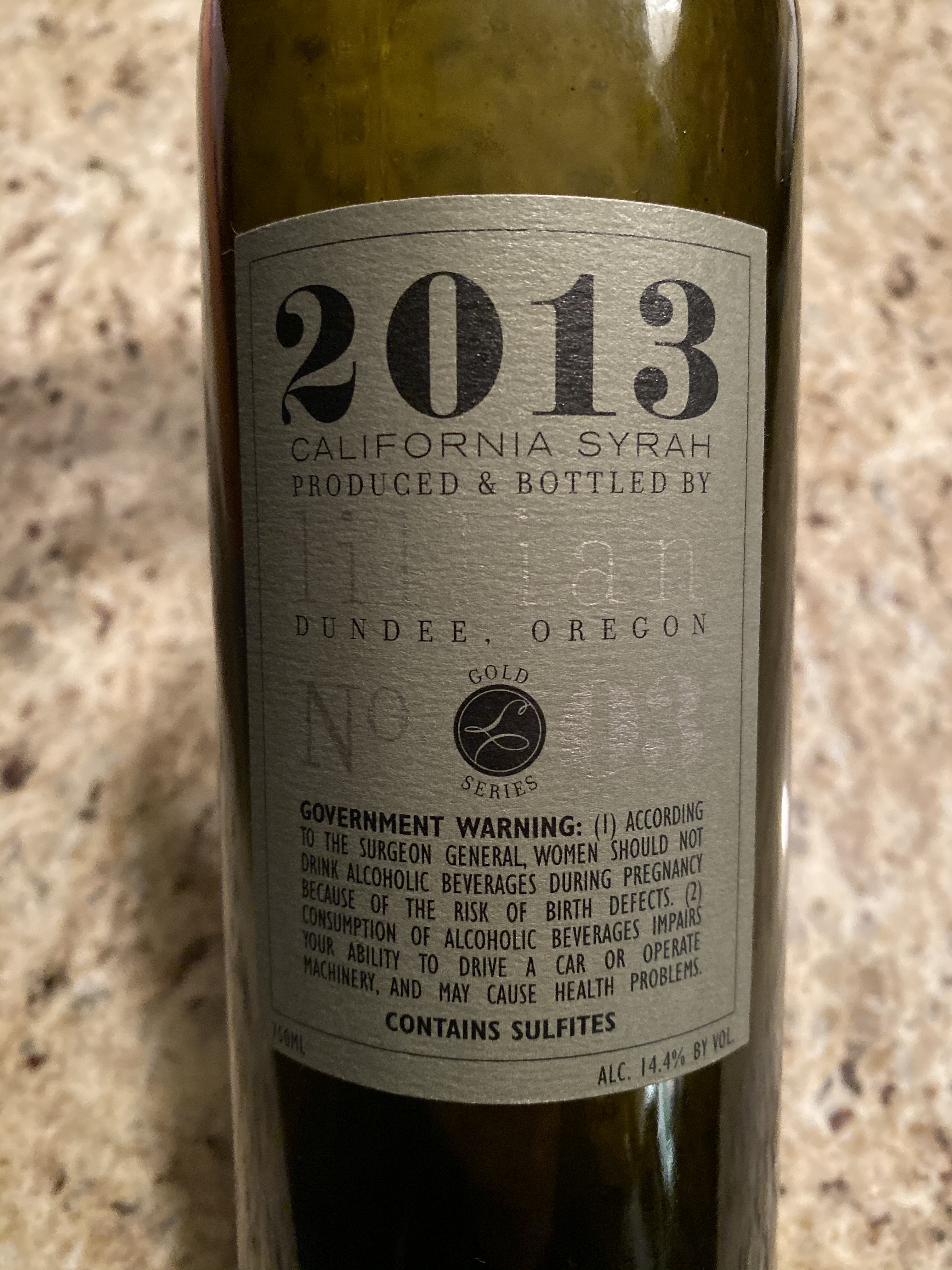
The wine I reviewed several weeks ago was a 2013 Lillian Syrah, while today’s wine is the 2013 Gold Series Syrah. While the two wines are obviously similar in style and overall profile, the Gold Series is a smaller production bottling which Maggie says comes from “a small number of barrels that speak with a different voice.” In other words, the Gold Series comes from barrels with completely different expressions than the rest of the wine bottled as the Syrah. While Maggie will blend some of these barrels with the main Syrah to add complexity, she bottles them on their own to portray a wine that is “singularly exquisite.”

Today’s Wine: 2013 Lillian Syrah Gold Series No. 03

100% Syrah; 14.4% ABV

With the 2013 Lillian Syrah still fresh in my head from a few weeks ago, I thought it would be very interesting to open this Gold Series for comparison. Based on the youth of this wine and my experience with the 2013 Syrah recently, I decanted this bottle for five hours. The wine is deep, opaque purple in color with moderate staining on the glass. On the nose I get aromas of plum, cassis, mint, cinnamon, crushed stone, and loamy earth. Once in the mouth, the wine boasts flavors of blueberry, black cherry, rocky soil, granite, and smoke. Full-bodied with medium (+) acidity, surprisingly refined yet medium tannins, and a long, bold finish. Much like the standard Syrah, I’m excited to try this one again in another five years.

Price: $100. Again, due to Maggie’s history with Syrah, the precision of her wines, and the rarity of these bottlings this is worth the price. Pair this with a leg of lamb, bbq ribs, or a burger.

Rockstar Value from the Loire Valley

Today’s Story: Domaine des Roches Neuves

Domaine des Roches Neuves was founded in 1992 by Thierry Germain following his move to the Loire Valley from his native Bordeaux. At 23 years old, Thierry soon met Charly Foucault from Clos Rougeard who would become an inspiration behind some of his winemaking practices. Thierry converted his domaine to biodynamic viticulture, as well as being certified organic, in an effort to let his vines guide him rather than play a heavier hand that removes truth and transparency from terroir to bottle. This practice helps Thierry’s wines showcase vibrant ripe fruits (thanks in addition to relatively early harvesting) with incredible purity while avoiding rustic vegetal notes. Also, his red wines do not typically have high tannin but rather integrated, soft tannins conducive to drinkability.

When harvesting his fruit, Thierry practices very traditional methods such as hand harvesting and hand sorting at the winery. Further, all of his wines are fermented with natural yeasts in no new oak barrels or tanks. For the wine I am reviewing today, grapes are 100% de-stemmed and fermented in conical tanks. There is a great overview of Thierry’s history and practices here, as well as an overview of his wine portfolio. The domaine’s website also contains fact sheets and an overview of the history and people here.

Today’s Wine: 2015 Les Mémoires

100% Cabernet Franc; 13% ABV

I picked this up based on a recommendation from an employee at one of my local wine stores. He believes that Thierry Germain is making some of the best wine in Saumur Champigny, and while I need to explore more offerings from the region this already seems tough to beat. The wine is a deep ruby color, though I almost want to call it purple especially near the edges of the glass. The nose showcases aromas of crunchy blackberry, steel cut oats, chocolate, cigar box, damp forest floor, violets, slight bell pepper, and mineral. Once in the mouth, we get flavors of tart blueberry, blackberry, pomegranate, loamy earth, pepper, and limestone minerality. This is medium- to full-bodied with medium (+) acidity, medium tannins, and a long finish. Give this a few more years of bottle age, though if you can’t wait it is drinking well with some air.

Price: $70. This is a rockstar wine well worth the price tag, especially compared to some of their neighbors. The traditional style does a beautiful job portraying the “place,” and this wine comes from 110+ year old vines. Pair this with beef, pork, roast chicken, duck, or lamb.

Refined, Aged Burgundy

Today’s Story: Joseph Drouhin

Joseph Drouhin is a historic producer in Burgundy that found its start in 1880. Joseph, a 22 year old from Chablis, moved to Beaune and started his own wine company with the aim of providing high quality wines. His son Maurice, however, shifted the focus to estate grape growing and winemaking by purchasing land in Clos des Mouches and Clos de Vougeot, amongst other appellations. Robert Drouhin, who succeeded Maurice in 1957, ties most with Joseph Drouhin’s state as it sits today. Robert acquired a great deal of vineyard land, including in Chablis, and was one of the first producers who stopped using pesticides and other chemicals in Burgundy. Today, Robert’s children Philippe, Véronique, Laurent, and Frédéric carry on the legacy of this great producer with the same founding principles of creating high quality, true to form wines at heart.

Today, Joseph Drouhin is one of the largest estates in Burgundy consisting of 78 hectares (193 acres) throughout Chablis, Côte de Nuits, Côte de Beaune, and Côte Chalonnaise. Most of the wines are of 1er Cru or Grand Cru status, with vineyards planted to both Pinot Noir and Chardonnay. In addition to their own vineyard land, Drouhin purchases some fruit from other established vineyard owners who they have longstanding relationships with. This allows them to produce a broader assortment of wines for distribution throughout the world.

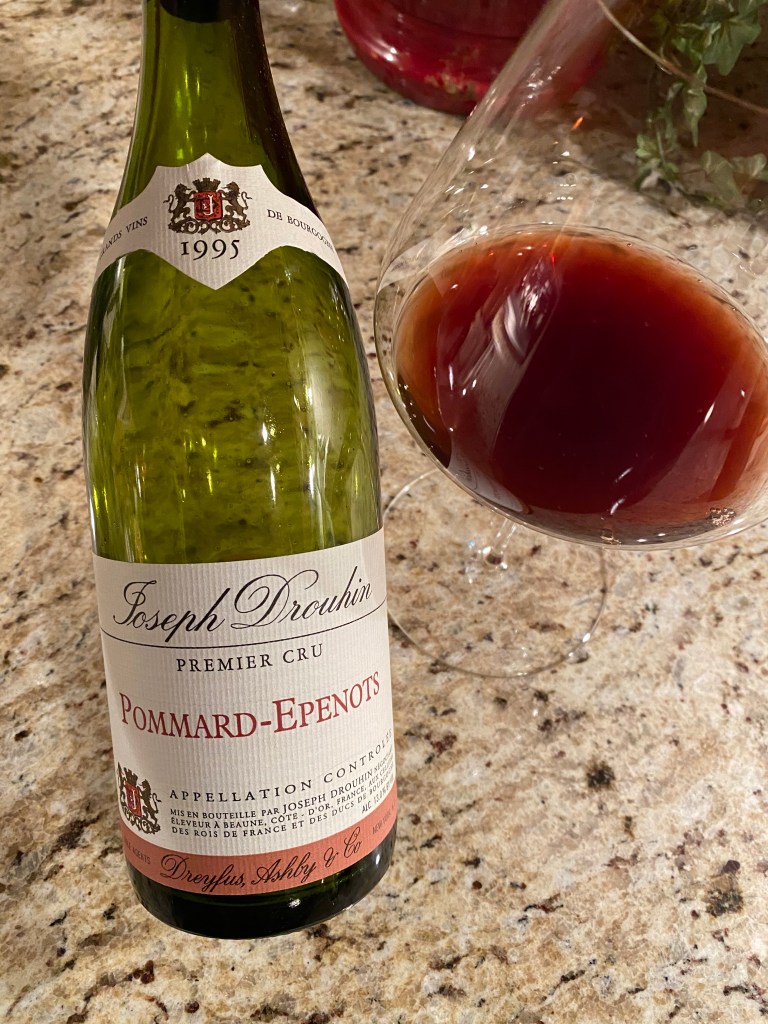
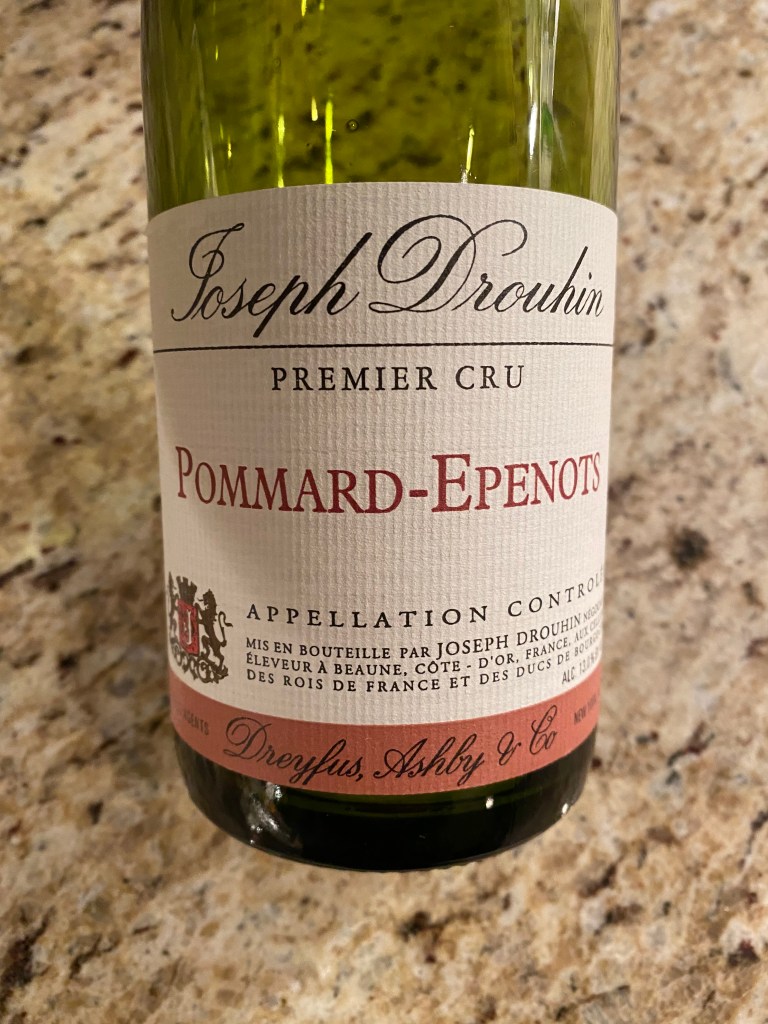
Today’s Wine: 1995 1er Cru Pommard-Epenots

100% Pinot Noir; 13% ABV

In appearance the wine is cloudy pale ruby turning garnet near the rim. This threw very fine sediment that snuck through the filter, however I did pour some through cheesecloth which cleared it up. On the nose, we get aromas of baked cherry, overripe cranberry, dried green herbs, sous bois, cedar, and tobacco. Once in the mouth, the wine showcases notes of tart cherry, red licorice, wet stone, smoked red meat, and green underbrush. Holding up remarkably well, this is medium-bodied with high acidity and fully integrated light tannins into a medium length finish.

Price: $150. Really cool experience finding and drinking aged Burgundy. Pair this with duck, lamb, or a burger.

Fit for a King

Today’s Story: Blankiet Estate

Blankiet’s roots start with Claude and Katherine Blankiet, a couple who spent years searching for land conducive to grape growing on the western foothills of the Mayacamas Mountains. Finally, in early 1996, an agent working with the Blankiet family showed them an undeveloped property above the famous Napanook vineyard (and Dominus Estate) and the Blankiets purchased the land on sight. From the onset of their search, Claude and Katherine desired to create world-class, high-quality, small production Bordeaux style wines and now, with ownership of the land, set right to work.

During development of the vineyards, the Blankiets brought in famed viticulturist David Abreu and winemaker Helen Turley for their expertise. The terroir of Blankiet consists of three volcanic knolls with alluvial deposits between them thanks to water flowing down from the mountains. The vineyards are broken into four sections, each with a unique subsoil and microclimate, and they used root stocks from First Growth Bordeaux estates to get the ball rolling. I encourage you to explore their website https://www.blankiet.com/ for more, as I’d like to talk about my visit to the winery for the remainder of this post.

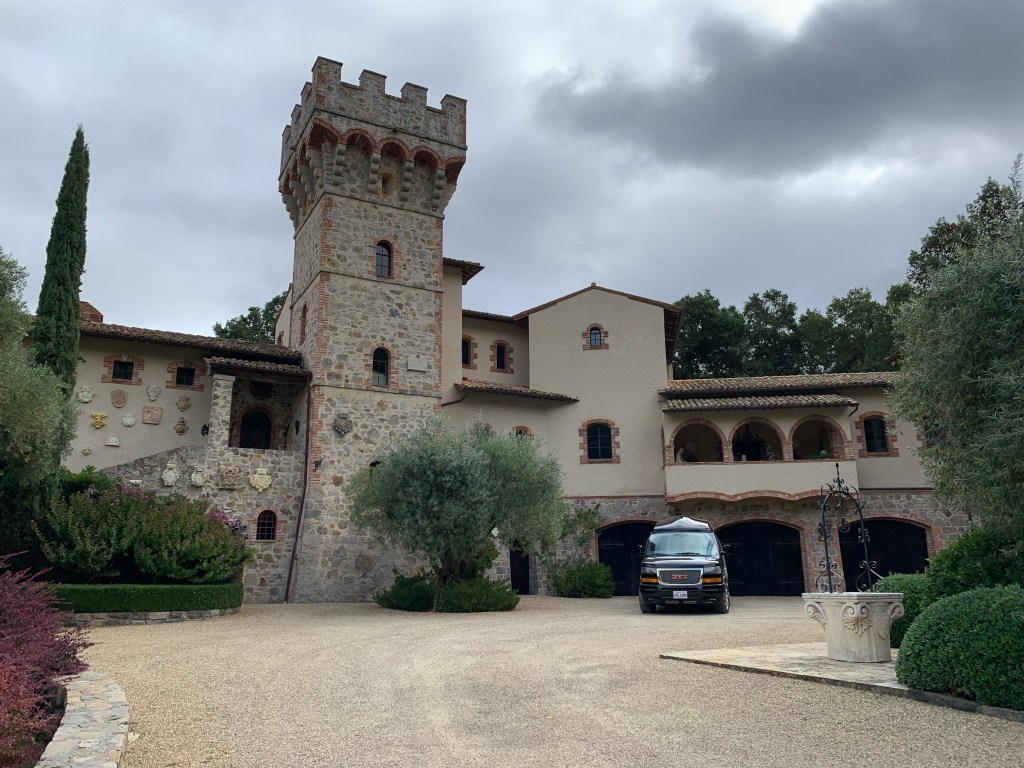
I was fortunate to visit the winery this past September, and we arrived slowly by way of a long, winding gravel road up into the hills to the Blankiet gate. Once inside, our host Patrick greeted us and walked us through the vineyards where we had an opportunity to taste grapes off the vine. Fortunately, workers were sorting grapes while we were there so we got to see them using dual optical sorters in addition to the classic hand sorting many of us picture. Before walking into the caves, Patrick shared some juice that was beginning its fermentation process from one of the tanks.

Once in the caves, Patrick showed us the barrels they use and discussed the process of fighting evaporation as the wine ages. Unlike many wineries, Blankiet does not fill evaporation in their barrels with sulfur dioxide but rather refills the barrel with more wine. This practice fits well with their goal of crafting wine that is true to form and of superior quality.

After the cave tour, we drove further uphill to the Blankiet family home to do what we came for: taste wine. Patrick guided us through a tasting of five wines accompanied by cheese, charcuterie, and crackers while also giving us a sneak peek tasting of two wines yet to be released. Keep an eye out for these two upcoming wines, as they were quite delicious and while I’m keeping them secret now I think you will know exactly what I’m talking about when they launch.

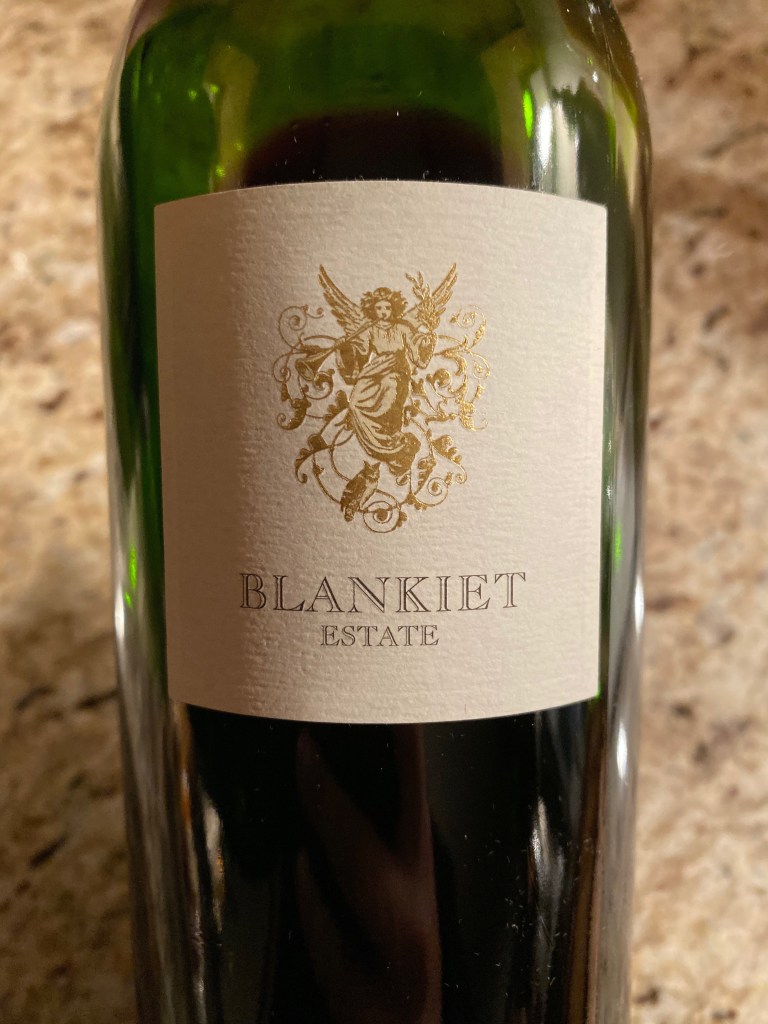
Today’s Wine: 2014 Blankiet Estate Paradise Hills Vineyard

85% Cabernet Sauvignon, 10% Merlot, 3% Petit Verdot, 2% Cabernet Franc; 14% ABV

I had an opportunity to taste several Blankiet wines during my visit this past September (including two special wines not yet released), but figured it prudent to open a bottle now to review for my site. This wine is medium purple/ruby in color and surprisingly transparent. The nose showcases aromas of blackberry, blueberry, redcurrant, raspberry, gravel, mild tobacco, and oak. The nose is rather tight due to its youth and either needs a ton of air or 5-7 more years of bottle age. On the palate we get notes of black cherry, cranberry, jammy strawberry, crushed stone almost chalky in nature, blood, and ground cooking herbs. Full-bodied with mouthwatering high acidity, medium (+) tannins, and a long black fruit compote finish. This is already a wonderfully elegant wine but needs time to bring out some of the complexities. 840 cases produced.

Price: $200. This is not your everyday bottle, though it is a fantastic bottle of wine for a celebratory occasion. After visiting the winery and seeing how much care, precision, and hard work goes into each bottle I can comfortably recommend the wine. Pair this with beef or lamb.

From My Visit:

Tasting room at Blankiet Estate. Visited September 27, 2019.
Blankiet family home, with tasting room in the lower level.

Cult Cali Pinot

Today’s Story: Williams Selyem

Williams Selyem is another winery with a homegrown, almost comical, origin story. During the 1970s, Burt Williams received several tons of free grapes from a grower with an abundance of fruit that would otherwise most likely go to waste. With his friend Ed Selyem, in 1979 the pair started making wine at Burt’s house over the weekends with Zinfandel grapes from the Martinelli family. Though the two set out to make wine only for themselves as a hobby, Burt and Ed fully devoted to the endeavor in 1981 and named their winery Hacienda del Rio.

They bottled their first vintage in 1982 and released it commercially in 1983, however Hacienda Winery quickly sent a cease and desist letter that resulted in removal of “Hacienda” from Burt and Ed’s labels. In 1984, Burt and Ed moved production to a nearby garage in Fulton and released the first vintage with the now famous and globally-recognized Williams Selyem label.

Williams Selyem picked up steam very quickly for a new winery in California. In 1985, they released their first vineyard-designated Pinot Noir from the Rochioli Vineyard and in 1987 that wine won the California State Fair Sweepstakes Prize for top red wine. With its status blown open, Williams Selyem grew a cult following and they needed to create a waitlist that immediately spanned 2-3 years. In 1989, Williams Selyem relocated to the Allen Ranch facility on Westside Road and in 1992 Burt and Ed quit their day jobs to focus 100% on their wine.

Six years later, however, in 1998 Burt and Ed sold Williams Selyem to John Dyson who was a longtime customer. John and his wife Kathe still own the winery today, and throughout their proprietorship greatly expanded winemaking by adding estate vineyards along the way. In my opinion, their crowning and historic achievement came in 2009 when Wine Enthusiast Magazine rated the 2007 Williams Selyem Litton Estate Pinot Noir 100 points. This was the first North American Pinot Noir in history to achieve a perfect score by a major wine publication, and while I do not buy wine simply based on score and have my issues with the scale, I can appreciate the historic achievement.

Today’s Wine: 2014 Pinot Noir Ferrington Vineyard

100% Pinot Noir; 13.4% ABV

Over the years, I’ve had a number of different wines from Williams Selyem (both red and white) but this is my first from the famous Ferrington Vineyard. Today’s Pinot is pale/medium ruby in color and fairly transparent. On the nose are aromas of dried strawberry, crushed cranberry, mint, aged leather, gravelly road after a rainstorm, and a hint of oak. The palate showcases notes of ripe red raspberry, strawberry jam, cinnamon, lightly scorched earth, and slate. Medium-bodied with medium (+) bright acidity, medium (-) tannins, and a long mouthwatering finish.

Price: $100, getting up there with the Kosta Browne I reviewed about two weeks back. This is an exceptional quality Pinot that I highly recommend (I love every wine I’ve had from them), though there are some great options for half the price. Pair this with salmon, chicken, pork, or charcuterie.