Grower Champagne of the Utmost Quality

Today’s Story: Champagne Lilbert-Fils

Champagne Lilbert-Fils is a small, family-owned and operated grower Champagne located in the village of Cramant in the Côte des Blancs. Though written records show the Lilbert family cultivating vines there back to 1746, it is suspected they have deeper roots to perhaps the early 1700s. Bertrand Lilbert runs the estate today, after he joined his father Georges during the 1990s and took the helm in 2005. The family only owns 3.5 hectares of all Grand Cru vineyards with roughly 60% in Cramant, 30% in Chouilly, and 10% in Oiry. These holdings are planted to 100% Chardonnay with an average vine age of 45 years for the exclusive production of Blanc de Blancs. Bertrand practices sustainable viticulture, makes his wines in stainless steel vats, and they do experience malolactic fermentation. Bertrand still riddles all of his bottles by hand, and they are disgorged without freezing the plug of lees in the neck of the bottle. Dosage remains pretty low in sugar because Bertrand prefers to preserve acidity over ripeness, and the resulting wines are filled with intense mineral and chalk characteristics alongside crisp and vibrant citrus and orchard fruit. Total production is typically a measly 2,300 cases per vintage, making these wines very difficult to find.

Today’s Wine: NV Grand Cru Blanc de Blancs

100% Chardonnay; 12% ABV

The NV Grand Cru Blanc de Blancs is transparent pale gold to a medium yellow in color, with incredibly delicate effervescence. On the nose, this gorgeous and utterly complex Champagne emits aromas of green apple, golden pear, a hint of lemon, white florals, white truffle, delicate green herbs, brioche, lees, and crushed stone minerality. The knock-your-socks-off palate then picks up the reigns with yellow apple skins, crisp pear, white peach, lemon citrus, honeysuckle, toast, cheese rind, toasted almond, chalk, and saline mineral. This is light- to medium-bodied and very dry (dosage 5g/L) with racy high acidity and a long finish that is both tantalizing and mouthwatering. My bottle was disgorged in Autumn 2017 and is a blend of 50% 2014 vintage, 35% 2013 vintage, and 15% Reserve Wines.

Price: $60. This is an incredible value Champagne and one that I buy whenever I find it (which isn’t easy because it is super small production with an almost cultish following). I’ve had these wines on 4 or 5 occasions and every time they punch up with the “big dogs.” Buy some if you can.
Fun but Beautiful Italian “Orange” Wine

Today’s Story: Vodopivec

Vodopivec is a boutique winery established in the Carso region of northeastern Italy by Paolo Vodopivec. The estate consists of six hectares of vineyards, planted entirely to the Vitovska variety and farmed adhering to organic principles with the use of some biodynamic methods. Simply put, Paolo views himself as an observer and never irrigates his vineyards, transports top soil, or uses synthetic chemicals, herbicides, or pesticides. In a given vintage, Paolo will produce one to four wines depending on conditions, though he seems to average one to two wines per vintage. Paolo is not a man to force his vines into production either, and may skip a vintage if the conditions are poor (the rainy 2008 vintage, for example, yielded no wines). Paolo is minimally invasive in the cellar, pressing with a manual basket press and allowing his wines to naturally ferment on the skins in Georgian amphora. The wines age in large Slavonian oak botti for 2-3 years, then spend another year or so in bottle before release. While production varies vintage to vintage, Paolo will generally only reach 11,000 bottles (about 916 cases) at maximum.

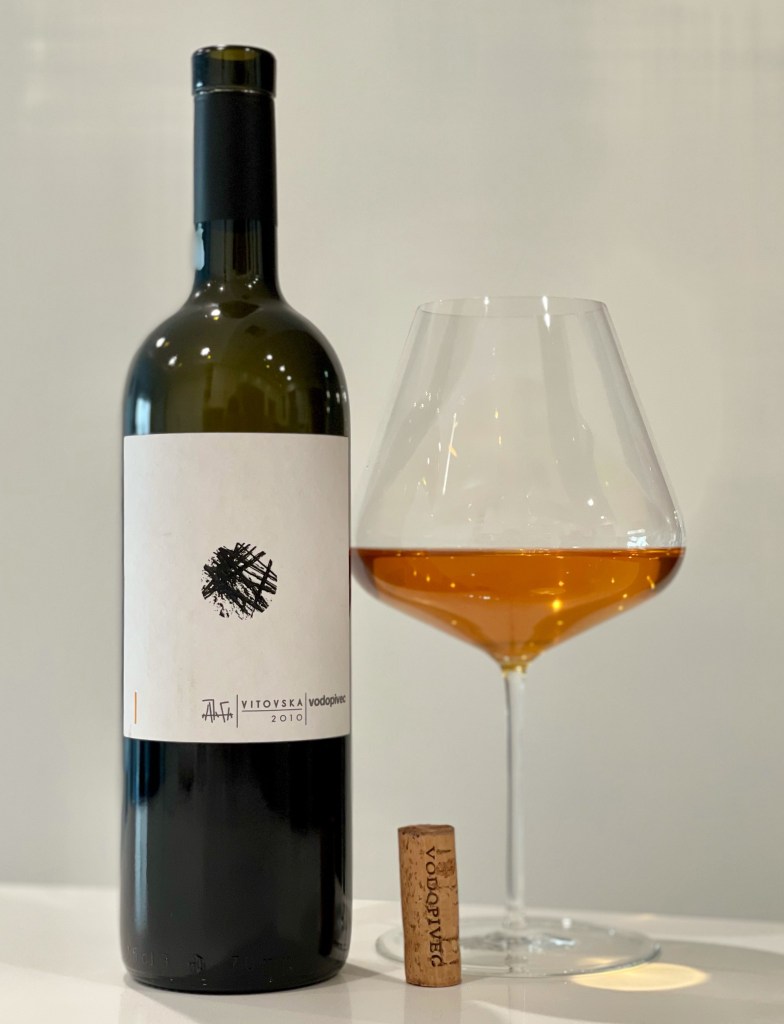
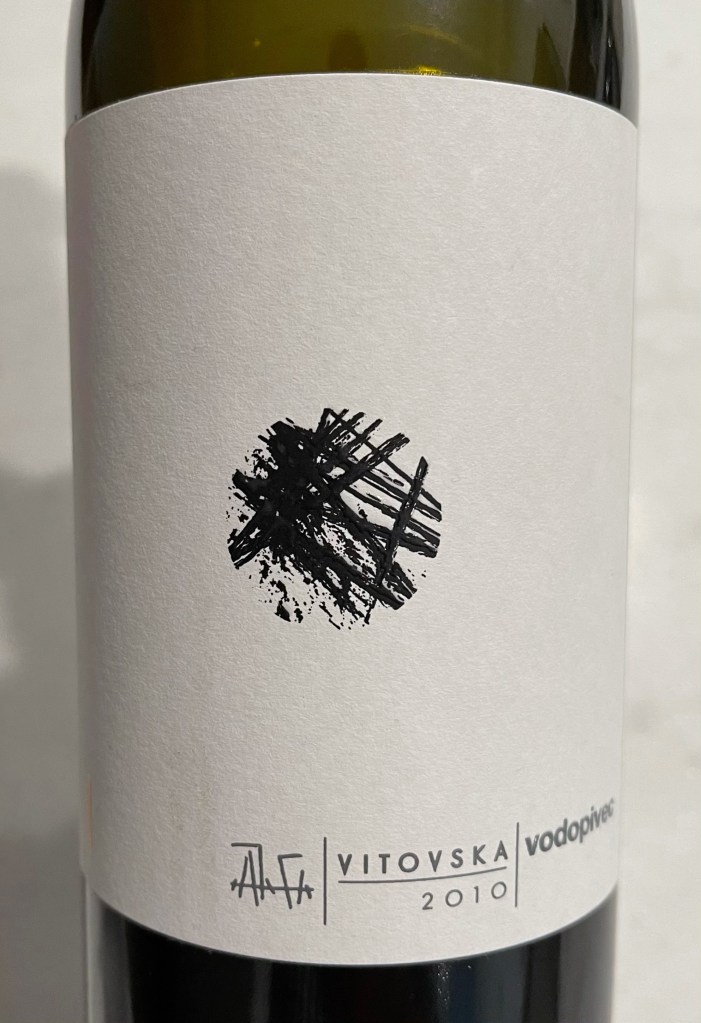
Today’s Wine: 2010 Vitovska

100% Vitovska; 12.5% ABV

The 2010 Vitovska is medium amber in color. It’s transparent but a touch hazy due to small amounts of sediment in the bottle, but you can filter this out. Aromas are of medium intensity, with the nose showcasing notes of ripe apricot, peach, tangerine, mandarin orange, white florals, dried thyme, basil, wet stone, and a hint of crushed rock minerality. Meanwhile the flavors are also of medium intensity, with the palate offering notes of dried apricot, orange zest, peach, honeysuckle, dried green herbs, and saline mineral. This dry “orange” wine is light- to medium-bodied with medium (+) acidity, light tannins, medium alcohol, and a long finish. Destemmed and fermented in Georgian amphora with 6 months of skin contact.

Price: $60 (I paid $35). This is a very fun, pure, and well-made wine that, while I haven’t had enough wines like it to determine a value proposition, I think is worth trying. The balance and sense of place coming from the glass is both very impressive and inviting. I plan to buy more, especially at $35.

Benchmark Pinot Noir From a Pioneer in South Africa

Today’s Story: Hamilton Russell Vineyards

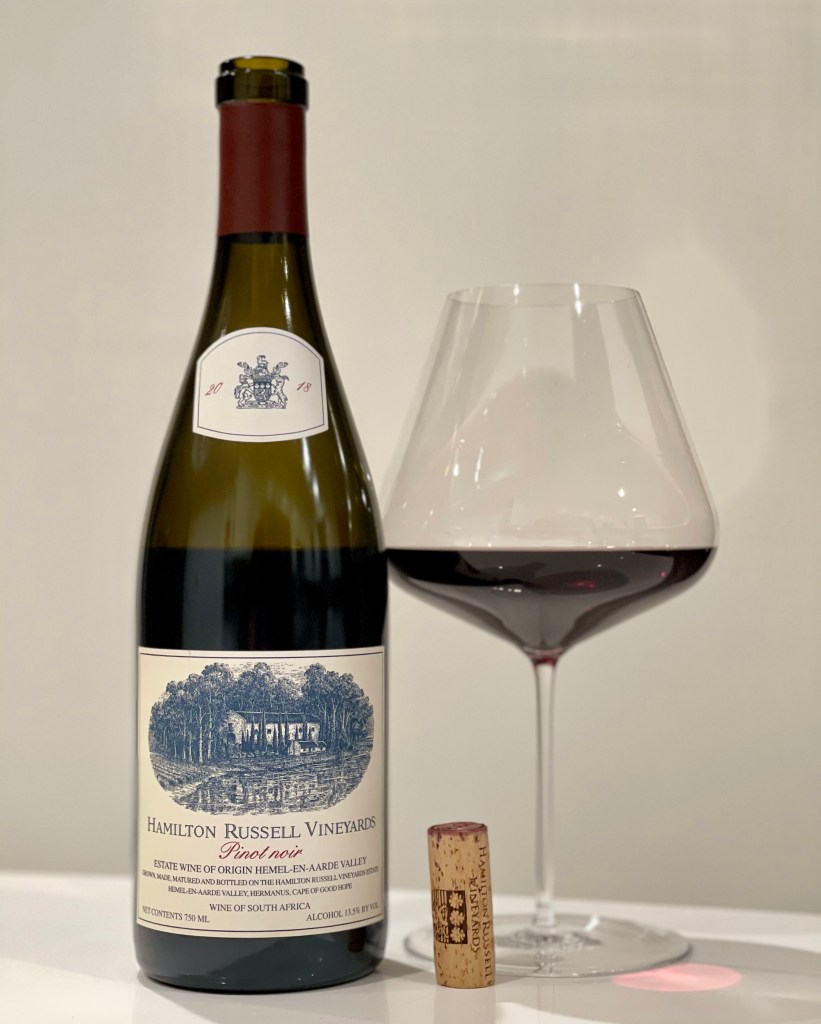
Hamilton Russell Vineyards is a family-owned and operated wine estate located in the Hemel-en-Aarde Valley appellation of South Africa. The estate was established in 1975 by Tim Hamilton Russell, who purchased 170 hectares of undeveloped land only 2 miles from the Atlantic Ocean with the intent of producing world class wines in one of South Africa’s coolest climates. In 1991, however, Tim’s son Anthony took over and transitioned the property to only Pinot Noir and Chardonnay production. He also registered Hamilton Russell as an estate to signify they will only be making wines with owned fruit. In 1994, Anthony purchased the property himself and conducted a soil study which identified 52 hectares of optimal stony, clay-rich, and shale-derived soil which all plantings call home today. Anthony and his wife Olive own the estate, working alongside winemaker Emul Ross and viticulturist Johan Montgomery to produce terroir-driven examples of Pinot Noir and Chardonnay.

Production numbers are relatively small thanks to very low yielding vines, with the most recent vintages producing 2,438 cases of 2018 Pinot Noir and 2,852 cases of 2019 Chardonnay. I would say these wines are worth seeking out though if you prefer the wines of Burgundy, as these are fantastic representations of their terroir made in a similar style. To view the offerings or learn more about Hamilton Russell, check out their website here.

Today’s Wine: 2018 Pinot Noir

100% Pinot Noir; 13.5% ABV

The 2018 Pinot Noir is pale to medium ruby in color. Given about 45 minutes in the glass, the wine blossoms with aromas of pronounced intensity which include cherry, black raspberry, red rose, leather, cured meat, barnyard, grilled herbs, gravel, a hint of asphalt, menthol, and clove. Meanwhile flavors on the palate are of medium (+) intensity, showcasing notes of dried cherry, stemmy strawberry, tart raspberry, red plum, tobacco, worn leather, tea leaf, mild vanilla, and clove. There’s some gorgeous bright minerality there as well. This dry red is medium-bodied with medium (+) acidity, medium (-) tannins, medium alcohol, and a medium (+) length finish. Rather Burgundian in style and will only be better in 3-5 years.

Price: $45. Though not an inexpensive Pinot Noir, I think this offers very solid value given its complexity, balance, intensity, and promise for the future. Hamilton Russell is a benchmark producer of Pinot Noir in South Africa, and they’re surely demonstrating it with this bottling.

Refreshing Etna Bianco With a True Sense of Place

Today’s Story: Tenuta delle Terre Nere

Tenuta delle Terre Nere is a somewhat young but highly regarded winery and estate founded by Marc de Grazia on the northern slopes of Mount Etna in Sicily. Tenuta delle Terre Nere produced its first commercial vintage in 2002, and the estate focuses on local Sicilian varieties with Nerello Mascalese and Carricante of principal importance. The estate today consists of about 55 hectares, of which 27 hectares are planted to vines in production and 7 hectares are breeding. The holdings are broken up into 24 parcels across six crus and range in elevation from 600 to 1,000 meters above sea level, with an ultimate plan to reach 38 hectares planted to vine. Aside from the 7 hectares recently planted, Terre Nere works with vines aged 50 to 100 years old, and the estate even has one parcel that survived phylloxera and is 130-140 years old! Marc de Grazia has long been a proponent of single cru Etna wines, so he vinifies, ages, bottles, and labels each of his crus individually. These include Calderara Sottana, San Lorenzo, Bocca d’Orzo, Santo Spirito, Guardiola, and Feudo di Mezzo. All viticulture has been organic since Terre Nere was established (certified in 2010), and the prior owners farmed their vineyards organically for the previous two generations as well. Winemaking is meant to be minimally invasive, allowing de Grazia to showcase the unique Etna terroir in all of his wines.

To learn more, view images of the estate and vineyards, or explore the range of wines from Tenuta delle Terre Nere, I recommend visiting their website here.

Today’s Wine: 2019 Etna Bianco

60% Carricante, 25% Catarratto, 10% Grecanico, 5% Minnella; 12.5% ABV

The 2019 Etna Bianco is pale yellow in color and transparent. Aroma intensity on the nose is rather light, and this took some effort to pull out notes of crisp underripe pear, meyer lemon, white peach, white florals, dried herbs, mild cheese, and volcanic minerality. Meanwhile the palate offers medium intensity, showcasing notes of crisp yellow apple, lemon curd, white grapefruit, lime zest, underripe pineapple, honeysuckle, and saline. This dry white is light- to medium-bodied with high acidity, medium alcohol, and a medium (+) length finish. Very crisp and refreshing, and it seems like it’d be a good pairing for oysters.

Price: $25. I would like to see some more intensity out of this wine, though perhaps it will evolve in the bottle over the next few years. Nonetheless, this is a good Carricante-dominant wine showcasing its sense of place well for the price.

Fun, Vibrant, and Refreshing Pinot Meunier From South Australia

Today’s Story: Ochota Barrels

Ochota Barrels is a small, family-owned winery located in the Basket Range area of the Adelaide Hills in South Australia. The idea for Ochota Barrels came about in 2000, when Taras and Amber Ochota were wrapping up a surf and wine trip along the western coast of Mexico in a Volkswagen campervan. Following some time spent as a punk rocker, Taras graduated with a degree in Oenology from Adelaide University then worked as a “flying winemaker consultant” concentrating in Puglia, Abruzzo, and Sicily in Italy. Taras also spent some time making wines in California before he and Amber settled on their 9.6 acres in South Australia and Ochota Barrels launched in 2008. The Ochota Barrels philosophy is to produce pure and fresh wines which, in Taras’ words, are “something delicious and gorgeous for all of us to enjoy with none of the nasties and more of the love.” A blow to the South Australian winemaking community (and beyond), Taras unfortunately passed away last year at the young age of 49 following a long battle with an auto-immune-related illness.

The Ochota Barrels farming and winemaking philosophies center on minimal intervention to produce pure, expressive wines with a true sense of place and variety. Taras and Amber were inspired by the biodynamic producers they met in France, farming their own vineyards with many of the same practices. Fruit is harvested early to preserve natural acidity, and wild fermentation occurs with only indigenous yeasts. Whites see whole-bunch pressing and reds get whole-bunch fermentation and extended maceration with texture an important focus. The wines age in old French oak barrels before bottling with a minimal addition of sulphur.

To learn more or read praise for the Ochota Barrels wines, you can visit their website here.

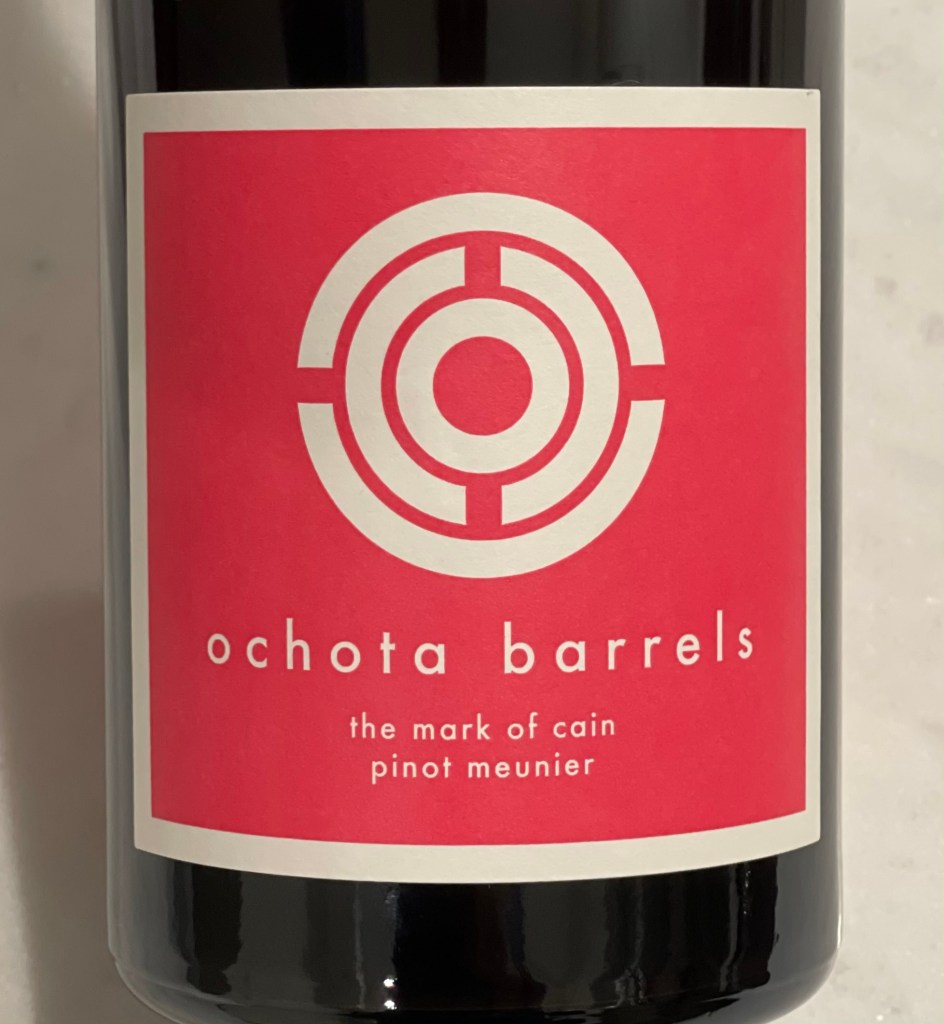
Today’s Wine: 2020 The Mark of Cain

100% Pinot Meunier; 11.6% ABV

The 2020 Mark of Cain is pale ruby and almost rose petal in color. The nose is beautifully perfumed and of pronounced intensity, showcasing aromas of bright red cherry, ripe wild strawberry, raspberry, crushed pomegranate, red rose petal, lightly tilled garden soil, delicate dried green herbs, and wet granite. There’s also a touch of strawberry yogurt and light bread, but these blow off in the glass. Flavors on the palate are also of pronounced intensity, with notes of pomegranate, tart red cherry, raspberry, white strawberry, a hint of eucalyptus, rose, a pinch of white pepper, and crushed rock mineral. This dry red is light-bodied with high mouthwatering acidity, low tannins, medium (-) alcohol, and a medium (+) length finish. This is vibrant, refreshing, and unbelievably pure while showing great complexity for its youth. 190 cases produced.

Price: $60. Though fairly pricey, I think this is absolutely worth trying and buying multiple bottles of. This is one of those “wow” wines for me, particularly given the youth. I haven’t had a wine this fun, vibrant, crunchy, and refreshing in a long time.

Young Napa Cab With Exceptional Vineyard Pedigree

Today’s Story: Memento Mori

Memento Mori is a producer of premium Napa Valley Cabernet Sauvignon, established by friends Hayes Drumwright, Adriel Lares, and Adam Craun with their inaugural vintage in 2010. Prior to establishing Memento Mori, the three friends traveled often to Napa and met Juan Mercado of Realm Cellars on one of these occasions. Juan introduced Hayes, Adriel, and Adam to famed winegrower Andy Beckstoffer and they negotiated the purchase of a small block of grapes from his Georges III Vineyard. Winemaker Sam Kaplan (also of Arkenstone and Nine Suns) joined as Memento Mori’s founding winemaker and he remains in the post to this day. Though Memento Mori no longer purchases fruit from the Georges III Vineyard, today they source from Beckstoffer’s Dr. Crane and Las Piedras vineyards, as well as the Weitz Vineyard, Oakville Ranch, and Vine Hill Ranch vineyards. The Memento Mori flagship wine is a blending of these sites, though they do produce highly limited quantities of single-vineyard bottlings as well.

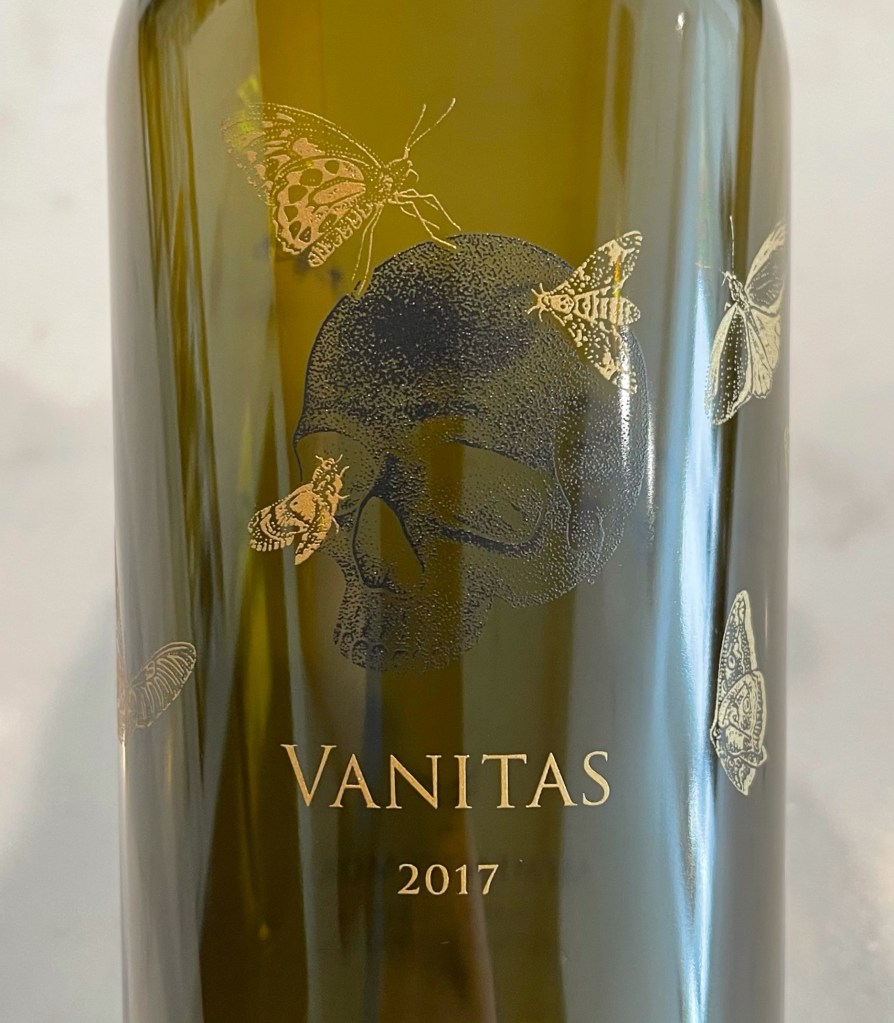
Today’s Wine: 2017 Vanitas

100% Cabernet Sauvignon; 14.8% ABV

The 2017 Vanitas is opaque deep ruby in color and nearly black at its core. Given its youth, I decanted this for 3 hours though it is surprisingly expressive and complex. The nose is of pronounced intensity, offering up aromas of crème de cassis, blackberry, black cherry, black plum, black licorice, a hint of bell pepper, dried herbs, scorched earth, cedar, clove, and chocolate. There’s a touch of heat, though this should integrate with bottle age. Meanwhile the palate is also of pronounced intensity, showcasing notes of blackcurrant, blackberry, blueberry, anise, sweet tobacco, savory grilled herbs, a touch of vanilla, clove, charred oak, and mocha. This dry red is full-bodied with medium (+) acidity, high but fine-grained tannins, high alcohol, and a long finish. Gorgeous now, but I need to revisit this in 3-5 years when I imagine tertiary notes may start surfacing.

Price: $100 (Wally’s Los Angeles exclusive). This is actually very well priced for a premium Napa Cab, even if it is the label’s “entry level.” The purity and depth of fruit is exceptional, and the primary note complexity at this stage only showcases promise for the years to come. Pedigree of the vineyards (Beckstoffer Dr. Crane and Las Piedras, Weitz Vineyard, Oakville Ranch, and Vine Hill Ranch) shines.

Unique White Blend for Napa Valley

Today’s Story: Massican Winery

I very recently wrote about Massican when I reviewed the 2019 Sauvignon Blanc, however I loved that wine so much I wanted to return today for another bottling.

Massican Winery was established in 2009 by winemaker Dan Petroski (also of Larkmead Vineyards) and was born out of his passion for Italy and the country’s lifestyle, culture, and wines. Massican is a very unique endeavor in Napa Valley, focusing exclusively on white grape varieties including Tocai Friulano, Ribolla Gialla, Pinot Bianco, and Greco common in northeastern Italy as well as the more “expected” varieties of Sauvignon Blanc and Chardonnay. True to Dan’s mission, the Massican wines are not only made with uncommon varieties for Napa but they are also not the stereotypical oaky white wines the region is known for. Dan uses varying amounts of new and neutral oak as well as stainless steel, also not allowing his wines to go through malolactic fermentation so they maintain the crisp, fresh, and refreshing characteristics of each grape variety. Another contributing factor is how Dan picks his grapes at lower sugar levels, preserving the vibrant acidity and resulting in often lower-alcohol wines.

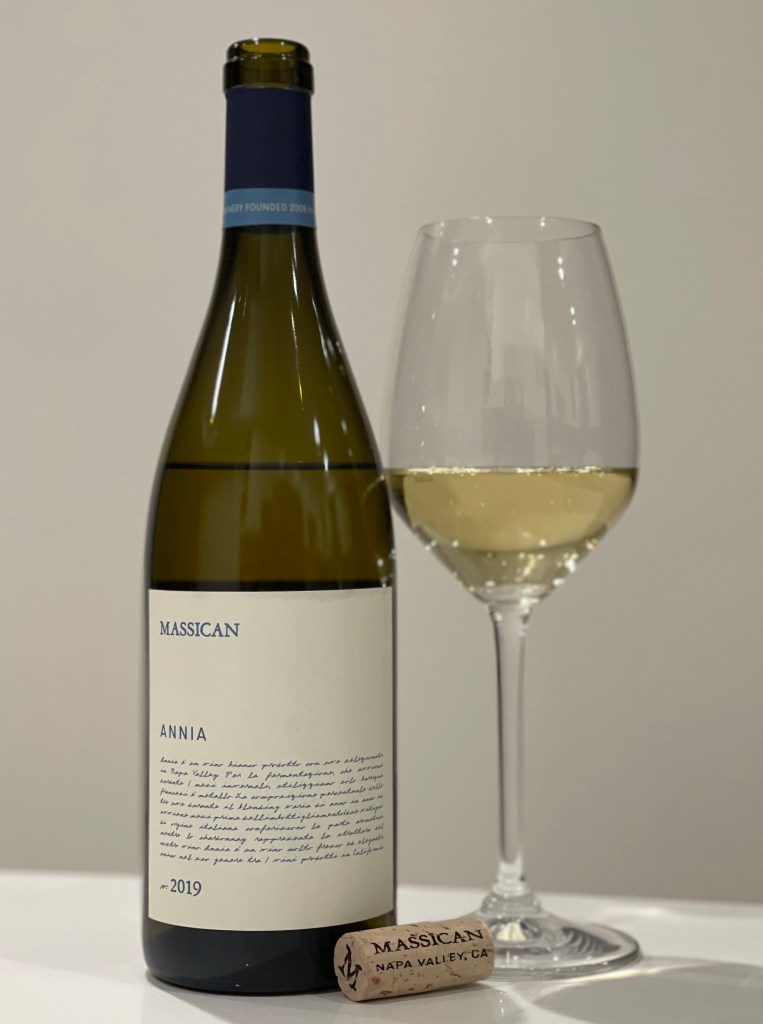
Today’s Wine: 2019 Annia

53% Tocai Friulano, 39% Ribolla Gialla, 8% Chardonnay; 12.8% ABV

The 2019 Annia is pale yellow in color, and almost pale gold. The aromas are of medium intensity, with the nose showcasing notes of yellow apple, tangerine, white peach, pear, honeysuckle, crushed stone, and mild green herbs. Meanwhile the flavors on the palate are also of medium intensity, with notes of white peach, lemon zest, pear, tangerine, white florals, and beeswax. This dry white blend is light- to medium-bodied with medium acidity, medium alcohol, and a medium (+) length but well-rounded finish. I didn’t find this as vibrant or complex as the Sauvignon Blanc I recently reviewed, but it still makes for a fun summer wine and a perfect match for shellfish.

Price: $30. This is a fun wine for the price, however I do prefer the Massican Sauvignon Blanc and I think that offers stronger value given its complexity, vibrancy, and mouthwatering higher acidity. I still think this Annia is worth checking out though, because it’s uncommon to find these varieties coming out of Napa and it is a well-made wine.

Young but Promising Bourgogne Rouge

Today’s Story: Domaine Méo-Camuzet

Domaine Méo-Camuzet is a very highly regarded domain in the Côte-d’Or of Burgundy, situated in the heart of the prized Vosne-Romanée appellation. The domain was established by Étienne Camuzet, a political figure who represented the Côte-d’Or as mayor of Vosne-Romanée and an MP in Paris. Étienne purchased the Château du Clos de Vougeot in 1920, but due to his political commitments did not live there or farm the vineyards and instead leased it out to tenant farmers. Though he sold the château in late 1944 (it was heavily damaged during the war), 20 hectares of vineyards went up for sale and he retained 3 hectares for himself. Upon Étienne’s death in 1946, the holdings passed to his daughter Maria Noirot and she kept the tenant farming system in place. Having no heirs of her own, with Maria’s death in 1959 the domain passed to her nephew Jean Méo who was in General de Gaulle’s cabinet. Jean Méo took over the domain with help from his parents, but kept to the tenant farming system with the legendary Henri Jayer being one of them. In 1981, the domain was named Domaine Méo-Camuzet, domain bottling and labelling commenced with the 1983 vintage, and Jean Méo proposed passing the reins onto his son Jean-Nicolas in 1984.

Jean-Nicolas took several years to pick up the task, immersing himself in the domain in 1989 following education at the University of Burgundy to study oenology. He also studied at the University of Pennsylvania to build his business acumen. As he was nearing retirement in 1988, Henri Jayer agreed to coach Jean-Nicolas alongside Christian Faurois, a son of another highly regarded tenant farmer. As Jean-Nicolas learned, grew, and experimented with new techniques at the domain, the Méo-Camuzet wines gained great appreciation around the world, particularly in the American markets where Jean-Nicolas used his business savvy to his advantage. By 2008, all tenant farmers had retired and Jean-Nicolas took complete management responsibility over the vineyards. As he struggled to keep up with demand, he and his sisters established the Méo-Camuzet Frère & Soeurs négociant business to expand their portfolio into wider and more accessible bottlings. Today, Jean-Nicolas runs Méo-Camuzet with his wife Nathalie and they have three children who will perhaps one day carry on the family legacy. Christian Faurois remains a right-hand-man as well.

Domaine Méo-Camuzet today consists of 14 hectares of vineyards which include holdings in a range of villages, 1er Crus, and several Grand Crus. Practically all viticulture is organic, though the domain does not seek certification so in their most difficult vineyards or vintages they can react prudently if needed. For instance, some of their sites that are difficult to farm may need small amounts of occasional herbicide or anti-rot treatments. Harvesting is completed entirely by hand, and sorting first occurs at the vineyard level where fruit deemed below quality standards is dropped to the ground. Fruit is sorted again and destemmed at the winery, before fermentation begins in concrete vats with temperature control only ensuring the temperature doesn’t cross over the critical 95 degree Fahrenheit level. The wines mature in new oak barrels, ranging from about 50% new for the lower level wines up to 100% new for the Grand Crus. Come bottling, the wines see no fining or filtration.

Today’s Wine: 2018 Bourgogne Côte-d’Or Cuvée Étienne Camuzet

100% Pinot Noir; 13.5% ABV

The 2018 Bourgogne Côte-d’Or Cuvée Étienne Camuzet is pale to medium ruby in color and transparent. This took a good hour to open up in the glass, eventually showing aromas of medium intensity. The nose showcases notes of ripe red cherry, cranberry, black raspberry, red rose petal, leather, dried herbs, crushed rock minerality, and a hint baking spice. Meanwhile the flavors on the palate are also of medium intensity, displaying notes of black cherry, red plum, crunchy cranberry, brambly black raspberry, anise, tobacco, cola, stony mineral, clove, and a touch of smoke. This dry red is light- to medium-bodied with medium acidity, medium (-) tannins, medium alcohol, and a long finish. Overall pretty complex for its youth and very well-balanced. Purity and freshness of fruit here is gorgeous, as is the minerality.

Price: $65 ($40-50 in Europe). Given where the pricing of Burgundy has headed, I think this is actually pretty decent value. I certainly think this drinks about the regional Bourgogne level, and should only improve with several more years of bottle age.

Gorgeous Mosel Riesling to Stock up on for the Summer

Today’s Story: Weingut Fritz Haag

Weingut Fritz Haag is a historic family-owned wine estate established by the Haag family in 1605 in Brauneberg of the Mosel winegrowing region of Germany. In its more recent “modern” history, Fritz Haag was under the leadership of Wilhelm Haag beginning in 1957 when he returned to help his ill father. An expected one-harvest stay turned into full-time winemaking for Wilhelm, ultimately resulting in exceptional quality wines being produced by the estate which garnered international acclaim and earned Wilhelm the German Winemaker of the Year title in 1994 by Gault Millau’s Guide to German Wines. Wilhelm passed the reins onto his son Oliver in 2005, and he runs the estate to this day with his wife Jessica.

The Fritz Haag estate consists of 19.5 hectares, with the vineyards planted entirely to the Riesling variety on very steep slopes along the Mosel River. As part of their holdings, Fritz Haag owns substantial holdings in the highly regarded Brauneberger Juffer and Brauneberger Juffer Sonnenuhr vineyards which produce their highest quality fruit for the Grosses Gewächs wines and Prädikatswein. Fritz Haag produces a range of Rieslings, going from dry all the way to sweet wines made with botrytis-affected grapes but they keep production to around 5,500 cases per year with mild fluctuations due to vintage conditions.

To preserve the pronounced aroma and flavor characteristics of their wines, Fritz Haag utilizes stainless steel and some old oak during the winemaking process. Fermentations occur only with indigenous yeasts, and the name of the game is to produce exceptionally pure wines that show true sense of place.

To explore Weingut Fritz Haag further, you can check out their website here.

Today’s Story: 2019 Riesling

100% Riesling; 11% ABV

The 2019 Riesling is transparent pale straw in color. This wine leaps out of the glass with pronounced intensity, offering up aromas of green apple, lime zest, white peach, white florals, petrol, jasmine, and slate. Meanwhile the palate is also of pronounced intensity, showcasing notes of lemon, lime, white peach, crisp green apple, elderflower, a hint of beeswax, and saline minerality. This slightly off-dry (feinherb style) Riesling is light-bodied with gorgeous high acidity, medium (-) alcohol, and a medium (+) length finish. A perfect summer bottle with great balance and just a touch of sweetness to help balance the mouthwatering acidity.

Price: $22 (cheaper in Europe). I think this offers very solid value for Mosel Riesling and it was an absolute pleasure to drink. The acidity is gorgeous, the style is beautifully balanced, and the aromas and flavors mesh seamlessly into a refreshing wine. I’ll be buying more of this.

Coveted Paso Robles Rhône Blend – For Good Reason

Today’s Story: Saxum Vineyards

Saxum Vineyards is a highly regarded winery in the Willow Creek District of Paso Robles, established in 2002 by husband and wife Justin and Heather Smith. The winery is situated in the James Berry Vineyard, a property purchased by Justin’s father around 1980 which he planted to white grape varieties popular at the time. However, toward the end of the 1980s the Smith family started replanting their vineyard to Rhône varieties following the suggestion by a friend, and today Saxum is known for their Grenache, Syrah, and Mataro dominated blends.

The Saxum vineyards are planted on steep hillsides and rocky soils, with the region offering sunny days and cool ocean breezes. Yields are kept low to create healthy, concentrated berries and the fruit is picked at optimal ripeness to ensure profound texture in the finished product. A sustainable and rather uncertified organic viticultural philosophy is followed by minimal intervention in the cellar, allowing each of the ten crus produced by Saxum to show a true sense of place while being profound and elegant at the same time. Saxum produces roughly 8,000 cases of wine per vintage nowadays, with all bottles highly allocated to a mailing list with a very small amount making it to retail or restaurants. To put this demand into perspective, I’ve been on the Saxum waiting list for about 4 years already and from what I hear have several more years to go.

To learn more about Saxum, particularly their individual bottlings with incredible libraries of tasting notes, check out the website here.

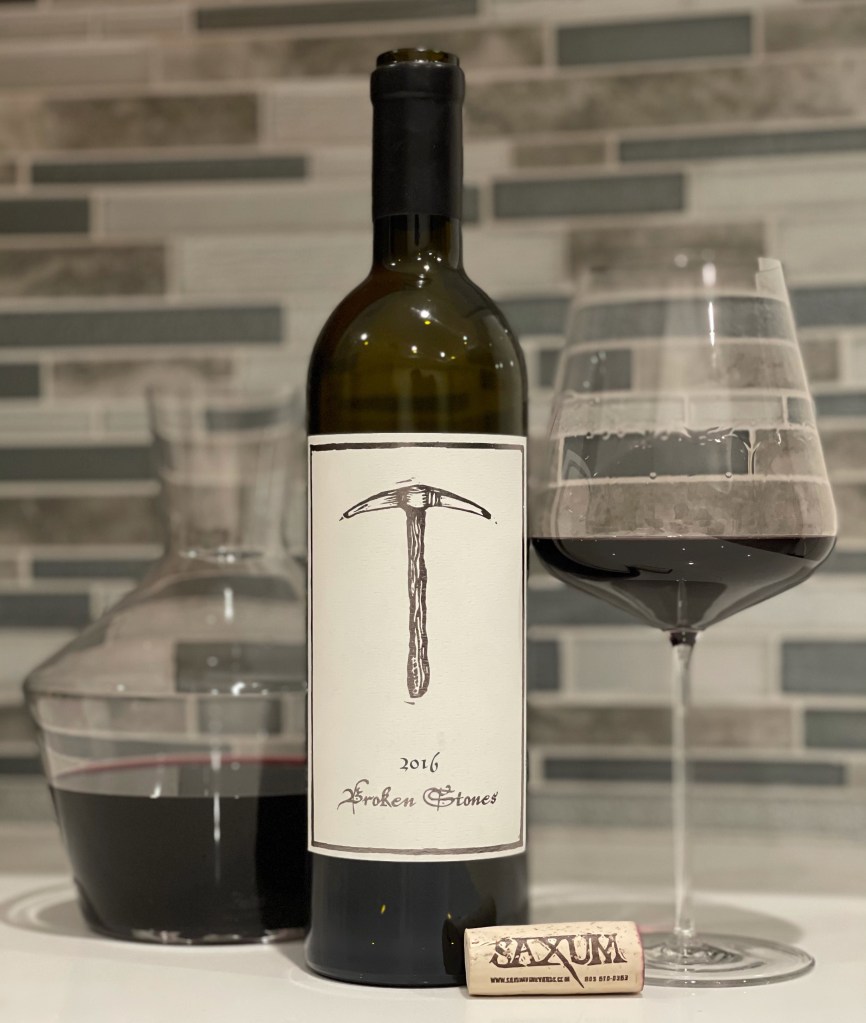
Today’s Wine: 2016 Broken Stones

52% Syrah, 18% Mataro, 10% Grenache, 10% Tempranillo, 8% Petite Sirah, 2% Roussanne; 15.9% ABV

The 2016 Broken Stones is opaque deep purple in color with deep ruby hues. I decanted this for 3 hours and drank it over the following 2 given its youth. There’s pronounced intensity on the nose, offering up aromas of blackberry, juicy black plum, black cherry, violet, lavender, licorice, roasted game, grilled herbs, scorched earth, gravel, clove, vanilla, and charred cedar. With the proper stemware, the alcohol level goes practically unnoticed. Meanwhile the palate also offers flavors with pronounced intensity, including blackberry, blueberry, black plum, anise, smoked meat, violet, cracked black pepper, dried green herbs, a touch of smoke, vanilla, baking spice, and coffee grounds. This dry red blend is full-bodied with medium acidity, high and grippy tannins, high alcohol, and a long finish. Surprisingly the alcohol practically blows off and this wine showcases great depth, balance, and immense promise at such a young age.

Price: $135. While there are better “values” out there, I think this is fairly priced in the secondary market even though it gets released at $98. The complexity, elegant power, and depth to these wines are truly special based on the several I’ve tasted over the years and this 2016 Broken Stones is no different.