Young and Rather Tropical Willamette Valley Chardonnay

Today’s Story: Antica Terra

I first wrote about Antica Terra back in January 2020 with the 2017 Botanica Pinot Noir, though these wines hold a fairly sizable allocation in our cellar and I was destined to return to them sooner or later.

Antica Terra was established in 2005 by Scott Adelson, John Mavredakis, and Michael Kramer, three friends and partners who had collaborated before and dreamed of owning a vineyard together. This being said, vines were first planted in 1989 on the property, an 11 acre vineyard on pre-historic seabed in the Eola-Amity Hills of Oregon’s Willamette Valley. Having taken ownership of their new vineyard, Scott, John, and Michael started seeking a winemaker and their crosshairs quickly fell upon Maggie Harrison. Maggie began her winemaking career at Sine Qua Non (known for $200-$1,000+ bottles of cult Rhone varietal wines) working for Manfred Krankl and her expertise was quickly realized. In 2004, Manfred encouraged her to begin her own Syrah project on the side, and Lillian was born (I reviewed two of these Syrahs previously). Maggie worked tirelessly on her passion project wines while still tending to barrels at Sine Qua Non, demonstrating her pure passion for the craft. When Scott, John, and Michael asked Maggie to become their winemaker, she refused profusely though the three friends ultimately convinced her to simply visit the property to offer her opinions of the vineyard. 26 seconds after Maggie stepped foot into the vineyards and observed the fossils, oaks, and vines, “she found herself hunched beneath one of the trees, phone in hand, explaining to her husband that they would be moving to Oregon.”

The vineyard of Antica Terra is rather intense, both in appearance above the earth and underground for the vines. The vines find home amongst fossilized oyster shells and sandstone with no topsoil, leaving them to struggle for nutrients and in turn producing incredibly unique fruit. Aboveground, the vineyard is strewn with boulders, steep grades, and vines that (due to the soil) appear spindly and frail. Fruit for Antica Terra wines forms in tiny clusters with thick-skinned grapes that are half the size that is typical for their varieties and the canopy of these plants is incredibly sensitive. Maggie provides immense care and attention to these delicate vines, which culminates into unique and immeasurably profound wines. Antica Terra produces four Pinot Noir bottlings, two Chardonnays, and one Rosé.

To explore the wines of Antica Terra, join the mailing list, or plan a visit, check out their website here.
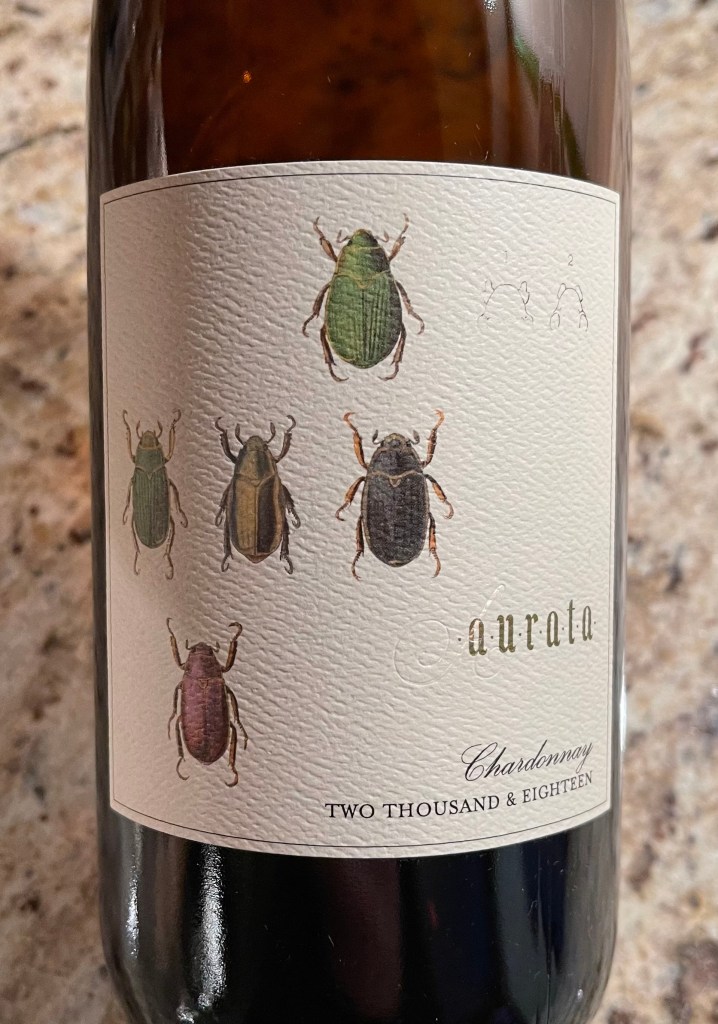
Today’s Wine: 2018 Aurata Chardonnay

100% Chardonnay; 14.1% ABV

The 2018 Aurata Chardonnay is transparent medium to deep gold in color. We let this slow ox for probably an hour or two before drinking it over the following hour. The nose is much more tropical than I imagined, showcasing aromas of white peach, apricot, pineapple, lemon zest, honeysuckle, wet river stone, and delicate green herbs. Meanwhile the palate is tropical as well with notes of lemon, green apple, tropical citrus, white florals, dill, chalk, and gravel. This is medium- to full-bodied with vibrant high acidity and is very dry and nicely rounded into a medium (+) length finish.

Price: $110. I’m very anxious to return to this bottling in another 5 years or so, as it was much different than I was expecting in its youth. On the value side of things, however, I think there are better options out there sub-$100. I remain a huge fan and proponent of Antica Terra Pinot Noir, though.
Legendary Barolo in a Great Spot Now

Today’s Story: Bruno Giacosa

I previously wrote about Bruno Giacosa back in April when I reviewed the delightful and refreshing 2017 Roero Arneis. Though I have a bottle or two of Giacosa Barolo hiding, I have not tried it until today when a good friend of mine shared a bottle of the 1996 vintage.

Bruno Giacosa was one of the most respected and legendary winemakers not only in Piedmont, Italy where he crafted some of the most highly regarded and traditionally made Barolo and Barbaresco, but throughout Italy and the world. At age 13, Bruno helped his father and grandfather in the cellar of their Langhe winery and joined the family business full-time two years later. Though Bruno never studied to become an enologist, his appreciation of traditionally made Barolo and Barbaresco spawned from this time with his family and instilled in him some of the most important practices he followed for his entire career until his death at the age of 88 in early 2018.

Bruno was quite adept at selecting parcels and fruit for his wines, and always emphasized intentionally small grape yields, limiting treatments in the vineyards, traditional vinification methods, and allowing the wines to honestly display the terroir and typicity through minimal intervention. Historically, Bruno crafted his wines with fruit sourced/purchased from some of the greatest crus of Barolo and Barbaresco and it wasn’t until the early 1980s he purchased his own vineyards as estate-bottling rose in prominence. In 1982, Bruno purchased the Falletto di Serralunga d’Alba vineyard which became the source of arguably his greatest Barolos ever made, followed in near significance by his purchase of the Asili and Rabajá plots in Barbaresco in 1996. Today, the Bruno Giacosa estate is in the capable hands of his daughter Bruna alongside his longtime enologist Dante Scaglione and they continue Bruno’s winemaking philosophies while respecting traditional techniques.

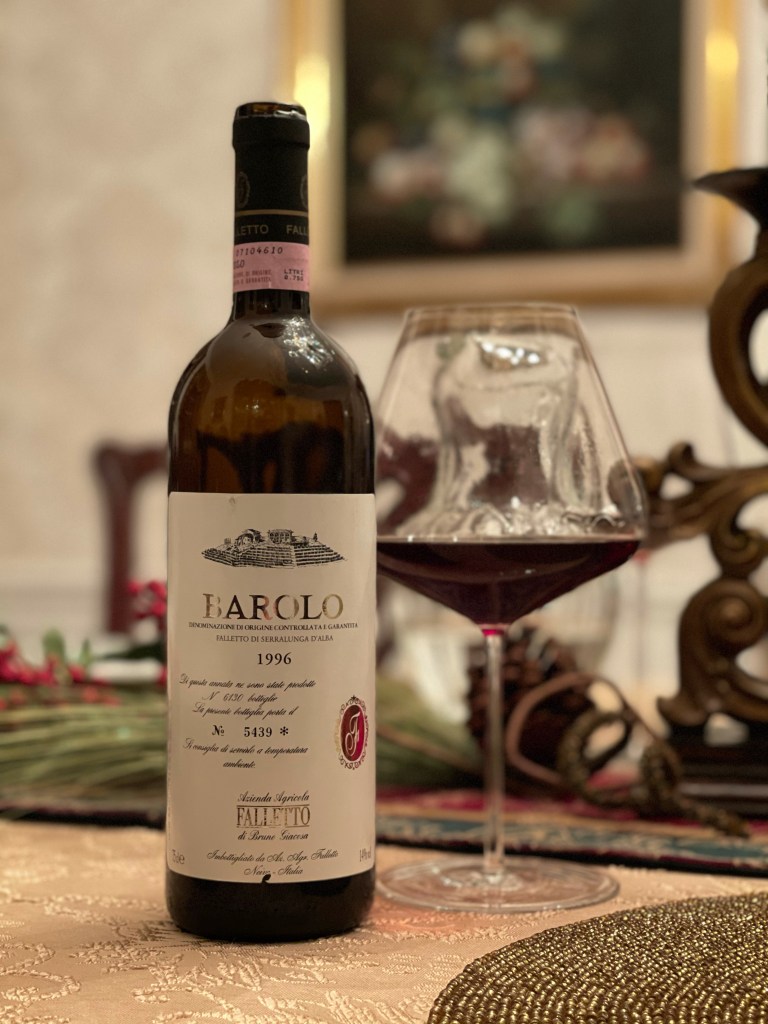
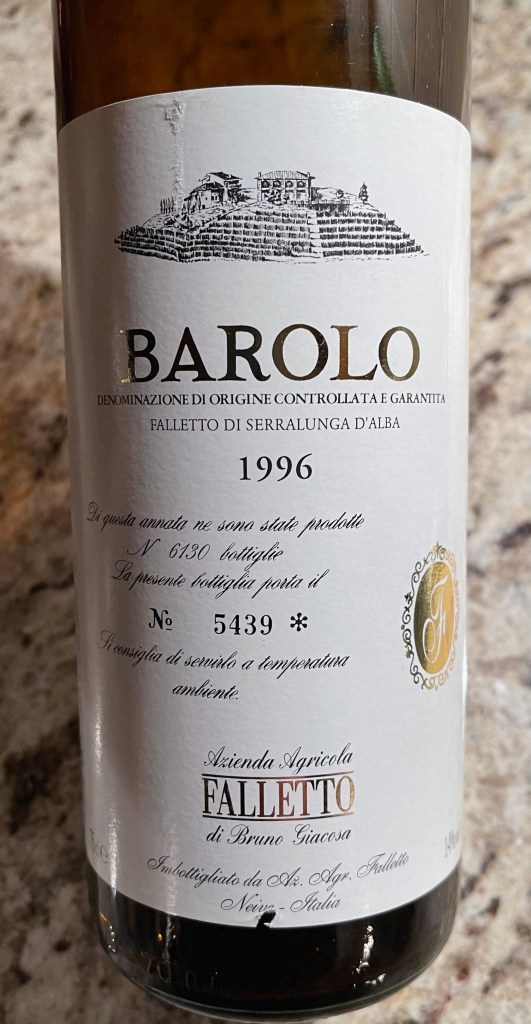
Today’s Wine: 1996 Barolo Falletto di Serralunga d’Alba

100% Nebbiolo; 14% ABV

The 1996 Barolo Falletto di Serralunga d’Alba is translucent medium to deep garnet in color. We decanted this for probably 3-4 hours and I think this is in a great drinking window. The nose showcases classic aromas of black cherry, cranberry, rose petal, musty cellar, forest floor, Alba truffle, anise, tar, thyme, and slate. I actually prefer the palate on this wine, however, which displays notes of baked strawberry, black raspberry, rose, black licorice, truffle, sous bois, damp green herbs, and chocolate. This is medium-bodied with lively high acidity, medium dusty tannins, and a long finish.

Price: $530 (shared by a good friend). As you might guess, this is a pretty impossible price level for me to discuss the value proposition. While “not a good value,” this is a special and ethereal wine that hopefully you get to taste.

Aged Pauillac Striking up With the First Growths

Today’s Story: Château Pichon Longueville Comtesse de Lalande

I previously (and somewhat recently) wrote about Château Pichon Longueville Comtesse de Lalande and have reviewed the 1966, 1986, 2003, and 2008 vintages on this blog. Though I’ve tasted a number of other vintages including 1979, 1996, 2005, and 2014, the 1989 vintage remained elusive…until today.

Château Pichon Longueville Comtesse de Lalande is a Second Growth (Deuxième Cru) estate based on the Bordeaux Wine Official Classification of 1855. Pichon Lalande is considered by many to be a classic example of Pauillac, known for its deep, concentrated layers of ripe fruit accompanied by notes of cassis, tobacco, and earth.

With nothing short of a somewhat tumultuous history, Pichon Lalande’s ownership changed hands over the years and earned its name when the founder’s daughter Therese received it as a dowry for her marriage to Jacques de Pichon Longueville. During the 18th century, the estate was dominated by women (Therese de Rauzan, Germaine de Lajus, and Marie Branda de Terrefort) throughout the winemaking process until Baron Joseph de Pichon Longueville took over for his mother. In 1850, with his death, the estate split between his two sons and three daughters and ultimately resulted in the division of Comtesse de Lalande and Pichon Baron.

With no familial heirs, Edouard Miailhe and Louis Miailhe purchased Pichon Lalande following WWI. Edouard’s daughter, May-Eliane de Lencquesaing, took over management in 1978 and became a prominent ambassador for Bordeaux wines while dramatically increasing quality of her estate. One of her major endeavors, and possibly most famous, was growing the size of Pichon Lalande from 40 hectares of vines to 89. In 2007, however, May-Eliane sold a majority stake of the estate to the Rouzaud family, owners of Roederer Champagne, and management changes as well as renovations took place.

Today’s Wine: 1989 Château Pichon Longueville Comtesse de Lalande

45% Cabernet Sauvignon, 35% Merlot, 12% Cabernet Franc, 8% Petit Verdot; 12.5% ABV

The 1989 Pichon Lalande is translucent deep ruby in color with deep garnet hues. There’s absolutely no bricking either, which is fantastic. We served this as a pop and pour and let it develop in the glass, with the nose showcasing aromas of blackcurrant, blackberry, pencil shavings, tobacco, forest floor, cedar, graphite, green pepper, and eucalyptus. Meanwhile on the palate, I get notes of redcurrant, cassis, blackberry, black cherry, cigar box, scorched earth, green underbrush, bell pepper, gravel, and clove. This is medium-bodied with medium (+) acidity, medium tannins, and a long finish. Beautifully balanced and not showing any signs of its age yet.

Price: $300 (but this was shared by a good friend). Though not nearly an inexpensive bottle of wine, if you can verify provenance and find a bottle with a great fill level, I would give this a shot. Pichon Lalande has outperformed with each of the 9 vintages I’ve tried and oftentimes these drink like the First Growths. Great value.

Balanced and Easy-Drinking Vosne-Romanée

Today’s Story: Domaine Cecile Tremblay

I previously wrote about the fantastic Domaine Cecile Tremblay in November, 2019 with the 2011 Chambolle-Musigny Les Cabottes. As these wines are fantastic and prices have skyrocketed since I started buying them, I am excited to try her Vosne-Romanée today.

Domaine Cecile Tremblay has a very interesting history, partly because she did not start making wines until 2003 though her family owned vineyards for several generations. Cecile is the great-granddaughter of Edouard Jayer, uncle of the famed Henri Jayer (go Google some of his wines, and perhaps sell your car to buy a bottle). Cecile’s family inherited vineyards from Edouard, though the two generations before her leased out the land to other producers and did not make their own wine. In 2003, however, with the expiration of a lease on three hectares of vines Cecile started making wine under her own label with a plan for further growth. For instance, the Domaine owns roughly 10 hectares of vineyard land and while more of this becomes free from leasing agreements in 2021, Cecile rented or purchased land along the way in communes such as Gevrey-Chambertin.

When Cecile took over her family’s land for her own use, the vineyards were in no standing to produce high quality wines. The producers leasing the land, for instance, used too much fertilizer for Cecile’s taste and utilized herbicides instead of ploughing. Throughout her time thus far as a winemaker, Cecile transitioned to organic farming and many of her practices include biodynamic farming measures as well. During maintenance of her vineyards, Cecile ploughs the soil mechanically and with horses while using copper sulfate to prevent mildew and other fungi.

Similar to her views on caring for her vines, Cecile is very traditional in her winemaking process. She presses her grapes with an old-fashioned vertical press and her wines see only a moderate amount of new wood during fermentation and aging. All of this effort culminates into wines that are refined and elegant, though built for the long haul.

Today’s Wine: 2011 Vosne-Romanée

100% Pinot Noir; 13% ABV

The 2011 Vosne-Romanée is pale to medium ruby in color and translucent. Given some time to blossom in the glass, this opens to showcase a nose of black raspberry, strawberry, cherry, pine, leather, tilled earth, mint, eucalyptus, cinnamon, and a hint of baking spice. Meanwhile on the palate, I get notes of black cherry, plum, cranberry, tobacco, green herbs, gravel, and truffle. This is medium-bodied with high acidity, medium (-) tannins, and a long finish. This was much less complex compared to her Chambolle-Musigny bottling I reviewed last year, though it is very well-balanced and enjoyable to drink.

Price: $460 (but this was shared by a good friend who paid $120). While no doubt a delicious wine, I can’t see this being worth the $460 I see it going for nowadays online. For my very fortunate friend who spent $120, however, I’d say it’s worth that price.

Fun Still Red From a Legendary Champagne Producer in Bouzy

Today’s Story: Champagne Paul Bara

Champagne Paul Bara is a small, family run Champagne house established in 1860 in the village of Bouzy in the Montagne de Reims wine region of France. Though initially the property consisted of a farm and a cellar with some vines, Paul Bara was the first of the family to sell Champagne under his name during the 1950s. In 1965, the family transformed a barn into their own press room and winery and set their sights on greater heights. 10 years later, in 1975, Paul Bara began exporting Champagne to the United States and was one of the first houses to do so. As he neared retirement, Paul’s daughter and sixth generation Chantale started helping to produce the wines and run the business before co-running the business in 1986 and later taking over. Since 2018, Chantale’s sister Evelyne Dauvergne began taking on more responsibilities as well.

Champagne Paul Bara consists of 11 hectares of all Grand Cru vineyards in Bouzy, with about 9.5 hectares planted to Pinot Noir and the remaining 1.5 planted to Chardonnay. The vines are rather low yielding and the family practices sustainable viticulture with a major focus on clean farming and biodiversity in the vineyards. All fruit is hand-harvested and hand-sorted, with winemaking in the cellar sticking to more traditional methods and only using first press juice. During aging, the wines rest in the impressive century-old chalk cellars dug by hand 11 meters below the surface of the earth. Total production is around 7,500 cases per year.

To learn more about Champagne Paul Bara and view pictures of the estate, check out their website here.

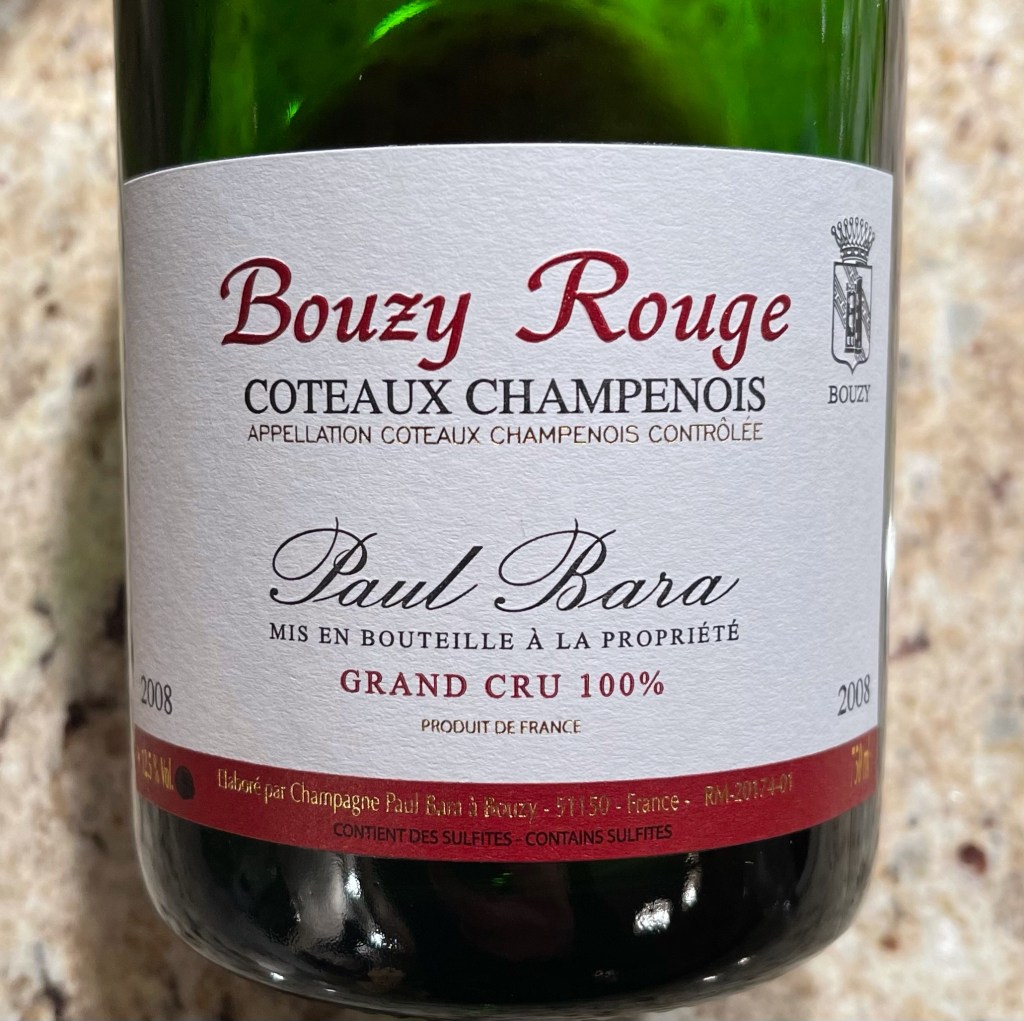
Today’s Wine: 2008 Bouzy Rouge Coteaux Champenois Grand Cru

100% Pinot Noir; 12.5% ABV

The 2008 Bouzy Rouge Coteaux Champenois Grand Cru is translucent pale to medium ruby in color. Given some time to blossom in the glass, the nose showcases aromas of black cherry, cranberry, black raspberry, olive, forest floor, underbrush, and crushed rock. Meanwhile, the palate displays notes of ripe sweet cherry, stemmy strawberry, rose, sous bois, light grilled herbs, mild peppery spice, stony mineral, and a hint of smoke. This is light-bodied with medium (+) acidity, light tannins, and a medium (+) finish.

Price: $55. This is certainly a fun wine, being a still Pinot Noir from a Champagne house known for their incredible quality and Grand Cru holdings, but I don’t think it has the complexities or depth to live up to the price. Nonetheless, it was an easy-drinking and tasty wine.

Lightning in a Bottle

Today’s Story: Ceritas Wines

I previously wrote about Ceritas back in June when I reviewed the 2017 Porter-Bass Vineyard Pinot Noir, and more recently when I reviewed the 2016 Peter Martin Ray Vineyard Cabernet Sauvignon. As these wines can be hard to come by off the mailing list or in restaurants, I jumped at the opportunity to revisit them again today.

Ceritas Wines is a small, family-owned winery spearheaded by husband and wife duo John and Phoebe Raytek. John and Phoebe source their fruit from trusted vintners mainly in the West Sonoma Coast and Santa Cruz Mountains, with all sites practicing sustainable or organic viticulture. John is highly involved in the vineyards they source from, and in many cases the vintners only sell fruit to Ceritas and are labeled “Monopoles.” Considering himself a winemaker of the Old World style, John believes that fruit should lead the way throughout the winemaking process and he is merely there to watch over, listen, and learn about each unique site. In the cellar, John practices minimal intervention but “flexible” winemaking, with the wines meant to showcase with honesty and transparency the terroir of each specific vineyard site.

Today’s Wine: 2016 Trout Gulch Vineyard Chardonnay

100% Chardonnay; 12.5% ABV

The 2016 Trout Gulch Chardonnay is transparent medium gold/yellow in color with water white variation along the edges of the glass. When I first pulled the cork, I felt like I was in Chassagne or Puligny, however given 30-45 minutes to open up this wine transported me to Chablis and I never wanted to leave. The nose is one that could bring a tear to a glass eye, showcasing aromas of lemon curd, Golden Delicious apple, ripe pear, stone fruit, white wildflower, flint rock, white smoke, shaved vanilla bean, cream, saline solution, and briny mineral. And if you haven’t already, break out the tissues because the palate displays notes of yellow apple, quince, lemon and lime zest, peach, white florals, incense, dill, limestone, wet slate, seashell, saline mineral, and white exotic spice. This is medium-bodied with high acidity (which I’ll touch on in a second), a perfectly rounded mouthfeel, and a long finish of about 1 minute. While a chuggable wine, you would immediately regret “wasting” something so pure if you went that route. Oh and yes, the wine’s acidity demands that I address it alone. Is it racy like a Formula 1 car heading to the finish? Is it like sucking on a mouthful of razor blades? Is it like drinking liquid lightning? Or is it perhaps all of the above? Please, you tell me. But while I wait, at risk of attack, I’ll say this is probably the greatest domestic Chardonnay I’ve ever had.

Price: $80. Just buy it if you get the chance.

Perhaps the Greatest Name in Crozes-Hermitage

Today’s Story: Domaine Alain Graillot

Domaine Alain Graillot is a family owned and operated Northern Rhône wine estate established by Alain in 1985. Though he cut his teeth working in Burgundy and received advice from Jacques Seysses at Domaine Dujac, Alain returned to his home in Crozes-Hermitage to fulfill the dream of making his own wines. In the short few decades since, Alain’s wines rose to legendary status and are widely considered the greatest coming out of Crozes-Hermitage. The wines sell each year on an allocation basis, with about 50% leaving France and 50% remaining in France with large amounts going to the country’s best restaurants. Though Alain retired in 2008, he is still highly involved at the domaine where his sons Maxime and Antoine now hold the helm.

Though Alain rented vineyards to produce his wines in 1985, by 1988 he began acquiring them and the domaine today consists of about 22 hectares of organically farmed vines. The vineyards are planted mostly to Syrah (Alain’s passion variety), though they do contain about 3 hectares planted to white varieties of Marsanne and Roussanne. In addition to the holdings in Crozes-Hermitage, Alain Graillot owns small parcels of Syrah in Saint-Joseph and a very tiny parcel in Hermitage. Graillot’s vines are incredibly low-yielding thanks to severe pruning, and all fruit is harvested by hand.

In the cellar, Alain and now his son Maxime follow traditional vinification methods and utilize whole cluster fermentation with the red wines (except for the Saint-Joseph which uses destemmed fruit). White wines ferment 50% in one year old oak barrels purchased from top Burgundy estates and 50% in stainless steel tanks. After being blended at the end of winter, the white wines age before bottling in the spring. The reds, on the other hand, ferment in concrete vats and age for one year with about 80% going to one to three year old used Burgundy barrels and the remaining 20% going to vat. Before bottling, the reds are lightly filtered but unfined. Total production is around 10,000 cases annually.

Today’s Wine: 2017 Crozes-Hermitage

100% Syrah; 13.5% ABV

The 2017 Crozes-Hermitage is opaque deep purple in color, which leaves fairly heavy staining on the glass. After spending 2-3 hours in the decanter, this opens up with aromas of plum, blackberry, blueberry, black licorice, violets, black olive, wet rocky earth, underbrush, smoke, and a hint of oak. The palate, meanwhile, is opulent and decidedly sexy with notes of blackberry, cassis, black plum, tobacco, black tea leaf, scorched earth, crushed rock minerality, black pepper, and mild oak-driven spice. This is medium-bodied with medium (+) acidity, fine-grained but high tannins, and a medium (+) length finish. Give this another 3-5 years and it’ll be singing.

Price: $35. I think this is somewhere between fairly-priced and a great value. I know this is young but it has great finesse to it already that I think will improve with bottle age. It also exhibits a great sense of place that would be a great addition into any Syrah lover’s lineup, particularly if they’re not familiar with Crozes-Hermitage.

Elegant and Refined Sangiovese in a Tough Vintage

Today’s Story: Isole e Olena

Isole e Olena is a Tuscan wine estate located in the heart of Chianti Classico and was established in 1952 by the De Marchi family. The family purchased two distinct estates, Isole and Olena, each with multi-century histories of their own and combined them into this new venture. In 1976, fourth generation winemaker Paolo De Marchi left his home in Piedmont and joined the family estate of Isole e Olena. Paolo immediately set about enhancing the quality of the wines and modernizing their approach, primarily by planting non-indigenous varieties in single vineyard plots. On the quality front, Paolo will sell off any finished wine he does not feel meets the quality standards of his estate and therefore he keeps production smaller than it could be. Today Isole e Olena consists of about 290 hectares of which 50 hectares are planted to vine, and the family practices sustainable viticulture. Through a traditional and minimally invasive philosophy in the cellar, Paolo crafts wines meant to showcase the variety alongside a sense of place for the Chianti Classico region.

Today’s Wine: 2014 Cepparello

100% Sangiovese; 14.5% ABV

The 2014 Cepparello is almost opaque deep garnet in color with ruby hues in the bowl. Given two hours in the decanter, the wine opens to showcase a nose of plum, black cherry, blackberry, blue florals, leather, sun-dried potting soil, wet slate, oregano, chocolate, and oaky spice. Moving onto the palate, I get notes of dusty cherry, black plum, black raspberry, dried violets, sweet tobacco, scorched earth, charred garden herbs, balsamic, espresso, and baking spice. This is medium- to full-bodied with medium (+) acidity, high but fine-grained tannins, and a long finish. Superb depth and quality for such a tough vintage in Tuscany.

This is the estate’s flagship wine, first created in 1980. Since a 100% Sangiovese wine could not be labeled Chianti Classico, Paolo received acknowledgement for this wine as a “Super Tuscan” and it is therefore labeled Toscana IGT. Many credit this wine as a huge step up for Chianti Classico Sangiovese, and it is coveted by many in the world of wine.

Price: $79. It’s pretty remarkable what Isole e Olena did with the Cepparello in this tough vintage, and I do think there’s a solid value proposition here. I could easily put this up with the $120ish bottles I’ve enjoyed from Tuscany, even from stronger vintages. This is a beautiful and elegant Sangiovese with plenty of gas left in the tank.

Another Stunning 2014 Bordeaux

Today’s Story: Château Pontet-Canet

Château Pontet-Canet is a historic Bordeaux wine estate located in the Left Bank appellation of Pauillac. In 1705, Jean-François de Pontet (who was Governor of the Médoc) acquired a few acres and planted them to vine. By the 1720s, Jean-François and his descendants had expanded the estate by purchasing parcels in a place known as Canet and Château Pontet-Canet was born. For over a century, Château Pontet-Canet remained in the Pontet family hands and ultimately received classification as a Fifth Growth (Cinquième Cru) in the Bordeaux Wine Official Classification of 1855. A decade later, in 1865, wine merchant Herman Cruse purchased Pontet-Canet and marked the first change in ownership since its establishment.

Though the Cruse family maintained ownership of Pontet-Canet for 110 years, the estate never seemed to live up to its quality potential. This began to change, however, when Cognac merchant Guy Tesseron purchased the estate in 1975 and set about replanting the vines in desperate need of repair. The family then worked on transitioning the vineyards to sustainable farming and a more “minimally invasive” philosophy of viticulture. When Alfred Tesseron took over in 1994, this ultimately spawned into a transition to organic and then biodynamic viticulture, which Pontet-Canet moved to fully by 2005 (they were certified organic and biodynamic several years later in 2010).

This minimally invasive philosophy for the vineyards transfers into the actual winemaking process as well. Beginning with harvest, all fruit is hand-sorted before being destemmed and hand-sorted again. The wine ferments with natural yeasts and minimal intervention, with maceration lasting an average of four weeks before the wine is run off with gravity. Over time, Pontet-Canet has reduced the amount of new oak they use so as to not mask the expression of place in the wine and today the Grand Vin ages in 50% new oak, 35% dolia (concrete amphorae made specifically for Pontet-Canet), and 15% 1-year-old barrels. The 2nd wine (Hauts de Pontet-Canet), meanwhile, ages in 100% 1-year-old oak barrels.

Pontet-Canet is a pretty large estate, today consisting of 120 hectares with 81 hectares planted to vine. The breakdown by variety is 62% Cabernet Sauvignon, 32% Merlot, 4% Cabernet Franc, and 2% Petit Verdot. To learn more about Château Pontet-Canet, I recommend visiting their website here for, at the very least, some great pictures.

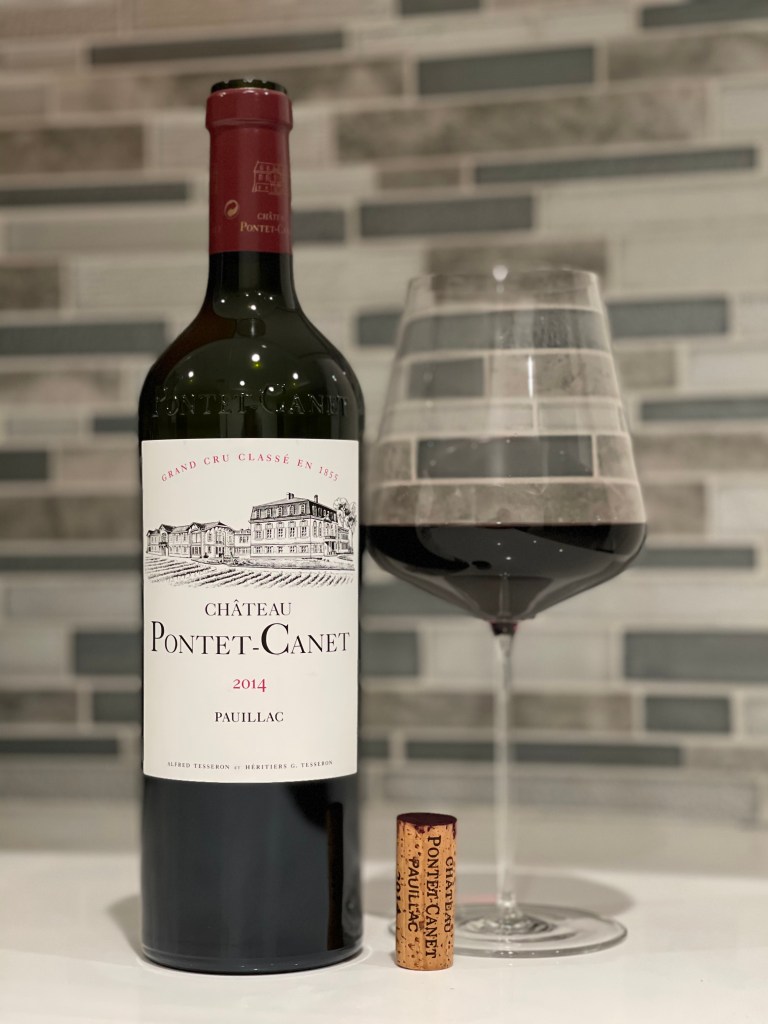
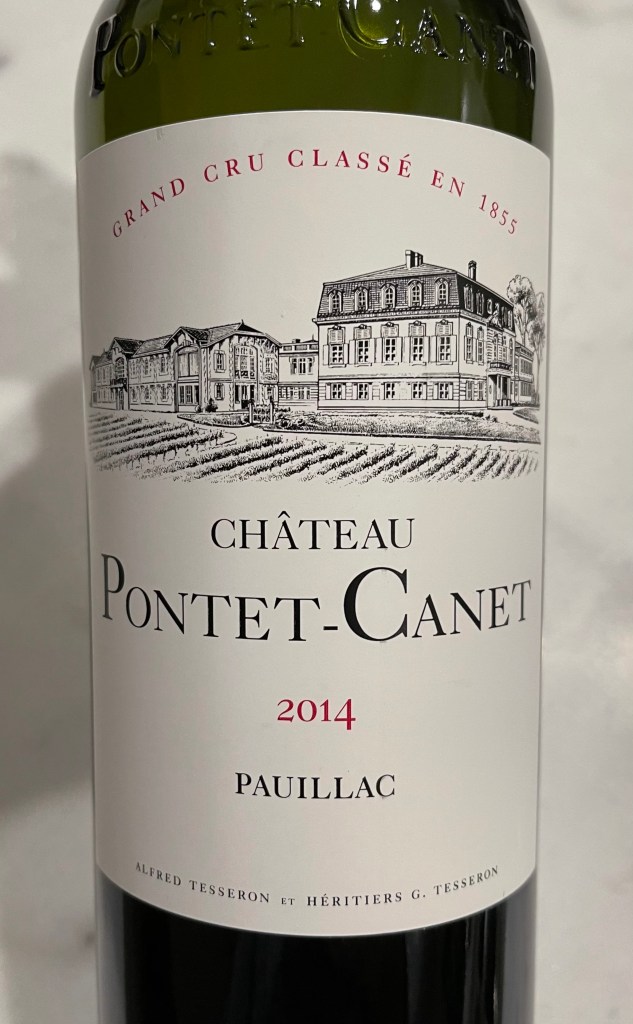
Today’s Wine: 2014 Château Pontet-Canet

65% Cabernet Sauvignon, 30% Merlot, 4% Cabernet Franc, 1% Petit Verdot; 13.5% ABV

The 2014 Pontet-Canet is opaque deep ruby in color. I know this is young, but in an effort to continue my tasting of various 2014 Bordeaux wines I cracked into it early. With that in mind, I decanted this bottle for 6 hours and drank it over the following 2 hours. Once this opens up, the nose showcases classic Pauillac aromas of blackcurrant, black raspberry, plum, redcurrant, lavender, cigar box, pencil shavings, loamy earth, graphite, green herbs, cedar spill, and mild oaky spice. Meanwhile on the palate I get notes of crème de cassis, blackberry, plum, black cherry, violet, anise, tobacco, wet earth, dried coffee grounds, chocolate truffle, black pepper, clove, and a hint of oak. This is full-bodied with beautiful high acidity, high grippy tannins, and a long finish of 45+ seconds. This has plenty of elegance right now, though it is still pure power and should surely develop into an iron fist in a velvet glove.

Price: $120. I think this is a very nice value, as I’m finding with a lot of 2014 Left Bank Bordeaux. Particularly when overshadowed by the 2015 and 2016 vintages, wines like this provide great quality for the price and are just starting to come into their own. I highly recommend adding this Pontet-Canet to your 2014 collections.

Young but Beautifully Linear Napa Chardonnay

Today’s Story: Arnot-Roberts

I previously wrote about Arnot-Roberts when I reviewed their 2016 Que Syrah Vineyard and 2018 North Coast Trousseau. I enjoyed both wines so much, I wanted to try a (young) Chardonnay today.

Arnot-Roberts is a boutique winery established in 2001 by Duncan Arnot Meyers and Nathan Lee Roberts, two childhood friends who grew up together in Napa Valley. After college, Nathan started working with his father as a cooper of oak wine barrels while Duncan pursued winemaking throughout Napa and Sonoma counties. Arnot-Roberts began with a single barrel of wine the duo produced in their basement and over time grew through the purchase of fruit from renowned vineyards in Napa, Sonoma, El Dorado, and Amador counties as well as the Santa Cruz Mountains. When selecting vineyards, Arnot-Roberts makes sure the farmers are both “passionate and conscientious” because their goal is to produce small quantities of honest, terroir-driven single-vineyard wines which truly express their unique place. The winemaking style is a mix of Old World and New World, with use of indigenous fermentation, little or no new oak, and often whole cluster with the reds. The Chardonnays, one of which I am reviewing today, ferment in stainless steel and age in neutral oak.

Today’s Wine: 2018 Watson Ranch Chardonnay

100% Chardonnay; 12% ABV

The 2018 Watson Ranch Chardonnay is transparent medium golden yellow in color with greenish hues. This needs 1-2 hours of air in its youth, and I drank it over the following 2 hours or so. Once opened, the nose delivers aromas of golden apple, crisp yellow pear, lemon zest, honeysuckle, jasmine, light smoke, dry crushed stone, and saline mineral. Still tighter than the nose and requiring the full bottle to put together, the palate showcases notes of lemon, ripe yellow apple, stone fruit, mild dry green herbs, white wildflower, limestone, and vibrant minerality. There’s also a delicate earthiness to the wine that I think needs more bottle age to fully reveal itself. This is medium-bodied with vibrant and mouthwatering high acidity into a well-rounded and long finish. Best with another 3-5 years in bottle, but pretty hard to resist right now. 45 barrels produced.

Price: $40. I think this is a fantastic value Chardonnay, though it won’t be the wine for a lot of people. (There’s no butter here.) The Old World winemaking and boutique mentality are palpable in this bottle, pairing off nicely with the beautiful quality of fruit and precision in the final product.