Burgundian Elegance in Oregon

Today’s Story: Beaux Frères

The groundwork for Beaux Frères occurred in the late 1980s when Michael Etzel discovered an 88 acre pig farm for sale on Ribbon Ridge in the Northern Willamette Valley, Oregon. Though he and his family lived in Colorado at the time, Michael decided to purchase the farm with brother-in-law Robert Parker (yes the wine critic) and set about transitioning some of the farm to vineyards. In 1988, Michael planted his first five acres of vineyards with Pinot Noir and harvested his first fruit in 1990. While Michael waited for his vines to bear fruit, he worked four harvests at Ponzi Winery and with his first harvest in 1990 sold fruit to Ken Wright and Dick Ponzi while only saving enough for one barrel of wine for himself. In 1991, Michael renovated one of the barns on the property to create his own winery and his efforts jump-started the transition to estate bottled wines.

Today, the Beaux Frères property consists of 50 acres of forest (Douglas fir trees), 8 acres of buildings including a home, barns, and winery, and 24 of the remaining 30 acres are planted to vine. The Beaux Frères Vineyard sits at an elevation of 400 feet and is planted with both own-rooted Pommard and Wädenswil clones, as well as younger Dijon clones on phylloxera-resistant rootstocks. Beaux Frères also farms the Upper Terrace Vineyard which sits slightly north of the Beaux Frères Vineyard and was first planted in 2000 with Dijon clones of Pinot Noir on 9 of the 40 total acres. Michael and his team practice many biodynamic farming methods in caring for their vineyards, a practice they picked up several years ago. The team avoids commercial sprays, composts on-site, grafts their own cuttings, and monitors the vines regularly.

Throughout the winemaking process, Michael and his son Mike (head winemaker) believe in minimal intervention and handling. To this end, they allow their wines to ferment spontaneously using only indigenous yeasts and utilize traditional punch downs and pump overs by hand. After pressing, they move the contents into French oak barrels ranging in 30-50% new (depending on vintage) and secondary fermentation occurs naturally at a slower rate in the barrel cellar. The only racking these wines see occurs after 10-12 months of barrel aging (to limit exposure to oxygen) which also helps limit the SO2 required to preserve the wine (if any is added at all) thanks to a natural buildup of CO2 during and after malolactic fermentation. The resulting wines are rather traditional in both production and expression, similar to classical red Burgundies.
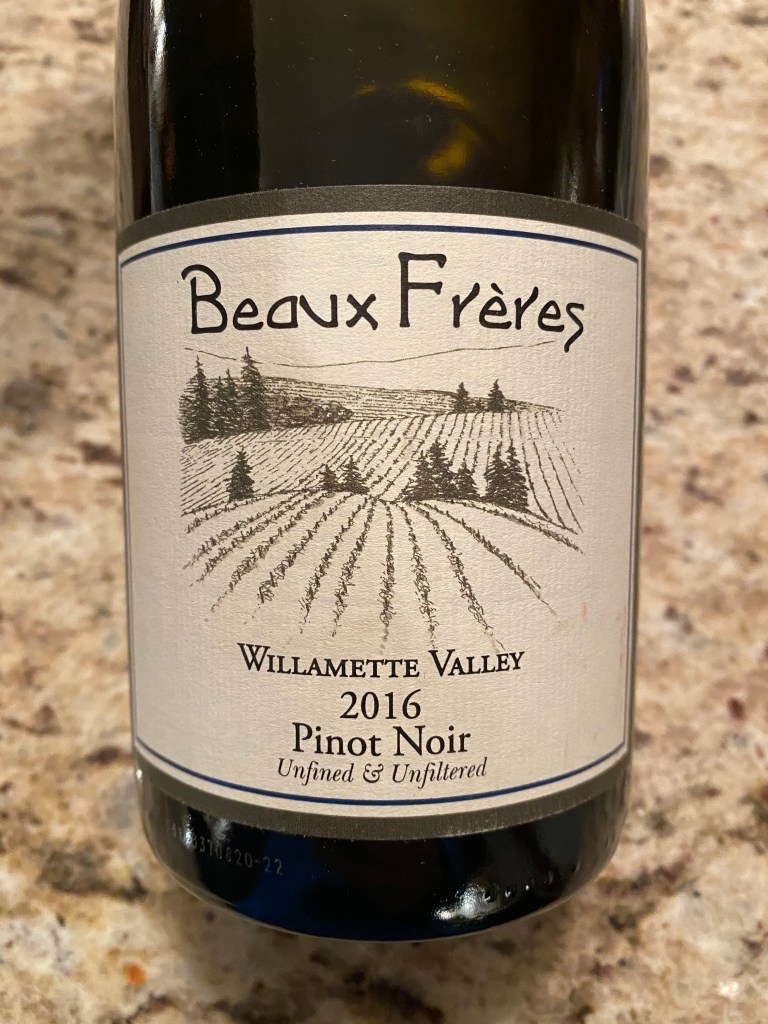
Today’s Wine: 2016 Willamette Valley Pinot Noir

100% Pinot Noir; 14.1% ABV

The 2016 Pinot Noir is medium ruby in color with rose variation near the edge of the glass and almost entirely opaque. The nose showcases aromas of ripe cherry, black raspberry, red licorice, purple florals, black tea, mineral, baking spice, and a hint of milk chocolate. Once in the mouth, this wine offers notes of blueberry, raspberry, black cherry, rose, a hint of damp earth, rocky minerality, clove, and oak. This is medium-bodied with high acidity, medium (-) tannins, and a long finish.

Price: $60. This is a high-quality, elegant, and luxuriously-textured Pinot Noir that I believe to be appropriately priced. It makes me think of an Oregon version of Kosta Browne or Williams Selyem. Pair this with salmon, chicken, pork, or duck.

Value Cotes du Rhône

Today’s Story: Domaine de Coste Chaude

Though the estate stretches further in history, Domaine de Coste Chaude as it exists today was remodeled during the 1960s and André Guichon, a wine merchant from Chambéry, bought it in 1969. The estate again changed hands in 1994 when it was purchased by the Fues family and they further developed the property by planting new varieties, altering storage methods, and processing grapes differently. In my opinion, however, the greatest contribution of the Fues family is their transition to organic farming in 2014 (Ecocert certified). Vincent Tramier took over the estate in 2018, with his major goals being improved wine quality and the introduction of new cuvées to widen the offering portfolio.

Domaine de Coste Chaude consists of 37 hectares of which there is 14 hectares of forest and 23 hectares planted to vine. The domaine is located on a hill at an elevation of 360m behind the Eastside of the village of Visan, creating hillside vineyards with Southern exposure. Thanks to the domaine’s location, the vineyards face a nearly constant breeze that helps fight against fungal diseases and spring frosts, while also experiencing slightly colder temperatures than the lowlands which creates fresh wines. Soil in the vineyards consists of limestone gravels and pebbles mixed into ocher, yellow, and brown clays deposited during the Miocene period. For some pictures of their property, check out the Domaine de Coste Chaude website here.

As part of the domaine’s organic farming practices, Coste Chaude uses green or organic fertilizers depending on soil variety and maintains natural ground cover when possible to protect against erosion while fostering biodiversity in the vineyards. Further, they use less stressful pruning methods on their vines (especially on their old vines 40+ years old) to oversee fruit quantity in an effort to foster concentrated and healthy grapes. When it comes to winemaking at the domaine, Vincent mixes traditional methods with modern technology to produce wines that reflect the terroir. The winery is located in the middle of the vineyards so harvested fruit can arrive as quickly as possible for sorting and minimal intervention is the name of the game from harvest to bottling.

Today’s Wine: 2014 Cotes du Rhône Visan Cuvée L’Argentière

80% Syrah, 20% Grenache; 13.5% ABV

The 2014 L’Argentière is medium ruby/garnet throughout and slightly transparent. The nose showcases aromas of blackcurrant, plum, cherry, smoke, forest floor, barnyard, green herbs, green peppery spice, and black olive. Once in the mouth, I get notes of blackberry, black raspberry, wet rock, smokey cedar, tobacco, leather, stone minerality, and green vegetation. This is medium- to full-bodied with high acidity, medium tannins, and a medium (+) length finish.

Price: $18. This is a great value Cotes du Rhône I picked up after an in-store tasting at one of my local shops. If you like terroir-driven wine at a great price, this is for you. Pair this with steak au poivre, roasted lamb, or a charcuterie with some hard goat’s cheese.

Gotta Get That Money (Road)

Today’s Story: Gargiulo Vineyards

Gargiulo is a small, family-owned winery in Oakville, Napa Valley that produces about 3,400 cases of wine each year from two vineyards. Owners Jeff and Valerie Gargiulo bought their first vineyard, Money Road Ranch, in 1992 to fulfill their winemaking dream, adding to the property in 1997 by purchasing the 575 OVX property. Founded as a Cabernet Sauvignon estate, Gargiulo produces three different Cabs and a Sangiovese, though they also have Cabernet Franc, Petite Verdot, and Merlot planted for blending in their G Major 7 Cab. Gargiulo produces small amounts of Chardonnay from Frank Wood Ranch and a rosé of Sangiovese as well.

The Gargiulo family and their winemaker, Kristof Anderson, follow a more hands-off approach to winemaking, who in their words say is “gentle and patient.” When it comes time to harvest the grapes, they do so by hand at dawn, hand sort the grapes three times, and use gravity flow methods for winemaking. This arguably preserves the natural fragrances and flavors of the wines by removing pumps and machinery, and is a reason I believe Gargiulo wines are consistently elegant yet structured to go the distance.

I previously wrote about Gargiulo in Italy’s Favorite Grape…from California? back on October 20, 2019 and have recreated the background above from my previous post. If you’d like to see pictures from my visit to Gargiulo last September, some can be found at the link above.

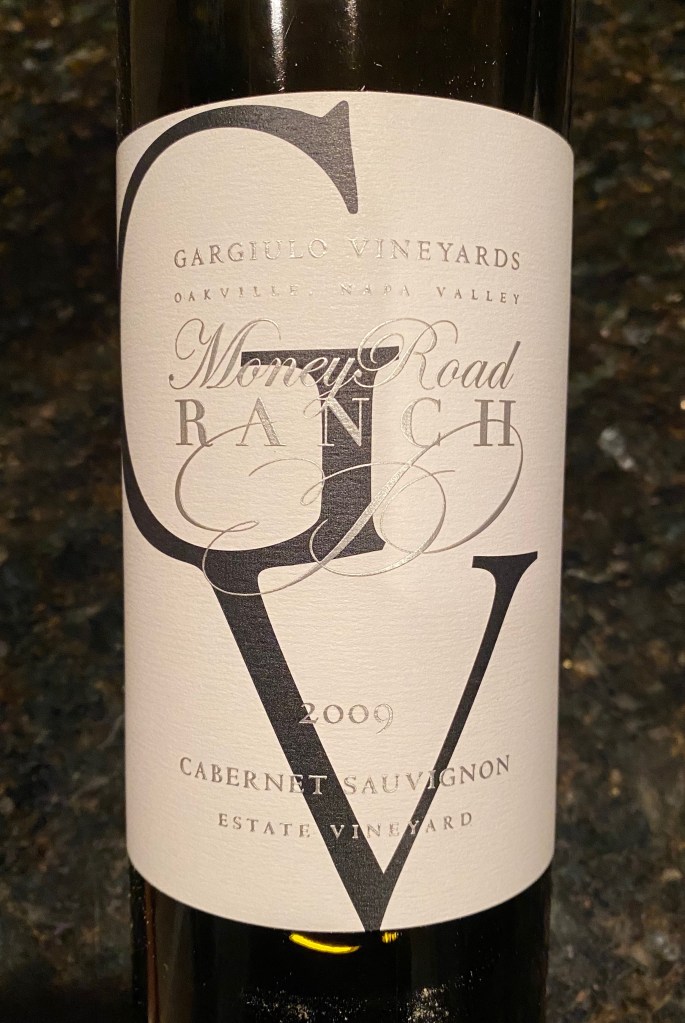
Today’s Wine: 2009 Money Road Ranch Cabernet Sauvignon

100% Cabernet Sauvignon; 14.8% ABV

The 2009 Money Road Ranch Cab is medium to deep ruby in color and slightly transparent. I let this open up in the glass, and after about 30 minutes the nose showcases aromas of blackberry, blueberry, plum, baked red berries, licorice, volcanic earth, cedar, mushroom, baking spice, and oak. There is still a bit of heat as well. On the palate, I get notes of blackberry compote, black cherry, redcurrant, jammy wild strawberry, cigar box, sweet tobacco, damp loamy soil, green herbs, syrupy cola, and a hint of vanilla. This is medium- to full-bodied with high acidity, fully integrated medium (-) tannins, and a long finish. Though this is not my favorite vintage of this wine I’ve had (it’s a bit jammy/syrupy compared to others), this is not showing any signs of slowing down and easily has another 5 years left. 883 cases produced.

Price: $80 direct from winery upon release. In regards to price, this is fairly priced but I would argue to spend a bit more to try their G Major 7 or 575 OVX bottlings, otherwise explore the incredible options around the $80 from other producers. Pair this with steak, roasted lamb, a good burger, or beef short ribs.

Utterly Elegant, Aged Bordeaux

Today’s Story: Château Léoville Las Cases

Château Léoville Las Cases is a historical Bordeaux estate rated as a Second Growth (Deuxième Cru) in the Bordeaux Wine Official Classification of 1855. Though the estate used to be much larger and is one of the oldest in the Médoc, it was split up between 1826 and 1840 as a result of the French Revolution and came into the Las Cases family as 3/5 the size of the original estate. Luckily for the family, however, their land made up the heart of the domain and therefore consists of the original terroir back to the 17th century.

Las Cases was managed by the same family through the 19th century, moving by inheritance through Pierre Jean, Adolphe, and Gabriel de Las Cases until Théophile Skawinski bought a stake in 1900 to become the manager. Today, Jean-Hubert Delon is the sole owner with the family coming in during the mid-20th century. I encourage you to take a look at the cool video on their website here, which shows the estate’s geographic location as well as a breakdown of the terroir at the domain.

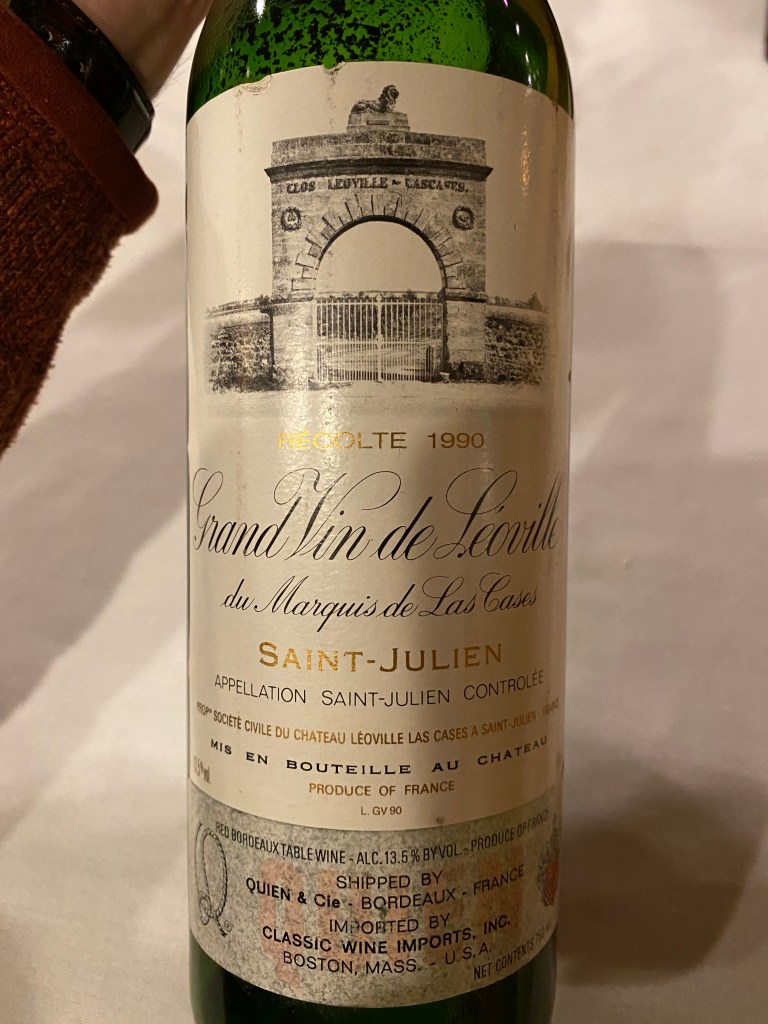
Today’s Wine: 1990 Château Léoville Las Cases

43% Cabernet Sauvignon, 29% Merlot, 21% Cabernet Franc, 7% Petit Verdot; 13.5% ABV

The 1990 LLC is opaque deep garnet/ruby in color, showing no sign of its age besides some sediment in the bottle. Though this sang right out of the bottle, the nose truly showcased its beauty after 30+ minutes in the glass with aromas of redcurrant, cassis, pencil shavings, graphite, cured meat, sous bois, tobacco, black pepper, and dried underbrush. Once in the mouth, this elegant wine shows notes of dusty blackberry, plum, redcurrant, charred earth, cigar box, leather, green herbs, and spice. This is medium-bodied with moderate acidity, fully integrated light tannins, and a medium (+) length finish.

Price: $400. A special occasion bottle opened to celebrate my recent birthday. Pair this with steak, roasted lamb, veal, or pheasant. Mushroom sauce or truffle with the steak would be a well-rewarded plus.

For another interesting review…

I reviewed the 1986 Château Léoville Las Cases alongside a 1986 Château Pichon Longueville Comtesse de Lalande back on October 28, 2019 in Bordeaux Battle. For some insight into another aged LLC, check it out! At the very least, you may be introduced to Pichon Lalande as well.

Historical Châteauneuf-du-Pape – for a Great Value!

Today’s Story: Château La Nerthe

Château La Nerthe was established in 1560 by the Tulle de Villefranche family, though they had lived in Avignon since the 14th century. Located in the Provence region in southeast France, Château La Nerthe sits about 80km north of Marseille and occupies 92 hectares of vines in the Châteauneuf-du-Pape appellation. The estate’s vines are organized into 57 different plots representing all of the appellation’s terroir variation, as well as the 13 grape varieties planted there. Château La Nerthe practices organic farming (ECOCERT certification in 1998); hand-picks, table-sorts, and destems their fruit before fermentation; uses only indigenous yeasts during fermentation; vinifies by individual plots to showcase terroir variation; and blends only after the wines have aged for 12 months.

While the proprietorship of the Tulle de Villefranche family lasted several centuries, the estate grew drastically under Marquis Jean-Dominique Tulle de Villefranche (1711-1760) when he developed the vineyards to become one of the preeminent estates throughout the Rhône Valley. Between 1736 and 1784, the castle at the estate took shape as it exists today and allowed the family to not only live on the property but host guests in elegant style. Coincidentally during this time (and the 18th century as a whole more or less), members of the Tulle de Villefranche family in high military positions embarked on marketing endeavors throughout Europe and the wines of Château La Nerthe were sold in Russia, America, England, Germany, Italy, and Spain. In 1776, Château La Nerthe became the first estate in Châteauneuf-du-Pape to ship their wines in bottles while gradually fading out barrels.

Château La Nerthe was destined for arguably its greatest change, however, in 1870 when the Tulle de Villefranche family sold it to Commander Joseph Ducos. At this time, many of Joseph Ducos’ neighbors were tearing up vineyards and replanting the land with fruit trees, however he replanted his new estate with phylloxera resistant rootstocks. These visionary efforts accomplished by Joseph Ducos helped shape his neighbors’ changes in winemaking and certainly find their place in overall history of the appellation. In 1985, the estate changed hands yet again when the Richard family purchased it and promised to ensure revival of the original values of excellence and innovation at Château La Nerthe.

Today’s Wine: 2015 Châteauneuf-du-Pape

50% Grenache Noir, 30% Syrah, 15% Mourvèdre, 5% Cinsault; 14.5% ABV

The 2015 La Nerthe CdP is moderately transparent and medium garnet in color with ruby variation near the rim. Once this breathes for about 45 minutes, the nose showcases aromas of cherry, baked strawberry, tomato sauce, cedar, cola, worn saddle leather, clay, mineral, freshly baked bread, and oak-driven spice. In the mouth, I get notes of sour cherry, tart raspberry, strawberry leaf, purple and blue florals, dried tobacco, parched dusty earth, a hint of bitter chocolate, and sandalwood. This CdP is full-bodied with high acidity, medium (+) tannins, and a long finish. This was drinking very nicely after an hour and a half decant.

Price: $50. This is a good value CdP, though there are a number of other options in the same price range that seem to be drinking better now. I’m curious to see how this develops with some bottle age. Pair this with game, steak, or lightly spiced lamb.

Remarkably Profound Oregon Pinot Noir

Today’s Story: Antica Terra

Antica Terra was established in 2005 by Scott Adelson, John Mavredakis, and Michael Kramer, three friends and partners who had collaborated before and dreamed of owning a vineyard together. This being said, vines were first planted in 1989 on the property, an 11 acre vineyard on pre-historic seabed in the Eola-Amity Hills of Oregon’s Willamette Valley. Having taken ownership of their new vineyard, Scott, John, and Michael started seeking a winemaker and their crosshairs quickly fell upon Maggie Harrison. Maggie began her winemaking career at Sine Qua Non (known for $200-$1,000+ bottles of cult Rhone varietal wines) working for Manfred Krankl and her expertise was quickly realized. In 2004, Manfred encouraged her to begin her own Syrah project on the side, and Lillian was born (I reviewed two of these Syrahs previously). Maggie worked tirelessly on her passion project wines while still tending to barrels at Sine Qua Non, demonstrating her pure passion for the craft. When Scott, John, and Michael asked Maggie to become their winemaker, she refused profusely though the three friends ultimately convinced her to simply visit the property to offer her opinions of the vineyard. 26 seconds after Maggie stepped foot into the vineyards and observed the fossils, oaks, and vines, “she found herself hunched beneath one of the trees, phone in hand, explaining to her husband that they would be moving to Oregon.” Source

The vineyard of Antica Terra is rather intense, both in appearance above the earth and underground for the vines. The vines find home amongst fossilized oyster shells and sandstone with no topsoil, leaving them to struggle for nutrients and in turn producing incredibly unique fruit. Aboveground, the vineyard is strewn with boulders, steep grades, and vines that (due to the soil) appear spindly and frail. Fruit for Antica Terra wines forms in tiny clusters with thick-skinned grapes that are half the size that is typical for their varieties and the canopy of these plants is incredibly sensitive. Maggie provides immense care and attention to these delicate vines, which culminates into unique and immeasurably profound wines. Antica Terra produces four Pinot Noir bottlings, two Chardonnays, and one Rosé.

To explore the wines of Antica Terra, join the mailing list, or plan a visit, check out their website here.

Today’s Wine: 2017 Botanica Pinot Noir

100% Pinot Noir; 14% ABV

The 2017 Botanica is pale ruby in color with slight variation toward deep garnet. This was surprisingly approachable right out of the bottle, though changed over time revealing aromas of cherry, cranberry, smoked game, earth, wet gravel, sweet tobacco, ground green cooking herbs, black licorice, rocky minerality, and a touch of oak. Once in the mouth, the wine showcases notes of crunchy raspberry, strawberry, cranberry sauce, smoke, rose, white pepper, loamy earth, a hint of nutmeg, and graphite. This Pinot is medium-bodied with medium (+) acidity, medium tannins, and a medium (+) length finish. There was some slight heat on the nose, but all around this is approachable and that heat should integrate with a couple more years of cellaring.

Price: $110 direct from winery. I am a huge fan of Antica Terra when it comes to American Pinot Noir, and Maggie Harrison’s winemaking skill for both this wine and her Lillian Syrahs make them worthy of trying. Pair this with duck, pork tenderloin, or grilled salmon.

Baby BOND

Today’s Story: Mascot Wine

Mascot Wine was “founded” in 2008 with their first commercial release, however this wine was produced by Will Harlan years beforehand to be shared with family and friends. The Mascot started as Will’s personal experiment, born from the youngest vines of Harlan Estate, Promontory, and BOND when he convinced the winemaking team (and his family including father Bill Harlan) to spare a few barrels of wine. Though Will grew up in his family’s vineyards and winery, eating some of Napa’s most precious fruit off the vines in his backyard, The Mascot marked his foray into experiencing the dramatic complexity of fermenting, blending, and producing wine first-hand, a craft he continues to master.

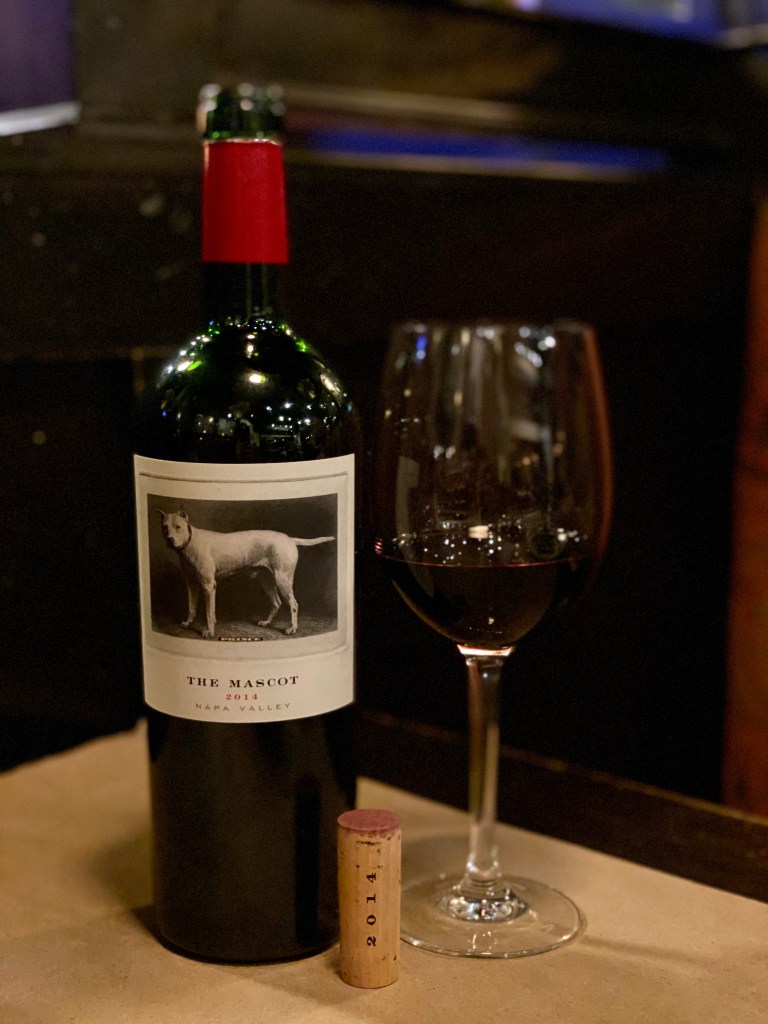
Fun fact: “The engraving of ‘Prince’ was commissioned over one-hundred years ago, by the president of the Farmers Deposit National Bank of Pittsburgh, for the bank’s stock certificates. The dog, an english bull-terrier, lived at the bank (greeting customers and employees alike), and became a beloved symbol of their down-to-earth, loyal, and personal customer service values.” Source: The Mascot

Today’s Wine: 2014 The Mascot

100% Cabernet Sauvignon (this is the only variety listed on the Mascot website, though I have seen sources that claim these wines are 90-94% Cabernet Sauvignon and the balance Merlot, Cabernet Franc, and Petit Verdot); 14.8% ABV

The 2014 Mascot is an opaque deep purple/ruby color almost black at its core. This needs an hour decant and only gets better after that, with the nose emitting aromas of blackcurrant, wild blueberry, jammy plum, redcurrant, cedar, violet, anise, graphite, tobacco leaf, pine, and slight oak. Once in the mouth, this showcases notes of blackberry, black cherry, blueberry, redcurrant, tobacco, silt, a hint of smoke, chocolate, black pepper spice, and oak. Full-bodied with medium (+) acidity, refined and tightly knit medium (+) tannins, and a long finish dominated by black fruit. This wine shows a lot of promise and drinks like a baby BOND, and since the last vintage I tasted (2011) I can tell improvements and finesse are being added.

Price: $100 direct from the winery ($140 average retail price in the US). If Harlan Estate, Promontory, and BOND are your style, this is an absolute steal on value. Though this is very big, opulent, and somewhat jammy in style (I typically steer clear of these), I cannot argue this is a great wine for those who love fruit-forward, high-quality Napa juice. It is at its core an excellent look through the developmental lens of “the Big Boys” mentioned above that start at $600 per bottle and sail past $1,000. Pair this with filet mignon.

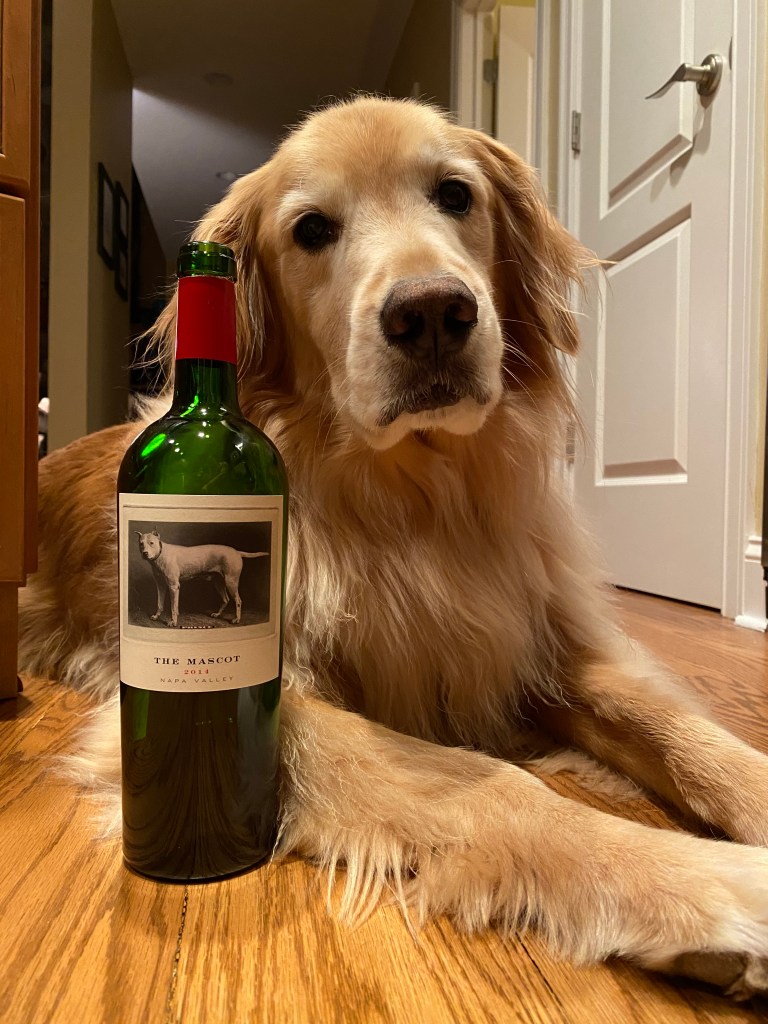
Bonus Picture:

The Mascot and my family’s mascot.

Nobility in Piedmont

Today’s Story: Cordero di Montezemolo

The Cordero di Montezemolo winery traces its roots to 1340, however the Cordero di Montezemolo family is of Spanish origin and did not settle in Piedmont until the mid-1400s. Though the family has deep roots in Piedmont, they did not find foundation in wine but rather in printing/typesetting businesses as well as military and diplomatic roles for the Royal House of Savoy. As a well-established and aristocratic family in Piedmont, the Cordero di Montezemolo family tree intertwined with the Falletti family who were one of the most noteworthy noble families in the Alba area and also proprietors of the Monfalletto Estate. In 1918, Maria Lydia (the daughter of Marchese Luigia Falletti) married Paolo Cordero di Montezemolo and the Cordero di Montezemolo family cemented their future in wine.

Maria Lydia and Paolo unfortunately passed away at young ages, however their son Paolo who was orphaned at the age of 15 grew up under the care of his grandmother Marchioness Luigia Falletti. When she passed away in 1941, Paolo inherited her entire property holdings which included the Monfalletto Estate in La Morra. Though Paolo through his ownership of the estate marks the Cordero di Montezemolo family’s foray into wine production, the estate throughout its history has been family owned and operated. Today, the estate is under control of its 19th-generation with Giovanni Cordero di Montezemolo and his children Elena and Alberto at the helm.

Though the historical single-body vineyard of the estate consists of 28 hectares (69 acres), Paolo Cordero di Montezemolo expanded the property in 1965 by purchasing a two hectare plot of old vines in the Villero area in Catiglione Falletto. The estate expanded further over the years through purchases and leasing agreements, and today total vineyard land sits at 51 hectares (126 acres). For all of their land, Cordero di Montezemolo started the organic farming certification process in 2013 and achieved certification a couple years ago. They use natural mineral products and repellents from organic material to fight parasites, organic products and green manure for fertilization, and natural grass planted beneath the rows to foster biodynamic balance. Not only do these efforts protect the land, but they help culminate into wonderful wines full of complexity and demonstrations of place.

Today’s Wine: 2015 Barolo Monfalletto

100% Nebbiolo; 14.5% ABV

The 2015 Barolo Monfalletto is deep garnet in color though moderately transparent. I decanted this for an hour and drank it over the following three hours due to its youth. Once this opens up, the rather intense nose showcases aromas of cherry, dried strawberry, rose, sweet tobacco, black licorice, black tea leaf, mint, Asian spice, cocoa powder, and oak. On the palate, I get notes of dried cherry, raspberry, cranberry, licorice, tobacco, dried rocky soil, chocolate, iron, and toasted oak. This Barolo is full-bodied with high acidity, dusty medium (+) tannins, and a long finish with notes of green herbs. Though elegant and somewhat approachable in its youth, this wine has the structure for the long haul and I would give it another three years of bottle aging and drink it over the following decade.

Price: $48. This is a great value Barolo for me, especially given the intensity and complexity it shows at a young age. Pair this with duck, quail, or game meats. Add some white truffle to these dishes and now you’re talking.

A Fierce and Violent Storm

Today’s Story: Realm Cellars

Realm Cellars was founded in 2002 with a focus on producing high-quality, limited production Bordeaux blend and single vineyard Cabernet Sauvignon wines. I previously wrote about them back on October 23, 2019 in “This Blessed Plot, This Earth…” when reviewing the 2016 The Bard. For further details on their wines, inspiration from Shakespeare, and backstory on their first estate vineyard I suggest reading this prior post if you haven’t already.

Today’s Wine: 2013 The Tempest

86% Merlot, 14% Cabernet Sauvignon; 14.6% ABV

Realm’s 2013 The Tempest is an opaque deep ruby color and there is a slight amount of sediment developing in the bottle. Once this opens up, the nose showcases aromas of blackberry, cassis, plum, cedar, damp loamy soil, worn leather, chocolate, coffee grounds, and a hint of vanilla. In the mouth, I get notes of jammy blackberry, blueberry, wet forest floor, wet slate, tobacco, dark chocolate, black licorice, espresso, slight oak, and a hint of baking spice. Overall this is a very bold and powerful Bordeaux blend that is full-bodied with high acidity, medium (+) grippy tannins, and a long dark finish dominated by black fruit and mocha.

Price: $140. Like the last bottle of Realm I drank, this is worth its price and reminded me how great often-overlooked Merlot can be. Pair this with roasted duck, beef bourguignon, or roasted vegetables.

Young and Exciting NorCal Pinot Noir

Today’s Story: Trail Marker Wine Co.

Trail Marker Wine Co. was founded in 2012 by Drew Huffine and Emily Virgil, a husband and wife duo. Drew originally studied English during his undergraduate and Masters programs, however after working for the Colorado Wine Company and being encouraged by Kent Humphrey of Eric Kent Wines to work a harvest his career shifted. Drew moved from English to wine and held positions with Copain, DuMol, Kosta Brown, and Wither Hills before becoming the winemaker for Tuck Beckstoffer Wines. After Drew met Emily, whose background is in costume design for the film industry in Los Angeles and who also shares a passion for wine, the two decided to create their own venture and moved to the Bay Area to start Trail Marker Wine Co.

Drew and Emily originally started Trail Marker with Chardonnay and Pinot Noir as their focus, and as a matter of fact their first wine came from the purchase of 1 ton of Chardonnay grapes from the remote Manchester Ridge vineyard located at 2,000 feet elevation above the Anderson Valley. This being said, Trail Marker has since branched out to Carignan, Zweigelt, and Blaufränkisch which are all sourced from small, remote, and responsibly-farmed vineyards from Mendocino to Santa Ynez. Through this approach, the goal of Trail Marker is to produce wines from cooler coastal sites that produce fruit that develops with lower sugar content and in turn produces wines with higher acidity and lower alcohol. As you might guess at this point, this philosophy finds home in the cellar as well with all of Trail Marker’s wines produced in hands-off fashion: fermentation is accomplished only with indigenous yeasts, little or no new oak is used, and handling is minimal. Thanks to their classic, Old World way of producing wines from some of the most unique vineyards in California, Trail Marker is unsurprisingly one of the most exciting new wineries I’ve come across in some time.

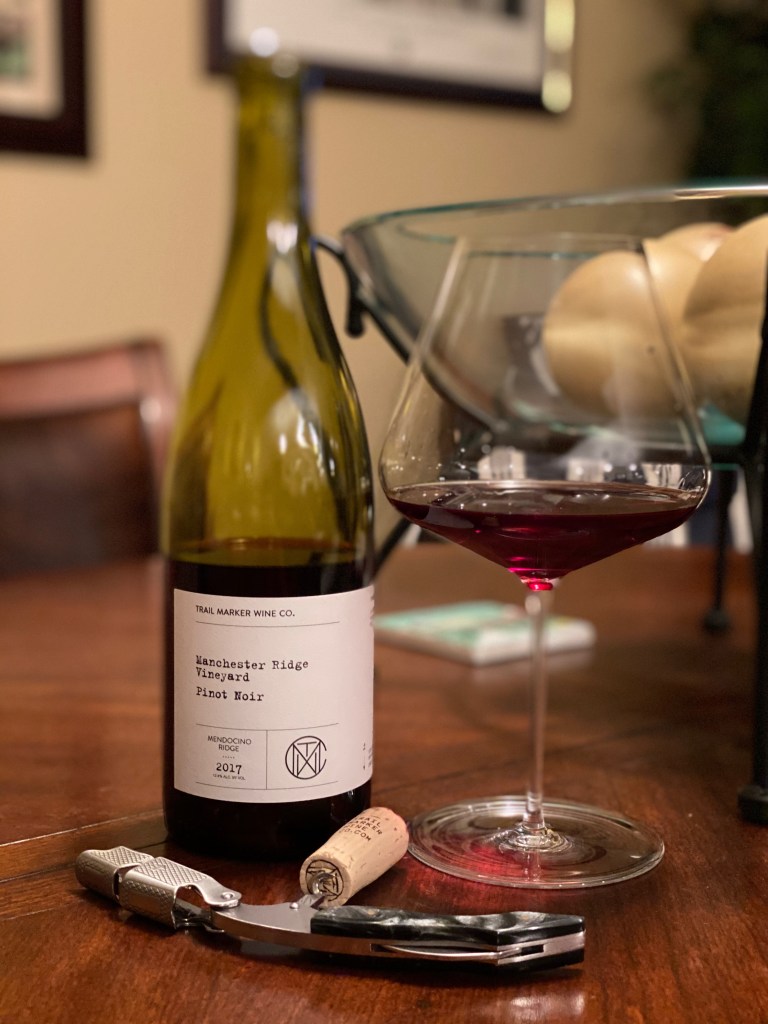
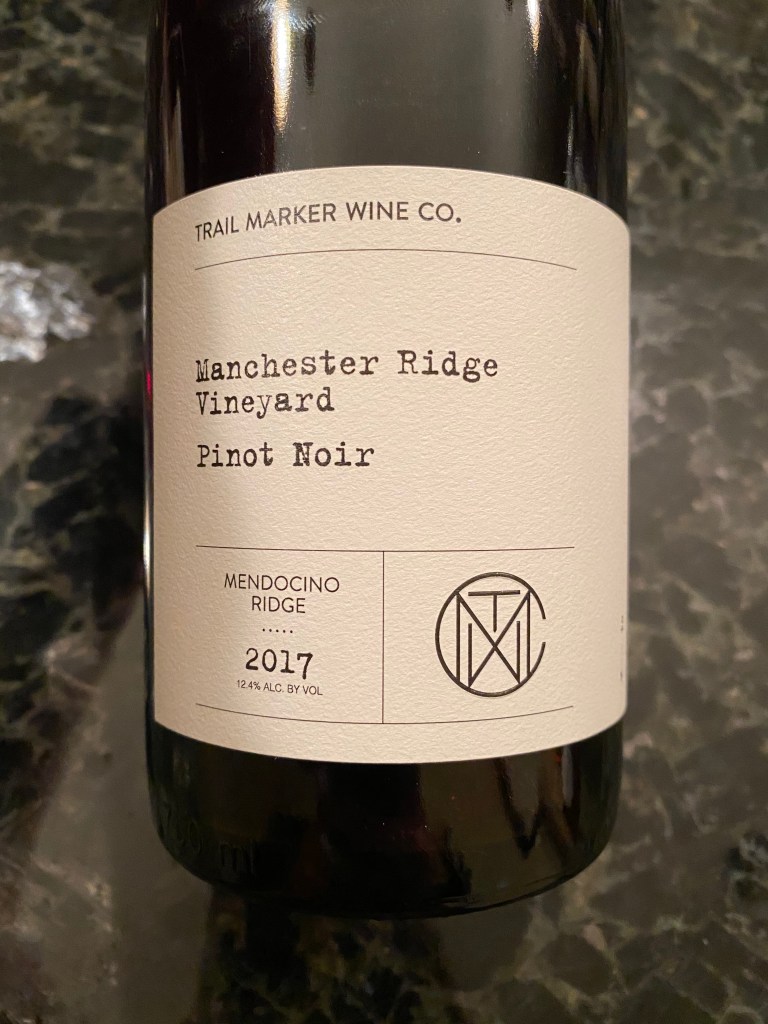
Today’s Wine: 2017 Manchester Ridge Vineyard Pinot Noir

100% Pinot Noir; 12.4% ABV

The 2017 Manchester Ridge Vineyard Pinot Noir is very pale ruby in color (almost rose petal) and nearly fully transparent. I let this wine open up in the glass for about 30 minutes, though it probably could’ve gone longer due to its youth. The nose showcases aromas of cranberry, redcurrant, red cherry, dried herbs, red and blue florals, earth, white spice, mineral, and wet stone. Once in the mouth, I get notes of tart cranberry, strawberry rhubarb, pomegranate, sweet tobacco, underbrush, white pepper, and slate. This is a medium-bodied Pinot with high acidity, low tannins, and a long finish.

Price: $44. This is a new producer for me and a wine I grabbed on an explorative impulse at the store. Nonetheless, I think this is a delicious PN at a solid price-point and I would buy this again. Pair this with roasted chicken, duck breast, or grilled salmon.