A Fixture in Chassagne-Montrachet

Today’s Story: Domaine Bernard Moreau et Fils

The history of Domaine Bernard Moreau began in 1809 when Auguste Moreau built a cellar near the Champs Gain vineyard for ease when farming his Chardonnay and Pinot Noir. It wasn’t until the 1930s, however, under Marcel Moreau that the family’s holdings started to grow exponentially. For instance, the domaine today operates on 14 hectares of vineyard land (9 hectares they own, 5 hectares they farm) and about 80% of that land was acquired by Marcel. Bernard Moreau took over the vineyards and cellar during the 1960s (at the age of 14!!) and the name “Domaine Bernard Moreau” came in 1977 under guide of Bernard and Françoise Moreau. With Bernard and Françoise at the helm, the domaine updated their winery, farming methods, and equipment in addition to buying more land to get to that 14 hectare total number. Their sons Alex and Benoît joined the team to help with winemaking and in the cellars, with their first vintage being 1995. From 1999 onward, Alex took over winemaking responsibilities and Benoît specializes in the vineyards.

The winemaking style at Domaine Bernard Moreau is best described as “hands off.” Like most estates producing exceptional wines in Burgundy, Alex and Benoît take a view that terroir should be the forefront of a wine and therefore they must care for the vineyards. While the farming practices at the domaine are characterized as sustainable (not organic or biodynamic), they use organic fertilizers with the soil and do not use pesticides. Also like many great estates, Moreau utilizes rigorous pruning, debudding, and green harvesting in an attempt to lower yields that are more expressive of the terroir. During aging of the wines, Alex uses 10-50% new French oak barrels (depending on wine and vintage) for 12-20 months (also depending on wine and vintage). For the Pinot Noir, Moreau does not rack, filter, or fine the wines at all.

Domaine Bernard Moreau produces a broad range of wines, and I highly suggest trying some of them. From the Bourgogne Blanc and Rouge to their Aligote and up through the multitude of 1er Cru Chassagne-Montrachet to the big-daddy Bâtard-Montrachet, I have not met a wine I didn’t like.
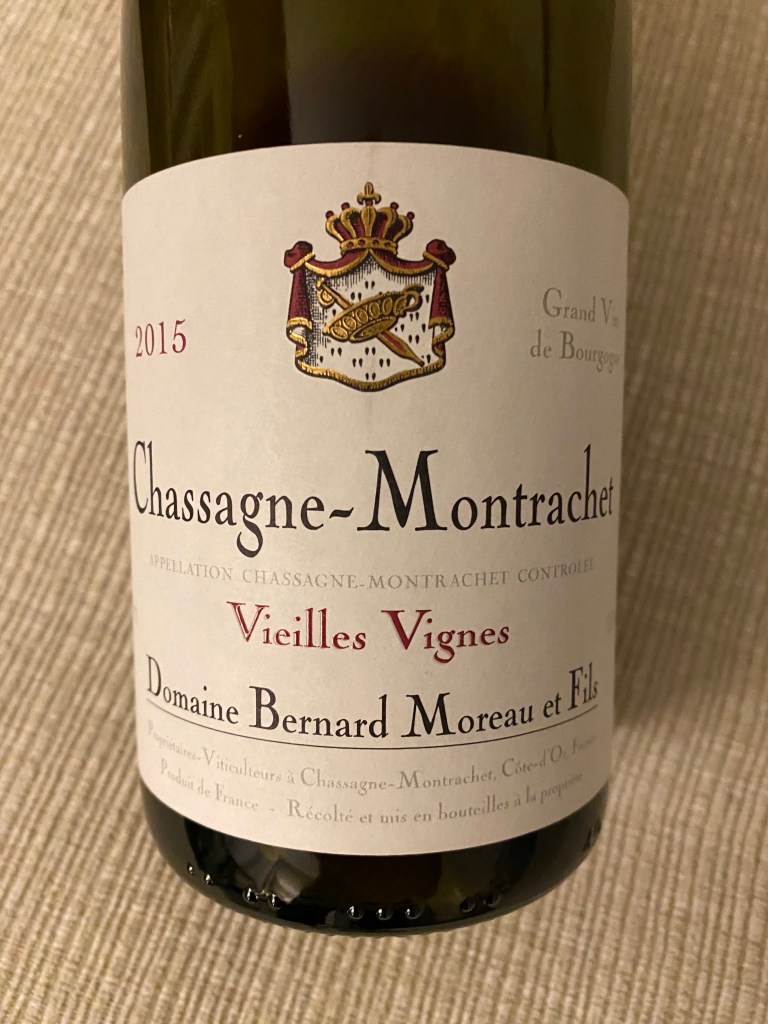
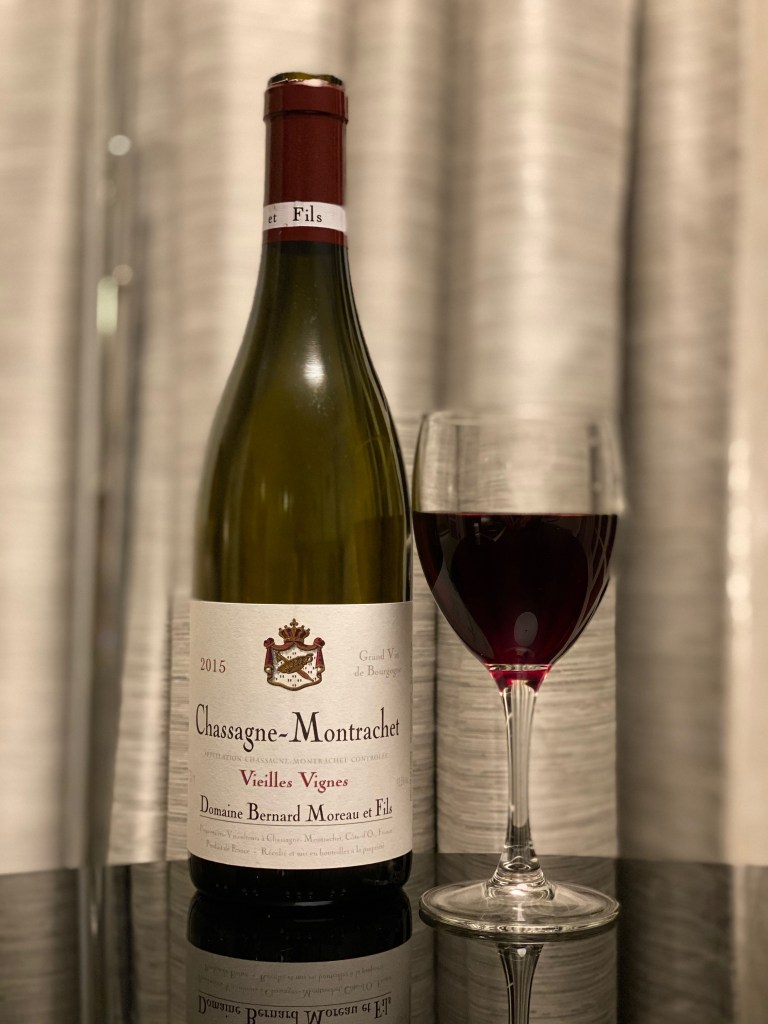
Today’s Wine: 2015 Chassagne-Montrachet Vieilles Vignes Rouge

100% Pinot Noir; 13.5% ABV

This wine is medium ruby in color and moderately transparent. Though young, this is fairly approachable after some time in a decanter or your wine glass. The nose emits aromas of black cherry, plum, black raspberry, tomato sauce, black olive, earth, green underbrush, gravel, and saline minerality. Once in the mouth, the wine showcases notes of tart cherry, underripe strawberry and raspberry, chalky earth, slight barnyard, green herbs, tobacco, and milk chocolate. I was very pleasantly surprised with the quality of this wine (though I suppose I shouldn’t be being familiar with their white wines). This is medium-bodied with medium (+) acidity, medium (-) tannins, and a medium (+) length finish.

Price: $55. This is a great value from an outstanding producer in Burgundy. Moreau’s wines seem to have flown mostly under the radar, though I noticed they are starting to pick up in demand and therefore price. Pair this with duck, roasted chicken, or even salmon.

Opulent CdP

Today’s Story: Château de Beaucastel

A much-needed easy one today, as I’m still recovering from all the wine I drank over the Thanksgiving holiday and this past weekend… I previously wrote about Château de Beaucastel on October 27 in Ethereal Chateauneuf-du-Pape, coincidentally reviewing a different vintage of the same wine today.

Long story short, Beaucastel is a long-standing and famous producer of CdP. The château has had its ups and downs and changed ownership multiple times over the years, however with its deep roots and the Perrin family’s guiding hands over the last century the wines are of exceptional quality. I encourage you to read my previous post, linked above, for more of their exciting story.

Today’s Wine: 2003 Hommage a Jacques Perrin

60% Mourvèdre, 20% Grenache, 10% Syrah, 10% Counoise; 13.5% ABV

The wine is medium ruby/garnet in color and opaque. Unfortunately I didn’t have a decanter, so I let this breathe in the glass and it allowed some initial barnyard to blow off the nose. When opened, the nose showcases aromas of black cherry, blackberry, purple florals, loamy earth, black truffle, tar, and exotic white spice. Once in the mouth, I get notes of blackberry, plum, black raspberry, black licorice, charred earth, truffle, Asian spice, and mineral. I was pleasantly surprised with the complexity of this wine given its status as a “lesser” vintage. This CdP is full-bodied with high acidity, medium refined and dusty tannins, and a medium (+) length finish. This is showing quite well right now, though I’d imagine it will stay in its optimal drinking window for another 5-7 years.

Price: $350 (though this vintage seems to have a very broad range of $250-500). Much like the last Hommage I reviewed (the 1994), this is a rare bottle experience that I couldn’t pass up. Unless you get a great deal, however, as lovely as this bottle is I’d save your money for a spectacular vintage such as 2001, 2007, or even 2009. Pair this with beef, game, or lamb (and truffles are your friend).

Nearly Lost but Rising Again

Today’s Story: Commendatore G.B. Burlotto

Burlotto, founded in the commune of Verduno during the mid-19th century by Giovan Battista Burlotto, is another historic Barolo estate. A pioneer during his time dominated by French wine, Burlotto started bottling his Barolo bearing his estate’s name before even Giacomo Conterno’s Monprivato. This was a radical move, as all of his competitors continued to sell wine in cask or demijohn. As Burlotto rose to superstardom, he became the official supplier to the Royal House of Savoy and the Duke of Abruzzi took only his wine during his arctic expedition to the North Pole. G.B. Burlotto served as winemaker for 77 years (1850-1927, his death) all the while serving as Verduno’s greatest champion and bringing the commune up to par with Serralunga and La Morra.

Unfortunately, this did not last. Once G.B. Burlotto passed away both the estate and Verduno faded once more into the background. Nonetheless, Burlotto remained a small, family-owned and run winery that today is rising once again. The estate is managed by G.B.’s great niece Mariana Burlotto and her husband Giuseppe Alessandria, while winemaking duties fall to their son Fabio. Fabio introduced many modern techniques for making wine, however he does try to stick with the traditionalist methodology of his great-great-grandfather. In making the Monvigliero, for example, Fabio gently crushes the grapes by foot, there is 60-day maceration on the skins, and he ages the wine in large wood botte (source). This process is very rare nowadays, which makes it cool that Fabio produces his best wine in this manner.

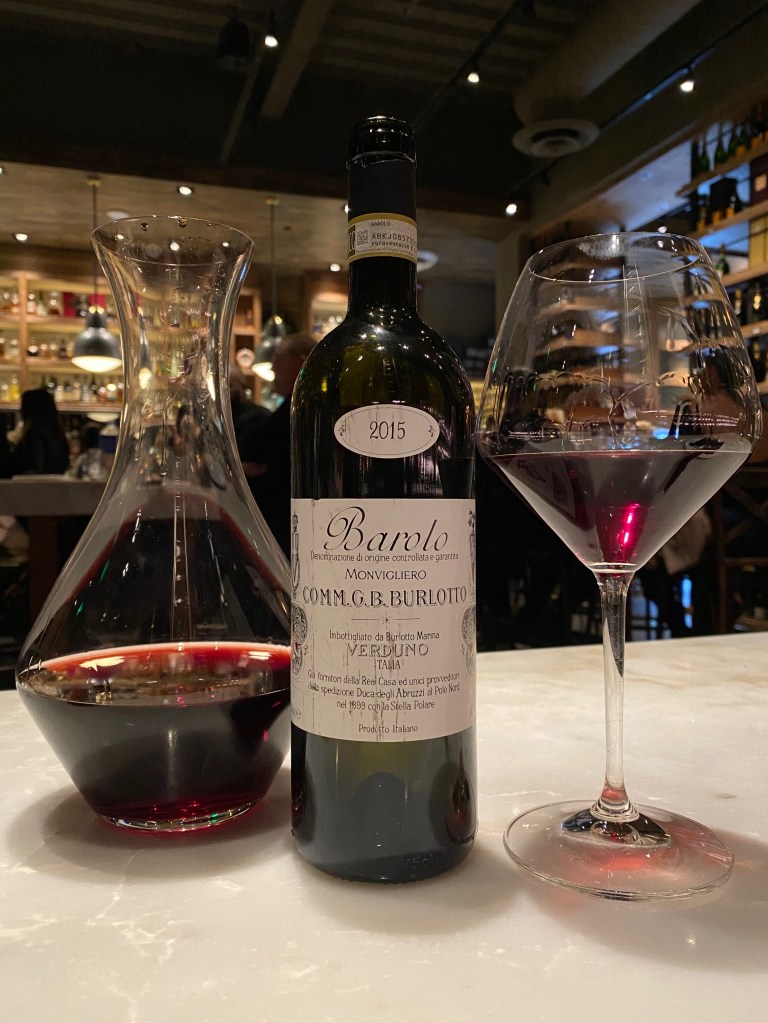
Today’s Wine: 2015 Barolo Monvigliero

100% Nebbiolo; 14.5% ABV

The wine is pale ruby red, though it is bright and rather transparent. I decanted this bottle and drank it over two hours due to its youth, but I was surprised how approachable this is. The very aromatic yet delicate nose showcases aromas of wild strawberry, raspberry, rose petal, leather, earth, tar, pine, and white pepper. Once in the mouth, the 2015 Monvigliero shows notes of black cherry, strawberry, licorice, dried soil, limestone, and mineral all in elegant fashion. This is full-bodied with high acidity, medium (+) dusty tannins, and a long finish. I would cellar this for another 10 years (even though it’s shockingly approachable) but the bottle will last for decades beyond.

Price: $200 (though I got this for a steal at $100 retail). This is a very special bottle, and Burlotto’s top-tier wine, and the elegance this shows is worth the price. Pair this with duck, quail, or pork.

No Rudy Kurniawan Here

Today’s Story: Domaine Ponsot

Domaine Ponsot traces its roots back to 1872 when William Ponsot acquired a home and vineyards that included plots in Clos des Monts-Luisants, Clos de la Roche, Gevrey-Chambertin Les Combottes, and Charmes Chambertin. Though he bottled a small amount of wine at this time, Ponsot used this mainly for personal use or for sale in restaurants the Ponsot family owned. In 1920, William’s nephew and godson Hippolyte Ponsot, a former diplomat, took over the estate due to William not having children. With the help of his brother Henri Ponsot, Hippolyte greatly expanded the estate’s holdings in Clos de la Roche. By 1932, Hippolyte was bottling all of his wines and 1934 marked the first vintage being marketed throughout France, Europe, and even the United States.

A familial estate since its beginning, Domaine Ponsot started to transition to Jean-Marie Ponsot (Hippolyte’s son) when he helped at the estate in 1942. By 1957, Hippolyte stopped working at the estate and Jean-Marie took over completely. Jean-Marie played a very important role in clonal selections within Burgundy during the 1960s and many of the well-known Pinot Noir clones including 113, 114, 115, and 667 come from Ponsot’s vineyard holdings in Clos de la Roche (source). In 1981, Jean-Marie’s son Laurent Ponsot began working at the domaine and he would ultimately take over management of the domaine in 1997 with his sister Rose-Marie. Laurent left work at the domaine in 2017, however Rose-Marie took over sole management and continues the family legacy today.

To learn about the painstakingly deliberate process Domaine Ponsot follows when they grow fruit, harvest fruit, and make wine, check out the “Our Job” tab on their website here. Also, explore the other tabs that do more justice than I probably could in what I try to keep relatively short and easy to read posts.

I will, however, leave you with a very interesting tidbit about Domaine Ponsot. Some of you may be familiar with the name Rudy Kurniawan already, but if not I encourage you to read about him or watch the “Sour Grapes” documentary on Netflix. Rudy was the center of a massive counterfeit wine fraud throughout the 2000s, and he used some of Domaine Ponsot’s “wines” throughout his crime. For instance, Rudy consigned bottles of Ponsot including 1945, 1949, 1959, 1962, 1966, and 1971 Clos St. Denis as well as a bottle of 1929 Clos de la Roche but the domaine did not estate bottle wines until 1934. Even worse, Ponsot didn’t make a Clos St. Denis until 1982. Laurent Ponsot quickly got wind of this and, knowing these wines must be fake, worked with the FBI in an attempt to bring Rudy to swift and brutal justice. (You may also know of Bill Koch’s battle against counterfeit wines….this also centered on Rudy).

Today’s Wine: 2009 Corton Bressandes Grand Cru

100% Pinot Noir; 13% ABV

This wine is medium to deep ruby in color and moderately opaque. I let this open up in the glass, and once it did the nose showcases aromas of raspberry, strawberry, rose, white pepper, chocolate, rocky soil, rosemary, and mint. Once in the mouth, I get notes of cherry, strawberry, forest floor, game, purple florals, and stone minerality. The wine is medium-bodied with high acidity, medium tannins, and a long finish.

Price: $290. Certainly a bottle for a special occasion, as many of Ponsot’s wines are. Pair this with chicken, rabbit, lamb, or a plate of mild cheese and charcuterie.

Delicious Sauvignon Blanc from Two Rockstars

Today’s Story: Favia Wines

Favia was founded in 2003 by viticulturist Annie Favia and winemaker Andy Erickson, a husband and wife duo. Annie has experience working with John Kongsgaard and Cathy Corison, though her viticulturist expertise came working under David Abreu. Andy also has an extensive resume, which includes winemaking stints at Screaming Eagle, Dalla Valle, Ovid, Harlan Estate, and Staglin amongst others. Andy also consults for Arietta, Mayacamas, and Dancing Hares Vineyard.

I had an opportunity to visit Favia for a tour and tasting back in September, and it truly is a special experience. Annie and Andy live on the property in a home built in 1886 for the Carbone family, who are believed to be the first Italian immigrants to Napa Valley. Though modernized, Annie and Andy restored the home using historical documents alongside other structures on the property. A very cool feature, the cellar sits under the family home and Favia stores their wine right where they live. Strong believers in biodynamic practices and caring for the earth, Annie and Andy planted fruit trees, an olive orchard, and a garden (which we got to try a tomato from) in addition to the existing walnut orchard.

I highly suggest a visit to Favia if you take a trip to Napa Valley, as it’s a very small, unique tasting experience and is not too far from downtown Napa. In the meantime, check out their website here to browse their wines and see incredible pictures of the property.

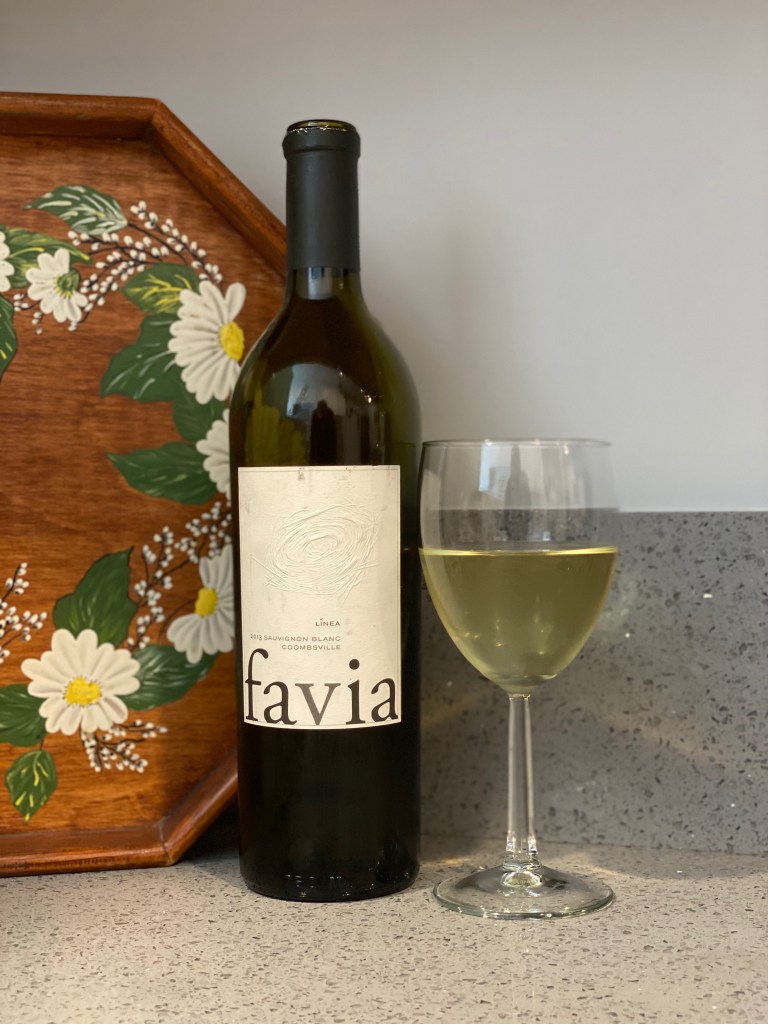
Today’s Wine: 2013 Linea Sauvignon Blanc

Unfortunately I cannot find the blend percentages for this wine, though other vintages have been both 100% Sauvignon Blanc or a blend of Sauvignon Blanc and Sauvignon Musquet. 14.2% ABV

The 2013 Linea is pale straw yellow in color and almost completely transparent. The nose on this is very lovely and delicate with aromas of apricot, tangerine, melon, stone fruit, honeysuckle, and white florals (particularly wildflowers). Once in the mouth, I get notes of pear, apricot, white peach, melon, pineapple, lemon zest, and saline minerality. This wine is medium-bodied with medium (+) acidity and a medium (+) length finish that is both crisp and refreshing.

Price: $85. This is a bit high for Sauvignon Blanc, and even though this bottle isn’t easy to come by I’d be more comfortable paying closer to $60. Pair this with oysters, sole, green vegetables, or goat cheese.

Deep-Rooted Presence in Nuits-Saint-Georges

Today’s Story: Domaine Henri Gouges

Though the Gouges family has deep-rooted history in grape farming going back 400 years, Henri Gouges didn’t form his domaine until 1920. When he no longer liked the idea of selling his fruit to négociants, Henri started producing, bottling, and selling his own wine in an effort to make higher quality wines. By 1933 this transition was fully complete and the domaine existed in similar fashion to its current status. A family endeavor throughout its history, Domaine Henri Gouges passed from Henri to his sons Marcel and Michel, then to Pierre and Christian, and finally to cousins Gregory and Antoine Gouges who manage the domaine today.

Undivided since its founding as a domaine, Henri Gouges today sits at roughly 36 acres of vineyards. Several of their holdings include Nuits St. Georges 1er Crus, though Henri Gouges does produce village wines as well. Though the winery and vineyards have been updated over time (including the use of organic viticulture and transition to a gravity flow winery), the domaine’s goal is to produce wines that truly represent and express the terroir. The harvest is carefully inspected and all fruit is completely destemmed, while vinification occurs in lined cement vats for approximately 15 days depending on wine and vintage. Once fermentation is complete, the wine is transferred to small oak barrels (typically 25% new) and each is fined with egg whites before light filtration and into the bottle.

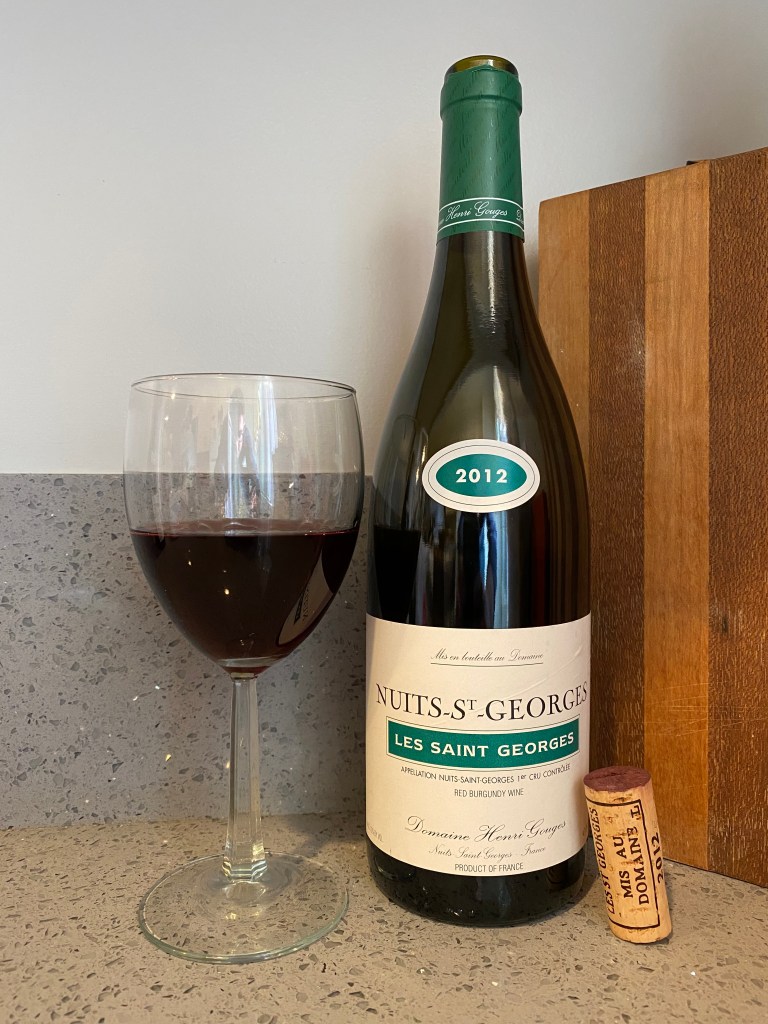
Today’s Wine: 2012 Nuits-St-Georges 1er Cru Les Saint Georges

100% Pinot Noir; 13% ABV

Pale to medium ruby in color and moderately transparent. Though visiting family for the holidays without my Zalto Burgundy glasses, the nose on this is still expressive with notes of black cherry, black and blue fruit, strawberry, forest floor, tobacco, tar, red and purple florals, and pepper. Once in the mouth, I get flavors of black plum, cherry, cranberry, cola, damp soil, licorice, clove, and slight green vegetation (though not a fault). This wine is medium-bodied with high acidity, medium tannins, and a medium (+) length finish.

Price: $160. Henri Gouges makes some great Burgundy for the price, and I’d suggest giving the wines a shot. While not necessarily easy to find, your local wine store with a good Burgundy selection should have some Henri Gouges. Pair this with lean beef, grilled or roast pork, or game birds.

Profound (Yet Elegant) Burgundy

Today’s Story: Domaine G. Roumier

Domaine Georges Roumier originated in 1924, however most of their production at that time sold to wine merchants. This changed though, in 1945, when Georges Roumier started bottling wine at the domaine. I’m thankful Roumier made this change, as I’m sure many throughout the wine world are, because the reputation of this domaine has soared higher and Roumier sits as one of the upper-echelon producers in Chambolle-Musigny, Morey-Saint-Denis, and Corton-Charlemagne.

Christophe Roumier and his father Jean-Marie became partners in 1981 to manage the domaine, which as it currently stands covers 11.52 hectares in some of Burgundy’s premier appellations. Christophe has been instrumental in the continued rise of Roumier’s wines, immeasurably due to his very strict and dedicated care for the vines and winemaking process. Christophe produces 11 different bottlings ranging from the village level to Grand Cru, each wine made with this same rigor to produce high-quality, luxurious, profound, and always delicious wines.

All of Roumier’s fruit is hand-harvested and sorted, the village wines are typically made with destemmed fruit (the rest of the wines vary), punchdowns occur during fermentation, all yeasts are natural, and minimal new oak is used for aging (Christophe says he never goes above 30%). I’d love to dive deeper into the farming and winemaking practices, but I believe this Decanter article does an incredible job and suggest you read it if you’re interested in learning more.

Today’s Wine: 2014 Morey-Saint-Denis 1er Cru Clos de la Bussière

100% Pinot Noir; 13% ABV

This wine is medium ruby in color and is fairly transparent. I recommend decanting the wine due to its youth, and once the wine opens up I get aromas of cherry, cranberry, asphalt, smoke, charred green herbs, red florals, crushed rock, and forest floor. Once in the mouth, this showcases notes of black cherry, cranberry, redcurrant, red licorice, sous bois, tobacco, green underbrush, and black tar. The 2014 Clos de la Bussière is medium-bodied with high acidity, medium tannins, and a long finish. A gorgeous wine now with some air, though I’d cellar this for another 10 years and it’ll last for decades beyond that.

Price: $200. It might be seen as tough calling a bottle of this price great value, but Roumier produces exquisite wines that are relative value to many estates whose prices have exploded the last several years. Roumier consistently makes some of my favorite wines ranging from entry-level to the absurd (their Musigny Grand Cru of this vintage goes for $13,000+ per bottle). Pair this with beef, lamb, or chicken.

Decidedly Opulent Pauillac

Today’s Story: Château Pichon Longueville Comtesse de Lalande

Another easy one today so I can get off to my Thanksgiving festivities here in the US (and hopefully a short read if you celebrate too). I wrote about Pichon Lalande back on October 28 in my post Bordeaux Battle, which I’d suggest checking out for a 1986 vintage comparison to Leoville Las Cases.

Château Pichon Longueville Comtesse de Lalande is a Second Growth (Deuxième Cru) estate based on the Bordeaux Wine Official Classification of 1855. Pichon Lalande is considered by many to be a classic example of Pauillac, known for its deep, concentrated layers of ripe fruit accompanied by notes of cassis, tobacco, and earth. For more, check out my prior post!

Today’s Wine: 2003 Château Pichon Longueville Comtesse de Lalande

65% Cabernet Sauvignon, 31% Merlot, 4% Petit Verdot; 13% ABV

The 2003 Pichon Lalande is deep purple/ruby in color and moderately opaque. This certainly needed a decant, though the wine came right out of the bottle singing. Once this opened up and warmed from cellar temperature, the wine offered aromas of plum, blackcurrant, slight barnyard, forest floor, cigar box, pencil shavings, rosemary, truffle, and a hint of oak. On the palate this showcases notes of blackberry, blackcurrant, pomegranate, graphite, smokey earth, tobacco, dried underbrush, and limestone. Full-bodied and powerful, this wine has high acidity and velvety medium (+) tannins into a long, lingering finish. Overall this is very ripe and opulent, and probably one of my favorite Pichon Lalande bottlings to date. Though drinking magnificently now, I’d cellar this another 10 years and it’ll live on even decades beyond that.

Price: $180. Though not an inexpensive bottle of wine, Pichon Lalande offers incredible value next to the First Growths and is a wonderful representation of Pauillac. Give this wine a try and you will not go wrong. Pair this with veal, pork, steak, or red game meats (and any mushroom/truffle sauce is a plus).

Killer Single Vineyard Barolo

Today’s Story: Oddero

After my lengthy post on Cos d’Estournel two days ago and yesterday’s fresh Frank Cornelissen, I have an easy post today on Oddero since I wrote about their history in King of Wines on October 11. Long story short, Oddero is one of the great historic wineries producing Barolo and Barbaresco and they date back to the 18th century. Considered a traditionalist producer, Oddero releases some of my favorite wines.

Without further ado…

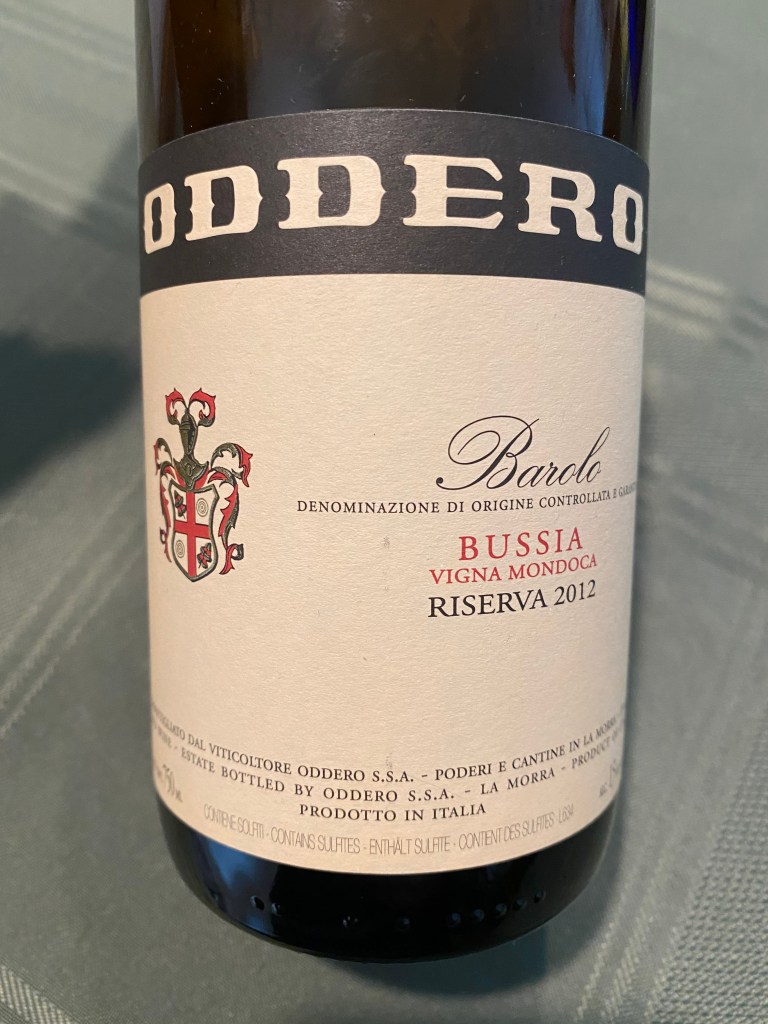
Today’s Wine: 2012 Barolo Riserva Bussia Vigna Mondoca

100% Nebbiolo; 15% ABV

This wine comes from the Mondoca vineyard, an estate vineyard of Oddero, located in Monforte d’Alba within the menzione geografica Bussia. The vineyard exemplifies some of the most difficult conditions in Piedmont, including dusty white soil poor in nutrients and the highest temperatures for any vineyard in the Barolo area.

The 2012 Riserva is bright ruby red in color and fairly transparent. Once this opens up, the nose showcases aromas of cherry, raspberry, licorice, red rose petal, tobacco leaf, tar, white pepper, and a hint of cinnamon. In the mouth, this classic Barolo shows notes of black cherry, dried cranberry, cola, underbrush, dusty dried earth, tobacco, mild chocolate, and sandstone. The wine is medium- to full-bodied with high acidity, medium (+) tannins, and a long finish. Plenty of gas left in the tank with this bottling, as I’d suggest letting it age another 7-10 years.

Price: $115. Great value for high-quality traditional Barolo. Overshadowed by the 2010 and 2013 vintages in Piedmont, I’ve realized lately there are some great values in 2012 which is still a solid vintage. Pair this with game birds, pork, or even steak.

Wonderful Etna Rosso

Today’s Story: Frank Cornelissen

Frank Cornelissen established his winery on Mount Etna in 2001 with vineyards located on the Northern Valley of the active volcano. While the winery is relatively new, Etna was still largely undiscovered as a wine region at that time. The estate currently encompasses 24 hectares, 13 being old vines in the alberello training system, 9 being old vines in modern rows, and 2 being olive orchards. To me, this is remarkable because Frank produced his first wine in 2001 with only 0.40 hectares of vines.

Viewing himself as a steward of the land, Frank adopted a farming philosophy that natural interactions in the vineyards are complex and we should allow the earth to steer farming of grapes rather than laying a heavy hand. To this end, Frank seeks to avoid all treatments on the land such as chemical or pesticide use. The farming is organic (certified in 2010), while some practices of homeopathic or biodynamic farming are also used. Buckwheat is added to soils low in organic material instead of industrial compost, soil-tilling is avoided as much as possible, and local fruits are interplanted in the vineyards to foster bee colonies. Nonetheless, Frank will use treatments such as copper sulphate and sulphur if he absolutely must to keep the vines from dying (this occurred in 2013 and 2015, both very tough vintages).

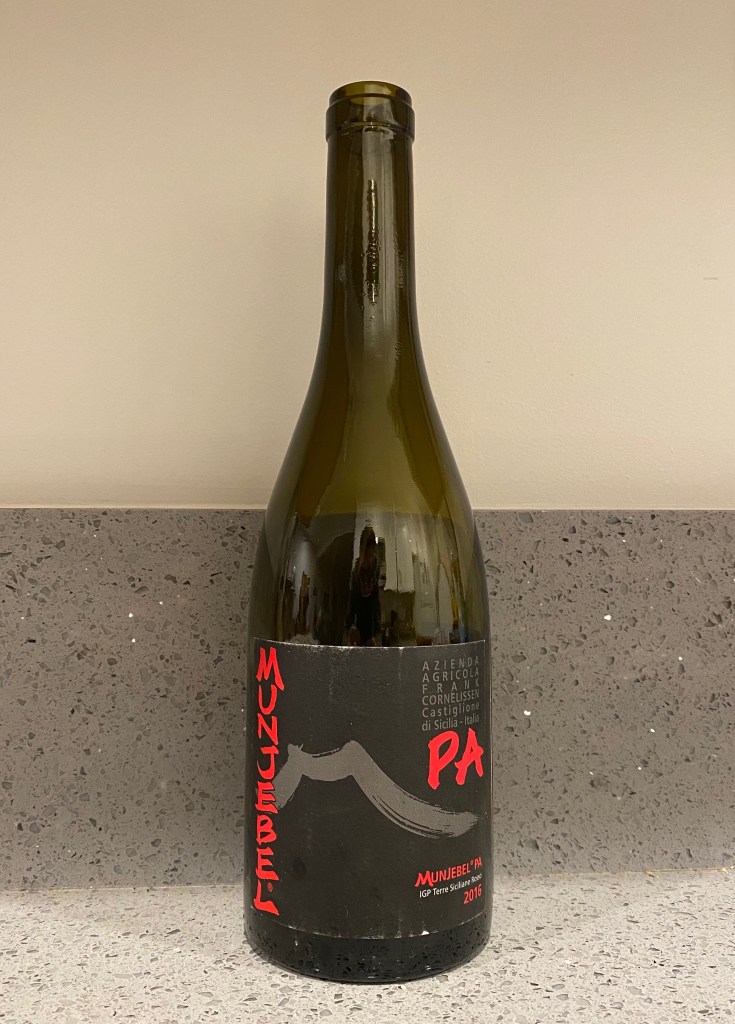
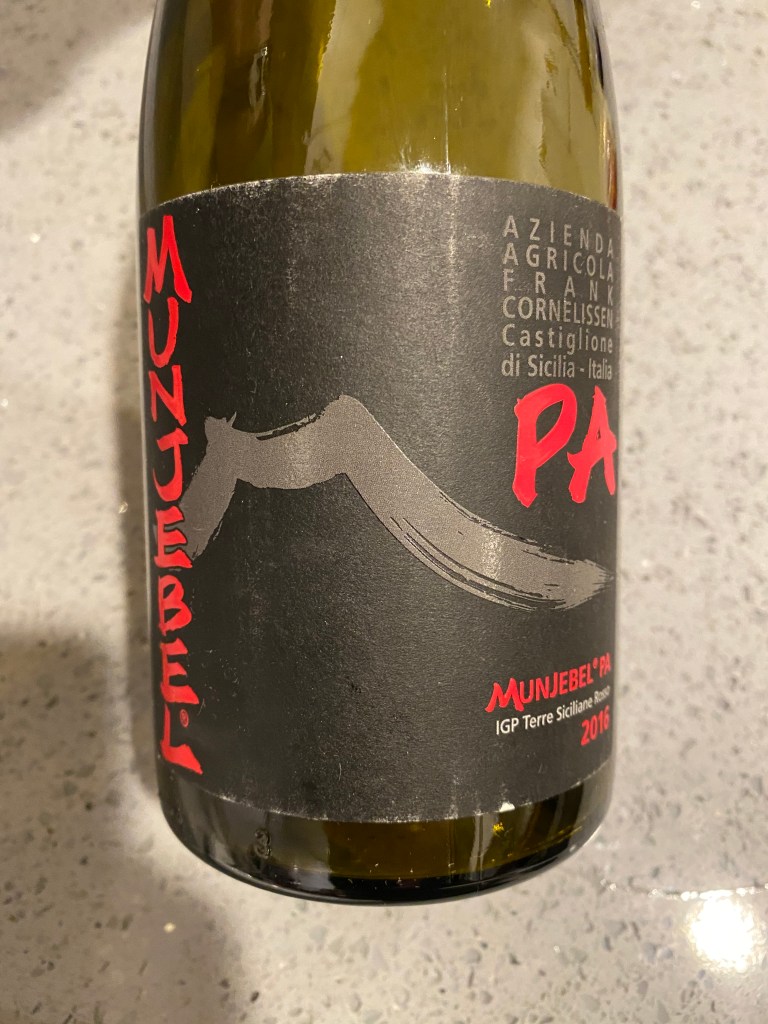
Today’s Wine: 2016 Munjebel PA

100% Nerello Mascalese; 15% ABV

The Munjebel PA is produced from the Porcaria cru in the contrada Feudo di Mezzo. Situated at 640m above sea level, the vineyard is challenging to farm and harvest though the average age of the vines is 60+ years. This wine is made with destemmed fruit that is lightly crushed, and fermentation is accomplished using only indigenous yeasts. The wine sees skin contact for 60 days during fermentation, is aged in neutral epoxy tanks, and is unfined but filtered before bottling with cartridges of 5 micron. They add as little sulfur as possible, typically ranging from 5-30 mg/l.

The 2016 is pale to medium ruby in color and fairly transparent. This benefits from a little decanting, and I’d suggest serving it in an aroma collector glass such as a Zalto Burgundy. Once this opens up, the nose offers aromas of ripe raspberry, strawberry, red rose, green herbs, tar, smoke, and volcanic soil. In the mouth, the wine showcases flavors of strawberry, raspberry, cranberry, green cooking herbs, scorched earth, and mineral. There is also a prominent rocky component to the wine as well. This is light-bodied with medium (+) acidity, medium tannins, and a medium length finish. Roughly 166 cases produced.

Price: $65. Etna wines are starting to jump in price (and justifiably so). While this bottle is on the pricier end, I’d suggest trying some of Frank Cornelissen’s other bottlings to gain exposure to the magnificent wines being produced there. You can typically find the standard Munjebel Rosso for $40 or less. Pair this with meatballs, steak, pork, or tuna.