This should be a fairly short and easy read today, as I already talked about the history of Lillian Winery in my post Sensual Syrah a few weeks back. Long story short, Maggie Harrison worked with the Krankl family at Sine Qua Non, and Manfred Krankl encouraged her to start her own Syrah endeavor. Lillian was born in 2004 from that encouragement.
The wine I reviewed several weeks ago was a 2013 Lillian Syrah, while today’s wine is the 2013 Gold Series Syrah. While the two wines are obviously similar in style and overall profile, the Gold Series is a smaller production bottling which Maggie says comes from “a small number of barrels that speak with a different voice.” In other words, the Gold Series comes from barrels with completely different expressions than the rest of the wine bottled as the Syrah. While Maggie will blend some of these barrels with the main Syrah to add complexity, she bottles them on their own to portray a wine that is “singularly exquisite.”
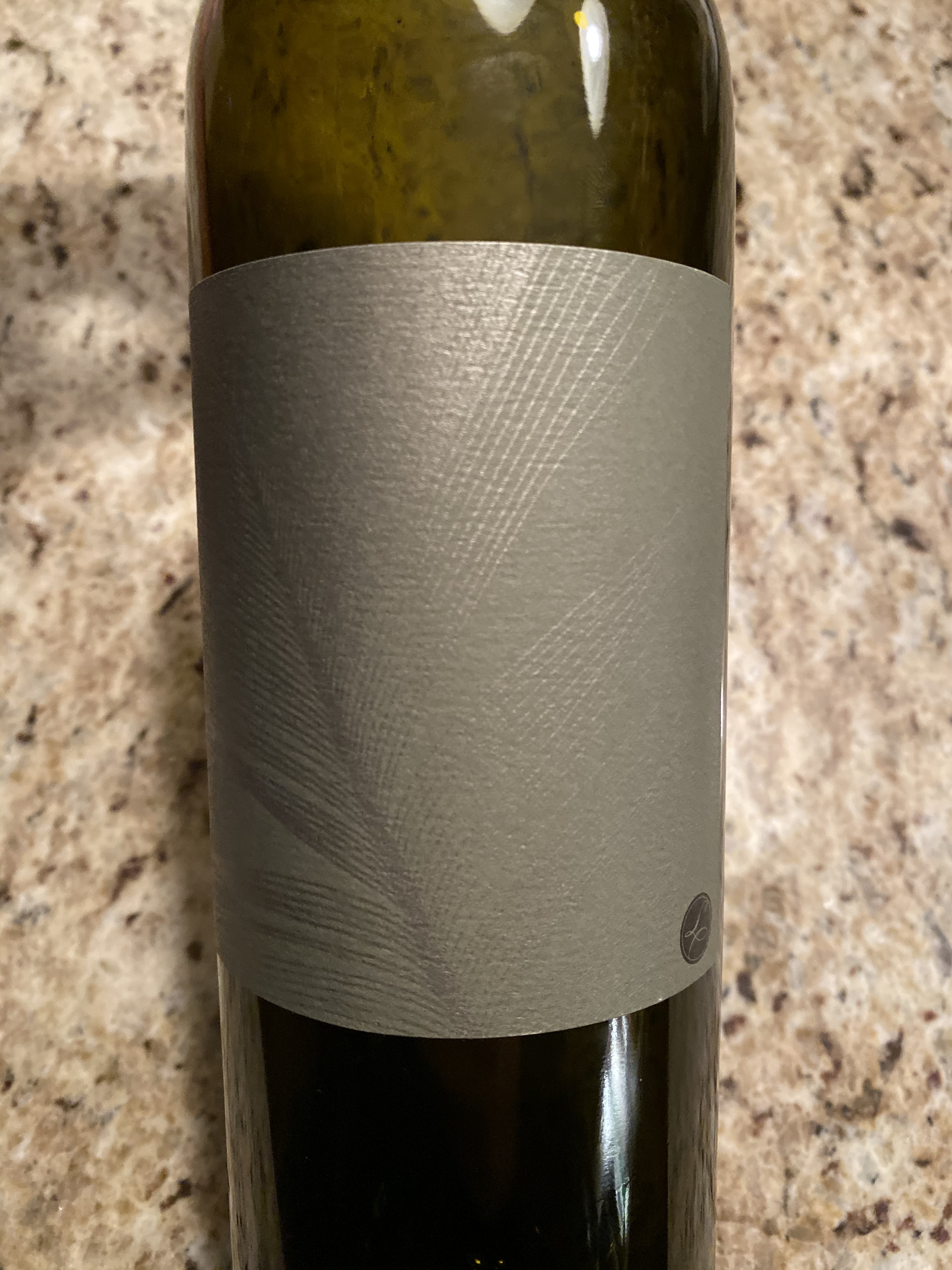
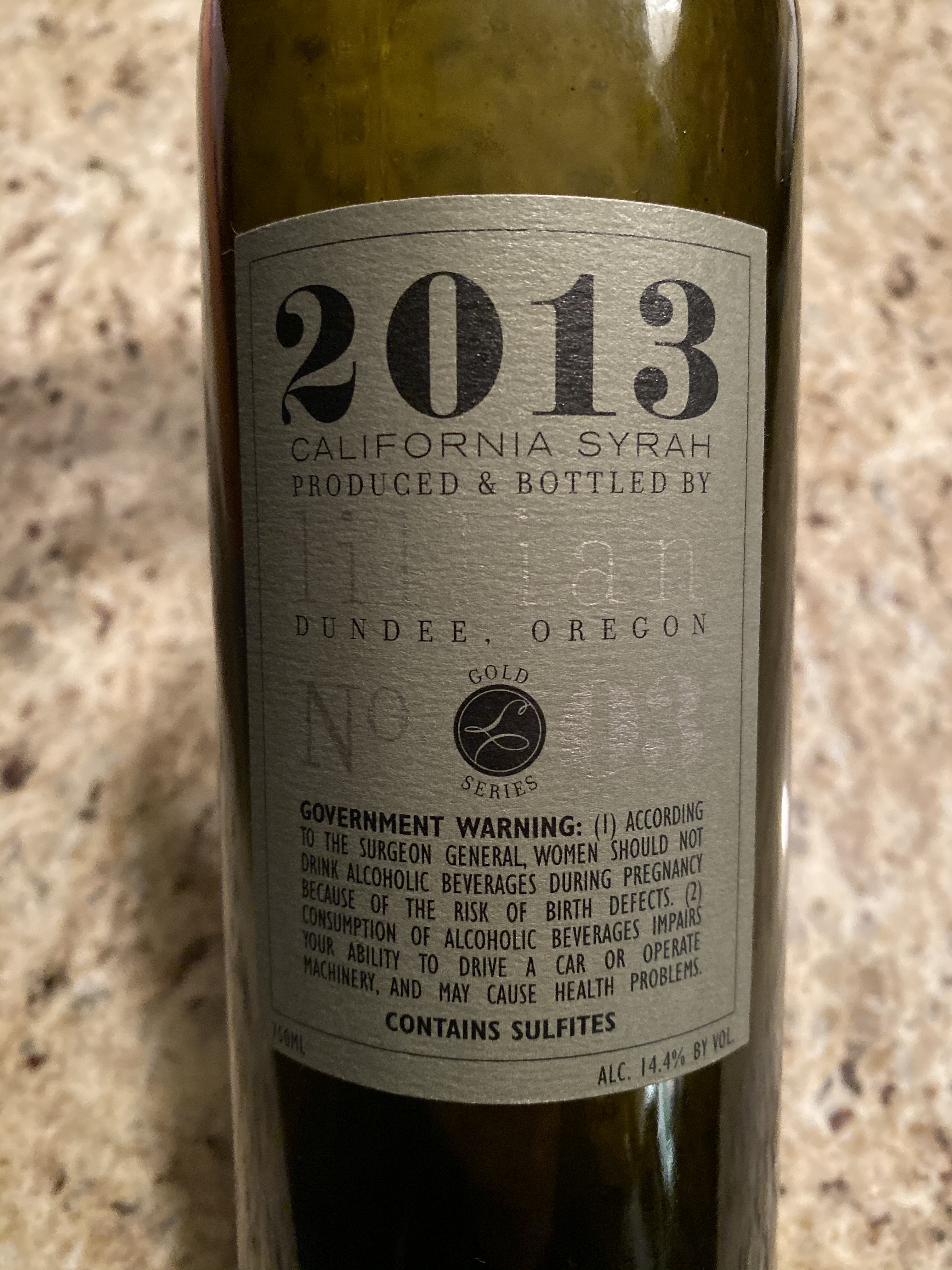
Today’s Wine: 2013 Lillian Syrah Gold Series No. 03
100% Syrah; 14.4% ABV
With the 2013 Lillian Syrah still fresh in my head from a few weeks ago, I thought it would be very interesting to open this Gold Series for comparison. Based on the youth of this wine and my experience with the 2013 Syrah recently, I decanted this bottle for five hours. The wine is deep, opaque purple in color with moderate staining on the glass. On the nose I get aromas of plum, cassis, mint, cinnamon, crushed stone, and loamy earth. Once in the mouth, the wine boasts flavors of blueberry, black cherry, rocky soil, granite, and smoke. Full-bodied with medium (+) acidity, surprisingly refined yet medium tannins, and a long, bold finish. Much like the standard Syrah, I’m excited to try this one again in another five years.
Price: $100. Again, due to Maggie’s history with Syrah, the precision of her wines, and the rarity of these bottlings this is worth the price. Pair this with a leg of lamb, bbq ribs, or a burger.
Domaine des Roches Neuves was founded in 1992 by Thierry Germain following his move to the Loire Valley from his native Bordeaux. At 23 years old, Thierry soon met Charly Foucault from Clos Rougeard who would become an inspiration behind some of his winemaking practices. Thierry converted his domaine to biodynamic viticulture, as well as being certified organic, in an effort to let his vines guide him rather than play a heavier hand that removes truth and transparency from terroir to bottle. This practice helps Thierry’s wines showcase vibrant ripe fruits (thanks in addition to relatively early harvesting) with incredible purity while avoiding rustic vegetal notes. Also, his red wines do not typically have high tannin but rather integrated, soft tannins conducive to drinkability.
When harvesting his fruit, Thierry practices very traditional methods such as hand harvesting and hand sorting at the winery. Further, all of his wines are fermented with natural yeasts in no new oak barrels or tanks. For the wine I am reviewing today, grapes are 100% de-stemmed and fermented in conical tanks. There is a great overview of Thierry’s history and practices here, as well as an overview of his wine portfolio. The domaine’s website also contains fact sheets and an overview of the history and people here.
Today’s Wine: 2015 Les Mémoires
100% Cabernet Franc; 13% ABV
I picked this up based on a recommendation from an employee at one of my local wine stores. He believes that Thierry Germain is making some of the best wine in Saumur Champigny, and while I need to explore more offerings from the region this already seems tough to beat. The wine is a deep ruby color, though I almost want to call it purple especially near the edges of the glass. The nose showcases aromas of crunchy blackberry, steel cut oats, chocolate, cigar box, damp forest floor, violets, slight bell pepper, and mineral. Once in the mouth, we get flavors of tart blueberry, blackberry, pomegranate, loamy earth, pepper, and limestone minerality. This is medium- to full-bodied with medium (+) acidity, medium tannins, and a long finish. Give this a few more years of bottle age, though if you can’t wait it is drinking well with some air.
Price: $70. This is a rockstar wine well worth the price tag, especially compared to some of their neighbors. The traditional style does a beautiful job portraying the “place,” and this wine comes from 110+ year old vines. Pair this with beef, pork, roast chicken, duck, or lamb.
Joseph Drouhin is a historic producer in Burgundy that found its start in 1880. Joseph, a 22 year old from Chablis, moved to Beaune and started his own wine company with the aim of providing high quality wines. His son Maurice, however, shifted the focus to estate grape growing and winemaking by purchasing land in Clos des Mouches and Clos de Vougeot, amongst other appellations. Robert Drouhin, who succeeded Maurice in 1957, ties most with Joseph Drouhin’s state as it sits today. Robert acquired a great deal of vineyard land, including in Chablis, and was one of the first producers who stopped using pesticides and other chemicals in Burgundy. Today, Robert’s children Philippe, Véronique, Laurent, and Frédéric carry on the legacy of this great producer with the same founding principles of creating high quality, true to form wines at heart.
Today, Joseph Drouhin is one of the largest estates in Burgundy consisting of 78 hectares (193 acres) throughout Chablis, Côte de Nuits, Côte de Beaune, and Côte Chalonnaise. Most of the wines are of 1er Cru or Grand Cru status, with vineyards planted to both Pinot Noir and Chardonnay. In addition to their own vineyard land, Drouhin purchases some fruit from other established vineyard owners who they have longstanding relationships with. This allows them to produce a broader assortment of wines for distribution throughout the world.
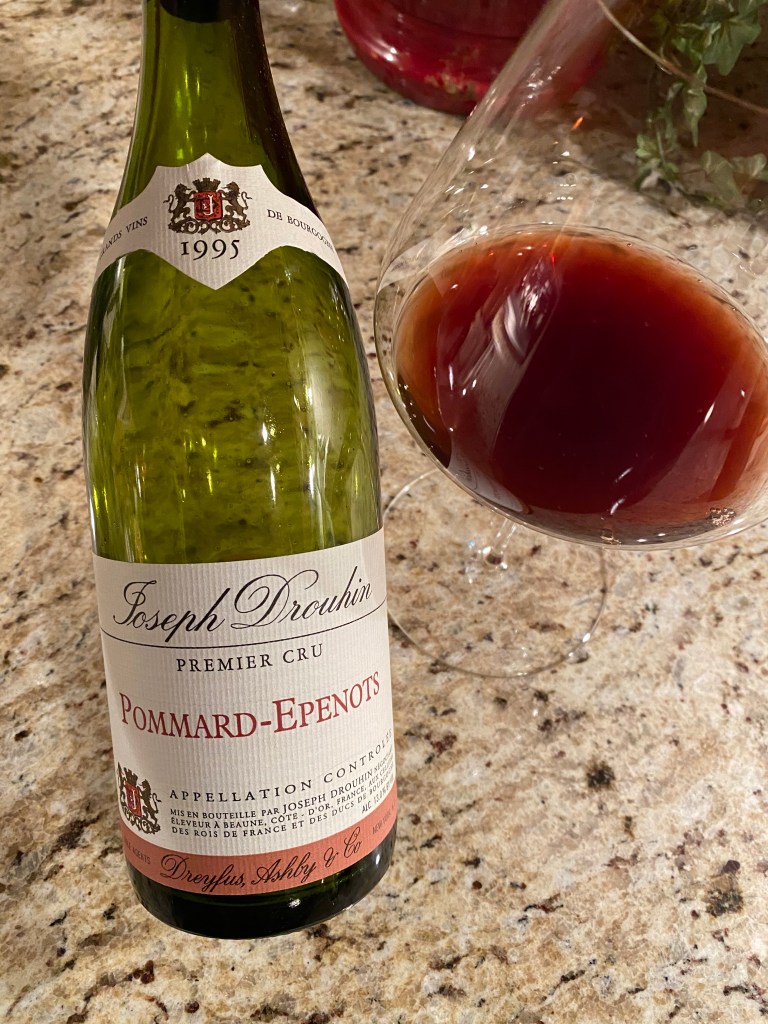
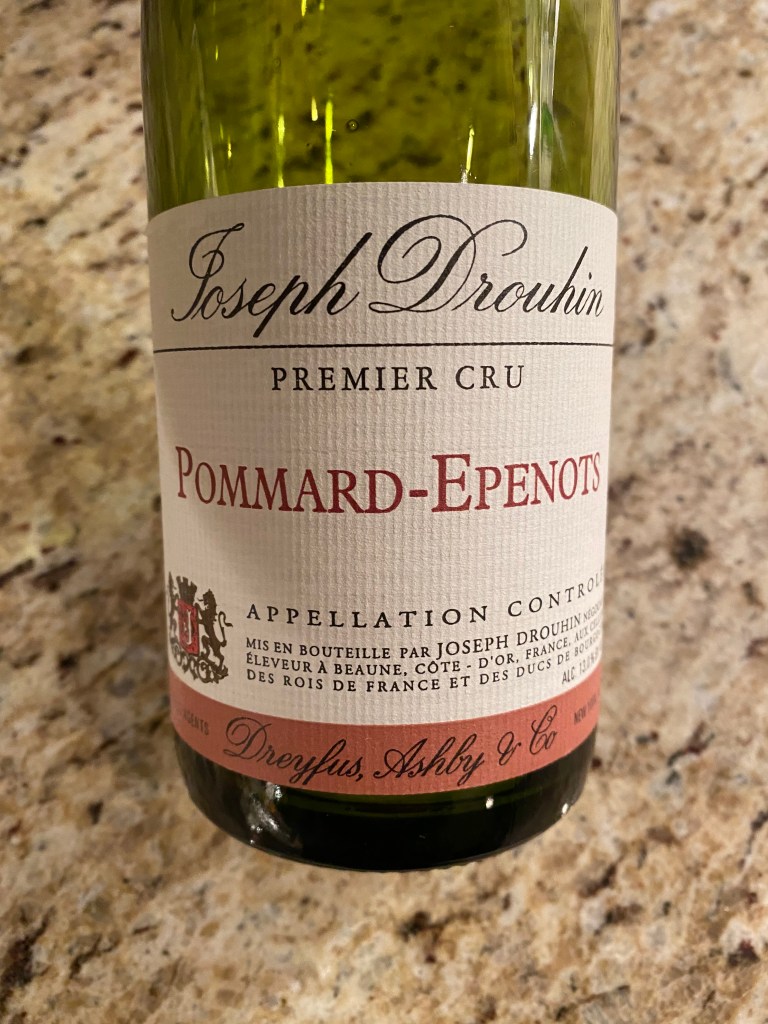
Today’s Wine: 1995 1er Cru Pommard-Epenots
100% Pinot Noir; 13% ABV
In appearance the wine is cloudy pale ruby turning garnet near the rim. This threw very fine sediment that snuck through the filter, however I did pour some through cheesecloth which cleared it up. On the nose, we get aromas of baked cherry, overripe cranberry, dried green herbs, sous bois, cedar, and tobacco. Once in the mouth, the wine showcases notes of tart cherry, red licorice, wet stone, smoked red meat, and green underbrush. Holding up remarkably well, this is medium-bodied with high acidity and fully integrated light tannins into a medium length finish.
Price: $150. Really cool experience finding and drinking aged Burgundy. Pair this with duck, lamb, or a burger.
Blankiet’s roots start with Claude and Katherine Blankiet, a couple who spent years searching for land conducive to grape growing on the western foothills of the Mayacamas Mountains. Finally, in early 1996, an agent working with the Blankiet family showed them an undeveloped property above the famous Napanook vineyard (and Dominus Estate) and the Blankiets purchased the land on sight. From the onset of their search, Claude and Katherine desired to create world-class, high-quality, small production Bordeaux style wines and now, with ownership of the land, set right to work.
During development of the vineyards, the Blankiets brought in famed viticulturist David Abreu and winemaker Helen Turley for their expertise. The terroir of Blankiet consists of three volcanic knolls with alluvial deposits between them thanks to water flowing down from the mountains. The vineyards are broken into four sections, each with a unique subsoil and microclimate, and they used root stocks from First Growth Bordeaux estates to get the ball rolling. I encourage you to explore their website https://www.blankiet.com/ for more, as I’d like to talk about my visit to the winery for the remainder of this post.
I was fortunate to visit the winery this past September, and we arrived slowly by way of a long, winding gravel road up into the hills to the Blankiet gate. Once inside, our host Patrick greeted us and walked us through the vineyards where we had an opportunity to taste grapes off the vine. Fortunately, workers were sorting grapes while we were there so we got to see them using dual optical sorters in addition to the classic hand sorting many of us picture. Before walking into the caves, Patrick shared some juice that was beginning its fermentation process from one of the tanks.
Once in the caves, Patrick showed us the barrels they use and discussed the process of fighting evaporation as the wine ages. Unlike many wineries, Blankiet does not fill evaporation in their barrels with sulfur dioxide but rather refills the barrel with more wine. This practice fits well with their goal of crafting wine that is true to form and of superior quality.
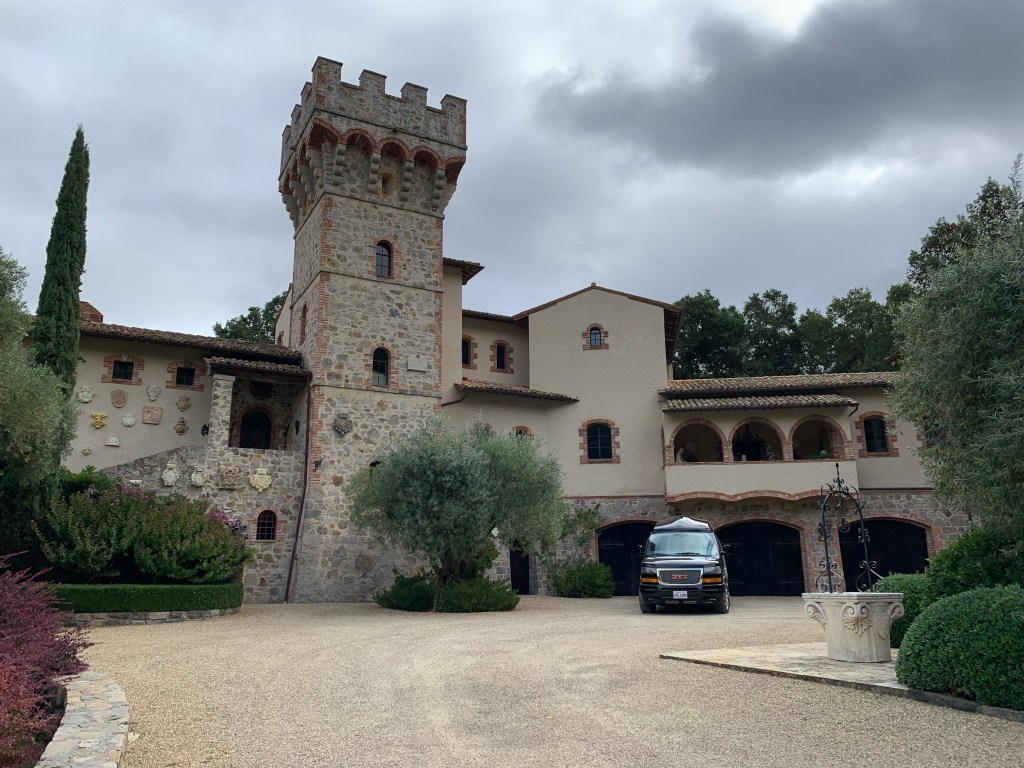
After the cave tour, we drove further uphill to the Blankiet family home to do what we came for: taste wine. Patrick guided us through a tasting of five wines accompanied by cheese, charcuterie, and crackers while also giving us a sneak peek tasting of two wines yet to be released. Keep an eye out for these two upcoming wines, as they were quite delicious and while I’m keeping them secret now I think you will know exactly what I’m talking about when they launch.
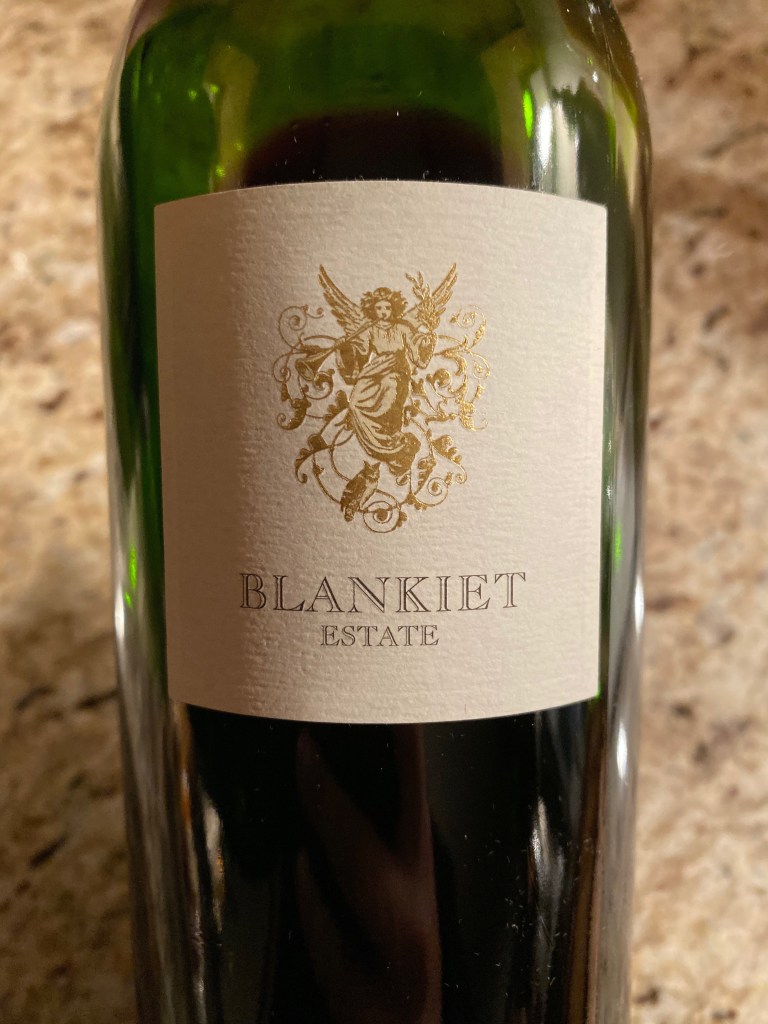
I had an opportunity to taste several Blankiet wines during my visit this past September (including two special wines not yet released), but figured it prudent to open a bottle now to review for my site. This wine is medium purple/ruby in color and surprisingly transparent. The nose showcases aromas of blackberry, blueberry, redcurrant, raspberry, gravel, mild tobacco, and oak. The nose is rather tight due to its youth and either needs a ton of air or 5-7 more years of bottle age. On the palate we get notes of black cherry, cranberry, jammy strawberry, crushed stone almost chalky in nature, blood, and ground cooking herbs. Full-bodied with mouthwatering high acidity, medium (+) tannins, and a long black fruit compote finish. This is already a wonderfully elegant wine but needs time to bring out some of the complexities. 840 cases produced.
Price: $200. This is not your everyday bottle, though it is a fantastic bottle of wine for a celebratory occasion. After visiting the winery and seeing how much care, precision, and hard work goes into each bottle I can comfortably recommend the wine. Pair this with beef or lamb.
From My Visit:
Tasting room at Blankiet Estate. Visited September 27, 2019.Blankiet family home, with tasting room in the lower level.
Williams Selyem is another winery with a homegrown, almost comical, origin story. During the 1970s, Burt Williams received several tons of free grapes from a grower with an abundance of fruit that would otherwise most likely go to waste. With his friend Ed Selyem, in 1979 the pair started making wine at Burt’s house over the weekends with Zinfandel grapes from the Martinelli family. Though the two set out to make wine only for themselves as a hobby, Burt and Ed fully devoted to the endeavor in 1981 and named their winery Hacienda del Rio.
They bottled their first vintage in 1982 and released it commercially in 1983, however Hacienda Winery quickly sent a cease and desist letter that resulted in removal of “Hacienda” from Burt and Ed’s labels. In 1984, Burt and Ed moved production to a nearby garage in Fulton and released the first vintage with the now famous and globally-recognized Williams Selyem label.
Williams Selyem picked up steam very quickly for a new winery in California. In 1985, they released their first vineyard-designated Pinot Noir from the Rochioli Vineyard and in 1987 that wine won the California State Fair Sweepstakes Prize for top red wine. With its status blown open, Williams Selyem grew a cult following and they needed to create a waitlist that immediately spanned 2-3 years. In 1989, Williams Selyem relocated to the Allen Ranch facility on Westside Road and in 1992 Burt and Ed quit their day jobs to focus 100% on their wine.
Six years later, however, in 1998 Burt and Ed sold Williams Selyem to John Dyson who was a longtime customer. John and his wife Kathe still own the winery today, and throughout their proprietorship greatly expanded winemaking by adding estate vineyards along the way. In my opinion, their crowning and historic achievement came in 2009 when Wine Enthusiast Magazine rated the 2007 Williams Selyem Litton Estate Pinot Noir 100 points. This was the first North American Pinot Noir in history to achieve a perfect score by a major wine publication, and while I do not buy wine simply based on score and have my issues with the scale, I can appreciate the historic achievement.
Today’s Wine: 2014 Pinot Noir Ferrington Vineyard
100% Pinot Noir; 13.4% ABV
Over the years, I’ve had a number of different wines from Williams Selyem (both red and white) but this is my first from the famous Ferrington Vineyard. Today’s Pinot is pale/medium ruby in color and fairly transparent. On the nose are aromas of dried strawberry, crushed cranberry, mint, aged leather, gravelly road after a rainstorm, and a hint of oak. The palate showcases notes of ripe red raspberry, strawberry jam, cinnamon, lightly scorched earth, and slate. Medium-bodied with medium (+) bright acidity, medium (-) tannins, and a long mouthwatering finish.
Price: $100, getting up there with the Kosta Browne I reviewed about two weeks back. This is an exceptional quality Pinot that I highly recommend (I love every wine I’ve had from them), though there are some great options for half the price. Pair this with salmon, chicken, pork, or charcuterie.
I talked about Alpha Omega’s origins in a prior post (A Napa Take On Chablis), though will reproduce it briefly here.
Alpha Omega is the creation of Robin and Michelle Baggett following their move to Napa Valley in 2006. Though Robin began his foray into wine much earlier, in 1988 as a grape grower and in 1998 by starting Tolosa Winery, Michelle worked in the design and development of hospitality brands before the couple culminated their pursuits into Alpha Omega.
The winery, as I mentioned before, is known for their red wines and particularly high-quality single vineyard Cabernet Sauvignon. However, we have a couple bottles of the Cabernet Franc, a limited bottling I can no longer find online, that I thought would be fun to review prior to reviewing one of their single vineyard Cabs. Cab Franc is probably known to most as a blending grape for Bordeaux wines, however they are becoming much easier to find as a standalone wine.
For those of you relatively new to wine, Cabernet Franc and Sauvignon Blanc are the two parents of Cabernet Sauvignon. The cross occurred during the mid-1600s in southwestern France.
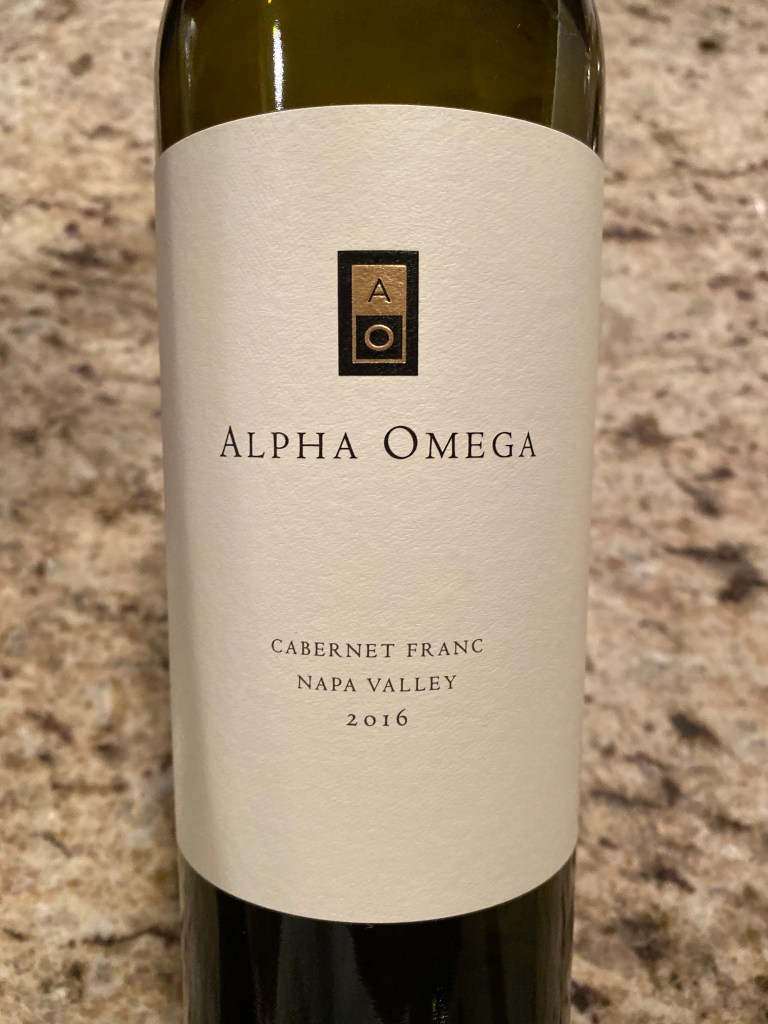
Today’s Wine: 2016 Cabernet Franc
100% Cabernet Franc; 15.5% ABV
This is a cool offering from Alpha Omega, as I did not know they released a Cabernet Franc specific wine. That being said, this does appear to be a limited release available to mailing list members since I cannot find anymore on their website or stores online.
In color, the wine is medium purple with pale purple/ruby variation toward the edges of the glass. I double decanted this bottle so it would be ready for dinner, and with the accelerated air it opened up nicely. On the nose, we have aromas of blackberry, blueberry, plum, lilac, leather, sweet tobacco, and oak. There is a slight hint of alcohol on the nose as well, likely due to its relatively high ABV. Once in the mouth, flavors on the palate include blackcurrant, blueberry jam, loamy earth, tobacco leaf, and black pepper. This medium-bodied red has medium (+) acidity, medium (+) tannins, and a long, dark-fruit-forward finish.
Price: $100. Given similar-priced, high-quality Cab Franc I’ve tried, I think this is worth the tag if you’re used to paying around $100 for your wine. Nonetheless, I recently tried some outstanding Cab Franc from Tuscany and Michigan for about 1/3 the price and I think you’d be well served trying more Cab Franc from these regions or Chile and Argentina. Pair this with beef, duck, or pork (we had it with bbq pork sandwiches).
Note:
If you would like to try some French Cab Franc, keep an eye out for some Chinon!
Domaines Albert Bichot traces its roots back to 1831 when Bernard Bichot started a wine trading business. Hippolyte, Bernard’s son, succeeded him and was the first family member to purchase vines in Volnay due to his belief that upstream control of the product is vital to his success as a merchant. This expansion of sorts prompted Albert Bichot, Hippolyte’s son and the first to bear the name, to set home base in Beaune in 1912.
As the family endeavor grew exponentially, the second Albert Bichot (born 1900) set an emphasis on international trade and travelled constantly throughout the world to introduce the family’s wines. During the second half of the 20th century, Albert’s sons Albert, Bernard, Bénigne, and Jean-Marc helped expand the domaine with this same mentality. For instance, they constructed a large cellar, bottling center, and winery to produce wine for distribution to every inhabited continent.
Still a family brand today, Albéric Bichot joined in the early 1990s and took over management responsibilities in 1996. Albéric’s main challenges thus far have been converting to organic viticulture in the Côte-d’Or vineyards, adhering and changing with global tastes, laws, and market trends, and increasing the world’s knowledge and respect for Burgundy wine. He dramatically expanded Albert Bichot’s vinification capacity again in 2010 and the company’s vineyards now total 6 estates throughout Burgundy.
Today’s Wine: 2014 Chassagne-Montrachet
100% Chardonnay; 13% ABV
I’ve had several wines, both white and red, from Albert Bichot and the quality to price ratio is always quite good. This easy-drinking Chassagne-Montrachet is pale yellow/straw in color with water white variation near the edges of the glass. On the nose are aromas of pear, peach, stone fruit, lemon citrus, cream, and white florals. Once in the mouth, flavors of pear, melon, pineapple, lemon zest, and white pepper abound. Full-bodied with vibrant medium (+) acidity, the wine finishes well-rounded with buttery notes.
Price: $55, great QPR for this wine. Pair this with chicken, fish, or crab.
Château Léoville Las Cases is a historical Bordeaux estate rated as a Second Growth (Deuxième Cru) in the Bordeaux Wine Official Classification of 1855. Though the estate used to be much larger and is one of the oldest in the Médoc, it was split up between 1826 and 1840 as a result of the French Revolution and came into the Las Cases family as 3/5 the size of the original estate. Luckily for the family, however, their land made up the heart of the domain and therefore consists of the original terroir back to the 17th century.
Las Cases was managed by the same family through the 19th century, moving by inheritance through Pierre Jean, Adolphe, and Gabriel de Las Cases until Théophile Skawinski bought a stake in 1900 to become the manager. Today, Jean-Hubert Delon is the sole owner with the family coming in during the mid-20th century. I encourage you to take a look at the cool video on their website here, which shows the estate’s geographic location as well as a breakdown of the terroir at the domain.
Château Pichon Longueville Comtesse de Lalande is also a Second Growth (Deuxième Cru) based on the Bordeaux Wine Official Classification of 1855. Pichon Lalande is considered by many to be a classic example of Pauillac, known for its deep, concentrated layers of ripe fruit accompanied by notes of cassis, tobacco, and earth.
Similar to Léoville Las Cases, Pichon Lalande was once part of a much larger estate. As ownership changed hands over the years, Pichon Lalande earned its name when the founder’s daughter Therese received it as a dowry for her marriage to Jacques de Pichon Longueville. During the 18th century, the estate was dominated by women (Therese de Rauzan, Germaine de Lajus, and Marie Branda de Terrefort) throughout the winemaking process until Baron Joseph de Pichon Longueville took over for his mother. In 1850, with his death, the estate split between his two sons and three daughters and ultimately resulted in the division of Comtesse de Lalande and Pichon Baron.
With no familial heirs, Edouard Miailhe and Louis Miailhe purchased Pichon Lalande following WWI. Edouard’s daughter, May-Eliane de Lencquesaing took over management in 1978 and became a prominent ambassador for Bordeaux wines while dramatically increasing quality of her estate. One of her major endeavors, and possibly most famous, was growing the size of Pichon Lalande from 40 hectares of vines to 89. In 2007, however, May-Eliane sold a majority stake of the estate to the Rouzaud family, owners of Roederer Champagne, and management changes as well as renovations took place.
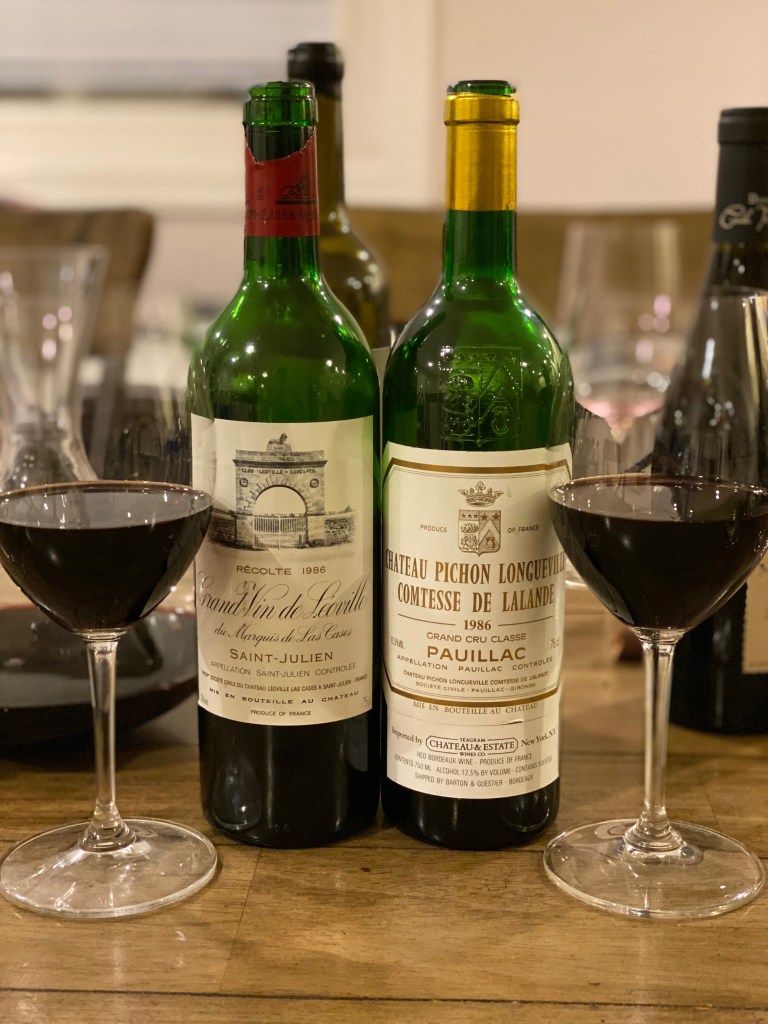
While I’d put the fill level on this bottle between top shoulder and into neck, a pull of the cork showed immediately that we were in for a beautiful, textbook Bordeaux. No need to decant this one, we just let it slow ox in the bottle and glass. In appearance this is still deep ruby with slight garnet rim variation. On the nose, I got aromas of crème de cassis, graphite, pencil shavings, tobacco leaf, and forest floor. Once in the mouth, this luxurious medium- to full-bodied wine shows notes of black and blue fruits, crushed stone, cigar box, and ground green herbs with a hint of black pepper. We get high acidity and medium dusty tannins into a long finish.
Price: $500. Another rare bottle that my generous friend shared (the ’86 Pichon was his too) so we could do this side-by-side tasting. If you can stomach paying the price, this wine is damn near perfect. Pair with steak with a peppercorn or mushroom sauce.
Today’s 2nd Wine: 1986 Château Pichon Longueville Comtesse de Lalande
This is my second bottle of 1986 Pichon Lalande, coincidentally consumed with my same friend who was there for the first bottle. While fill level and provenance of the bottle are good, this seems to be significantly more advanced than the first one (tasted April 2018). Color on this was more light ruby and borderline garnet. After slow ox in the bottle and a glass, the nose offered aromas of stale cranberry, red apple skins, graphite, eucalyptus, chocolate, and pyrazine that unfortunately didn’t want to blow off. Perhaps this needed more air time than we gave it, but regardless it was an overall solid nose save for the pyrazine. Once in the mouth, the wine showcases flavors of green herbs, cigar box, mushroom, black peppercorn, and forest floor. Due to this more advanced stage, the palate certainly showed better than the nose. Medium-bodied with medium (+) acidity, medium tannins, and a medium (+) length finish.
Price: $250. If you can guarantee the provenance, this is well worth the price. As with any aged wine you take a risk, however to try old Bordeaux and such a classic example of it, the potential reward is there. Pair with steak.
Winner: 1986 Château Léoville Las Cases
The Léoville Las Cases drank with such elegance and class while being a textbook representation of what Bordeaux is and what it should be. I am already hoping and dreaming that I get a chance to taste it again.
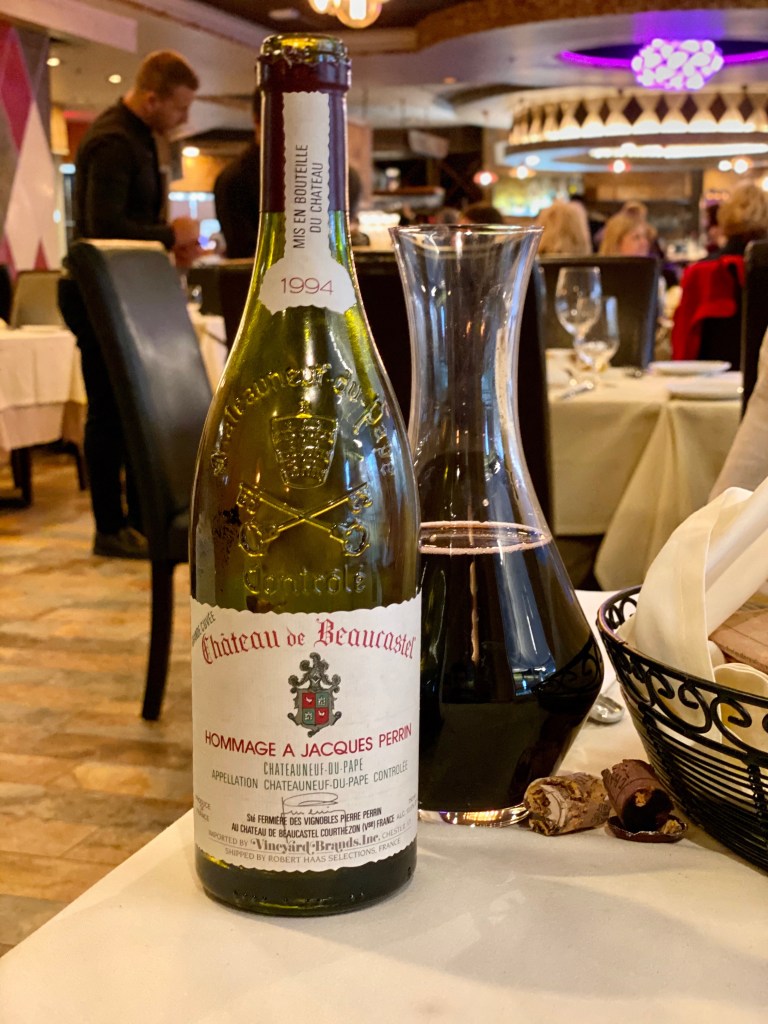
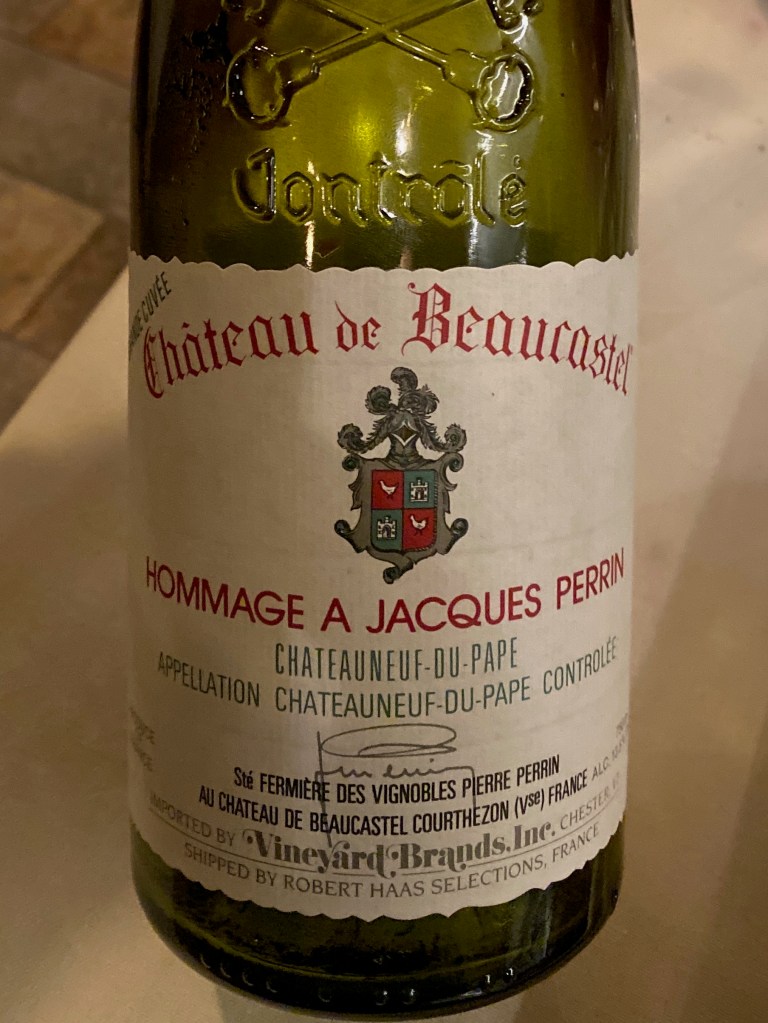
Château de Beaucastel, as it exists today, traces its history back to 1549 when Pierre de Beaucastel purchased a barn and plot of land extending to Coudoulet. Chateauneuf-du-Pape (which translates to “the Pope’s new castle”), however, is a French AOC that traces its history back to the early 1300s. In 1321, Pope John XXII sent four barrels from the papal cellars to be filled with wine in the region and constructed a castle for his use. As the wine became a favorite of the Pope’s, it became known as “Vin du Pape” until eventually becoming Chateauneuf-du-Pape (CdP).
Though Beaucastel’s origins place the estate well within CdP’s winemaking history, there is no certain record of vines on the property until many years later in the early 1800s when ownership credits to Etienne Gontard. As some of you may know, however, phylloxera hit vineyards during the 19th century and, with the estate under new ownership yet again by Élie Dussaud, Dussaud decided not to replant vines and rather sold the estate.
With over 300 years of history at this point, Beaucastel’s true winemaking prowess did not come about until Pierre Tramier purchased the estate in 1909. Under his ownership, he led massive vineyard replanting efforts and eventually transferred responsibility to his son-in-law Pierre Perrin. Perrin dramatically expanded the vineyard holdings during his tutelage and the estate has been in the Perrin family since then, eventually passing to his son Jacques Perrin who managed the estate until 1978.
Today, Jacques’ sons Jean-Pierre and François Perrin continue to manage the estate with the help of Marc, Pierre, Thomas, Cécile, Charles, Matthieu, and César who make up the fifth generation. They continue to farm their vineyards organically, a practice since 1950 at the estate, and introduced biodynamic farming in 1974. Grapes are always picked exclusively by hand and carefully monitored to use only the best fruit.
I am a big fan of Chateauneuf-du-Pape, and every bottle I’ve enjoyed from Beaucastel has been a wonderful representation. However, this is my first time trying the Hommage as they can be hard to find and come at a significantly higher price-point. The Hommage, as the name states, is made in honor of Jacques Perrin and comes from the best vines on the property.
Our wine today is opaque medium ruby in color with pale ruby variation toward the edges of the glass. Slightly tight on the nose, we let this decant while my friend and I enjoyed a different bottle. Once the wine opened, the nose offered aromas of dusty pomegranate, graphite, sous bois, wet gravel, mushroom, and cigar ash. This is another wine I could smell all day. Since that’s not the main point of wine, the palate showcases notes of chewy cherry, red licorice, tobacco, soggy earth, and green underbrush. A beautiful bottle with plenty of gas left in the tank, this is full-bodied with moderately high acidity, fully integrated mild tannins, and a long finish that really made me wish we had more with my last sip.
Price: $500. Certainly a rare experience and one made possible thanks to my good friend’s tendency for sharing. Pair this with beef, game, or lamb and add a mushroom sauce.
Once you’re hooked on white Burgundy, there’s no going back.
Today’s Story: Etienne Sauzet
Domaine Etienne Sauzet found its origin in the early 20th century when Etienne inherited and purchased additional grape vines in the village of Puligny-Montrachet. A family endeavor throughout its history, the domaine has operated under four generations and became modernized under Etienne’s granddaughter, Jeanine Boillot, and her husband Gérard Boudot. The efforts by Jeanine and Gérard include improved vinification techniques and a transition to biodynamic farming. Currently, Jeanine’s daughter Emilie and her husband Benoît Riffault produce the wines.
Comprised of 15 hectares distributed on Puligny-Montrachet, Chassagne-Montrachet, and Cormot-le-Grand in the Hautes côtes de Beaune, the domaine produces an assortment of white wines. Like many producers, Sauzet offers a regional Borgogne but also produces Puligny-Montrachet and Chassagne-Montrachet villages, nine 1er Crus (including the one I am reviewing today), and four Grand Crus. Sauzet’s Grand Cru sites include Montrachet, Chevalier-Montrachet, Batard-Montrachet, and Bienvenues-Batard-Montrachet.
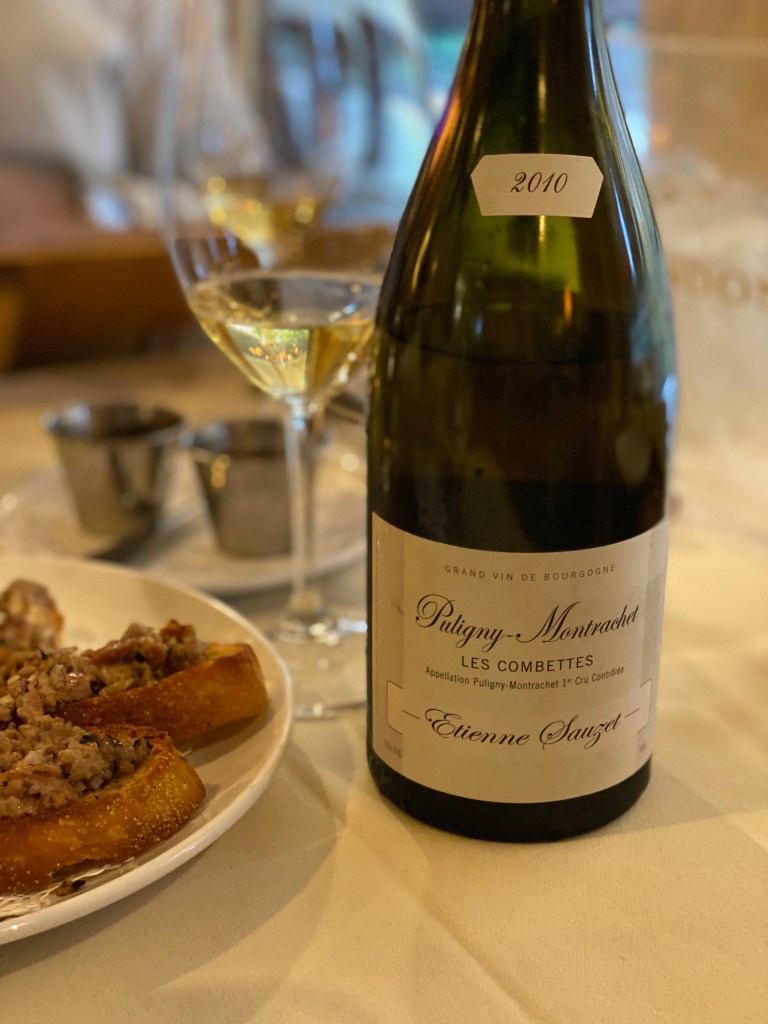
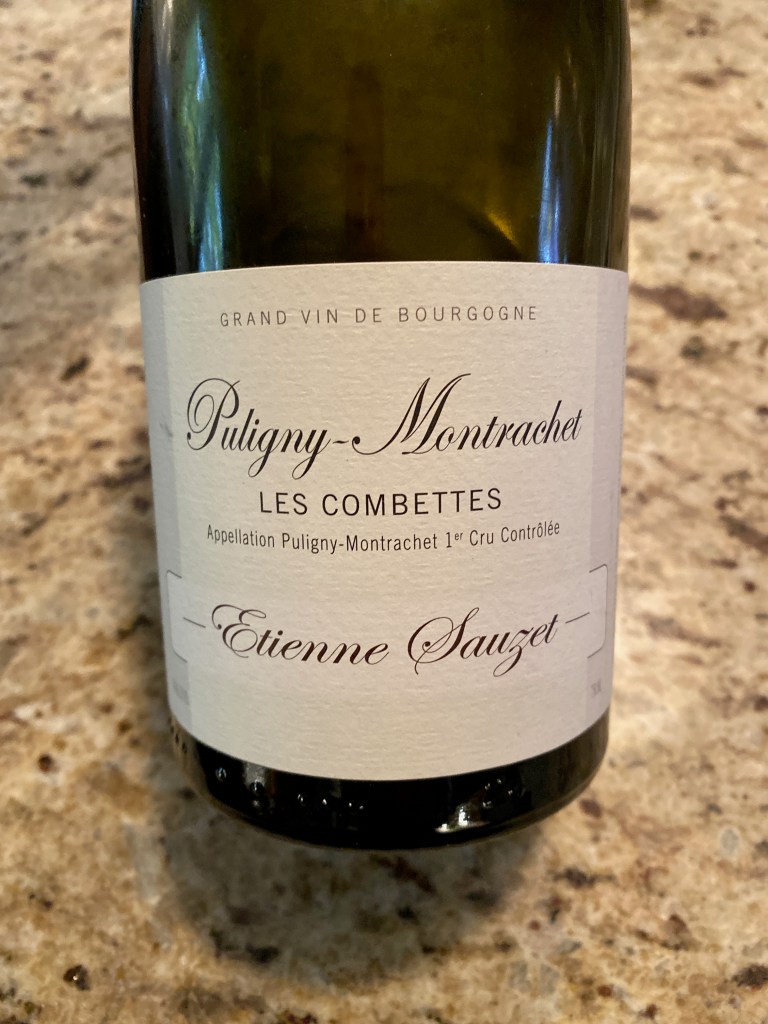
Today’s Wine: 2010 Puligny-Montrachet Les Combettes
100% Chardonnay; 13.5% ABV
When seeking out a white Burgundy to be the first wine for dinner with a good friend, I was very excited to find this bottle which happens to be my first from Etienne Sauzet. In appearance, this wine is a gorgeous, crystal-clear pale gold. As the wine opened up, enthralling aromas of pitted melon, honeysuckle, white florals, flakey vanilla pastry, Manchego cheese, white chocolate, and cotton candy (!) leap from the glass. My eyes, as well as my friend’s, nearly popped out every time we took a sniff. On the palate, we got flavors of stone fruit, lemon zest, baked green apple, white pepper, butter, and seaside minerality. Utterly complex and still way too young, this wine is full-bodied with mouthwatering high acidity that culminates into an oily yet luxurious mouthfeel. I will buy more to lay down.
Price: $160. This is an outstanding value for 1er Cru white Burgundy. Already drinking beautifully, the age-worthiness of this bottle makes it a staple in any cellar. Pair this with shellfish, particularly lobster. It even went well with our Italian sausage bruschetta.











 JB's Wine Talk