Pasta Night? Look No Further

Today’s Story: Santa Margherita

Santa Margherita was founded in 1935 by Count Gaetano Marzotto, a pioneering vintner who helped revitalize a portion of the Venetian countryside in both farming and winemaking. With a goal of producing authentic Italian wines full of regional character and tradition, Marzotto expanded the Santa Margherita brand to vineyards in Alto Adige and Tuscany. Famous for their Pinot Grigio, Santa Margherita also makes Chianti Classico Riserva, Prosecco Superiore, and Sparkling Rosé.

Since its beginning, Santa Margherita put a major emphasis on preserving the environment through sustainability efforts. For example, during the winemaking process they use natural products and compost to feed the soil, organic land management in terms of in-ground irrigation, use no chemical pesticides for their Chianti, and hand-harvest 90% of their grapes in Veneto. Further, Santa Margherita stopped using animal byproducts and uses yeast-derived and vegetable-derived products during filtration so their wines are vegan-friendly. Lastly, Santa Margherita is powered completely by renewable resources including 6,500 square feet of solar panels at their winery in Portogruaro.

Fun fact: Santa Margherita manufactures their own wine bottles in a factory adjacent to their fermentation cellars. They do this to reduce carbon emissions related to storage and transportation of bottles from outside producers.
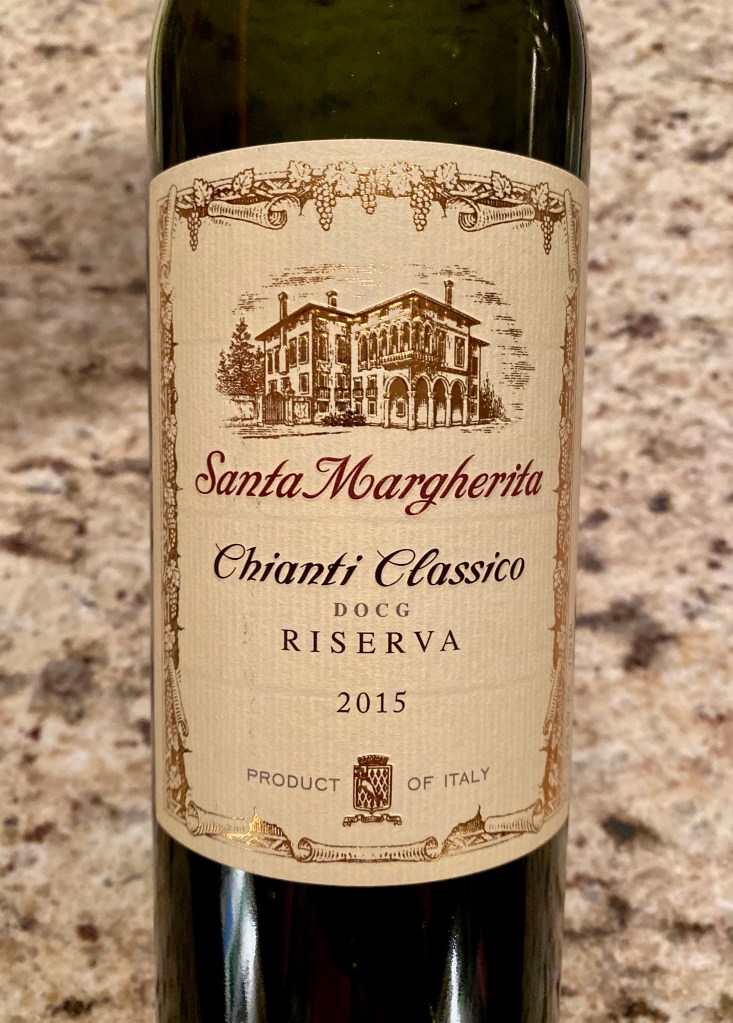
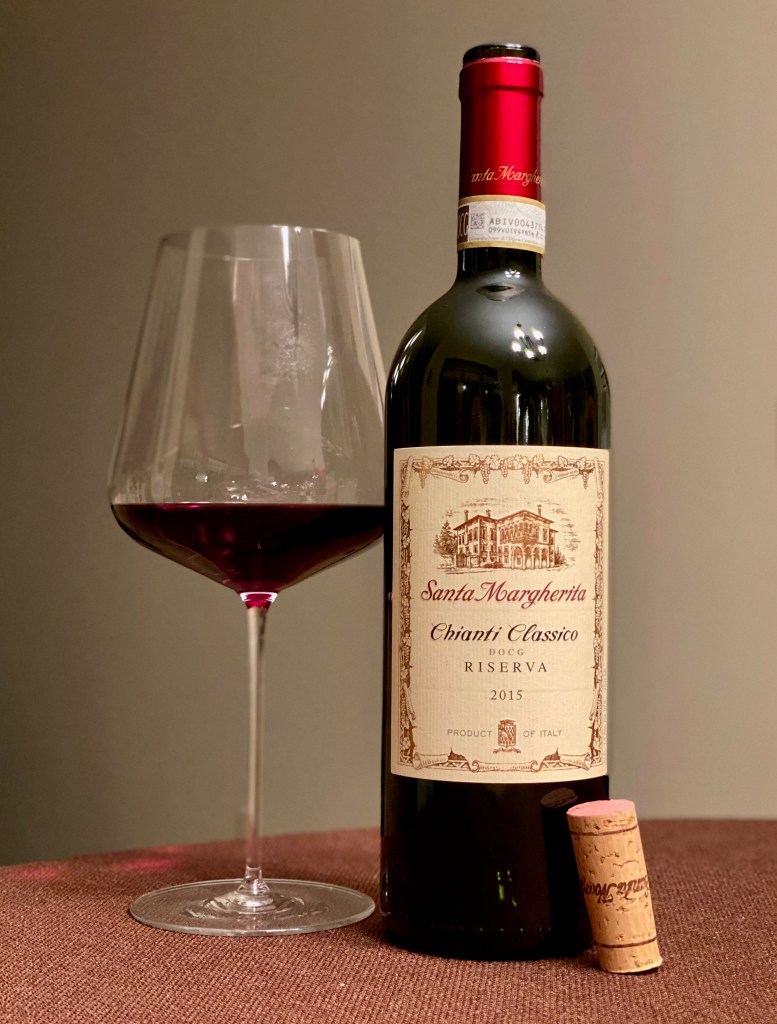
Today’s Wine: 2015 Chianti Classico Riserva

100% Sangiovese; 13.5% ABV

For spaghetti night, I knew I needed to run to the store to grab a bottle of Chianti Classico. As expected, this bottle filled its role for the pairing beautifully. Our wine today is a clear, medium ruby color with a variation of pink hues toward the edges of the glass. I briefly decanted this before drinking, as these are known to have high tannin, but letting this slow ox in the glass would do just fine. On the nose are aromas of cherry, cranberry, barnyard, forest floor, shoe leather, and a hint of bitter chocolate. Once in the mouth, we get flavors of sweet cherry, cranberry, strawberry, dried earth, mushroom, and mineral. True to form, this is medium- to full-bodied with high acidity, medium (+) tannins, and a long finish dominated by notes of red fruit and berries.

Price: $27, a nice price-point. I recommend trying this for its solid quality compared to many other options you will find on the shelf, even if they are slightly cheaper. Pair this with red/meat sauce pastas, lamb, or veal.

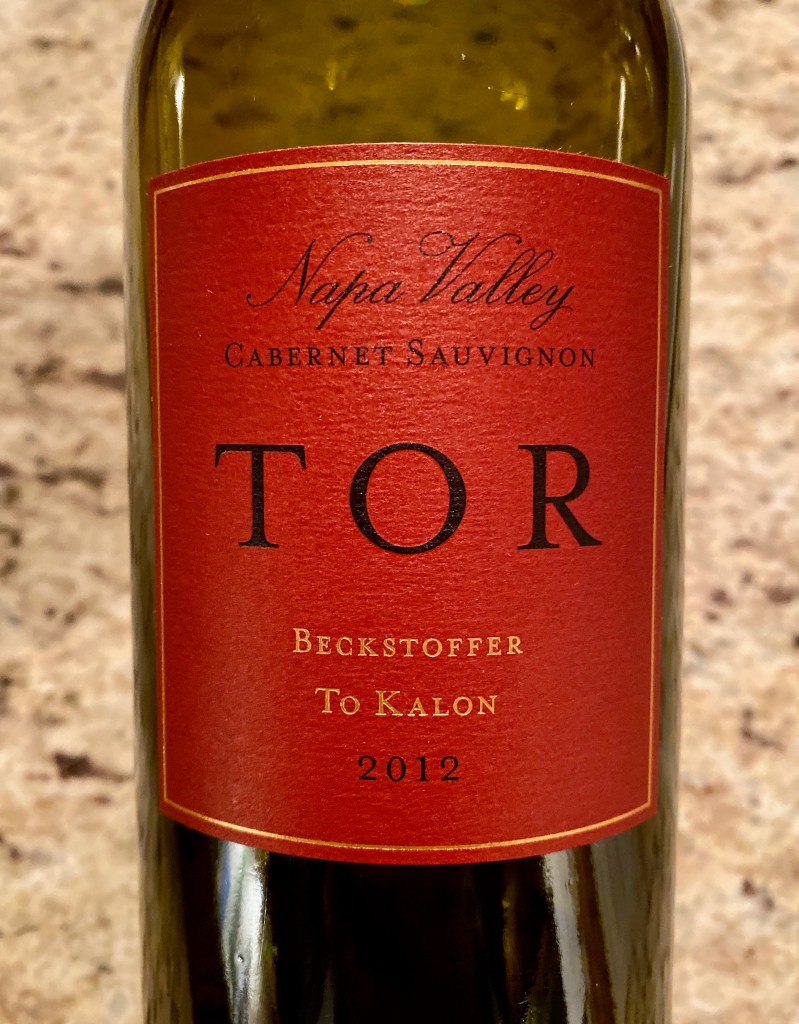
TOR. Need I Say More?

Today’s Story: TOR Wines

TOR is a small production winery that makes single vineyard Cabernet Sauvignon, Chardonnay, and Bordeaux varietals from high-quality fruit sourced from multiple vineyards in Napa Valley. Its proprietors, Tor and Susan Kenward, started their endeavor following Tor’s nearly three decade career with Beringer Vineyards helping craft their reserve and single vineyard bottlings. With Beringer, Tor was able to become friends with several Napa Valley icons who helped encourage him to learn and push the envelope with quality wines, while also traveling the world and walking vineyards of some of the most important wine producers in Europe. Susan, on the other hand, began her career in the culinary industry as she wrote five cookbooks and won two James Beard Awards. She then moved into fashion and the beauty industries, becoming a well-known lifestyle influence.

On the winemaking front, Tor and his winemaker, Jeff Ames, share similar purist ideals such that wine should represent its place rather than a winemaker’s particular style. Every wine is made by hand and comes unfined and unfiltered, built in a high quality that is meant for serious aging. As Tor says, “the wines I’m making right now, I’m assuming a good number of them are going to outlive me.”

In addition to their Beckstoffer To Kalon I am reviewing today, TOR makes a Vine Hill Ranch Cab, Cimarossa Vineyard Cab (Howell Mountain), Melanson Vineyard Cab (Pritchard Hill), Herb Lamb Vineyard Cab, and Tierra Roja Vineyard Cab. TOR also makes several very small production blends, including Black Magic (only 125 cases in 2017, this is only made in specific vintages). I will review one of their Chardonnay offerings in a future post, delving into their range of white wine bottlings at that time.

Today’s Wine: 2012 Beckstoffer To Kalon

100% Cabernet Sauvignon; 15.1% ABV

This is the third time I’ve had this wine (first in April 2017, then in March 2018) and it seems to be developing nicely. That being said, this still seems somewhat one-dimensional to me versus my prior two tastings.

In appearance, this Cab is medium purple at its core with ruby near the edges of the glass. The nose emits welcoming and sweet aromas of blueberry, plum, black cherry, lavender, and cedar, though this is not as multi-dimensional as other bottles I enjoyed. I’m excited to try this again in several years to see if we get some of the tertiary notes. The palate continues the sweet theme with flavors of blackberry compote, blueberry, sweet tobacco, milk chocolate, and a hint of vanilla. Medium- to full-bodied with high acidity, medium (+) tannins, and a medium (+) length finish with jammy dark fruit. I think this falls into the people-pleasing camp of wines, though don’t get me wrong it is high quality. The unfortunate thing about this bottle is…

Price: $185. I’d be more comfortable recommending this if it were closer to $120 per bottle. It is small production (39 barrels, about 975 cases) and it carries the Beckstoffer name, which is why I think it is so high. There are better values elsewhere.

“This Blessed Plot, This Earth…”

Today’s Story: Realm Cellars

Realm Cellars was founded in 2002 with a focus on producing high-quality, limited production Bordeaux blend and single vineyard Cabernet Sauvignon wines. Co-Founder Juan Mercado left his role as a hospital administrator in San Francisco to pursue working in the wine industry and, until recently, Realm sourced their fruit from historical, high-quality vineyards (like Dr. Crane, To Kalon, and Farella) rather than growing their own. Juan runs the winery with Managing Partner Scott Becker, they have an excellent winemaker in Benoit Touquette, and Michel Rolland consults.

Switching gears, one of my favorite aspects of Realm (more a “that’s really cool” kind of thing) is their inspiration from Shakespeare. For example, the title of this blog post starts the line “This blessed plot, this earth, this realm” from Shakespeare’s Richard II, a line noted on every bottle of Realm wine, on their corks, and highlighted on the label I am reviewing today. Realm’s Bordeaux blends include The Tempest, named for the violent storm and play thought to be one of Shakespeare’s last; Falstaff, named for the fat, vain, boastful, and cowardly knight present in four of Shakespeare’s plays for comic relief; and of course The Bard, named for Shakespeare himself. Each wine highlights a particular variety, ranging from Merlot to Cabernet Franc to Cabernet Sauvignon, respectively.

As far as their single vineyard wines go, Realm produces Farella (100% Cab), Houyi (100% Cab), Beckstoffer Dr. Crane (95% Cab, 5% Petit Verdot), Beckstoffer To Kalon (100% Cab), Moonracer (Cab dominant blend), and a white wine called Fidelio (Sauvignon Blanc). As I mentioned in the beginning of this post, recently Realm started producing wine from their own fruit which is where Moonracer comes in. This wine comes from their vineyard on Wappo Hill in the Stags Leap District and is named for the Wappo Native Americans who were known for bravery, strength, and athleticism. The Wappos often took part in (and are said to have won most) inter-tribal races during a full moon, hence the name Moonracer.

Note: Realm also makes a highly limited blend only in certain vintages called The Absurd, but be ready to pay $600-$750 per bottle for a chance to taste it.

Today’s Wine: 2016 The Bard

85% Cabernet Sauvignon, 10% Merlot, 5% Petit Verdot; 14.6% ABV

As expected due to its young age, this wine is deep, opaque purple in color and almost black at its core. I double decanted this bottle due to its youth and let it breath for about an hour. On the nose are aromas of blackberry, blueberry, anise, cigar box, pepper, chocolate, and crushed stone. In the mouth, the palate consists of flavors of black fruit, licorice, smokey earth, violet, dark chocolate, and a touch of ground coffee. Full-bodied with medium (+) acidity, medium (+) but refined tannins, and a very long, concentrated finish. I definitely committed infanticide with this one, but wanted to try it and will definitely buy more. Give it at least 5-7 more years but drink over the coming decades.

Price: $150. While not an everyday drinking price, this bottle is well worth its tag. Already at such a young age this is drinking with finesse, elegance, and balance that is hard to find. Pair this with filet mignon or ribeye.

Burgundian Beauty

Today’s Story: Domaine Leflaive

Domaine Leflaive is a very highly regarded winery located in Puligny-Montrachet, Côte de Beaune, Burgundy. While origins of the estate come as early as 1717 with Claude Leflaive, the winery as it is today seems to begin with Joseph Leflaive (1870-1953). Initially working as a naval engineer who helped develop the first French submarine, Joseph cared for his family’s vines in Puligny-Montrachet following his marriage. Thanks to phylloxera, many of the vines needed dramatic replanting and many of the produce at the time sold to wine merchants. Thus, in the 1920s, Joseph replanted the parcels of his estate and started selling wines under his own label.

When Joseph died in 1953, Domaine Leflaive came under the control of his four children (Jo, Vincent, Anne, and Jeanne) and the family desired to maintain the winery at the peak of excellence. Jo, an insurance underwriter by trade, took over the administrative and financial management of Domaine Leflaive while Vincent, an engineer who studied management and business, covered the vineyard, wines, and commercial side of the business. Over time, Domaine Leflaive produced some of the greatest white Burgundy wines and continues to be a family endeavor. In 1990, Vincent’s daughter Anne Claude became joint manager with Jo’s son Olivier and the two learned from Vincent until his death in 1993 and Anne Claude was named manager.

Much changed at the estate from the 1990s, though it is still run by the family. Today’s steward is Brice de La Morandiere, Anne Claude’s nephew and great-grandson of Joseph Leflaive. Brice’s largest contributions so far include the updating of historic buildings on the estate and enhancements to the winemaking process that include new corks to allow for prolonged aging of the Domaine’s wines.

Lastly, as a common thread, I will leave you with a brief conversation on the farming and winemaking practices of Domaine Leflaive. Leflaive practices biodynamic farming in an effort to understand and appreciate all natural phenomena that ultimately strengthen the immunity of their vines. They tend to their soil with the use of products made from vegetable, animal and mineral matter at certain points during the annual cycle, while working the land by tilling and scraping. Further, Leflaive practices organic cultivation of the vines. You can read more in-depth on their practices at https://www.leflaive.fr/en/the-spirit.

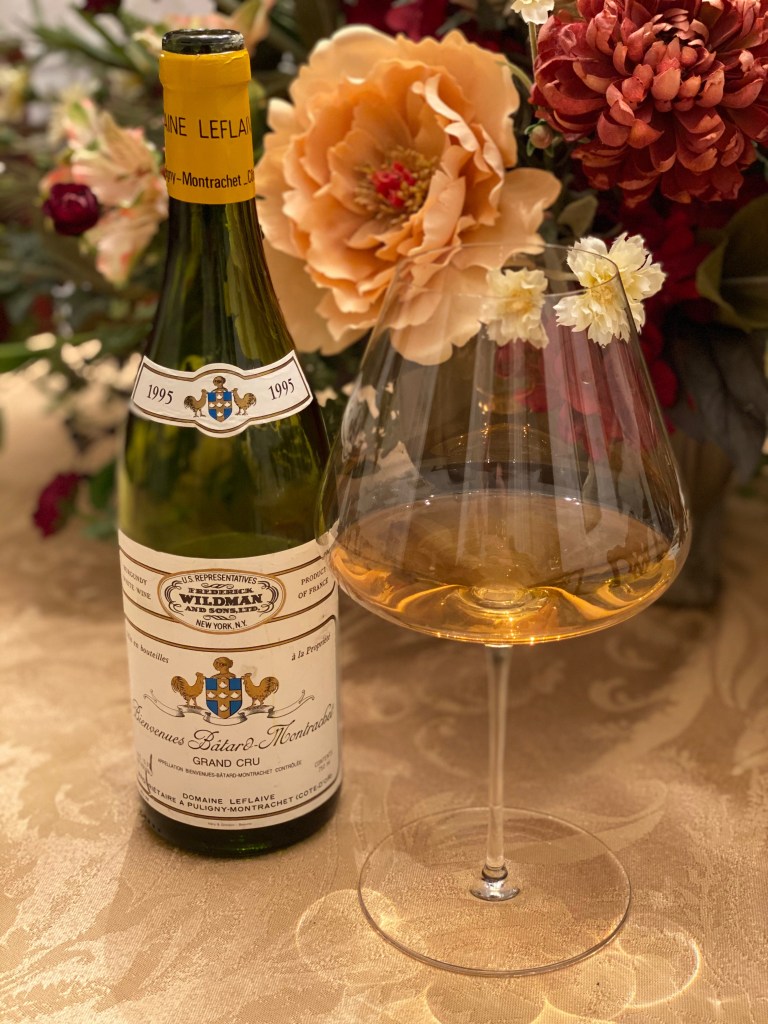
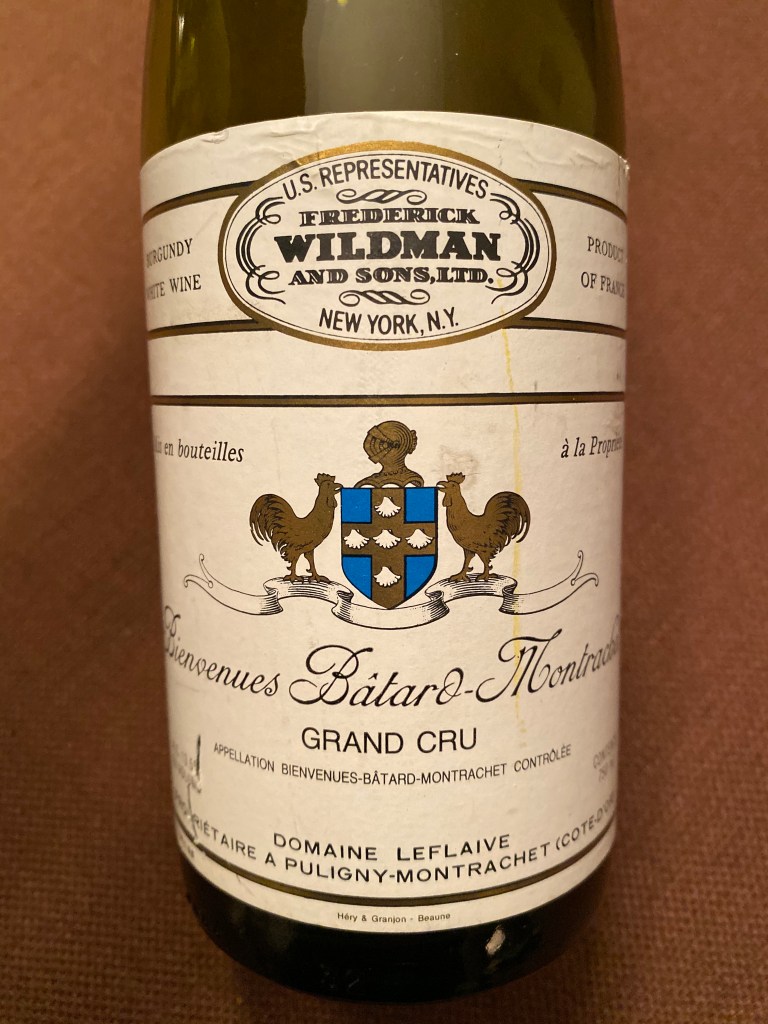
Today’s Wine: 1995 Bienvenues Bâtard-Montrachet

100% Chardonnay; 13.5% ABV

This was a “fingers crossed” type of bottle for a couple reasons. First, the cork on this bottle was slightly depressed (only 1-2mm or so) and was nearly soaked. I’ve seen this with wine before, so I gingerly used my Ah So wine opener to get the cork out and thankfully it was one solid piece and the seal seemed intact. Secondly, white Burgundy from the 1990s, particularly starting with the 1995 vintage, has a somewhat significant problem with premox (premature oxidation) which can ruin a relatively young wine. The wine can give off aromas and flavors like a Sherry, or worse, and become undrinkable while showing darker than expected or brown colors. Fortunately, this bottle had no premox and the slight depression of the cork turned out okay.

With that good news, our wine today shows a vibrant gold color. Once this opened in the glass, beautiful aromas of ripe pear, honeysuckle, cream, white florals, nuts, and white truffle leap outward. I could smell this wine all day. In the mouth, flavors of lemon citrus, golden apple skins, white pepper, spice, and minerality mingle in perfect balance. The wine is full-bodied with lip-smacking high acidity and a finish that goes on for easily 40 seconds. This bottle was truly a pleasant surprise, and for anyone who has one left I’d advise you to start drinking.

Price: $530. This is one of those bottles I drink very rarely, with the vintage coincidentally being my birth year. Pair with stone crab, mild fish, or a small plate of pear and mild cheeses.

Up-and-Coming Chablis

Today’s Story: Garnier & Fils

Garnier & Fils is a family endeavor in Chablis, where the Garnier family has owned 57 acres of property for decades. The current patriarch of the family sold their grapes to other winemakers, however in 1996 his sons Xavier and Jérôme produced their own wine for the first time and began selling it to restaurants. The two brothers share an equal passion for great wine as well as an eagerness to produce high-quality wines from this cool and challenging region, with Jérôme working the vineyards and Xavier making the wines.

Like many small and “newer” wineries, Garnier & Fils practices traditional, environmentally friendly, and organic farming/winemaking. They harvest their grapes later than many other producers in Chablis, ferment only with native yeasts, and store their wine in large (used) wood barrels to not impart any woody notes into the wines. This dedication to their winemaking process afforded Xavier and Jérôme the ability to make very deep-flavored and profound wines with their entry level all the way to the Grand Cru, also making them somewhat “rising stars.”

With top producers in Chablis such as Domaine François Raveneau and Vincent Dauvissat, it can be very hard for vintners to make a name for themselves and it comes over time. However, with the rising quality from Garnier & Fils I am eager to try more of their wines and believe that one day we will be much more familiar with them than we are now. I also speculate the incredibly reasonable price-point on their wines will creep up with that fame.

https://www.chablis-garnier.com/en/

Today’s Wine: 2017 Chablis

100% Chardonnay; 12.5% ABV

When asked to pick a bottle of Chardonnay for our group’s evening wine tasting, I was very glad to find this Chablis for its value and fact that many of my friends are not familiar with the wines of Burgundy. Our wine today is pale gold/straw yellow in color, almost water white toward the edges of the glass. The nose is very delicate and inviting with notes of green apple, pear, white florals, and mineral. Simple and classic. On the palate are notes of pear, green apple skins, citrus zest, white pepper, and chalk with a slight salinity to it. This Chablis is medium- to full-bodied with juicy acidity and a rounded, full finish.

Price: $30, a good price-point for entry Chablis. Pair this with an assortment of goat cheese or shellfish.

Italy’s Favorite Grape…from California?

Today’s Story: Gargiulo Vineyards

Gargiulo is a small, family-owned winery in Oakville, Napa Valley that produces about 3,400 cases of wine each year from two vineyards. Owners Jeff and Valerie Gargiulo bought their first vineyard, Money Road Ranch, in 1992 to fulfill their winemaking dream, adding to the property in 1997 by purchasing the 575 OVX property. Founded as a Cabernet Sauvignon estate, Gargiulo produces three different Cabs and a Sangiovese, though they also have Cabernet Franc, Petite Verdot, and Merlot planted for blending in their G Major 7 Cab. Gargiulo produces small amounts of Chardonnay from Frank Wood Ranch and a rosé of Sangiovese as well.

The Gargiulo family and their winemaker, Kristof Anderson, follow a more hands-off approach to winemaking, who in their words say is “gentle and patient.” When it comes time to harvest the grapes, they do so by hand at dawn, hand sort the grapes three times, and use gravity flow methods for winemaking. This arguably preserves the natural fragrances and flavors of the wines by removing pumps and machinery, and is a reason I believe Gargiulo wines are consistently elegant yet structured to go the distance.

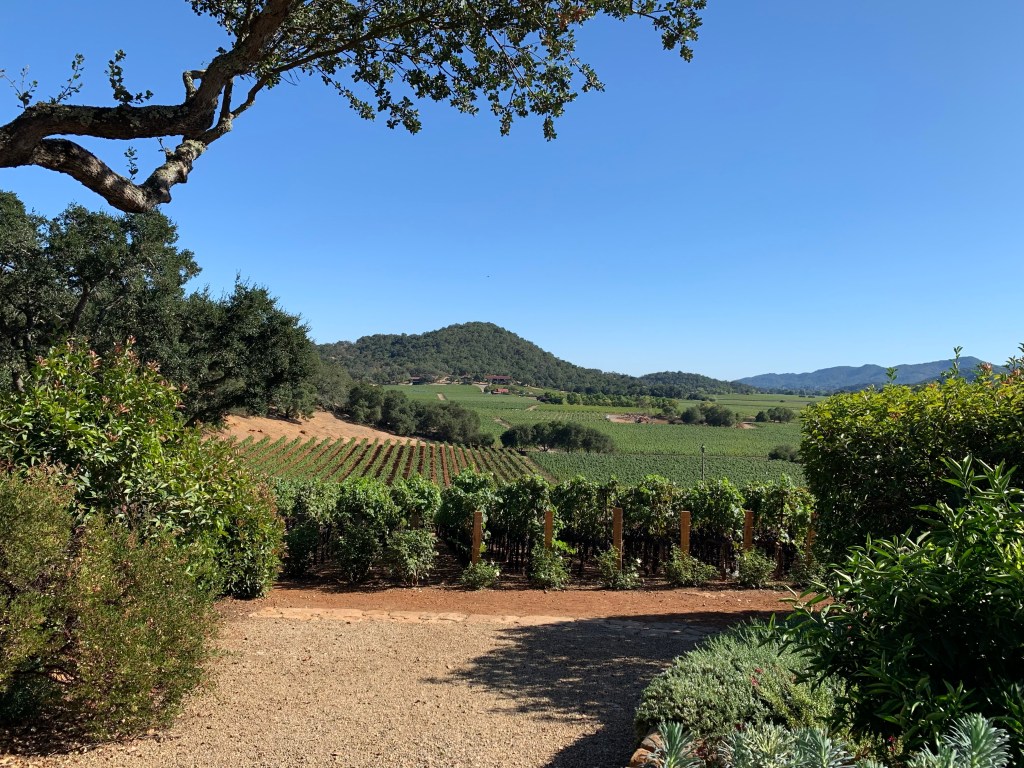
During the last week of September this year, I had the opportunity to taste at Gargiulo for the first time (though I’ve had many of their wines over the years) and it was an incredible experience. While the indoor tasting room is something special with its stone walls, big leather chairs, and guitars stationed on stands around the perimeters, we sat outside taking in the view. Paired with a plate of meats and cheese, we tasted through Gargiulo’s current offerings and chatted with our exceptional host, Lucas, while looking out at the vineyards and their neighbor, Screaming Eagle. I included a picture of this view on my homepage, and also threw a couple bonus pictures at the bottom of this post.

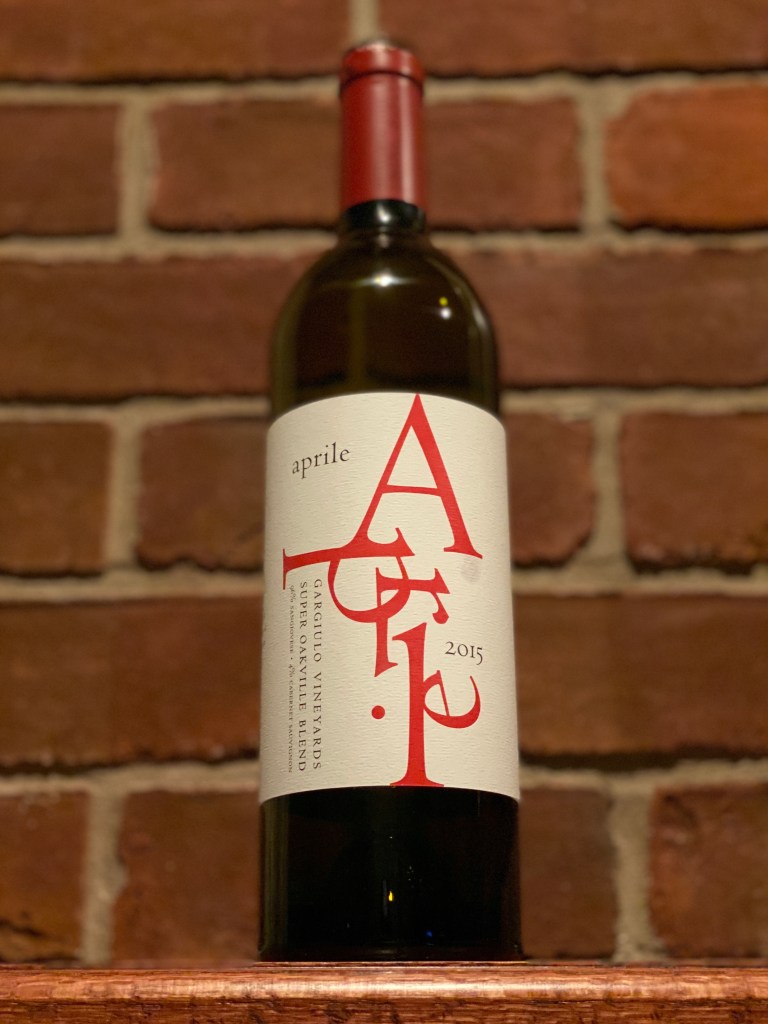
Today’s Wine: 2015 Aprile

96% Sangiovese, 4% Cabernet Sauvignon; 13.6% ABV

I’ve had an opportunity to drink several bottles and vintages of this wine back to 2008, and it’s always a crowd favorite. Easy drinking, bright red fruits, and low alcohol combine into a refined Sangiovese. The wine is bright ruby red in color and almost rose/pink toward the edges of the glass. The nose is very vibrant, with aromas of strawberry, raspberry, cherry, green herbs, and a little bit of earth and oak that leap from the glass. On the palate we get notes of cranberry, cherry, underbrush, white pepper, and chalk. The mouthfeel with this wine is very elegant and smooth, being medium-bodied while showing medium (+) acidity and medium tannins into a long, slightly chewy finish. GV produced 912 cases of this wine.

Price: $60. I like the price-point on this. It is somewhat hard to find Sangiovese in California to begin with, especially of this quality from a producer like Gargiulo. Pair this with red sauce pizza like I did (or pasta) and it’s hard to beat.

From My Visit:

Gargiulo Vineyards, with Screaming Eagle in the distance.
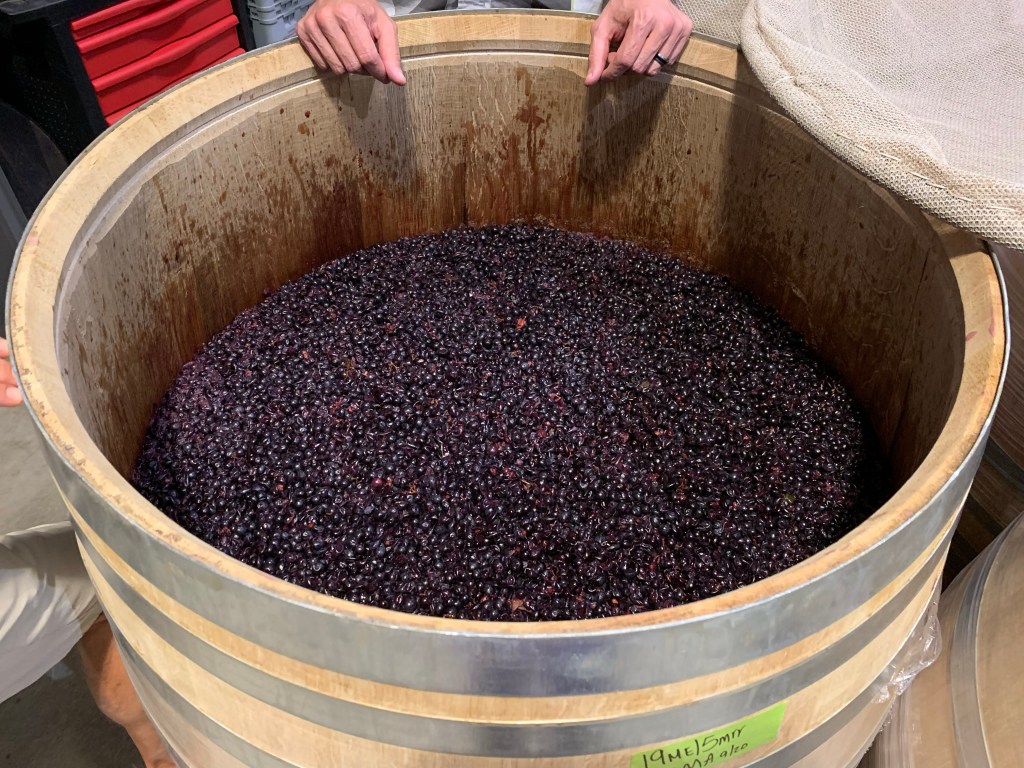
Merlot grapes in barrel.

History. Quality. Ridge.

Today’s Story: Ridge Vineyards

Ridge Vineyards, another historic California winery, found its beginnings near the top of Monte Bello Ridge in 1885. Osea Perrone, an Italian doctor in San Francisco, bought 180 acres and constructed the winery into three levels of the mountain using native limestone. He produced the first vintage under the Monte Bello Winery label in 1892, however later as Prohibition crippled the wine industry the facilities were abandoned.

Once Prohibition ended (thankfully), a man by the name of William Short purchased the winery and replanted several parcels to Cabernet Sauvignon in the late 1940s. The breakthrough came, however, in 1959 when the winery changed hands again to Dave Bennion, Hew Crane, Charlie Rosen, and Howard Ziedler and the partnership produced a quarter-barrel of “Estate” Cabernet. One of the greatest Cali Cabs at the time, this Monte Bello wine inspired Dave Bennion to leave Stanford Research Institute (where all partners worked) to focus on winemaking full-time.

As winemaking ramped up at Ridge, I would be remiss not to mention their Zinfandel, first made in 1964 from vines further down the mountain. In 1966, they produced their first Geyserville Zin that many of you should be able to find at your local wine store. By 1968, the winery was approaching 3,000 cases of annual production and had grown from 15 to 45 acres following an acquisition of the original Monte Bello terraces. Ridge demonstrated a quality and character in the upper echelon of California wines, with their 1971 Cab ultimately entered into the Paris Tasting of 1976, which I briefly talked about in my Chateau Montelena post.

As further background on Ridge, I’d like the opportunity to discuss their winemaking practices as well. Calling their style “pre-industrial,” Ridge shies away from chemicals and additives prevalent in the industry nowadays. They ferment their wines only with natural yeast, do not use commercial enzymes or nutrients to affect color, flavor, or tannin in the wines, and are certified organic. Further, one of my favorite features of a bottle of Ridge is the back label that tells the winemaking process and lists ingredients, which is not common.

And finally…

Today’s Wine: 2015 Syrah/Grenache/Mataro

35% Syrah, 23% Grenache, 42% Mataro; 14.3% ABV

Most of you who know me know how much I love Syrah, and Rhône varietals in general, so I was very excited to find this bottle of ’15 GSM to taste and review. Our wine is medium ruby in appearance and fairly transparent. On the nose are aromas of black and blue fruits, redcurrant, lavender, mild earthy white cheese, cured meat, and slate. This was still somewhat tight as a pop-and-pour so I gave it about 30 minutes of air before drinking. Once in the mouth, the wine showcases notes of blueberry, ripe blackberry, dried cranberry, parched dirt, mushroom, underbrush, and a touch of blood. Full-bodied with medium (+) acidity, medium tannins, and a long (surprisingly bright fruit) finish.

Price: $40. Though I’ve watched the prices for Ridge rise over the past several years, I still think their wines (especially the range of Zins) are some of the best values for the quality. Today’s GSM blend is no different and, quite honestly, this was better than I expected. Pair this with red meat and mushroom sauce.

Blood, Sweat, and Pinot Noir

Today’s Story: Kosta Browne

Kosta Browne is a very storied, highly sought-after winery whose Pinot Noir amassed a cult following over the years. The “winery” started in 1997 with two friends, Dan Kosta and Michael Browne, who both happened to work at a restaurant in Santa Rosa but desired to make their own Pinot Noir. Every night they both worked in the restaurant, each would save $10 of their tips stashed in an envelope in Dan’s desk (he was the restaurant’s GM and Michael was the sommelier). Once their savings grew to about $1,000, they were (almost) ready to make wine.

Short in their ability to purchase both grapes and machinery to produce wine, Dan and Michael received $400 from a chef at the restaurant to push them to their goal. With $1,400 to their mutual name, they spent $400 on winemaking equipment and $1,000 on grapes from Everett Ridge in the Russian River Valley which allowed them to produce one barrel of wine (24 cases when all said and done). Most of this barrel went to VIP restaurant patrons, and as it emptied KB turned to Sauvignon Blanc due to its lower-priced grapes and no need for barrels to age. This Sauvignon Blanc allowed them to turn profit more quickly, paving the way for a return to their focus on Pinot Noir.

Following that batch of Sauvignon Blanc, in 2000 Michael networked tirelessly to find someone willing to sell him (a small, unknown producer) high quality Pinot Noir grapes. His efforts paid off when he convinced John Ferrington, the former assistant winemaker at Williams Selyem, to connect him with the owners of Cohn Vineyard who ultimately sold him grapes. As their second batch of Pinot aged in the barrels, Michael constructed a business plan and the pair partnered with investors to augment their return to Pinot Noir.

Now, I would love to run through more of the history of Kosta Browne but it is quite an extensive story with many trials and tribulations along the way. Even more so following what I wrote above! I encourage you to visit their website https://www.kostabrowne.com/pages/stories/, which provides all you will ever need to know.

Note: Duckhorn Wine Company purchased Kosta Browne last year. At that time, KB’s waiting list consisted of 30,000 members who account for 85% of the 30,000 case annual production. The remaining 15% typically goes to restaurants or high-end wine stores in small quantities. It will be interesting to see how Duckhorn’s ownership affects the KB brand.

Today’s Wine: 2014 Keefer Ranch Pinot Noir

100% Pinot Noir; 14.6% ABV

Though I’ve been familiar with Kosta Browne for quite some time, this is actually my first time drinking a bottle. The wine is bright, clear ruby red in appearance with hues of rose petal toward the rim of the glass. On the nose are aromas of crushed raspberry, strawberry, pomegranate, florals, a touch of leather, and a waning hint of alcohol. In the mouth, the palate showcases notes of sweet cherry, ripe red berries, spice box, green herbs, and vanilla. Medium-bodied and elegant, this Pinot shows moderately high acidity, low tannins, and a medium (+) length finish. Overall a very velvety wine that will only get better with a few more years in the bottle.

Price: $140. This is definitely pricey for a Pinot, however given its rarity I see why it is priced this way. There are certainly other Pinots that deliver a stronger QPR (even their “entry” Sonoma Coast can be found online for $80), but if you really want to make an entrance and tell your company an incredible wine story, grab a bottle of single vineyard Kosta Browne…if you can find one.

Going Against the Grain

Today’s Story: Susana Balbo

Susana Balbo’s career in wine is truly incredible and her broad range of wines and critical acclaim speaks to it. Susana originally hoped to study nuclear physics, however her family would not let her leave Mendoza to pursue it because the pathway was “unconventional” at the time. Instead, Susana remained in Mendoza and took up her family’s business of viticulture. Polar opposite of a degree in nuclear physics, Susana graduated with a degree in Oenology in 1981 and still managed to challenge the status quo by becoming the first women in Argentina to do so.

After working throughout the world as consultant to wineries in Spain, Chile, Italy, Brazil, Australia, and California (the first women from Argentina to do so, no less), Susana created her own winery in 1999. Located in Luján de Cuyo, Mendoza, Susana Balbo Wines prospers from their location at the foothills of the Andes Mountains where the ice melts into pure water during spring and summer for use in the vineyards. Like many higher-quality wineries nowadays, Susana Balbo Wines is committed to sustainable practices like avoiding chemical and machinery use in the vineyards, utilizing drip irrigation on the vines, and using pruning waste to nourish the soil.

To truly appreciate the history and significance of Susana’s career, I highly recommend trying some of her wines if you see them at your local store. While I am reviewing one of her “entry level” offerings today, her Nosotros Single Vineyard Malbec received outstanding notes and is worthy of seeking out. Hopefully I can review one for you someday soon.

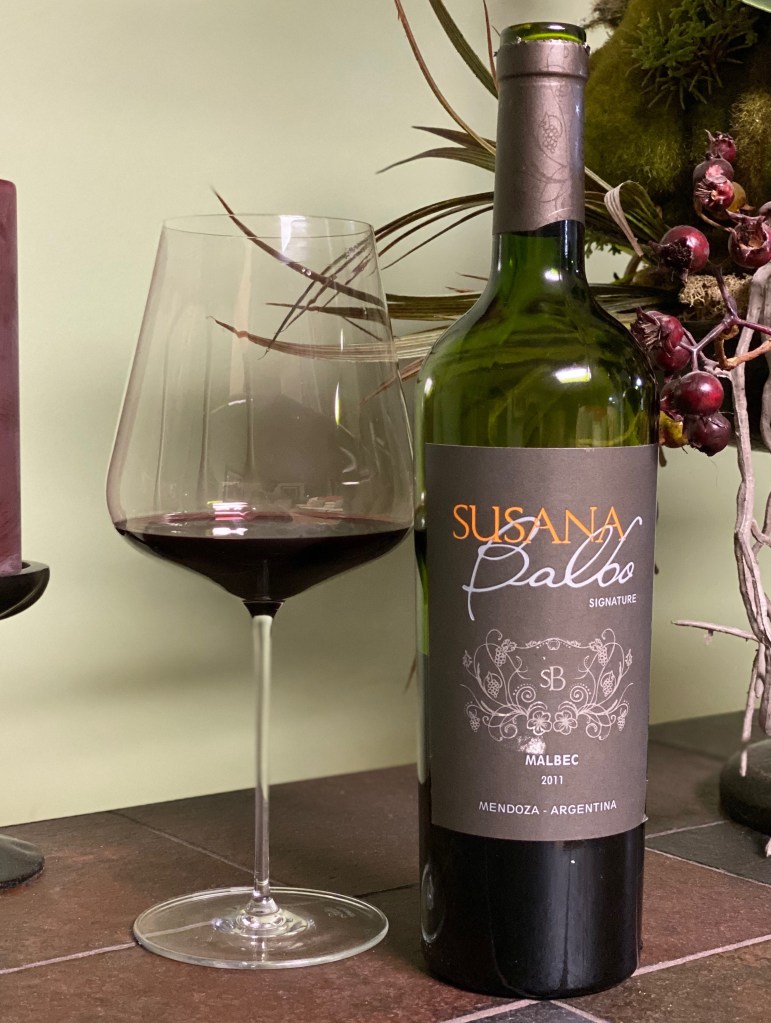
Today’s Wine: 2011 Signature Malbec

90% Malbec, 10% Cabernet Sauvignon; 14.5% ABV

I’ve had an opportunity to taste Susana Balbo Malbecs on multiple occasions, but they have all been more recent vintages so I was intrigued by this bottle (served to me blind) with eight years of age. Today’s wine is medium purple to ruby in color with moderate staining on the sides of the glass. On the nose we have aromas of blackberry, blueberry, anise, sweaty locker room, and flint. The palate is not complex and the wine is very easy drinking, showcasing notes of plum, dates, cigar box, and baking spice. Good value for the money, this is medium-bodied with medium (+) acidity, medium (+) tannins, and a medium length finish. This bottle makes me excited to try her higher-end wines in the future.

Price: $20, a solid price-point for Malbec. Pair this with a burger, skirt steak, or dark meat chicken.

Why Wait for Screaming Eagle?

Today’s Story: Jonata

Jonata came onto my radar in unlikely fashion about two years ago, as these wines very rarely call retail stores home. I sat on the Screaming Eagle waitlist twiddling my thumbs for the chance to purchase an allocation (I am still waiting), and I received an email that their sister winery, Jonata, had offerings for purchase. I quickly discovered that Stan Kroenke, owner of Screaming Eagle and the LA Rams, owns Jonata as well and since their wines are highly regarded began seeking some out.

Jonata’s vines are planted in the Santa Ynez Valley on California’s Central Coast, and although Kroenke bought 586 acres of property only 84 acres are planted under vine. Like many wineries in the area, Jonata found success planting Rhône varietals such as Syrah but also grows Sangiovese and Bordeaux varietals. As far as soil goes, the entire Jonata property is sand (specifically Careaga Sandstone) which is known to be highly aerative with low water holding capacity and therefore low fertility for fruit. However, thanks to their adept winemaker Matt Dees, Jonata is able to produce exceptional wines and some of the best Cabernet Sauvignon in the Ballard Canyon appellation.

On the topic of quality, Jonata in their words seeks to become “the vanguard of an emerging quality movement in California winegrowing.” Great care is put into their vineyards and the winemaking process, resulting in a relatively small production of about 4,725 cases per year across 8 wines (2,426 cases being their Todos red blend). Sustainability is also a major point of focus for the winery, integrating livestock (chicken, turkeys, goats, pigs, and sheep) into the farming model to naturally enhance the soil. Jonata also maintains a communal garden and an orchard that produces olive oil and honey from bees raised on the ranch. Source: https://www.jonata.com/.

Today’s Wine: 2005 El Corazón de Jonata

41% Syrah, 30% Cabernet Sauvignon, 11% Cabernet Franc, 11% Merlot, 5% Petit Verdot, and 2% Sauvignon Blanc; 14.9% ABV

Our wine today is a very deep, opaque purple color with ruby variation toward the rim of the glass. We let this slow ox in the bottle for about 30 minutes before additional air-time in the glass, as it was still slightly tight as a pop-and-pour. On the nose are enticing aromas of black cherry, blackcurrant, red berry fruit, cigar box, sweet tobacco, licorice, and oak. Once in the mouth, we get notes of jammy blackberry, black cherry, blueberry, graphite, smokey/charred earth, and a touch of chocolate. Opulent and showing no signs of age, today’s Jonata is full-bodied with medium (+) acidity, mature medium tannins, and a long finish that lingers with notes of iron.

Price: $65. I think this is a little high (I’d love to see ~$50) but still worth a try due to its rarity and complexity with plenty of gas left in the tank. We paired this with smokey barbecue chicken, but I think this would also stand up well to a New York Strip.