An Unusually Approachable Dunn Howell Mountain Cab

Today’s Story: Dunn Vineyards

Dunn Vineyards dates to 1979 when Randy and Lori Dunn purchased a 14 acre parcel in Angwin with about 5 acres planted to Cabernet Sauvignon. Though Randy worked as a winemaker in Rutherford for his day job, he spent the nights and weekends with Lori and their young son Mike farming their vines. The Dunn family also farmed Harry Frank’s adjacent vineyards and purchased the fruit resulting in a first harvest of 9 tons of fruit. With an additional purchase of 3 tons from Beatty Ranch, the Dunn’s were on their way to producing their first vintage.

The family moved onto their property shortly thereafter with another young child, Jennifer, and Dunn Vineyards was officially bonded in 1981. After their second daughter, Kristina, was born, Randy was still working in Rutherford when the winery’s success picked up and encouraged him to leave his job in 1985 to move into a new family house and put all of their effort into Dunn Vineyards. By the late 1980s, Randy was consulting for other wineries, their wine was selling out, and the family needed to burrow into the mountain in 1989 to create more room for barrels.

Mike returned in 1999 and three years later became a full-time employee at Dunn Vineyards and after Kristina graduated from Cal Poly with a degree in winemaking and viticulture she joined as well. Today, Kristina’s daughters play in the vineyards and Mike’s son helps bottle the wines, making it seem the family tradition at Dunn Vineyards is set to continue into three generations and beyond. Today, the family farms 42 acres of Cabernet Sauvignon high up on Howell Mountain and the resulting wines are elegant yet profound and built for cellaring.

I previously reviewed the 2014 Napa Valley Cabernet Sauvignon from Dunn, which is a generally more accessible bottling made from mountain and valley floor fruit.
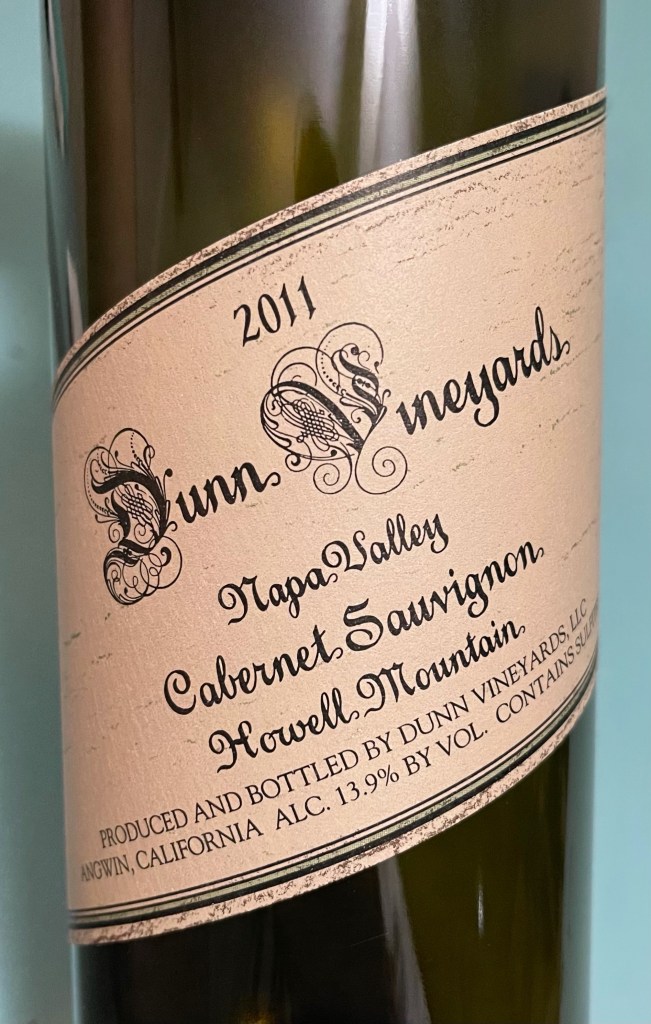
Today’s Wine: 2011 Howell Mountain Cabernet Sauvignon

100% Cabernet Sauvignon; 13.9% ABV (though it seems like it’s actually slightly higher)

The 2011 Howell Mountain Cabernet Sauvignon is deep ruby in color and opaque. Given a couple hours to decant, this wine blossoms into a complex and approachable bottling. The aromas are of pronounced intensity, with the nose showcasing notes of blackberry, blueberry, cassis, anise, menthol, lavender, leather, tobacco, and chocolate. There’s a touch of brett as well but not enough to detract. Meanwhile the flavors are also of pronounced intensity and the palate displays notes of black cherry, plum, blueberry, blackberry, dried tobacco, menthol, licorice, dried green herbs, and a touch of oak-driven spice. This dry red is medium- to full-bodied with medium acidity, medium (+) but refined tannins, medium (+) alcohol, and a medium (+) length finish.

Price: $160 (I paid $112). I’ve long been a fan of Dunn’s wines, and I think they offer solid value next to their counterparts in other mountain AVAs and especially those on the valley floor. Though you have to be very patient with the Howell Mountain bottlings, this 2011 was rather approachable given the vintage conditions and I will certainly try to buy more.

Big and Bold Napa Cab From Calistoga

Today’s Story: Heritage School Vineyards

Heritage School Vineyards (initially named Harris Estate Vineyards) was established in 1997 by Mike and Treva Harris on an extension of Diamond Mountain in Calistoga of the Napa Valley. The property consists of 48 acres, however only 6 acres are planted to vineyards and 100% Cabernet Sauvignon. In 2014, David and Linda Jenkins purchased the property and renamed it to pay homage to the Heritage School which was a private school for boys on site. Heritage School consists of three estate vineyards named Missiaen’s Hillside, Casey’s Lakeview, and Julie’s Creekside, as well as a non-estate vineyard source for Hannah’s Indulgence with all four wines names after the Jenkins’ daughters. Thomas Brown has been winemaker since 2006, and the wines age in a 100% new French oak barrel program. Production is rather limited, with total volumes typically around 1,200 cases per vintage.

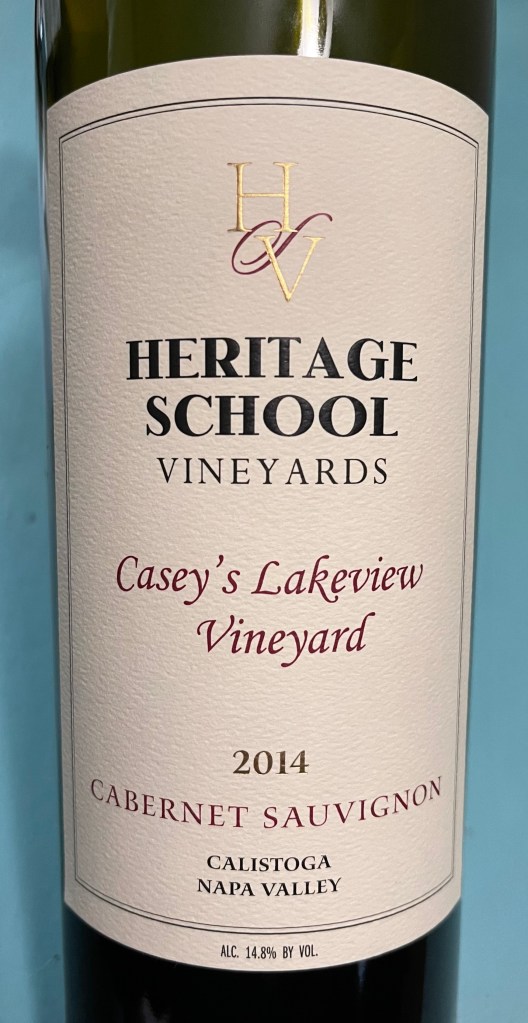
Today’s Wine: 2014 Casey’s Lakeview Vineyard Cabernet Sauvignon

100% Cabernet Sauvignon; 14.8% ABV

The 2014 Casey’s Lakeview Vineyard Cabernet Sauvignon is deep purple/ruby in color with heavy staining on the glass. I double decanted this bottle, as it’s still rather youthful. Aromas are of pronounced intensity, with the nose showcasing notes of blackberry, blueberry, crème de cassis, anise, clay, cinnamon, chocolate, vanilla, and toasted oak. There’s some heat from the alcohol as well that needs time to integrate. Meanwhile the flavors are also of pronounced intensity, and the palate displays notes of blackcurrant, black plum, blueberry, licorice, coffee grounds, iron, and rich dark chocolate. This dry red is full-bodied with medium (+) acidity, high tannins, high alcohol, and a long finish. 250 cases produced.

Price: $140. Though this is certainly a high quality wine and offers good intensity and complexity, it’s not my preferred style. The oak influence definitely sticks out to me and this is a rather big and bold Cab. I think there are better values out there too given this price-point which sees a lot of competition.

Fun Cabernet/Syrah Blend From the Walla Walla Valley

Today’s Story: K Vintners

K Vintners was established by Charles Smith as his first winery in December 2001. Located at the base of the Blue Mountains in Walla Walla, Washington, K Vintners produces small lot single vineyard Syrah and field blends of Syrah, Cabernet Sauvignon, Grenache, Tempranillo, and Viognier which are all picked by hand, fermented using only natural yeasts, and basket pressed. Though Charles spent a lot of time during his developmental years traveling throughout the state of California and grew an appreciation for wine, his real passion for the beverage spawned during his time living in Scandinavia for roughly a decade. As a manager for rock bands and concert tours, Charles spent a great deal of time wining and dining before moving back to the United States in 1999. On a journey through Walla Walla in late 1999, Charles met a young winemaker who shared his passion for Syrah and Charles was convinced to move to the small city to make his own wine. In December 2001, Charles released 330 cases of his first wine, the 1999 K Syrah.

I previously wrote about K Vintners when I reviewed the 2016 The Creator back in February 2020.

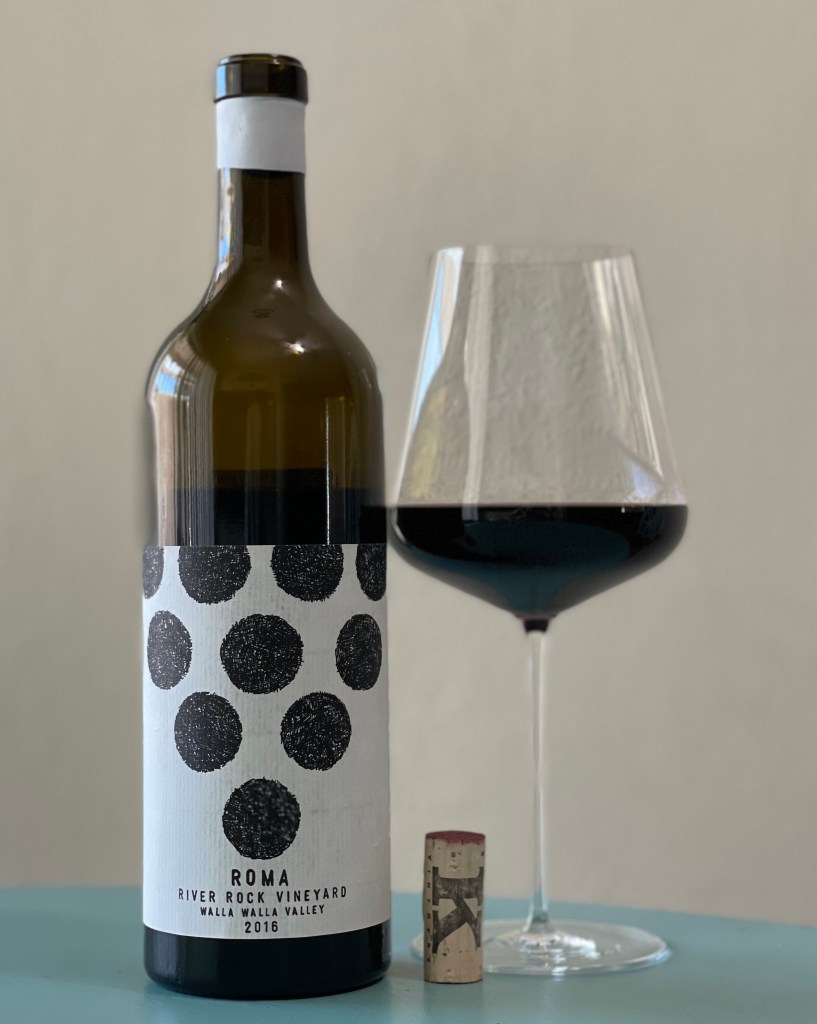
Today’s Wine: 2016 Roma

80% Cabernet Sauvignon, 20% Syrah; 14.5% ABV

The 2016 Roma is deep ruby in color. I didn’t have a decanter at the moment, so I instead let this open up in the glass for an hour then drank it over several hours. The aromas are of pronounced intensity, with the nose showcasing notes of blackberry, blueberry, plum, tobacco, pencil shavings, black licorice, charred green herbs, crushed rock, chocolate, and mild baking spice. Meanwhile the flavors are of medium (+) intensity and the palate displays notes of black cherry, plum, black raspberry, sweet tobacco, black olive, slate, mocha, and a hint of mint. This dry red is full-bodied with medium (+) acidity, medium (+) but fine-grained tannins, high alcohol, and a long finish. 752 cases produced.

Price: $50 (I paid $43). I think this offers very solid value and is also fun to try given the blend. The balance, complexity, intensity, and length are all very solid and this wine continues to evolve with each passing moment in the glass. I’d certainly buy this again.

Mature and Elegant Napa Cab With “Cult” Beginnings

Today’s Story: BOND

BOND was established in 1996 by H. William Harlan and Bob Levy with the goal of creating single vineyard designate wines from a small number of carefully selected Napa Valley vineyards of “Grand Cru” quality. Though BOND does not own their vineyard sites, they currently have partnerships with five vineyard owners and all vineyard management is done by the BOND team themselves rather than the owners. Today BOND produces the Grand Crus of Melbury (est. 1999), Vecina (est. 1999), St. Eden (est. 2001), Pluribus (est. 2003), and Quella (est. 2006). They also craft a second wine called Matriarch (which I am reviewing today) and it is a blend of all five sites from the wine not included in the Grand Cru bottlings. The five vineyard sites are small hillside vineyards of Cabernet Sauvignon, ranging from 7 to 11 acres in size. Total annual production for each Cru ranges from about 400-700 cases, whereas production of the Matriarch is less than 1,500 cases.

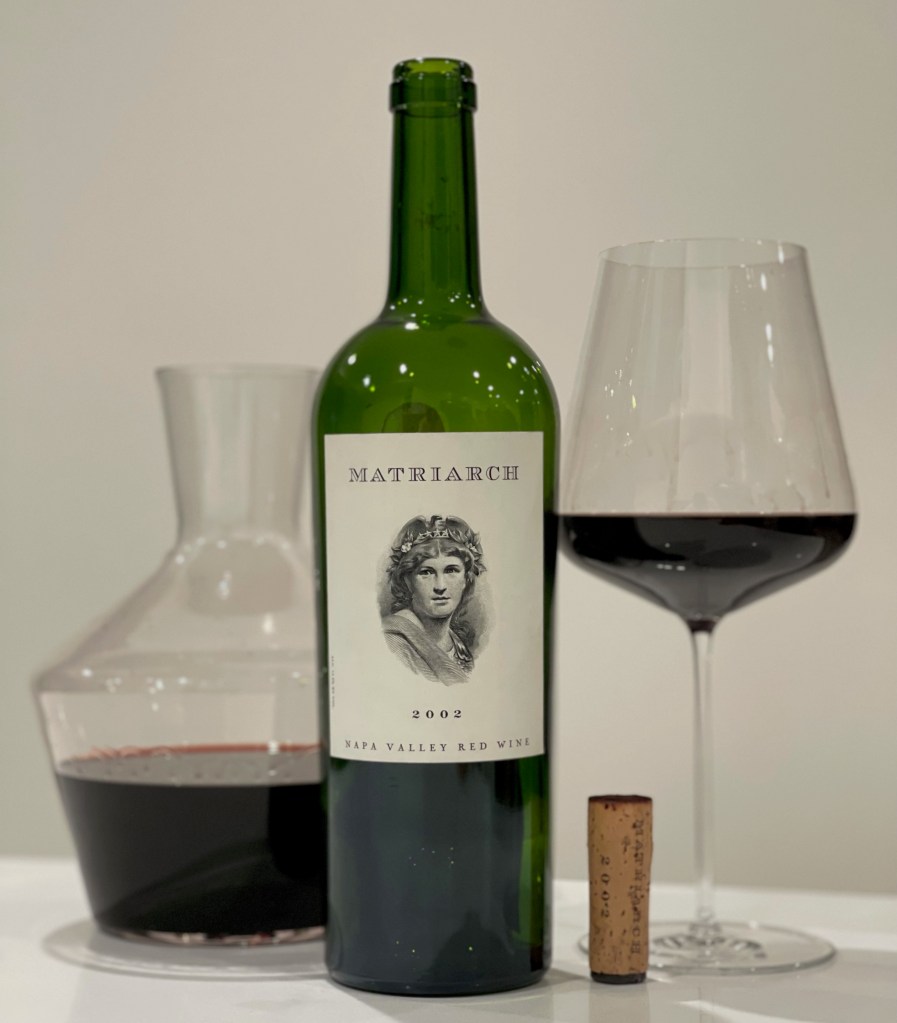
Today’s Wine: 2002 Matriarch

100% Cabernet Sauvignon; 14.5% ABV

The 2002 Matriarch is deep garnet in color but it is still incredibly dark and opaque for its age. I decanted this for sediment, but it really only took about 30 minutes to show beautifully. The aromas are of pronounced intensity, with the incredibly complex nose showcasing notes of crème de cassis, stewed plum, prune, fig, licorice, cigar box, leather, damp earth, graphite, mushroom, dried green herbs, and chocolate. Flavors are also of pronounced intensity, and the equally complex palate displays notes of blackberry, blackcurrant, black cherry, fig, rich baked plum, tobacco, licorice, charred herbs, wet soil, cocoa powder, and coffee grounds. This dry red is medium- to full-bodied with medium (+) acidity, mature medium tannins, high alcohol, and a long finish. Absolutely gorgeous, and I don’t think it gets any better from here.

Price: $180. This is very appropriately priced, and given the rest of the wines in the Harlan family portfolio it offers great value if you’d like to see what their wines are all about. With the Matriarch much like the Mascot, these are wines that remain a staple for me when I purchase my Napa Cab allocations.

High Quality and Low Production Sonoma Cab

Today’s Story: Little Boat

Little Boat is a very small winery in Sonoma, California, however there isn’t much information about them that I could find. They did come onto my radar last year though, when I happened to meet proprietor José Ignacio Cuenca at a Los Angeles restaurant and we struck up a friendly conversation and discussed his wines. I also had the pleasure of meeting his son Mateo, who created the artwork on the Little Boat labels. Little Boat is a group effort, and José works with winegrower Brad Alper, winemaker William Knuttel, Mike Miller, and the Treyzon family. They also receive help from sommeliers Harley Carbery, Phillip Dunn, Lucas Payá, and Robert Smith MS. Little Boat produces a range of wines including most notably a Russian River Valley Chardonnay, a Russian River Valley Pinot Noir, and a Dry Creek Valley Cabernet Sauvignon. There is also a rosé and very limited quantities of a reserve Pinot Noir. Placement of these wines is highly selective, and they are generally found in high-end hotels and restaurants or highly curated and boutique wine stores.

I very recently wrote about the 2018 Little Boat Pinot Noir, so please feel free to check out those tasting notes if you haven’t already!

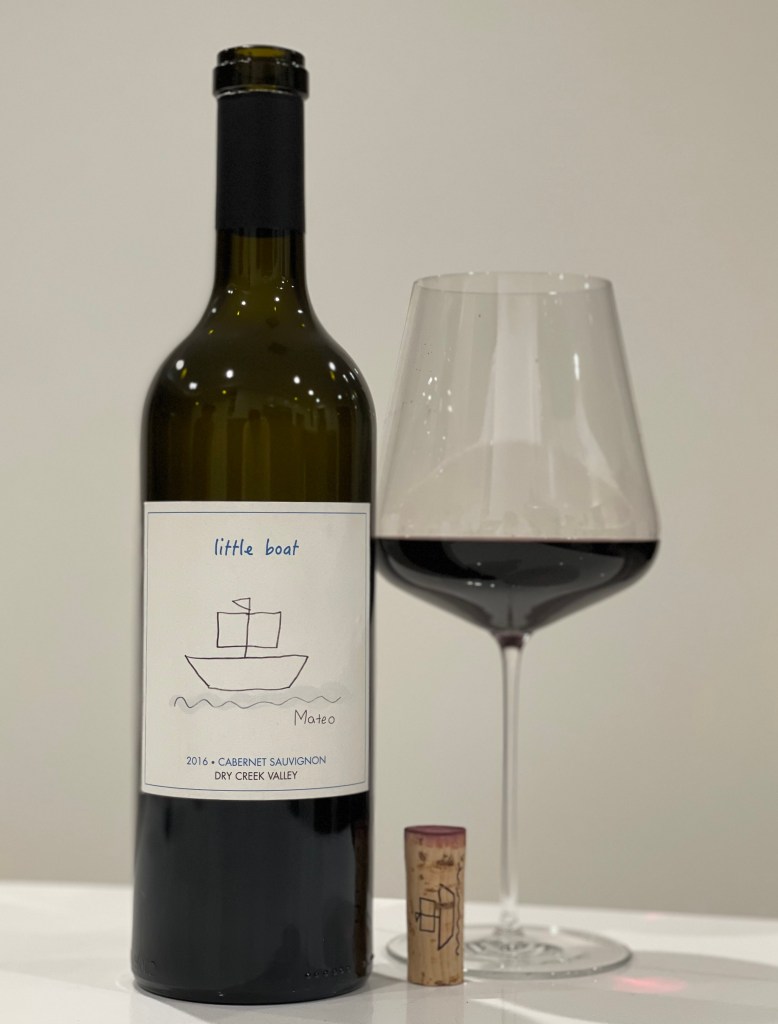
Today’s Wine: 2016 Cabernet Sauvignon

100% Cabernet Sauvignon; 14.5% ABV

The 2016 Cabernet Sauvignon is deep ruby in color. I let this open up for about an hour, though for being so young it was fairly friendly right out of the gates. The aromas are of pronounced intensity, with the nose showcasing notes of blackberry, redcurrant, red plum, sweet tobacco, dried earth, dried green herbs, chocolate, vanilla, and cedar. There’s some heat there too from the alcohol. Meanwhile the flavors are also of pronounced intensity, and the palate displays notes of redcurrant, black cherry, black raspberry, blueberry, tobacco, coffee grounds, milk chocolate, vanilla, and baking spice. This dry red is full-bodied with medium (+) acidity, high tannins, high alcohol, and a medium (+) finish.

Price: $40. This offers very solid value, though for me it fits into the camp of high-quality people pleaser. The fruit is slightly jammy, though there is some complexity here that’s intriguing. You can certainly notice the oak as well, so while not my preferred style I think many consumers would enjoy this.

Gorgeous and Fully Mature Red From Lebanon

Today’s Story: Chateau Musar

Chateau Musar is a highly-regarded wine estate established in 1930 in the Bekaa Valley of Lebanon by Gaston Hochar when he was 20 years old. Inspired by his travels throughout Bordeaux and the 6,000-year-old winemaking history of Lebanon, Gaston set about producing wines with a non-interventionist philosophy and planted Cabernet Sauvignon, Carignan, and Cinsault for his reds in high-altitude gravel and limestone soils. During WWII, Major Ronald Barton of Château Langoa-Barton and Leoville-Barton was stationed in Lebanon and became friends with Gaston which strengthened the tie to Bordeaux that exists to this day. In 1959, Gaston’s eldest son Serge took over winemaking after studying at the University of Oenology in Bordeaux and started making wines “his own way.” Shortly thereafter, in 1961, Gaston’s second son Ronald joined the family business to handle the financial and marketing aspects. Serge was named Decanter Magazine’s first ‘Man of the Year’ in 1984 thanks to his steadfast production of quality wines during Lebanon’s Civil War (1975-1990) and the brand continued to build upon international fame for its elegance and quality. In 1994, Serge’s son Gaston joined the winery and was accompanied later in 2010 by his brother Marc. The two manage the estate together today with Gaston running the winery operations and Marc running the commercial aspects.

Chateau Musar became Lebanon’s first certified organic winery in 2006 and their wines spend a remarkable 7 years at the winery before release. The red wines are fermented in separate cement vats, racked 6 months after harvest, aged for 12 months in French Nevers oak barriques, and bottled without filtration at the end of the third year after harvest before the blended wine is aged an additional 3-4 years before release. The white wines also ferment in Nevers oak barrels for 6-9 months but are bottled after their first year and spend 6 years in the cellars before release.

To explore additional notes of these wines, I previously wrote about the 2011 Chateau Musar Rouge and 2010 Chateau Musar Blanc.

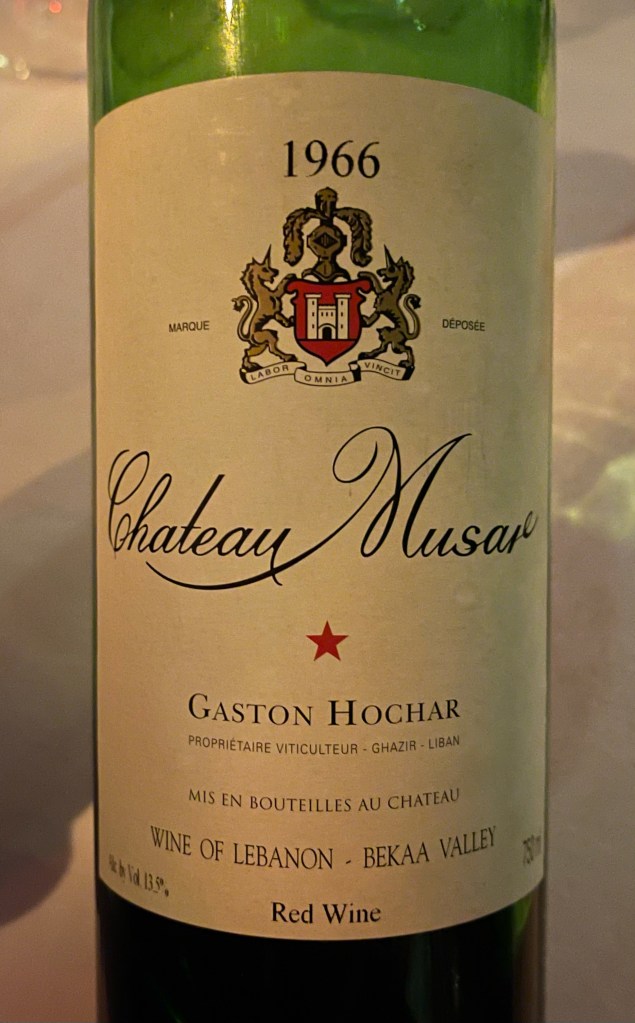
Today’s Wine: 1966 Chateau Musar Rouge

Blend of Cabernet Sauvignon, Cinsault, and Carignan; 13.5% ABV

The 1966 Chateau Musar Rouge is medium garnet in color with not really any signs of bricking yet. Per the restaurant where we ordered this, the bottle came from Chateau Musar’s cellars about five years ago. We elected to serve this as a pop-and-pour, which was the right call with the age. The aromas are of pronounced intensity and the wine is beautifully alive, with the nose showcasing aromas of dried cherry, cranberry, violet, leather, truffle, forest floor, gravel, and dried herbs. The flavors are also of pronounced intensity, and the palate displays notes of maraschino cherry, cranberry, tobacco, forest floor, truffle, smoke, and crushed rock. This dry red is medium-bodied with lively medium (+) acidity, fully mature light tannins, medium alcohol, and a medium (+) length finish. What a beautifully mature and fun wine to taste.

Price: $800. This is another experience bottle, and fortunately the restaurant where we purchased this had it for below retail cost. I’m a huge fan of Chateau Musar but haven’t had any older than early 1990s before this, so this was a very fun and special wine. Shared with two other Musar lovers, which can’t be beat.

Beautifully Mature Bordeaux

Today’s Story: Château Léoville Las Cases

Château Léoville Las Cases is a historical Bordeaux estate ranked as a Second Growth (Deuxième Cru) in the Bordeaux Wine Official Classification of 1855. It is located in the appellation of Saint-Julien on the Left Bank. Though the estate used to be much larger and is one of the oldest in the Médoc, it was split up between 1826 and 1840 as a result of the French Revolution and came into the Las Cases family as 3/5 the size of the original estate. Luckily for the family, however, their land made up the heart of the domain and therefore consists of the original terroir back to the 17th century. Las Cases was managed by the same family through the 19th century, moving by inheritance through Pierre Jean, Adolphe, and Gabriel de Las Cases until Théophile Skawinski bought a stake in 1900 to become the manager. Today, Jean-Hubert Delon is the sole owner with the family coming in during the mid-20th century.

The estate today consists of 98 hectares (242 acres) of vineyards planted to roughly 66% Cabernet Sauvignon, 24% Merlot, 9% Cabernet Franc, and 1% Petit Verdot. The soil is classic Left Bank, made up of gravel over gravelly sand and gravelly clay subsoils. The heart of the property is the 55 hectare (136 acre) Grand Clos, where vines average an age of 52 years and farming is nearly 100% organic. The Grand Clos is walled-in and borders Château Latour to the north as well.

Winemaking is largely traditional at Léoville Las Cases, beginning with manual harvest and moving to fermentation in temperature-controlled wood, concrete, or stainless steel vats of varying size and age. Malolactic fermentation occurs in vat, and then the wines are blended before moving into French oak barrels for 18-20 months of aging. Come bottling, the wines are fined using egg whites and production of the Grand Vin is around 15,000 to 16,700 cases depending on vintage.

I previously wrote about two wines from Léoville Las Cases, first the 1986 vintage in a side-by-side with a 1986 Château Pichon Longueville Comtesse de Lalande and then the 1990 vintage in early 2020.

Today’s Wine: 1961 Château Léoville Las Cases

Cabernet Sauvignon dominant Bordeaux blend; I presume around 12-13% ABV

The 1961 Château Léoville Las Cases is medium garnet in color and not really showing any signs of bricking. We served this as a pop-and-pour, and it really only took 10 minutes or so in the glass to open up and show beautifully. The aromas are of medium (+) intensity, with the gorgeous nose showcasing notes of dried cherry, dried cranberry, pencil shavings, dried violet, graphite, cigar box, forest floor, truffle, eucalyptus, and a hint of cinnamon. Meanwhile the flavors are of medium intensity and the palate displays notes of baked black cherry, dried plum, prune, cigar tobacco, truffle, graphite, and charred green herbs. This dry red is medium-bodied with medium acidity, light and fully matured tannins, medium alcohol, and a medium (+) length finish. The wine is in remarkable shape given its age and quite honestly there seems to be a window of a few more years to drink this.

Price: $800. This is more of an experience wine than anything, as I’ve never had a 1961 Bordeaux and neither had my tasting companions. So while I don’t want to discuss “value” because it seems subjective for a wine like this, I will state the obvious that provenance is key here and this bottle was superb while making for an incredible tasting experience.

Impressive South African Red That Outperformed My Expectations

Today’s Story: Vilafonté

Vilafonté is a relatively new wine estate established in 1997 in the Paarl region of South Africa. A joint venture between Mike Ratcliffe of South Africa and Zelma Long and Dr. Phil Freese of the United States, Vilafonté consists of 42 hectares (104 acres) with 16 hectares (40 acres) planted to vine. A unique aspect of Vilafonté, and where it derives its name, is the ancient vilafontes soil which is recorded as one of the oldest soil types in the world between 750,000 and 1.5 million years old. This soil, having evolved over the centuries, encourages the vines to struggle and in turn results in smaller vines, lower yields, and higher quality fruit. The estate is planted to Cabernet Sauvignon, Merlot, Cabernet Franc, and Malbec with the ultimate goal of producing Bordeaux blends. Vilafonté produces two main wines, the Cabernet Sauvignon dominant Series C and the Merlot/Malbec dominant Series M. They also produce a second label bottling called Seriously Old Dirt which I’ll be tasting today.

Today’s Wine: 2014 Seriously Old Dirt

41% Merlot, 31% Cabernet Sauvignon, 28% Malbec; 13.5% ABV

The 2014 Seriously Old Dirt is deep ruby in color and opaque. I used my Coravin, so instead of decanting the bottle I let this open up in the glass for about 45 minutes. The aromas are of medium (+) intensity, with the nose showcasing notes of blackberry, plum, black raspberry, black licorice, violet, chocolate, a hint of vanilla, and mild oak. Meanwhile the flavors are also of medium (+) intensity with the palate displaying notes of blackberry, red plum, black cherry, blueberry, sweet tobacco, crushed rock, charred green herbs, and mild baking spice. This dry red is medium- to full-bodied with medium acidity, medium (+) but refined tannins, medium alcohol, and a long finish.

Price: $40. To be honest I wasn’t expecting a ton with this wine, but it greatly outperformed my expectations. I think this offers solid value and it is certainly a high quality wine. It’s beautifully balanced, offers considerable complexity, and has great length in the finish.

You Win Some, You Lose Some

Today’s Story: Château Pichon Longueville Comtesse de Lalande

Château Pichon Longueville Comtesse de Lalande is a Second Growth (Deuxième Cru) estate based on the Bordeaux Wine Official Classification of 1855. Pichon Lalande is considered by many to be a classic example of Pauillac, known for its deep, concentrated layers of ripe fruit accompanied by notes of cassis, tobacco, and earth.

With nothing short of a somewhat tumultuous history, Pichon Lalande’s ownership changed hands over the years and earned its name when the founder’s daughter Therese received it as a dowry for her marriage to Jacques de Pichon Longueville. During the 18th century, the estate was dominated by women (Therese de Rauzan, Germaine de Lajus, and Marie Branda de Terrefort) throughout the winemaking process until Baron Joseph de Pichon Longueville took over for his mother. In 1850, with his death, the estate split between his two sons and three daughters and ultimately resulted in the division of Comtesse de Lalande and Pichon Baron.

With no familial heirs, Edouard Miailhe and Louis Miailhe purchased Pichon Lalande following WWI. Edouard’s daughter, May-Eliane de Lencquesaing, took over management in 1978 and became a prominent ambassador for Bordeaux wines while dramatically increasing quality of her estate. One of her major endeavors, and possibly most famous, was growing the size of Pichon Lalande from 40 hectares of vines to 89. In 2007, however, May-Eliane sold a majority stake of the estate to the Rouzaud family, owners of Roederer Champagne, and management changes as well as renovations took place.

I’ve written about Pichon Lalande several times before, with reviews on the 1966, 1986, 1989, 2003, and 2008 vintages.

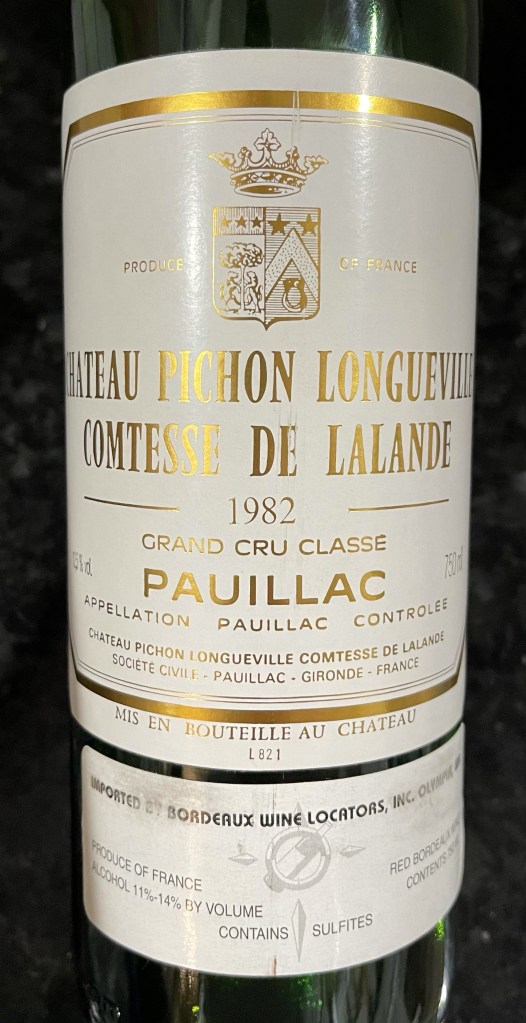
Today’s Wine: 1982 Château Pichon Longueville Comtesse de Lalande

Bordeaux Blend (no tech sheet); 12.5% ABV

I must put a disclaimer on this bottle, as we learned only after pulling the cork this was recorked at the château in 1993. The bottle appears immaculate, fill level is into the neck, the cork is in perfect shape, and there are zero signs of seepage. However my tasting companions and I were disappointed in the wine and I think it might have something to do with the recorking…especially how recent it occurred after the vintage.

The 1982 Pichon Lalande is deep garnet in color. This was rather muted out of the bottle and after 30-45 minutes in the glass, so I decided to decant it. The aromas are of medium intensity, with the nose showcasing notes of blackcurrant, cigar box, scorched earth, graphite, eucalyptus, cinnamon, and creme brûlée. Meanwhile the palate is certainly better and flavors are pronounced, displaying notes of blackcurrant, dried black plum, tobacco, graphite, forest floor, truffle, and cedar. This dry red is medium- to full-bodied with high acidity, medium (+) but fine-grained tannins, medium alcohol, and a long finish. The structure is still very impressive, but the nose is quite lackluster and the palate is better but not at all complex. Overall this was very disappointing given the reputation of the wine, but I think it’s due to the bottle being recorked so early in its life.

Price: $1,000 (shared by a friend who paid $500). I would like to taste this wine again, preferably one with its original cork and strong provenance. This was supposed to be an ethereal wine, but unfortunately it had its issues that outweigh the incredible structure. Certainly not worth the price paid in this instance.

Recorked in 1993

As you can see on the cork, this bottle was rebottled at the château in 1993, per the phrase “rebouche au château en 1993.” I think this is why the bottle didn’t live up to our expectations, as this is certainly not ideal. What’s interesting and somewhat concerning is how short after the vintage this occurred (assuming this was bottled after two years that’s only nine years in bottle before being recorked). You win some, you lose some.

Ultimate Napa Valley Cult Cabernet

Today’s Story: Harlan Estate

Harlan Estate is a highly regarded “cult” Napa Valley winery, established in 1984 by developer H. William Harlan in the western hills of Oakville. The Harlan property consists of 240 acres, about 40 of which are cleared for viticulture activity and planted to 70% Cabernet Sauvignon, 20% Merlot, 8% Cabernet Franc, and 2% Petit Verdot. Harlan’s first commercial vintage is the 1990, which was released in 1996, and over time the estate has commanded incredible critical praise and accompanying price action in becoming what many people refer to as the ultimate cult Napa wine. A staple in the winemaking process at Harlan is rigorous selection of fruit both in the vineyards and the winery, as only the highest quality fruit is accepted, triple sorted, and destemmed. Fermentations occur in open top vats with indigenous yeasts, then the wines feed into the barrel room for aging in French oak barrels for 24-36 months depending on vintage. Production is fairly limited, with 1,200 to about 2,000 cases produced of the flagship Harlan Estate bottling and about 900 cases produced of the estate’s second wine called The Maiden.

Today’s Wine: 2015 Harlan Estate

Proprietary blend, but I believe about 85% Cabernet Sauvignon with the balance Merlot, Cabernet Franc, and Petit Verdot; 14.8% ABV

The 2015 Harlan Estate is deep ruby in color. This powerful and opulent red needs at least 3 hours to open up in the decanter at this stage, but one is highly rewarded with the air time. Aromas are of pronounced intensity, with the remarkably complex nose showcasing cassis, blackberry, blueberry, violet, licorice, cigar box, pencil shavings, graphite, scorched earth, coffee grounds, vanilla, caramel, and clove. Meanwhile the palate also offers flavors of pronounced intensity, displaying notes of blackcurrant, blackberry, blueberry, anise, violet, tobacco, graphite, mocha, chocolate, and clove. This dry red is full-bodied with medium (+) acidity, high but velvety tannins, high alcohol, and a long finish.

Price: $1,350. The value conversation kind of goes out the window at this price-point, and all I can really say is this is a gorgeous cult Napa Cab that hits on all the quality measures. The balance at such a young age is already near perfect, the length of the finish hits that one minute mark, and the intensity and complexity speak for themselves. Glorious wine, but it really needs the air or cellar time.