Top-Notch Napa Cab With Historical Pedigree

Today’s Story: Stag’s Leap Wine Cellars

Stag’s Leap Wine Cellars was established in 1970 by Warren Winiarski in what became the Stags Leap District of Napa Valley. Warren purchased the 44 acre property, which was primarily a prune orchard, and replanted it to Cabernet Sauvignon and small plots of Merlot next to Nathan Fay’s vineyard which was the first Cabernet Sauvignon planted in the district. Initially called Stag’s Leap Vineyards, the first vintage came in 1972 at rented winemaking facilities with Warren as winemaker assisted by the renowned André Tchelistcheff. In 1973, winemaking moved to new facilities at the S.L.V. estate and this second vintage is the first made in commercial quantities. A few short years later, in 1976, the 1973 S.L.V. shocked the world by winning the now famous Judgment of Paris blind tasting panel where it bested the red wines of Bordeaux (including 1970 vintages of Château Mouton Rothschild and Château Haut-Brion). Following the success, Stag’s Leap continued to grow and acquired the neighboring FAY Vineyard in 1986, producing their first FAY Cabernet Sauvignon in 1990. They expanded again in 1996 with the purchase of the Arcadia Vineyard from Mike Grgich, which is planted to Chardonnay. Though Warren sold Stag’s Leap in 2007, his family retains ownership of the Arcadia Vineyard and sells fruit to Stag’s Leap on a contract basis.

Stag’s Leap owns and farms the two estate vineyards of FAY and S.L.V. The FAY Vineyard consists of about 66 acres mostly planted to Cabernet Sauvignon, but with 1.5 acres planted to Cabernet Franc. Stag’s Leap refers to this as their “water element” vineyard, as the soil is composed of more alluvial soils of Bale gravelly clay loam and volcanic alluvium. Think of the wines of FAY offering more softness, delicate perfume, and rich berries. S.L.V. meanwhile consists of about 35 acres of Cabernet Sauvignon and 1.5 acres of Cabernet Franc and is the more “fire element” vineyard. Planted in more volcanic soils, the S.L.V. Vineyard offers more multilayered structure, complexity, aging potential, and “spicy intensity.” Stag’s Leap practices sustainable viticulture, which includes practices such as maintaining cover crops, utilizing drip irrigation, managing pests with beneficial bugs and nesting homes for owls, and following rigorous canopy management.
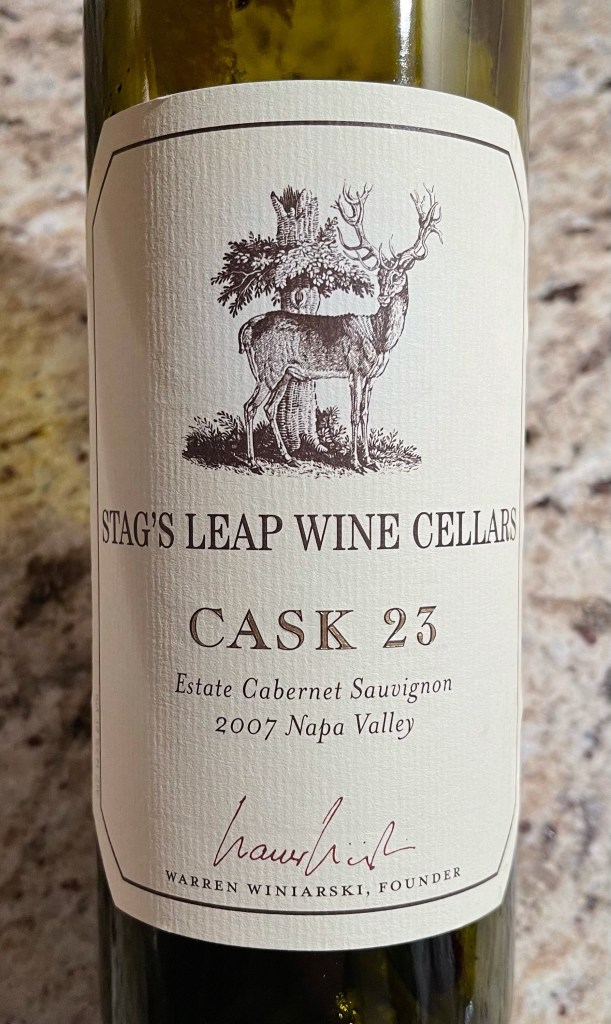
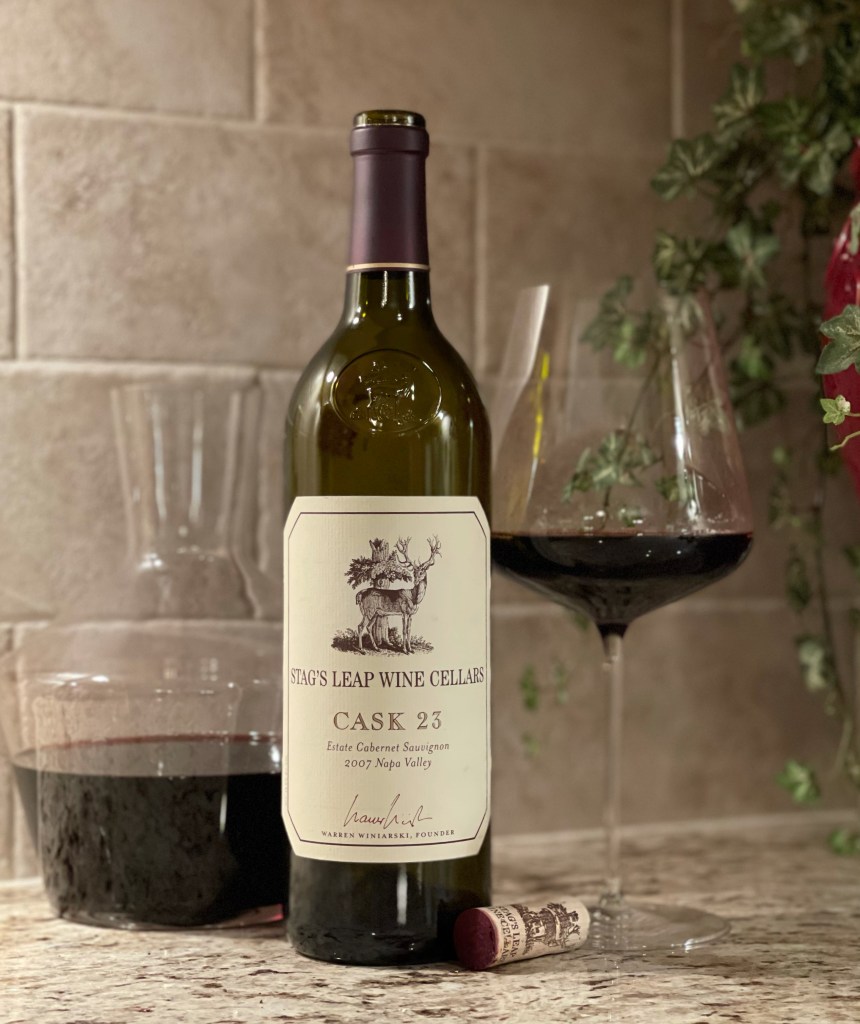
Today’s Wine: 2007 Cask 23 Cabernet Sauvignon

100% Cabernet Sauvignon; 14.5% ABV

The 2007 Cask 23 is opaque deep ruby in color with deep purple and black hues in the bowl, showcasing no signs of its age at this point. After 3.5 hours in the decanter, the nose opens to showcase aromas of black cherry, blackcurrant, black plum, cigar box, loamy earth, black truffle, graphite, cedar spill, cracked pepper, and nutmeg. Meanwhile on the palate, I get notes of crème de cassis, black cherry, blackberry, redcurrant, tobacco, cola, forest floor, black pepper, chocolate, and oaky spice. This is full-bodied with medium (+) acidity, medium (+) but refined tannins, and a very long finish. Gorgeous right now but this has several years left in the tank.

Price: $220. I’m at the price-point where I don’t think I can call this a good value, but I do not think it’s outrageously overpriced either. This is a top-tier Napa Cab that is complex while offering great depth and aging potential, though I’ve had similar wines for $50 to $70 less as well.
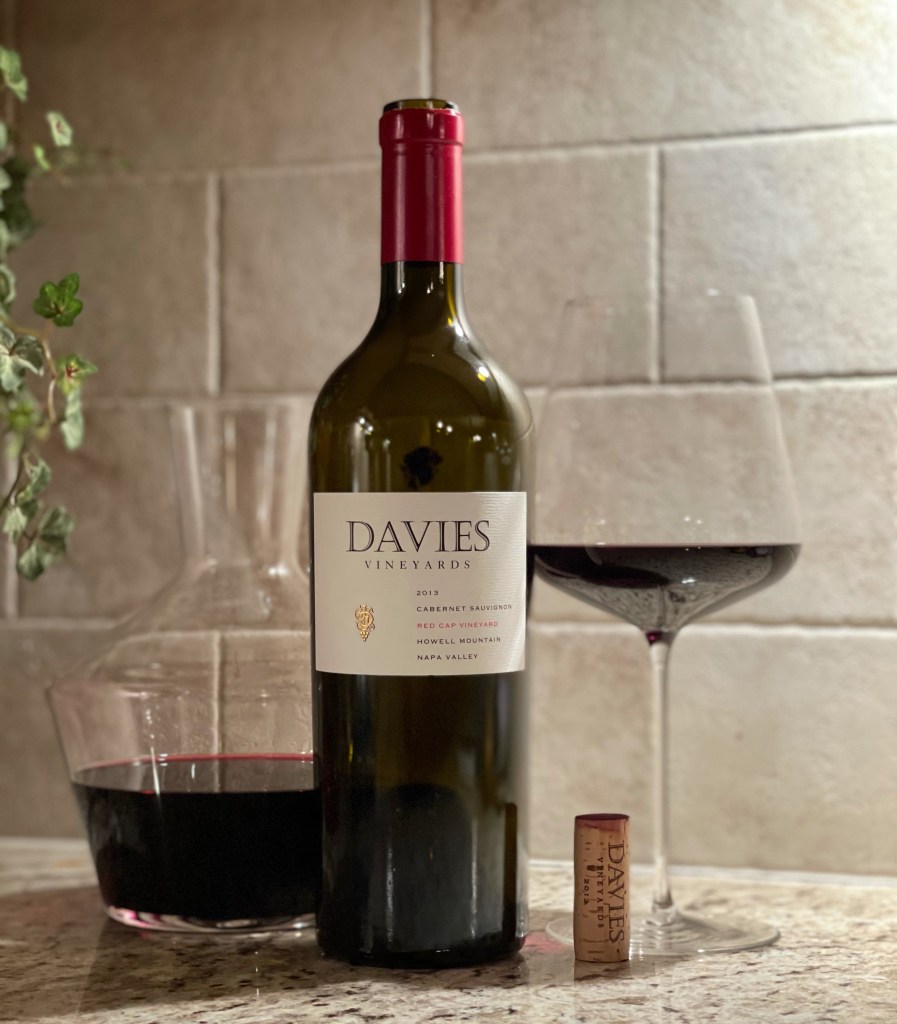
A Familiar Producer, but a Special Vineyard

Today’s Story: Davies Vineyards

Davies Vineyards should be familiar to those of you who have been around since the beginning of this blog, namely because I reviewed the 2012 Ferrington Pinot Noir, 2012 JD Cabernet Sauvignon, 2013 Jamie Cabernet Sauvignon, and 2015 Piedra Libre Vineyards Pinot Noir. I’ve even reviewed one of their sparkling wines under the Schramsberg label, the 2005 J. Schram Sparkling Rosé. Now it’s rare I review this many wines from the same producer, and more rare that I’m reviewing another one today. However, the fruit for today’s wine comes from a vineyard (and vintner) I hold in very high regard, and whose 2014 Cabernet I reviewed in the rightfully titled What Wine Is Meant to Be.

Davies Vineyards is one of the most storied wineries in Napa, tracing their roots back to 1862 when Jacob Schram purchased 200 acres and began the development of hillside vineyards in Napa. In 1870, Chinese laborers dug what became the first hillside caves in Napa Valley for aging and storing wine, with the winery quickly ramping up production. By 1880, Schramsberg was producing 8,403 cases of wine annually from 50 acres of vines, which ramped up to about 28,361 cases from 100 acres of vines by the year 1890. Fortunes would change in the early 1900s, however, when Jacob Schram died in 1905 and the winery sold in 1912.

It wasn’t until 1965, however, that Jack and Jamie Davies purchased the 200 acre Schramsberg property and crushed the first grapes under their proprietorship. Jumping forward in time to 1994, the Davies family started replanting their Diamond Mountain vineyard property with Cabernet Sauvignon and other red Bordeaux varietals, paving the way toward their exceptional red wines in circulation today.

Several years later in 1998, Jack Davies unfortunately passed away and his wife Jamie became Chairman of the winery. Then, in 2000, Davies truly became a family affair when their son Hugh became head winemaker. His 2001 J. Davies Diamond Mountain Cabernet Sauvignon, the first vintage from the replanted vines, released in 2004 and is named in honor of Jack. Known for this Diamond Mountain Cabernet Sauvignon, Davies also produces sparkling wine under the Schramsberg label and an assortment of Pinot Noir from the Sonoma Coast to the Anderson Valley and beyond.

Today’s Wine: 2013 Red Cap Vineyard Cabernet Sauvignon

100% Cabernet Sauvignon; 14.6% ABV

The 2013 Red Cap Vineyard Cab is mostly opaque deep ruby in color with deep purple hues in the bowl of the glass. Given a couple of hours to open up, the nose showcases aromas of blackberry, blueberry, redcurrant, violets, volcanic soil, wet slate, green peppercorn, and oak. Meanwhile on the palate I get notes of blueberry, blackcurrant, black cherry, black raspberry, licorice, sweet tobacco, loamy earth, grilled herbs, and a hint of smoke. This is full-bodied with medium acidity, medium (+) tannins, and a medium (+) length finish. Great mountain fruit on this one but the structure is slightly underwhelming. 200 cases produced.

Price: $80. I think this is pretty fairly priced, however there are still markings of a consistent style of winemaking (justifiably so) that makes it very similar to the rest of the Davies bottlings. I’d say go for the namesake Red Cap Vineyards wines for roughly the same price if you’re in the club, or for $15-20 more if you’re not.

Classic Napa Cab With Some Age on It

Today’s Story: Silver Oak

Silver Oak was established in 1972 by friends Ray Twomey Duncan, a Colorado entrepreneur, and Justin Meyer, a winemaker who trained at the famous Christian Brothers Winery. The two shared a vision of focusing solely on Cabernet Sauvignon and aging their wines in strictly American oak to produce a Napa Cabernet Sauvignon built for cellaring. Silver Oak quickly grew out of their dairy barn and inaugural 1,000 case release, climbing over the following decades to become one of the top selling restaurant wines around the country. Though Justin Meyer retired in 1994 and sold his shares to the Duncan family in 2001, winemaker Daniel Baron picked up the reigns having studied Justin’s ways and Silver Oak continued to make consistent wines. Nate Weis has been winemaker since 2014, and to this day Ray’s sons David and Tim Duncan own and operate the winery.

Silver Oak consists of over 400 acres of vineyards between Napa Valley and Alexander Valley, all of which grow under sustainable viticulture practices. The vineyard management and winemaking teams are both delicate in changes that occur in the vineyards, but they also use a great deal of science and historical accounting in deciding when to pick the fruit. Silver Oak practices Berry Sensory Analysis, using tools to discover and analyze the sugar, acid, pH, and flavor of the fruit in addition to its pulp, seeds, skin, and texture. Coupled with catalogued details of each vineyard and block going back several decades, Silver Oak can pick at optimal ripeness for the wine they want each vintage.

In the cellars, the Silver Oak winemaking team led by Nate Weis prides themselves on producing consistent and high-quality Cabernet Sauvignon using both science and art. With only three winemakers in the history of Silver Oak (with overlap between each “changing of the guard”), it’s no surprise that Silver Oak offers a similar profile vintage after vintage. Interestingly, Silver Oak blends their young wines before aging and therefore they get an image of what the wine will be like before going into oak and picking up any characteristics of the wood. After nearly five years of barrel and bottle aging, Silver Oak releases their wines which are both enjoyable in their youth and have the structure to age for several decades in the cellar.

Fun Fact: Silver Oak owns their own barrel cooperage in Higbee, Missouri and I highly suggest taking a scroll through the images and barrel-making process on the website here.

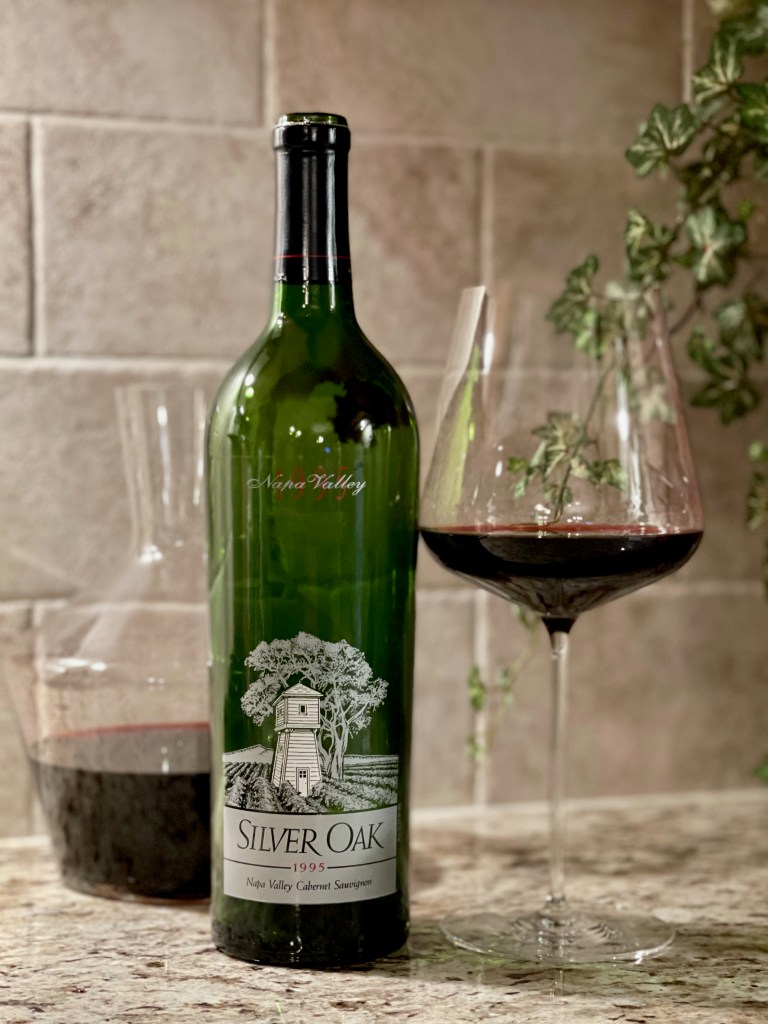
Today’s Wine: 1995 Napa Valley Cabernet Sauvignon

96% Cabernet Sauvignon, 3% Cabernet Franc, 1% Petit Verdot; 13.3% ABV

The 1995 Napa Valley Cabernet Sauvignon is deep garnet in color with ruby hues. There’s absolutely no bricking yet, and the wine is somewhat translucent. I decanted this for an hour or so, but in reality this was singing as a pop-and-pour. The nose showcases aromas of black plum, juicy blackberry, redcurrant, blueberry, licorice, forest floor, and cigar box with that classic Silver Oak clove and vanilla. On the palate, I get notes of black cherry, cassis, plum, tilled earth, green underbrush, cracked black pepper, cedar, and more Silver Oak vanilla and oak. This is medium-bodied with medium acidity, medium (+) but integrated tannins, and a medium (+) finish. Drink up if you have it.

Price: $135 (shared by a friend). I always struggle to call Silver Oak a great value wine, largely because every vintage tastes very similar and these fit more into the “people pleasing” camp of wines. The one thing you can credit Silver Oak with is consistency, but I think there are more exciting wines for the price. All depends what you want out of a Napa Cab.

Another Stunning 2014 Bordeaux

Today’s Story: Château Pontet-Canet

Château Pontet-Canet is a historic Bordeaux wine estate located in the Left Bank appellation of Pauillac. In 1705, Jean-François de Pontet (who was Governor of the Médoc) acquired a few acres and planted them to vine. By the 1720s, Jean-François and his descendants had expanded the estate by purchasing parcels in a place known as Canet and Château Pontet-Canet was born. For over a century, Château Pontet-Canet remained in the Pontet family hands and ultimately received classification as a Fifth Growth (Cinquième Cru) in the Bordeaux Wine Official Classification of 1855. A decade later, in 1865, wine merchant Herman Cruse purchased Pontet-Canet and marked the first change in ownership since its establishment.

Though the Cruse family maintained ownership of Pontet-Canet for 110 years, the estate never seemed to live up to its quality potential. This began to change, however, when Cognac merchant Guy Tesseron purchased the estate in 1975 and set about replanting the vines in desperate need of repair. The family then worked on transitioning the vineyards to sustainable farming and a more “minimally invasive” philosophy of viticulture. When Alfred Tesseron took over in 1994, this ultimately spawned into a transition to organic and then biodynamic viticulture, which Pontet-Canet moved to fully by 2005 (they were certified organic and biodynamic several years later in 2010).

This minimally invasive philosophy for the vineyards transfers into the actual winemaking process as well. Beginning with harvest, all fruit is hand-sorted before being destemmed and hand-sorted again. The wine ferments with natural yeasts and minimal intervention, with maceration lasting an average of four weeks before the wine is run off with gravity. Over time, Pontet-Canet has reduced the amount of new oak they use so as to not mask the expression of place in the wine and today the Grand Vin ages in 50% new oak, 35% dolia (concrete amphorae made specifically for Pontet-Canet), and 15% 1-year-old barrels. The 2nd wine (Hauts de Pontet-Canet), meanwhile, ages in 100% 1-year-old oak barrels.

Pontet-Canet is a pretty large estate, today consisting of 120 hectares with 81 hectares planted to vine. The breakdown by variety is 62% Cabernet Sauvignon, 32% Merlot, 4% Cabernet Franc, and 2% Petit Verdot. To learn more about Château Pontet-Canet, I recommend visiting their website here for, at the very least, some great pictures.

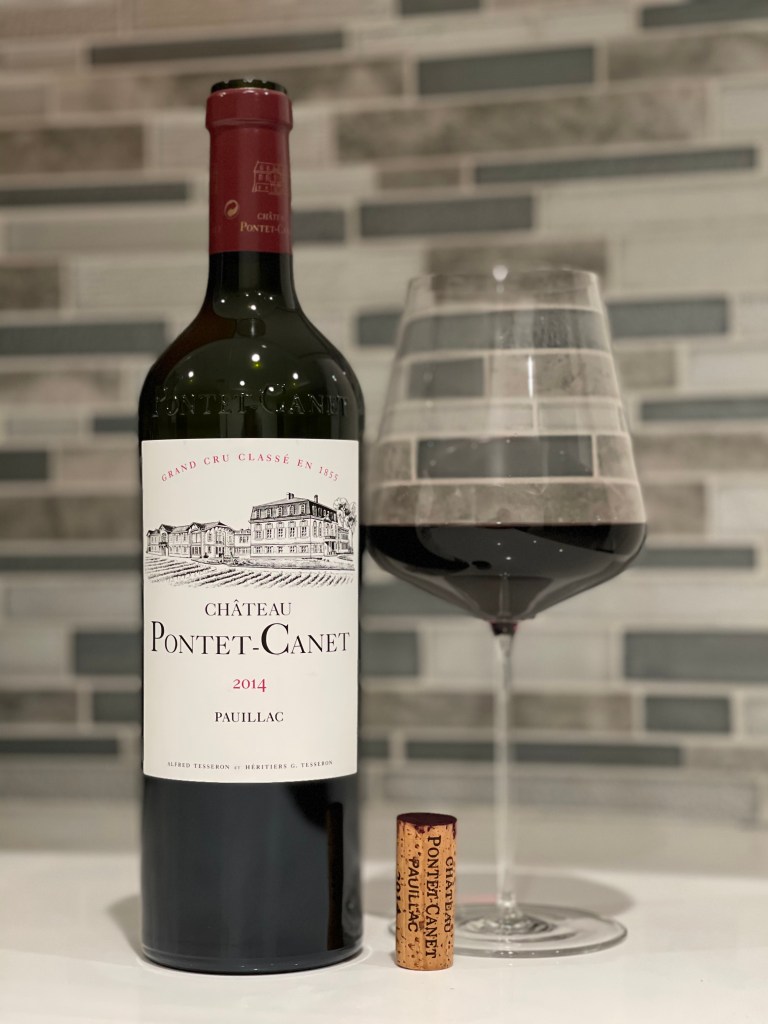
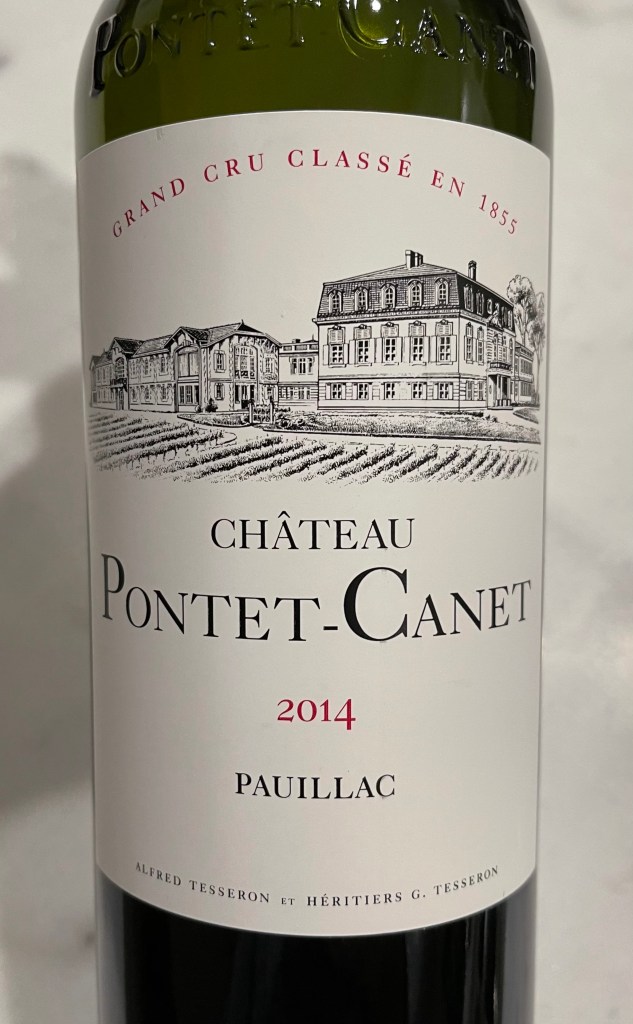
Today’s Wine: 2014 Château Pontet-Canet

65% Cabernet Sauvignon, 30% Merlot, 4% Cabernet Franc, 1% Petit Verdot; 13.5% ABV

The 2014 Pontet-Canet is opaque deep ruby in color. I know this is young, but in an effort to continue my tasting of various 2014 Bordeaux wines I cracked into it early. With that in mind, I decanted this bottle for 6 hours and drank it over the following 2 hours. Once this opens up, the nose showcases classic Pauillac aromas of blackcurrant, black raspberry, plum, redcurrant, lavender, cigar box, pencil shavings, loamy earth, graphite, green herbs, cedar spill, and mild oaky spice. Meanwhile on the palate I get notes of crème de cassis, blackberry, plum, black cherry, violet, anise, tobacco, wet earth, dried coffee grounds, chocolate truffle, black pepper, clove, and a hint of oak. This is full-bodied with beautiful high acidity, high grippy tannins, and a long finish of 45+ seconds. This has plenty of elegance right now, though it is still pure power and should surely develop into an iron fist in a velvet glove.

Price: $120. I think this is a very nice value, as I’m finding with a lot of 2014 Left Bank Bordeaux. Particularly when overshadowed by the 2015 and 2016 vintages, wines like this provide great quality for the price and are just starting to come into their own. I highly recommend adding this Pontet-Canet to your 2014 collections.

Beauty on Atlas Peak

Today’s Story: Acumen Wines

Acumen Wines is a boutique estate established by entrepreneur Eric Yuan on Atlas Peak in Napa Valley in 2012. Alongside founding winemaker Denis Malbec and acclaimed viticulturist Garrett Buckland, Eric purchased the 32 acre Attelas Vineyard (planted in 1992) high up on Atlas Peak. After the estate’s inaugural vintage in 2013, Acumen expanded in 2014 by purchasing the 84 acre Edcora Vineyard which sits 350 feet higher in elevation next to the famed Stagecoach Vineyard. Totaling 116 acres of certified organic vineyards, Acumen today crafts small amounts of Cabernet Sauvignon and Sauvignon Blanc modeled after the great, classic wines of the 1960s and 1970s. (They do have small blocks of Merlot, Malbec, Cabernet Franc, and Petit Verdot for blending as well.) Following the passing of the great Denis Malbec all too soon, Phillip Titus came in as winemaker and continues to make precise, well-structured wines in a classic style to showcase the brutal and rugged terroir of Atlas Peak.

Acumen produces two distinct “ranges” of wine, the PEAK bottlings and the Mountainside bottlings. The PEAK wines are produced in limited quantities from the best vineyard blocks and best barrels, offering a Sauvignon Blanc, Cabernet Sauvignon, and two single vineyard Cabernet Sauvignons (Attelas and Edcora). The Mountainside wines, on the other hand, are meant to open the estate to a wider audience of wine lovers and, at lower prices, include a Sauvignon Blanc, Red Blend, and Cabernet Sauvignon. To learn more about these wines or the estate itself, check out their website here.

Today’s Wine: 2013 PEAK Attelas Vineyard Cabernet Sauvignon

84% Cabernet Sauvignon, 11% Merlot, 2% Petit Verdot, 2% Cabernet Franc, 1% Malbec; 13.3% ABV

The 2013 Attelas Vineyard Cabernet Sauvignon is opaque deep ruby in color with nearly black hues in the bowl of the glass. I decanted this for about 3 hours, as it is incredibly youthful and should be gorgeous in 5-7 more years. The nose opens with aromas of blackberry, blueberry, plum, violet, anise, tobacco, dried earth, graphite, charred green herbs, mild baking spice, and a hint of oak. Meanwhile the palate showcases notes of blackcurrant, blueberry, black cherry, licorice, cigar box, scorched earth, gravel, coffee, chocolate, and a hint of ground pepper. This is medium- to full-bodied with medium (+) acidity, firm medium (+) tannins, and a long finish. 360 cases produced.

Price: $150 (I paid $70 on sale). While this is a fantastic wine with nothing but potential to get better, the $150 level is tough for me to call it a great value. The winery was even selling this for $225 not too long ago before they sold out… That being said, I would certainly pay $100-120 for this wine and the $70 I got it for is an absolute steal. Tremendous effort and another gorgeous wine from the late, great Denis Malbec.

Magnificent Old-School Napa Cab

Today’s Story: Ceritas Wines

I previously wrote about Ceritas back in June when I reviewed the 2017 Porter-Bass Vineyard Pinot Noir. As these wines can be hard to come by off the mailing list or in restaurants, I jumped at the opportunity to revisit them again today.

Ceritas Wines is a small, family-owned winery spearheaded by husband and wife duo John and Phoebe Raytek. John and Phoebe source their fruit from trusted vintners mainly in the West Sonoma Coast and Santa Cruz Mountains, with all sites practicing sustainable or organic viticulture. John is highly involved in the vineyards they source from, and in many cases the vintners only sell fruit to Ceritas and are labeled “Monopoles.” Considering himself a winemaker of the Old World style, John believes that fruit should lead the way throughout the winemaking process and he is merely there to watch over, listen, and learn about each unique site. In the cellar, John practices minimal intervention but “flexible” winemaking, with the wines meant to showcase with honesty and transparency the terroir of each specific vineyard site.

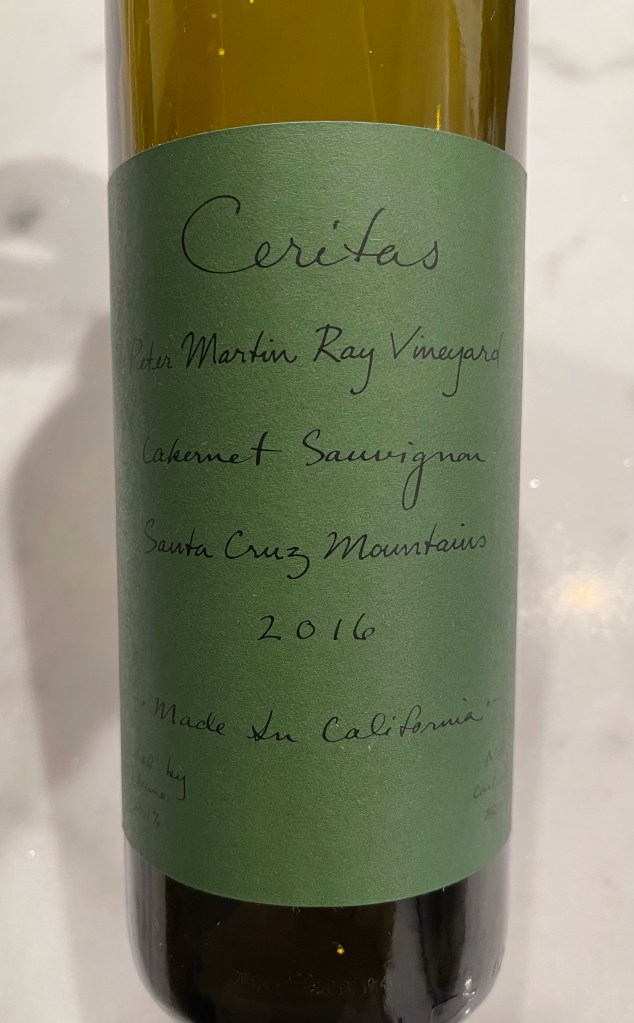
Today’s Wine: 2016 Peter Martin Ray Vineyard Cabernet Sauvignon

100% Cabernet Sauvignon; 13.1% ABV

The 2016 Peter Martin Ray Cabernet Sauvignon is medium to deep ruby in color with purple hues. Though nearly opaque, it is still lighter in the glass than I was imagining. I decanted this bottle for about 5 hours, checking in on it every hour or so, and drank it over the following 2-3 hours. The nose is gorgeous yet refined, showcasing aromas of blackberry, black raspberry, redcurrant, violets, cigar box, pine, mint, crushed rock, dried underbrush, pepper, and just a hint of oak. Moving onto the palate, I get notes of black cherry, blueberry, pomegranate, dried tobacco, licorice, scorched earth, graphite, dried green herbs, sage, and mild chocolate. The wine is medium- to full-bodied with medium (+) acidity, medium (+) but refined tannins, and a long finish. This is an exquisite old-school and traditional Napa Cab that, while beautiful now, certainly has the legs to go another couple decades.

Price: $100. I think this is a great value Napa Cab that drinks like some of the $200 bottles I’ve had. While most “modern day” Napa Cab drinkers may not like this or may not appreciate it because it is so old-school and not what they are used to, the quality, elegance, and longevity of this wine is profound. Excited to revisit this in probably 5 years.

Bold and Powerful Tuscan Red That Needs More Time

Today’s Story: Vecchie Terre di Montefili

Vecchie Terre di Montefili was established in the Chianti Classico area of Tuscany by the Acuti family in 1975, right in the midst of rising popularity of “Super Tuscan” wines. The family planted their Sangiovese vineyards when they established Montefili, later giving in to the rise of Tuscan wines containing Cabernet Sauvignon by adding the variety in 1981. Dedicated to the craft of sustainable winemaking, Montefili helped create Italy’s first organic winemaking district in 2000 which is overseen by the Panzano in Chianti Winemakers Association. Though the winery shifted hands in late 2015 to American investors Nicola Marzovilla, Frank Bynum, and Tom Peck Jr., the trio is dedicated to maintaining the traditions of the Acuti family and their wines.

Vecchie Terre di Montefili consists of 31 acres of vineyards situated at just over 1,500 feet elevation. While the majority of these vineyards are planted to Sangiovese, there are smaller amounts of Cabernet Sauvignon for the Bruno di Rocca bottling. Adhering to their place in Panzano’s organic district, Montefili practices organic and sustainable viticulture with minimal intervention to the natural flora and fauna of the land, allowing them to increase an already diverse biological ecosystem. Winemaker Serena Gusmeri views herself as more of an observer and guide to the fruit and wines, avoiding a heavy hand throughout the winemaking process with use of spontaneous fermentations and long aging in barrel. Her goal is simply to create wines that reflect the terroir and sense of place in her corner of Tuscany.

Today’s Wine: 2015 Bruno di Rocca

80% Cabernet Sauvignon, 20% Sangiovese; 14.5% ABV

The 2015 Bruno di Rocca is opaque deep ruby in color. I decanted this for 3 hours or so, but I sense it will only blossom further and I’m saving some to revisit on day 2. Dense and powerful, this does start to open up and showcase a nose of blackberry, blackcurrant, plum, licorice, leather, wet slate, charred herbs, vanilla, chocolate, and oak. The palate benefited from air time as well, offering notes of blackberry, blueberry, black cherry, tobacco, damp rocky earth, coffee grounds, nutmeg, savory green herbs, mild oak, and iron. This youthful Tuscan red is full-bodied with medium (+) acidity, grippy high tannins, and a long finish. I think if one gives this another 5 years of cellaring they will be handsomely rewarded.

Price: $50 (typically $100+). The $100 or higher price tag is certainly a large stretch on value, and I’d recommend you look elsewhere for now. However, if you can find a great deal like I did and pay $50 for this wine it’s certainly worth trying. Give it a lot of air now, or remain strong and let this rest.

Breathtaking 2nd Wine From a First Growth Estate

Today’s Story: Château Haut-Brion

Château Haut-Brion is a historic Bordeaux wine estate that traces back to at least 1521, and it was awarded First Growth (Premier Grand Cru) status in the Bordeaux Wine Official Classification of 1855. In 1533, Jean de Pontac acquired the land that would become Château Haut-Brion and he immediately set about renovating the vineyards and expanding the estate. He is also the owner who, in 1549, started building the château. Jean de Pontac was instrumental in each vintage under his ownership until he passed away in 1589 at the age of 101, though the estate remained in the Pontac family by passing to his son Arnaud II and then Arnaud II’s nephew Geoffroy. Geoffroy’s son Arnaud III took over during the early 17th century and expanded the château itself while doubling the size of the vineyards. He also used his political influence to extend the fame and reputation of Haut-Brion, particularly in England.

As the influence of Haut-Brion grew, particularly amongst nobility and the intellects of the time (including John Locke), Joseph de Fumel inherited the estate from his father in 1749. The estate’s influence took another leap when, in 1787, Thomas Jefferson visited the château and wrote with great admiration about the soils and wines of Haut-Brion. The rosiness ended during the French Revolution, however, as Joseph de Fumel was beheaded by guillotine and his holdings were divided. Over the next four decades or so, the estate changed hands several times.

In 1836, Joseph Eugène Larrieu purchased the estate and worked tirelessly to improve on the exceptional wines it was known for. His efforts were rewarded when Haut-Brion was awarded Premier Grand Cru status in 1855, though pain struck again through disease and political upheavals within the region in the latter half of the 19th century. In 1859, Amédée took over upon his father’s death and replanted the vineyards over time to deal with mildew. By 1873 when his son Eugène took over Haut-Brion, there was optimism which unfortunately proved futile when phylloxera struck with a vengeance in 1880. Eugène spearheaded a massive replanting of the vineyards yet again, this time using rootstock from North America that was resistant to the disease.

Jumping forward through multiple new ownerships, the Dillon family came into the picture during the early 1900s. The owner at the time, André Gibert, faced the need to find a proper owner for Haut-Brion with no heirs of his own. Clarence Dillon, a banker from New York, visited in 1934 and received notice on his way back to America he could buy the estate. The purchase was finalized in 1935 and the Dillon family remains the owner of Château Haut Brion to this day. This purchase by the Dillon family helped bring Haut-Brion to the modern age, with them first installing electricity, new plumbing, and renovating the cellars. Over the decades that followed leading up to current times, the family continued to improve the estate, modernized the winemaking process with a high tech vat room, and completely renovated the château with utmost attention to detail.

Château Haut-Brion today consists of 51 hectares of vineyards located in the Pessac-Léognan appellation of Bordeaux. Of the 51 hectares, 48 are planted to red varieties of Merlot, Cabernet Sauvignon, Cabernet Franc, and Petit Verdot while the remaining 3 hectares are planted to white varieties of Sémillon and Sauvignon Blanc. Situated across from Château La Mission Haut-Brion (which I wrote about two days ago), Château Haut-Brion shares the same gravelly soil of small quartz stones above a subsoil of clay, sand, and limestone. Following the same practices of their neighbor, all fruit is harvested by hand and then sorted before transferral to temperature controlled vats for fermentation. After two weeks, the vats are drained and the wine moves to barrel where it spends 20-24 months before bottling. Château Haut-Brion produces four wines: Château Haut-Brion, Château Haut-Brion Blanc, and two 2nd wines named Le Clarence de Haut-Brion (red) and La Clarté de Haut-Brion (white).

To read more of the history of Château Haut-Brion, view images of the beautiful château, or explore vintages of wines, visit the website here (also the source of the information above).

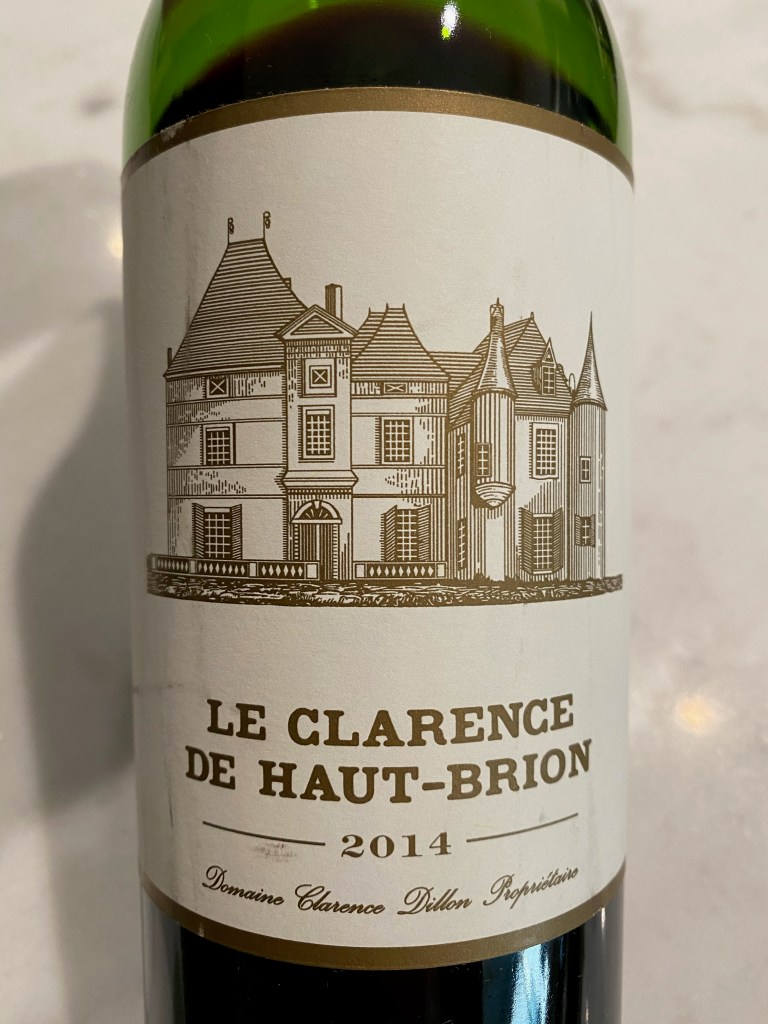
Today’s Wine: 2014 Le Clarence de Haut-Brion

80% Merlot, 16% Cabernet Sauvignon, 4% Cabernet Franc; 14% ABV

The 2014 Le Clarence de Haut-Brion is medium to deep ruby in color and almost opaque. I decanted this wine for 4 hours, though it did really start opening up around the 2 hour mark and only improved from there. On the nose, this gorgeous wine showcases aromas of blackcurrant, black raspberry, cigar box, violet, forest floor, gravel, graphite, and thyme. Moving to the palate, I get notes of black cherry, cassis, pomegranate, tobacco, pepper, tilled earth, crushed rock, and a hint of charred oak. This is full-bodied with medium (+) acidity, medium (+) tannins, and a long finish. Superb effort and the best 2nd wine from the 2014 vintage I’ve had to date.

Price: $100 (though many bottles are priced closer to $130 online). Though not an inexpensive bottle of wine, I find this to be a very strong value play particularly given the vintage (often undervalued) and relative value to the Grand Vin. This has everything you want out of a great Bordeaux, punching well above its price point.

Great Value From a Historic Bordeaux 2nd Wine

Today’s Story: Château La Mission Haut-Brion

Château La Mission Haut-Brion is a highly regarded Bordeaux wine estate with history dating back to 1540. That year, merchant Arnaud de Lestonnac purchased the land that would become La Mission Haut-Brion and he married Marie, sister of Jean de Pontac of neighboring Château Haut-Brion. By the time of his death in 1548, the estate produced great wines and management fell to his son Pierre who set about enhancing the reputation further. A century later, in 1682, Pierre’s daughter Olive de Lestonnac (who had devoted her life to charitable works and had no children) gifted the estate by annuity in her will to the Lazarists of Bordeaux and La Mission became property of the Catholic Church.

The Lazarists quickly set about developing the vineyards further, with great emphasis on improving farming practices, quality of the wines, and reputation. By the early 1700s, La Mission produced 24 barrels of wine annually and, by the mid 1700s, became recognized by French nobility for the immense quality of these wines. The incredible improvement and quality under the Lazarists shifted hands, however, in 1792 when the property was confiscated by the state during the French Revolution. Businessman Martial-Victor Vaillant purchased the estate in auction, however his family’s ownership was short-lived when his daughter sold it to Célestin Coudrin-Chiapella in 1821. As its first American owner, Chiapella continued to improve La Mission and set about retiring there one day. Having come from New Orleans, the family also stressed the importance of trade and Old World/New World ties which catapulted the estate to high regard throughout France, the UK, and the US.

Château La Mission Haut-Brion shifted ownership again in 1919 when Frédéric Otto Woltner, another Bordeaux merchant, purchased it. The Woltner family helped bring the estate into the modern era, in part by implementing the use of stainless steel vats to better control fermentation and, since 1927, producing a white wine. Frédéric passed away in 1933 and passed the estate to his three children, with Henri leading management. During WWII, the family was forced to house German officers at the château but miraculously kept them from raiding the cellars by demanding respect from their “guests.” Following the war, the Woltner family regained complete control until Henri passed away in 1974.

With La Mission up for sale yet again in 1983, Domaine Clarence Dillon came in and purchased the estate through a very natural transition. The Dillon family immediately started improving the estate even further, beginning in the vineyards and progressing through renovations to construction of new buildings and cellars. Though the estate has lived through a somewhat tumultuous history due to ownership changes and wars, they released highly revered wines over the centuries known for quality and consistency that is largely unmatched anywhere in the world.

Château La Mission Haut-Brion consists of 29 hectares of vineyards in the Pessac-Léognan appellation. Situated on an elevated gravel terrace, the soil of La Mission is particularly suited for growing wine grapes with a subsoil of clay, sand, and limestone. Of the 29 hectares, 25 are planted to red varieties of Merlot, Cabernet Sauvignon, and Cabernet Franc; the remaining 4 hectares are planted to white varieties of Sémillon and Sauvignon Blanc. All fruit is harvested by hand and sorted before fermentation in steel vats. After two weeks, the wines are drained and transferred to new oak barrels for 20-24 months before ultimately moving to bottle and aging further.

To learn more about this great estate, run through their wines over the years, or view images, I encourage you to visit the website here (also the source of the information above).

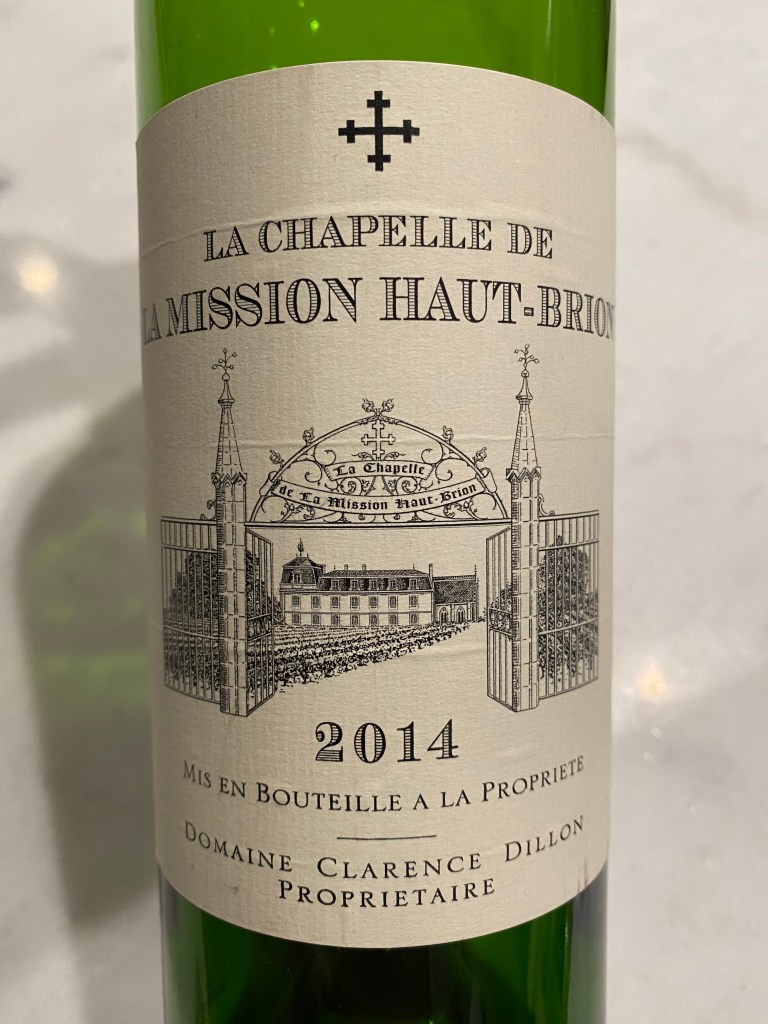
Today’s Wine: 2014 La Chapelle de La Mission Haut-Brion

45% Merlot, 31% Cabernet Franc, 24% Cabernet Sauvignon; 14% ABV

The 2014 La Chapelle de La Mission Haut-Brion is opaque deep ruby in color. I gave this about 3 hours to open up, and the nose showcases aromas of plum, blackcurrant, violet, tobacco, gravel, truffle, dried underbrush, pepper, and cedar. Once in the mouth, the wine displays notes of blackcurrant, black raspberry, fig, cigar box, smoke, forest floor, crushed rock, and bell pepper. The Cabernet Franc is quite evident in this one. The wine is medium- to full-bodied with medium (+) acidity, fine grained medium tannins, and a medium (+) length finish.

Price: $65. I think this is one of the better value Bordeaux wines, particularly for the second wine of an estate with as high stature as Château La Mission Haut-Brion. Coupled with the fact the 2014 vintage can be often overlooked, this is a very nice wine for its cost.

Exclusive Napa Red From the Harlan Family

Today’s Story: The Napa Valley Reserve

The Napa Valley Reserve was established by H. William Harlan in 2000 and is a private members-only club located in St. Helena of the Napa Valley. While the vineyards are overseen by the Harlan Estate viticulture team and winemaking is spearheaded by Harlan Estate winemaker Bob Levy and winemaker Marco Gressi, members are involved in as much of the winemaking process as they desire. For instance, members are able to assist in pruning during the winter months, thinning during the summer months, and harvest in the fall which is accomplished entirely by hand. Members even get to help monitor the fermentation process, top up their barrels during aging, and can help determine a custom blend for their own wines, custom bottles, and custom labels. If you would like to join this exclusive club of about 600 members, prepare to pay upwards of $100,000 for entry after receiving the necessary invite.

I highly recommend visiting the website here, particularly for the pictures of this beautiful winery and its vineyards.

Today’s Wine: 2003 Napa Valley Reserve

Blend unknown; 14.5% ABV

The 2003 Napa Valley Reserve is opaque deep garnet in color with deep ruby hues in the bowl. This is a very complex wine, with the incredibly perfumed nose changing over time to reveal aromas of cassis, plum, black raspberry, fig, licorice, lavender, mild tobacco, truffle, dried rocky earth, eucalyptus, ground pepper, and cedar. The palate is equally complex, though not as vibrant, with notes of juicy red cherry, raspberry, blackberry, crème de cassis, pipe tobacco, wet volcanic earth, black truffle, green underbrush, coffee grounds, chocolate, pepper, and iron. This utterly elegant wine drinks like liquid silk and is medium-bodied with medium (+) acidity, refined and mature medium tannins, and a very long finish. Stunning.

Price: Technically not for resale, though you can sometimes find this in auction or at wine stores that source from private collectors. I’ve seen this 2003 anywhere from $150 to $700 per bottle. If you can find this closer to the low end of that price range, buy any of it you can. This has all the classic Harlan characteristics you find in Bond, Promontory, and Harlan Estate but at a much more accessible level if you’re lucky.