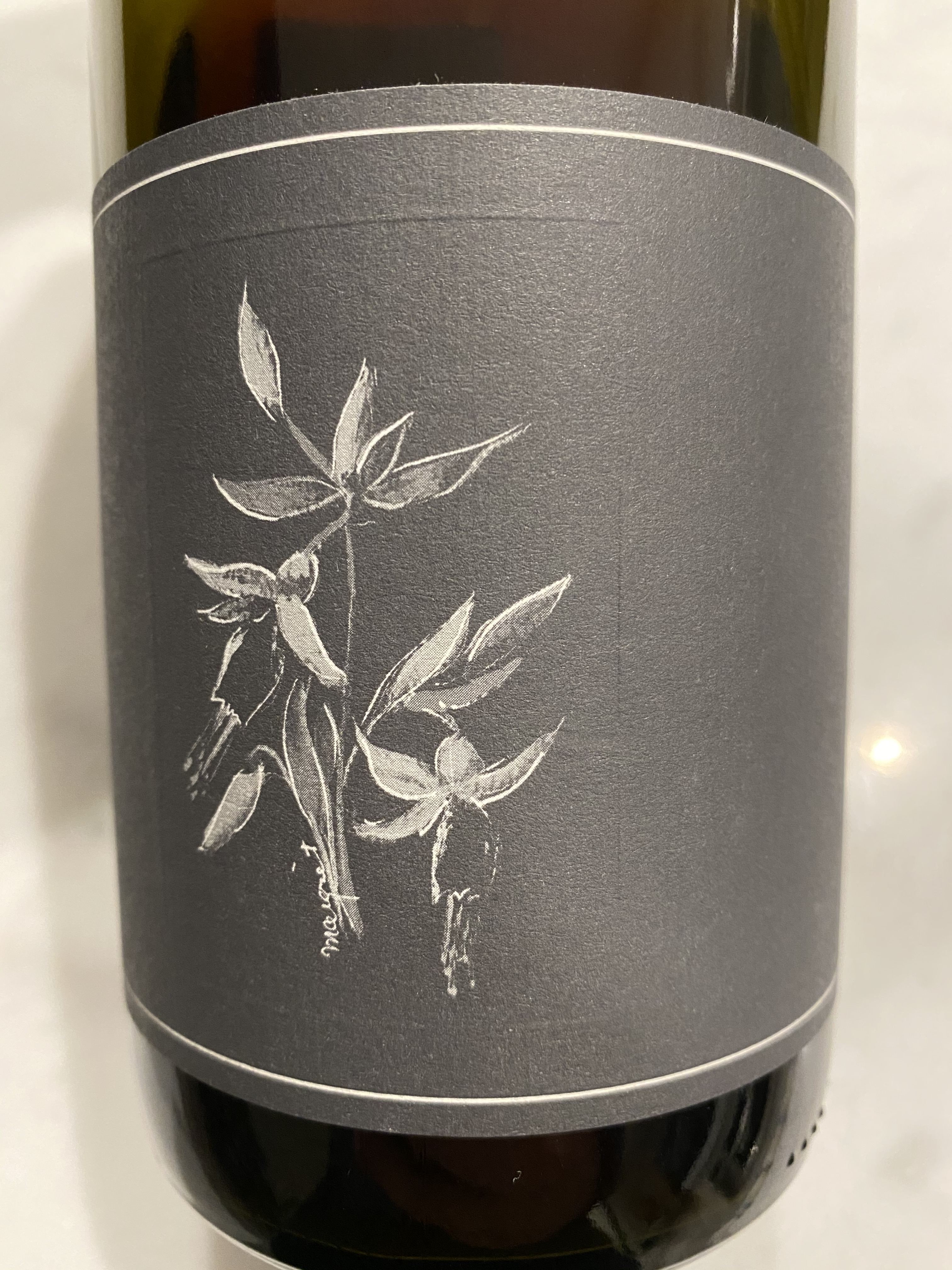
Lady of the Sunshine was established in 2017 by Gina Hildebrand with a focus on Chardonnay, Sauvignon Blanc, and Pinot Noir sourced from organic and biodynamic vineyards in California’s Central Coast. Gina grew an appreciation and passion for wine growing up thanks to spending a lot of time at her family’s winery Narrow Gate Vineyards, though it also helped her discover the importance of biodynamic farming which her family also practices. With Lady of the Sunshine, Gina sources fruit from organically farmed vineyards at a minimum and, since early 2018, personally farms Chêne Vineyard and transitioned it to biodynamics with Demeter certification earlier this year.
When it comes to winemaking itself, Gina crafts fun wines meant to emphasize the terroir and her farming practices through minimal intervention in the cellar. All of the Lady of the Sunshine wines are fermented with native yeasts and see minimal sulfur additions in neutral oak. The wines are stirred from the lees only once for bottling, with all bottled unfined and unfiltered.
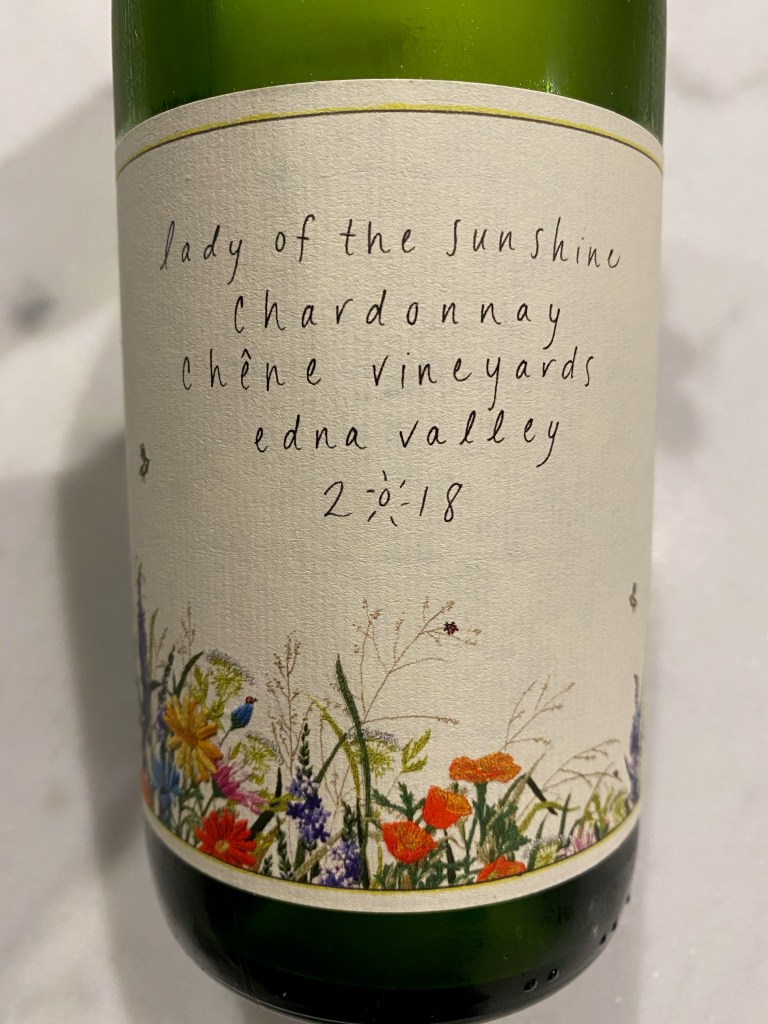
Today’s Wine: 2018 Chêne Vineyard Chardonnay
100% Chardonnay; 12% ABV
The 2018 Chêne Vineyard Chardonnay is transparent medium to deep gold in color. Given some time to open up in the glass, the wine showcases aromas of lemon citrus, crisp golden apple, stone fruit, white lily, brioche, flint rock, and saline mineral. Moving to the palate, I get notes of green apple, slightly underripe pear, baked pineapple, lime zest, olive oil, sea salt, and lightly toasted hazelnut and almond. This is medium- to full-bodied with vibrant high acidity, a plush and somewhat oily mouthfeel, and a long finish.
Price: $34. I think this is very fairly priced and it’s a very fun, clean, vibrant Central Coast Chardonnay. I really like how the low alcohol and minimal intervention winemaking makes this a true representation of the terroir and transports you to the coast.
LIOCO Wine Company was established in 2005 by Kevin O’Connor and Matt Licklider. Kevin is a former Wine Director of Spago Beverly Hills and Matt is a wine importer and salesman by trade, but the two desired to create wines that are not as heavy-handed as many modern offerings but instead wines that exhibit a sense of place through minimal intervention winemaking. With European wines and more restrained Californian wines from the 1980s as guides, Kevin and Matt sought vineyards throughout Santa Cruz, Sonoma, and Mendocino Counties with older vines and difficult climates to source their fruit. Though Pinot Noir and Chardonnay prove focal points for LIOCO, they also produce wines from Carignan, Valdiguie, Sauvignon Blanc, and occasionally other varieties that may pop up (like Syrah). LIOCO picks their fruit on the earlier side of ripeness and harvests by hand before the fruit travels to the winery in Santa Rosa under refrigerated conditions. Staying away from the big and bold California wines popular today, the winemaking process at LIOCO is as hands-off as possible, or non-interventionist. In 2017, Matt and Sara Licklider became sole owners of LIOCO and remain steadfast in continuing this philosophy.
To search through the range of wines offered by LIOCO, view the vineyards they source from and growers they work with, or see the source of the above information, check out the LIOCO website here.
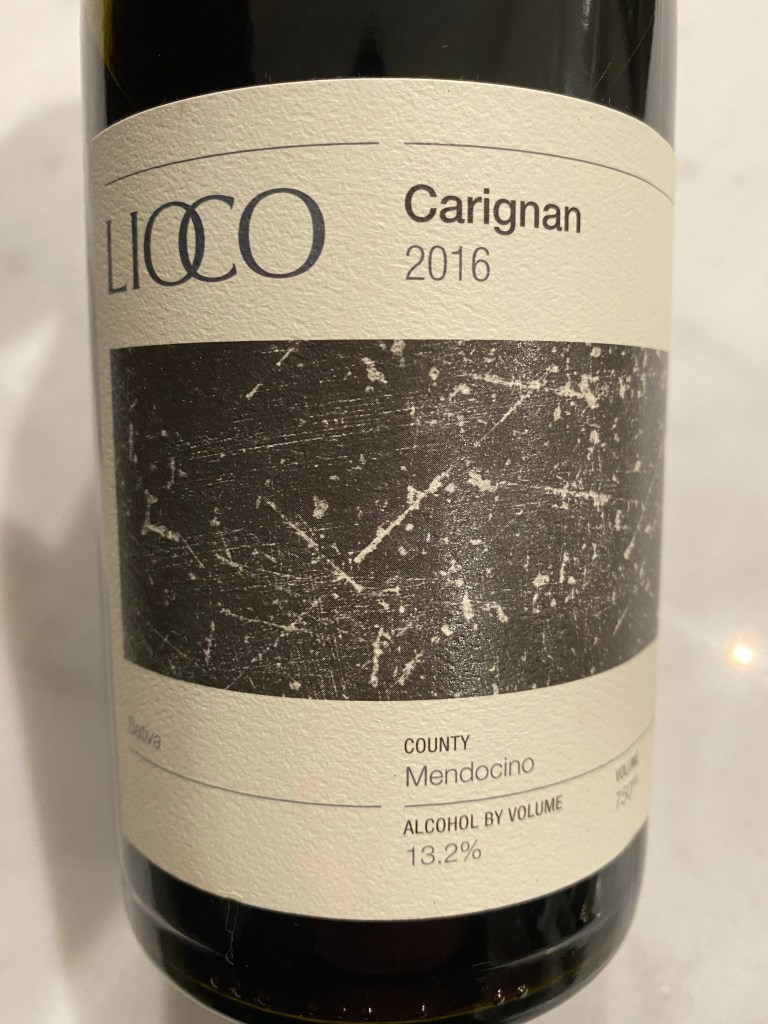
Today’s Wine: 2016 Sativa Carignan
100% Carignan; 13.2% ABV
The 2016 Sativa Carignan is almost fully opaque medium purple in color with ruby hues. Given 30-45 minutes to open up, the wine blossoms to showcase a nose of raspberry, cranberry sauce, black cherry, licorice, dried rocky earth, savory herbs, dried underbrush, and cracked pepper. On the palate, I get notes of plum, black raspberry, cherry cola, purple florals, finely crushed rock, dried green herbs, and mild baking spice with beautiful minerality. This is medium-bodied with medium acidity, medium tannins, and a medium (+) length finish.
Fruit for this wine is sourced from grower Jim McCutchen and his vineyards on Cloverdale’s Pine Mountain. The vines are 70+ years old and are head-pruned and dry-farmed at 2,200-2,400 feet elevation. Fermentation is 100% whole cluster and aging is 9 months in neutral oak plus 1 month in tank before bottling.
Price: $29 (might be able to find a few dollars cheaper). Though there are cheaper Carignan bottlings out there, I think this is a great value wine because the quality is excellent and its truth to variety and place is profound. I’ve had this wine before and I will buy it again.
Paul Hobbs Winery was founded in 1991 by Paul Hobbs with his initial release of Chardonnay, Pinot Noir, and Cabernet Sauvignon from purchased fruit. I previously wrote about Paul and his winery’s history in The Steve Jobs of Wine when I reviewed the 2015 Katherine Lindsay Estate Pinot Noir, but I will recycle it here for ease…
Paul grew up in upstate New York on a working family farm and orchard, so one could say agriculture was in his blood from an early age. Though Paul helped plant, harvest, and sell crops at nearby farmers’ markets before school each morning, his first foray into wine was helping his father achieve his dream of replanting some of the apples, peaches, and nuts in their orchards to wine grapes.
When it came time for Paul to go to college, his father encouraged him to study viticulture and enology but instead Paul followed in his great-grandfather’s footsteps by studying medicine and graduated with a BS in Chemistry from Notre Dame. His father’s persistence paid off, however, and Paul moved to California after graduation and studied viticulture and enology at UC Davis where he received his Master of Science three years later. Fresh off his new degree, Paul was hired by Robert Mondavi for his advanced knowledge of oak aging and he was quickly promoted to the inaugural Opus One winemaking team. Following his experiences at Robert Mondavi and Opus One, Paul joined Simi Winery as their winemaker before beginning consulting roles for Peter Michael, Lewis Cellars, Bodegas Catena, and soon other wineries around the world.
Throughout these experiences with wine, Paul Hobbs crafted a dream of his own to produce vineyard designated wines under his own name. In 1991, Paul spoke with Larry Hyde in Napa and Richard Dinner in Sonoma about purchasing some of their fruit, and the resulting 5 tons of fruit from each vineyard culminated in the first Chardonnay, Pinot Noir, and Cabernet Franc of Paul Hobbs Winery. Paul’s dreams entered their next phase in 1998, however, when he purchased his family’s first estate vineyard and established the Katherine Lindsay Estate (named after his great-grandmother) in Sebastopol, CA. The first vintage of this wine came with the 2003 harvest, and today Paul Hobbs consists of seven estate vineyards in some of the preeminent Californian regions for Chardonnay, Pinot Noir, and Cabernet Sauvignon.
Paul Hobbs practices sustainable farming in caring for his vineyards and a minimalist approach in producing his wines. To sustain the integrity of his fruit and each vineyard block, Paul demands a constant flow of communication and knowledge from the vineyards to the cellar. When it comes time for harvest, all Paul Hobbs fruit is hand-harvested using hand sheers to keep the fruit in pristine condition. During the winemaking process, all wine is fermented using only native yeasts that originate in the vineyards and the cellar and the wine is aged in finely grained French oak barrels. With his finished product, Paul bottles the wine unfined and unfiltered in an effort to display the purity of the fruit and the place of each wine with elegance and transparency.
Fun fact: Paul Hobbs is widely known as “the Steve Jobs of wine” thanks to his “ardent exactitude” and immensely high demands for quality.
Today’s Wine: 2016 Sonoma Coast Pinot Noir
100% Pinot Noir; 14.1% ABV
The 2016 Sonoma Coast Pinot Noir is opaque medium ruby in color with purple hues. Given about 45 minutes to open up, the nose showcases aromas of brooding wild blueberry, dark cherry, plum, red licorice, dry charred earth, saturated gravel, hickory smoke, cinnamon, and oak. On the palate, I get notes of tart red cherry, black raspberry, pomegranate, blackberry liquor, scorched earth, slate and clay, dried cooking herbs, and cola. This is medium-bodied with medium (+) acidity, medium (-) tannins, and a long finish. Overall pretty ripe and somewhat opulent, this will only improve with a few more years of cellaring.
Price: $60. I will say there are better “value” Pinot Noir bottlings out there, but I do think this is a great entry opportunity into the Paul Hobbs portfolio and is remarkable in terms of quality and ripeness of fruit for a regional wine.
Pax Mahle Wines was established in 2000 by Pax and Pam Mahle with a focus on Syrah and more “esoteric” varieties that can thrive in the cooler climate vineyards of Sonoma County and Mendocino. Pax and Pam moved to California wine country in 1997, though after a few years with Dean & DeLuca sourcing wines Pax decided he wanted to move into the production side of the wine business. Though Pax quickly rose to stardom producing Rhône variety wines (namely his Syrah), he expanded into working with Trousseau Gris, Chenin Blanc, Gamay Noir, and Mission with similar success. Pax farms his vineyards eschewing the use of chemicals and crushes his fruit by hand and foot as part of his minimal intervention philosophy. Pax only uses natural yeasts during fermentation and sulfur is added as minimally as required for stabilization only. Thanks to the high quality vineyard sites and his winemaking philosophy, Pax’s wines are magnificent representations of the varieties and terroir from which they come.
Today’s Wine: 2017 Sonoma Hillsides Syrah
100% Syrah; 12.9% ABV
The 2017 Sonoma Hillsides Syrah is opaque medium to deep purple in color with moderately heavy staining on the glass. Once this opens up, the nose displays aromas of blackberry, spiced plum, blueberry, black pepper, green herbs, smoke, dusty crushed rock, and stony mineral. Moving to the palate, this Syrah showcases notes of tart blueberry, sweet juicy black plum, jammy boysenberry, black licorice, violet, sweet tobacco, scorched earth, mild baking spice, and mineral. This is medium-bodied with high acidity, grippy medium (+) tannins, and a long finish.
Price: $50 (though you might be able to find it a few dollars less). I think this is a great Syrah and a great price-point for it. While young, it is very approachable after a bit of air and the purity of fruit and mineral make this a striking wine well worth the purchase.
Bien Nacido Vineyards traces its history to 1969 when brothers Bob and Steve Miller (whose family had been farming in California since 1871) acquired what they thought was an ideal plot of land to plant vineyards. Bien Nacido, as the vineyard was named, was planted by 1973 (the first vintage) and consisted of about 300 acres of Pinot Noir and Chardonnay. Though the estate’s vineyards have grown dramatically over the years and now include varieties of Syrah, Merlot, Viognier, and others, it is the initial 300 acres that demonstrated the immense promise of winemaking in the Santa Maria Valley. Situated at high elevations and not far from the Pacific Ocean, Bien Nacido is one of the most famous and revered vineyards in California winemaking for Pinot Noir and Chardonnay. In addition to Bien Nacido Vineyards crafting estate wines, there are a number of producers each leasing their own rows or blocks and crafting wines from this historic land.
I would be remiss, however, if I did not discuss the history of the Bien Nacido land before it was planted to vineyards. In 1837, the land was actually part of one of the first Spanish land grants where two square leagues went to Tomas Olivera. Tomas named his land Rancho Tepusquet after a nearby creek, and later sold the property in 1855 to his son-in-law Don Juan Pacifico Ontiveros who built a home on it. Alongside his wife, Don Juan raised horses and some livestock, planted grains, and produced small amounts of wine from grapes they planted. Though the vineyards of Bien Nacido today surround Don Juan’s home, the initial estate planted by the Miller brothers in 1969 sprung from grazing lands.
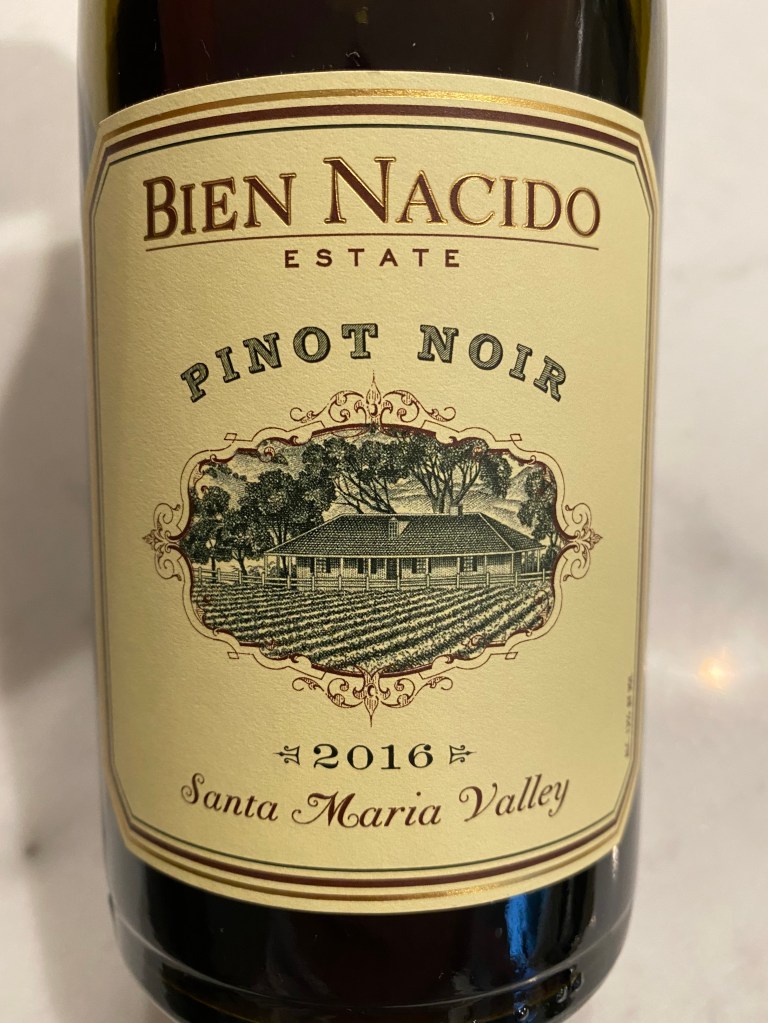
Today’s Wine: 2016 Estate Pinot Noir
100% Pinot Noir; 13% ABV
The 2016 Estate Pinot Noir is medium ruby in color and mostly opaque. Given 30 minutes or so to open up in the glass, the wine showcases a nose of black cherry, black raspberry, red and purple florals, dried tobacco, forest floor, underbrush, baking spice, and pepper. Moving onto the palate, I get notes of cranberry, pomegranate, wild strawberry, leather, loamy earth, game, crushed rock, green herbs, and iron. This is medium-bodied with medium (+) acidity, light tannins, and a medium (+) length finish. 415 cases produced.
Price: $50. I think this is right around fairly priced, but on a value perspective it doesn’t blow me away. The wine offers everything I love in California Pinot Noir (lower ABV, solid depth, and Burgundian feel), but there are some less expensive options that achieve the same. Pair with herb-roasted chicken, duck breast, or turkey sausage and mild blue cheese.
La Marea is a very small wine label focused on Spanish varieties in the I. Brand & Family Wines portfolio. Established by Ian Brand and his wife Heather, I. Brand & Family Wines consists of the labels I. Brand & Family (California inspired wines), Le P’tit Paysan (French inspired wines), and La Marea. La Marea yields highly limited quantities of Grenache and Albariño wines, with all fruit sourced from sustainably or organically farmed vineyards in the Monterey Bay area. These wines are meant to showcase the challenging terroir of the largely limestone, rocky, salty, and windswept Monterey Bay region and with La Marea Ian is dedicated to single vineyard bottlings that express each unique site. Ian delicately crafts transparent wines using a combination of native and cultured yeast for fermentation and typically neutral oak for aging.
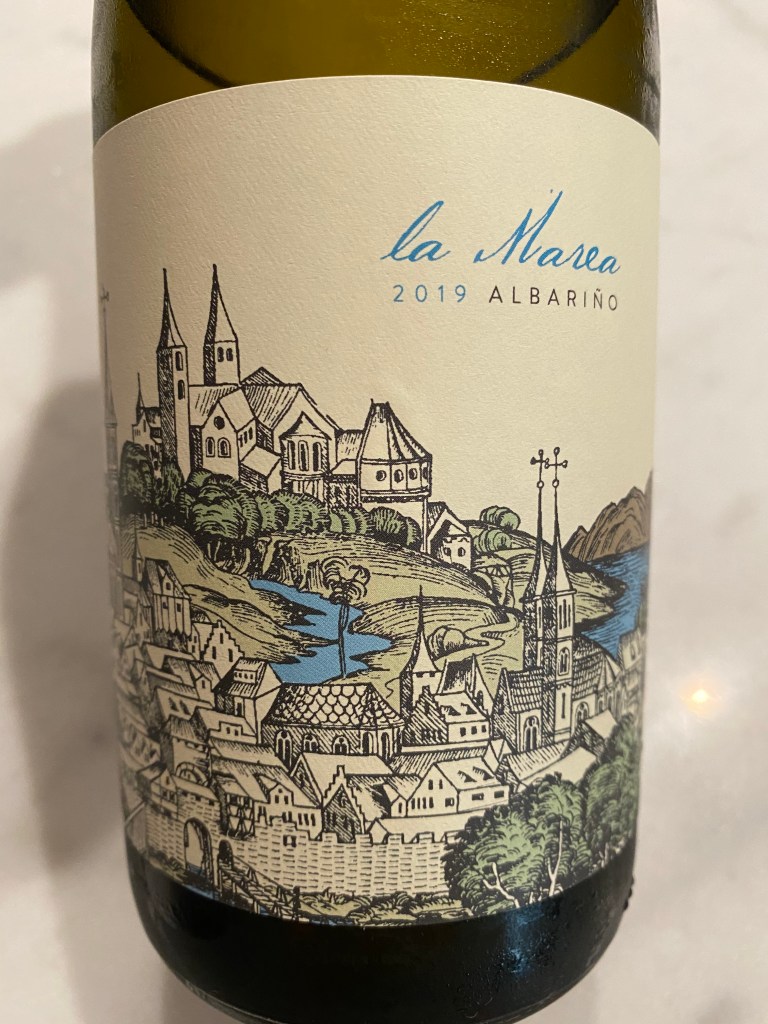
Today’s Wine: 2019 Kristy Vineyard Albariño
100% Albariño; 13.2% ABV
The 2019 Kristy Vineyard Albariño is deep straw/pale yellow in color and transparent. A somewhat delicate nose opens to showcase aromas of lemon zest, grapefruit, summer melon, white and yellow florals, sea shell, and saline. Moving onto the palate, the wine displays similar sea-filled notes with stone fruit, honeydew, white peach, lime, wax, brine, and marine mineral. This is light-bodied with vibrant high acidity and a plush mouthfeel that yields to a crisp and immensely refreshing finish. 850 cases produced.
Price: $24. I think this is absolutely worth the price and is a fantastic representation of the Albariño variety. When I saw this is coming from the Monterey Bay area of California I had to give it a shot and am incredibly glad I did. Pair this with oysters, lightly smoked whitefish, or ceviche.
Arnot-Roberts is a boutique winery established in 2001 by Duncan Arnot Meyers and Nathan Lee Roberts, two childhood friends who grew up together in Napa Valley. I previously wrote about them when I reviewed their 2016 Que Syrah Vineyard in Boutique Syrah for the Explorer, which I felt is a wine for those looking for a new take on California Syrah. As I wrote before, Arnot-Roberts began with a single barrel of wine the duo produced in their basement and over time grew through the purchase of fruit from renowned vineyards in Napa, Sonoma, El Dorado, and Amador counties as well as the Santa Cruz Mountains. All Arnot-Roberts wines are made in small quantities with incredible attention to quality and they are crafted to showcase the terroir of each specific site or appellation.
Today’s Wine: 2018 North Coast Trousseau
100% Trousseau; 12.1% ABV
The 2018 North Coast Trousseau is captivating deep salmon in color with rose/pale ruby hues in the bowl. It is also translucent, but slightly hazy. Once this opens up, the nose emits aromas of ripe strawberry, wild raspberry, cranberry, red florals, game, dry gravel, and dried herbs. On the palate, I get notes of bing cherry, boysenberry, strawberry, red licorice, underbrush, peppery spice, clove, and stony mineral. This is light-bodied with gorgeous medium (+) acidity, medium (-) tannins, and a medium (+) length finish. 26 barrels produced.
Price: $35. I think this is a great value wine for a number of reasons, namely its quality and how fun it is to drink. This is a variety many people may not be familiar with, and I think this bottle is a great example to explore. Pair this with steak tartare, Basque-style tuna, or charcuterie and cow’s cheese.
Marcassin Vineyards is an incredibly small “cult” winery established by Helen Turley and her husband John Wetlaufer in 1990. Focusing entirely on Pinot Noir and Chardonnay, Marcassin produces around 2,500 to 3,000 cases of wine annually and a large majority goes to mailing list customers (with the waiting list said to be thousands of names long). The estate Marcassin Vineyard consists of 20 acres on the Sonoma Coast and, thanks to its growth from 10 acres over time, is now the main source of Marcassin’s fruit. With her vineyards planted very densely, Turley intentionally limits yields to produce healthier and more concentrated fruit which she then harvests on the riper side. Turley ferments her wines using only native yeasts, keeps them on the lees for 6-8 months, and ages them in 100% new oak barrels. When it is time for bottling, the wines are unfined, unfiltered, and do not see cold stabilization. The wines typically hit the market (or rather their collectors’ cellars) five years after the vintage.
The 2007 Blue-Slide Ridge Pinot is opaque pale to medium ruby in color with purple hues. This took some time to open up in the glass, but once it did the incredibly complex nose changed overtime to showcase black cherry, blueberry, black raspberry, black licorice, dried tobacco leaf, forest floor, black pepper, black olive, cinnamon, charred green herbs, and crushed rock. On the equally complex palate, the wine changed with each sip to display notes of sweet raspberry, red cherry, wild blueberry, strawberry jam, red licorice, tobacco, loamy earth, underbrush, mushroom, mild baking spice, and charred oak. This is medium-bodied with medium (+) acidity, medium (-) tannins, and a long finish. Still a lot of life left in this wine, though it is pretty well balanced already given the high ABV.
Price: $275. While this is certainly one of the best California Pinot Noirs I’ve had, I can’t say it is a good value at the price I paid. I understand the incredible rarity of this wine, but it is simply a treat that has been on my bucket list that I don’t see myself spending the money on again. If you are on the mailing list, however, that is a completely different story. Pair this with seared duck breast, roasted chicken, or rack of lamb.
Whitcraft is a small, family-owned and operated winery in Santa Barbara, CA known for their traditionally made and “unadulterated” Pinot Noir and Chardonnay. Established in 1985 by Chris and Kathleen (Barnato) Whitcraft, the winery started as a passion for both the craft of winemaking and the lifestyle. Chris learned from California greats including Joe Heitz, Dick Graff, and Burt Williams while simultaneously hosting a radio show about wine from 1978 to 1989. Chris and Kathleen’s son Drake joined the family winery and took over in 2007, maintaining the traditional practices of hand-harvesting, foot-pressing, no added enzymes, and native yeast fermentation. Whitcraft’s wines are pure, well-balanced, and honest representations of the fruit and terroir, often remaining low in alcohol and not seeing much added SO2. Drake hand fills and corks his wines, with production incredibly limited and often reserved for mailing list clients or restaurants. Though Chris passed away in 2014, his vision and passion live on through Drake to this day.
The 2016 Pence Ranch Clone 828 Pinot Noir is translucent pale ruby in color. Once this opens up, the nose displays aromas of ripe red cherry, wild raspberry, forest floor, stemmy underbrush, mint, dusty dried rock, and light baking spice. Moving to the palate, the wine showcases notes of strawberry, black cherry, cranberry, licorice, tobacco, loamy earth, white pepper, and green herbs and vegetation. This is light- to medium-bodied with medium acidity, light tannins, and a medium (+) finish. Would love to revisit this wine with a few more years of bottle age.
Price: $68. Whitcraft Pinot Noirs are some of my favorites out of California, and while they don’t have that opulence found in a lot of cult Cali Pinots I think they strike up right with some of the big dogs and therefore make a good value play. Pair with grilled duck breast, herb-roasted chicken, or goat cheese and salami.
The Paring is like a “little sister” to Jonata and The Hilt, both wineries I wrote about previously, and is produced from blocks that are either too young or not stylistically aligned with its big sisters. As I mentioned in previous posts, Jonata and The Hilt are sister wineries of Screaming Eagle through a shared owner in Stan Kroenke who also owns the LA Rams and other sporting teams. Jonata excels with Rhône and Bordeaux varieties while The Hilt commands Pinot Noir and Chardonnay, providing the basis for the Paring portfolio which includes a Bordeaux Blend, Syrah, Sauvignon Blanc, Chardonnay, Pinot Noir, and Rosé of Pinot Noir. Fruit for The Paring is sourced primarily from the Ballard Canyon, Sta. Rita Hills, and Santa Maria Valley regions of Santa Barbara, and the winery also shares its skilled winemaker Matt Dees with Jonata and The Hilt.
If you care to further your reading today and perhaps get a glimpse into the “big dogs,” you can check out my prior reviews on Jonata and The Hilt below today’s tasting notes.
The 2015 Paring Red is opaque deep ruby/purple in color and near black at its core. I suggest giving this a good hour+ decant, which helps the wine blossom to showcase a nose of blackberry compote, crème de cassis, spiced plum, anise, tobacco, crushed rock, cinnamon, and a hint of oak. Once in the mouth, the wine displays notes of black plum, blackcurrant, blueberry, redcurrant, sweet tobacco, charred earth, green herbs, espresso, and light toasted oak. This is medium-bodied with medium (+) acidity, medium (+) tannins, and a long finish.
Price: $25. This is a very fairly priced everyday drinker that I think can both appeal to a broad range of consumers (thanks to its fruit-forward qualities) and to the more particular “connoisseur” (thanks to it NOT being oak-bombed and offering some nice depth). Pair this with ribeye steak, veal, or charcuterie and mild cheese.
Prior Jonata and The Hilt Posts:
2005 Jonata El Corazón de Jonata (click here) 2010 Jonata Tierra (click here) 2006 Jonata El Alma de Jonata (click here)








 JB's Wine Talk