Excellent Value From One of the Rhône Valley’s Most Famous Domaines

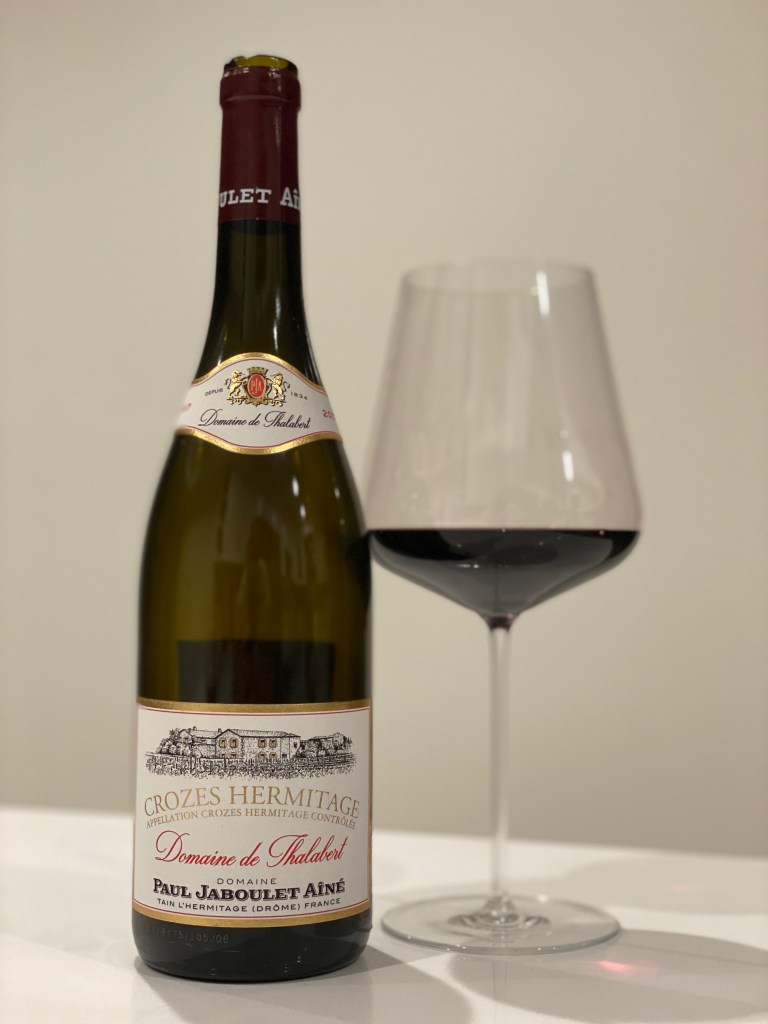
Today’s Story: Domaine Paul Jaboulet Aîné

Domaine Paul Jaboulet Aîné is one of the most historic wineries in all of the Rhône Valley, established in 1834 by Antoine Jaboulet in Tain l’Hermitage. Though nowadays we know Tain l’Hermitage (particularly Hermitage and Crozes-Hermitage) very well, it was a quiet winegrowing region when Antoine started assembling vineyards there. One of his greatest vineyards, and arguably one of the most famous in the world of wine, La Chapelle in Hermitage has been with the domaine since its origin and created a leaping point for the generational expansion throughout Crozes-Hermitage, Cornas, Gigondas, Côtes Rotie, Condrieu, and Chateauneuf-du-Pape amongst other appellations. When Antoine passed away, his vineyards went to sons Henri and Paul (the latter the source of the domaine’s name) and passed from generation to generation for nearly two centuries. In the latter half of the 1900s, Gerard Jaboulet promoted Rhône Valley wines throughout the world in an effort to expand their reputation even more. When Gerard passed away in 1997, however, Domaine Paul Jaboulet Aîné passed to his sons Philippe and Jacques until, in 2006, Jean-Jacques Frey purchased the domaine. Jean-Jacques’ daughter Caroline is today’s winemaker and viticulturist at the domaine, and her striving for excellence in every facet of the role is bringing this historic estate to new heights. Caroline achieved sustainable farming status in 2006, and has since started moving toward organic and biodynamic viticulture as well.

Today’s Wine: 2017 Crozes-Hermitage Domaine de Thalabert

100% Syrah; 13.5% ABV

The 2017 Crozes-Hermitage Domaine de Thalabert is opaque deep purple in color. I decanted this for 4 hours, with the wine blossoming to showcase a nose of black plum, blackberry, cassis, violet, worn leather, hint of nail polish remover, wet rock, light smoke, and mocha. Once in the mouth, the wine displays notes of blackcurrant, black plum, black cherry, licorice, mild tobacco, granite, savory green herbs, chalky mineral, and blood. This is medium-bodied with medium (+) acidity, medium tannins, and a long finish.

Price: $30. Today’s wine is another outstanding value (I do try to find them as often as possible). This drinks with depth and opulence but remains beautifully elegant and with a structure to go for at least another decade. Pair with smoked duck breast, high-quality ribeye, or grilled sea bass.

Rising Star in Cornas

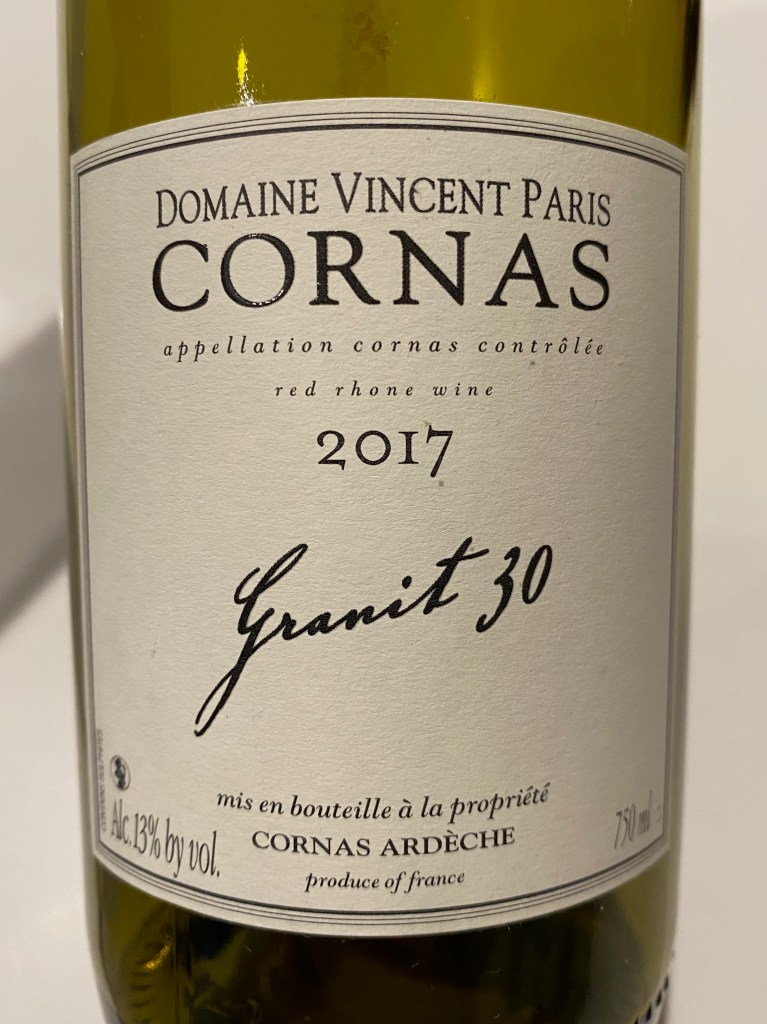
Today’s Story: Domaine Vincent Paris

Domaine Vincent Paris was established in 1997 with 1 hectare of inherited vines in Cornas. Vincent studied enology for four years before working alongside his uncle, famed Cornas vigneron Robert Michel, and desiring autonomy with his own wines. Vincent set about planting vines in St. Joseph and Cornas, ultimately acquiring La Geynale in 2007 and farming a total of 8 hectares today. Vincent farms 1.5 hectares of Saint Joseph, 6 of Cornas, and 0.5 of Vin de Pays with meticulous attention and refuses to use insecticide or chemical fertilizers while limiting treatments. Vincent severely prunes his vines (to only 4 bunches per vine) which helps produce concentrated, high quality berries and cuts down on green harvests. In the cellar, Vincent destems his fruit to varying levels and ferments the wines naturally after cold maceration at relatively lower temperatures. The wines spend 3 months in vats and then a year in oak barrels that are never new but rather 2-8 years old in an effort to not mask terroir, before they are ultimately bottled with light fining but no filtration.

Today’s Wine: 2017 Granit 30

100% Syrah; 13% ABV

The 2017 Granit 30 is opaque medium to deep purple in color. I decanted this for four hours, which allowed the nose to blossom and showcase aromas of blackberry, black plum, overripe blueberry, bacon fat, violet, wet rocky/clay earth, charred herbs, rubber, and gravel. Once in the mouth, the wine displays notes of dusty blackberry, black cherry, cassis, anise, sweet tobacco, mild smoke, granite, black pepper, chocolate, and iron. There is even a funky note of root beer flavored Bottle Cap candy! This is medium-bodied with medium acidity, medium tannins, and a long finish.

Price: $40 (might be able to find it a few bucks cheaper). This is a really nice value for Cornas, especially if you can snag it for around $35. While the Granit 30 is the more approachable and modern bottling, this drank significantly less people-pleasing than I was expecting (which is great). Pair with herb roasted lamb, venison steak, or braised beef ribs.

Mouthwatering Village Level Chablis

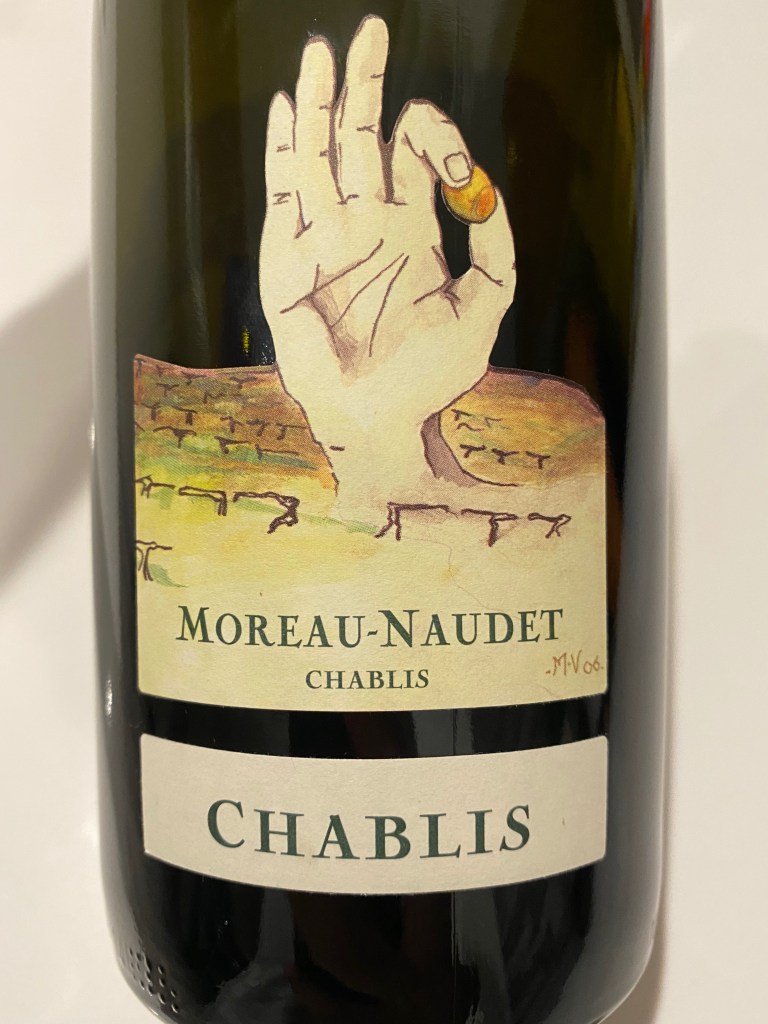
Today’s Story: Domaine Moreau-Naudet

Domaine Moreau-Naudet is a small estate located in the Chablis region of northern Burgundy. Though Moreau-Naudet has been a family-run domaine for quite some time, it was 1999 when Stéphane Moreau joined his father and drastically shifted the winemaking practices. Stéphane transitioned to fully organic viticulture alongside biodynamic practices, started harvesting his vineyards completely by hand, and practiced a minimal intervention winemaking style that includes natural yeast fermentation, slow élevage in large oak barrels, and minimal added sulphur. Stéphane was a nonconformist for Chablis in this sense, and took significant inspiration from Vincent Dauvissat, Didier Dagueneau, and Nadi Foucault. Sadly, Stéphane passed away incredibly too young (in his upper 40s) in 2016 and the future of the domaine fell to questioning. Shortly thereafter, however, Stéphane’s wife Virginie and his assistant winemaker displayed great adeptness by stepping in and remaining steadfast to Stéphane’s philosophy and style then and to this day.

Today’s Wine: 2017 Chablis

100% Chardonnay; 12.5% ABV

The 2017 Chablis is medium gold in color with water white variation near the rim. Give this 30 minutes to an hour to open up and you will be handsomely rewarded. The nose showcases aromas of white peach, lemon peel, stone fruit, summer melon, honeysuckle, and chalky mineral. On the palate, I get notes of lemon zest, baked pineapple, quince, green apple skins, white florals, flint, and saline mineral. This is medium-bodied with vibrant high acidity and a well-rounded mouthfeel into a long, mouthwatering finish. While the wine doesn’t have as much depth as I was hoping for, its precision makes up for that and makes me excited to try it again in a few years.

Price: $35 (though you can find this cheaper, especially in Europe). This is a great value and it’s hard to believe this is a village wine thanks to its finesse and precision. Would love to try this again in a few years. Pair with oysters, snails with garlic butter, or gougères.

Unbelievably Youthful Bordeaux From the 1966 Vintage

Today’s Story: Chateau Pichon Lalande

Chateau Pichon Longueville Comtesse de Lalande is a historic estate that traces its routes to the late 1600s and ranks as a Second Growth (Deuxième Cru) based on the Bordeaux Wine Official Classification of 1855. I previously wrote about Pichon Lalande when reviewing their 1986 vintage in Bordeaux Battle and the 2003 vintage in Decidedly Opulent Pauillac. To save myself (and yours as a reader) the hassle of reproducing (or reading) such a detailed and lengthy history, I will copy my short previous write-up below.

Pichon Lalande is considered by many to be a classic example of Pauillac, known for its deep, concentrated layers of ripe fruit accompanied by notes of cassis, tobacco, and earth.

With nothing short of a somewhat tumultuous history, Pichon Lalande’s ownership changed hands over the years and earned its name when the founder’s daughter Therese received it as a dowry for her marriage to Jacques de Pichon Longueville. During the 18th century, the estate was dominated by women (Therese de Rauzan, Germaine de Lajus, and Marie Branda de Terrefort) throughout the winemaking process until Baron Joseph de Pichon Longueville took over for his mother. In 1850, with his death, the estate split between his two sons and three daughters and ultimately resulted in the division of Comtesse de Lalande and Pichon Baron.

With no familial heirs, Edouard Miailhe and Louis Miailhe purchased Pichon Lalande following WWI. Edouard’s daughter, May-Eliane de Lencquesaing, took over management in 1978 and became a prominent ambassador for Bordeaux wines while dramatically increasing quality of her estate. One of her major endeavors, and possibly most famous, was growing the size of Pichon Lalande from 40 hectares of vines to 89. In 2007, however, May-Eliane sold a majority stake of the estate to the Rouzaud family, owners of Roederer Champagne, and management changes as well as renovations took place.

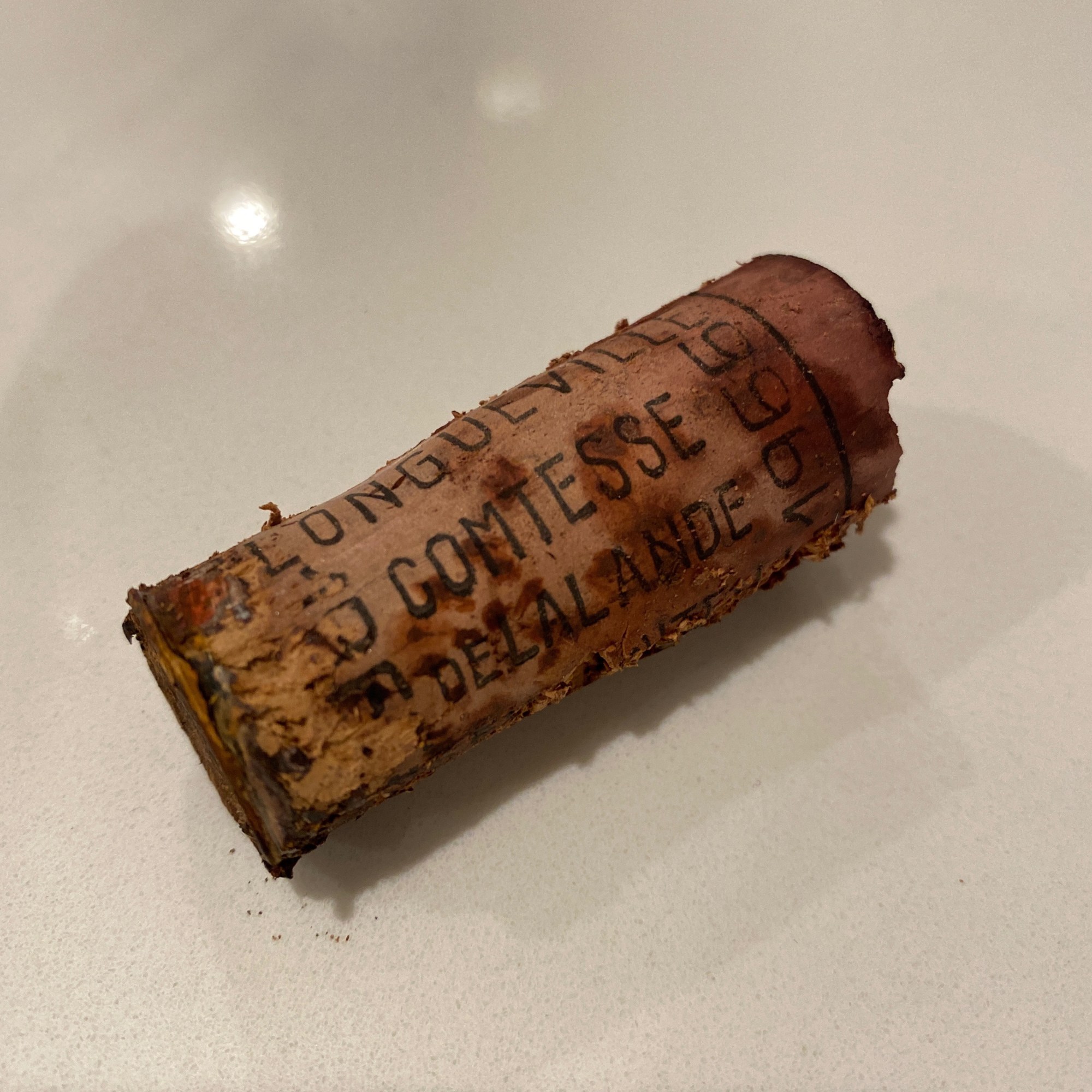
Today’s Wine: 1966 Chateau Pichon Lalande

45% Cabernet Sauvignon, 35% Merlot, 12% Cabernet Franc, 8% Petit Verdot; 13% ABV

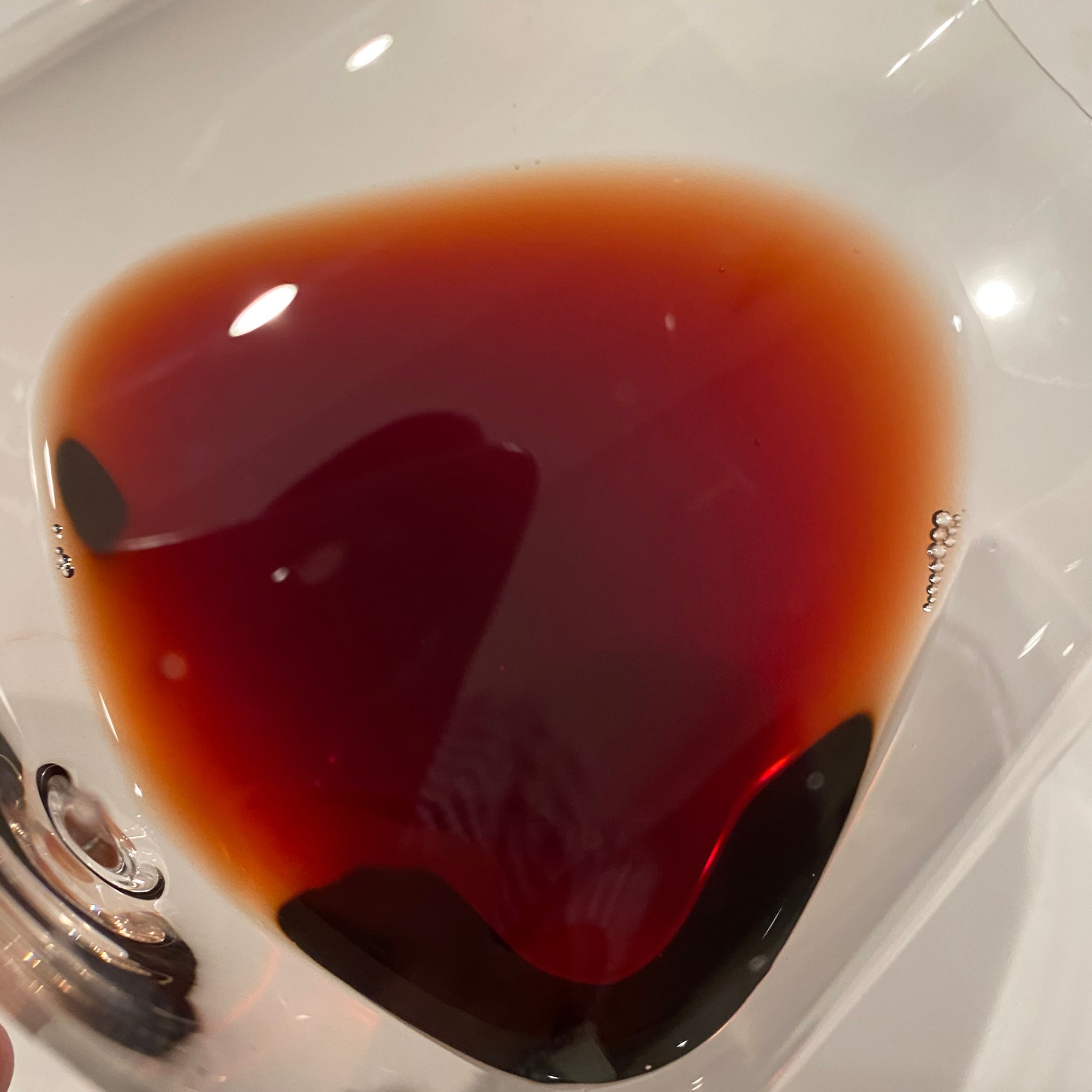
The 1966 Pichon Lalande is medium garnet in color and moderately transparent. This wine is singing as a pop-and-pour, with the nose showcasing aromas of graphite, cigar box, forest floor, truffle, and peppercorn followed by faint redcurrant, cranberry, dried violet, and green herbs in the background. On the palate, I get notes of pencil shavings, dried tobacco leaf, leather, black tea leaf, underbrush, gravel, and mushroom with cassis and redcurrant poking through. This is still medium-bodied with lively medium acidity, medium (-) dusty tannins, and a medium (+) length finish. Best during the first 1-1.5 hours, but honestly didn’t fall apart too much slightly beyond hour 2 (when it was gone).

Price: $350. Provenance is key here, but if proven and you can find this for sale it is absolutely worth the tag. My bottle threw almost zero sediment, the color and structure were both profound, and this drank incredibly youthful given its age. I would’ve pegged this as 1980s if I tasted it blind. Pair this with wagyu filet mignon, earthy mushrooms and/or truffle, or mild cheese.

People-Pleaser From Cornas

Today’s Story: Domaine Courbis

Domaine Courbis dates back to the 16th century, with the estate today under watchful guidance of brothers Laurent and Dominique Courbis. Laurent and Dominique took over from their father Maurice in the early 1990s, and though they maintain traditional practices such as hand harvesting and rigorous sorting the brothers greatly modernized the winemaking philosophy at the estate. Consisting of 35 hectares under vine, the domaine falls largely in Saint-Joseph with 18 hectares of Syrah and 5 hectares split between Marsanne (95%) and Roussanne (5%). The next largest holding is in Cornas with 8 hectares and the balance is split among Crozes-Hermitage, Saint-Péray, and others appellations. The fruit is sustainably farmed, fermentation occurs in tanks, and aging occurs in oak barriques that vary from new to 3 years old, with the overall style yielding intense and concentrated wines.

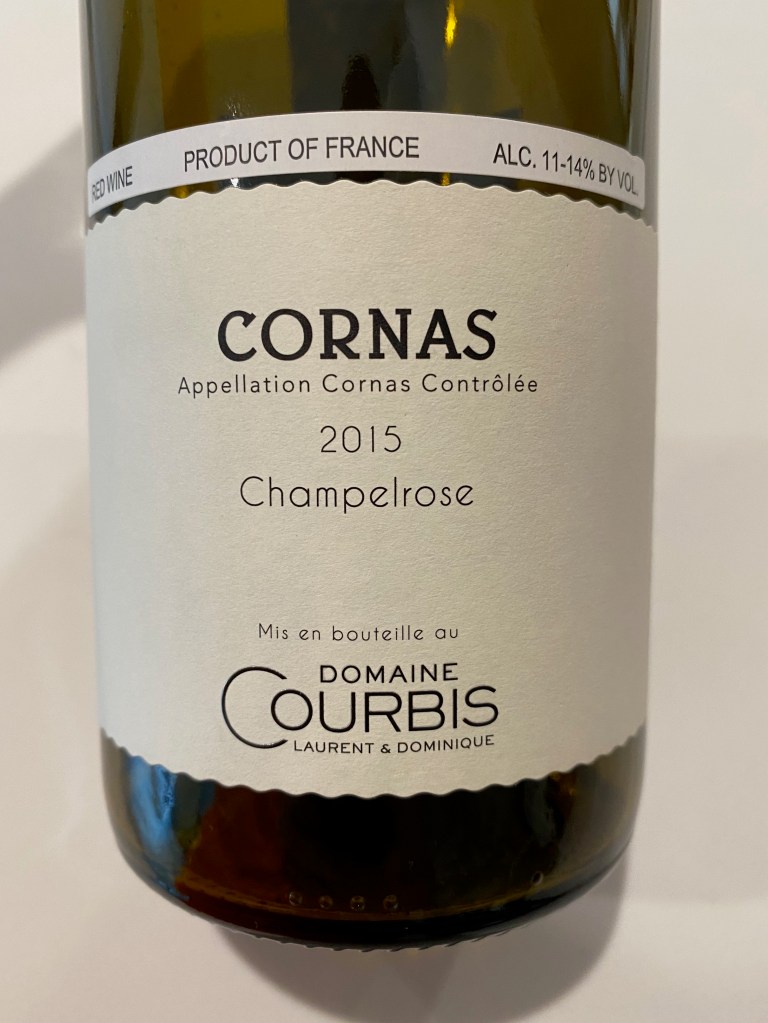
Today’s Wine: 2015 Cornas Champelrose

100% Syrah; 14% ABV

The 2015 Cornas Champelrose is opaque medium to deep purple in color. I decanted this for about an hour, and it seems that is as long as this needs due to its aim of being approachable young. The nose showcases aromas of jammy blackberry, blueberry, violet, crushed rock, smoke, and light oak. Once on the palate, the wine displays notes of blackberry, black plum, black pepper, tobacco, wet granite, chalky mineral, and chocolate. This is medium- to full-bodied with medium (+) acidity, dusty medium tannins, and a medium (+) length finish.

Price: $40. This is a tasty Cornas, but on a value perspective I’d probably look elsewhere. This was lacking complexity compared to others, and certainly fits into a more “people-pleasing” camp that is already highly competitive. Pair this with beef short ribs, grilled lamb chop, or charcuterie and blue cheese.

Exploring a Red From a Legendary Producer of White Burgundy

Today’s Story: Domaine Jean-Claude Ramonet

Domaine Ramonet was established in Chassagne-Montrachet in the late 1920s by Pierre Ramonet, and quickly became one of the preeminent producers of white Burgundy. The 1934 Ramonet Chassagne-Montrachet Premier Cru Ruchottes, for instance, was the first estate-bottled white Burgundy imported in the US and catapulted the domaine to international fame and admiration. Ramonet remained one of the most highly-sought producers throughout the 20th century, until issues with premature oxidation damaged their status like many other producers in the mid to late 1990s. The domaine ultimately passed to Pierre’s son André until he passed away in 2011, and then to Pierre’s grandchildren Noël and Jean-Claude who worked in the vineyards since 1984. Since 2013, Domaine Ramonet labels bear Jean-Claude Ramonet alone following Noël’s semi-retirement and his wines, particularly the whites, remain a force to be reckoned with.

In the vineyards, Ramonet likes to work with older vines and keep his yields low. Most of the wines are produced from vines 12 to 50 years old, though they typically like to use vines 18 years or older. The domaine’s vinification practices are traditional in nature, with the whites starting in tanks before transfer to French oak barrels and the reds in cement vats for maceration and fermentation. New oak usage varies by wine and vintage, with the whites typically seeing 10-15% for village wines, 30-40% for 1er Crus, and 50%+ for the Grand Crus. Reds typically see 10-20% new oak for village wines and 30-40% for 1er Crus. None of the white wines are bottled fined or filtered.

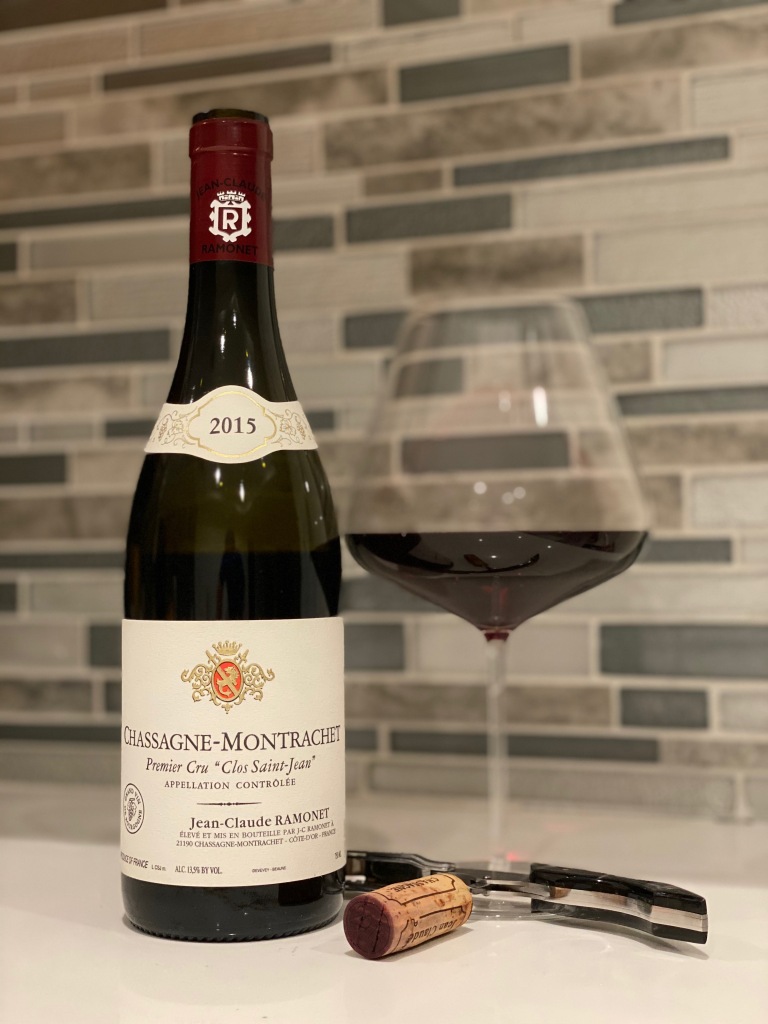
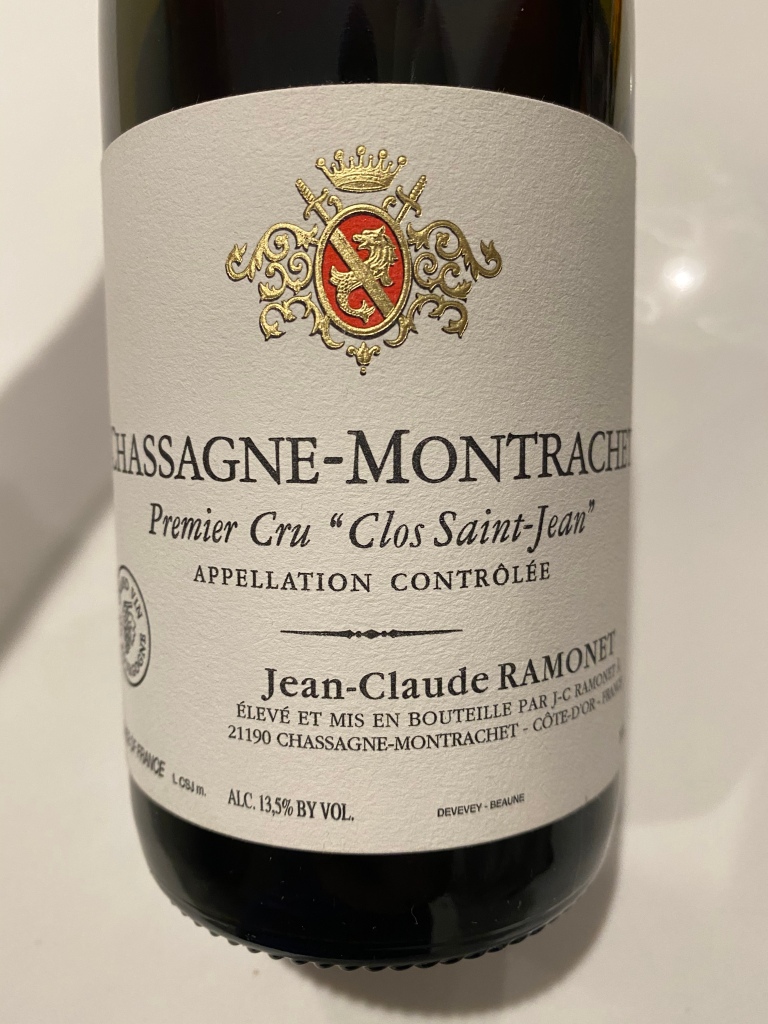
Today’s Wine: 2015 Chassagne-Montrachet 1er Cru Clos Saint-Jean

100% Pinot Noir; 13.5% ABV

The 2015 Clos Saint-Jean is pale to medium ruby in color and moderately transparent. Once this opens up in the glass, the nose showcases aromas of black cherry, black raspberry, lavender, raw leather, slight barnyard, black tea, cinnamon, rosemary, and mineral. There is some slight heat as well. On the palate, I get notes of red plum, cranberry, black cherry, tobacco, forest floor, charred herbs, underbrush, chalky minerality, and blood. This is light- to medium-bodied with medium (+) acidity, medium (-) tannins, and a medium (+) length finish. Not as balanced as the 2014 vintage I had in November, 2019.

Price: $100. This is not a bad price, but I can’t go as far as saying this is a good value because there are many outstanding Red Burgundy options at or less than $100. That being said, I’d be curious to try this again in a few years. Pair with seared duck breast, herb-crusted lamb, or mushroom stroganoff.

Beautifully Refreshing Bourgogne Blanc

Today’s Story: Domaine Pierre Boisson

Domaine Pierre Boisson is one of three family domaines who all work together and make their wines in the same cellar located in Meursault. Pierre, alongside his father Bernard (Domaine Boisson-Vadot) and sister Anne (Domaine Anne Boisson) watches over the family domaine which encompasses 8.5 hectares primarily situated in Meursault but with smaller holdings in Auxey-Duresses, Monthelie, Pommard, and Beaune. The family doesn’t use any chemical fertilizer or pesticides in their vineyards and, at time for harvest, everything is accomplished manually. Pierre, like Bernard and Anne, practices traditional Burgundian winemaking methods and accomplishes fermentation using only native yeasts. Though the wines will see some new oak (typically never more than 25-30% for the high-end and lower for village bottlings), there is no set percentage and it varies vintage to vintage and wine to wine with the goal of never masking a wine’s true character. All wines are bottled unfiltered at the domaine.

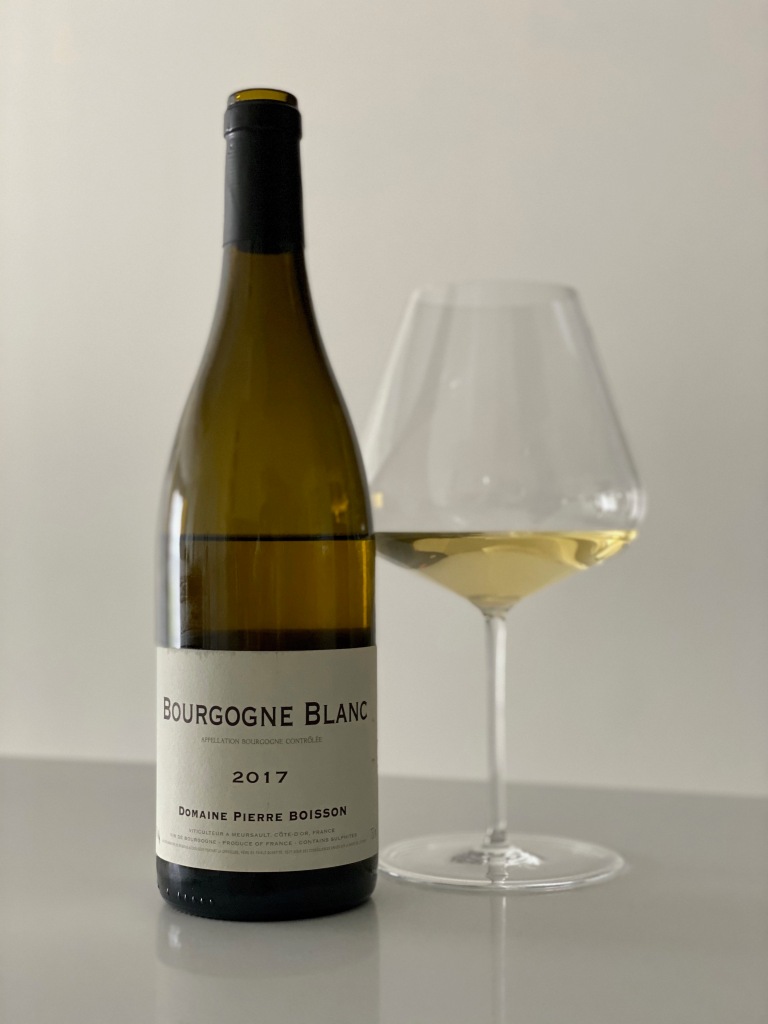
Today’s Wine: 2017 Bourgogne Blanc

100% Chardonnay; 13% ABV

The 2017 Bourgogne Blanc is a beautiful pale gold in color with hues of straw and water white. On the nose, this emits aromas of lemon zest, white peach, pear, tangerine, white florals, hazelnut, saline minerality, and light oak. Once on the palate, this displays notes of lemon and lime zest, green apple skins, golden pear, tropical citrus, honeysuckle, saline mineral, and dried vanilla bean. The wine is medium-bodied with vibrant high acidity into a crisp and refreshing finish.

Price: $40 (much cheaper in Europe). I thought this was an outstanding value for White Burg and this bottle was perfect for the hot weather I enjoyed with it yesterday. Pair this with roasted chicken, Dover sole, or crab.

A Refreshing Sancerre

Today’s Story: Guilbaud Frères

Guilbaud Frères is a family-owned winery and wine merchant established in 1927 by Edouard and Marcel Guilbaud in the Muscadet Sèvre et Maine appellation of the Loire Valley. Edouard and Marcel came from a long family history of winegrowers and took their culminated knowledge of the land, quality producers, and attention to detail in creating the principles of their new venture. Now nearly a century later, a fourth generation guides the Guilbaud Frères brand and, in addition to sustainably farming around 60 hectares of their own vineyards, purchases and produces wine from carefully selected growers. To check out their broad range of AOP wines, you can visit the link here.

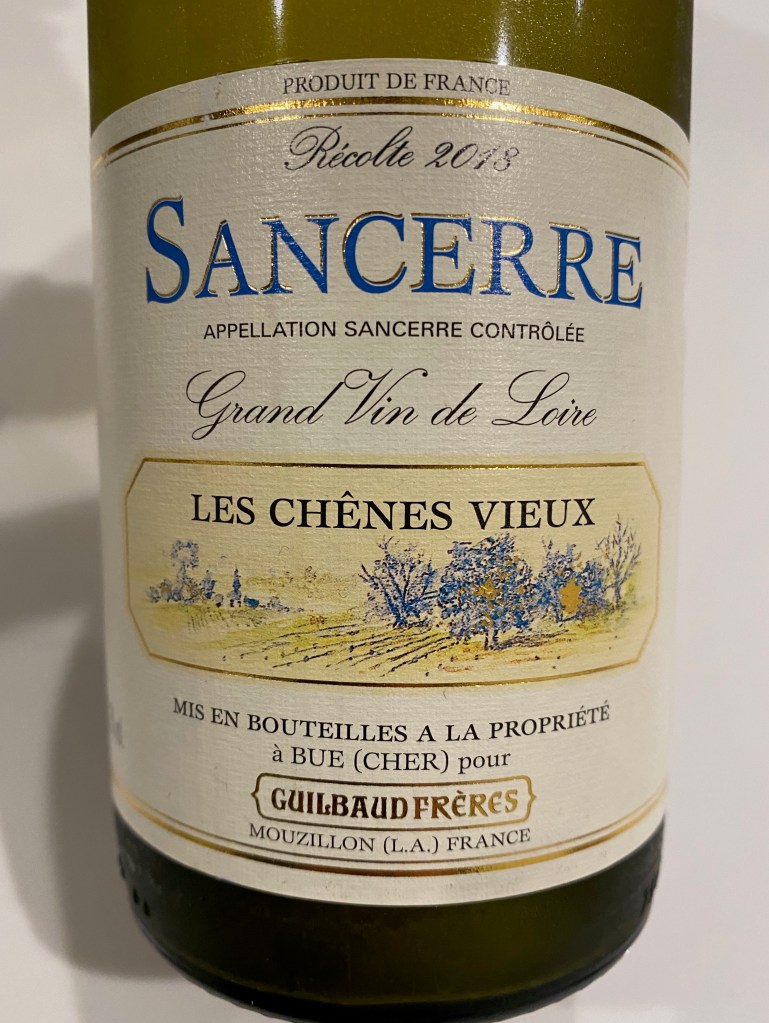
Today’s Wine: 2018 Sancerre Les Chênes Vieux

100% Sauvignon Blanc; 12.5% ABV

The 2018 Les Chênes Vieux is transparent medium straw/yellow in color. The nose is quite expressive with aromas of tangerine, honeydew melon, lemon peel, honeysuckle, grass, slight smoke, and chalky minerality. On the palate, the wine displays notes of white peach, grapefruit, green apple skins, chamomile tea, finely crushed rock, brioche, and bright mineral. This is medium-bodied with mouthwatering medium (+) acidity and a lush mouthfeel into a crisp and refreshing medium length finish.

Price: $30. This is a very nice Sancerre for the price and drinks with beautiful precision while making me excited for a warm day outside again. Pair this with sole, lobster, or roasted chicken.

Highly Allocated Rhône Syrah

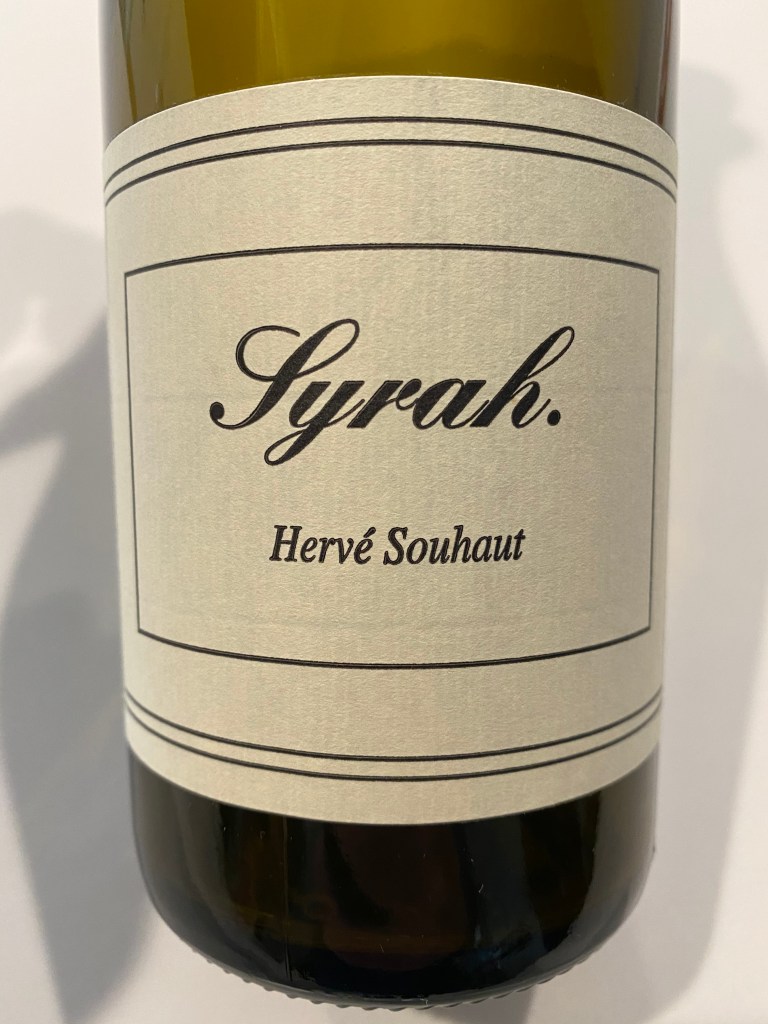
Today’s Story: Domaine Romaneaux-Destezet (Hervé Souhaut)

Domaine Romaneaux-Destezet is a small wine estate established by Hervé Souhaut in 1993 in the Saint-Joseph AOC of northern Rhône. Souhaut farms roughly 5 hectares of vineyards with vines aged 50-100 years old and crafts his small batch wines in the cellars of his in-laws’ converted hunting lodge. In making his wine, Souhaut uses hand-harvested organic whole grape bunches and semi-carbonic maceration in an effort to achieve wines that are elegant with refined tannins and approachable in their youth. The wine ferments in wooden and concrete tanks using only natural yeasts before being aged on fine lees in used oak barrels for 8-12 months. Souhaut adds only a minimal amount of SO2 at bottling and his wines are unfiltered. With production totaling less than 4,000 cases annually and wines highly allocated, Souhaut produces Vin de Pays wines (largely Gamay, Roussanne, and Viognier) under the Domaine Romaneaux-Destezet name as well as the AOC wines under his own name.

Today’s Wine: 2017 Syrah

100% Syrah; 12.5% ABV

The 2017 Syrah is opaque medium to deep purple in color. I decanted this for 2 hours and drank it over the following 4 hours. The nose is complex and evolves over time to showcase aromas of blueberry, black plum, olive, violet, sweet tobacco, loamy earth, smoke, clove, chocolate, and light oak. On the palate, I get notes of tart blueberry, sweet and juicy plum, black cherry, purple and blue florals, black olive, scorched rocky earth, tobacco, grilled meat, and green herbs. This is full-bodied with medium (+) acidity, elegant medium tannins, and a long finish filled with jammy black fruit.

Price: $39. Excellent value for this Rhône Syrah made in a more “natural” style. Though the domaine’s production is limited and the wines highly allocated, this is worth seeking out. Pair this with lamb, herb-roasted pork, or venison.

Ancient Bordeaux Estate

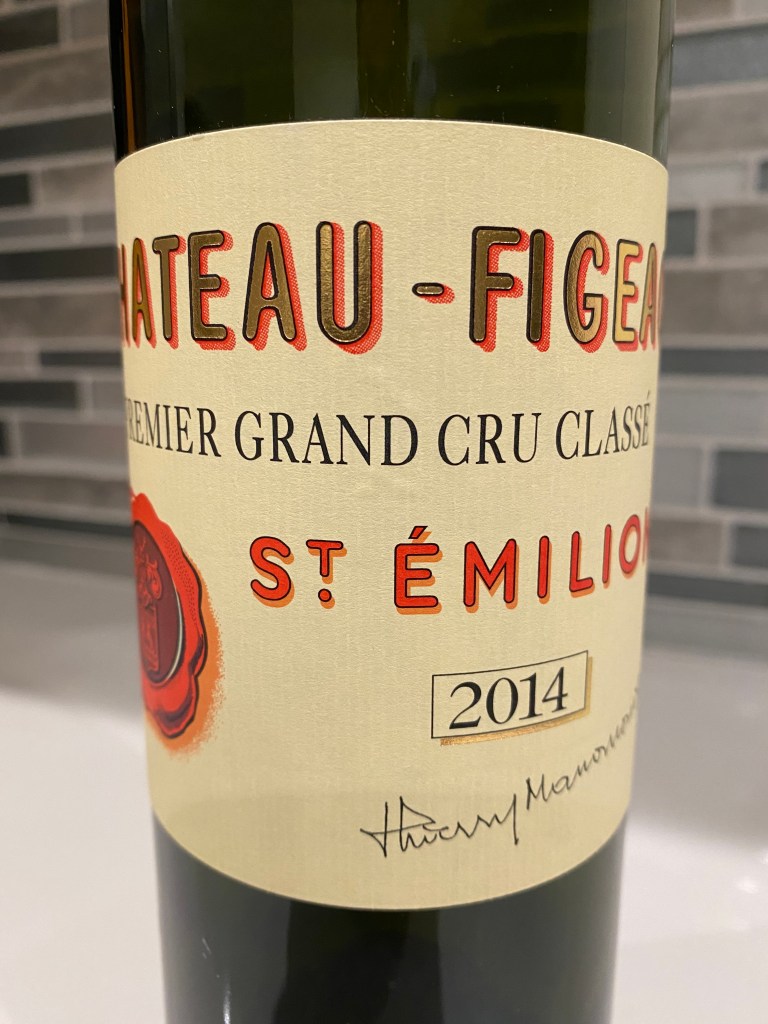
Today’s Story: Château-Figeac

Château-Figeac is an ancient Bordeaux wine estate located in Saint-Émilion that traces its roots to the 2nd century and the Gallo-Roman period. The estate is named for Figeacus who built a villa on the property, and with such excellent terroir it is one of the few wine properties to see continuous use for the past 2,000 years. In 1586, Raymond de Cazes rebuilt the origins of the château in classic Renaissance style and the cellars today where the wine ages during its second year trace to this construction. In 1654, the estate transferred by marriage of Marie de Cazes to the Carles family who were very influential in the region and undertook modernization of viticultural techniques. The Carles family also built the current château in 1780. During the late 18th and early 19th centuries as financial crises roiled the region, Château-Figeac sold some of its land holdings, including 15 hectares that became Château Cheval Blanc, and passed through seven owners in 50 years.

In 1892, the Manoncourt family acquired the heart of Château-Figeac and brought in Albert Macquin to structure the vineyards, bring in oak vats from the property, and test novel agricultural species on the property. The label was created in 1907 and bears the crest of Henri de Chèvremont (great-grandfather of Thierry Manoncourt) and for decades the estate produced world-class Bordeaux largely under management of enologists. In 1943, however, Thierry Manoncourt participated in his first vintage and convinced his mother to keep the estate and play a more hands-on role. In 1947, Thierry started at Figeac full-time with a degree in agricultural engineering and tirelessly set about learning and understanding the incredible terroir.

The 20th century was filled with other milestones for Château-Figeac, including its classification as Premier Grand Cru Classé in 1955. Figeac became famous for its near 1:1:1 blend with Thierry planting the vineyards to 35% Cabernet Sauvignon, 35% Cabernet Franc, and 30% Merlot and his wife Marie-France joins him to increase the wine’s global exposure. During the late 1980s, Laure and Eric d’Aramon (daughter and son-in-law of Thierry and Marie-France) moved to the château to help manage the estate and Eric eventually took operational control until 2012. Agricultural engineer Frédéric Faye joined Château-Figeac in 2002 and learned their vineyards and winemaking techniques alongside Thierry until his death in 2010. Today, Madame Manoncourt alongside her daughters and team guide the estate onward keeping to the traditions set forth by Thierry.

Today, Château-Figeac consists of 40 hectares of vineyards (down from its peak of 200 hectares) and is the largest wine estate in Saint-Émilion. The signature features of the terroir, three gravel ridges, provide excellent growing conditions for the three grape varieties planted there and the castle finds itself surrounded by 14 hectares of parks, meadows, ponds, and woods as well. Figeac respects the biodiversity of their vineyards as a founding principle, while also relying heavily on scientific analysis of the terroir and traditional yet modernized winemaking techniques. Château-Figeac produces about 100,000 bottles of wine per year, in addition to about 40,000 bottles of the second wine Petit-Figeac. For more on this remarkable estate, check out their website here.

Today’s Wine: 2014 Château-Figeac

40% Merlot, 32% Cabernet Sauvignon, 28% Cabernet Franc; 13% ABV

The 2014 Figeac is opaque deep ruby in color. I decanted this for 2 hours and drank it over the following 3 hours. The nose is ridiculously complex and profound, changing dramatically as I drank this and showcasing aromas of blackberry, blackcurrant, redcurrant, crushed lilac, anise, pencil shavings, graphite, cigar box, tobacco, loamy earth, crushed green peppercorn, baking spice, and oak. Once in the mouth, the wine displays notes of blackberry, plum, blueberry, redcurrant, violet, licorice, tobacco, scorched earth, mocha, dried herbs, and toasted oak. This wine is full-bodied with medium (+) acidity, high tannins, and a long finish with added notes of slate and iron.

Price: $115 (average price in US is $166). I got this for an absolutely incredible price at one of my local wine stores, but even around $160 per bottle this is fantastic and still less expensive than other vintages that overshadow 2014. Pair this with Beef Wellington, stewed game, or veal.