A Peek Into Château Latour Through Their Third Wine

Today’s Story: Château Latour

Château Latour is a First Growth wine estate located in Pauillac on the Left Bank of Bordeaux, with roots tracing back to 1331. Though not a wine estate from the outset, Château Latour gets its name from the fortified tower built there by Gaucelme de Castillon. Until the end of the 16th century, the estate was a jointly held lord’s domain rented out to farmers. Though the property was not entirely planted to vine at that time, they did produce wines and, without the necessary storage, consumed them each year. During the early 1700s, Château Latour came under ownership of Alexandre de Ségur and he (and later his son Nicolas-Alexandre) greatly expanded the family’s winegrowing holdings. By the middle of the 18th century, Château Latour actually became known for its wine and due to its quality became 20 times more expensive per bottle than the average Bordeaux wine at the time. It even became a favorite of Thomas Jefferson. Over time Latour has continued to produce exceptional and long-lived wines, with the current estate producing arguably some of the greatest wines in their history.

Today Château Latour consists of 92 hectares planted to vine, with 47 hectares of the best vineyards, known as l’Enclos, surrounding the Château. The vineyards are planted to 76% Cabernet Sauvignon, 22% Merlot, and 2% Cabernet Franc and Petit Verdot. The deep, nutrient-poor gravel soil of the estate is perfect for forcing the vines to struggle and dig deep to a clay sublayer for water. The estate transitioned gradually to full organic farming and became certified by Ecocert, with a large percentage of l’Enclos farmed adhering to biodynamic principles as well. Château Latour produces three wines, which include the Grand Vin (typically $750-800+ per bottle), a second wine Les Forts de Latour (typically $250-300+ per bottle), and a third wine Pauillac de Latour (typically $100 per bottle).

To learn more about this historic estate and its magnificent wines, check out the website here.

Today’s Wine: 2014 Pauillac de Château Latour

50% Cabernet Sauvignon, 43% Merlot, 7% Petit Verdot; 13% ABV

The 2014 Pauillac de Château Latour is opaque deep ruby in color with purple hues. A bit funky right out of the bottle, this needed 4 hours in the decanter to really come to life and I drank it over an additional 3-4 hours. The nose showcases aromas of cassis, blackberry, redcurrant, cigar box, graphite, scorched earth, lilac, dried green herbs, gravel, and milk chocolate. Once on the palate, the wine displays notes of black cherry, strawberry, plum, sweet tobacco, pencil shavings, smoke, eucalyptus, rocky earth, and a hint of bell pepper. Overall it’s somewhat medicinal in nature. The wine is medium-bodied with medium (+) acidity, medium dusty tannins, and a medium (+) length finish. Needs some cellar time to fully come around.

Price: $100. I would love to see this priced closer to $75 from a value perspective. The $100 price tag is in a very competitive range, and there are quite frankly a number of other wines that punch above this one at that price. Maybe this will get better with bottle age, we shall see.
Delicate and Pure Entry Level Champagne

Today’s Story: Billecart-Salmon

Billecart-Salmon is a family-run Champagne house established in 1818 in Mareuil-sur-Aÿ through the marriage of Nicolas François Billecart and Elisabeth Salmon. Nicolas François, who handled the commercial aspects of the new Champagne house, brought his brother-in-law Louis Salmon on board to make the wines. 200 years later, the 7th generation of the Billecart family manages the house with the 6th generation still very much involved. Together they cultivate 100 hectares of vineyards across 40 crus of Champagne and an area of 300 hectares, the majority of which sits around Epernay. Billecart’s signature style comes largely from their fermentation process, which is accomplished in stainless steel tanks at lower temperatures to prolong fermentation an coax out delicate aromas and purity of fruit. All vinification occurs cru by cru and variety by variety, allowing each to maintain the unique expressions of the varying terroir. The house’s wines rest in chalk cellars dating to the 17th and 19th centuries, with the NV bottlings enjoying 3-4 years in the cellar and the vintage bottlings enjoying 10 years.

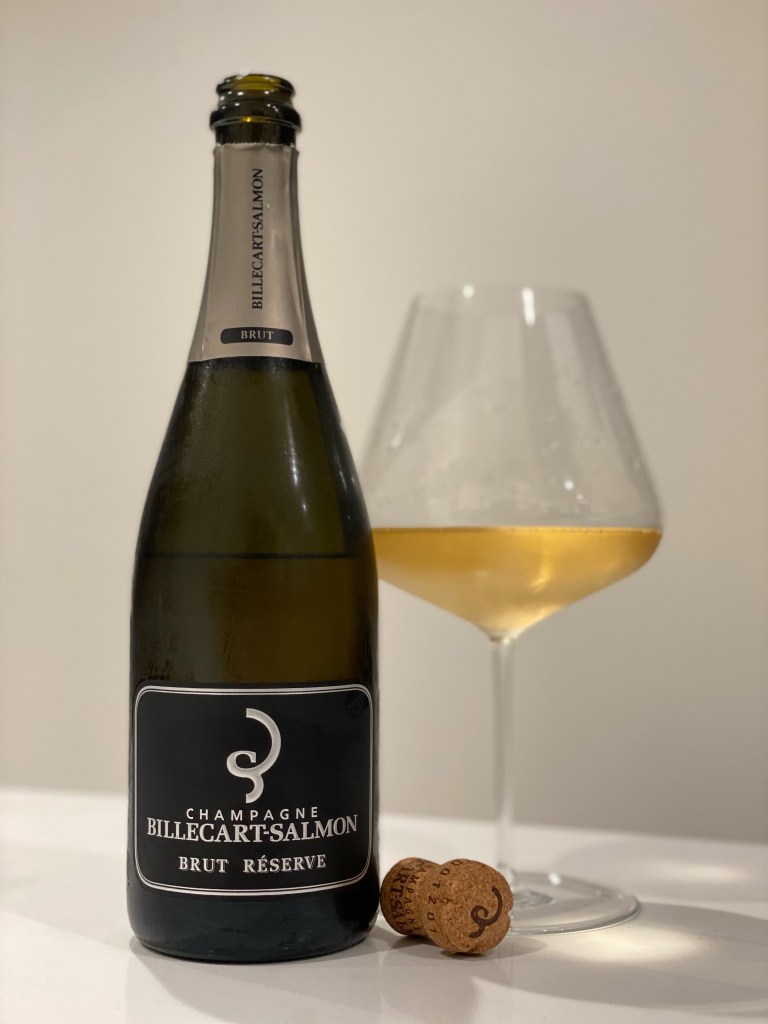
Today’s Wine: Champagne Brut Réserve

40% Pinot Meunier, 30% Pinot Noir, 30% Chardonnay; 12% ABV

The Champagne Brut Réserve is transparent gold in color with tiny bubbles. On the nose, I get aromas of yellow pear, golden apple, honeysuckle, toast, yeast, and chalk. There’s a delightful herbal earthiness there too. Once in the mouth, the wine showcases notes of crisp green apple, lemon citrus, stone fruit, honey, brioche, rose petal, and cream. This is medium-bodied with great effervescence and vibrant, mouthwatering acidity into a medium (+) length finish.

Price: $45. I think this is a great “entry level” Champagne from one of the larger, more recognizable houses. You can without a doubt find better values from growers, however you can’t go wrong with Billecart-Salmon in this price-point over some of the bigger names.

Lovely Young Sauternes From a Historic Producer

Today’s Story: Château Suduiraut

Château Suduiraut traces its roots back to 1580 through the marriage of Nicole d’Allard to Léonard de Suduiraut. Though the estate was destroyed during the Fronde civil wars of the mid 1600s, the current château was rebuilt later on but still during the 17th century. During the late 18th century, the estate went to Jean Joseph Duroy, who was a nephew of the Suduiraut family, and it was renamed Cru du Roy. In 1992, AXA Millésimes acquired the estate and the company continues to focus on producing high quality Sauternes with traditional vineyard management and winemaking inspired by Suduiraut’s rich history.

The vineyards of Château Suduiraut total 91 hectares of which 90% is planted to Sémillon and 10% is planted to Sauvignon Blanc. The gravel and sandy clay composition of the soil proves poor for water retention and therefore the vines struggle, reaching deep for nutrients and focusing energy into smaller clusters of fruit. The soil acting in this way largely contributes to more concentrated and higher quality fruit. Come harvest, Château Suduiraut picks entirely by hand and sorts the grapes with great care due to noble rot (Botrytis Cinerea) as they become overripe. The great care and immense quality protocol requires up to five pickings during harvest season, oftentimes going vine by vine or bunch by bunch.

Today’s Wine: 2016 Sauternes

96% Sémillon, 4% Sauvignon Blanc; 14% ABV

The 2016 Sauternes is a beautiful, transparent deep gold in color. The captivating nose emits aromas of peach cobbler, apricot, orange marmalade, honey, savory herbs, florals, and vanilla. On the palate, I get notes of apricot, candied orange, pineapple, crème brûlée, caramel, ginger, and hazelnut. This wine is medium- to full-bodied with gorgeous medium (+) acidity and a long finish. While this drinks beautifully right now, it will certainly cellar nicely for at least another decade.

Price: $75. I think this is a pretty good value for Sauternes, and the $35 I paid for this half bottle was perfect both in price-point and for bottle size as a light after-dinner beverage. This is a gorgeous wine.

Checking in on the Outstanding 2005 Bordeaux Vintage

Today’s Story: Château Lynch-Bages

Château Lynch-Bages is a historic Bordeaux wine estate established in 1749 by Thomas Lynch and his wife Elizabeth. In actuality, Thomas inherited the property itself through his marriage to Elizabeth. The estate was passed to their son Jean-Baptiste in 1779 upon his marriage, with Lynch-Bages remaining in the family until 1824 when it was sold to Swiss merchant Sebastien Jurine. With the foundation of the Lynch family’s care and quality wine, the Jurine family continued the estate’s prowess and ultimately received classification as a Fifth Growth in the Bordeaux Wine Official Classification of 1855. In 1934, Jean-Charles Cazes rented the estate and lated purchased it in 1938. When Jean-Charles passed away in 1972, management largely fell to his grandson Jean-Michel Cazes and it has been in the family ever since.

To learn more about the estate, check out their website here.

Today’s Wine: 2005 Château Lynch-Bages

72% Cabernet Sauvignon, 15% Merlot, 12% Cabernet Franc, 1% Petit Verdot; 13% ABV

The 2005 Lynch-Bages is opaque medium ruby in color with deep garnet variation. I decanted this for 3 hours (which it needed and then some) for this is still showing incredibly youthful, particularly in tannin structure. Once it does open up, the nose showcases aromas of crème de cassis, black cherry, blueberry, purple florals, cigar box, graphite, forest floor, green herbs, and a touch of oak. On the palate, I get notes of blackcurrant, plum, blackberry, cedar, tobacco leaf, dried underbrush, mild cracked pepper, dark chocolate, and coffee grounds. This is medium-bodied with medium (+) acidity, high tannins, and a long finish. Quite enjoyable, but not yet at its peak.

Price: $300 (but a wide range online from $200 to $400+). While no doubt a great wine from an outstanding vintage, I struggle to call it a good “value.” Getting to this price-point, it takes perfection to call a wine good value and I’d characterize this as somewhere between about right and overpriced. If you’re lucky enough to snag it closer to $200, it would be worthwhile.

Beautiful and Opulent Right Bank Bordeaux

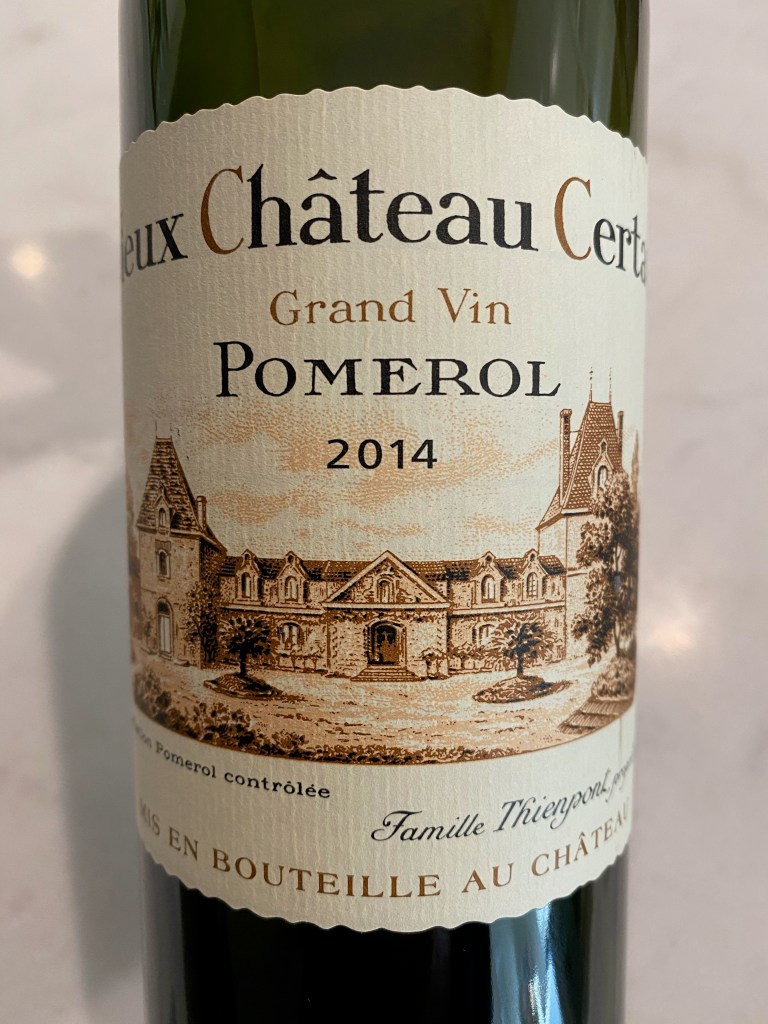
Today’s Story: Vieux Château Certan

Vieux Château Certan (VCC) is a preeminent Bordeaux wine estate established in the mid-1700s in Pomerol on Bordeaux’s Right Bank. Though the early years are somewhat murky, the estate was founded by Jean Demay de Certan and the château itself traces to around 1770. Back then, the wines were bottled under the label Sertan. VCC quickly became one of the greatest wines produced in Pomerol and remains at that stature today, with the vineyards flanked by the great Château Pétrus and a short drive from Château Lafleur and Château Le Pin.

In 1924, change occurred when Belgian wine merchant Georges Thienpont (who owned Château Troplong Mondot) purchased VCC. Though the wines remained revered under his ownership, Georges sold everything through his own negociant business and limited its international exposure by doing so. It would not be until the 1980s when VCC started selling en primeur and racking up international acclaim. Though the estate weathered great troubles during the depression of the 1930s, it remains with the Thienpont family to this day. Alexandre Thienpont took over management and has since renovated the estate in 1988 and 2003 to continue constant improvement of the quality of wine. Today, Alexandre’s son Guillaume helps manage the estate and the team remains steadfast in their dedication to traditional winemaking aided by modern technology.

VCC consists of 14 hectares of vineyards, planted to roughly 65% Merlot, 30% Cabernet Franc, and 5% Cabernet Sauvignon. The estate practices sustainable farming and come harvest often moves row by row or even vine by vine depending on fruit readiness. VCC vinifies the wine using traditional oak and stainless steel vats that are temperature controlled, with an assortment of vats to allow for parcel by parcel vinification by variety and age of the vines. Production typically caps out at 5,000 cases per year, though there is a second wine called La Gravette de Certan which was introduced during the 1980s by Alexandre.

Fun Fact: Georges Thienpont introduced the iconic pink capsules as a way to track which of his negociant business clients purchased his VCC. Not wanting to offend his clients or make them uncomfortable by asking, he used these pink capsules to quietly and easily spot his wine in his clients’ cellars…or see if it was missing.

Today’s Wine: 2014 Vieux Château Certan

80% Merlot, 19% Cabernet Franc, 1% Cabernet Sauvignon;

The 2014 Vieux Château Certan is opaque medium ruby in color with deep garnet variation. I let this decant for 4 hours and drank it over the following 3. Once it opens up, the nose expresses aromas of blackberry, plum, blueberry, violet, cigar box, pepper, wet slate, dried herbs, chocolate, and slight oak. Moving to the palate, the wine showcases blackcurrant, black cherry, purple and blue florals, tobacco leaf, black truffle, forest floor, green herbs, mocha, cedar, and rocky mineral. This is medium- to full-bodied with medium (+) acidity, medium (+) but velvety tannins, and a long finish. Very opulent and gorgeous wine.

Price: $200. This is a tough price-point to call a wine a good “value,” but I honestly think this fits the bill. 2014 Bordeaux is really starting to show nicely (though it has more than plenty of life left) and the pricing is much easier to stomach than more highly prized vintages around it. I would stock up on this one.

Outstanding Effort in a Tough Vintage

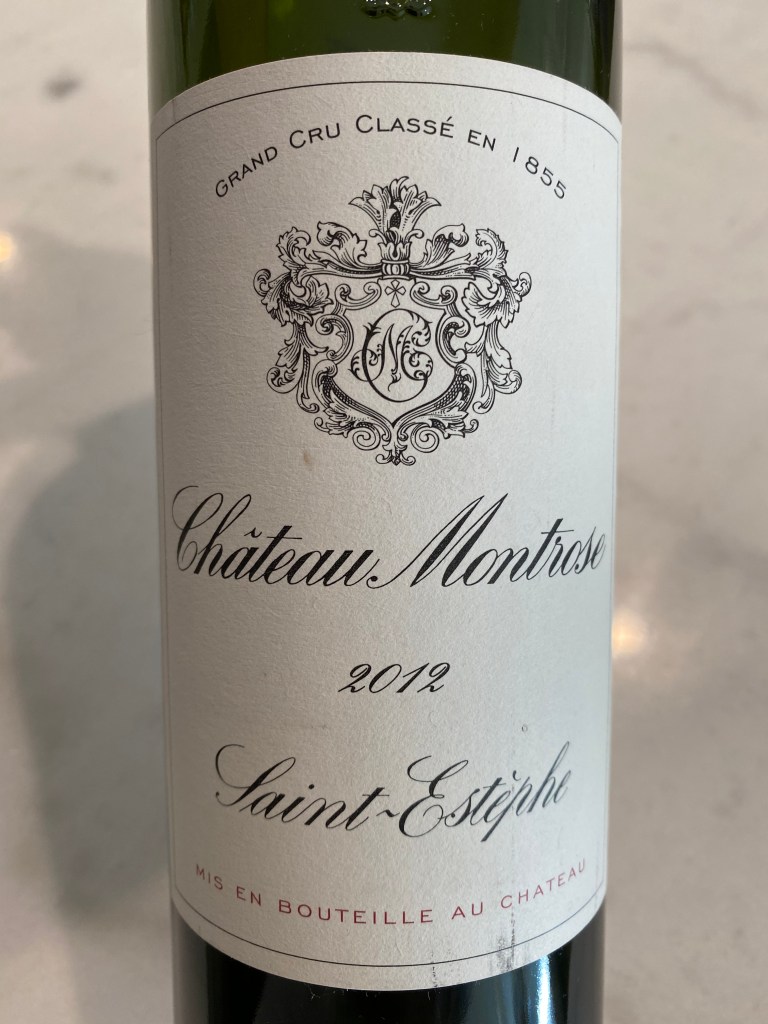
Today’s Story: Château Montrose

I previously wrote about Château Montrose when I reviewed the 2016 La Dame de Montrose in Incredible Value in a Second Wine, but I wanted to revisit the estate for the “Grand Vin.”

Château Montrose is a historical Bordeaux wine estate located in Saint-Estèphe and established in 1815 by Etienne Théodore Dumoulin on a patch of land his family purchased from Nicolas Alexandre de Ségur but largely forgot. At the time of Etienne’s death in 1861, the estate spanned 95 hectares though his heirs sold it in 1866 to factory owner Mathieu Dollfus who quickly redeveloped and modernized the buildings and winery with the best technology of the time. One of Mathieu’s most interesting achievements, in my opinion, is the construction of a windmill to pump water aboveground and flood the estate which ultimately saved much of the vineyards from phylloxera. After Mathieu passed away in 1886, the estate fell to the Charmolüe family who, from 1896 to 2006, guided Château Montrose through wars and financial crises while crafting some of the best vintages and providing stability. Martin and Olivier Bouygues acquired the estate in 2006 and engaged in a massive renovation project, propelling Château Montrose to ever increasing heights for decades down the road. Montrose, one of fourteen Deuxièmes Crus (Second Growths) in the Bordeaux Wine Official Classification of 1855, produces world-class wines and even placed third with their 1970 vintage in the Judgment of Paris in 1976.

Today’s Wine: 2012 Château Montrose

57% Cabernet Sauvignon, 37% Merlot, 5% Cabernet Franc, 1% Petit Verdot; 13% ABV

The 2012 Château Montrose is opaque deep ruby in color with purple hues. This required a good 3 hours to open up in the decanter, blossoming to showcase a nose of blackcurrant, blackberry, pencil shavings, cigar box, freshly tilled earth, cracked pepper, dark chocolate, dried green herbs, and crushed rock mineral. Once on the palate, the wine displays notes of black cherry, dark plum, cassis, dried tobacco, loam, graphite, cocoa, underbrush, and light oaky spice. This is medium- to full-bodied with medium (+) acidity, high grippy tannins, and a long finish.

Price: $115. Given the vintage and how well this wine performs I think this is very appropriately priced. Particularly relative to other Montrose bottlings from stronger vintages that can be 2-3 times as expensive. There is also quite a bit of life and development left in this bottle, which could make $115 down the road look like a steal.

Refreshing and Well-Made Bourgogne Aligoté

Today’s Story: Domaine Jean-Claude Ramonet

I previously wrote about Jean-Claude Ramonet when I reviewed the 2015 Chassagne-Montrachet 1er Cru Clos Saint-Jean in Exploring a Red From a Legendary Producer of White Burgundy. Domaine Ramonet was established in Chassagne-Montrachet in the late 1920s by Pierre Ramonet, and quickly became one of the preeminent producers of white Burgundy. Though the domaine has had its ups and downs over time largely due to premature oxidation in the 1990s, Jean-Claude Ramonet has returned the wines to fresh heights and remains a force to be reckoned with in the world of white Burgundy.

In the vineyards, Ramonet likes to work with older vines and keep his yields low. Most of the wines are produced from vines 12 to 50 years old, though they typically like to use vines 18 years or older. The domaine’s vinification practices are traditional in nature, with the whites starting in tanks before transfer to French oak barrels and the reds in cement vats for maceration and fermentation. New oak usage varies by wine and vintage, with the whites typically seeing 10-15% for village wines, 30-40% for 1er Crus, and 50%+ for the Grand Crus. Reds typically see 10-20% new oak for village wines and 30-40% for 1er Crus. None of the white wines are bottled fined or filtered.

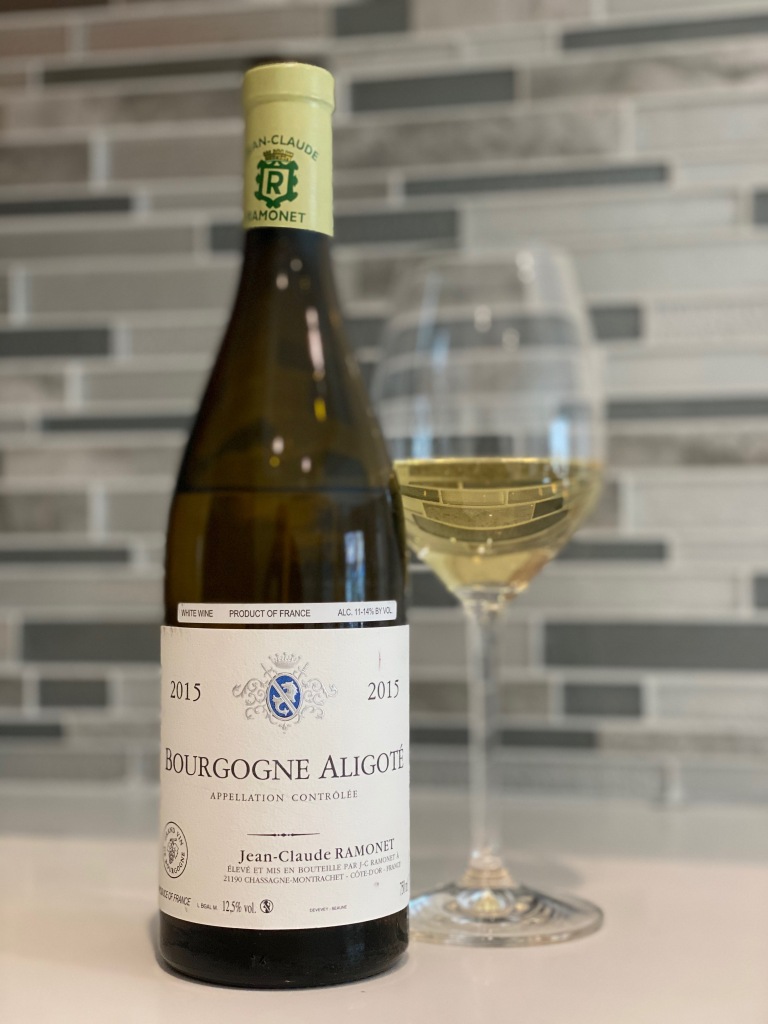
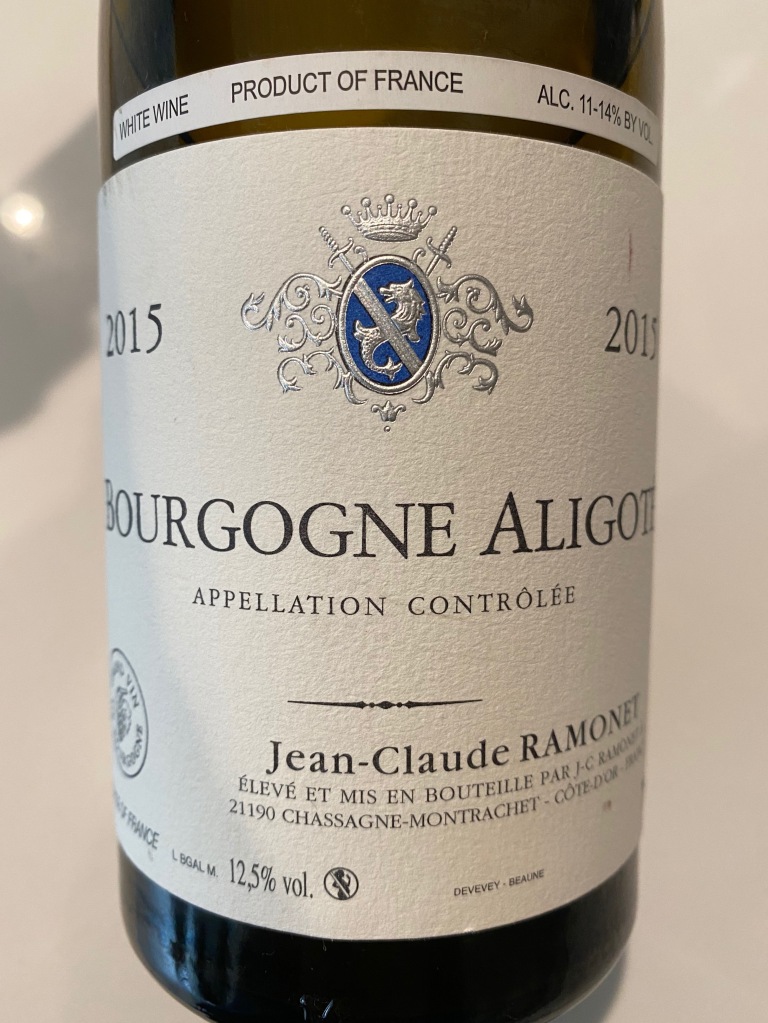
Today’s Wine: 2015 Bourgogne Aligoté

100% Aligoté; 12.5% ABV

The 2015 Bourgogne Aligoté is transparent medium yellow in color with deep straw variation. On the nose, the wine showcases aromas of golden apple, white peach, white florals, cotton candy, dried vanilla, mild herbs, and mineral. Once on the palate, this displays notes of lemon citrus, yellow apple skins, snap pea, white wildflower, wax, and dill. The wine is light- to medium-bodied with high acidity and a plush, luxurious mouthfeel into a lingering but refreshing finish.

Price: $50. This is a very well-made, high quality Aligoté that I think justifies the price-point. Pair with oysters, roasted chicken, or cheese.

Fun and Delicious Grower Champagne

Today’s Story: Domaine Francis Orban

Domaine Francis Orban was established in 1929 by Léopold Orban in the small village of Leuvrigny, not too far from Epernay. Though Léopold initially sold his fruit to the larger houses of Epernay, he decided to branch out and make his own wines as one of the first Grower Champagne houses in Leuvrigny. The domaine today spans 18 acres of vineyards between Leuvrigny and Sainte-Gemme, with 90% planted to Pinot Meunier and vines averaging 30-40 years old. The vineyards are farmed utilizing sustainable viticulture, harvesting is done completely by hand, and fermentation is accomplished using only indigenous yeasts in stainless steel tanks. In the NV bottlings, about 50% of the blend is comprised of reserve wines. Francis Orban is today’s 4th generation steward of the domaine, following the footsteps of his great-grandfather Léopold, grandfather Gaëtan, and father Pol.

Today’s Wine: NV Champagne Extra Brut

100% Pinot Meunier; 12% ABV

The Champagne Extra Brut is transparent deep gold in color. On the nose, I get aromas of yellow apple skins, golden pear, brioche, white pepper, almond, clay, and mineral. Once in the mouth, the wine showcases notes of lemon citrus, green apple, toasted nuts, toast, crushed rock, and cream. This is very dry and medium-bodied with high acidity and a crisp, refreshing finish.

Price: $45. Great QPR with this one, which tends to be the case with almost every grower Champagne I’ve had over the years. This wine is also incredibly fun to try, not simply for the fact it is 100% Pinot Meunier (typically a blending variety in Champagne) but also because it is Extra Brut with dosage of 3 g/l. Drink this on its own or pair with caviar or shrimp.

Tasty Gewurztraminer From Centuries of Tradition

Today’s Story: Maison Trimbach

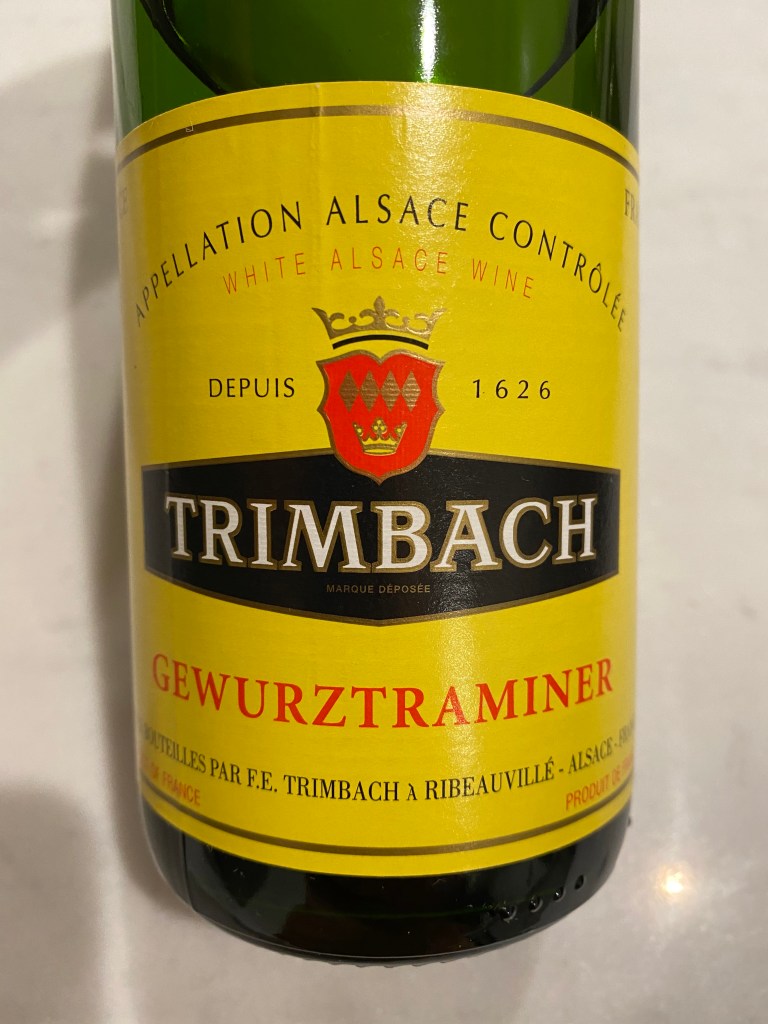
Maison Trimbach is one of the most notable winemakers in Alsace, established in 1626 by Jean Trimbach. Today Trimbach is under the guidance of Hubert Trimbach and his nephews Jean and Pierre, rounding out 12 generations of family ownership and shared knowledge. Pierre’s daughter Anne, the oldest of the 13th generation, also now works in the family business. Though Trimbach’s world recognition greatly expanded in 1898 when Frédéric Emile Trimbach earned the highest marks at the International Wine Fair in Brussels, Trimbach is largely famous for the legendary Clos Sainte Hune vineyard. Located in the Rosacker Grand Cru vineyard, Clos Ste Hune has belonged to the Trimbach family for over two centuries and produces some of the most exquisite Alsatian Riesling in existence.

The Trimbach estate consists of 40 hectares encompassing 50 parcels across six villages that include Bergheim, Ribeauvillé, and Hunawihr. Trimbach also operates as a négociant business to produce additional non-estate wines. All of Trimbach’s winegrowing practices are sustainable and they try to preserve the natural environment of the vineyards. Trimbach practices close pruning and soil tilling while encouraging moderate yields and rigorous fruit selection come harvest which is accomplished entirely by hand. When the grapes are gently crushed at the winery, juices flow via gravity and Pierre vinifies and matures the wines adhering to centuries of tradition with both finesse and focus on the terroir. After being bottled each spring, the wines are released by maturity with some spending 5 to 7 years in the cellars to achieve balance before release.

Today’s Wine: 2016 Gewurztraminer

100% Gewurztraminer; 14% ABV

The 2016 Gewurztraminer is transparent medium gold in color. On the nose, I get aromas of tangerine, peach, lemon curd, rose, beeswax, and petrol. The palate is quite vibrant and lively, with notes of mandarin, grapefruit, pear, ginger, white florals, herbs, and mineral. This wine is medium- to full-bodied with medium acidity and a dry, long finish.

Price: $24. I think this is fairly priced and a pretty solid representation for the variety. Pair this with foie gras, Munster cheese, or apple streusel.

One of My Favorite CdP’s

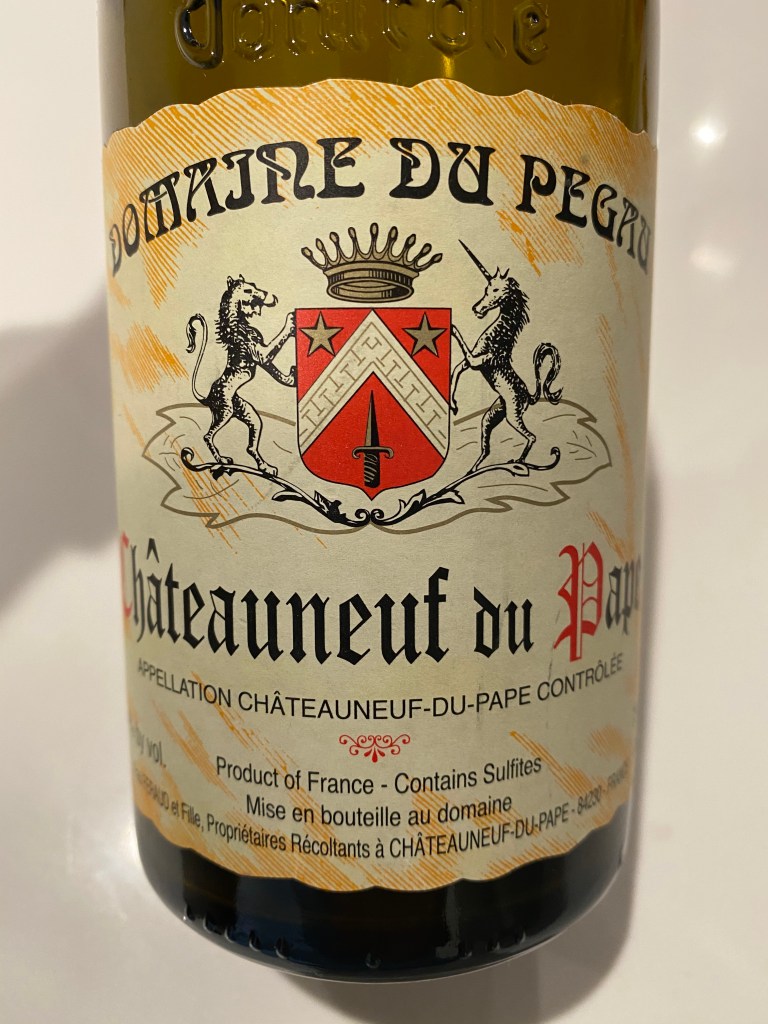
Today’s Story: Domaine du Pégau

Domaine du Pégau is one of the great estates in Châteauneuf-du-Pape, and though it became officially established in 1987 its roots and those of its proprietors extend significantly further back in time. Today the domaine is under guidance of Paul Féraud and his daughter Laurence, though the Féraud family can be traced as far back as 1670 in Châteauneuf-du-Pape. Titles to the earliest Féraud vineyards reach 1733, though the family sold most of their production in bulk to top négociants (like Jaboulet-Aîné, David & Foillard, and Guigal) when Paul joined the family business. In 1964, however, this all changed when Paul decided to bottle about 420 cases under his own name when estate bottling really started to pick up. 1987 marked the year when Laurence joined her father and the duo changed their name and label from Domaine Féraud to Domaine du Pégau. Pégau spanned a somewhat small 17 acres of vines at this time, with still a significant amount of produce sold to négociants, but as Laurence took a larger and larger role they phased out selling fruit and the 1990 harvest was fully used for their own wines. Today the domaine consists of 21 hectares of vines in Châteauneuf-du-Pape with another 5 hectares in Côtes du Rhône, 20 hectares in Côtes du Rhône Villages, and 19 hectares classified Vin de France.

Today’s Wine: 2009 Châteauneuf-du-Pape Cuvée Réservée

85% Grenache, 9% Syrah, 4% Mourvèdre, with the balance Counoise and other authorized varieties (best guess – no tech sheet); 14% ABV

The 2009 Cuvée Réservée is opaque deep garnet in color with medium ruby variation. I decanted this for 3 hours, which allowed some funk to blow off the nose. Once this opens up, aromas of blackcurrant, black raspberry, boysenberry, cigar box, graphite, forest floor, truffle, slate, clove, and underbrush leap from the glass. On the palate, I get notes of brambleberry, figs, black cherry, anise, red and purple florals, tobacco, charred earth, earthy mushroom, rocky mineral, coffee grounds, and game. The wine is medium-bodied with medium acidity, dusty medium (+) tannins, and a long finish with added notes of iron and smoke. This is drinking magnificently right now, given the time to open up.

Price: $100. I think this is very fairly priced, as Pégau with the 2009 vintage produced a wine of depth, elegance, and complexity that reaffirms them as an estate to beat in CdP. Pair with herb-grilled lamb, wild boar, or charcuterie.