High Quality Provence Rosé From Two Burgundy Titans

Today’s Story: Triennes

Triennes is a wine estate established in 1989 in Provence, France by Burgundy legends Jacques Seysses of Domaine Dujac and Aubert de Villaine of Domaine de la Romanée-Conti. Given their prowess in Burgundy, the duo became convinced that great wines of incredible quality could also be produced in the south of France when focus is put on the vineyards first and foremost. After they purchased their estate, Triennes underwent a massive replanting program to ensure the healthiest of vineyards, with vines and rootstocks specifically adapted to the local climate and microclimates. The vineyards are farmed as naturally as possible, with Ecocert organic certification following a transition that began in 2008.

As far as the Triennes wine portfolio goes, they produce three main wines of Saint Auguste (Syrah, Cabernet sauvignon, and Merlot), Viognier Sainte Fleur (Viognier), and the rosé I am reviewing today. They also produce a Merlot, Les Auréliens Blanc (Chardonnay, Viognier, Vermentino, Ugni Blanc, and Grenache Blanc), and Les Auréliens Rouge (Syrah and Cabernet Sauvignon).

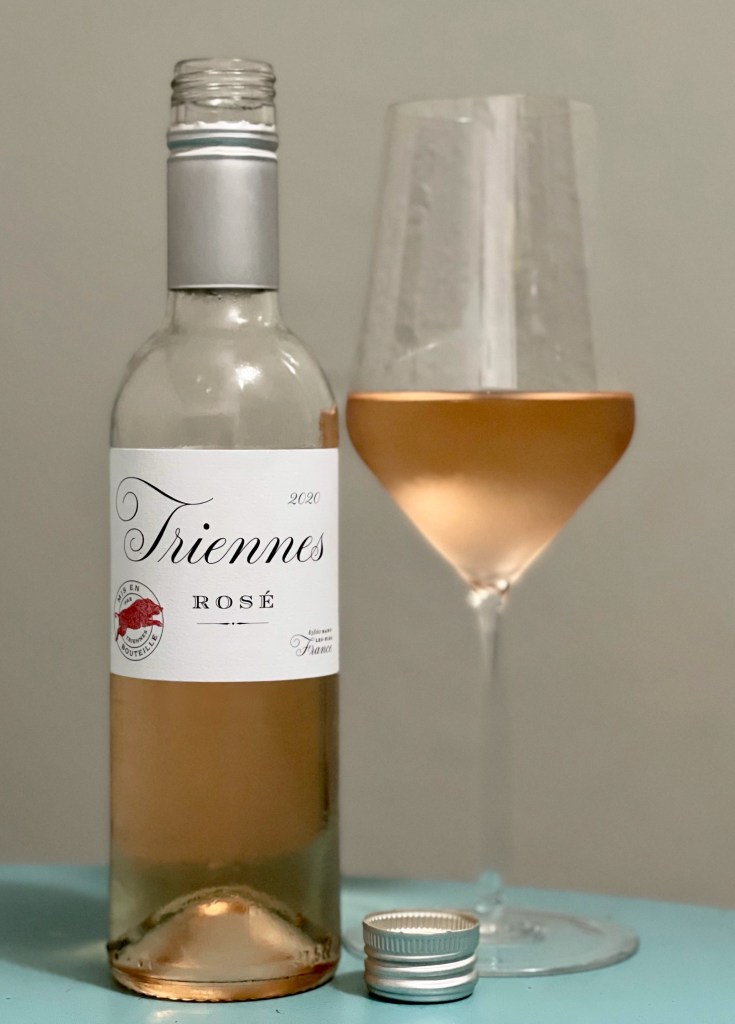
Today’s Wine: 2020 Rosé

Primarily Cinsault blended with Grenache, Syrah, and Merlot; 12.5% ABV

The 2020 Rosé is pale copper in color. Aromas are of medium intensity, with the nose showcasing notes of white strawberry, raspberry, watermelon, mild cherry, dried green herbs, and subtle maritime minerality. Meanwhile the flavors are also of medium intensity, with the palate displaying notes of watermelon, juicy strawberry, rosewater, lime zest, a touch of vanilla, and finely crushed rock minerality. This dry rosé is medium-bodied with medium (+) acidity, medium alcohol, and a medium (+) length finish.

Price: $15 for 750ml (closer to $8 in Europe). This is a very easy-going, fresh, and enjoyable rosé and I think for the price it offers great value. My 375ml bottle was $7.50, and I find myself hard-pressed to find another rosé at the quality level of this one for the price.

Terroir-Driven Pinot Noir Born From an American and French Collaboration

Today’s Story: Racines Wine

Racines Wine is a collaboration between Santa Barbara winemaker Justin Willett (Tyler Winery and Lieu Dit) and French vignerons Étienne de Montille (Domaine de Montille in Burgundy) and Rodolphe Péters (Pierre Péters Champagne). In 2016, Étienne and his Chef de Cave, Brian Sieve, took an exploratory journey to California and Oregon in pursuit of their first winemaking venture outside of Burgundy, ultimately settling on the Sta. Rita Hills of California with Justin as their winemaker. A year later, Rodolphe joined the team to provide insight into Chardonnay and sparkling wine production, with the sparkling wine set for release in the near future.

As one might expect, the winemaking philosophy at Racines meshes well amongst all parties as they come from backgrounds of producing terroir-driven and elegant Pinot Noir and Chardonnay. What’s more, they’re not trying to make something “Old World” or “Burgundian” per say, but rather simply showcasing the unique characteristics of the Sta. Rita Hills which has proven to be a rather high-quality AVA for Pinot Noir and Chardonnay. All this being said, Racines’ Pinot Noir is fermented whole-cluster with pigéage throughout, while the Chardonnay production follows closely with the traditions of Burgundy and Champagne.

Today’s Wine: 2017 Sta. Rita Hills Cuvée Pinot Noir

100% Pinot Noir; 13.5% ABV

The 2017 Sta. Rita Hills Cuvée Pinot Noir is medium ruby in color. I poured my glass and forgot about it for an hour or so, which this wine needs at its youthful stage. The aromas are of pronounced intensity, with the rather complex nose showcasing notes of black cherry, red plum, muddled strawberry, leather, violet, pine, cola, cinnamon, chopped green herbs, and wet gravel. Meanwhile the flavors are of medium (+) intensity and the palate displays notes of red cherry, black raspberry, strawberry, blood orange rind, sweet tobacco, licorice, violet, chalk, and crushed rock. This dry red is light- to medium-bodied with medium (+) acidity, medium tannins, medium (+) alcohol, and a long finish. Pretty well-balanced and I love the layers upon layers to this wine that surface over time.

Price: $60 (I paid $48). I don’t know if I can necessarily go as far as calling this a screaming value (because there are a plethora of Pinot Noir options for half the price that drink incredibly well), but there is no denying the intensity, complexity, and length to this wine are all worthy to note. This is a gorgeous wine now, though I’m excited to see what a few more years of bottle age will accomplish.

Lively, Precise, and Mineral-Driven Chenin Blanc

Today’s Story: Enfield Wine Co.

Enfield Wine Co. is a relatively small family-owned and operated winery established by John Lockwood and Amy Seese in 2010. John started working in the wine industry in 2004 at Heron Lake Vineyard, followed by harvests at Littorai, Bodega Melipal in Argentina, and Failla Wines. John remained with Failla for five years managing and farming their Sonoma Coast and Russian River estate vineyards, ultimately starting Enfield as a small passion project. In 2013, John left Failla and devoted his time entirely to Enfield.

Enfield focuses primarily on terroir as a starting point, working with small independent growers across a range of regions to source their fruit. John and Amy purchase fruit from Antle Vineyard and Brosseau Vineyard in the Chalone AVA, Haynes Vineyard in Coombsville, Heron Lake Vineyard in Wild Horse Valley, Jesus & Patricia’s Vineyard in Fort Ross-Seaview, and Shake Ridge Vineyard in Amador County. From these sites they acquire a range of varieties including Pinot Noir, Chardonnay, Syrah, Chenin Blanc, Cabernet Sauvignon, and Tempranillo amongst others, all with varying vine age as well. John’s philosophy is to harvest his fruit for balance and ferment the wines naturally in order to showcase each unique terroir, eschewing a heavy-handed winemaking style. The wines are often fresh, lively, and mineral-driven, though John does enjoy exploring esoteric bottlings as well.

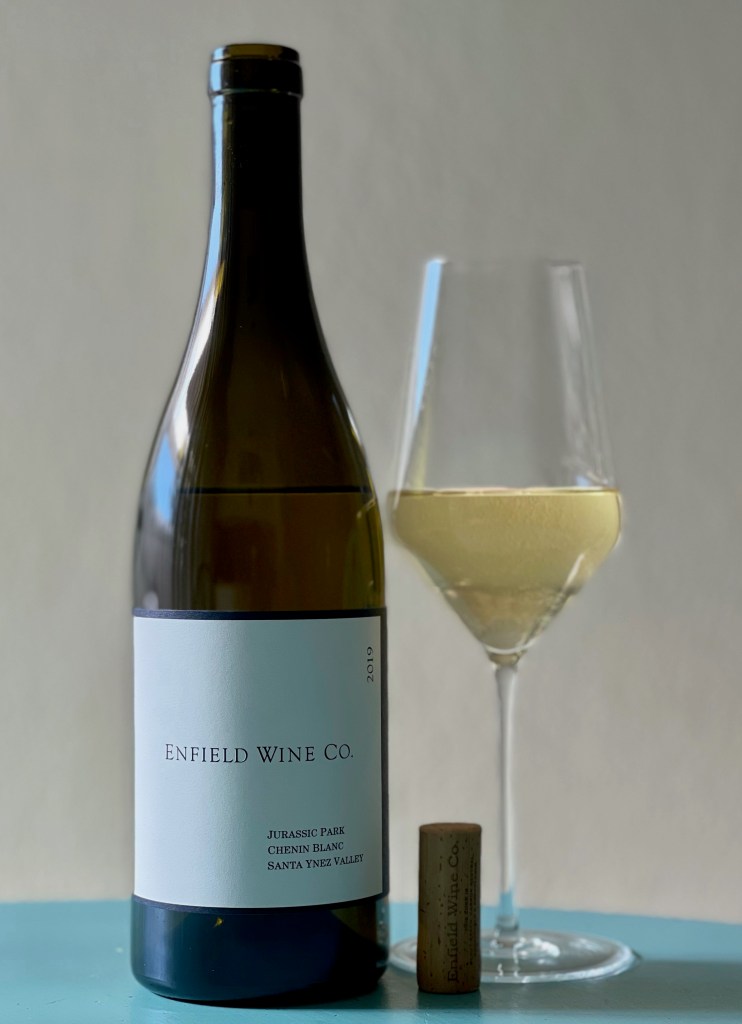
Today’s Wine: 2019 Jurassic Park Vineyard Chenin Blanc

100% Chenin Blanc; 12% ABV

The 2019 Jurassic Park Vineyard Chenin Blanc is pale gold in color. Given some time to blossom in the glass, the aromas are of pronounced intensity and the nose showcases notes of ripe yellow apple, pear, lemon zest, honeysuckle, ginger, flint, oyster shell, and saline. Meanwhile the flavors are of medium (+) intensity, and the palate displays notes of nectarine, white peach, yellow apple, honey, chamomile, crushed stone, and sea salt. This dry white is light- to medium-bodied with medium (+) acidity, medium alcohol, and a long finish. A very precise and well-balanced Chenin Blanc.

Price: $35. I think this is well-priced for how balanced, complex, and intense the wine is. Nothing sticks out of place here and this is a very solid representation of Chenin Blanc. Though it’s more expensive than the previous Jurassic Park Chenin Blanc I had, the intensity and quality level of this wine justify it.

Delicious and High-Quality Portuguese Bastardo

Today’s Story: Conceito Wines

Conceito Wines is a family-owned and operated wine estate with roots tracing back to the 1940s, though they did not start bottling their own wines until the 2005 vintage. Throughout their first several decades the Ferreira family sold their fruit to other producers, however when Rita Ferreira Marques joined after studying Oenology and working in Bordeaux, California, South Africa, and New Zealand the mantra changed. Conceito’s estate vineyards are located in Vale da Teja of the Douro Valley in Portugal, and they encompass 86 hectares (213 acres) across five separate sites. The climate of these vineyards is rather cool, augmented by high elevations between about 1,500 feet and 2,000 feet above sea level. All viticulture is organic without the use of pesticides or herbicides, while winemaking is of the minimal intervention approach. Each Conceito wine is meant to showcase the unique terroir of their sites in Portugal, and the portfolio consists of a flagship Conceito range as well as two Contraste bottlings (a red and a white) meant for more “relaxed” consumption.

Today’s Wine: 2018 Bastardo

100% Bastardo (Trousseau); 13% ABV

The 2018 Bastardo is pale ruby in color and fairly transparent. I let this evolve in the glass, with aromas of medium intensity and a nose that showcases notes of cherry, black raspberry, licorice, violets, smoked game, gravel, and mild spice. Meanwhile the flavors are also of medium intensity and the palate displays notes of raspberry, red cherry, cranberry, red licorice, graphite, dried green herbs, and black pepper. This dry red is light-bodied with medium (+) acidity, low tannins, medium alcohol, and a medium (+) length finish.

Price: $35. From quality, balance, and complexity standpoints I think this is very fairly-priced though there are better “values” out there. A lot of the Trousseau I’ve had seems to range from $25 to $45 and this fits right in the middle, but I do think several closer to $25 drink just as well as this one. Nonetheless this is a great and fun wine that can open you to more high-quality wines Portugal has to offer.

Strong Value Grenache From a Relatively New Californian Producer

Today’s Story: Newfound Wines

Newfound Wines is a family-owned and operated wine estate established by Matt and Audra Naumann in 2016. With backgrounds in the wine industry and a shared passion for agriculture, they established Newfound Wines as a 40 acre ranch, vineyard, and winery in the Sierra Foothills of California. In addition to their estate High View Vineyard which needed replanting in 2016, Newfound sources fruit from several other sites including Cemetery Vineyard and Colombini Vineyard in Mendocino County, Enz Vineyard in the Lime Kiln Valley, Scaggs Vineyard and Yount Mill Vineyard in the Napa Valley, and Shake Ridge Vineyard in the Sierra Foothills. They focus on the varieties of Grenache, Carignane, Mourvèdre, Pinot Noir, Chardonnay, and Semillon with an emphasis on organic viticulture as well as minimal intervention winemaking in an effort to showcase each variety and terroir as purely as possible.

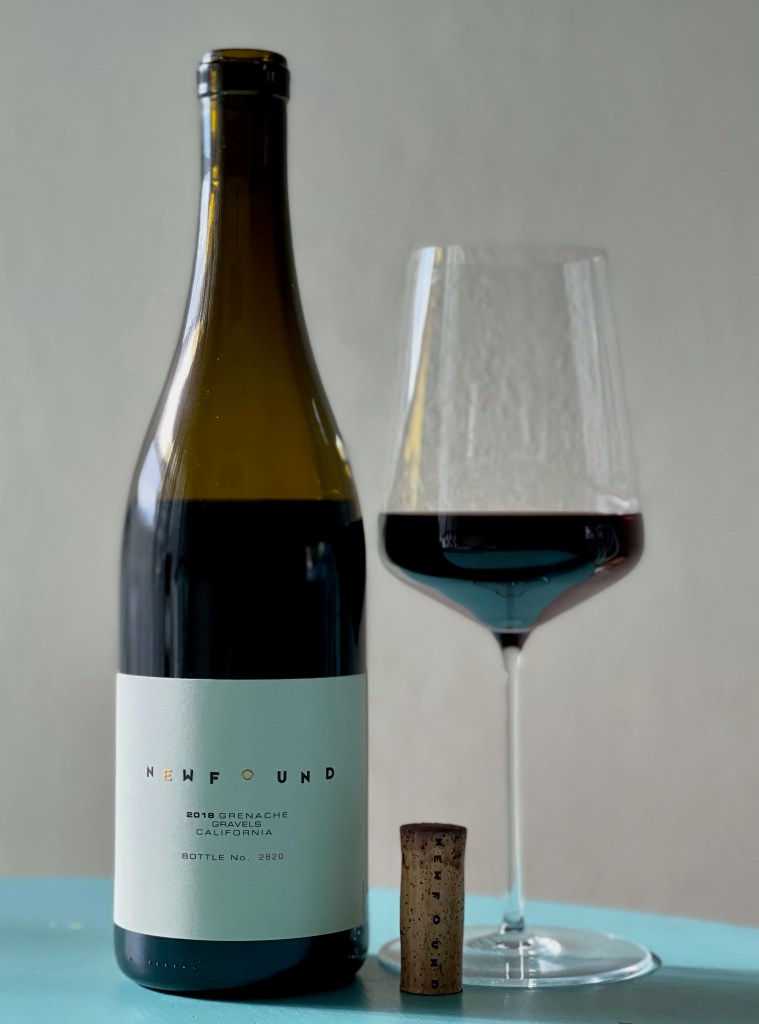
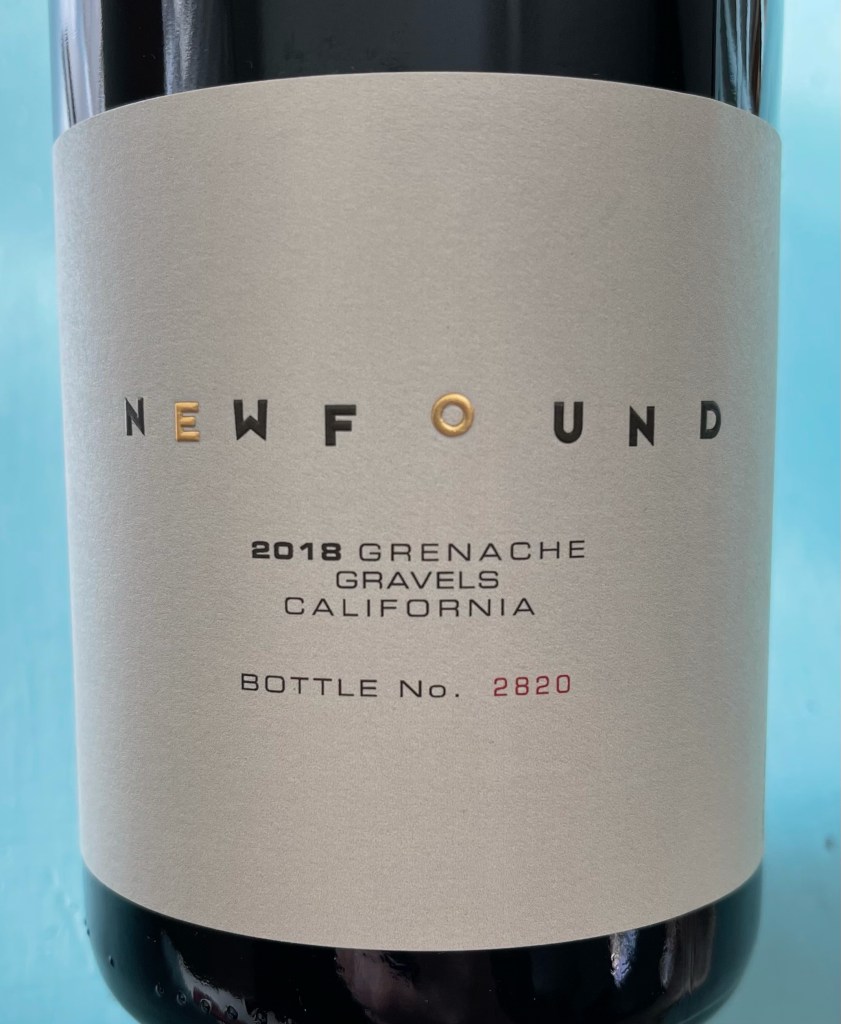
Today’s Wine: 2018 Grenache Gravels

100% Grenache; 13.9% ABV

The 2018 Grenache Gravels is medium ruby in color and I let this open up for about 30-45 minutes in the glass before I started drinking it. The aromas are of medium (+) intensity, with the nose showcasing notes of muddled strawberry, black raspberry, cherry, red plum, leather, dried green herbs, mint, and crushed rock. Meanwhile the palate displays notes of raspberry, tart cherry, blackberry, licorice, red rose, chalk, and cracked pepper with prominent mineral undertones. This dry red is medium-bodied with medium acidity, medium (+) and grippy tannins, medium alcohol, and a medium (+) length finish.

Fruit is sourced from 85% Cemetery Vineyard in Mendocino County, 10% Scaggs Vineyard in Napa Valley, and 5% Yount Mill Vineyard in Napa Valley.

Price: $30. I think this offers very solid value for the price, as the depth is rather impressive at this stage and quality is certainly very high for an “entry” bottling. Though the tannins are slightly out of balance at this stage, I think they will resolve with another year or two and you’ll be left with a wine striking well above its price-point.

Fun and Unique “Nighttime” Rosé

Today’s Story: Las Jaras Wines

Las Jaras Wines was founded in 2014 by winemaker Joel Burt and Hollywood comedian/director Eric Wareheim. Joel Burt, a winemaker at Domaine Chandon, was growing tired of making wines in a cookie-cutter, corporate, and mass-produced manner when he met Eric and the two realized they shared a passion for fine wine. The duo started planning their own wine label where they could produce wines in homage of “the old days” (think 1970s Napa) and Las Jaras was born. Joel describes their Cabernet “like a Dunn from the 80s, but way more approachable” and each wine in the portfolio is made largely using similar traditional techniques.

To achieve this style of wine, Joel remains very hands-off throughout the winemaking process. Las Jaras sources their fruit from various old vine vineyards, though most comes from Mendocino County. All fruit is hand-harvested and each variety goes through separate winemaking processes, all being hand-sorted at the crusher. Though each variety is vinified differently to best express that variety’s unique character, the long story short here is that Joel doesn’t add sulfur, the wines ferment with only natural yeasts, and bottling is accomplished with no fining or filtration.

I previously reviewed the 2018 Sweet Berry Wine from Las Jaras.

Today’s Wine: 2020 Superbloom Cuvée Zero Zero

27% Marsanne, 16% Roussanne, 16% Grenache Noir, 14% Mourvèdre, 10% Grenache Blanc, 10% Carignan, 7% Picpoul Blanc; 10.9% ABV

The 2020 Superbloom is deep salmon in color with pinkish hues, and it’s slightly hazy. This needed about 30 minutes to open in the glass, as there were some funky aromas that needed to blow off. The aromas are of medium intensity, with the nose showcasing notes of watermelon, grapefruit, white cherry, strawberry, white rose, and saline. Meanwhile the palate displays notes of raspberry, strawberry, candied watermelon, mild white pepper, and stony mineral. This dry rosé is light-bodied with medium (+) acidity, low alcohol, and a medium (-) length finish. Very chuggable and fun but I wish the finish was a bit longer. 1,500 cases produced.

Price: $27. I sought this wine from my local wine shops for quite some time, and am glad to finally find it since I’m a big fan of Joel and Eric. This is a very fun, chuggable, and interesting rosé made from quite the blend of co-fermented varieties, however I think for the price there are better values out there.

A Must-Try to Spice up Your Rosé Game

Today’s Story: Tenuta delle Terre Nere

Tenuta delle Terre Nere is a somewhat young but highly regarded wine estate founded by Marc de Grazia on the northern slopes of Mount Etna in Sicily. The first commercial vintage was in 2002, and the estate focuses on local Sicilian varieties with Nerello Mascalese and Carricante of principal importance. The estate today consists of about 55 hectares, of which 27 hectares are planted to vines in production and 7 hectares are breeding. The holdings are broken up into 24 parcels across six crus and range in elevation from 600 to 1,000 meters above sea level, with an ultimate plan to reach 38 hectares planted to vine. Aside from the 7 hectares recently planted, Terre Nere works with vines aged 50 to 100 years old, and the estate even has one parcel that survived phylloxera and is 130-140 years old!

Marc de Grazia has long been a proponent of single cru Etna wines, so he vinifies, ages, bottles, and labels each of his crus individually. These include Calderara Sottana, San Lorenzo, Bocca d’Orzo, Santo Spirito, Guardiola, and Feudo di Mezzo. All viticulture has been organic since Terre Nere was established (certified in 2010), and the prior owners farmed their vineyards organically for the previous two generations as well. Winemaking is meant to be minimally invasive, allowing de Grazia to showcase the unique Etna terroir in all of his wines.

To learn more, view images of the estate and vineyards, or explore the range of wines from Tenuta delle Terre Nere, I recommend visiting their website here. I also previously reviewed their 2019 Etna Bianco if you care to explore or revisit my thoughts on another wine in the portfolio.

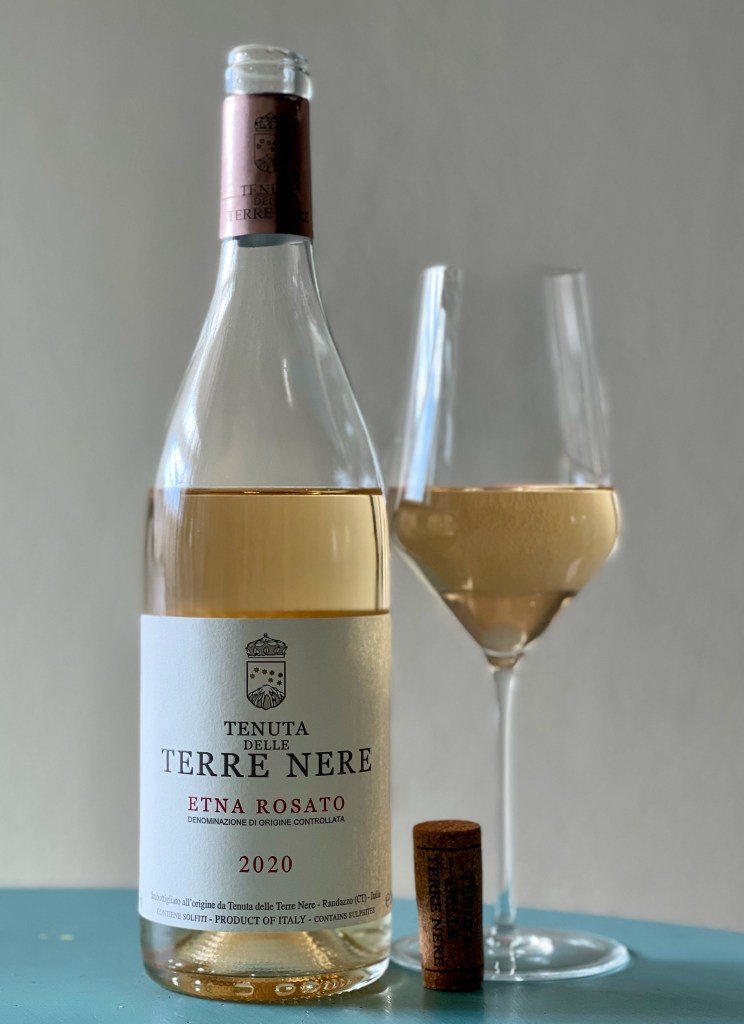
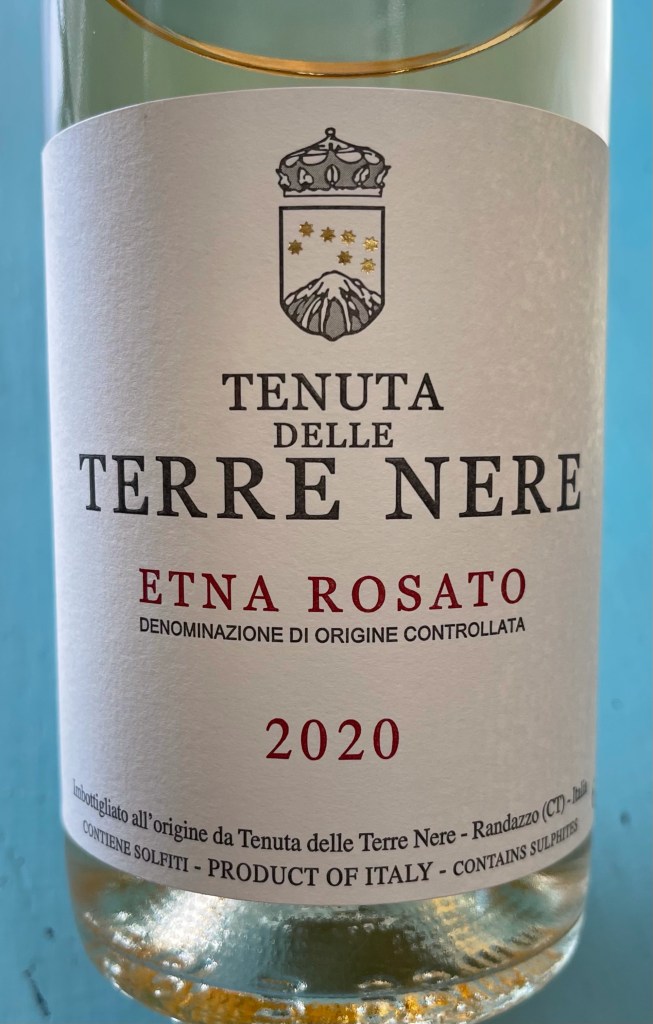
Today’s Wine: 2020 Etna Rosato

100% Nerello Mascalese; 13% ABV

The 2020 Etna Rosato is pale copper in color, rather light for many rosé wines I’ve enjoyed. The aromas are of medium intensity, but the rather complex nose shows itself over time with notes of white strawberry, cherry, peach, raspberry, cured charcuterie meat, rose petal, flint, and saline mineral. Meanwhile the flavors are also of medium intensity and the palate displays notes of Rainier cherry, freshly-picked strawberry, peach, cantaloupe, chopped green herbs, crushed rock, sea salt, and white pepper. This dry rosé is medium-bodied though very crisp and lean with high acidity, medium alcohol, and a long finish.

Price: $23. I think this is a great buy, as it offers beautiful balance, length, and complexity while being immensely chuggable on a hot day. This is the most fun, delicious, and rock-solid rosé I’ve had in a long, long time and I’ll be buying more as soon as I can.

Complex Sonoma Coast Syrah Made in Miniscule Quantities

Today’s Story: Black Trumpet

Black Trumpet is a very, very small wine producer established in 2012 by Sophie Drucker and Garrett Pierce. Born out of their passion for Syrah and the Black Chanterelle Mushroom, Black Trumpet is a one to two barrel (25-50 case) annual production of Syrah from Sonoma and Mendocino Counties. They pick Syrah from some of their favorite organically-farmed sites (today’s 2019 bottling comes from the Charles Heintz Vineyard), and all harvesting is accomplished by hand. Grapes ferment in open-top barrels with partial stem inclusion and wild yeasts, with limited to no sulfur additions throughout the process. Come bottling, the wines are never fined or filtered to preserve both the variety characteristics and the expression of terroir.

Today’s Wine: 2019 Syrah

100% Syrah; 14% ABV

The 2019 Syrah is deep ruby in color and completely opaque. I decanted this for about an hour, as it’s still incredibly youthful. The aromas are of medium (+) intensity, with the nose showcasing notes of blueberry, black plum, blackberry, anise, violets, mild smoke, cured meat, and cracked pepper. Flavors are also of medium (+) intensity and the palate displays notes of blackberry, blueberry, licorice, bacon fat, charred green herbs, clove, black pepper, and chocolate. This dry red is medium-bodied with medium (+) acidity, medium tannins, medium alcohol, and a medium (+) length finish. 1-2 barrels (25-50 cases) produced each vintage.

Price: $35. I think this is very reasonably-priced given both the quality level and miniscule production numbers. In its youth, this is already very well-balanced with solid complexity and intensity. This also gives off a very Northern Rhône vibe while still showcasing the Californian fruit which I think can prove attractive for both Old and New World palates.

An Oregon Take on Burgundy’s “Secret” Value

Today’s Story: Evening Land Vineyards

Evening Land Vineyards is a producer of Pinot Noir, Chardonnay, and Gamay located in the Eola-Amity Hills of Oregon. Though the label was “officially” established in 2005, their historic and world-class Seven Springs Vineyard dates back to 1984 when it was planted by Al MacDonald. Though the winery has changed hands a number of times, labels have been updated, and fruit sources have changed, sommelier Rajat Parr and winemaker Sashi Moorman joined in 2014 and remain involved to this day. With their Seven Springs estate vineyard, which has been dry-farmed since inception and shifted to biodynamic viticulture in 2007, Parr and Moorman oversee significant Pinot Noir plantings followed by Chardonnay and then smaller amounts of Gamay. The Pinot clones include Calera, Pommard, Swan, and Mt. Eden, and they have produced some of the greatest wines in Oregon winemaking history with the vineyard in its earlier days a source for many highly-regarded wineries.

I previously wrote about the 2018 Seven Springs Pinot Noir from Evening Land.

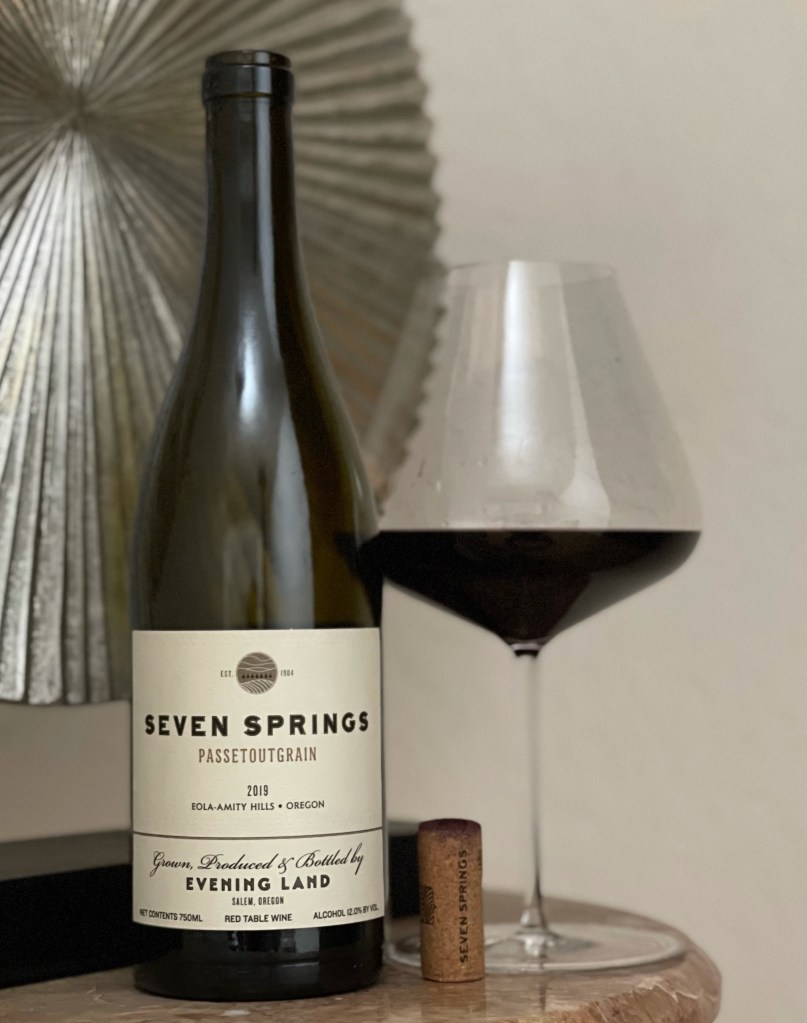
Today’s Wine: 2019 Seven Springs Passetoutgrain

Co-ferment of Pinot Noir and Gamay; 12% ABV

The 2019 Seven Springs Passetoutgrain is deep purple in color with ruby hues. Given some time to open up in the glass, this blossoms into a rather complex wine for its youth. The aromas are of medium (+) intensity, with the nose showcasing notes of cherry, raspberry, mulberry compote, blueberry, rose petal, rosemary, pine, and finely crushed rock. Meanwhile the flavors are of medium intensity and the palate displays notes of blackberry, cranberry, white cherry, mulberry, blueberry, savory garden herbs, black olive, and stony mineral. This dry red is light-bodied with high acidity, low tannins, medium alcohol, and a long finish. 595 cases produced.

Price: $35. I think this is pretty fairly priced given the balance, length, and complexity though there are probably better values if you look to Beaujolais for carbonic Gamay. I haven’t had any Bourgogne Passetoutgrain to compare this to, so I found my next tasting task.

High Quality Kabinett Riesling From a Historic German Estate

Today’s Story: Weingut Reichsrat von Buhl

Reichsrat von Buhl was established in 1849 by Franz Peter Buhl, and the estate quickly became a benchmark of quality for Forster Riesling. Thanks to uncompromising quality, von Buhl Rieslings became some of the most expensive in the world and even filled the glasses of those toasting the opening of the Suez Canal in 1869. Even Otto von Bismarck became a loving fan of von Buhl wines and praised their Ungeheuer which is sourced from the best plot of the 29 hectare Grand Cru Ungeheuer vineyard.

In 1909, Franz Eberhard Buhl (the son of Armand von Buhl and Juliane Schellhorn-Wallbillich) orchestrated the marriage of the von Buhl and Schellhorn-Wallbillich wineries, establishing one of the largest privately owned German wine estates at over 200 hectares. At this point, Franz Eberhard changed the winery name to Reichsrat von Buhl (adding his title as a member in the house of Lords in the kingdom of Bavaria). Franz Eberhard passed away young in 1921 and his widow Frieda Piper von Buhl adeptly ran the estate until her death in 1952. With no familial heirs to the estate, Reichsrat von Buhl went to Georg Enoch Freiherr von und zu Guttenberg who was a political friend of Franz Eberhard.

Over time, Reichsrat von Buhl decreased in size to about 52 hectares of vineyard land thanks to financial challenges, though they maintained ownership of some of the greatest sites in Deidesheim and Forst. From 1989 to 2013, von Buhl was leased to Japanese business man Toyohiro Tokuoka but changed ownership in 2005 to a local businessman named Achim Niederberger. When Tokuoka’s lease ended in 2013, von Buhl went back to being a family-run estate and winery.

All vineyards owned by Reichsrat von Buhl are certified organic and the current team is unified behind natural and sustainable viticulture. All white wines from von Buhl are Riesling (except for two noble sweet wines) and all red wines and rosé are made from Pinot Noir. Of all the land planted to vine that von Buhl owns, 45% is classified as either VDP.Erste Lage® (Premier Cru) or VDP.Grosse Lage® (Grand Cru) – source. For more on this historic German estate, check out the website here.

I previously wrote about von Buhl’s 2014 Forster Ungeheuer Riesling Großes Gewächs.

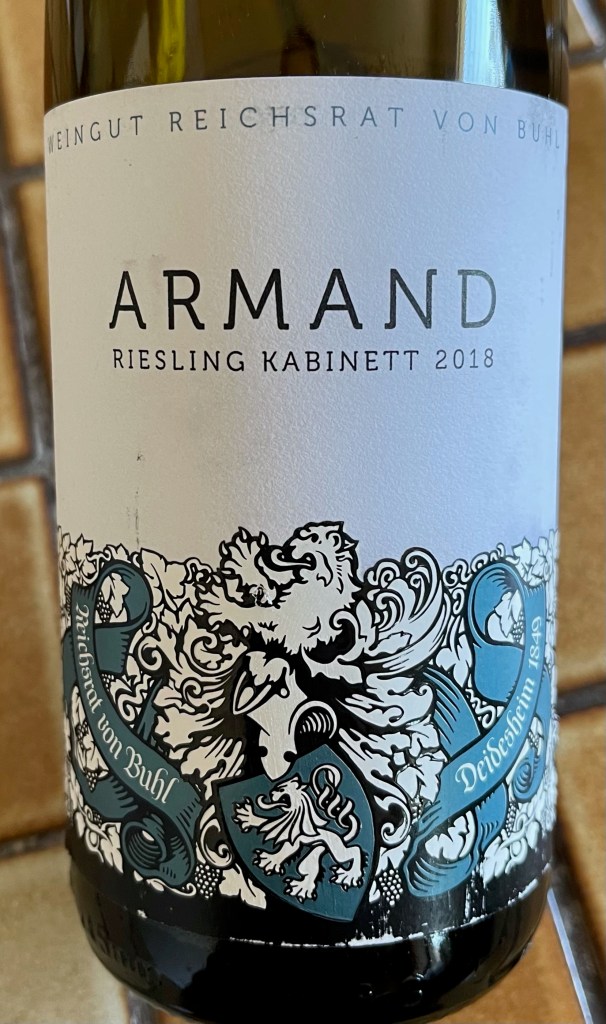
Today’s Wine: 2018 Armand Riesling Kabinett

100% Riesling; 9% ABV

The 2018 Armand Riesling Kabinett is pale gold in color. Aromas are of pronounced intensity, with the nose showcasing notes of white peach, apricot, lemon peel, honeysuckle, petrol, and white pepper. Meanwhile the flavors are also of pronounced intensity and the palate displays notes of yellow apple, white peach, tangerine, jasmine, honey, and flint. This off-dry Riesling is light- to medium-bodied with high acidity, low alcohol, and a medium (+) length finish.

Price: $17. I think this is very well-priced and offers solid value. While it’s not the most complex wine, it is rather young and still offers great intensity and length that I desire in a Riesling. Quality here is definitely significant as well for the level of wine.