Surprising and Fun Ruby “Port” From Calistoga

Today’s Story: Chateau Montelena

I previously wrote about Chateau Montelena with the 2011 Estate Cabernet Sauvignon, my first post on this website, and then with the 2009 Chardonnay early this year. I figured it would be fun to return to Montelena today with a unique and special bottling.

Chateau Montelena traces its roots back to 1882 when Alfred L. Tubbs purchased 254 acres of rugged land with the dream of turning it into vineyards. Tubbs first planted his vineyards before constructing the chateau in 1886 and bringing in a winemaker from France, and by 1896 the A.L. Tubbs Winery was the seventh-largest in the Napa Valley. This prowess was short-lived, however, when winemaking shut down during Prohibition. With its repeal in 1933, Alfred’s grandson Chapin Tubbs continued harvesting the vineyards to make some wine and started selling fruit to others. He rechristened the winery to Chateau Montelena Winery in 1940 with the name derived from a contraction of Mount St. Helena.

In 1947, Chapin unfortunately passed away and winemaking at Chateau Montelena ceased again two years later. The Tubbs family sold this magnificent estate in 1958 to Yort and Jeanie Frank, a couple who emigrated from Hong Kong after WWII and were then seeking a peaceful place to retire. The Franks did not resume winemaking but rather worked to transform some of the overgrown grounds into a lake and landscaping reminiscent of their native gardens back home. Jade Lake on the property still provides evidence of this today and remains a beautiful and peaceful sanctuary.

The renaissance of this great winemaking estate, however, came about in the early 1970s under the leadership of Jim Barrett. Barrett quickly cleared and replanted the vineyards and brought in modern winemaking equipment alongside a team to oversee the vineyards and production. In 1972, winemaking resumed at Chateau Montelena and within years it would become one of the most important wineries in all of California and at that time even throughout the world. Chateau Montelena today thrives under the watchful eyes of Jim’s son, Bo Barrett.

Arguably the most important event in Chateau Montelena’s history occurred in 1976, though halfway around the world in France. Steven Spurrier, a British wine merchant, sought to put the best Californian wines head to head with the best French wines and assembled the Paris Wine Tasting of 1976 (known as the Judgment of Paris). There were an assortment of red wines and an assortment of white wines, with the Chateau Montelena Chardonnay being one of six Californian whites going against four greats from France’s Burgundy region. The 1973 Chateau Montelena Chardonnay beat all of the other white wines in a blind tasting and shocked not only the panel and those in attendance but the entire world, cementing California as a winemaking region demanding respect. Funny enough, Stag’s Leap Wine Cellars also in Napa Valley won for the red wines with their 1973 Cabernet Sauvignon.

If you’d like something a bit more “fun” to learn about Chateau Montelena, watch the movie Bottle Shock starring Alan Rickman, Bill Pullman, and Chris Pine.
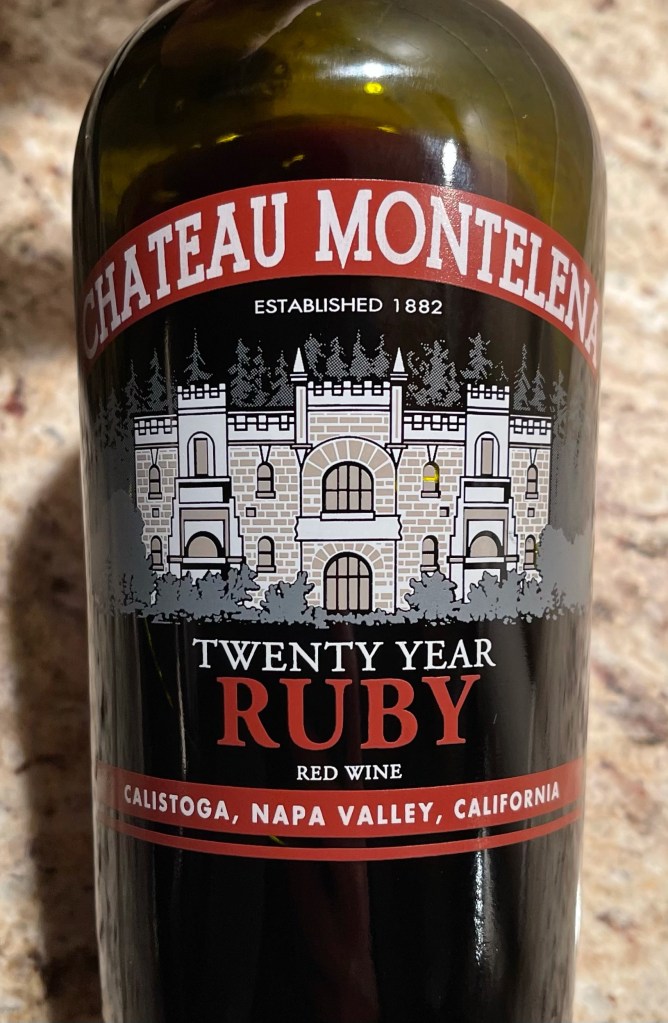
Today’s Wine: Twenty Year Ruby

100% Syrah; 20.3% ABV

The Twenty Year Ruby is translucent medium ruby to deep garnet in color. The nose is rather beautiful and surprisingly complex, showcasing aromas of bing cherry, raspberry liquor, strawberry shortcake, licorice, spice cake, chocolate, hazelnut, almond, baking spice, and vanilla. Meanwhile the palate offers equal depth with notes of orange peel, cranberry, red plum, red licorice, fig, anise, caramel, mint, chocolate, and clove. This is full-bodied with high acidity, light tannins, and a long finish. An outstanding and fun wine, though only available to Chateau Montelena club members in California or with visits to the winery.

Price: $125 (club price). I don’t think I can call this 500ml a great value at $125 each, however it is a delicious wine and surpassed all expectations I had for it. If you’re in the Montelena club, why not give it a try.
Classic Napa Cab With Some Age on It

Today’s Story: Silver Oak

Silver Oak was established in 1972 by friends Ray Twomey Duncan, a Colorado entrepreneur, and Justin Meyer, a winemaker who trained at the famous Christian Brothers Winery. The two shared a vision of focusing solely on Cabernet Sauvignon and aging their wines in strictly American oak to produce a Napa Cabernet Sauvignon built for cellaring. Silver Oak quickly grew out of their dairy barn and inaugural 1,000 case release, climbing over the following decades to become one of the top selling restaurant wines around the country. Though Justin Meyer retired in 1994 and sold his shares to the Duncan family in 2001, winemaker Daniel Baron picked up the reigns having studied Justin’s ways and Silver Oak continued to make consistent wines. Nate Weis has been winemaker since 2014, and to this day Ray’s sons David and Tim Duncan own and operate the winery.

Silver Oak consists of over 400 acres of vineyards between Napa Valley and Alexander Valley, all of which grow under sustainable viticulture practices. The vineyard management and winemaking teams are both delicate in changes that occur in the vineyards, but they also use a great deal of science and historical accounting in deciding when to pick the fruit. Silver Oak practices Berry Sensory Analysis, using tools to discover and analyze the sugar, acid, pH, and flavor of the fruit in addition to its pulp, seeds, skin, and texture. Coupled with catalogued details of each vineyard and block going back several decades, Silver Oak can pick at optimal ripeness for the wine they want each vintage.

In the cellars, the Silver Oak winemaking team led by Nate Weis prides themselves on producing consistent and high-quality Cabernet Sauvignon using both science and art. With only three winemakers in the history of Silver Oak (with overlap between each “changing of the guard”), it’s no surprise that Silver Oak offers a similar profile vintage after vintage. Interestingly, Silver Oak blends their young wines before aging and therefore they get an image of what the wine will be like before going into oak and picking up any characteristics of the wood. After nearly five years of barrel and bottle aging, Silver Oak releases their wines which are both enjoyable in their youth and have the structure to age for several decades in the cellar.

Fun Fact: Silver Oak owns their own barrel cooperage in Higbee, Missouri and I highly suggest taking a scroll through the images and barrel-making process on the website here.

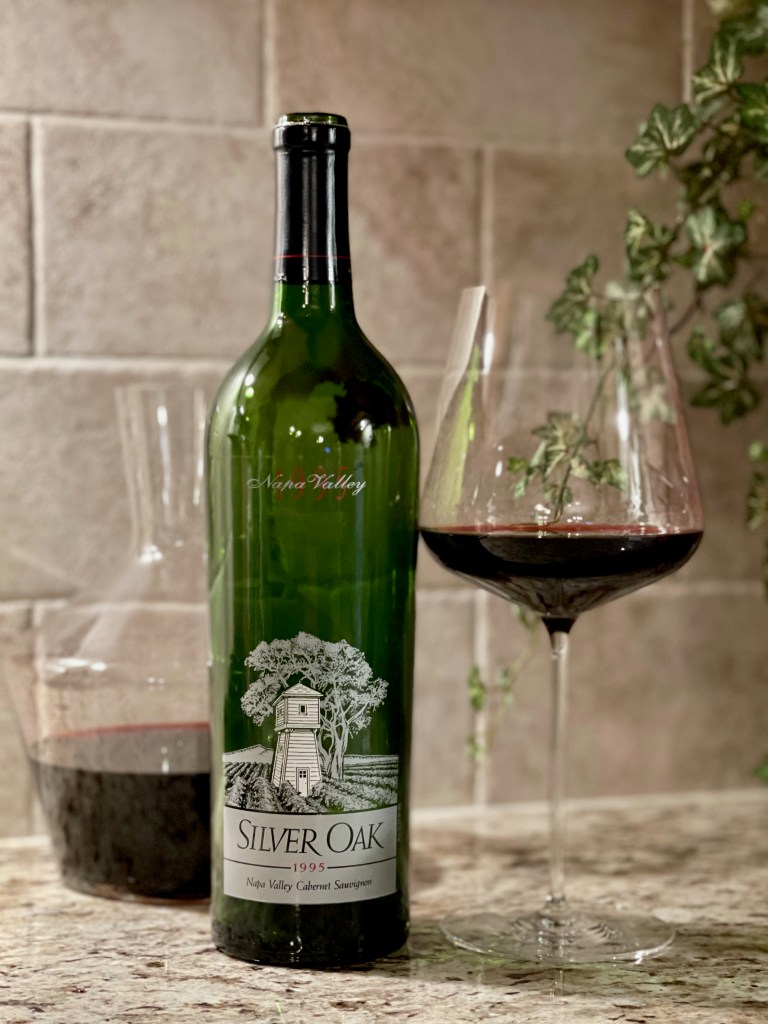
Today’s Wine: 1995 Napa Valley Cabernet Sauvignon

96% Cabernet Sauvignon, 3% Cabernet Franc, 1% Petit Verdot; 13.3% ABV

The 1995 Napa Valley Cabernet Sauvignon is deep garnet in color with ruby hues. There’s absolutely no bricking yet, and the wine is somewhat translucent. I decanted this for an hour or so, but in reality this was singing as a pop-and-pour. The nose showcases aromas of black plum, juicy blackberry, redcurrant, blueberry, licorice, forest floor, and cigar box with that classic Silver Oak clove and vanilla. On the palate, I get notes of black cherry, cassis, plum, tilled earth, green underbrush, cracked black pepper, cedar, and more Silver Oak vanilla and oak. This is medium-bodied with medium acidity, medium (+) but integrated tannins, and a medium (+) finish. Drink up if you have it.

Price: $135 (shared by a friend). I always struggle to call Silver Oak a great value wine, largely because every vintage tastes very similar and these fit more into the “people pleasing” camp of wines. The one thing you can credit Silver Oak with is consistency, but I think there are more exciting wines for the price. All depends what you want out of a Napa Cab.

Lightning in a Bottle

Today’s Story: Ceritas Wines

I previously wrote about Ceritas back in June when I reviewed the 2017 Porter-Bass Vineyard Pinot Noir, and more recently when I reviewed the 2016 Peter Martin Ray Vineyard Cabernet Sauvignon. As these wines can be hard to come by off the mailing list or in restaurants, I jumped at the opportunity to revisit them again today.

Ceritas Wines is a small, family-owned winery spearheaded by husband and wife duo John and Phoebe Raytek. John and Phoebe source their fruit from trusted vintners mainly in the West Sonoma Coast and Santa Cruz Mountains, with all sites practicing sustainable or organic viticulture. John is highly involved in the vineyards they source from, and in many cases the vintners only sell fruit to Ceritas and are labeled “Monopoles.” Considering himself a winemaker of the Old World style, John believes that fruit should lead the way throughout the winemaking process and he is merely there to watch over, listen, and learn about each unique site. In the cellar, John practices minimal intervention but “flexible” winemaking, with the wines meant to showcase with honesty and transparency the terroir of each specific vineyard site.

Today’s Wine: 2016 Trout Gulch Vineyard Chardonnay

100% Chardonnay; 12.5% ABV

The 2016 Trout Gulch Chardonnay is transparent medium gold/yellow in color with water white variation along the edges of the glass. When I first pulled the cork, I felt like I was in Chassagne or Puligny, however given 30-45 minutes to open up this wine transported me to Chablis and I never wanted to leave. The nose is one that could bring a tear to a glass eye, showcasing aromas of lemon curd, Golden Delicious apple, ripe pear, stone fruit, white wildflower, flint rock, white smoke, shaved vanilla bean, cream, saline solution, and briny mineral. And if you haven’t already, break out the tissues because the palate displays notes of yellow apple, quince, lemon and lime zest, peach, white florals, incense, dill, limestone, wet slate, seashell, saline mineral, and white exotic spice. This is medium-bodied with high acidity (which I’ll touch on in a second), a perfectly rounded mouthfeel, and a long finish of about 1 minute. While a chuggable wine, you would immediately regret “wasting” something so pure if you went that route. Oh and yes, the wine’s acidity demands that I address it alone. Is it racy like a Formula 1 car heading to the finish? Is it like sucking on a mouthful of razor blades? Is it like drinking liquid lightning? Or is it perhaps all of the above? Please, you tell me. But while I wait, at risk of attack, I’ll say this is probably the greatest domestic Chardonnay I’ve ever had.

Price: $80. Just buy it if you get the chance.

Magnificent Old-School Napa Cab

Today’s Story: Ceritas Wines

I previously wrote about Ceritas back in June when I reviewed the 2017 Porter-Bass Vineyard Pinot Noir. As these wines can be hard to come by off the mailing list or in restaurants, I jumped at the opportunity to revisit them again today.

Ceritas Wines is a small, family-owned winery spearheaded by husband and wife duo John and Phoebe Raytek. John and Phoebe source their fruit from trusted vintners mainly in the West Sonoma Coast and Santa Cruz Mountains, with all sites practicing sustainable or organic viticulture. John is highly involved in the vineyards they source from, and in many cases the vintners only sell fruit to Ceritas and are labeled “Monopoles.” Considering himself a winemaker of the Old World style, John believes that fruit should lead the way throughout the winemaking process and he is merely there to watch over, listen, and learn about each unique site. In the cellar, John practices minimal intervention but “flexible” winemaking, with the wines meant to showcase with honesty and transparency the terroir of each specific vineyard site.

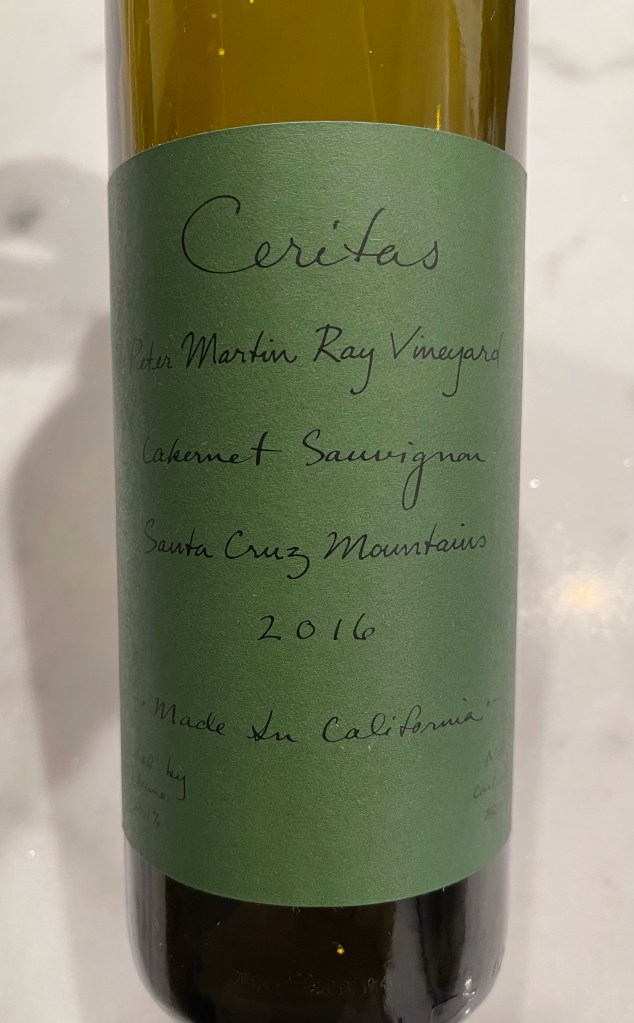
Today’s Wine: 2016 Peter Martin Ray Vineyard Cabernet Sauvignon

100% Cabernet Sauvignon; 13.1% ABV

The 2016 Peter Martin Ray Cabernet Sauvignon is medium to deep ruby in color with purple hues. Though nearly opaque, it is still lighter in the glass than I was imagining. I decanted this bottle for about 5 hours, checking in on it every hour or so, and drank it over the following 2-3 hours. The nose is gorgeous yet refined, showcasing aromas of blackberry, black raspberry, redcurrant, violets, cigar box, pine, mint, crushed rock, dried underbrush, pepper, and just a hint of oak. Moving onto the palate, I get notes of black cherry, blueberry, pomegranate, dried tobacco, licorice, scorched earth, graphite, dried green herbs, sage, and mild chocolate. The wine is medium- to full-bodied with medium (+) acidity, medium (+) but refined tannins, and a long finish. This is an exquisite old-school and traditional Napa Cab that, while beautiful now, certainly has the legs to go another couple decades.

Price: $100. I think this is a great value Napa Cab that drinks like some of the $200 bottles I’ve had. While most “modern day” Napa Cab drinkers may not like this or may not appreciate it because it is so old-school and not what they are used to, the quality, elegance, and longevity of this wine is profound. Excited to revisit this in probably 5 years.

Wonderful Napa Chardonnay for a Special Occasion

Today’s Story: Kongsgaard Wine

Kongsgaard Wine is a boutique family-owned and operated winery established in 1996 by John and Maggy Kongsgaard. However, John and Maggy (who unfortunately passed away earlier this year) are fifth generation Napa natives and began planting The Judge vineyard during the 1970s on land owned by the Kongsgaard family since the 1920s. The Judge vineyard today consists of about 10 acres, with the original 8 of Chardonnay augmented by 1 acre of Roussanne and Viognier in 1995 and 1 acre of Cabernet Sauvignon in 2001. Kongsgaard further expanded in 2004 by purchasing estate vineyards high up on Atlas Peak, and the family directs farming on additional acreage in Carneros through long-term leasing agreements. With the estate vineyards known for incredibly rocky soils, difficult elevation, and ultra-low yields, the fruit is generally very intense and concentrated.

A student of traditional European winemaking and Michel Rolland, John crafts his wines with incredible patience and a hands-off mentality in the cellar. John barrel ferments his wines (which sometimes takes up to an entire year) and does not add any yeast or bacteria. Further, John adds little to no SO2 and lets his wines rest in oak barrels for two years. Though the wines do see extensive time in oak, due to the intensity and concentration of the fruit oftentimes the oak comes into the wine only as a background or afterthought and not as an overbearing influence common in many modern Napa Chardonnays. John’s wines are bottled unfined and unfiltered, and they are known for their power and intensity in youth but have the ability to age for decades down the road.

John’s wines are born from passion and great care, with production limited to what he and his son Alex can make largely by hand. Kongsgaard bottles The Judge Chardonnay, a second Chardonnay, Cabernet Sauvignon, Syrah, a Viognier and Roussanne blend, and Sauvignon Blanc. Total production is around 3,300 cases.

Fun Fact: John is famous for creating the first unfiltered Chardonnay in California during his winemaking stint at Newton from 1983 to 1996.

Today’s Wine: 2018 Chardonnay

100% Chardonnay; 14.1% ABV

The 2018 Chardonnay is transparent medium to deep gold in color. I know this is downright infanticide with this wine, but after about an hour of air I was actually blown away by how expressive it is already. Starting with the nose, I get aromas of yellow apple, golden pear, stone fruit, white wildflower, matchstick, light smoke, flint, crushed rock, and a hint of oak. While quite big and downright opulent on the palate, this is much more approachable and deeper than I was expecting with notes of peach, yellow apple skins, snap pea, ginger spice, honeysuckle, hazelnut, flint, a hint of butter, and toasted oak. This is medium- to full-bodied with medium acidity, a very well-rounded and opulent mouthfeel, and a long finish. I’d still say give it a few more years, but it is nice to know that it’s quite approachable after some time decanting. 2,200 cases produced.

Price: $125 (looks like $100 if you’re a member). This is a very tough price point for me to discuss value without some trouble, particularly because there are a number of white Burgundies that punch at this point for the same price or slightly less. HOWEVER, to augment your cellar or tasting experience with some high quality Napa Chardonnay (one of the best I’ve had) I would certainly buy this again. It has incredible depth and those gorgeous but hard to find matchstick and flint characteristics, all while being in my opinion still a few years too young! Would love to try this again in the future.

Powerful Yet Beautiful Amador County Syrah

Today’s Story: Favia Wines

I seem to be in a trend right now of revisiting wineries I previously wrote about, with my last post on Favia being in December of last year for their 2013 Linea Sauvignon Blanc.

Favia was founded in 2003 by viticulturist Annie Favia and winemaker Andy Erickson, a husband and wife duo. Annie has experience working with John Kongsgaard and Cathy Corison, though her viticulturist expertise came working under David Abreu. Andy also has an extensive resume, which includes winemaking stints at Screaming Eagle, Dalla Valle, Ovid, Harlan Estate, and Staglin amongst others. Andy also consults for Arietta, Mayacamas, and Dancing Hares Vineyard.

I had an opportunity to visit Favia for a tour and tasting last year, and it truly is a special experience. Annie and Andy live on the property in a home built in 1886 for the Carbone family, who are believed to be the first Italian immigrants to Napa Valley. Though modernized, Annie and Andy restored the home using historical documents alongside other structures on the property. A very cool feature, the cellar sits under the family home and Favia stores their wine right where they live. Strong believers in biodynamic practices and caring for the earth, Annie and Andy planted fruit trees, an olive orchard, and a garden (which we got to try a tomato from) in addition to the existing walnut orchard.

I highly suggest a visit to Favia if you take a trip to Napa Valley, as it’s a very small, unique tasting experience and is not too far from downtown Napa. In the meantime, check out their website here to browse their wines and see incredible pictures of the property.

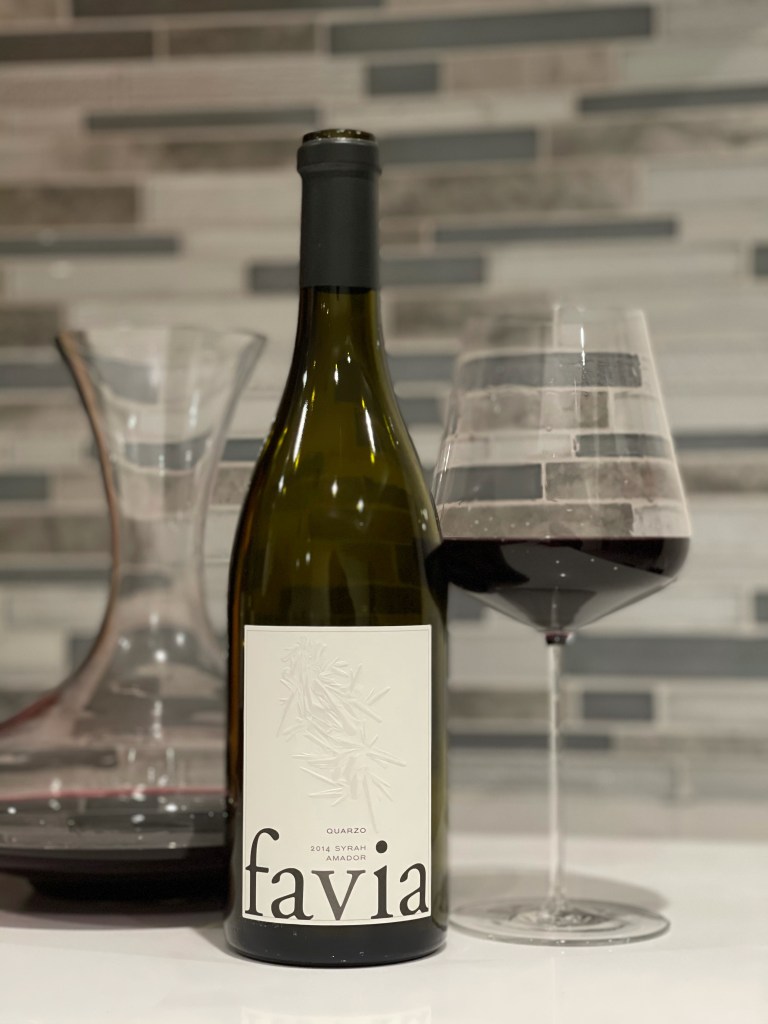
Today’s Wine: 2014 Quarzo Syrah

100% Syrah; 14.8% ABV

The 2014 Quarzo Syrah is opaque deep purple in color, though nearly black with fairly heavy staining. After about 45 minutes in the decanter, this really opened up nicely and the nose showcases aromas of blackberry compote, rich black plum, blueberry, black licorice, dried tobacco leaf, rocky earth, slight baking spice, and mild oak. There is some slight heat there too, but it’s not incredibly noticeable and should hopefully fully integrate with another couple years in bottle. On the palate, this classic Syrah offers notes of inky blackberry, black plum, black cherry, anise, tobacco, damp earth, slate, green peppercorn, and chocolate. This is full-bodied with medium acidity, medium (+) but polished tannins, and a long finish.

Price: $70. I think this wine is very appropriately priced based on its quality and true to variety form. This is a classic California Syrah that is big and bold yet beautiful with great depth. Andy and Annie’s wines are always enjoyable, and I also highly recommend a visit to the winery next time you are in Napa Valley.

High Quality Sauvignon Blanc From Coombsville

Today’s Story: Realm Cellars

Realm Cellars is a winery I previously wrote about and will most likely write about again based on my experiences with their wines. You may recall my notes on the 2016 The Bard (one of my earliest posts) or my 2013 The Tempest if you’ve been around since early this year.

Realm was founded in 2002 with a focus on producing high-quality, limited production Bordeaux blend and single vineyard Cabernet Sauvignon wines. Co-Founder Juan Mercado left his role as a hospital administrator in San Francisco to pursue working in the wine industry and, until recently, Realm sourced their fruit from historical, high-quality vineyards (like Dr. Crane, To Kalon, and Farella) rather than growing their own. Juan runs the winery with Managing Partner Scott Becker, they have an excellent winemaker in Benoit Touquette, and Michel Rolland consults.

One of my favorite aspects of Realm (more a “that’s really cool” kind of thing) is their inspiration from Shakespeare. For example, the title of my blog post on the 2016 The Bard starts the line “This blessed plot, this earth, this realm” from Shakespeare’s Richard II, a line noted on every bottle of Realm wine, on their corks, and highlighted on the label of The Bard. Realm’s Bordeaux blends include The Tempest, named for the violent storm and play thought to be one of Shakespeare’s last; Falstaff, named for the fat, vain, boastful, and cowardly knight present in four of Shakespeare’s plays for comic relief; and of course The Bard, named for Shakespeare himself. Each wine highlights a particular variety, ranging from Merlot to Cabernet Franc to Cabernet Sauvignon, respectively.

As far as their single vineyard wines go, Realm produces Farella (100% Cabernet Sauvignon), Houyi (100% Cabernet Sauvignon), Beckstoffer Dr. Crane (95% Cabernet Sauvignon, 5% Petit Verdot), Beckstoffer To Kalon (100% Cabernet Sauvignon), Moonracer (Cabernet Sauvignon dominant blend), and a white wine called Fidelio (Sauvignon Blanc). As I mentioned in the beginning of this post, recently Realm started producing wine from their own fruit which is where Moonracer comes in. This wine comes from their vineyard on Wappo Hill in the Stags Leap District and is named for the Wappo Native Americans who were known for bravery, strength, and athleticism. The Wappos often took part in (and are said to have won most) inter-tribal races during a full moon, hence the name Moonracer.

Today’s Wine: 2019 Fidelio Sauvignon Blanc

100% Sauvignon Blanc; 14.1% ABV

The 2019 Fidelio is transparent pale to medium straw yellow in color with greenish hues near the rim of the glass. This is a gorgeous wine, with aromas of tangerine, lime, white peach, pineapple, freshly cut grass, saline mineral, and hazelnut leaping from the glass. Upon tasting, the wine showcases notes of grapefruit, peach, lemon zest, mango, tropical citrus, crushed rock minerality, cream, and slight spice all wrapped up into a plush and sexy mouthfeel. This Sauvignon Blanc is medium-bodied with vibrant, mouthwatering acidity into a long, tantalizing finish.

Price: $70. While very hard for me to call this a good “value” wine because it is a very expensive California Sauvignon Blanc, I do think the price is justified here. This seems to be a wine Realm put a lot of thought and effort into (after consulting Andy Erickson on vineyard selection) and it shows. I would put this up there with some of my favorite California Sauvignon Blancs in a heartbeat.

Top Notch Pinot From a Historic Cali Vineyard

Today’s Story: Chanin Wine Co.

I previously wrote about Chanin back in April and May when I reviewed the 2014 Duvarita Vineyard Pinot Noir and 2015 Bien Nacido Vineyard Chardonnay. However, the Bien Nacido Pinot has been on my radar for some time and I am excited to taste it today.

Chanin Wine Co. was established in 2007 by winemaker Gavin Chanin, and his goal is to produce single vineyard Pinot Noir and Chardonnay from Santa Barbara County. Gavin selected the vineyards to source his fruit based on their organic (or at minimum sustainable) farming practices while also seeking older vines. The current vineyard selections include Sanford & Benedict in the Sta. Rita Hills, Los Alamos between the Santa Maria and Santa Ynez Valleys, Bien Nacido in the Santa Maria Valley, and Duvarita just west of the Sta. Rita Hills. Gavin eschews higher alcohol levels in his wines to foster balance and finesse, while practicing gentle winemaking methods and avoiding additives such as commercial yeasts, bacteria, and enzymes. All of Chanin’s wines are bottled unfiltered and the labels feature his own artwork.

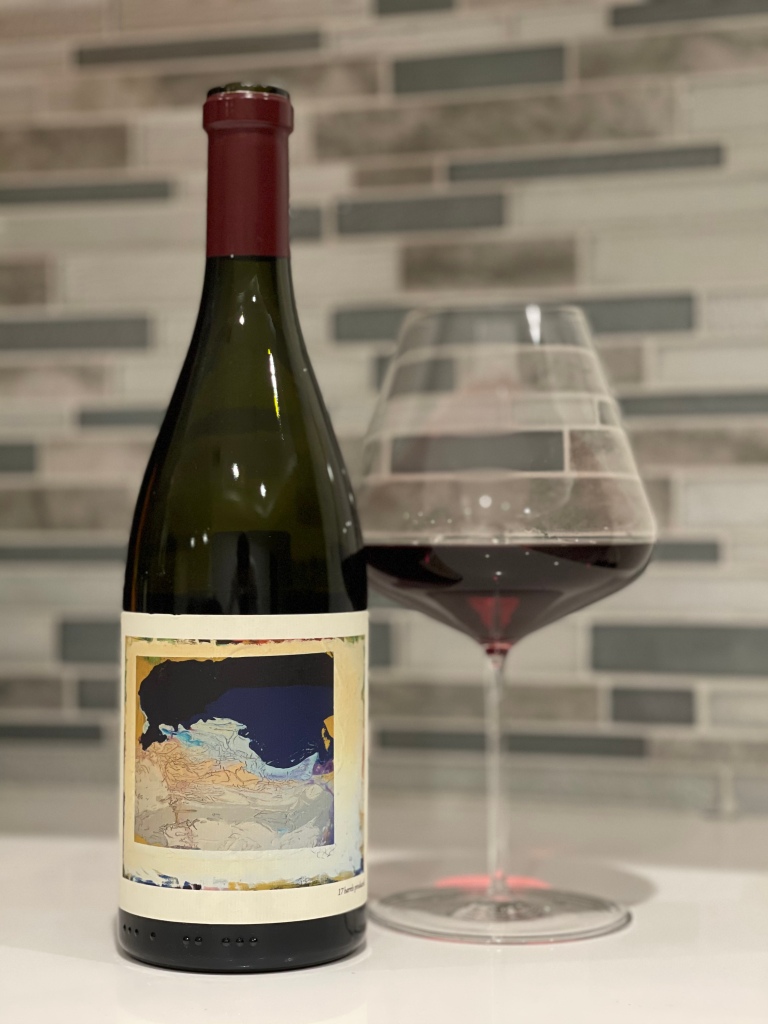
Today’s Wine: 2015 Bien Nacido Vineyard Pinot Noir

100% Pinot Noir; 13% ABV

The 2015 Bien Nacido Vineyard Pinot Noir is translucent pale ruby in color. Once this opens up, the nose showcases aromas of baked cherry, black raspberry, brambly strawberry, rose, forest floor, dried green herbs, and mint. Meanwhile on the palate, I get notes of ripe red cherry, crunchy cranberry, boysenberry, sweet tobacco, sous bois, underbrush, and cinnamon. This is light- to medium-bodied with medium (+) acidity, medium (-) tannins, and a medium (+) length finish. 17 barrels produced.

Price: $55. I’d call this wine very appropriately priced, with an inclination to say it punches above its price due to the gorgeous purity of fruit, balance, and elegance. While distinctly Californian thanks to the ripe fruit character, the Burgundian flair and more traditional winemaking help this shine versus the competitors.

Revisiting One of My Favorite California Chardonnay Bottlings

Today’s Story: Whitcraft Winery

Whitcraft is one of my favorite California wineries, and I previously wrote tasting notes for their 2016 Pence Ranch Clone 828 Pinot Noir and 2018 Stolpman Vineyard Grenache.

Whitcraft is a small, family-owned and operated winery in Santa Barbara, CA known for their traditionally made and “unadulterated” Pinot Noir and Chardonnay. Established in 1985 by Chris and Kathleen (Barnato) Whitcraft, the winery started as a passion for both the craft of winemaking and the lifestyle. Chris learned from California greats including Joe Heitz, Dick Graff, and Burt Williams while simultaneously hosting a radio show about wine from 1978 to 1989. Chris and Kathleen’s son Drake joined the family winery and took over in 2007, maintaining the traditional practices of hand-harvesting, foot-pressing, no added enzymes, and native yeast fermentation. Whitcraft’s wines are pure, well-balanced, and honest representations of the fruit and terroir, often remaining low in alcohol and not seeing much added SO2. Drake hand fills and corks his wines, with production incredibly limited and often reserved for mailing list clients or restaurants. Though Chris passed away in 2014, his vision and passion live on through Drake to this day.

Today’s Wine: 2016 Presqu’ile Vineyard Chardonnay

100% Chardonnay; 12.27% ABV

The 2016 Presqu’ile Vineyard Chardonnay is transparent medium to deep gold in color. This wine certainly blossoms with time in the glass, with the nose opening to showcase aromas of ripe golden pear, lemon curd, stone fruit, white lily, dried vanilla, flint, and crushed rock minerality. Once on the palate, I get notes of green apple skins, lime zest, tropical citrus, honeysuckle, limestone, and saline mineral. This Chardonnay is medium-bodied with gorgeous and vibrant medium (+) acidity, a plush and somewhat oily mouthfeel, and a long, refreshing finish.

Price: $45. As with the majority of Whitcraft I drink, I find this wine to be a great value. The restrained beauty here coupled with the purity of fruit and palpable respect for terroir is profound, coming across in a very Burgundian style. Definitely snag one or two bottles if you come across it.

Everyday Drinking Syrah

Today’s Story: The Paring

I previously wrote about The Paring when I reviewed their 2015 Red Blend, but I wanted to revisit the brand for the Syrah today.

The Paring is like a “little sister” to Jonata and The Hilt, both wineries I wrote about previously, and is produced from blocks that are either too young or not stylistically aligned with its big sisters. As I mentioned in previous posts, Jonata and The Hilt are sister wineries of Screaming Eagle through a shared owner in Stan Kroenke who also owns the LA Rams and other sporting teams. Jonata excels with Rhône and Bordeaux varieties while The Hilt commands Pinot Noir and Chardonnay, providing the basis for the Paring portfolio which includes a Bordeaux Blend, Syrah, Sauvignon Blanc, Chardonnay, Pinot Noir, and Rosé of Pinot Noir. Fruit for The Paring is sourced primarily from the Ballard Canyon, Sta. Rita Hills, and Santa Maria Valley regions of Santa Barbara, and the winery also shares its skilled winemaker Matt Dees with Jonata and The Hilt.

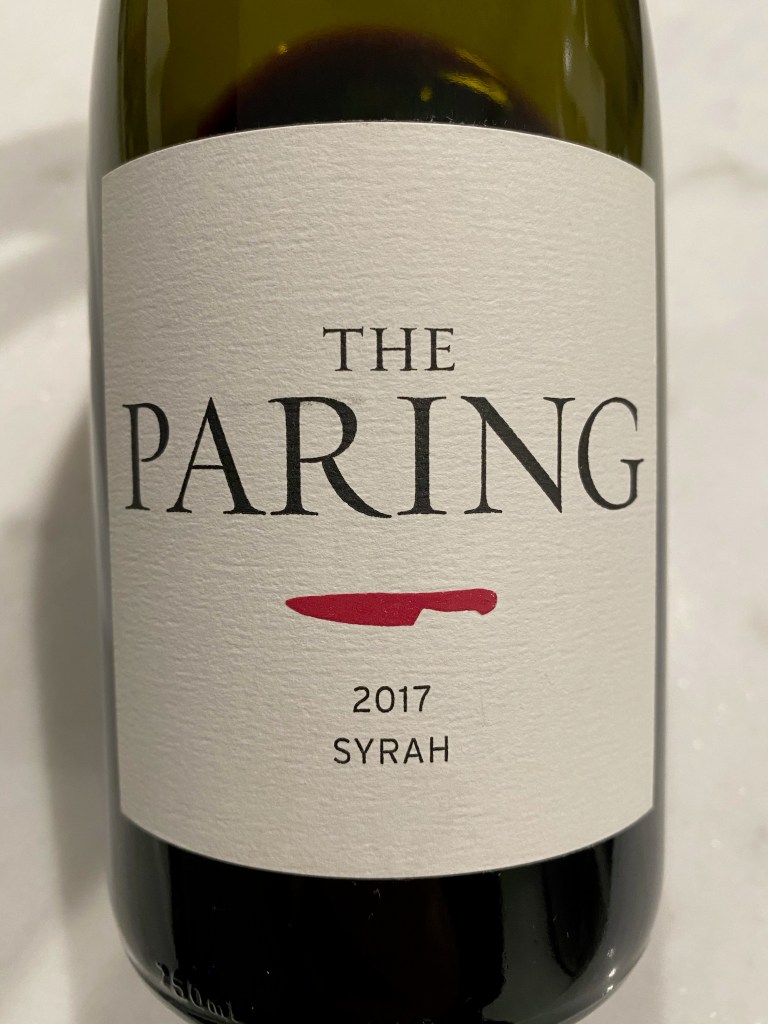
Today’s Wine: 2017 Syrah

100% Syrah; 14.4% ABV

The 2017 Syrah is opaque deep purple in color with heavy staining on the glass. Once this opens up, the nose showcases aromas of blackberry compote, blueberry, plum, sweet tobacco, wet gravel, baking spice, and oak. On the palate, I get notes of blueberry pie, candied black plum, black raspberry, underbrush, charred earth, slate, asphalt, and oak. This wine is full-bodied with medium (+) acidity, grippy high tannins, and a long finish.

Price: $25. This is a classic California Syrah built for everyday drinking, and I think the price is perfectly fit for it. While certainly young and drinking more like a people-pleaser’s Syrah today, this would go great with food.