Young but Beautifully Linear Napa Chardonnay

Today’s Story: Arnot-Roberts

I previously wrote about Arnot-Roberts when I reviewed their 2016 Que Syrah Vineyard and 2018 North Coast Trousseau. I enjoyed both wines so much, I wanted to try a (young) Chardonnay today.

Arnot-Roberts is a boutique winery established in 2001 by Duncan Arnot Meyers and Nathan Lee Roberts, two childhood friends who grew up together in Napa Valley. After college, Nathan started working with his father as a cooper of oak wine barrels while Duncan pursued winemaking throughout Napa and Sonoma counties. Arnot-Roberts began with a single barrel of wine the duo produced in their basement and over time grew through the purchase of fruit from renowned vineyards in Napa, Sonoma, El Dorado, and Amador counties as well as the Santa Cruz Mountains. When selecting vineyards, Arnot-Roberts makes sure the farmers are both “passionate and conscientious” because their goal is to produce small quantities of honest, terroir-driven single-vineyard wines which truly express their unique place. The winemaking style is a mix of Old World and New World, with use of indigenous fermentation, little or no new oak, and often whole cluster with the reds. The Chardonnays, one of which I am reviewing today, ferment in stainless steel and age in neutral oak.

Today’s Wine: 2018 Watson Ranch Chardonnay

100% Chardonnay; 12% ABV

The 2018 Watson Ranch Chardonnay is transparent medium golden yellow in color with greenish hues. This needs 1-2 hours of air in its youth, and I drank it over the following 2 hours or so. Once opened, the nose delivers aromas of golden apple, crisp yellow pear, lemon zest, honeysuckle, jasmine, light smoke, dry crushed stone, and saline mineral. Still tighter than the nose and requiring the full bottle to put together, the palate showcases notes of lemon, ripe yellow apple, stone fruit, mild dry green herbs, white wildflower, limestone, and vibrant minerality. There’s also a delicate earthiness to the wine that I think needs more bottle age to fully reveal itself. This is medium-bodied with vibrant and mouthwatering high acidity into a well-rounded and long finish. Best with another 3-5 years in bottle, but pretty hard to resist right now. 45 barrels produced.

Price: $40. I think this is a fantastic value Chardonnay, though it won’t be the wine for a lot of people. (There’s no butter here.) The Old World winemaking and boutique mentality are palpable in this bottle, pairing off nicely with the beautiful quality of fruit and precision in the final product.
Breathtaking Precision and Quality in a Bourgogne Blanc

Today’s Story: Domaine Vincent Dancer

Domaine Vincent Dancer is a small, rising star estate located in the village of Chassagne-Montrachet in Burgundy, France. Established by Vincent Dancer, the domaine consists of about 5-6 hectares under vine and was the first certified organic producer in Chassagne-Montrachet. Vincent is originally from Alsace, and though he studied engineering in school he picked up a passion for wine along the way. After some urging from his father, Vincent spent time in Burgundy to learn viticulture and oenology before taking over small acreage of family vines in 1996. Known as a quiet and humble winemaker, Vincent quietly expanded his vineyards and today has holdings in Chassagne-Montrachet, Meursault, Puligny-Montrachet, Pommard, and Beaune. A staunch proponent of hands-off winemaking, Vincent hand-harvests his fruit from fairly low yielding vineyards and refrains from adding any commercial yeasts, enzymes, or acid adjustments during natural fermentation. He also resists bâtonnage, the practice of stirring the lees which is practiced by many producers in Chassagne-Montrachet to add flavors, aromas, and texture to the wine. The wines are bottled unfined and unfiltered, with common descriptors of “tense,” “precise,” and “graceful.” Total production is I believe still under 2,000 cases annually, and not a lot of Vincent’s wines make their way to the US.

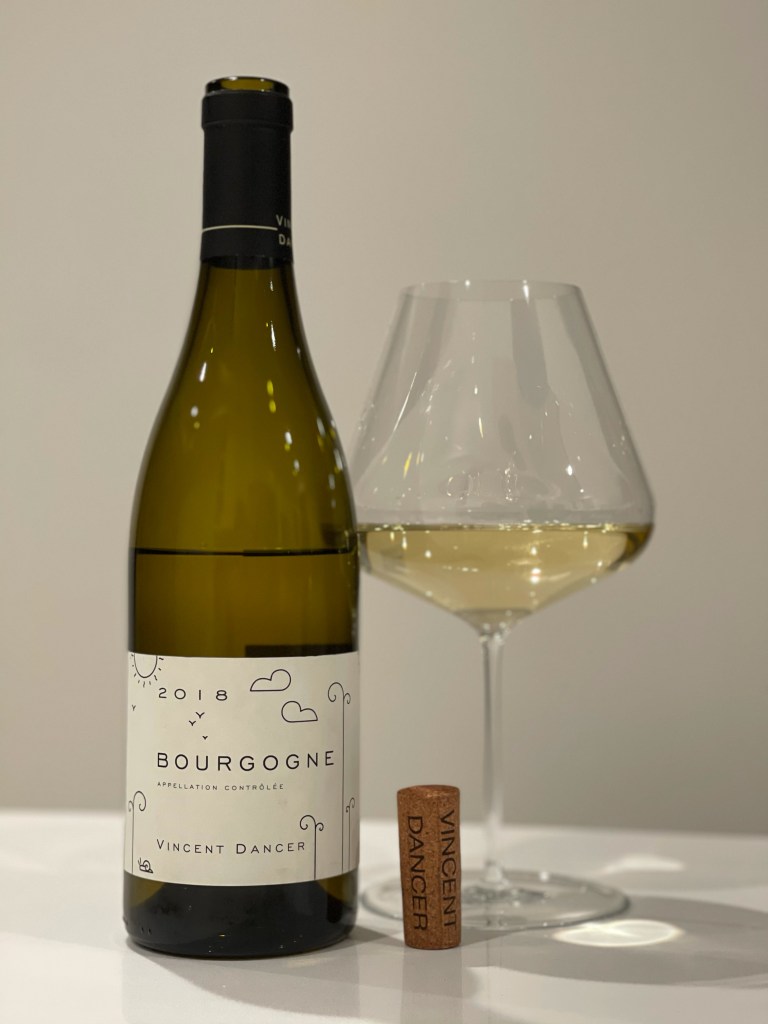
Today’s Wine: 2018 Bourgogne Blanc

100% Chardonnay; 12.5% ABV

The 2018 Bourgogne Blanc is a beautiful, transparent, pale gold in color turning water white near the edges of the glass. Now before the infanticide police come after me, I do have more of this which I am already laying down for at least 3-5 years and I did decant this wine for 2 hours. My inability to have patience is both reprimandable but rewarded. The nose steals the show at this stage, blossoming into aromas of peach, juicy pear, charred pineapple, cotton candy, freshly picked white florals, flint rock, gunpowder, smoke, toasted hazelnut, and lees. While the palate is a bit tougher to pull apart (I attribute it to youth), I can still decipher beautiful notes of golden apple, white peach, grapefruit zest, tropical citrus, limestone, freshly struck flint, dill, smoke, and dried vanilla. This is medium- to full-bodied with gorgeous high acidity, a fully-rounded and opulent mouthfeel, and a long, long finish that lasts for over a minute.

Price: $49 (about $10 cheaper in France). This is one of the greatest values I’ve had all year, and I truly do not think it will remain this price for long. I’ve read a lot of hype around Vincent Dancer and I can confidently say after tasting this young bottle (not easy for me to find anything older and I spent enough time tracking down 2018s) that what I read is true. Do not pass up an opportunity to buy Dancer’s wines.

Wonderful Napa Chardonnay for a Special Occasion

Today’s Story: Kongsgaard Wine

Kongsgaard Wine is a boutique family-owned and operated winery established in 1996 by John and Maggy Kongsgaard. However, John and Maggy (who unfortunately passed away earlier this year) are fifth generation Napa natives and began planting The Judge vineyard during the 1970s on land owned by the Kongsgaard family since the 1920s. The Judge vineyard today consists of about 10 acres, with the original 8 of Chardonnay augmented by 1 acre of Roussanne and Viognier in 1995 and 1 acre of Cabernet Sauvignon in 2001. Kongsgaard further expanded in 2004 by purchasing estate vineyards high up on Atlas Peak, and the family directs farming on additional acreage in Carneros through long-term leasing agreements. With the estate vineyards known for incredibly rocky soils, difficult elevation, and ultra-low yields, the fruit is generally very intense and concentrated.

A student of traditional European winemaking and Michel Rolland, John crafts his wines with incredible patience and a hands-off mentality in the cellar. John barrel ferments his wines (which sometimes takes up to an entire year) and does not add any yeast or bacteria. Further, John adds little to no SO2 and lets his wines rest in oak barrels for two years. Though the wines do see extensive time in oak, due to the intensity and concentration of the fruit oftentimes the oak comes into the wine only as a background or afterthought and not as an overbearing influence common in many modern Napa Chardonnays. John’s wines are bottled unfined and unfiltered, and they are known for their power and intensity in youth but have the ability to age for decades down the road.

John’s wines are born from passion and great care, with production limited to what he and his son Alex can make largely by hand. Kongsgaard bottles The Judge Chardonnay, a second Chardonnay, Cabernet Sauvignon, Syrah, a Viognier and Roussanne blend, and Sauvignon Blanc. Total production is around 3,300 cases.

Fun Fact: John is famous for creating the first unfiltered Chardonnay in California during his winemaking stint at Newton from 1983 to 1996.

Today’s Wine: 2018 Chardonnay

100% Chardonnay; 14.1% ABV

The 2018 Chardonnay is transparent medium to deep gold in color. I know this is downright infanticide with this wine, but after about an hour of air I was actually blown away by how expressive it is already. Starting with the nose, I get aromas of yellow apple, golden pear, stone fruit, white wildflower, matchstick, light smoke, flint, crushed rock, and a hint of oak. While quite big and downright opulent on the palate, this is much more approachable and deeper than I was expecting with notes of peach, yellow apple skins, snap pea, ginger spice, honeysuckle, hazelnut, flint, a hint of butter, and toasted oak. This is medium- to full-bodied with medium acidity, a very well-rounded and opulent mouthfeel, and a long finish. I’d still say give it a few more years, but it is nice to know that it’s quite approachable after some time decanting. 2,200 cases produced.

Price: $125 (looks like $100 if you’re a member). This is a very tough price point for me to discuss value without some trouble, particularly because there are a number of white Burgundies that punch at this point for the same price or slightly less. HOWEVER, to augment your cellar or tasting experience with some high quality Napa Chardonnay (one of the best I’ve had) I would certainly buy this again. It has incredible depth and those gorgeous but hard to find matchstick and flint characteristics, all while being in my opinion still a few years too young! Would love to try this again in the future.

Pure Beauty and Elegance in Puligny-Montrachet

Today’s Story: Domaine Leflaive

It’s hard to believe more than a year has passed since I reviewed Domaine Leflaive’s 1995 Bienvenues Bâtard-Montrachet, so revisiting this great estate is long overdue.

Domaine Leflaive is a very highly regarded winery located in Puligny-Montrachet, Côte de Beaune, Burgundy. While origins of the estate come as early as 1717 with Claude Leflaive, the winery as it is today seems to begin with Joseph Leflaive (1870-1953). Initially working as a naval engineer who helped develop the first French submarine, Joseph cared for his family’s vines in Puligny-Montrachet following his marriage. Thanks to phylloxera, many of the vines needed dramatic replanting and many of the produce at the time sold to wine merchants. Thus, in the 1920s, Joseph replanted the parcels of his estate and started selling wines under his own label.

When Joseph died in 1953, Domaine Leflaive came under the control of his four children (Jo, Vincent, Anne, and Jeanne) and the family desired to maintain the winery at the peak of excellence. Jo, an insurance underwriter by trade, took over the administrative and financial management of Domaine Leflaive while Vincent, an engineer who studied management and business, covered the vineyard, wines, and commercial side of the business. Over time, Domaine Leflaive produced some of the greatest white Burgundy wines and continues to be a family endeavor. In 1990, Vincent’s daughter Anne Claude became joint manager with Jo’s son Olivier and the two learned from Vincent until his death in 1993 and Anne Claude was named manager.

Much changed at the estate since the 1990s, though it is still run by the family. Today’s steward is Brice de La Morandiere, Anne Claude’s nephew and great-grandson of Joseph Leflaive. Brice’s largest contributions so far include the updating of historic buildings on the estate and enhancements to the winemaking process that include new corks to allow for prolonged aging of the Domaine’s wines.

To wrap up, I will leave you with a brief conversation on the farming and winemaking practices of Domaine Leflaive. Leflaive practices biodynamic farming in an effort to understand and appreciate all natural phenomena that ultimately strengthen the immunity of their vines. They tend to their soil with the use of products made from vegetable, animal, and mineral matter at certain points during the annual cycle, while working the land by tilling and scraping. Further, Leflaive practices organic cultivation of the vines. You can read more in-depth on their practices here.

Today’s Wine: 2007 Puligny-Montrachet

100% Chardonnay; 13% ABV

The 2007 Puligny-Montrachet is transparent and an absolutely gorgeous deep gold in color. Given some time to blossom in the glass, this stunner reveals aromas of golden pear, yellow apple, white peach, honeysuckle, toffee, flint rock, white pepper, hazelnut, brioche, butter, and vanilla cream. The complexity continues onto the palate with notes of crisp golden apple, ripe pear, lemon zest, white florals, almond, crème brûlée, honey, dill, chalk, and toasted oak. This is medium-bodied with racy medium (+) acidity and a well-rounded mouthfeel into a long, long finish.

Price: $200. This is one of those wines with a price tag that makes your eyes pop, however it reminds you of the greatness white Burgundy can be and that Leflaive produces. This could undoubtedly be a 1er Cru from a number of other producers, and is certainly worth the hit to your wallet.

Fun, Vibrant, and Confusing Oregon Chardonnay Blend

Today’s Story: Maloof Wines

Maloof Wines is a fun, lively, and somewhat exploratory winery established in 2015 by husband and wife duo Ross and Bee Maloof. Situated in Forest Grove, Oregon, Maloof produces single vineyard wines mainly with often overlooked white grape varieties sourced from their estate vineyard No Clos Radio or other vineyard partners. Before crafting these wines, Bee worked in the aerospace industry as a materials science engineer and Ross gained a penchant for winemaking first after working in dining establishments and later working a harvest in the Willamette Valley. As wacky as some might consider the wines (particularly after reading some of their entertaining tasting notes), the end goal is to produce fun, lighthearted wines through minimal intervention in order to showcase each unique vineyard site and its farmers.

I HIGHLY recommend visiting the Maloof Wines website here, especially to read through the fun and entertaining tasting notes on the “Wines” tab. The website also does a fantastic job discussing each farmer and vineyard they work with.

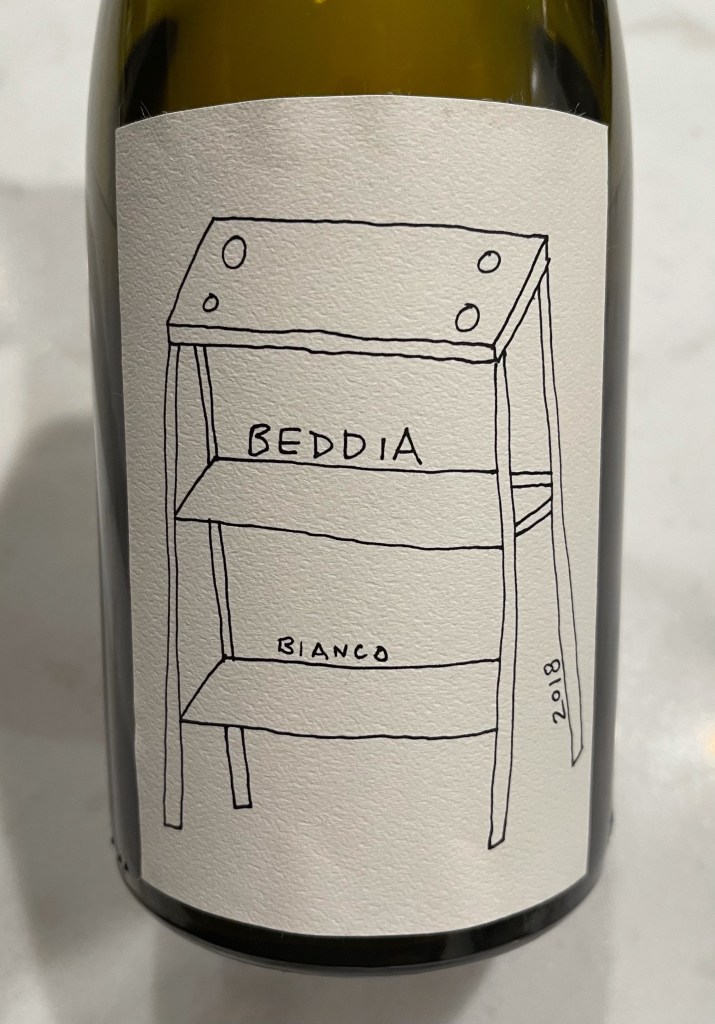
Today’s Wine: 2018 Beddia Bianco Chardonnay

85% Chardonnay, 15% Pinot Gris; 12% ABV

The 2018 Beddia Bianco is deep hazy gold/amber in color, actually reminiscent of an apricot. I must say this was a tough wine to taste at first, namely for the fact that upon first whiff you feel like you are about to enjoy an effervescent wine that really is not. Perhaps it’s the way this leaps from the glass with clean veracity and precision… Nonetheless, the nose does reveal captivating aromas of orange marmalade, marzipan, apricot, white florals, honey, finely crushed stone, and brioche. There’s some barnyard there too upon opening, but it largely blows off. Moving to the palate, I travel further into the adventure with notes of peach, yellow apple, melon, stone fruit, banana laffy taffy, snap pea, mineral, yeast, and lightly buttered toast. The wine is medium- to full-bodied with medium (+) acidity into a well-rounded long finish, leaving one both perplexed and yearning for that next sip. This is a very fun and weird wine. 81 cases produced.

Price: $32. This is a tough wine to discuss in regards to value, but I assure you that I cannot recommend it enough for the adventurous side of wine. Wines like this provide remembrance of the uniqueness, broadness, and power of the wine world which can help break up our often mundane tasting experiences. If you want something new and fun, look no further.

Revisiting One of My Favorite California Chardonnay Bottlings

Today’s Story: Whitcraft Winery

Whitcraft is one of my favorite California wineries, and I previously wrote tasting notes for their 2016 Pence Ranch Clone 828 Pinot Noir and 2018 Stolpman Vineyard Grenache.

Whitcraft is a small, family-owned and operated winery in Santa Barbara, CA known for their traditionally made and “unadulterated” Pinot Noir and Chardonnay. Established in 1985 by Chris and Kathleen (Barnato) Whitcraft, the winery started as a passion for both the craft of winemaking and the lifestyle. Chris learned from California greats including Joe Heitz, Dick Graff, and Burt Williams while simultaneously hosting a radio show about wine from 1978 to 1989. Chris and Kathleen’s son Drake joined the family winery and took over in 2007, maintaining the traditional practices of hand-harvesting, foot-pressing, no added enzymes, and native yeast fermentation. Whitcraft’s wines are pure, well-balanced, and honest representations of the fruit and terroir, often remaining low in alcohol and not seeing much added SO2. Drake hand fills and corks his wines, with production incredibly limited and often reserved for mailing list clients or restaurants. Though Chris passed away in 2014, his vision and passion live on through Drake to this day.

Today’s Wine: 2016 Presqu’ile Vineyard Chardonnay

100% Chardonnay; 12.27% ABV

The 2016 Presqu’ile Vineyard Chardonnay is transparent medium to deep gold in color. This wine certainly blossoms with time in the glass, with the nose opening to showcase aromas of ripe golden pear, lemon curd, stone fruit, white lily, dried vanilla, flint, and crushed rock minerality. Once on the palate, I get notes of green apple skins, lime zest, tropical citrus, honeysuckle, limestone, and saline mineral. This Chardonnay is medium-bodied with gorgeous and vibrant medium (+) acidity, a plush and somewhat oily mouthfeel, and a long, refreshing finish.

Price: $45. As with the majority of Whitcraft I drink, I find this wine to be a great value. The restrained beauty here coupled with the purity of fruit and palpable respect for terroir is profound, coming across in a very Burgundian style. Definitely snag one or two bottles if you come across it.

Burgundian Elegance From… New Zealand?

Today’s Story: Greywacke

Greywacke was established by Kevin and Kimberley Judd in 2009 in the Marlborough wine region of New Zealand. Though Greywacke itself is a young venture, Kevin is deeply rooted in the New Zealand wine world. After studying wine at Roseworthy College in Australia, he moved to New Zealand in 1983 to join Selaks Wines and later moved on to become the founding winemaker at Cloudy Bay. After 25 vintages leading Cloudy Bay, Kevin established Greywacke which is named for the layered sandstone and mudstone rocks that can be found throughout New Zealand. Greywacke’s fruit is sourced from vineyards in the central Wairau Plains and the Southern Valleys, while Kevin makes the wines themselves at Dog Point Winery in the lower Brancott Valley. Though Greywacke focuses on Pinot Noir and Sauvignon Blanc, they also release limited quantities of Chardonnay, Pinot Gris, Riesling, and Gewürztraminer.

To learn more about Greywacke and explore their range of wines, visit the website here (also the source of today’s information).

Today’s Wine: 2015 Chardonnay

100% Chardonnay; 14% ABV

The 2015 Chardonnay is transparent medium yellow in color with gold and slightly greenish hues. Given some time to blossom in the glass, the wine opens to display a nose of white peach, stone fruit, pineapple, matchstick, dill, lightly buttered popcorn, hazelnut, and vanilla. On the palate, we get notes of lemon zest, golden apple, crisp pear, white florals, slate, nuts, smoke, and brioche toast. This is a medium- to full-bodied Chardonnay with medium (+) acidity and a well-rounded mouthfeel leading into a long, mouthwatering finish. An absolutely gorgeous wine, and rather Burgundian in profile.

Price: $28 (typically closer to $40). At the price I paid, I’m very tempted to say this is perhaps the greatest value Chardonnay I’ve purchased to date. The purity and focus in this wine is outstanding for its price point (and well above it), while the Burgundian nature really makes me want to slip this into a blind tasting. Even at $40, this is certainly a wine I would add to my cellar.

Fresh, Vibrant, and Fun Coastal Chardonnay

Today’s Story: Lady of the Sunshine

Lady of the Sunshine was established in 2017 by Gina Hildebrand with a focus on Chardonnay, Sauvignon Blanc, and Pinot Noir sourced from organic and biodynamic vineyards in California’s Central Coast. Gina grew an appreciation and passion for wine growing up thanks to spending a lot of time at her family’s winery Narrow Gate Vineyards, though it also helped her discover the importance of biodynamic farming which her family also practices. With Lady of the Sunshine, Gina sources fruit from organically farmed vineyards at a minimum and, since early 2018, personally farms Chêne Vineyard and transitioned it to biodynamics with Demeter certification earlier this year.

When it comes to winemaking itself, Gina crafts fun wines meant to emphasize the terroir and her farming practices through minimal intervention in the cellar. All of the Lady of the Sunshine wines are fermented with native yeasts and see minimal sulfur additions in neutral oak. The wines are stirred from the lees only once for bottling, with all bottled unfined and unfiltered.

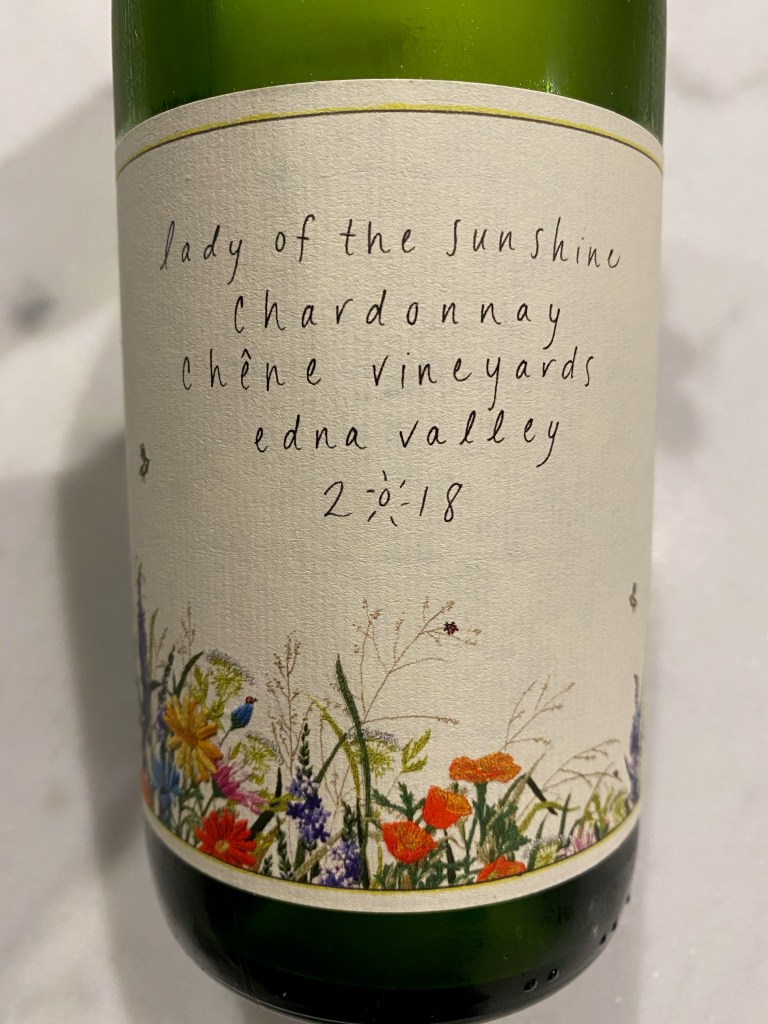
Today’s Wine: 2018 Chêne Vineyard Chardonnay

100% Chardonnay; 12% ABV

The 2018 Chêne Vineyard Chardonnay is transparent medium to deep gold in color. Given some time to open up in the glass, the wine showcases aromas of lemon citrus, crisp golden apple, stone fruit, white lily, brioche, flint rock, and saline mineral. Moving to the palate, I get notes of green apple, slightly underripe pear, baked pineapple, lime zest, olive oil, sea salt, and lightly toasted hazelnut and almond. This is medium- to full-bodied with vibrant high acidity, a plush and somewhat oily mouthfeel, and a long finish.

Price: $34. I think this is very fairly priced and it’s a very fun, clean, vibrant Central Coast Chardonnay. I really like how the low alcohol and minimal intervention winemaking makes this a true representation of the terroir and transports you to the coast.

Delightful Oregon Chardonnay With Burgundian Flair

Today’s Story: Lingua Franca

Lingua Franca was established in 2015 by Master Sommelier Larry Stone and his partners Dominique Lafon and winemaker Thomas Savre. Lafon is a legend of Burgundy in his own right, and his protégé Thomas Savre has many impressive names on his resume as well. Larry purchased Janzen Farm, which would become Lingua Franca, at the very end of 2012 and immediately set about planning for 23 vineyard blocks varying by rootstock and budwood. Though he and his team initially planned on selling fruit rather than making their own wine, Lafon suggested producing estate bottlings in 2014 and they officially began the endeavor in 2015 with Savre on board.

Lingua Franca puts vital importance on not only the vineyards themselves, but how they are cared for. Since its foundation, Lingua Franca farms using low-impact organic and biodynamic principles such as no-till farming and maintaining a permanent cover crop to improve soil biodiversity. Instead of using chemicals, the team encourages nesting of hawks, owls, foxes, and coyotes to fend off any unwanted visitors. When it comes to winemaking itself, Savre and team stick to Burgundian traditions and seek to produce wines truly representative of their place.

To learn more about Lingua Franca, the team, and the wines, I encourage you to visit their website here.

Today’s Wine: 2016 Avni Chardonnay

100% Chardonnay; 13% ABV

The 2016 Avni Chardonnay is transparent pale to medium gold in color with straw variation near the rim. Given some time to open up in the glass, the nose showcases aromas of golden pear, lemon zest, brioche, toasted almond, matchstick, limestone, and stony mineral. There are also some gorgeous herbal aromas. On the palate, the wine shows notes of lemon, stone fruit, crisp golden apple, apricot, mild smoke, flint rock, wet stone, and saline mineral. This is medium-bodied with mouthwatering high acidity and a plush, well-rounded mouthfeel into a long finish.

Price: $35. I think this is an outstanding value Chardonnay, standing up with some of the Chardonnays I’ve enjoyed for twice its price. This is also rather Burgundian in style, which helps the case with me!

Mouthwatering Single Vineyard Chardonnay

Today’s Story: Rivers-Marie

Last week I enjoyed the 2015 Silver Eagle Vineyard Pinot Noir from Rivers-Marie so much that I decided to revisit the producer for a Chardonnay.

To recap from my post last week, Rivers-Marie is a family-owned winery established in 2002 by husband and wife duo Thomas Rivers Brown and Genevieve Marie Welsh. Thomas and Genevieve work with vineyards throughout the Sonoma Coast (especially in Occidental-Freestone) and produce Pinot Noir and Chardonnay, with small amount of Cabernet Sauvignon from Napa fruit as well. All of the Rivers-Marie wines are meant to be refined and terroir driven, showcasing each unique vineyard site through single vineyard bottlings. This being said, they produce some appellation wines as well.

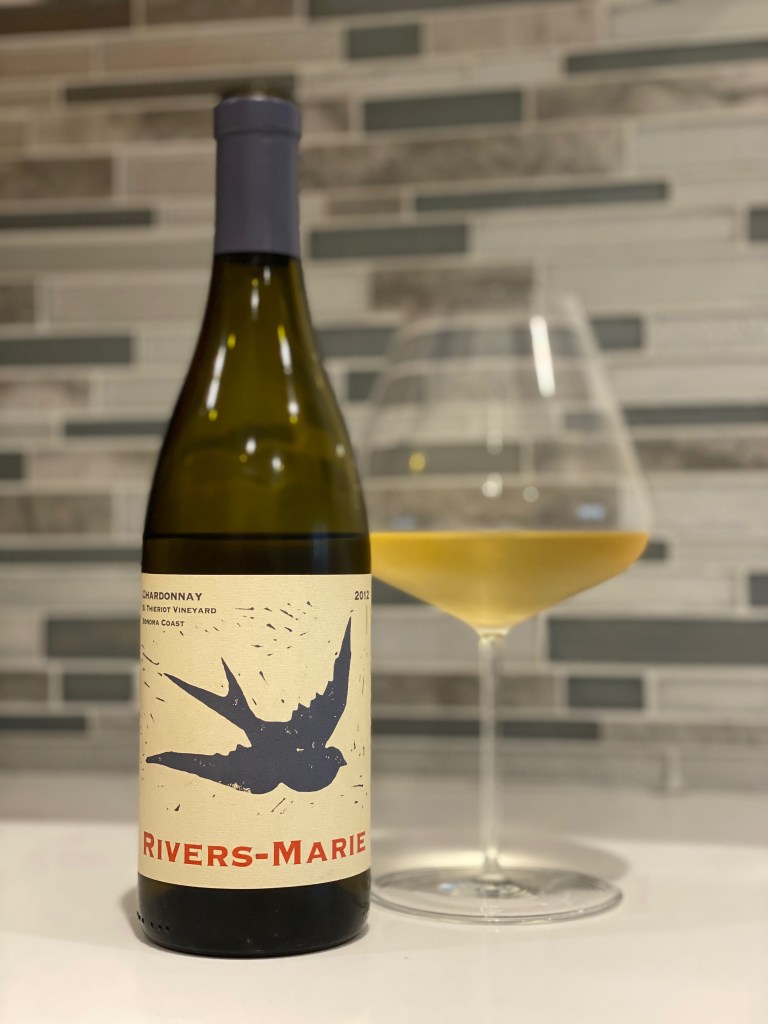
Today’s Wine: 2012 B. Thieriot Vineyard Chardonnay

100% Chardonnay; 13.8% ABV

The 2012 B. Thieriot Chardonnay is gorgeous deep gold in color and transparent. This was singing right out of the bottle but blossomed further as it opened in the glass and warmed slightly. The nose showcases aromas of golden apple, crisp pear, stone fruit, honeysuckle, flint, toasted nuts, sea shell, saline mineral, and dried vanilla bean. Once in the mouth, the wine displays notes of green apple skins, mango, lemon zest, tropical citrus, toffee, slight smoke, dill, wax, saline, and brioche. This is medium-bodied and well-rounded with high acidity and a long, lingering finish.

Price: $100. This is pricey for a California Chardonnay no doubt, but I would certainly buy this again. While clearly a California Chardonnay thanks to the fruit profile, there are a lot of characteristics of Burgundy here and both the quality and depth are compelling. Pair with roasted chicken, lobster, or asparagus and shaved hazelnut.