Young but Beautifully Linear Napa Chardonnay

Today’s Story: Arnot-Roberts

I previously wrote about Arnot-Roberts when I reviewed their 2016 Que Syrah Vineyard and 2018 North Coast Trousseau. I enjoyed both wines so much, I wanted to try a (young) Chardonnay today.

Arnot-Roberts is a boutique winery established in 2001 by Duncan Arnot Meyers and Nathan Lee Roberts, two childhood friends who grew up together in Napa Valley. After college, Nathan started working with his father as a cooper of oak wine barrels while Duncan pursued winemaking throughout Napa and Sonoma counties. Arnot-Roberts began with a single barrel of wine the duo produced in their basement and over time grew through the purchase of fruit from renowned vineyards in Napa, Sonoma, El Dorado, and Amador counties as well as the Santa Cruz Mountains. When selecting vineyards, Arnot-Roberts makes sure the farmers are both “passionate and conscientious” because their goal is to produce small quantities of honest, terroir-driven single-vineyard wines which truly express their unique place. The winemaking style is a mix of Old World and New World, with use of indigenous fermentation, little or no new oak, and often whole cluster with the reds. The Chardonnays, one of which I am reviewing today, ferment in stainless steel and age in neutral oak.

Today’s Wine: 2018 Watson Ranch Chardonnay

100% Chardonnay; 12% ABV

The 2018 Watson Ranch Chardonnay is transparent medium golden yellow in color with greenish hues. This needs 1-2 hours of air in its youth, and I drank it over the following 2 hours or so. Once opened, the nose delivers aromas of golden apple, crisp yellow pear, lemon zest, honeysuckle, jasmine, light smoke, dry crushed stone, and saline mineral. Still tighter than the nose and requiring the full bottle to put together, the palate showcases notes of lemon, ripe yellow apple, stone fruit, mild dry green herbs, white wildflower, limestone, and vibrant minerality. There’s also a delicate earthiness to the wine that I think needs more bottle age to fully reveal itself. This is medium-bodied with vibrant and mouthwatering high acidity into a well-rounded and long finish. Best with another 3-5 years in bottle, but pretty hard to resist right now. 45 barrels produced.

Price: $40. I think this is a fantastic value Chardonnay, though it won’t be the wine for a lot of people. (There’s no butter here.) The Old World winemaking and boutique mentality are palpable in this bottle, pairing off nicely with the beautiful quality of fruit and precision in the final product.

Beauty on Atlas Peak

Today’s Story: Acumen Wines

Acumen Wines is a boutique estate established by entrepreneur Eric Yuan on Atlas Peak in Napa Valley in 2012. Alongside founding winemaker Denis Malbec and acclaimed viticulturist Garrett Buckland, Eric purchased the 32 acre Attelas Vineyard (planted in 1992) high up on Atlas Peak. After the estate’s inaugural vintage in 2013, Acumen expanded in 2014 by purchasing the 84 acre Edcora Vineyard which sits 350 feet higher in elevation next to the famed Stagecoach Vineyard. Totaling 116 acres of certified organic vineyards, Acumen today crafts small amounts of Cabernet Sauvignon and Sauvignon Blanc modeled after the great, classic wines of the 1960s and 1970s. (They do have small blocks of Merlot, Malbec, Cabernet Franc, and Petit Verdot for blending as well.) Following the passing of the great Denis Malbec all too soon, Phillip Titus came in as winemaker and continues to make precise, well-structured wines in a classic style to showcase the brutal and rugged terroir of Atlas Peak.

Acumen produces two distinct “ranges” of wine, the PEAK bottlings and the Mountainside bottlings. The PEAK wines are produced in limited quantities from the best vineyard blocks and best barrels, offering a Sauvignon Blanc, Cabernet Sauvignon, and two single vineyard Cabernet Sauvignons (Attelas and Edcora). The Mountainside wines, on the other hand, are meant to open the estate to a wider audience of wine lovers and, at lower prices, include a Sauvignon Blanc, Red Blend, and Cabernet Sauvignon. To learn more about these wines or the estate itself, check out their website here.

Today’s Wine: 2013 PEAK Attelas Vineyard Cabernet Sauvignon

84% Cabernet Sauvignon, 11% Merlot, 2% Petit Verdot, 2% Cabernet Franc, 1% Malbec; 13.3% ABV

The 2013 Attelas Vineyard Cabernet Sauvignon is opaque deep ruby in color with nearly black hues in the bowl of the glass. I decanted this for about 3 hours, as it is incredibly youthful and should be gorgeous in 5-7 more years. The nose opens with aromas of blackberry, blueberry, plum, violet, anise, tobacco, dried earth, graphite, charred green herbs, mild baking spice, and a hint of oak. Meanwhile the palate showcases notes of blackcurrant, blueberry, black cherry, licorice, cigar box, scorched earth, gravel, coffee, chocolate, and a hint of ground pepper. This is medium- to full-bodied with medium (+) acidity, firm medium (+) tannins, and a long finish. 360 cases produced.

Price: $150 (I paid $70 on sale). While this is a fantastic wine with nothing but potential to get better, the $150 level is tough for me to call it a great value. The winery was even selling this for $225 not too long ago before they sold out… That being said, I would certainly pay $100-120 for this wine and the $70 I got it for is an absolute steal. Tremendous effort and another gorgeous wine from the late, great Denis Malbec.

Wonderful Napa Chardonnay for a Special Occasion

Today’s Story: Kongsgaard Wine

Kongsgaard Wine is a boutique family-owned and operated winery established in 1996 by John and Maggy Kongsgaard. However, John and Maggy (who unfortunately passed away earlier this year) are fifth generation Napa natives and began planting The Judge vineyard during the 1970s on land owned by the Kongsgaard family since the 1920s. The Judge vineyard today consists of about 10 acres, with the original 8 of Chardonnay augmented by 1 acre of Roussanne and Viognier in 1995 and 1 acre of Cabernet Sauvignon in 2001. Kongsgaard further expanded in 2004 by purchasing estate vineyards high up on Atlas Peak, and the family directs farming on additional acreage in Carneros through long-term leasing agreements. With the estate vineyards known for incredibly rocky soils, difficult elevation, and ultra-low yields, the fruit is generally very intense and concentrated.

A student of traditional European winemaking and Michel Rolland, John crafts his wines with incredible patience and a hands-off mentality in the cellar. John barrel ferments his wines (which sometimes takes up to an entire year) and does not add any yeast or bacteria. Further, John adds little to no SO2 and lets his wines rest in oak barrels for two years. Though the wines do see extensive time in oak, due to the intensity and concentration of the fruit oftentimes the oak comes into the wine only as a background or afterthought and not as an overbearing influence common in many modern Napa Chardonnays. John’s wines are bottled unfined and unfiltered, and they are known for their power and intensity in youth but have the ability to age for decades down the road.

John’s wines are born from passion and great care, with production limited to what he and his son Alex can make largely by hand. Kongsgaard bottles The Judge Chardonnay, a second Chardonnay, Cabernet Sauvignon, Syrah, a Viognier and Roussanne blend, and Sauvignon Blanc. Total production is around 3,300 cases.

Fun Fact: John is famous for creating the first unfiltered Chardonnay in California during his winemaking stint at Newton from 1983 to 1996.

Today’s Wine: 2018 Chardonnay

100% Chardonnay; 14.1% ABV

The 2018 Chardonnay is transparent medium to deep gold in color. I know this is downright infanticide with this wine, but after about an hour of air I was actually blown away by how expressive it is already. Starting with the nose, I get aromas of yellow apple, golden pear, stone fruit, white wildflower, matchstick, light smoke, flint, crushed rock, and a hint of oak. While quite big and downright opulent on the palate, this is much more approachable and deeper than I was expecting with notes of peach, yellow apple skins, snap pea, ginger spice, honeysuckle, hazelnut, flint, a hint of butter, and toasted oak. This is medium- to full-bodied with medium acidity, a very well-rounded and opulent mouthfeel, and a long finish. I’d still say give it a few more years, but it is nice to know that it’s quite approachable after some time decanting. 2,200 cases produced.

Price: $125 (looks like $100 if you’re a member). This is a very tough price point for me to discuss value without some trouble, particularly because there are a number of white Burgundies that punch at this point for the same price or slightly less. HOWEVER, to augment your cellar or tasting experience with some high quality Napa Chardonnay (one of the best I’ve had) I would certainly buy this again. It has incredible depth and those gorgeous but hard to find matchstick and flint characteristics, all while being in my opinion still a few years too young! Would love to try this again in the future.

Exclusive Napa Red From the Harlan Family

Today’s Story: The Napa Valley Reserve

The Napa Valley Reserve was established by H. William Harlan in 2000 and is a private members-only club located in St. Helena of the Napa Valley. While the vineyards are overseen by the Harlan Estate viticulture team and winemaking is spearheaded by Harlan Estate winemaker Bob Levy and winemaker Marco Gressi, members are involved in as much of the winemaking process as they desire. For instance, members are able to assist in pruning during the winter months, thinning during the summer months, and harvest in the fall which is accomplished entirely by hand. Members even get to help monitor the fermentation process, top up their barrels during aging, and can help determine a custom blend for their own wines, custom bottles, and custom labels. If you would like to join this exclusive club of about 600 members, prepare to pay upwards of $100,000 for entry after receiving the necessary invite.

I highly recommend visiting the website here, particularly for the pictures of this beautiful winery and its vineyards.

Today’s Wine: 2003 Napa Valley Reserve

Blend unknown; 14.5% ABV

The 2003 Napa Valley Reserve is opaque deep garnet in color with deep ruby hues in the bowl. This is a very complex wine, with the incredibly perfumed nose changing over time to reveal aromas of cassis, plum, black raspberry, fig, licorice, lavender, mild tobacco, truffle, dried rocky earth, eucalyptus, ground pepper, and cedar. The palate is equally complex, though not as vibrant, with notes of juicy red cherry, raspberry, blackberry, crème de cassis, pipe tobacco, wet volcanic earth, black truffle, green underbrush, coffee grounds, chocolate, pepper, and iron. This utterly elegant wine drinks like liquid silk and is medium-bodied with medium (+) acidity, refined and mature medium tannins, and a very long finish. Stunning.

Price: Technically not for resale, though you can sometimes find this in auction or at wine stores that source from private collectors. I’ve seen this 2003 anywhere from $150 to $700 per bottle. If you can find this closer to the low end of that price range, buy any of it you can. This has all the classic Harlan characteristics you find in Bond, Promontory, and Harlan Estate but at a much more accessible level if you’re lucky.

Middle Tier People Pleaser From Napa Valley

Today’s Story: HALL Wines

HALL Wines is a family owned and operated winery established by Kathryn and Craig Hall in the Napa Valley. The Halls purchased the Sacrashe Vineyard in Rutherford in 1995, though did not open a winery there until a grand opening in 2005. In between, however, the Halls acquired the Bergfeld Winery in St. Helena in 2003 and opened as HALL St. Helena in July, 2003. HALL consists of roughly 150 acres of estate vineyards planted to Bordeaux varieties of Cabernet Sauvignon, Merlot, and Sauvignon Blanc, though they also source from carefully selected winegrowing partners. With the vineyards farmed organically and controlled to lower yields, the fruit for HALL Wines is intended to be as healthy as possible and highly concentrated. All fruit is hand-harvested and taken to the wineries in small baskets where it is destemmed and cold soaked before fermentation begins. During primary fermentation, HALL uses both natural yeasts and pure cultured yeasts followed by secondary fermentation which may include malolactic bacteria added to help the wines along the way in small French oak barrels. HALL uses French oak barrels more than 50% new for the aging process, which lasts 16-22 months for the reds before bottling.

Today’s Wine: 2015 Cabernet Sauvignon

87% Cabernet Sauvignon, 13% Merlot; 15.8% ABV

The 2015 Cabernet Sauvignon is opaque deep ruby in color with purple hues and fairly heavy staining on the glass. Given a couple hours to decant, the wine blossoms to showcase a nose of blackberry, blackcurrant, spiced plum, loamy earth, basil, baking spice, vanilla, mocha, and oak. There’s also a good amount of heat from the high ABV. On the palate, I get notes of cassis, black cherry, fig, anise, tobacco, wet slate, savory garden herbs, chocolate, and cedar. This is full-bodied with medium (+) acidity, medium (+) tannins, and a long finish.

Price: $55. This is about what you’d expect for the price-point, not necessarily making it a good “value” but not saying it’s overpriced. With how age-worthy this seems, it could be a good addition to your cellar to break out in several years for those Napa Cab lovers. Pair with ribeye, grilled lamb, or burgers.

Beautiful and Traditional Napa Cab

Today’s Story: Mayacamas Vineyards

Mayacamas was established in 1889 by German immigrant John Henry Fisher and is located in the Mt. Veeder AVA of the Napa Valley. Fisher went bankrupt in the early 1900s, however, and the winery ceased production with the onset of Prohibition (although bootleggers are said to have made wine in the cellars during the early years). Mayacamas was owned by the Brandlin family during the 1920s and 1930s, before being purchased by Jack and Mary Taylor in 1941 when the estate received its current name. Mayacamas changed hands yet again in 1968 when Robert and Elinor Travers purchased it, with the couple quickly setting about expanding the aging facilities and vineyard holdings while planting and replanting vines. Charles and Ali Banks purchased Mayacamas in 2007, though the winery has since changed hands again to the Schottenstein family.

Though the history of Mayacamas is long and inclusive of many ownership changes, the one constant is the traditional style of winemaking they practice. Mayacamas was one of the wines in the 1976 Judgment of Paris (they poured their 1971 Cabernet Sauvignon) which showed the estate can stand up with the greatest Californian and French wines of the world. Mayacamas dry farms their vineyards and transitioned a large portion to organic viticulture in 2013, further enhancing the quality of fruit. Very traditional in style, they age the wines in neutral oak to not mask any of the true expressions of the Cabernet Sauvignon variety or the terroir.

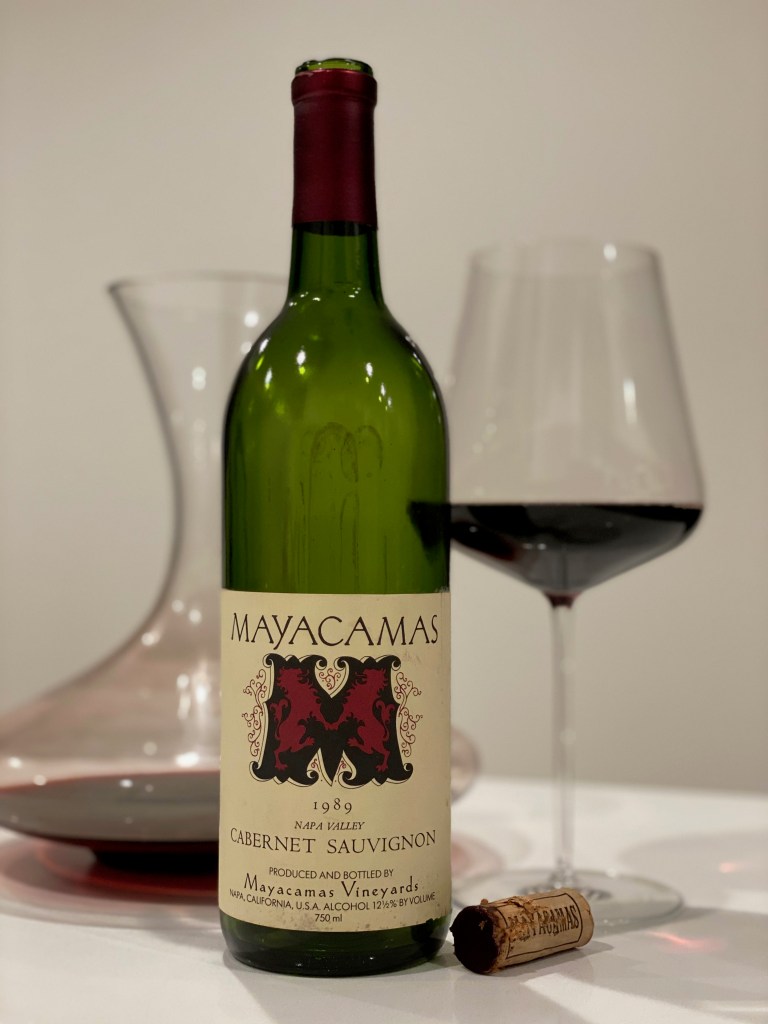
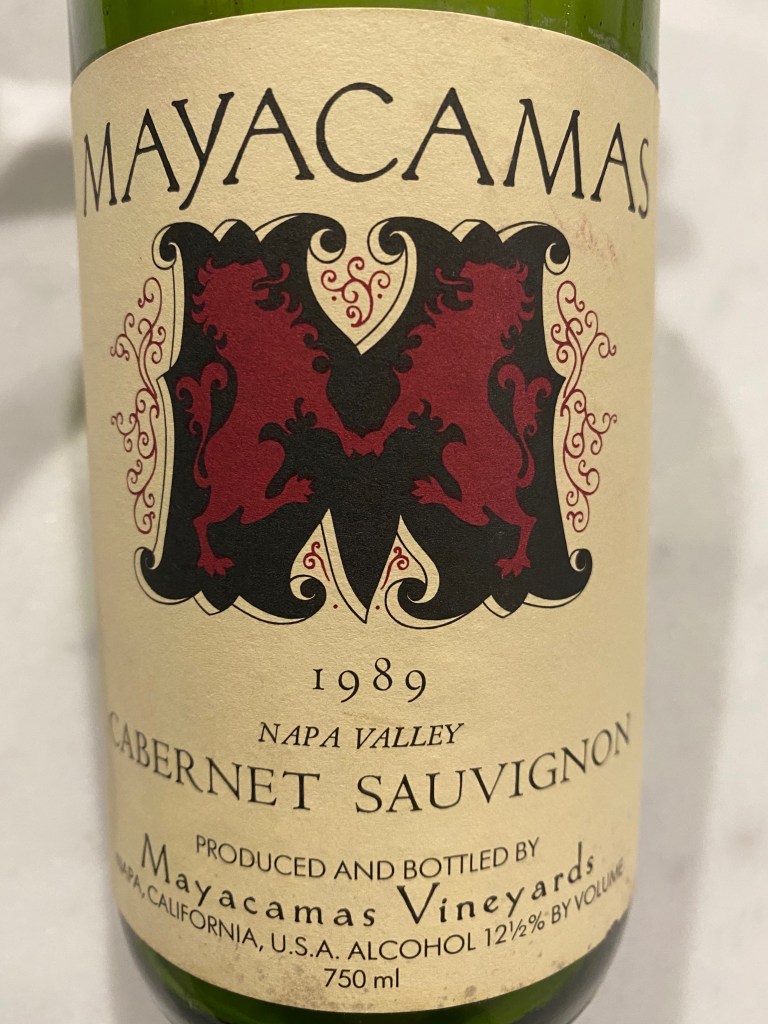
Today’s Wine: 1989 Cabernet Sauvignon

100% Cabernet Sauvignon; 12.5% ABV

The 1989 Cabernet Sauvignon is very youthful opaque deep garnet in color with plenty of ruby left. After 3 hours in the decanter, this beauty blossomed with a nose of blackcurrant, blackberry, cherry, redcurrant, pencil shavings, cigar box, tobacco, forest floor, truffle, gravel, and thyme. On the palate, the wine displays notes of blackberry, crème de cassis, black plum, redcurrant, violet, graphite, tobacco, sous bois, green herbs, cracked black pepper, and cedar. This is medium-bodied with medium (+) acidity, medium dusty tannins, and a long finish. If tasted blind 100 times, I’d call this 1st or 2nd Growth Left Bank Bordeaux every time.

Price: $200. If provenance is impeccable, like this bottle was, this is absolutely worth the price. Drinking up there with some of the greats of Bordeaux, this is an incredible value. Pair with filet mignon, roasted lamb, or portobello mushrooms.

Outstanding Napa Sauvignon Blanc

Today’s Story: Lail Vineyards

Lail Vineyards was established in 1995 by Robin Daniel Lail, though her family’s history of winemaking in Napa Valley spans much further back in time. Robin is the great-grandniece of Captain Gustave Niebaum who founded Inglenook Vineyards in 1879, and his dedication to quality not only yielded some of the greatest wines in Napa but in the world at the time. After Gustave passed away in 1908, Robin’s father John Daniel, Jr. picked up the reigns having grown up in the vineyards of Rutherford with an appreciation for the land and winemaking. During Prohibition, Inglenook stopped producing wine and sold their fruit to Beaulieu Vineyard who were selling sacramental wine to the church. Following Prohibition’s repeal, John Daniel, Jr. resumed winemaking at Inglenook and produced some of the greatest Cabernet Sauvignon throughout the world until he sold the property in 1964. Though there was a gap between the sale of Inglenook and beginning of Lail Vineyards, Robin never let her passion for winemaking wane. She worked alongside Robert Mondavi during the 1970s who helped mentor her and tell her of her family’s significance in the Napa Valley, and she co-founded Dominus with Christian Moueix in the early 1980s and Merryvale with Bill Harlan in the late 1980s and early 1990s. When Robin decided to take her passion and dedication to her family’s history further, she and her husband Jon established Lail Vineyards and brought along renowned winemaker Philippe Melka.

Today Lail Vineyards consists of two estate vineyards, Totem and Mole Hill. The Totem vineyard is 2.5 acres and was part of the original Inglenook Vineyards in Yountville. In 2006 and 2007, the Merlot planted in Totem was t-budded to Sauvignon Blanc. The Mole Hill vineyard, on the other hand, is 3 acres planted to Cabernet Sauvignon between 1600-1700 feet in elevation on Howell Mountain.

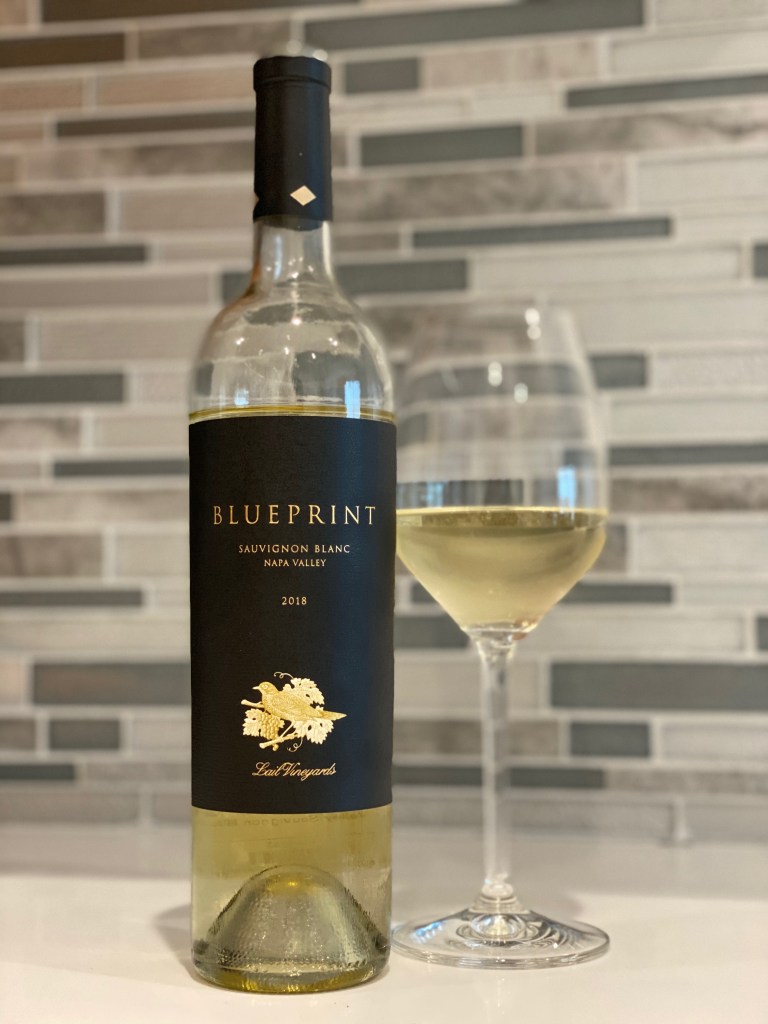
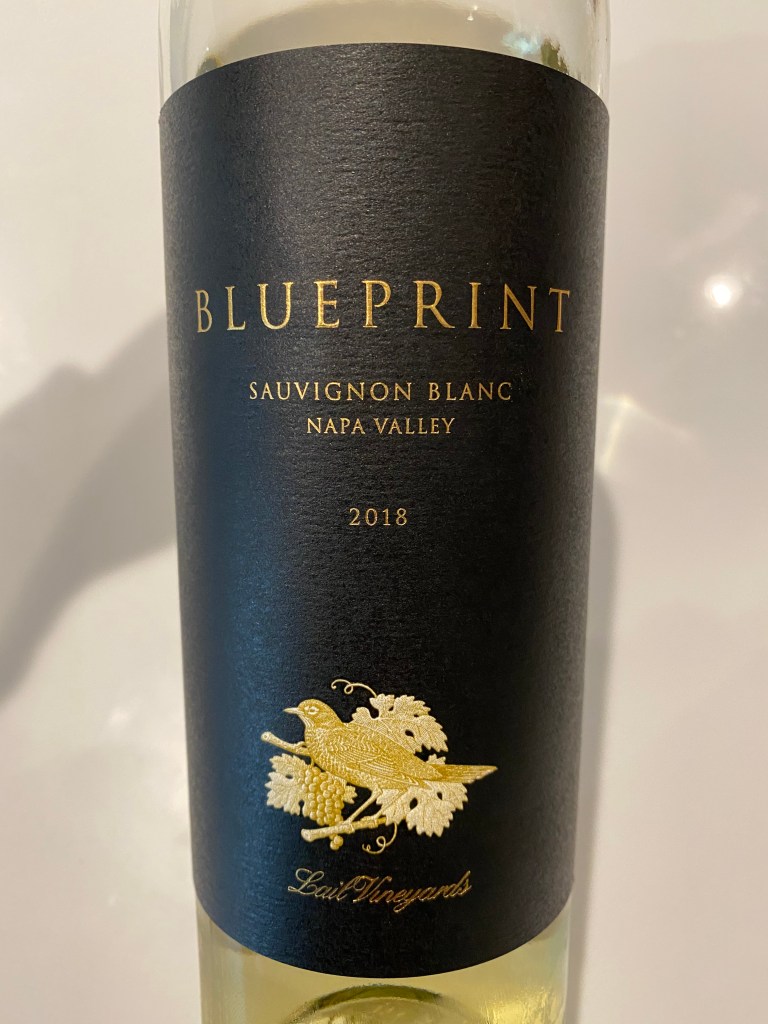
Today’s Wine: 2018 Blueprint Sauvignon Blanc

100% Sauvignon Blanc; 14.3% ABV

The 2018 Blueprint Sauvignon Blanc is completely transparent medium straw/yellow in color with water white variation. On the beautifully delicate nose I get aromas of lemon and lime zest, pineapple, mango, honeysuckle, freshly cut grass, saline mineral, and dried vanilla. Once on the palate, the wine displays notes of apricot, grapefruit, peach, honeydew melon, white florals, dried herbs, white pepper, and mineral. This is medium-bodied with high acidity and a lush, well-rounded mouthfeel into a crisp and refreshing finish. 1,342 cases produced.

Price: $40 from winery (I paid $35 retail). This is an outstanding Sauvignon Blanc that certainly punches above its price-point. The depth, complexity, and quality of fruit here makes this a necessity to try and I see this drinking even better over the coming five years. Pair with Dover sole, oysters, or pesto chicken.

Lean Chardonnay That Begins With the Farmers

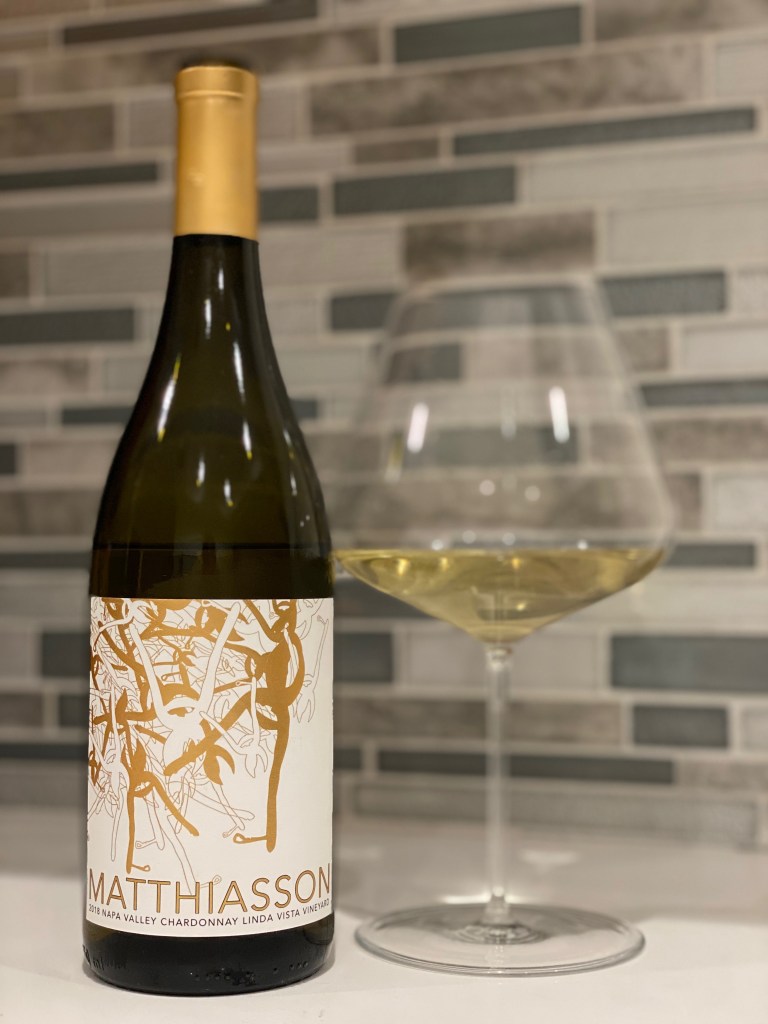
Today’s Story: Matthiasson Family Vineyards

Matthiasson Family Vineyards is a small winery established in 2003 by Steve and Jill Klein Matthiasson. Steve grew up passionate about farming, passing time as a gardener and cook while in college before co-writing the California manual on sustainable vineyard practices in 1999 after graduate school for horticulture. Jill is also passionate for farming, particularly the sustainability side of it, and she studied botany at Penn before ultimately attending UC Davis for grad school studying traditional methods for soil health.

Matthiasson is probably most well-known for their Napa Valley White Wine (an interesting blend of Sauvignon Blanc, Semillon, Ribolla Gialla, and Tocai Friulano), but they also either grow or source (often by lease) Chardonnay, Cabernet Sauvignon, Merlot, and Cabernet Franc amongst other varieties. Steve and Jill maintain their own vineyard in the West Oak Knoll area, while sourcing from others throughout the Napa Valley and Sonoma County including Red Hen, Bengier, and Linda Vista amongst others. All of the vineyards are either organically farmed or transitioning to organic viticulture, and as you might guess Steve and Jill believe great wine starts in the vineyards. Steve is pretty involved in each vineyard they source fruit from, catering farming practices to each specific one so that no matter the source their fruit is healthy and fully ripe. Coupled with his traditional winemaking methods, the Matthiasson wines come out beautifully balanced with lower levels of alcohol and gorgeous acidity.

Today’s Wine: 2018 Linda Vista Vineyard Chardonnay

100% Chardonnay; 12.2% ABV

The 2018 Linda Vista Chardonnay is transparent pale straw/gold in color with water white variation near the rim. Once this opens up in the glass, the nose emits aromas of golden apple, underripe pear, lemon citrus, honeysuckle, chamomile, vanilla, and saline mineral. On the palate, I get notes of white peach, golden apple skins, melon, tropical citrus, white lily, brioche toast, crushed stone mineral, and light spice. The wine is medium-bodied with medium (+) acidity into a long, refreshing finish.

Price: $28 ($32 direct from winery). This is an outstanding value for Napa Chardonnay. While many competitors can be flabby or have far too much oak, this is lean and drinks with beautiful precision (almost feels Burgundian). Pair with roasted chicken, oysters, or salmon.

Elegant Bottling From a Historical Spring Mountain Estate

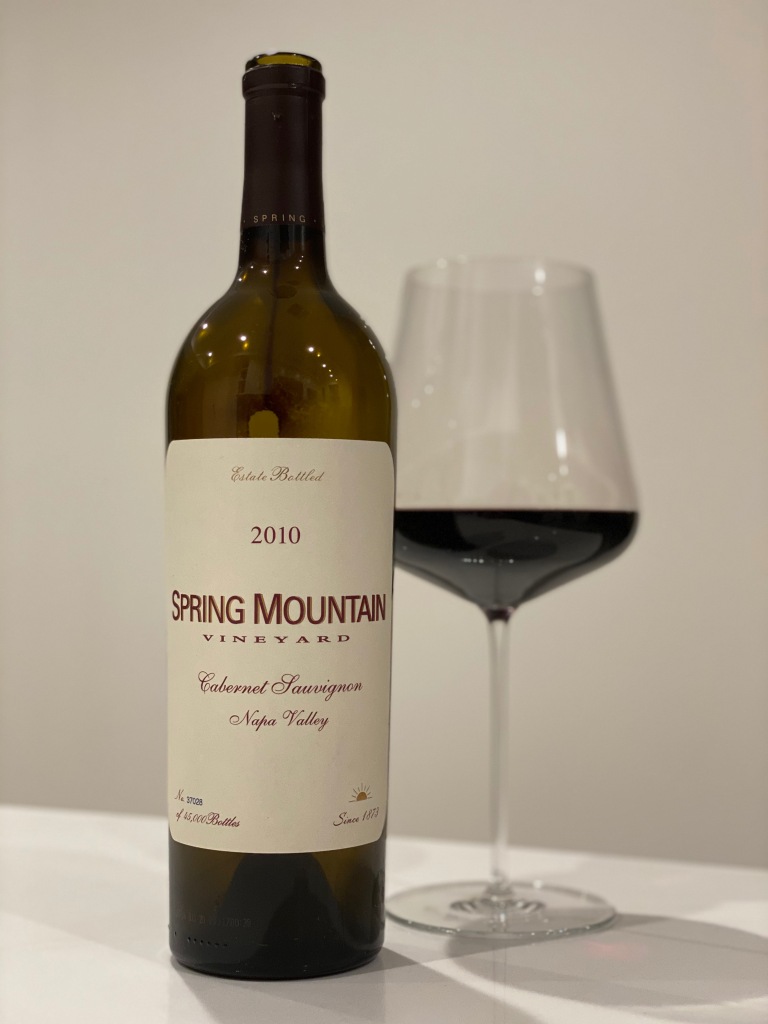
Today’s Story: Spring Mountain Vineyard

Spring Mountain Vineyard is a large estate and winery comprised of what used to be three unique properties, each with their own vineyards and wineries. Spring Mountain Vineyards (Miravalle) consisted of 257 acres, Chateau Chevalier (Chevalier) of 120 acres, and Draper Vineyards (La Perla) of 435 acres before being combined. La Perla is the uppermost and oldest portion of today’s estate, established in 1873 by Charles Lemme and home to the first Cabernet Sauvignon planted on Spring Mountain. La Perla expanded from 285 acres to 435, largely thanks to the addition of the vineyard just below it planted by Fredrick and Jacob Beringer in 1882. To the north of Beringer’s vineyard was Chateau Chevalier, whose winemaking presence began in 1891, and next door was Miravalle. To learn more about these historic estates and their eventual culmination into Spring Mountain Vineyard, check out the website here. Today, SMV consists of 850 acres on the eastern slopes of Spring Mountain with roughly 226 acres planted to vine that are broken into 135 small vineyard blocks.

Whether or not you check their website regarding the three original properties linked above, I highly recommend browsing their intensely-detailed winemaking page here and the equally intensive vineyard page here. Though there is far too much detail for me to delve into here, I will try to highlight that the vines are very densely planted to reduce yields and produce concentrated, naturally ripened fruit while utilizing sustainable practices. In the cellar, Spring Mountain Vineyard separates their vineyard lots, ferments using only natural yeasts, usually bottles the wines unfined, and adds minimal SO2. The winery is also incredibly proud of their 100% estate bottling process.

Today’s Wine: 2010 Estate Cabernet Sauvignon

76% Cabernet Sauvignon, 10% Merlot, 6% Petit Verdot, 5% Cabernet Franc, 3% Malbec; 13.6% ABV

The 2010 Estate Cabernet Sauvignon is opaque deep ruby in color. I decanted this for 2 hours and drank it over the following 2 hours. The nose showcases aromas of blackberry, plum, ripe blueberry, black raspberry, tobacco, loamy earth, black pepper, slight baking spice, and mocha. Once on the palate, this beauty displays notes of blackcurrant, juicy plum, black cherry, pipe tobacco, charred earth, gravel, coffee grounds, ground herbs, and chocolate. This is full-bodied with medium (+) acidity, refined medium tannins, and a long finish. Supremely elegant and well-crafted.

Price: $150 direct from winery (but I got this at an absolute STEAL of $50 at a Los Angeles wine store). $150 is probably pushing it on a value perspective, but at $100 or less this is a must-try. The quality and elegance of this wine is truly living up to the estate’s name. Pair this with filet mignon, lamb, or charcuterie and cheese.

Mouthwatering California Sauvignon Blanc

Today’s Story: Spottswoode

Spottswoode traces its roots to 1882 when a German immigrant by the name of George Schonewald and his wife Catherine purchased 31 acres at the foot of the Mayacamas Mountains with the intention of using it for a summer home. The Spottswoode name, however, did not come around until 1910 when Susan Spotts acquired the estate. As Prohibition dawned, the Spottswoode estate fell into disrepair but the family continued to sell grapes to the Christian Brothers Winery which made sacramental wines. The estate remained under ownership of Spotts family descendents until, in 1972, Mary and Jack Novak purchased the estate and moved their family to St. Helena. The Novaks quickly set about expanding with an additional 15 acres and replanted their pre-Prohibition vines to Cabernet Sauvignon, Zinfandel, and Sauvignon Blanc. Jack passed away unexpectedly in 1977, but Mary was determined to continue their dream and completed her first harvest while selling fruit to wineries including Shafer and Duckhorn. In 1982, Mary christened the estate Spottswoode Estate Vineyard & Winery and produced her first Cabernet Sauvignon. Spottswoode started utilizing organic farming methods in 1985 and became certified organic in 1992 by CCOF. Today, Spottswoode remains under the watchful eyes of Mary’s youngest daughter Beth, who joined in 1987, and Mary’s oldest daughter Lindy, who joined in 1992.

To learn more about this historic and award-winning winery, check out their website here. You can browse their portfolio, read about specific farming and winemaking practices, or view pictures of the beautiful grounds and Victorian home which adorns the labels.

Today’s Wine: 2018 Sauvignon Blanc

100% Sauvignon Blanc; 14.1% ABV

The 2018 Sauvignon Blanc is transparent deep straw in color with yellow variation. The expressive nose showcases aromas of Meyer lemon, cantaloupe, golden apple, lime zest, lemongrass, honey, saline mineral, white pepper spice, and cream. On the palate, I get notes of white peach, lemon and lime zest, grapefruit, green apple skins, freshly cut grass, brioche, white florals, and vibrant minerality. This is medium-bodied with high acidity and a lush, fully-rounded mouthfeel leading into a finish that lingers and lingers.

Price: $40 ($35 if you’re lucky). One of the better California Sauvignon Blancs I’ve enjoyed, though I tend more toward France. This bottle is crying for a hot summer’s day, and I’d be curious to try it on such a day with a few more years of bottle age. Pair this with oysters, Dover sole, or grilled chicken salad.